By Anastasios M. Tamis*
The historical and religious monuments of the peoples are universal legacies, property of all the people of our planet, as well as the property of the unborn. These monuments are and should be a universal heritage, and consequently they demand our respect, away from nationalist outbursts and libertarian tendencies. As monuments of culture, they must rightfully have the welfare of the states and governments that host them, but also the respect of the citizens entrusted with their preservation, guardianship and welfare.
With these thoughts I had the good fortune to walk the streets of the ancient city of Thessaloniki, the capital of Macedonia and the co-capital of Byzantium and the modern Greek state, a city that flourished during the last 2400 years.
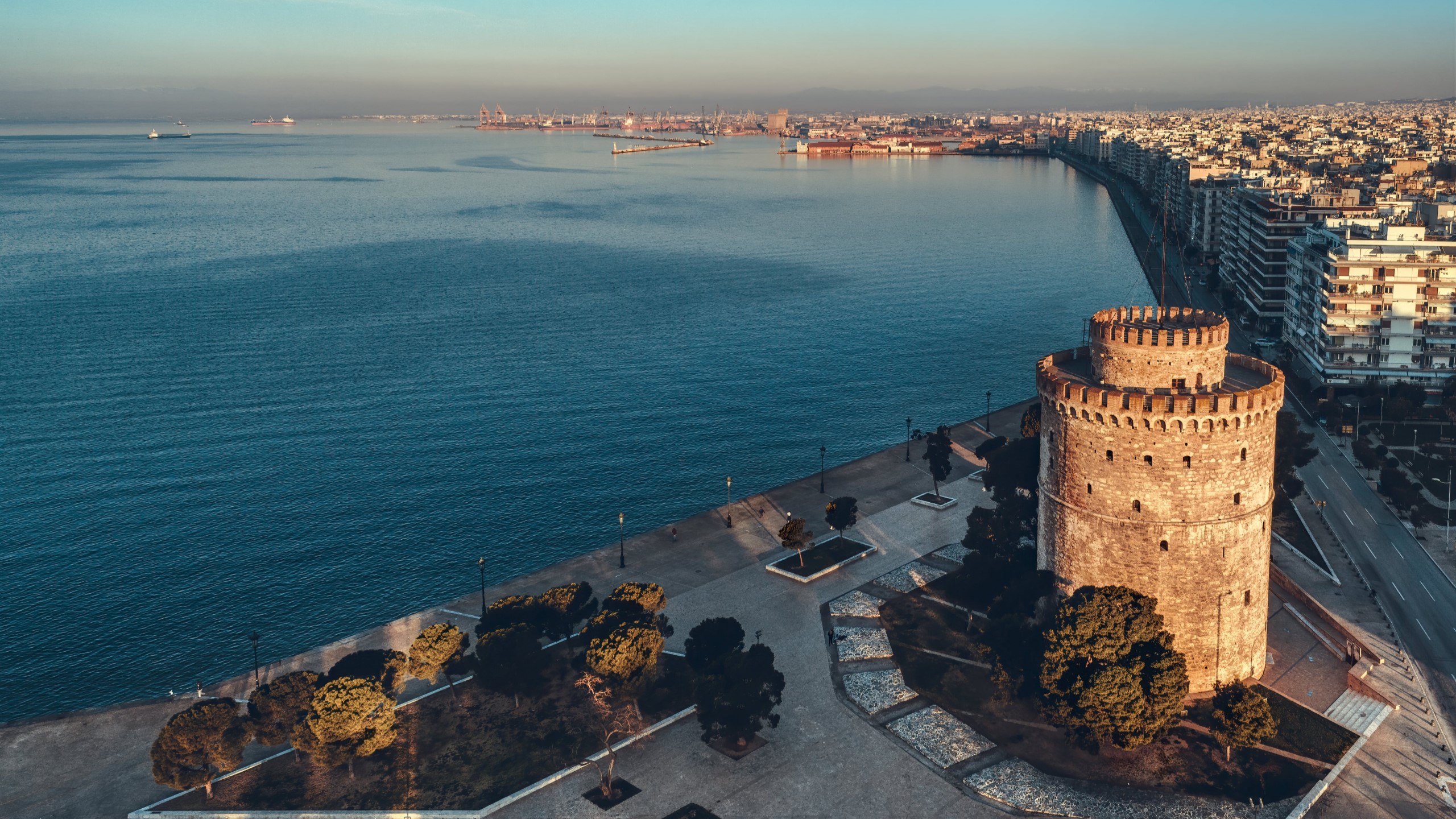
It is so enchanting, so unique to gaze from afar and up close at a city with its castles, its towers, its monuments, its alleys, its hills that pour into the Thermaikos Gulf. A story unique on a global scale.
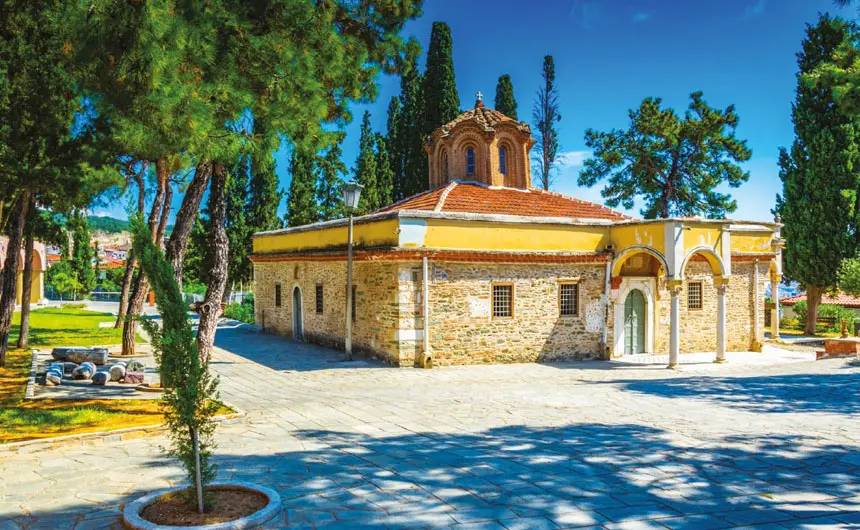
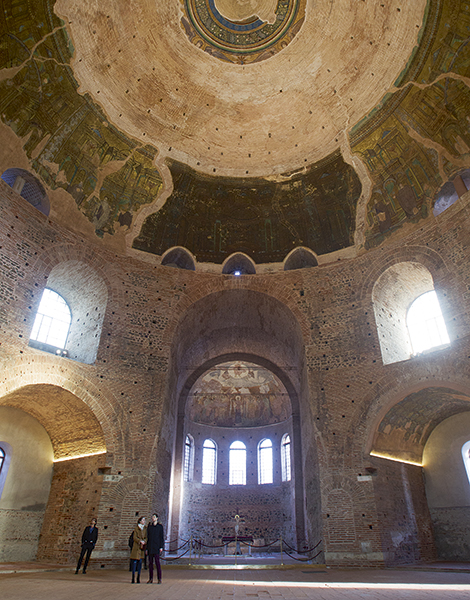
No other city in Greece combines Classical, Roman, Byzantine, Ottoman, and Neoclassical so consistently, so vividly, so intensely and so significantly. At every turn of the road it is thrown and emerges through the centuries that have passed, sometimes its Hellenistic monuments, sometimes the Roman agora, sometimes the palaces of the Roman Emperors, the famous Rotunda, when Thessaloniki was the capital of the Romans, sometimes the hippodrome of the Byzantines, where thousands of national Greeks were martyred and fell from the swords of Spaniard Theodosius, sometimes its Byzantine castles, sometimes the dozens of churches of Christianity that are about to complete two thousand years of history, sometimes the Tribune of Apostle Paul at the Monastery of Vlatades.
Elsewhere appear the Ottoman monuments that the city was dressed by its conquerors, the Tower of Blood and Martyrdom, which was euphemistically named “White Tower,” the majestic mosques of their worship that adorn Thessaloniki, the Yeni Mosque but also the only in the Balkans and only second in the entire Ottoman Empire mosque with a peristyle on the Via Egnatia, the other beautiful monuments of the Ottomans, their neighbourhoods, and houses, left behind by the exchanged Ottomans.
And what can one say about the magnificent mansions of Jewish merchants and bankers in the suburbs of the countryside, the endless streets with mansions and neoclassical buildings in the city center that did not have time to be devoured by the greed of the builders and developers of the 1960s, the decade that essentially destroyed the architectural face and the history of centuries throwing in ruins and destruction many such architectural artifacts. What can one say about this city with a continuous living history of 2400 years (Athens, as a city, could not have life for more than 700 years), with the cohabitation of peoples, Balkans, and Jews, with the historical characteristics that each people left as culture on its body.
Many times, we, Greeks, are fascinated by the national philotimo and we take on the ruthless Erdogan, who, for the second time, “humiliatingly” transformed the seat of Orthodoxy, Hagia Sophia, the largest monument of Christianity into an Islamic temple, into a mosque. Our wounded national pride makes us hurt to see Muslims praying at Hagia Sophia. The case of Thessaloniki may offer us another dimension of approach and interpretation, if we consider that on many cemeteries of Ottomans, Jews, Romanians, Armenians of Thessaloniki, we built our universities, the Thessaloniki International Fair, amusement parks and playgrounds.
Let me also point out that at least two Ottoman mosques in the centre of Thessaloniki, where for 500 years Muslim believers prayed to their own God, had been transformed after the Second World War into cinemas, where for decades pornographic works were shown, flooded with soldiers, sailors and deprived husbands.
Thessaloniki, which had been baptised as “Mother Jerusalem” by its Jewish citizens and of course was demographically a population Babel, maintained its multicosmic character and multiculturalism through its neighborhoods and districts, with buildings and squares and hundreds of neoclassical buildings that give it, without exaggeration, the title of Little Paris.
These cities of world heritage and unique importance on a global scale need to be surrounded with equal affection not only by state care but also by all of us who visit them, and feel their history teaching us and making us responsible to continue the preservation of this heritage.
In my book about the Cretan hero Ioannis Kouromichelakis, I had devoted a few pages of chronicle testimony to some of the monuments of Thessaloniki, as experienced by this Cretan officer, as he landed in Thessaloniki for the Macedonian front during the First World War. Readers will have the opportunity to learn about how thousands of Greek soldiers from the Aegean islands and Crete saw the City of Thessaloniki 110 years ago. The brave Cretan Lieutenant Ioannis Kouromichelakis was an officer of the 2nd Regiment Cretan Evzones, and had dedicated a third of his life to the struggle of his homeland, Greece, fighting on the fronts of Macedonia and Asia Minor, where he finally fell fighting in August 1921.
*Professor Anastasios M. Tamis taught at Universities in Australia and abroad, was the creator and founding director of the Dardalis Archives of the Hellenic Diaspora and is currently the President of the Australian Institute of Macedonian Studies (AIMS).
