
Death is the pinnacle of the perfection of the cycle of human life. The cycle of the changes of species. It is the point from which we begin impartially and objectively to evaluate the course of a particular person, his contribution, the importance of his presence in this ephemeral life.
All people are born with specific gifts, virtues and values. All people are exclusive, each with their own special characteristics, in their own way of speaking, walking, writing, thinking and appreciating the world around them. All people have their own value; from the simple family man who, with a myriad of sufferings, raises his children with prudence and morality, in partnership with his wife, to the one who preferred to live alone, participating in a choir, or blowing out candles in a remote church. Everyone has their value, including the unjust, the impious and the lawbreakers.
However, it is certain that some people in the diachronic history of man have stood out, distinguished themselves and with their dynamic presence, contributed to the improvement of human life. These individuals are pillars of human history, strongholds and perhaps sources of reference in the evolution of societies. Some people pledged to serve the innovative, the authentic, the genuine, in order to contribute to the change of our lives. Some took care to serve the interests of the people, to evolve into ministers of the people, they offered to the commons, they strengthened their society morally and financially, in order to lighten human toil, so that there would be a society with morals and humanity.
Some, on the other hand, were endowed with gifts that had all of the above. These were high towers to be imitated or to be frequently mentioned and constantly praised. They were honored by the society they lived in and for which they worked. They are rightly recognised by human history, which is constantly evolving and evaluating. This category includes people who acted as businessmen and benefactors, as fair judges and evaluators, people who respected wealth, but never worshipped and served it. For them, wealth should serve the idea, and not the idea the wealth. Wealth was not an end in itself for them, but the means, the tool to offer quality of life to all those who worked and suffered next to them, and of course to their immediate family environment.
On the day of Orthodox Easter, on Sunday morning, while in some parts of Australia the faithful were returning to their homes with the Light of the Resurrection and blessing their homes, the venerable husband, family man, businessman and philanthropist, Nikolaos Thyssen (Theodosiadis) OAM, who is known throughout the continent of Oceania as “Mr. Patra Orange”, abandoned this life at the age of 91.
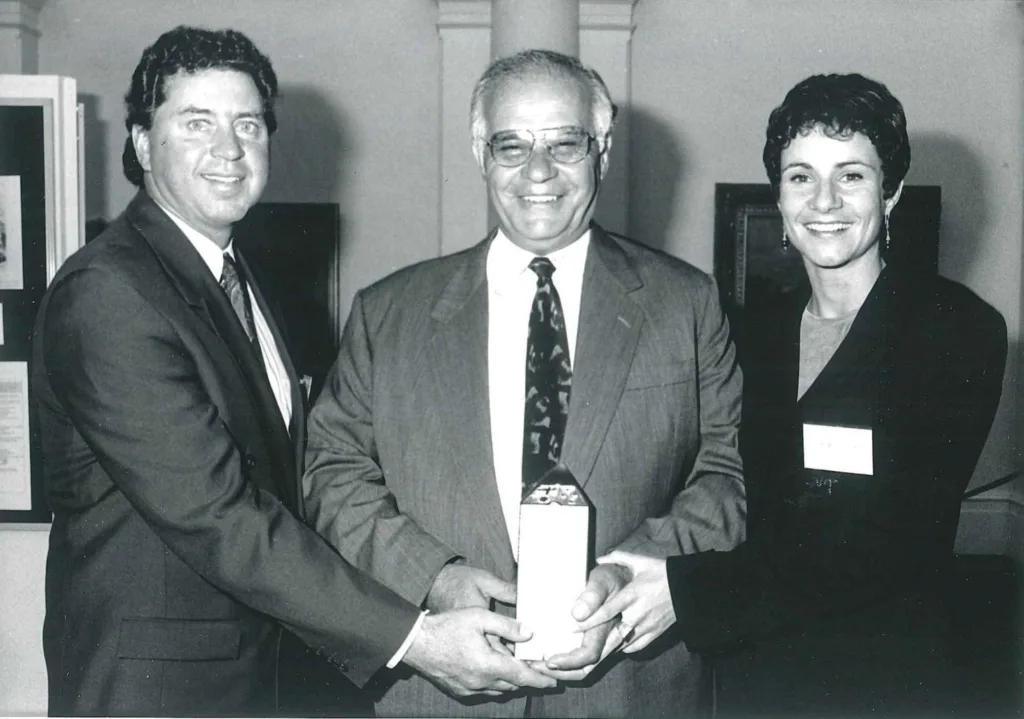
The late Nikolaos leaves behind a rich legacy of achievements and innovations that have improved the quality of life of people worldwide. Nick Thyssen was one of the most inventive figures of the Greek diaspora, a figure of a genuinely genius entrepreneur with pioneering ideas and innovative concepts that radically and profoundly changed specific aspects of the global food industry. A farm boy from Valimitika, Aigialeia with twenty pounds of pocket money from his brother, with his wife, Maureen, by his side, caused a global revolution in the production of natural juices, fresh fruit salads and soups, when until then the global food industry relied on cooked fruit compotes and tin cans with concentrated and dried juice powder with plenty of preservatives.
The most important thing about Nick Thyssen’s action and triumphant development is that this businessman did not achieve greatness by copying others, he was not led to the triumph of success, having imitated the success of others. Most importantly, he never walked on the footsteps and paths that some thought of or others tried first and succeeded. Nick Thyssen is the one, the only one, the innovator, the inventive, the man who thought, orchestrated and implemented his own ideas, his own machines, his own inventions and reached success with struggles, often with great financial losses.
The next impressive thing about Nick Thyssen is that money, profit were not an end in themselves for him, that is, he did not just work to win. He worked for the success of his ideas, he toiled to taste the joy of daring the new, and he succeeded. He himself often confessed that he lost a lot of money with his bold and innovative ideas, with his improvisations. The great thing is that Nick Thyssen never felt sorry for the money he lost. But he was sad and hurt because his goal did not succeed. That’s why he always advised: “don’t stop, don’t be afraid, when you lose. You have to be courageous again, get back up, feel strong even when you lose.”
Nick Thyssen will go down in the history of the Australian juice and food industry because he founded, organized, developed and spread both in Australia and the rest of the world, for the first time, the industrialization of natural citrus juice. He was also the man who invented and enriched the markets with fresh fruit salad and soup varieties in special cardboard boxes that ensured longevity. The products of the companies he created from the famous and historic Patra Orange Juice, Original Juice Company, Ready Cut Company, Easy Cheff, Procal and at least twenty other companies through which he attempted his innovative program, yesterday and today are in the showcases of supermarkets, meet the needs of hospitals, army and sports infrastructure.
The huge but unseen contribution of Nick Thyssen is that with his innovative ideas he improved the daily life of the citizen, gave the opportunity to thousands of citizens every day to enjoy a natural juice and not a canned food during a break from work, talking to their colleagues, or to enjoy a fresh fruit salad for their lunch, or to resort to a soup for their dinner, not canned soup, but freshly cooked soup in hospitals and barracks and of course in their households.
For me and my wife, as well as for many other people, Nikolaos Thyssen, with the support of his wife, Maureen, has been a brother and friend, a valuable ally and supporter. He entrusted me with his biography, he spoke to me from the heart, with courage and a weight of responsibility, as he did with his children and his closest associates. In recent years, our lives have been inseparable and mutually bound and I owe him a lot.
Together with the late Zisis Dardalis OAM, and Nikolaos Thyssen, OAM were the two most authentic, most genuine and dynamic people who threw our community into orphanhood with their deaths. Father and his unjustly lost son, Adam, share the same sacred memory from today and the same resting place, one next to the other, because the dead die only when we forget them. His fraternal wife, Maureen, his daughters, Eleni and Rebecca, his sons-in-law and grandchildren, will continue to serve a legacy that is a point of reference for all of us.
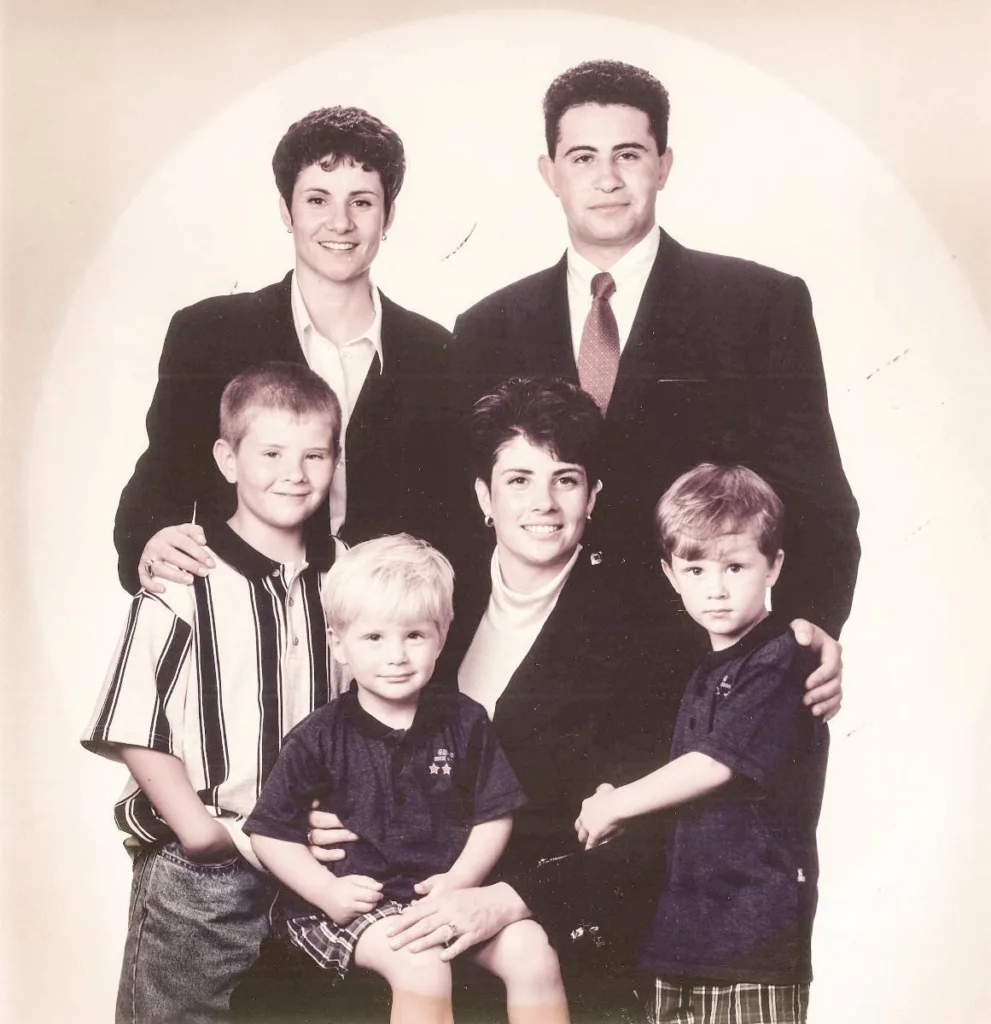
I close this note with his own narrative which I included in his biography, to remind the children who were born or came accompanied by their parents, why their pioneering parents are worthy of respect, honour and eternal memory.
“I was not five years old when I started working in the fields, next to my mother. We collected the raisins in baskets, like the hen with the chicks. We dipped the grapes in lye (boiled ash water) so that the berries shrink and cut off from their bunches and spread them on the threshing floor of our vineyard, to dry under the sun. Corinthian currants were universally popular. Our mother sold our raisins to merchants in the area, who had their warehouses in the village. This was followed by its packaging in wooden crates, with care and diligence, before being transported to the trains to Germany. Then came the raisin crisis. We planted vineyards for table grapes. We also had the large vegetable garden in front of our house, which was protected by a wire fence supported by olive branches. Orange and lemon trees followed in our home orchard. My mother and I planted 37 lemon trees. We had apple and pear trees. On Saturdays we would go with my mother to the farmers’ market in Aigio and sell our fruits and vegetables, green beans, artichokes, beets. The bazaar was my first commercial experience.
We had to deal with two horrible things, poverty and War. People had no money. In 1932, my father lost all the money he had brought from Alexandria. Unemployment everywhere. Many immigrants from the central Peloponnese wandered around asking for work for a plate of food. We lacked bread, wheat and oil. Hunger began. Life was made by exchanging products, eggs, raisins, milk, cheese and vegetables. What every household had. The Italians came first. They did not do anything hostile. Most of them felt both guilt and shame for what they experienced from the Greeks in Pindos. We had no money for the necessities, nor for the oil for our lighting. The schools were closed until 1944. The only generator of our village was owned by a certain Theodosiadis. He also ran out of money and oil. That Sunday, after the bombing, my mother dressed us in our festive clothes and took us to Santa Claus. Papa-Spilios and about five stooped chanters officiated, led by our chief cantor, always on the right psalter, Vassilis Anastasopoulos. Suddenly the lights went out. The generator no longer had oil. In the dim light the candles and shadows of the faithful emerged. With the war, everything darkened. The faces of all the grown-ups are gloomy, painful and hungry. That’s how I remember them. People could not pay for the oil, they borrowed without repaying. I remember my poor mother coming home from the nearest forest loaded with wood to keep us warm. To bake the trahanas, which he had made almost two years ago, in the fireplace. To fatten our hunger. When our mother was in the orchards, my older sister, Anna, took care of the house and took care of our younger sister, Panagiota.
The war marked my childhood life. I saw the fierce face of war at the age of seven. Our village was a supply center for the guerrillas. Often the guerrillas came down from Helmos and took supplies. They had Korovotas as their link. In the summer of 1942 my sisters and I had taken refuge in our father’s house, in the settlement “Pera meria”, which was built next to Valimi, to rest our mother. Our settlement was separated by a small gorge that separated our borders. One morning we saw a lot of activity in our village. Germans had come on horseback and surrounded our small square. After first setting fire to and burning down the school, they arrested Korovatas for interrogation. He was kept imprisoned in the community office. He was a young, tall and broad-breasted patriot and a good householder. In the afternoon, two soldiers dragged him out of the slum and laid him under the tree. It was a wreck. Folded and beaten mercilessly. They were preparing him for a gallows in our square. He had refused to reveal the positions of our guerrillas. He had been betrayed by one of our own kiotes to the Germans. They hung him in the square in front of our eyes, as an example.”
Nikolaos Thyssen left the earthly life. His legacy remained to remind and advise. In the business world he was the teacher, the mentor, the lord of the innovative activitiy. A rare figure of a dynamic, indomitable, generous and honest man. An immigrant who broke the established order and emerged as a pioneer and authentic businessman. A citizen who honored the trust of the State and the society in which he lived. A friend who charmed with his pleasant personality, winning their respect. A family man who lived through constant giving and self-sacrifice. We will remember him and we will respect him as an eternal light.
 OAM, died.)