
As we enter the last months of 2025, Year 12s around Australia prepare to sit their final exams. The time and energy spent attending classes and studying for twelve years seems to be placed on the outcome of these exams.
Many schools and families can place an unreasonable amount of pressure on students, with many believing that one final score can change the trajectory of their lives. While this isn’t necessarily the case, the pressure of upcoming exams can cause stress for many Year 12 students.
October 10th is World Mental Health Day and a reminder that while stress is inevitably a part of life, the state of your mental health is more important than a final exam score. This day can help us to reflect on habits and techniques used to manage stress and anxiety.
The Greek Herald sat down with Greek Australian educational psychologist Dr Helen Kalaboukas to hear her thoughts on how students can manage exam induced stress and anxiety. She is the co-founder and principal psychologist of Life Resolutions in East Melbourne and has also worked with the Greek Women’s Learning Centre and the Australian Greek Welfare Society.
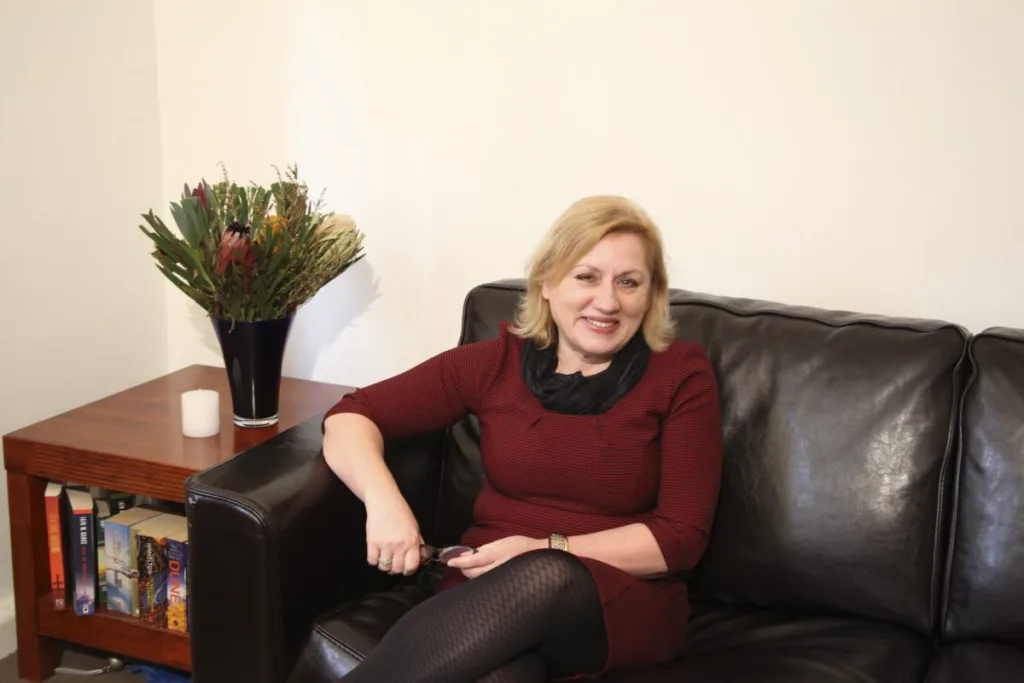
Dr Kalaboukas sees much of the anxiety Greek Australian students have in their final year as stemming from their home environments. “Usually parents’ expectations create a lot of anxiety and stress for students… It’s very important for the parents to remain cool, calm and collected,” she said.
Dr Kalaboukas acknowledges that many parents are stressed because they believe their children excelling on final exams is their only chance to do well. Dr Kalaboukas emphasises that there are many pathways students can take if they don’t receive the score they want, and it’s not worth risking your mental health for that score.
An emphasis is often placed on excelling in school by parents due to the value of education in Greek culture. Dr Kalaboukas sees that current Greek Australian parents of Year 12 students have carried on these values from their own parents’ generations.
She said, “Parents are very proud of their children’s achievements and there’s a lot of expectations there… They are trying to make their children successful because they’re very proud to have doctors and lawyers.”
Dr Kalaboukas encourages parents to see that “it’s not important to get the big degree, it’s important for their child to be happy and confident and do well in the area they choose.”
Students who feel this surmounting pressure may stop trying in their studies to avoid disappointing their parents. Dr Kalaboukas recommends that parents of these students watch for signs of losing motivation and “to be close to them [and] talk with them… to keep encouraging them.”
Each student is different and requires individualised support based on their needs. She encourages students and families to consider school support systems and special consideration programs when needed.
Dr Kalaboukas understands that if students are stressed, they consequently won’t perform well because they won’t be in a state to retrieve the information needed to sit their exam. She advises students to study according to their best learning style: visual, auditory, reading/writing, or kinesthetic. Students can then prepare accordingly and make the most of their time studying.
Dr Kalaboukas said that students who study in a style that suits their needs will be able to reduce their stress as they will feel more prepared for their exams.
Students can also adopt different techniques to help relax when they are feeling anxious. Dr Kalaboukas suggests taking five deep breaths and practicing mindfulness to reduce symptoms of anxiety.
For all young Greek Australians who feel overwhelmed by the amount of studying that is required for their upcoming exams, take a moment to breathe. A moment to ground yourself in your body. A moment to remember that your worth is not determined by your final mark. You are so much more of a person than your exam outcome.
Look inwards to appreciate your values, emotional connection with yourself and others, your creative pursuits and interests. As long as you’ve tried your best at your exams and have bettered yourself as a learner and a person, there’s no requirement to receive the highest score. Enjoy this concluding chapter of your schooling experience and look forward to what your next path in life will be.
