By Alexander Billinis*
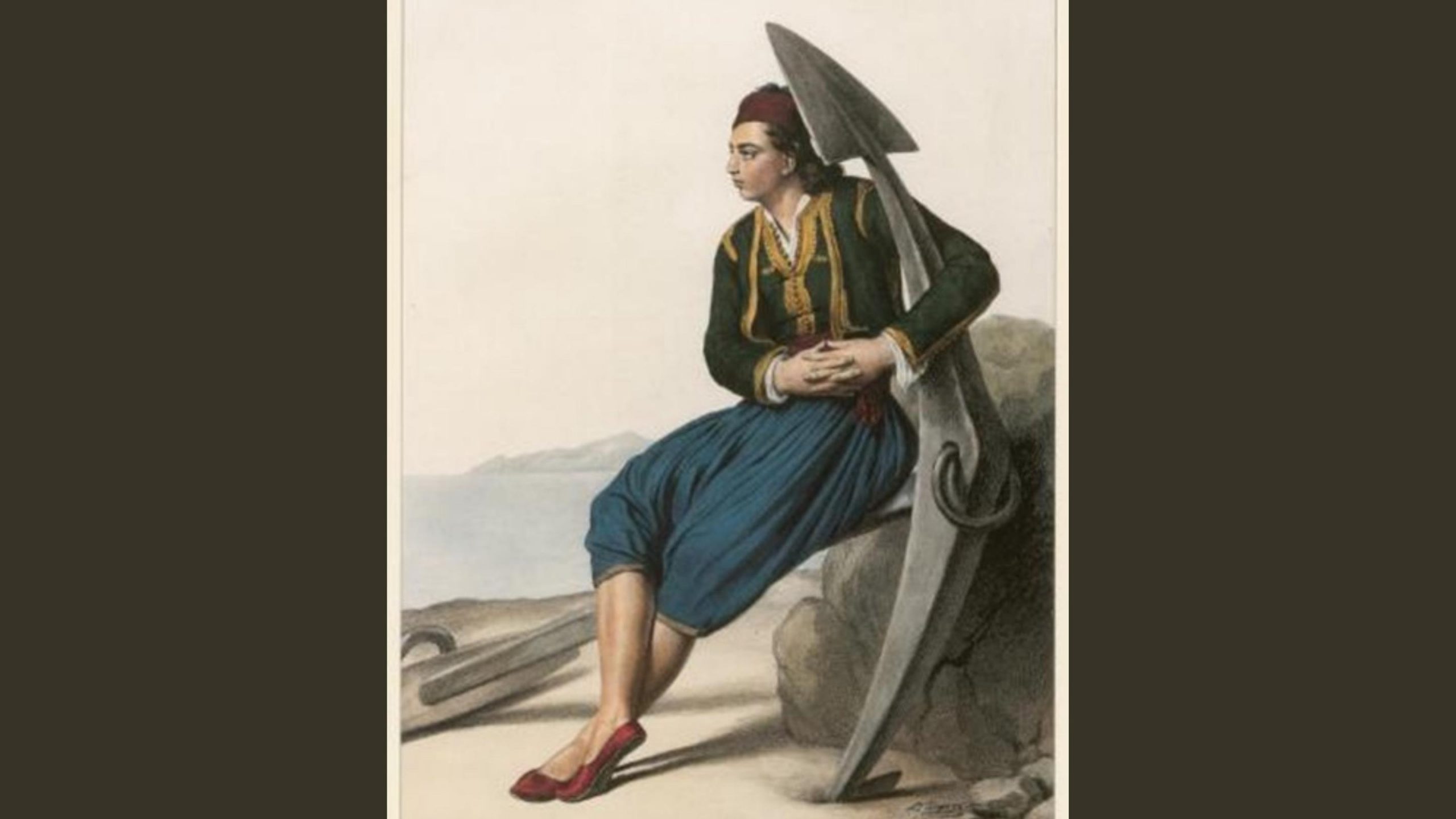
The story of Greek sailors is one of the oldest Greek narratives.
One of the first classics of literature chronicled the travels of one Odysseus. We have the far-flung Classical Greek colonies all across the Mediterranean and the Black Seas, the Triremes of Themistocles, and later the Greek-Fire breathing Dromons of the Byzantines. The Greek sailors who played a pivotal role in the emergence of the Greek merchant fleet in the 1700s and fought hard and successfully for Greece’s freedom drew on a tradition that spread back millennia.
It is perhaps ironic that the most important islands in the Greek revolution and the commercial acme that took place in the fifty years prior had little or no maritime history. Hydra and Spetses were largely barren islands off the coast of the eastern Peloponnesus, populated largely by refugees fleeing the constant struggles between Ottoman and Venetian, and the periodic attempts at throwing off the Ottoman yoke.
In the case of Hydra, population pressures pushed the islanders to the sea, as it had for Greeks since the dawn of history. I also believe, strongly that the sea represented the opportunity for a freedom and personal agency unavailable on lands under the Ottoman foot. From a crude vessel in 1657, the Hydriots felled their trees and set every cove on the island to work with shipbuilding.
As retired Captain Dimitris Tsigkaris told me, “The sea is a university.” Hydriots learned from other Aegean islanders, from the Venetians, and even from captivity. One of Hydra’s premier shipbuilders had been taken by Barbary Pirates and put to work in shipyards in Algiers. Upon his release, he brought his skills home. Interacting with other sailors and captains in ports near and far expanded the Hydriots’ and Spetsiotes’ education. They could draw upon the nautical skills of an archipelago with four thousand years of navigation expertise, as well as the latest naval technology from Spain, Italy, or Britain.
Then of course, there is on-the-job training. For the Greek islander, this may have started at the age of seven. An eighteenth-century sailing ship required mental and physical agility and granular knowledge. It was not just the shoals and winds they needed to pilot, but also the dangers of pirates, of negotiating various national authorities, multiple languages, and a keen understanding of financial, and market forces. The great American Philhellene Dr. Samuel Gridley Howe marveled at the shipbuilding skills of the common sailor, who might be called upon to repair his vessel on some foreign beach.
It is hardly a wonder that the Hydriots set up their own nautical academy, the world’s oldest, which remains running to the present day. They understood that their fortunes rested on human capital, and they made the necessary investments.
By 1820 Hydra, Spetses, and the even more diminutive Psara had built considerable fortunes based on their human capital. The shipping prowess dovetailed with an emerging merchant diaspora and guerilla captains growing in confidence. The ships carried more than just grain and merchandise—they carried messages of the Philike Etairia and plans for revolution.
When the time came, these sailors trained their cannon on the Turks, and their older ships were turned into floating bombs as fireships, recalling their Byzantine ancestors’ deadly efficacy with Greek Fire. Far too many met an early grave that Greece might live.
Though Hydra, Spetses, and Psara never recovered from the losses of the Revolution, the Greek sailor lived on, manning ships from other islands. Though a portion of Greece was free, many of the same institutional failings of the Ottomans remained (and remain) so the quest for agency at sea remained. On the backs, quite literally, of some of the finest sailors on the planet, the Greek Merchant fleet grew again, incorporating many of the merchant families and succeeding despite the many failings of the Greek state.
By 1939, the Greek Merchant Marine was the ninth largest in the world, creating a whole class of wealthy shipowners, and keeping thousands of Greeks, including my father’s family, in middle class circumstances. Like other merchant mariners, the Greeks suffered a death rate in the slaughterhouse of the Atlantic well higher than that suffered by nearly every other branch fighting in the war, and by the end of the war a good seventy percent of tonnage was beneath the waves.
A British-American wartime mass production freighter, the Liberty Ship, came to the rescue of Allied fleets decimated by the U-Boat attacks. American industrial might—coupled with increasingly effective anti-submarine warfare, did the job too well and the end of the war found a glut of ships, prudently sold by the US government to Allied nationals. Nobody took more ships than the Greeks, and the “Blessed Liberty Ships” set the stage for the Greek-owned fleet to become the world’s largest.
But once again, at the core of this shipping miracle, lay the Greek sailor. His resourcefulness and skill, from deckhand to captain to shipowner, made all this possible. He is a technocrat, with pride in his trade, and respected by Greek society. Shipping provided Greeks with an agency unavailable in Greece—without the pain of expatriation that so many Greeks eventually chose.
So much of Greece as we know it today—even the existence of the country—is owed to the Greek sailor.
Honor is due.
READ MORE: Spectral Smyrna in Izmir
*Alexander Billinis is an instructor at Clemson University, in South Carolina, USA. He is a licensed attorney, with a former career in law, real estate management, and international banking. He has lived and worked in Greece, the UK, and Serbia, as well as shorter work or study assignments in Bulgaria, Hungary, Germany, and Chile. A citizen of both the United States and Greece, he is married and the father of two teenage children.

