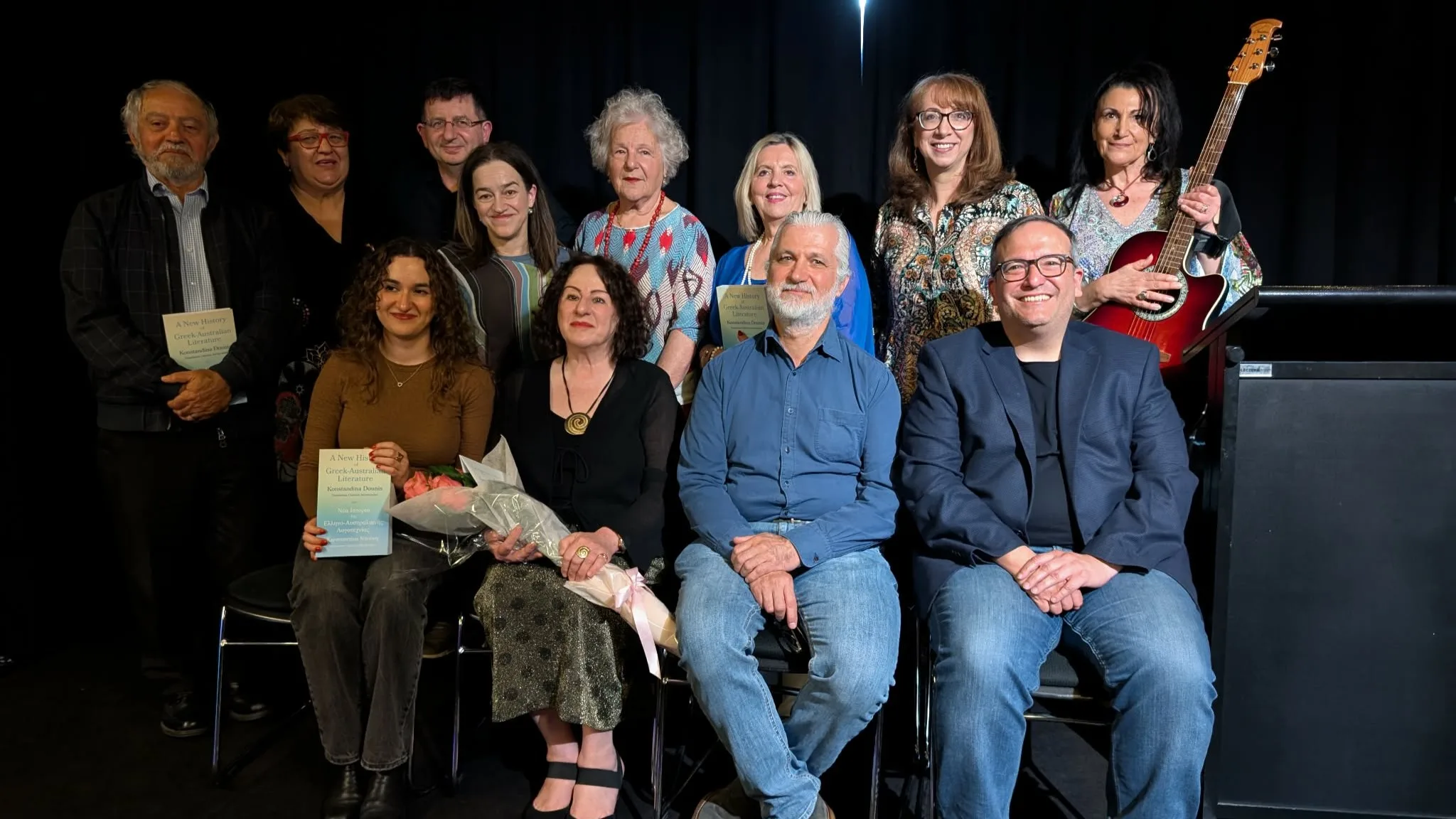
“Where are we at home?” Associate Professor Raul Sánchez-Urribarri asked as he opened the launch of Dr Konstandina Dounis’ monumental bilingual volume, A New History of Greek-Australian Literature. His voice carried both scholarship and longing.
“Every time I hear the name Maracaibo,” he said of his Venezuelan birthplace, “something moves in my heart.”
Home, he reminded the overflowing crowd at the Greek Community of Melbourne, is rarely a single place. Quoting philosopher Agnes Heller, he noted that “sometimes home is where your cat sleeps.” Migrants, he added, often live “in a state of transit,” and that is precisely where Dounis’ work lands.
“Konstandina, you help us think through these shifting levels of home… you’ve written something truly universal,” he said.

If Sánchez-Urribarri mapped the inner geography of migration, Agapi Pashos of the Greek Democritus Workers League pulled the room firmly back to the lived, working-class terrain from which Greek Australian literature emerged.
“Our literature was not forged in salons,” she said, “but in factories, workshops, kitchens and fields.”

She conjured early migrant writers vividly: “Men and women who left a country ravaged and hungry […] They wrote in secret: stanzas scribbled in toilets so the supervisor wouldn’t see, ideas jotted on napkins during breaks.”
Then came the line that summed up the importance of Konstantina’s work: “This book is not just a book, it is a collective monument of memory.”
Her tribute widened until it belonged to everyone in the room: “Konstandina doesn’t just lift her own voice. She lifts the voices of an entire community. This book says: We were here. We worked. We dreamed. We wrote.”
Dr Stephie Nikoloudis, Head of Greek Studies at La Trobe University, positioned the volume within Australia’s wider literary landscape. The bilingual format, she said, is itself an intervention: “In a country we call multicultural and multilingual, such efforts are important, necessary and welcome.”

She traced the emotional shift between generations of migrant writers: from the nostalgia of those who lived here without their parents to the identity negotiations of those born or raised here. Most crucially, she emphasised the book’s spotlight on “the literature of women that has, until now, been almost unknown.”
When Dr Dounis finally spoke, she revealed the book’s rocky path: a publisher who sat on her manuscript for two years before saying, “Oh no, we’re not publishing that anymore.”
“I think I cried for a week,” she admitted. “It felt like the book’s future had died.”

But her husband, Christos Avramoudas, who spent 25 years on the factory floor, urged her to self-publish. Together they created Sea River Press (the logo representing the Bay in Melbourne Yarra River and the Almiropotamos in Evia that runs into the sea).
“Everything in this book is by specific design,” she said. “I wanted something short and sharp, something a reader could absorb in one sitting if they wanted to get a good overview of Greek Australian literature.”
The book ends with a huge honour roll – an expansive bibliography and a photo gallery that is Konstantina’s “show of respect to the unsung heroes of Greek Australian literature.”
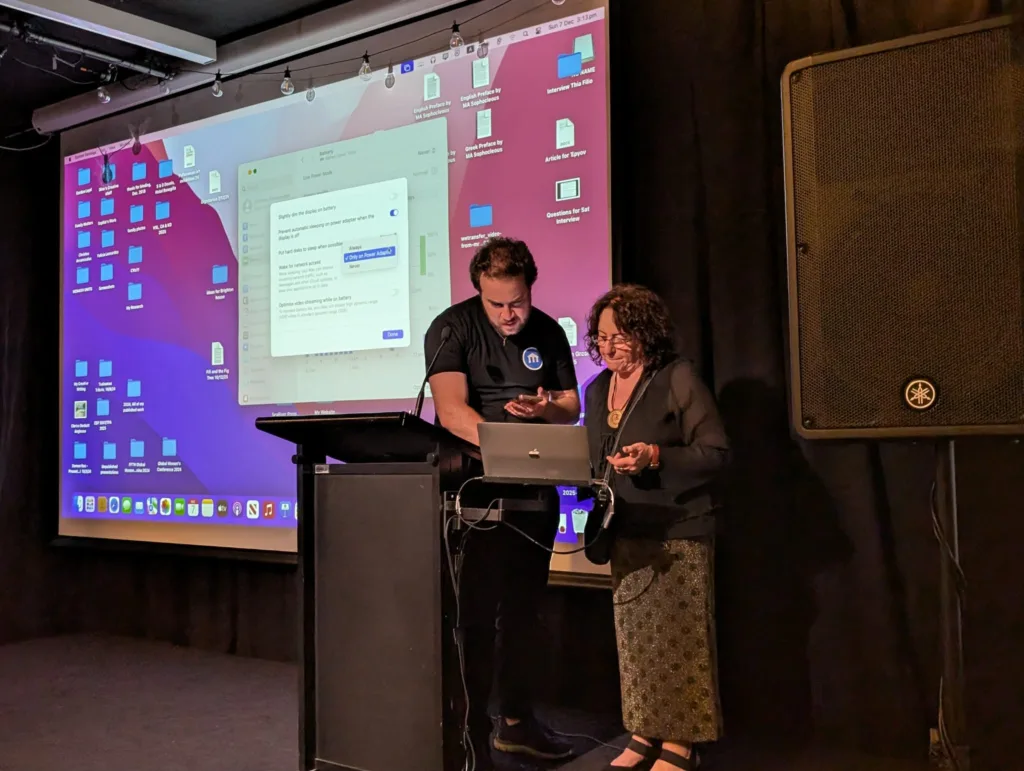
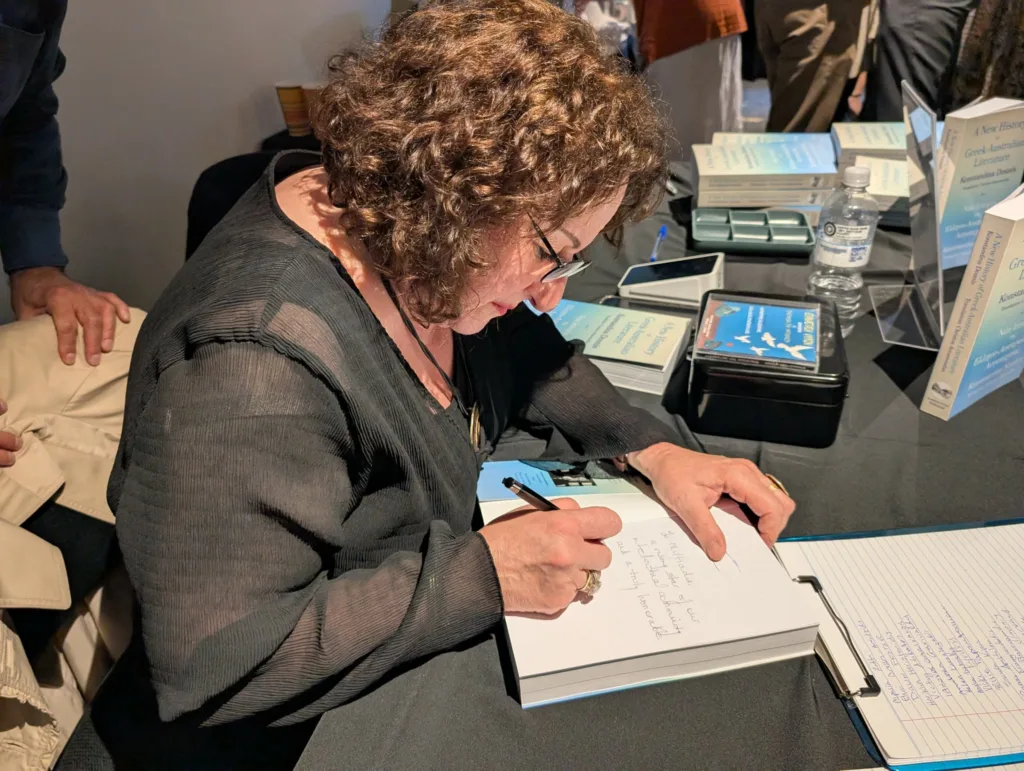
Her promise? She said history can never be definitive. It is expanding, evolving, transforming. In a real sense, this book is only Part 1.
“In a couple of weeks, 50 (first generation migrant) writers will receive an email from me about this second anthology,” she said.
Community leaders of the five groups that backed the launch echoed that sentiment in a series of warm, heartfelt tributes woven seamlessly through the program rather than delivered as formal speeches.

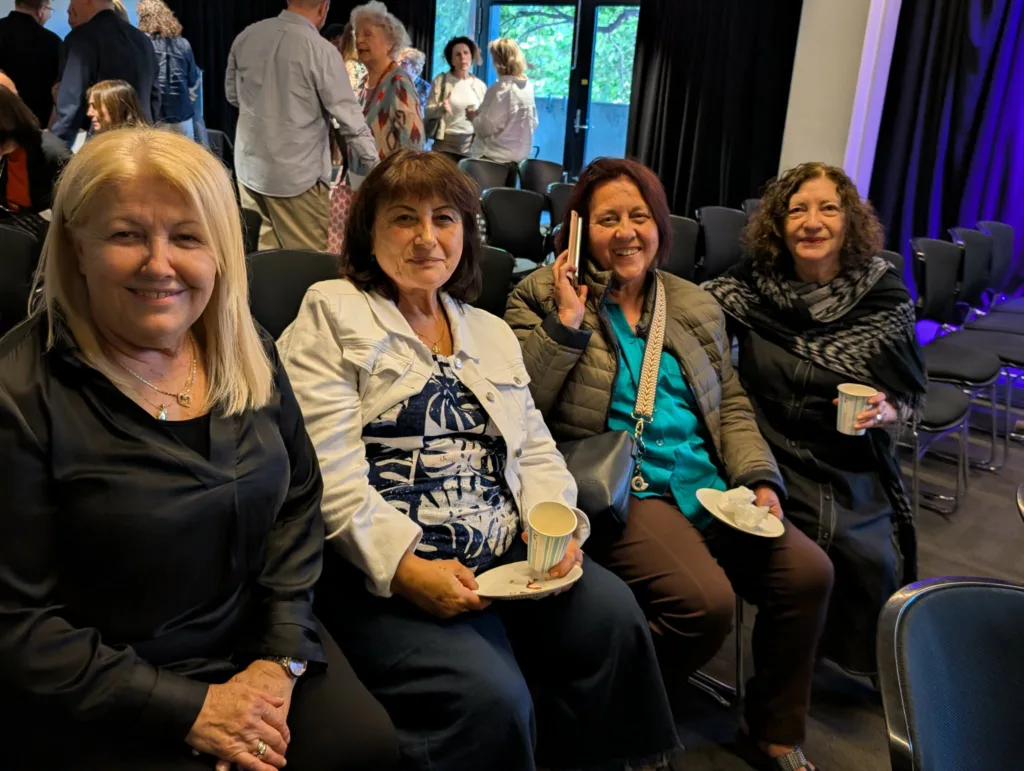
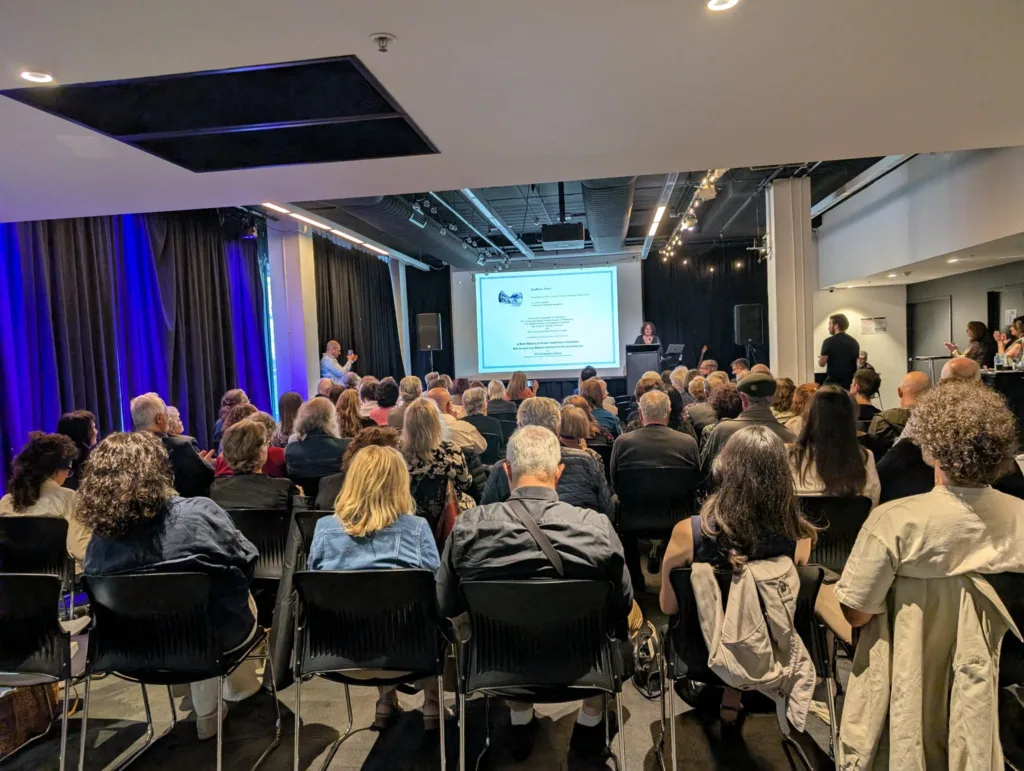
Nick Dallas of the Greek Community of Melbourne (GCM) called Dounis “a quiet achiever… a pillar of our community.” Cathy Alexopoulos of the Greek Australian Cultural League praised the book’s “invaluable insight and in-depth research” while John Sachinidis of the Hellenic Writers Association honoured her dedication to ensuring “our writers will not be lost nor forgotten.”
Varvara Ioannou, founder of the Food for Thought Network, spoke of a relationship “tested and strengthened over decades,” calling Dounis “a woman of perseverance and extraordinary attention to detail.”

And the Democritus Workers League, through the fiery and moving words of Ms Pashos, reasserted the book’s commitment to the working-class writers whose voices carried the earliest expressions of the migrant condition.
Throughout, Master of Ceremonies Dina Gerolymou threaded voices and stories into a seamless whole. And Anthea Sidiropoulos performed three songs that filled the room with warmth and energy while audience members listened, learnt and enjoyed a luncheon at the back of the room.
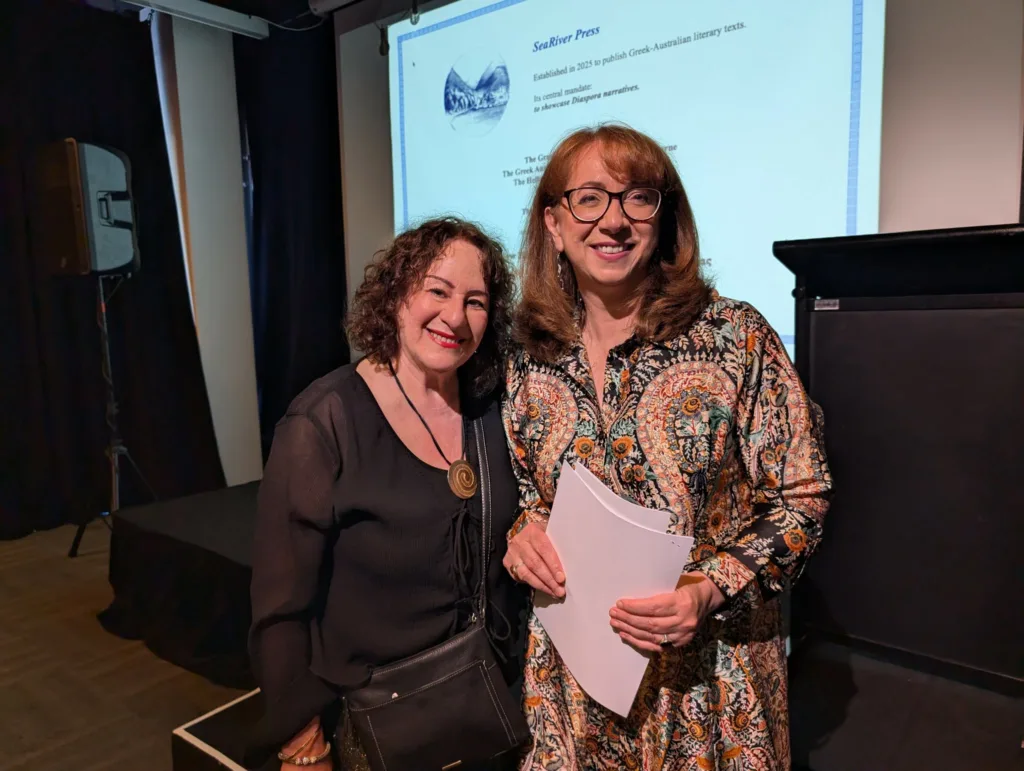


Meanwhile, Dounis’ daughter, Sophia Avramoudas who stood by her parents’ efforts in promoting Greek Australian literature, sold copies of the book as they flew off the shelves – an intergenerational passing of the torch in real time.

A New History of Greek-Australian Literature is more than a history. It is a home – built for those who wrote, those who remember, and those still seeking to belong.
During this book launch, home felt full.
