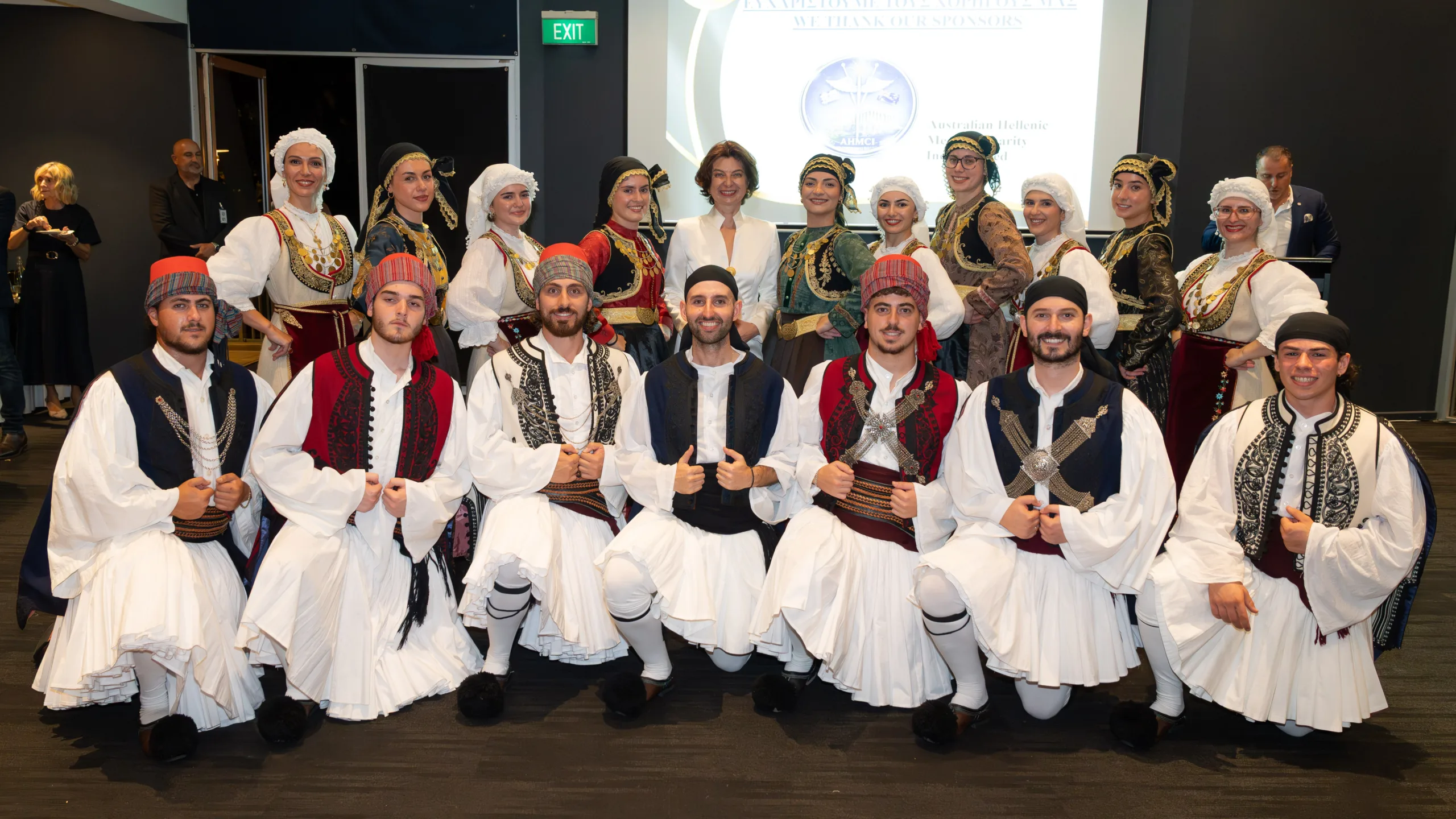
On March 30, the Greek Consulate of South Australia hosted an evening of cultural pride and reflection, as members of the Greek community gathered to commemorate the 205th anniversary of the Greek Revolution. The official celebration brought together dignitaries, community leaders, clergy, members of the diaspora and philhellenes to honour the enduring legacy of Hellenism.
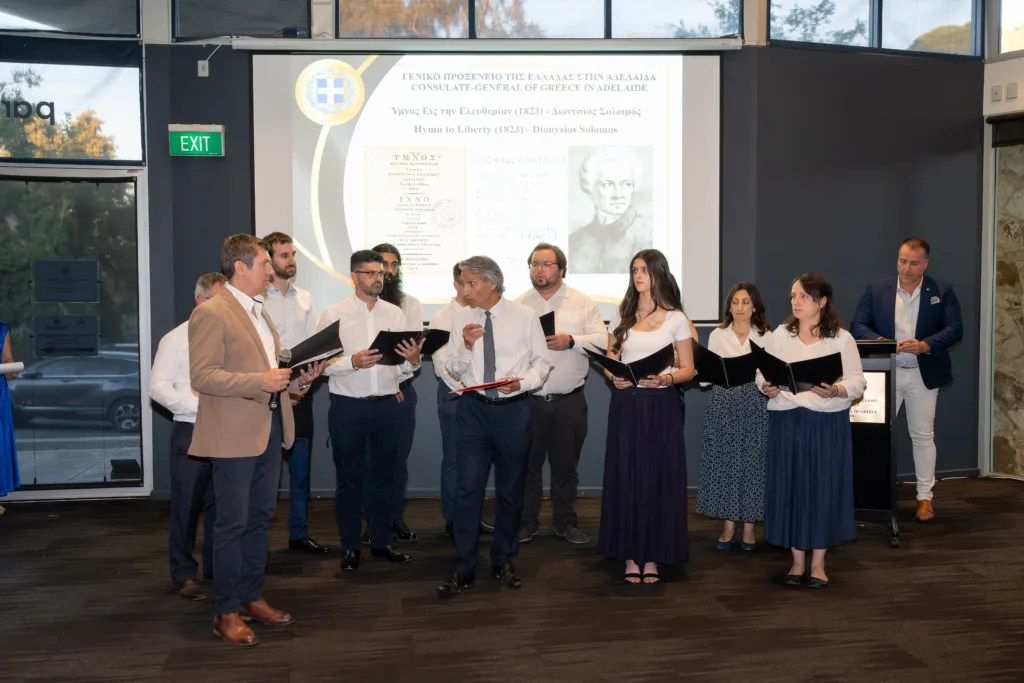
Before speeches, the Choir of the Byzantine Music School of Australia in Adelaide performed the Greek and Australian national anthems, followed by a hymn, known as the Kontakion of the Mother of God, or the Akathist Hymn (Ipermaho).
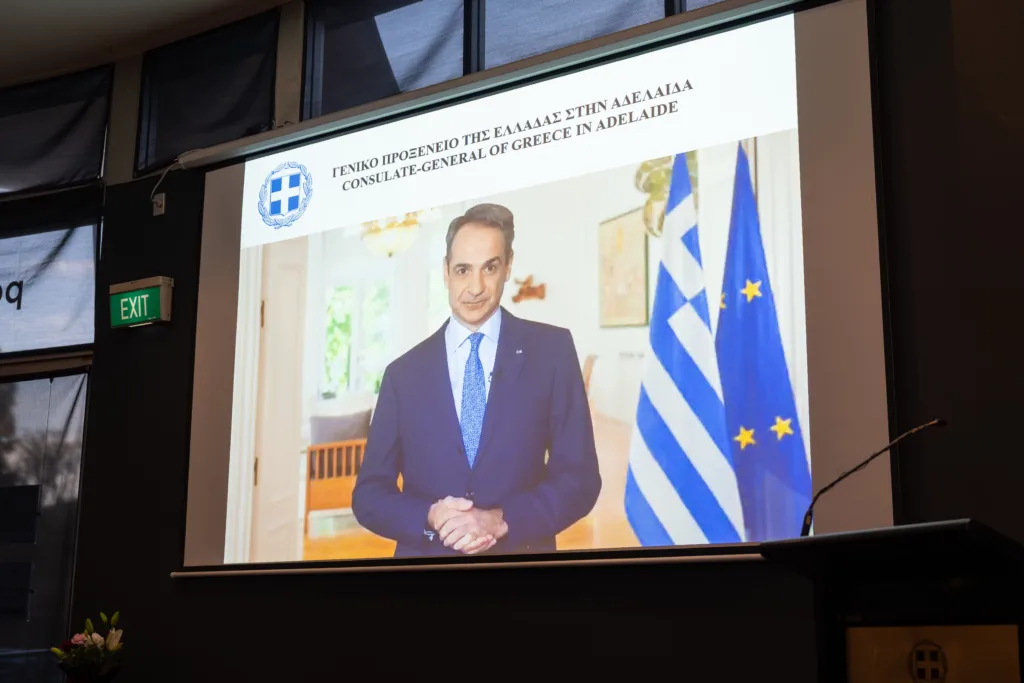
A video message from the Prime Minister of Greece, Kyriakos Mitsotakis, was also conveyed, acknowledging the importance of the Greek diaspora in preserving and advancing Hellenic identity across the world.
‘Today is not simply a celebration. It is indeed a moment of responsibility’
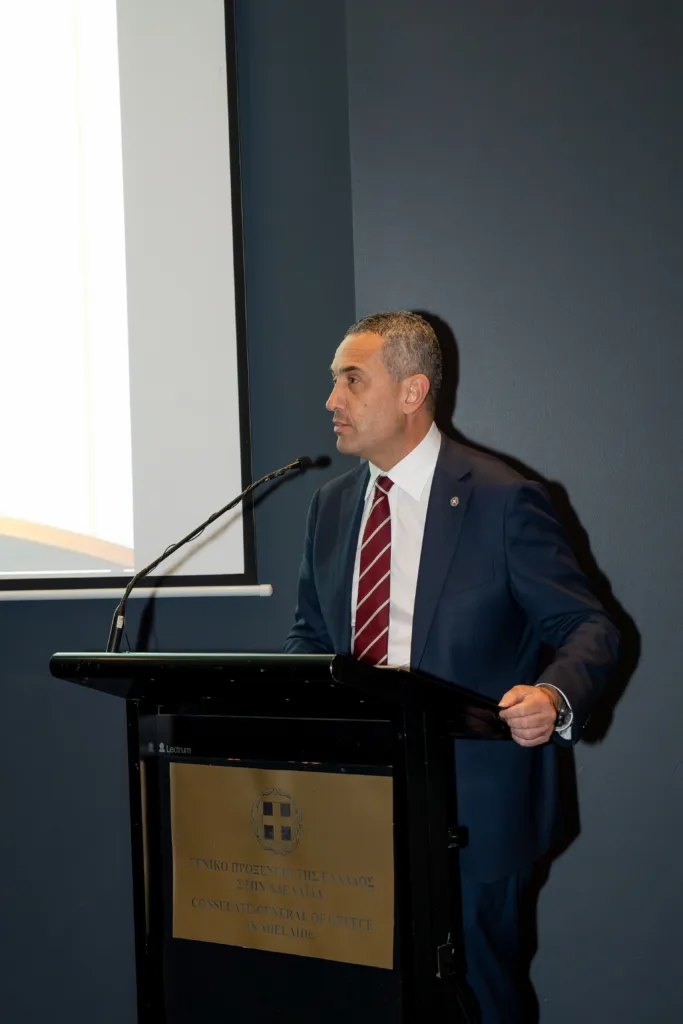
Treasurer of South Australia, the Hon. Tom Koutsantonis MP, delivered a deeply reflective address, situating the Greek Revolution within a broader historical and moral framework.
“Today is not simply a celebration. It is indeed a moment of responsibility, a responsibility to remember, not selectively, but truthfully, a responsibility for honour, burning triumph, a sacrifice, our responsibility to carry forward, not just stories, but identity,” he said.
Minister Koutsantonis, tracing the origins of Hellenistic identity, emphasised that Greece endured as an idea long before it re-emerged as a state: “Greece did not exist as a state, but it endured as an idea. That idea was preserved not in palaces but in churches, not in armies, but in families, not in institutions, but in faith.”
Central to this endurance, he argued, was the role of the Orthodox Church.
“It preserved our language and liturgy. It gathered history through tradition. It nurtured identity through faith, and when the moment came, it did not stand aside. From the blessing of the revolutionary banners, to the martyrdom of our patriarch, Gregory the Fifth…” he said.
Minister Koutsantonis then turned to the more difficult chapters of modern Hellenism, emphasising that remembrance must extend beyond triumph to encompass the tragedies, particularly the destruction of some of the oldest continuous Greek communities in the early twentieth century, including those in Asia Minor and Pontus, where populations were killed, displaced, and forced into exile, resulting in civilisations and communities being uprooted within a single generation.
‘We celebrate our 205th anniversary of the Declaration of our revolution’
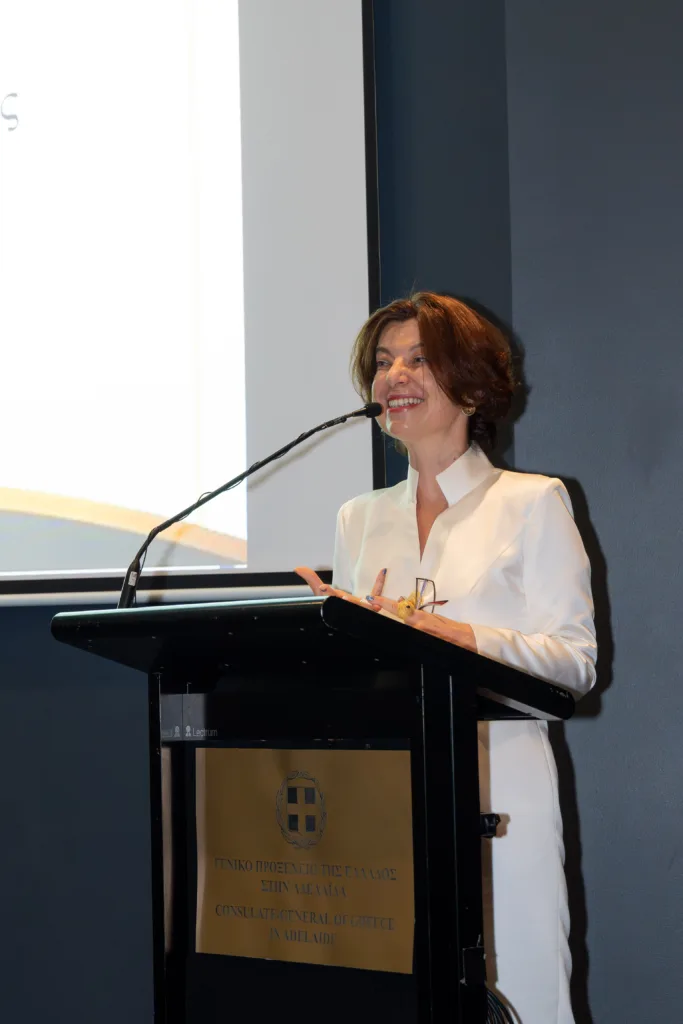
Consul General of Greece in Adelaide, Dr Alexandra Theodoropoulou, followed with an address, which commenced with emphasising the continuity of Greek civilisation, tracing its origins from prehistoric settlements in mainland Greece through great ancient civilisations of the Minoans and Mycenaeans, to the Archaic era in which Hellenes formed city-states across the Mediterranean, alongside the development of the Greek alphabet and the emergence of Homeric epics, highlighting that Hellenism has remained continuous since the Iron Age through to the Ottoman period, with this unbroken cultural and linguistic heritage forming a central part of Greek identity.
Dr Theodoropoulou highlighted the global dimension of Hellenism, emphasising both the scale of the diaspora and its historical role in the struggle for independence.
“There were approximately 5 million Greeks living in the diaspora, almost half as many as the ones grieving living in mainland Greece. So wherever there are Greeks, there is the pride and the love of Greece,” she said.
“After all, the Greek Revolution would not have started without the support of Greeks living in every part of the world, especially in Europe. Those beliefs gathered, raised funds, arms, and equipment, [lobbied governments], as well as international awareness to the Greek cause, including the first secret society (Filiki Eteria)…
“They also played a role to the rise of the wave of philhellenism, not only in Europe, but worldwide, including United States and Latin America, where the wars of independence were also taking place at the same time, and they would see the Greek fight as a symbol of all the people’s fight.”
A central moment of her address focused on the tragedy of Missolonghi, which she described in stark and vivid terms as marked by extreme suffering, with civilians driven to desperation; Dr Theodoropoulou explained that most were slaughtered by Ottoman and Egyptian forces waiting outside, while others chose death over capture, resulting in only a small fraction of the 10,000 escaping alive. This tragedy resonated across Europe, transforming Missolonghi into a powerful symbol of sacrifice.
Carrying the legacy forward
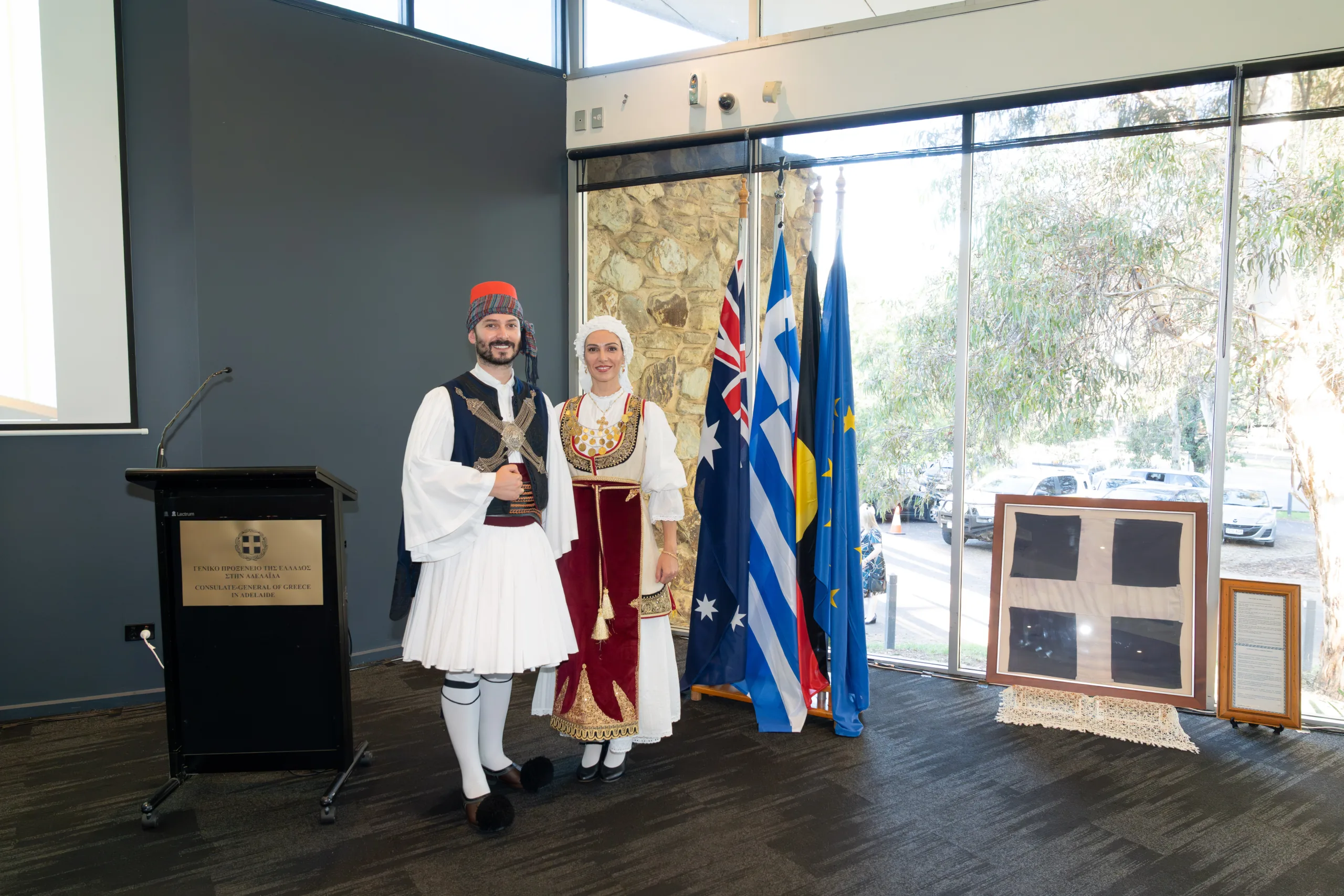
Following the formal proceedings, the evening continued with dancing, including the emotional and sorrowful dances of Zalango and Makrinitsa (Destruction of Naousa), led by the Greek Orthodox Community of SA (GOCSA) Dance Academy.
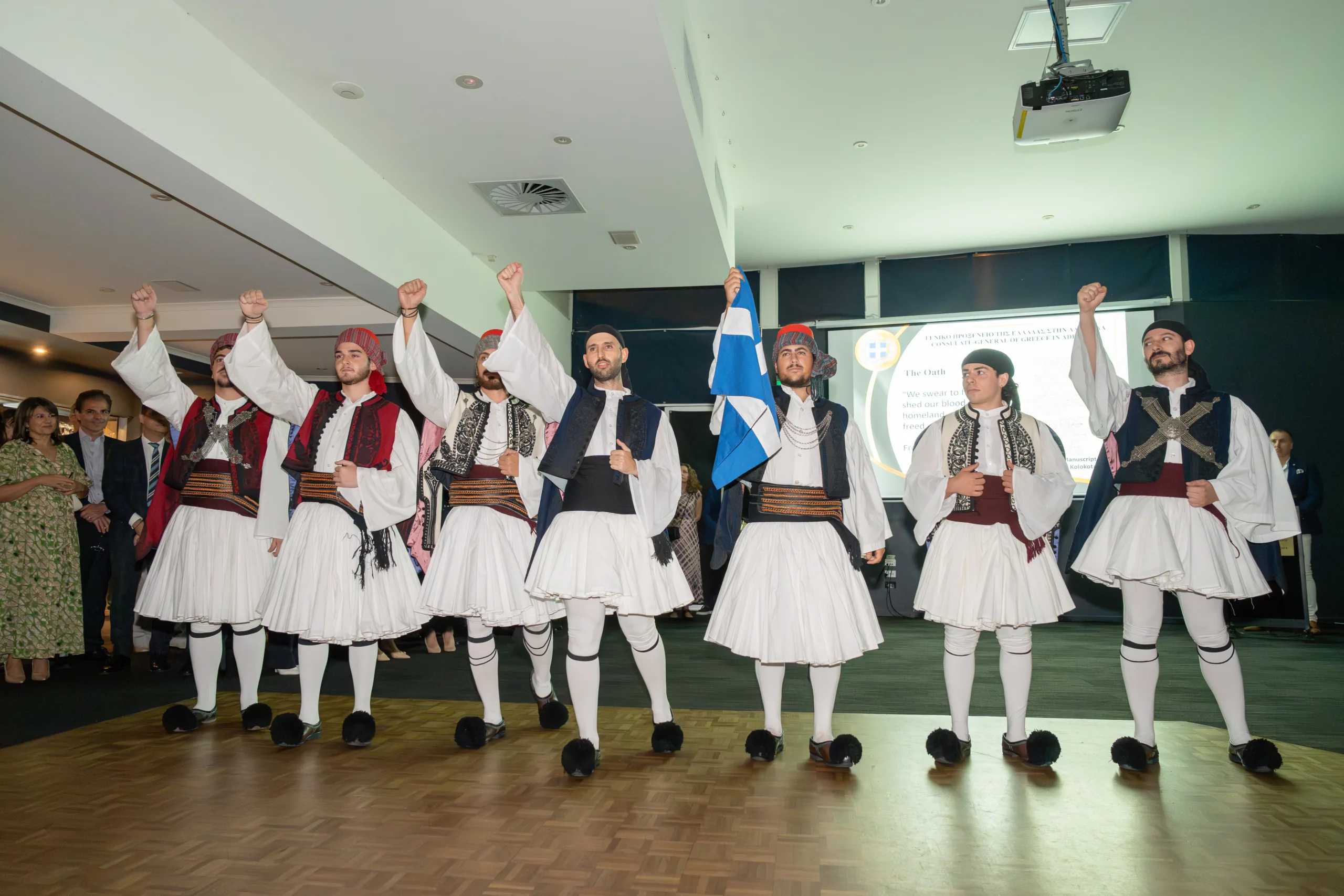
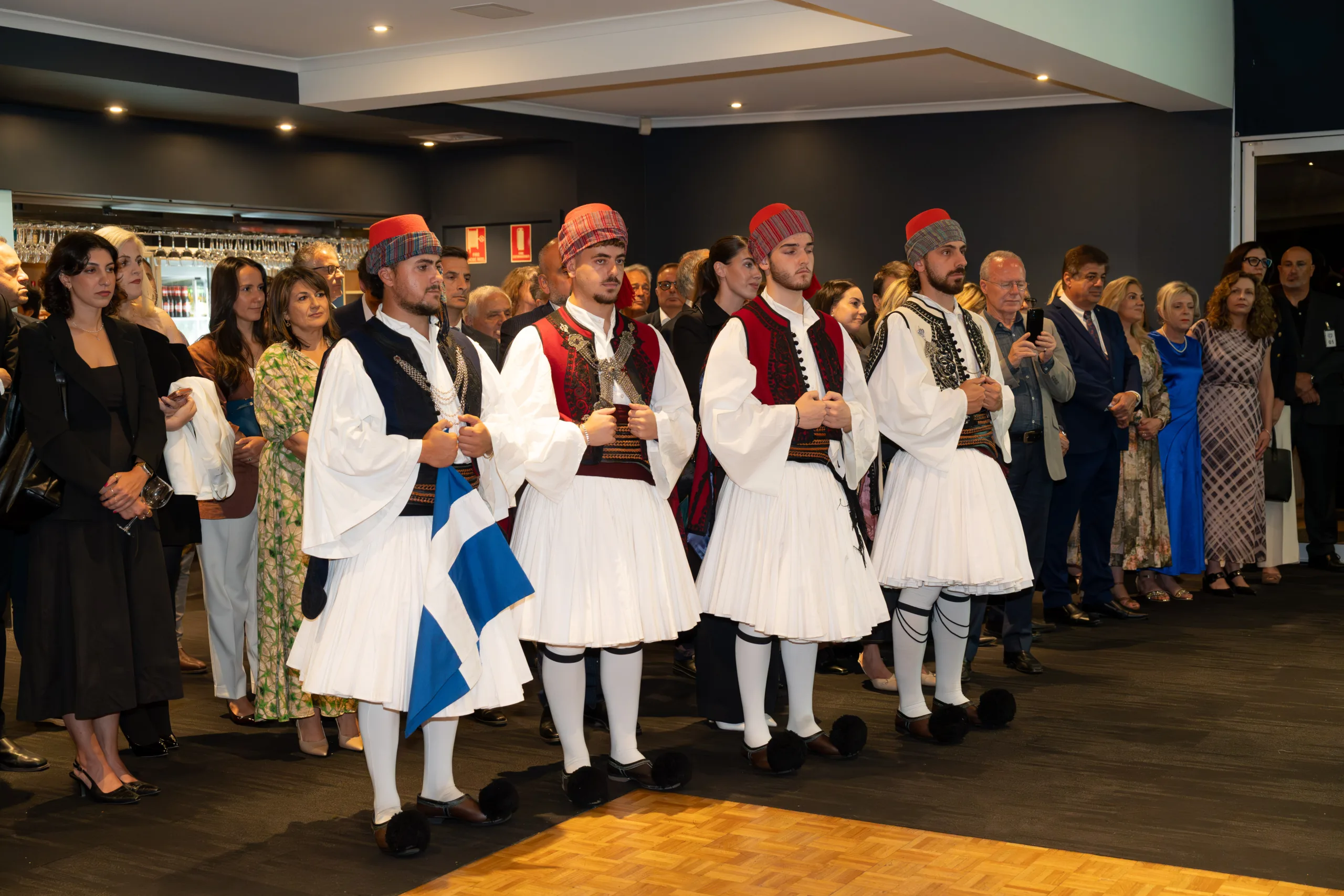
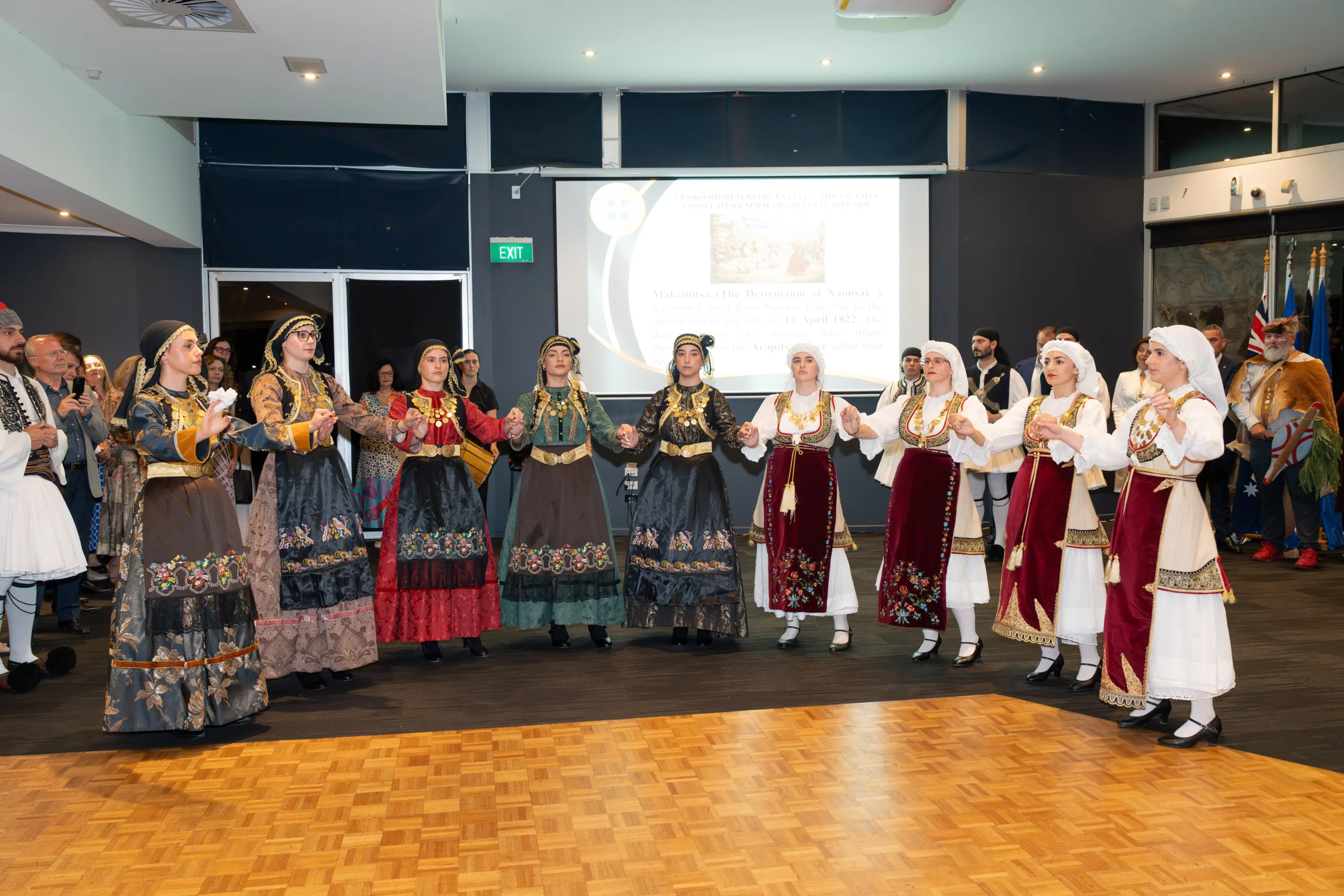
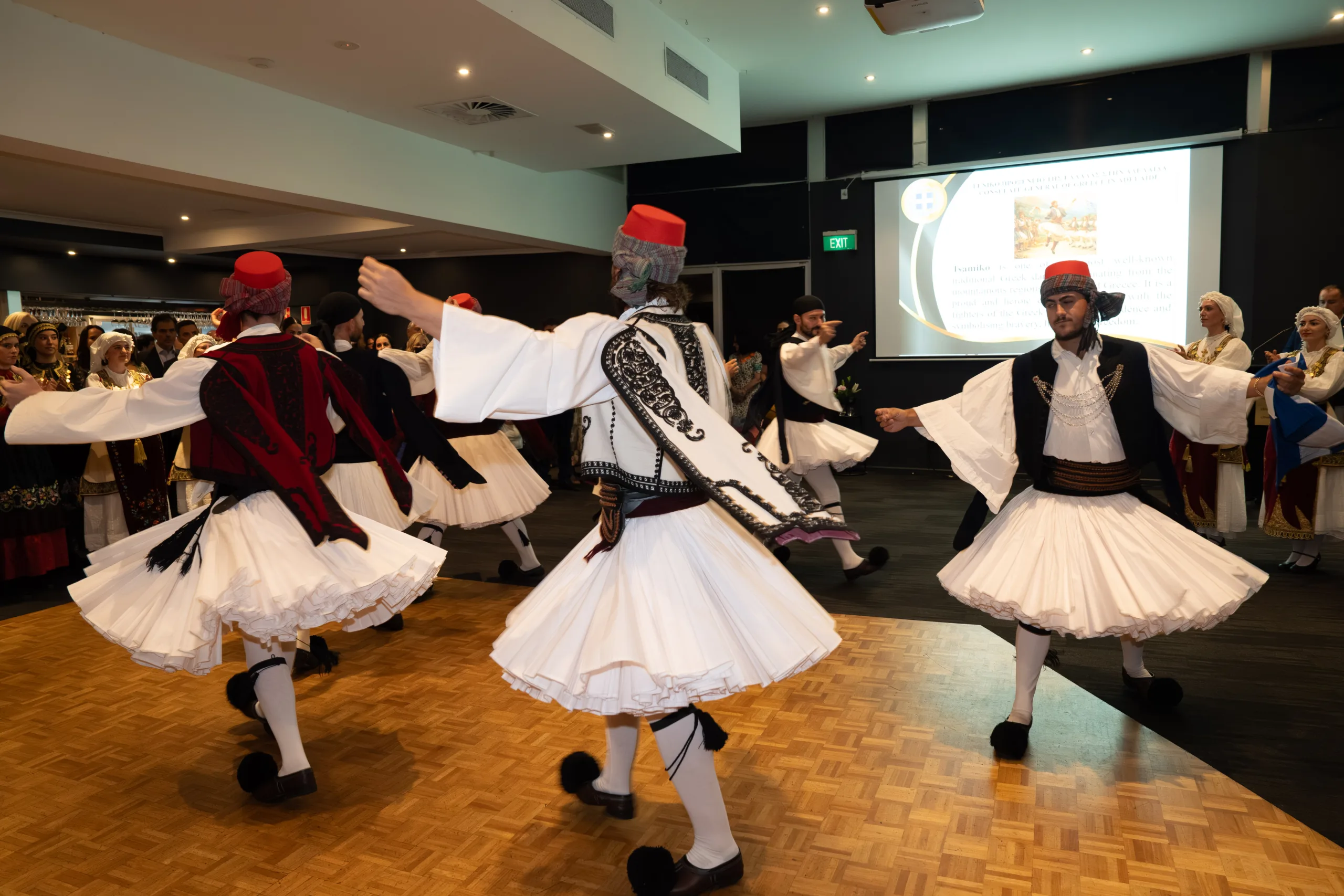
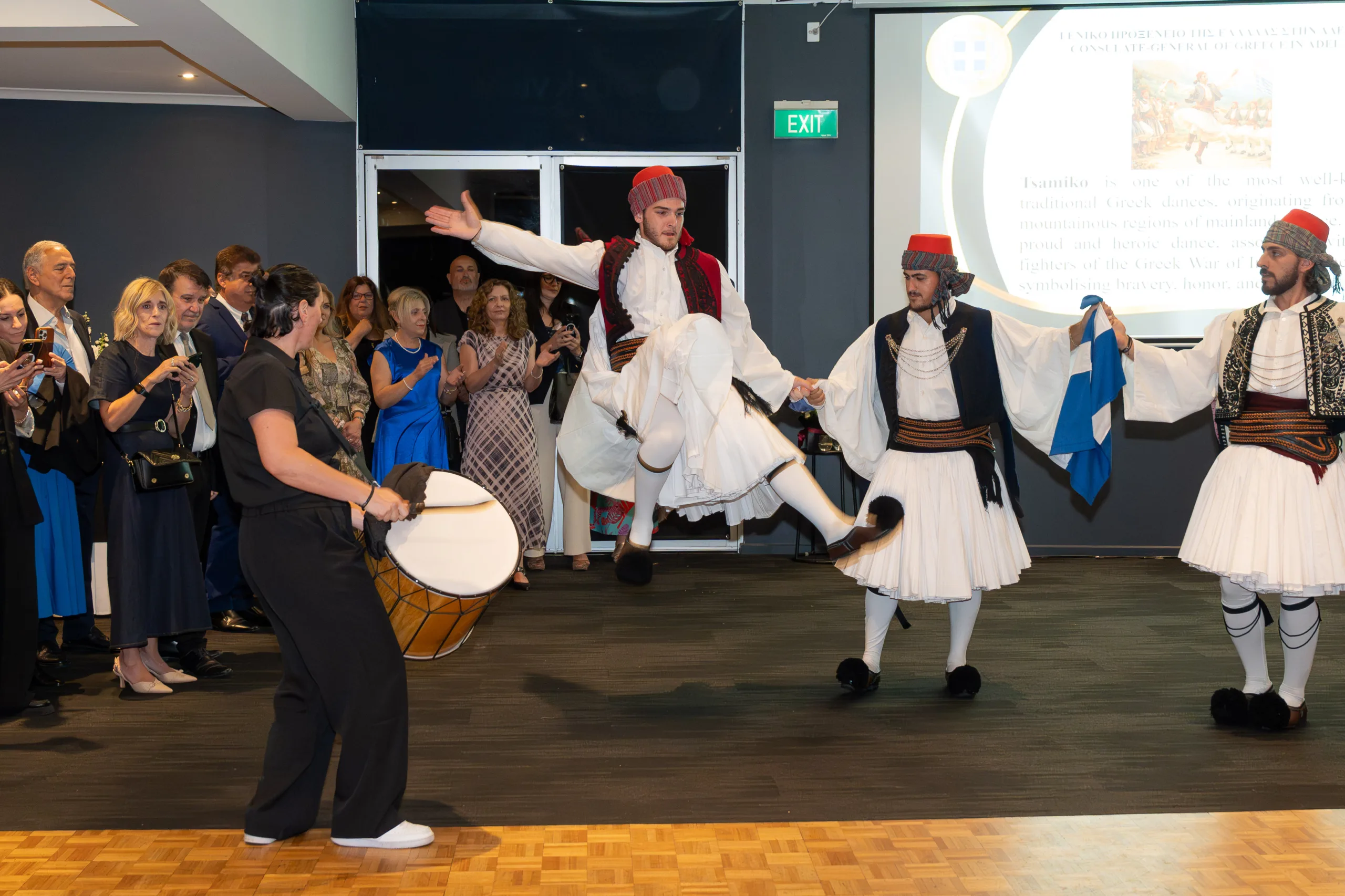
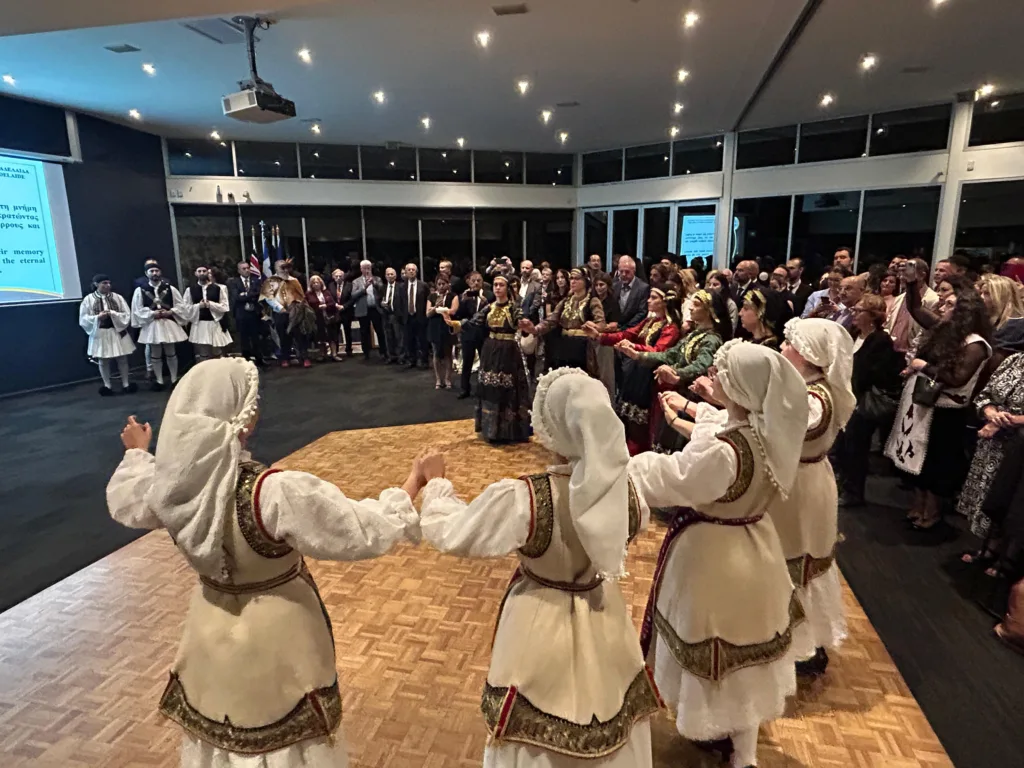
As in generations past, the commemoration of March 25 served not only as a remembrance of history, but as a reaffirmation of responsibility and a living commitment to preserve, embody, and transmit Hellenism to future generations.
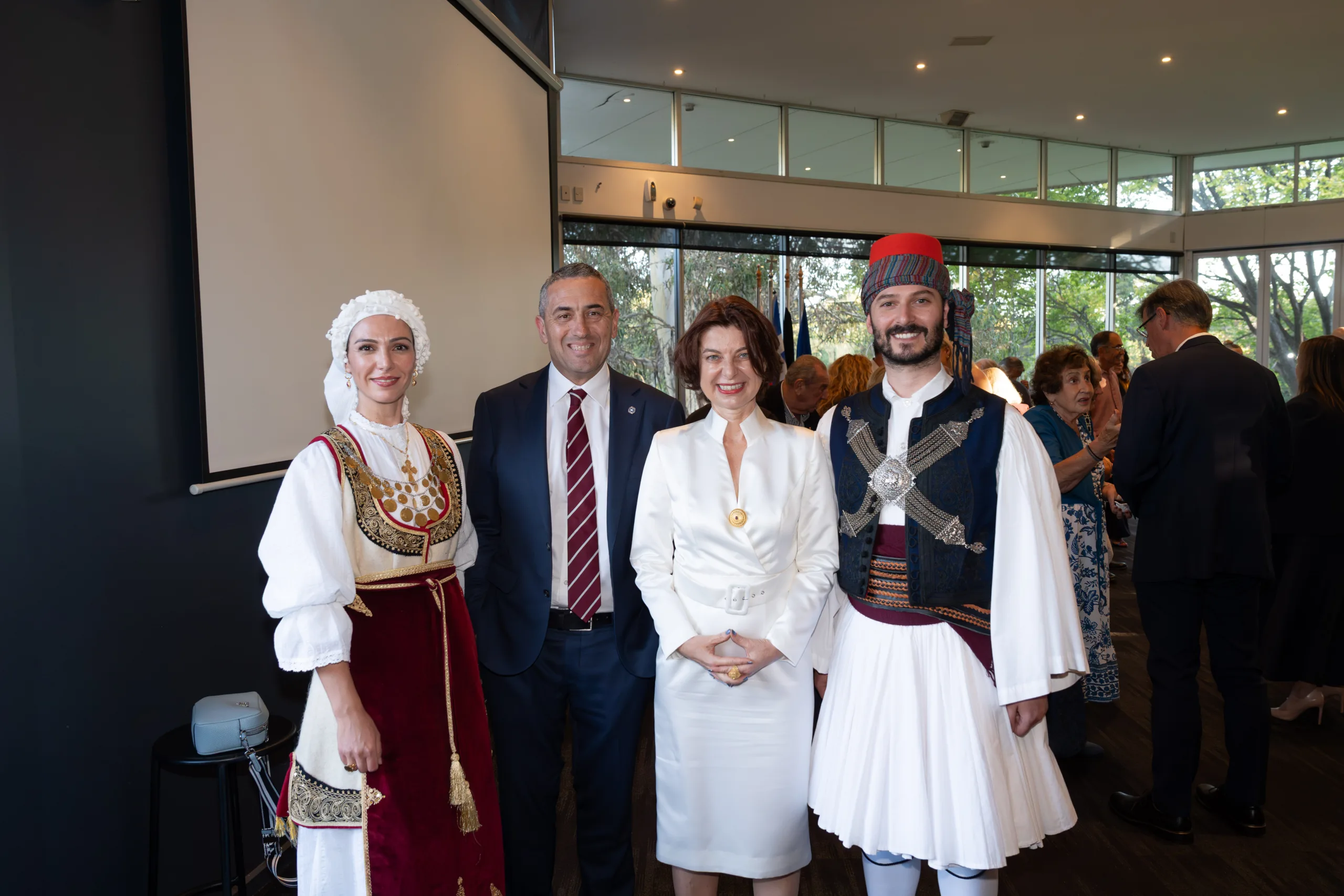
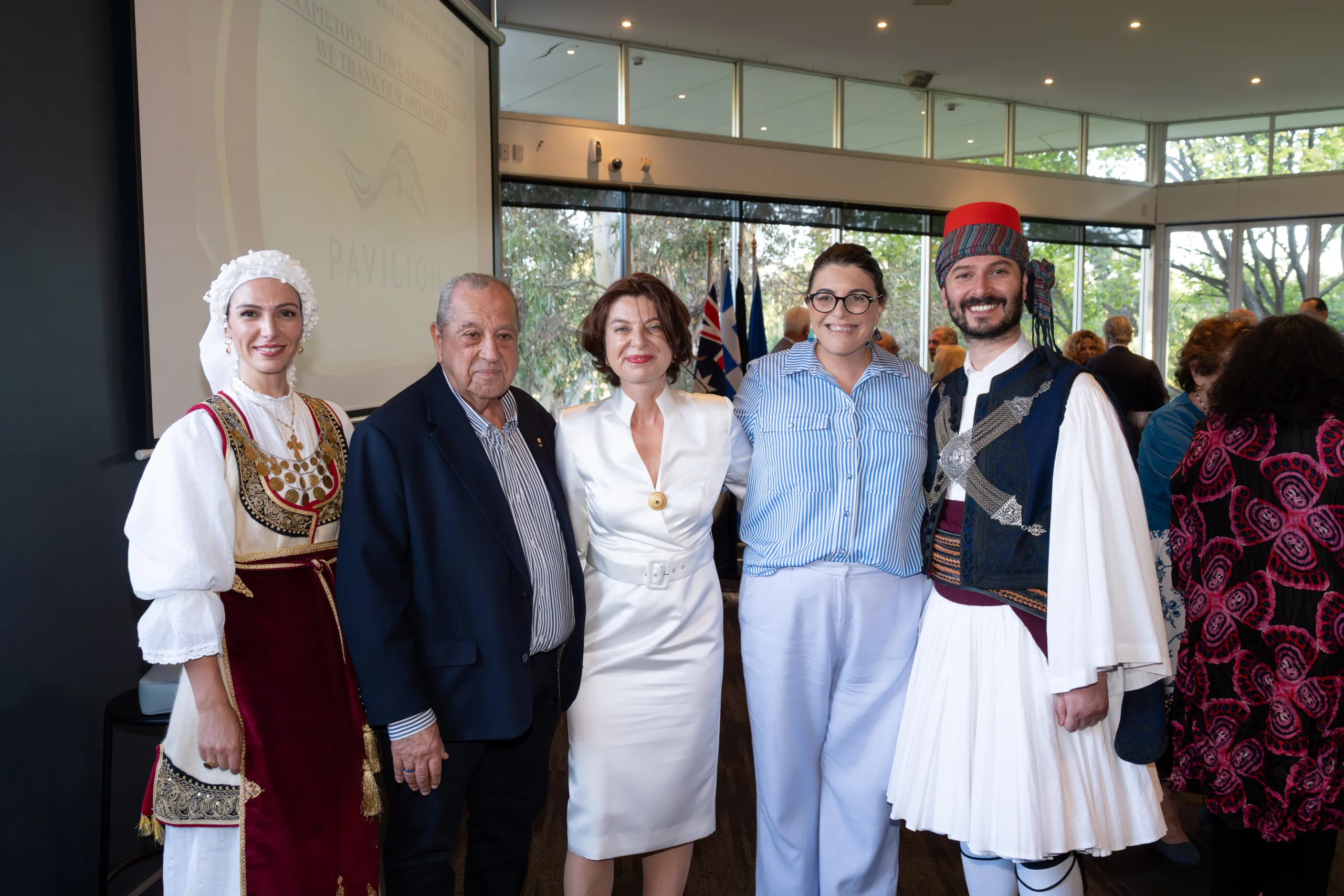
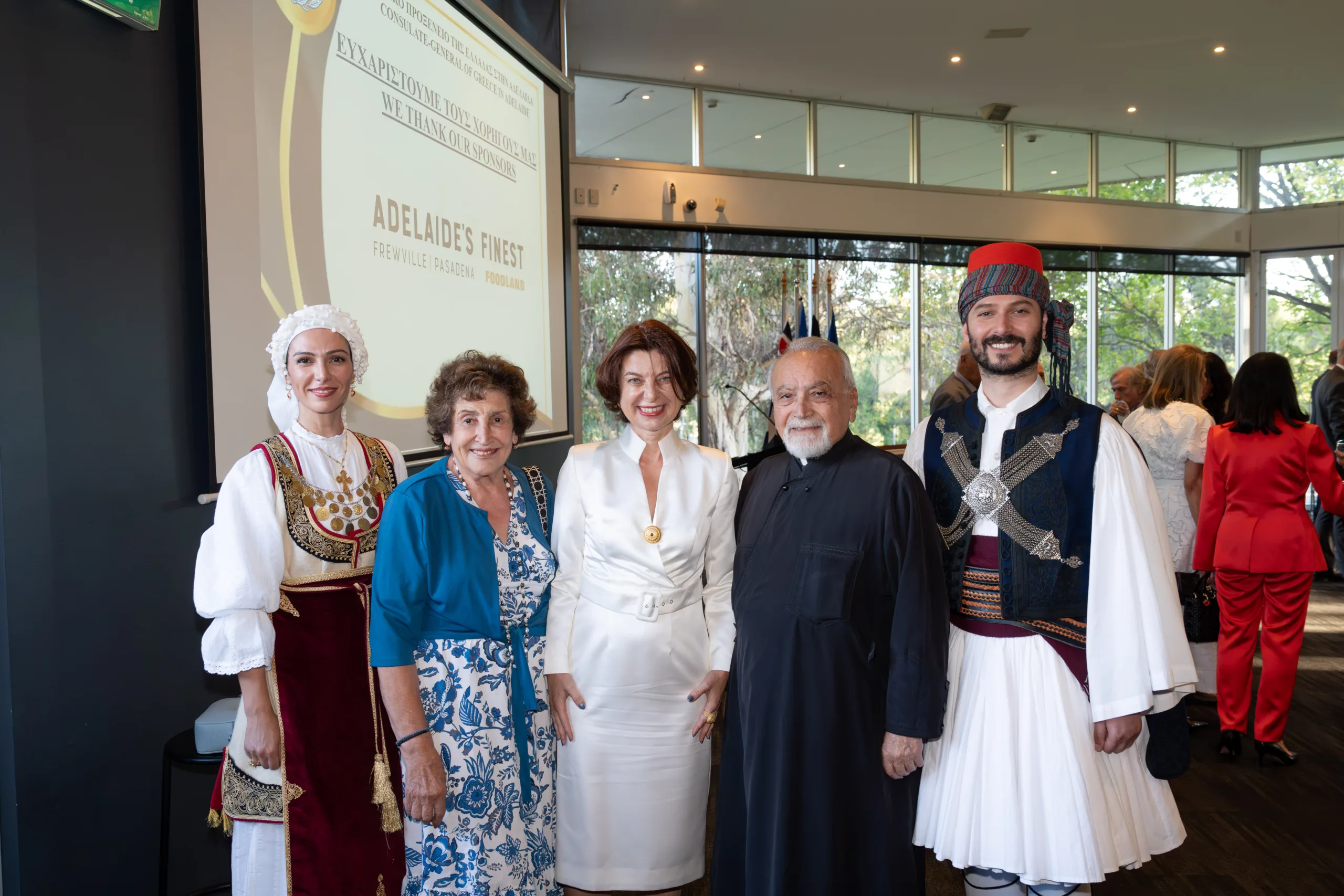
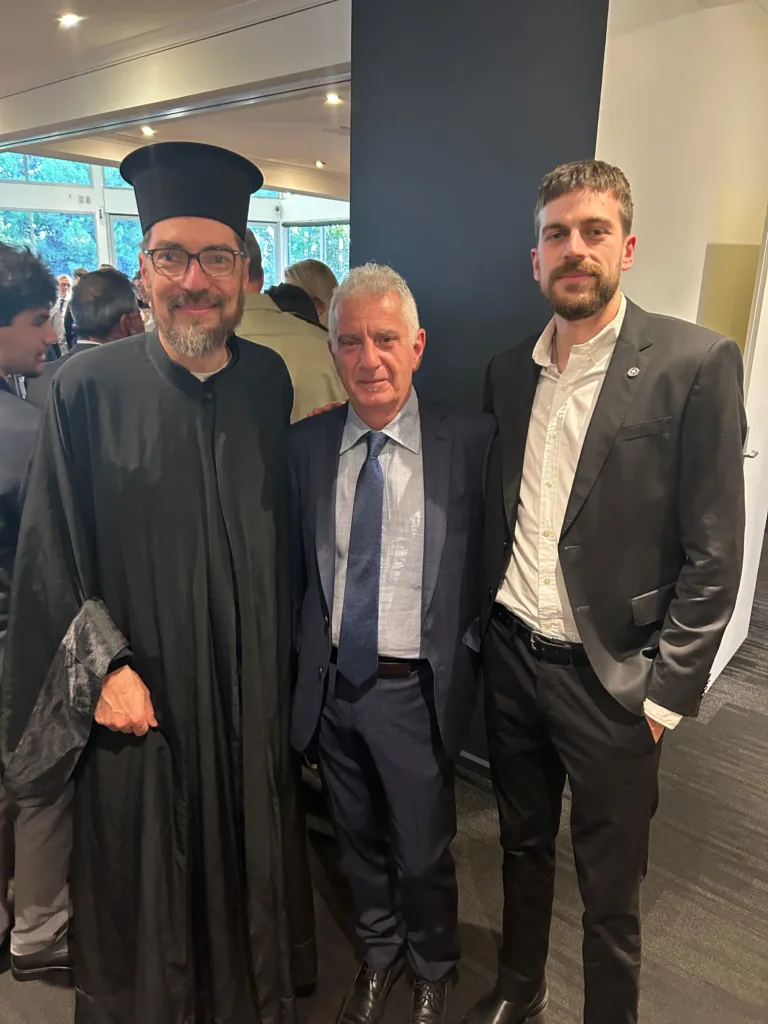
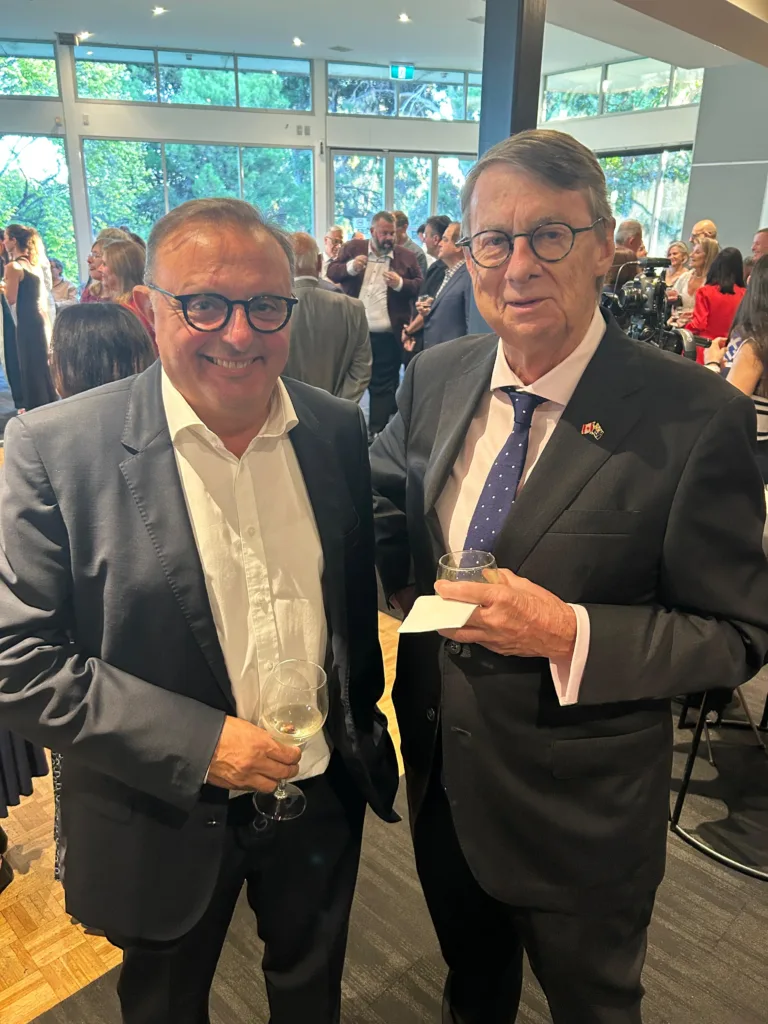
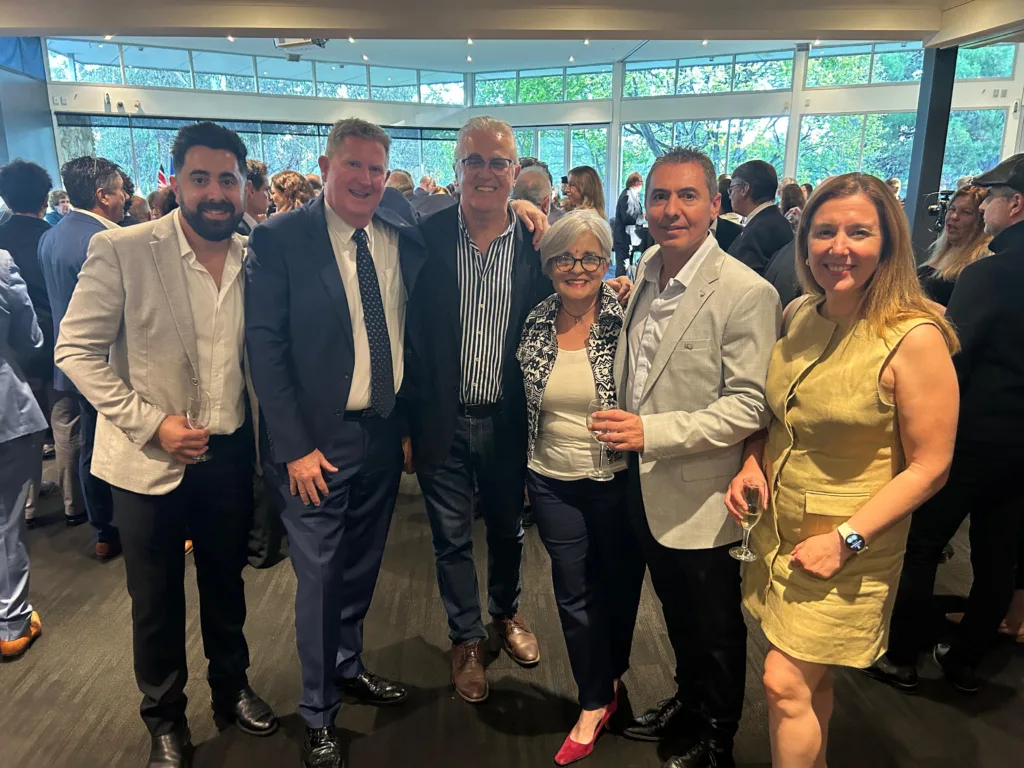
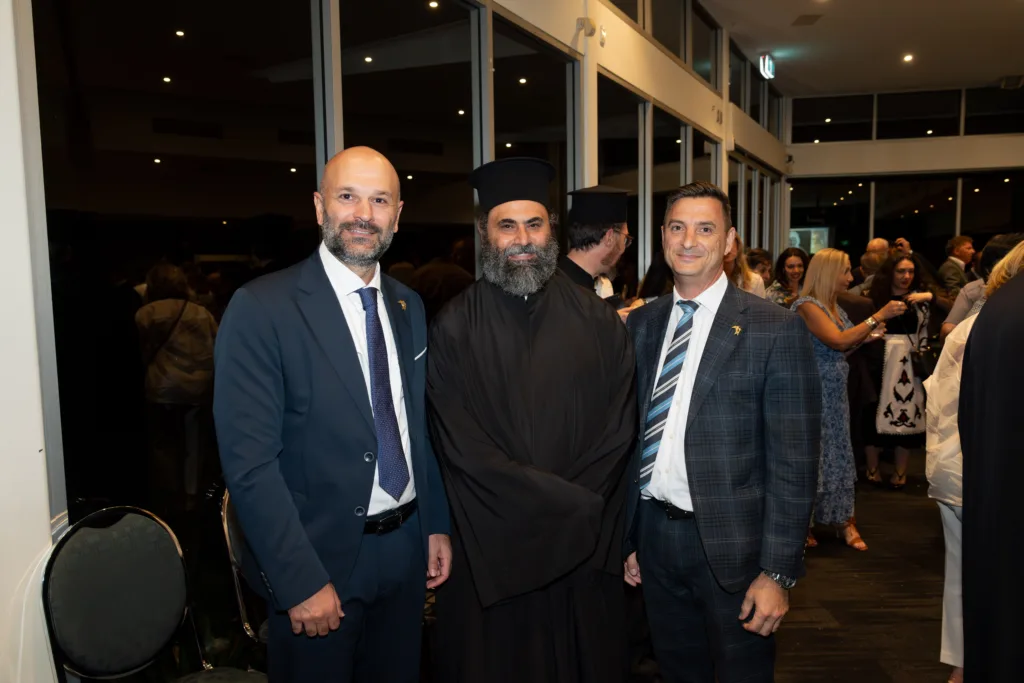
Dignitaries included, but not limited to, The Hon. Tom Koutsantonis MP, Treasurer of South Australia, The Hon. Nadia Clancy MP, Minister for Small & Family Business and Minister for Multicultural Affairs, The Hon. Aria Bolkus MP, Member for Colton, The Hon. Chris Kourakis AC, former Chief Justice of South Australia, Mayor Michael Coxen, City of West Torrens, His Grace Bishop Silouan of Adelaide.
*All photos copyright: Zara Dimitra Photography
