By Peter Maneas
Every Greek Australian carries a village in their pocket. For my family, that village is on Kythera – and this month, a team of archaeologists from the University of Sydney is starting to dig into 5,000 years of our story there.
The project is called EVOKE – Exploring Vythoulas Origins in Kythera Environs.
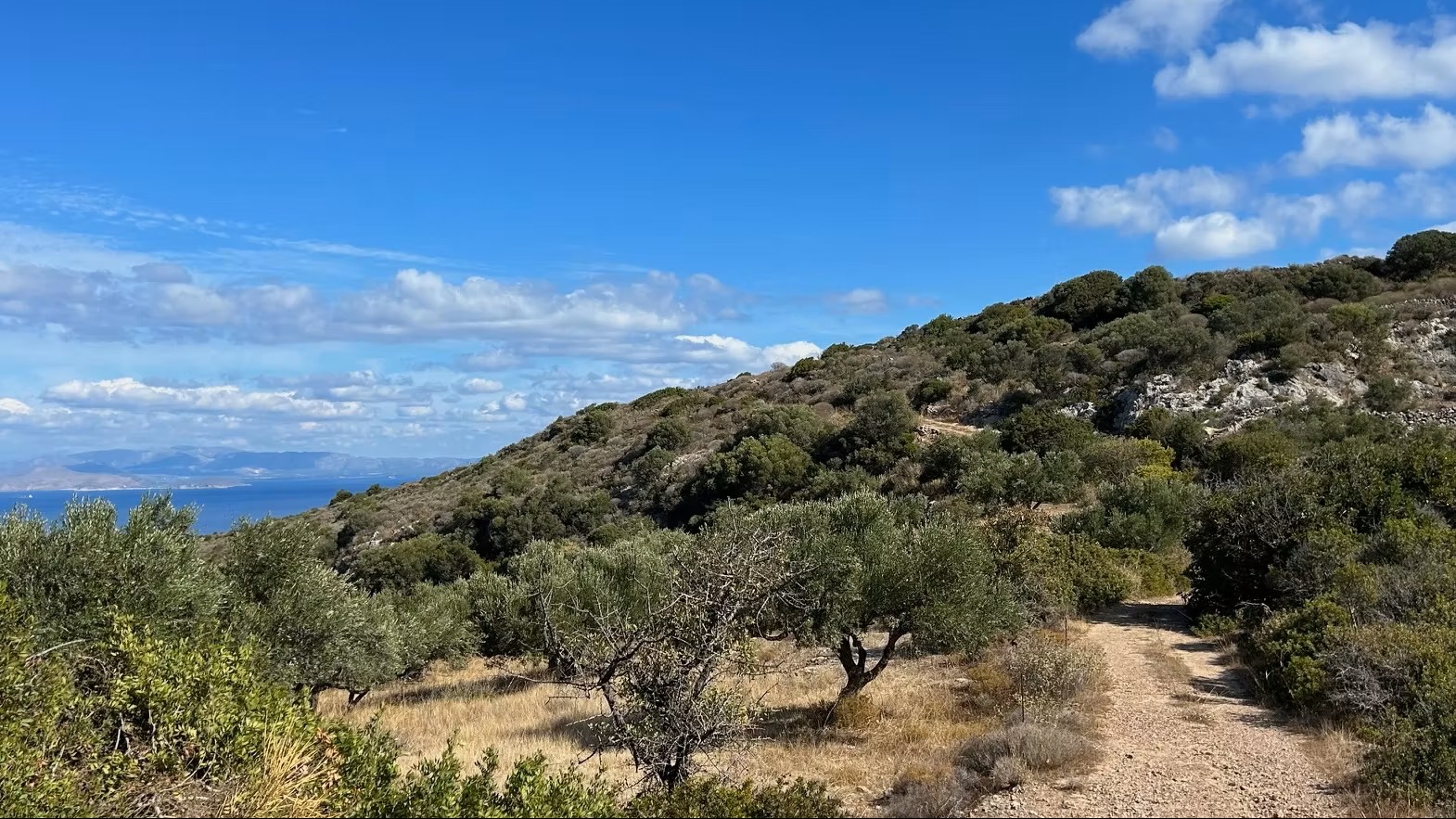
Vythoulas, in the island’s northeast, is the only known place on Kythera where people have lived continuously from the Neolithic period to today. Stop and think about that for a second. The same stretch of land that fed Neolithic farmers also fed Byzantine monks, Venetian traders, our great-grandparents, and still feeds the goats and olive groves you’d walk past if you visited tomorrow afternoon.
One hillside. Five thousand years of the same families, the same problems, the same sea on the horizon.
EVOKE is led by Professor Tamar Hodos, with Dr Konstantinos Trimmis directing the fieldwork. The project manager is someone many of us already know — Dr Lita Tzortzopoulou-Gregory, who has quietly spent decades putting Kytherian archaeology on the international map. The team has the excavation permit from the Hellenic Ministry of Culture and starts work in mid-June.
This isn’t archaeology for archaeology’s sake. EVOKE is asking very modern questions: how did communities survive on a small island with so little water for thousands of years? What can their answers teach Kythera today, when the island faces water scarcity, wildfires, and tourism pressure?
Five thousand years of trial and error is a serious dataset, and these are exactly the questions our island needs answered if it’s going to stay liveable for our children and grandchildren.
There’s also a piece of EVOKE built specifically for us – the diaspora. The research will be turned into bilingual educational materials for schools both on Kythera and here in Australia, and into exhibition content for Kythera’s new Migration Museum and for the Hellenic Museum in Melbourne. Our kids and grandkids will be able to walk through those exhibits and see, in plain Greek and plain English, where their families actually come from. That’s a gift that keeps giving long after the dig is finished.
Here’s the catch. Excavations are expensive. EVOKE has secured most of its funding through the University of Sydney, but the project is still about AUD $30,000 short of what it needs to run a full first season. That last gap is where the Greek Australian community comes in. Donations from Australian taxpayers are fully tax-deductible. You can give through the University of Sydney at give.sydney.edu.au/FASS – tick “I would like to give to another area of the University,” then select Department of Archaeology. That’s it. Every dollar, big or small, goes straight into the dig.
And here’s the bit I love most. If you support the project and you’re heading to Kythera this summer, you’re warmly invited to visit the site and meet the chief archaeologists in person. Walk the trench. Ask Lita a question. Stand in the spot where a Neolithic family once stood and look at the same sea they did. Get a bit of Kytherian dust on your boots. That’s a holiday memory you won’t find in any guidebook.
Our parents and grandparents left Kythera because the island was hard. They built new lives for us here in Australia, but most of them never really stopped looking back over their shoulder. EVOKE is one of the rare projects that lets us look back and forward in the same breath – preserving where we came from while helping the island survive what’s coming.
If you’ve ever stood on a Kytherian hillside and felt that pull in your chest – this is your chance to do something about it.
HOW TO SUPPORT EVOKE
To donate (Australia, tax-deductible): give.sydney.edu.au/FASS → tick “I would like to give to another area of the University” → select Department of Archaeology. To follow the dig: https://www.dioramasproject.org/evoke
