By Dean Kalimniou
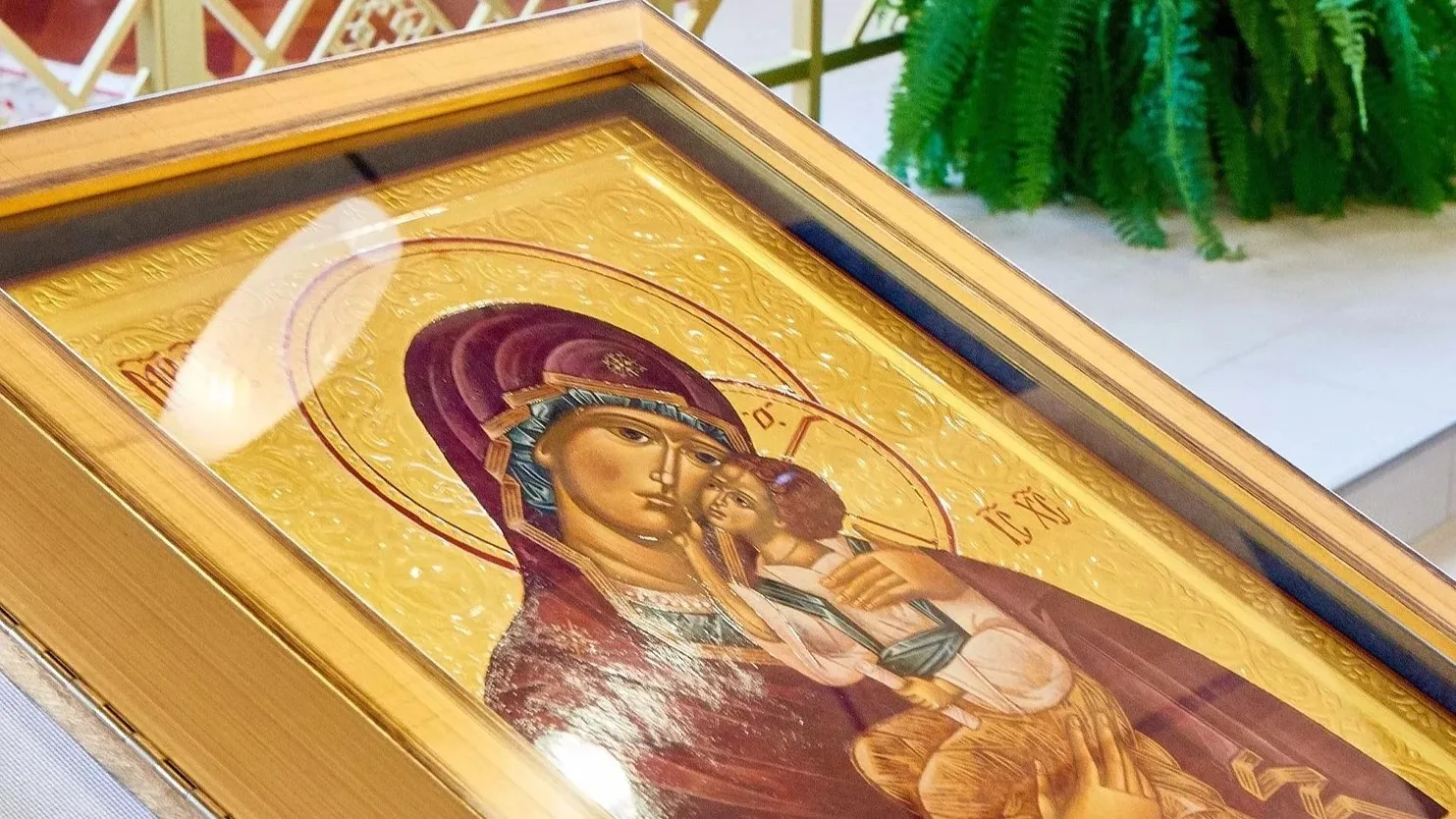
The Akathist Hymn is sung most prominently during the Fridays of Great Lent within the Eastern Orthodox liturgical cycle, often in dimly lit churches where the faithful remain standing throughout its recitation. It unfolds as an act of communal endurance and as a sustained poetic offering of praise to the Theotokos. Its cadences, repeated annually and frequently committed to memory, take root in the body as much as in the intellect.
A feminist approach, pursued with restraint, allows the hymn to be perceived with greater clarity, its textures opening onto a field of meanings that extend beyond devotional immediacy while preserving its spiritual integrity. The temporal setting of Great Lent intensifies this experience.
The hymn is situated within a season marked by fasting, restraint, and heightened attentiveness to the body. Standing through the service, often in subdued light, the faithful enter into a discipline that is at once physical and spiritual. The body becomes receptive, alert, and attuned.
Within this ascetic framework, the repeated invocation of the Theotokos acquires particular resonance. Her embodiment of divine presence is contemplated through bodies that are themselves being reoriented toward receptivity. Theology and practice converge within a shared rhythm of endurance and praise.
At the level of structure, the Akathist operates through accumulation. The successive salutations, “Rejoice, O Unwedded Bride,” “Rejoice, O depth unfathomable,” “Rejoice, O womb in which God was contained,” form what Julia Kristeva describes as a semiotic excess, a proliferation of language that presses against the limits of signification.
In her reflections on the maternal and the sacred, Kristeva identifies the figure of the mother as occupying a threshold between the symbolic order and what precedes it, a space marked by generative instability. The Theotokos of the Akathist inhabits precisely such a threshold. She is named within language, while language itself gestures toward what eludes articulation. The feminine emerges here as the site where representation is stretched and expanded.
A closer reading of individual salutations reveals how this excess functions syntactically. The line “Rejoice, O ladder by which God came down” introduces an image structured by movement. Descent and ascent are held together within a single figure. The divine passes into the world through the Theotokos, while humanity is drawn upward along the same path.
Likewise, the salutation “Rejoice, O bridge leading those on earth to heaven” establishes a spatial relation in which separation is overcome through passage. These images accumulate into a coherent symbolic field. The Theotokos appears as the locus of relation itself, the point at which distance is traversed and communion becomes conceivable.
This symbolic density may also be approached through Luce Irigaray’s critique of phallocentric discourse. Irigaray’s work suggests that Western symbolic systems frequently position the feminine as a reflective surface through which meaning is stabilised.
Within the Akathist, the body of the Theotokos serves as the medium of divine incarnation, while the articulation of that mediation takes shape within a theological discourse historically shaped by male authorship. The hymn’s metaphors, Theotokos as ladder, as bridge, as vessel, place her at the centre of mediation.
At the same time, the multiplicity and intensity of these images resist confinement within a single symbolic function. The theological density of the hymn becomes more apparent when read alongside the patristic tradition from which it emerges. In the homiletic poetry of Romanos the Melodist, the Theotokos is described as the one in whom the uncircumscribed becomes circumscribed. This paradox lies at the heart of the Incarnation.
The Akathist inherits and amplifies this logic, translating it into a sustained poetic form. Its language receives paradox as a necessity demanded by the mystery it seeks to articulate.
The question of idealisation, frequently raised within Feminist Theology, benefits from a more nuanced theoretical framing. Simone de Beauvoir’s account of woman as “Other” offers a useful point of entry. The Theotokos, within the Akathist, is elevated beyond all creation and at the same time distinguished from ordinary experience in ways that complicate identification.
Ashley Purpura notes that Marian hymnography can “deemphasize Mary’s humanity,” a formulation that can be situated within this broader analytical framework. The figure that emerges is exemplary and singular, inviting reverence while remaining set apart. A further dimension appears through Judith Butler’s theory of performativity. The repeated utterance of “Rejoice” enacts a liturgical identity for those who participate in the hymn. Through repetition, the faithful are formed as a community oriented toward the Theotokos, their subjectivity shaped through rhythm and voice.
Women, in particular, engage this performative dimension in ways that extend beyond textual description. Chanting becomes embodied participation, a mode of inhabiting the hymn in which agency is exercised within the continuity of tradition. This participatory dimension may also be illuminated through the Orthodox concept of synergy, the cooperation between divine grace and human freedom.
The Theotokos is presented as one whose assent enables the Incarnation without exhausting its meaning. Her response is not elaborated narratively within the hymn, yet it underlies each salutation. The repetition of “Rejoice” may be understood as a liturgical extension of that assent, echoed and inhabited by the community that sings it.
The interplay between text and practice may be further clarified through Pierre Bourdieu’s concept of habitus. The Akathist, repeated annually and often memorised, becomes inscribed within bodily disposition. It shapes posture, gesture, and expectation. Women formed within this tradition internalise its rhythms, discovering continuity and belonging within its repetition. Meaning unfolds through practice as well as through language.
The maternal imagery of the Akathist invites reflection through Sara Ruddick’s account of “maternal thinking,” which emphasises care, protection, and responsiveness. The Theotokos is addressed as “helper of the helpless” and “hope of the hopeless,” titles that situate her within a relational framework oriented toward vulnerability. Her presence is invoked in moments of need, her significance grounded in responsiveness.
An additional layer of interpretation may be drawn from Maurice Merleau-Ponty’s phenomenology of embodiment. In this perspective, the body becomes the primary site through which meaning is disclosed. The Akathist’s language concerning the Theotokos’ womb, her bearing of the divine, and her presence within salvation history may be read as a liturgical articulation of embodied transcendence. The Theotokos renders theological truth perceptible. Her body becomes the place where divine and human realities meet as lived experience.
Postcolonial feminist reflection adds further nuance. The Akathist’s reference to “your City” situates the Theotokos within the historical and political context of Constantinople. Gayatri Chakravorty Spivak’s work on representation invites attention to the ways in which such language constructs collective identity. The figure of the Theotokos as protector of the city articulates a shared sense of belonging. As the hymn travels across cultures, this imagery is recontextualised. The Theotokos is invoked within experiences of displacement, migration, and marginality, where protection takes on new meanings.
The question of power, central to feminist analysis, may be reconsidered through these frameworks. The Akathist attributes to the Theotokos titles of strength, “Champion,” “Defender,” “Invincible Wall,” situating her within a register of authority. Michel Foucault’s account of power as relational offers a way of interpreting this imagery. The Theotokos’ power is expressed through intercession and presence, through proximity rather than domination. Strength appears here as relational capacity rather than institutional control.
Feminist readings of the Akathist remain varied. Some attend to the implications of idealisation, noting the ways in which singular representations of holiness may obscure the plurality of women’s lives. Others emphasise the capacity of Marian devotion to sustain continuity, resilience, and meaning within lived experience. These approaches coexist without requiring resolution. Their plurality reflects the richness of the tradition itself. The enduring devotion of women to the Akathist confirms this complexity.
The hymn is encountered as lived practice, accompanying the rhythms of life, sung in sorrow and in celebration. Its meanings emerge through participation as much as through interpretation. In its final movement, as the hymn gathers its images into a sustained cadence of praise, it reveals its underlying logic. It speaks through repetition, through paradox, through accumulation.
Theory enters this movement as a mode of attentiveness, clarifying without exhausting meaning. A feminist perspective shaped by these insights enables a more precise encounter with the hymn, where devotion and reflection are held in continuity. Within this horizon, the Theotokos remains a figure of enduring significance, whose representation continues to invite reflection.
The Akathist stands as a text in which devotion and thought converge, offering itself to each generation as a space of renewal and understanding.
