By George Vardas*
When the first issue of the Panellinios Kiryx (Panhellenic Herald) rolled off the press in Sydney on 16 November 1926, few could have predicted that the newspaper that would later be renamed the Hellenic Herald would become Australia’s longest-running Greek newspaper and one of the most consequential institutions in the life of the Greek-Australian community.
Yet that is precisely what happened. A century later, the Greek Herald (formerly the Hellenic Herald) remains a vibrant and diverse public forum for the Greeks of the diaspora to disseminate ideas, opinions and views and also serves as the custodian of the local Greek community’s written memory through its rich archival collections.
As Demetrios Tsingris has written: “With the publication of the Hellenic Herald commenced the written history of the Greek Community of Sydney. It is the most valuable historical source until 1945. The Hellenic Herald constituted the largest and broadest source of information about ecclesiastical events and religious life, social life, cultural and political activities, and also the financial and business affairs of the entire Greek community.”
The centenary thus provides an opportunity to examine the paper’s long relationship with the Greek Orthodox Archdiocese of Australia, especially where there was for a long time polarisation on church – community and political matters.
The Greek Herald emerged shortly after the establishment of the Archdiocese itself in 1924, and the two institutions have since stood as two, often clashing, pillars of Hellenic identity in the Australian diaspora. This relationship has been described by Professor Anastasios Tamis as reflecting a fundamental “dualism of power” between the secular, democratic traditions of the lay community – which the Herald championed – and the hierarchical, theocentric authority of the Church.
In January 1927 the Panhellenic Herald – under the ownership of John Stilson (Ioannis Dimisioglou), a refugee from Asia Minor, and the Kytherian restauranteur George Marsellos – was appointed the official organ of the Greek Orthodox Community of NSW which resolved that the paper was “fully capable of representing and promoting their best interests”.
The seeds of acrimony were sown even before the Herald’s first edition. The establishment of the Greek Orthodox Metropolis in 1924 had been met with fierce opposition from historical community (koinotikoi) leaders in Sydney and Melbourne, who feared the new Archdiocese would limit their authority and financial independence. This led to the establishment – after the Church of the Holy Trinity (Aghia Triada) in Surry Hills – of a second church (the Cathedral of Aghia Sofia in Paddington) in 1926 and was effectively the beginning of a prolonged schism.
The Greek Herald was vociferous in its opposition to the first Metropolitan, Christophoros Knetes, and published a succession of articles making damaging allegations about the Metropolitan’s personal conduct and sexual proclivities – allegations that would eventually lead to a notorious court hearing and perjury conviction that shook both the Greek community and Sydney society more broadly.
In the early 1930s, Demetrios Lalas and Alexandros Grivas acquired the paper, adopting a more flexible editorial approach although it continued to be the voice of the laity in its coverage of ecclesiastical affairs and in its promotion of the Greek Orthodox Community of Sydney as an institution.
Beyond its crusading journalism, the Hellenic Herald also played a secular pastoral role. When the Patriarchate failed to appoint a priest to the Greek Community of Sydney in the early 1930s, leaving about 300 families without one, the paper stepped into the vacuum. It urged the Community to appoint a priest without Patriarchal approval and was critical of the Patriarchate for refusing to act.
When Metropolitan Timotheos Evagelinides was finally appointed in September 1932 after years of turmoil, the Hellenic Herald welcomed the news and wrote of the enthusiastic reception for the new Hierarch in a double page spread, extolling that ‘at last the great day has arrived, brilliant and full of hope for Hellenism here.’
The paper’s editorial courage extended beyond the Church. When the Greek Consul General in Sydney intervened in the schism – urging Metropolitan Knetes’ reinstatement and claiming that marriages performed by the defrocked community priest, Archimandrite Athenagoras Varaklas, were invalid under Greek law and that children of those unions were illegitimate – the Hellenic Herald campaigned just as fiercely, even publishing the damaging letters from the Consul General’s office to the Premier of New South Wales.
The paper’s new editor, Grivas, would become a central figure. He had been associated with the Herald since its founding in 1926 and was now the almost permanent weekly article-writer of the Herald and commentator on community affairs. Due to his long fighting journalistic career and the skill and versatility of his journalistic pen, he was dubbed the “father of Greek journalism in Australia”.
But Grivas was also controversial with his caustic and critical articles. The basic targets for criticism were the person of the Metropolitan, the clergy and the Greek Consuls, rather than the institutions they represented. He was a prominent figure in the community for decades.
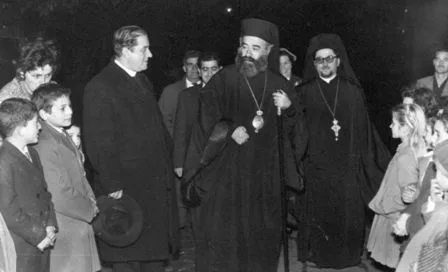
Archbishop Ezekiel Tsoukalas (1959–74), oversaw a turbulent time in church-community relations. With Greek Government approval, his new Archdiocesan Constitution gave the Archbishop sweeping powers to found churches, appoint priests, and sanction or deregister dissenters. When the old communities rejected it in October 1959, an ‘ecclesiastic civil war’ erupted. Adelaide broke first in June 1960, followed by Newcastle, Melbourne and Sydney. Ezekiel responded by excommunicating lay leaders, defrocking priests who stayed with the breakaway communities, and declaring their sacraments invalid.
The Greek Herald became a leading voice for this unrest, backing the historical communities as Ezekiel’s proposed “parish system” threatened to replace lay-controlled bodies with ecclesiastical parish communities. The newspaper provided a platform for those labeled as “rebels” and “schismatics”. It reported each break with the Archdiocese and complemented its coverage with editorials defending the communities’ clash with the ecclesiastical hierarchy.
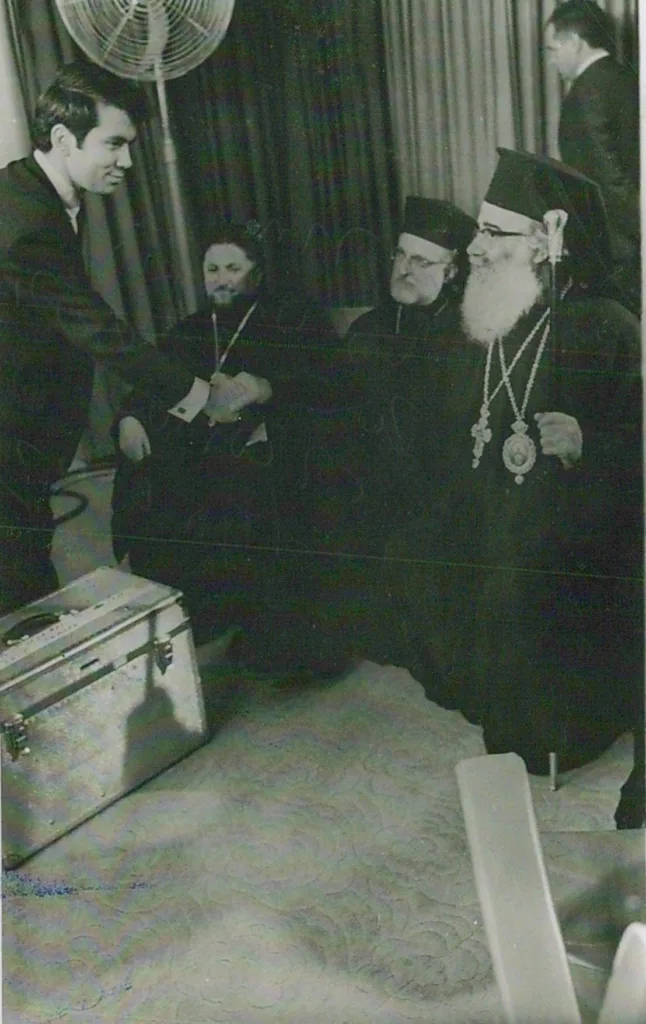
The media magnate Theodoros (Theo) Skalkos acquired the paper in the mid-1960s and his fierce commitment to independence fundamentally transformed the Greek Herald into a publication that he would later describe as the “bible to the Greek community”, claiming that if the Herald wrote about an event the readers believed it because the paper remained independent of any theocentric authority. The paper used this influence to challenge the Church’s narrative on what constituted “true” Hellenism.
In November 1976 Skalkos even attempted to create a global Federation of Greek diaspora publishers and wrote to other publishers of Greek newspapers enclosing a draft constitution of the proposed Federation and the copy of the 50th anniversary celebratory issue of the Greek Herald.
But Skalkos remained at loggerheads with the church and that mutual antagonism would endure for nearly four decades. Under Skalkos, the Greek Herald often refused to recognise the Church’s authority and this independent stance made him a controversial figure, and soon brought him into direct conflict with his ecclesiastical nemesis, Stylianos Harkianakis.
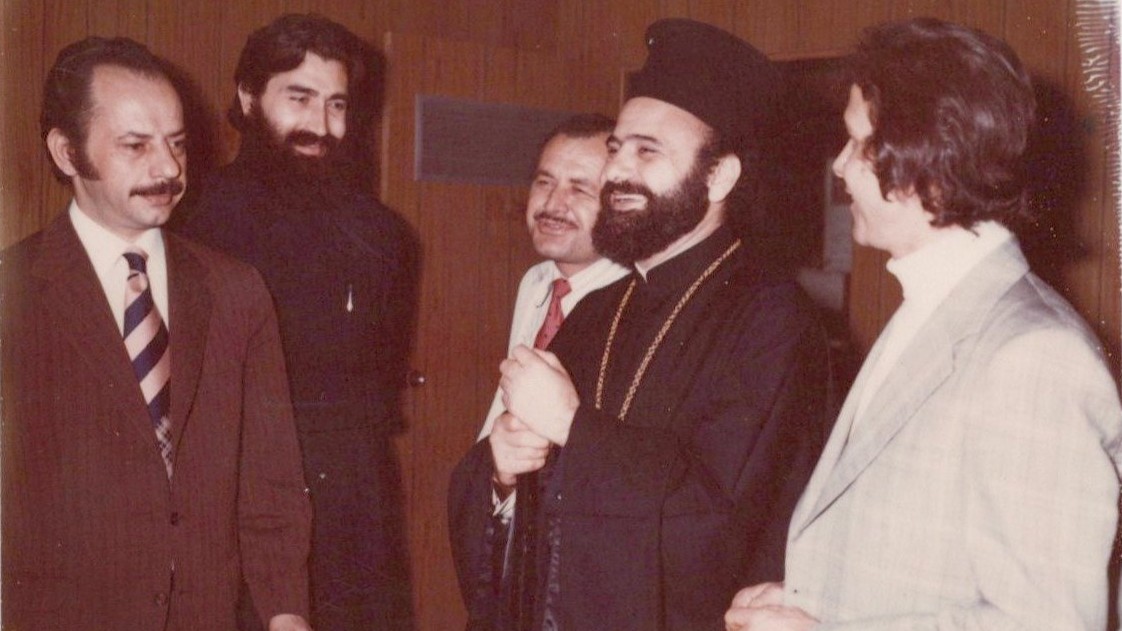
No figure looms larger in the modern history of the Greek Orthodox Archdiocese of Australia than Archbishop Stylianos who served as Primate from 1975 until his death in 2019 – a remarkable tenure of 44 years. Stylianos was a figure of formidable intellectual gifts: a theologian, poet and philosopher of genuine distinction who brought to the office a vision of Orthodoxy that was simultaneously rooted in patristic theological tradition and engaged with contemporary intellectual currents.
During his long tenure, Archbishop Stylianos strengthened the Archdiocese financially and administratively, while remaining deeply committed to the preservation of Greek language and culture. But he also proclaimed his belief that he was the Ethnarch (national leader) and asserted that he alone represented Australian Hellenism, for which he was often criticized.
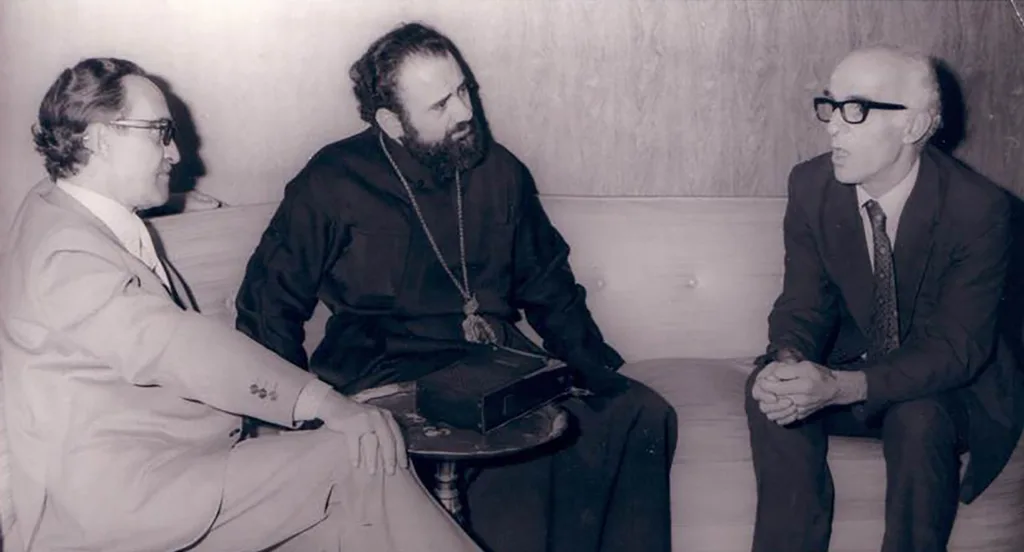
Stylianos supported the training of educated, Australian-born, English-speaking clergy through St Andrew’s College of Theology, while further consolidating Archdiocesan power by founding new parishes and placing them under the Greek Orthodox Archdiocese Property Trust, thereby reducing lay authority in the Church.
This consolidation of power was a frequent target of the Greek Herald’s criticism. The newspaper also highlighted how Archbishop Stylianos marginalised intellectuals, teachers, and secular leaders in the broader community, labeling them and any associates persona non grata if they dared to openly dispute or otherwise challenge his views. Stylianos was also accused of pursuing a policy of “rule or ruin,” contributing to serious dissension, ecclesiastical schism, and intra-community conflict.
This period of acrimony was not just merely about theology but extended to the proper definition of Hellenism. While the Archdiocese argued that national and religious status are not separated, the Herald under Skalkos advocated for a multicultural, pluralistic Greek Australian identity that respected the Church but did not submit to its political dominance.
Unfortunately, the bitter conflict between Skalkos, his company Foreign Language Publications Pty Ltd, and Archbishop Stylianos also ended up in court through contentious defamation and criminal contempt proceedings.
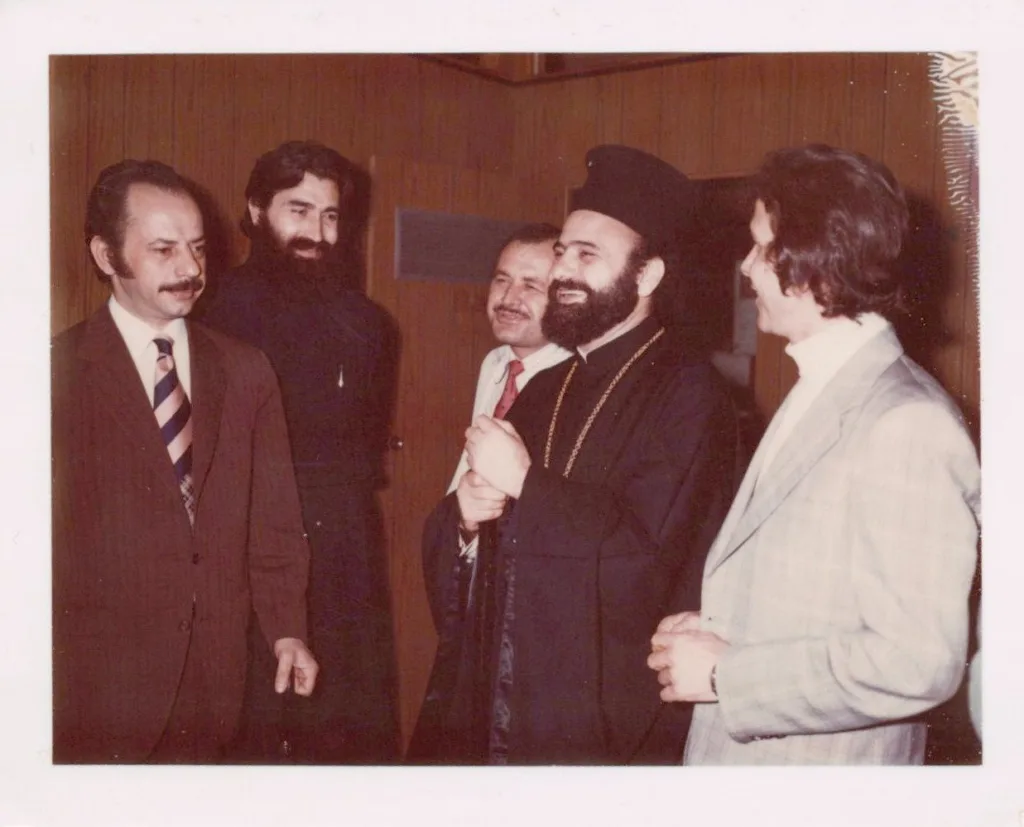
In the case of Harkianakis v Skalkos [1997] 42 NSWLR 22, the President of the NSW Court of Appeal characterised the overall dispute as “church politics” relating to governance and authority within the Church community and noted that Archbishop Stylianos had attracted both significant support and opposition, with some in the Skalkos camp regarding him as “dictatorial”.
Mason P. ruefully added: “There is nothing unusual in such matters, although the language used in public discussion … appears strident in translation to one who is largely a stranger to this particular Australian sub-culture.”
The case was eventually settled for an undisclosed sum with a public apology printed in the newspaper. But Skalkos was fined for criminal contempt in publishing imputations of misconduct whilst the substantive defamation proceedings that had been commenced in 1992 were still pending. The case remains a landmark Australian authority on the law of contempt to protect litigants from public vilification during trial.
In another case, a NSW Supreme Court judge held that the implied right of freedom of political expression as found by the High Court did not extend to religion in rejecting a bid by Skalkos’ legal team to plead a defence of qualified privilege in the discussion of religious matters.
During this time, the Greek Herald did not merely reflect community divisions over the Church by merely reporting events. It was also an active participant because of Skalkos’ commercial interests and fiery temperament that from time to time would colour the newspaper’s coverage.
As it was, the nearly 40-year dispute between Skalkos and the Archdiocese was a major factor in Skalkos’ eventual bankruptcy in 2004, where he owed roughly $25 million to various creditors, including Greek community members who had won defamation cases against him.
The arrival in 2019 of Stylianos’ successor, Archbishop Makarios Griniezakis, offered hope of a renaissance in relations between the church and the community and a healing of past divisions in Australia’s Greek community. The new Archbishop spoke in terms of adopting a more conciliatory approach, emphasising that he was primarily interested in the preservation of our language, our faith and the exaltation of our Greece to the exclusion of intercommunal animosities. There was an initial thaw in the relations between the Herald and Archbishop Makarios.
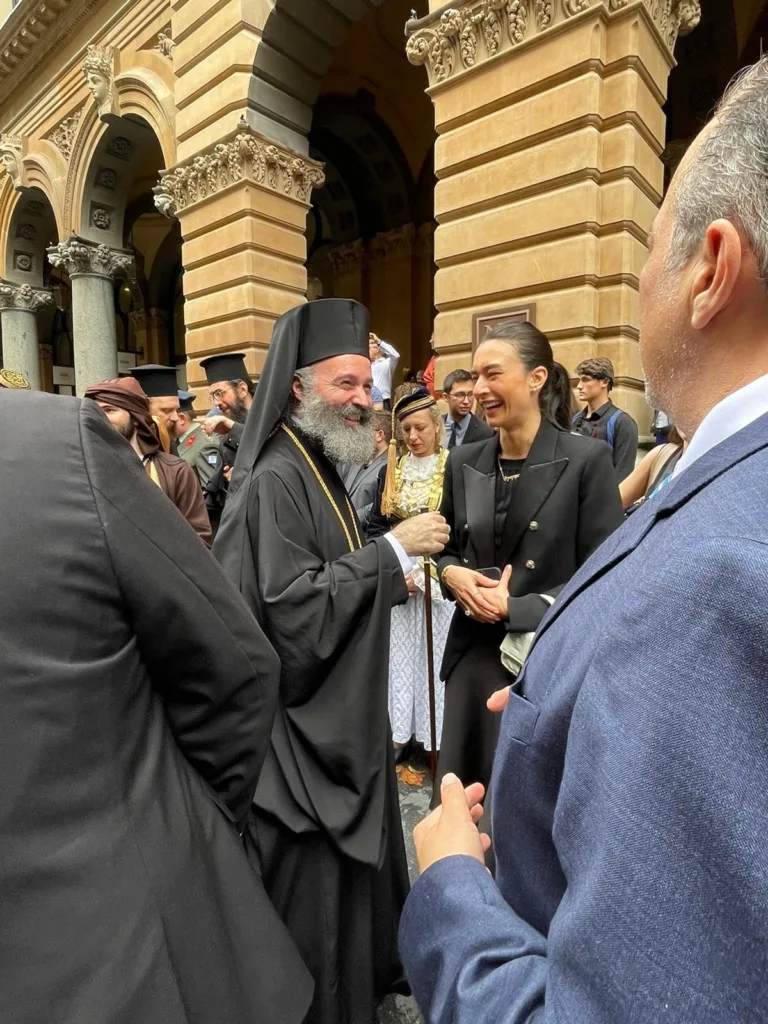
However, shortly after Makarios’ arrival, the purchase of a $6.5 million apartment in Milsons Point with Sydney Harbour views for the Archbishopric residence created controversy and was widely reported in both the mainstream press and the Greek Herald. The paper also dutifully published the Archdiocese’s rebuttal of the claims of impropriety and excess.
In more recent years, the Greek Herald has taken on other issues of ecclesiastical significance.
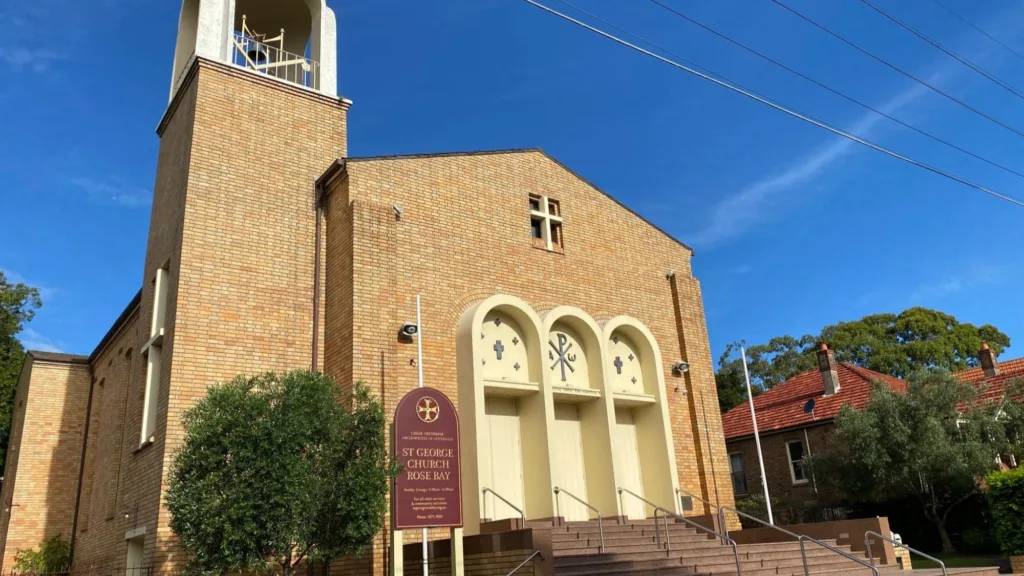
In 2023, the Greek Herald ran a lengthy heritage opinion piece by this writer in support of Woollahra Council’s proposal to heritage-list St George Greek Orthodox Church and War Memorial in Rose Bay, Sydney against the opposition of some members of the Parish Board of the Church and others, arguing that the church’s simplified yet distinctly Orthodox design, its deep ties to Greek migrant history and the ANZAC legacy justified its heritage listing.
The article was published in both the Greek and English language print editions of the paper, as well as being posted online and was actually included in the Council’s list of official planning documents that were exhibited for public consultation. In no small measure, the Greek Herald helped inform the council and the local community in the eventual heritage listing of the site.
In 2024, the Greek Herald’s investigation of the Greek Orthodox Archdiocese of Australia’s contentious “Certificate of Death and Funeral Service” found that families were expected to pay $250 for a funeral certificate that was not officially recognised in either Australia or Greece and cost much more than the official certificates issued by both countries. The Greek Herald’s exposé won an award at the Walkley Foundation’s 2024 Mid-Year Celebration of Journalism.
The highly successful tour of Australia by the Ecumenical Patriarch Bartholomew in late 2024 was also covered in the diaspora press with extensive coverage by the Greek Herald, celebrating his long tenure and spiritual guidance and influence within the Church.

In conclusion, it is noteworthy that The Sydney Morning Herald, Australia’s oldest continuously published newspaper, recently celebrated its 195th anniversary with a special edition in which it proudly proclaimed that “we write the stories that need to be told”.
As the Greek Herald’s publisher, Dimitra Skalkos, said in a recent interview on the Ouzo Talk Podcast, echoing the resolve of her late father: “Sometimes people tell us not to publish something, but it was fact. I’m not your publicist. We’re here to do a job in public interest journalism.”
By chronicling major historical events and community achievements, and taking controversial stands on issues that periodically convulsed Greek Australia, the Greek Herald has been a dominant voice in Australia’s multicultural narrative. Its rich archival records and its past and current publishers’ dedication to publish without fear or favour are a testament to the newspaper’s enduring legacy in the media landscape of the diaspora.
With a century of institutional memory behind it, the Greek Herald remains both a vital media platform for Australia’s Greek diaspora and an invaluable archive of the community, underscoring the enduring importance of migrant representation in the national story.
*George Vardas is a cultural heritage activist, having served on the Australian Hellenic Council, the Kytherian Association of Australia and the NSW Multicultural Advisory Board. During his tenure as President of the Kytherian Association, he had dealings with both Theo Skalkos and Archbishop Stylianos and on occasions experienced the praise and the ire of both
