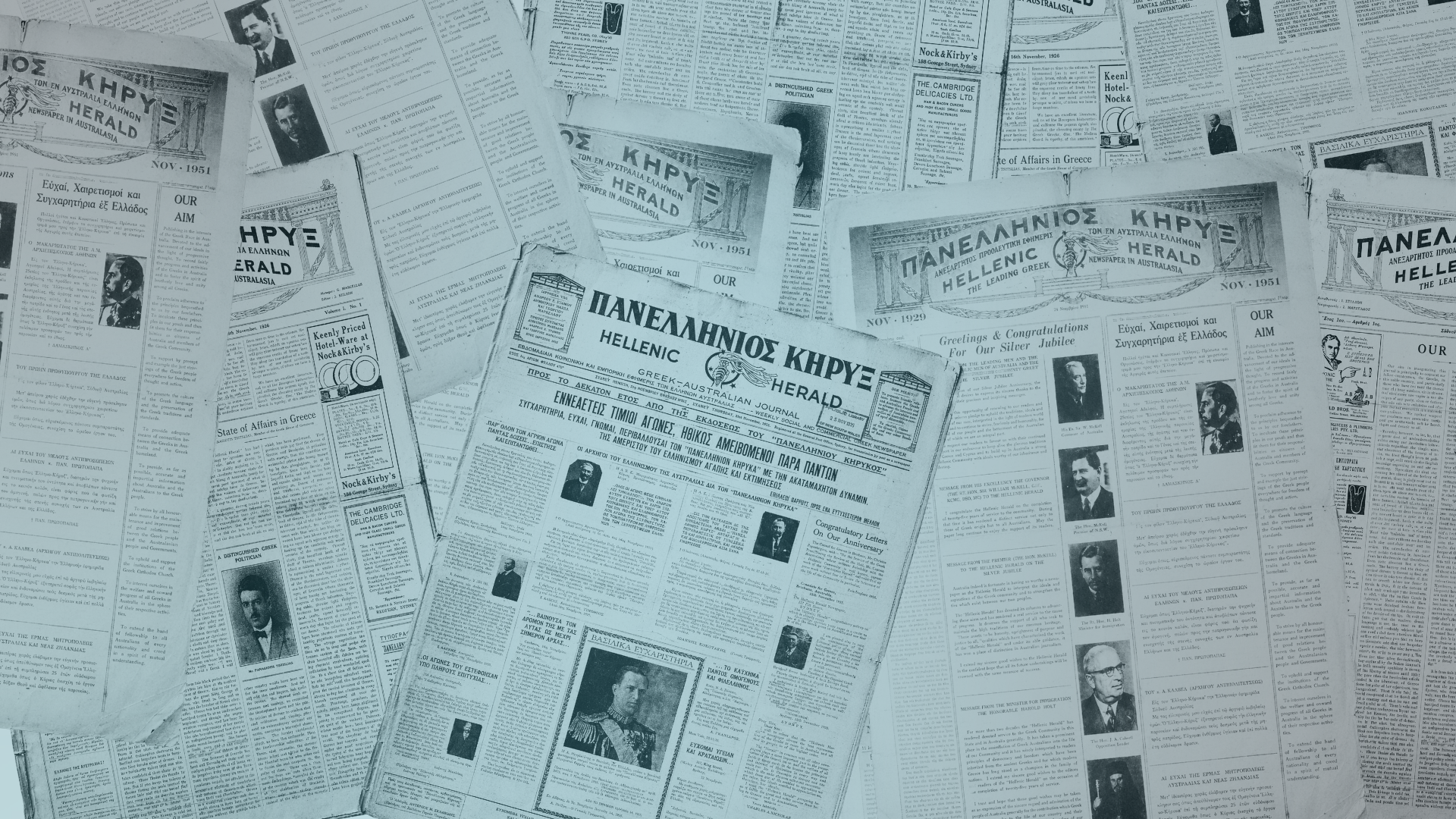
The history of The Greek Herald is not only the story of a newspaper – it is also the story of language, identity and survival within Australia’s migrant experience.
For almost 100 years, the newspaper has navigated the difficult balance between preserving the Greek language and adapting to an English-speaking nation. While many migrant publications gradually abandoned their mother tongue in favour of English, The Greek Herald resisted that path, maintaining Greek as its dominant language while selectively embracing bilingualism when necessary.
Ironically, the first major use of English in the newspaper was not entirely voluntary.
During the First World War, the Commonwealth Government introduced the War Precautions Act 1914 and subsequent War Precautions Regulations 1915, particularly Regulation 45B, which imposed strict controls on foreign-language newspapers operating in Australia. Under these laws, ethnic publications were required to submit English translations of portions of their content before publication, allowing authorities to monitor newspapers for material considered politically dangerous or “disloyal.”
Although the legislation primarily targeted German-language publications, it was eventually applied more broadly across the ethnic press, including Greek newspapers. Publishers often had to provide English translations amounting to at least 25 per cent of their content in order to receive approval for circulation.
The restrictions reflected the climate of suspicion that existed towards migrant communities during wartime. These controls later reappeared during the Second World War under the National Security Regulations, which again subjected ethnic newspapers to censorship and government scrutiny.
Yet while English entered the pages of the newspaper through legal pressure, it soon evolved into something more strategic.
The founders of the Panhellenic Herald, John Stilson and George Marcellos, along with later editor Alexandros Grivas, recognised that English could be used to communicate directly with Australian authorities, politicians and wider society.

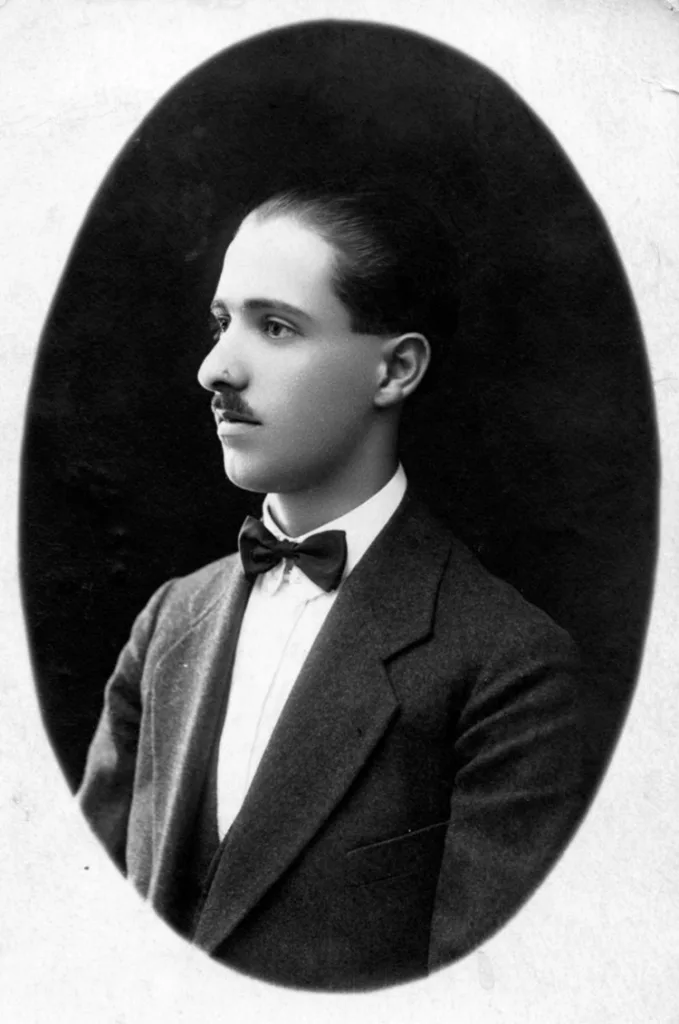
When the newspaper was founded in 1926, Australia was entering the Great Depression. Greek migrants, alongside Italians, Maltese and Irish communities, often faced intense xenophobia, unemployment and social exclusion. Government authorities closely monitored Southern European migrants, while many newly arrived Greeks struggled to find work and survive.
Within this environment, the newspaper carefully adopted bilingual elements in order to establish trust with Australian institutions while still serving the Greek community.
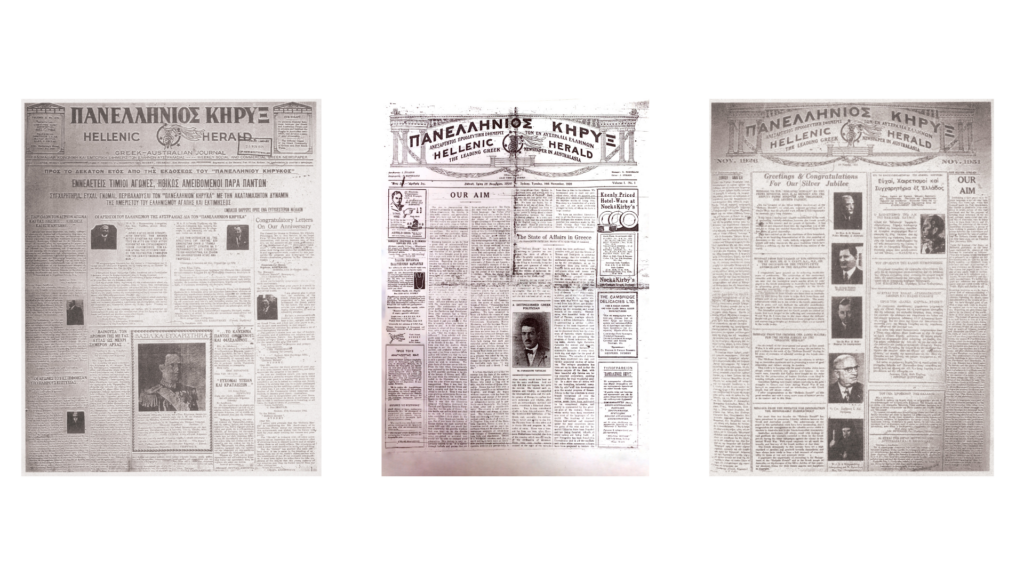
Initially, several pages of the newspaper appeared in English. However, by October 1927, English-language material had already been reduced significantly, demonstrating the publication’s desire to maintain Greek as its principal language.
By the 1930s, Grivas had transformed the English-language sections into a platform for advocacy. Through editorials written in English, he sought to explain the struggles of Greek migrants directly to the Australian public and government officials.
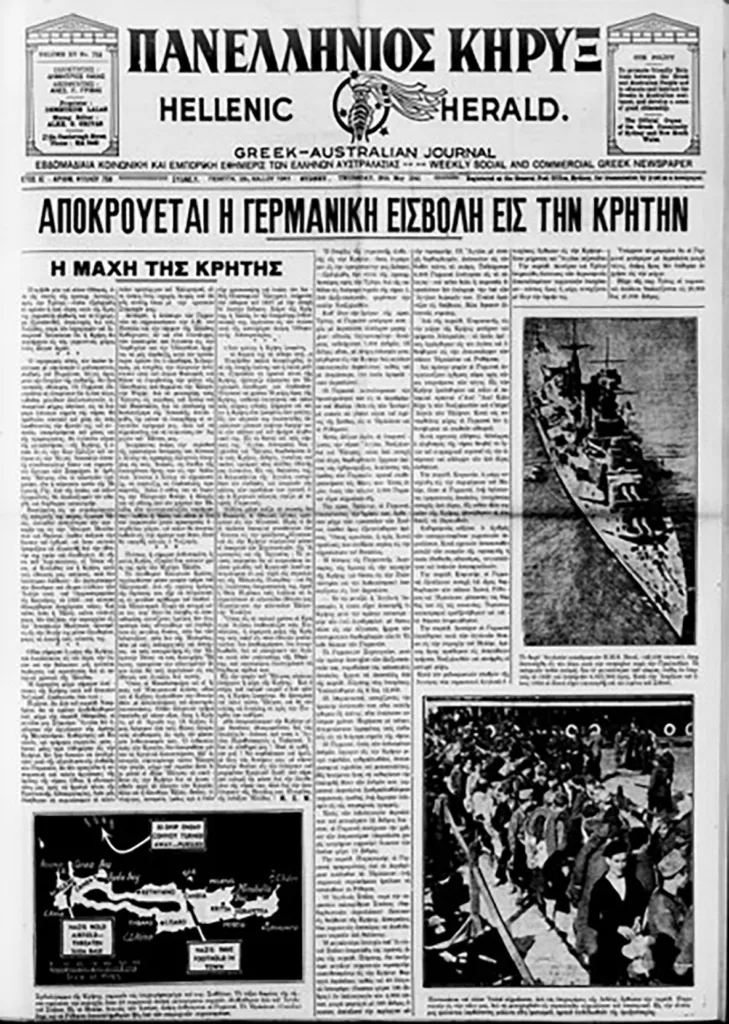
In articles published during the Depression years, Grivas defended unemployed Greek workers, criticised the treatment of striking Greek bakers, and argued that Greek migrants had contributed greatly to Australian society. He reminded Australians that Greeks had fought alongside Allied forces during the First World War and urged authorities to recognise them as loyal citizens rather than outsiders.
Following the Second World War, Grivas again used English-language editorials to promote support for Greece, describing Greeks as committed allies who had resisted Axis occupation. During the early Cold War years, he also addressed issues affecting displaced Greeks following the devastation of the Second World War and the Greek Civil War.
At the same time, English-language journalism within the newspaper continued expanding in new ways.
In 1952, Grivas launched his column News from the Bush, A Traveller’s Diary under the pseudonym “Swangman,” documenting Greek settlements throughout rural New South Wales and Canberra. Other contributors soon followed, including Katerina Andronikou in Queensland, whose Brisbane Chatter column highlighted the lives of Greek and Cypriot migrants across northern Australia.
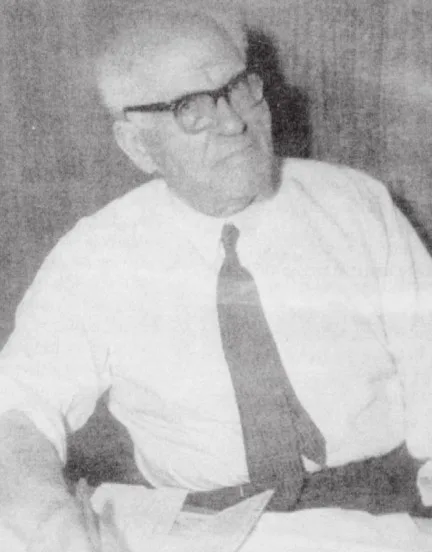
One of the newspaper’s greatest innovations came on 16 April 1959, when Grivas introduced Australia’s first English-language insert within a Greek newspaper. Grivas explained that the initiative aimed both to help Australians better understand issues affecting Greek migrants and to reach Australian-born readers who no longer spoke fluent Greek.
Despite this innovation, the newspaper never considered abandoning Greek entirely.
This distinguished The Greek Herald from many ethnic publications internationally, which gradually shifted fully into English as second and third generations became more assimilated.
Instead, the newspaper used English selectively – as a bridge rather than a replacement.
This philosophy became particularly evident during the 1970s through the work of Joan Messaris. Her English-language column Young Talk addressed younger readers on issues of culture, history and current affairs, helping second-generation Greek Australians maintain a connection with their heritage.
Messaris also championed Greek language education. In 1976, she highlighted the introduction of compulsory Greek language learning at North Newtown Public School in New South Wales, one of the first schools to implement such a program.
Perhaps her most remarkable contribution was the creation of a correspondence-style Greek language learning initiative through the newspaper itself. Through lessons published in the paper, children living in remote parts of Australia could continue learning Greek despite geographic isolation.
Her work reflected the newspaper’s broader mission: using English to preserve Greek identity rather than erase it.
By the late twentieth century, assimilation pressures intensified across Australia. English increasingly became the dominant language for younger generations of Greek Australians, forcing many ethnic newspapers to either adapt or disappear.
Under publisher Theodoros Skalkos, The Greek Herald entered a new phase of linguistic evolution while remaining firmly committed to Greek as its core language.
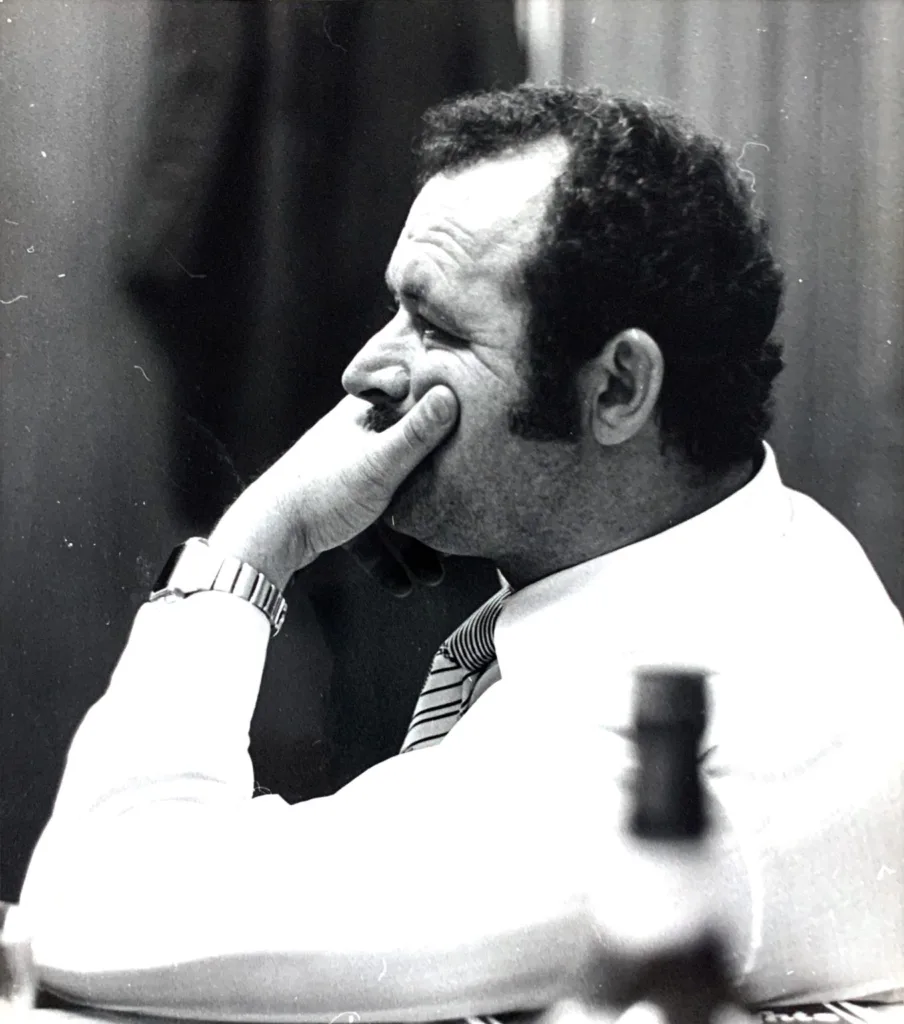
Skalkos understood that the survival of the newspaper depended on engaging younger generations without severing ties to the language that had sustained the migrant community for decades. While deeply committed to Greek-language journalism, he was also pragmatic about the realities facing the diaspora by the 1980s and 1990s.
In several English-language editorials, Skalkos directly challenged mainstream institutions on issues affecting Greek Australians. In 1989, he publicly criticised SBS and state broadcasters, accusing them of failing to adequately represent Greek language and culture through television and film programming. He argued that migrant communities deserved meaningful cultural representation in their own language, not merely token inclusion.
Two years later, in May 1991, Skalkos introduced dedicated English-language pages aimed at second and third-generation Greek Australians. Writers such as Sophia Anastasiades and Sofia Ralli-Kathariou explored youth issues, literature, theatre and culture through columns including New Generation and Frankly Speaking.
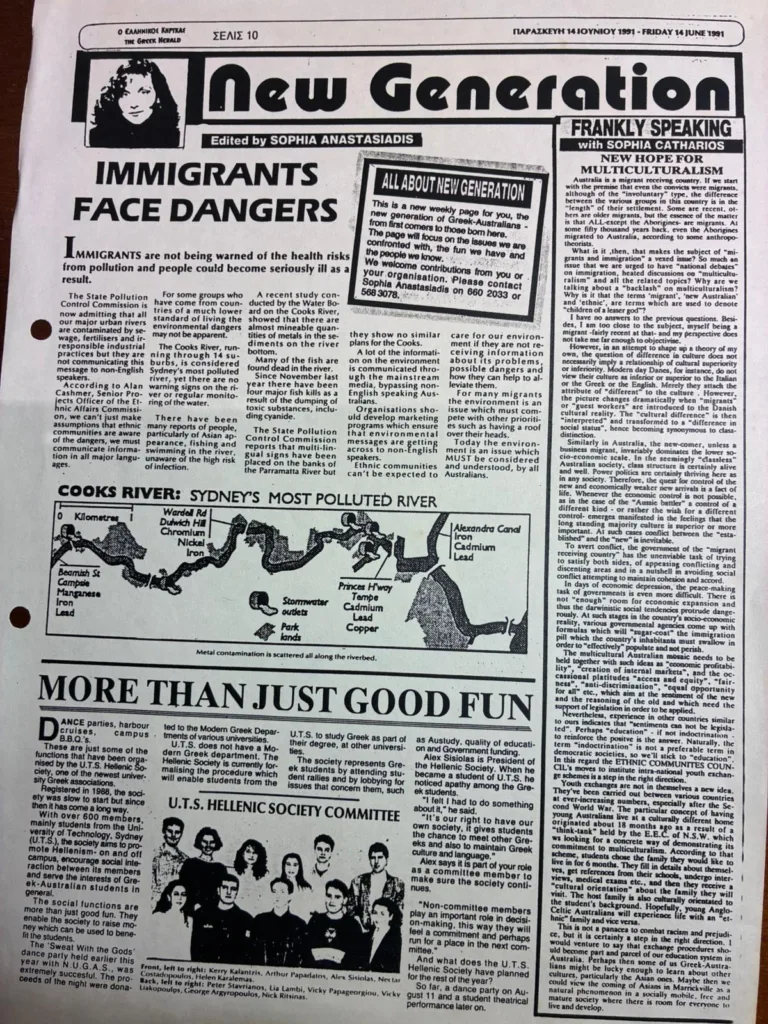
Importantly, however, Skalkos resisted the temptation to transition the newspaper fully into English, even as many ethnic publications across Australia abandoned their heritage languages in pursuit of broader readerships.
Instead, he pursued a dual approach: preserving Greek within the print edition while embracing English strategically where necessary. This philosophy would later prove critical during the digital era, as the newspaper’s online presence expanded primarily in English while the print publication retained its Greek-language identity.
Even as digital media transformed journalism, the newspaper resisted fully transitioning into English. While its online edition now operates in English and reaches tens of thousands of readers globally, the print publication remains deeply tied to the Greek language.
In many ways, the linguistic history of The Greek Herald mirrors the broader Greek Australian experience itself – adapting to Australia without surrendering the language and identity that defined the community’s origins.
