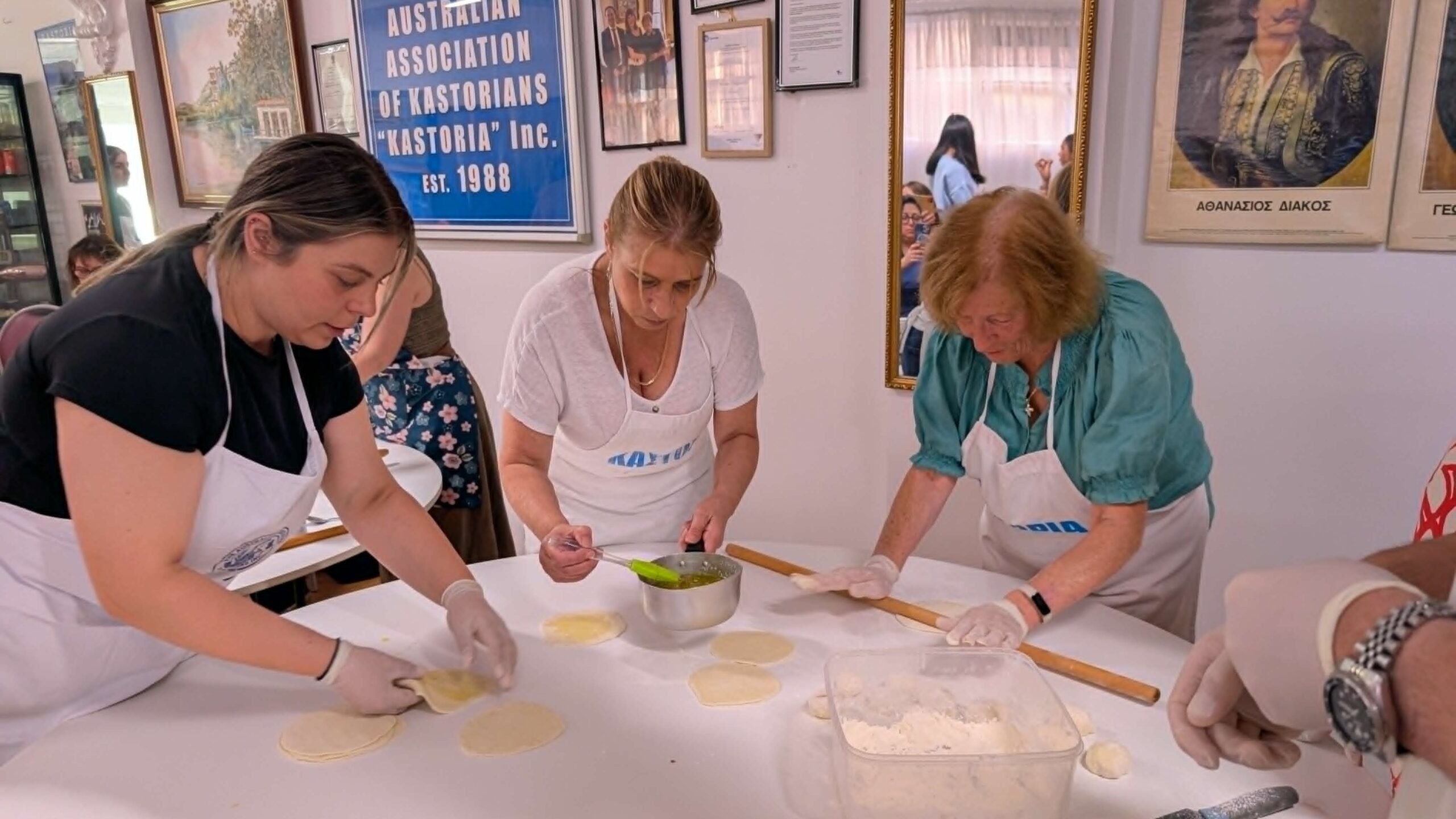
The hall at the Australian Association of Kastorians wasn’t built for this kind of crowd.
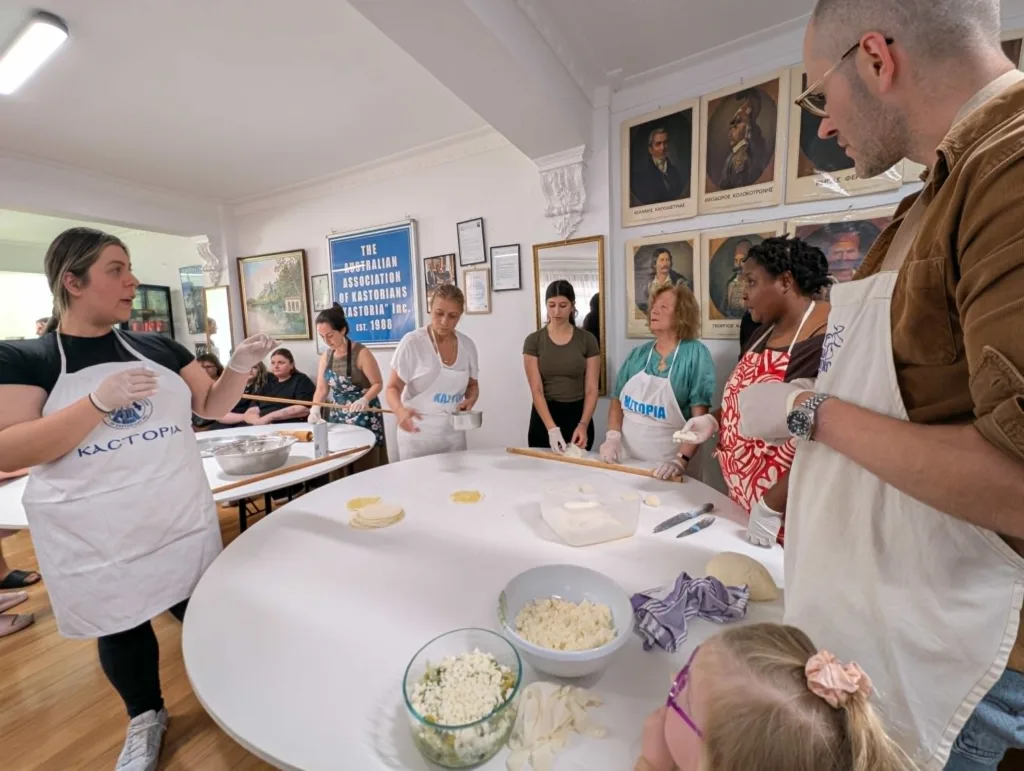
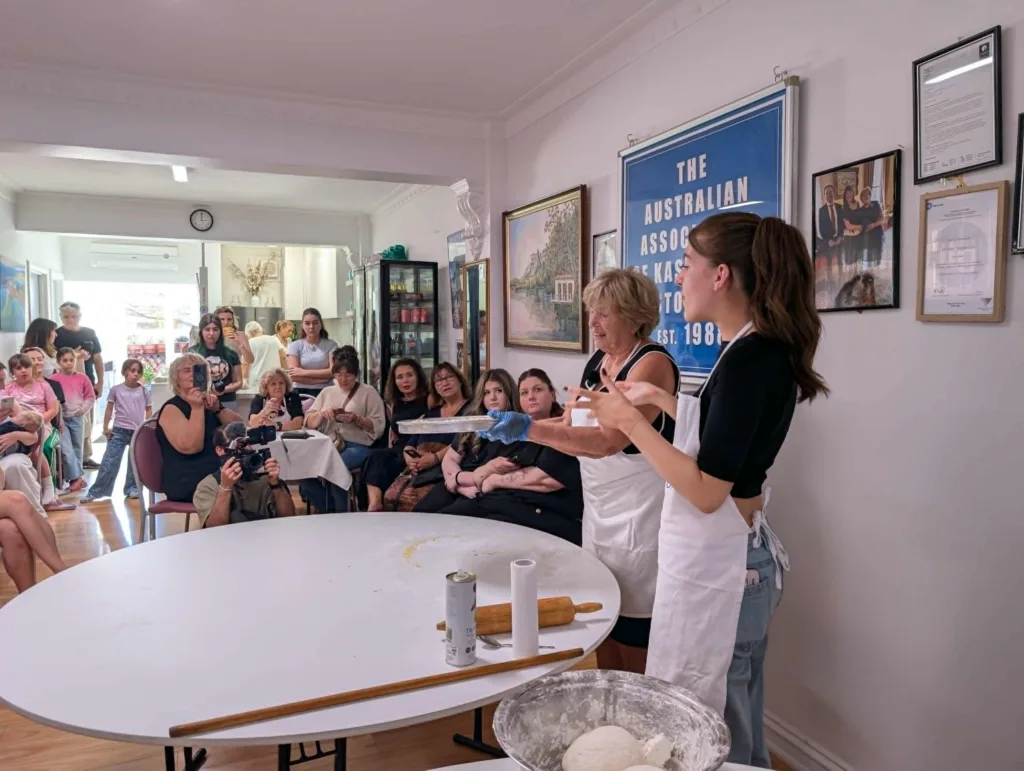
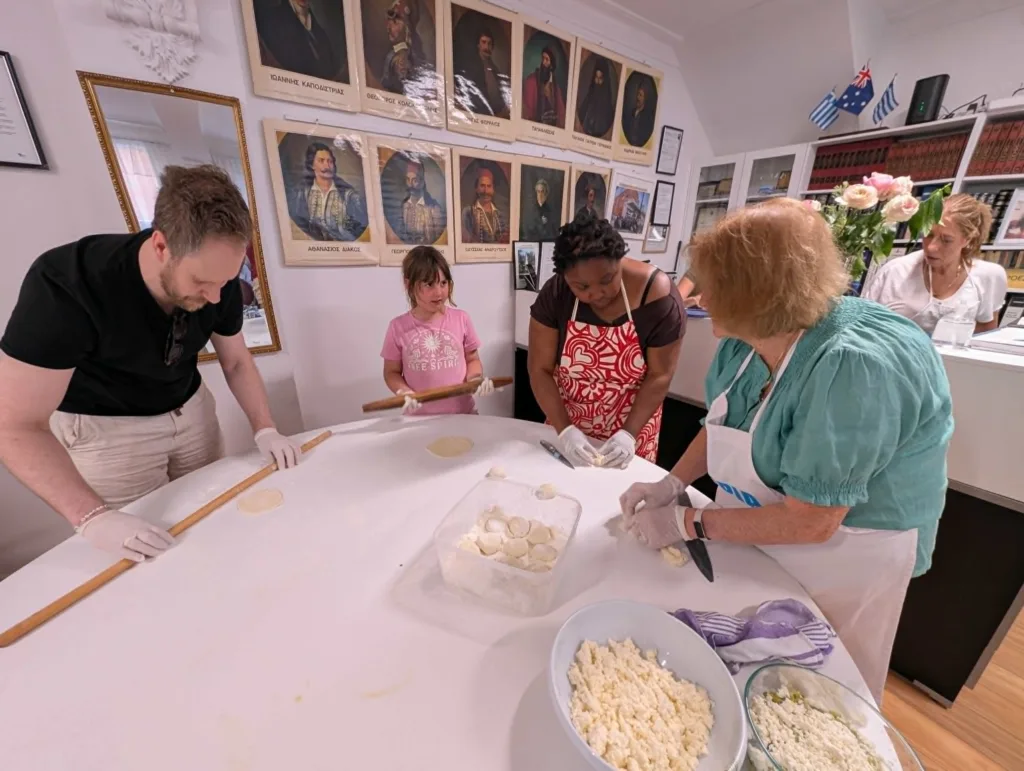
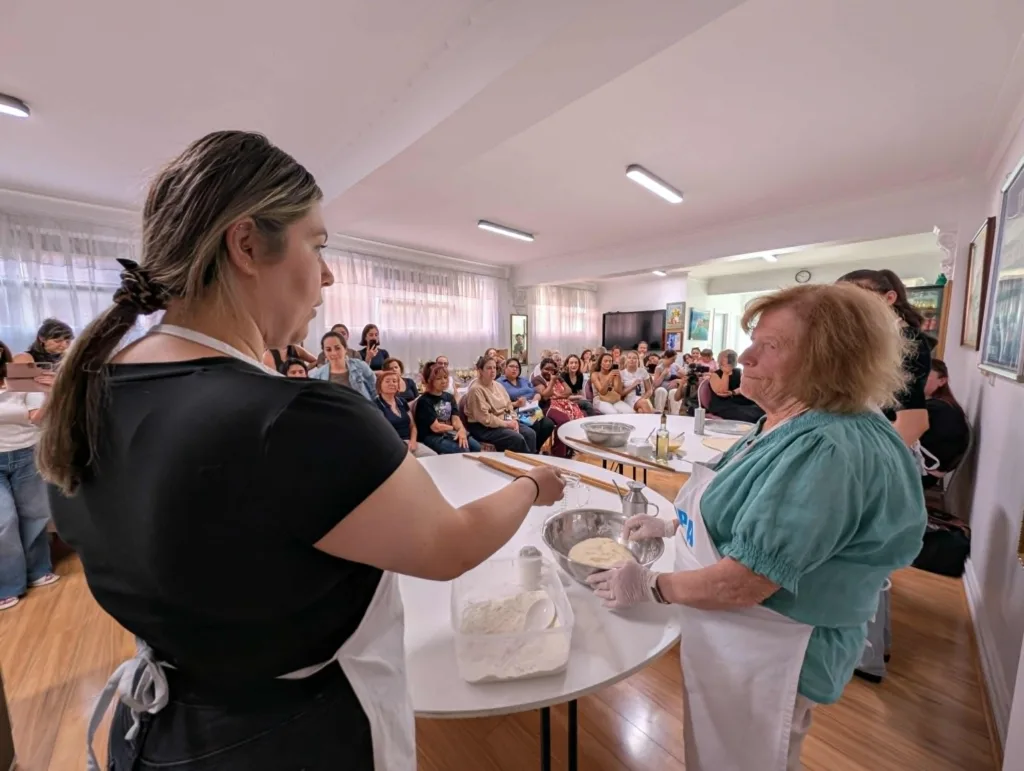
By mid-afternoon it was packed, standing room only, as people pressed in around long tables, craning to watch dough being stretched, filled and folded. No one just stood back; they leaned in, asked questions, swapped stories and joined in, though in a more communal way than the organisers had originally intended.
“This is overwhelming,” said Stacey Goulas, daughter of President Elly Lalopoulos, taking it all in. “We got way more participants than we bargained for.”
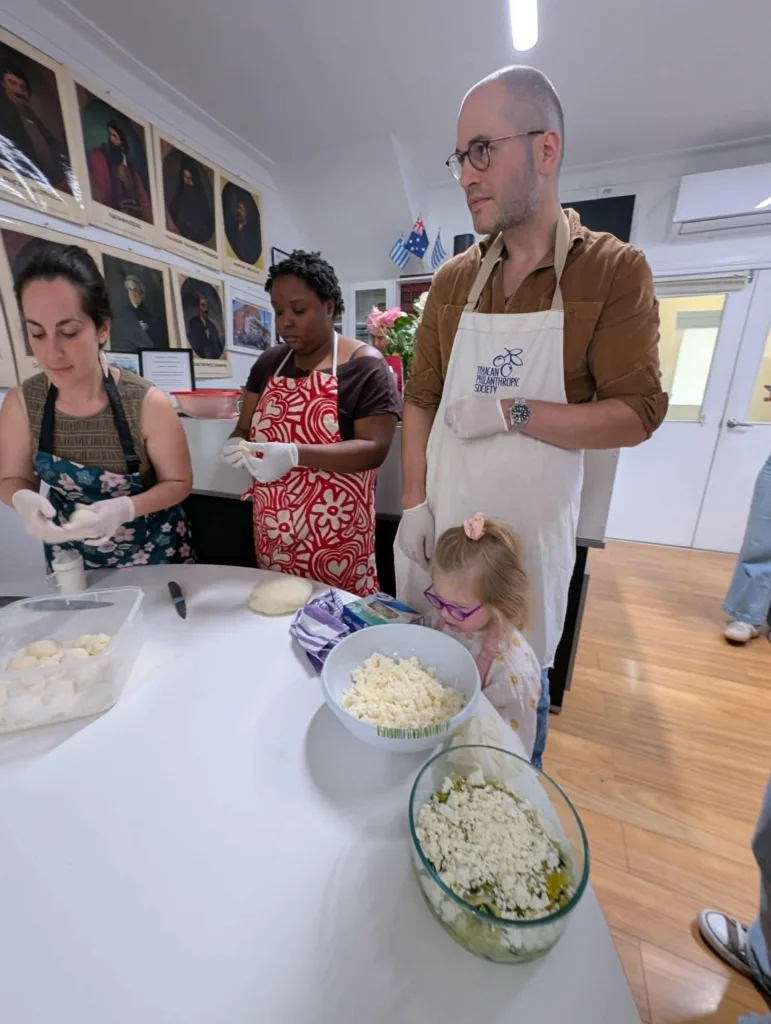
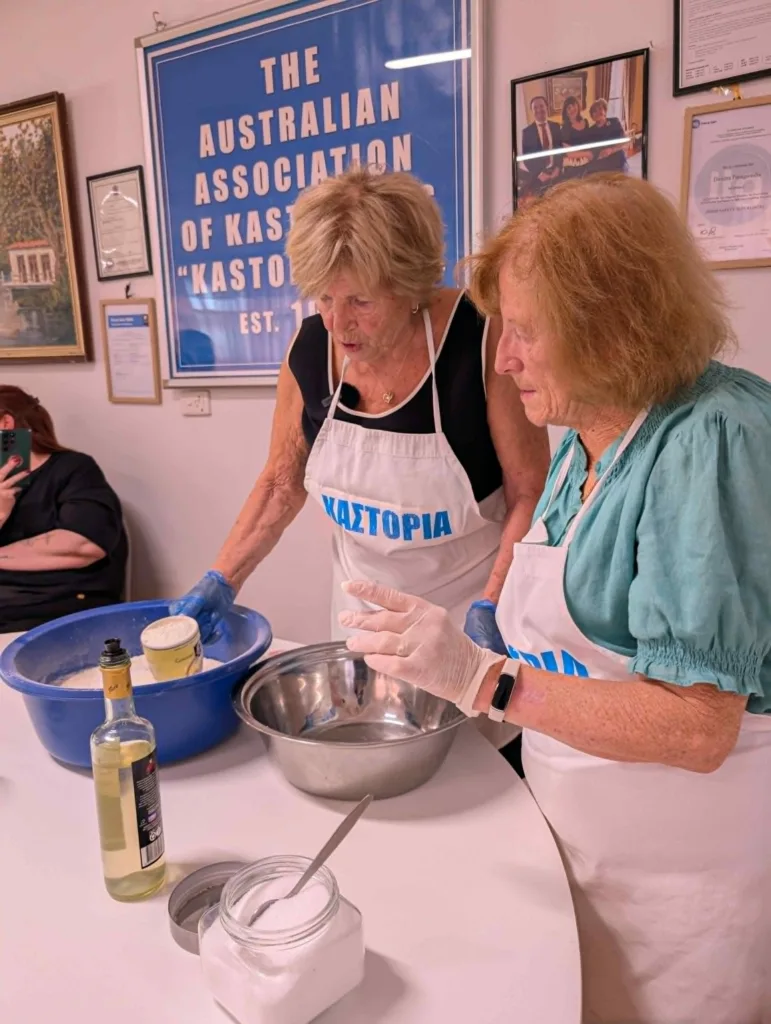
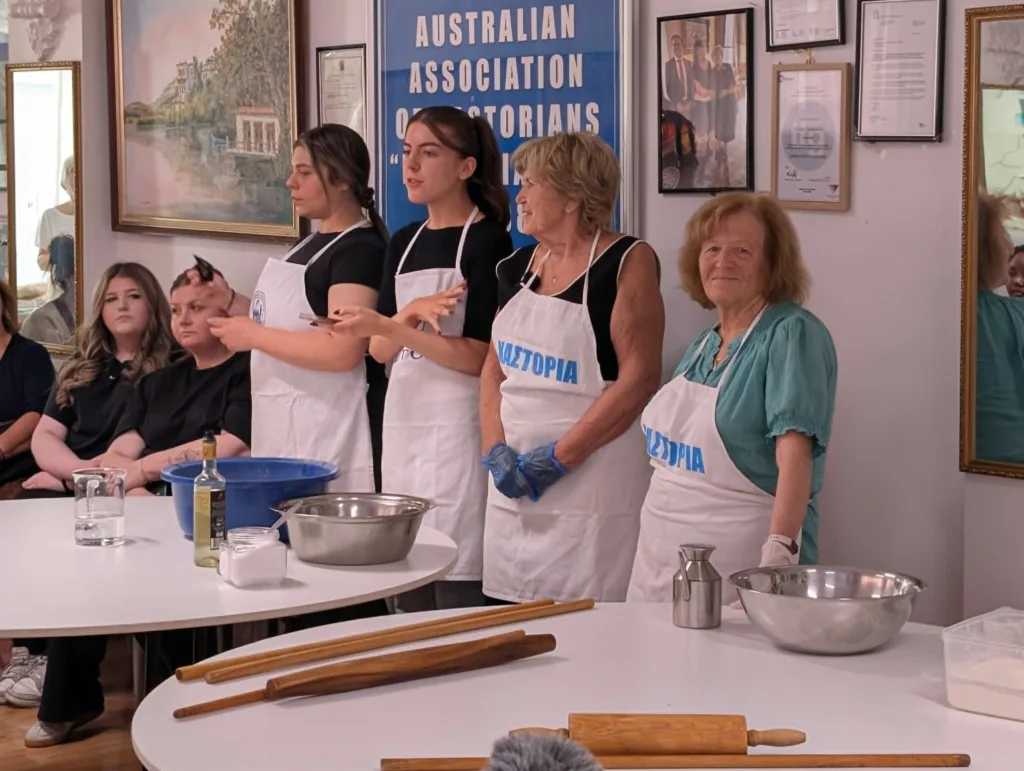
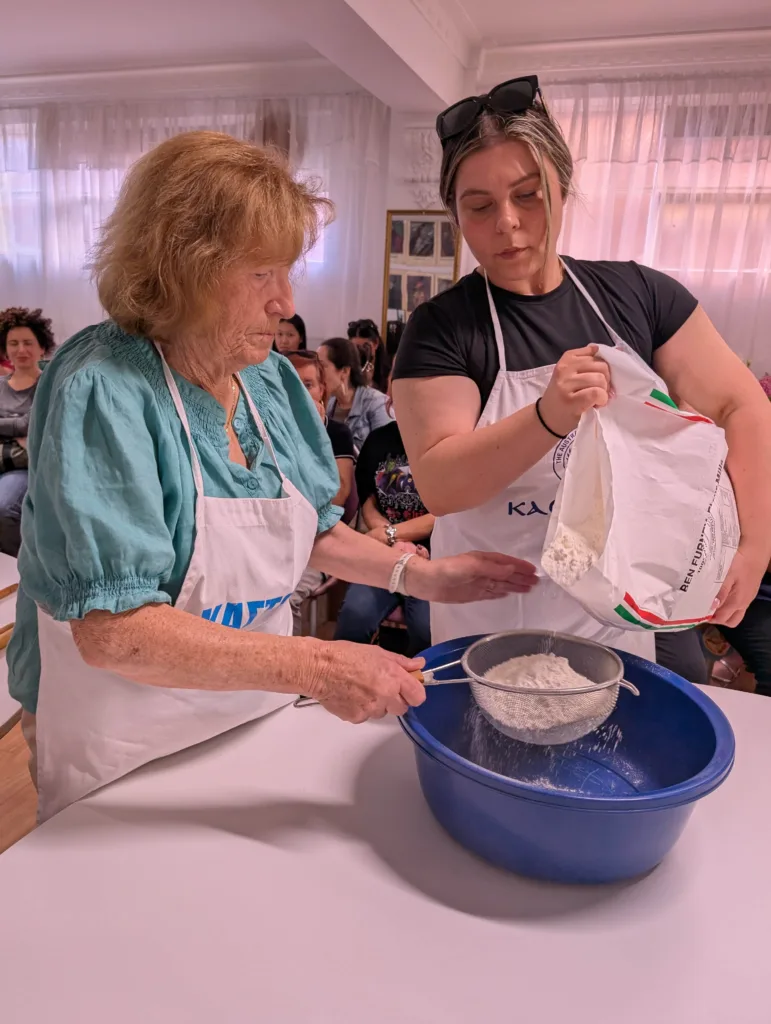
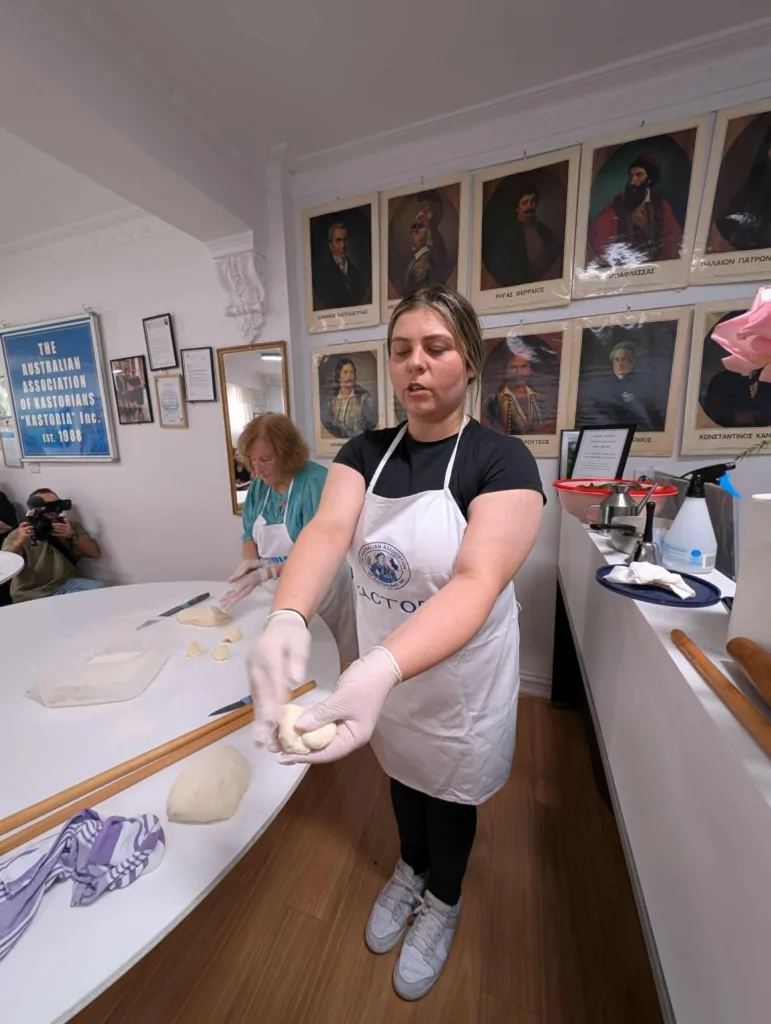
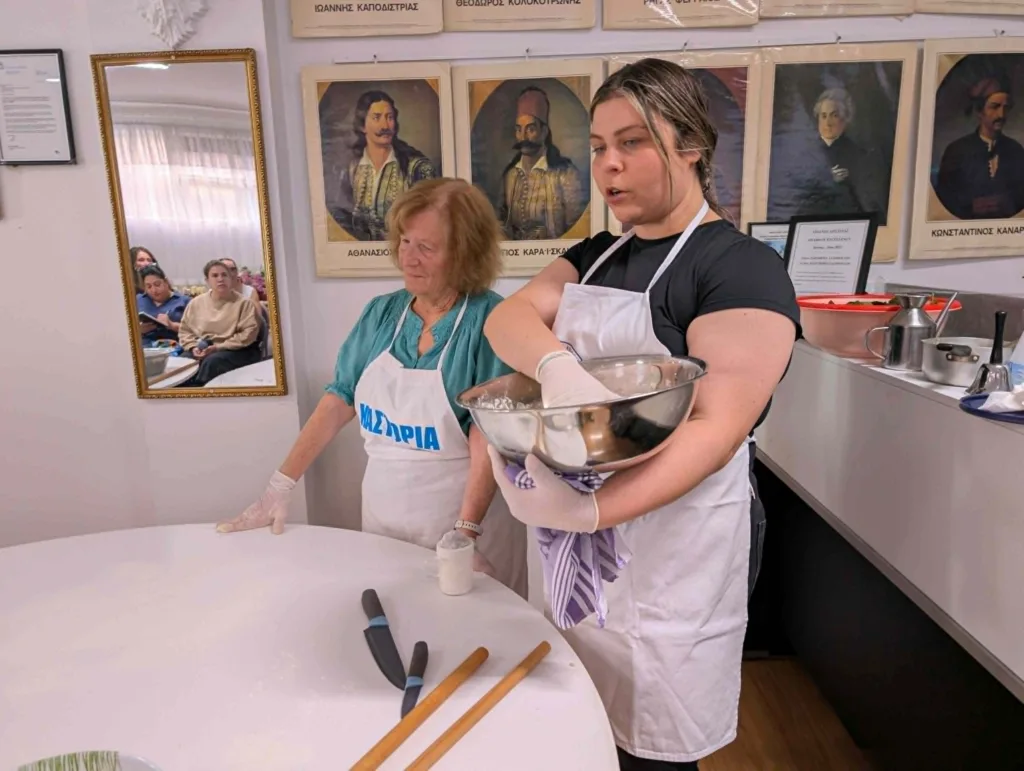
At the centre were two grandmothers and two granddaughters, working side by side and describing the process in Greek and English, each in their own way. Their hands moved with quiet certainty and symmetry, brushing oil, layering fillings, folding by feel. Around them gathered people from across Greece, along with locals of non-Greek background like Angelina from Indonesia who caught wind of the workshop on social media.
This wasn’t about recipes. It was about memory.
Lalopoulos made her first pita at 12. Back then, she says, necessity shaped everything.
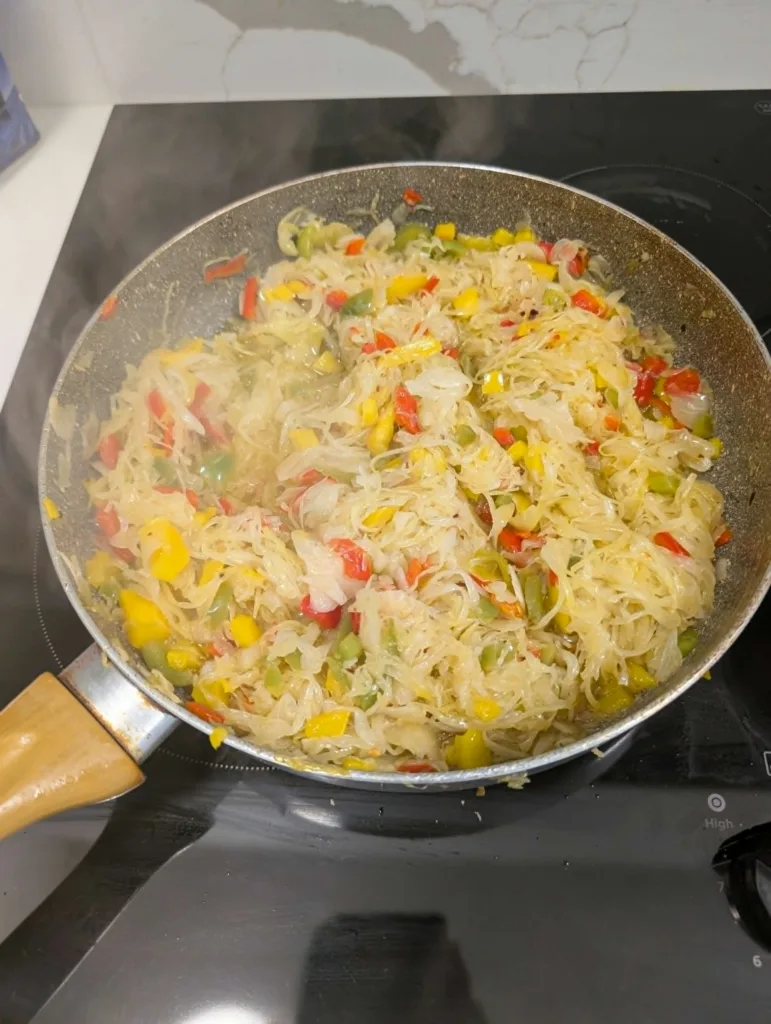
“We were poor growing up and cabbage was affordable, so we found different ways of using it, including in pites,” she said, pointing to the toursi pita, one of the many different types that day. “It’s spicy, as we add chilli.”
She smiles, noting that near Kastoria sits the village of Boukovo (Greek name for chilli), a reminder that even the simplest ingredients carry a sense of place.
The workshop was the idea of criminology student/youth justice supervisor Tania Galanos, who teamed up with her grandmother Dimitra Panagiotidis to bring it to life.
“We wanted to bring generations together and spark curiosity in young people about their culture,” she said. “It’s also about sharing what happens in our homes. You can’t capture that on social media, the atmosphere, the love, it’s just not the same.”
At another table, Lalopoulos worked alongside her granddaughter arts/law student Lily Koukouvitakis, passing on the details that don’t make it into recipes, how thin is thin enough, when the dough “feels right,” when to trust your hands.
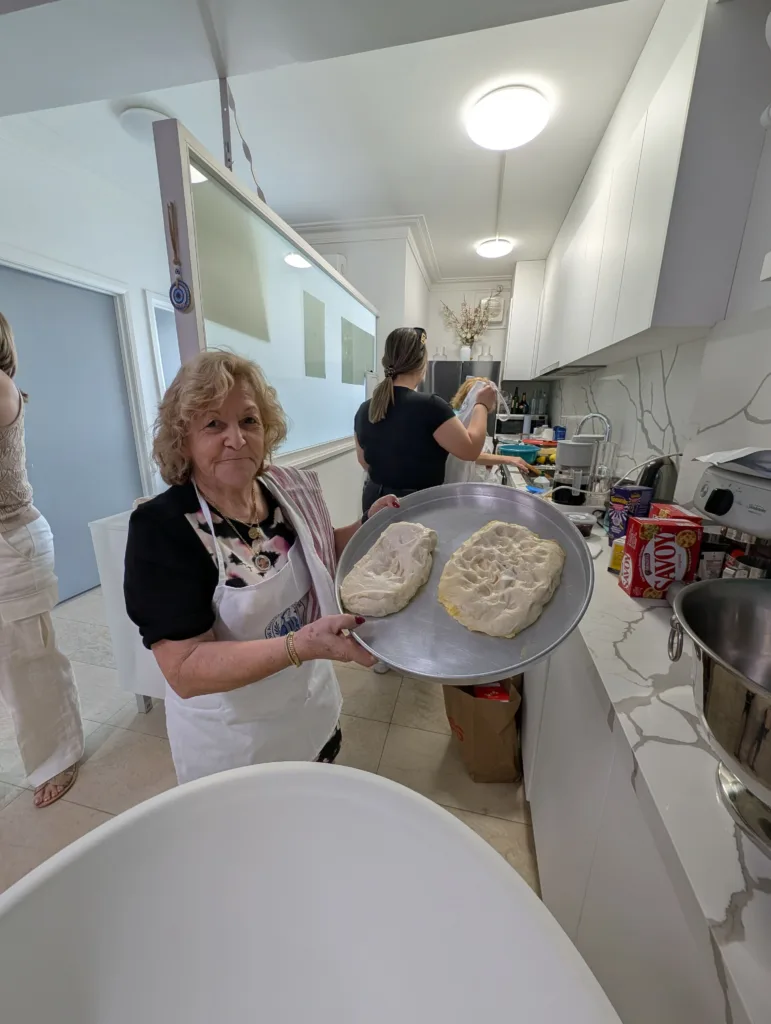
Nearby, people furiously took notes, quickly realising there were no measurements to follow.
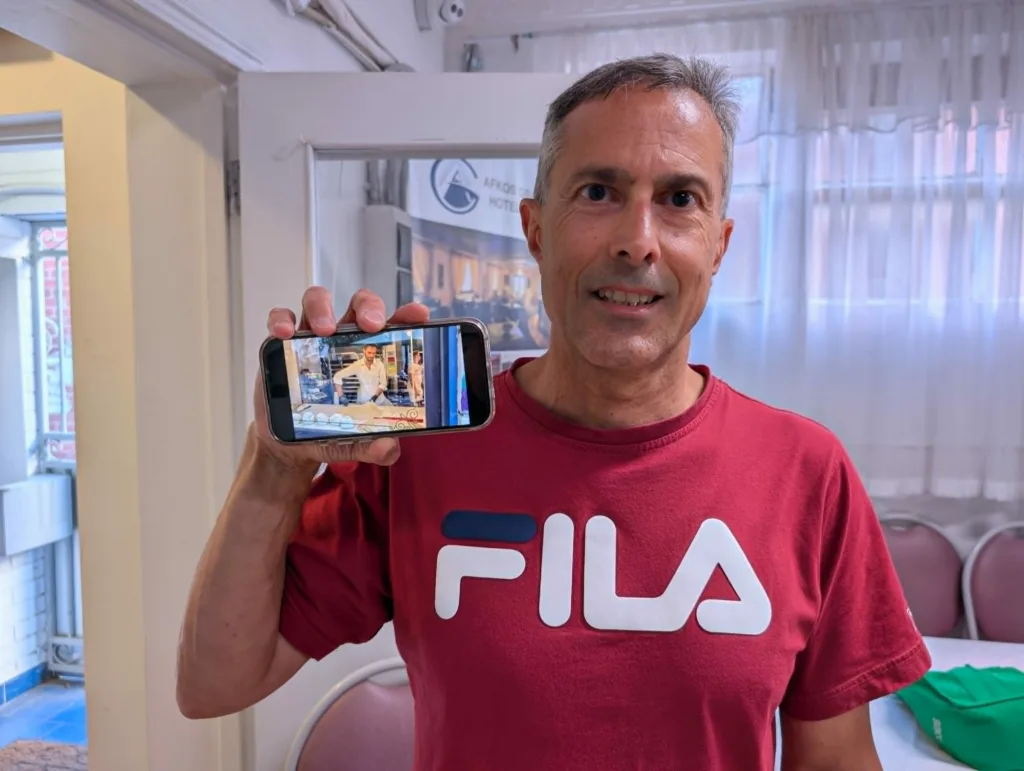
Pantelis, formerly in construction, watched closely. “I make my own, but I came to pick up a few extra tricks,” he said, pulling out his phone to show a saved video of a pita maker in Monastiraki that he snapped while on holiday last year.
Anna, a professional baker preparing to launch her own business, came for a similar reason, but for her, it went beyond technique.
“There’s something in the way yiayia does it that you just can’t replicate from a recipe,” she said.
Even the room itself seemed to hum with something larger. Local creative, Dr Dean Kotsianis, known for his work with Yitonia, took it in from the sidelines.
“There’s something powerful about watching tradition happen in real time,” he said. “It’s not staged, it’s lived. That’s what people connect to.”
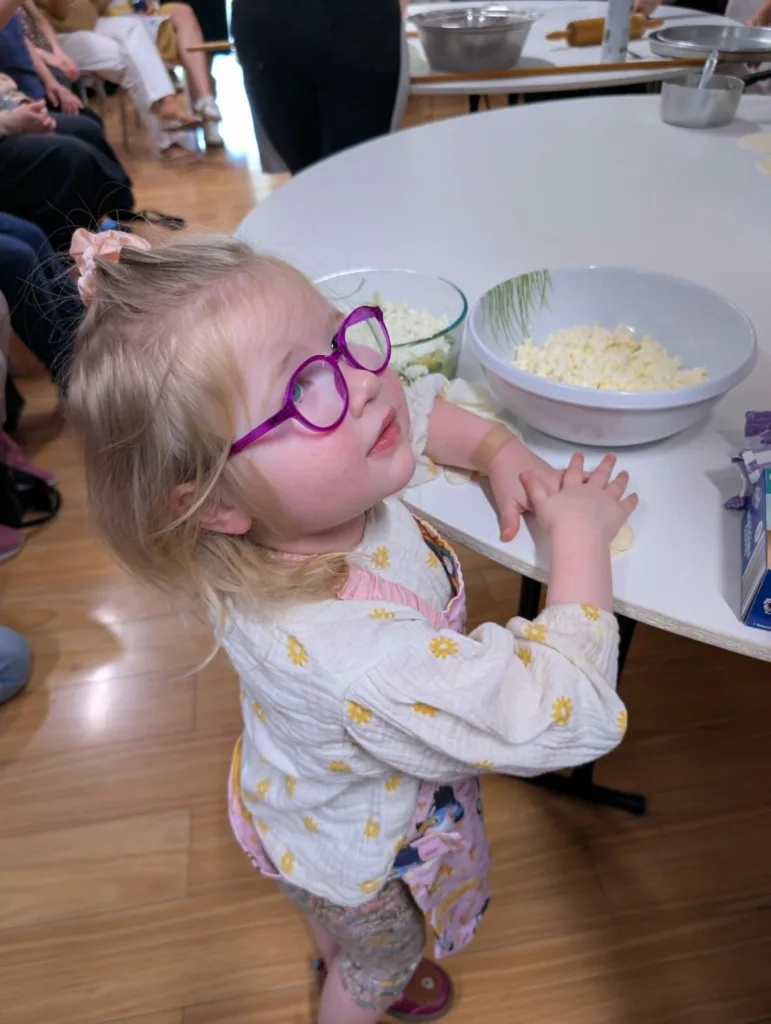
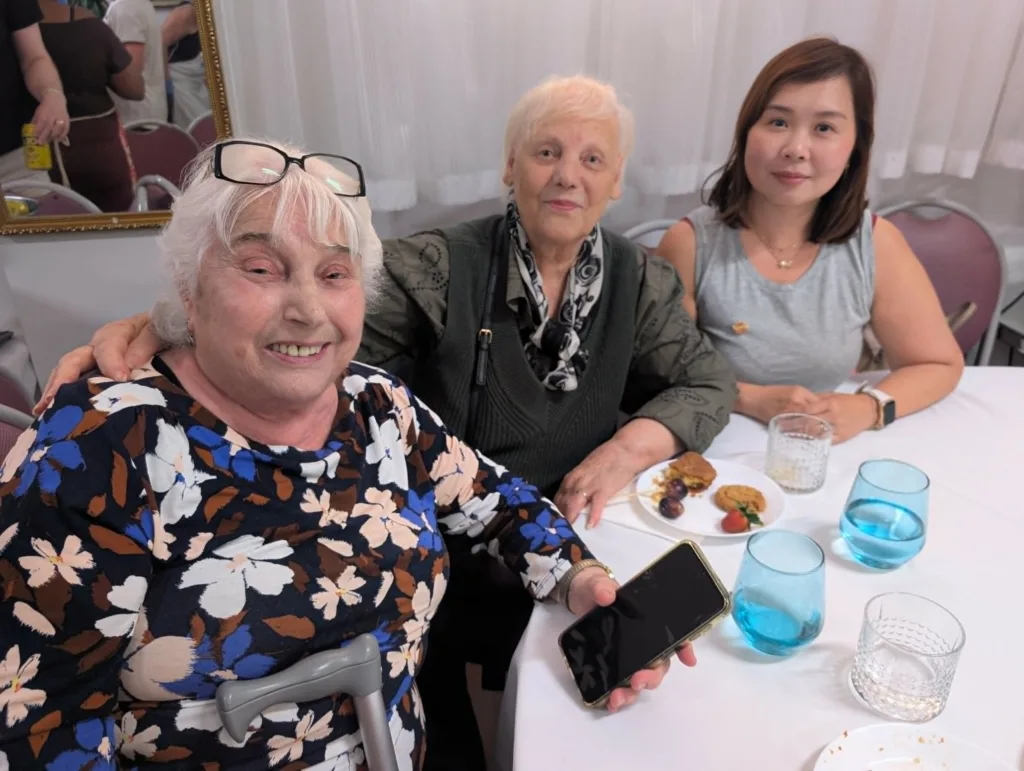
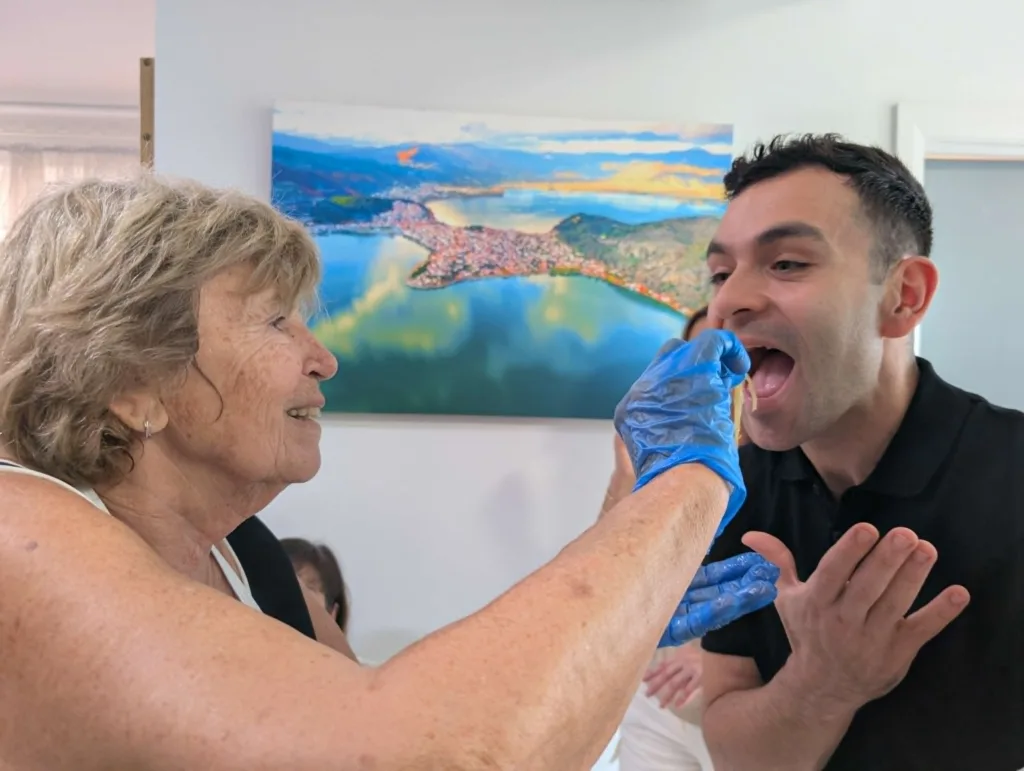
If the turnout proved anything, it’s this: people are hungry not just for food, but for intergenerational connection. All ages were represented, even kids playing outside in the courtyard.
The Kastoria Club opens its doors most Sundays from 12:30pm to 6pm, serving yiayia-made dishes from Kastoria and the wider Macedonian region. Regular cook Dimitra, “the best in the world,” according to Lalopoulos, dishes up classics like gigantes sto fourno, while special days like 25 March bring out favourites such as bakaliaro and skordalia.
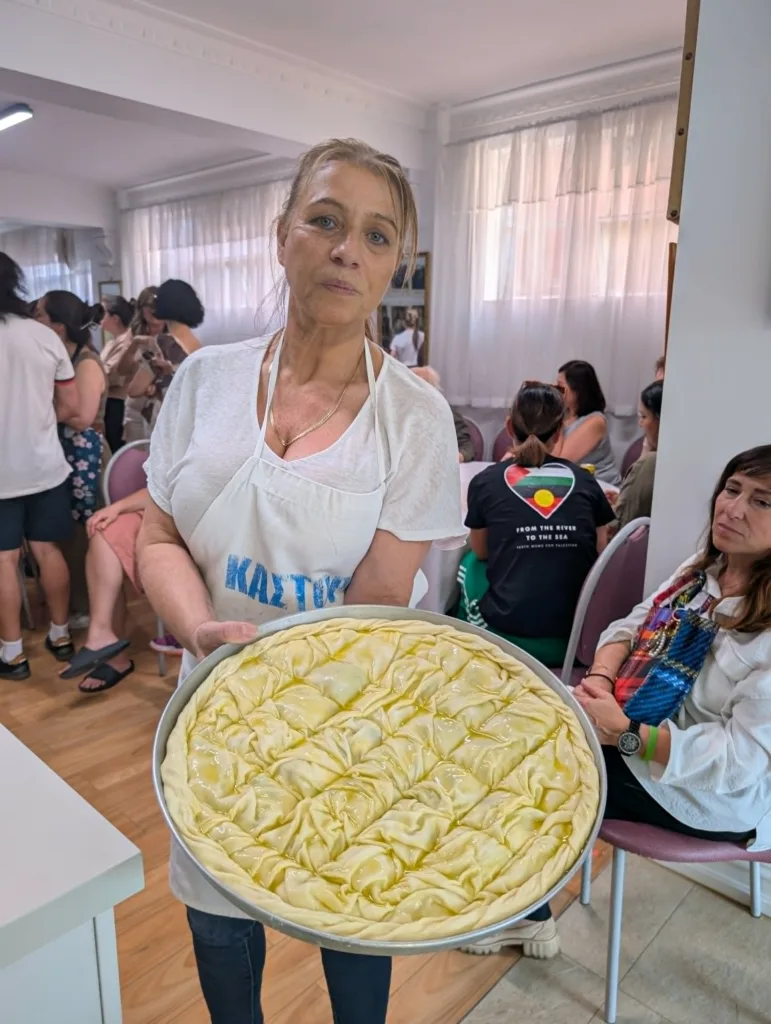
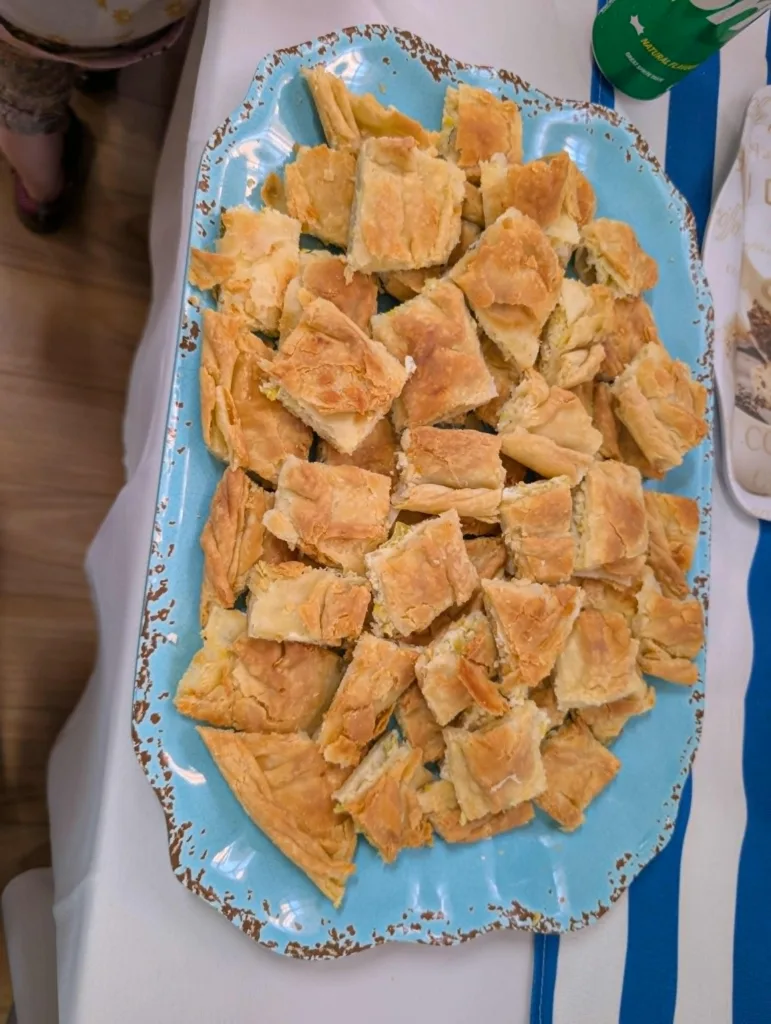
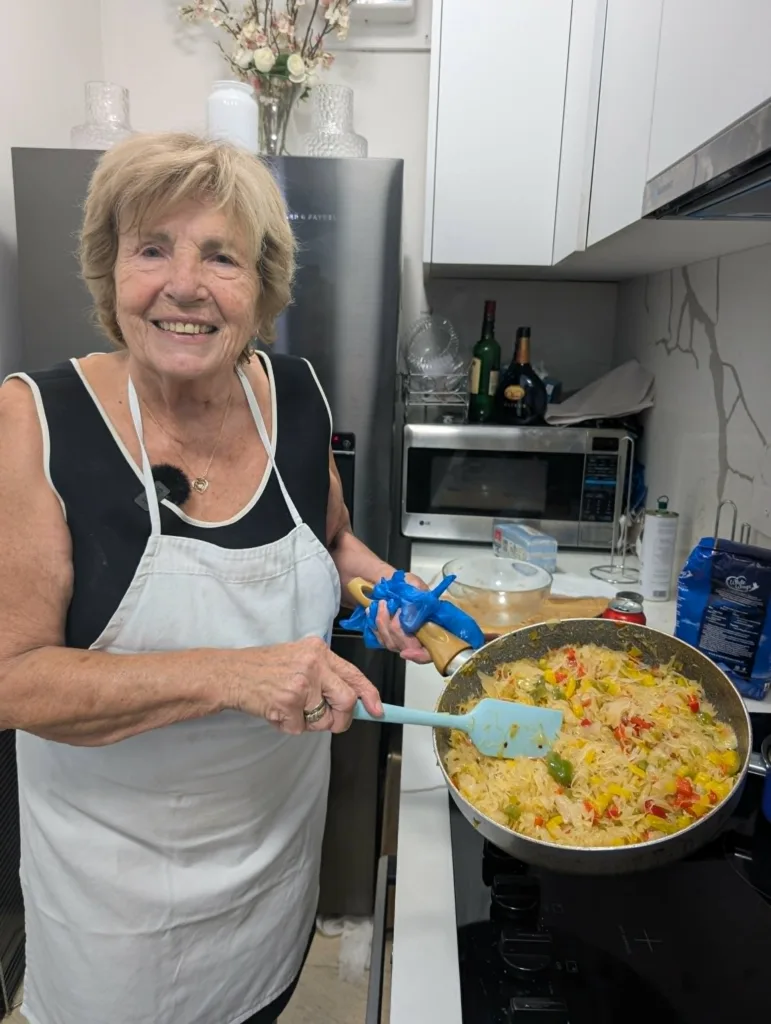
But if the pita workshop showed anything, it’s that the real draw isn’t just what’s on the table, it’s how it’s shared.
Because in a room of flour-dusted hands, laughter and quiet instruction, tradition didn’t feel like something remembered but something still alive.
Following the workshop’s success, the Association plans to host more sessions, smaller in size, in an effort to keep yiayia’s recipes alive by passing them on to future generations, one handful of dough at a time.
1. Tyropita (Feta cheese pita)
Ingredients
- 4 cups flour (plus extra for kneading)
- 1 tsp olive oil
- 1 tsp white wine vinegar
- 2 pinches salt
- 2 cups water
- Butter (melted, for drizzling)
- 500g feta cheese
- 6 eggs
Instructions
- Prepare the Dough: In a large bowl, combine flour, olive oil, vinegar, salt, and water. Mix by hand.
- Knead: Gradually add more flour until the dough no longer sticks to the bowl or your hands.
- Develop Texture: Lightly oil your workbench. Knead by folding and stretching until smooth and elastic.
- Rest: Separate the dough into two equal pieces. Drizzle with butter and let them rest for 1 hour.
- Prepare Filling: Crumble feta into a bowl and mix with 6 eggs.
- Roll the Phyllo: Roll the two dough balls into thin sheets. Press gently to ensure they are thin without tearing.
- Assemble: Preheat oven to 180°C. Grease a pan and lay down the first sheet, ensuring 3cm hangs over the sides.
- Fill: Spread the feta/egg mixture evenly over the dough.
- Seal: Place the second sheet on top. Fold bottom edges over the top and pinch to seal.
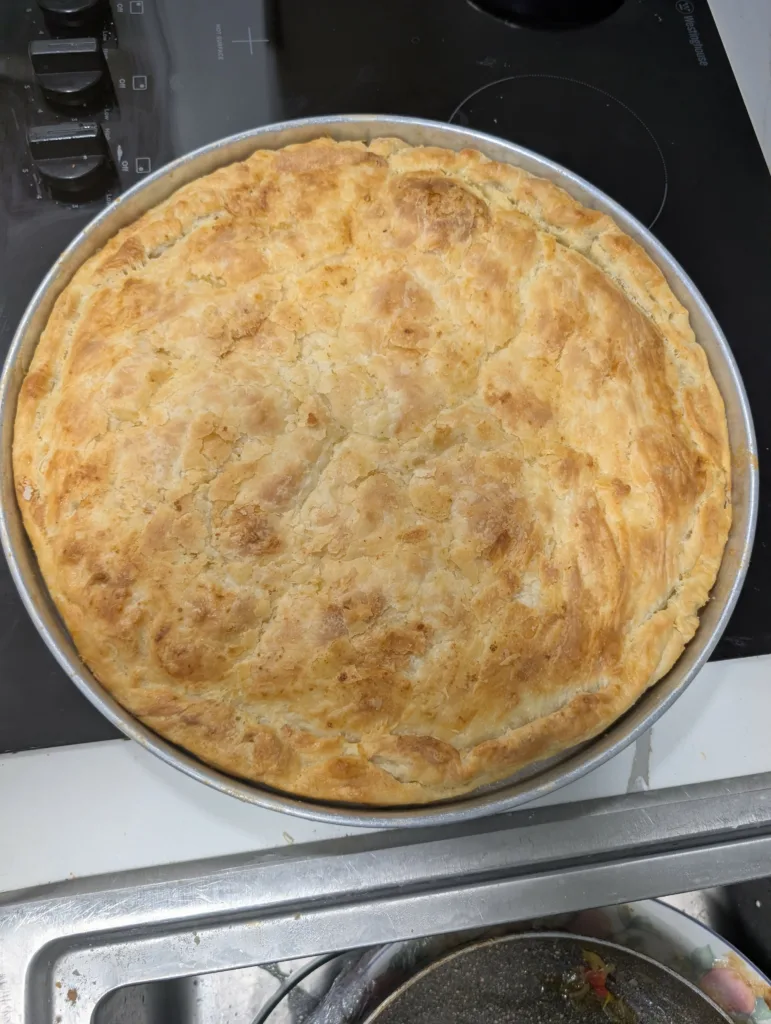
- Bake: Drizzle with melted butter and bake at 180°C for approximately 40 minutes.
2. Kastoria lahanopita (Cabbage pita)
Ingredients
- 4 cups flour (plus extra)
- Olive oil / white wine vinegar / salt
- 2 cups water
- Butter (melted)
- Cabbage
- 3 Peppers
- Chili (to taste)
Instructions
- Dough: Mix flour, 1 tsp oil, 1 tsp vinegar, 2 pinches salt, and 2 cups water. Knead until smooth.
- Rest: Separate into two pieces, drizzle with butter, and rest for 1 hour.
- Prepare Filling: Thinly slice cabbage, 3 peppers, and chili.
- Sauté: Heat olive oil and fry the vegetables for ~15 minutes until cabbage is golden.
- Assemble: Roll out dough. Place first sheet in pan (3cm overhang). Spread cabbage filling inside.
- Seal & Bake: Add second sheet on top. Pinch edges firmly. Drizzle with butter and bake at 180°C for 40 minutes.
3. Prasopita (Leek pita)
Ingredients
- 350ml lukewarm water
- 1/2 tbsp salt
- 3/4 tbsp plive oil (plus extra for sautéing)
- 3/4 tbsp white wine vinegar
- Approx. 750g flour
- 500g feta cheese
- 3 leeks
- 5 spring onions
- 125g butter (melted) + 1/2 cup olive oil (for brushing)
- 3 eggs
Instructions
- Prepare Dough: Combine water, salt, olive oil, and vinegar. Gradually add flour (approx. 750g) until a non-sticky dough forms.
- Prepare Filling: Finely chop the 3 leeks and 5 spring onions. Sauté in a pan with olive oil until soft.
- Mix Filling: Once cooled, mix the sautéed vegetables with the crumbled feta and 3 eggs.
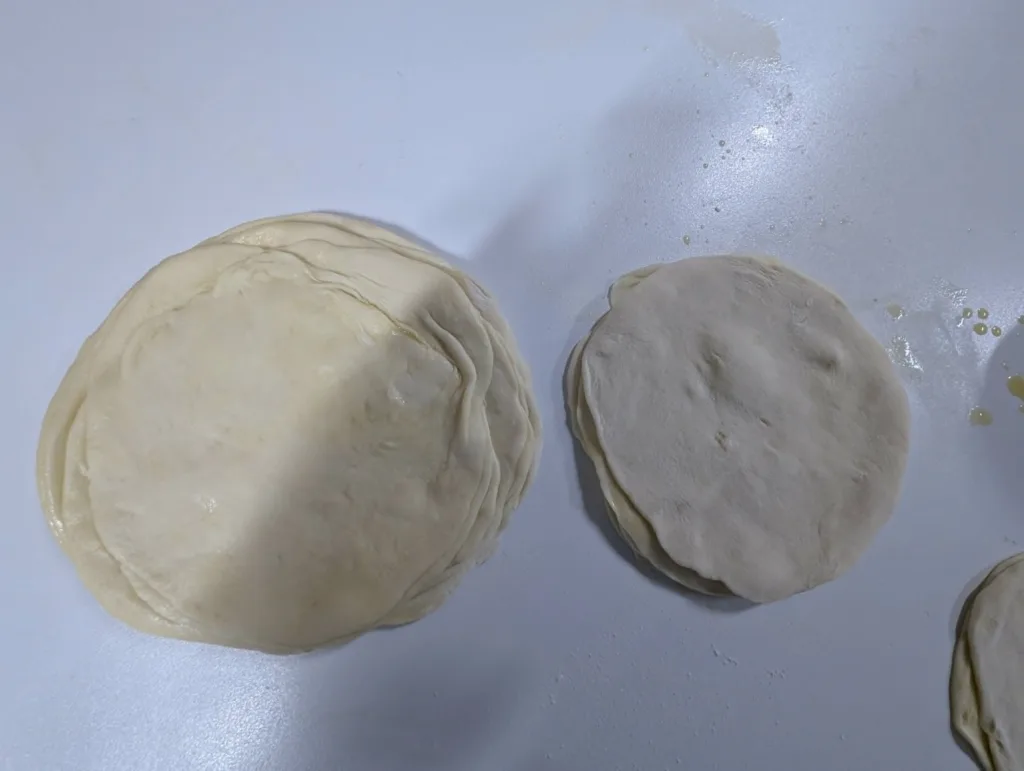
- Divide Dough: Divide the dough into 10 small pieces total.
- Stack Phyllo: Roll each piece to the size of a pancake.
- Bottom Layer: Stack 6 pieces, brushing butter-oil between each.
- Middle Layer: Stack 1 piece (this is your moisture barrier).
- Top Layer: Stack the remaining 3 pieces, brushing butter-oil between each.
- Roll & Assemble: Roll the three stacks into large sheets. Drizzle a pan with the butter-oil mix.
- The Layering: * Lay down the Bottom Layer (6-sheet stack), leaving 3cm at the sides.
- Spread ALL of the filling over this base.
- Place the Middle Layer (1-sheet stack) directly over the filling. This acts as a barrier to keep the top crisp.
- Place the Top Layer (3-sheet stack) on the very top.
- Seal & Bake: Fold the bottom edges over the top and pinch shut. Drizzle with the remaining butter-oil. Bake at 180°C for 40 minutes.
4. Spanakopita (Spinach & ricotta pita)
Ingredients
- 700ml Lukewarm water
- 1.5 tbsp Olive oil / 1 tbsp Salt / 1.5 tbsp White wine vinegar
- Approx. 1.5kg Flour
- 350g Ricotta / 280g Spinach / 4 Eggs
- 250g Butter + 1 cup Olive oil
Instructions
- Dough: Mix water, salt, oil, and vinegar. Incorporate flour until non-sticky. Rest.
- Filling: Combine spinach, ricotta, 4 eggs, and salt.
- Layers: Divide dough into 20 pieces. Stack into three groups: 12 (bottom), 2 (middle), and 6 (top), brushing butter-oil between every layer.
- Assemble: Lay the 12-sheet layer in a pan. Spread 3/4 of the filling. Add the middle 2-sheet layer (ruffled), then the rest of the filling.
- Seal: Top with the 6-sheet layer. Pinch edges, drizzle with butter-oil, and bake at 180°C for 40 minutes.
