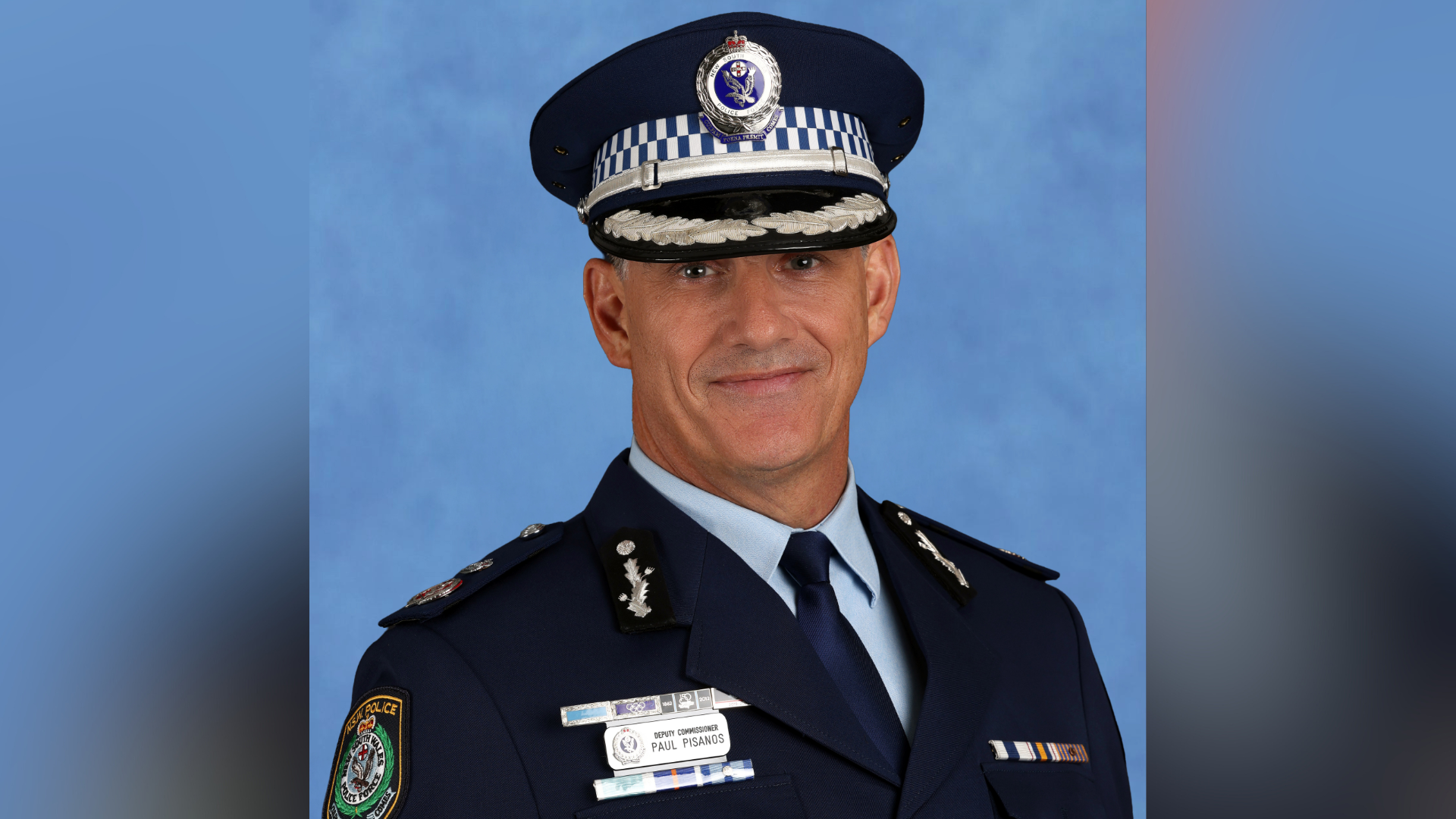
At a moment when questions of identity, service and community are increasingly intertwined, NSW Police Deputy Commissioner Paul Pisanos offers a deeply personal reflection on both his career and his heritage – one that spans generations, continents and cultures.
As the NSW Police Force prepares to march in full uniform at Sydney’s Greek Independence Day parade for the first time, Deputy Commissioner Pisanos speaks exclusively to The Greek Herald not only as one of the state’s most senior law enforcement leaders, but as the grandson of migrants whose journey from Laconia and Asia Minor helped shape the values he carries today.
In this wide-ranging interview, he traces his path from general duties officer in the late 1980s to Deputy Commissioner overseeing regional operations across 96 per cent of New South Wales, reflecting on leadership, multiculturalism and the enduring influence of family.
Above all, Deputy Commissioner Pisanos returns to a simple but powerful idea: that service – whether to community, country or family – is not just a profession, but something embedded in identity itself.
You come from a Hellenic background and have built a distinguished career in policing over nearly four decades. How did your upbringing and cultural heritage shape your values and influence your decision to join the NSW Police Force?
My grandfather, George Pisanos, came out to Australia in the late 1920s. He came from the Laconia region of the Peloponnese – a small village called Saint Nicholas, which sits above the Port of Neapoli. He had a cousin named Steve Pisanos. Steve went to the United States and ultimately joined the US Airforce as a fighter pilot in WWII. So service is in my family DNA.
My grandmother was Irene Moschos and came out to Australia from Asia Minor in the early 1930s as an 18-year-old. She had escaped the Greco-Turkish wars at that time and escaped with very few belongings with her mother and came out to Australia. My grandparents both ended up in the Illawarra region and met and got married in the 1930s. My father was born at Port Kembla down in the Illawarra region of NSW.
My dad was raised in a Greek household and could speak Greek but was encouraged to take on the Australian culture which he did. My mum was an Anglo-Australian woman, so my Greek heritage comes from my dad’s side. My father was raised as an Australian and was encouraged to live his life as an Australian as the family sought to integrate into the culture, but he was always connected as a first-generation Australian back to the old country especially when he was with his parents and members of the Greek community.
The memories of my Greek heritage are largely through my grandparents. Visiting them as a child, seeing their connections to the Wollongong Greek community and their strong work ethic and family and community connections. My grandfather made his money from the fish and chip café era during the 1940s to 1970s. My grandmother worked in the shop with my pappou, and my father and his siblings grew up around the shop. It was all about family.
My grandfather brought his family up at a time when hard work and long days making a living was normal. Downtime came via strong family connections through meals together, playing music and through big get togethers with Greek friends and family at their home. My grandfather came out here to work hard and to build a life for his family. It was his spirit of leaving his small village with not a lot of money and building a prosperous life out here that motivated me to build off his dream and take it to another generation.
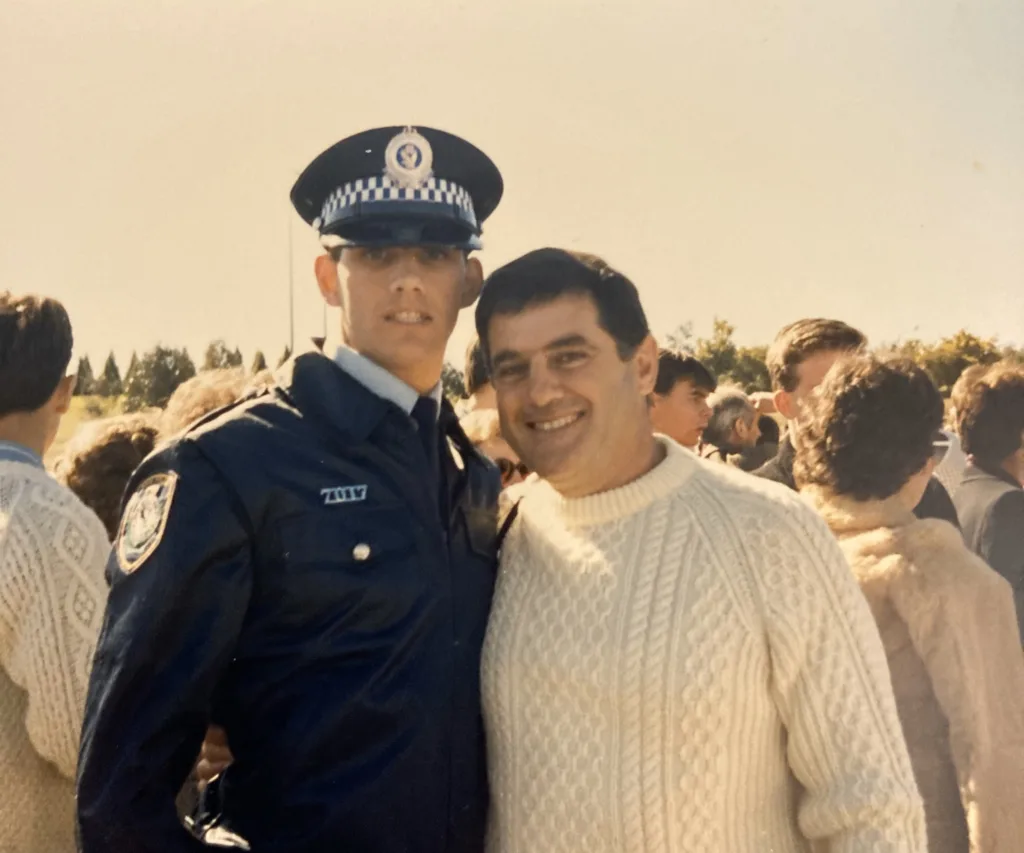
You joined the NSW Police Force in the late 1980s and have served in a wide range of roles before becoming Deputy Commissioner. Could you take us through your career journey and some of the key experiences that helped shape you as a leader?
I joined the NSWPF in 1987. My career has been largely in metropolitan Sydney and specialist areas. I began my career in general duties in Sydney. I then trained as a specialist police prosecutor and completed law studies. In 1996, I moved into criminal investigation duties and worked as a Detective in a number of specialist areas focused on serious and organised crime, drug enforcement and also professional standards. I rose through the ranks and took on leadership roles in field operations as a crime manager and as a Superintendent. I worked in Counter Terrorism as a tactical commander looking after our specialist tactical special weapons command. I moved into our youth and community engagement command, then professional standards command as an Assistant Commissioner.
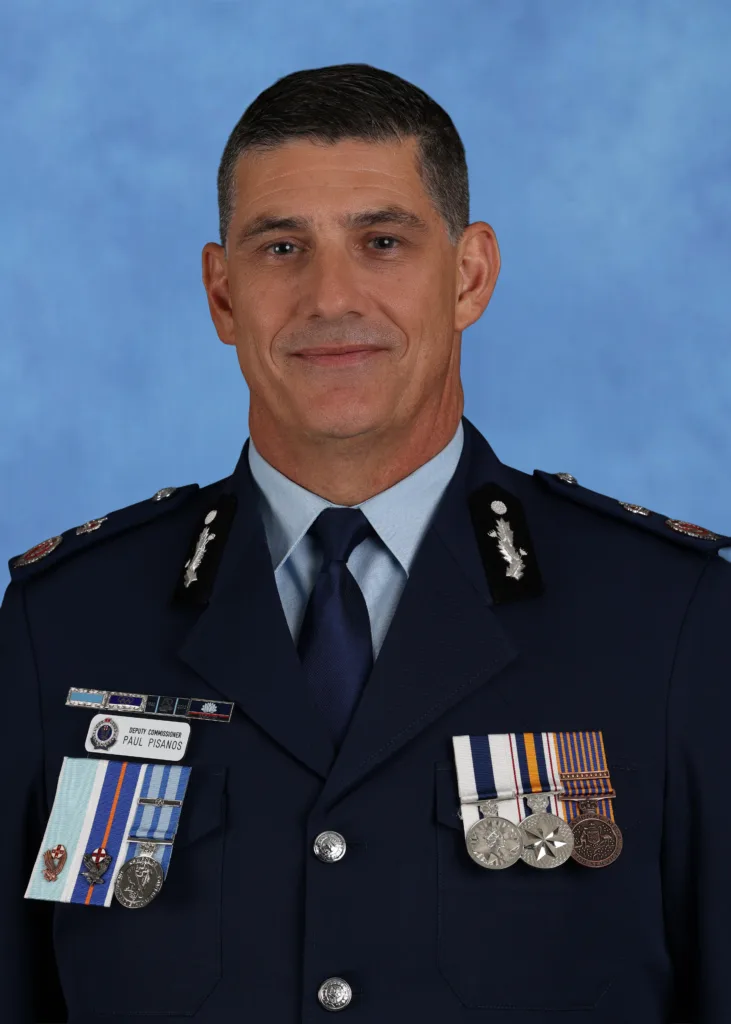
In 2022, I was promoted to my current rank of Deputy Commissioner. I currently look after all regional/remote policing operations across NSW (96% of the geography of NSW). I lead our youth crime response across NSW and our road policing and pursuit enforcement across NSW. What I have learned throughout my career and particularly as a leader, is the importance of connection to the organisation’s ethics and values and the critical importance of delivering services to the community based around professionalism and the building of trust.
This year, for the first time, the NSW Police Force will march in full uniform at the Greek Independence Day parade in Sydney. What does this moment mean to you personally, both as a senior police leader and as someone of Greek heritage?
It gives me an enormous sense of pride. Although I was raised largely in an Anglo-Australian environment, I still feel a strong connection back to my grandparents and this side of my heritage. It runs through my blood.
The Greek community in New South Wales has a long and proud history of contributing to public life, including policing and public service. How important is representation within institutions like the NSW Police Force, particularly for younger members of the Greek Australian community who may be considering careers in law enforcement?
The NSWPF promotes cultural diversity through the workforce. We must represent the diverse communities we serve. There is an ever-growing Anglo-Greek policing community in the NSW Police Force, and I would encourage anyone of Greek heritage out there to try policing as a career. You can literally have up to 200 different careers in one with the range of technical and specialist roles we have on offer.
Having served in the NSW Police Force since the late 1980s, you have witnessed significant changes in policing and in the communities that officers serve in across NSW. What are some of the most important lessons you’ve learned about building trust and partnerships with multicultural communities?
Whatever the community and the situation, police must always act with courtesy, professionalism and integrity. Trust is built from decency and professionalism and is built on how we treat the people we assist and engage with every day.
In your current role overseeing Regional NSW Field Operations, community-based policing remains a key priority. How do you see police working more closely with diverse communities to improve safety and strengthen relationships across the state?
The role of police in small remote and regional communities is critical. Often the police officer works alone in a community of 100 people – for example in far western NSW. Our role is often peacekeeper, law enforcer and civic leader. Many of these communities have significant First Nations populations, where cultural connection to these communities becomes very critical to building trust and serving the community. Fundamental decency, courage and professionalism are critical to servicing in these communities.
Looking back on your career – from joining the force as a young officer to serving as Deputy Commissioner today – what advice would you give to young Greek Australians who aspire to leadership roles in public service or policing?
Whether like me, you are second generation Anglo-Greek, it doesn’t matter. The ancient heritage and culture from the Greek side of our DNA gives us fire, passion and a richness to lead with energy. In my experience, this is underpinned by a strong work ethic that comes to us via our heritage and those that brought us here to this great country to make a future for their families. Have pride and harness this proud history and let it be part of your leadership and aspirations to do well whatever you choose to do.
