Home Blog Page 762

Honouring the memory of dual ANZAC Constantine Aroney BEM at his restored grave

*Information compiled by Kalie Zervos and Amalia Samios. Photos kindly supplied by Michael Samios and Matina Zervos.

Each year on ANZAC Day we commemorate those who fought and died at Gallipoli in 1915 and those brave men and women who have fought in conflicts since then. 

Amongst the young men who enlisted in the Australian Armed forces in WWI were new immigrants from Greece including a Kytherian named Constantine Aroney. He was a dual ANZAC having served in both WWI and WWII.
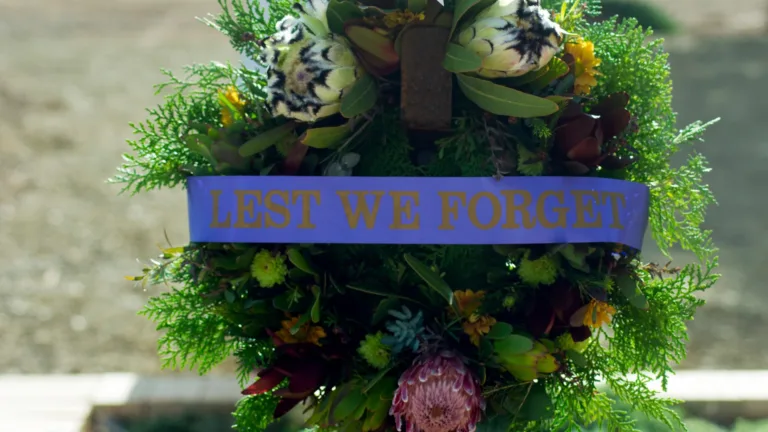
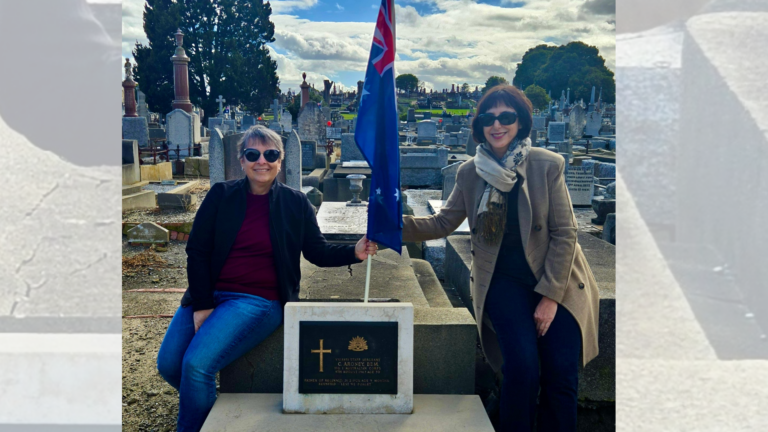
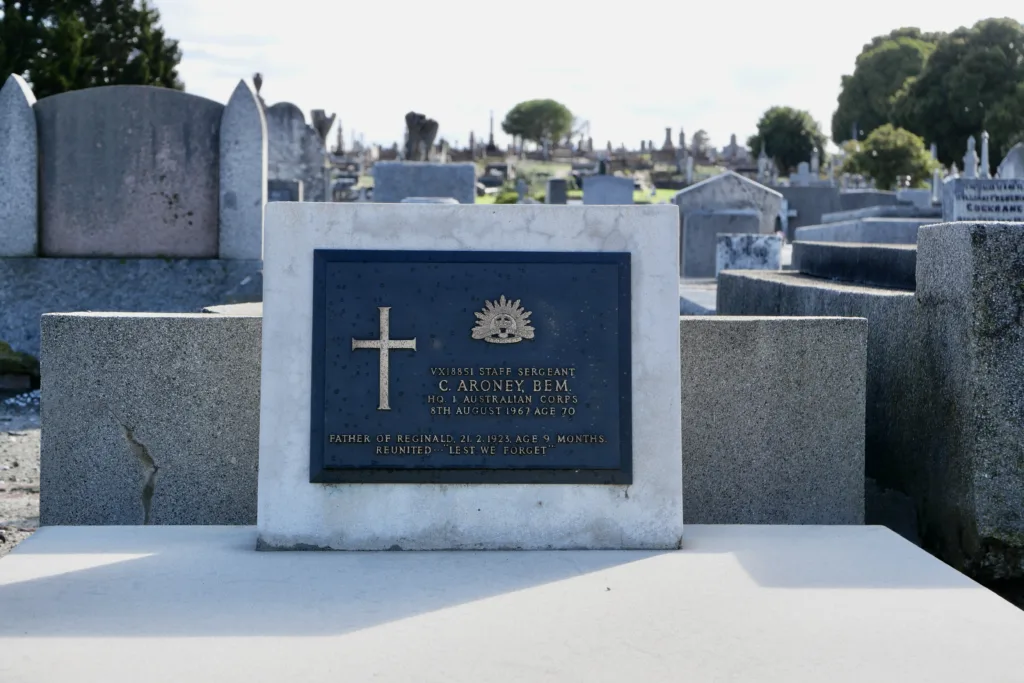
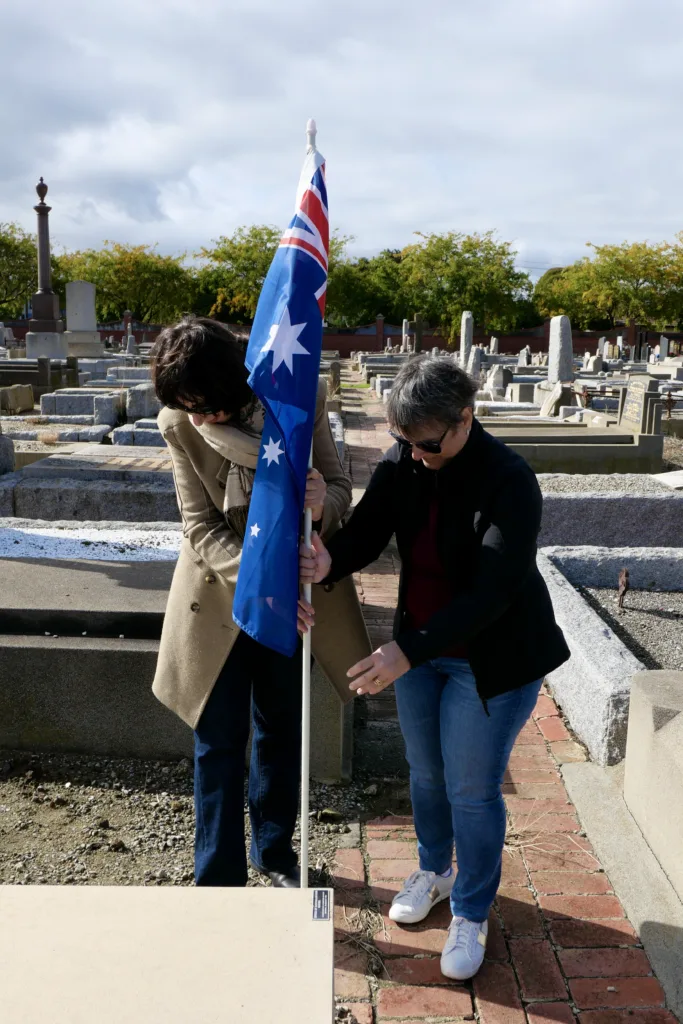
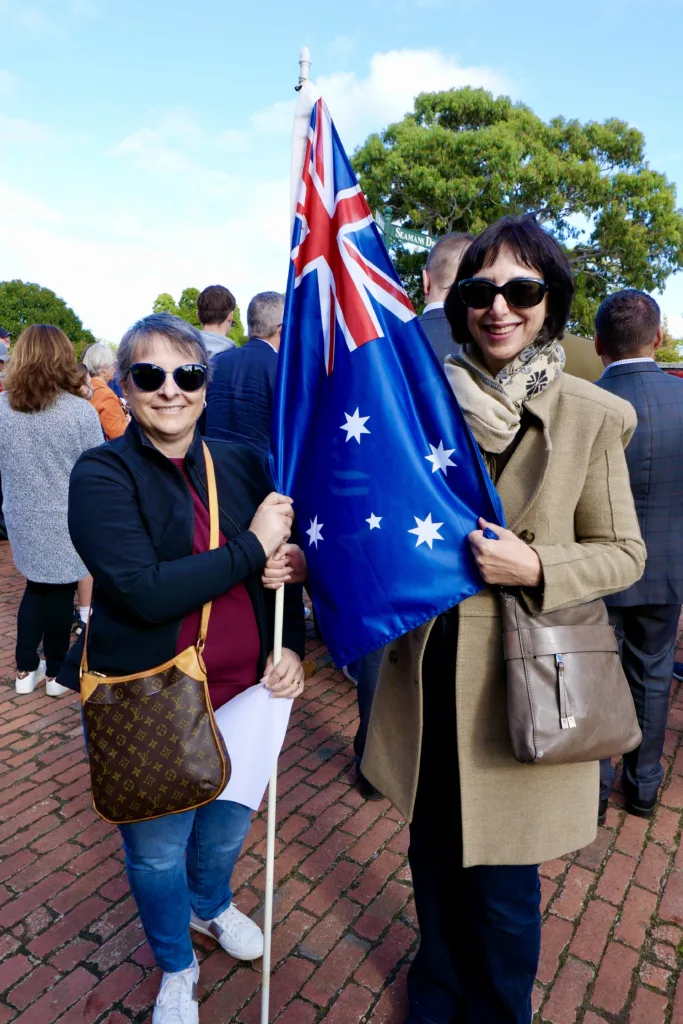
On April 19, as part of ANZAC Day 2024 celebrations, Kalie Zervos and Amalia Samios of Kytherian Genealogy Project, had the absolute honour to take part in an Australian flag raising ceremony at his restored grave site, to acknowledge his service to King and Country in both World Wars. 

A few months ago, a representative of the Brighton Cemetorians, a not-for-profit organisation in Melbourne, contacted Kalie and Amalia after coming across Kalie’s blog on the Kytherian Genealogy Project website about Constantine Aroney BEM, the only known Kytherian dual ANZAC. They informed them of their project to restore grave sites of returned soldiers buried in Brighton Cemetery, which this year included the gravesite of Constantine Aroney, but also to invite surviving family members to take part in celebrations.

As Constantine has no known surviving family, the Cemetorians invited Kalie and Amalia to raise the flag in his honour as they are regarded as the forerunners in Kytherian family history worldwide. They were honoured to step in to commemorate the sacrifice and courage of this man, who fought for values of freedom and who in WWII bravely saved men in Greece.
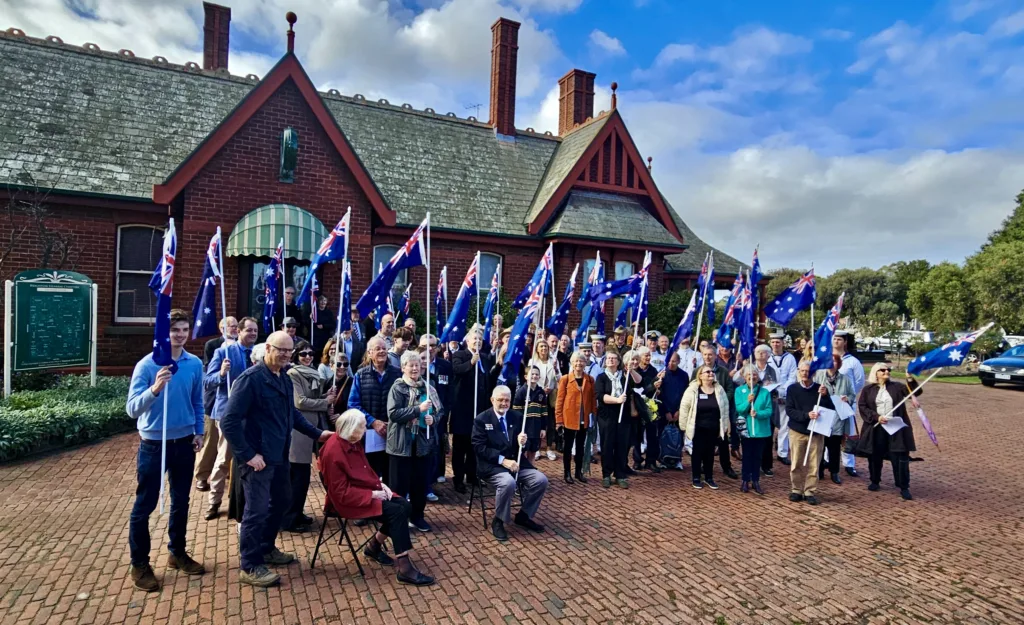
The commemoration ceremony started with a welcome from the President of the Cemetorians, followed by a representative of the Victorian RSL, who recited the Ode of Remembrance and raised the first Australian flag. The other forty-nine Australian flags were then handed to each family or representative. It was done alphabetically so Amalia and Kalie had the honour of receiving the very first flag.

The raising of the flag at Constantine’s grave was very moving for those present. This man came from humble beginnings in Kythera and had the courage to fight for his adopted country, not once but twice. Now he is immortalised where he lies and will be remembered every ANZAC and Remembrance Day when the Cemetorians will continue to raise a flag in his honour.

Who was Constantine Aroney?

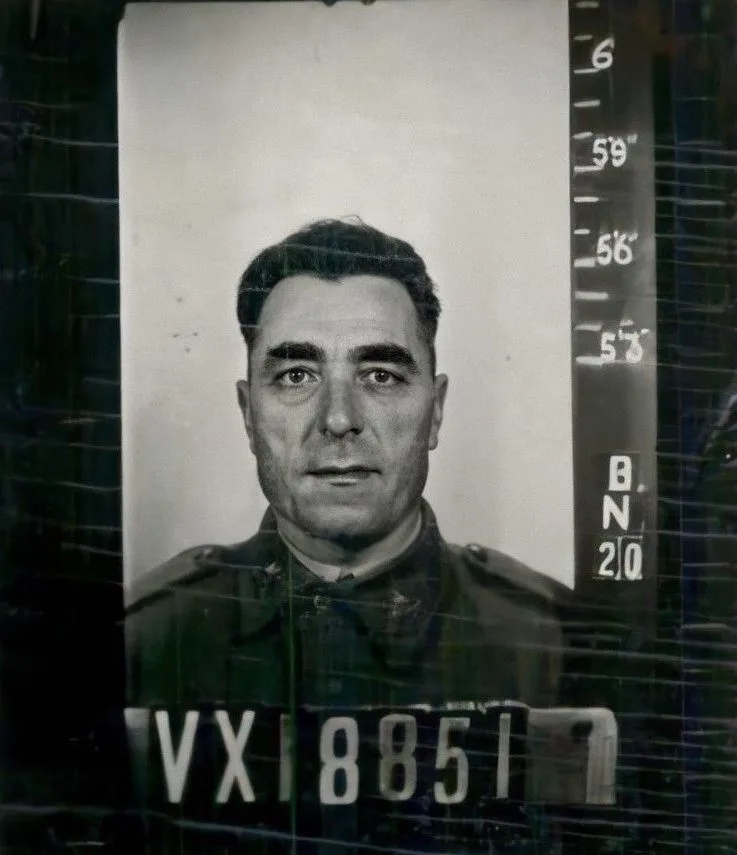
Constantine Aroney was born in Aroniadika, Kythera on 12th March 1891 to Panagioti Aronis and Stamatia Margeti and was baptised in the church of Sotiros Christos Aroniadika on 25th March 1891. The passenger list of the Waipara, which travelled from London arriving in Brisbane on 5th July 1911, shows a 16-year-old Konstantine Aronis on board. As the research into migration records reveal no other Constantine Aroney immigrating during that period and his age matches service records, it can be assumed that this is the record of his arrival in Australia.

According to military records, he was a naturalised British subject in 1915.

He was living in Melbourne at the time of his enlistment into the Australian Army on 6th March 1915. His army records show he was initially deployed as a private to the 24th Infantry Battalion “B” Company. He was not at Gallipoli on the day of the fateful battle, as he left Australia on 8th May 1915 and arrived there on 30th August 1915. Whilst in Gallipoli, he contracted conjunctivitis twice and was hospitalised for a short period. The records show he then went to Malta, Alexandria in Egypt and then was transferred to the 2nd Australian Division Salvage Unit on 24th January 1917 and was deployed to France. In April 1918, he was admitted to hospital with a suspected hernia. He was transferred to Reading War Hospital in England, where he was operated on for a double hernia. He returned to Australia on 31st July 1918 and was discharged in Melbourne on 11th September 1918.
In October 1939, he enlisted in the Commonwealth Military Forces and seven months later transferred to the 2nd Australian Imperial Forces and the Headquarters of the 1st Australian Corps, serving in Palestine, North Africa, Greece, Crete and Syria. He was listed as divorced on his enlistment records for WWII. Further investigation into Victorian records show he was divorced from Muriel Agnes Aroney in 1928. They had a son together named Reginald, who sadly passed away at the age of nine months in 1925. At the time of his enlistment, he was living in South Yarra and his next of kin was listed as his sister Annie, who lived in Kythera. By 1940 his address was listed as Carrington Mansions, 22 Albert Rd South Melbourne and his next of kin was listed as Elizabeth Lawrence, a friend who also lived at the same address, where he seemed to have spent the rest of his life. The address may have been a boarding house as one reference to it has been found in a Victorian newspaper archive, in which it was listed as the address of the infamous gangster Squizzy Taylor in 1924, who by chance is also buried in Brighton Cemetery.

Aroney’s background and ability to speak Greek proved extremely valuable when serving in Greece in WWII. When the allied forces were overrun by the German Army, Aroney managed to escape to Crete in an open boat, taking 23 soldiers with him, whom he cared for with the help of Cretan locals. This heroic feat earned him a British Empire Medal in the new year’s honour list in 1944.

Voters’ lists show his occupation as a soldier and later a TPI pensioner. He passed away on 8th August of 1967 at the age of 76 in Heidelberg, Victoria, and was buried along with his infant son in Brighton Cemetery.

Lest we forget!
Women’s justice champ unveils the untold story of WWII ANZACs from Brunswick to Greece

By Mary Sinanidis

Phil Cleary is many things: former teacher, football legend, anti-domestic violence activist, author, an independent member of Australian Parliament, and now embarking on a new venture as a documentary filmmaker. His latest project, titled “Gladys and the Brunswick Boys,” delves into the experiences of World War II ANZACs who fought in Greece.

This labour of love, thirty years in the making, is a culmination of meticulous research, raw footage collected over decades, and insightful interviews. Phil’s dedication to capturing this powerful narrative is evident. 

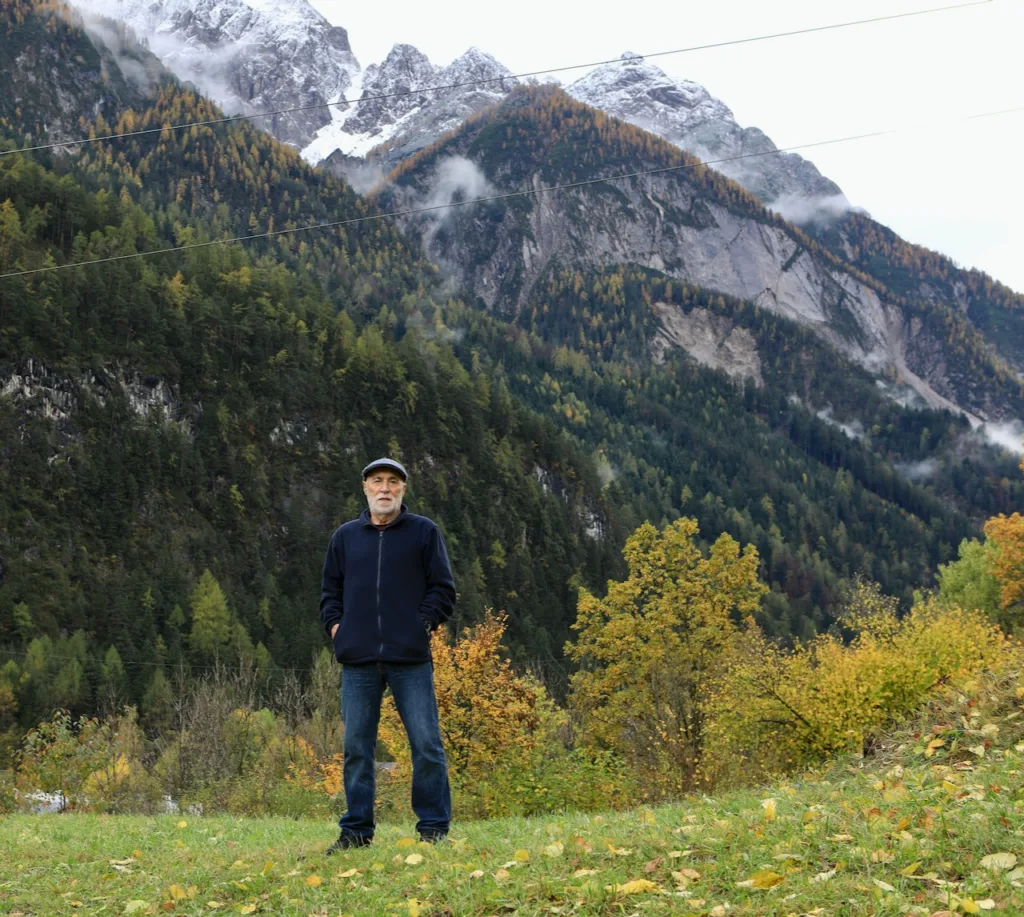
Phil Cleary at Leisach Hill
Phil Cleary at Leisach Hill.

“It’s ready,” Phil told The Greek Herald. “Over the past seven years, I have filmed in Brunswick, Greece, Crete and Austria. All I need now is a potential financial backer to get this powerful story onto a platform like Netflix. The footage I have is powerful.” 

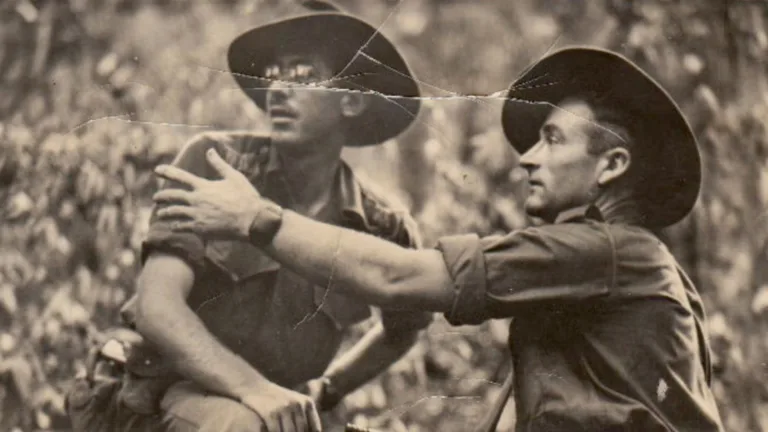
The genesis of this four-part documentary series traces Phil’s own family history, sparked by the discovery of his grandmother’s old photographs and documents. Reflecting on his childhood observations of his grandparent’s interactions, Phil recounts the story of his grandfather, Teddy Dorian. 

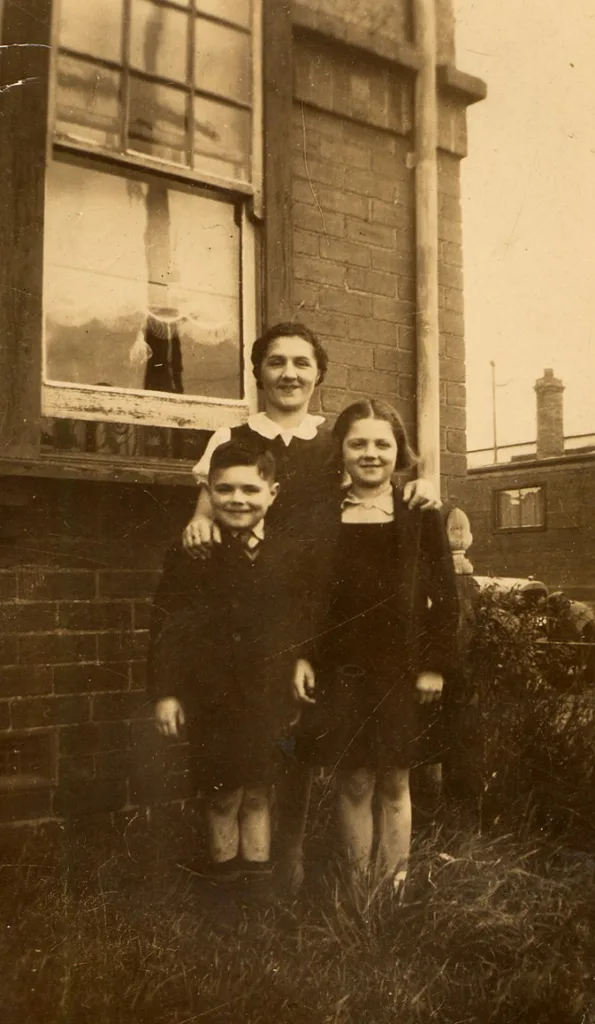
Though it was Teddy who fought in Greece, it’s grandmother Gladys that Phil wants to name the documentary after. She spun at Millers Ropeworks and cared for her two young children including Phil’s mother, during Teddy’s internment in a German POW camp from 1941 to 1945.

Gladys, Little Ted and Lorna.

Women’s strength during war 

Many may believe that it was the brutal murder of Phil’s sister Vicki in 1987 that set off his search for social justice, but through Gladys we can see that the seeds were sown in childhood.

It was the resilience and determination of women like Gladys that fuelled Cleary’s advocacy for justice. 

“Mothers wrote letters seeking answers,” he said. “In my case, in World War II, my grandmother was writing letters to the government, challenging them about her husband who came back from war and couldn’t work. It was the women who were campaigning and in many cases being harassed.

“My grandmother fought forever, year after year, with Veterans Affairs to have my grandfather looked after. She battled to get my grandfather a full pension, which he sort of got just before he died in 1964.” 

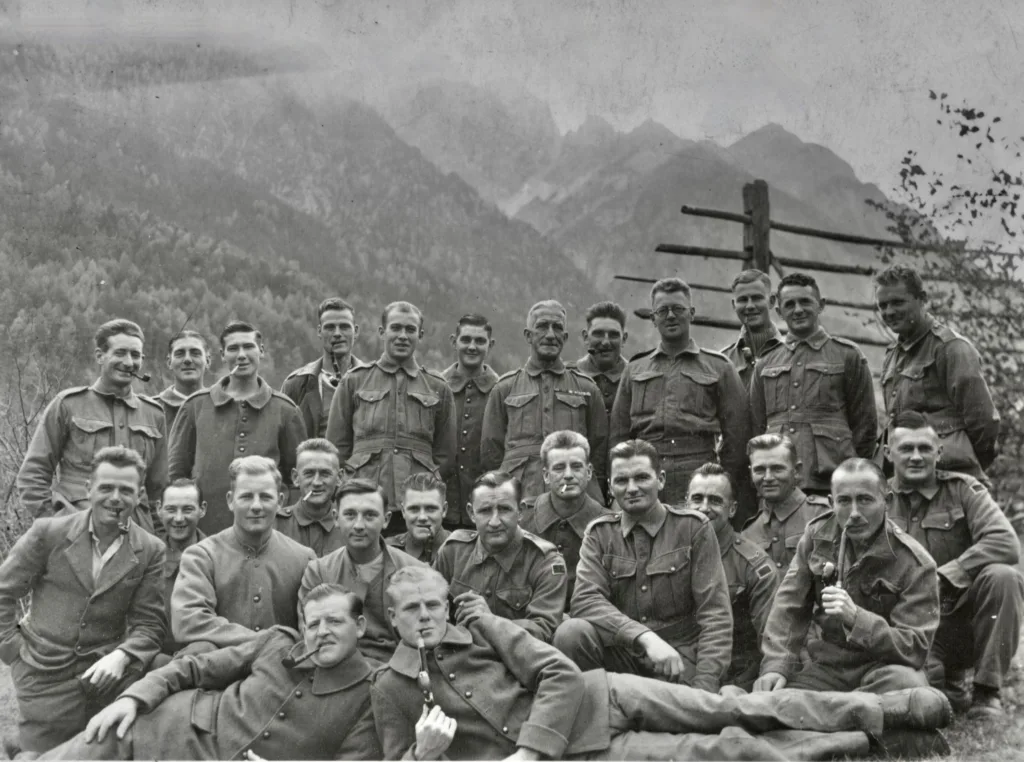
POW Austria
POW in Austria.

Men’s post-war trauma

The post-war trauma endured by men like Phil’s grandfather is a central theme in the documentary series. Broken and emaciated, Teddy Dorian returned home to live in a bungalow behind the family’s Brunswick house. Despite challenges, Gladys remained steadfast, though their relationships lacked the depth they once shared. 

“My grandmother accepted that they could not have a meaningful relationship, but she never pursued a divorce even though she had a boyfriend,” Phil said. 

“My grandfather was an alcoholic, and he’d drink methylated spirits with his mates – a gang of them would meet near the railway line and drink cheap plonk. He suffered acute post-traumatic stress, and his mates did too. His friend Michael Parlon was run over by a train next to the Brunswick bars; he may have committed suicide. His other mate Jackie O’Brien died on Phoenix Street after a drinking session, and my grandfather died when he was 49 years old.”

Phil was 11 at the time, and didn’t realise the details or depth of his grandfather’s trauma. 

Years later, he came across a group photo of the “Brunswick boys” on a hill in Austria at the Prisoner of War camp near Lienz. 

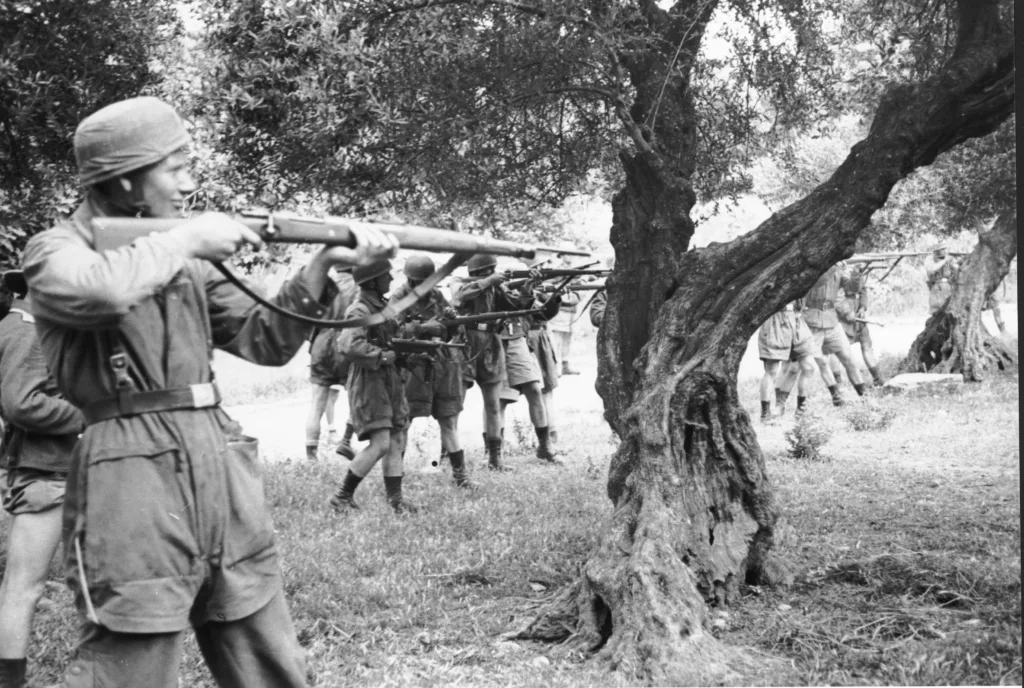
Kondomari
Kondomari.

“It was a remarkable photograph, just under 30 men in three rows, with the Dolomite Mountains on the border of Austria and Italy behind them and I was always interested in it. And eventually I met Billy Ottaway who had gone to war with my grandfather, Teddy, and his best mate Michael. Through Billy, I heard stories about the photograph and the camp. He told me about their capture near the Corinth Canal on the way to Kalamata,” Phil explained.

Billy Ottaway from Dawson Street, Brunswick, just around the corner next to Barry Street, went walking for months after the Corinth Canal was attacked. 

“A Greek family took him in and he stayed there for weeks with the Germans passing by,” Phil said. 

“Eventually, he decided it was too risky because they didn’t speak English and he didn’t speak Greek, so he gave himself up. And it was there that he came across my grandfather and his mate.”

Meanwhile, Teddy’s brother, Roy Dorian escaped aboard the Costa Rica from Kalamata but the boat was sunk. 

“He made it to Crete when the Germans invaded on May 20, 1941 and fought in Giorgoupoli and they marched to Sfakia. They stopped out of the village on the Battle of 42nd Street,” Phil said, referring to the infamous battle when the Nazis launched an airborne attack. 

“He fought with Reg Saunders, the famous Indigenous Australian.”

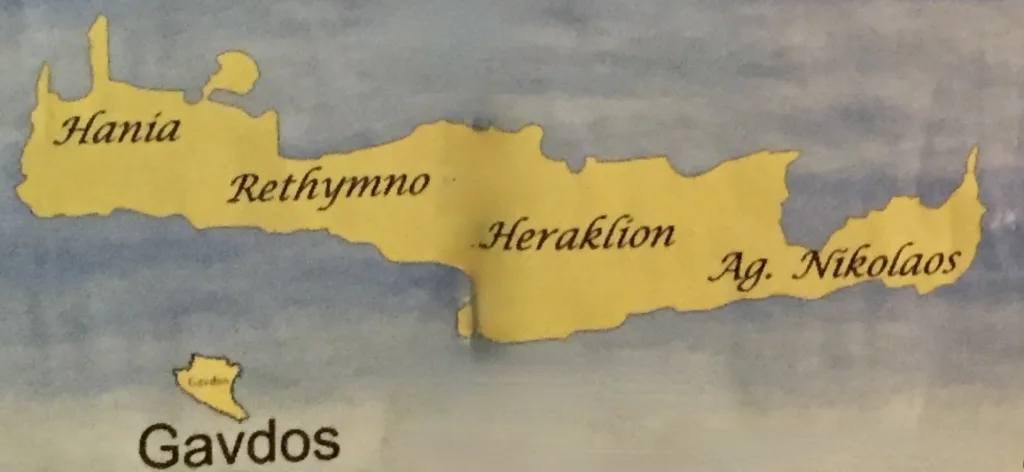
Unfortunately for Roy, the boats had gone by the time he got to Sfakia and so he and a couple of mates found a dinghy and made their 11-hour escape to the island fo Gavdos, from there they walked for four hours to the South before coming across an invasion barge that took him to Egypt. Roy finally returned to Australia before being sent to Papua New Guinea to fight the Japanese, and that is where he finally died. 

One son died, and the other came back after years in a POW camp. 

Gavdos
Gavdos.

A ripple effect

“I’m interested in the social history and the impact of these men’s wartime experience on their families and their local community. It’s a much bigger study than that of my grandfather and family,” Phil said. 

A born storyteller, Phil also learned the art of filmography and travelled to Greece and Austria, revisiting the steps of the “Brunswick boys.” Along the way, he interviewed locals, capturing stories from different angles. 

“Billy told me that when he was in a POW camp in Austria, he saw a US airman jump from his plane and die when his parachute didn’t open. And when I travelled to the village, I met Roland Damani, the former school teacher, who told me of the same US airman. I’ve filmed that scene, where he died, where his plane, the Angel, came down, and I know that Billy was not exaggerating,” Phil said. 

Unseen footage, captured over years, will capture another side to WWII ANZACs. Phil hopes that, once released, “Gladys and the Brunswick Boys” will shed light on the profound impact of war across generations. 

“All I need is a platform to share this footage with a wider audience so that viewers can connect,” he said. 

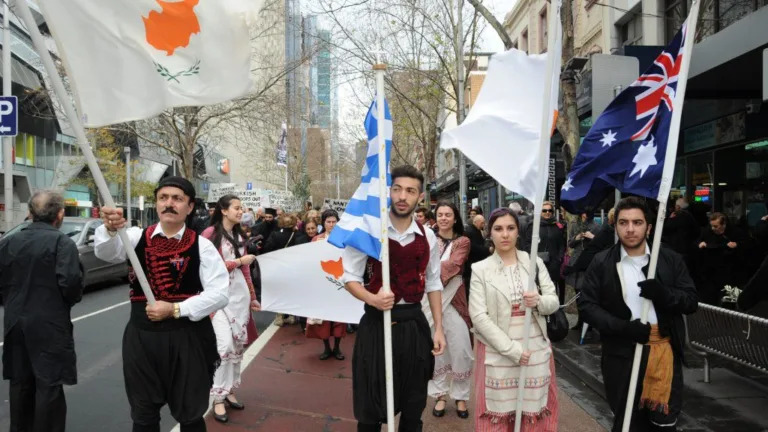
103-year-old Evripidis Mouxouris to lead Cypriots at ANZAC Day march in Sydney

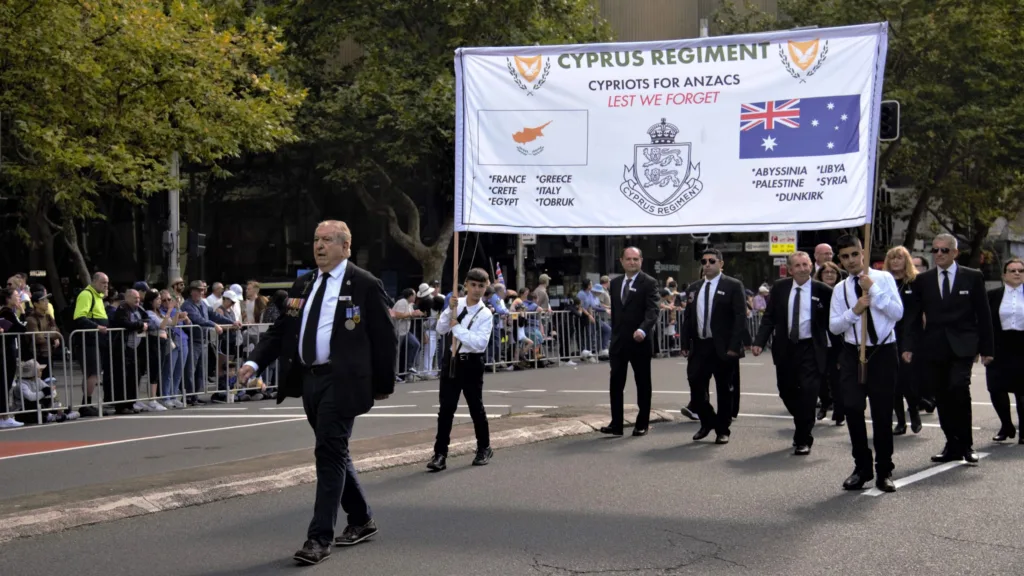
103-year-old veteran Evripidis Mouxouris will lead the ‘Cypriots for ANZACs’ contingent at this year’s ANZAC Day march in Sydney.

This is the second year the Cypriots will be partaking in the march.

Mouxouris was born in Morphou, Cyprus on July 5, 1921, to a farming family. At the time, Cyprus was a British colony and even before Mouxouris left primary school, he was swept up in the anti-British protests of the time.

Mouxouris joined the Worker’s Party of Cyprus (AKEL) in 1940 and remains a member today. He volunteered to fight in WWI and went to the Italian front at his own request. He saw fighting in Africa, as well as in Europe.

After the war, Mouxouris continued to struggle for an independent Cyprus and an end to British colonial rule while he worked on his trade as a tailor and organised union activity and campaigns for worker’s rights. In 1952, he moved to Nicosia and opened a tailor shop.

Mouxouris married Panayiota in 1965 – five years after Cyprus achieved independence from Britain in 1960. Their daughter, Eva, was born in 1966. Their son, Mario, was born in Morphou in 1974, on the day the town was occupied by the Turkish army.

In 1974, as a result of the Turkish occupation of Cyprus, Mouxouris and his family became refugees in their own country and migrated to Australia.

The family were taken in by a Turkish Cypriot family in Sydney, who helped them to get on their feet in their first few months in Australia.

Since resettling in Sydney, Mouxouris has been an ever-present figure at the Cyprus Community Club in Stanmore and has taken an active interest in his community, as well as maintaining his connections with Cyprus.

Today, Mouxouris spends almost every day at the Club in Stanmore playing backgammon with his friends and cronies in the “kafenion.” Any of his opponents will testify he still has the sharpness to defeat most newcomers in a game that requires strategic skill.

The Cyprus Community of NSW, the Board, and its subcommittee the ‘Cypriots for ANZACs’ invite all families, friends and those from towns, villages who have a connection with veterans to join the march and register online at: https://cyprus.org.au

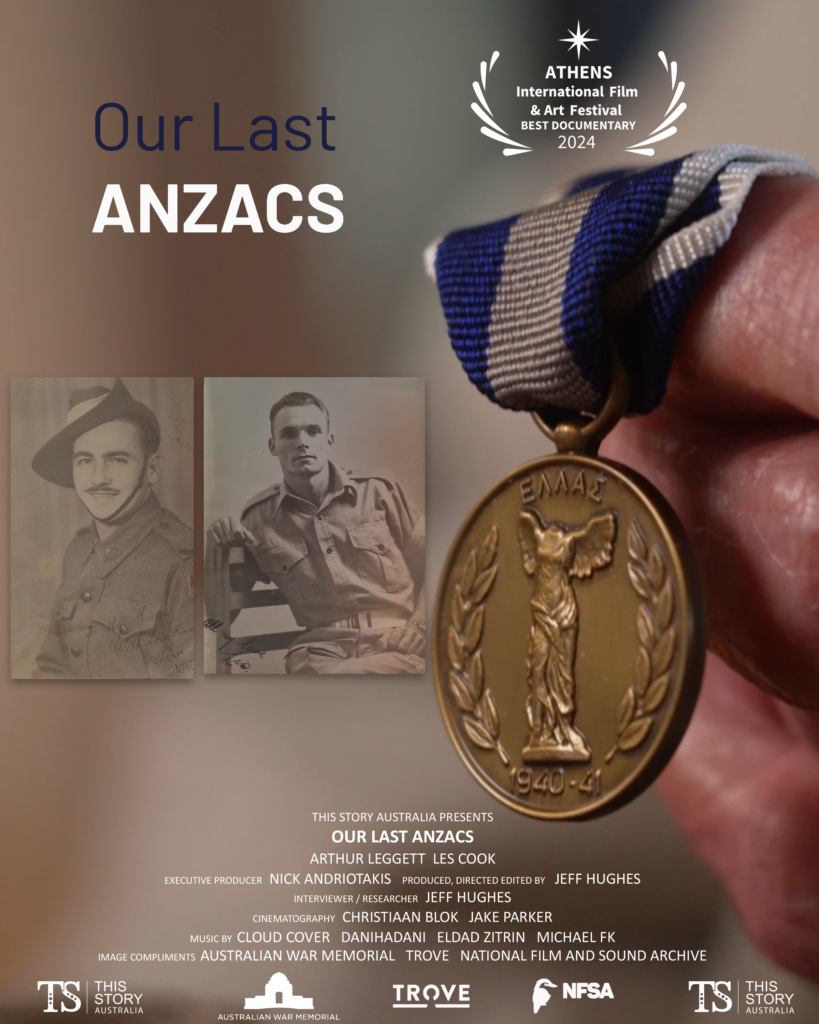
‘Our Last ANZACs’: New documentary on the last two surviving Battle of Crete veterans

ANZAC Day is an opportunity to reflect on and acknowledge the sacrifices of those men and women who served or died in all wars, conflicts, and peacekeeping operations. 

Two of the men who deserve to be recognised are the last surviving veterans of the Battle of Crete during World War II. They are 105-year-old Arthur Leggett and 101-year-old Les Cook.

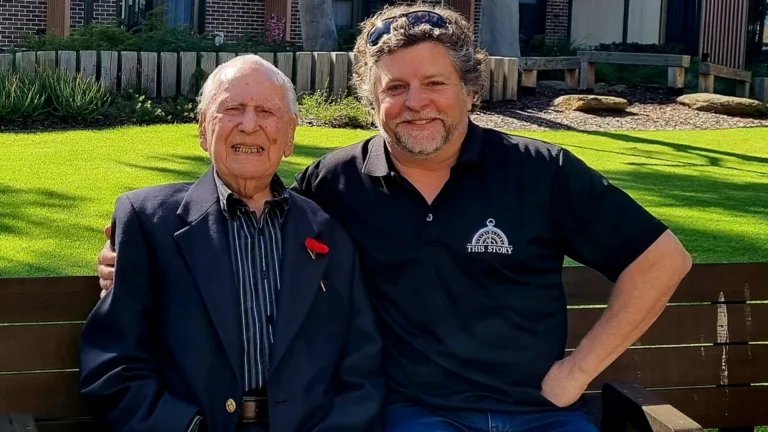
Luckily, This Story Australia has recognised the importance of these veterans and recently produced a new documentary titled ‘Our Last ANZACs,’ which shines a light on the lives of Arthur and Les. 

The documentary has been produced by Jeff Hughes, with Nick Andriotakis as Executive Producer. We spoke with Mr Hughes to find out more about his production.

Our Last ANZACS poster
Our Last ANZACS poster.

Tell us a little bit about your new documentary ‘Our Last ANZACs.’

“Our Last ANZACS” is a documentary that shares the personal recounts of the Battle of Crete by Australia’s last two surviving Battle of Crete WWII veterans – Arthur Leggett (105 years old) and Les Cook (101 years old).

It is tremendous that This Story Australia had the opportunity to interview both gentlemen in Perth and Canberra respectively in 2023, and the result is a compelling tale of a story that should never be forgotten.

How did the documentary come about?

This documentary was inspired by an original project created in 2021 called ‘Second Generation ANZAC: The Story of Alf Carpenter.’ The original work highlighted the personal story of Alf Carpenter, a Battle of Crete veteran and went on to win two International Film Awards, after premiering at The Greek Club, Brisbane and then Palace Cinemas Leichhardt in May 2023.  To preserve our last ANZAC’s (Arthur and Les’) stories developed into a huge priority in the last two years.

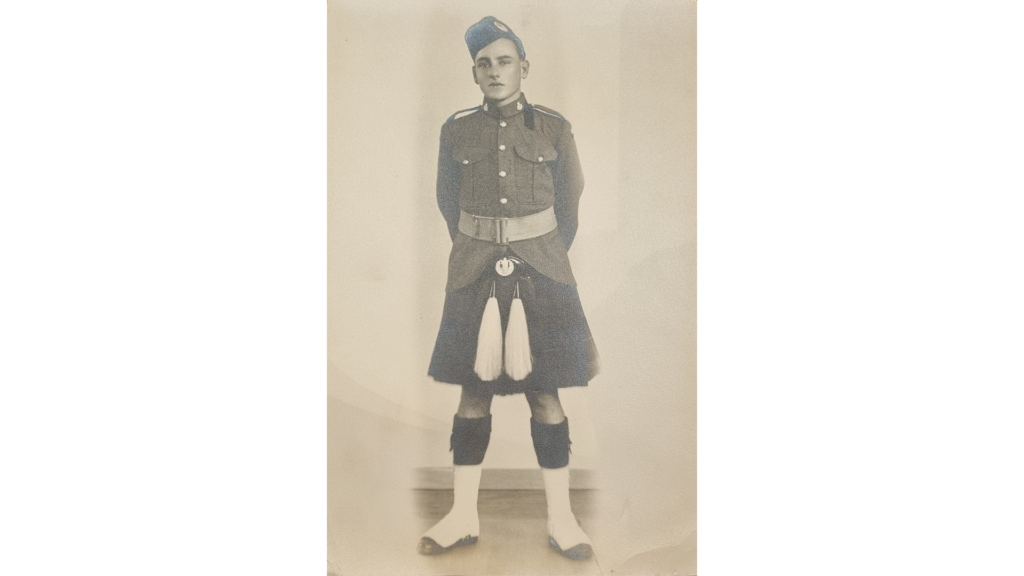
Arthur 1939
Arthur in 1939.

What was the process of researching, directing and producing like? 

Logistically the challenge was interviewing Les and Arthur in different parts of the country. This means different conditions for filming, different cameramen and gear and ultimately, filming on a defined date could be the one and only chance we had to preserve their stories. Also, despite Les and Arthur serving together in the same conflict, the men didn’t know each other and therefore had different experiences in WWII. Editing the stories together to create a strong narrative was a different challenge

How did you interview the ANZACs considering their age? What was it like sharing their stories?

Listening to Les and Arthur was a complete privilege. It is so clear that they are a part of the greatest generation – their politeness, their respect and honour to have served weighs heavy in the energy in the room. We allowed both to go wherever the story was going to take them. The result created more footage when it came to editing, but also it means they spoke honestly and truthfully from the heart.

Why do you think it’s important to document the stories of these ANZAC soldiers?

Arthur and Les are the last of a generation to comment on the unique bond between Australia and the people of Crete. They experienced this first hand in WWII and are national treasures. Every man or woman who has served Australia deserves to have their service documented and shared. They are the reasons why we are one of the best countries in the world.

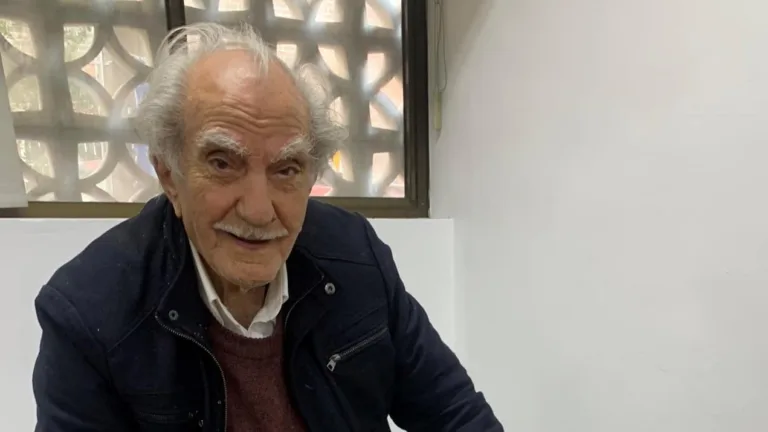
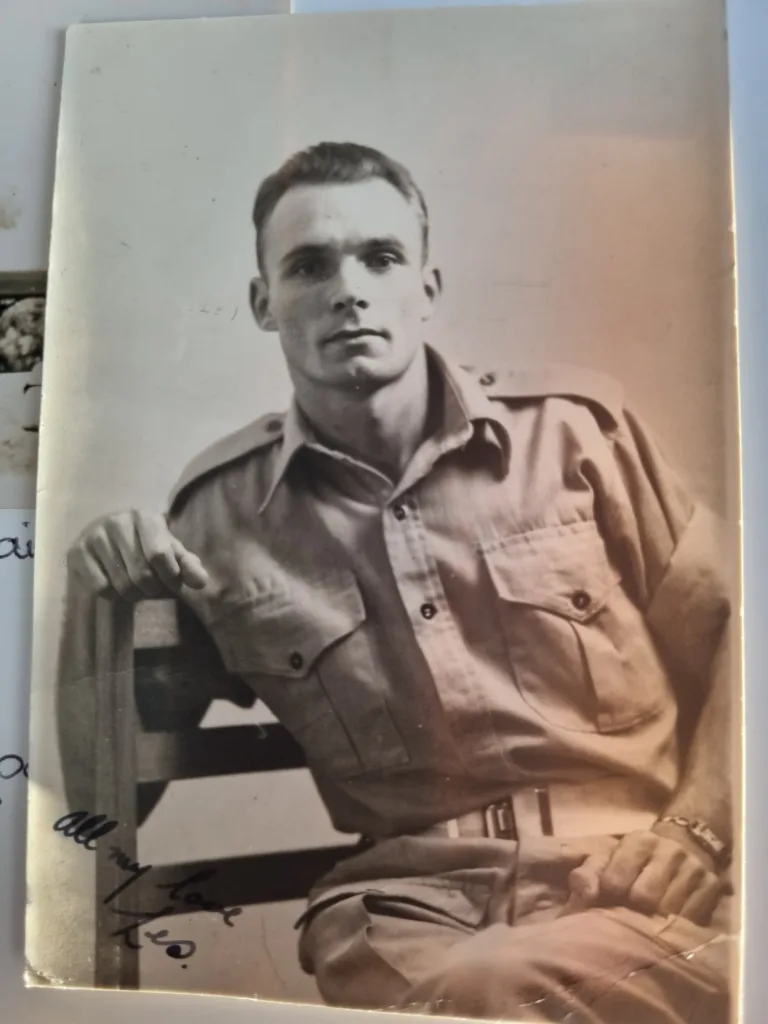
Les Cook
Les Cook.


The documentary has already been successful, having won Best Documentary in the Athens Film & Arts Festival. How does that feel?

The fact that the film is being recognised globally is indicative of how the world feels about Australians. To share a uniquely Australian and Greek story with the world is one thing, but to gain recognition for this, is evidence that the world hungers to connect, learn and understand one another. The ANZAC spirit has a special place in our psyche, and ANZAC stories deserve to be shared with the world.

Is there anything else you wanted to say?

In regard to accessing the film, we are exploring options at the moment. If we get enough response from the public we will investigate some screenings soon. Later in the year it will be available on our website www.thisstory.com.au

Cyprus Community of NSW for ANZAC Day: Liberation must be respected

By Michael Peters Kyriacou, President of the Cyprus Community of NSW Ltd and Member of the Cypriots for ANZACs Subcommittee

The Cyprus Community of New South Wales has achieved many milestones over the past 18 months, from the rezoning of its large parcel of land in Stanmore, Sydney to an immensely popular wine and food festival, a soccer team in the top four competition, about to launch our youth club, our professional’s association, and announcements about our heritage Club building and the future of the Stanmore property.

Perhaps the most prominent achievement has been the formal recognition of our veterans – our people’s efforts in World War One and Two, in Australia and overseas.

When a group of Club members started researching the history of our people’s involvement in both world wars, it did not take long to see the injustice and the neglect of our veterans.

Cyprus had more volunteers per person than any other territory or nation during World War II. Cyprus surpassed Russia, France, the United Kingdom and even the USA.

Although not a nation and still occupied and governed by the UK, the Cypriots were the first to land in Greece in the defence of Greece. They were also amongst the first to land in France, all volunteers. It has been often noted that the Cypriots were the staunchest supporters of the Allied cause in World War II. 

The invasion of Greece in 1940 and even before the UK decided to recruit volunteers for the war effort, the Cypriots were already in the trenches in Greece and France. Once the Cyprus Regiment was formed by the locals with support of the UK administration, 6,000 people turned up.

By the time the war concluded, more than 30,000 had served in the Cyprus Regiment and with Greek, French and other forces, many were fighting shoulder to shoulder with ANZACs in Greece, Crete, North Africa and beyond. All volunteers.

The patriotism of the Cypriots became legendary, their feats to conduct high risk operations surprised even the Germans, who wrote in their reports back to Berlin their surprise that an occupied people would co-operate with their occupiers to fight the Germans.

It seems the belief in liberty ran very deep, it’s part of the Greek DNA, an innate ability to recognise tyranny, and in the hope of their liberation they took arms to help others. Ironically, the highly trained Cypriots were later denied the promise to liberate Cyprus by the UK, a betrayal that shames the UK administration to this day.

The battle-worn Cypriots used their training to turn their efforts to evict the occupiers in the famous EOKA uprising of the 1950s. The disappointment that the UK and in part Greece did not recognise or appreciate the sacrifice of the people of this small European island is the focus of an entire academic discipline.

After WWII, Cypriots arrived in the UK, Greece and even Australia. The lack of recognition of their sacrifices left a scar.

The Cyprus Community of NSW was established in 1929, many of its members were Cypriots who fought in the “Imperial” forces, and with the ANZACs and the Greek Forces, but their efforts were virtually ignored. The Community became a haven for the new settlers where their sacrifices could be appreciated.

It will take the Cyprus Community almost 70 years to finally get the recognition and support our veterans, our heroes deserve.

In 2023, the Cyprus Community of NSW Board formed the ‘Cypriots for ANZACs’ group and due to the Community’s and Subcommittee’s efforts, we were invited to take part in the 2023 ANZAC Day March in Sydney. This was reported by the Australian and overseas media.

This year, the Community will take part in more ANZAC events throughout NSW and is about to announce the unveiling of a lasting monument to remind us all about liberty and selfless sacrifice.

The work of the Cyprus Community of NSW and its Board and the ‘Cypriots for ANZACs’ has now gone beyond NSW. The Community Board and the Subcommittee are in discussions to have a museum document the military contribution of our veterans – a permanent display in Australia to ensure we all honour and respect our Cypriot veterans.

France has always had an interest in the eastern Mediterranean and its support of Cyprus and its people is well known and documented.

The French government has been awarding the Légion dehorner to veterans from many countries to honour and thank those who fought and risked their lives to defend and later secure France’s liberation during the Second World War. This year we have been in talks to submit the names of our veterans and their families for recognition and to be considered for this significant ancient title bestowed by France.

In 2024, the people of Cyprus are still seeking their liberation.

2024 marks 50 dark years of occupation, ethnic cleansing, the suppression of basic freedoms and human rights on land occupied by foreign forces intent on destroying more than 3,000 years of history, culture, language, architecture, art, infrastructure, and religion, wiping out one of western civilizations birthplaces, and again Cyprus seeks volunteers this time to liberate itself.

The Justice for Cyprus Committee (SEKA) and the Cyprus Community of NSW, our members, friends, supporters, volunteers and all our Subcommittees will take part in a series of events to commemorate these dark times of tyranny, occupation, violence and ethnic cleansing.

WWI and WWII taught the world the importance of a rules-based global order. No nation has the right to steal other people’s land, culture, language, identity or history.

The story of our veterans is the story of universal liberation. It has no owners, it belongs to all of us.

The Cyprus Community of NSW, the Board, and its subcommittee the ‘Cypriots for ANZACs’ invite all families, friends and those from towns, villages who have a connection with veterans to join the march and register online at: https://cyprus.org.au

World War One, World War Two Lest We Forget. Cyprus 1974 Do Not Forget.

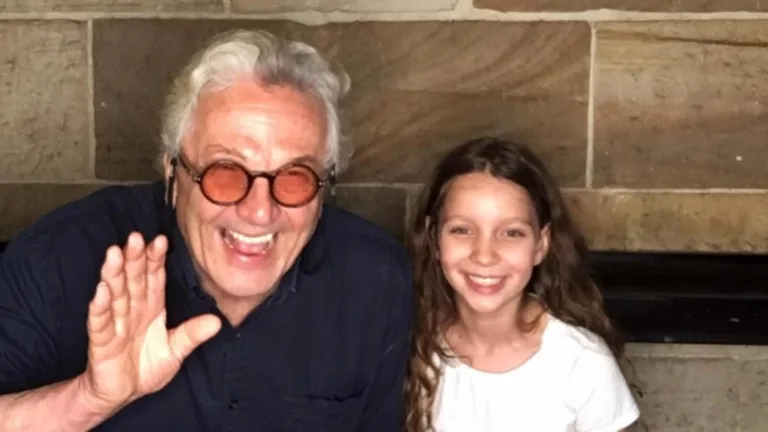
George Miller gives chance to 10-year-old actress Dylan Adonis

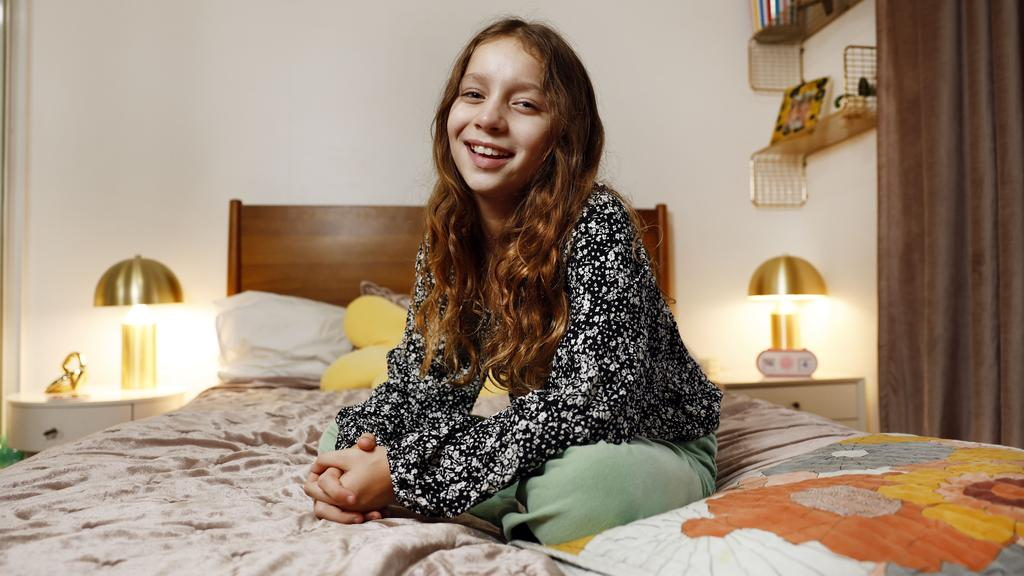
Ten-year-old Dylan Adonis was ready to give up on acting when popular Greek Australian film director, George Miller called to offer her a role in ‘Furiosa: A Mad Max Saga’.

According to The Daily Telegraph, Adonis was dejected after auditioning for several film, television, and commercial roles but failing to land a job.

“I wasn’t sure about auditioning for anything again because it was kind of annoying doing your best and them saying I am too tall or that I am too old,” Adonis said.

Dylan Adonis who is shaping up to be a breakout star of George Miller's Furiosa. Picture: Richard Dobson
Dylan Adonis who is shaping up to be a breakout star of George Miller’s Furiosa. Photo: Richard Dobson.

“I didn’t really want to audition for Mad Max because I thought the same thing would happen but I ended up auditioning anyway because my family really wanted me to.

It was amazing,” she said of filming her scenes in Sydney. “I love acting now. It is really nice to have different experiences on set, it is fun being in movies and watching yourself. Dressing up is fun too.”

Adonis even features in the opening part of the new trailer for the film alongside Anya Taylor-Joy who plays title role, and Chris Hemsworth who plays Dementus.

Currently in Year 5 of primary school in Sydney’s southeast, audiences across the world will see Adonis play Young Valkyrie in the upcoming saga, the character that Megan Gale played in Miller’s Mad Max: Fury Road.

Source: The Daily Telegraph

Why we all must remember ANZAC Day

By Steve (Anastasios) Kyritsis OAM

It has been said many times that Australia came of age one morning on April 25, 1915, 13 years after its declaration as an independent nation.

This may be true, and for that reason we give great value to this date in relation to the others in our calendar. The purpose is not to celebrate a great military victory, as the landing and subsequent battle of Gallipoli did not bring such a result. 

The ships set sail from their bases at 3:30 am, a night so dark that even the coastline was not visible, and the ANZAC forces landed in an area that did not give them an advantage. At first, they faced light fire from the Turkish defenders, but the Turkish positions were quickly reinforced and shortly after dawn the Australians and New Zealanders faced a storm of rifle and machine-gun fire from above. 

At the end of the first day, 2,000 men lay dead for an insignificant success, namely the control of an area of six square kilometres and the advance to a distance of one kilometre inland, where the ANZAC troops remained desperately in a very limited area. 

Other battles took place in the following days, but the entire campaign was a military disaster from all points of view, except for the well-planned and successful evacuation that took place eight months later.

The total number of Allied casualties in the Gallipoli campaign was 250,000, of whom 10,000 were Australians and New Zealanders.

But of course, this day is not to remember Gallipoli or the First World War. It is a day that we have all chosen to honour all those men and women who put their lives at risk and in many cases made the ultimate sacrifice, giving their lives. 

We also recognise the losses and sacrifices of their families. These men and women did not start the war they were taking part in. Their participation in the war was the responsibility of the government of the time, and as is known, the government is the representative of the people of Australia. Therefore, the sailors, soldiers, airmen and women soldiers were fighting on behalf of the entire people of Australia.

What they did was give their best when they received the call that their country needed each of them. I say “their country,” but we must bear in mind that, especially in the First World War, many conscripts did so much for a country that was not their own by birth or nationality, as many men and women were born in other countries and took Australian citizenship by immigration.

ANZAC Day is therefore a day for all Australians, regardless of religion, race or even place of birth. It is a day to honour the courage and self-sacrifice of old and new generations. It is a day to recognise the selflessness of all those who had decided to sacrifice their lives for Australia so that it could be a country of freedom for all. All this, on this day.

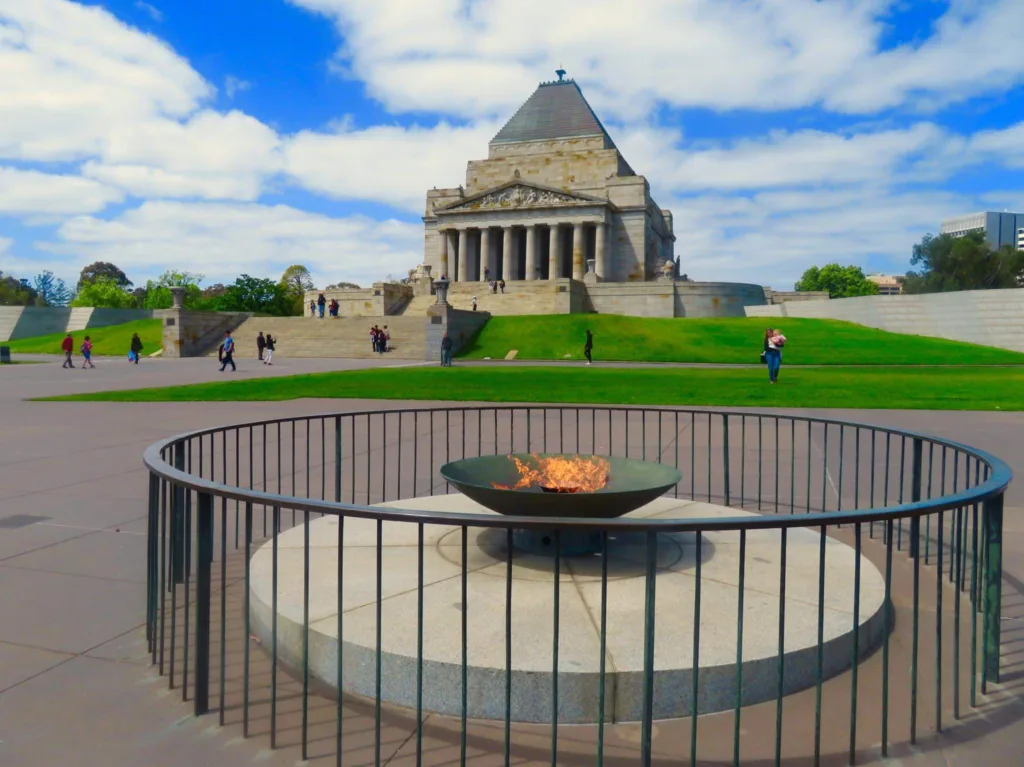
Shrine of remembrance
Shrine of remembrance.

We thank and recognise all those who served in the First and Second World Wars, Korea, Malaysia, Vietnam, the Persian Gulf, Iraq, Afghanistan and other areas where our armed forces are carrying out peacekeeping missions.

ANZAC Day is not a celebration to honour war, as war is not something to be honoured. War is something that is used as a last resort when diplomacy has failed and is the only way for a state to maintain its sovereignty.

On ANZAC Day, we honour the Australian citizens who took part in war operations to protect that sovereignty, regardless of how unpleasant the situation was for them and that there was a risk of losing their lives.

ANZAC Day is not just a date or a campaign of the past, but rather a state of mind. It is a time to reflect on the virtues of past generations of Australians who, in difficult circumstances, displayed courage, discipline, selflessness, self-confidence, ingenuity and camaraderie.

The spirit of ANZAC Day, handed down to us from the battlefields many years ago, will remain evident in our way of life, because it is the image of the soul of our nation.

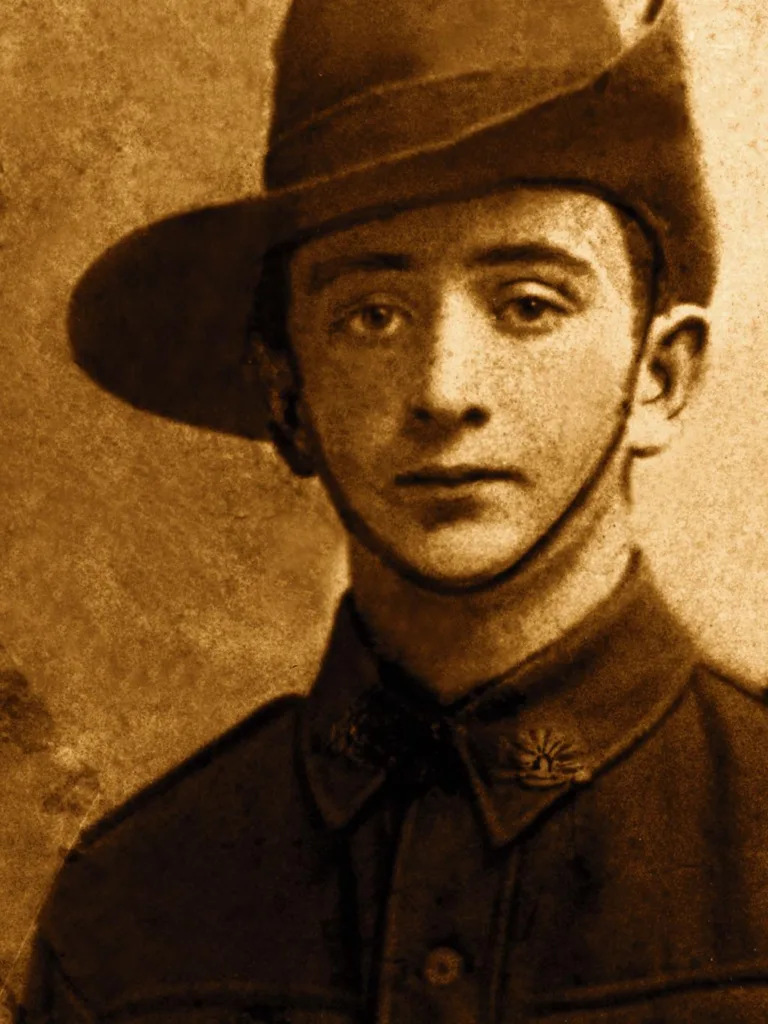
James Martin at 14 years old in the Australian Forces World War One.

History has shown that, although we are a peaceful people, we have been formidable opponents when we have taken action and also very successful in war operations. On every occasion that Australians have been called upon to defend freedom, they have done so with magnanimity, consistency and effectiveness.

Of course, the events of Gallipoli are more emphasised than others on ANZAC Day.

By the end of the First World War, the Australians, a nation of 5,000,000, had lost 250,000 people, of whom 60,000 had been killed and the rest wounded, a tragic figure as one in 17 of the population was either dead or wounded as a result of the war.

ANZAC Day is more than a national holiday, it is rather a fundamental traditional celebration.

Wherever Australians and New Zealanders find themselves, it is very likely that they will hold some kind of ceremony on ANZAC Day. So strong is the feeling they have for the 25th of April.

The spirit of the ANZACs exists in each one of us, and so let us be guided by it when we face national and individual challenges on our path, and let us strive to be worthy of their sacrifices.

WE WILL NEVER FORGET THEM.

Jon Adgemis’ Bondi beachfront seized by Angas Securities after debt deal fails

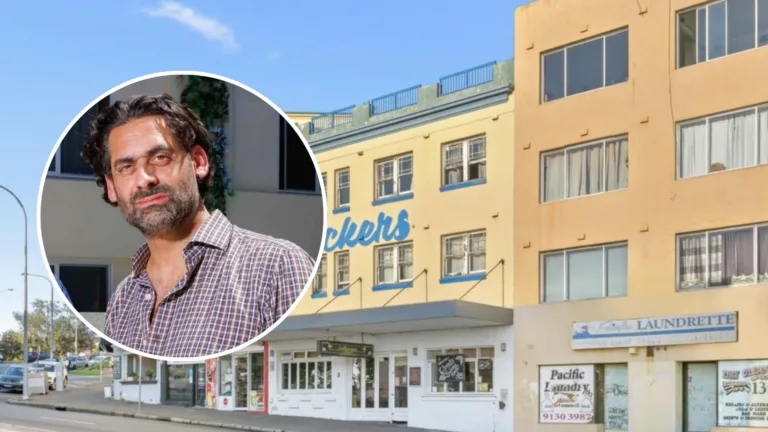
Jon Adgemis‘ $25 million Bondi beachfront property has been seized by Adelaide-based lenders, Angas Securities after plans to sell the four-level site overpowered the debt deal offered.

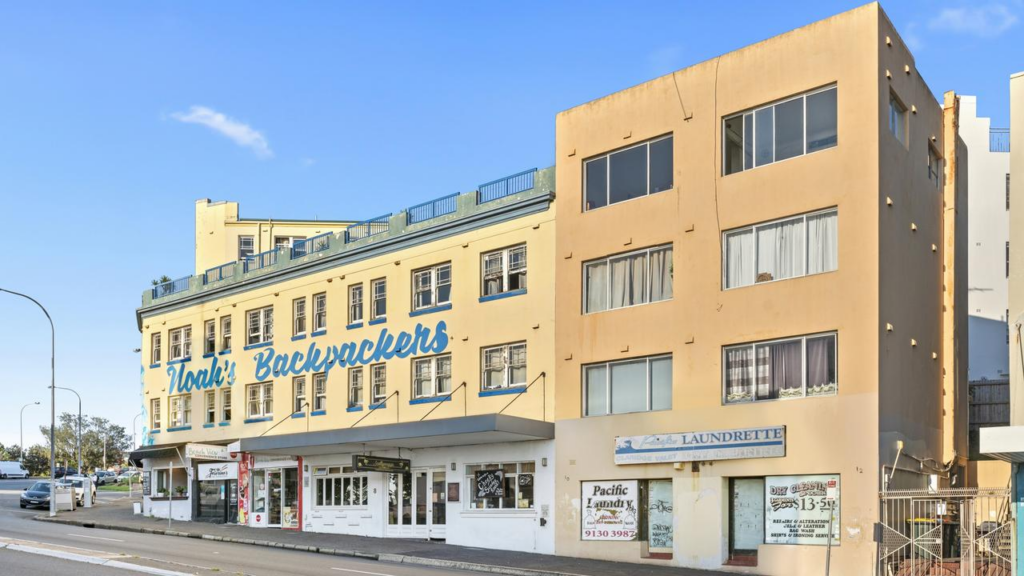
Angas Securities stepped in on Friday to seize the apartment building on Campbell Parade, next to the controversial Noah’s Backpackers site.

The lenders had extended some of the block’s over $15.5 million in debt, with a further $3 million in junior debt hanging over the building, which Adgemis acquired in his venture into Bondi after purchasing the massive Noah’s Backpackers block for $68 million two years ago.

 Noah’s Backpackers site
Noah’s Backpackers site, Bondi Beach. Photo: The Australian.

According to the Australian Financial Review, Angas Securities was offered almost $13.5m for its debt on the Campbell Parade building, which would have seen the group recoup its initial financing minus interest.

A spokesman for Public said the loss of the property would not prevent a “debt reset” for his pub firm, which is now negotiating with lenders in a $500 million loan roll-up.

Deutsche Bank are expected to be part of any deal, alongside Sydney private credit provider, Gemi Investments, both of which hold a hefty slice of Public’s almost $500m debt pile.

Gemi has publicly backed Adgemis’ moves, while others have pushed back on cold calls from KordaMentha receivers, who questioned if they wished to tip parts of the Public Group into administration.

Source: Australian Financial Review

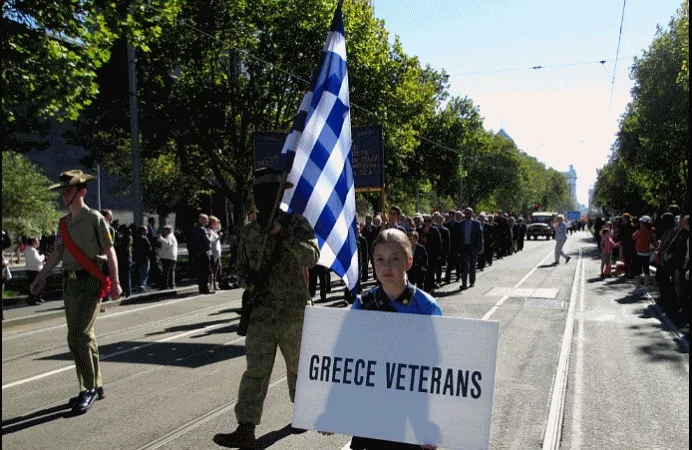
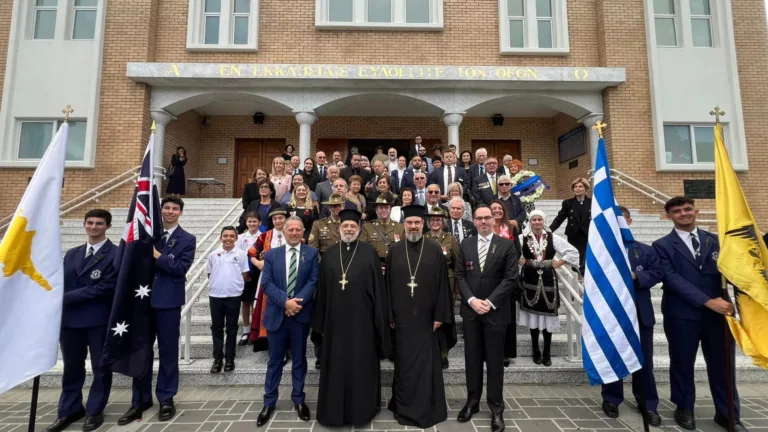
ANZAC Day service held at St Spyridon War Memorial Church in Sydney

On Sunday, April 21, St Spyridon Parish in Kingsford, Sydney, held a special ANZAC Day memorial service following the Divine Liturgy.

The annual memorial service was led by parish priests Father Steven Scoutas and Father Stavros Ivanos, and honoured the courageous men and women who served in World War I, World War II and beyond.

Students of St Spyridon College participated in the service, reciting the Ode in English and Greek. Wreaths were also laid by various dignitaries and veterans.

Special guests who attended included the Consul General of Greece in Sydney, Yannis Mallikourtis, veterans of RSL Associations, officers of the Australian Army, representatives of local Greek and Cypriot organisations, and local government officials.

Athens tops Europe’s ‘best smelling city’ list

0

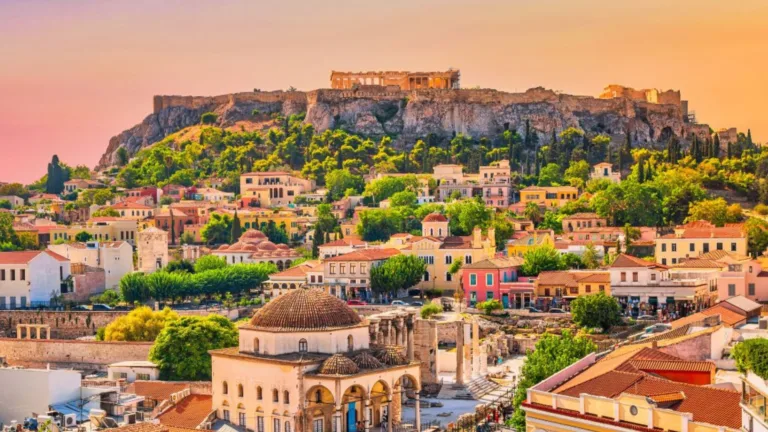
A recent study has revealed the capital city of Greece, Athens, has been crowned the “Best Smelling” city in Europe.

The study, undertaken by UK company Haypp, analysed 30 major urban cities and factored in things including the amount of flower shops, bakeries, and perfumeries around Athens.

The Greek city received a score of 8.3 out of 10 for its smell.

Flower shops of Syntagma Square
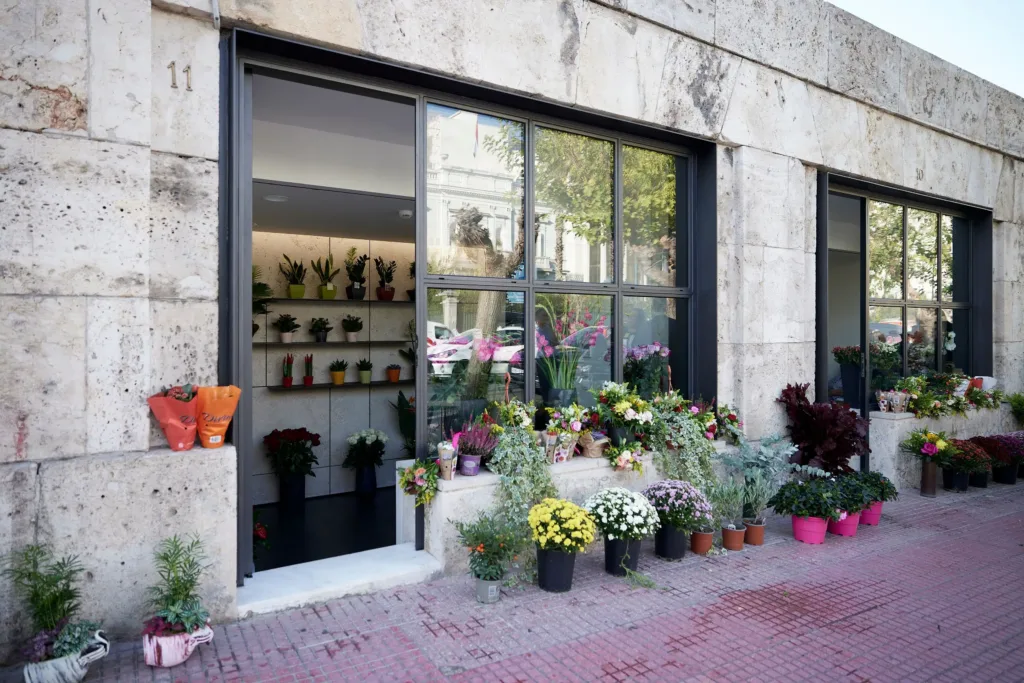
A flower shop in Syntagma Square, Athens. Photo: Press Office of the PM of the Hellenic Republic.

According to the study, Athens received this ranking due to its cleanliness EPI (environmental performance index) score.

“Known for its lively street markets and food culture, the aroma of fresh produce, herbs, and traditional Greek cuisine permeates the Athenian air, creating an unforgettable scent experience,” the study said.

Despite concerns from locals about cleanliness and air quality, Athens came out on top, beating out cities like Paris and Zurich. The study further highlights Athens’ ongoing efforts to address cleanliness and air pollution.

The cities that made the top ten include:

  1. Athens
  2. Paris
  3. Zurich
  4. Dublin
  5. Luxembourg
  6. Nicosia
  7. Copenhagen
  8. Bucharest
  9. Valletta
  10. Amsterdam