Home Blog Page 722

President re-elected for the Federation of Cyprus Communities of Australia and NZ

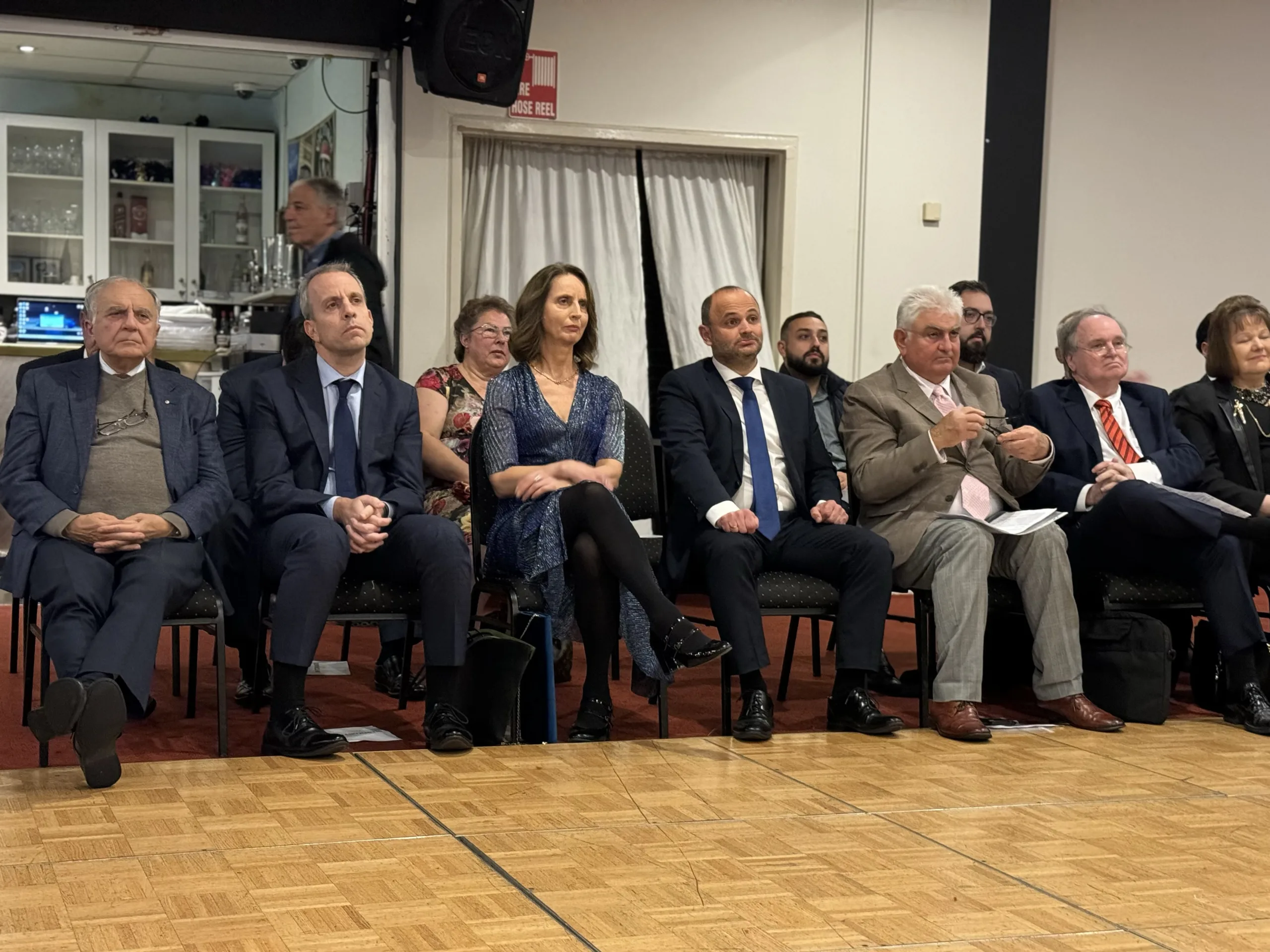
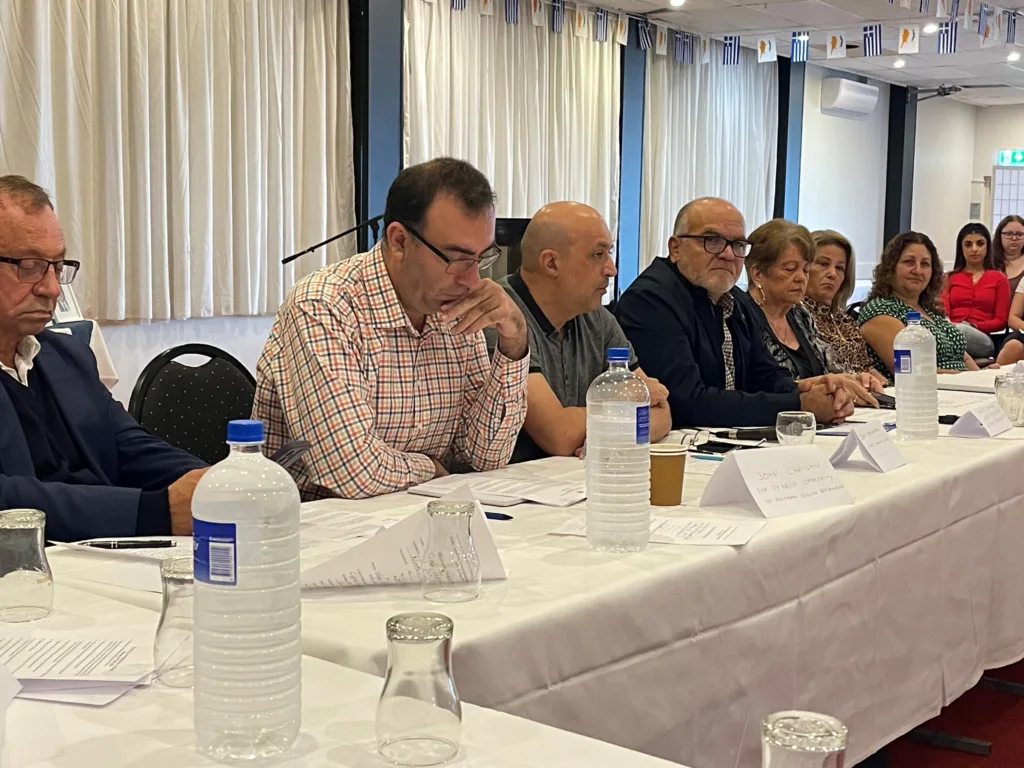
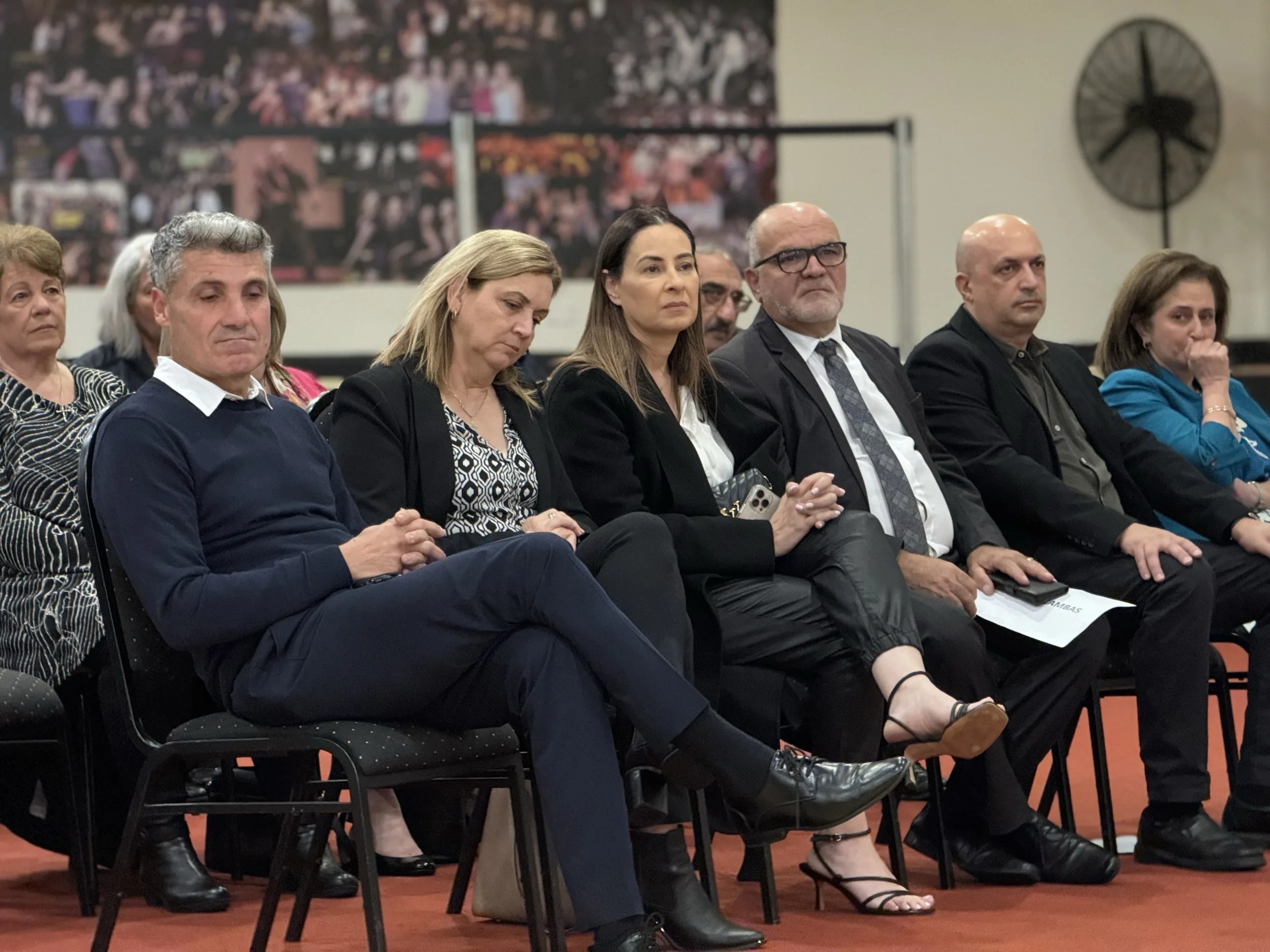
The Federation of Cyprus Communities and Organisations of Australia and New Zealand successfully concluded its 51st Annual Conference, marking a significant event after a four-year hiatus due to the COVID-19 pandemic. The conference, which began on Friday, May 24, was held at the Cyprus Community Club of NSW in Stanmore, Sydney.

This gathering also celebrated the commencement of the Annual Conference of the Pan Australian Co-Ordinating Committee of Justice for Cyprus and the NEPOMAK World Organisation for Young Overseas Cypriots.

Delegates from across Australia and NZ gathered to attend the 51st Annual Conference.

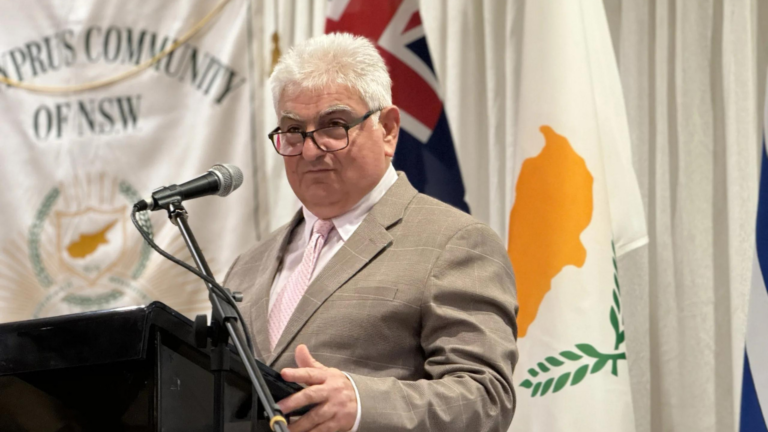
At the end of the conference, elections were held and the Federation’s key positions were announced. Michael Christodoulou AM was re-elected as President of the Federation, continuing his dedicated service to the community. Michael Christodoulides was elected as Alternate (Deputy) President, while Stephanie Demetriou has taken on the role of Secretary, and John Christou was appointed Treasurer.

Elections were also held for NEPOMAK (Youth) and PASEKA. The results were:

NEPOMAK (Youth)

  • President: Andreas Nicolaou
  • Vice President: Eva Iannou
  • Secretary: Marie Trikas
  • NDCP Coordinator: Christo Krisaros
  • Treasurer: Stephan Chrysostomou
  • Social Media Coordinator: Zoe Christopher
  • AUSNZ reps NEPOMAK Global: William Panayis, Eva Ioannou, and Marie Trikas

PASEKA

  • President: Chris Koulinos
  • Alternate (Deputy) President: Zac Chrisostomou
  • Secretary: Nectaria Volis
  • Treasurer: John Christou

The three-day conference featured a diverse array of speakers from across Australia and New Zealand, who addressed various aspects of the Cyprus issue. On Saturday, participants received detailed reports from the presidents and representatives of PASEKA and SEKA. The sessions included comprehensive discussions on the plans for the 50th anniversary of the Turkish invasion of Cyprus, as well as an analysis of the current political climate in both Cyprus and Australia. Lobbying efforts for Cyprus within Australia were also a key topic of conversation.

The event provided a crucial platform for dialogue and collaboration among the Cypriot diaspora. It underscored the community’s commitment to addressing ongoing issues related to Cyprus and highlighted the importance of maintaining strong connections and support networks among Cypriots living abroad.

Federation of Cyprus Communities and Organizations of Australia and NZ

As the conference concluded, the reappointed and newly elected leaders expressed their gratitude and outlined their visions for the future. Their leadership promises to bring renewed vigor and focus to the Federation’s efforts in advocating for justice and unity for Cyprus.

“Our three-day conference was a huge success and every Cypriot Community has attended from all states and territories of Australian and from New Zealand,” Mr Christodoulou told The Greek Herald after the event.

“As re-elected President my priority is how to engage with younger members from our communities with the ultimate goal to transfer the leadership to them, as we have already started from this Conference. Another priority is the future direction and planning for our communities.

“For the 50th anniversary of the Turkish invasion of Cyprus, all of our communities will commemorate in July with major events in all states and will be seeking support, assistance and cooperation from the Archdiocese, leaders and organisations including the wider Hellenic Community.”

Kytherian Association of Australia holds Annual General Meeting

The Kytherian Association of Australia (KAA) held its Annual General Meeting (AGM) on Wednesday, May 29.

A number of issues were discussed, including memberships and event attendance. It was announced that the KAA continues to grow with almost 1,400 members. More than 2,700 people attended the Association’s events in 2023.

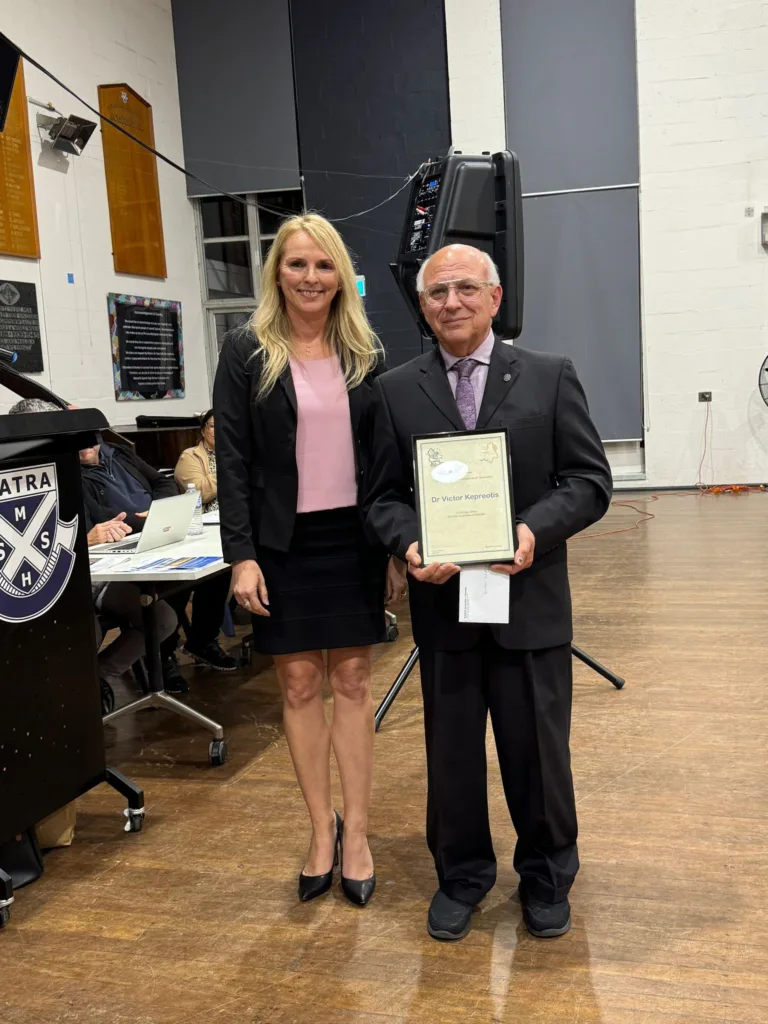
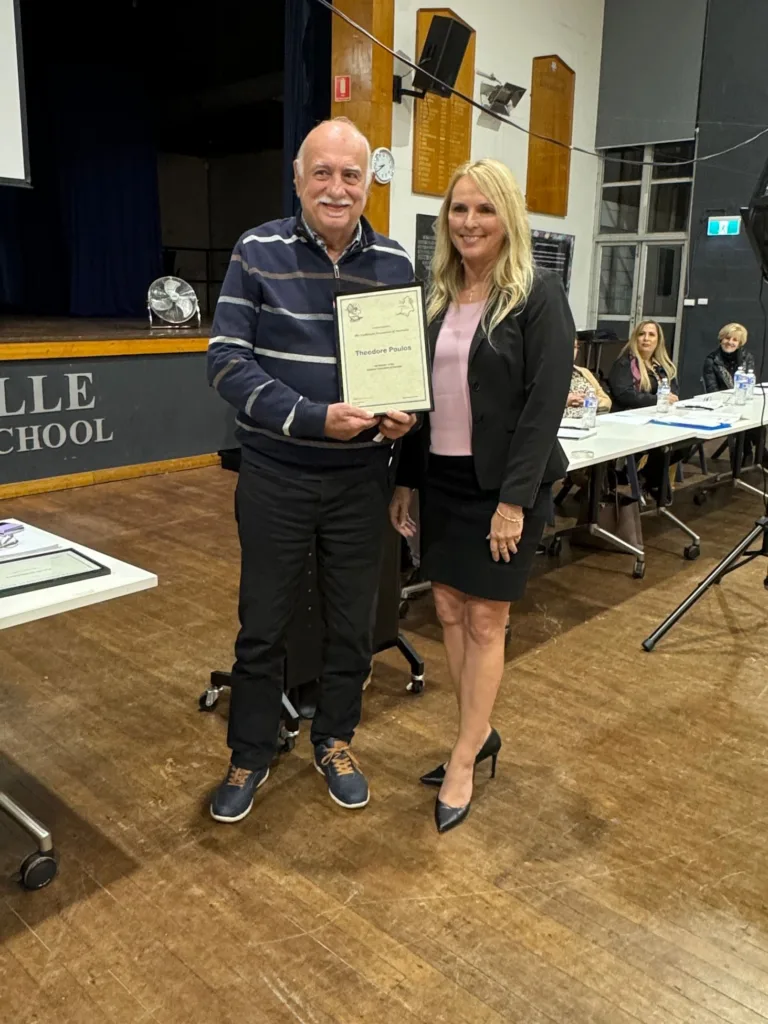
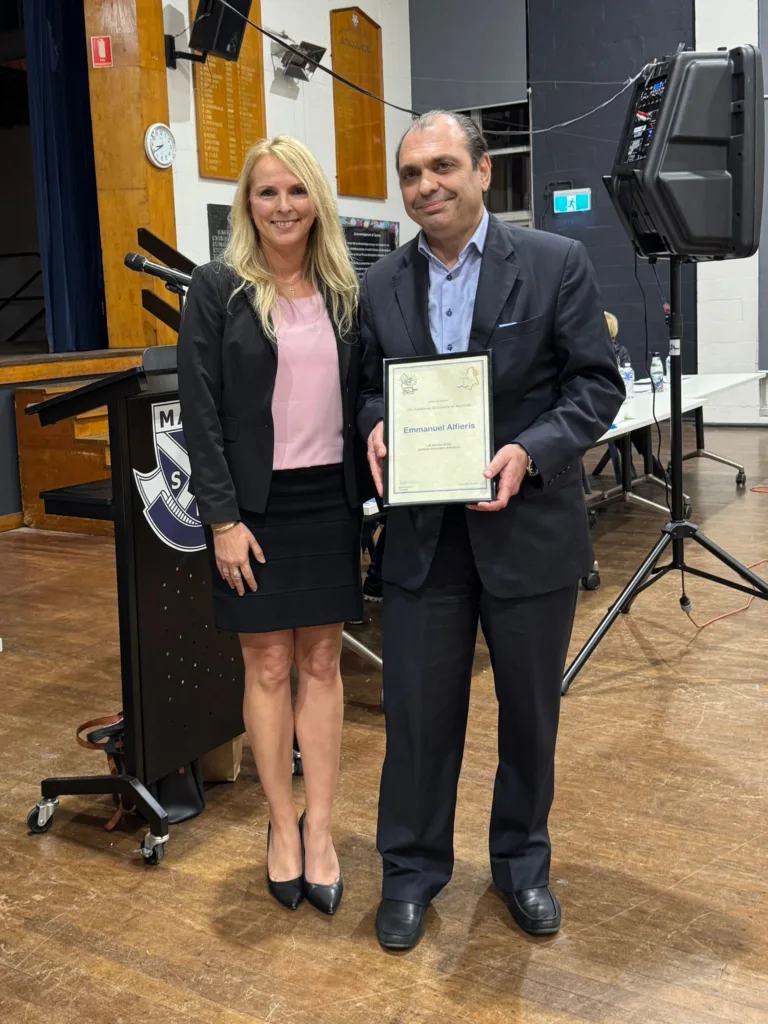
During the AGM, Theodore Poulos, Emmanuel Alfieris and Victor Kepreotis were also made Life Members of the KAA for their exceptional and distinguished service to the Kytherian community. They have collectively provided 128 years of service to the Association.

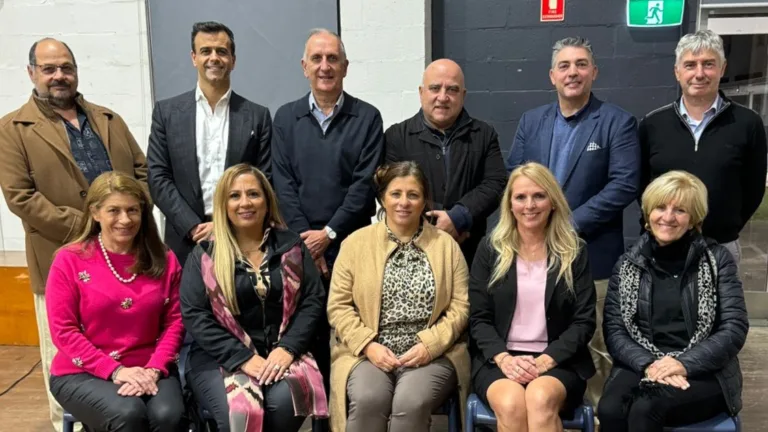
The Board of Directors of the KAA remains the same with President Barbara Zantiotis, Vice President Spiro Coolentianos, Secretary Dennis Cordato, Treasurer John E Comino, and General Committee Members Irene Faros, George Roins, Maria Karedis, Peter Tzannes, Kathy Samios, Ross Cassimatis, Esther Calligeros, and George Preneas.

“Our shared desire to maintain our traditions, culture and heritage ensures the legacy created by our founders 102 years ago continues to thrive and prosper for at least the next 100 years,” Ms Zantiotis said after the AGM.

READ MORE: Kytherians in Australia celebrate legacy and philanthropy at annual Debutante Ball

What football clubs can tell us about Melbourne Greeks

Written by Emmanuel Heretakis

One day I asked myself, what do community football clubs tell us about the Greeks in Melbourne?

Melbourne hosts at least 25 Greek football clubs across the city and a map of these clubs also shows a huge community. But as well as revealing the two main clusters of Greeks in the city, the clubs and their stories actually tell us a lot more about Melbourne Hellenism.

The High Street Cluster

The High Street cluster incorporates seven Greek clubs in the Northern Suburbs. This includes some of the oldest Greek clubs of Melbourne (Northcote 1960 and Heidelberg 1958) and reflects the area’s history as an early Greek community hub. Interestingly we can see that over time the footprint of these clubs has moved North, in line with Melbourne’s growth, and also in line with the Greek Community’s movement to the outer suburbs. This is not just evidenced by Heidelberg’s relocation from Clifton Hill, but also the establishment of Keon Park in the 80s, and the subsequent establishment of Mill Park in the 90s. This reflects a strong and supportive local Greek community, one further evidenced by the presence of a School (St John’s), monastery (Northcote), countless restaurants and active social clubs.

The Oakleigh Cluster

Admittedly I am not as familiar with these clubs but I am still able to pick out a few key insights. Firstly, none of the clubs in this area have been able to rise to the national ranks, undoubtedly as a result of their later emergence. The clubs in this area mostly emerged in the 70s and 80s, not the 50s or 60s as was the case in other parts of Melbourne. This is in line with the Greek community’s later settlement in this area. However since then, the Greek community here has flourished and continues to do so. The area has been able to support eight clubs, including three recent NPL representatives, and the newest Greek community club Chisholm United (which was formed as an offshoot of Oakleigh Cannons in 2014). The Southern suburbs boast a strong and supportive Greek community which includes a school (Oakleigh Grammar) and the thriving commercial hub around Eaton Mall.

Western Outliers

There is a small cluster of four clubs in the Western Suburbs. However despite earlier formation dates (60s and 70s) none have emerged as dominant forces in Victorian football. I think this is because of a few unique challenges:

  1. Larger non-Greek clubs have dominated the competition for players. This includes the Croatian clubs (St Albans, Melbourne Knights) and Maltese clubs (Green Gully, St George).
  2. There is no Greek community hub in the area that can provide significant funds for support (unlike the Oakleigh and High Street hubs).
  3. The Greek community here has not grown significantly, as evidenced by the last new club here being established in 1979.

Western suburbs Greek clubs currently occupy the 4th or 5th tiers of the Victorian football pyramid. This reflects an established community but not necessarily a thriving one. The western suburbs does have a few Greek churches (Keillor, St Albans, Yarraville) and community groups (Cypriots, Pontians).

Out East

The migration of the Greeks from small houses in the inner suburbs, to mansions in Doncaster and Templestowe is a common anecdote in community conversations. It turns out there is an element of truth to this, both in terms of people and football clubs. Only Malvern City and East Kew reside here, whilst a former club (the East Richmond Jaguars) appears to have met its demise due to the emigration of Greeks from the area. As 2nd and 3rd generation Greeks moved further East though, they have shown a greater ability to assimilate to existing social structures, including football clubs.

A number of existing clubs have seen huge support from immigrating Greeks (as evidenced by squad lists and committee representation). Greek ‘occupied’ clubs include the merged Box Hill United as well as Nunawading and Doncaster Rovers to a lesser extent. Although I wouldn’t say the latter represent Greek community clubs as we understand them, they do show how the Greek community has learnt to integrate with the broader Melbourne community.

Regional identities

Interestingly a few clubs present specific Greek regional identities. For example Northcote has a strong Messinian flavour (reflecting it’s large local Messinian population) and Heidelberg has significant influence from the Greek Macedonian community (reflected in its nickname, ‘Alexander’). Other examples include Bentleigh United Cobras (a merger of the local Lemnian Community Club), Box Hill (a merger of the local Pythagoras Community Club), and the former South Wantirna (backed by the local Cretan Community Club).

Generally though, specific regional identities are tough to maintain even on a social club basis, let alone a football club basis. Just as we have seen clubs broaden their regional identities to something more accessible, we are seeing a similar trend in the consolidation of region specific social clubs throughout the Melbourne Greek community. There are cases though where regional identities remain quite strong.

The Cypriot community has backed a number of clubs including Mill Park up north and Bentleigh Greens down south. There has even been a recent partnership between Darebin United and the nearby Cypriot Community Club. Of particular note though is Brunswick City which has a distinctly Laconian identity.

The local Laconian population is in fact so large, that the local council of Meri-Bek actually has a sister city partnership with Sparta. One may be surprised that there is only one Greek club in Brunswick considering the large Greek population of the area however, it should be noted that the surrounding suburbs suffer from limited park space. Many of the parks available host footy grounds, and the remaining soccer pitches were claimed by other communities, including the Italian community which formed Brunswick Juventus. Unfortunately for the Italian community though, Brunswick did not prove to be a permanent home for Juventus, which is unlike the story of…

The big one

South Melbourne is the largest and most central Greek community club. It’s old age and location reflects early Greek settlement in the area. Such was the size of South Melbourne, that it resulted in an offshoot club (Port Melbourne). There may not be many Greeks left in the area, but unlike the Greek clubs of the inner Eastern suburbs, South Melbourne fandom has thrived, and on a national stage no less. This is in large part to its long history and central location which continues to play an important role in the community.

The importance of South Melbourne cannot be overstated. Its central location plays an important role for football (in an area lacking grounds) and for the Greek community. South Melbourne games allowed Greek from across the city to congregate and contribute to a single massive club much greater success than the sum of its parts. Although this may have suffocated the Western and Inner-Eastern clubs of more support, without South Melbourne, the Greeks community would not have enjoyed the same National and International success.

Contrast this with the Italian community, which is similarly sized and distributed across Melbourne. Brunswick Juventus once played the role of the community’s central football focus, but an inability to find a suitable home ground meant the club was unable to galvanise its community. This contributed greatly to the club’s demise in the 90s. The power vacuum that was left resulted power struggles within the Italian Football community. Clubs were merged, relocated, liquidated and left the community without the success that one would expected of it.

In this way, South Melbourne reveals the most important characteristic any community – the ability to present a united front. The Greeks in Melbourne have been able to create an outsized influence by uniting not just in football but across many fronts. Greek media gives them a larger voice, their major community festival (Antipodes) gives them a political platform, and their major community club (South Melbourne) allows Greeks from across the city to have enjoyed national and international football success.

There is a lot to learn about the Greek community through its football clubs. They reveal where the community is, what the community is made of as well as a number of trends and lessons learned along the way.

Ancient Greek armour tested by soldier proves battle-ready

0

For decades, archaeologists have wondered whether a suit of Bronze Age armor found in Greece—boar’s tusk helmet, bronze plates and all—would really have protected its wearer in combat.

According to smithsonianmag, after allowing 13 soldiers to test a replica of the suit, researchers have confirmed the 3,500-year-old design’s effectiveness in battle.

The armor, discovered in the southern Greek village of Dendra in 1960, is one of the oldest complete suits of European armor. It was found near Mycenae, an ancient city about 70 miles west of Athens, the center of the Mycenaean civilization, which dominated Greece from about 1600 to 1100 B.C.E.

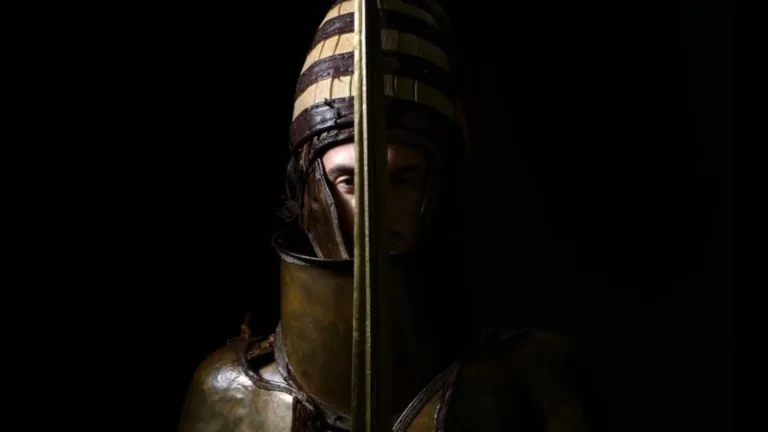
Dating to the 15th century B.C.E., the Dendra armor is composed of 15 copper-alloy sheets held together with leather, which covered the wearer from neck to knees, reports the Telegraph’s Sarah Knapton. The suit is complete with arm and leg guards and a helmet decorated with pieces of boar tusk. Since the time it was discovered researchers were asking questions whether the armor was purely for ceremonial purposes, or for use in battle,” researcher Andreas Flouris, a professor of physiology at the University of Thessaly in Greece, and his colleagues tell Live Science’s Jennifer Nalewicki.

Other studies have concluded that the suit was battle-worthy, per National Geographic, but Flouris and his colleagues’ recent experiment is the first of its kind. They gathered volunteers from the 32nd Marines Brigade of the Hellenic Army—Greece’s military—and fed them the pre-battle meal of a Mycenaean soldier: bread, beef, goat cheese, green olives, onions and red wine. The marines were outfitted in replicas of the Mycenaean suit, given replicas of Mycenaean cruciform swords, and placed in a temperature-controlled room set to a geographically accurate 64 to 68 degrees Fahrenheit.

Photo: Andreas Flouris and Marija Marković / PLOS ONE

Then, the researchers conducted an 11-hour simulation, recreating battles that might have been fought in Late Bronze Age Greece. The “combat simulation protocol” was choreographed based on descriptions of the Trojan War from Homer’s Iliad.

The volunteers simulated duels between foot soldiers, as well as soldier-chariot and chariot-ship encounters. Researchers found that the armor withstood these challenges without straining or limiting its wearer.

“We now understand that despite its cumbersome appearance, the armor is flexible enough to allow almost every movement of a warrior on foot and resilient enough to protect the wearer from most blows,” the researchers concluded in the study.

Source: smithsonianmag

Greece remains in second place for number of ‘Blue Flag’ beaches

0

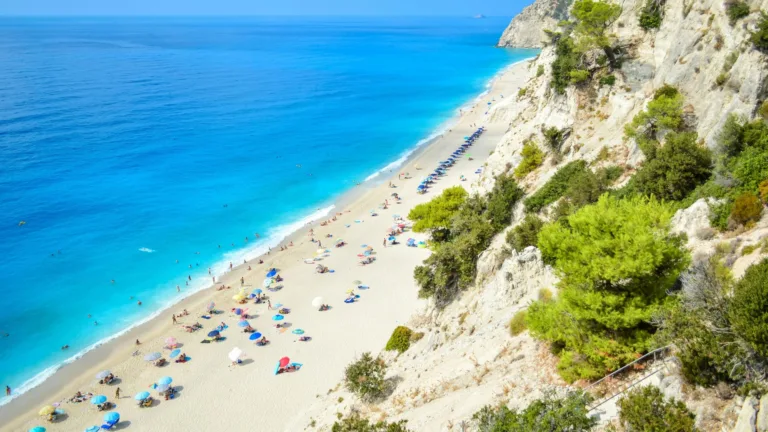
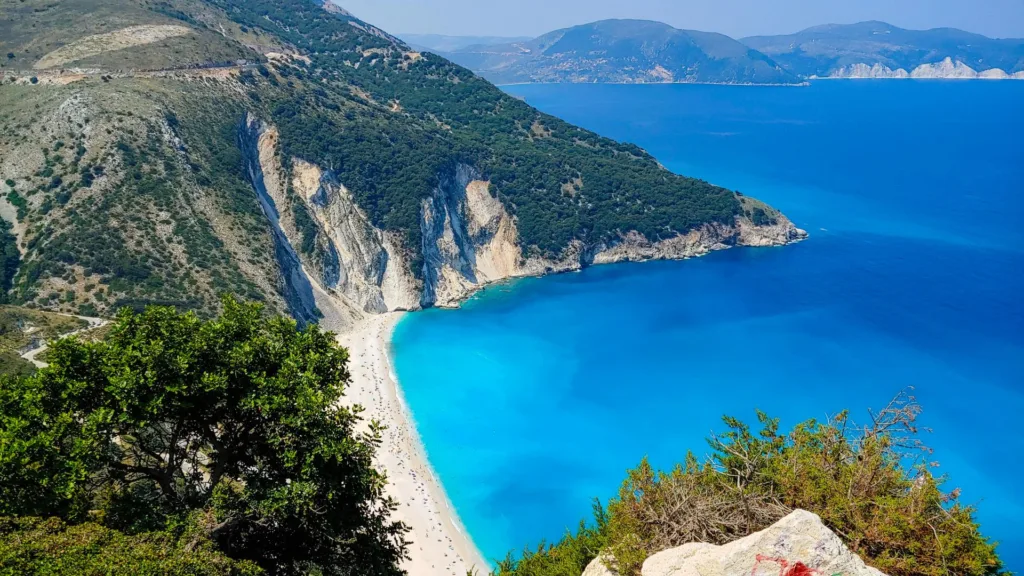
Halkidiki, a popular holiday destination in northern Greece, boasts the highest number of Blue Flags among Greek prefectures with 104.

However, Crete surpasses this with a total of 146 Blue Flags. According to tovima.com, Greece has maintained its position as the second-ranked country globally for the number of Blue Flags awarded, with 625 for beaches, 18 for marinas, and 9 for tourism vessels, as announced by the Hellenic Society for the Protection of Nature (EEPF).

The EEPF is the national operator of the prestigious Blue Flag International Program, based in Copenhagen. The program evaluates criteria such as water quality, beach cleanliness, and facilities for bathers, including handicap access.

Photo by Ejona Muka, pexels

Overall, Greece holds approximately 15% of the world’s Blue Flags. The 2024 rankings included surveys from 52 countries. Spain, with over 600 pristine spots, holds a Guinness World Record for the most Blue Flag beaches, a record maintained for two consecutive years.

According to Conde Nast Traveller, each municipality must apply for Blue Flag status through the national operator. Approved applications are forwarded from a national jury to an international jury, which evaluates and determines the recipients for the season. The international jury includes members from the FEE Board, UNESCO, the European Network for Accessible Tourism (ENAT), the World Tourism Organisation (UNWTO), the European Union for Coastal Conservation (EUCC), and the UN Environment Programme (UNEP).

Source: tovima.com

Israel honours Greek pair with ‘Righteous Among the Nations’ medal

0

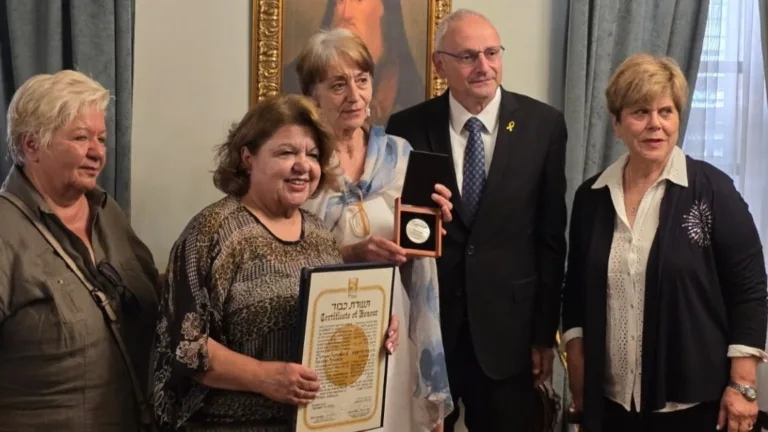
Israeli Ambassador to Greece, Noam Katz, awarded the “Righteous among the Nations” medal posthumously to Thomas and Antonis Kyriakis for rescuing the Jewish family of Shemo Cohen during the Holocaust. In 1943, after the Nazis entered Corfu, Thomas and his son Antonis sheltered the Cohen family in Valanio, risking their lives to protect them.

The award ceremony in Corfu included members of both the Kyriakis and Cohen families. Spyridoula Kyriakis, granddaughter of Thomas and daughter of Antonis, received the medal, while Marina and Eleni Kyriakis, daughters of Dimitris Kyriakis, received the certificate.

Yad Vashem, Israel’s Holocaust Remembrance Center, bestows the title of Righteous among the Nations to non-Jews who risked their lives to save Jews during the Holocaust. The honor includes a medal, diploma, and the recipient’s name inscribed on the Wall of the Righteous, with a tree planted in their memory in the Garden of the Righteous at Yad Vashem.

righteous among nations greek pair
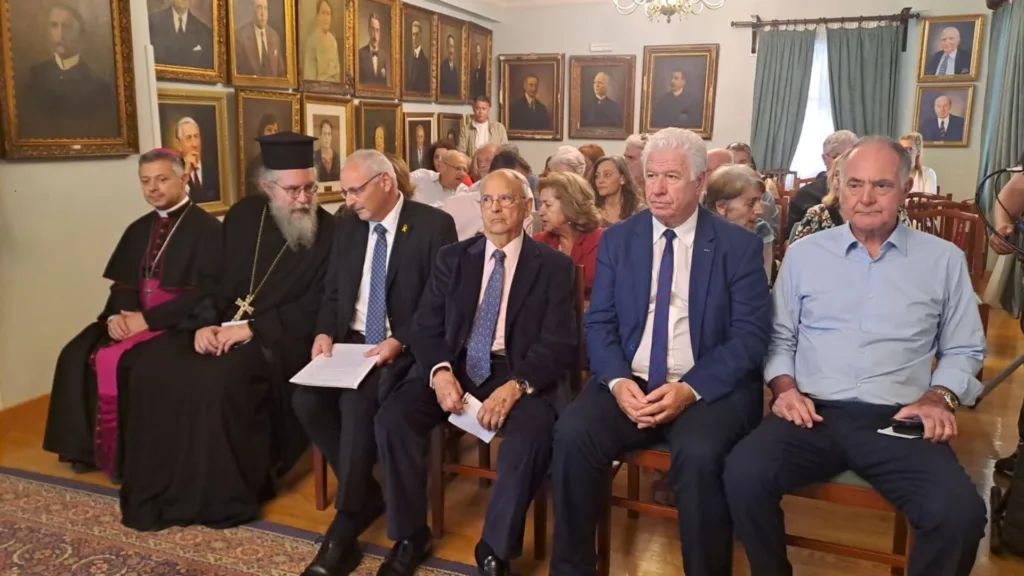
Guests present at the award ceremony.

Ambassador Katz highlighted the immense loss of 67,000 Greek Jews in the Holocaust and honored the bravery of those who defied the Nazis.

He emphasised the importance of remembering and promoting the values of empathy, understanding, and moral integrity, quoting the Jewish proverb, “Whoever saves one life is like saving the world.”

To date, 369 Greeks have been recognised as Righteous Among the Nations, including prominent figures like Archbishop Damaskinos and resistance hero Lela Karagianni. The ambassador concluded, “Today they are joined by Thomas and Antonis Kyriakis. May their memory be immortal.”

Controversy erupts over Victorian Minister’s attendance at Turkish event

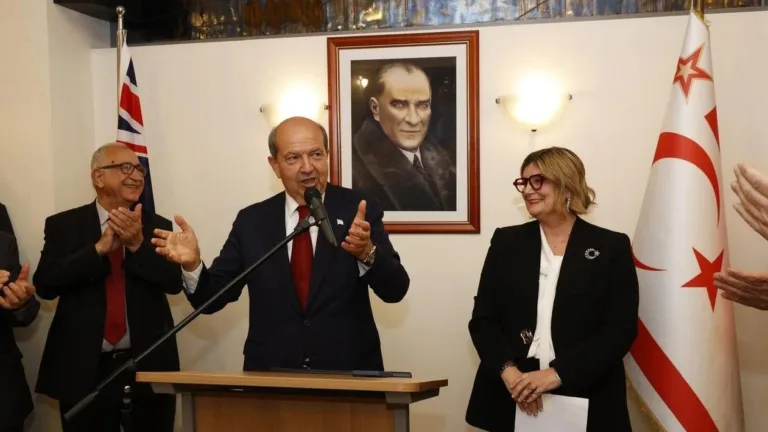
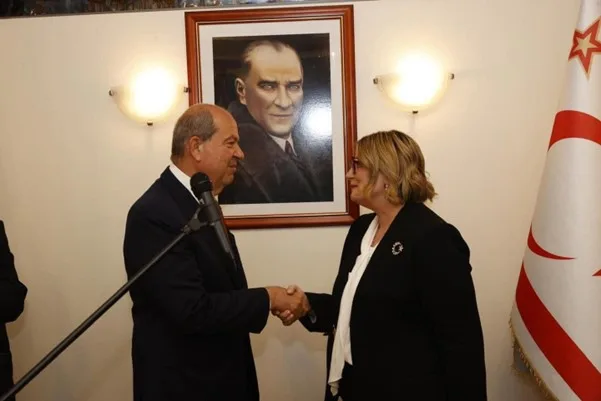
A letter addressed to Victorian Premier Jacinta Allan has brought to light concerns over Minister Natalie Suleyman‘s attendance at a reception hosted by the Turkish Consulate General in Melbourne. The event, held in honour of Ersin Tatar, leader of Turkish-occupied northern Cyprus, has sparked controversy and accusations of breaching national protocol.

The letter from the Coordinating Committee for the Cyprus Struggle (SEKA) Victoria, dated May 28, which was seen by The Greek Herald, criticises Suleyman, who serves as the Minister for Veterans, Small Business, and Youth, for participating in the reception and welcoming Tatar.

SEKA Victoria’s representatives, Yiannis Milides and Pavlos Andronikos, highlighted Suleyman’s remarks at the event where she acknowledged the contributions of Turkish Cypriots to Victoria’s multicultural community.

Natalie Suleyman’s attendance to the event hosted by Turkish Consulate General in Melbourne sparked controversy. Photo: Supplied.

“We note that this is not the first time that Minister Natalie Suleyman has breached the constraints which being a member of an Australian Government imposes,” the letter stated. SEKA noted that in 2016, Suleyman made an unauthorised visit to the “parliament” of the self-declared ‘Turkish Republic of Northern Cyprus’ (TRNC), a state recognised only by Turkey.

The letter emphasised the historical context of the Cyprus issue, citing the 1974 Turkish invasion of Cyprus, which led to the occupation of the northern part of the island.

“The Turkish invasion of Cyprus in 1974 targeted civilians as well as soldiers. In essence, it was a land grab, the aim of which was to evict through terror the majority Greek Cypriot inhabitants in the north of the island,” SEKA Victoria explained.

The organisation drew parallels between the invasion of Cyprus and the current situation in Ukraine, stressing the importance of not legitimising foreign aggression and occupation.

“The similarities of the tragic events in Cyprus in 1974 with the tragic events that are taking place now in Ukraine are striking. The official position of both Cyprus and Australia, vis-à-vis illegal occupation, is the same. There is no place for legitimising foreign aggression and occupation, neither in Ukraine, nor in Cyprus,” the letter asserted.

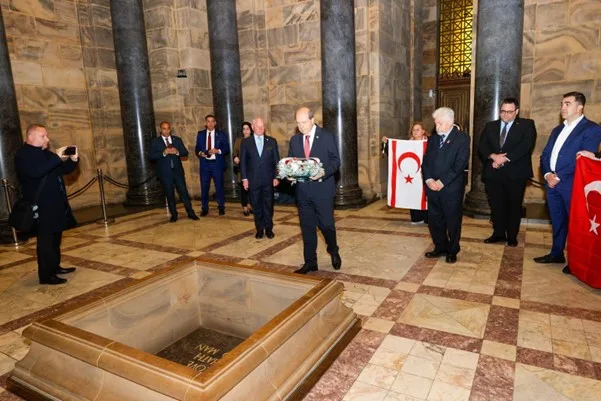
Adding to the controversy, SEKA Victoria criticised Tatar’s use of Melbourne’s Shrine of Remembrance for what they described as misleading publicity photos, suggesting formal recognition of his status.

“It is particularly galling that Mr Tatar has been exploiting our hallowed Shrines of Remembrance in Melbourne and in Canberra to create misleading and deceptive publicity photos where he appears to have been formally recognised,” SEKA Victoria wrote.

Photo: Supplied.

The High Commissioner of the Republic of Cyprus in Australia is expected to write to Premier Allan regarding these developments. SEKA has urged the Premier to make a clear statement disavowing any recognition of the TRNC, to address the concerns of Greek and Cypriot Australians who are distressed by Tatar’s visit and Suleyman’s actions.

“A clear statement from yourself on this matter would go a long way towards soothing the indignation and anger which Greek and Cypriot Australians feel about Mr Tatar’s visit,” the letter concluded.

This is the second letter SEKA Victoria has issued to Premier Allan this month. The previous letter was sent ahead of Tatar’s visit urging the Premier to ignore the visit, citing Australia’s policy of non-recognition of the self-declared ‘Turkish Republic of Northern Cyprus’ (TRNC)

As the 50th anniversary of the Turkish invasion of Cyprus approaches, SEKA’s letter underscores the ongoing sensitivity and unresolved nature of the Cyprus issue. The organisation calls for adherence to Australia’s policy of non-recognition of the TRNC and demands accountability from elected officials to avoid any actions that could be perceived as endorsing illegal occupations.

Olive oil: ‘King of Foods’ for tourists and locals in Crete

By Lisa Radinovsky from Greek Liquid Gold.

“Olive oil is one of the most important reasons why Crete is known in the rest of the world. Based on this, we can understand that olive oil on our island was and will be the king of foods!” exclaims oil producer Eftychis Androulakis in a perfect example of Cretan passion for a product that is central to the island’s tourism, cuisine, economy, and history.

Tourism, Cuisine, and Health

Catherine Papaioannou (Elasion) evokes a welcoming picture of the “olive groves dotting the landscape,” where tourists can “explore and experience traditional olive harvesting techniques firsthand. Olive oil mills and production facilities provide insightful tours, allowing visitors to witness the process of oil extraction” at harvest time “and learn about the history and importance of olive oil in Cretan culture” year-round. “Olive oil tastings offer a sensory journey,” enabling tourists to “appreciate the distinct flavors and aromas unique to Crete.”

Androulakis (Pamako), who collaborates with Biolea at their agrotourism/food tourism destination in northwestern Crete, believes “slowly but steadily, olive oil tourism is becoming one of the most significant food tourisms in Crete, alongside wine tourism. Producing and bottling an olive oil and sharing knowledge about it is one of the most important ways to help people understand the difficulty of production, but also the art behind it. That’s why in our olive mill we also have a restaurant: we connect olive oil with Cretan cuisine, as it has been the main ingredient of our cuisine and culture since Minoan times.”

While Crete offers many attractions for tourists, “one of the main reasons why people come to our island is the Cretan diet, where olive oil occupies the most important place,” according to Stavros Tzedakis, Region of Crete Vice Governor for Agricultural Economy. In the Cretan diet, olive oil “is the beginning and the end,” insists Manolis Fragkakis, president of the Cretan Olive Oil Network. In fact, Emmanuel Vantarakis (Efkrato) believes “Cretans still hold the record of yearly olive oil consumption per person” worldwide. They use it for marinating, preserving, cooking, frying, baking, and finishing.

“Omnipresent in Cretan recipes, enhancing their depth and character,” according to Papaioannou, olive oil is an ingredient in dishes including vegetables, meat, and fish, as well as in dressings, sauces, savory pies, breads and desserts. Papaioannou believes that “in Cretan cuisine, olive oil transcends mere ingredient status; it symbolizes the region’s abundance, heritage, and the Mediterranean way of life.” Maria Gdontaki (Savouidakis) adds that olive oil also “symbolizes hospitality, tradition, and connection to the land in Cretan culture.”

Many scientists consider the traditional Cretan diet the original basis for the famously healthy Mediterranean diet. As Gdontaki points out, “health-conscious travelers are drawn to Crete’s Mediterranean diet. Cretan olive oil is rich in antioxidants, monounsaturated fats, and other nutrients that promote heart health and overall well-being.” Olive oil is often a part of tourists’ “culinary exploration, cultural immersion, sustainable tourism, and wellness activities” on the island, as Gdontaki notes.

History and Economy

Looking to the past, Gdontaki explains, “olive oil has played a multifaceted role in Cretan history, serving as an economic foundation, cultural symbol, nutritional staple, environmental steward, and global ambassador.” Through the millennia, it has been “essential for dietary, medicinal, and religious purposes, shaping the island’s landscape and symbolizing peace and prosperity,” as Alexis Perdikakis (Renieris) says. “The enduring legacy of olive oil,” he adds, “is highlighted by archaeological discoveries and preserved traditions, illustrating its timeless significance in Cretan life.”

Olive oil has served the basic needs of Cretans. As Fragkakis sees it, “olive oil was the poor man’s piggy bank. With this he had light. With this he preserved his products. With this he said goodbye to his people who were leaving life. With this he cleaned his wounds. With this he made votive offerings to the saints.”

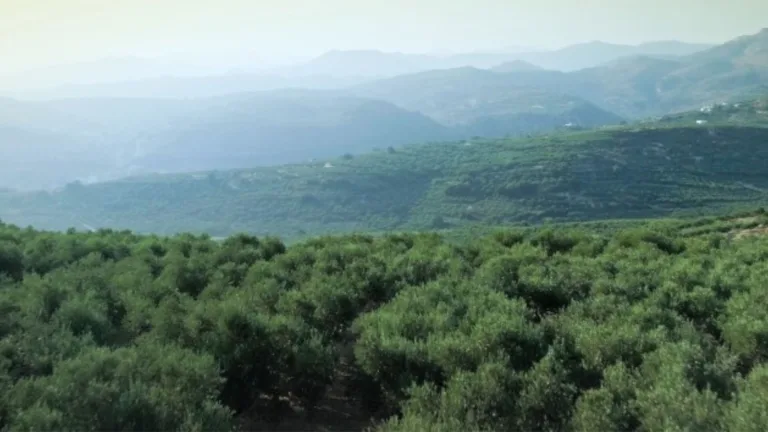
All of this has been possible because “olive oil is the beginning and the end of the agricultural economy” on the island, according to Fragkakis. With 35 to 37 million olive trees now growing in Crete, covering 65 to 68% of the largest Greek island’s agricultural land, it is not surprising that “olive oil is the most important agri-food product” for Crete, as it is described by Emmanouil Karpadakis, vice president of the Cretan Exporters’ Association.

After all, olive oil income is three times greater than income from the rest of the Cretan agri-food sector (excluding animal products), according to Crete’s director general, Konstantinos Ypsilantis. Ypsilantis explains that Crete has produced from 60,000 to 120,000 tons of olive oil annually during the last two decades–about one third of Greece’s olive oil.

Quality

This is mainly excellent olive oil, according to Eleftheria Germanaki, director of the Sensory Evaluation Laboratory of Crete and an international competition judge. Data from the laboratory show that 74% of the samples received there are classified as the highest category, extra virgin olive oil (EVOO), according to their sensory profile.

This high quality has been recognized in several ways. For example, according to European Union quality schemes, there are 10 PDO olive oils of Crete and one PGI olive oil of Chania, Crete. In addition, 33 Cretan EVOOs are certified with a Cretan trademark based on quality control certification overseen by the Agronutritional Cooperation of the Region of Crete. Moreover, the regional government and the Agronutritional Cooperation have supported a Cretan Olive Oil Competition since 2015 to spotlight the island’s high-quality EVOOs.

At the 2024 competition awards ceremony, Governor of Crete Stavros Arnaoutakis pointed out important progress on the island in recent years in terms of modernization of cultivation and production procedures, continuous upgrading of olive oil quality, and promotion of Cretan olive oil abroad. The Region of Crete has also established a new olive oil training program that covers everything from modern “best practices” in cultivation, milling, and bottling to olive oil tasting, use, and benefits.

The governor emphasized that the “excellent quality and high nutritional characteristics of Cretan olive oil” give it a well-deserved advantage in the world market. Ongoing efforts to further elevate its quality point toward an even brighter future for the island’s liquid gold.

*Originally published on Greek Liquid Gold: Authentic Extra Virgin Olive Oil (greekliquidgold.com). See that site for recipes with olive oil, photos from Greece, agrotourism and food tourism suggestions, and olive oil news and information.
Greek subjects and artists among Archibald Prize 2024 finalists

The finalists for the 2024 Archibald Prize were revealed by the Art Gallery of NSW (AGNSW) on Thursday, May 30 and among the list are a mix of Greek portrait subjects and artists.

The winner will be announced on June 7. The $100,000 prize is awarded to the best portrait of a person ‘distinguished in art, letters, science or politics’ painted by an Australian resident.

The finalists for the Archibald, Wynne and Sulman prizes will be on show at the AGNSW from June 8 to September 8.Whitney Duan

Chanel Contos (smiling feminist)

Chanel Contos (smiling feminist)
‘Chanel Contos (smiling feminist)’ by Eliza Bertwistle. Oil on board. 165 x 122.1 cm.

A portrait of Greek Australian activist Chanel Contos has been painted by 26-year-old Eliza Bertwistle. Eliza is a first-time Archibald finalist and secondary teacher who admires Contos from both an educator’s and feminist’s perspective.

“It was my intention to capture Chanel’s effervescent nature and tease out our instinctive correlations between hyper-femininity and frivolity. In response to historically male representations of women, it was important that Chanel represented herself on her own terms,” Bertwistle said about her portrait.

Fluffy (Jordan Gogos)

jordan gogos
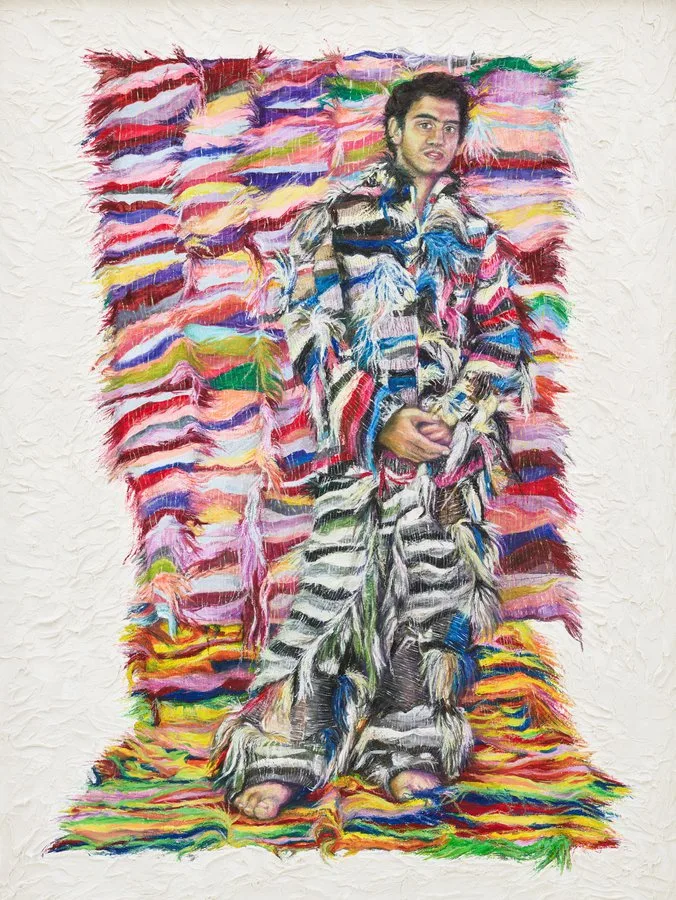
‘Fluffy (Jordan Gogos)’ by Whitney Duan. Oil, oil pastel and synthetic polymer paint on canvas. 120.7 x 91 cm.

Whitney Duan has created a portrait of multidisciplinary artist and designer Jordan Gogos. Whitney is a first-time Archibald finalist.

“As a self-taught painter, I am haunted by the spectre of being seen as a fraud,” Whitney admitted. “Yet, in painting Jordan, I found solace from an artist who dismissed my anxieties, declaring that ‘stress is boring.’ Jordan’s identity as an artist remains unwavering, a vibrant beacon guiding my process.”

Nick Stathopoulos

nick stathopoulos
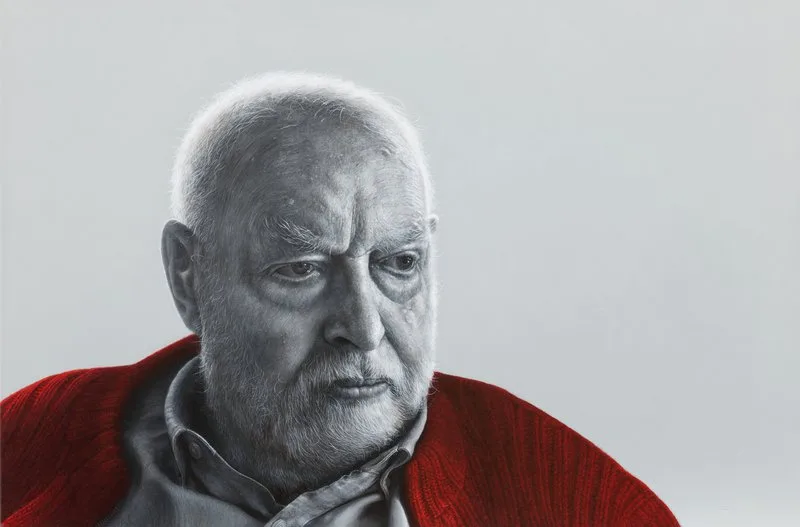
‘The last picture show – portrait of David Stratton’ by Nick Stathopoulos. Synthetic polymer paint and oil on canvas. 61.5 x 91.5 cm.

Nick Stathopoulos has been named finalist in the 2024 Archibald Prize for ‘The last picture show – portrait of David Stratton.’ Stathopoulos was a finalist in the 2008 Archibald Prize with an irreverent portrait of distinguished film critic David Stratton fast asleep in a cinema. Sixteen years later, Stathopoulos decided to undertake a smaller, intimate, more serious work. The sitting for the portrait proved to be a happy one.

“It was a bright, crisp Blue Mountains day, and we sat on David’s back porch talking movies (what else?) as I sketched in the final details. It also happened to be his wedding anniversary, and his wife Susie was keen to point out that she had knitted the red cardigan 40 years ago,” Stathopoulos said.

An Archibald finalist on eight previous occasions, Stathopoulos won the People’s Choice in 2016 with a portrait of Sudanese refugee and lawyer Deng Adut.

Alexander Billinis to give Melbourne seminar on the Serbs in Corfu

Alexander Billinis will give an online seminar titled ‘The Heroic Retreat – Serbs in Corfu’ on Thursday, June 6 at 7pm as part of the Greek Community of Melbourne’s (GCM) History and Culture Seminars.

Seminar synopsis

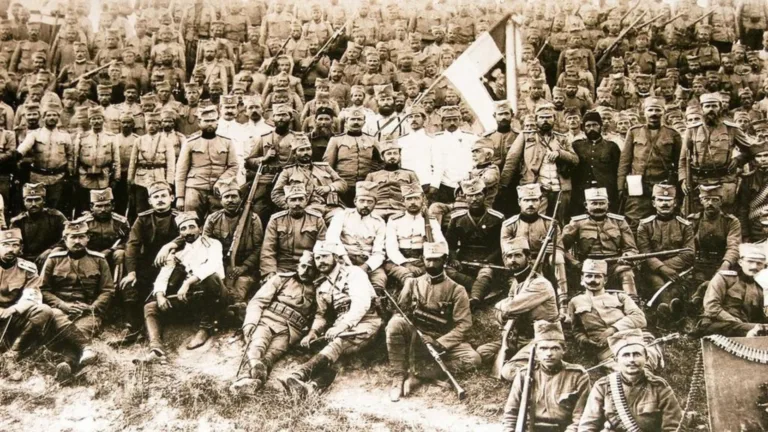
World War One started with the Austro-Hungarians attacking Serbia. After a heroic defence of their homeland for over one year, the Serbian Army, faced with a triple assault by the Austro-Hungarians, the Germans, and the Bulgarians, opted not to surrender to the enemy but to retreat from Serbia via Albania to the Adriatic Coast, a tragic route known to Serbs as the “Albanian Golgotha.”

Over 400,000 thousand Serbs, military and civilian, together with 23,000 Austrian prisoners of war, started the journey. By the time the Serbs reached the Albanian coast, and the Allies made the decision to relocate them to Corfu in still-neutral Greece, that number was down to about 170,000.

For a time, a mini-Serbia arose in Corfu as the Serbian Army licked its wounds in a friendly atmosphere, and with the Greeks and other Allied armies, geared up for a revenge attack on the Central Powers on the Salonika Front. This is their story.

Alexander Billinis

Bio


Αlexander Billinis is a political science lecturer at Clemson University in Clemson, South Carolina. Parallel to his academic work he earned a master’s degree in history last year, with an emphasis on the Greek Merchant Marine, and he will soon be commencing a PhD in digital history.

He writes prolifically on subjects pertaining to the Greek Merchant Marine, the Greek Diaspora, the Balkans, and Byzantium. Prior career experience includes work as an attorney, as an international banker, and as a journalist. He has lived and worked in the US, the UK, Greece, Bulgaria, Chile, Hungary, and Serbia. In addition to his master’s degree in history, he has a J.D. in international law from American University and his undergraduate degree in Western and Eastern European Studies from Georgetown University

A native of Salt Lake City, Utah, Billinis has roots in the island of Hydra, whose history and culture he writes about prolifically. He is also an honorary member of the Hydra Nautical Academy Alumni Association (Λεσχη Αποφοιτων της Ναυτικης Σχολης της Υδρας). A citizen of both the United States and Greece.

Event details

  • When: Thursday 6 June 2024, 7pm
  • Speaker: Alexander Billinis
  • Seminar: The Heroic Retreat – Serbs in Corfu
  • Where: This seminar is online only via the Greek Community of Melbourne’s YouTube or Facebook pages.