Rising cricket sensation Sam Konstas has promised signed memorabilia to a fan who accidentally crashed his car while trying to meet him. The incident was captured in a now-viral security video uploaded by Konstas’ Big Bash League team, the Sydney Thunder.
The footage, titled “The Konstas Effect,” shows the fan rushing after Konstas, only to realise he hadn’t engaged the handbrake. In his haste, he slips and crashes his car into another vehicle. The video has since racked up millions of views.
Konstas, who was unaware of the chase at the time, responded to the viral clip, saying, “I didn’t even know [he was chasing me]. It wasn’t funny, but hopefully he’s all good.” He added that he hoped to meet the fan and sign some items before flying out for a training camp in the UAE ahead of Australia’s Test tour of Sri Lanka.
The video highlights Konstas’ meteoric rise from grade cricket to cricket megastar in just a few months.
The 19-year-old has made an impression with twin centuries for NSW, a Test debut during Australia’s series win over India, and a prominent role at the Sydney Thunder alongside David Warner.
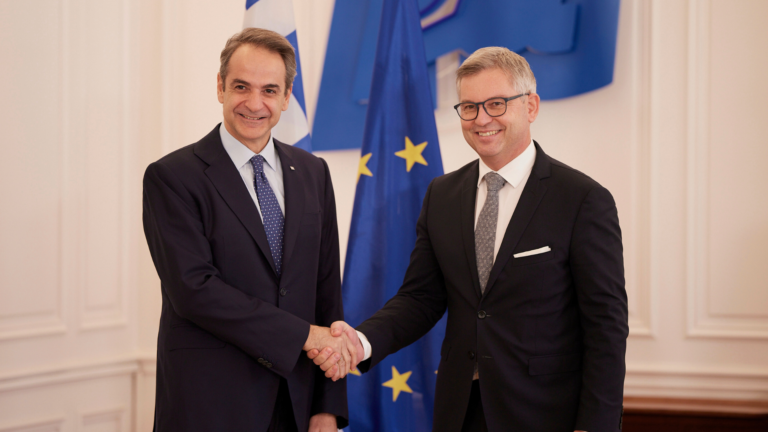
The European Union’s top migration official, Magnus Brunner, emphasised deportations as a key priority for the bloc’s executive branch during his visit to Athens on Thursday, January 16.
Speaking to Greek Prime Minister Kyriakos Mitsotakis, Brunner said, “The topic of returns is something we have to deliver, definitely,” highlighting the importance of implementing the EU’s new Migration and Asylum Pact.
Brunner, who assumed his role in late 2024, stressed that there is still much work to be done in fulfilling the pact’s goals. “There are some things to do, of course, some things ahead of us. Implementing the pact is one of them,” he noted.
Greece, a key entry point for migrants into the EU, has faced ongoing challenges with high numbers of illegal border crossings. Mitsotakis expressed satisfaction with recent EU policy shifts, particularly regarding external border protection and a greater focus on migrant returns.
Είμαστε ικανοποιημένοι με την πρόοδο σε ευρωπαϊκό επίπεδο στη διαμόρφωση μίας νέας ισορροπίας στη συνολική ευρωπαϊκή μεταναστευτική πολιτική, στην κατεύθυνση της προστασίας των εξωτερικών συνόρων με έμφαση στις επιστροφές, αλλά εστιάζοντας και στις νόμιμες οδούς μετανάστευσης.
“Greece is a country that has found itself on the forefront of the migration crisis for many, many years,” he said.
Brunner’s visit comes as Greek authorities conducted a rescue operation on Thursday, intercepting a vessel carrying 36 migrants off the coast of Crete. Meanwhile, Greece continues to call for EU funding to expand its border wall along the Turkish frontier, amid a surge in illegal arrivals.
The country recorded over 60,000 migrant arrivals in 2024, with sea arrivals increasing by nearly 50% in the past 18 months.
Brunner’s visit also follows a European Court of Human Rights ruling, which found Greece had illegally deported a Turkish national, accusing the country of “systematic” pushbacks—a claim Greece strongly denies, maintaining that its migration policy is “strict, but fair.”
Prime Minister Anthony Albanese and NSW Premier Chris Minns have strongly condemned an anti-Semitic attack in Sydney’s Dover Heights, where multiple cars were torched, one spray-painted with offensive graffiti reading “f*** Jews,” and a nearby house was vandalised with red paint.
Emergency services responded at 4 am on Military Road, finding two cars ablaze. NSW Police are investigating, emphasising their commitment to addressing hate crimes and urging the public to come forward with information.
Police and Counter-Terrorism Minister Yasmin Catley assured that efforts are underway to arrest those responsible.
Leonard Gentin, a local member of the Jewish community, expressed shock at the attack, saying, “It is not acceptable… these people are cowards.”
Photo: NewsWire / Martin Ollman.
NSW Jewish Board of Deputies President David Ossip called the act a deliberate attempt to “menace and intimidate” the Jewish community.
Premier Minns condemned the act as a “disgusting and dangerous act of violence,” highlighting a rise in anti-Semitic incidents. “We’ll be doing everything we can to catch these thugs,” he said.
Prime Minister Albanese also condemned the attack as an “outrage” and emphasised the need to foster community unity amid rising tensions. He added that Australia must focus on peace and security for all.
This attack follows a recent charge in Sydney under a new operation targeting anti-Semitic behaviour.
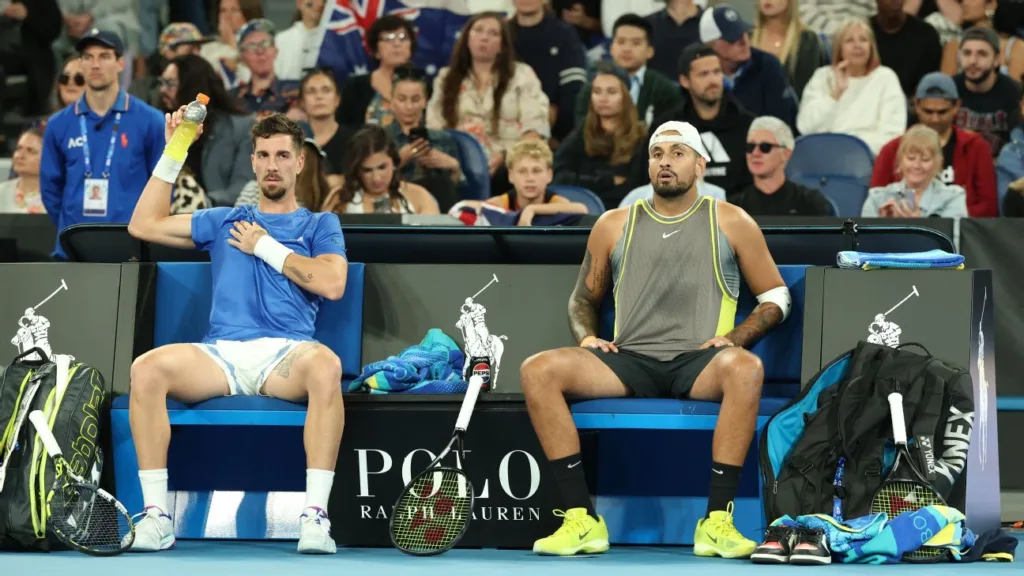
Nick Kyrgios and Thanasi Kokkinakis, the reigning Australian Open men’s doubles champions, have been forced to retire from their first-round match against fellow Aussies James Duckworth and Aleksandar Vukic.
The duo, known as “Special K,” withdrew at the end of the fifth game in the second set, trailing after losing the first set.
Photo: Cameron Spencer / Getty Images.
Both players were dealing with injuries heading into the match, with Kokkinakis still recovering from a gruelling five-set loss the night before against Jack Draper. Kyrgios was receiving treatment for an abdominal strain, but it was Kokkinakis’ ongoing pectoral issue that ultimately led to their retirement.
“(The) doctor advised me not to play… I can’t serve, can’t hit a high forehand. I’m in a lot of pain. (But) I wanted to come out here,” Kokkinakis said after the match.
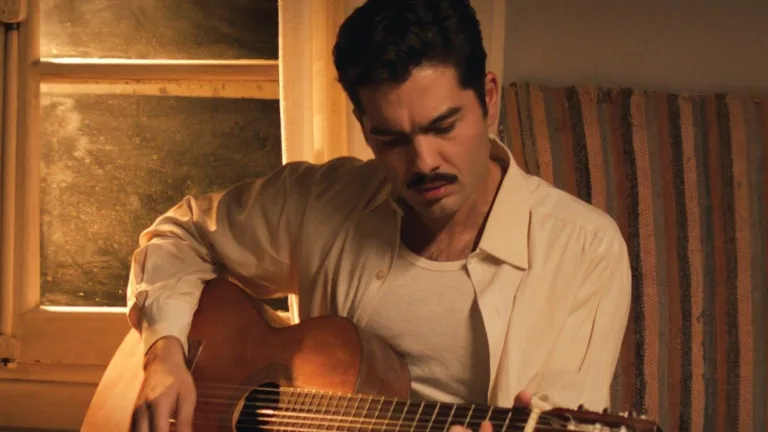
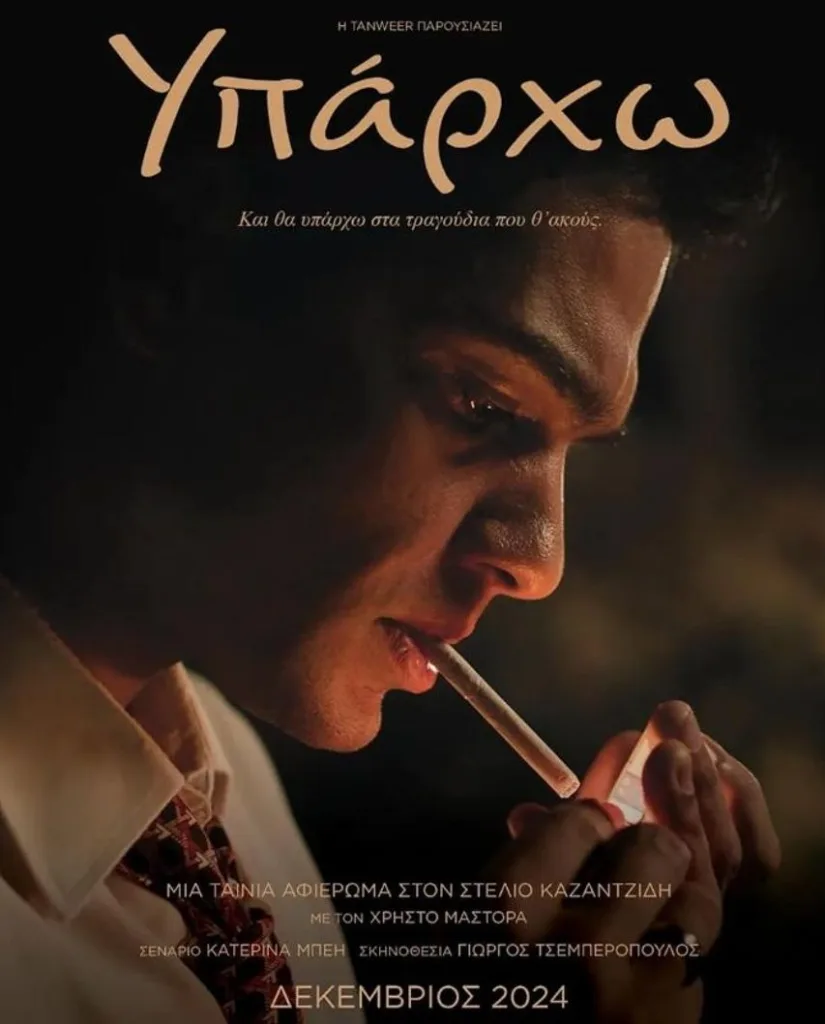
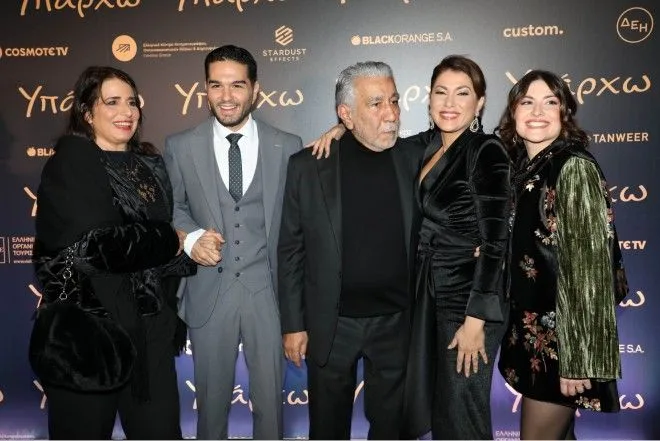
New film, “I Exist” (Υπάρχω), which is approaching record-breaking performances of one million viewers, bridges generations through the history and music of Stelios Kazantzidis.
A dive into the soul of the nation, a hymn to nostalgia and lost eras. Director Yorgos Tsemberopoulos, with a surgical precision of emotions… resurrects the figure of Kazantzidis, not as a simple artist, but as a legend that unites generations.
In theatres, the audience sings softly, gazes are fixed, the shadows of memory take shape. It is as if the film opens a window into our collective unconscious, where heroes never die, but continue to exist as part of ourselves. Such scenes will soon be available in theatres in Australia, where the film will be screened.
The film’s screenwriter is Katerina Bei, a creative force who has redefined modern storytelling in Greek cinema, working on films such as “Happiness” and “The Murderer.” The biography of Kazantzidis is no exception. It is another link in her unbroken chain of successes.
The Greek Herald recently spoke with Katerina, trying to decode the unstoppable phenomenon of the success of “I Exist.”
She talks to us about the process of creating a work that carries the weight of memory, the challenges of portraying such a complex personality, up to the choice of Christos Mastoras for the leading role.
The success of the film “I Exist” has already exceeded all expectations. What is it, in your opinion, that makes the story of Stelios Kazantzidis so timeless and at the same time so fascinating for today’s audience and a generation of young people who may not have even heard his songs until they saw the film?
Kazantzidis had managed to become a symbol of an era, in a way that did not betray his origins. Despite his enormous success, the world felt like one of them. He was a star and an anti-star at the same time. He had integrity and his own code of honour that he followed unwaveringly, and this made him a hero in the eyes of the world. He also lived simply, isolated and despised money. All of this, combined with the enormous charisma he had in his voice, gave him mythical dimensions.
However, I believe that beyond Kazantzidis’ fans, who are many and love him with fanatical fandom, a large part of the film’s appeal to young people is also due to the fact that he is played by Christos Mastoras. We knew that young people loved him, but we could never imagine this response.
I think that half the audience goes to see and hear Kazantzidis and the other half Mastoras. What matters, however, is that everyone comes out singing Kazantzidis…
What were the biggest challenges in trying to approach the life of a legend like Stelios Kazantzidis? Were there any moments during the writing process when you felt the burden of responsibility to capture his explosive personality as closely as possible to reality?
His personality was extremely contradictory, unusual and therefore very interesting. Persistent, stubborn, fair, complaining, impulsive, self-destructive, sensitive and at the same time cruel, suspicious, frugal but also assertive. He was a man who, while he was adored like few others, did not seem to be able to rejoice. As if his demons were hating his joy.
I was lucky enough to talk with his family and with Giorgos Lianis and Kostas Balachoutis who, in addition to being his biographers, knew him well. This helped me to decipher him somewhat and to understand how his character was slowly formed. The death of his father, from a beating by Hites, and his relationship with his mother were among the experiences that defined him.
Regarding the burden of responsibility, I will say that when I make the decision to deal with a subject – much more so when it concerns a biography – I try to do my best – to read, to analyse, to cross-reference – knowing very well that the result will not satisfy everyone. But when you do this work, you cannot enter into the process of constantly self-censoring. You must simply do your job as seriously and “bravely” as you can, without thinking about others.
The protagonist of the film, Christos Mastoras, gives an excellent performance. What were the criteria for his selection, and how did you collaborate to capture Kazantzidis’ personality with authenticity?
Christos, like many actors, went through the casting. When we saw the final videos, both the director Yorgos Tsemberopoulos, the producer Dionysis Samiotis, and the entire creative team unanimously agreed in favour of Christos. It was a risk in any case, since, no matter how good and resourceful he was, we could not know if someone who was not a professional actor could bear the burden of daily, demanding filming.
But Christos is a very conscientious, intelligent and serious person, who surprised us with his dedication, professionalism, hard work and talent.
He took acting lessons and rehearsed with the director and the actors. But apart from his consistency and enthusiasm, I must say that he is also a very, very good person, modest – with a great sense of responsibility – which made us all love him.
Yorgos Tsemberopoulos directed the film with a vision that uniquely reconstructs the era of Stelios Kazantzidis. How was your collaboration with him, and how did this creative partnership shape your own work on the screenplay?
Yorgos and I have known each other for many years and are friends, although we had never had the chance to work together. Yorgos is very detail-oriented and persistent and entered the project – as if he had been ready for a long time – with drive and enthusiasm, at the stage when the script already existed. From that moment on, we coordinated, immediately, quickly and easily, we collaborated very well together, we discussed and analysed everything and I think we ended up with a perspective that describes exactly what we all wanted for the film.
With successes such as “Happiness,” “The Murderer,” “I Exist” and many more, do you believe that you have discovered the secret to success in Greek cinema? Is there any element that you consider essential for a film to touch the heart of the audience?
Films are team work and certainly for something to go well, it means that many factors have collaborated. I simply do my job – a job that I love very much – but I think that the general conditions play a bigger role. I have made all three of these films with the same production company, Tanweer.
I think that is where the secret lies. Apart from the fact that after so long, I can say that our perspectives are in line, I will say that the way they choose, set up and support their productions plays a big role. They start with the idea – the script – then the director enters into something already formed and then the production is set up, on a predetermined identity. The producer’s cinema, that is. At the same time, there is also a plan for how the film will be communicated. I want to say that things do not happen by chance, which is why they have a better chance of going well.
Let me go back to “I Exist” and ask what was the most difficult part of writing the script? Is there a specific scene or aspect of Kazantzidis’ life that was particularly difficult for you to capture?
Biographies are the most difficult genre because, among other things, you have to contend with the beliefs that exist about the person you are called upon to describe. This becomes even more difficult when your hero is contradictory and has fanatical friends and opponents. There you have to make brave decisions and stay firm in what you want to say. There are many ways to tell a story. To isolate a phase of his life, to focus on his personal or professional life, to develop a long period of time, to focus on a decisive event, etc.
We decided to deal with the first period of his life, up to the moment when he decided to say “I Exist” and not sing again. We wanted to show the elements and circumstances that made him reach the top and the reasons he decided to remain silent. This made us focus on his psychology and character and our intention was that after watching the film, the viewer would understand him and sympathise with him.
Stelios Kazantzidis was the voice of the foreign world, accompanying with his songs the nostalgia and pain of immigrants, such as the Greeks of Australia, loyal readers of The Greek Herald. They are even eager to watch the film. How is this deep connection with immigration captured in the film and what message do you think it conveys to the Greeks of the diaspora who grew up with his music?
It is a given that a basic “ingredient” of Kazantzidis’ “core” is the pain of refugeehood, immigration, and foreign life. There is a strong Pontic element in the film, a Pontic dirge and a Pontic wedding song are heard. His mother speaks in a similar idiom. The hero himself is constantly conscious of “belonging”, of who he is, to whom he is addressed, what is the world he represents. We have scenes from a tour, where immigrants adore him and we hear “Passport,” the quintessential song of foreignness.
In closing, a personal question. The success of “I Exist” confirms your ability to tell unique stories. What are your future plans?
It is impressive how interesting all lives are, if you look at them closely. All people have something fascinating to tell and this – fortunately for those of us who write – is inexhaustible. We are discussing with my producer, to make a very special and unique biography in the coming years. But we have other plans ahead of us. We want to experiment in other genres as well… Let’s see…
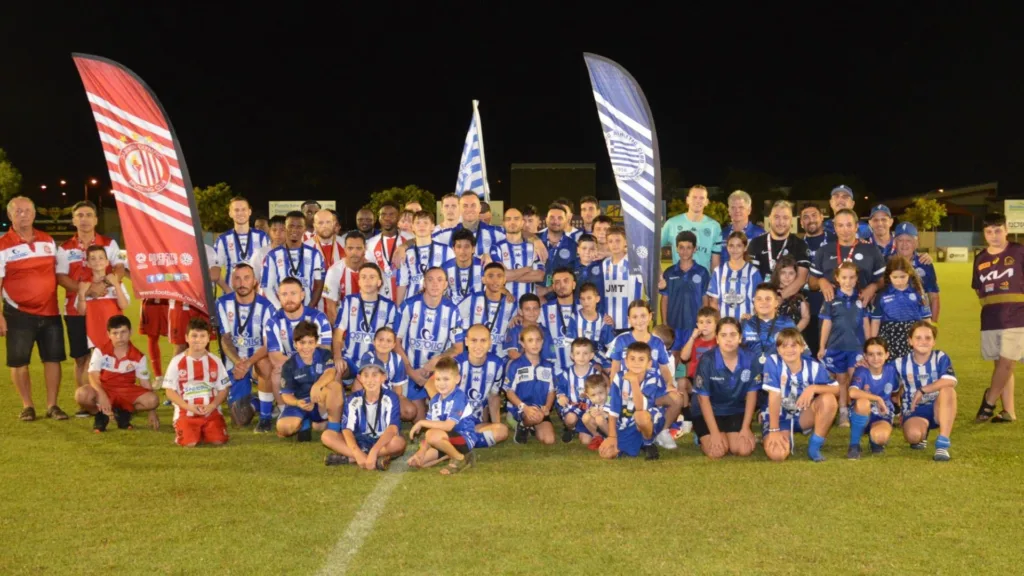
On Saturday, January 18, at Lakeside Stadium in Melbourne, the highly anticipated second meeting of The Greek Herald Cup will take place between South Melbourne FC and Sydney Olympic FC. This historic rivalry harks back to the National Soccer League (NSL) era, bringing together two clubs with rich legacies and cultural significance.
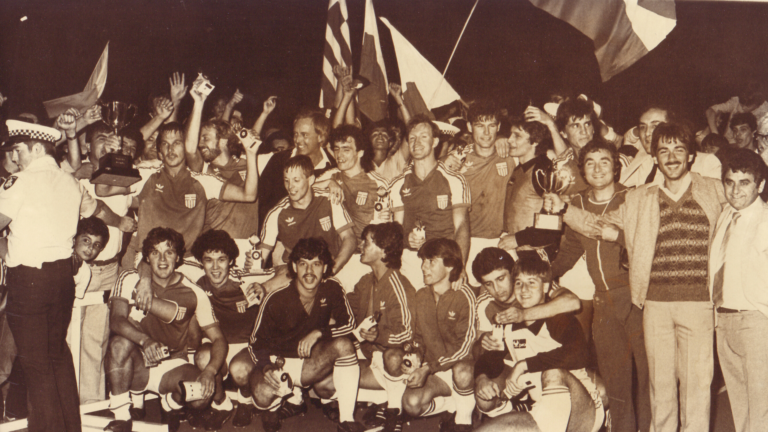
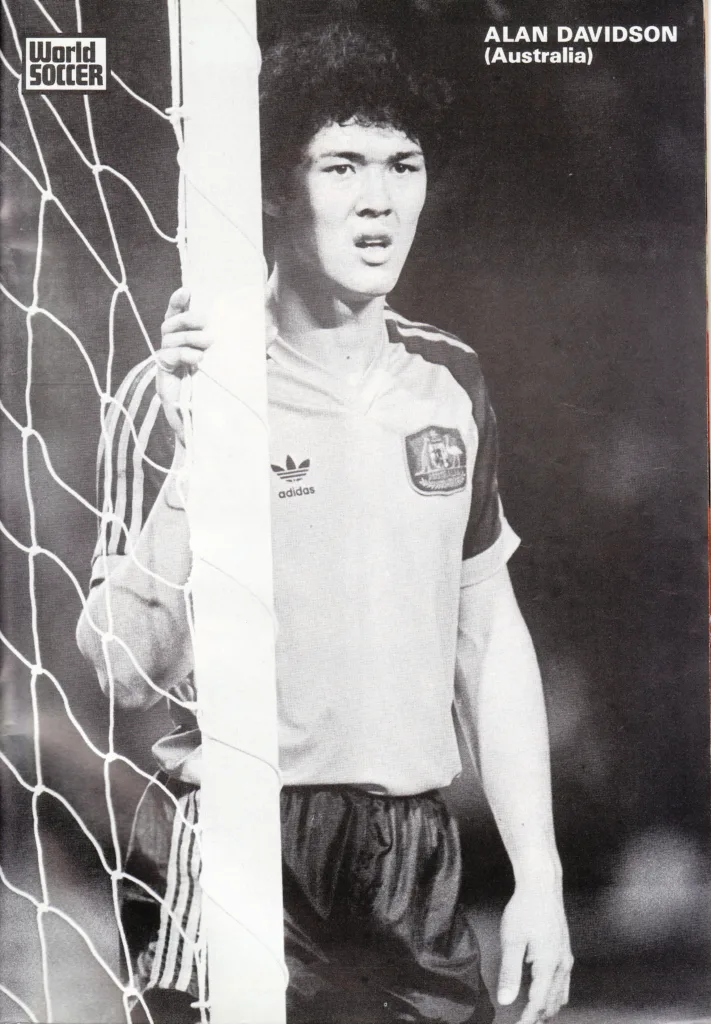
In the lead-up to this event, South Melbourne legends Manny Anezakis and Alan Davidson shared their reflections and memories of their time with the club, particularly their pivotal role in the 1984 NSL Championship team.
When asked by The Greek Herald about their fondest memories of the NSL, Alan Davidson described, “My fondest memory of the NSL is playing for South Melbourne and then getting the opportunity to play in the NSL with them. Obviously, winning is important, so we won trophies. But the NSL final, when we played Sydney Olympic, was a big win for us in 1984, winning the Australian Championship.”
Manny Anezakis echoed this sentiment, emphasising the strength and youthfulness of South Melbourne’s squad during that time.
“In 1984, it was a massive, massive victory for us,” he said. “And with the Greek community, whether it was South Melbourne playing Sydney Olympic or Heidelberg, the passion from all teams was immense.”
Manny Anezakis.
On the topic of South Melbourne’s potential return to national prominence in the upcoming National Second Division, Davidson was unequivocal, “Oh, they deserve to be there. It’s as simple as that. They’re one of the biggest clubs in the country, in history. And it just goes without saying. I look at them and Marconi as the two big clubs of Sydney and Melbourne.”
Discussing the proposed B League further, Davidson expressed cautious optimism: “It would be great if it goes ahead. I’m not too sure what stage it’s at, but I’ve heard different things. It would be good to have promotion and relegation, which would make it more competitive, even with the current A-League. That’s what happens all over the world. Eventually, I hope we can have this A and B League, and I hope it comes sooner rather than later.”
Davidson also spoke passionately about his personal connection to South Melbourne FC and the Greek community, elaborating on how these relationships shaped his life and career.
“My story is a bit different, too, because I have a lot of history with the Greek community. The Greeks have always been a major part of my life since I was young. That’s why I played football—because of the Greek boys I played with. The Greeks were the ones who allowed me to be their friend. I grew up with them, and they were like family to me,” Davidson shared.
Reflecting on his upbringing, he added, “When I was younger, I didn’t have many friends because of my background. The Australian kids didn’t accept me, but the Greek boys did. From kindergarten, my best friends were Greek, and that friendship has lasted over 60 years. I even met my wife through South Melbourne; she was a supporter. It was destiny for me to be part of this club and this community.”
Davidson also spoke about the passion and loyalty that defined the Greek supporters of South Melbourne.
“I remember the crowds, the stadiums were full, and the fans were so vocal and patriotic. That’s what the Greeks are—passionate and proud. It was incredible to be part of that,” he said.
The 1984 Championship Final remains a highlight in South Melbourne’s history. The first game, held on October 24, 1984, at Olympic Park in Melbourne, saw South Melbourne defeat Sydney Olympic 2–1 in front of 10,000 spectators. Egon scored twice for South Melbourne, while Koussas scored for Sydney Olympic.
The second game, held on October 28, 1984, at St. George Stadium in Sydney, was equally intense. South Melbourne again triumphed with a 2–1 victory, with goals from Crino and Vzendoorn, while Theodorakopoulos scored for Sydney Olympic. This victory secured South Melbourne’s status as Australian champions and solidified their place in the hearts of fans.
The evening will honour the rich history of both South Melbourne FC and Sydney Olympic while celebrating the 40th anniversary of South Melbourne’s NSL Championship win. Attendees can look forward to a night filled with camaraderie, nostalgia, food, drinks, and entertainment.
Tickets are $160, and bookings can be made via the link here. Don’t miss this chance to celebrate with the legends themselves and be part of a moment that bridges the legacy of the past with the promise of the future.
Event Details:
Event Name: Greek Herald Cup – Main Event
Date: Saturday, 18 January
Venue: Lakeside Stadium
1:00 PM – 5:30 PM: Mini Matches and Family Day
6:30 PM: The Greek Herald Cup
Entry: Free (registration is essential)
Legends Dinner Details:
Date: Saturday, 18 January
Place: Lakeside Stadium (Upstairs)
Time: 8:30 PM
Tickets: $160 – Includes food, drinks, and entertainment
Join us at Lakeside Stadium on January 18 to witness history in the making and honour the legends who helped shape the legacy of these iconic clubs. Let’s come together to celebrate the enduring spirit of Greek football in Australia.
Celebrated Greek singer Stan has captured hearts around the globe with his unique voice and heartfelt melodies. On the cusp of his much-anticipated performance at ‘Bouzoukia by the Sea‘ at the Semaphore Foreshore in South Australia, Stan opened up about his journey into music, his connection with the Greek diaspora, and what fans can expect from his performances.
The heart of Greek music
Born and raised in Greece, Stan’s path to stardom was far from conventional.
“I never imagined I would be involved in music,” he admitted in an interview with Stavroula, saying it wasn’t a part of his life “until an opportunity arose to write some songs.”
Those early compositions led to a surprising discovery. He and a friend recorded songs for a demo and people were curious about the voice behind them. This serendipitous moment marked the beginning of Stan’s career, one that would intertwine deeply with Greek music and culture.
Australia: A home away from home
Stan’s connection with Australia runs deep, thanks to its vibrant Greek community. Reflecting on his visits, he said, “Every time I come to Australia, I feel something extraordinary. It’s strange to be so far from home and yet feel so at home because of the warmth and love of the people.”
This duality, of being away yet feeling at home, fuels his performances.
The freedom of genre-bending
Stan’s repertoire spans a variety of genres, from folk to pop, a testament to his refusal to be boxed into a single style.
“I love to experiment and mix genres,” he explained.
This creative freedom allows Stan to explore different facets of his artistry, weaving together diverse influences that resonate with a wide audience.
With a catalogue of hits, choosing a favourite isn’t easy, but one song holds a special place in Stan’s heart.
“‘Paraxeno Paidi’ (Strange Child) stands out because it’s the only song I’ve written that isn’t about love. It explores the uniqueness of every individual,” he said.
What fans can expect
Stan’s upcoming tour promises to be a celebration of music, connection, and emotion.
“I’ve prepared a programme full of hits, both old and new. I want everyone to have fun, dance, sing, fall in love, and live unforgettable moments together,” he shared with enthusiasm.
Accompanied by his orchestra, Stan is ready to deliver an unforgettable experience.
The Maria Callas Australian Society, in partnership with AHEPA Australia, the Ithacan Historical Society and the Greek Community of Melbourne, has announced a special event celebrating the life and artistry of the legendary soprano, Maria Callas.
This exclusive evening will feature a special screening of Maria, a biographical film starring Angelina Jolie, and introduce the society’s esteemed ambassador, Christiana Aloneftis.
The film delves into Callas’ personal and professional life, showcasing her remarkable talent and the complexities that defined her career.
The event promises to be a unique tribute to Callas, often referred to as the “Divine Voice,” whose powerful performances and artistry left an indelible mark on the world of opera.
Proceeds from the event’s ticket sales will directly benefit projects aimed at preserving archaeological sites and cultural heritage in Ithaca, ensuring that the rich history of this iconic Greek island is safeguarded for future generations.
Event Details:
Date: Sunday, February 2, 2025
Time: 7:00 PM
Location: Palace Cinema Como, South Yarra, Melbourne
Tickets: $22 (Proceeds will support cultural heritage preservation and archaeological initiatives in Ithaca)
For more information and to reserve your tickets, click here.
Three football teams with Hellenic heritage have become the recipients of the Growing Football Fund Community Grants, supported by CommBank. These teams include Darwin Olympic Sporting Club, Traralgon Olympians Soccer Club and Bayside Argonauts Football Club.
Education support for the development of female coaches, summer football programs and enhanced playing experiences will be just some of the benefits for women and girls as Football Australia celebrates the awarding of another round of the grants.
Hailing from across Australia, the 118 club and association recipients join the 121 beneficiaries from the inaugural round announced in March 2024 who are continuing to empower, support and encourage women and girls.
With 38% of recipients from regional areas, the grants will go to the heart of strengthening communities in providing tangible assistance to clubs and associations.
One club who will be making a difference is the Fairfield Bulls Football Club, who will be first time recipients of the Growing Football Community Grants. Founded in 1971 by Assyrian migrants, the Fairfield Bulls Football Club (Football NSW) are leading the charge in their Western Sydney region in advocate for female growth, development, and involvement.
Southern Districts Football Association Technical Director and former CommBank Matildas forward, Catherine Cannuli (cap #174), expressed her gratitude for the grant and explained how the funds would be invaluable for the female coaches at Fairfield Bulls Football Club.
“When I first started playing, there were few girls in the game and even fewer female coaches— this has always fuelled my motivation to improve equality and diversity in the game we love,” she said.
“For young girls, a female coach is a powerful role model, showing them that they belong in every part of the game and inspiring confidence, strength, and the belief that they, too, can lead.
“Through the Growing Football Community Grant, we are now in a position to send a group of female coaches to complete their ‘C’ Diploma Coaching Course. Their potential impact will be far-reaching as they not only shape the next generation of players but also future leaders in their communities.”
Football Australia General Manager of Women’s Football, Carlee Millikin, said all of the recipients’ submissions exhibited initiatives that would aid more growth for female participants in all areas of the sport.
“We are thrilled to see the clubs and associations that have been awarded the grants demonstrating a strong commitment to long-term investment in women and girls’ football within their communities that goes beyond the financial,” Millikin said.
“It means the Growing Football Fund can play its role to help supercharge their ambitions that result in positive outcomes for female participants. The wide breadth of projects is exciting, as it shows a deepening understanding of what is required to develop inclusive and safe environments.
“In partnership with CommBank, we have already seen great results from the round one clubs delivery of initiatives and look forward to witnessing how the latest cohort creates a lasting impact through their programs.”
We are excited to announce the 118 recipients of the Growing Football Community Grants! ⭐️
These grants will support clubs and associations that are leading the way in creating opportunities for women & girls in our game. The Grant Program has been supported by @CommBank.
CommBank’s General Manager of Brand, Sponsorship and Content Di Everett said: “We are so proud of what this fund has achieved so far, and congratulate the recipients of the Round Two grants.
“We are passionate about making community sport more accessible for all. These grants have enabled clubs across the country to assist coaches through training opportunities and support local families through an expansion of programs to drive participation for young women.”
The Round Two grants support a broad range of initiatives that will speak to the fund’s core purpose of providing increased access and opportunities for women and girls’ involvement in football throughout different areas in the game.
These include projects targeted at:
supporting the education and development of female coaches through subsidising coach education;
driving new participation opportunities by hosting ‘come and try’ days and summer football programs;
offering holistic health workshops for women’s and youth teams including strength & conditioning workshops; and
fostering a better participant experience for women and girls, by supporting female fitting uniforms and replacing white playing shorts.
Dr Stefani Vasil, co-author of The Borders of Violence, brought attention to the pervasive issue of domestic and family violence in Australia at her book launch at the Queen Victoria Hospital’s Centre on Lonsdale St, Melbourne.
In her groundbreaking research, Dr Vasil, who is of Greek and Italian descent, explores how violence against women has been entrenched in societal structures, particularly by the failures of governments and migration systems to adequately address it.
Dr Vasil’s work challenges historical and philosophical ideas, such as the biblical narrative of Eve being created from Adam’s rib, which she argues has perpetuated the myth of male superiority. Her research underscores how such narratives continue to impact women’s safety and well-being today.
Drawing from her personal experience growing up in a loving home, Dr Vasil explains that not all women are as fortunate. Her university studies deepened her understanding of domestic violence, revealing that government inaction and flawed migration systems often exacerbate the issue.
With @stef_vasil I'm thrilled to announce the release of our book, The Borders of Violence: Temporary migration & family violence.
To download the open access version or to purchase the book go here👉 https://t.co/OQ7hb1vjrE
In The Borders of Violence, co-written with Professor Marie Segrave, Dr Vasil argues that perpetrators of violence isolate women from families and safety, while government failure to enforce laws only prolongs the suffering.
“There is a need to reduce the burden on women and force government to accept their responsibility,” she asserts. Her research highlights how governments are often reluctant to confront the issue, preferring to deny its full extent.
Dr Vasil’s innovative work has already garnered acclaim, but she insists that real progress in addressing domestic violence will require men to take an active role, rather than placing the burden solely on women.