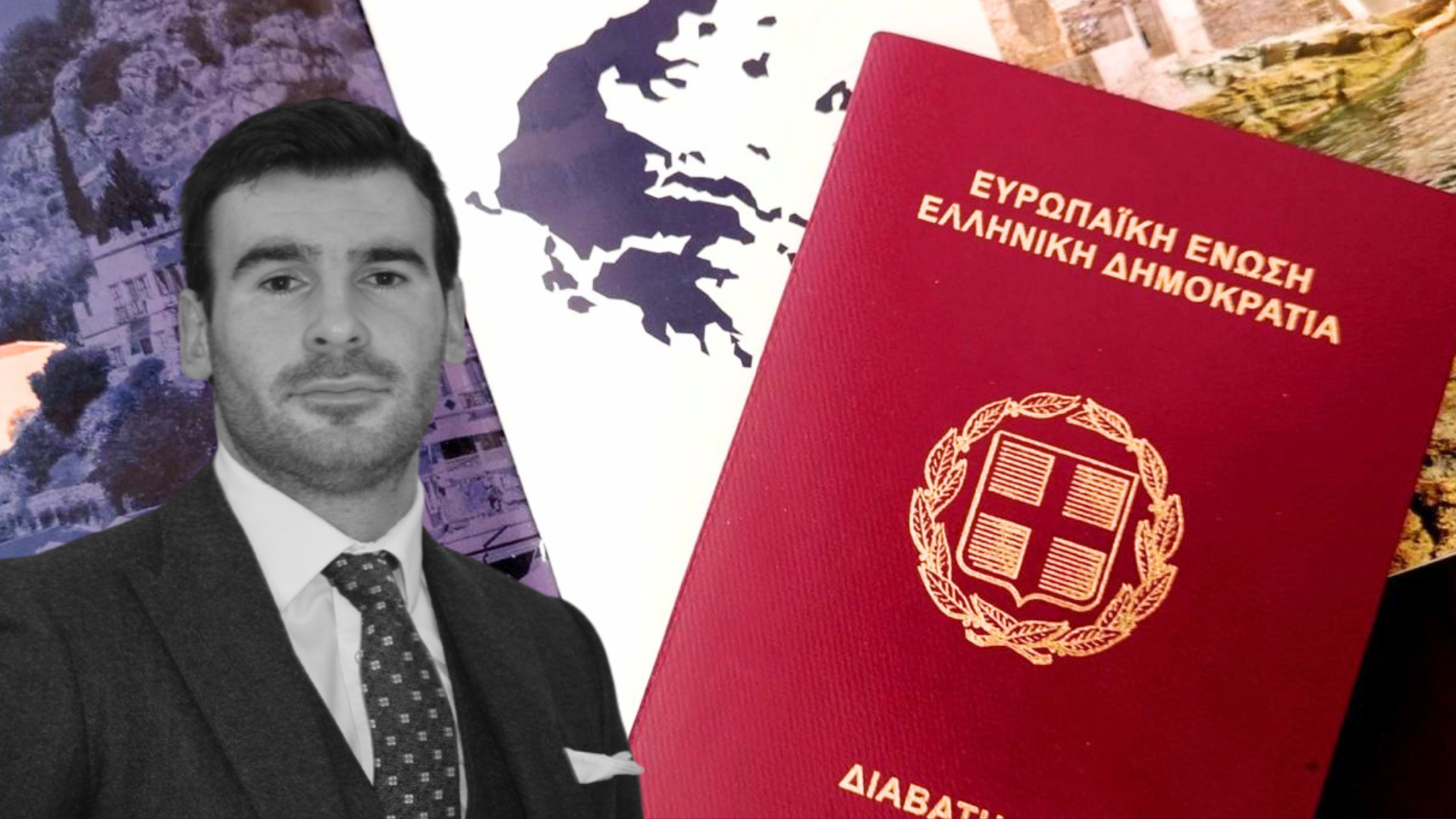
For decades, many Greek Australians have spoken about obtaining a Greek passport as something they might do “one day.” For some, it’s about reconnecting with family roots. For others, it’s the opportunity to live, work, study or retire anywhere in the European Union.
Yet according to Sydney entrepreneur Nikolas Kraljevic, one of the biggest surprises is how many people may already be entitled to Greek citizenship and simply don’t realise it.
“One of the most common things we see is people assuming they don’t qualify without ever checking,” Kraljevic says.
“The reality is that Greece has some of the most generous citizenship-by-descent provisions in Europe. In many cases, if you have a Greek parent, grandparent or even great-grandparent, there may be a pathway available.”
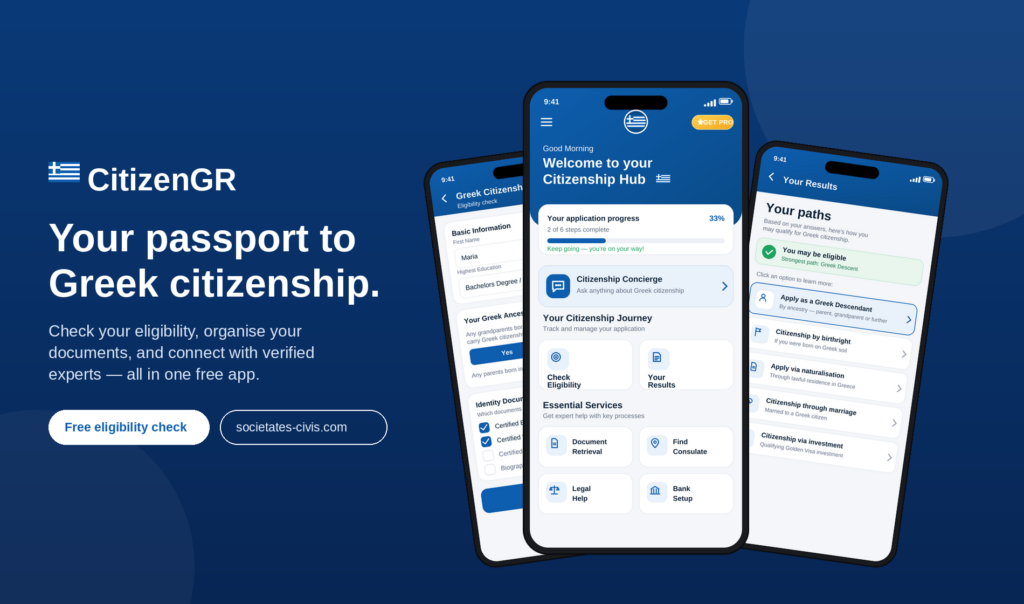
Kraljevic is the founder of CitizenGR, a free platform designed to help people of Greek descent understand whether they may qualify for Greek citizenship, identify the documents they may need and navigate the often-confusing early stages of the process.
Part of the broader Societates Civis group of citizenship platforms, CitizenGR was created to make the first steps simpler, clearer and more accessible for diaspora Greeks around the world.
The problem isn’t eligibility — it’s knowing where to start
The idea for CitizenGR was born from Kraljevic’s own experience pursuing Croatian citizenship for himself and his family.
After spending more than a decade working in technology, he expected the process to be relatively straightforward. Instead, he found himself navigating missing records, government paperwork, certifications and administrative hurdles that quickly became overwhelming.
“Once I got through the process myself, I realised there was a real need for something that helped people understand the first steps,” he says.
“There were lawyers who could help once a case was ready, but there was very little available for someone simply trying to answer a basic question: Do I qualify?”
After helping friends and family members navigate similar processes across multiple countries, Kraljevic realised the same frustrations existed throughout many migrant communities. That experience ultimately led to the creation of the Citizen platform series and, more recently, CitizenGR.
Why interest in Greek citizenship is growing
CitizenGR has already attracted several thousand people to its waitlist, with Greek Australians representing the majority of users.
According to Kraljevic, the growing interest is being driven by both practical and personal reasons.
“A Greek passport is also a European Union passport, which creates significant opportunities for travel, work, study and retirement across Europe,” he says.
“But what we’re seeing goes beyond that.”
Many second and third-generation Greek Australians are becoming increasingly interested in preserving connections to their heritage.
“The grandparents who migrated to Australia in the 1950s and 1960s are getting older. People are recognising that family stories, village connections and important documents can disappear if they aren’t preserved,” he says.
For many families, citizenship has become another way of maintaining that connection to Greece and ensuring it can be passed on to future generations.
The biggest misconceptions
One of the most common misconceptions, according to Kraljevic, is that citizenship eligibility only extends to children or grandchildren of Greek migrants.
“In reality, Greece is one of the most generous countries in the world when it comes to citizenship by descent,” he explains.
“In many cases, a parent, grandparent or even great-grandparent can provide a pathway to citizenship, provided you can demonstrate an unbroken chain connecting you back to that ancestor.”
Another misconception is that simply having Greek ancestry automatically guarantees citizenship.
“The critical factor is whether your ancestor was recognised within the Greek system, particularly through registration with a Greek municipality,” he says.
“That’s often where the real work begins.”
For younger men, concerns about military service obligations also create uncertainty.
“Many people are surprised to learn there are provisions available for Greeks permanently residing overseas. It’s important to understand the rules properly rather than letting assumptions stop you from exploring your options,” he says.
Why so many applications stall
While eligibility may be broader than people realise, proving it can present challenges. Missing records, inconsistent name spellings and gaps in documentation are among the most common obstacles.
“A name might appear one way on an Australian birth certificate, another way on a baptism certificate and differently again in a Greek municipal register,” Kraljevic says.
“Each discrepancy needs to be reconciled.”
Many applications also stall because families cannot locate historical records or because important events such as marriages were registered decades ago in villages where documentation can be difficult to access.
Then there is the bureaucracy itself.
Applicants frequently need Apostilles, official translations, supporting documents and consular appointments, all of which can feel overwhelming to someone navigating the process for the first time.
“None of these issues are impossible to overcome,” Kraljevic says.
“But when they all happen at once, many people simply don’t know where to begin.”
How CitizenGR helps
CitizenGR was designed specifically to remove that uncertainty.
The platform helps users understand their potential eligibility, identify the documents they may need, track their progress and connect with qualified professionals such as translators, genealogists and lawyers when specialist assistance is required.
Importantly, the initial guidance remains free.
“We’re not replacing lawyers,” Kraljevic explains.
“We’re helping people get to the point where they understand their situation and can move forward confidently.”
The platform is also expanding its genealogy and document-sourcing capabilities, helping users locate missing records and better understand their family history.
For those who simply want to determine whether citizenship is even an option, CitizenGR provides a practical starting point before committing time and money to a formal application.
Start with your family
For Greek Australians who have been considering citizenship but haven’t yet taken the first step, Kraljevic’s advice is simple.
“Start with the living, not the paperwork,” he says.
He encourages people to sit down with parents, grandparents, aunts and uncles and record names, villages, dates and family stories while they still can.
“That knowledge is often more valuable than any document because once it’s gone, it’s much harder to recover,” he says.
Above all, he says, don’t assume you’re ineligible.
“The number of people who think they don’t qualify and are completely wrong is remarkable,” he says.
“Five minutes finding out where you stand costs nothing. The biggest mistake is deciding you don’t qualify before you’ve even checked.”
For Greek Australians curious about their eligibility, CitizenGR offers a free starting point to understand the process, identify next steps and reconnect with a part of their family’s story that may have been waiting for generations.
To learn more about Greek citizenship by descent or assess your eligibility, visit CitizenGR.
