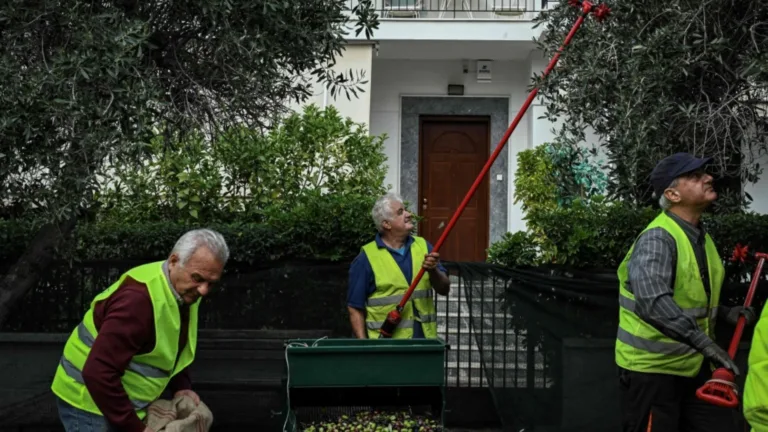
On the bustling streets of Glyfada, a seaside suburb of Athens, an unusual scene unfolds: nets spread beneath olive trees as workers harvest their fruit near a bus stop. What began a decade ago as an initiative to help vulnerable residents has now become a growing trend across Greece.
According to malaymail.com, with olive oil prices soaring to between €9 and €18 per liter, municipalities like Glyfada, Thessaloniki, and Patras are reclaiming the untapped bounty of street olive trees to produce free oil for those in need. Glyfada’s harvest this year is estimated at around one tone, distributed entirely free of charge.
“This is good oil… all of Greece makes good olive oil,” remarked Stavros Giakoumakis, Glyfada’s deputy mayor for greenery, who has overseen the project since 2014. He emphasised its potential: “If every municipality did the same, vulnerable families would have enough olive oil to last the year.”
However, concerns over urban pollution cast a shadow on these efforts. Experts warn that olives grown in high-traffic areas may contain harmful pollutants like mineral oil aromatic hydrocarbons (MOAHs), which pose health risks.
“I would not consume olive oil that has not been analysed,” cautioned biochemist Constantinos Demopoulos.
Despite the risks, locals like Eleni Papachristopoulou acknowledge the necessity. “We are worried… but people eat the olives—soon they won’t have other options anyway,” she said.
For now, Glyfada’s tangy street oil offers a bittersweet solution to a pressing crisis.
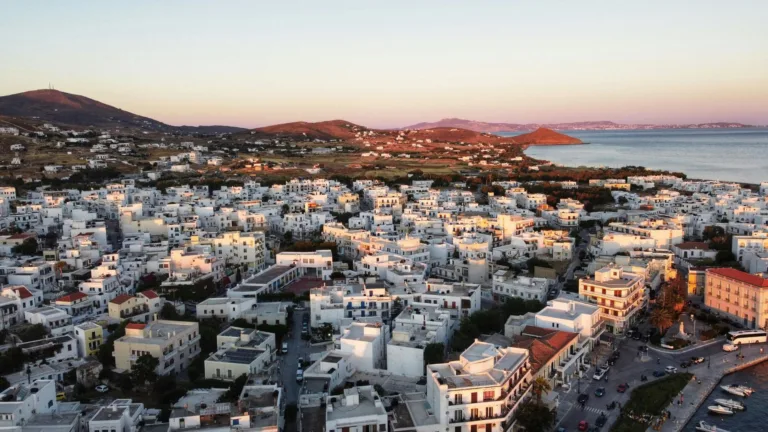
Tinos island in the Cyclades is facing a severe water crisis, with its infrastructure unable to keep up with rapid tourism development.
According to an article of Alexia Kalaitzi in ekathimerini, several settlements, including Kardiani and Triantaros, have seen boreholes dry up, leaving the municipality to rely on tanker trucks to deliver water. Over the past year, 10 of the island’s 30 boreholes have stopped producing water.
Mayor Panagiotis Krontiras has announced plans to drill six new boreholes, but concerns remain over the outdated water supply network and significant leaks.
Many residents, especially in tourist-heavy areas, are witnessing the depletion of local water sources. Private boreholes, often used by holiday homes and hotels, are a contributing factor, and their lack of oversight raises questions about sustainability. Both the municipality and the regional authority admit to staff shortages that hinder effective monitoring of these private sources.
Experts argue that over-extraction of water is the primary issue, with unsustainable practices like garden irrigation and swimming pools exacerbating the situation. Some have called for a ban on such water-intensive developments.
Water scarcity in Tinos highlights the need for a comprehensive water management strategy that combines immediate and long-term solutions. Experts stress that the problem is systemic and requires an integrated approach, balancing technological advancements with the preservation of the island’s natural resources.
For George Karamalis, gelato is more than a treat—it’s a family tradition and the foundation of a thriving South Australian business.
According to The Advertiser, this December, George and his wife, Mesha, will open their latest St Louis House of Fine Ice Cream & Dessert store in Glenelg, on the same site where George’s late father, Arthur, ran his gelato shop in 1993.
The launch coincides with what would have been Arthur’s 78th birthday, making the event both sentimental and significant.
Arthur’s shop not only introduced George to the ice cream business, but also shaped his entrepreneurial aspirations.
It was in that very store that George, then 15, met Mesha, who worked part-time scooping ice cream. Now married for 13 years and parents to three children, the couple has built a gelato empire, with 11 locations across Adelaide and the Philippines, and two more planned in Prospect and Elizabeth.
Staying true to quality and tradition has been central to their success.
“It is really about the classics… we need to make sure we make a product true to our heart,” George told The Advertiser. His favourite flavors, hazelnut and pistachio, reflect this commitment, while Mesha treasures the nostalgic St Louis ice cream, inspired by her early days in Arthur’s shop.
Each of their children—Amalia, 12, Archie, 10, and Maisie, 4—has inspired a dessert item, ensuring the family legacy lives on with every scoop.
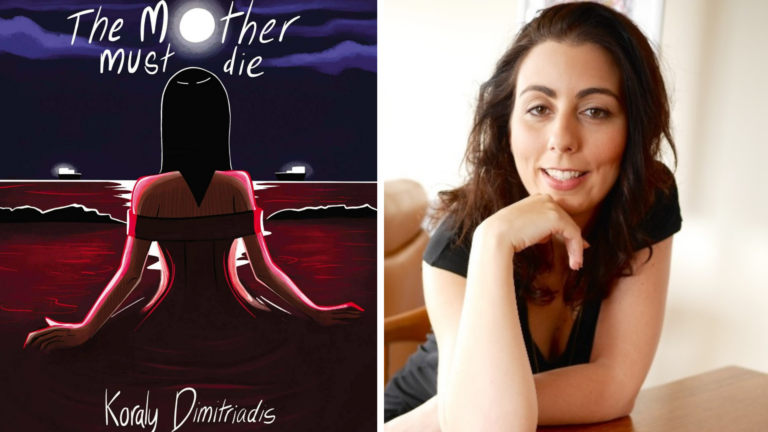
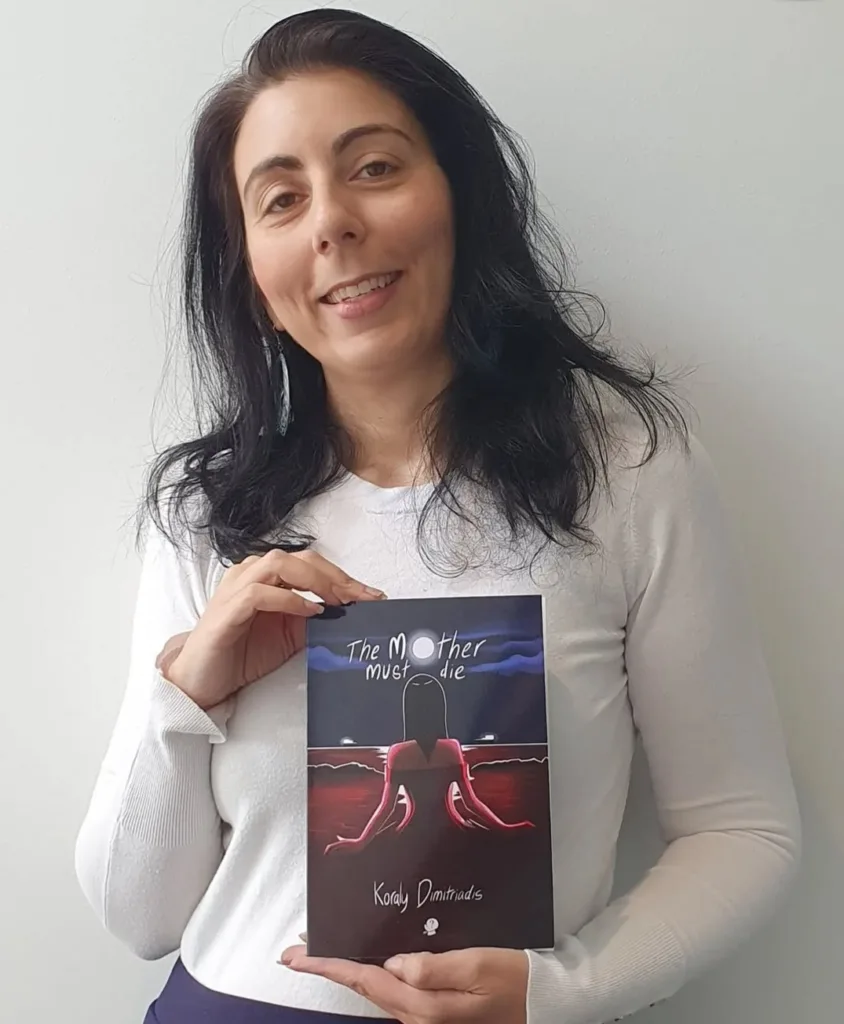
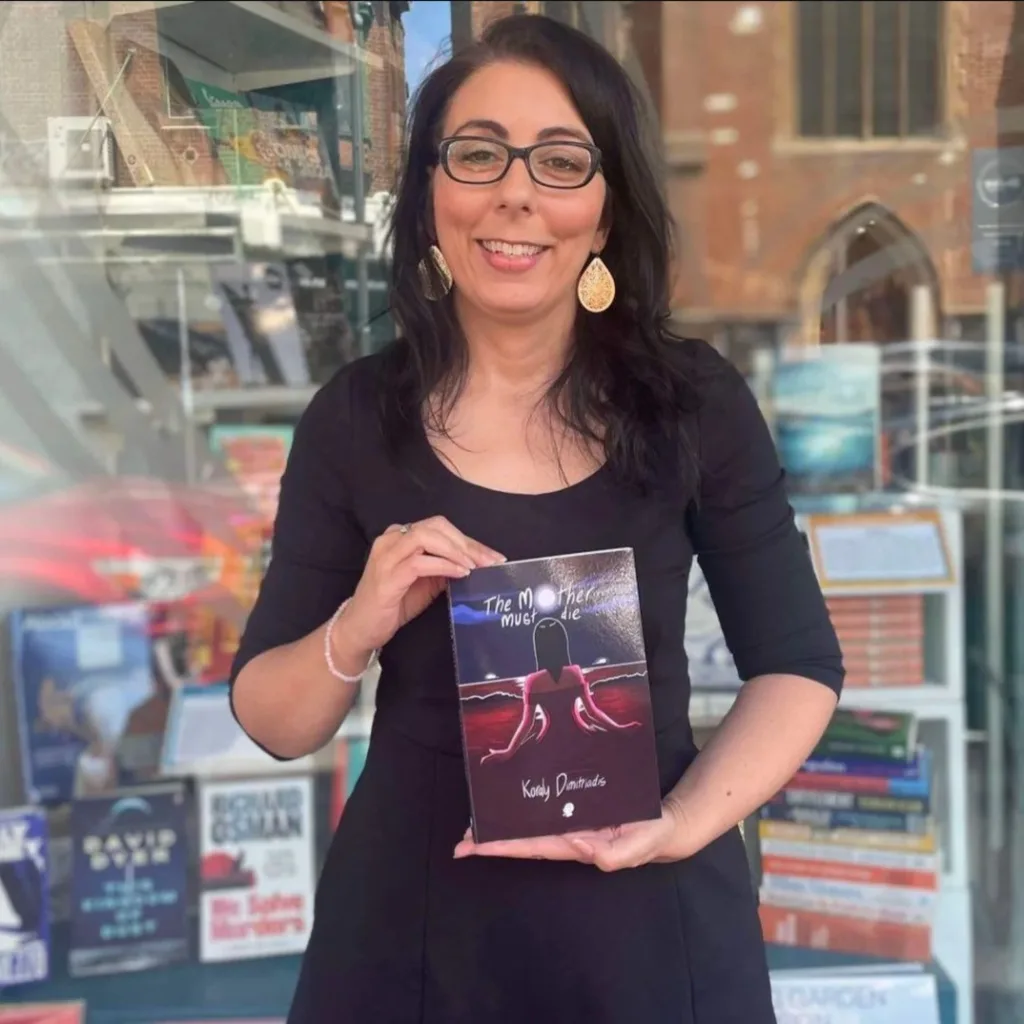
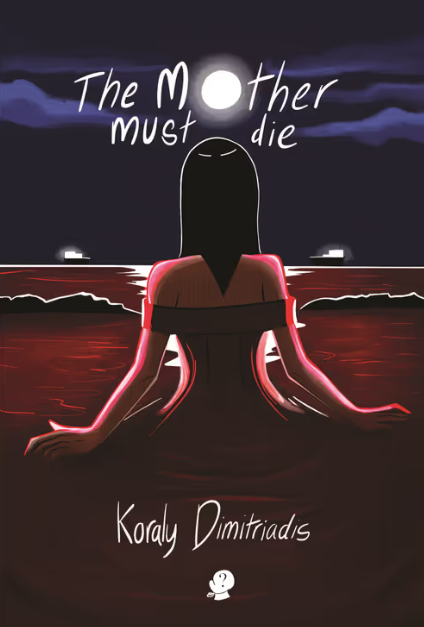
Bestselling Cypriot Australian writer and performer Koraly Dimitriadis’ vivacious voice returns to rouse audiences with a debut collection of short stories in her book – ‘The Mother Must Die.’
Identity, divorce, sexuality, materialism, parenting, domestic violence, illness, grief, and the struggles of the working-class migrant are all themes on the authors’ literary stand with each their own witness to attest to unique experiences.
Readers are immediately invited to “step into the wog bubble for some real pain” in locations around Melbourne, and discover why broken people feel “it’s better to keep your real self-buried so nobody feels too uncomfortable.”
A greater portion of the book’s exterior is dipped in an ageing blood-stained crimson wash – where a woman, soon to be revealed as a “Mother” who can be seen merging into a sea of red, like blood – illustrating how Mother’s naturally embody the ocean, the earth, and life itself, yet can feel consumed by the world’s perceived expectations. This imagery also casts the notion that an escape from this overwhelming existence where “we’re all doomed” is possible, yet as Dimitriadis writes, the “Mother Must Die” in order to find it.
Transformative in her multi point-of-view approach, she interweaves varying personas ranging from the sex-conquest driven male club owner claiming that “men rule the world, end of story,” to the women who feel obliged to compete in the “race to the altar” but end up ditching the “scripted play” once they realise “you don’t have to subscribe to it.”
Dating apps, sexual liberation and self-pleasure are also highlighted as a deviation from the “wog mentality” that can only be cleansed with forced confessions, “conservatism, proper Greek behaviour, religion and ethics,” which metaphorically “grew on the fruit trees.”
By reimagining traditional culture through the trumpeting of taboo topics, Dimitriadis arms women while aiming to disarm the world, making it clear that her goal is to ostracise oppression itself and valiantly fight against the objectification of women.
Dimitriadis encourages women to go “where the music is the loudest” over the “dulling hum of the rangehood” in a Mediterranean kitchen, even if they are “the only wog chick” surrounded by Aussies. By venturing into the unknown, you “might just find yourself.”
As empowering writers often do, she uses the characters in the stories as a mirror to reflect some her own observations and her journey so far as a woman – “is it the writer writing the story or the story writing the writer?”
For those who never feel quite at home in “cold Australia” and see their bed as a “coffin,” Vicky and Haroula can sympathise. For casual couples who get stuck in a limbo of “elated to lonely,” Penny and Chris can relate. For the migrant Mothers and Fathers who are either estranged from family and “craving familiarity,” or surrounded by children during times of ill health who have “carried the burden of communication,” Francesco and Matriarch, Voula can understand.
Interspersing Greek and Cypriot phrases among the English further allows Dimitriadis to capture the depth and haunting reflections of some, “Pou ‘ne ta hronia?” “Where are the years?” and creates an expansive premise for enhancing the multi-cultural nature of the book.
Recipes and dreams feature in stories within stories, where descriptions noted on the back of photographs help to resuscitate a mother’s longing to connect with her daughter as she faces a seemingly inevitable medicated catharsis for post-natal depression.
Dimitriadis’ clever inclusion of a child who’s torn between two households and wishes to be a “mermaid” that “heals” from her favourite show, can be an innocent and momentary tonic to the “can’t have it all” feeling drawn out by what TV permits as the acceptable “representation of a woman.”
No matter the angle you’re viewing the world from, the road is difficult for mothers, for women. Survival comes down to finding peace within themselves amid all the noise, and if they can’t, physically, to use their soul to do it.
For Dimitriadis, who considers Cyprus her soul’s birthplace where “Aphrodite’s medicine lingers in the air,” she recommends that all we need to do is “breathe it in, absorb it… it heals.” That there is hope for the broken yet. That “you’re not broken, despite what society might think.”
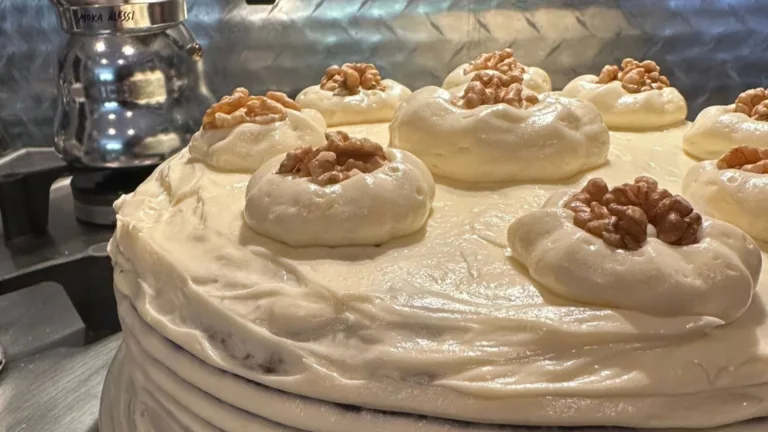
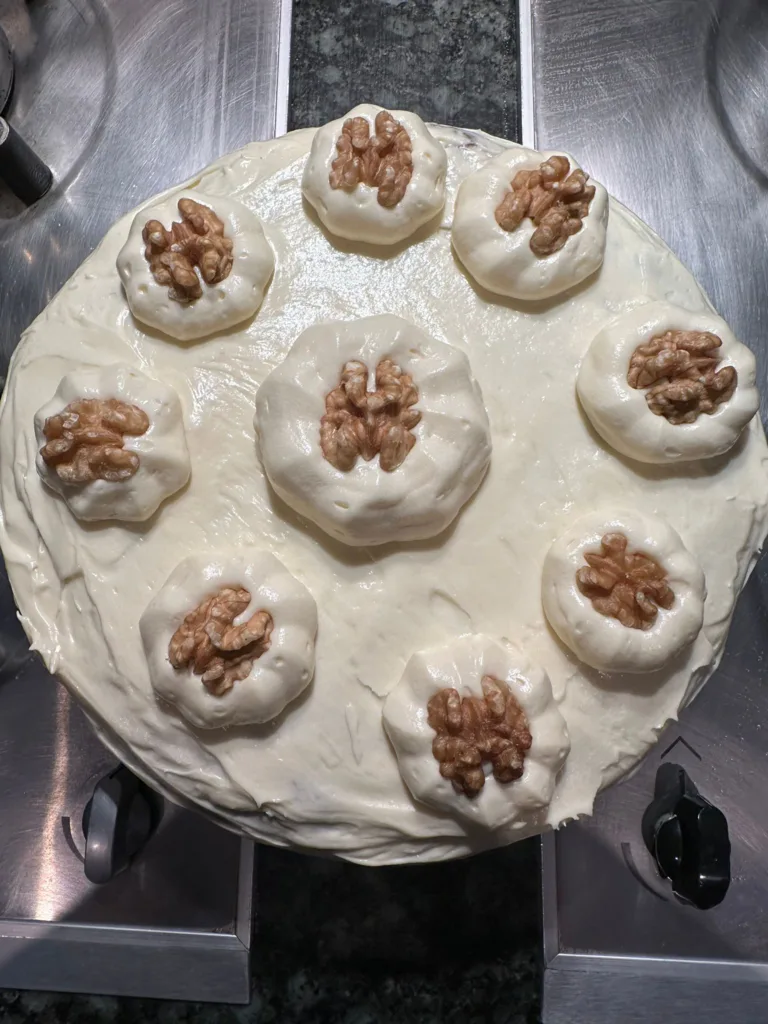
Niki Louca from My Greek Kitchen shares her favourite recipe for carrot cake with The Greek Herald. You can follow her on Instagram @mygreekkitchen for more!
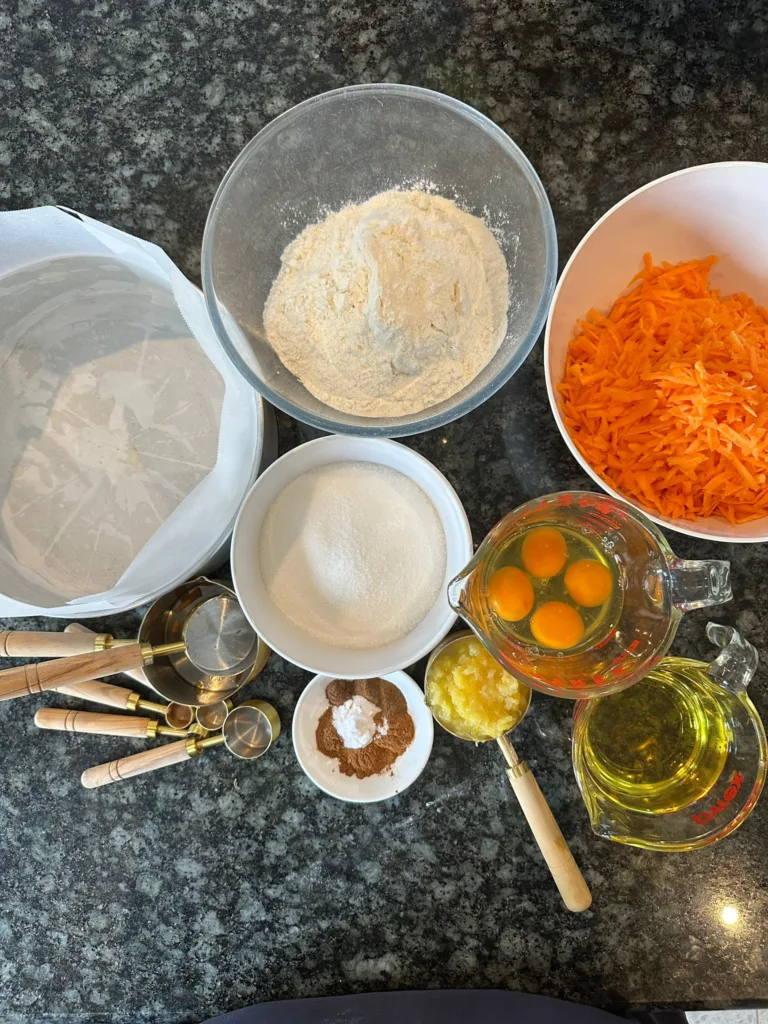
Ingredients:
2 ½ cups S.R. flour
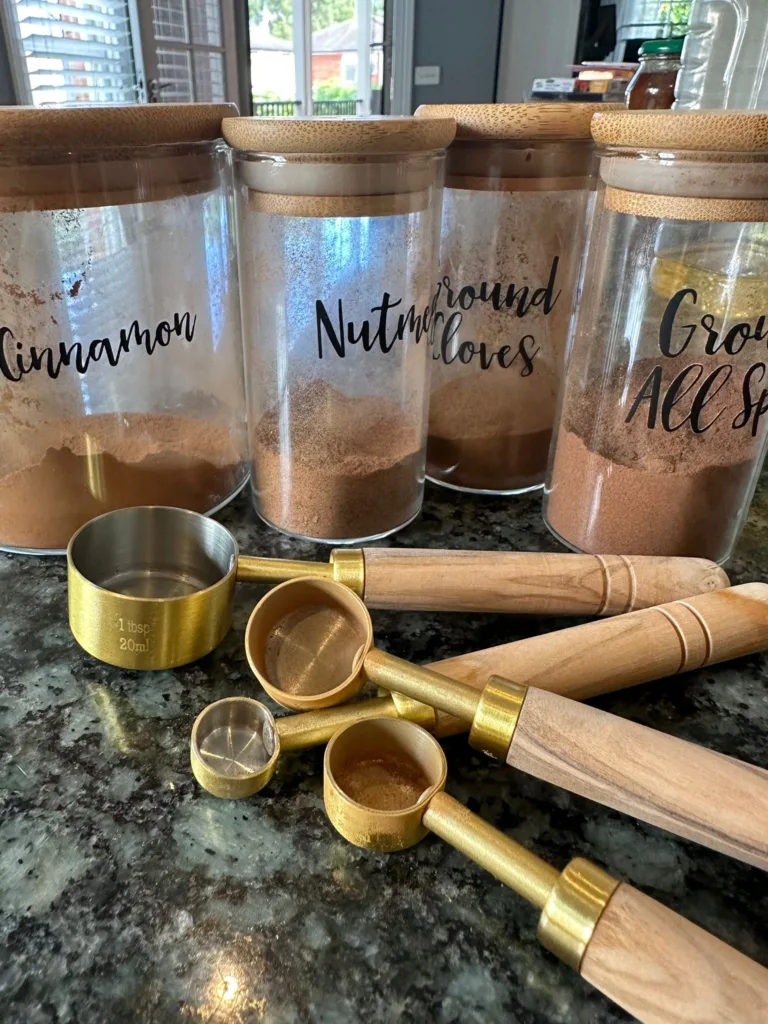
1 ½ tsp ground cinnamon
½ tsp nutmeg
½ tsp ground cloves
¼ tsp all spice
1 tsp baking soda
2 cups granulated white sugar
1 cup vegetable oil
1 tbsp vanilla extract
4 large eggs
3 cups coarsely grated carrots
½ cup crushed pineapple (with juice)
1 cup chopped walnuts (optional)
Frosting:
¼ cup unsalted butter at room temperature
250 gm cream cheese at room temperature
1 ¾ cups icing sugar mixture
½ tsp vanilla extract
Method:
Preheat oven to 170C/350F.
Sift the flour, cinnamon, nutmeg, cloves, allspice and baking soda together and set aside.
Line the bottom of a 24-26 cm round cake tin with baking paper and lightly grease. I use a 24cm tin because cake is a little bigger/taller and I prefer that. If you do use a smaller tin, the baking time will be slightly longer, so keep that in mind.
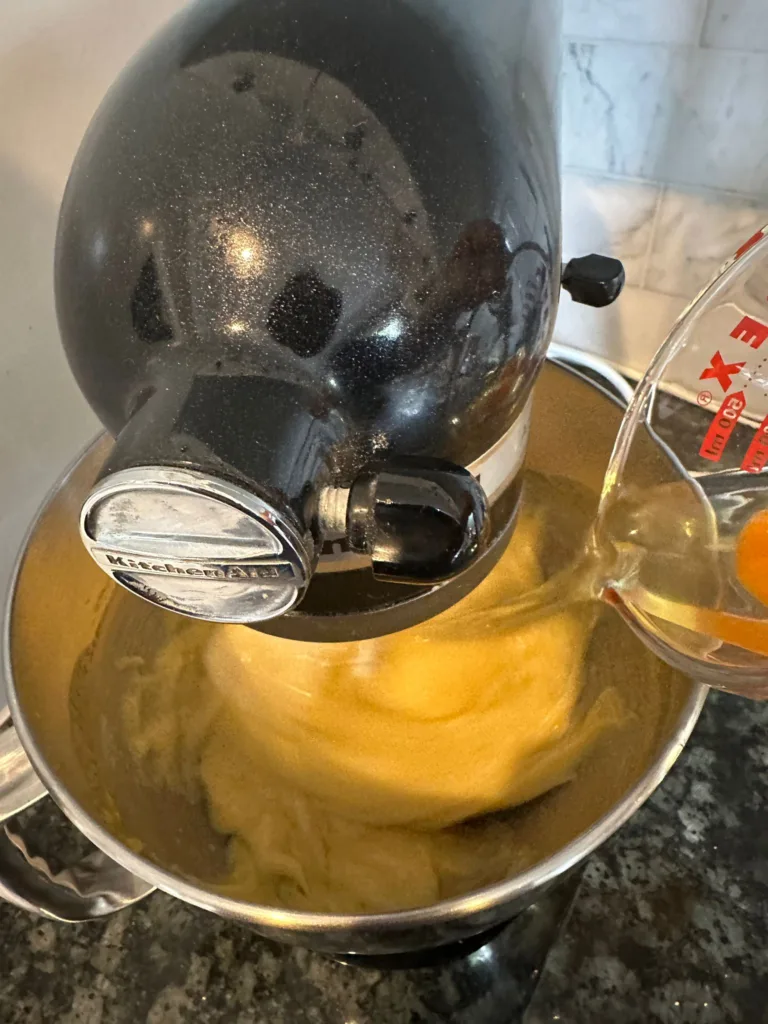
Beat the oil and sugar together in a standalone mixer for 3-4 minutes till properly incorporated and sugar starts to melt. Add the eggs one at a time and making sure it is well blended after each one.
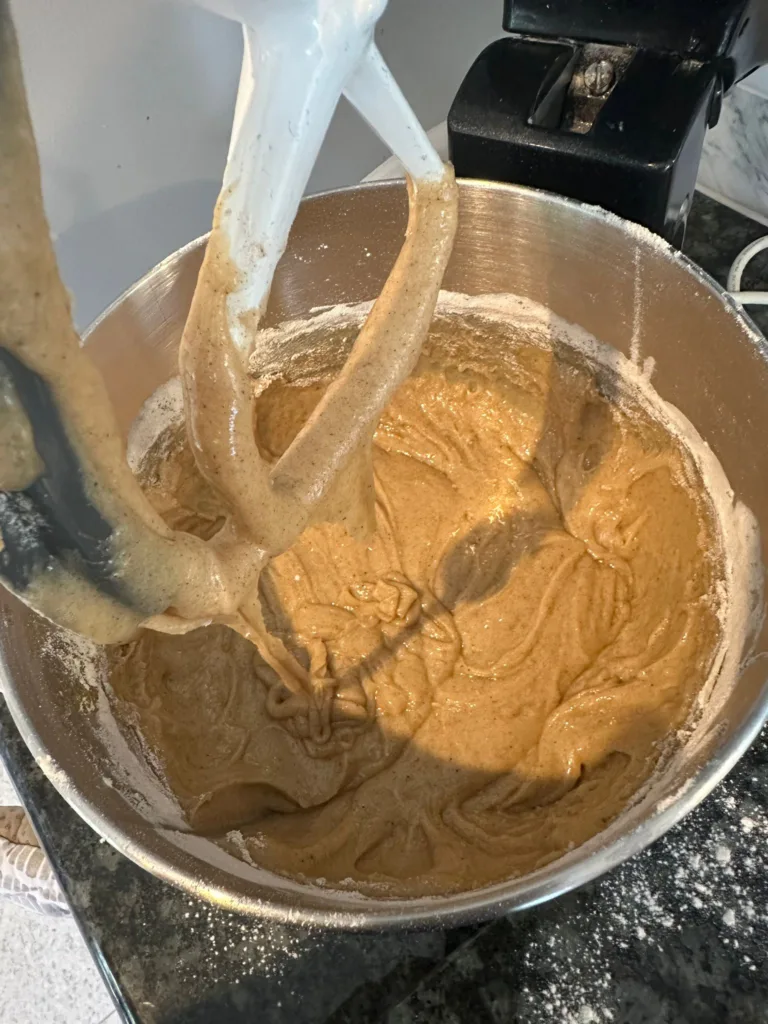
Add the flour mixture in 3 or 4 increments making sure your mixer is at the lowest speed and do not over mix (15-20 seconds with each addition). Over beating the batter will make it denser and a tougher mixture. The same thing can also happen when you under mix it.
Fold in the carrots, pineapple and walnuts (if using).
Pour batter into your tin and bake for about 1 hour. If the top browns too quickly, cover with foil and continue to bake. Check to see if a wooden skewer comes out clean when you insert into the cake and you should also notice the sides of the cake should slightly come away from the tin. Remove cake from oven once baked and leave in tin for 10-15 minutes before removing it from the tin. Allow to cool completely before icing it.
For the frosting:
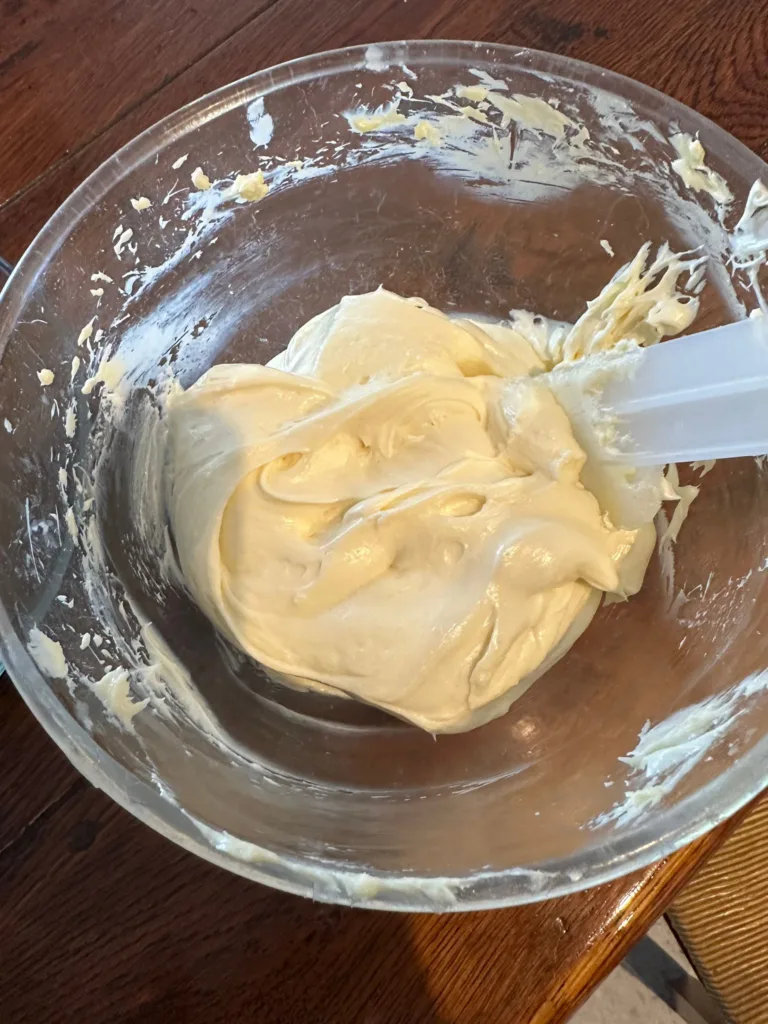
With a hand-held mixer, mix the butter and cream cheese together till smooth. Add the vanilla extract, and, in increments add the icing sugar, making sure it is well incorporated each time. Once all the sugar is added keep beating for a further 1-2 minutes as this will create a smoother and fluffier frosting.
Decorate as you please. Amounts is enough to frost the whole cake on top and sides or top and the middle if you choose to.
This cake can be made in advance and iced and frozen up to two weeks.
One of the key highlights was the creation of a powerful production titled “We Must Stand Together: You and Me.”
This moving piece was designed to raise awareness about gender-based violence and amplify the voices of those affected.
The production of this impactful four-minute video was a labour of love, involving over 100 hours of in-kind contributions from dedicated individuals.
The FFTN are now sharing it as part of the global 16 Days of Activism Against Gender-Based Violence campaign, to inspire action and solidarity worldwide.
The FFTN invites all organisations and advocates to share the video widely, as people stand united against gender-based violence. Together, you can raise awareness, foster dialogue, and drive meaningful change.
For more information, please contact info@fftn.org.au or call 0403 034 527.
A health complex run by professionals on Mount Athos has recently opened.
According to the website tilegrafimanews.gr, a new complex recently opened in the port of Daphne, offering amenities like a pharmacy and physiotherapy.
In keeping with Mount Athos’ monastic traditions, the hotel restricts bookings to men, including monks, workers, and pilgrims.
According to tilegrafimanews.gr, while there was initial resistance to integrating modern establishments into the deeply spiritual environment of Mount Athos, these investments have gradually gained acceptance among locals and visitors.
The article mentions that despite these changes, the region’s strong religious and cultural identity remains intact, demonstrating that infrastructure development can align with modern needs while preserving the area’s traditions and values.
For the first time, two scientists from the Technical University of Crete will join a research mission to Antarctica, according to state broadcaster ERT.
Ekathimerini has reported that their mission aims to conduct experiments studying how isolation and extreme weather impact the physical and mental health of those involved in such expeditions.
Simeon Konstantinidis, president of the Hellenic Polar Society and retired Vice Admiral of the Hellenic Navy, emphasised the importance of this initiative.
“The goal of the Hellenic Polar Society is to encourage authorities to support these efforts so that the Greek flag may one day fly in Antarctica,” he stated.
Konstantinidis also noted Greece’s rich pool of scientific talent, many of whom seek opportunities abroad due to limited domestic resources.
This groundbreaking effort represents the first instance of a Greek scientific organisation sending researchers to Antarctica. The mission is supported through sponsorship from the Laskaridis shipping company.
While the specific mission dates remain undisclosed, it is expected to take place during Antarctica’s summer, spanning from October to February.
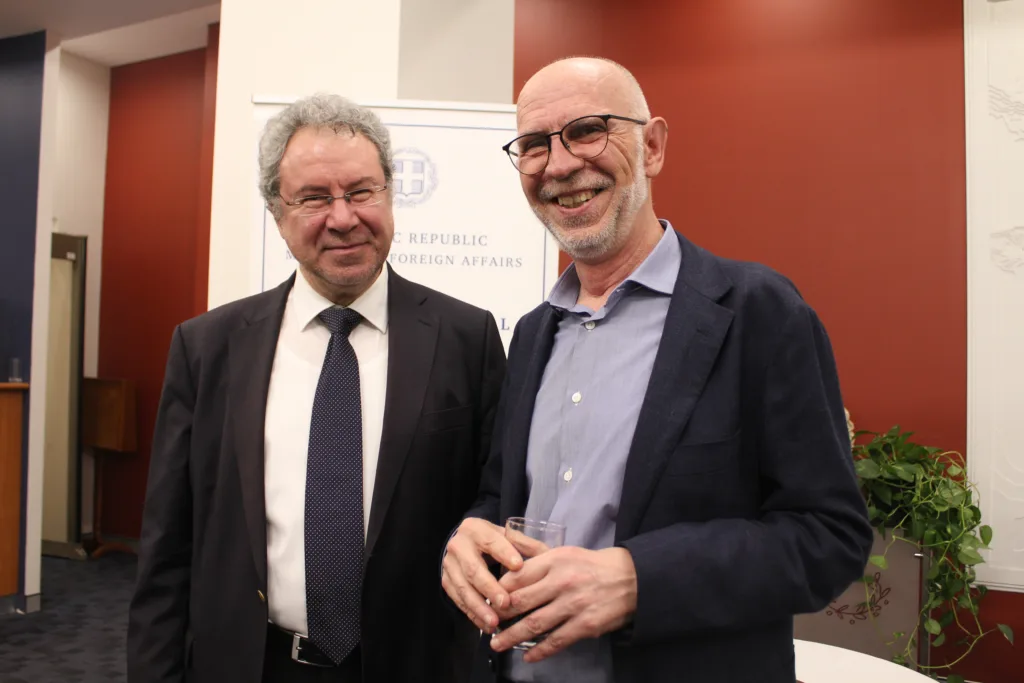
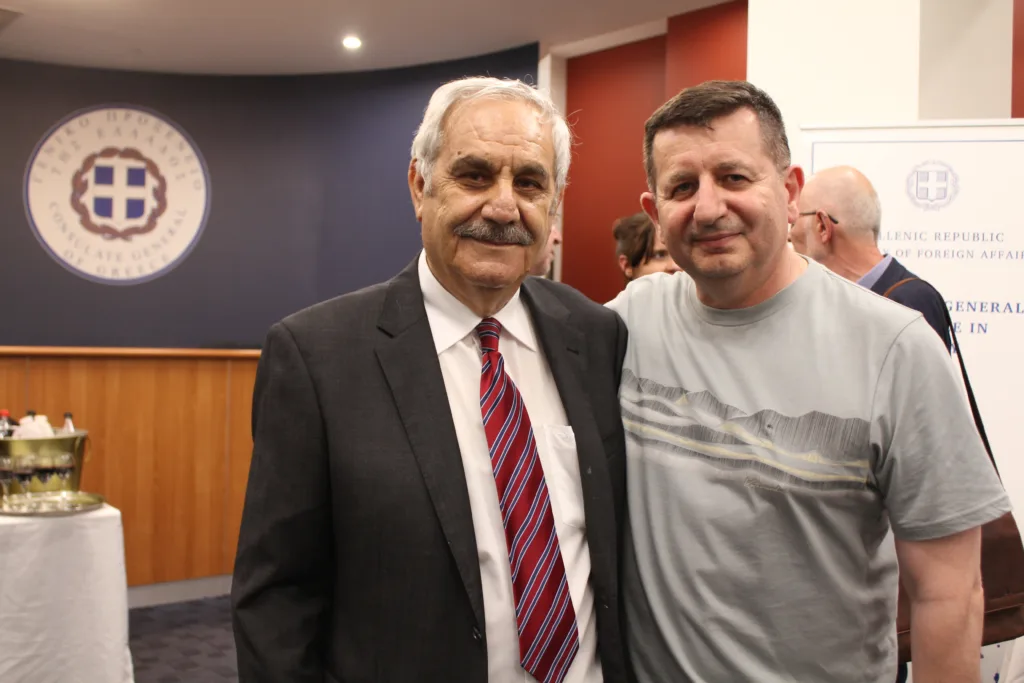
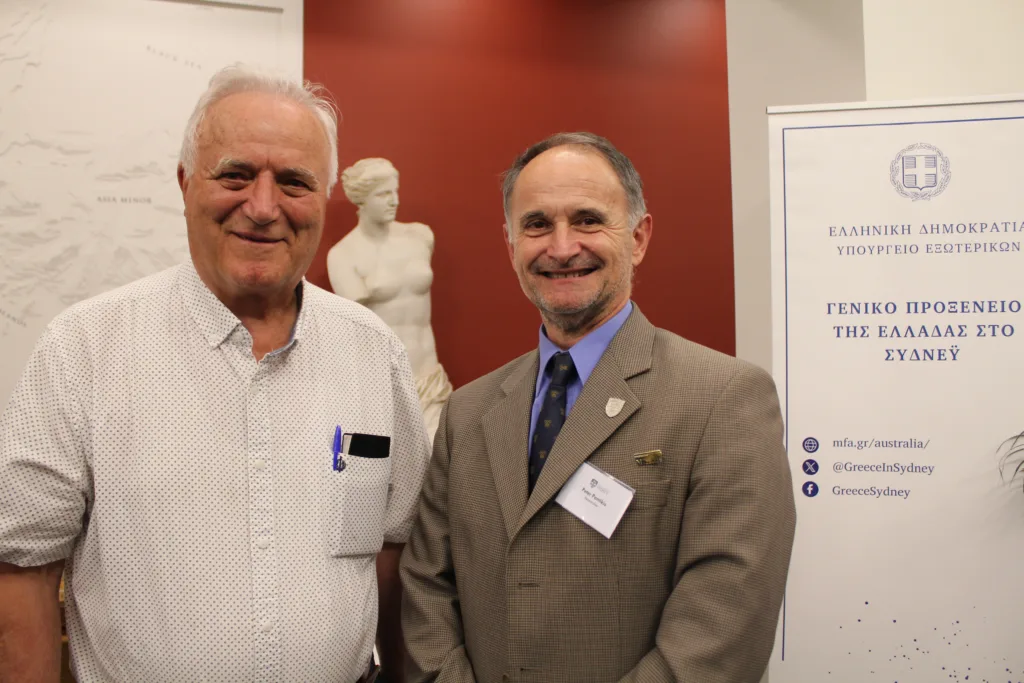
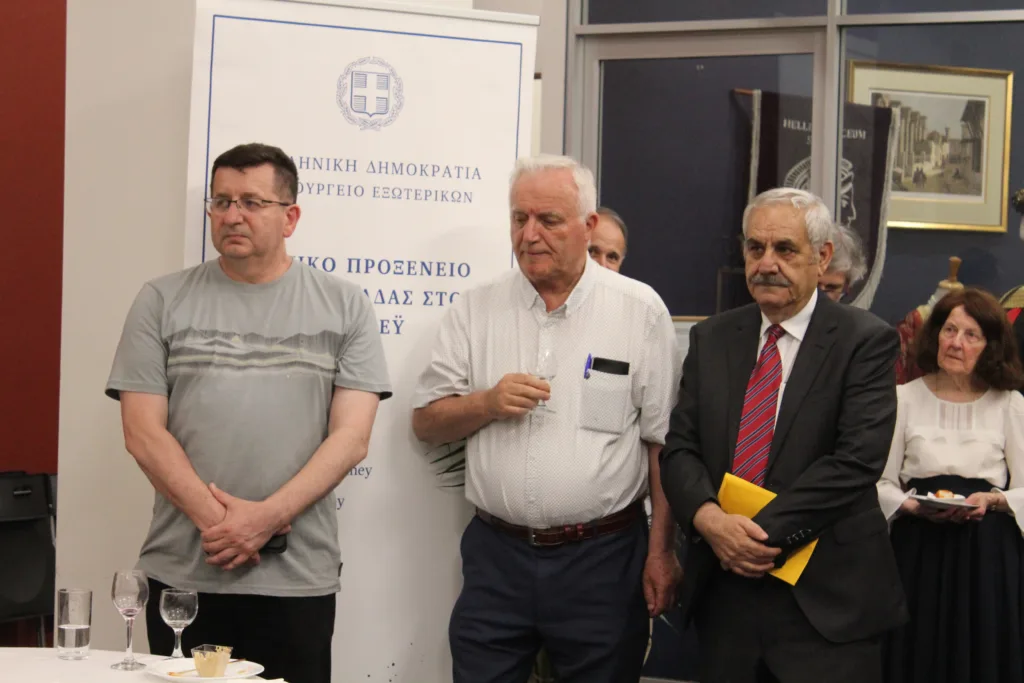
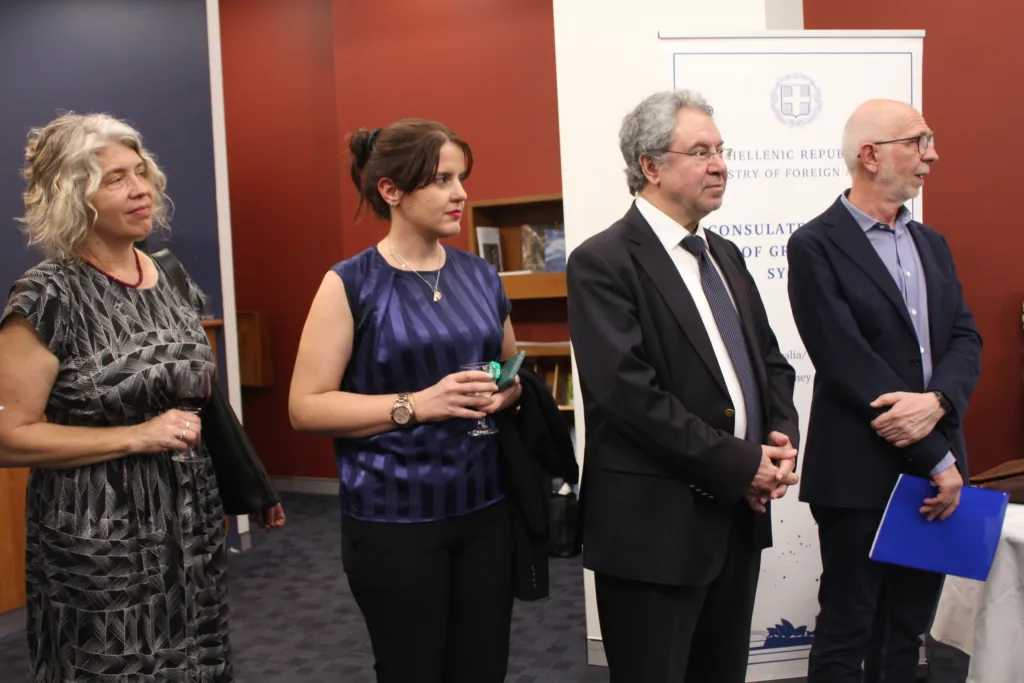
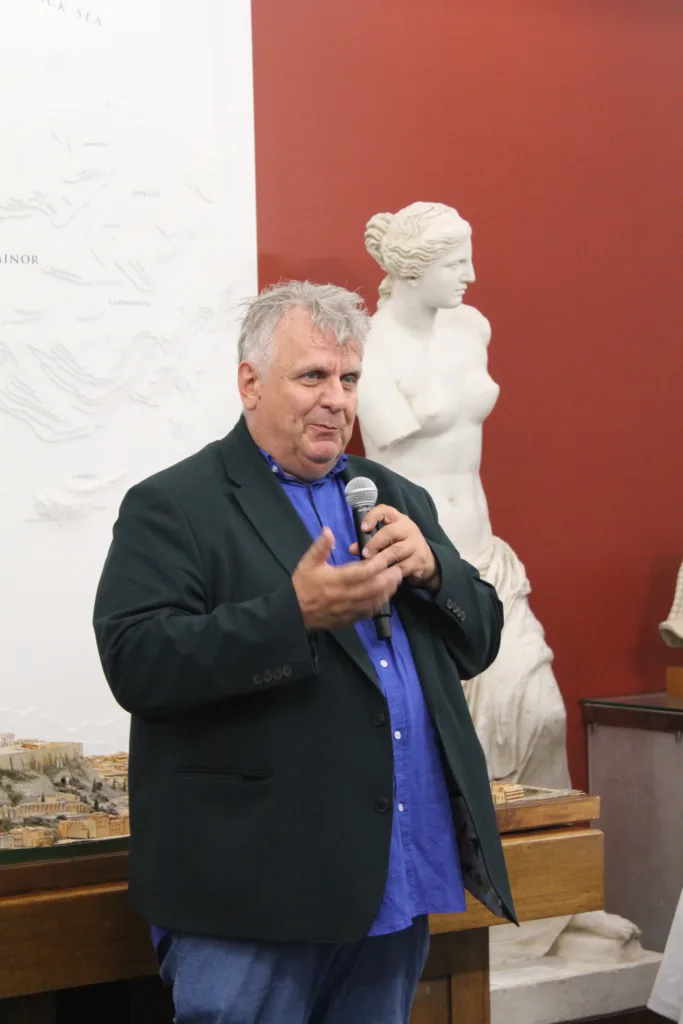
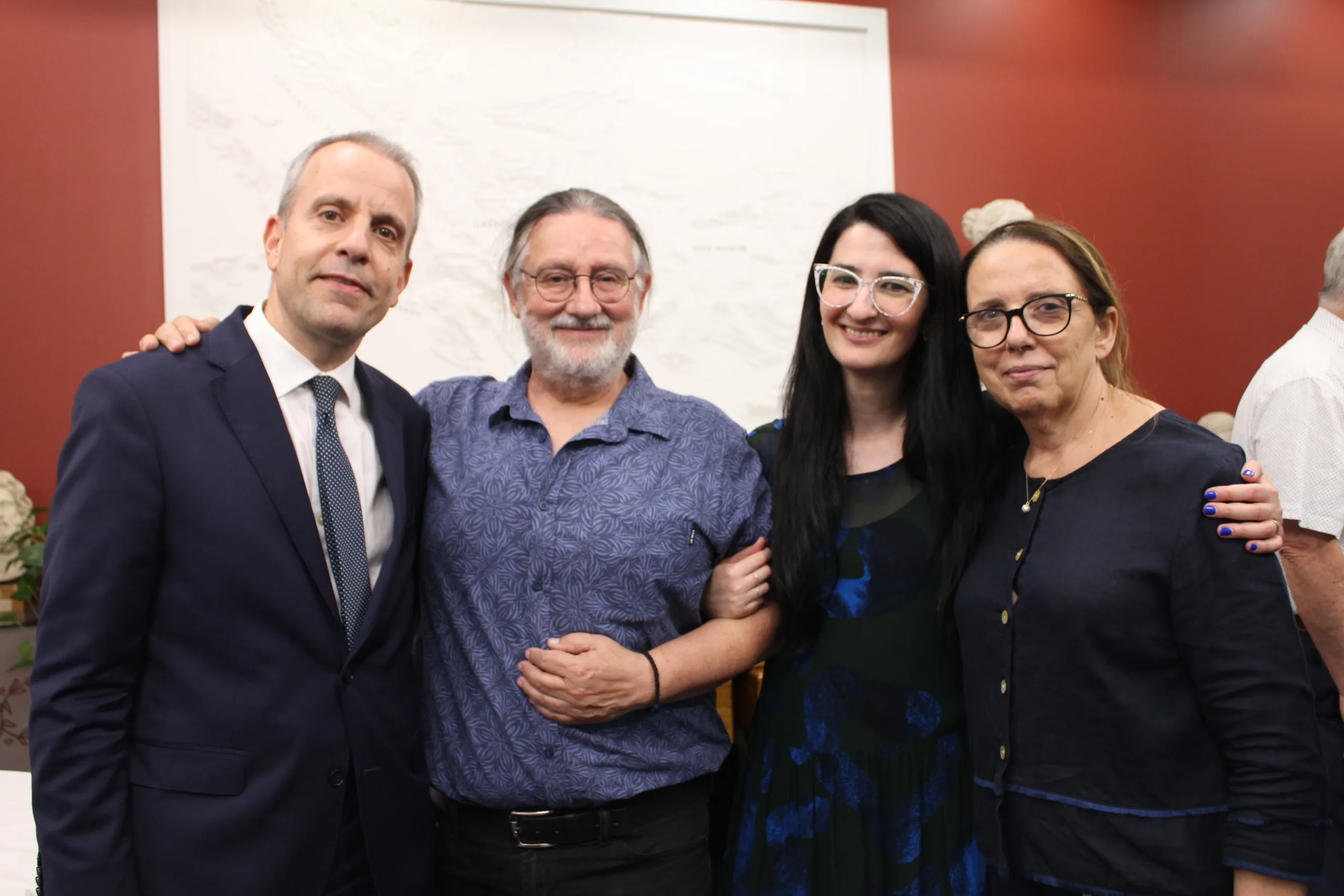
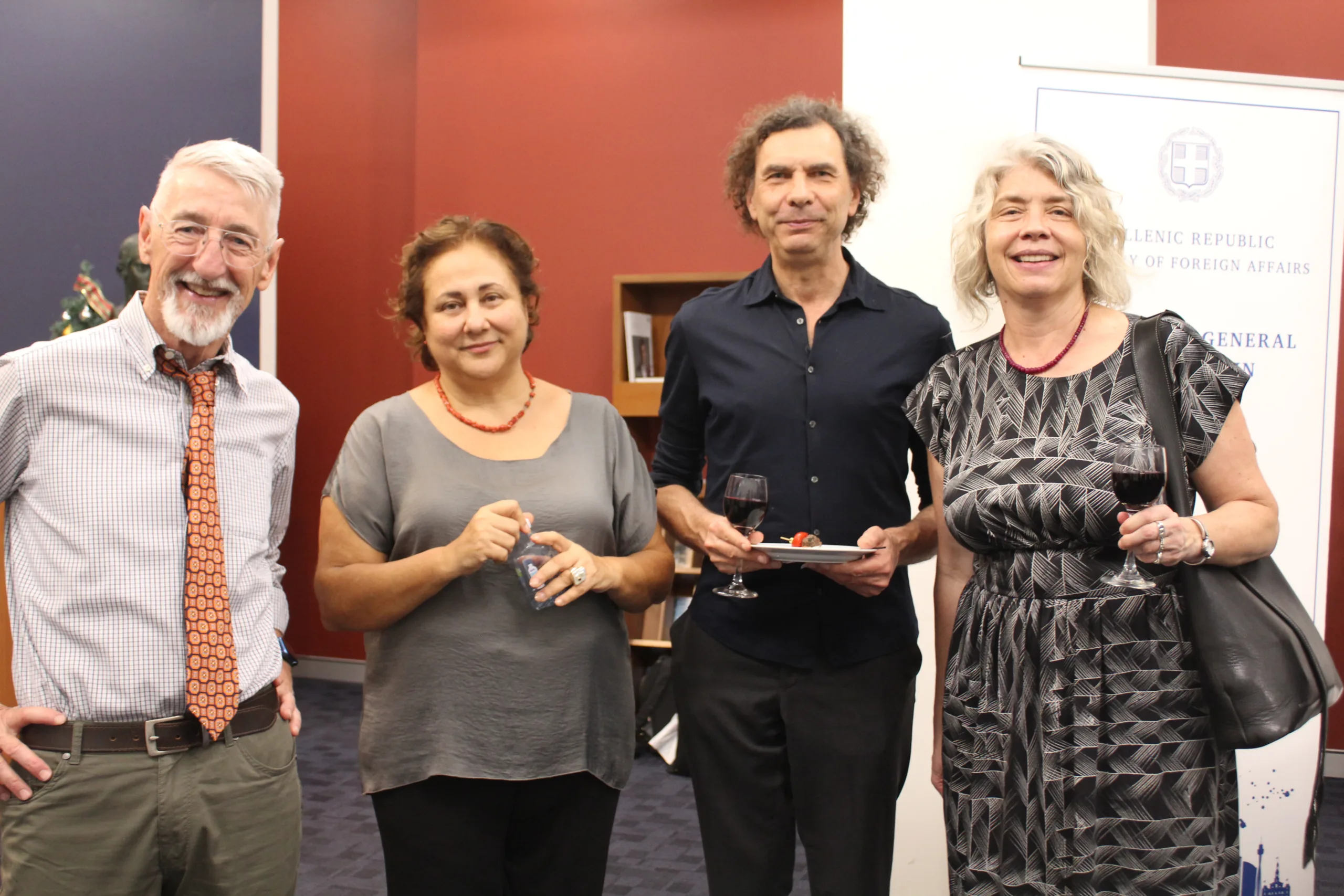
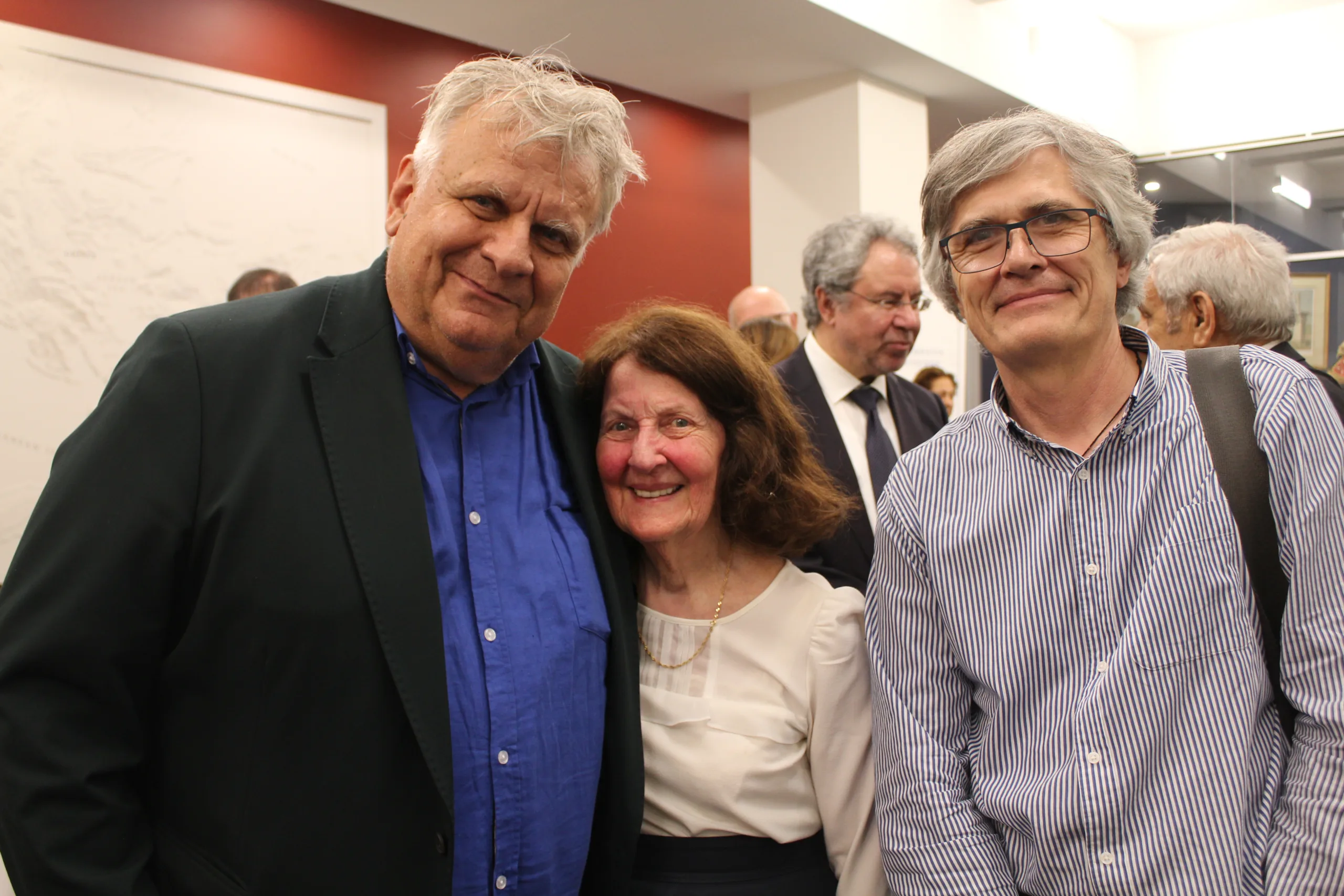
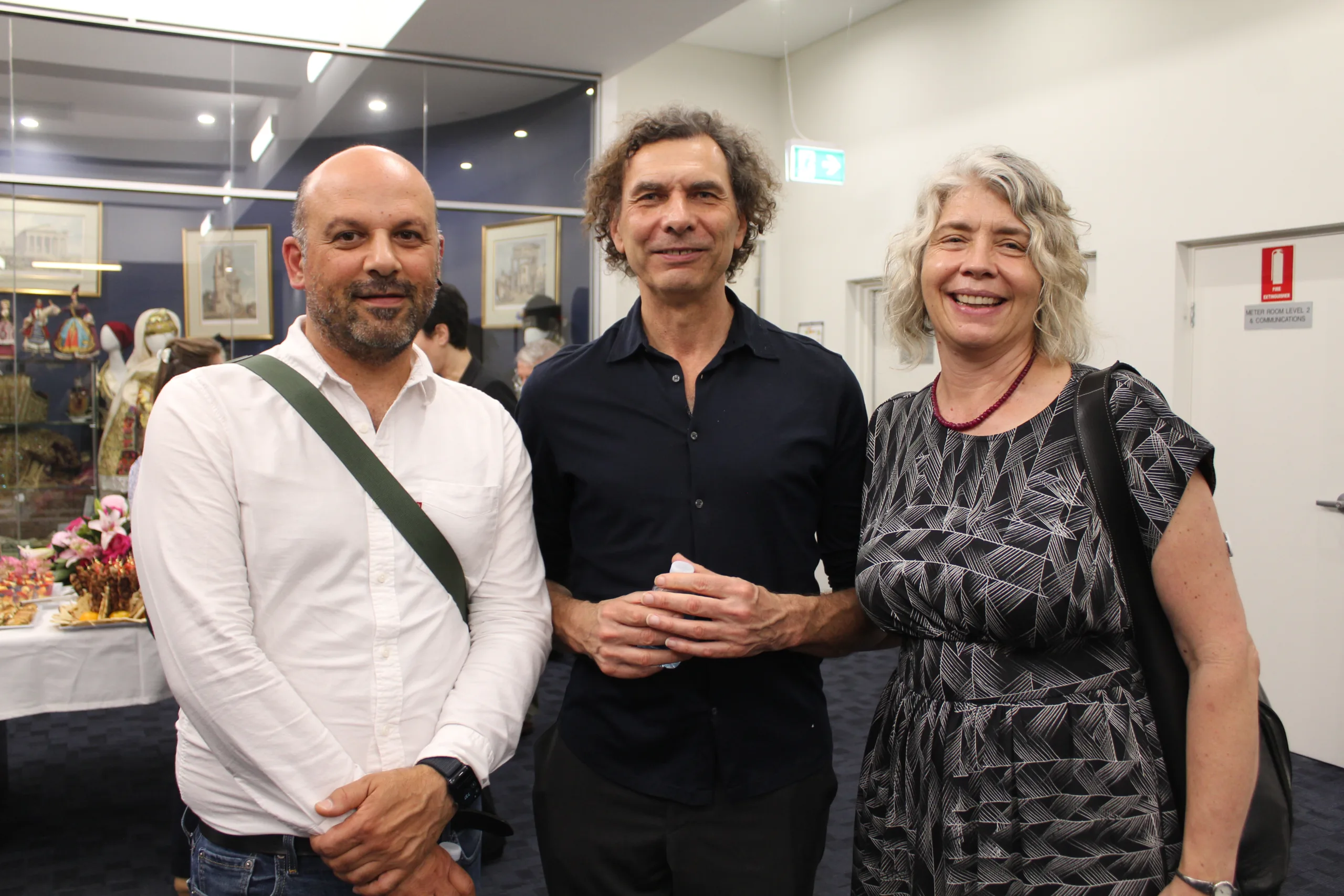
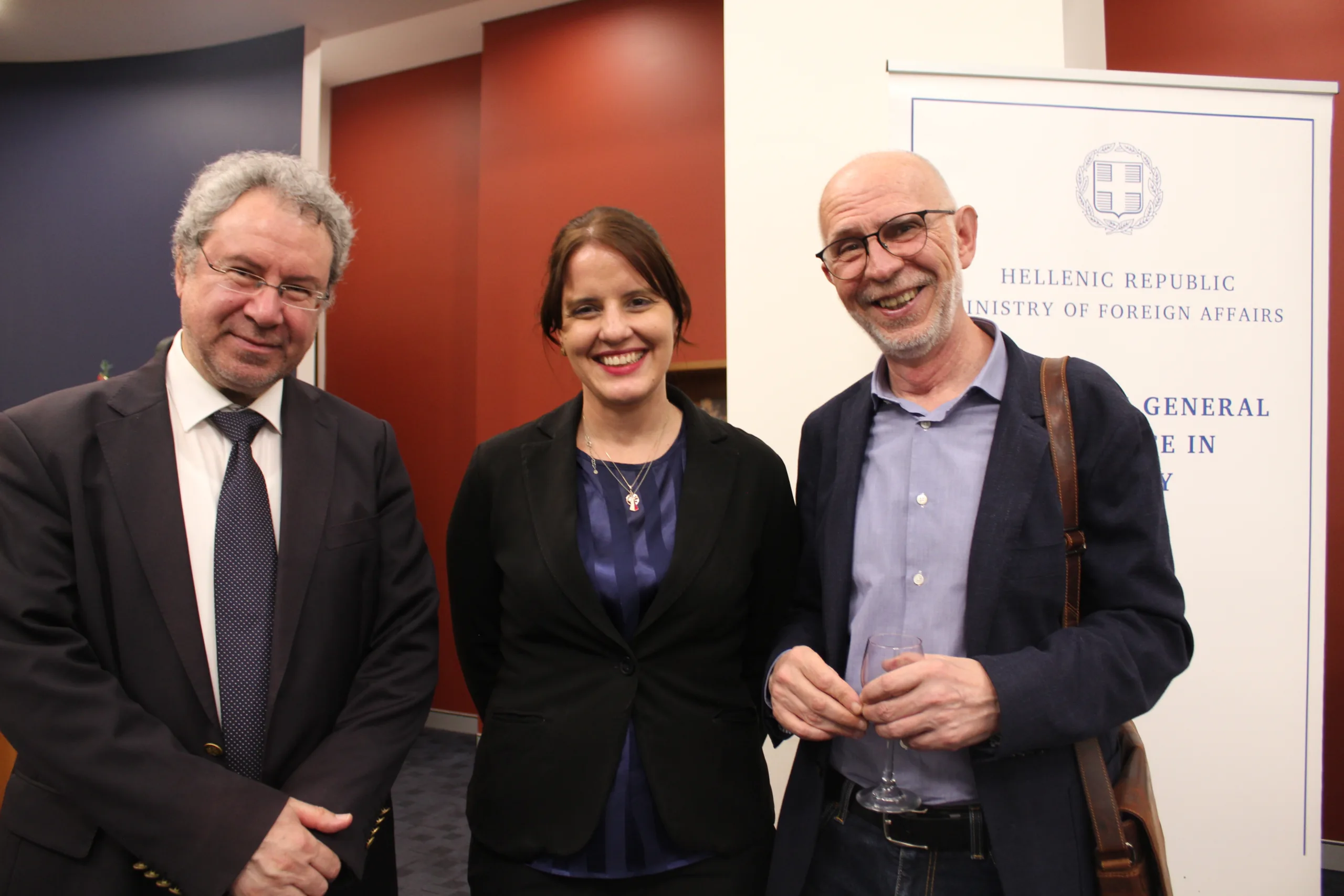
The 15th Biennial Modern Greek Studies Conference began with a warm reception at the offices of the Consulate General of Greece in Sydney on Thursday, December 5.
The Modern Greek Studies Association of Australia and New Zealand (MGSAANZ), in collaboration with the University of Sydney’s (USYD) Department of Modern Greek Studies, will host the three-day conference at the university until Saturday, December 7.
Convened by Professor Vrasidas Karalis, Sir Nicholas Laurantus Professor of Modern Greek and Byzantine Studies at USYD, and Associate Professor Anthony Dracopoulos, Chair of the Discipline of Modern Greek and Byzantine Studies at USYD, the conference aims to explore the future of Modern Greek studies in Australia, nearly six years after its last gathering.
The event will bring together academics, researchers, writers, and cultural figures to discuss key topics, including the teaching of the Modern Greek language, current academic research trends, and the publication of Greek literature.
All photos copyright The Greek Herald / Andriana Simos.
A tone of optimism
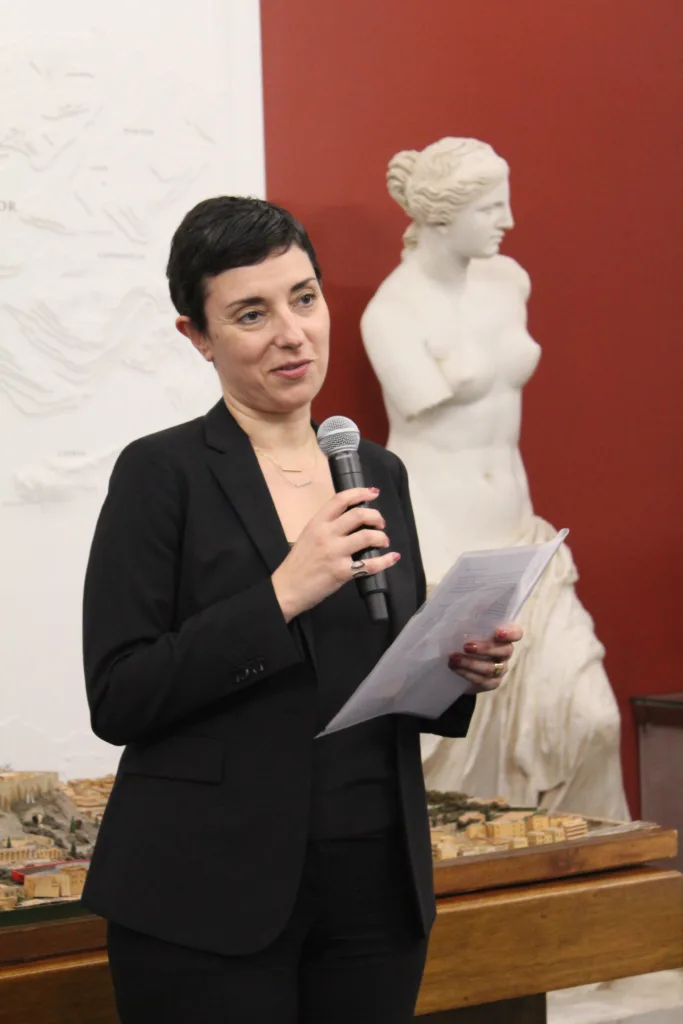
The conference’s official launch reception on Thursday evening was emceed by Anastasia Christofilopoulou, First Secretary for Public Diplomacy at the Consulate General of Greece in Sydney.
Ms Christofilopoulou welcomed attendees and reflected on the conference’s theme, “After the Crisis, Where To? Discussing Modern Greek Studies in the Age of Uncertainty.” Highlighting the 50th anniversary of the USYD’s Department of Modern Greek and Byzantine Studies, she remarked, “Life begins at 50,” setting an uplifting tone for the evening.
Consul General’s call for unity
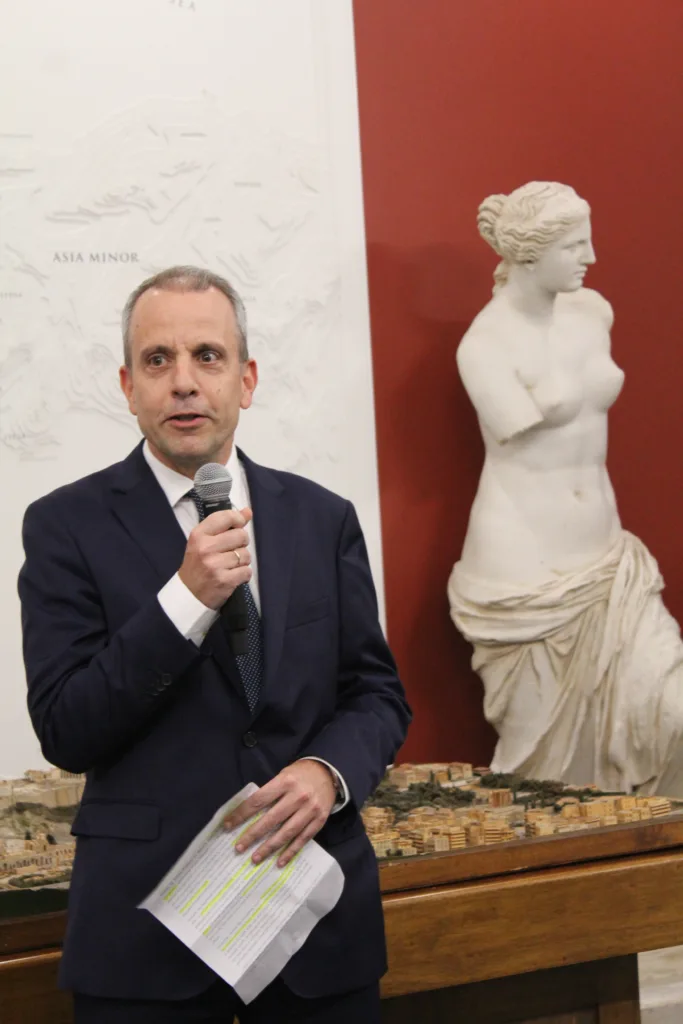
Yannis Mallikourtis, the Consul General of Greece in Sydney, delivered the official welcome, expressing gratitude to the organisers and guests. He underlined the importance of preserving the Greek language and culture within the diaspora, especially as younger generations lose connections to their ancestral homeland.
Anastasia Christofilopoulou.Consul General of Greece in Sydney, Yannis Mallikourtis.
Describing the dual mission of the USYD’s Greek Department, he said: “It supports the preservation of the Greek language… while furthering academic research in areas such as Greek poetry, cinematography, literature, and politics.”
Addressing concerns about the decline in Greek language use, Mr Mallikourtis emphasised, “If we don’t try, we’ve lost the game.” He called for collaboration among stakeholders to reverse this trend and focus efforts on established institutions like the USYD’s Department of Modern Greek and Byzantine Studies.
Reflecting on progress and challenges
Associate Professor Dracopoulos delivered a comprehensive and impassioned address that explored the department’s achievements and the pressing challenges it faces.
He began by thanking benefactors such as Sir Nicholas Laurantus and George Angelopoulos, whose financial contributions have been instrumental in maintaining the department’s operations.
“Without their support, our accomplishments would not have been possible,” the Assoc Prof. said.
George Angelopoulos (L) with Nick Dallas (R).
Assoc Prof. Dracopoulos highlighted the challenges of maintaining Modern Greek studies in Australia, pointing out that many programs have closed in recent years. “From 15 programs in 1989, we now have five,” he lamented.
He stressed the urgent need for more financial support to ensure the survival of the remaining programs, urging the community to follow the example of benefactors like Sir Nicholas Laurantus. “If Modern Greek disappears from universities, where will our teachers come from?” he asked.
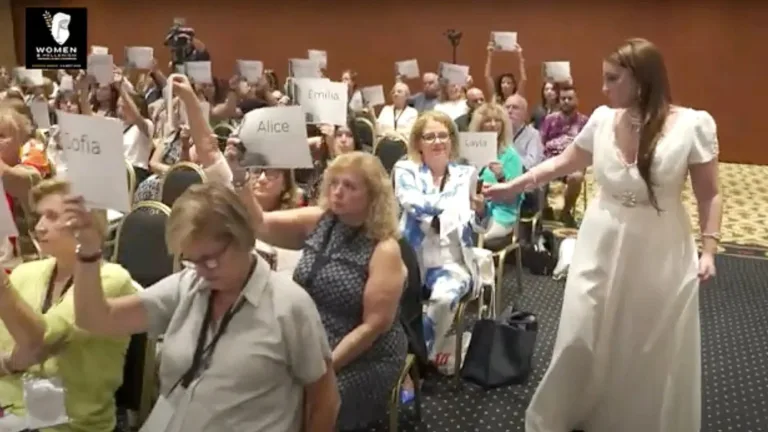
People listened carefully to speeches.
Assoc Prof. Dracopoulos also proposed a new vision for Modern Greek education, which includes a leaner and more flexible curriculum, interdisciplinary partnerships, and engagement with university governance.
Addressing New South Wales’ language policy, which he described as “ineffective,” Assoc Prof. Dracopoulos called for systemic changes and policies that encourage students to take up Greek in a meaningful way.
Despite these challenges, Assoc Prof. Dracopoulos ended on a positive note, praising the vibrant research community and the passion of attendees.
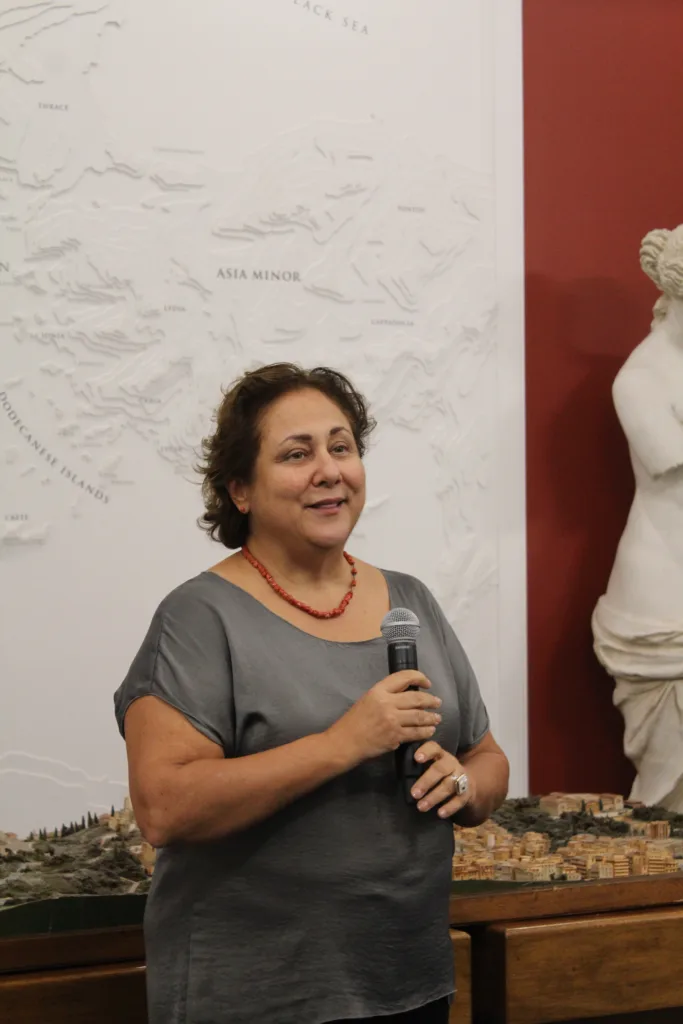
Associate Professor Anthony Dracopoulos.Professor of Modern Greek Studies at the University of Patras, Katerina Kostiou.
Cultural reflections and generational legacy
Professor of Modern Greek Studies at the University of Patras, Katerina Kostiou delivered a heartfelt speech in Greek, underscoring the cultural significance of preserving the Greek language. She reflected on the role of Greek studies in connecting the diaspora to its heritage and fostering a deeper understanding of Greece’s rich history and traditions.
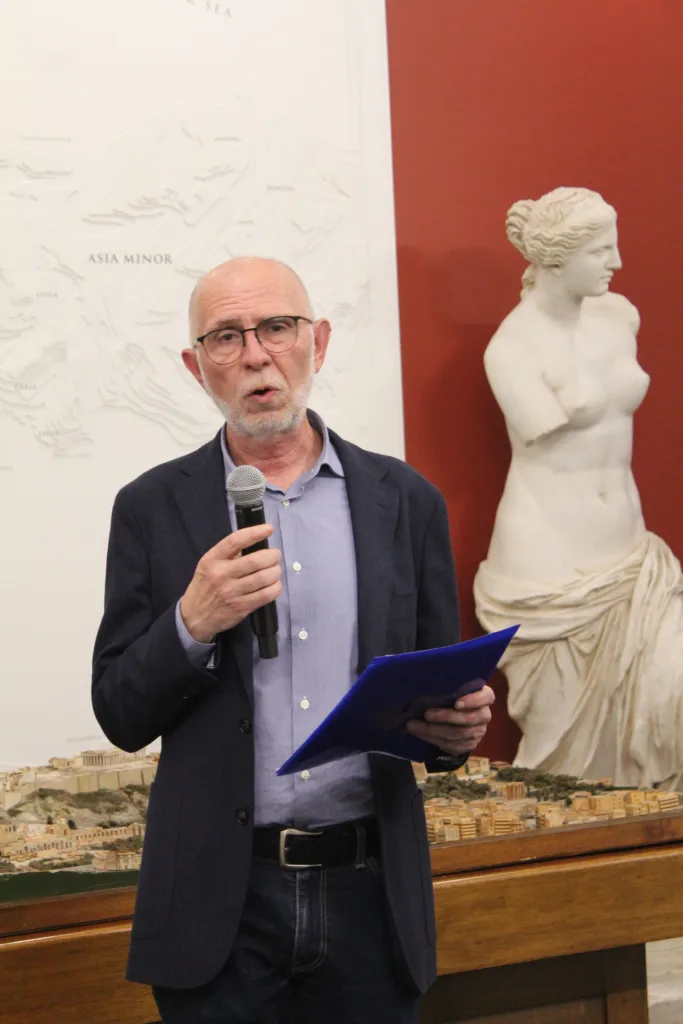
USYD alumnus and benefactor of the Department, Peter Pontikis shared personal insights into his lifelong connection to Greek language and culture. Reflecting on the teachings passed down by his family, he called on the community to continue supporting Greek studies, viewing it as a vital link between the past and the future.
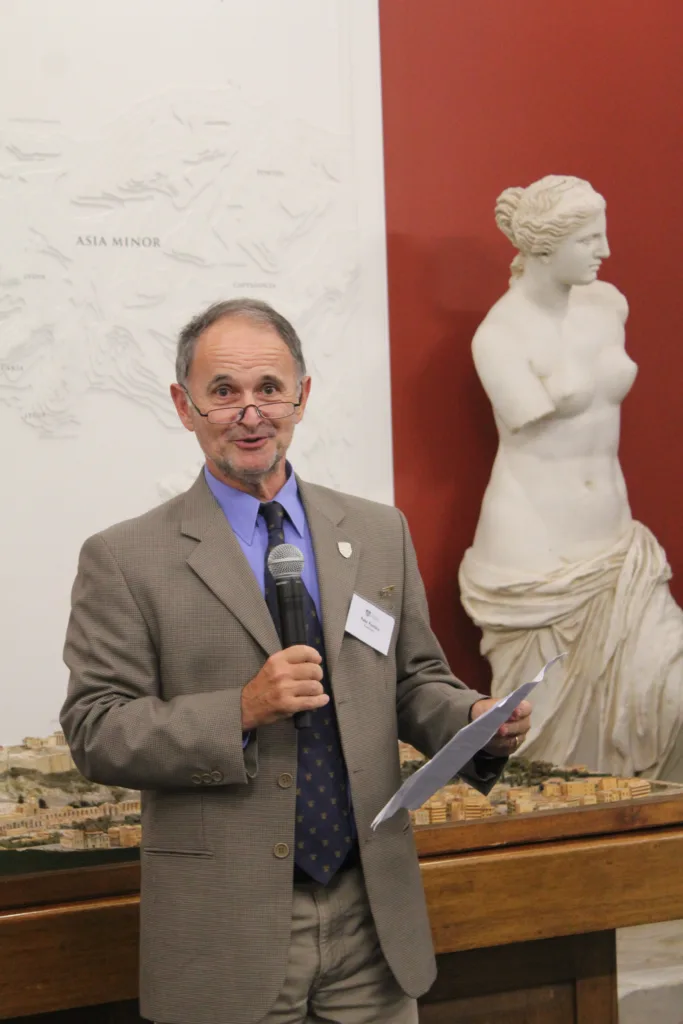
USYD alumnus Peter Pontikis.Professor Vrasidas Karalis.
A hopeful conclusion
Professor Karalis, co-organiser of the conference and a Fellow of the Australian Academy of the Humanities, delivered closing remarks that emphasised the collaborative spirit of the event. He praised the dedication of the organisers, attendees, and community supporters, saying, “The Greek Department should be a centre of cultural osmosis.”
Prof. Karalis commended the ongoing efforts to secure Modern Greek’s place in academia and expressed optimism about the younger generation’s engagement with Greek culture.
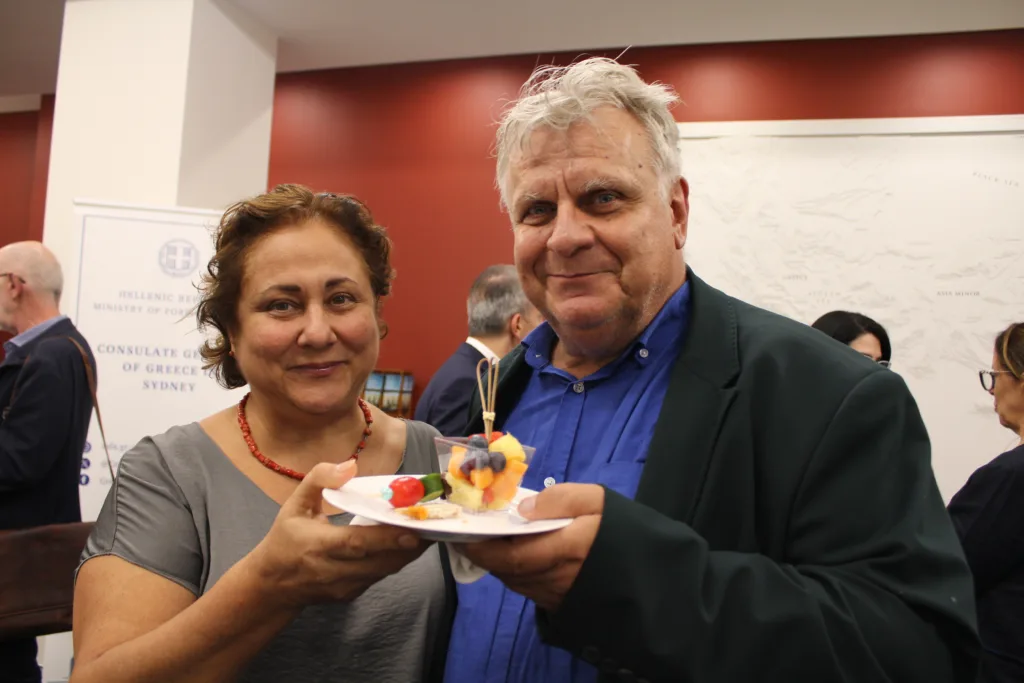
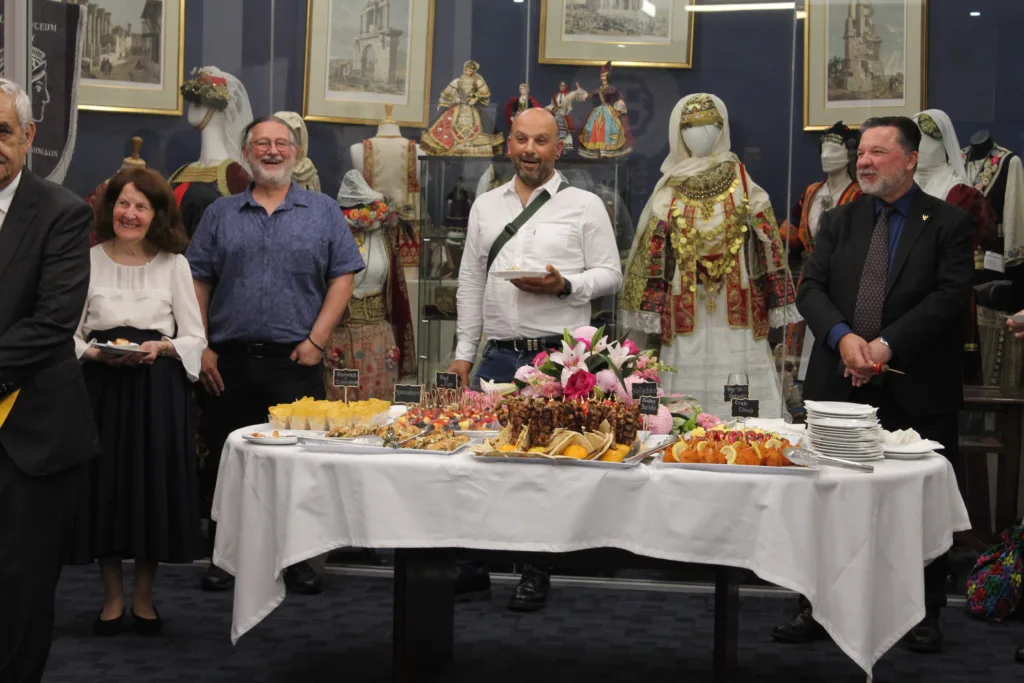
The evening ended with canapes and deep discussions.
The evening concluded with canapés and lively discussions, as attendees celebrated the enduring relevance of Modern Greek studies and exchanged ideas for its future.
The conference, which continues over the weekend, promises to deepen discussions on Greek language, culture, and diaspora studies, ensuring that the spirit of Greek heritage thrives for generations to come.
Find the FULL PROGRAM for the 15th Biennial Modern Greek Studies Conference here.
*All photos copyright The Greek Herald / Andriana Simos.
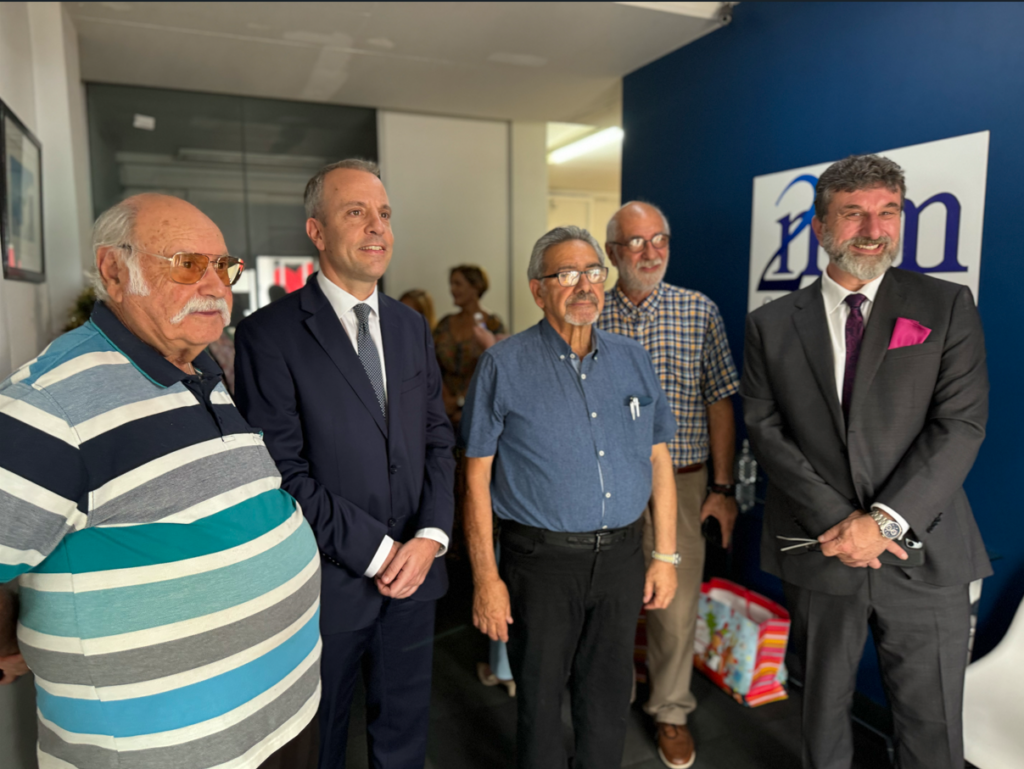
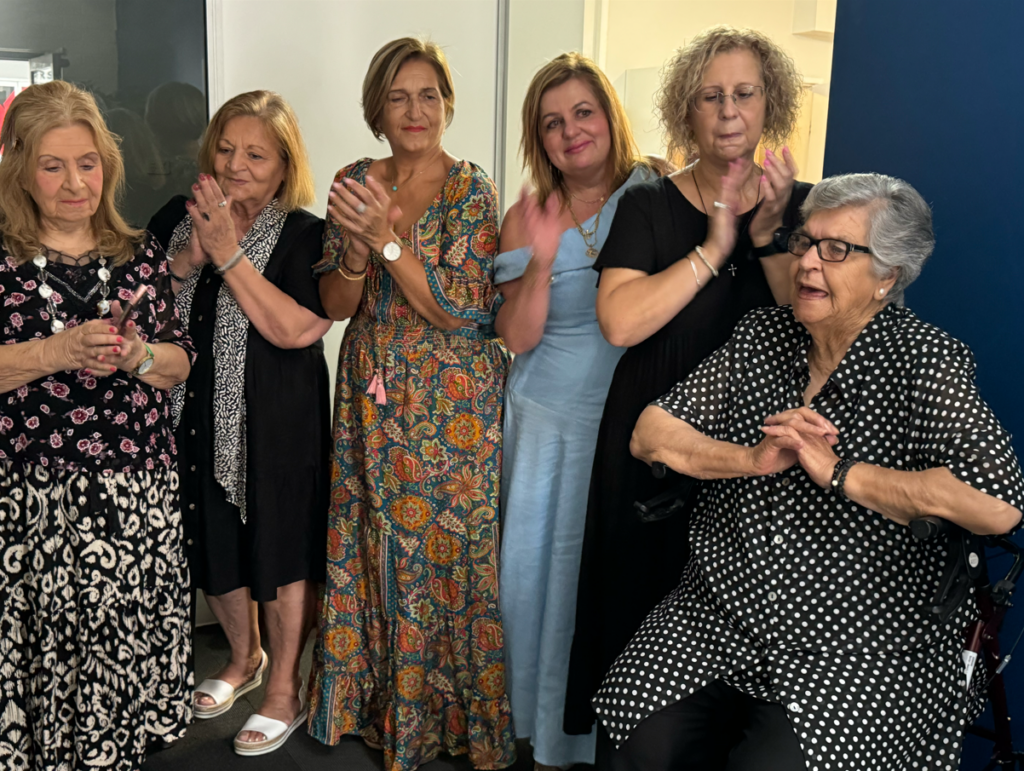
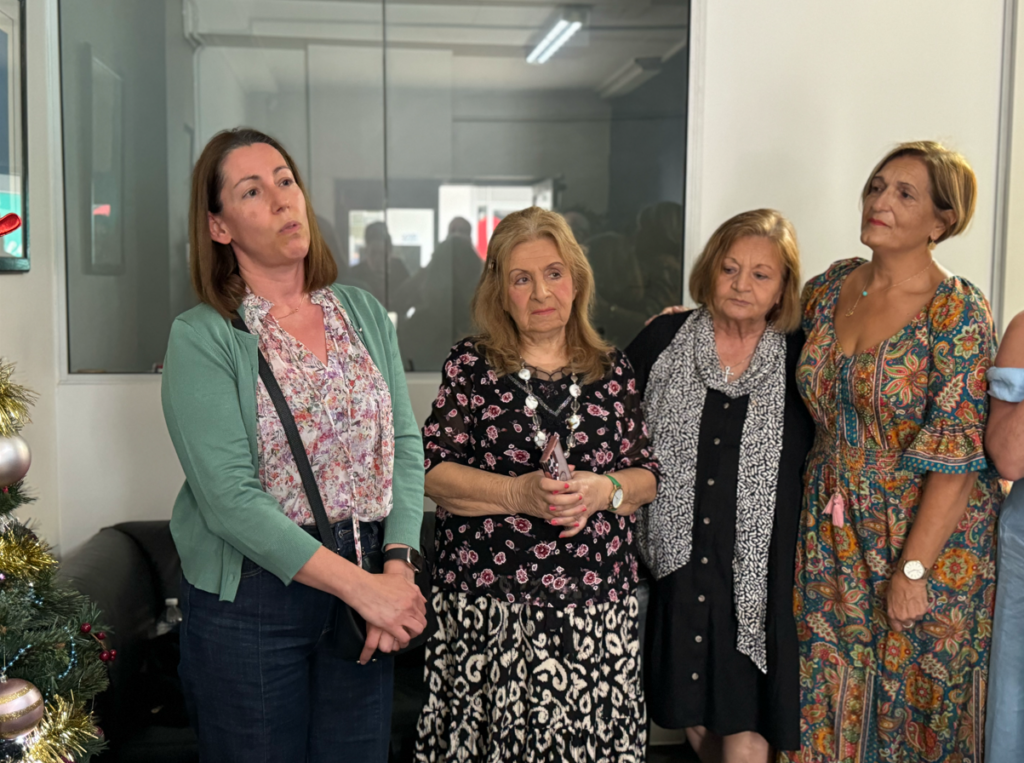
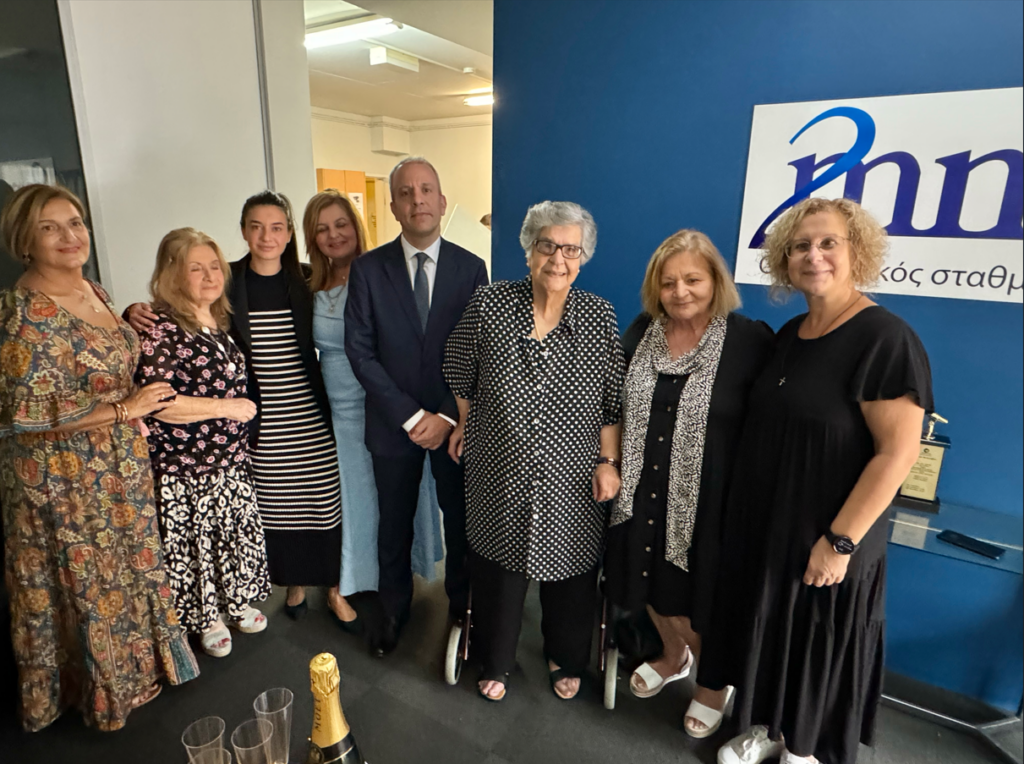
On Thursday, December 5, the Organisation of Hellene and Hellene-Cypriot Women of Australia (OEEGA NSW) proudly presented a cheque for $36,000 to the Children’s Cancer Institute following their highly successful annual Radiothon.
The event, which took place at the 2MM Radio studios, was a testament to the strength and generosity of the Greek Australian community.
The committee, led by new president Christine Manolakos and former longstanding president Irene Anestis, gathered alongside supporters to celebrate the achievement. The Consul General of Greece in Sydney, Yiannis Mallikourtis, was present to officiate the cheque handover, adding a touch of official recognition to the heartfelt occasion.
Dr Maria Tsoli, Senior Scientist and Levi Wheeler Fellow in the Brain Tumours Group at the Children’s Cancer Institute, graciously accepted the cheque on behalf of the Institute. In her speech, she thanked OEEGA for their unwavering support since 2007, having raised over $440,000 to fund critical research and equipment in the fight against childhood cancer.
Special gratitude was extended to 2MM Radio and Yiannis Meravoglou for their steadfast support in making the Radiothon a success. Ms Anestis also acknowledged the generosity of an anonymous donor who contributed $10,000, a significant boost to the fundraising total.
The event concluded with drinks and canapés, as attendees celebrated the remarkable efforts of OEEGA and the wider community. The funds raised will go directly towards advancing medical research, offering hope to children and families affected by cancer.