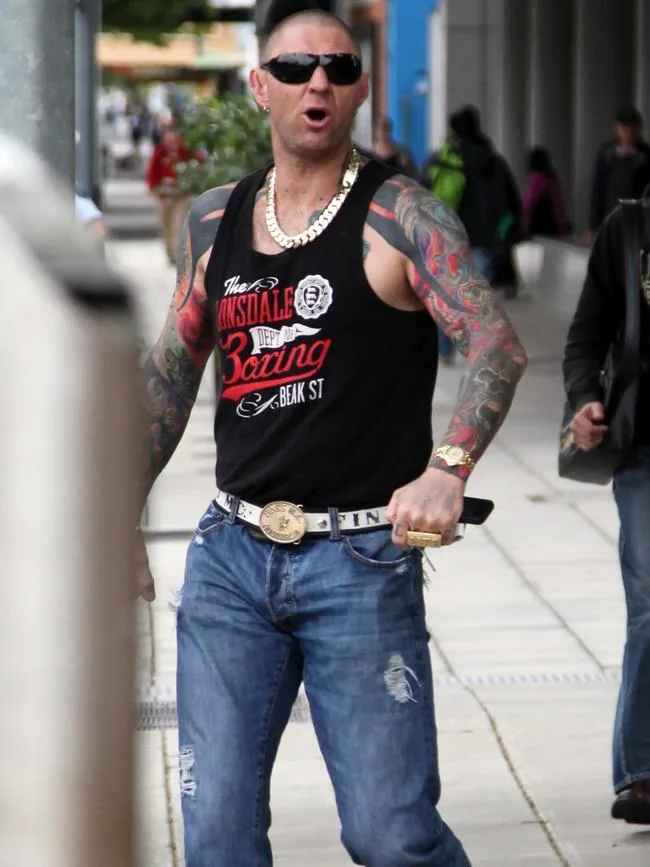
Mark Andrew Sandery, 53, is standing trial for a hammer attack on Michael Kriticos, 58, in Exeter, South Australia on November 8, 2022. Sandery asserts he was acting in self defence after Kriticos initiated the confrontation.
Prosecutor Matthew De Lorme told the District Court that Kriticos was walking his dog when he got into an altercation with a group of youths. After punches were thrown, a civilian intervened, and Kriticos was taken home.
Shortly after, Kriticos saw two men, one believed to be Sandery, allegedly smashing his front door with a hammer. When Kriticos leaned forward to investigate, he was struck in the eye with the hammer and lost consciousness.
When police arrived, they found Sandery allegedly assaulting neighbour Jodie Wakeling, throwing her to the ground and stomping on her head. Sandery, from Kilburn, has pleaded not guilty to charges including attempted serious criminal trespass and recklessly causing harm.
Mark Sandery.
Kriticos testified that he recognised Sandery from news reports about an incident where Sandery’s son was shot. He recalled hearing Sandery yell, “I’m going to kill you,” before the attack. After regaining consciousness, Kriticos said the scene was “absolute chaos” and that he was “terrified.”
Sandery’s defense lawyer, Nick Healy, urged the jury to consider who was the initial aggressor in the dispute and argued that Sandery’s actions toward Wakeling were in self defence.
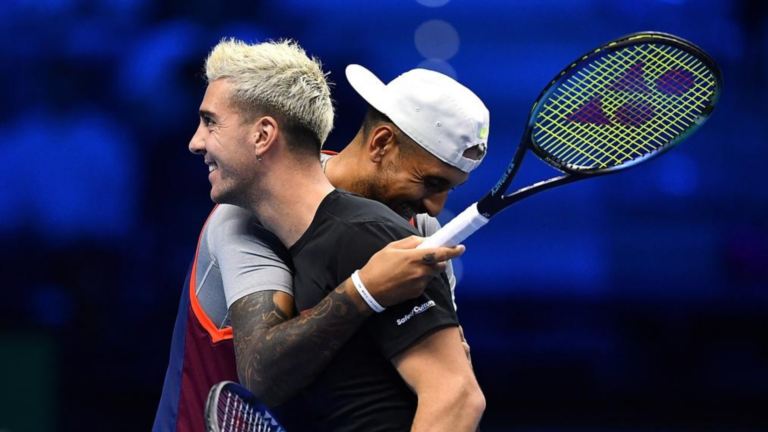
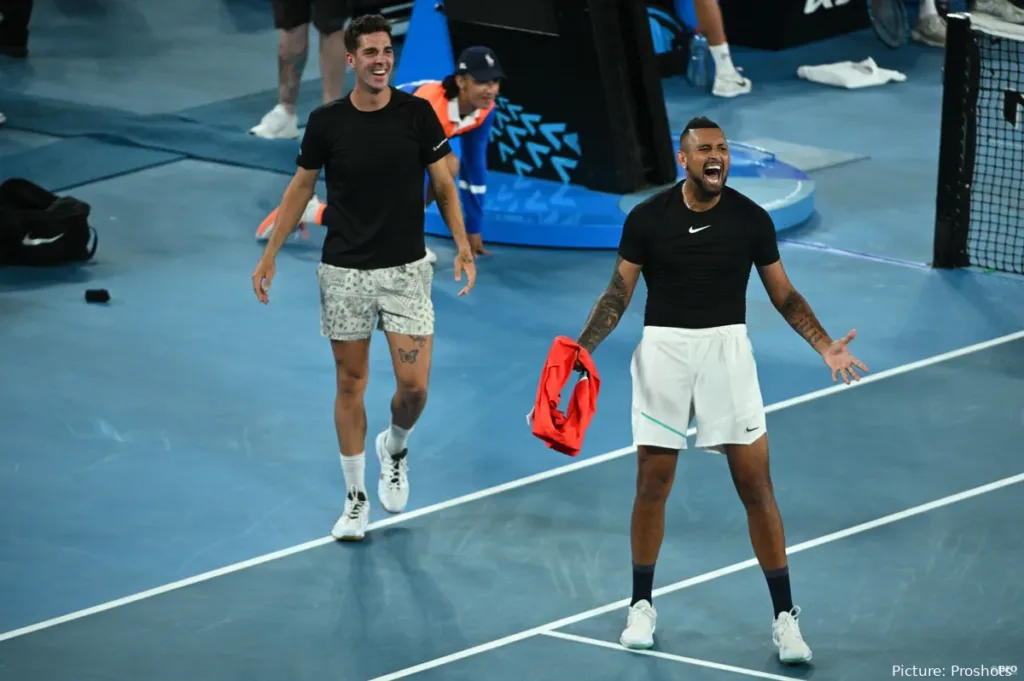
The 2025 Australian Open, set to begin on January 12, could see a nostalgic reunion between Thanasi Kokkinakis and Nick Kyrgios in the men’s doubles event.
The duo, who won the doubles title at the 2022 Australian Open under the moniker ‘Special K,’ captured the hearts of fans and stunned the tennis world with their victory—marking both players’ first Grand Slam title.
Kyrgios, who has battled injuries over the past 18 months, is now cleared to return to competitive tennis and will compete in the singles event at his home Grand Slam in Melbourne. Ahead of the Ultimate Tennis Showdown in London, Kokkinakis expressed his excitement about Kyrgios’ return.
“Tennis has missed him, and I’m sure the Aussie public would love to get behind him again,” Kokkinakis said. “I have no doubts he will be in good form.”
While Kokkinakis stopped short of confirming whether the pair would team up again in the doubles event, he teased the possibility, saying, “Maybe. We are thinking about it.”
“He messaged me the other day to play doubles in the summer,” he added.
“I think the Aussie Open is the plan. We’ll see how it goes and how I feel after the year is done. But hopefully we can try. He’s been a bit unlucky.
“What he’s doing now is making sure he’s really ready before he comes back. That’s the biggest thing for him.”
Fans will be eagerly awaiting confirmation as the Australian Open draws closer.
A 66-year-old man has been charged in connection with the Gosford legal bombings, which targeted the offices of Conditsis Lawyers.
Gary Steven Middleton was arrested at his Wallarah home on Friday, December 6, shortly before he was due to appear in Gosford District Court on an unrelated matter.
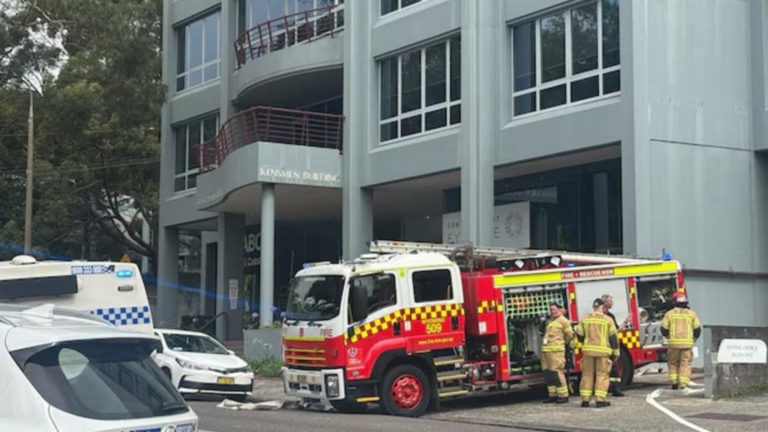
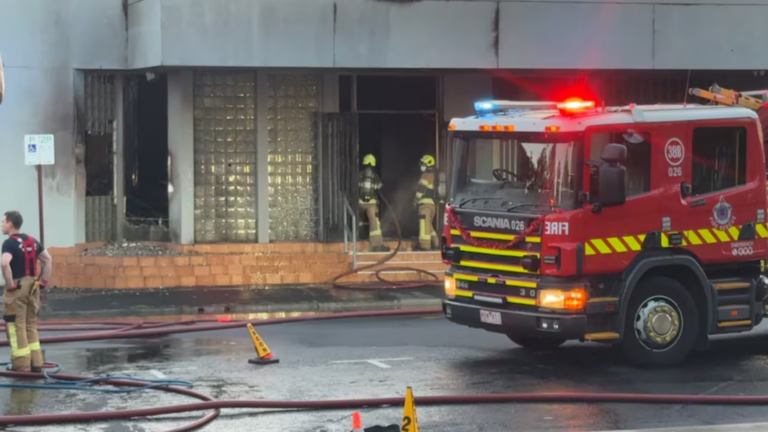
The bombings occurred on Thursday, December 5, when the third floor of the Kensmen building, opposite Gosford Courthouse and home to Conditsis Lawyers, was attacked. Court documents revealed that Conditsis Lawyers had previously represented Middleton, with Legal Aid funding his defence.
Police confirmed that Middleton was arrested around 1.30 pm Friday, December 6, and charged with two counts of destroying or damaging property with intent to endanger life. He was denied bail.
The Gosford Courthouse was placed on high alert with extra security, as police processed the crime scene across the road.
According to Brisbane Water Superintendent Darryl Jobson, CCTV footage captured the attacker entering a nearby Legal Aid NSW office, where he allegedly ignited an improvised explosive device (IED) made from a small LPG cylinder. The attacker then reportedly moved to the Kensmen building, where he placed a second LPG device on the third floor, causing a fire that was extinguished before any injuries occurred.
Superintendent Jobson described the bombings as a “callous and brazen attack” and confirmed a strike force has been established to investigate the incidents.
The Gosford Courthouse was locked down for several hours while the NSW Police Bomb Squad conducted a sweep of the premises.
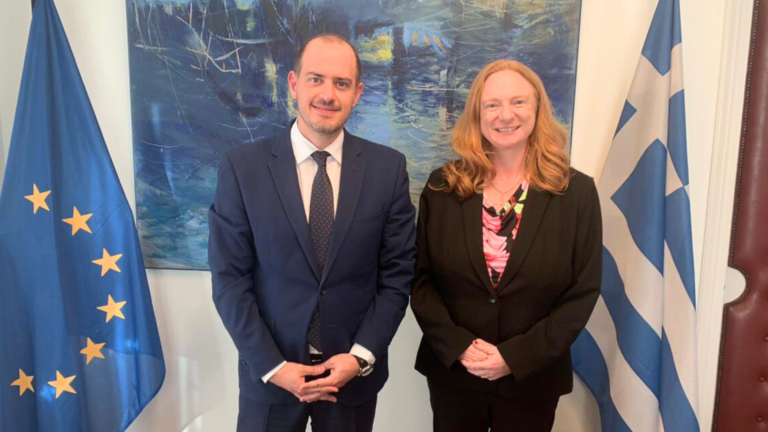
Australia’s Ambassador to Greece Alison Duncan met with Greece’s Deputy Foreign Minister for Greeks Abroad, George Kotsiras, last week to receive an update on the implementation of Greece’s new Strategic Plan for Greeks Abroad.
Ambassador Duncan expressed strong support for the new Strategic Plan, noting that Greek Australians would welcome the Greek Government’s commitment to greater engagement with the diaspora and the continued preservation of Greek culture, language, and the arts abroad.
The Ambassador and Deputy Minister also discussed the significant contributions of the Greek Australian community to various sectors in Australia, including arts, politics, business, journalism, sport and cuisine.
Greek Australians, as the world’s second-largest Greek diaspora, are passionate about preserving their culture, language, and connections to Greece, with strong support from Australian governments at all levels.
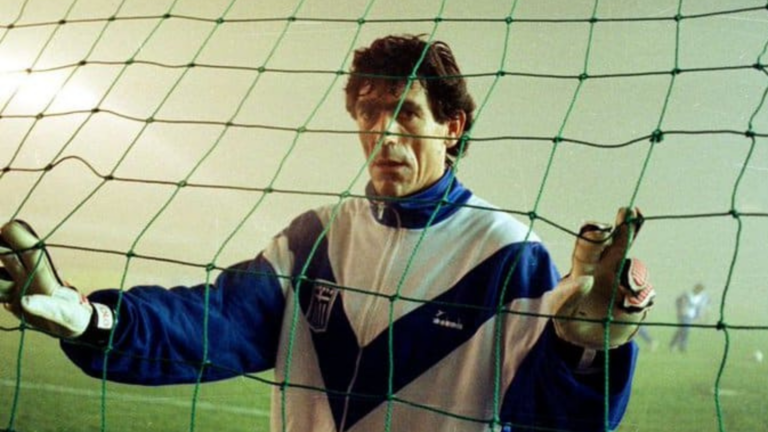
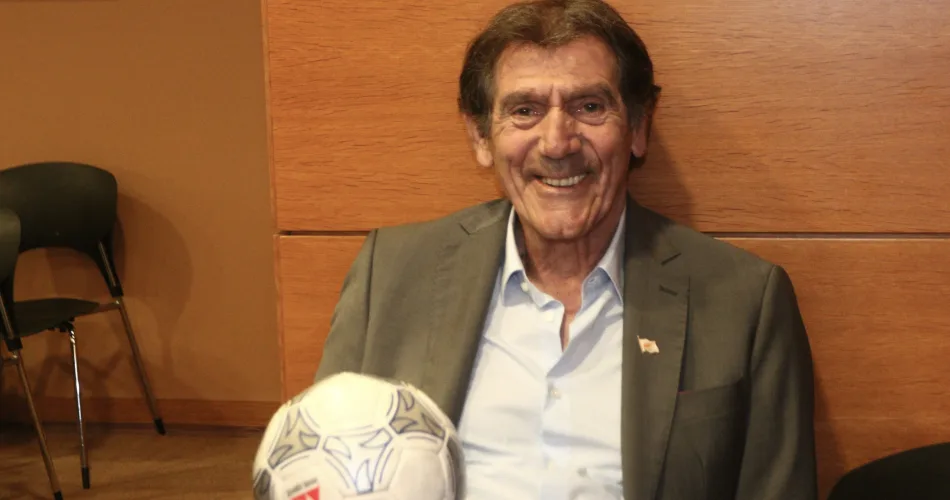
Nikos Sarganis, the legendary Greek goalkeeper known as “The Phantom,” has passed away at the age of 70.
Reports confirm that Sarganis had been hospitalised in critical condition and was in a coma prior to his death.
Born on January 13, 1954, Sarganis was widely celebrated for his remarkable skill and significant contributions to both Greek and European football.
Throughout his career, he played for several top clubs, including Ilisiakos, Kastoria, Olympiacos, Panathinaikos and Athinaikos. He also earned 58 caps for the Greek national team, solidifying his place as one of Greece’s greatest goalkeepers.
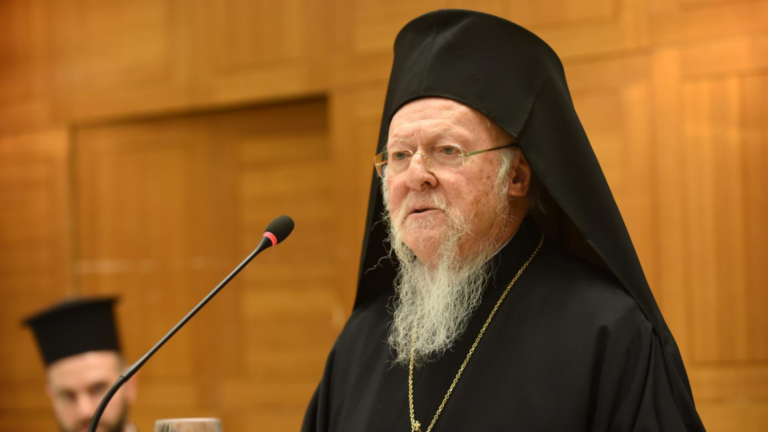
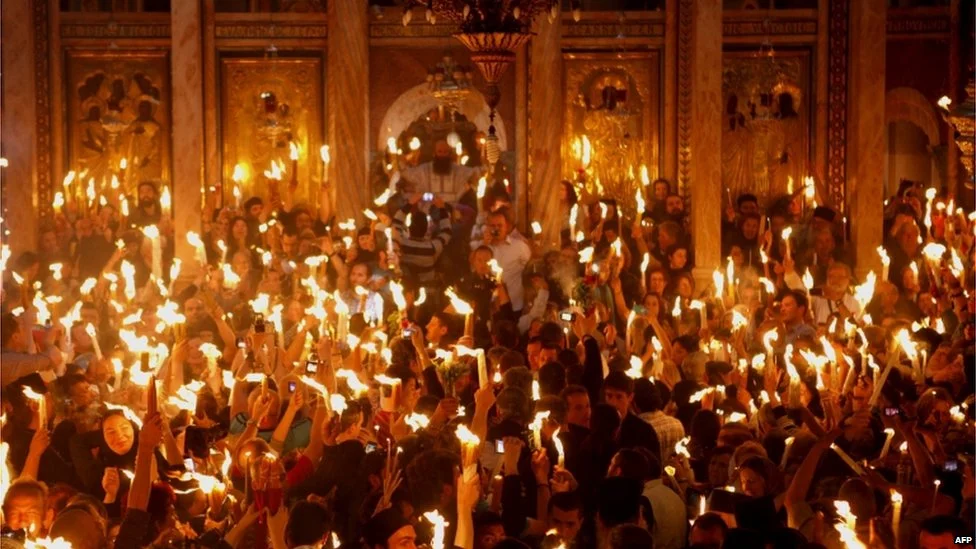
His All-Holiness Ecumenical Patriarch Bartholomew has once again proposed a unified date for Easter to be celebrated by both the Orthodox and Roman Catholic Churches.
Addressing the topic during a sermon for the Feast of St. Nicholas in Istanbul, Patriarch Bartholomew expressed optimism about reaching a permanent agreement with Pope Francis, especially as Easter 2025 will coincide for both Eastern and Western Christianity.
He also suggested that Anglican and other Protestant churches might join the unified celebration in the future.
The Patriarch clarified that the proposal is limited to agreeing on a shared date for Easter and does not extend to joint liturgical practices, which would require deeper ecclesial communion—something not yet achieved despite ongoing theological dialogue.
“This agreement pertains solely to the date of Easter’s celebration,” he said, adding that it would align with the Orthodox method of determining the date, as a way to honour the legacy of the First Ecumenical Council of Nicaea.
Patriarch Bartholomew lamented the continued division on this issue, stating, “It is indeed lamentable that, 1700 years later, we are still discussing this issue.”
He also called for an end to “fanaticism, narrow-mindedness, and prejudice” in modern Christianity, emphasising that “our God is a God of love.”
In addition to the Easter proposal, the Patriarch criticised Russian President Vladimir Putin and Russian Orthodox Patriarch Kirill for their roles in the ongoing war in Ukraine. He prayed for Russian clergy and laity who support persecuted Orthodox Christians in Ukraine, noting their imprisonment for resisting Putin’s policies and Kirill’s “anti-Christian rhetoric.”
Patriarch Bartholomew also called for an end to the war, expressing hope that the Christmas season would inspire efforts toward a just and lasting peace.
Victorian Premier Jacinta Allan announced that state and federal counter-terrorism units will meet today, December 9, to discuss the investigation into the arson attack on the Adass Israel Synagogue in Ripponlea, Melbourne, which occurred on Friday, December 6.
The attack has sent shockwaves through the Jewish community, drawing widespread condemnation, including from Israeli Prime Minister Benjamin Netanyahu.
The burning of the Adass Israel synagogue in Melbourne is an abhorrent act of antisemitism. I expect the state authorities to use their full weight to prevent such antisemitic acts in the future.
Unfortunately, it is impossible to separate this reprehensible act from the extreme…
— Benjamin Netanyahu – בנימין נתניהו (@netanyahu) December 6, 2024
While no arrests have been made, Premier Allan confirmed on Sunday, December 8, that Victoria Police Chief Commissioner assured her of “progress” in the investigation, with counter-terrorism units “at the heart” of the efforts.
Allan refrained from calling the incident an act of terror, leaving that determination to law enforcement. However, she said the attack “was designed to strike terror into the hearts of the Jewish community here in Melbourne and Victoria and indeed around the nation.”
Australian Prime Minister Anthony Albanese, speaking later on Sunday, expressed his “personal view” that the firebombing was an act of terrorism, adding that the situation would be evaluated by law enforcement.
Albanese said, “Quite clearly terrorism is something that is aimed at creating fear in the community, and the attacks on the synagogue in Melbourne clearly were.”
The attack has been labelled “anti-Semitic” and “un-Australian” by various leaders, including Albanese, who expressed solidarity with the Jewish community.
“We stand with you,” he stated, condemning the “prejudice” that led to the attack.
On Saturday, December 7, a bullet was discovered on a footpath outside the synagogue, and while its link to the arson remains unconfirmed, police are investigating the find. Increased police patrols have been deployed around Melbourne’s synagogues and Jewish community sites.
The attack, which is the third firebombing targeting Jewish institutions since October 7, prompted emotional responses from community members, including Holocaust survivor Eddy Boas, who expressed shock that such an event could happen in Australia.
At a vigil attended by over 1,000 people, Daniel Aghion from the Executive Council of Australian Jewry condemned the act as “domestic terrorism,” emphasising the pain and anger felt by the Jewish community.
Meanwhile, tensions between political leaders have escalated. Opposition Leader Peter Dutton criticised Albanese for not immediately labelling the attack as terrorism, accusing the Prime Minister of downplaying anti-Semitism. In contrast, Albanese defended his approach, stressing that the formal process for declaring terrorism should be followed.
The Australian government has been under pressure to address rising anti-Semitism, with Albanese citing measures such as the extension of a $25 million fund for Jewish community security and the criminalisation of hate symbols. Despite political divides, Albanese called for unity, saying, “Our leaders should stand together” in response to the attack.
As the investigation continues, the Jewish community remains resilient, with leaders vowing to rebuild the synagogue and affirming that “nobody can destroy our community.”
Syrian opposition fighters have declared that the country has been “liberated” after they stormed the capital Damascus, while long-term ally Russia says President Bashar al-Assad has fled the country.
Concerns have been raised about the future of the country and the broader region, with the Syrian rebel leader asserting there is no turning back now.
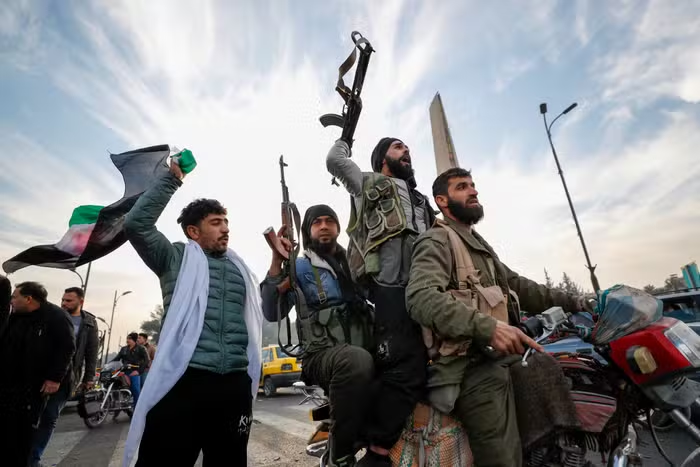
Scenes of jubilant celebration unfolded in Damascus and other parts of the country, including areas along the border with Lebanon.
The remarkable opposition breakthrough followed 13 years of a brutal war, marking the end of more than five decades of al-Assad family rule.
Syrian opposition fighters celebrate the fall of the Bashar al-Assad regime, December 8, 2024. Photo: Omar Sanadiki / AP.
In Cyprus and Greece, Syrians also stormed the streets to celebrate the downfall of al-Assad.
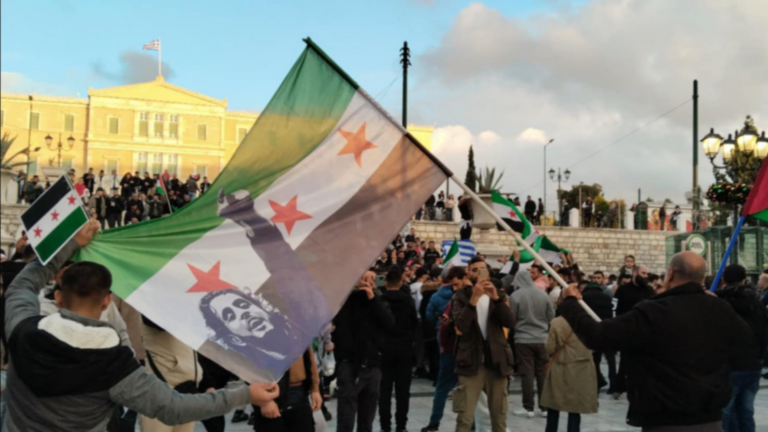
At Syntagma Square in Athens, Syrians were waving flags carrying the colours of the rebels, along with a few Palestinian flags, and shouted slogans. Four protesters also stormed the Syrian Embassy in Athens, replacing Syria’s official flag with that of the revolution and removing photos of al-Assad from the walls.
In the capital of Cyprus, Nicosia, Syrians gathered on the walls of the old town chanting slogans and waving Syrian opposition, Cyprus and Greek flags. Hundreds of people later marched to Eleftheria Square.
📌 Ανακοίνωση Υπουργείου Εξωτερικών σχετικά με τις εξελίξεις στη Συρία
Greece’s Foreign Ministry also issued a formal statement welcoming the fall of Assad, but said “peace in the country and a smooth transition of power to a democratically legitimated government should be immediately ensured, based on Security Council Resolution 2254.”
“Greece supports the unity, territorial integrity and sovereignty of Syria,” the statement added.
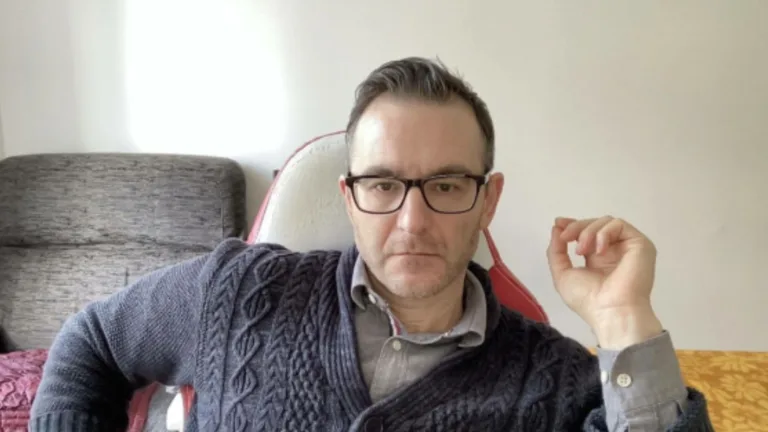
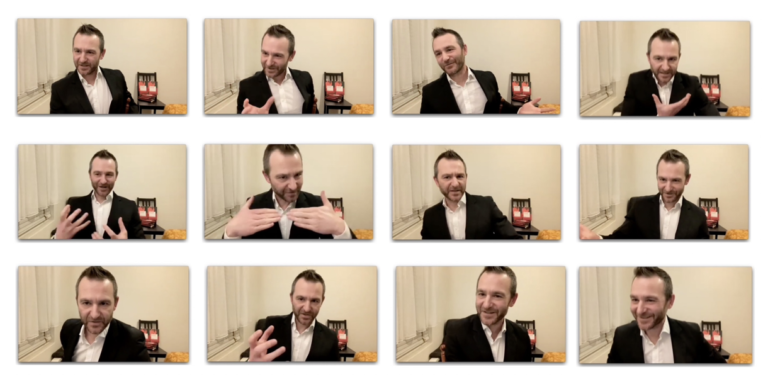
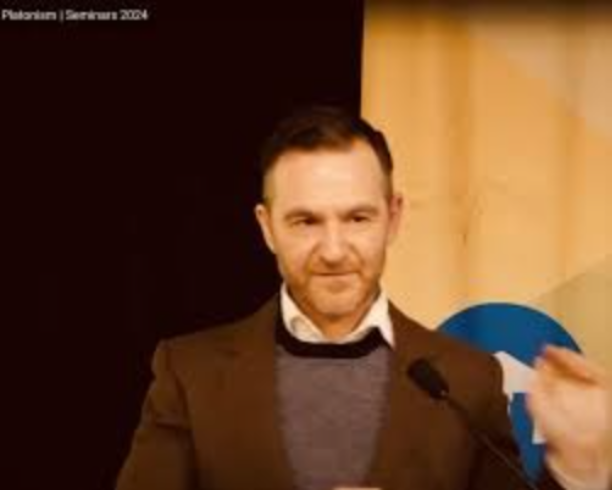
After listening to a lecture hosted by the Greek Community of Melbourne, I was so inspired and in awe of Greek-Australian, Dr Tim Themi’s presentation, titled, ‘A historical Critique of Platonism’, that the first thing that came to mind was, “this guy’s a rock star!”
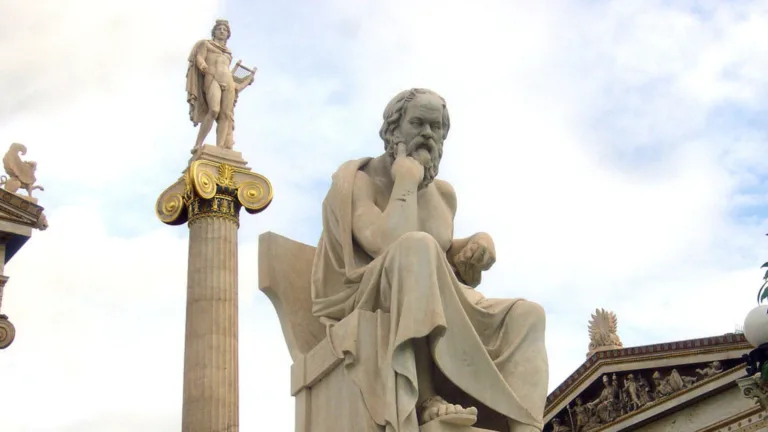
Upon regaining my composure and reigning in my enthusiasm for rock music and the rebelliousness it can imply, this lecture was ‘music to my ears’ as an alternative view of Ancient Greek philosophy. Dr Themi dares to transcend the more popular views of the philosophy of Socrates (as related by his student Plato) from the 4th century BC through to today, as ultimate wisdom about what constitutes ‘good’ and its realisation. Yet unfortunately even now 2,500 years later, injustice and war are still rife. Hence, the work of Dr Themi is an important and timely scholarly reassessment.
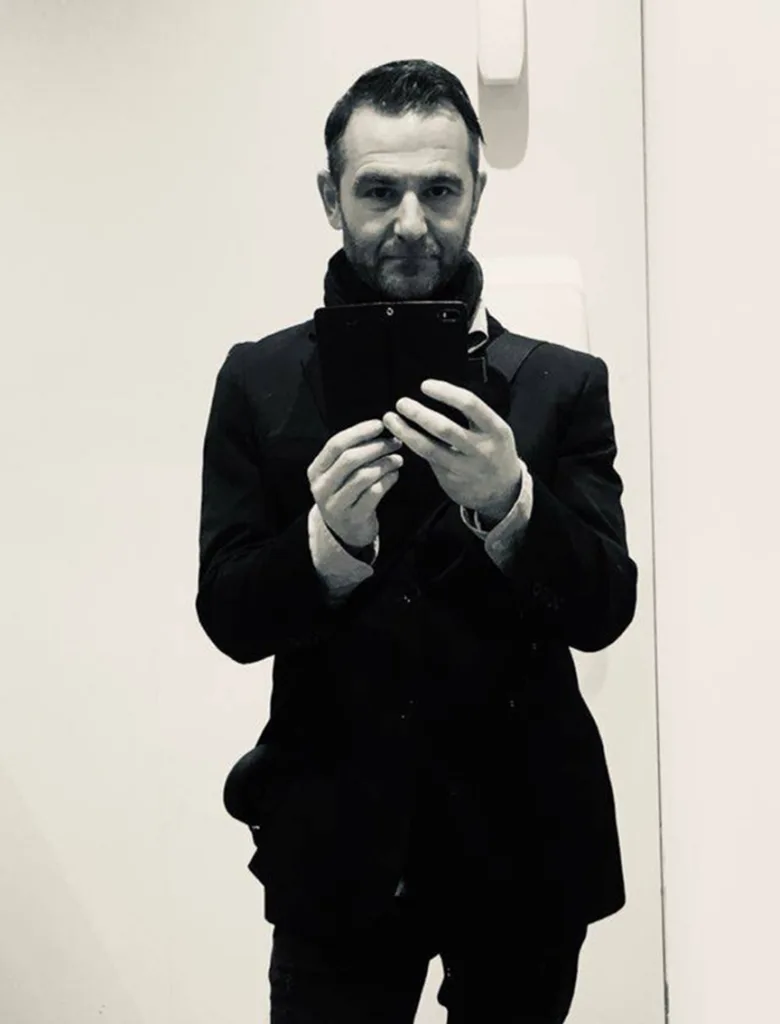
Dr Tim Themi, in his late 40’s, holds many Degrees from Australian Universities: A PhD in Philosophy and Psychoanalysis, Honours degrees in Philosophy, and even in Engineering. He is also the author of two books, titled ‘Lacan’s Ethics and Nietzsche’s Critique of Platonism‘ (2014), and ‘Eroticizing Aesthetics: In the Real with Bataille and Lacan‘ (2021).
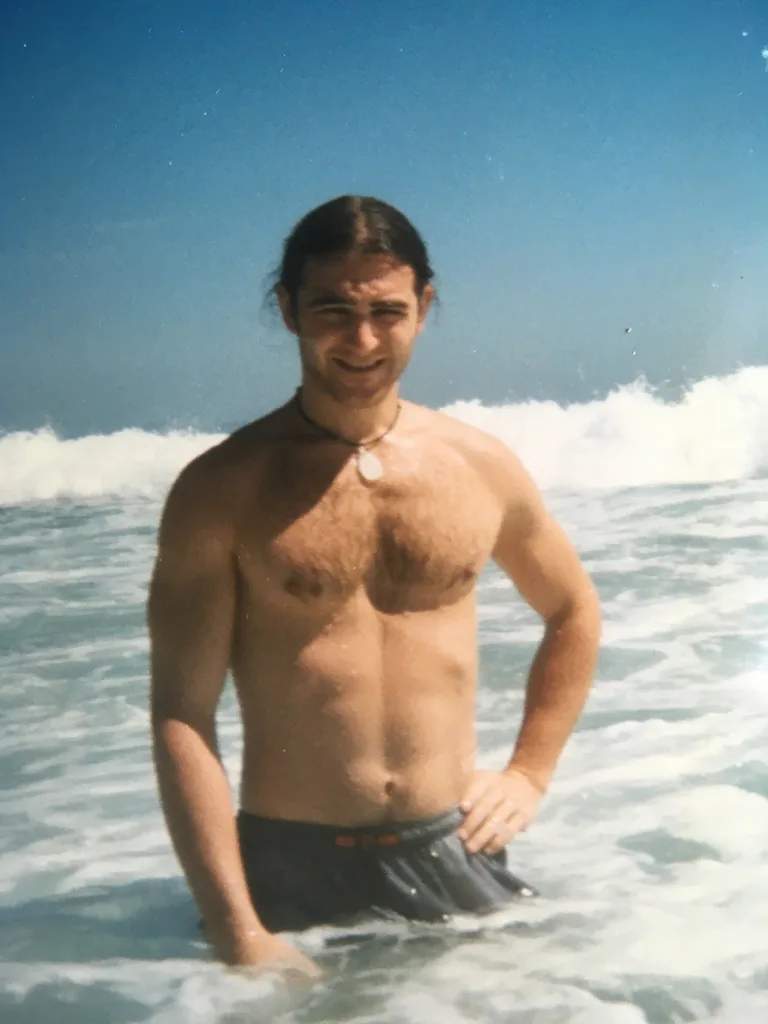
As an Honours student, LaTrobe University
This man is a modern, Ancient Greek philosopher! His lecture drew me in from the very beginning, with statements such as, “all the world’s problems were [and are] Plato’s fault”, that Plato was the greatest misfortune of Europe, according to Nietzche’s philosophy from the late 1880’s, with subsequent scholars such as Freud, Bataille, Lacan and others agreeing.
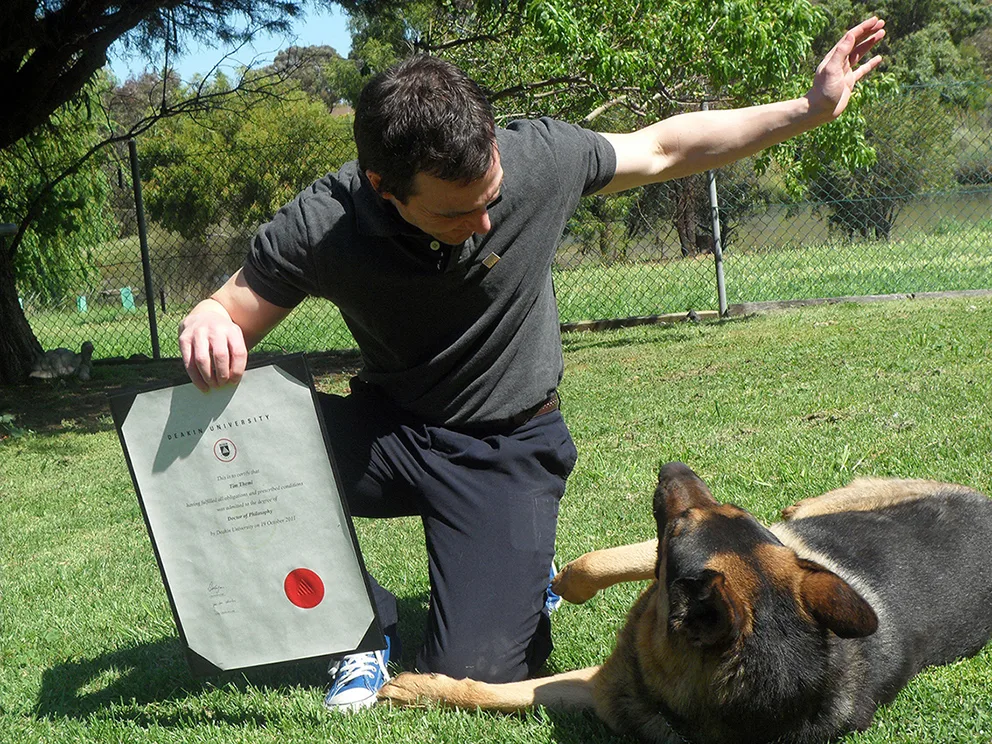
After PhD conferral with dog,“Spartacus”
The overall gist I got from the lecture was that pre-Platonic philosophical thought was based on “the real”- rather than the imaginary /unreal: The “real” is described as nature and the body, with the unreal being the relegating of the human body and Nature to the imaginary/other world. This is espoused by Post-Platonism according to Dr Themi, who expounds that as a consequence “our ideas of what’s real have been turned upside down.”
With Lacan Circle Australia
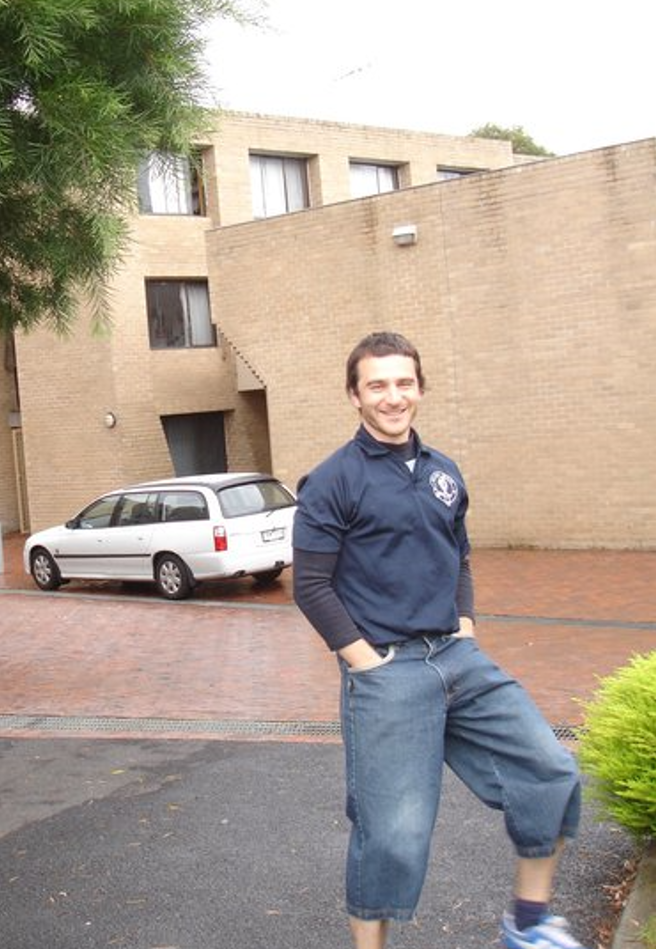
Dr Tim Themi grew up in Melbourne, Australia where he still resides, after his Greek parents migrated from Northern Greece – Florina and Alexandreia area in Macedonia. He’s been to Greece twice, the second time in his late 20’s “taking time off before starting an Honours Degree in Philosophy, where apart from spending time with relatives, I visited ancient sites, like the sanctuary of Asclepius, and Ancient Epidaurus theatre next to it and saw the amazing Bacchae play.”
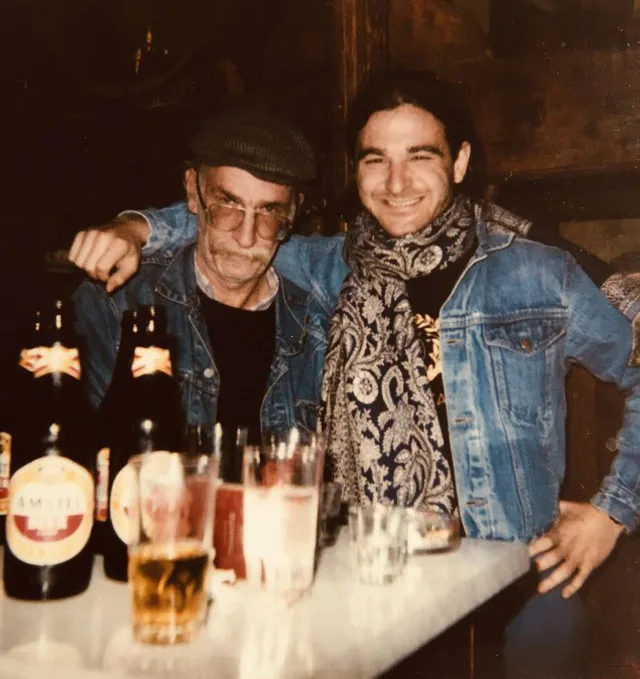
Dr Themi , late 20’s, and poet friend in Plaka, Athens, GreeceComing of Age
As to why he embarked on studying Philosophy, after his initial Degree in Chemical Engineering, Dr Themi says: “Part of it was discerning as an Engineer, or applied scientist, that politically and culturally we weren’t as a whole doing anything really to fix our problems of economic inequality, oppression and environmental destruction.
In fact we were doing precisely the opposite…so I turned to philosophy in the Arts and Humanities.” There, Dr Themi came across Freudian psychoanalysis from “the related and in some ways precursory findings of Nietzsche’s philosophy based on his study of ancient Greece.”
Expressing himself with zeal, perhaps inadvertently showcasing not only pride in his Greek heritage but also his scholarly, yet accessible to the layperson, lecturing prowess, Dr Themi adds: “This is the amazing thing about the Ancient Greeks. How did they come from the Dark Ages when the Mycenaean Era collapsed, to found and discover Philosophy, Democracy, Art and Science in such high forms?
Why did Greece develop this Polis system with democracy and debate, instead of slavery and servitude to a King? Was there something in our myths when they touch upon our fundamental drives that make us attuned to be able to sublimate them in more appropriate cultural and social activities?”
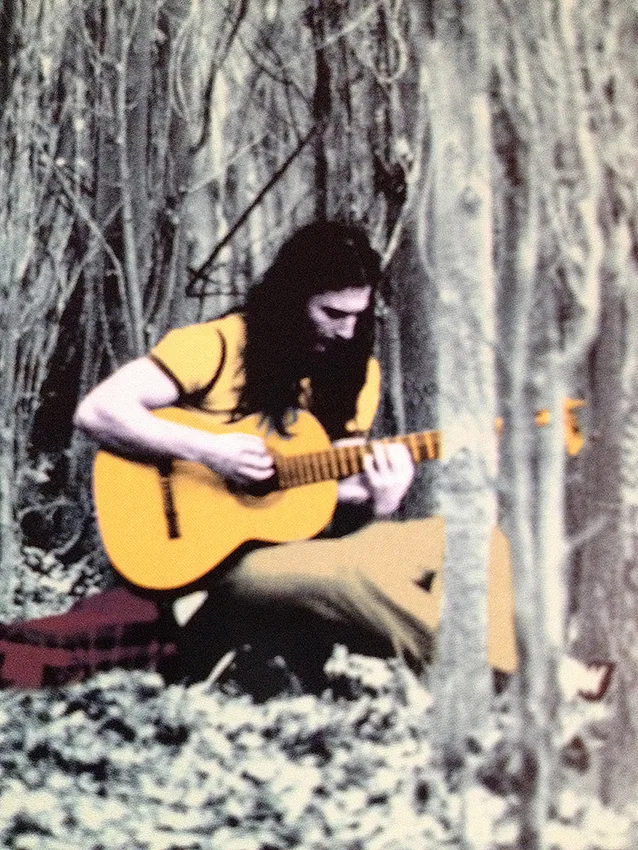
Dr Themi, musician in earlier years (photo by Thanasi Bakatsoulas)
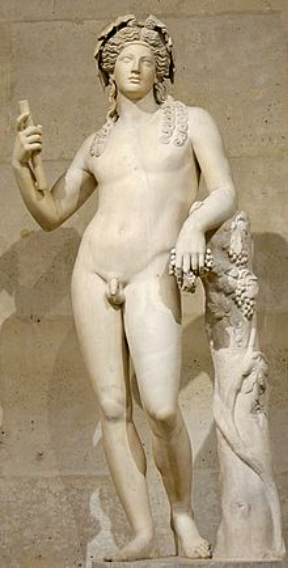
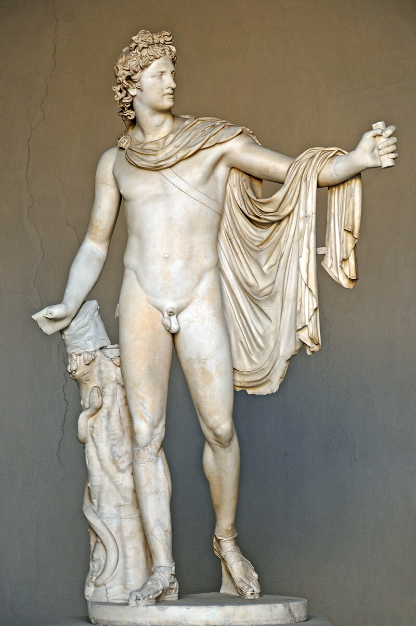
How can we get more ‘balanced’ and return to the wisdom of the pre-Socratic, I ponder. Is it through the Arts – such as in pre-Socratic, Ancient Greek tragic theatre where our taboos and their transgression are staged? And here we can vicariously live out and hence placate the dark, more animalistic sides of our human nature, which Dionysus exemplifies?
Dr Themi stresses: “This dark, Dionysian side must always be balanced through Apollo who is of light, reason and rationality. We don’t have to believe these myths literally. They’re great works of Art and poetry and we can now see what metaphors they incorporate and why, like a dream; interpreting our individual dream or the dream of a whole culture, the collective dream. Art directly involves the senses, the sensual, the body (aesthetics); whereas politics should be more about mind, reason, pragmatism, and causal analysis in response to concrete problems…not opposing each other in a kind of internal cultural war.”
Ok, I think, feeling my mind expanding, from Dr Themi’s further claims that “the mind is us just experiencing our body from the inside…not this pure thing disembodied and unconnected to the natural, animal-oriented drives: This dualism of mind or spirit as good, and body as evil – that’s the one that stuffed us up”.
He posits that our darker human and/or animalistic urges don’t go away. Suppressed by post-Platonic metaphysics which Dr Themi says we still see the world in terms of, leads to our darker drives often being expressed perversely – in violence, and confused thinking for example, “like the blind, leading the blind.”
“So, what can we do now?” I ask, to which Dr Themi responds, “We need to think in terms of centuries or millennia, as well as decades and the everyday… envisioning the best bits of Hellenism between 800-400 BCE, before Platonism (399 BCE onwards) which were lost and only partly recovered from the Renaissance and Enlightenment afterwards, only to begin to wane again since then.”
He continues, “We now need a quality self-practice showing co-equal respect and appreciation for both our animal and human side, where our institutions can be set up and staffed by such individuals in the right frame of being, but they will never achieve this without proper institutional support. So it’s a circular, piecemeal process that is ongoing …”
Dr Themi , late 20’s, and poet friend in Plaka, Athens, Greece
I ask Dr Themi how exposing Greek Herald readers to his work, for example, can help them in their lives. “It can help us further understand the world around us: The forces at play, without and within, and to more deeply appreciate how, insofar as like us of Greek background ourselves, our ancestors did such a magnificent job at this.
This can never be surpassed, but only re-equalled. I can’t think of a better group of readers to get interested in this type of work. And I’d like to thank the philosophically minded Nick Dallas and researcher Dr Spiz Demetriou for also opening such a gateway through the Greek Community’s Greek History and Culture seminars.”
Greek gestures and expressions are deeply tied to culture and communication. Understanding them can help avoid unintended offence while immersing in Greek life.
Crossing Oneself Orthodox Greeks frequently cross themselves, particularly near religious sites, reflecting the nation’s deep-rooted spirituality. While common among older individuals, younger Greeks also practice this gesture.
Saying “No” Greeks say “no” with an upward head tilt, often paired with a tongue click, resembling a tut. While it might seem like a nod, careful observation clarifies its meaning. If unsure, repeat your question for verbal confirmation.
Thank You Without Words To express gratitude, Greeks place their right hand over their heart or lightly pat their chest. This gesture conveys warmth and is particularly useful in noisy or distant situations.
Nodding for “Yes” Greeks nod downward to say “yes,” often closing their eyes slightly. This gesture is intuitive and sometimes repeated for emphasis.
Snapping Fingers to Recall Finger snapping is a common habit when trying to remember something or prompt someone to continue speaking. While usually benign, it can appear impatient in certain contexts.
The traditional ‘Na’ gesture (the Greek middle finger) The ‘Na’ gesture, an outstretched hand with fingers spread and palm facing outward, is highly insulting—akin to the middle finger in the US. It’s often seen during heated exchanges, especially on the road. Be cautious when waving to avoid confusion with this gesture.