The Oakleigh Grammar community united to celebrate the Class of 2025 in a day filled with reflection, gratitude, and heartfelt celebration, marking the conclusion of their school journey and the beginning of exciting new chapters ahead.
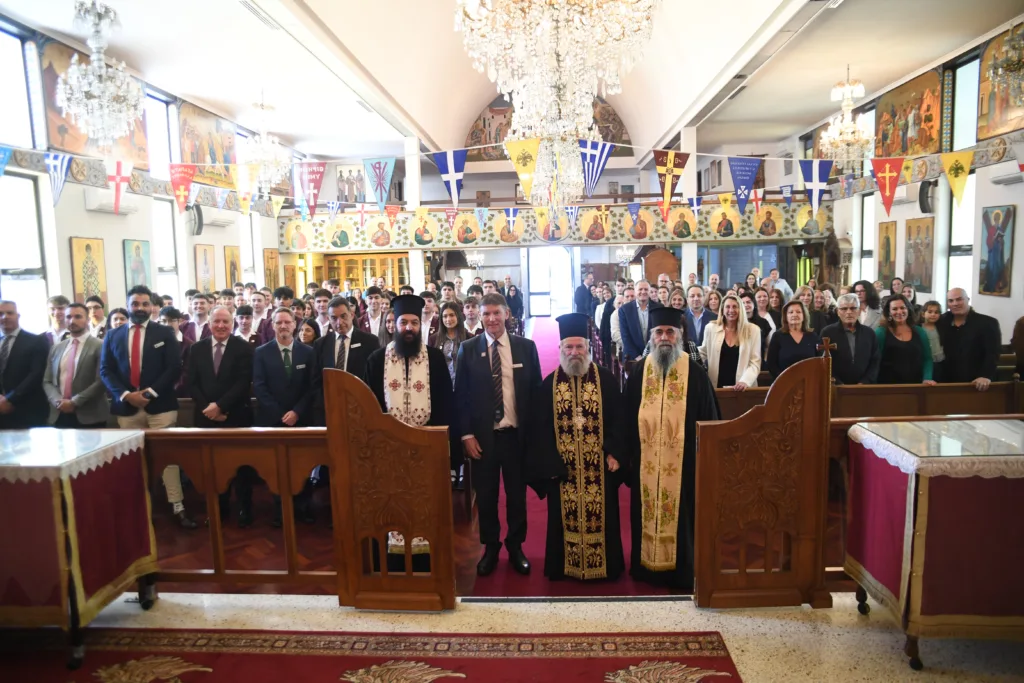
The day began with a special Doxology (Thanksgiving Service) attended by families, students, and staff, offering a time to reflect on shared values and the enduring sense of connection that defines the Oakleigh Grammar community.
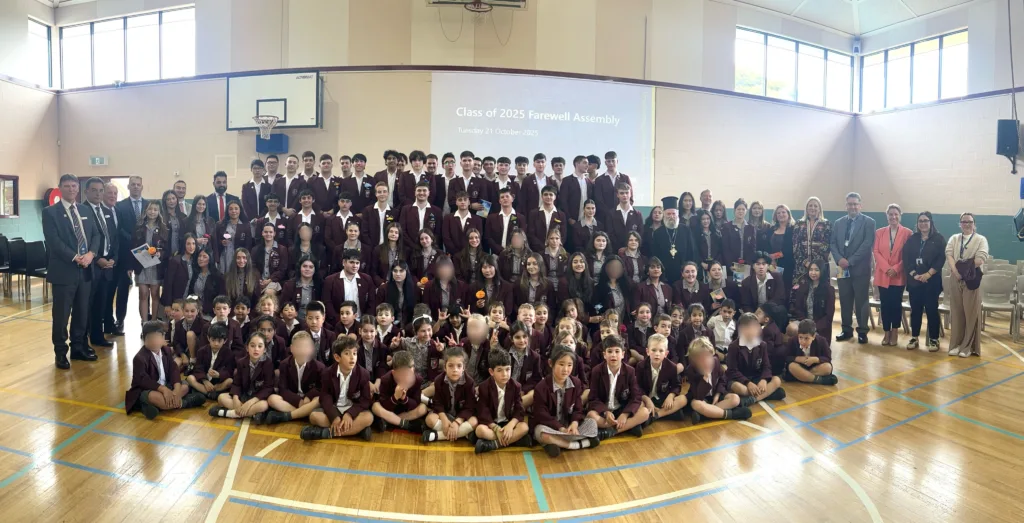
Following the service, a morning tea provided a warm opportunity for students, parents, and teachers to come together and share in the joy of the occasion before the whole school gathered for the Year 12 Farewell Assembly.
The assembly recognised the outstanding accomplishments of Year 12 students, as Principal Mark Robertson, together with School Chaplain Fr Stavros Kakavas and Board Chairman Chris Damatopoulos, presented Certificate of Achievement Awards to the top performers across all Unit 3&4 subjects, celebrating academic excellence, leadership, and commitment.
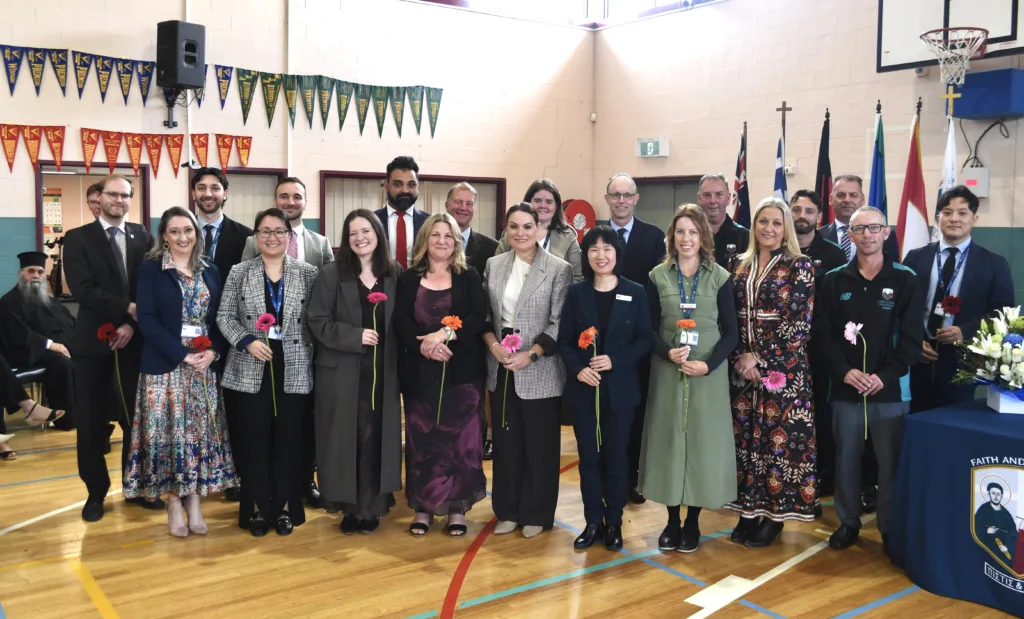
In a touching moment of gratitude, the Class of 2025 presented flowers to their teachers and staff, expressing heartfelt appreciation for the guidance, care, and encouragement that have supported them throughout their educational journey.
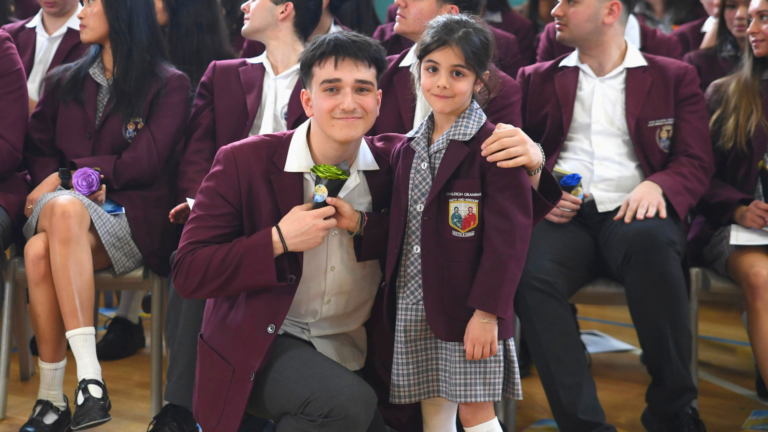
A highlight of the assembly was the traditional flower presentation from Prep students to the Year 12 students, a symbolic moment representing the end of one journey and the beginning of another.
Each Year 12 student crossed the stage to receive a handcrafted flower, lovingly made by Year 8 student Aaliyah, adding a heartfelt touch to this much-loved tradition and reflecting the strong sense of care and community within the school.
Reflecting on the assembly and the achievements of the Class of 2025, Principal Mark Robertson shared: “Emotions were at the fore as the final Blessing and Graduation Assembly were held for the Class of 2025 in a packed gymnasium of students, staff, and parents.”
Mr Robertson added, “There were many reflections, and gratitude was extended to all in attendance following, for the majority, thirteen years of their school life at Oakleigh Grammar. I wish them every success for their forthcoming examinations and life beyond the Oakleigh Grammar gates.”
As the Class of 2025 prepare for their final exams and the next chapter of their lives, the school community celebrates their accomplishments, their resilience, and the way they have embraced Oakleigh Grammar’s values of Humility, Aspiration, Respect, and Kindness throughout their journey.
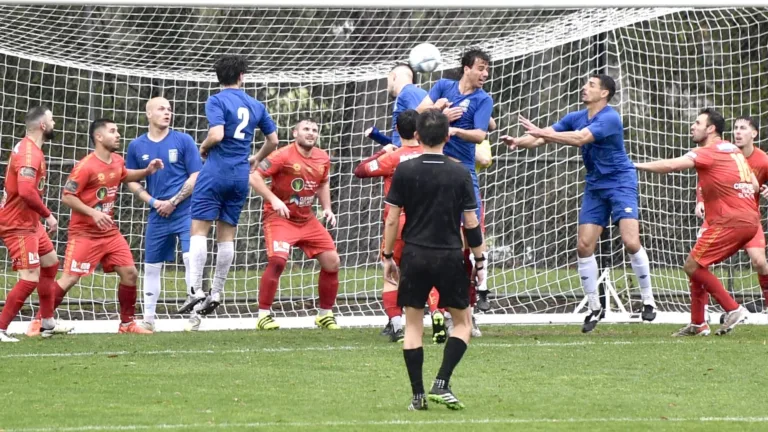
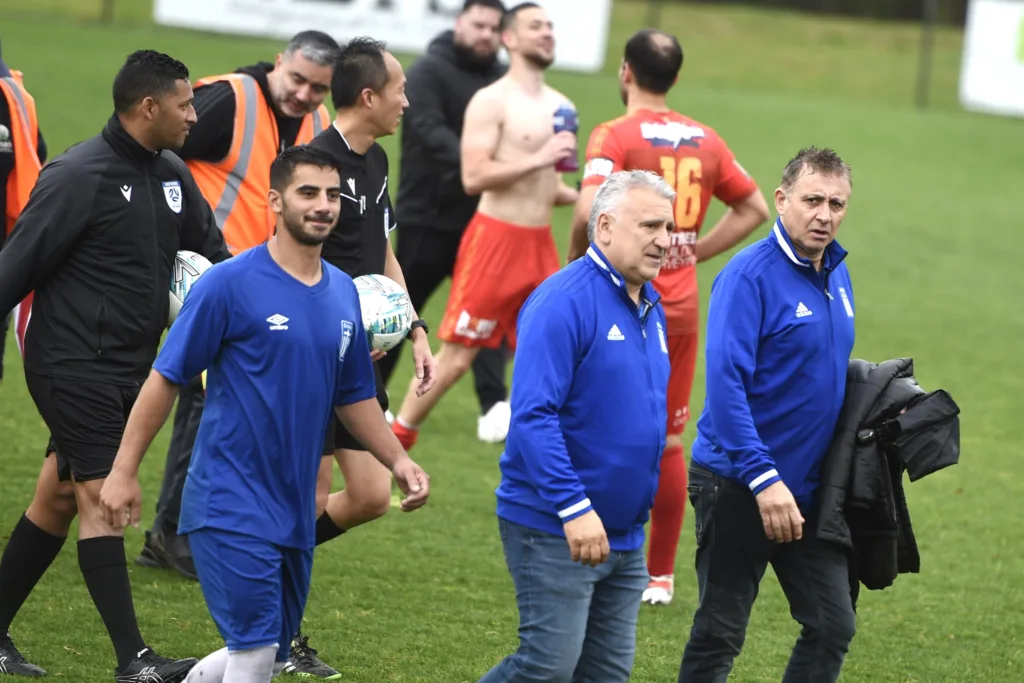
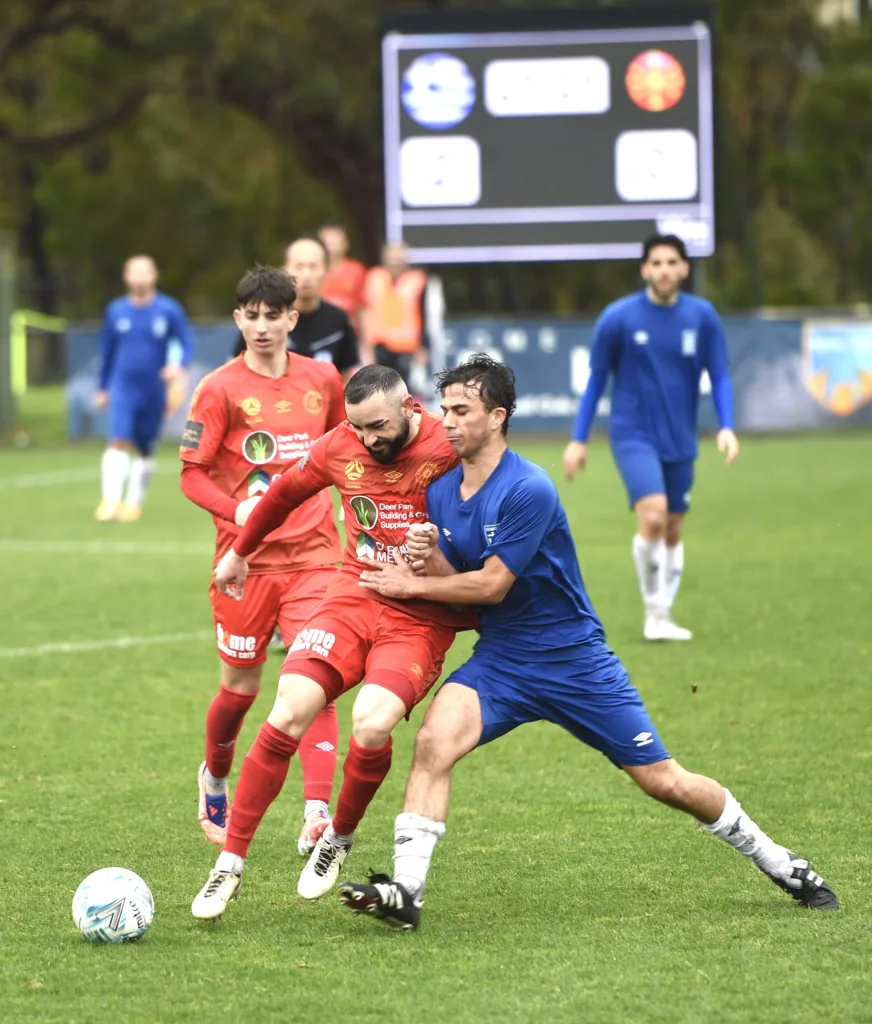
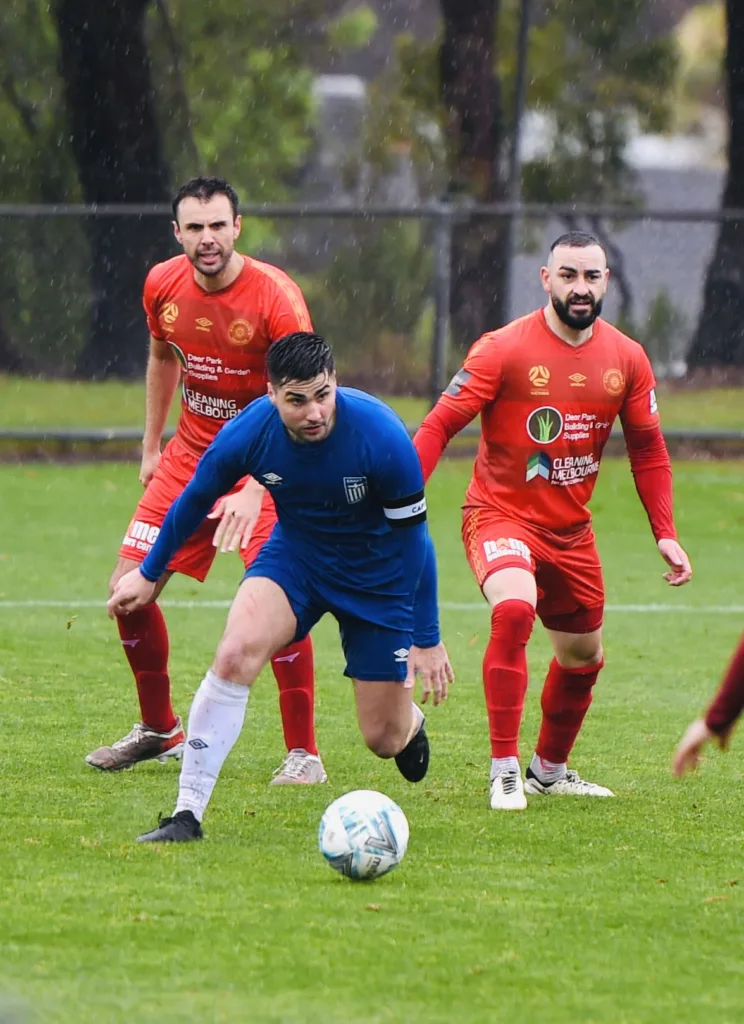
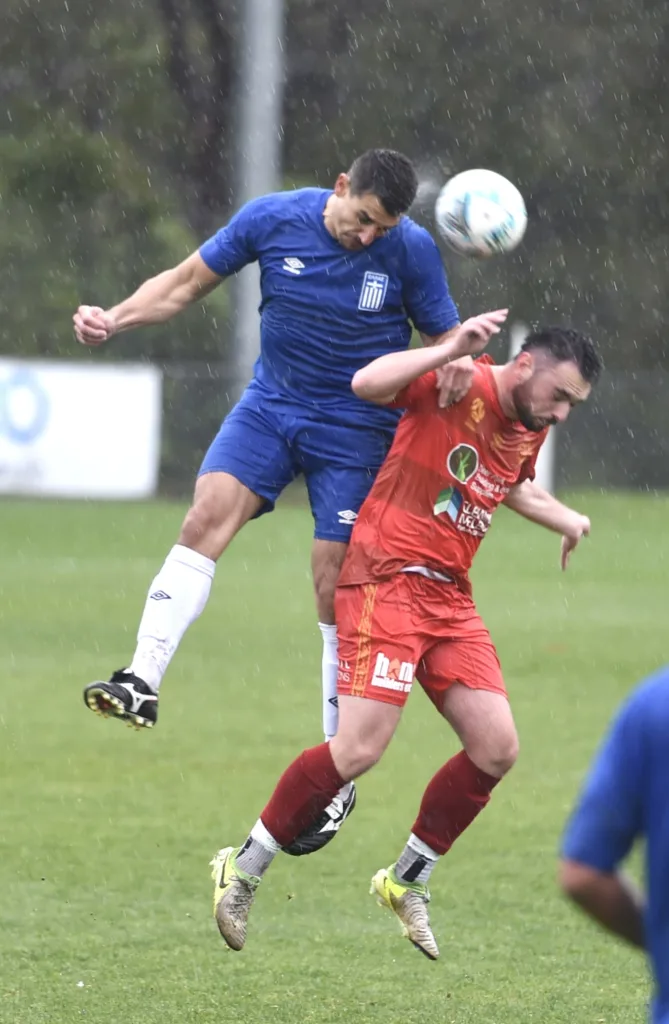
Team Greece has qualified for the quarter-finals of the 2025 All Nations Cup following a convincing 3 nil victory over North Macedonia in the final game of the group stages.
Greece finished on top of its group and will now face Chile in the quarter finals in two weeks.
Coach George Katsakis was thrilled following the game.
“The boys came to play today and completely dominated from the start. Our team has come together nicely and is peaking at the right stage of the tournament. We now look forward to our next challenge in the quarter-finals and beyond,” Katsakis said.
Greek Community of Melbourne (GCM) President Bill Papastergiadis was also full of praise following the win.
“Today was special as we united as one and defeated a difficult opponent, who were on top of the group. We were facing elimination and only a win would see us progress, which the boys achieved comfortably in difficult wet conditions,” Papastergiadis said.
“I would like to congratulate both George Katsakis and Kon Tangalakis, our amazing coaches, who have once again managed to reach the quarter-finals and hopefully repeat our feats of three years ago when we won the cup in our first attempt. I wish them all the best in the finals.”
Fixtures and kick-off times for the finals will be presented early next week.
Round 3 of the 2025 Australian Championship delivered excitement across the board, with standout performances from Heidelberg United, South Melbourne, and Sydney Olympic.
From high-scoring thrashings to nail-biting finishes, each team made its mark in the competition.
Heidelberg United dominates South Hobart
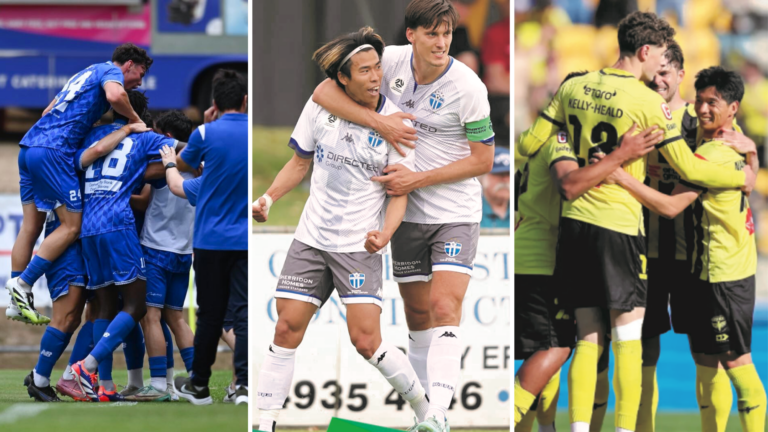
Heidelberg United powered to a 6-1 victory over South Hobart in Round 3 of the Australian Championship, thanks to a blistering first-half display.
Angus Taylor opened the scoring within three minutes, followed by Bul Juach doubling the lead.
Heidelberg continued their relentless attack with four more goals from Juach, Bramwell, and Fletcher Fulton, before Eli Wright scored late for South Hobart.
South Melbourne edges Broadmeadow Magic
South Melbourne maintained their perfect start with a narrow 1-0 win over Broadmeadow Magic.
Yuki Uchida scored five minutes before halftime, giving the visitors the lead.
Despite strong efforts and a near-miss from Thomas Beecham in stoppage time, Broadmeadow could not find an equaliser, leaving South Melbourne atop Group A.
Sydney Olympic secures first win
Sydney Olympic claimed their first three points of the competition with a 2-1 win over Moreton City Excelsior.
Prominent defamation barrister Sue Chrysanthou SC has urged the Federal Court to fast-track proceedings in Charlotte MacInnes’ lawsuit against Rebel Wilson, arguing that the emerging actor continues to suffer “ongoing reputational damage” after being “unapologetically defamed.”
MacInnes, who starred in Wilson’s directorial debut The Deb, filed proceedings last month over a series of social media posts in which Wilson made allegations MacInnes has called a “fabricated narrative.”
Chrysanthou pushed back against efforts by Wilson’s legal team to delay the matter, rejecting claims the actress needed to review documents before providing evidence.
“People telling the truth don’t need to see documents in order to make a statement,” she told the court. “She is clearly not too busy.”
Wilson’s lawyer, Renée Enbom KC, argued her client’s testimony was “not simple and straightforward” and required review of materials dating back to 2022.
The court has ordered Wilson to file an affidavit by December 10, with the case returning in February.
The dispute marks the latest legal challenge surrounding The Deb, following two separate lawsuits over the film’s troubled release.
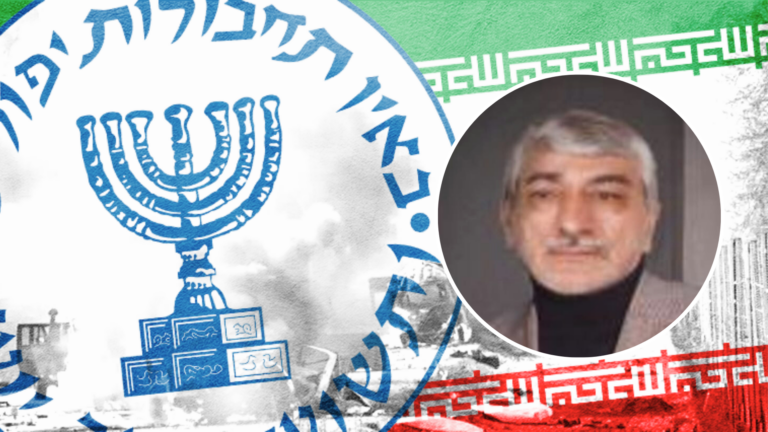
Israel’s Mossad has identified Sardar Ammar, a senior Islamic Revolutionary Guard Corps (IRGC) commander, as overseeing a network behind foiled attacks on Israeli and Jewish targets in Australia, Greece, and Germany between 2024 and 2025.
In a statement released via the Israeli Prime Minister’s Office, Mossad said Ammar’s unit, operating under Quds Force commander Esmail Qaani, conducted “terror without Iranian fingerprints” through “foreign recruits, criminals, and covert communications.”
The agency said cooperation with international partners “thwarted dozens of attack tracks, saving many lives.”
The exposure has triggered diplomatic fallout, with Australia expelling Iranian Ambassador Ahmad Sadeghi in August and moving to designate the IRGC a terrorist organisation after intelligence linked Tehran to antisemitic arson attacks in Melbourne and Sydney.
Sadeghi denied the allegations as he left the country.
In Greece, authorities in 2024 arrested Iranian and Afghan nationals over arson attacks targeting an Israeli-owned hotel and a synagogue in Athens, following a 2023 plot involving two Pakistanis accused of planning Iran-directed strikes on Jewish sites.
Mossad said the revelations “strip Iran of its space for denial” and demonstrate a years-long campaign by Tehran to harm civilians “while maintaining deniability.”
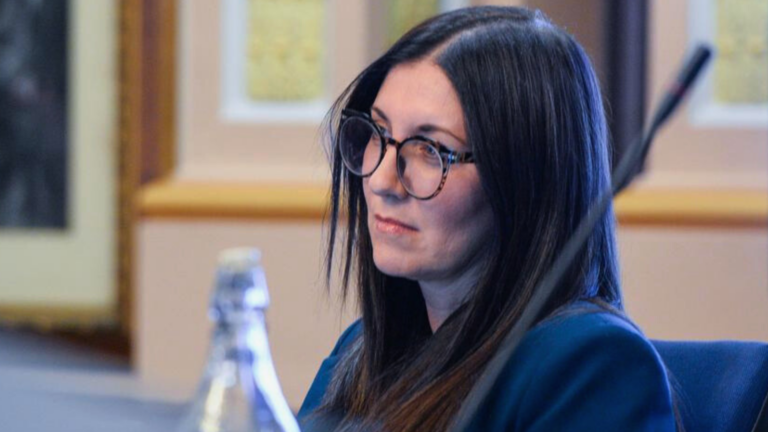
Adelaide City Councillor Mary Couros is set to issue a public apology at Tuesday’s council meeting after an Ombudsman investigation found she attempted to influence an agenda item in which she had a conflict of interest.
The investigation, led by SA Ombudsman Emily Strickland, followed a report lodged on June 7, 2024, concerning a May 28 council meeting about proposed upgrades to Lombard Street, North Adelaide, including new public toilet facilities.
Cr Couros had declared a material conflict of interest because her partner is a shareholder in the nearby restaurant Tony Tomatoes, and she left the chamber before the item was discussed.
However, Ms Strickland found that after leaving, Cr Couros sent text messages to Councillor Henry Davis, who remained in the chamber, during the discussion.
Ms Strickland said Cr Couros’ behaviour represented “an intentional and serious breach of the integrity provisions of the Local Government Act,” noting that she had sought to influence the debate through another councillor.
In her response, Cr Couros maintained that she was not within hearing distance of the chamber and believed her actions did not breach the Act, but said she accepted the Ombudsman’s findings.
“I informed Councillor Davis by text where the closest toilets are because council-built toilets are very expensive and I thought that would be a useful and unbiased fact,” she told The Advertiser.
“I didn’t consider it wrongful at the time, and I understand and accept the Ombudsman’s position.”
The Ombudsman recommended that the council reprimand Cr Couros, require her to undertake training, and ensure she publicly apologises, with a report on compliance due to be submitted by mid-December.
Tragedy struck a Greek family living in Brazil when 18-year-old Theodore Kattavenos, originally from Psinthos, Rhodes, was shot dead by robbers while working at a restaurant.
The attack occurred shortly before 2.30 am local time, when armed assailants entered the restaurant where Kattavenos worked on weekends to carry out a robbery.
His father, Yannis Kattavenos, shared a heartbreaking message on social media, writing: “To lose you so young! Unbelievable! I love you, my son!”
The family had relocated to Brazil a few years ago for work. Authorities have not yet released further details about the circumstances of the 18-year-old’s murder.
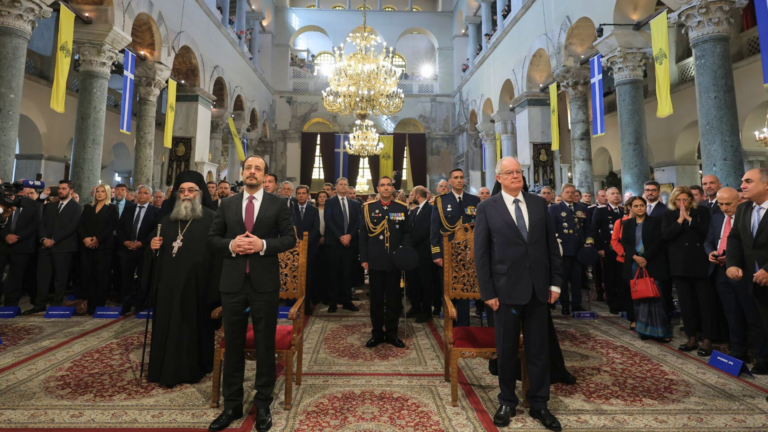
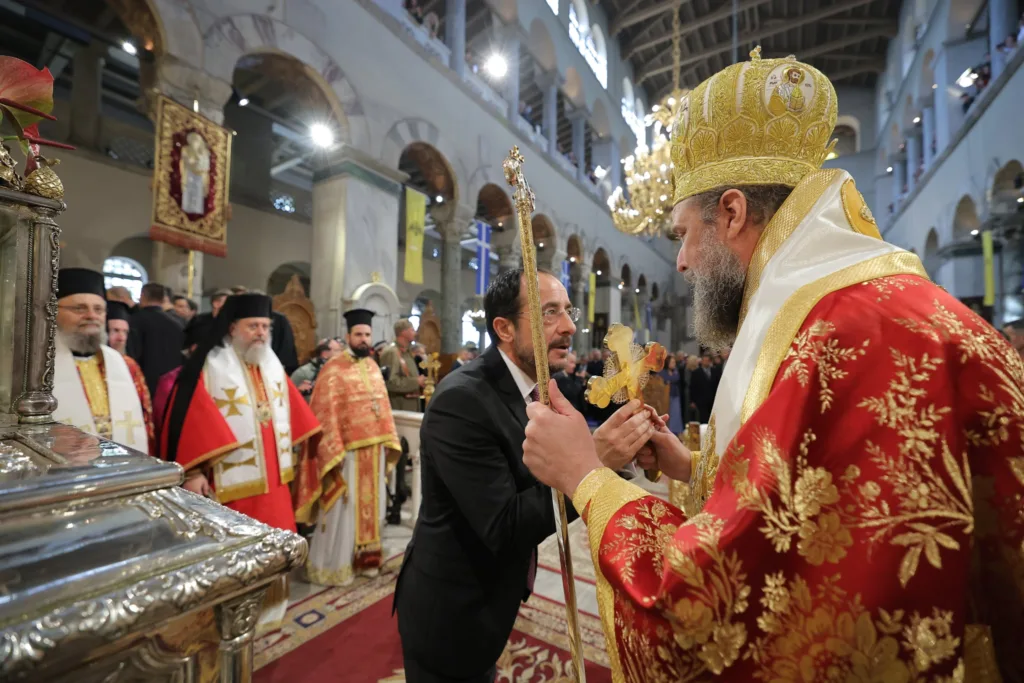
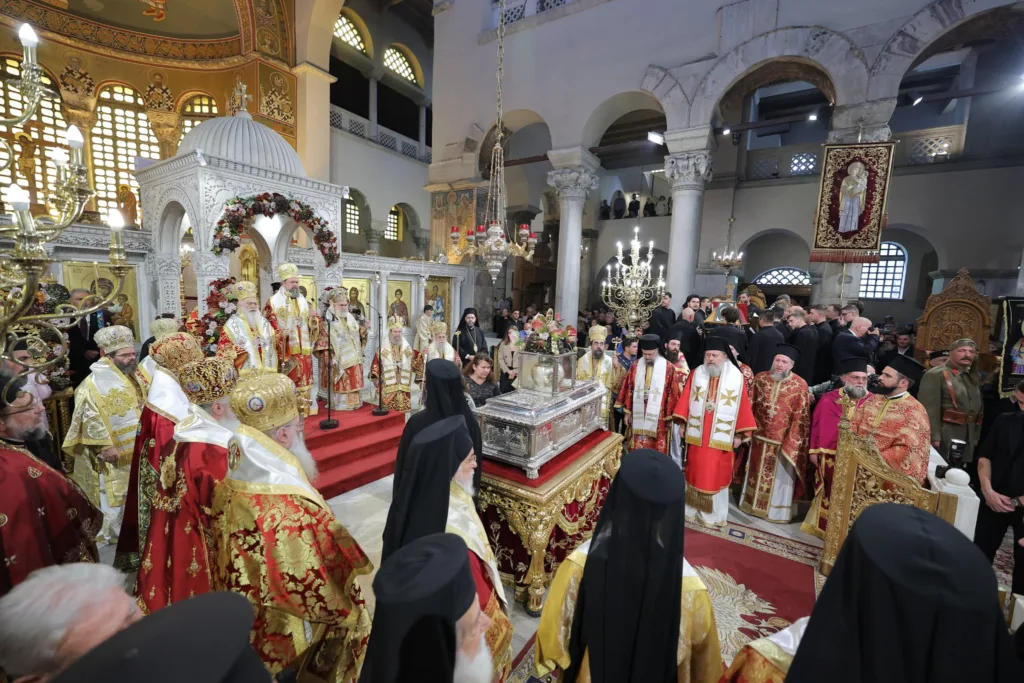
An official Doxology took place at the Church of St Demetrios in Thessaloniki on Sunday, attended by the President of the Hellenic Republic, Konstantinos Tasoulas, to mark the double celebration of the city’s patron saint and the 113th anniversary of Thessaloniki’s liberation.
The morning began with the raising of the national flag at the White Tower and a 21-gun salute.
President Tasoulas was received by Chief of the Hellenic National Defence General Staff, General Dimitrios Choupis, before being greeted by government representatives including Deputy Minister Kostas Gioulekas, Regional Governor Athina Aidona, Mayor Stelios Angeloudis, and Metropolitan Philotheos of Thessaloniki.
Together, they welcomed Cypriot President Nikos Christodoulides before entering the church for the service.
Cyprus’s President Nikos Anastasiades was present at the celebration. Photo: Raphael Georgiadis / EUROKINISSI.
The Doxology was presided over by Metropolitan Philotheos of Thessaloniki, with Metropolitan Panteleimon of Veria leading the Orthros and sermon, joined by numerous hierarchs and bishops from across Greece.
The ceremony was also attended by political leaders and dignitaries, including SYRIZA’s Sokratis Famellos, NIKI’s Dimitris Natsios, PASOK’s Rania Thraskeia, EU Commissioner Apostolos Tzitzikostas, MEPs, MPs, local officials, and senior members of the Armed Forces and Security Corps, reflecting the national significance of Thessaloniki’s feast day.
Born in 280 AD, Saint Demetrios was martyred in 306 AD after being sentenced to death by Emperor Galerius for his Christian faith. His relics, once kept in San Lorenzo, Italy, were returned to Thessaloniki in 1980, where they remain enshrined in the Church of Saint Demetrios.
Revered as the protector and miracle-worker of Thessaloniki, Saint Demetrios is closely linked to the city’s liberation, which occurred on his feast day, October 26, 1912.
Photo: Raphael Georgiadis / EUROKINISSI.
On that day, Hasan Tahsin Pasha, commander of the Ottoman forces, surrendered Thessaloniki to the Greek Army, represented by Lieutenant Colonel Victor Dousmanis and Captain Ioannis Metaxas.
Over 26,000 Ottoman troops laid down their arms, handing Greece a pivotal victory in the First Balkan War.
Greek forces entered the city the following day to jubilant crowds, while Crown Prince Constantine and later King George I led celebrations marked by parades, church services, and a 21-gun salute at the White Tower.
Today, the historic Topsin residence, where surrender negotiations took place, houses the Military Museum of the Balkan Wars, displaying relics, uniforms, and weapons from the conflict.
The museum’s courtyard also contains the tomb of Hasan Tahsin Pasha and his son Kenan Mesare, underscoring the enduring legacy of the events that shaped Thessaloniki’s modern history.
The world’s current state of geopolitical affairs is interesting, to say the least. In this context, a purportedly Chinese saying comes to mind: “May you live in interesting times”, which in its English rendition denotes the phrase’s inherent irony – wishing the recipient to live in times of unrest and disorder.
It is in such an environment, where we may be close to another world war, that I and many others seek rectification – researching and examining facts and propaganda as to why and how wars occur.
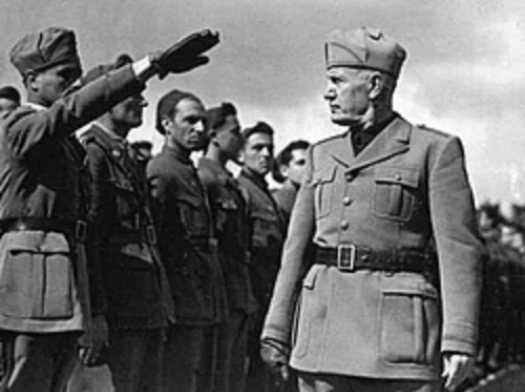
Such pondering lately leads me to examine the 28 October 1940 “OHI (NO) Day” in a broader context. The annual homage to “OHI” Day stems from Greece’s Prime Minister Metaxas firmly stating “OHI” (NO) to Mussolini’s request for his Italian Fascist army to pass through Greece on the above-mentioned date.
Metaxas’ poignant utterance – “So this is war!” – to Mussolini’s messenger, preceded his explanation to the Greek people shortly after, on the same day, 28 October 1940:
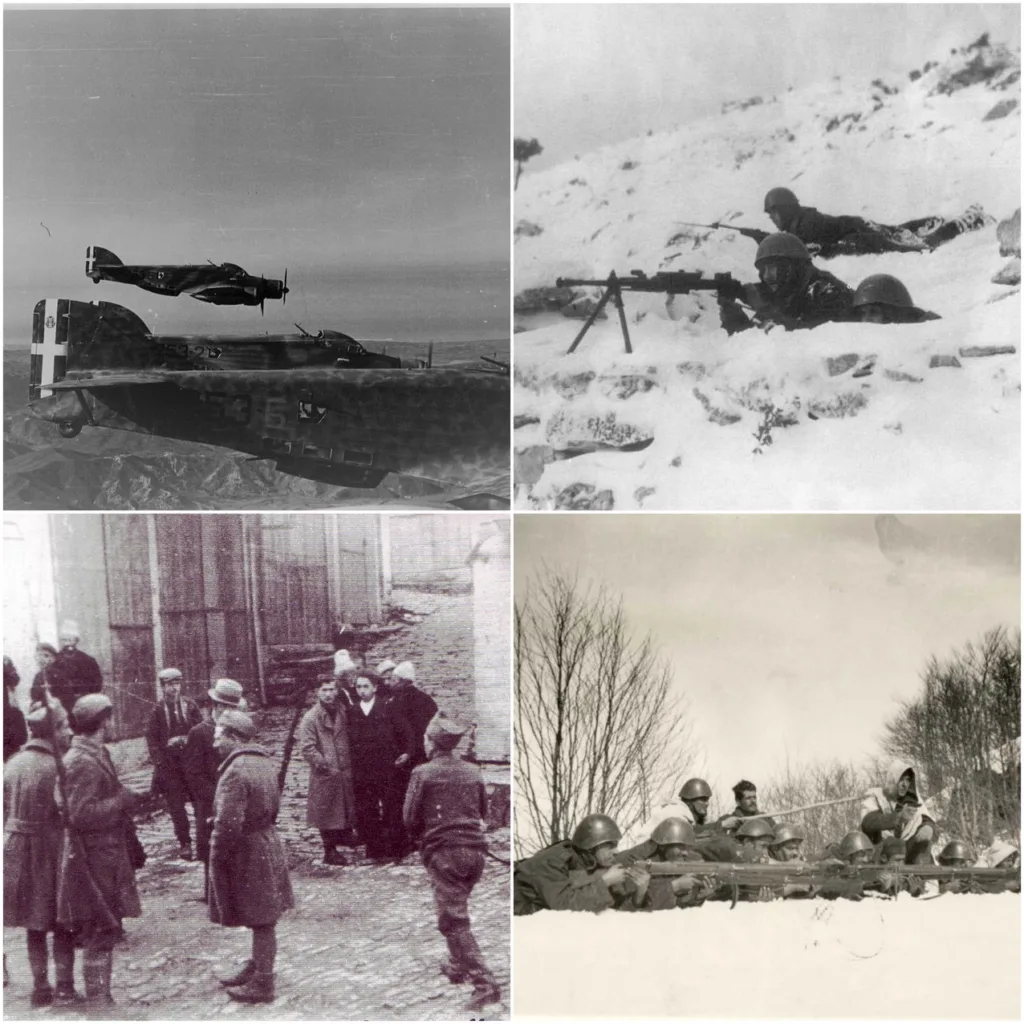
Mussolini Army
“The moment has come for us to fight for the independence of Greece, its integrity, and its honour. Although we have demonstrated the strictest neutrality and equality towards all, Italy, not recognising our right to live as free Greeks, demanded from me today at 3 o’clock in the morning the surrender of parts of the national territory according to her own will, that the movement of her troops to occupy them should begin at 6 o’clock in the morning. I replied to the Italian Ambassador that I consider both this request in itself and the manner in which it is being made as a declaration of war by Italy against Greece. Greeks, now we will prove whether we are worthy of our ancestors and the freedom that our forefathers secured for us. Let the entire nation rise up together, fight for the homeland, your women, your children, and our sacred traditions. Now the struggle is above all.” – Address of Ioannis Metaxas to the Greek People, 28-10-1940
Metaxas, an experienced politician and skilled diplomat aiming to keep Greece neutral, evocatively describes the why of his “OHI” to the press a few days later:
“To avoid war we would have to become willing slaves and pay by extending Greece’s right hand for amputation by Italy, and Bulgaria would cut off our left hand. Of course, it is not difficult to predict that in such a case, the English would cut off Greece’s legs. And rightly so. As they are sovereign at sea, they would not fail, after seeing the enslavement of Greece, to occupy Crete and other of our islands, defending their interests.” – Announcement by Prime Minister Metaxas to the owners and editors-in-chief of the Athenian press at the General Headquarters [Hotel “Great Britain”] on October 30, 1940.
I recently conversed about 28 October 1940 with an Italian gentleman in his 50s who has been living “happily” in Greece for almost two decades. Not wishing to be named, he felt that reciting some Italian history was necessary: “Around a million Italians died in WWI, due to being betrayed by the Allied forces – like Great Britain and France. At the end of WWI and beyond, Italy was in great debt with huge inflation, whereby more than half a million people died due to food shortages and poor harvests in 1918 – apart from the Italians who died fighting this first world war.”
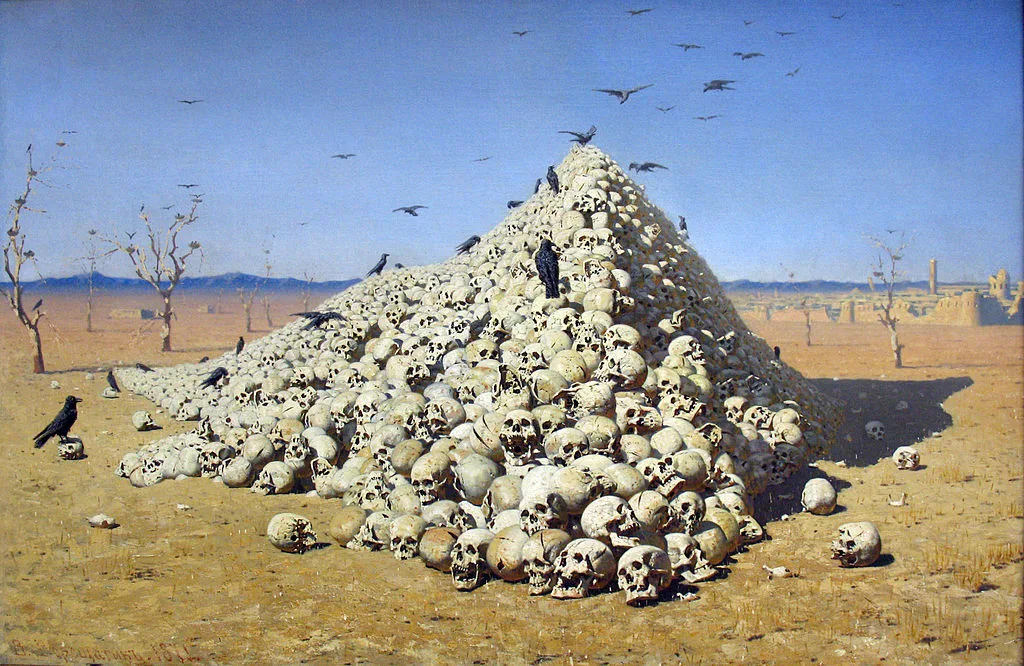
1871. Artist Vasily Vereshchagin. The Apotheosis of War
He then declared with indignation: “The Allies lied to us. We were betrayed at the Treaty of Versailles in 1919, and the Italian people were hurting and angry, and this led to Mussolini and fascism.”
I didn’t point out that Italy involved Greece in World War II by invading her on 28 October 1940. That the failures of Mussolini’s fascist army in Greece forced Hitler to send German troops to Greece in April 1941 – an Axis occupation that lasted until 1944, with much suffering, to say the least, for the Greek people.
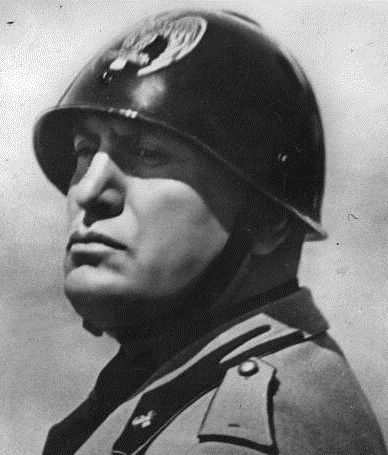
Benito Mussolini Portrait
With documented sources now more accessible, prompting research and discussion in this era where a lack of overall trust towards global establishments’ narratives seems prevalent, I came across surprising information. For example, the “una faccia, una razza” – “one face, one people” saying, referring to a fraternal bond between the Greek and Italian people, was used as exaggerated propaganda by the “Western Allies”.
When Italy switched sides away from the Axis and sided with the Allies in a secret truce in 1943, “una faccia, una razza” was apparently pushed by the Allies as post-war propaganda to cover many atrocities enacted by Mussolini’s fascist army.
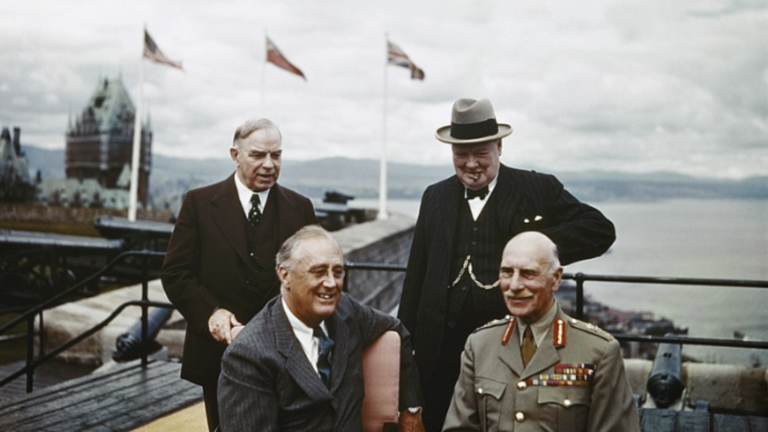
Researcher Spyros Ionas, for example (with sources), writes of the Italian army’s abuses and war crimes in Greece. He further elaborates that Italy was involved by Churchill and Roosevelt in the First Quebec Conference of 1943, whereby her surrender and changing of sides to the Allies included “shaping a new democratic image of the country, covering up and erasing its past”… a “clean-up operation” reinforced in the 1947 Paris Peace Treaty.
Academic Ioannis Kotoulas (PhD in History, PhD in Geopolitics) states that an overall view of the Italian army in Greece from 1940 onwards as humane, compared to the German army, is “a largely post-war construction… the artfully promoted myth of noble behaviour.” He adds, “the coexistence of the Italian soldiers with the subservient Greek population was not a harmonious experience.”
Kotoulas explains that during the Italian army’s 29-month (until September 1943) invasion of Greece, many executions and massacres occurred, such as the 1943 Domenikon massacre in Thessaly. He also mentions that the Greek famine in the winter of 1941–42 and immediately after, where “it is estimated that at least 100,000 people died… was a consequence of the general occupation of the Italians.” Furthermore, Kotoulas attributes the belief of the “good-natured” Italian soldier versus the “merciless German soldier” as “constructions that are due to the simple change of camp on the Italian side in 1943 and the alignment with the victors of war.”
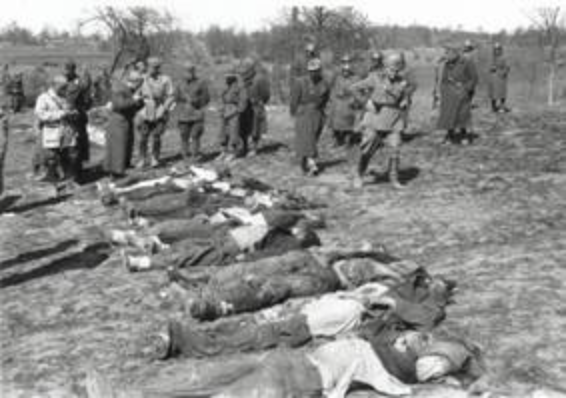
Domeniko, 1943
Let’s hope that Greece today will not be in the position that Metaxas was on 28 October 1940; nor, for that matter, in that bizarre turn of events when, in the 2015 referendum regarding “The Crisis” bailout, we the Greek people saw our ‘NO’ vote become an apparent ‘yes’.
May we now have the insight and clarity to demand “OHI – NO” to propagandistic lies and a consequent NO to the continuation of wars where neither Greek, Italian, nor any of the world’s people be at war. May our civilised, peace-loving selves reign, bearing this saying in mind perhaps: “Of all manifestations of power, restraint impresses men the most.” – By F. B. Jevons, A History of Greek Literature: From the Earliest Period to the Death of Demosthenes, 1886.
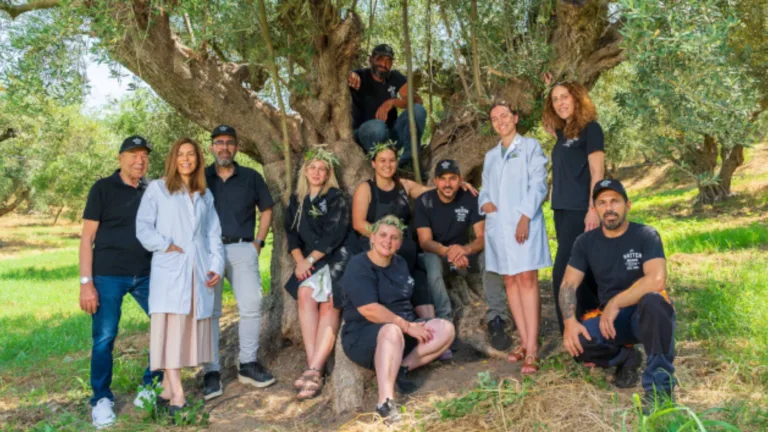
The Master Miller’s mission has its roots in a philosophy that begins at the olive tree and reaches the heart of those who seek quality.
From the root of the tree to the heart of the vision
The story of The Master Miller does not begin with a product, but with a need: to build a world where the grower has a voice, the consumer has knowledge, and olive oil once again receives the respect it deserves.
Born from the experience and values of Papadopoulos Olive Oil Mill – Mediterre, The Master Miller was created as an evolution — a bold new expression of a long-standing family legacy in Greek olive oil.
It is a brand built on love for the land, commitment to quality, and the desire to share a deeper truth about the significance of olive oil in today’s world.
“We’re not just building a brand,” explains Konstantinos Papadopoulos, CEO at The Master Miller. “We are creating a quality ecosystem that connects the land, the grower, and the consumer, with trust and transparency at every step.”
Behind this mission stands a family with deep roots in Greek agriculture, one that dared to look toward the future with open eyes and a heart grounded in tradition.
Master Growers: The power of the land. The power of the people.
The most valuable investment of The Master Miller is in its people, the Master Growers — a community of farmers who cultivate not just olives, but culture.
They receive training and scientific support, and they participate equally in the creation of the final product.
“Being part of this team means you’re never alone,” according to Dimitris Kanellopoulos, Master Grower. “There’s support, shared experience, and the exchange of knowledge. You grow better, but most importantly, you grow with greater confidence.”
The Master Growers Certified Seal accompanies every bottle of olive oil, ensuring its journey is traceable from grove to shelf. It is the voice of a community and the mark of a noteworthy kind of agriculture: one that respects the land and those who care for it.
Vertical thinking at The Master Miller. From nature to the future.
We support the philosophy of holistic integration, from cultivation, milling, and storage to packaging and distribution. Every stage, every hand, every step is guided by shared values, strategy, and purpose.
“Every drop of olive oil produced within our community carries a story, a sense of care, and a clear identity,” says Giannis Nikolopoulos, The Master Miller’s Head of Production. “We support a kind of production that respects the product and honors the people behind it.”
Quality backed by proof — not promises
The Master Miller is proud of its distinctions, which come to Greece from New York to Japan, from London to Argentina.
“Awards are important. Not only because they recognize quality, but also because they give voice to the effort, the team, and the hard work behind every bottle,” remarks Eva Papadopoulou, COO of The Master Miller.
But for us, the greatest award is trust.
With certifications such as IFS, HACCP, PGI Olympia, BIO Hellas, and USDA Organic, as well as an unsurpassed traceability system, high quality is not merely a marketing slogan. It is our well-documented commitment.
A new chapter in the story of Greek olive oil
The Master Miller is more than a product. It is a platform for growth. A movement. A confirmation that Greek olive oil can face the future with confidence, strength, and elegance. We don’t just export olive oil. We export philosophy.
*Originally published on Greek Liquid Gold: Authentic Extra Virgin Olive Oil (greekliquidgold.com). See that site for recipes with olive oil, photos from Greece, agrotourism and food tourism suggestions, and olive oil news and information.