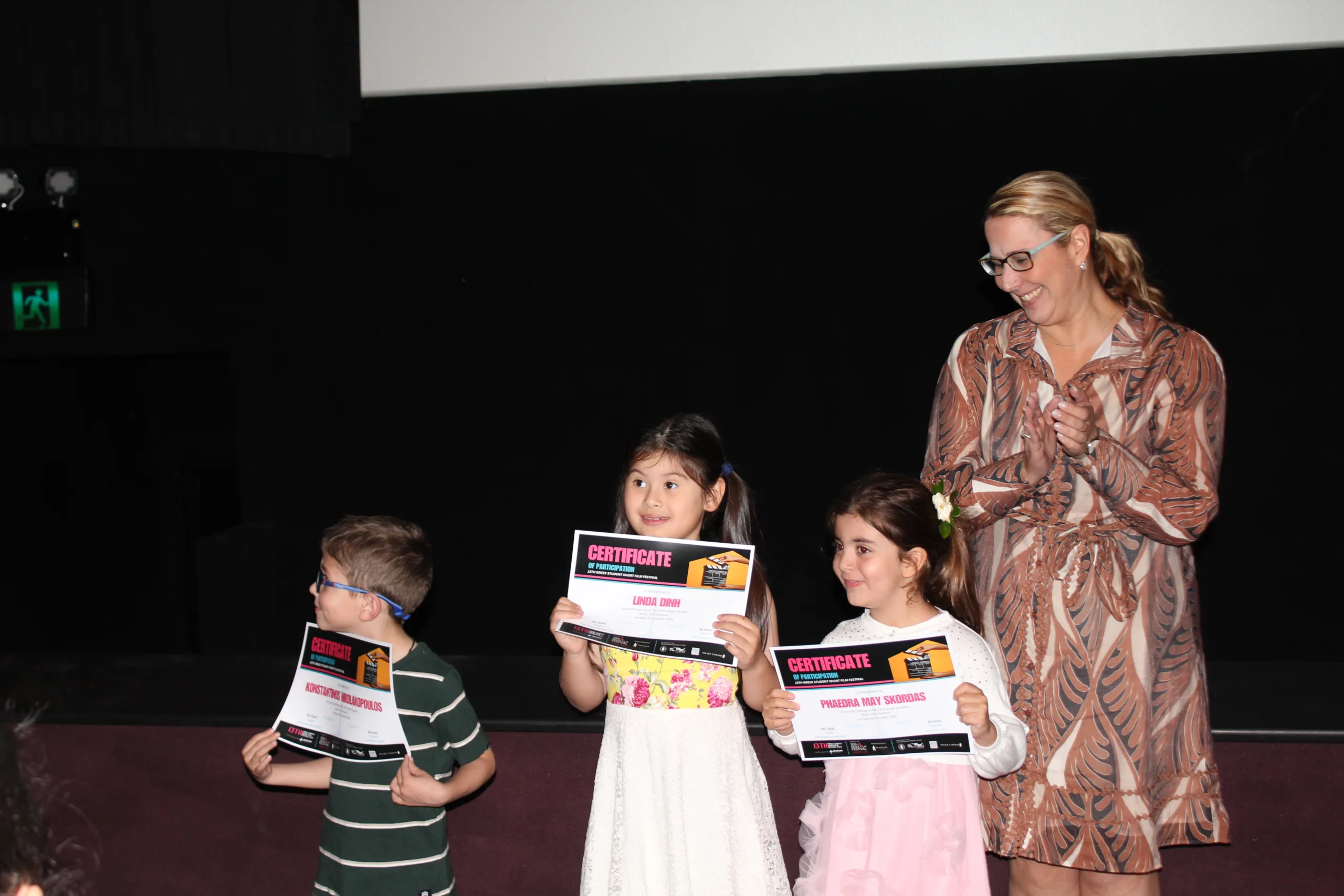
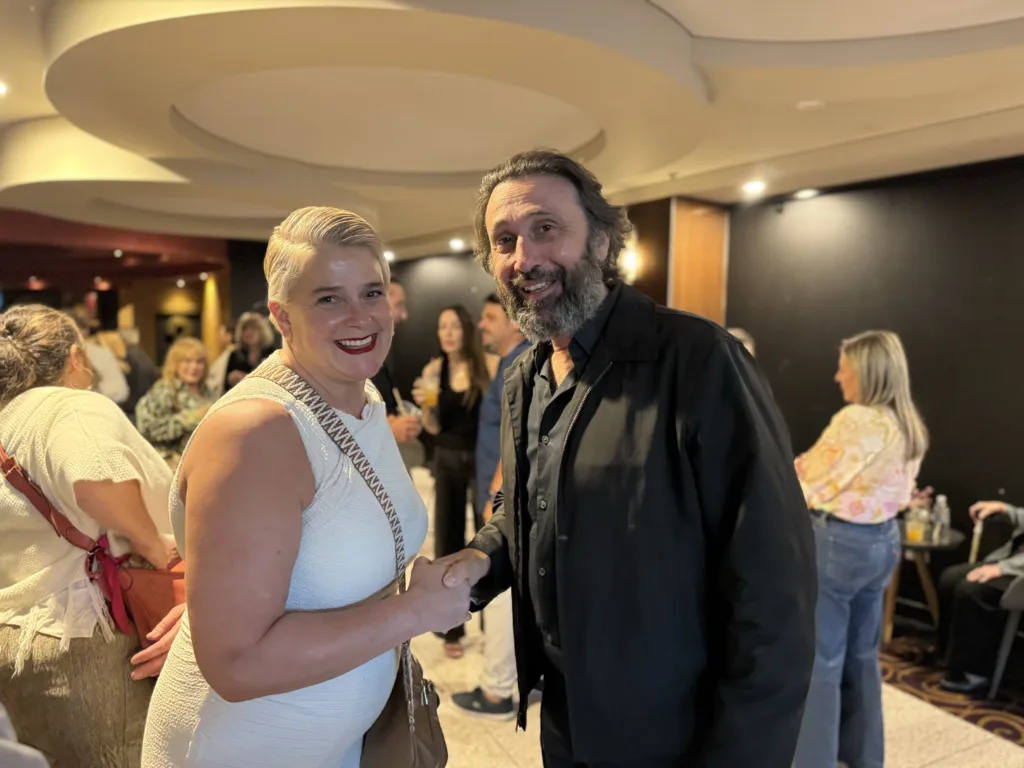
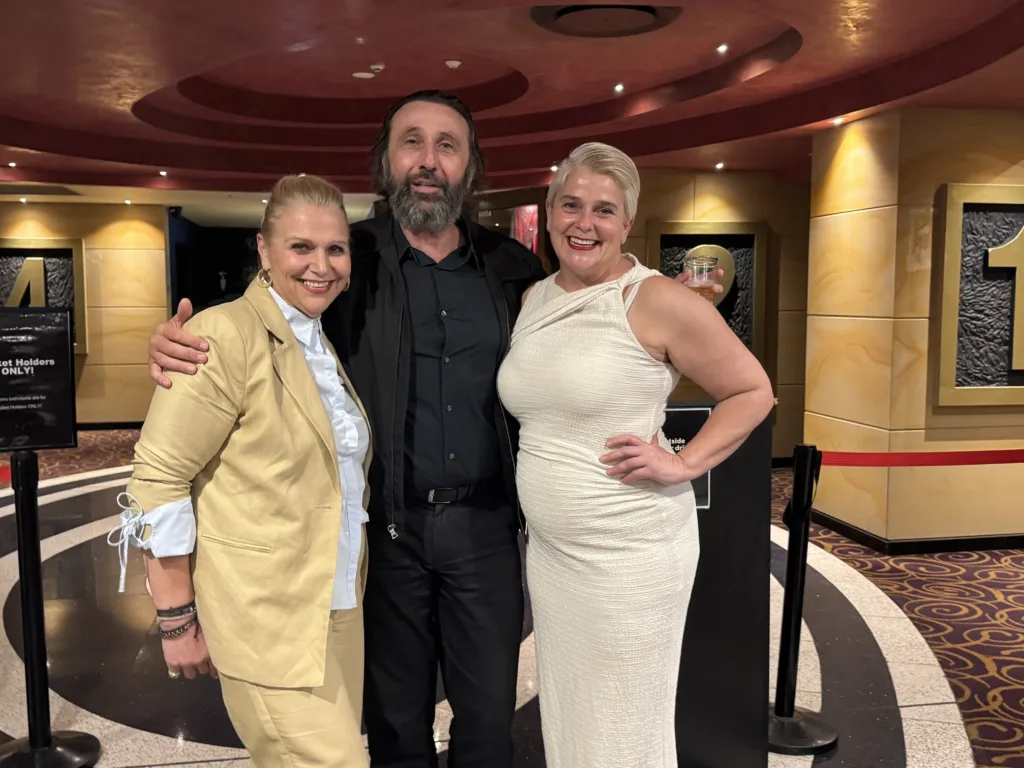
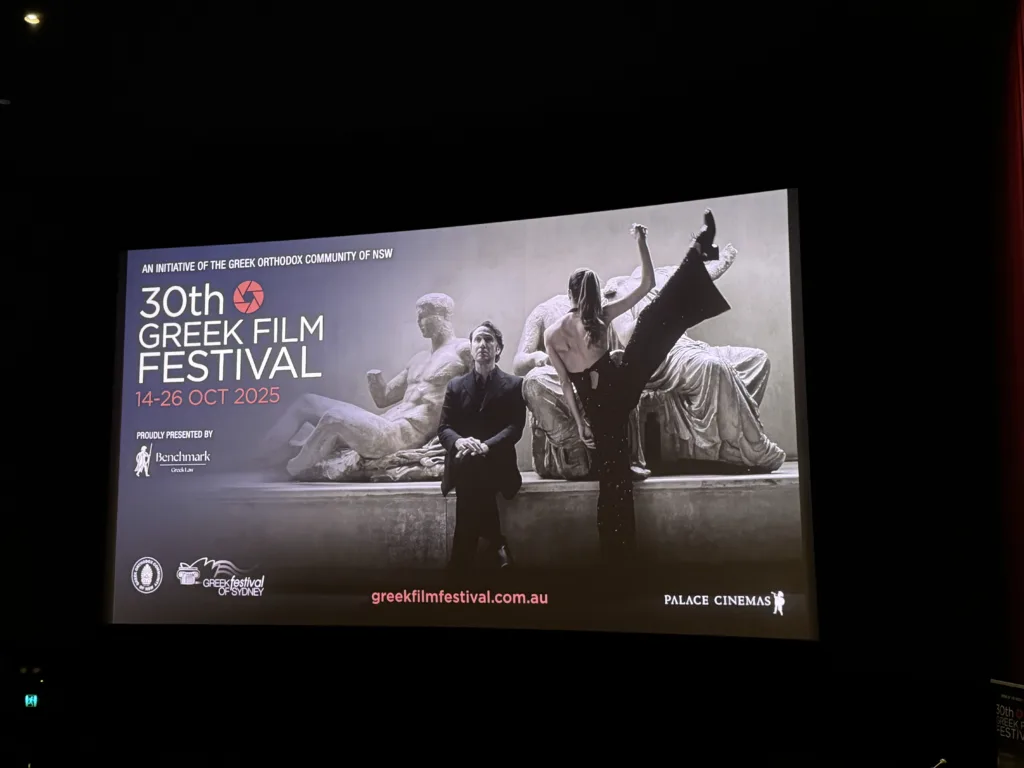
The 13th Greek Student Film Festival – staged within the 30th Greek Film Festival of Sydney – filled the cinema with laughter, pride, and plenty of Greek as students premiered short films made in classrooms and community schools across Sydney.
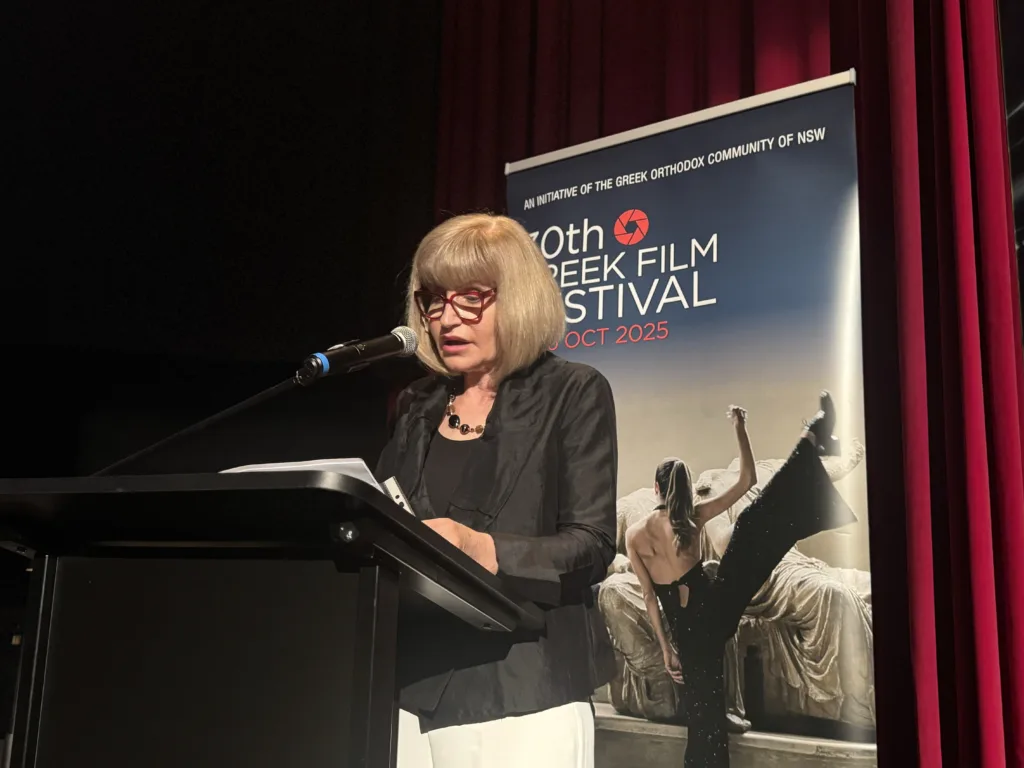
Emcee Dimitri Kallos opened with acknowledgements to presenting partners and guests, including Harry Danalis, President of the Greek Orthodox Community of NSW (GOCNSW), Nia Karteris, Chair of the Greek Festival of Sydney and Film Festival, Lucia Johns, from the NSW Federation of Community Languages, and Geocorp Finance owner Paris Georgiadis.
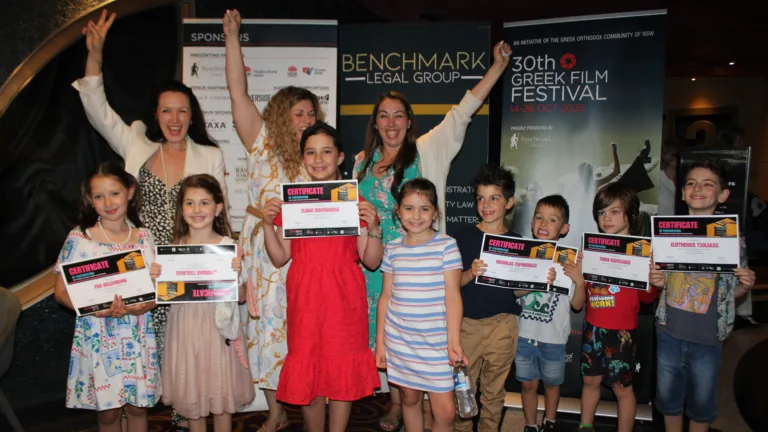
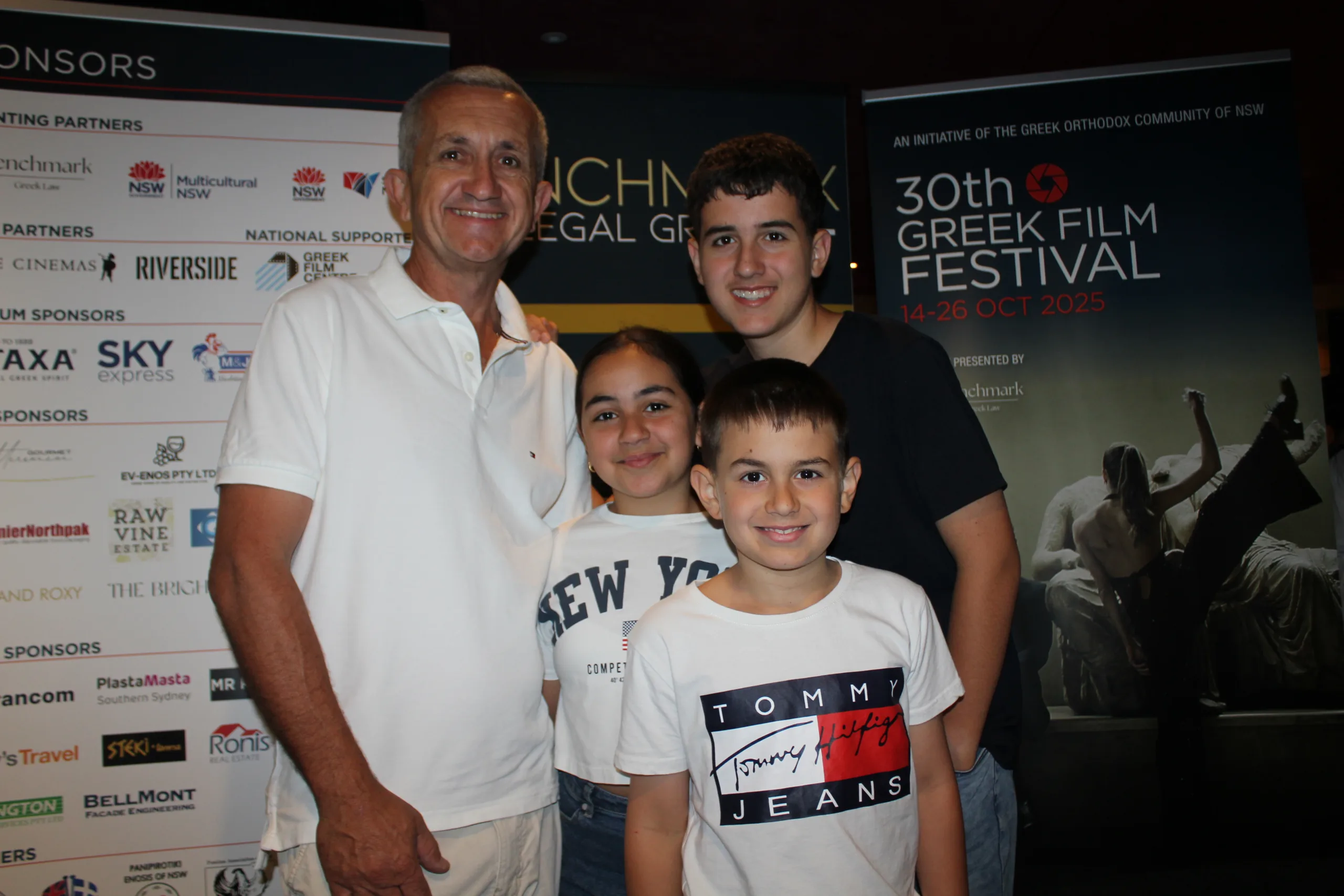
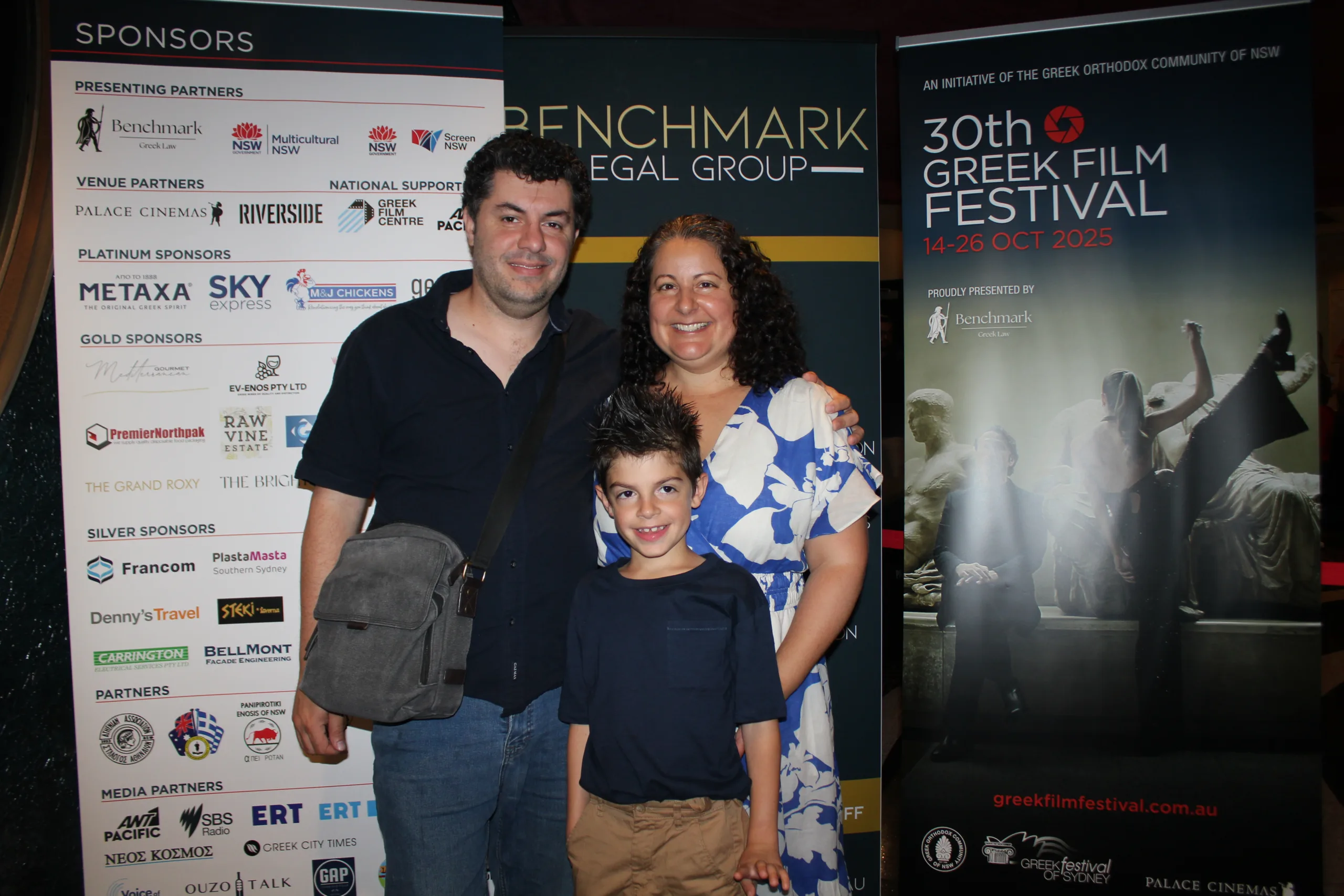
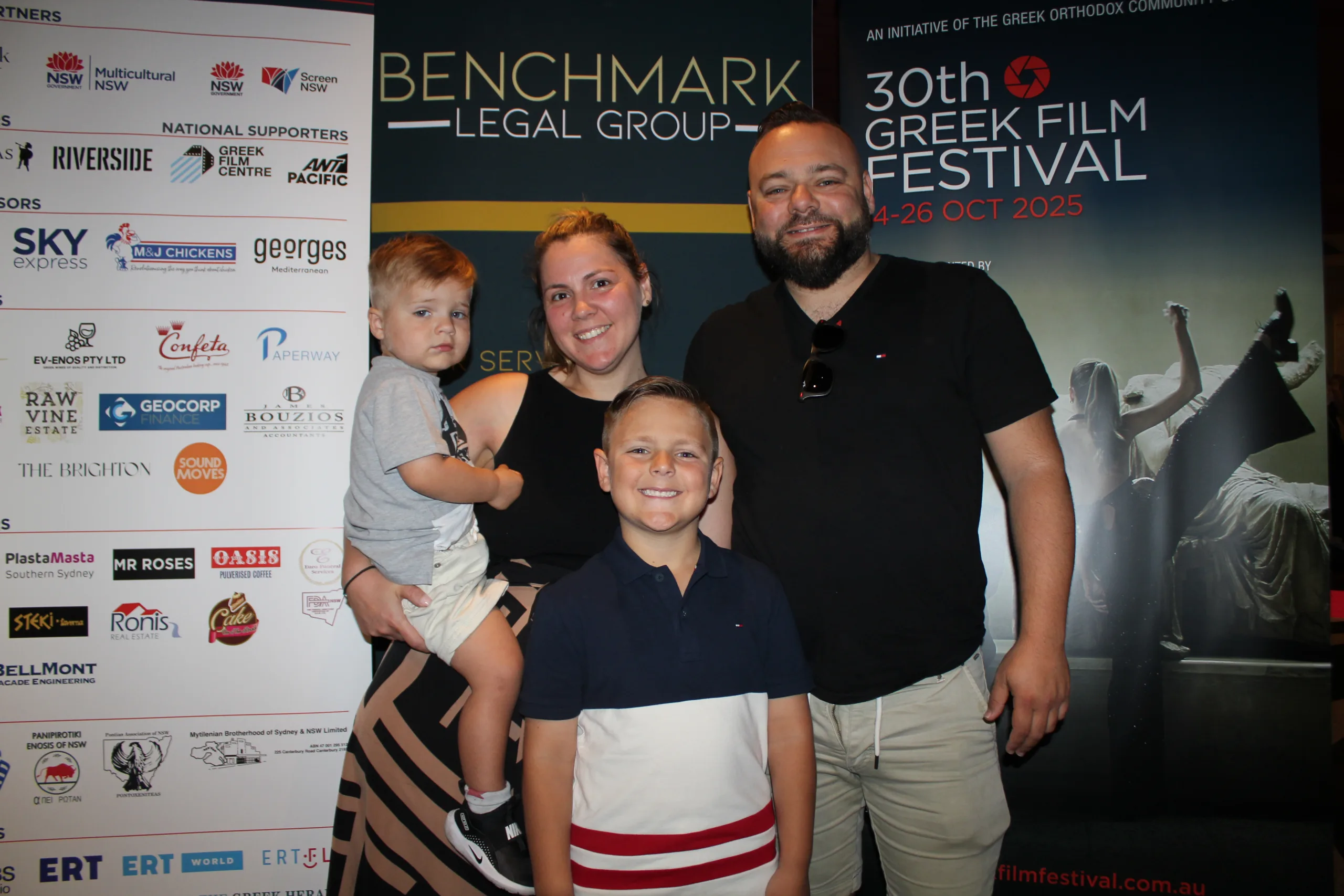
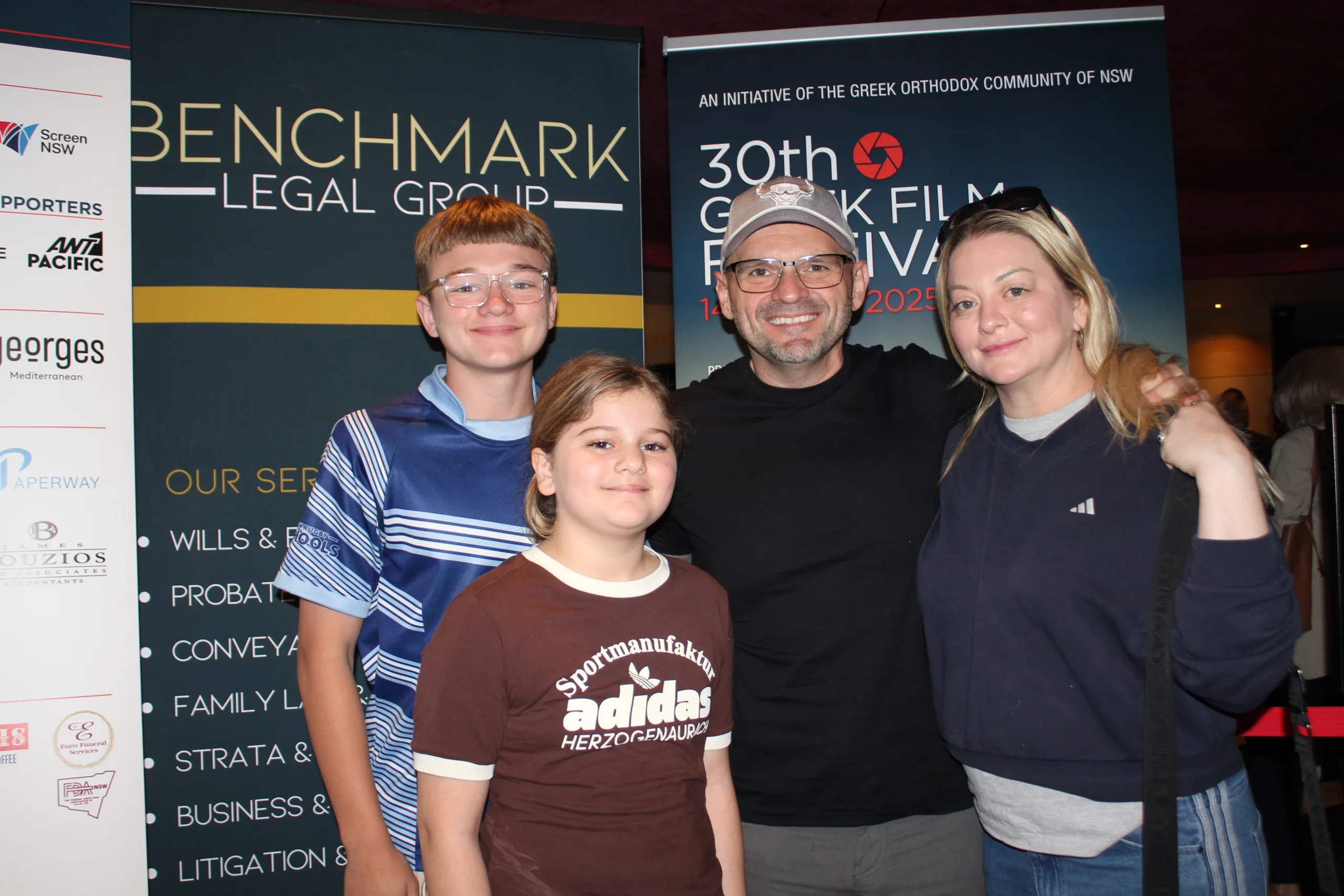
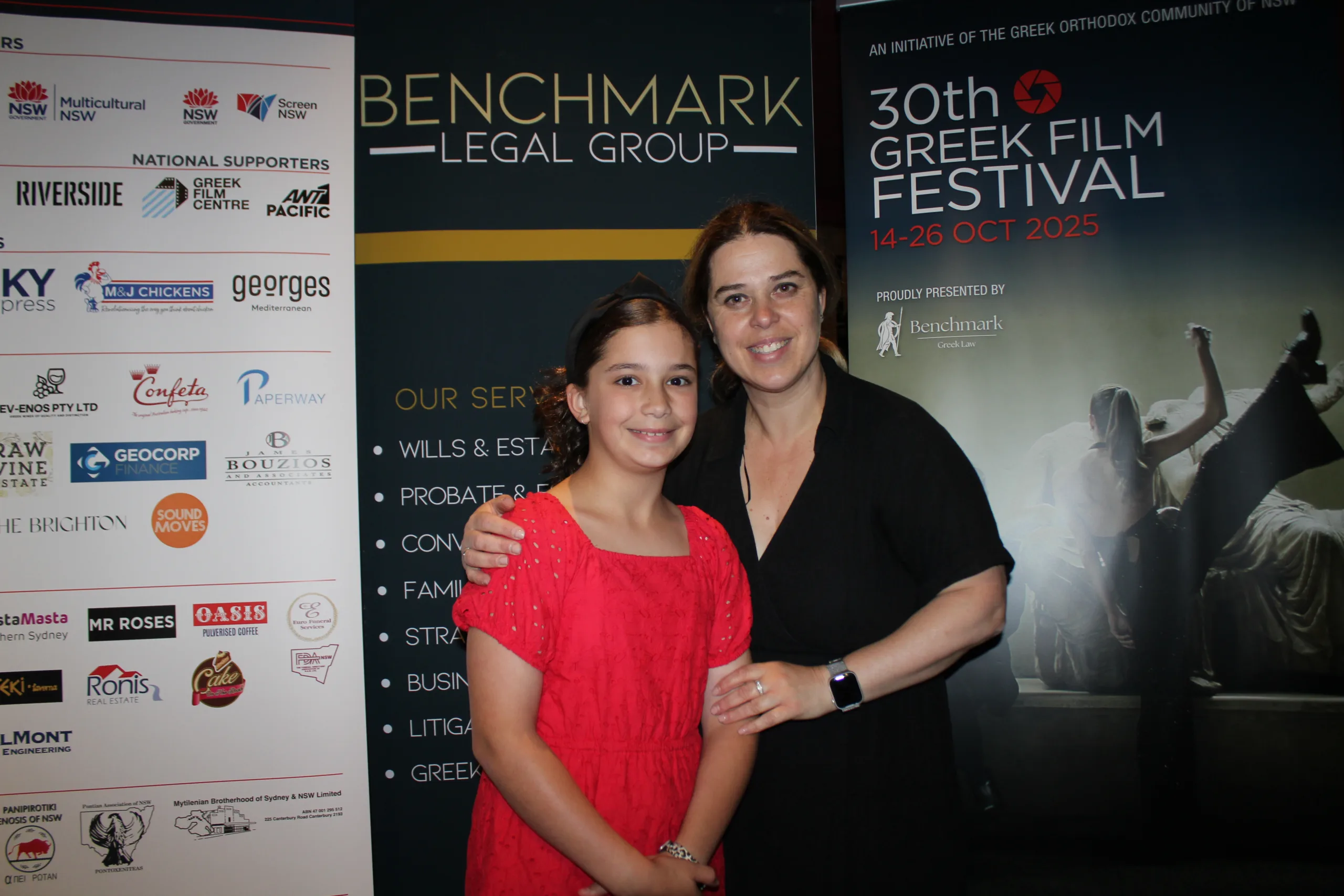
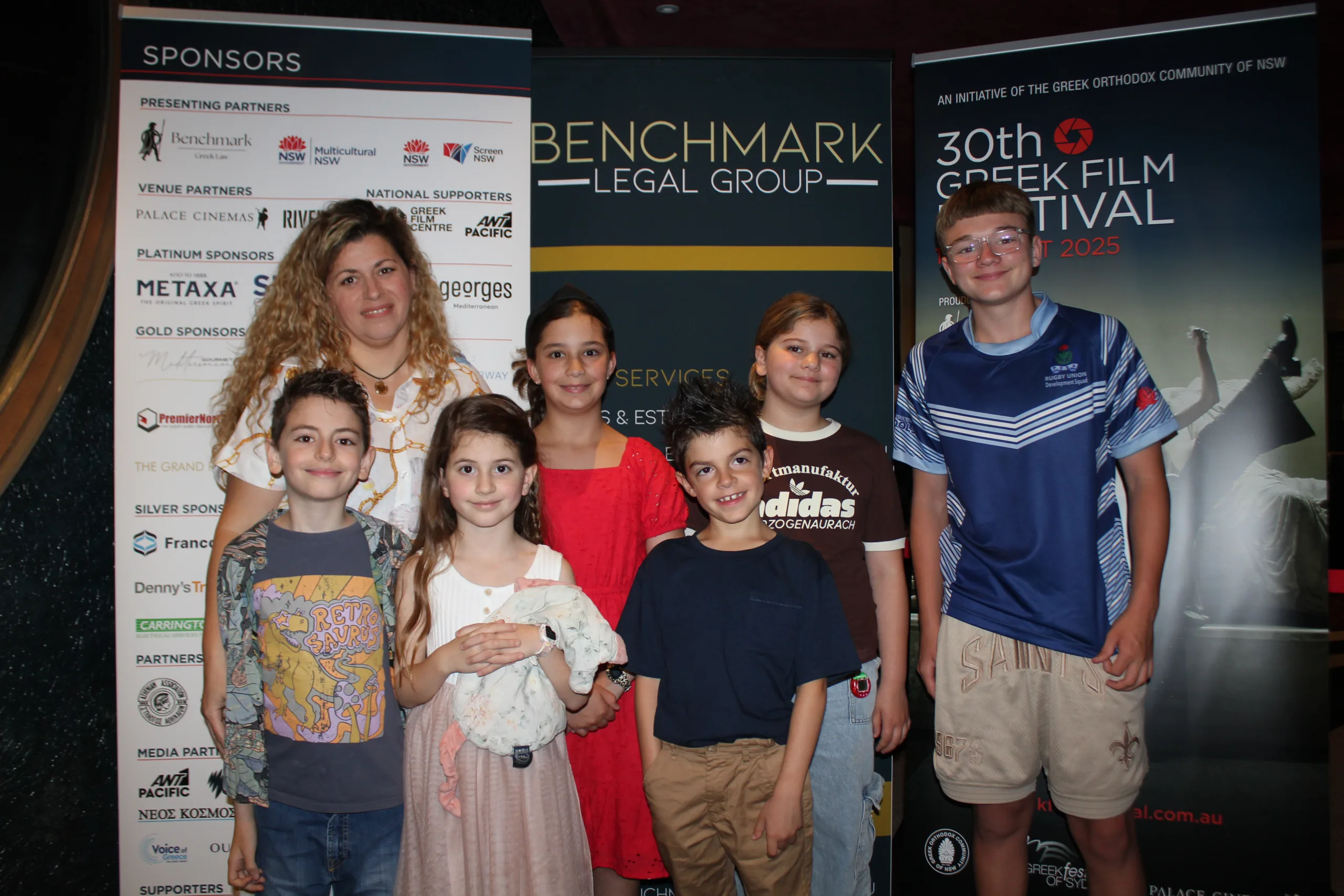
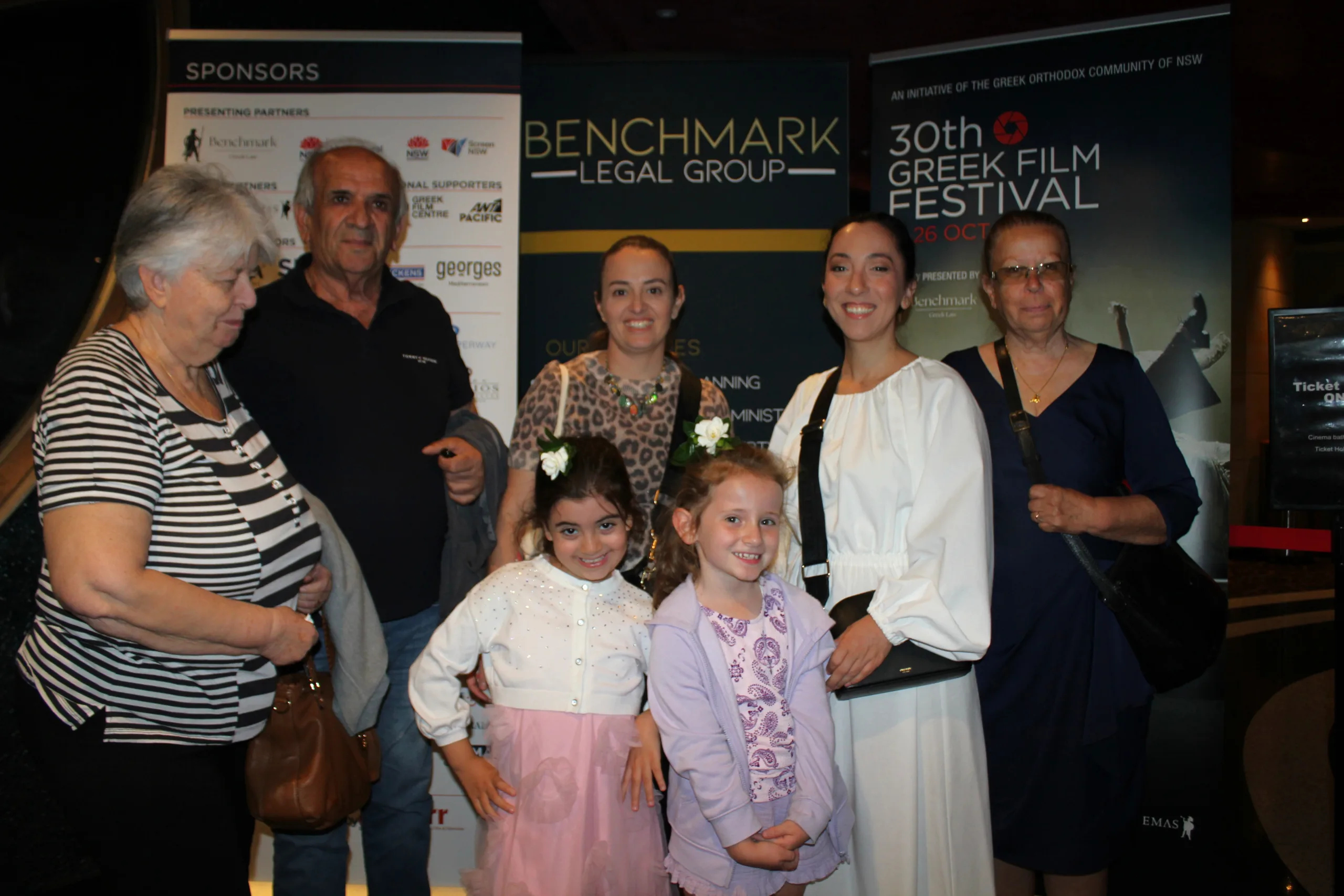
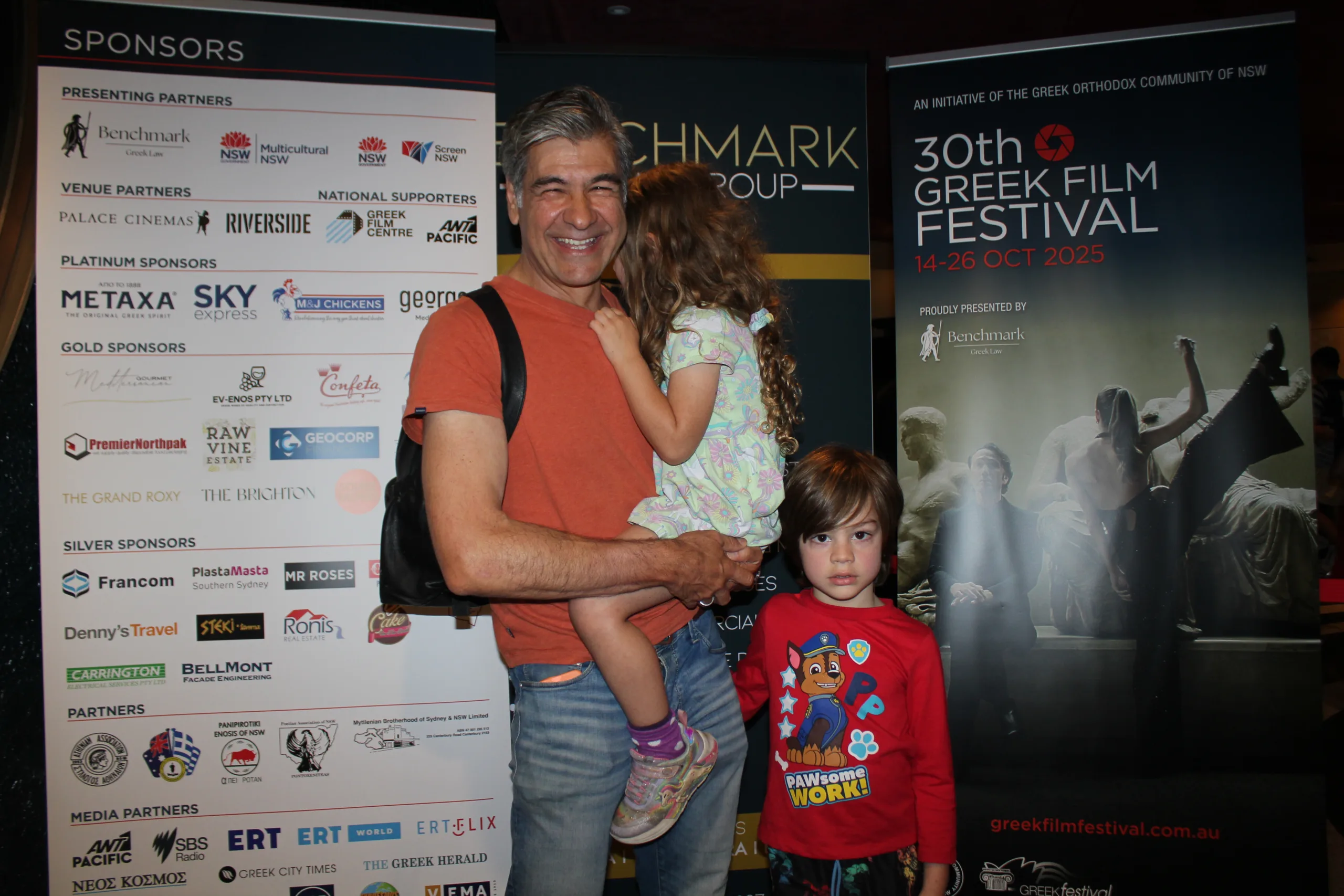
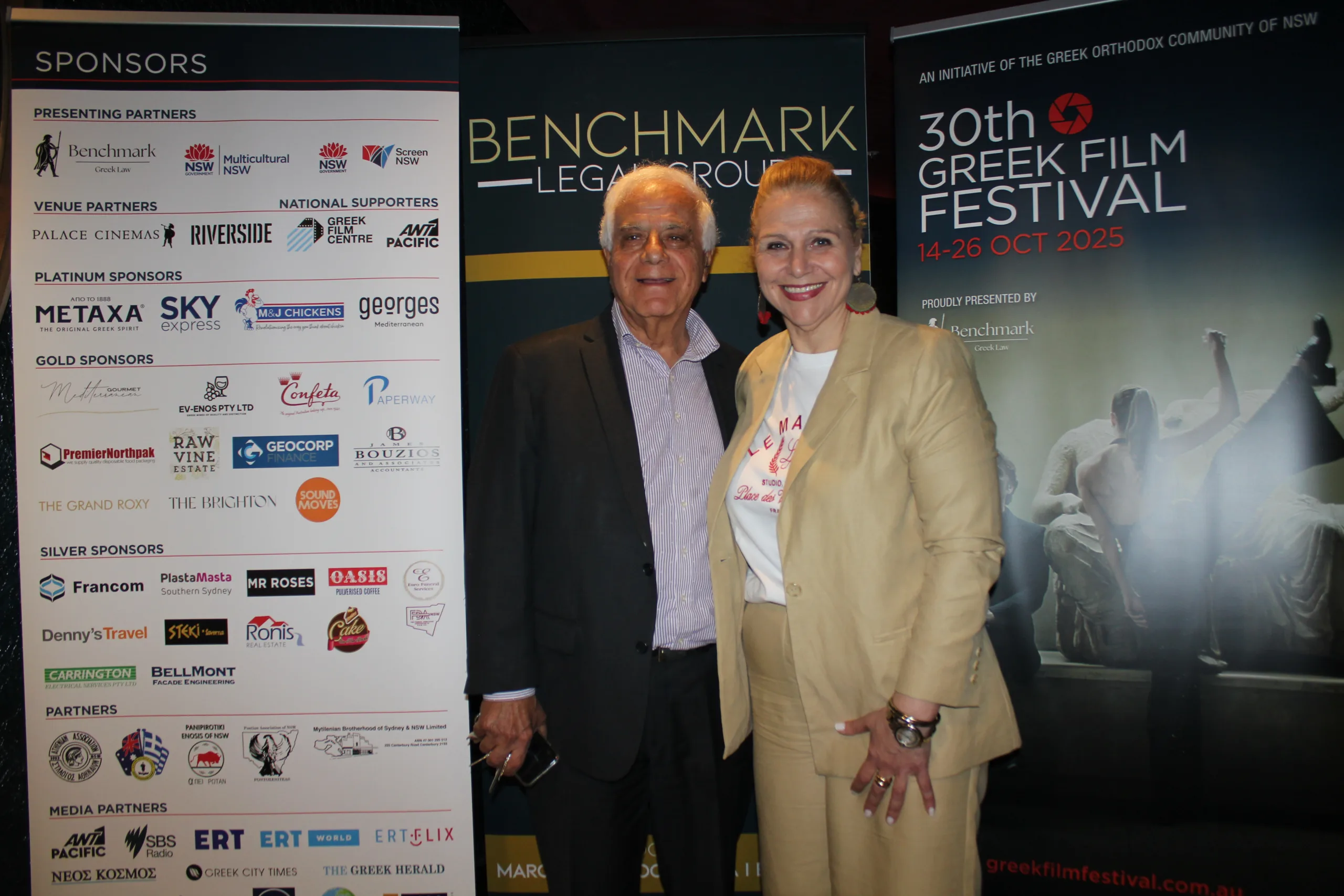
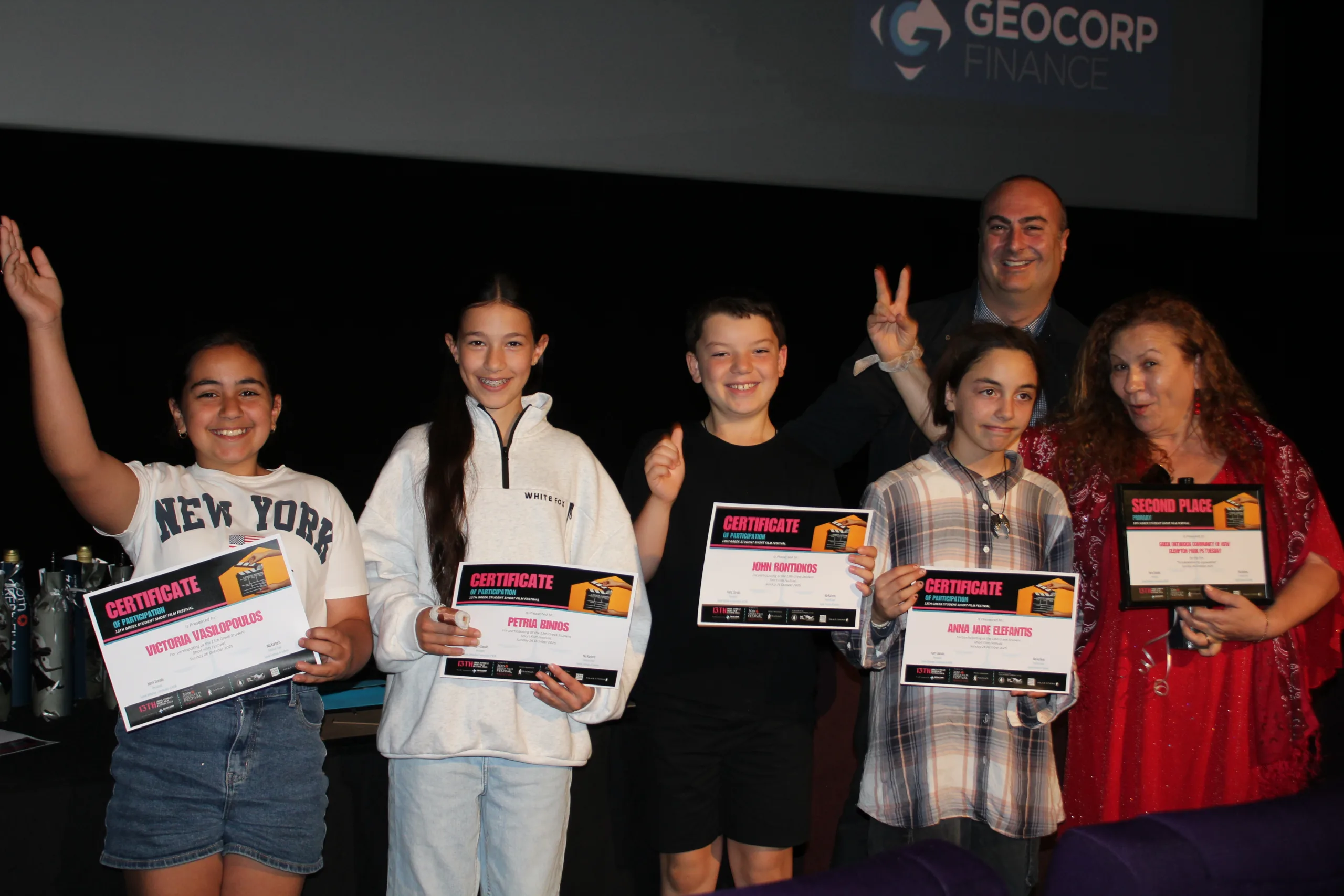
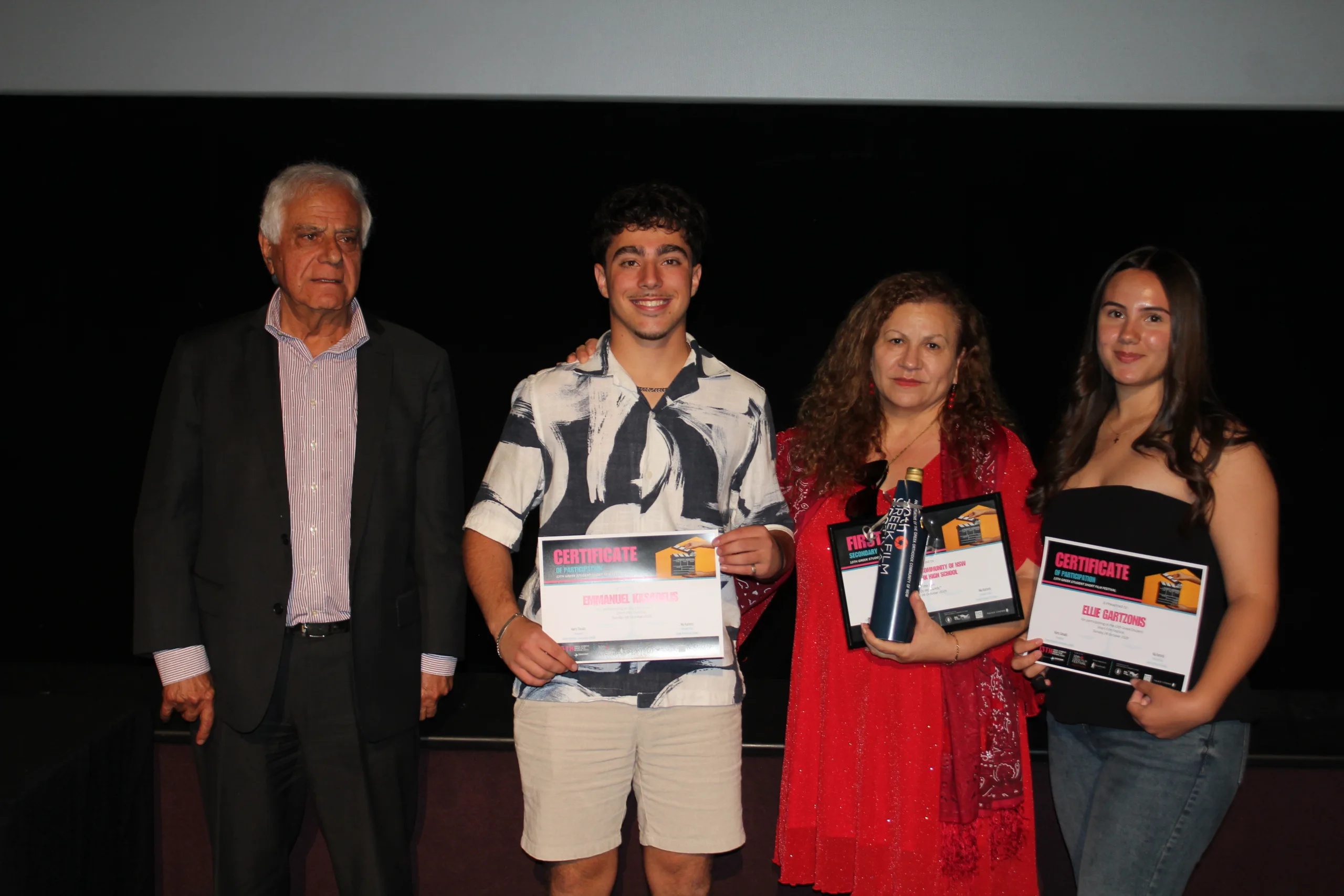
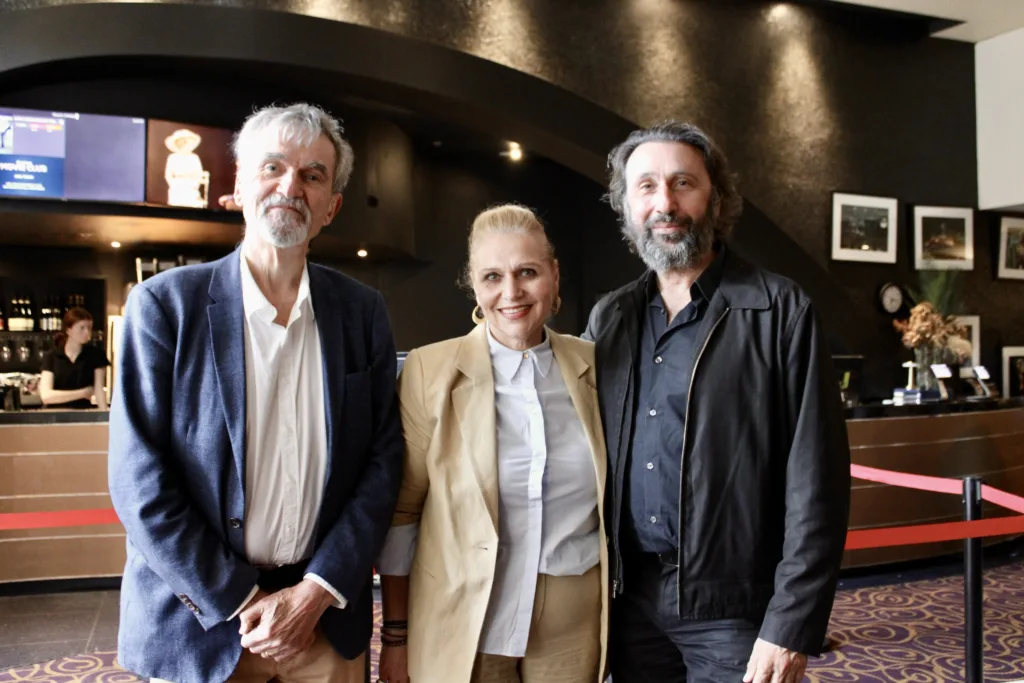
Families attended the Greek Student Film Festival. All photos copyright The Greek Herald / Andriana Simos.
Kallos underscored how the festival gives young people a chance to “be creative, think outside the box and showcase Greek in new and exciting ways,” while keeping language and culture thriving.
The Greek Orthodox Community of NSW (GOCNSW) President Harry Danalis praised the initiative as a practical way of promoting Greek language and culture through student-led storytelling.
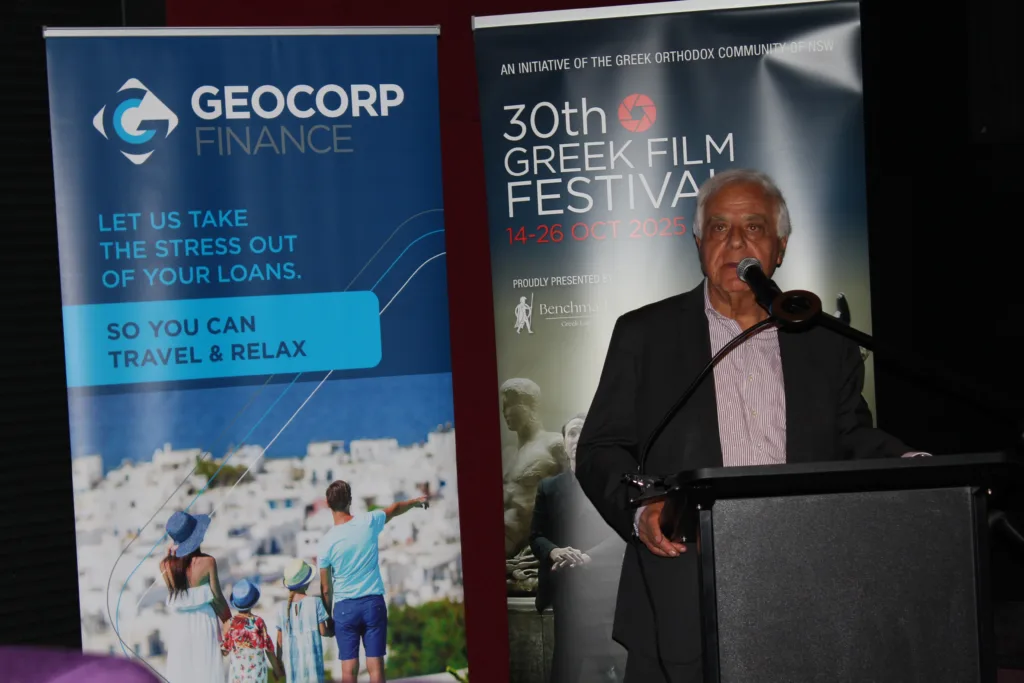
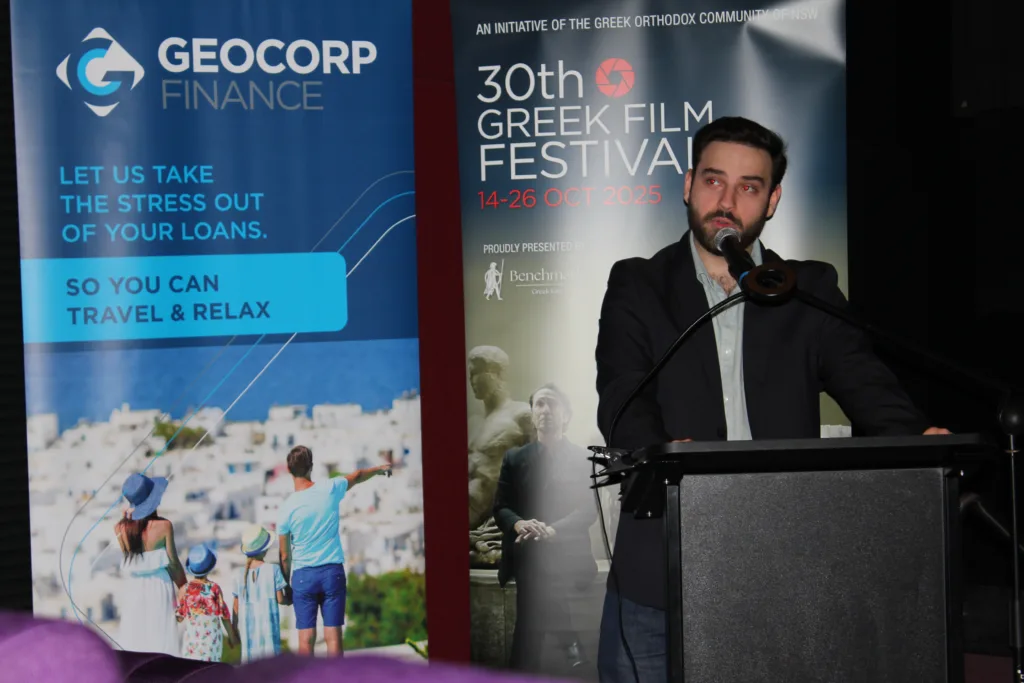
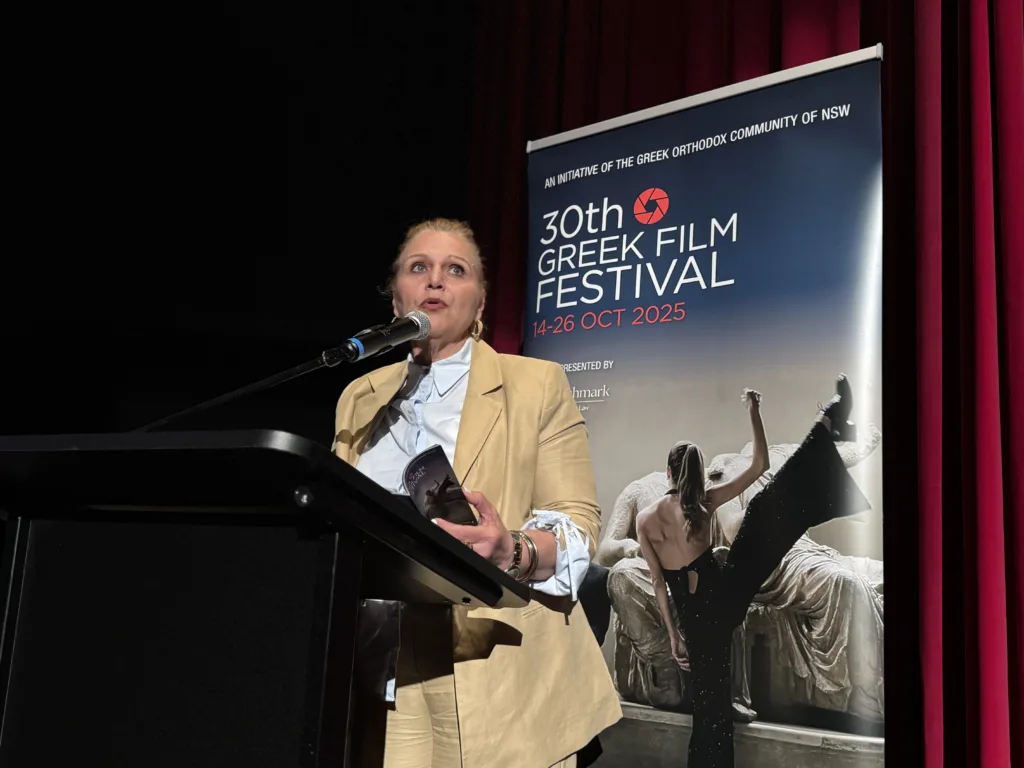
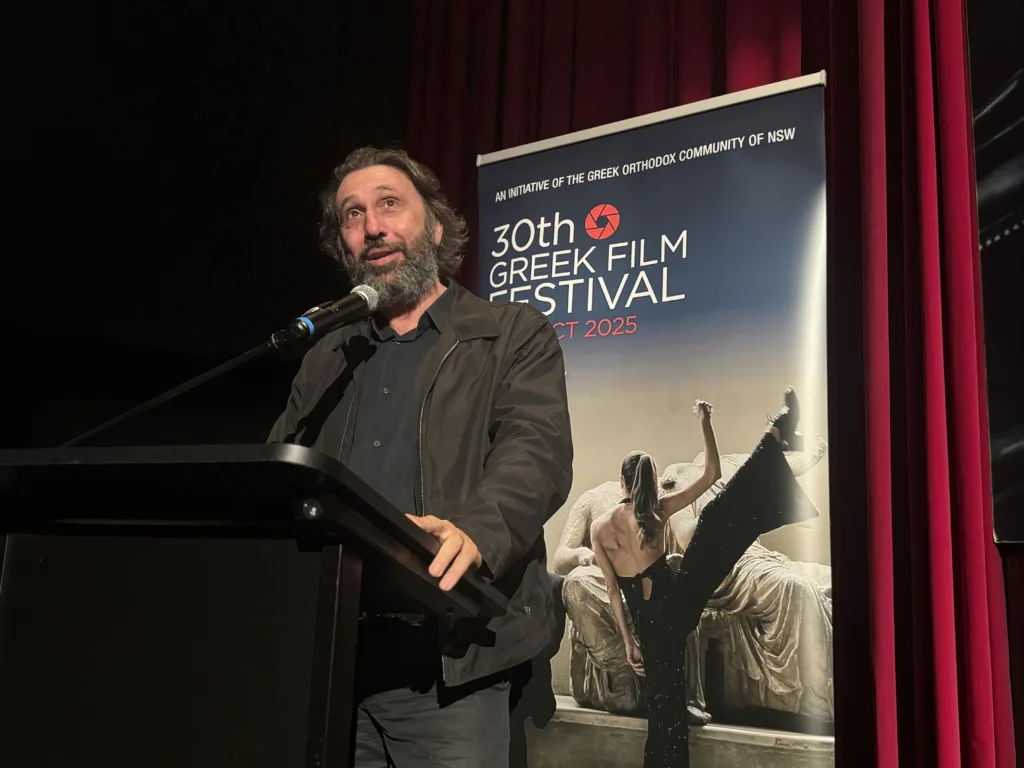
Harry Danalis.Dimitri Kallos.
Backed by Geocorp Finance (prize pool: $500 for first, $400 for second, $300 for third in each category) and supported by RAW Vines Estate for participating teachers, the event also highlighted an international learning link: Zoom workshops with Greek children’s educational centre Naniko Plano, founded by filmmaker Dimitris Spyrou (The Flea), whose work featured as part of the festival’s 30-year celebrations.
After the formalities, Kallos invited the audience to grab their popcorn – “Let’s enjoy what these students have made for us” – and the reels began.
2025 festival focus: Democracy
This year’s theme, “Democracy,” invited students to treat democracy not just as a political system but as a value, a right, and a shared responsibility – explored through fiction, documentary, or animation.
Prompts ranged from decision-making at school or home, to youth voice, rights and equality, history or imagined worlds without democracy, and what happens when people can’t make their own choices.
All films screened on the festival’s closing day at Palace Cinema Moore Park on Sunday, 26 October 2025, showcasing how Greek language learning can thrive through creativity and collaboration.
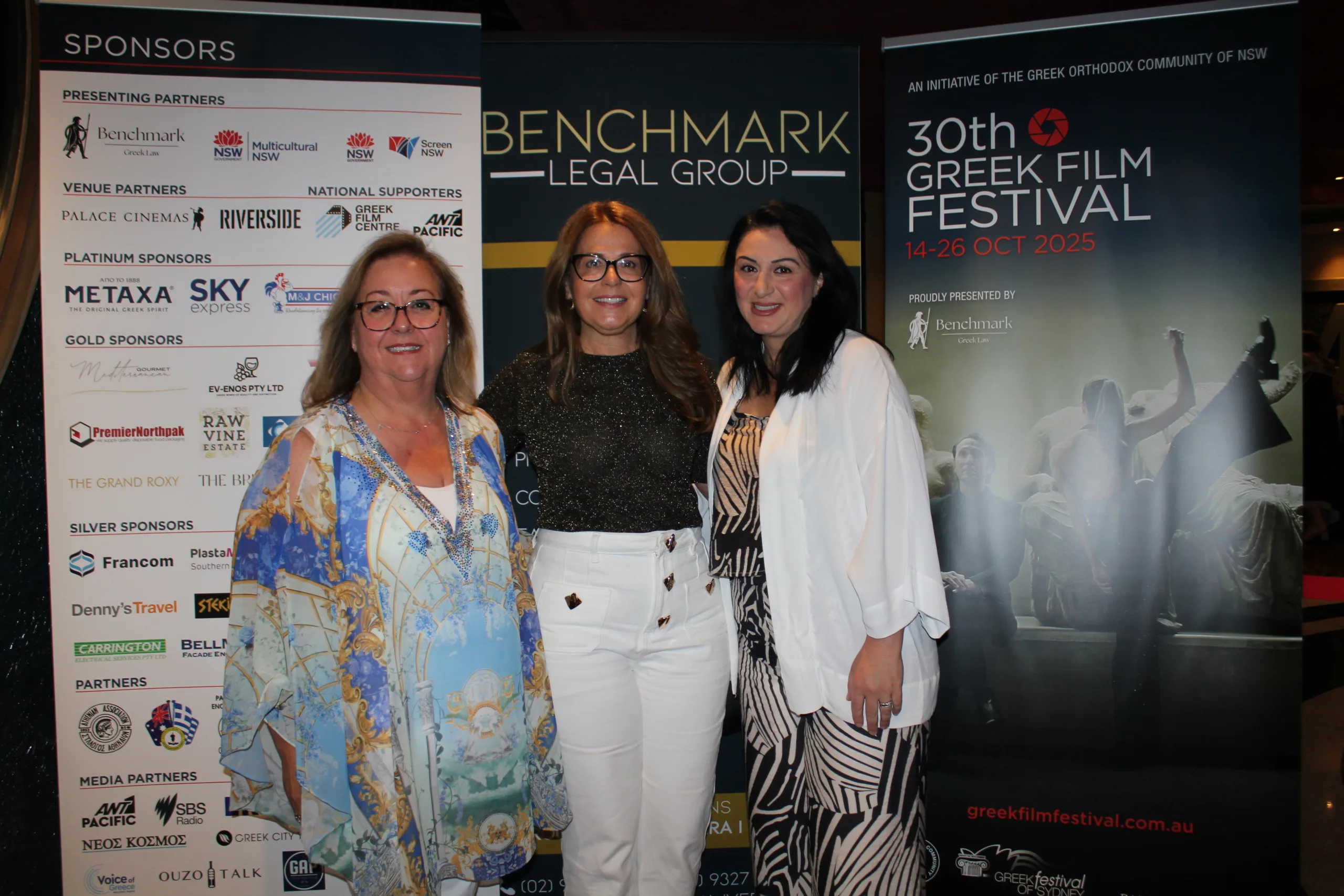
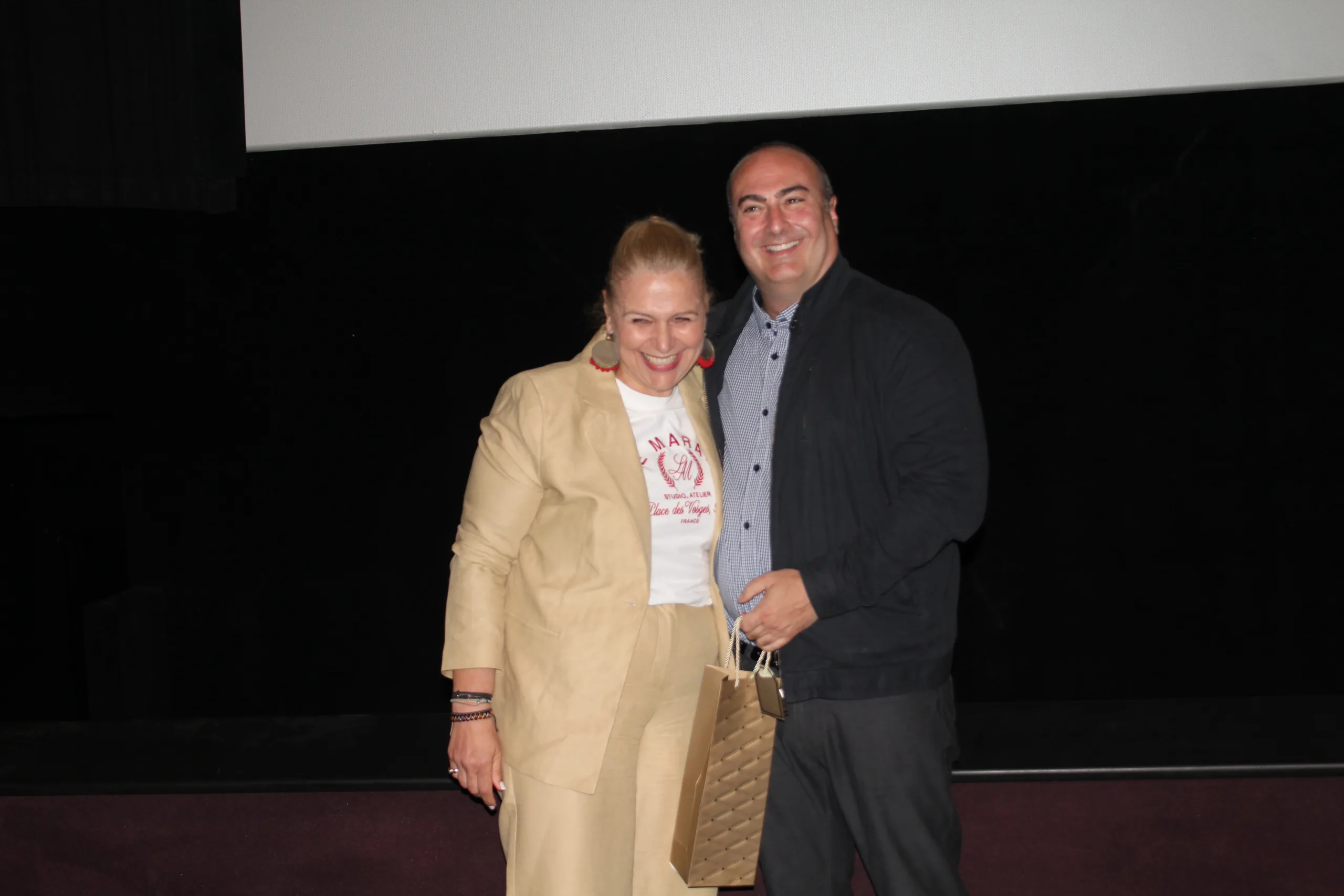
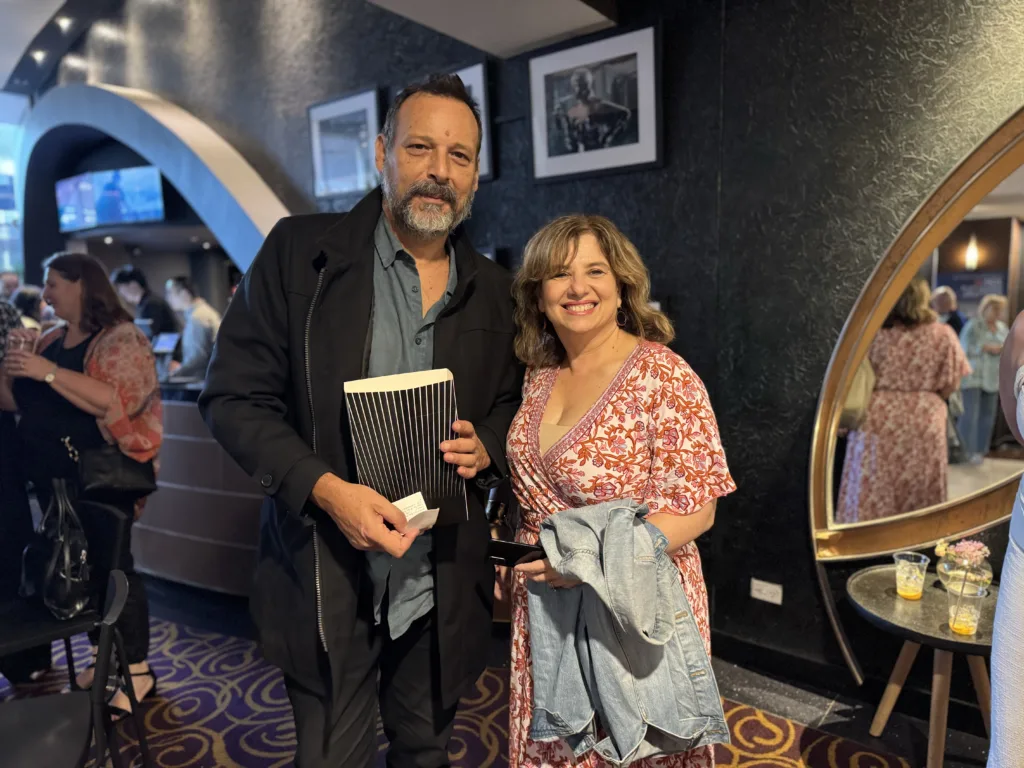
The screenings were held on Sunday, October 26. Pictured here is Harry Danalis and Nia Karteris.
A newcomer triumphs: Greek SchoolCentral Coast
A standout success story came from the Greek School Central Coast, which won First Prize in the Primary School Category for its short film Η Δικτατορία του Αρακά (The Dictatorship of the Pea).
The film used humour to explore the year’s theme, imagining a school where one pupil declares that everyone must eat peas – a light-hearted way to spark discussion about freedom, fairness and choice.
School Principal Constantina Kottaridis, who helped establish the school just a year ago, said the win was both emotional and affirming.
“We tied it into the vocabulary they already knew. Most of the children in our school are learning Greek as a second language,” she told The Greek Herald.
Greek School Central Coast teachers and students.
Kottaridis added that seeing her students perform in Greek was the most rewarding moment of all.
“It’s very exciting and rewarding,” she said.
“To be honest, I feel we had already won in our students’ hearts because when we finished the film and showed it to them, every time their part came up [on the screen] you could see their faces light up because they were so proud of themselves. Keep in mind that just one year ago, all the kids didn’t speak a word of Greek so for them, it was a big achievement.”
Ten-year-old student Terry Tsolakis said the experience made him feel like a star. “I felt proud to see myself on the big screen,” he said. “It felt good to win. I now officially have bragging rights!”
Winners who spoke the language of freedom
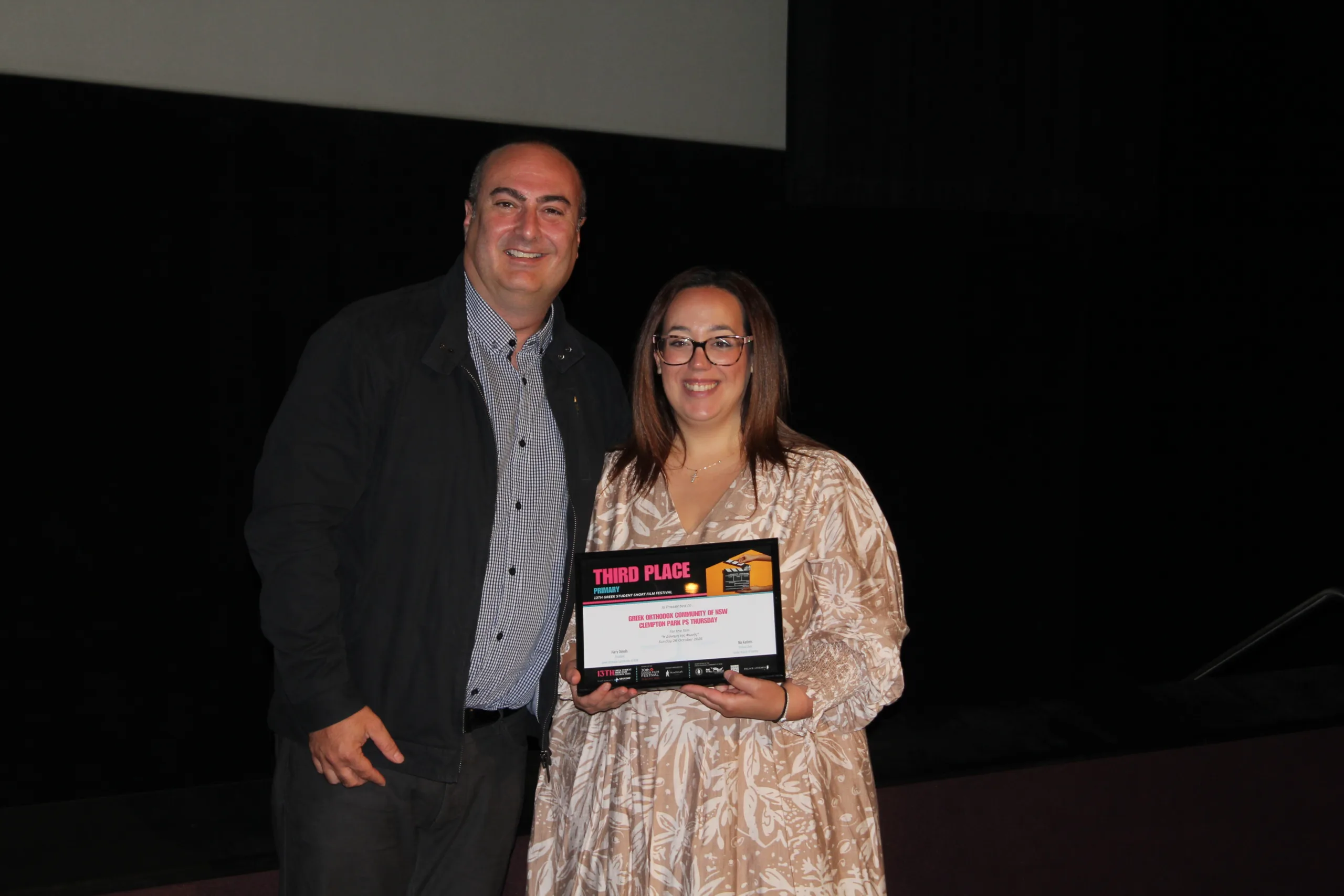
In the Primary School Category, Clemton Park Tuesday Greek Afternoon School (GOCNSW) claimed second place for Το Τηλεσκόπιο της Δημοκρατίας (The Telescope of Democracy) under the direction of Elena Matsouka, while Clemton Park Thursday Greek Afternoon School (GOCNSW) took third for Η Δύναμη της Φωνής (The Power of Voice), led by Konstantina Rizou.
The Secondary School Category top prize went to Clemton Park High School for Η Τάξη της Σιωπής (The Class of Silence) – also guided by Elena Matsouka – praised for its mature handling of the theme and powerful reflection on self-expression and solidarity.
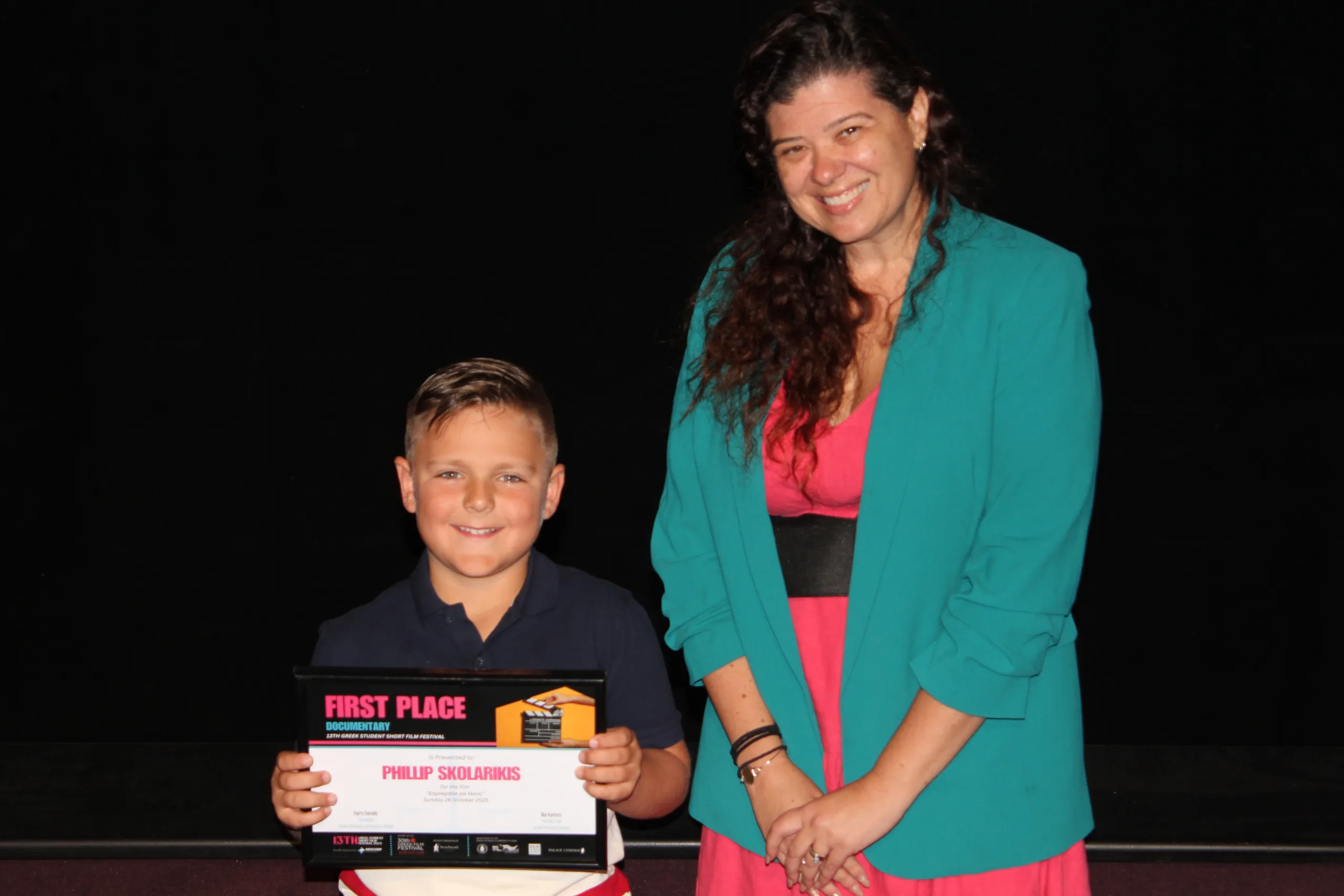
A Special Documentary Award was presented to Phillip Skolarikis from St Spyridon College for Δημοκρατία για Όλους (Democracy for All), a remarkable solo project edited with the help of his parents Tom Skolarikis and Dimitra Chalikia, recognised for its creativity and technical skill.
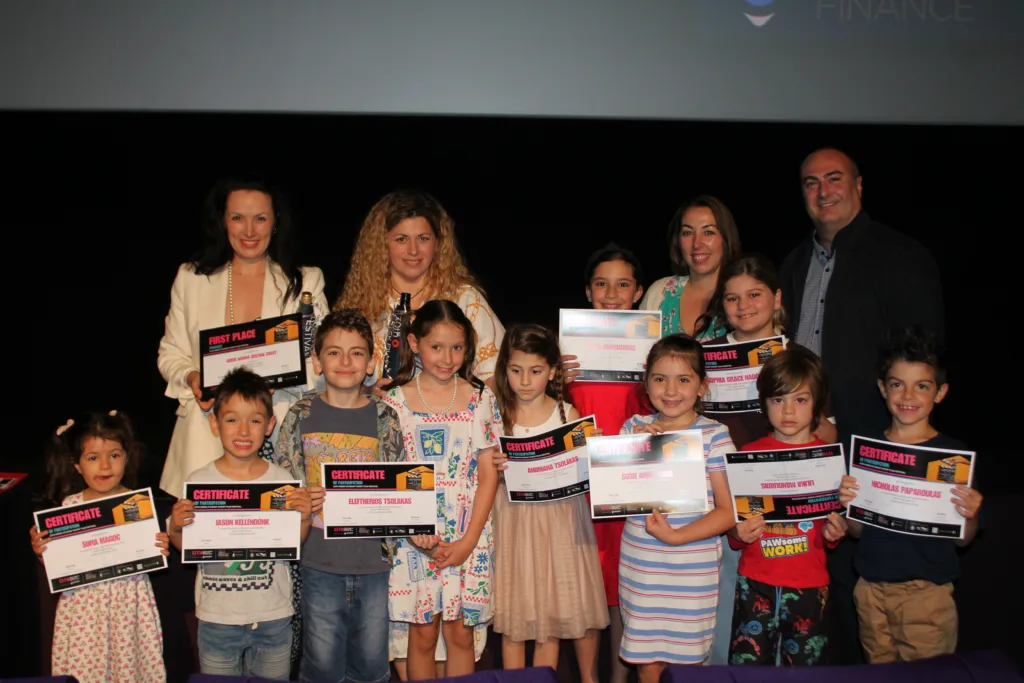
The award winners.
Community, craft and confidence
From meticulous thank-yous to judges and teachers, to the emphasis on family support and classroom collaboration, the festival’s message was consistent: film is a powerful vehicle for language, identity and belonging.
As Kallos noted, these student shorts keep Greek “alive and thriving” by letting young creators experiment, perform and present in Greek – with professional standards and cinematic flair.
*All photos copyright The Greek Herald / Andriana Simos
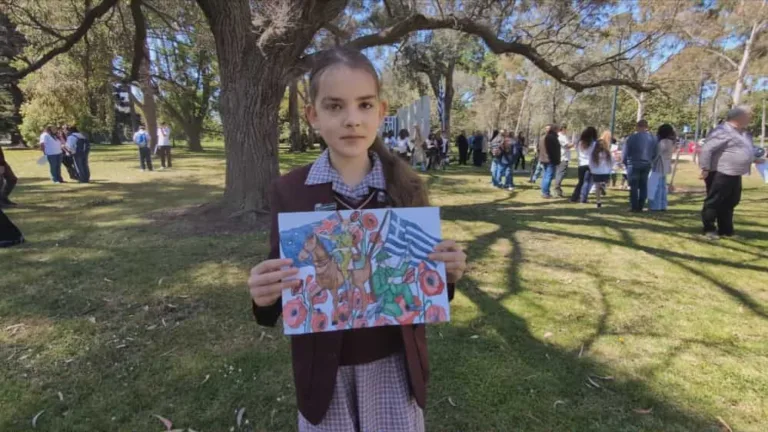
Twelve-year-old Panayiota Dimopoulos from Oakleigh Grammar in Victoria has captured the spirit of courage and friendship through her winning artwork for the Australian Hellenic War Memorial Foundation’s annual Student Competition. Her striking piece was chosen by The Greek Herald as the cover of its special OXI Day print edition as it beautifully bridges Greece and Australia’s shared history.
“I wanted to present the friendship between Greece and Australia — that’s why I included the poppy, which symbolises Australia, and the Greek soldier,” Panayiota explains.
Her thoughtful design reflects both remembrance and unity, blending national symbols in a way that honours those who fought for freedom.
Front cover of The Greek Herald’s OXI Day print edition designed by Panayiota Dimopoulos.
For Panayiota, OXI Day is more than just a date in history — it’s a reminder of courage and sacrifice. “Because we have to remember the people who fought for our freedom,” she says.
Beyond her award-winning artwork, Panayiota is eager to keep exploring her Greek roots. “I plan to continue exploring my Greek heritage not only through art but also by trying to learn about Greece and visiting as often as I can,” she shares.
With dreams of becoming a designer one day, Panayiota’s creativity and pride in her heritage shine brightly — a fitting reflection of the enduring spirit celebrated each OXI Day.
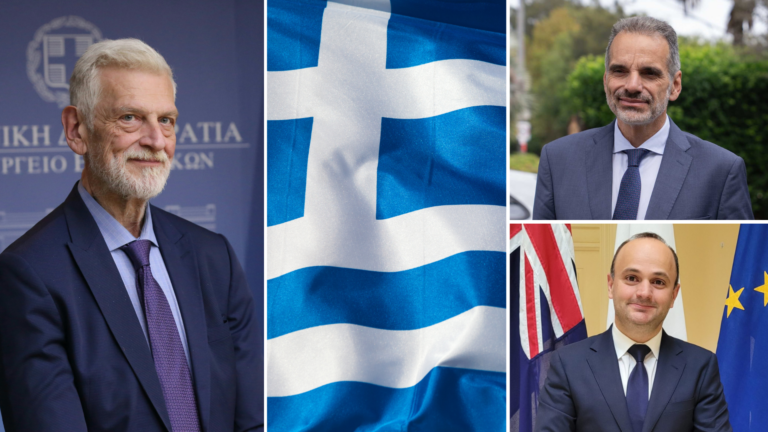
Greek and Cypriot politicians and diplomats have issued messages to Australia’s Greek diaspora ahead of the OXI Day celebrations on 28 October, honouring Greece’s defiant “No” to fascism in 1940 and the enduring legacy of courage and freedom it represents.
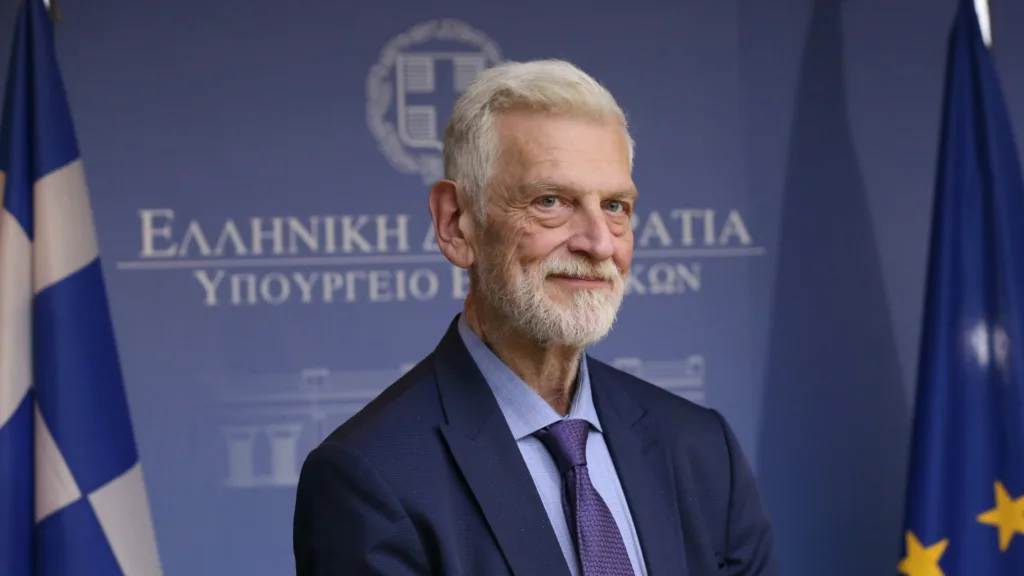
Message by Greece’s Deputy Foreign Affairs Minister for Greeks Abroad, Ioannis Michail Loverdos
Greece’s Deputy Foreign Affairs Minister for Greeks Abroad, Ioannis Michail Loverdos. Photo: AMNA.gr / Orestis Panagiotou.
Dear compatriots,
The 28th of October constitutes a defining moment in the history of our nation; on that day, the Greek people, united, responded to the ultimatum of the would-be invader with the emblematic “OXI” (“NO”), rejecting every form of submission and choosing to stand by the side of the free peoples of the world.
The “OXI”, a symbol of courage and freedom, inspired our soldiers who fought with self-sacrifice in the mountains of Pindus, writing glorious pages of bravery and devotion in the epic of 1940. We must not forget that Greece’s victory over the forces of fascism was the first Allied victory against the Axis in the Second World War, boosting the morale of the free nations and contributing decisively to the reversal of the balance of power in Europe.
The resistance of the Greek people continued, with the same determination, during the German occupation, when, despite the sacrifices, hunger and persecution, the Greeks kept the flame of hope for freedom alive.
The epic of 1940, however, was not written only in the mountains of Pindus; it was also written in the souls of Greeks everywhere. The Greeks abroad contributed decisively to the national struggle, offering financial support, volunteers and valuable assistance to those fighting for the homeland. The diaspora once again stood by Greece selflessly, proving that Hellenism knows no geographical boundaries.
Today, as we honour the 28th of October, we must remember that national anniversaries are days of reflection and inspiration, calling upon us to consider our own stance towards the values our ancestors defended: freedom, democracy, and justice.
It is particularly important that our youth understand the meaning of the 28th of October, not as a distant date, but as a living message of courage, national self-awareness and responsibility towards the future.
The historic “OXI” must not be recorded merely as a heroic moment of national resistance, but also as a clear stance in favour of freedom, dignity and international legality. In an international environment marked by intense geopolitical turbulence and shifting balances, the anniversary of the 28th of October remains relevant, reminding us that nations which remain steadfast to their values constitute pillars of stability and bearers of hope, even amidst widespread uncertainty.
The Greece of the 21st century—dynamic, confident, and present in all international fora—continues to work constructively for the establishment of conditions of stability and cooperation at regional and international levels, with the absolute priority of safeguarding national interests and strengthening ties with Hellenism across the world.
Greek women and men,
On this day of celebration and national uplift, let us honour, with unity and pride, the ideals and sacrifices of our forebears, keeping alive the flame of Hellenism wherever its heart beats.
Long live the 28th of October! Long live our Greece!
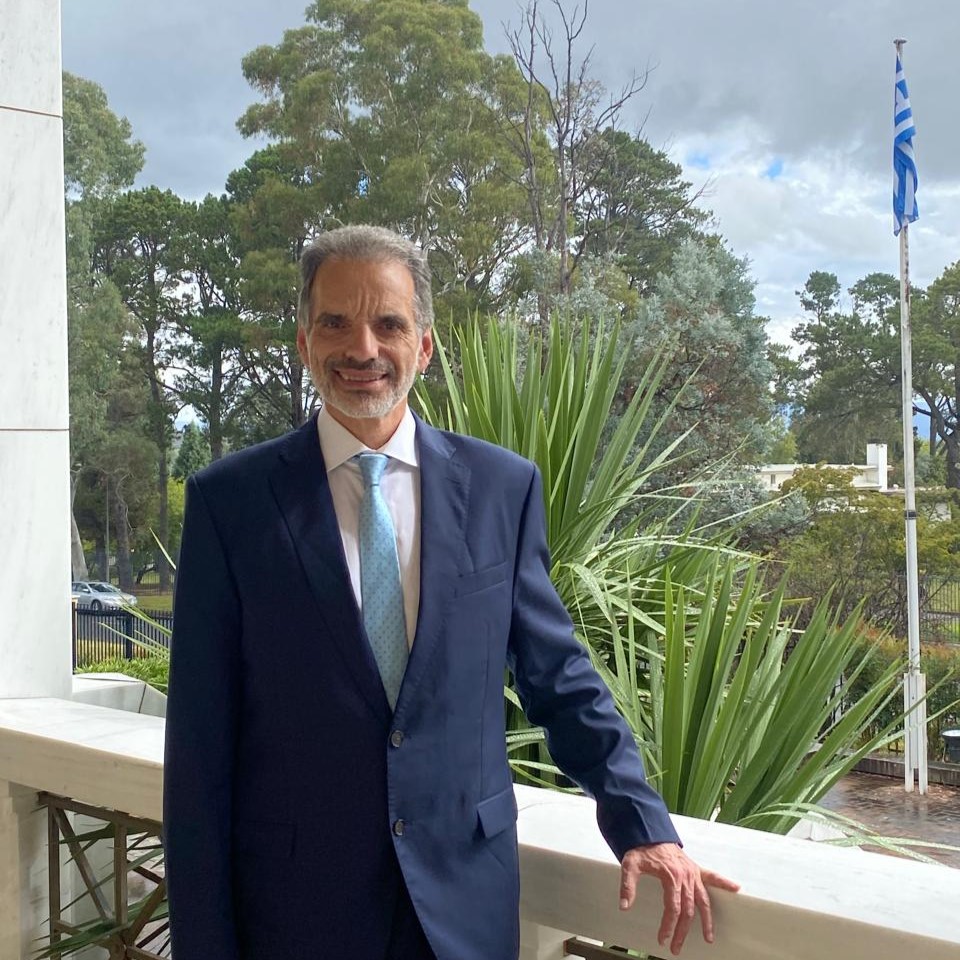
Message by the Ambassador of Greece in Australia, Stavros Venizelos:
Ambassador of Greece in Australia, Stavros Venizelos. Photo: Supplied.
Dear friends, Greek women and men of Australia,
The 28th of October 1940 constitutes one of the most brilliant pages in modern Greek history and a timeless example of national unity, courage, and love for freedom. At a difficult moment for Europe, the Greeks stood tall, defending liberty and the homeland, even when faced with superior forces. The heroic “OXI” of 1940 was not merely a word – it was an act of collective dignity and devotion to the nation.
The resistance against the forces of the Axis, the epic battles in the mountains of Pindus, the sacrifices during the Occupation, the national resistance, and the courageous participation of Greeks in war fronts beyond our borders are events that continue to inspire and unite us.
For you, the Greeks of the Diaspora, these memories hold special meaning. In our hearts still live the personal stories of parents and grandparents who experienced the events of the war and the Occupation – stories passed down from generation to generation, keeping alive the flame of national identity, even so far from Greece.
After the end of the war, many Greeks who had lived through that difficult era sought a better tomorrow in Australia. Their new homeland welcomed them and offered them the foundations to create a thriving Greek community that honours its roots, preserving the language, traditions, and historical memory.
The participation of Australian soldiers (ANZACs) in many heroic battles on Greek soil, and later in the great Battle of Crete, linked the destinies of our two peoples. The common struggle laid the foundations for a long-standing friendship that continues to this day with mutual respect and appreciation.
The sacrifice of Greeks and Australians alike contributed to shaping a more peaceful and just world. Upon the ideals for which they fought, the post-war international order was built, with institutions such as the United Nations promoting peace, cooperation, and respect for international law.
Today, in a world facing new challenges, the historical memory of the 28th of October reminds us how vital it is to preserve unity, freedom, and peace.
Let us therefore honour this day with pride and gratitude. Let us keep our national memory alive and pass on to future generations the enduring value of “OXI”.
Many happy returns to all!
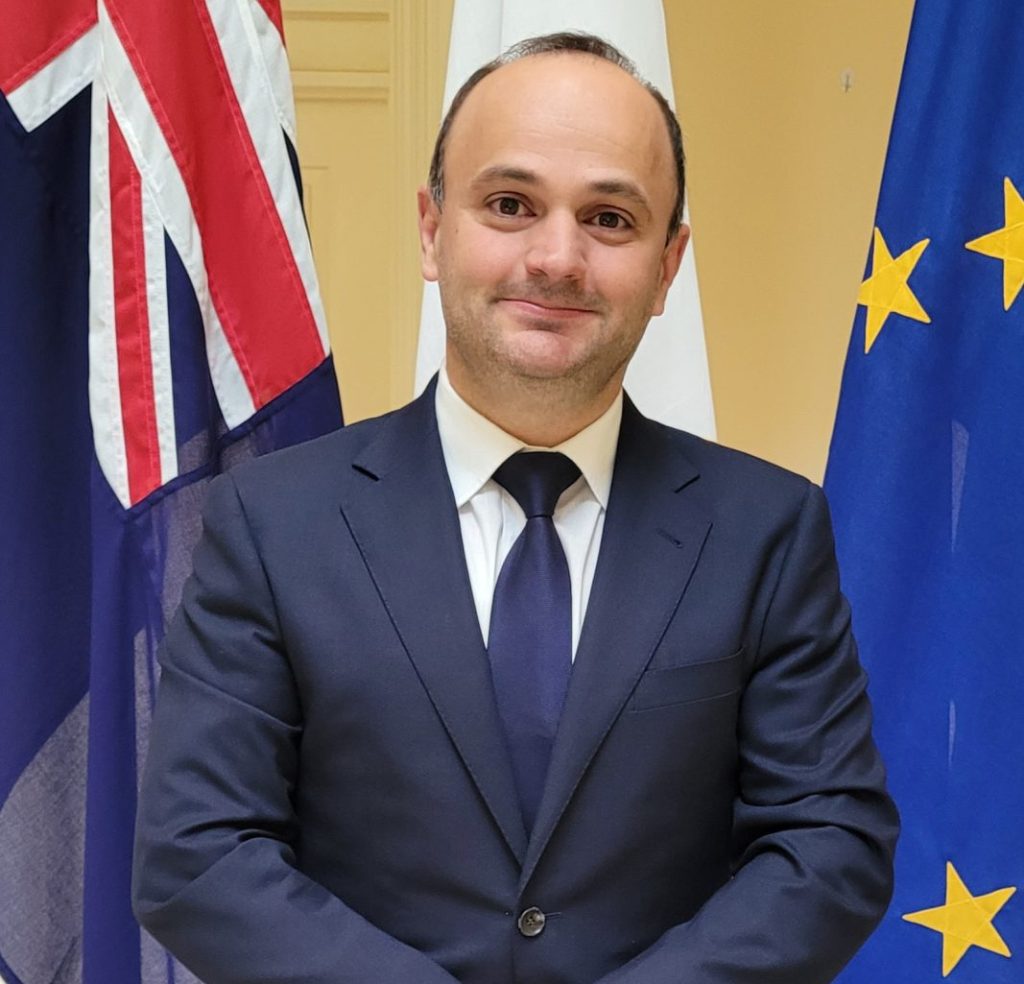
Message by the High Commissioner of Cyprus in Australia, Antonis Sammoutis:
High Commissioner of Cyprus in Australia, Antonis Sammoutis.
Dear compatriots,
The 28th of October 1940 is a day written in golden letters in the history of Hellenism. This is because, despite the difficulties Greece faced after the Asia Minor Catastrophe — poverty and political instability, which eventually brought about the dictatorship of Metaxas — despite the first great clouds of the century’s second division beginning to gather, at that critical moment of the Italian invasion, almost as one, the Greek people thundered forth that magnificent “OXI”!
The “NO” that came from the depths of the centuries, from our sacred bond as human beings, as Greeks, as Christians, with freedom — as the purpose of our lives and as the quintessence of human existence.
The monumental effort of the Greek army, against a fully armed enemy and in harsh terrain under freezing conditions, led to the great victories that make up the epic of 1940 — an epic written in blood on the mountains of Northern Epirus and Albania. These unparalleled victories gave courage to all the other enslaved peoples and to the entire free world of the time.
Unfortunately, these victories were followed by the German invasion, the occupation and the civil war, which in essence began during the years of the national resistance. A civil war and a division whose consequences are still visible today in the polarisation that often characterises our political life — a civil conflict that, like a nightmare, awakens bitter memories no matter how many years pass.
The anniversary of OXI Day and of 1940, together with the anniversary of the Battle of Crete the following year, are the foremost national celebrations that unite us with our Allies and with Australia. Everyone knows of the fierce battles fought by the Australians and New Zealanders at our side when the Germans invaded the great island of Crete in May 1941.
Fewer, however, know that some months earlier, our Australian allies had already been positioned defensively in the mountains of Macedonia. Many even believe that if the defensive line at Vermio, Olympus and further south had been better organised, Greeks, Britons and Australians would have formed new Thermopylae, and the Germans would not have advanced so easily.
A lesser-known page of our history records that Cyprus, then under British administration, welcomed our Australian and New Zealand allies and friends in May 1941. They had arrived there, fully equipped from Egypt, to prepare the island against a possible German attack — for the Germans had already advanced into North Africa. The welcome that Cypriots gave the Australians along the road from Famagusta to Nicosia, in towns and villages alike, was triumphant, even though no battle had yet been fought. The next great battle did not, in the end, take place in Cyprus but in Egypt, at El Alamein, the following year, after our Australian friends had returned there. Many Cypriots also took part in that battle. For the first time, Cypriots from Egypt, Cyprus, Britain and Australia found themselves fighting side by side.
Cyprus was fortunate not to experience war directly and not to fall under German occupation. Nevertheless, 35,000 Cypriots — both Greek Cypriots and Turkish Cypriots — donned the British uniform and fought bravely alongside the Allies in Greece and Crete, in North Africa, France, Italy and Central Europe. Many never returned, and they lie buried in those places, in military cemeteries beside their fellow soldiers.
Dear friends,
We live in particularly turbulent times, in which the challenge to international law and the resurgence of totalitarianism once again threaten our freedom and prosperity. In such times, we must know clearly, as our Australian friends did when they came to fight and sacrifice in our homeland, where we belong — definitively and unwaveringly. And the answer to that question arises naturally from Greek history, not only modern but also ancient.
Heirs to a name of great weight — a name synonymous with democracy, freedom and humanism — we cannot but prove ourselves worthy of it, if and when we are called upon to do so again.
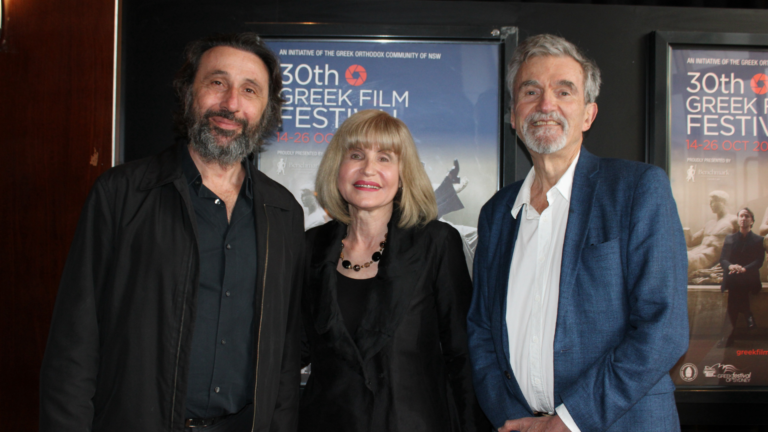
The curtain fell on the 30th Greek Film Festival in Sydney on Sunday night with a sold-out screening of Athens Midnight Radio, the poetic new film by acclaimed Greek director Renos Haralambidis, who attended as Guest of Honour.
The Palace Cinema Moore Park was abuzz with excitement as audiences, filmmakers, and community leaders gathered to celebrate not only the closing of this year’s festival, but also three decades of bringing Hellenic cinema to Australian screens.
A milestone year for Greek cinema in Australia
Festival Chair Nia Karteris opened the evening with heartfelt thanks to the audience and sponsors who helped make the 30th edition “a huge, huge success.”
“This year we’ve had record ticket sales – even higher than last year – and that’s a credit to our incredible sponsors, media and supporters,” she said to loud applause.
Karteris reflected on the festival’s continued expansion, noting new venues and communities reached this year.
“We’ve expanded to more cinemas here at Moore Park and, for the first time, took the festival to Sydney’s west – Parramatta, Blacktown, and Merrylands. It was one of the most emotional experiences to see those audiences connect with Greek cinema close to home,” she said.
She also celebrated the 13th Student Film Festival and the launch of a new Youth Filmmakers section, calling them “the next generation of storytellers who will keep Greek creativity alive on the big screen.”
Unity through art and the spirit of Athens
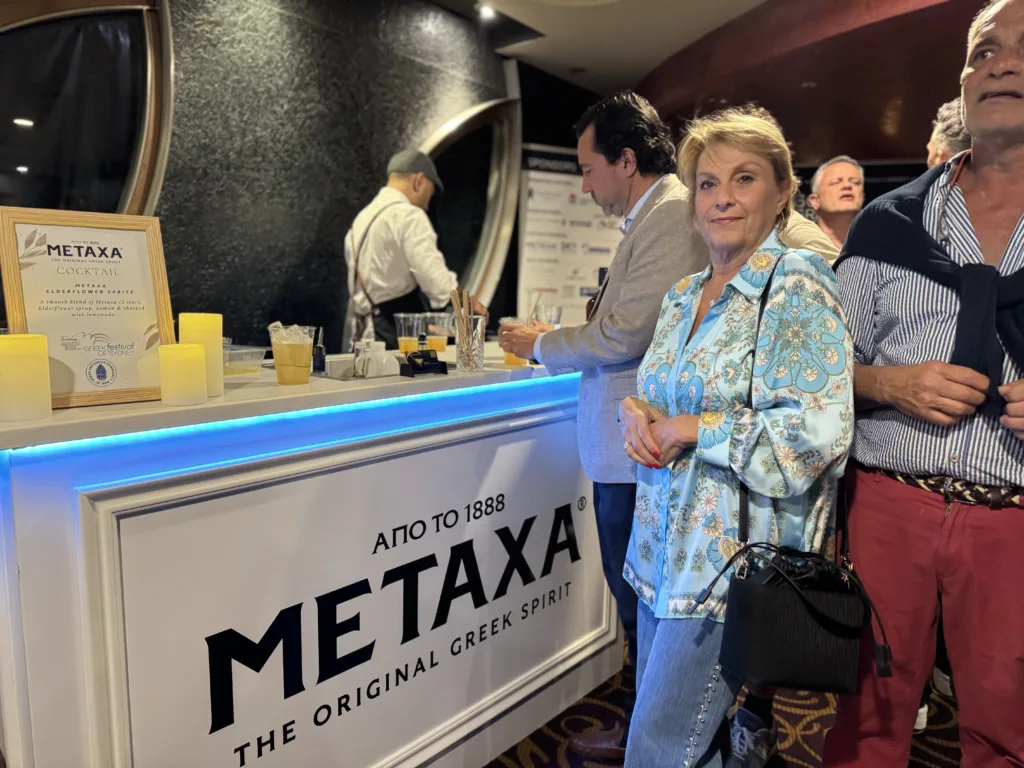
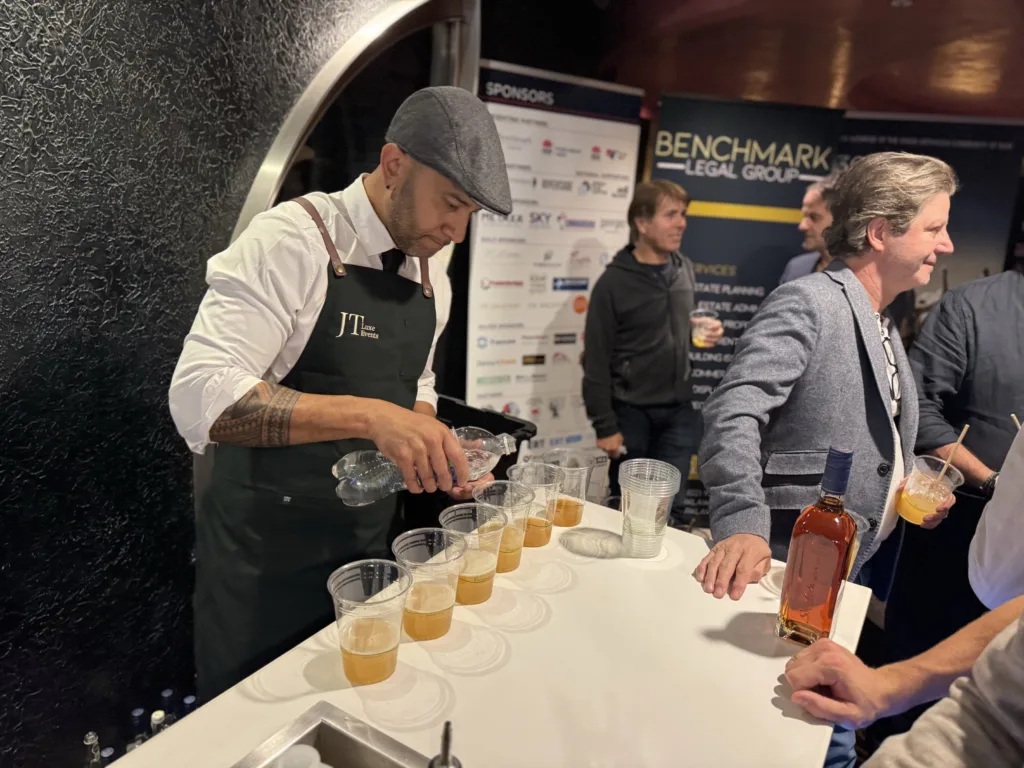
The Athenian Association of NSW played a special role in this year’s finale, partnering with the Greek Festival of Sydney to bring Haralambidis to Australia for his first visit. Their support also extended to the evening’s Metaxa Cocktail Party, which welcomed guests before the screening in true Athenian style.
Association President Kathy Valis delivered an eloquent address celebrating the collaboration.
“Tonight, we celebrate not only art, but also collaboration, unity and our shared love for Greek culture,” she said. “Through the work of Renos Haralambidis, Athens comes to life – its stories, its memories, its emotions – connecting our homeland with the diaspora.”
Valis warmly welcomed Haralambidis to Sydney, calling him “a true storyteller who speaks from the soul about our city, Athens.”
A poetic filmmaker finds ‘the beginning of the world’ in Sydney
Taking the stage to a standing ovation, Haralambidis shared his delight at visiting Australia for the first time.
“In a very strange way, I feel that I belong here,” he said. “When I saw the ocean for the first time, I thought – this is the beginning of the world, the place where the sun rises first every day. It’s not far from Greece. It’s like coming home.”
Describing Athens Midnight Radio as “a romantic film about maturity,” he reflected on the themes of time and self-understanding that run through the story.
“Maturity is the big gift of life – time doesn’t defeat us; it reveals who we are,” he told the crowd.
A memorable finale
Following the speeches, the audience settled in for the highly anticipated screening of Athens Midnight Radio, which drew laughter, reflection and heartfelt applause.
After the film, guests had the opportunity to meet Haralambidis in person, sharing reflections and photos with the renowned filmmaker in an atmosphere charged with excitement and pride.
As Karteris hinted before the lights dimmed, “By popular demand, we’ll be announcing encore… because the love for Greek cinema is stronger than ever.”
It was a fitting conclusion to a record-breaking 30th Greek Film Festival, celebrating three decades of Greek storytelling and the enduring bond between Australia’s audiences and the culture of Athens itself.
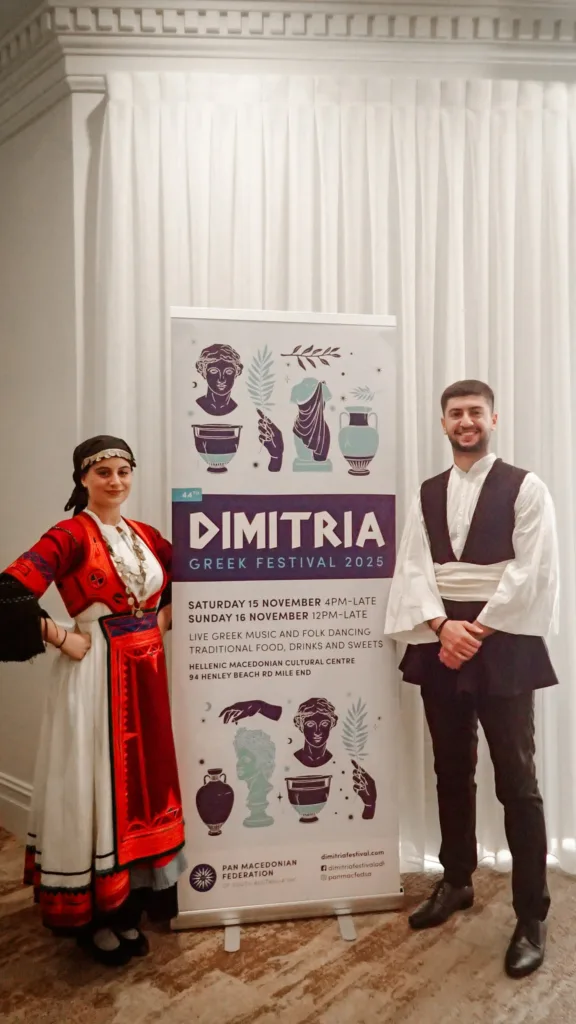
On Friday, October 24, the Pan Macedonian Federation of South Australia officially launched the 44th Dimitria Greek Festival with a vibrant cocktail reception at the Hellenic Macedonian Cultural Centre.
The event brought together government representatives, community leaders, sponsors, and volunteers – all united in their shared commitment to preserving and celebrating Hellenic Macedonian heritage in SA.
The atmosphere was one of warmth, pride, and anticipation as attendees marked the beginning of another year in one of Adelaide’s most beloved Greek cultural traditions.
The Dimitria Festival stands as the cornerstone event for the Pan-Macedonian Federation of SA, a federation representing five organisations. This year’s festival builds on the successful 43rd Dimitria Festival in 2024, which honoured the rich culture, history, and traditions of Macedonia, with more than 1,000 attendees with music, dance, food, and festivities.
This year’s launch carried a theme of unity and shared heritage, inspired by the enduring legacy of Alexander the Great.
Speakers drew on Alexander’s values of cultural exchange, philoxenia (hospitality), and inclusivity – ideals that lie at the heart of the Dimitria Festival. They also reflected on how the festival continues to serve as a bridge between cultures, fostering connection and understanding across the wider Australian community.
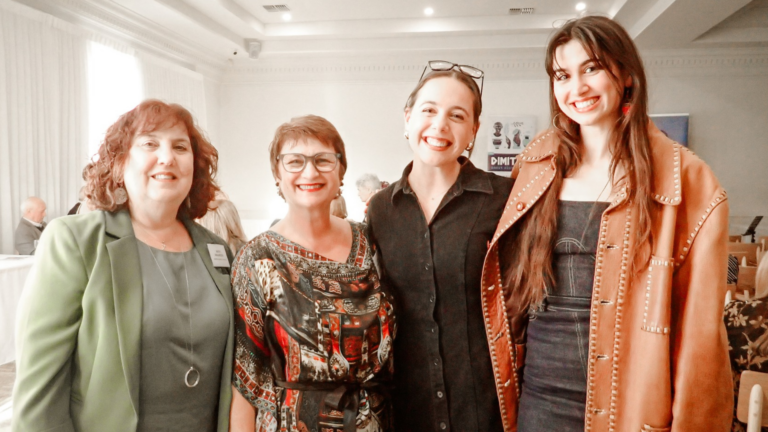
Among the distinguished guests were The Hon Tom Koutsantonis MP, Treasurer of South Australia; Dr Alexandra Theodoropoulou, Consul General of Greece in Adelaide; Josh Teague MP, Member for Heysen and Shadow Minister for Multicultural Affairs; and Michael Coxon, Mayor of West Torrens.
The 44th Dimitria Festival will take place on Saturday, November 15, from 4:00 pm until late, and Sunday, November 16, from 12:00 pm until late, at the Hellenic Macedonian Cultural Centre, located at 94 Henley Beach Road, Mile End. The festival will feature an exciting program of live music, traditional Greek and various dance performances, authentic cuisine, and family-friendly entertainment – all offered with free entry for the public.
The weekend promises to be a vibrant celebration of community spirit and cultural pride, bringing together people of all backgrounds to share in the warmth and joy of Hellenic heritage.
In the lead-up to OXI Day (28 October), Greek communities across Australia held a series of heartfelt commemorations honouring Greece’s historic defiance of fascism in 1940 – a moment that continues to inspire generations around the world.
Throughout the weekend before the national anniversary, Greek Orthodox parishes and community organisations hosted doxologies, wreath-laying ceremonies, and cultural tributes.
Children from Sunday schools and Greek day schools played a leading role, performing patriotic poems, singing the Greek and Australian national anthems, and donning traditional Greek costumes, symbolising the continuity of Hellenic pride and identity across the diaspora.
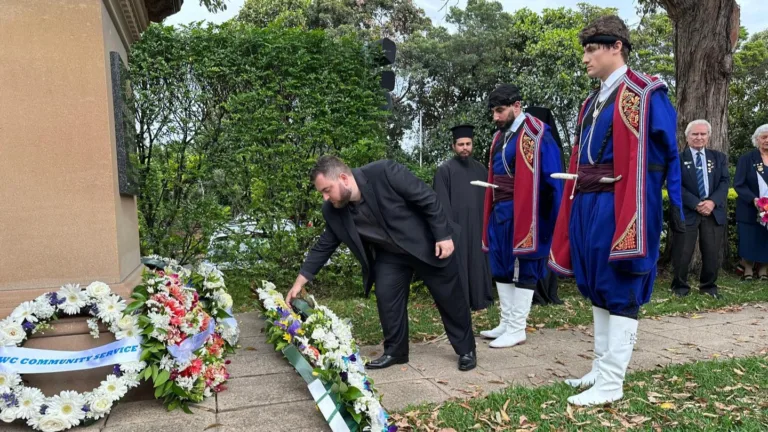
In Sydney, commemorations began on Saturday, 25 October, with the Inner West Council’s OXI Day Wreath Laying Ceremony at the Winged Victory Memorial in Marrickville. The service paid tribute to Greece’s entry into the Second World War and the shared wartime legacy between Greek and ANZAC soldiers. Local dignitaries, clergy, and community representatives gathered to lay wreaths in honour of those who sacrificed their lives for freedom.
The following day, on Sunday, the Greek Orthodox Archdiocese of Australia in Redfern held a solemn wreath-laying ceremony following the Divine Liturgy. Parishioners, clergy, and community leaders came together to reflect on the enduring message of “OXI” – Greece’s resounding “No” to tyranny – and to honour the bravery of those who stood for freedom and dignity in 1940.
In Adelaide, the Greek Orthodox Community of South Australia (GOCSA) marked the occasion at the Cathedral of Archangels Michael and Gabriel on Franklin Street with a solemn doxology and wreath-laying ceremony.
Meanwhile in Melbourne, the Australian Greek Ex-Servicemen’s Association held its commemoration at the Axion Esti Church in Northcote, attended by clergy, dignitaries, and community members. After the doxology and memorial service, wreaths were laid in remembrance of those who sacrificed their lives for freedom. Assistant Minister for Social Services Ged Kearney MP attended the event, which also featured performances by students from Oakleigh Grammar, bringing a youthful and hopeful spirit to the day.
Commemorations in Melbourne will continue on Tuesday, 28 October, when the Hellenic RSL Sub-Branch leads the official OXI Day service, beginning with a doxology at St Eustathios Church in South Melbourne, followed by wreath-laying at the Australian Hellenic Memorial and the Shrine of Remembrance, concluding with a light luncheon at the Hellenic RSL Hall.
Across Australia, these early commemorations captured the essence of OXI Day – courage, freedom, and unity. From children in traditional dress to veterans laying wreaths, the Greek Australian community once again affirmed its enduring connection to Greece and its timeless stand against tyranny.
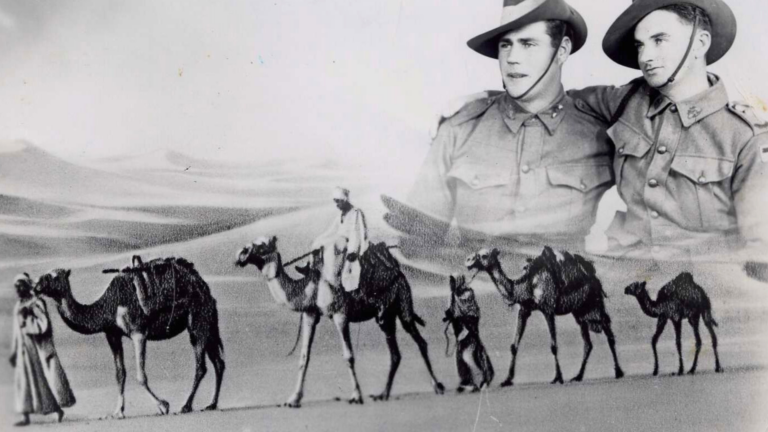
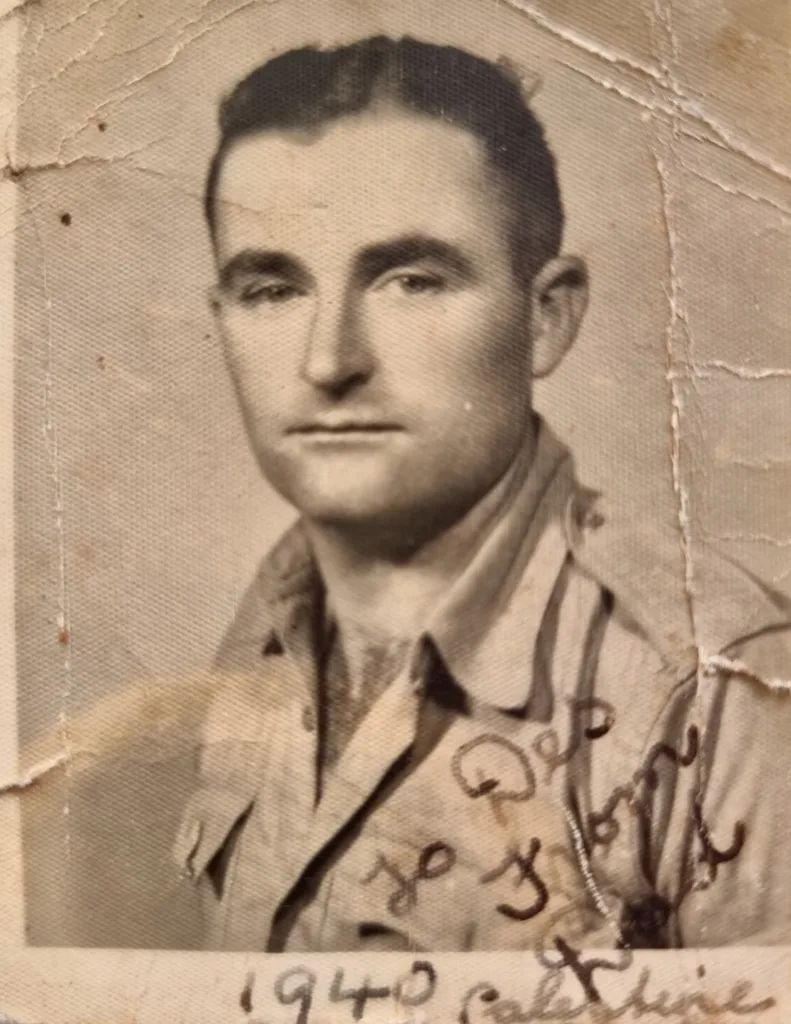
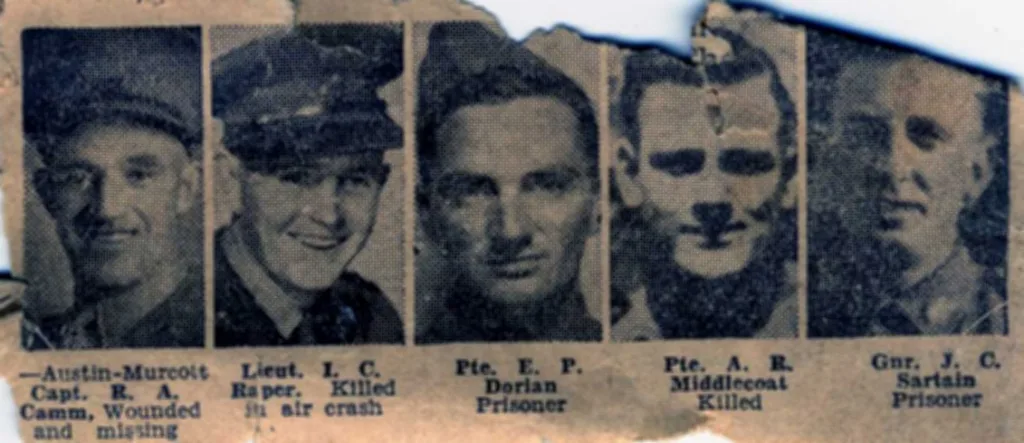
I was 11 years of age when I watched my grandfather, Teddy Dorian, stumble away from the kitchen table on route to the bungalow that had become his sleeping place in the Brunswick home he shared with his factory worker wife, Gladys.
It was Christmas Day 1963 and 18 years had passed since Teddy returned home from four years as a prisoner of the German Reich. Five months later, he died at the very table where I’d pored over his troubled face on Christmas Day.
The sad truth was that he never recovered from the trauma of his years at war and had sought to alleviated the pain of posttraumatic stress with ‘cheap plonk’.
While he struggled with nightmares and alcoholism, Gladys relentlessly pursued the government for a full pension for her soldier husband. Only weeks after she won that battle, her husband died. He was a mere 49 years of age.
How different life had looked when he and his brother, Roy, and their Brunswick mates left the Middle East in April 1941 to take on the Germans. Feted for their defeat of the Italian enemy in the battle of Bardia in Libya, my grandfather and his mates thought thwarting the Nazi march towards Greece would be a push over.
Unfortunately, there was no stopping the Nazi army. So, by late April, ‘The Brunswick Boys’ were frantically in retreat.
On 28 April, my grandfather’s brother and his 2/7th Battalion steamed out of Kalamata on the Costa Rica destined for Crete. The story goes that amidst the chaos, Roy had searched of his younger brother but couldn’t find him. Such was the life of an army driver. Teddy was too busy shuffling men back and forth to join his brother.
Despite the Costa Rica being sunk by the Luftwaffe, Roy and his battalion managed to scramble aboard another ship and escape to Crete. While Roy was counting his lucky stars, his brother Teddy was forlornly preparing for a stint in the horrific Corinth transit camp. Here, disease would take a heavy toll on the captured men.
A couple of weeks after my grandfather’s arrival at Corinth, he was joined by one of his Brunswick mates, Billy Ottaway.
At the Corinth camp, 22-year-old Ottaway would describe how, despite the risk of execution, a Greek family had taken him in. In 1994, he would tell me how he spent weeks ‘lying in the sun’ in clothes provided by the family, as German soldiers marched passed. Not wanting to put the family at risk, he decided to ‘put his uniform back on’ and surrender.
The story of Greek civilians protecting Allied troops was legendary during the Nazi invasion of Greece. When Crete fell on 1 June 1941, leaving thousands of Australian troops stranded in Sfakia, Roy rowed 11 hours overnight to the island of Gavdos with four mates.
In a letter home, he described how villagers on Gavdos had ‘wiped tears from their eyes’ as they wished him well and pointed to a cove where a boat skippered by an Australian had dropped anchor. That boat would take Roy and his mates to Egypt in one of the most miraculous escapes of the war.
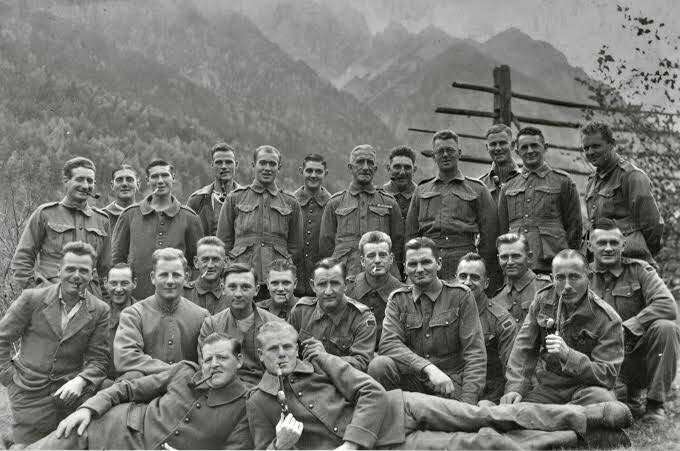
Since beginning work on my documentary film, ‘Gladys and the Brunswick boys’, I’ve visited every place my grandfather, his brother and their mates traversed in Greece. I’ve travelled across Brallos Pass, where my grandfather trekked some 30 miles in late June 1941. I’ve walked in his footsteps through the streets of Thessaloniki, where he and his mates were greeted with cheers by local people as they marched to the railway station where a train would take them on a near-death 6-day rail trip to the Prisoner-of-War camp in Austria.
On Gavdos, I’ve talked to a local man, Mr Babis, and a priest, who heard the story of four Australians escaping across their island after the fall of Sfakia.
In Australia, I interviewed the late George Rerakis – father of restaurateur, John – who talked about gun running for the Cretan resistance as a teenager.
So too have I visited villages in Crete where the Nazi army committed barbaric war crimes. In one of those villages, Kondomari, some 17 civilians were executed on 2 June 1941. On that very day, villagers on Gavdos were helping my grandfather’s brother, Roy, flee the Nazi invasion.
Not surprisingly, I’ve fallen in love with the Greece that ‘Gladys and the Brunswick Boys’ defended in 1941. It’s a Greek Australian story that deserves, and I hope, will come to life on film.
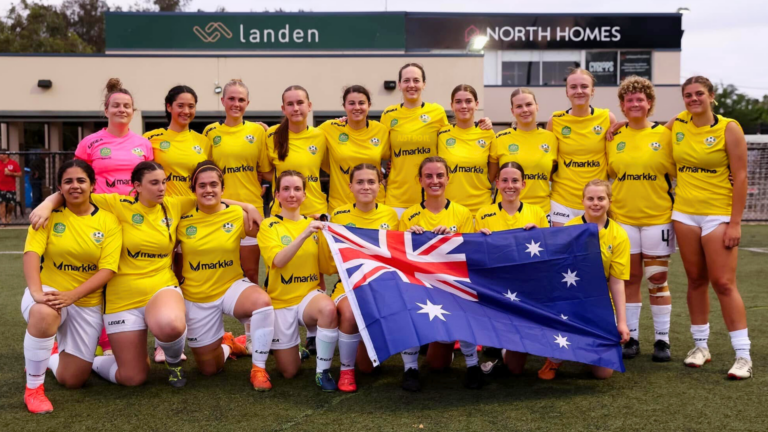
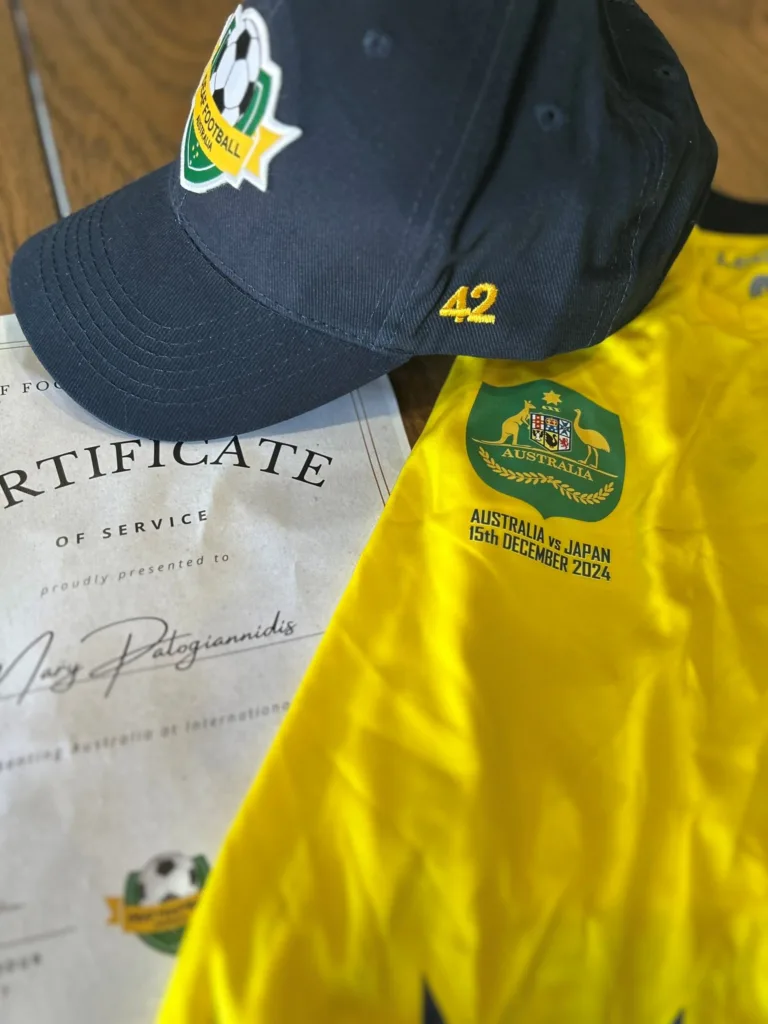
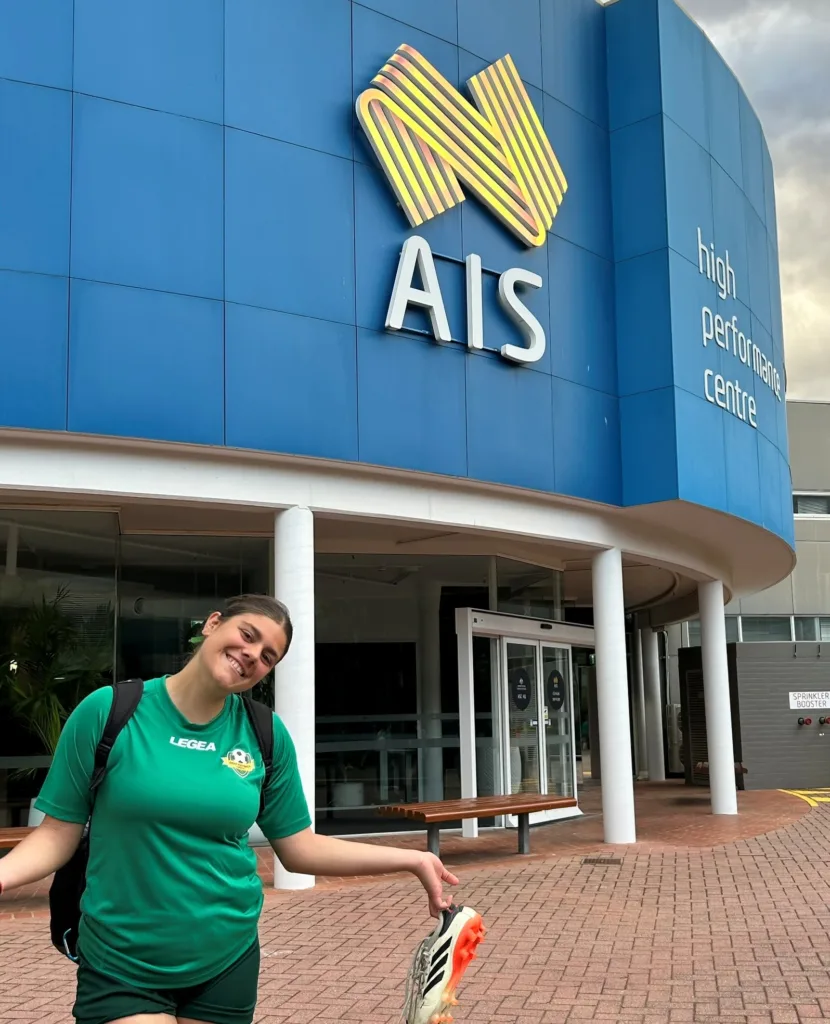
With less than 20 days to go until the 2025 Deaflympics kick off in Tokyo, Sydney teenager Mary Palogiannidis is preparing to don the green and gold for the Australian Deaf Football Koalas – the national women’s deaf football team – as they chase Olympic glory.
At just 17 years old, Mary is the only player of Greek heritage in the squad and one of its youngest members.
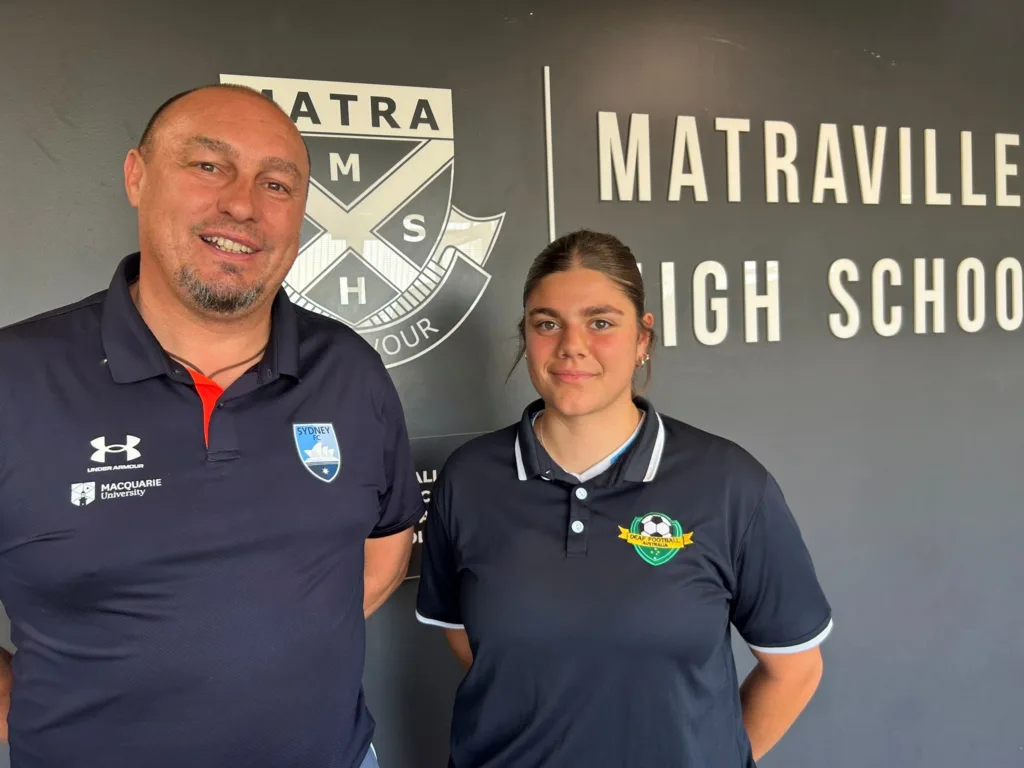
A proud student of Matraville Sports High School’s Talented Sports Program, where she trains under Sydney FC manager Ante Juric, she will also play for Sydney Olympic FC’s Under-18s in the 2026 season.
Her passion for football and her dream to represent Australia have driven her to train daily, balancing schoolwork, club commitments, and national team preparations.
But for Mary and her teammates, the road to Japan has been far from easy. With minimal government funding, the Koalas must raise their own funds to cover travel and accommodation costs.
Her journey reflects a broader challenge facing deaf athletes across Australia.
Deaf Football Australia Secretary Brian Seymour told ABC News deaf sports receive little support compared to Olympic and Paralympic programs. He noted that while it could cost close to a million dollars to send around 100 athletes to this year’s Deaflympics, most of that money must come from fundraising and charity support.
Despite this, Mary’s mother said her daughter’s selection was a proud moment not only for their family but also for the Greek Australian community. With grandparents from Symi, Kos and Asia Minor, Mary carries her Hellenic heritage with pride as she prepares to represent both her country and her culture on the world stage.
For Mary, the experience is about more than medals – it’s about representation, resilience, and pride.
“I am so grateful for this opportunity to represent both Australia and the deaf community, and also to be someone that younger girls can look up to,” Mary said. “I never would’ve thought that I would be playing for such a team because I have hearing loss.”
The Deaflympics will take place in Japan this November, uniting athletes from across the world in a celebration of talent, perseverance, and inclusion. With her community behind her, Mary is determined to make every moment count – on and off the field.
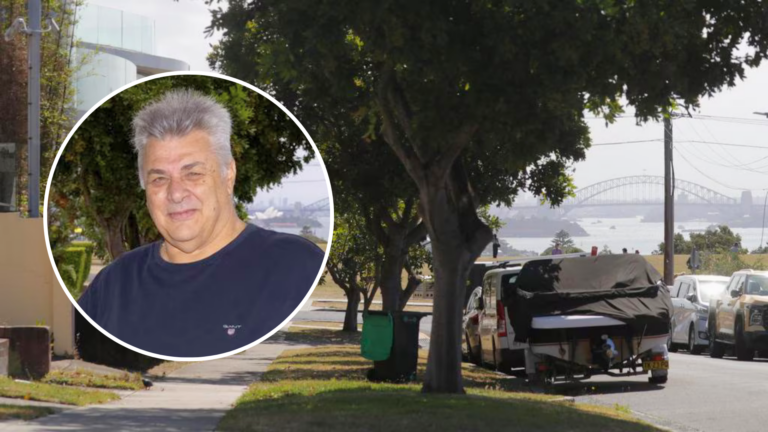
Con Paffas, a retiree of 64 who has lived on Myuna Rd in Dover Heights for 26 years, welcomed Waverley Council’s decision to replace the towering tuckeroo trees that had long blocked the area’s prized ocean-to-harbour views.
“They grew so fast,” Paffas said. “There’s not many places where you have a view of the ocean and the harbour and you pay a premium dollar for that, so if council comes and plants a tree that blocks that view it’s pretty demoralising. I think, have trees, but have trees that don’t block views.”
The tuckeroos, planted nearly 20 years ago and now reaching up to five metres, replaced smaller trees of around three metres, leading to years of costly topiary pruning.
Following a petition from residents, council recently agreed to remove the tuckeroos and replace them with native Grevillea trees, which will max out at 2.5 metres.
Council’s general manager, Emily Scott, noted the ongoing trimming had been expensive, prompting the move to relocate the old trees and restore the scenic outlook.
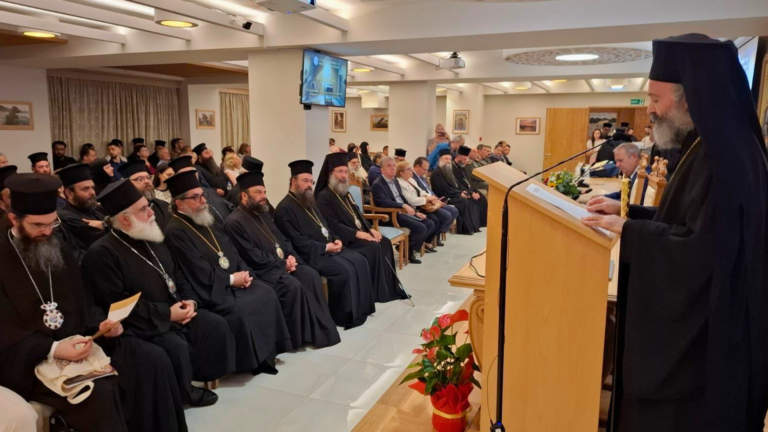
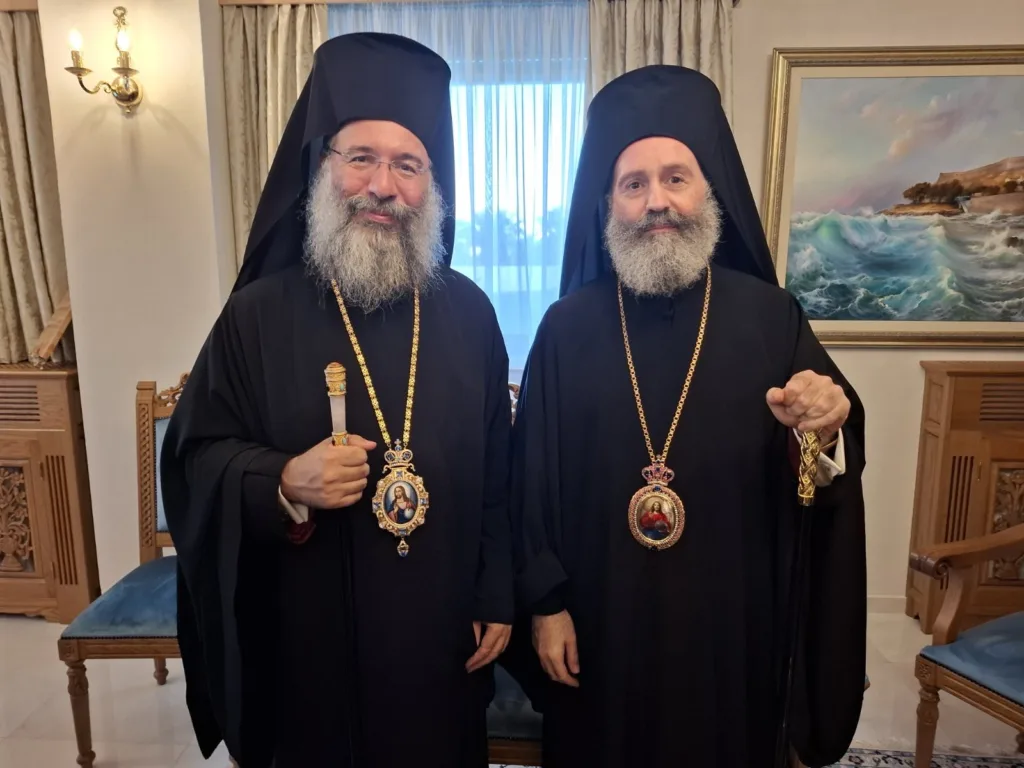
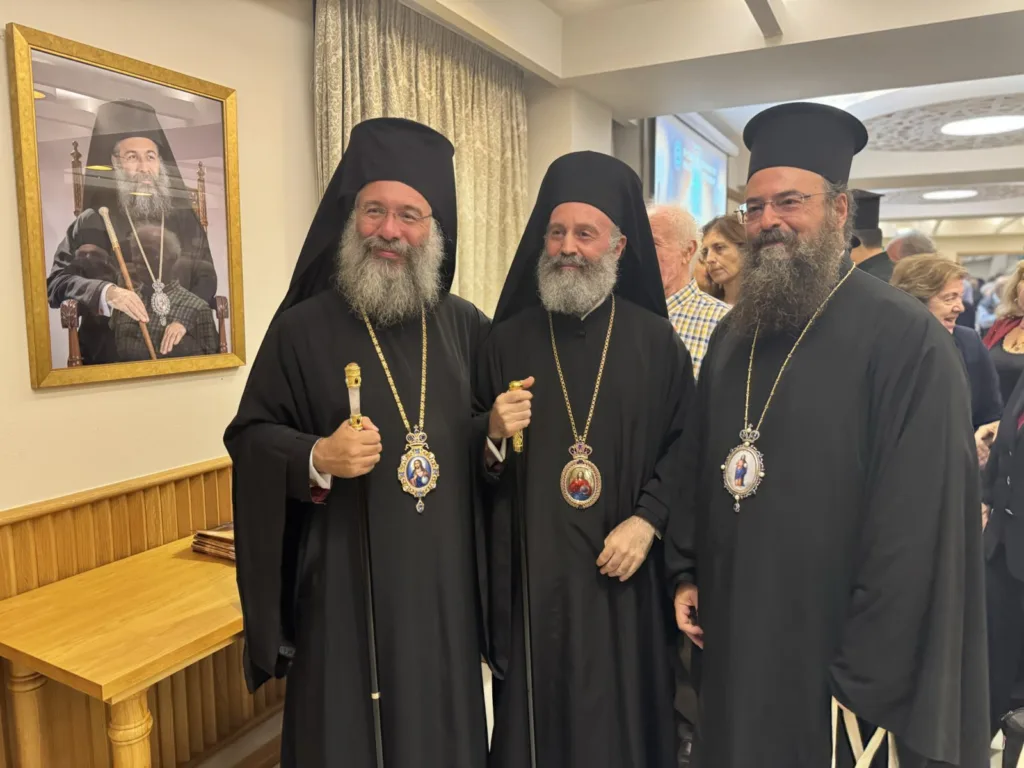
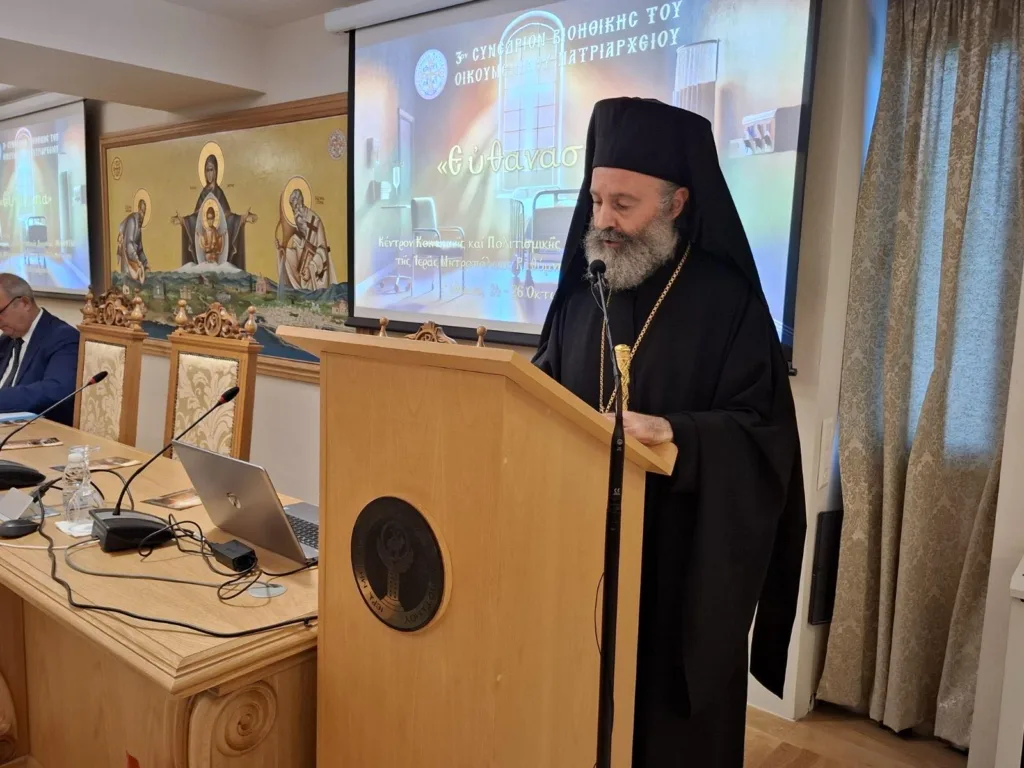
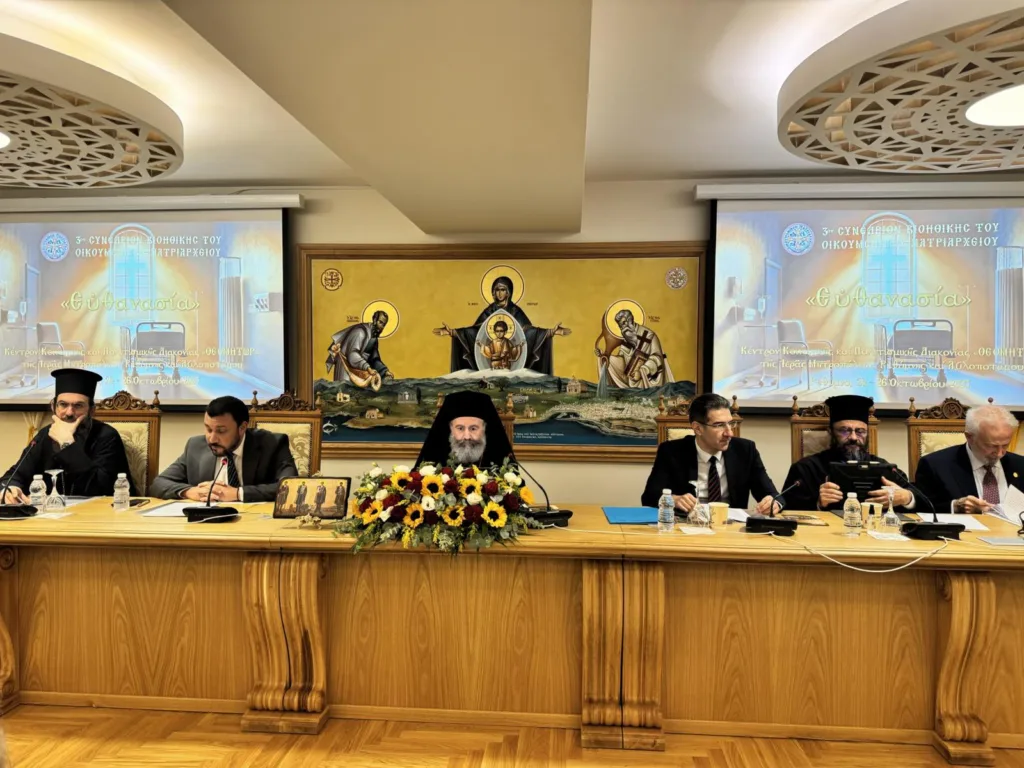
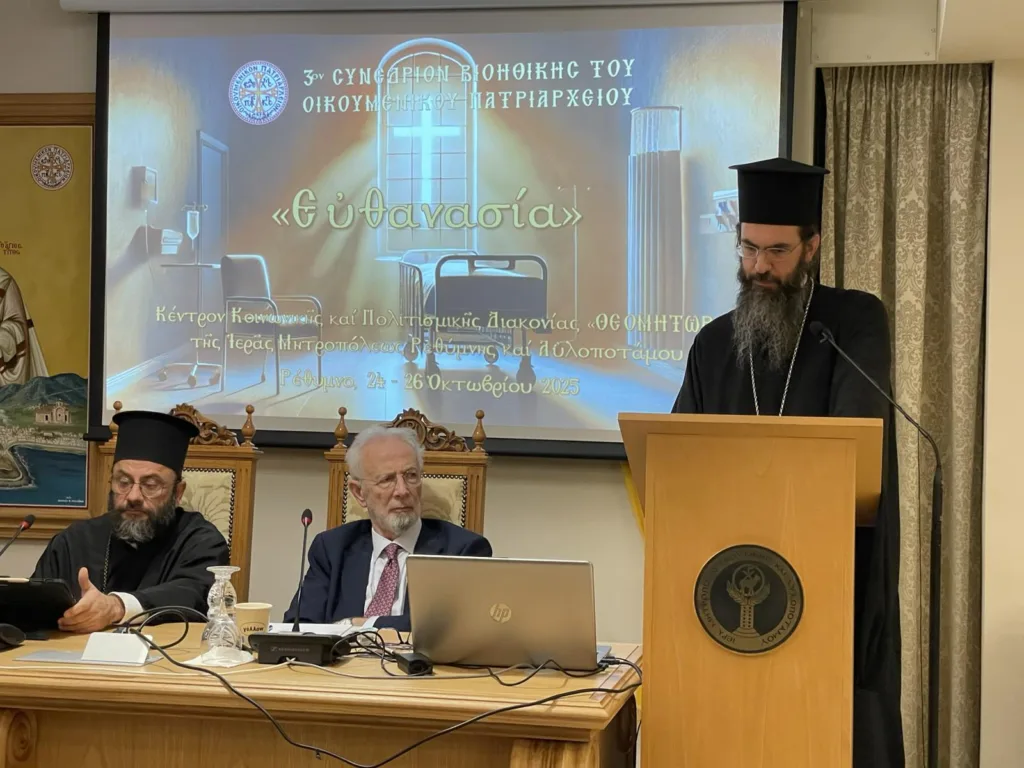
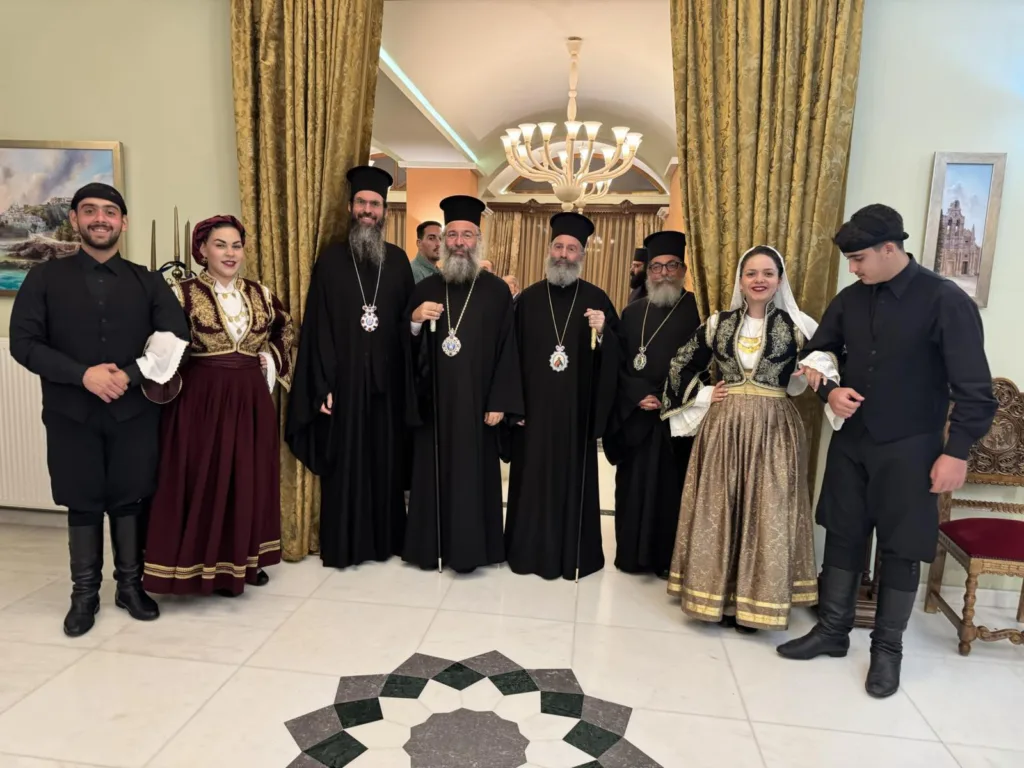
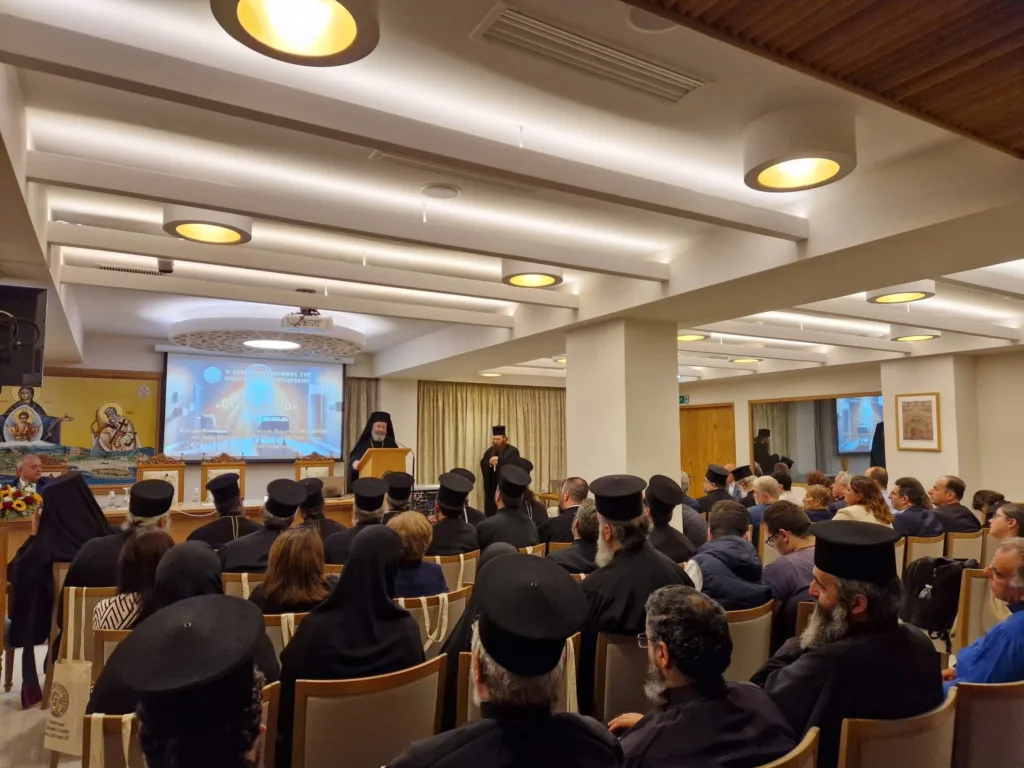
The 3rd Bioethics Conference of the Ecumenical Patriarchate opened on Friday, 24 October 2025, in Rethymno, Crete, under the leadership of His Eminence Archbishop Makarios of Australia.
Serving as both the representative of His All-Holiness Ecumenical Patriarch Bartholomew and President of the Synodal Committee on Bioethics, Archbishop Makarios guided the proceedings of the three-day conference, which examined the deeply complex and sensitive theme of “euthanasia.”
Opening the event, Archbishop Makarios read the Patriarch’s message, which reaffirmed the Church’s compassion for those who suffer yet condemned euthanasia as a “destructive choice” that threatens human salvation.
He then delivered a thought-provoking keynote address that drew on Homer’s Odyssey to explore the spiritual and philosophical dimensions of human pain, endurance, and hope. His allegorical reflection, weaving together classical literature and Orthodox theology, set the tone for a conference that aims to balance compassion with moral clarity.
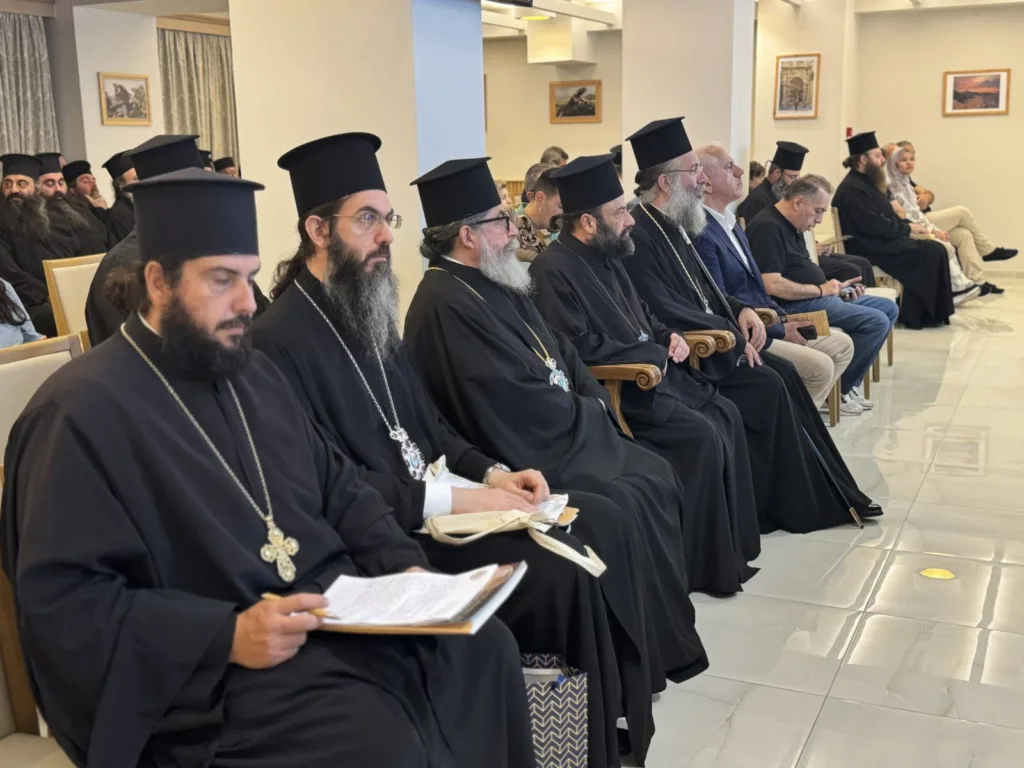
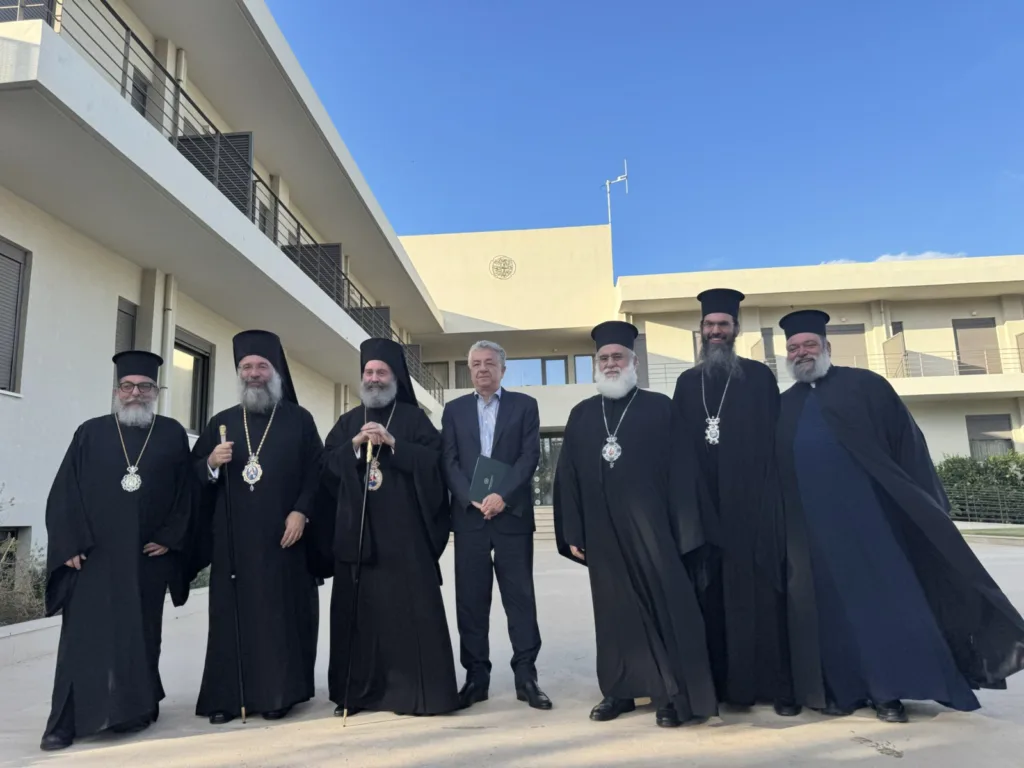
The gathering brought together prominent hierarchs, scholars, and medical experts from Greece, Australia, and beyond, including Archbishop Eugenios of Crete, Metropolitan Myron of New Zealand, His Grace Bishop Athenagoras of Canberra, and professors from the Universities of Athens, Thessaloniki, and Crete.
Over days of discussion, participants delved into theological, ethical, and medical perspectives on end-of-life care, reflecting the Orthodox Church’s call for a humane and faith-centred approach to bioethical dilemmas.
The conference concluded on Sunday, 26 October, at the Holy Monastery of the Holy Cross Vosakou, where Archbishop Makarios presided over the Divine Liturgy and presented the final conclusions.