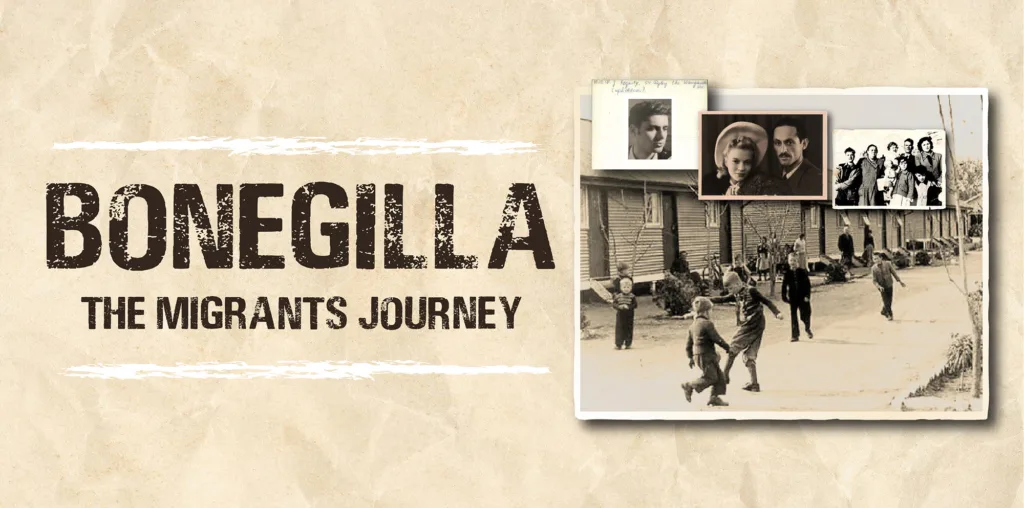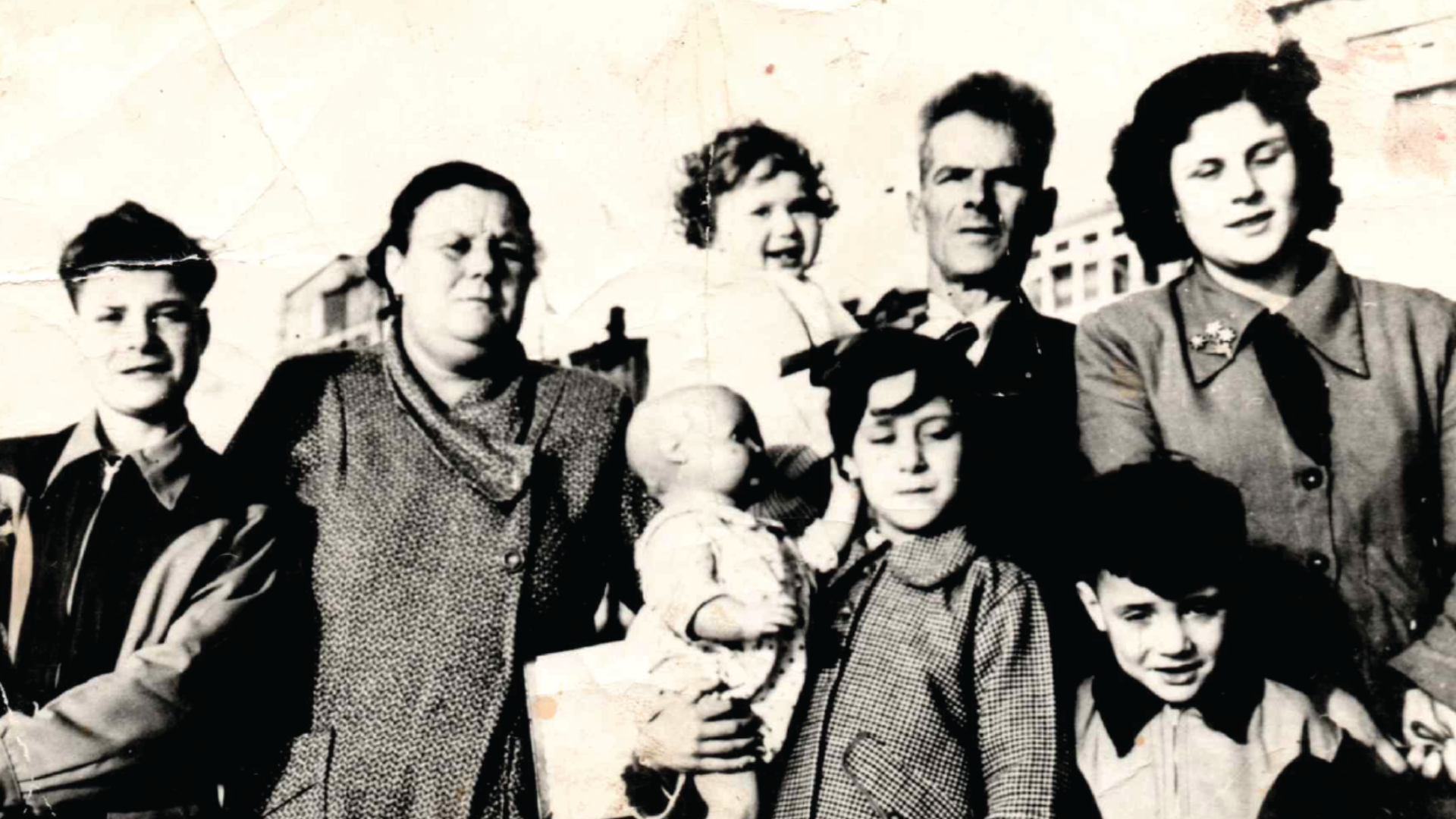
Before the cinema lights dim and the piano notes begin for Bonegilla – The Migrant’s Journey, Simon Reich has one urgent message for the Greek community: your chapter is still waiting to be written.
Reich is taking his immersive documentary on the road with live screenings booked across Victoria and New South Wales: Cameo Cinema Belgrave (April 12), Polish Club Ashfield (April 17), St Ives Community Hall (April 18), North Ryde School of Arts Community Centre (April 19) and Griffith Regional Theatre (August 29).
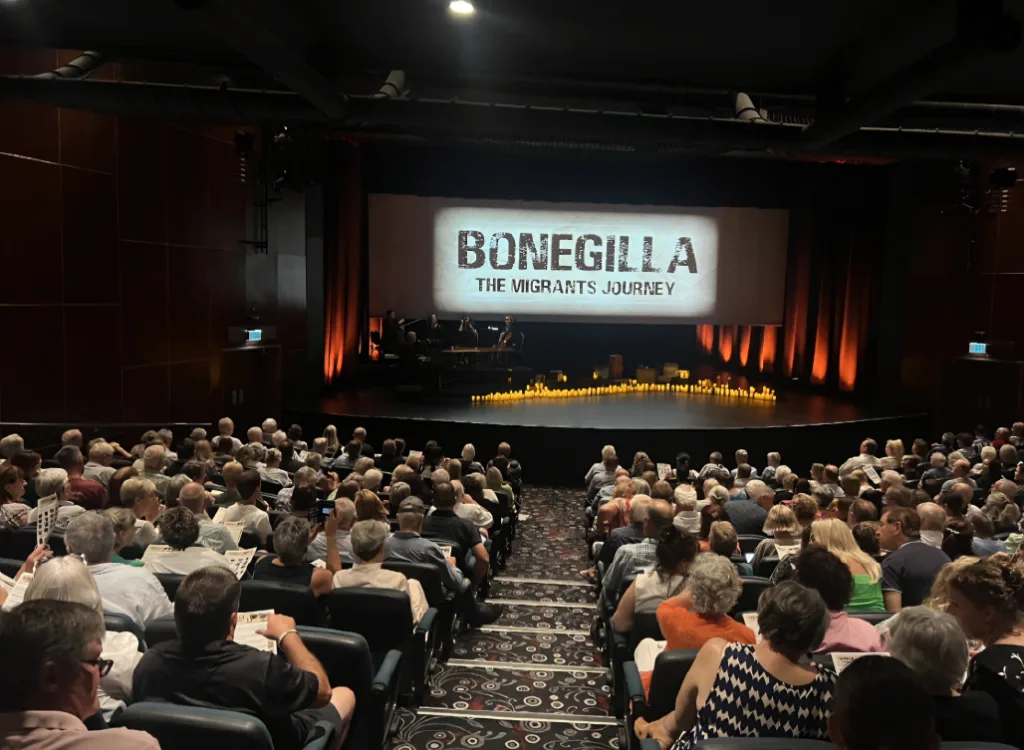
This is no ordinary screening. A composer and pianist, Reich performs live as multi-screen documentary footage unfolds, sometimes joined by strings.
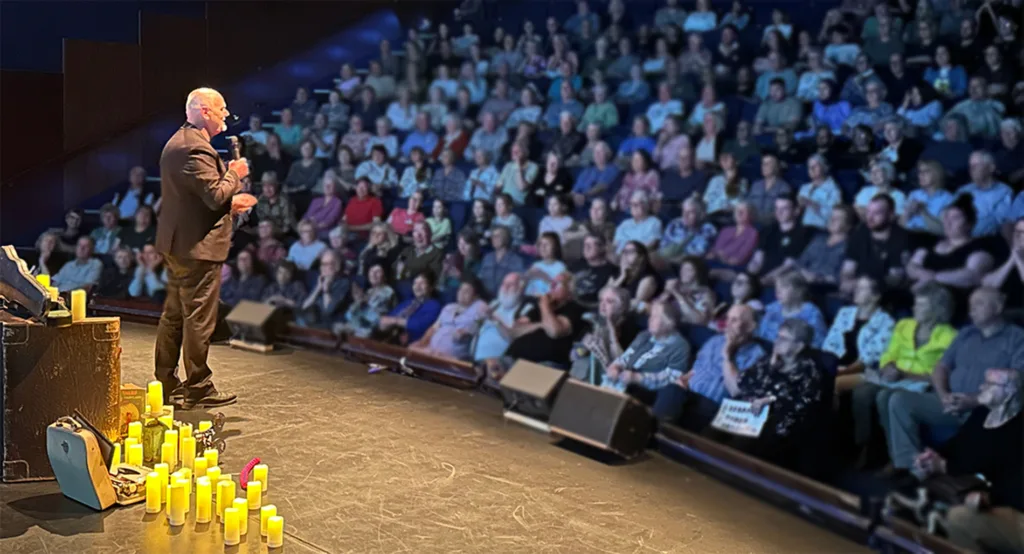
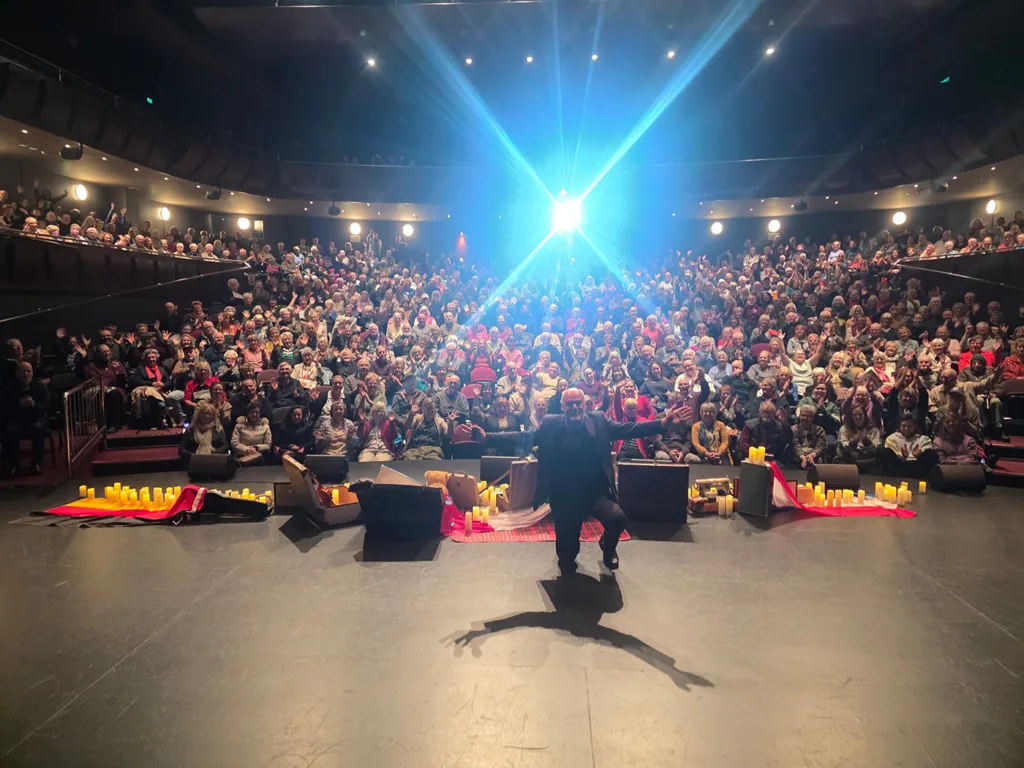
“My musical brain affects everything, the editing, the rhythm of the words, the placement of music,” he says. “You can forgive average footage, but if you can’t understand the sound, you’ve lost the audience.”
The result is deeply emotive. During its premiere season at Melbourne Museum, audiences wept openly. The production later won the People’s Choice Award at the Melbourne Documentary Film Festival.
But even as audiences fill theatres, Reich is searching for one missing thread: the Greek story.
Up to 30,000 Greeks passed through the Bonegilla Migrant Reception and Training Centre between 1947 and 1971, part of the more than 300,000 migrants processed there. When including those sponsored by relatives who bypassed the camp, post-war Greek migration to Australia swells to around 250,000.
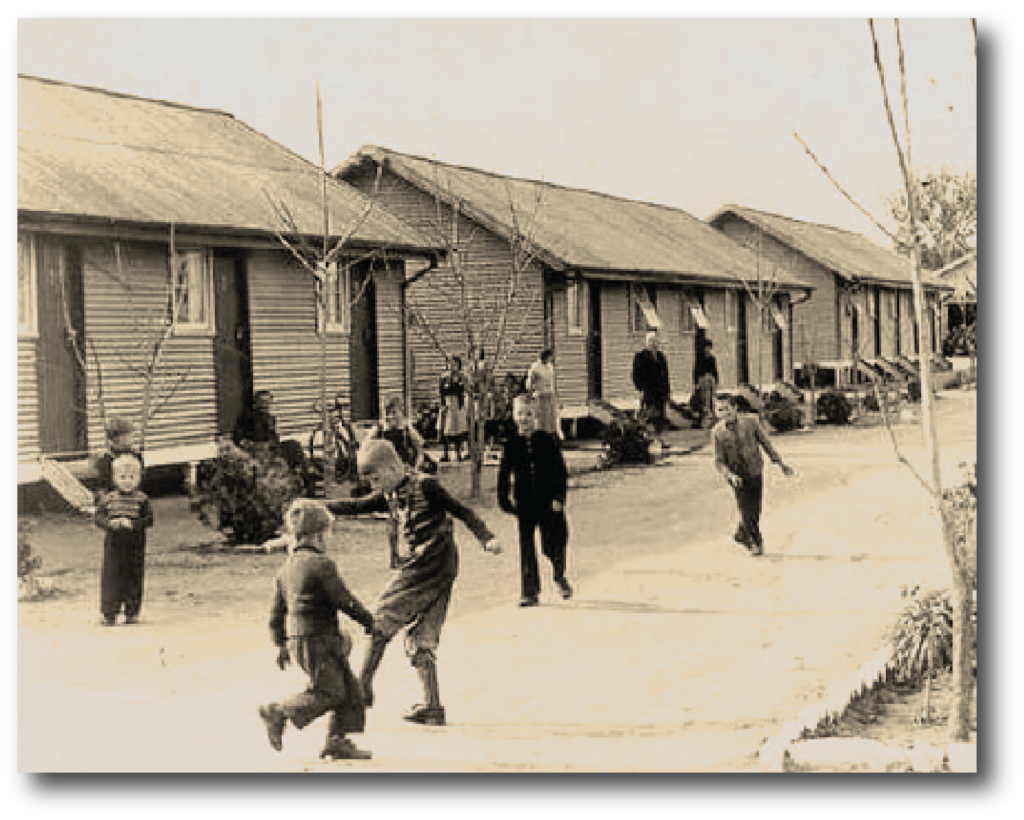
Bonegilla was the gateway. Migrants arrived under assisted passage schemes after surviving war, displacement and hunger. They signed two-year work contracts. The huts were basic, the camp resembling a military installation. During recessions in 1952 and 1961, unemployment left many stranded. Protests erupted; one sign declared Bonegilla a “place of no hope.”
And yet, another theme echoes through Reich’s interviews: solidarity.
“When you arrived at a huge camp like that, you realised everyone was in the same boat,” he says.
“You were never alone.”
Friendships forged in those timber huts have lasted 50 to 70 years.
For Reich, the project is personal. His father arrived as a refugee from Germany after World War II, passing through Bonegilla before rebuilding his life in Australia. Seven years ago, when Reich approached the site, now run as the Bonegilla Migrant Experience, he was stunned by the lack of recorded testimonies.
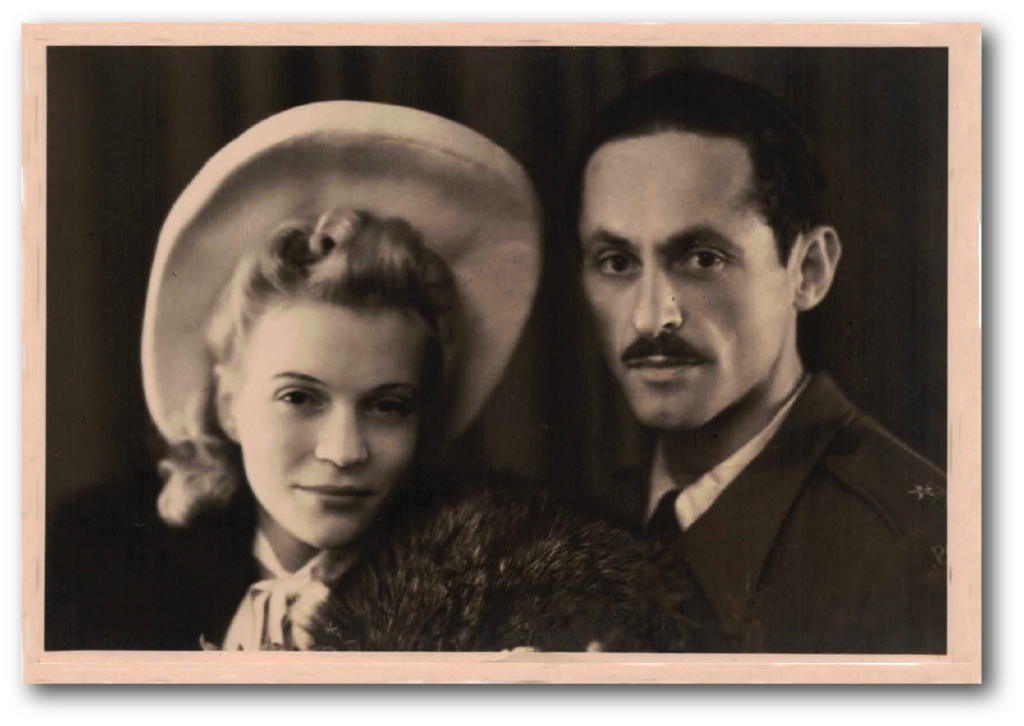
“There were some written accounts, but hardly any video, and what existed was poorly recorded,” he says.
He began filming. Seven years on, he has recorded around 50 in-depth interviews across nationalities.
His process is painstaking. “Basically I record many different nationalities and then transcribe their interviews,” he explains. “I read them like a book and highlight the things that stand out. When I find stories that relate to others, I see a narrative unfolding.”
One sequence became especially powerful.
“Three people told of how their fathers left to fight in the war while their wives were pregnant. When these men returned years later, their child was four or five and didn’t know who they were. Because all three described that same sad but happy reunion, I placed them together. It formed a hard-hitting section of the documentary.”
But when it comes to Greeks, the silence has surprised him.
“I’ve joined all the Melbourne Greek Facebook groups and made constant pleas for people to come forward,” Reich says. “Unfortunately, no one has replied. I’m hoping this article brings people out from the shadows who are willing to share and record their stories with me.”
He is particularly seeking the earliest arrivals.
“I’m mostly after those who came out in the earlier phases from 1947 to 1960,” Reich says. “After that, people flew by airplane and the facilities were upgraded. I’m trying to capture the anecdotes of those who had it the toughest.”
Those pioneers are now in their late eighties or nineties.
“It’s a race against time to preserve these interviews for future generations,” he says.
Reich is developing a sequel, Bonegilla – Their Life in a Suitcase, and is even considering a Greek-focused documentary.
“Depending on how well the plea for Greek subjects goes is how many I can insert into future projects. I’m thinking of doing a full Greek version – but once again, I need willing participants,” he says.
For a community that helped define post-war Australia, the invitation is simple – and urgent: Tell your story. Before it disappears.
To find out where documentary shows are playing around Australia, visit Simon Reich’s website https://www.bonegillamigrants.com.au/