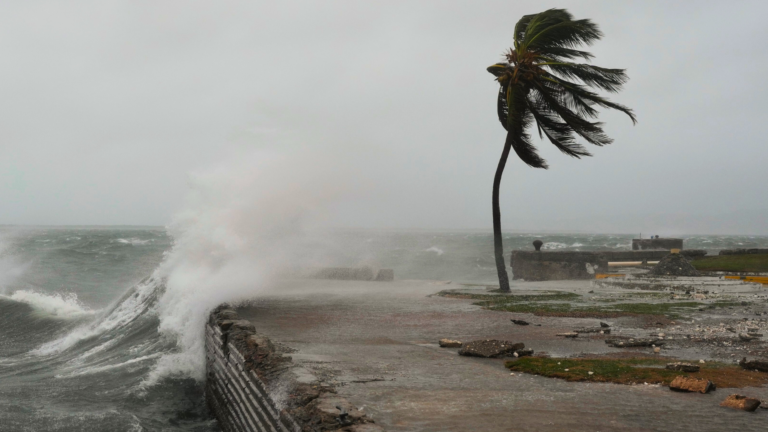
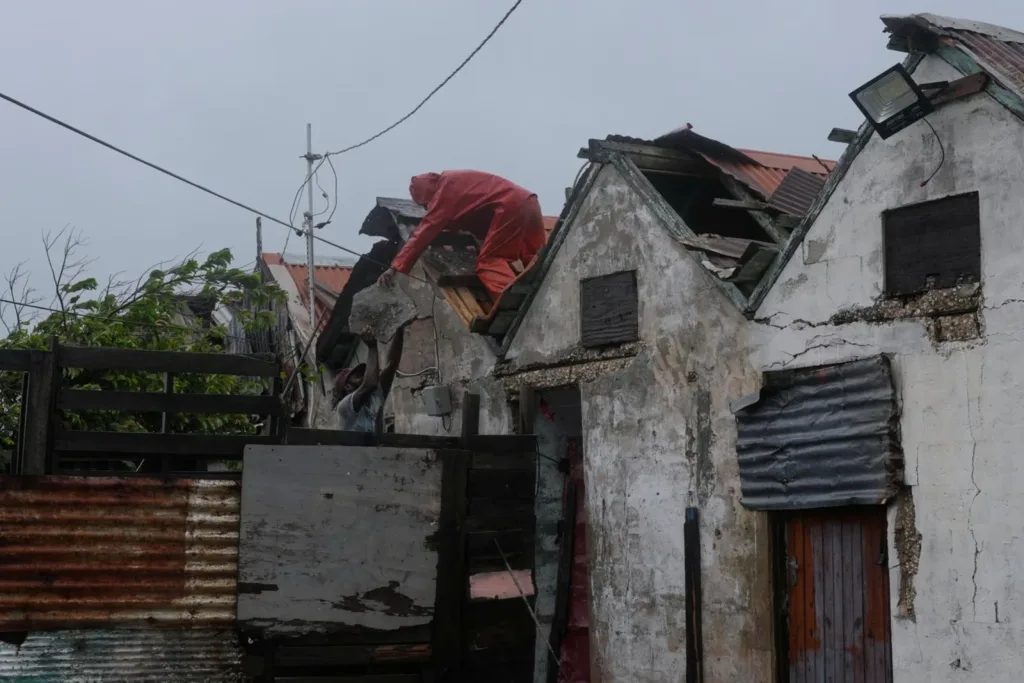
Hurricane Melissa has battered Jamaica after making landfall near New Hope early Wednesday morning AEDT as a Category 5 storm, the most powerful hurricane ever recorded to strike the island in 174 years of recordkeeping.
The US National Hurricane Centre (NHC) downgraded Melissa to Category 4 a few hours later but warned it remained “extremely dangerous,” with sustained winds reaching 300km/h, torrential rain, and a life-threatening storm surge.
The hurricane is expected to continue tracking across Jamaica before moving toward eastern Cuba later today.
Photo: Matias Delacroix / AP.
At least seven people have died, three in Jamaica as residents prepared for the storm, three in Haiti, and one in the Dominican Republic.
Around 240,000 Jamaicans are without power, and emergency teams have struggled to reach stranded families as roads are blocked by fallen trees and debris.
The NHC described Melissa as even more powerful than Hurricane Katrina, which devastated New Orleans two decades ago.
A UN agency has labelled it the “storm of the century,” marking the first time Jamaica has ever faced a Category 5 hurricane.
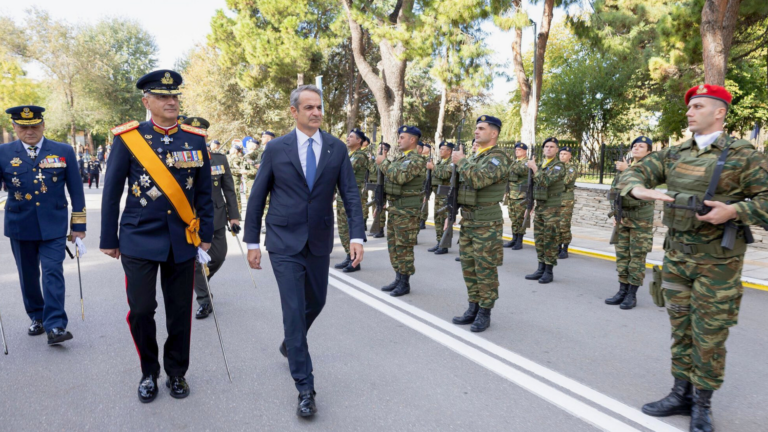
Greece commemorated OXI Day on Tuesday, October 28, with the annual military parade in Thessaloniki, marking the nation’s entry into World War II and its historic defiance against fascist Italy in 1940.
The event was attended by President Constantine Tassoulas, Prime Minister Kyriakos Mitsotakis, and senior government and military officials.
The parade featured all three branches of the armed forces, showcasing Greece’s latest military technology, including newly acquired drones, anti-drone systems, and mobile drone-construction units, some Greek-made and already deployed in EU operations in the Red Sea.
Thousands of spectators gathered along the city’s seafront, where the Air Force’s “Zeus” demonstration team concluded the event with a precision aerial display led by pilot Georgios Sotiriou, who exchanged words of appreciation with the president during the flyover.
In his address, President Tassoulas said the anniversary of Greece’s historic “No” to the Axis powers “is the greatest and ultimate lesson of the ’40s generation,” praising their courage and selflessness as enduring examples for modern Greeks.
Prime Minister Mitsotakis echoed the call for unity, saying, “We live in turbulent and difficult times, but the military parade we just observed today makes us feel secure that the Armed Forces are always here to defend this liberty for which our ancestors fought.”
He added that Greece’s military is undergoing “perhaps the greatest transformation in its history” to meet today’s challenges.
Similar parades and celebrations took place across the country, including in Athens, Patras, and Heraklion.
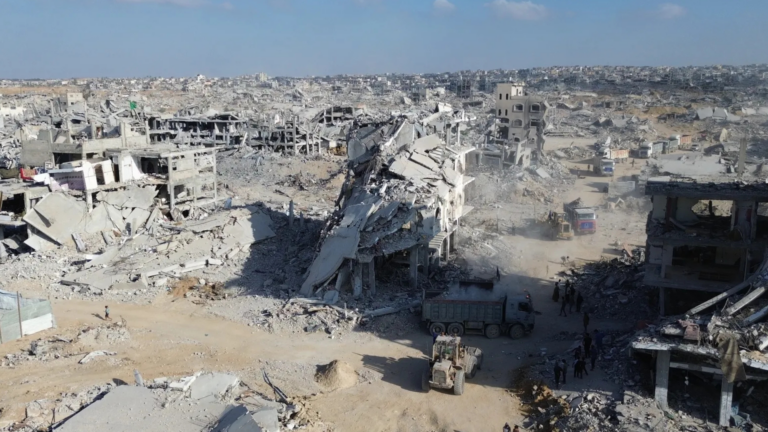
Israel ordered fresh air strikes on Gaza on Tuesday, October 28, after accusing Hamas of breaching a US-brokered ceasefire and attacking its troops, with Gaza’s civil defence agency reporting multiple casualties.
At least seven people were killed, two in Gaza City when a house was hit and five in a strike on a civilian vehicle in the south, the Hamas-run agency said. Another strike reportedly hit near Al-Shifa Hospital.
Prime Minister Benjamin Netanyahu’s office said he had ordered “powerful strikes” on Gaza following what officials called a major violation of the ceasefire.
Defence Minister Israel Katz said Hamas would “pay a heavy price” for attacking Israeli soldiers, calling it “a crossing of a bright red line”.
The escalation came amid a dispute over the return of hostages’ remains under the truce.
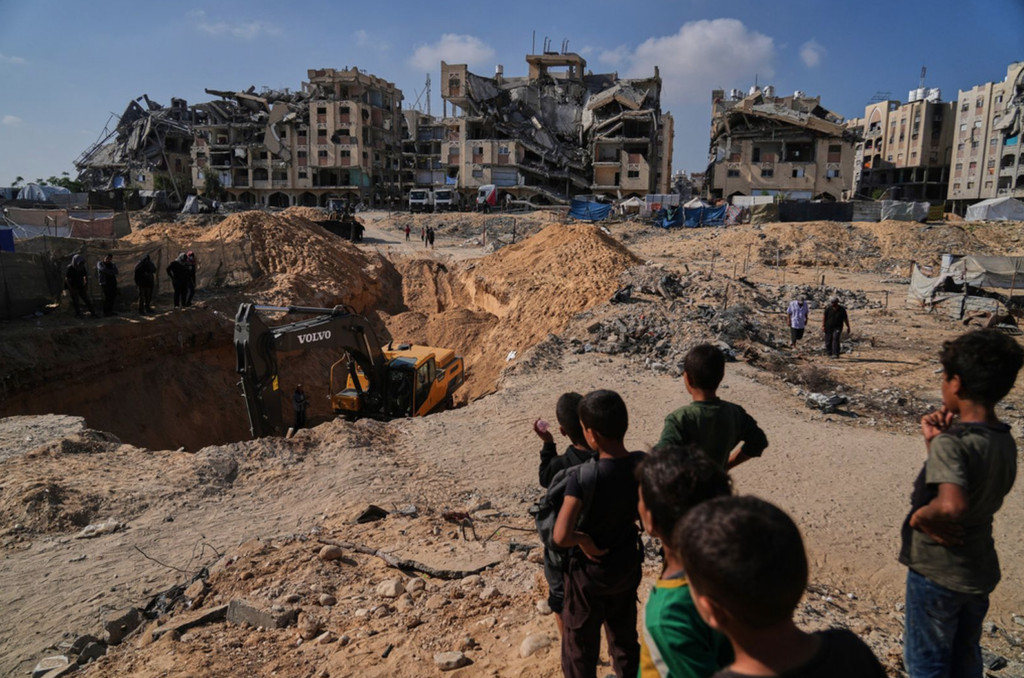
Palestinians watch as Egyptian machinery and workers search for the bodies of hostages in Hamad City, Khan Younis, in the southern Gaza Strip, Tuesday, Oct 28, 2025. Photo: AP Photo / Abdel Kareem Hana.
On Monday, Hamas handed over partial remains of a captive already recovered two years ago, a “clear violation of the agreement,” Netanyahu’s office said, identifying the remains as belonging to Ofir Tzarfati, abducted from the Nova music festival on October 7, 2023.
Hamas later said it would delay the next handover, claiming Israeli “escalation will hinder the search, excavation, and recovery of the bodies.”
The Hostages and Missing Families Forum urged Israel to respond “decisively,” accusing Hamas of “deceiving the United States and mediators.”
Hamas spokesperson Hazem Qassem rejected Israel’s claims, saying bombardments had destroyed key locations but insisted the group was “determined to hand over the bodies of the Israeli captives as soon as possible.”
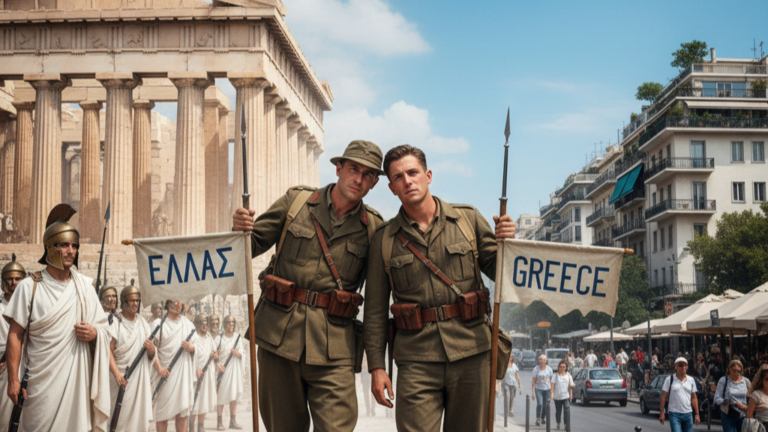
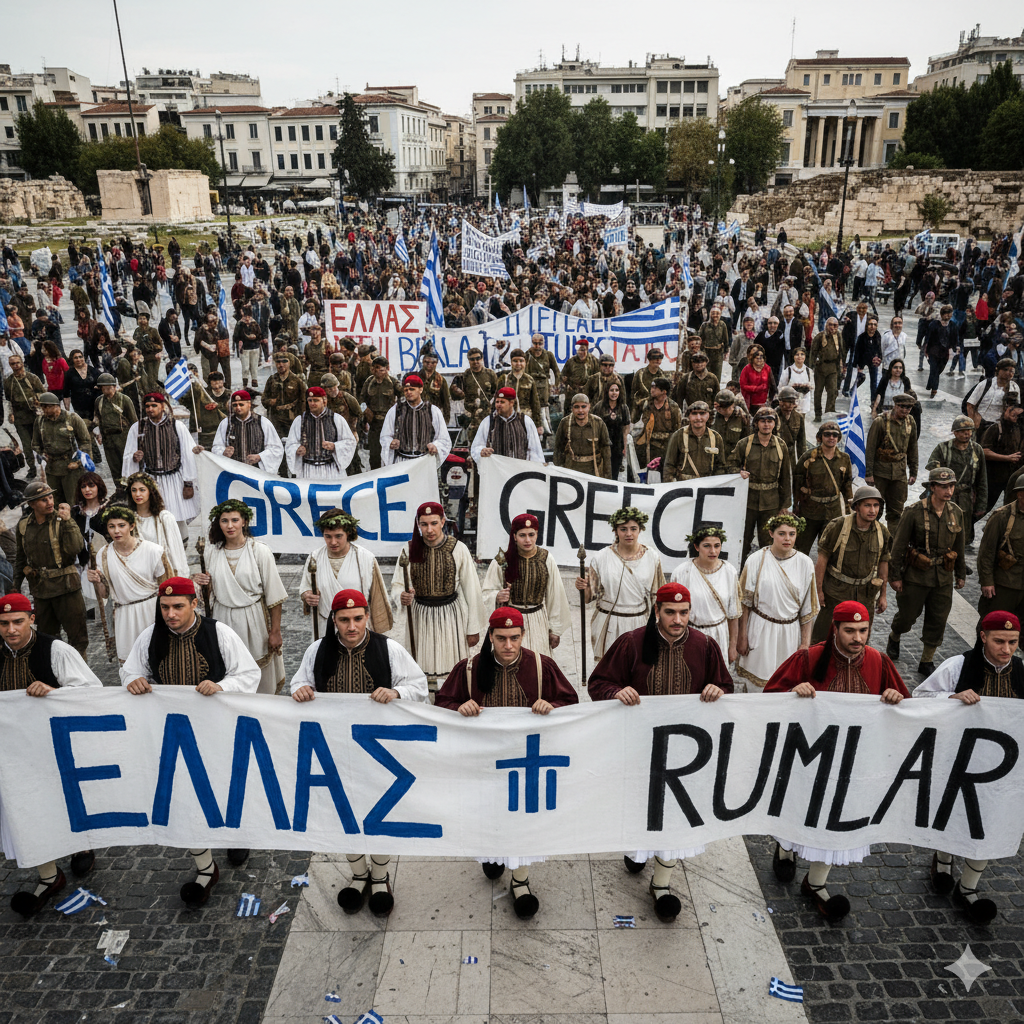
On 28 October 1940, Greek leader Ioannis Metaxas refused Mussolini’s ultimatum to occupy Greece, an act of defiance now commemorated as Ohi Day (No Day). It was a moment defined by one powerful word — “No” — reminding us how language and names can shape national identity.
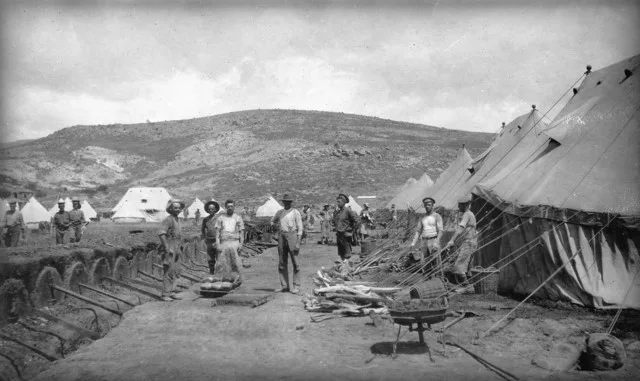
Around that same time, my maternal grandfather, Nicholaos Apistolas, from the island of Imvros (renamed Gökçeada), was conscripted into the Turkish army. His island, a naval base for the Allies during World War I, had aided the ANZACs at Gallipoli. By World War II, it was ceded to Turkey under the 1923 Treaty of Lausanne, and its Greek inhabitants, like my grandfather, were forcibly classified as Turkish nationals.
In Constantinople, my paternal grandfather Theodore Sinanidis was adjusting to another imposed renaming, the 1930 law that made “Istanbul” the city’s official postal name. By 1942, it wasn’t just a matter of semantics, he lost a large part of his fortune through the punitive “wealth tax” targeting citizens marked as Rumlar (Romans) on their Turkish IDs.
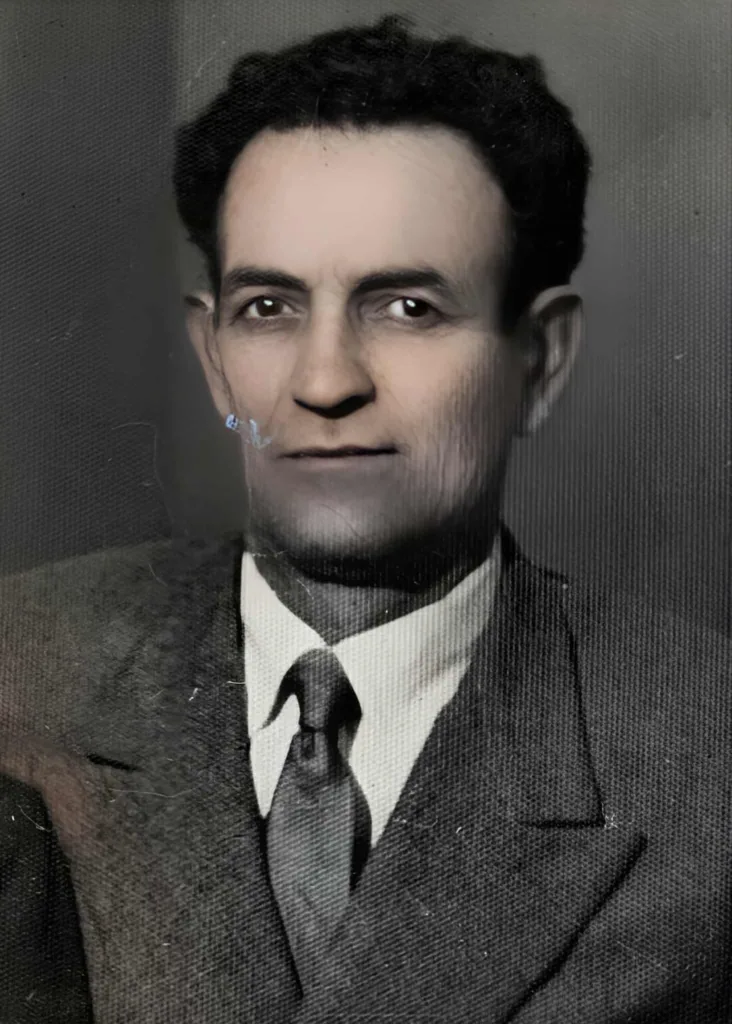
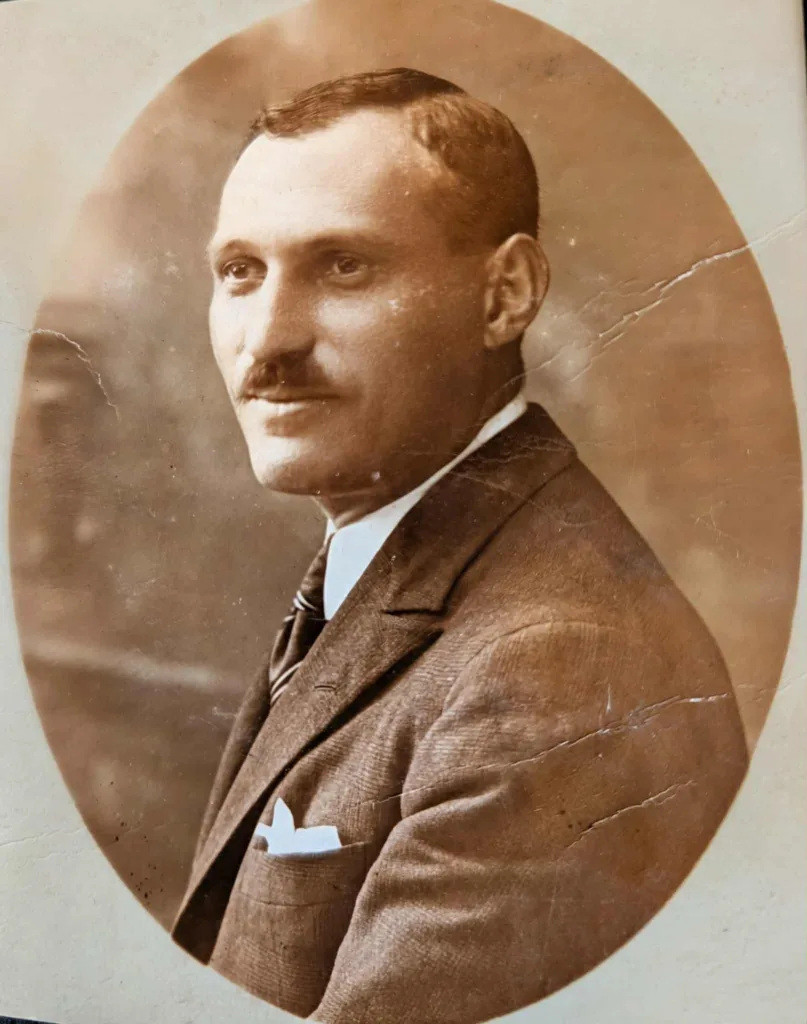
Nicholaos Apistolas, an Imvrian and Romios.Theodore Sinanidis, born in Constantinople but died in Istanbul.Imvros during World War I.
My family were all Rumlar (Romioi) the Turkish name for Romans, used to obscure their Hellenic roots. Though they spoke Greek and practiced Orthodoxy, they were politically redefined as remnants of the Byzantine Empire, cut off from modern Greece. This reclassification dictated not only their citizenship but also their sense of self.
It is from this imposed label that my connection to Romiosyni, that thread of cultural endurance, was born. It continues to remind us: “We are still here.”
Yet, where we were was a kind of cultural no man’s land. Post–World War II, Turkish policies deepened the distance, while rejection also came from Greece itself. My mother recalls being called Tourkospori (Turkish seed) and hanoumaki (Turkish lady) while studying in Athens. The alienation came from all sides.
This struggle over names, imposed, reclaimed, and reinterpreted, lies at the heart of modern Greek identity. Of course, to outsiders, we are simply Greek.
As a word, ‘Greek’ was popularised by the Romans after encountering a small tribe called Graikoi. The irony endures: the nation that defied Italy on Ohi Day still carries the name bestowed by its Roman conquerors.
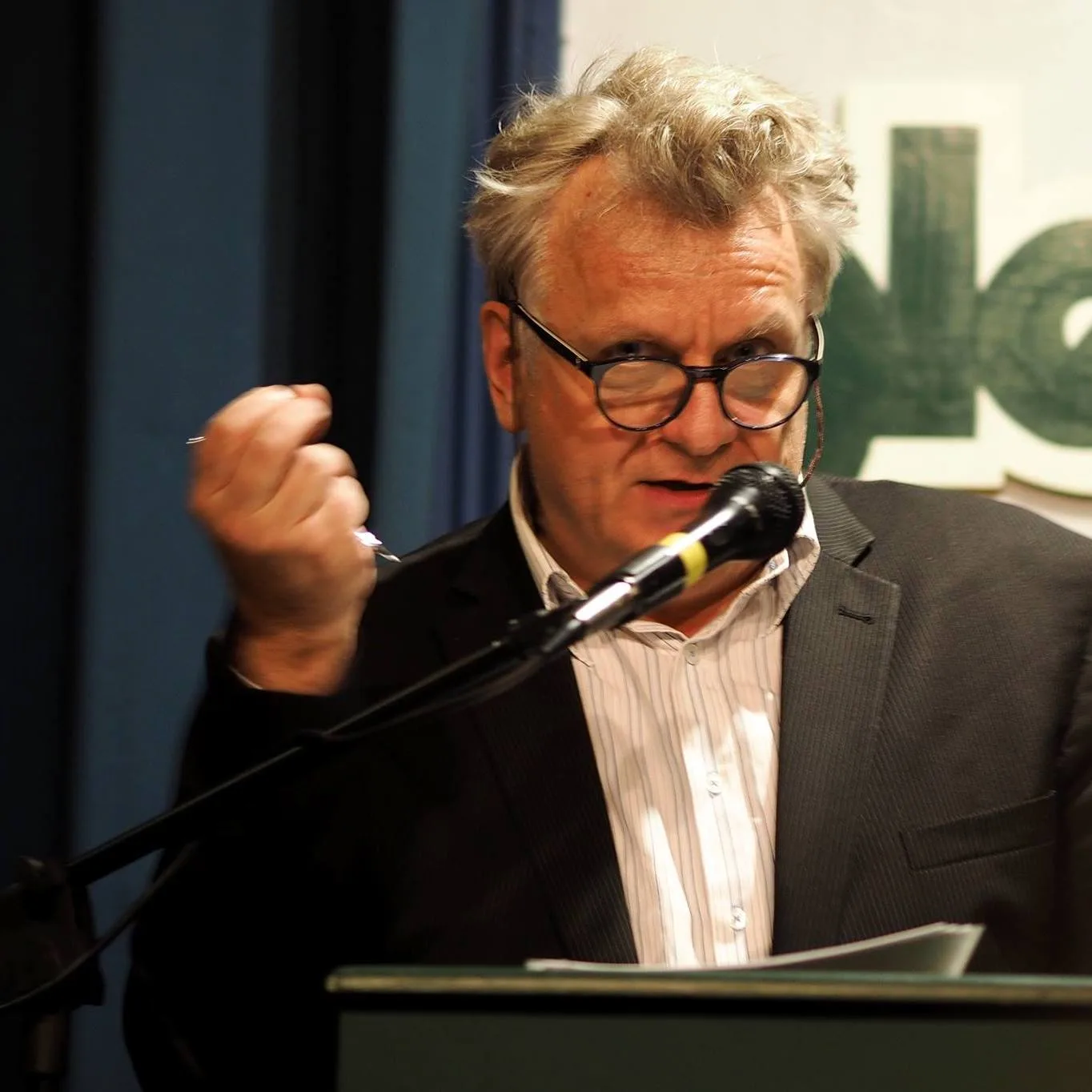
Professor Vrasidas Karalis, Modern Greek and Byzantine Studies Lecturer at the University of Sydney, notes that both words, Greek and Hellenic, carry emotional weight in different contexts.
“For Westerners, Greek is the name they came to know us as a nation since the Greek revolution. It resonates with a revolutionary past and the struggle for freedom,” he says.
Vrasidas Karalis.
Karalis adds it was a name cemented globally during World War II, following the spirit of the famous (if debated) expression: attributed to Churchill himself: “Heroes fight like Greeks and not Greeks as heroes.”
For Hellenes, Ellinas expresses continuity. Karalis points to Greece as a nation with many names: Graikoi, Yunan, Romioi, but a single essence. “We must not forget Athanasios Diakos, when killed by the Turks, sang: ‘Εγώ Γραικός γεννήθηκα, Γραικός και θα πεθάνω.’ (I was born Greek, and Greek I will die).”
He points out that languages and identities rarely align neatly: “We don’t say Deutschland in English; we say Germany. We once said Pekingand now say Beijing. The Finnish call their country Suomi. It’s all shaped by history and habit.”
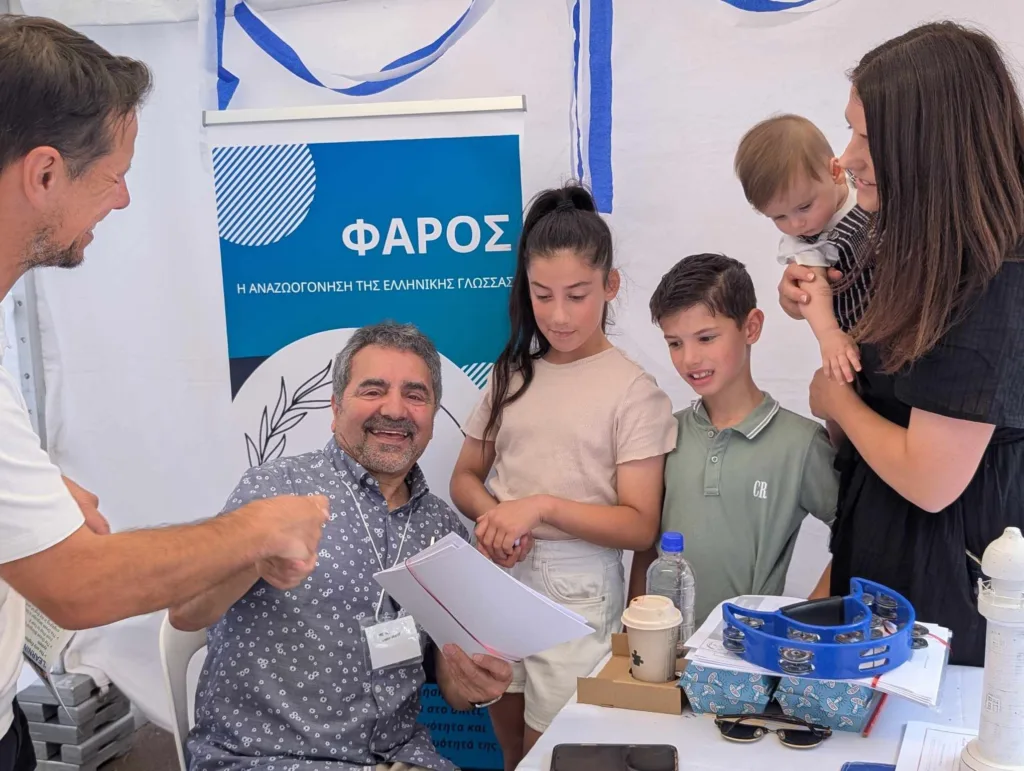
Professor Jo Lo Bianco is President of the Pharos Alliance.
Similarly, Turkey’s insistence on being called Türkiyesince 2021 was more than branding — it was linguistic sovereignty. “When Erdogan pushed for the change, the simplest reply would have been: Turkey is the English equivalent of Türkiye,” says Lo Bianco. “So why can’t we have Greece and Hellas?”
People who push to call our homeland Hellas instead of Greecepoint to this as an act of decolonisation, an accuracy when it comes to our identity. Lo Bianco says, “What a nation calls itself versus what others call it is steeped in power and struggle.”
Councillor Helen Politis, founder of the Greek Australian Forum on Facebook, deliberately chose ‘Greek’: “I wanted to connect second, third and fourth-generation Greek Australians, and invite non-Greeks to engage in civic life.”
Father Armandos Manafis, administrator of the Hellenic Australian Forum, took another path: “Hellasmeans ‘land of light’, from Hel (light) and las (land). It speaks to enlightenment and resilience.”
The Hellenic Museum was aptly named thus to reach closer to the ideals of philosophy, democracy, and beauty that our ancestors cherished beyond Greece’s borders. “I think the notion of Greekness really depends on what period you are looking at,” Hellenic Museum CEO Sarah Craig told the Greek Herald in a previous interview. “The geographic borders have continually shifted over time so that is why we are the Hellenic Museum rather than the Greek museum.”
The Hellenic RSL chose its name to align with Greece’s armed forces — theHellenic Army, Navy, and Air Force. Secretary Terry Kanellos notes, “Even NATO uses ‘Hellenic.’ It reflects history and pride.”
Hellenic RSL President Manny Karvelas adds, “It’s inclusive of all Greeks from Greece, Cyprus, and the diaspora. Hellenic represents shared lineage beyond borders.”
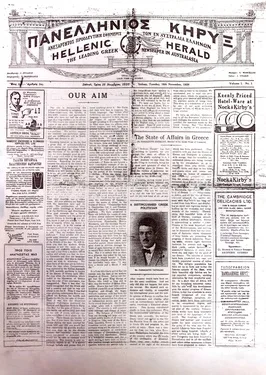
The Greek Herald was known as the hellenic Herald until 1985.The Hellenic RSL, once went by the name ‘Greek’.
During WWII, Greeks fought for Hellas, and I asked my grandfather what that meant for him, forced to wear a Turkish uniform at the time. Was he ashamed? He replied “No” because neither uniforms nor ID cards could define him.
He said he was Romios, guided by the flame of Romiosyni, burning with the same quiet defiance that answered “’Οχι’” in 1940. “Greek. Hellenes. Yunan. Romioi. Whatever name history gives us, we are still here.”
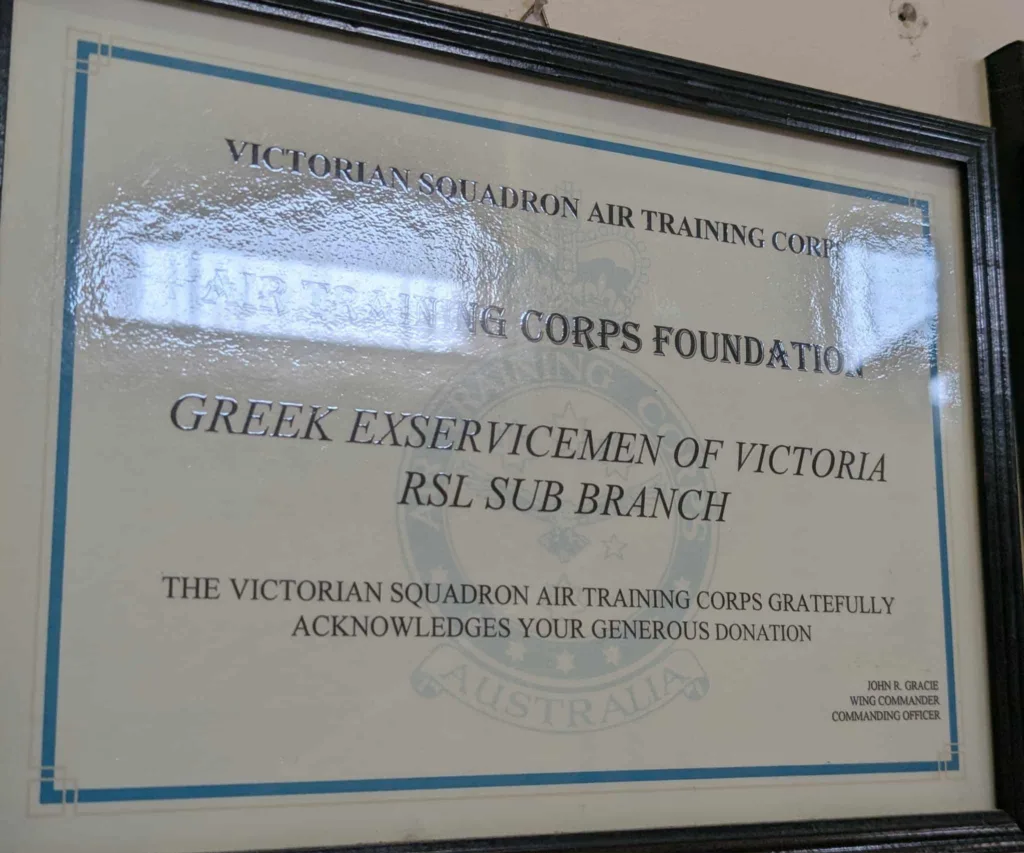
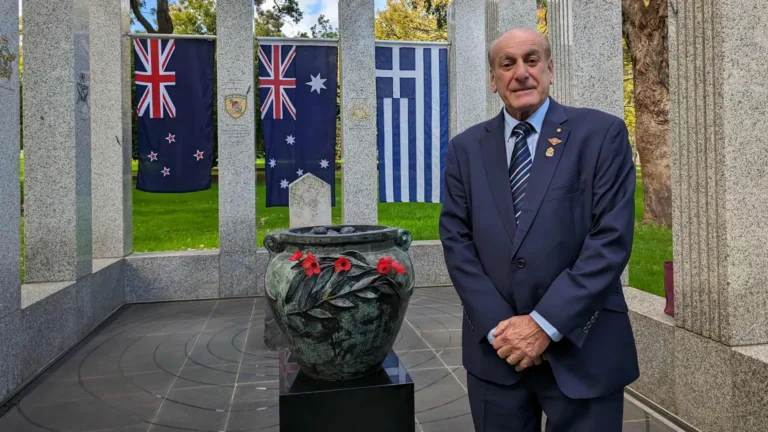
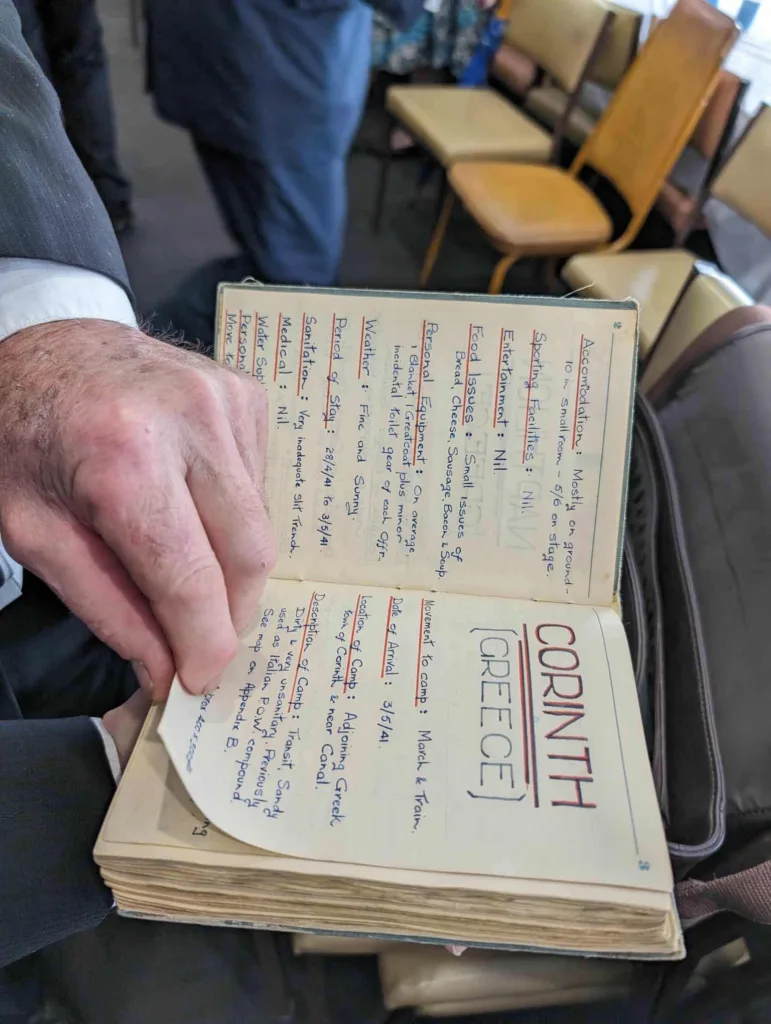
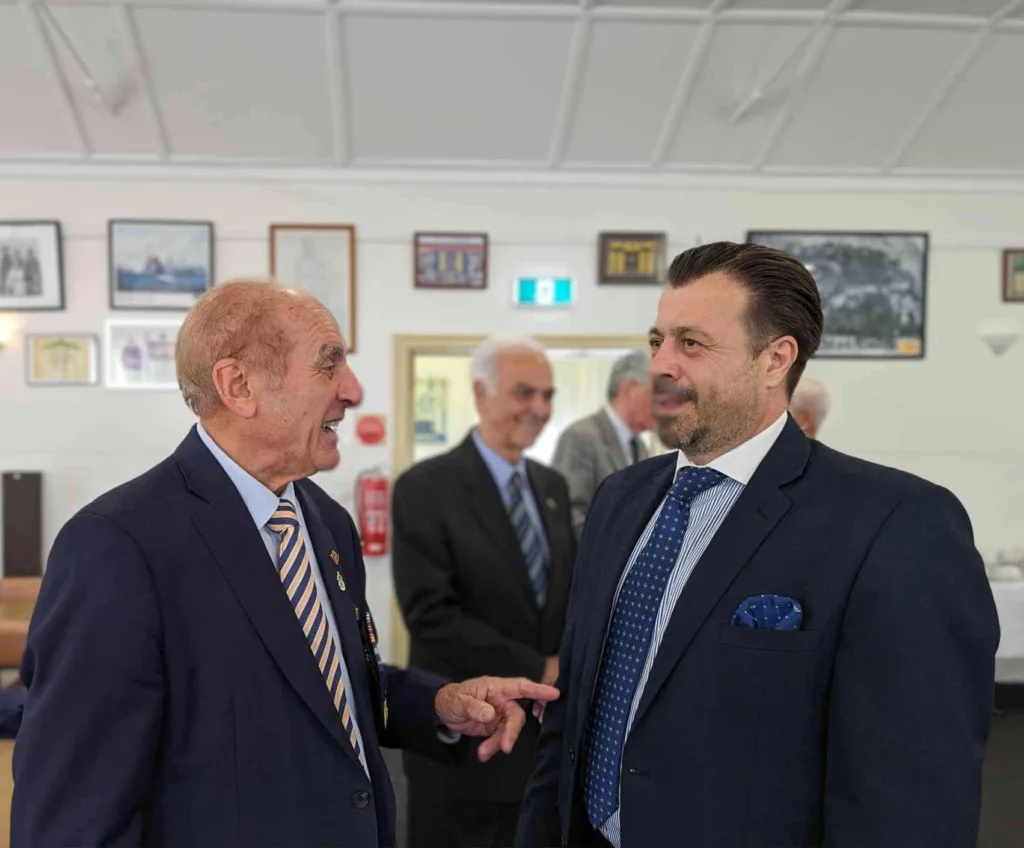
For Vietnam veteran Steve Kyritsis OAM, what began as a request from the Greek Consulate 14 years ago has become a lifelong mission: to track down the families of Australian soldiers who fought in Greece during World War II.
“It’s a challenge,” he says. “But it’s also satisfying. A medal that you get for your service in a war is gratitude. And if the veterans are not alive, then the families receive this medal, in this case, from the Greek government.”
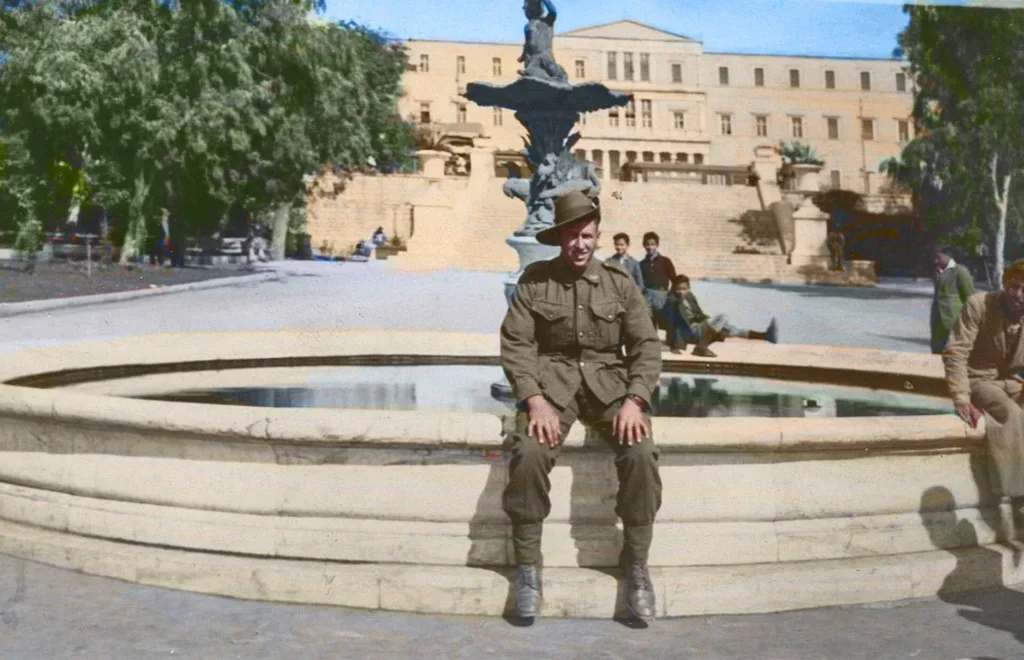
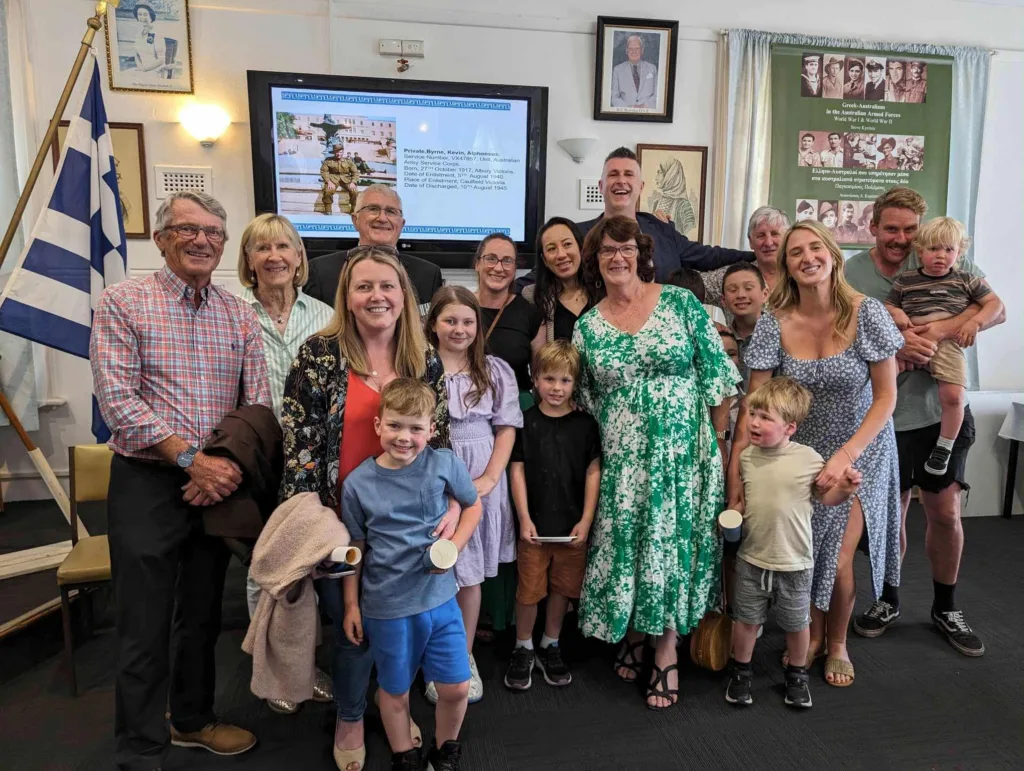
His work to offer Anzacs the Greek Campaign War Medal for WWII has already unearthed extraordinary treasures. Steve points to the 1941 photograph of Private Kevin Byrne, an Australian soldier sitting by the fountain at Syntagma Square in Athens.
“That’s a magnificent photo,” he says, eyes lighting up. “An Australian soldier in Greece. That’s history.”
Private Kevin Byrne sitting at the Syntagma Square Fountain during WWII.
The crusade began when former Greek Consul General of Melbourne Eleni Lianidou reached out.
“It started as a favour,” he recalls. “The Consul General in Melbourne at the time asked if I could take on the challenge. Out of 17,000 who served, about 170 families had never received the medal. It was a big job, and it still is.”
What started as a handful of phone calls and letters quickly became an obsession.
“The first time, we found 10 families. Then we placed notices in the RSL newspaper and the Veterans Affairs newsletter. The word must have spread. Next time we found 30, then 40. We still have 90 families to go,” he says.
Aussie families collected medals, connected with others and shared their own connection to Greece.
Each new discovery feels like a victory, not just for the soldiers, but for their memory.
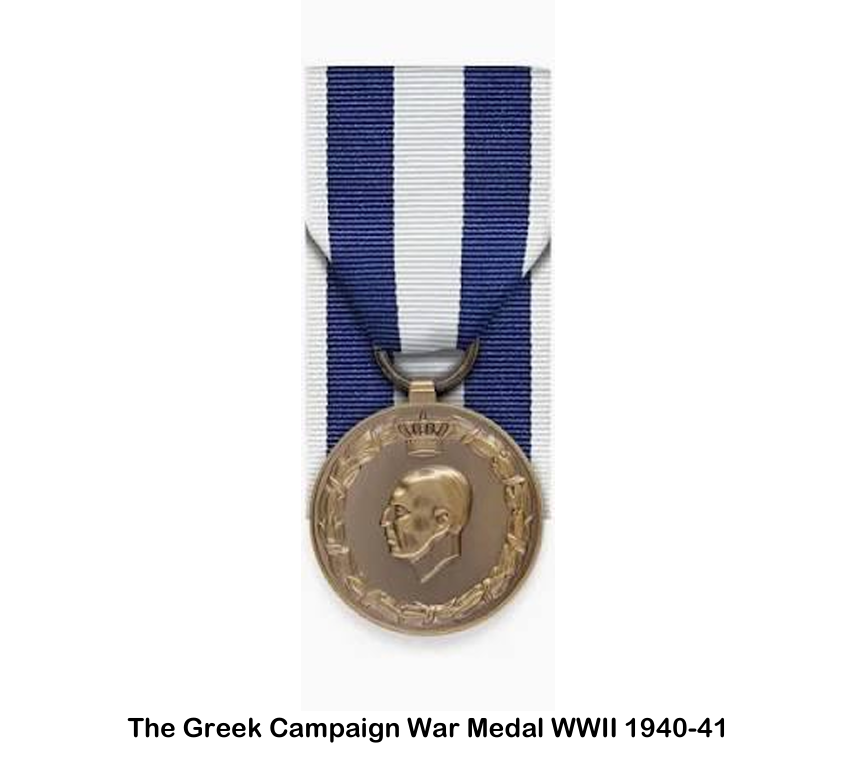
“Every time we offer medals, I tell myself that’s it, I’ll stop. But then I find another family, another story, another reason to go on,” he admits, noting that many families still have no idea their relatives earned a Greek Campaign Medal, a bronze disc with a profile portrait of King George II of Greece, surrounded by a laurel wreath.
The work is painstaking, emotional, and deeply personal as many of the veterans have passed away, and many families have moved. But when someone contacts him saying, “My father fought in Greece,” Steve springs into action.
“If they have the name and service number, I go straight to the National Archives. I find the record, verify it, and then send it to Greece for confirmation. The file must show that the veteran served in Greece or Crete in 1941,” he explains.
He has become an expert in reading faded service documents and deciphering military shorthand. “Sometimes it’s like finding a needle in a haystack. But when it all lines up, that’s the best part.”
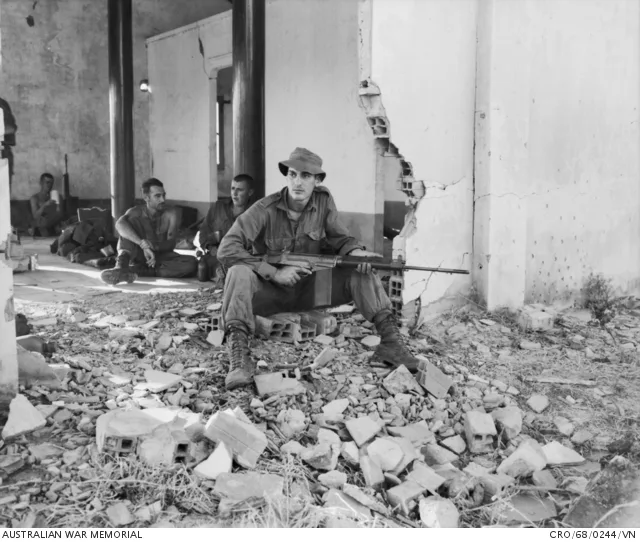
Born on the Greek island of Nisyros, Steve migrated to Australia with his family at age 12. In 1966, he was conscripted into the Australian Army and sent to Vietnam, serving with the 3rd Battalion, Royal Australian Regiment. He saw action at Coral and Balmoral, names that still send a shiver down the spine of those who were there.
“You never forget,” he says simply. “You just find a way to live with it.”
Steve Kyritsis during the Vietnam War. Photo – Australian War Memorial.
For Steve, he found a way to live with his experiences through a lifelong dedication to service. Over decades, he has combined his military experience, Greek heritage, and commitment to community into work that preserves the memory of those who served.
As former president of the Hellenic RSL Sub-Branch and current president of the Australian Hellenic Memorial Foundation in Melbourne, he has led efforts to recognise veterans, reconnect families with their histories, and ensure their stories are never forgotten. An accomplished author and historian, his books document the contributions of Greek Australians across multiple conflicts. His Order of Australia Medal underscores a life defined by duty, remembrance, and service.
“Some families in Queensland had a tough time approaching the consulate up there,” he says. “They thought I was the most appropriate person to help. So, I bent the rules a little. It was only meant for Victoria, but now I’ve got people contacting me from Queensland, Western Australia, even New Zealand.”
He laughs softly, shaking his head.
“I’m doing it alone. If I wasn’t doing it, it wouldn’t be handed to someone else,” he says.
Every presentation ceremony carries emotional weight.
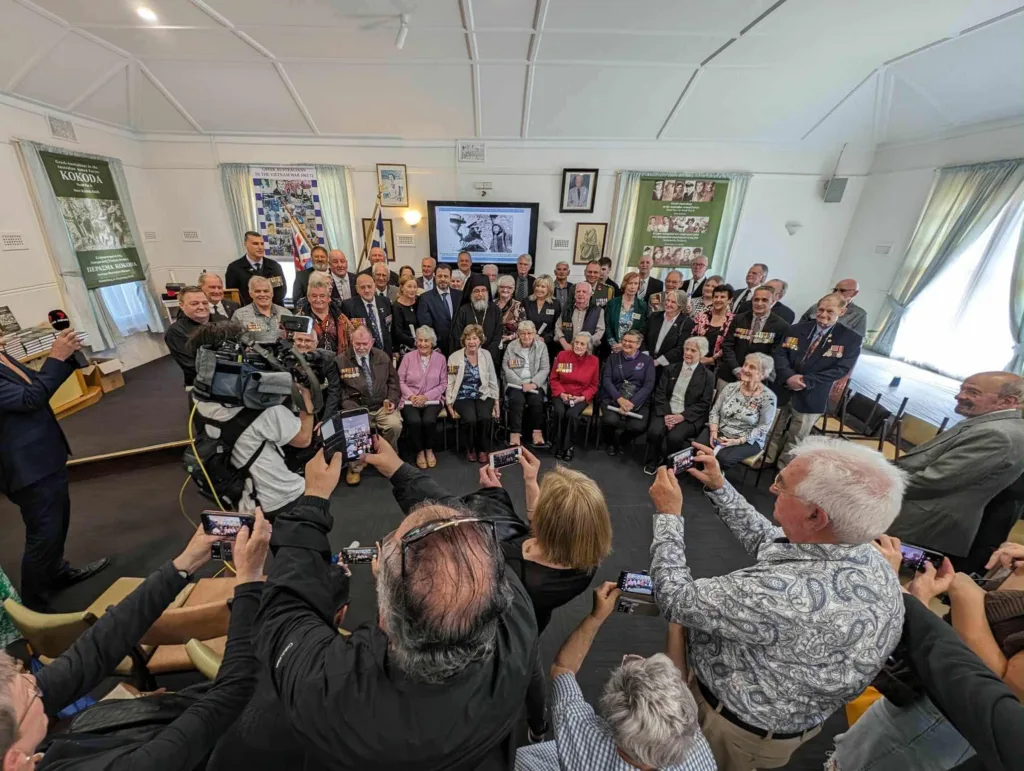
Kevin Byrne’s family accepted medals on behalf of their ancestor and made a family reunion of the occasion.Families are given medals, and in return share WW2 memorabilia such as Norman Rowell’s meticulous war log.
He has received countless letters of gratitude.
“I’ve got computers full of them. Letters from grandchildren, from families who never even knew their father or grandfather had fought in Greece. You spilled blood for those medals. They’re very personal. And it’s good to know that kids and grandkids feel the same way. For them, it’s about keeping memories alive,” he says.
For Steve, that is what matters most: the legacy.
“I tell my grandson about it. This is something I want him to remember. I want the next generation to know that gratitude doesn’t expire,” Steve says.
Now, with fewer than 100 families left to find, Steve has already been approached by Greek Consul General Dimitra Giorgantzoglou and continues his search.
Steve Kyritsis and former Greek consul general of Melbourne, Emmanuel Kakavelakis. Each new Greek Consul General reaches out to him to continue the search.
“I’m going to commit another 12 months,” he says, though it is hard to believe he will ever stop looking until the last recipient is found. “And then that will be it. Hopefully, we should have the medals here for the families in 2027.”
“Every presentation is like a chapter in a book,” he smiles. “Every medal handed over is another story told, another family reconnected with their history.”
It is a way of honouring the fallen: one name, one medal, one family at a time.
“It’s been quite a journey,” he says softly. “And I’ll keep going, for as long as I can.”
There are several days throughout the year which are solidified as turning points in Greek history and are commemorated to honour the hardships Greeks endured for our culture to flourish today. Among these lies OXI Day, celebrated annually on 28th October.
On this day in 1940 during World War II, Greek Prime Minister Ioannis Metaxas was given an ultimatum by Italian dictator Benito Mussolini: allow Greece to be occupied without resistance, or face war. Metaxas’ response of “OXI” (No) to this ultimatum acted as a hope during the war.
The day is celebrated for Greece’s bravery entering the war and protecting its country and people. Without that one act of defiance, Greece’s history in the war would have continued in a different trajectory.
Maria Bakalidou, Principal of the Greek Community of Melbourne (GCM) Schools, shared with The Greek Herald why it’s important to teach the history of OXI Day in Greek schools.
She remembered when she first came to Australia and saw how Greek Australians celebrated Greek Independence Day with many events, but didn’t quite do the same for OXI Day. She was surprised considering both are celebrated equally in Greece.
“I thought we should celebrate here in our schools to show the students that Greece played a very important role in the second world war,” Maria said.
Maria hopes that teaching the history of OXI Day and making connections to the Anzacs who fought in the Battle of Crete will help students connect their Greek and Australian identities.
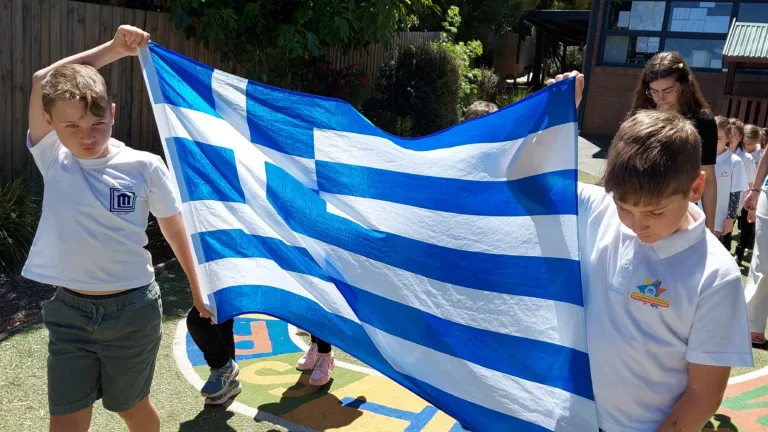
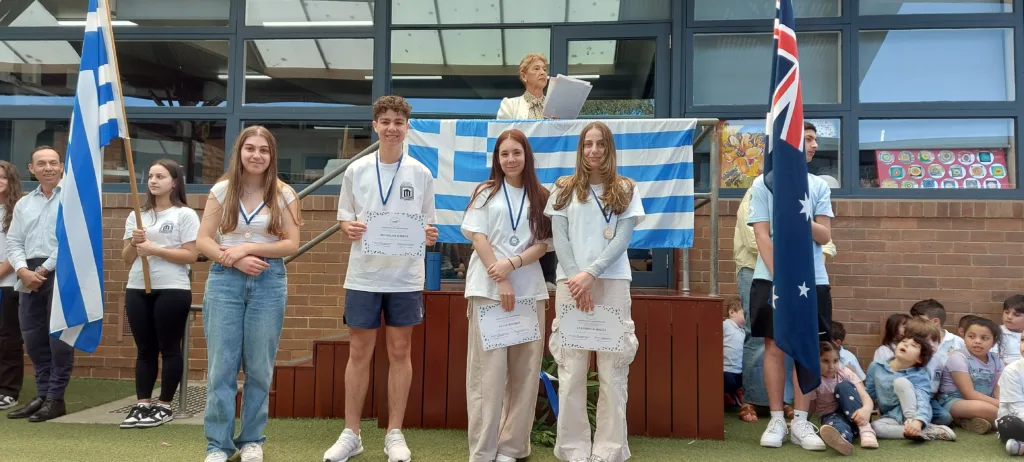
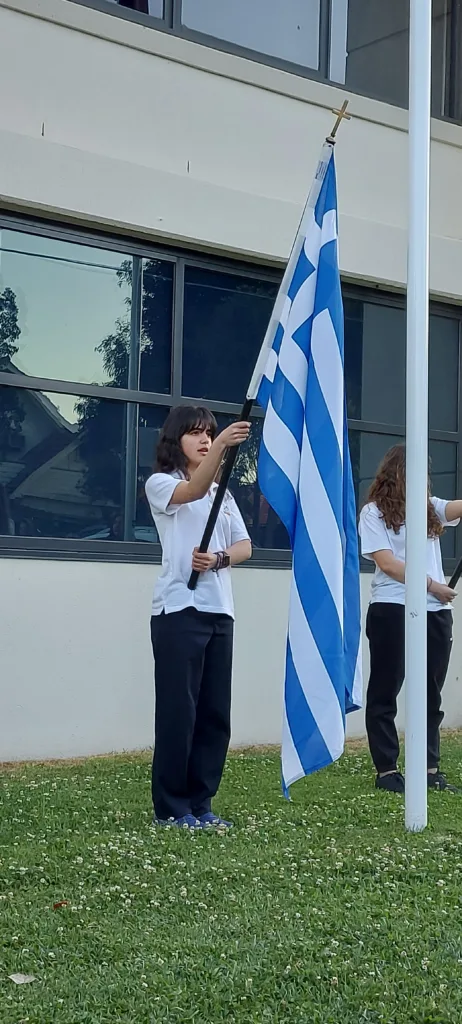
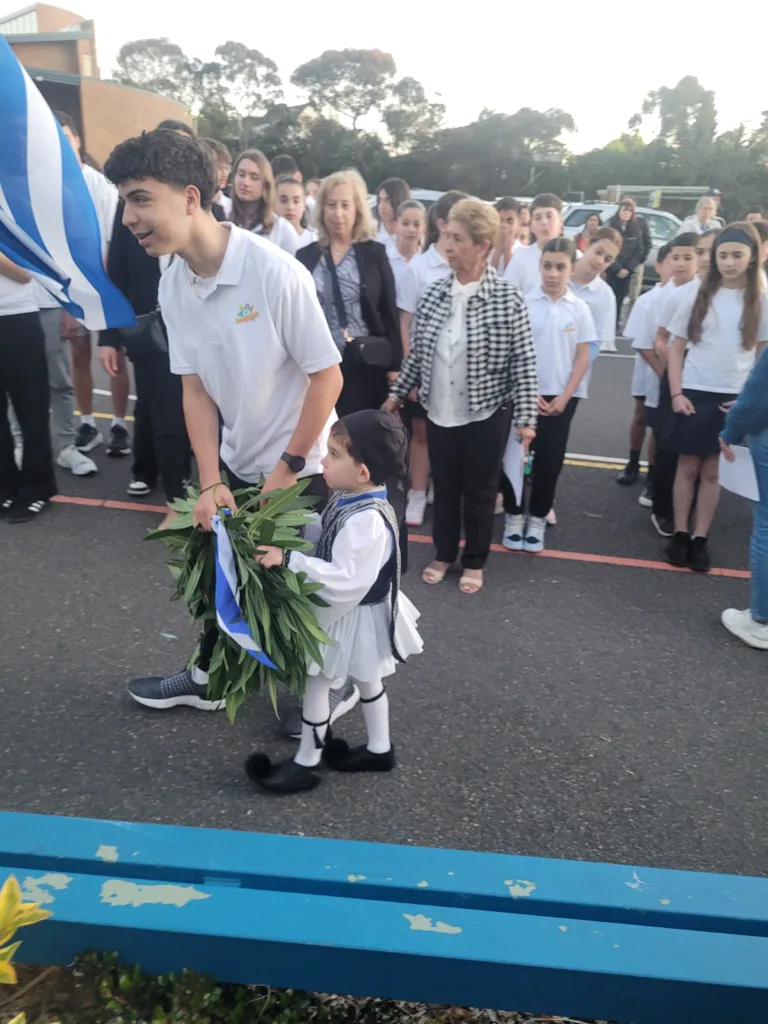
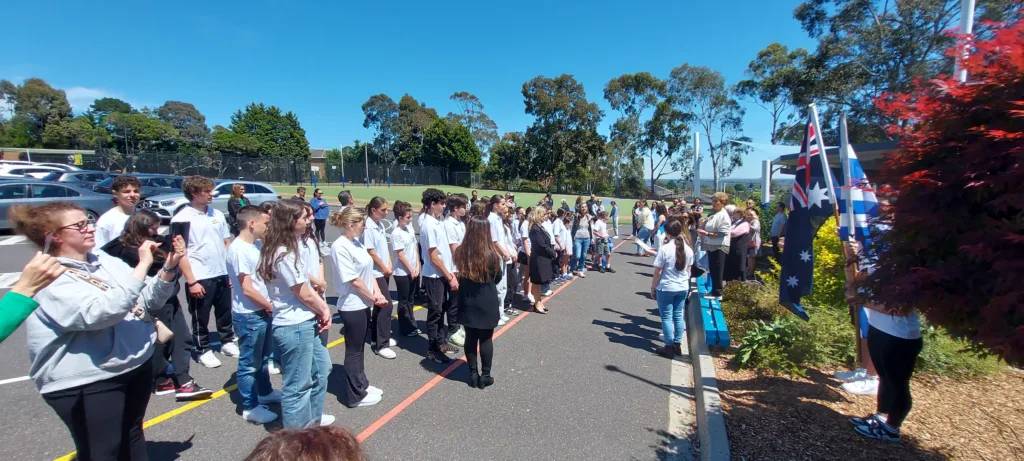
“Every year at all the GCM school campuses we do a march to honour the day,” she said.
“I believe it is important for the students to see others in traditional costumes and to see Greek and Australian flags waved. Students can then build on both their Greek identity and their Australian identity because we live in a multicultural Melbourne.
“In our schools we want to speak about peace and respect when teaching about October 28th, and to help students cultivate their Greek and Australian identities. It’s important for students to understand their identity as it is their motivation to continue learning Greek.”
The Greek Herald also heard from some young Greek Australians about what OXI Day means to them in 2025.
29-year-old Stephanie L agrees that preserving the history of OXI Day should continue.
“It’s important that it continues to be taught in Greek schools so future generations can understand their history, their culture and have an appreciation for what their ancestors went through,” Stephanie said.
NUGAS Social and Cultural Officer Yiannis Lekkas reflected on the historical context of the day.
“When I think about the 28th of October, I envision a larger force, Mussolini’s Italy attempting to invade Greece, the little guy, by land,” Yiannis said.
“It is a fact that Metaxas’ official response was “Alors, c’est la guerre” (“Thus, it is war”, responding to Italy’s ultimatum to surrender their land or fight the Italians). The Greek spirit is embodied through what the papers watered down as a simple “ΟΧΙ” (ΝΟ). Historically, we see the Greek people of this time as a resistant and defiant people.”
Speaking on a personal level about the day Yiannis added, “As a Greek who was born in Athens, lives in Australia since young, visits Greece often, it’s obvious to me this defiant and persistent spirit is found in both our Greeks found in Greece itself and the generations of Greeks in the diaspora.”
Another young Greek Australian, aged 23, shared how she sees OXI Day as more than just a historical commemoration. She told The Greek Herald, “It marks Greece’s defiance and resilience against fascism in the 1940s, yet also symbolises the beginning of a collective fight for justice, freedom, and dignity.”
The day also helps her reflect on her own cultural identity.
“For me it’s deeply personal. OXI Day draws me closer to my ancestry, reminding me of the strength and spirit that runs through my blood. It’s a moment where my dual identity feels whole. Where being both Greek and Australian isn’t a conflict, but rather a gift,” she said.
“It’s not just a day of celebration, it’s a living reminder of who I am, of the courage I came from, and the pride I carry. I feel blessed to be part of a culture that refuses to yield in the face of adversity, and even more blessed to carry that legacy forward.”
OXI Day remains a symbol of hope and national pride in Greek history. The day will not be forgotten in Greek communities outside of Greece, especially with the involvement of the younger generations.
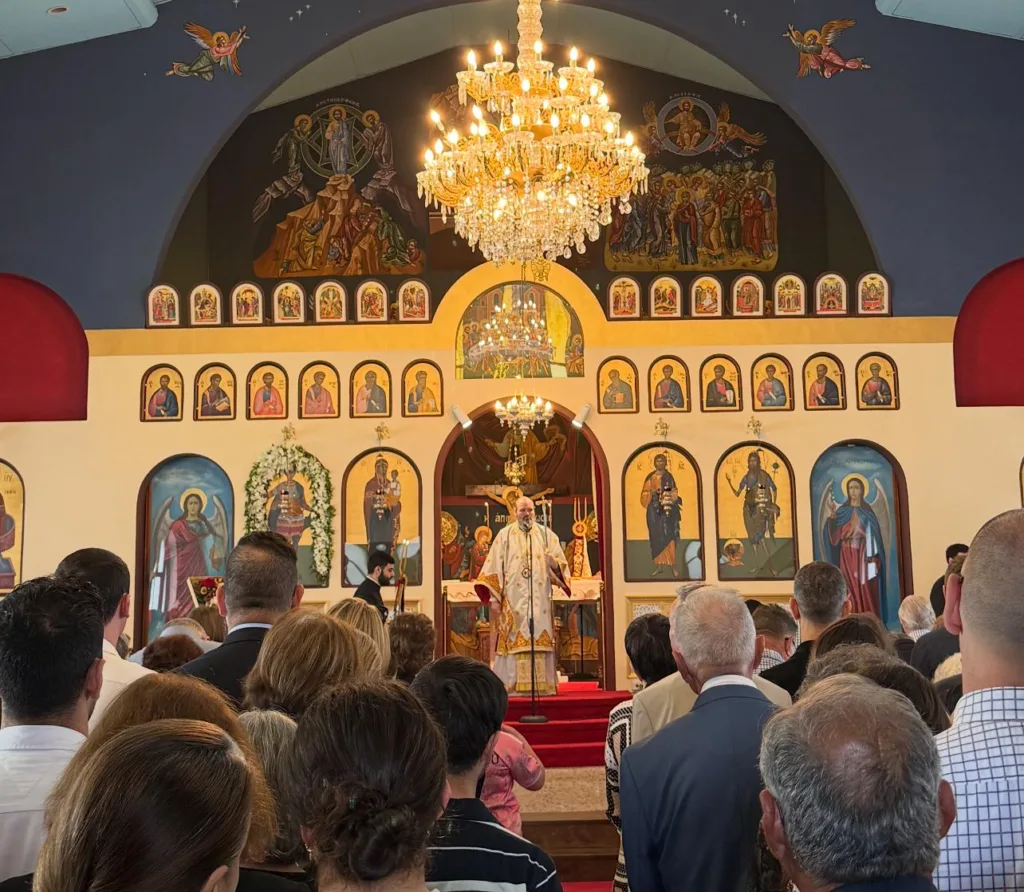
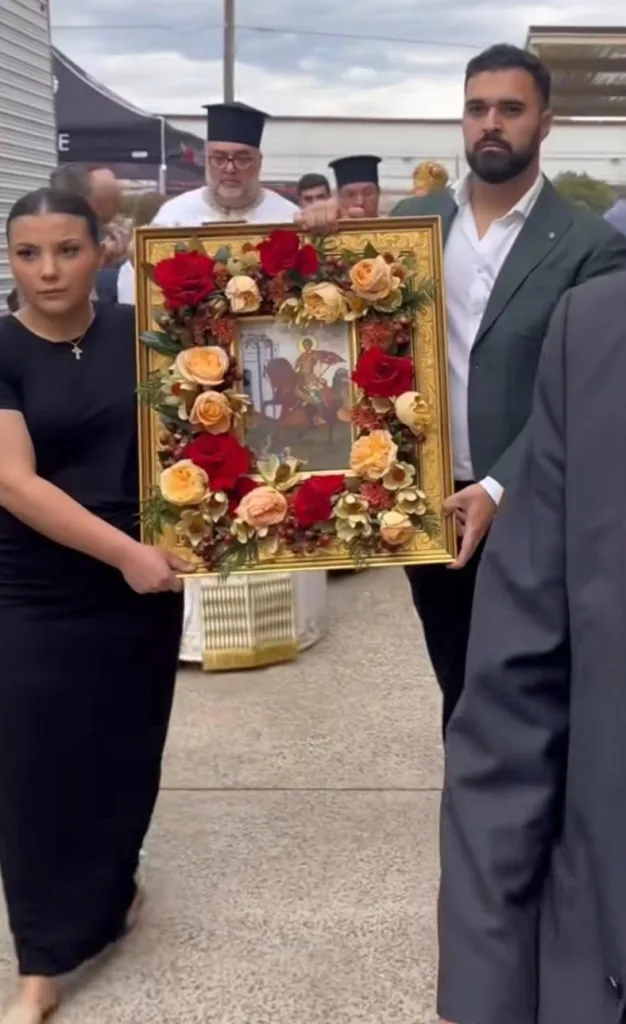
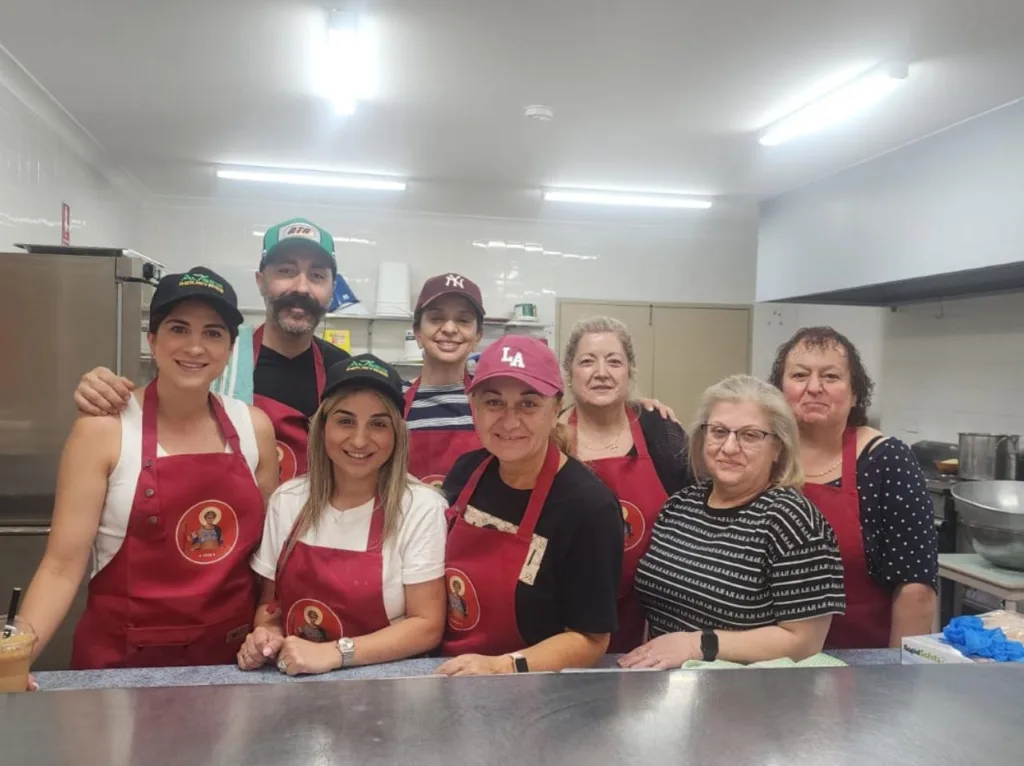
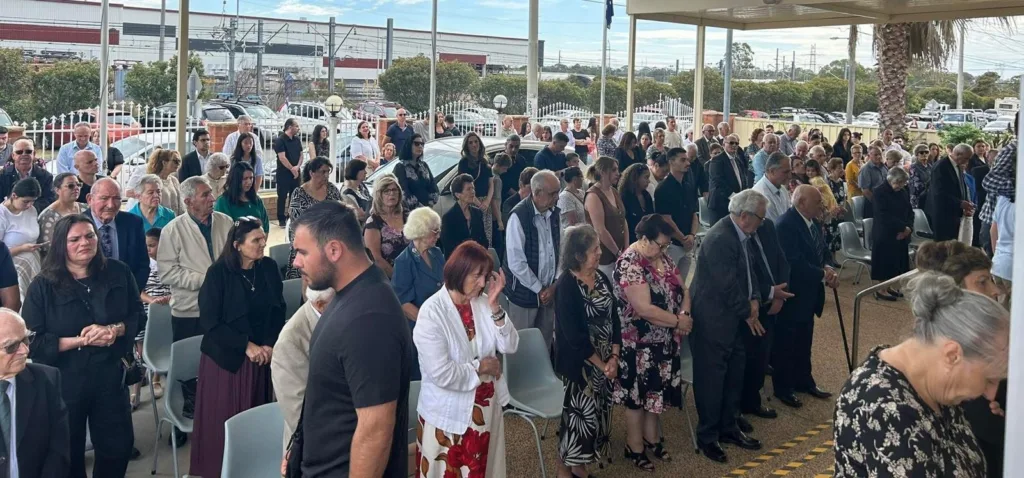
Over 1,000 parishioners and visitors flocked to St Demetrios Greek Orthodox Church at St Marys, Sydney on Sunday to celebrate the feast day of the parish’s patron saint.
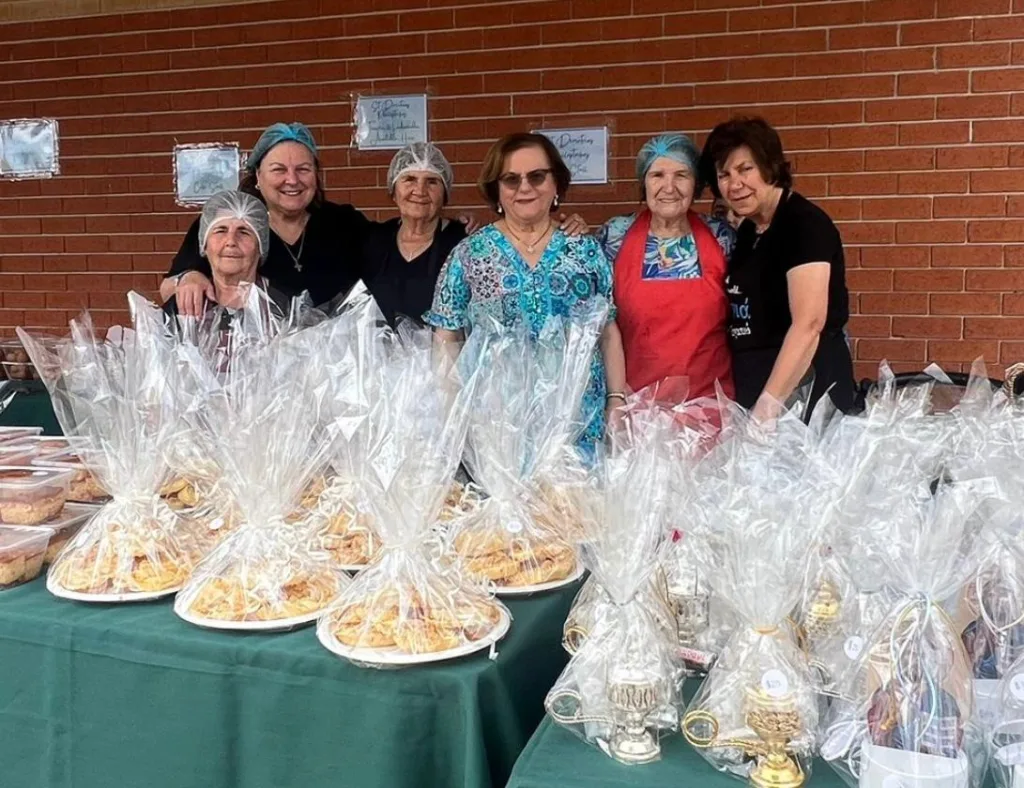
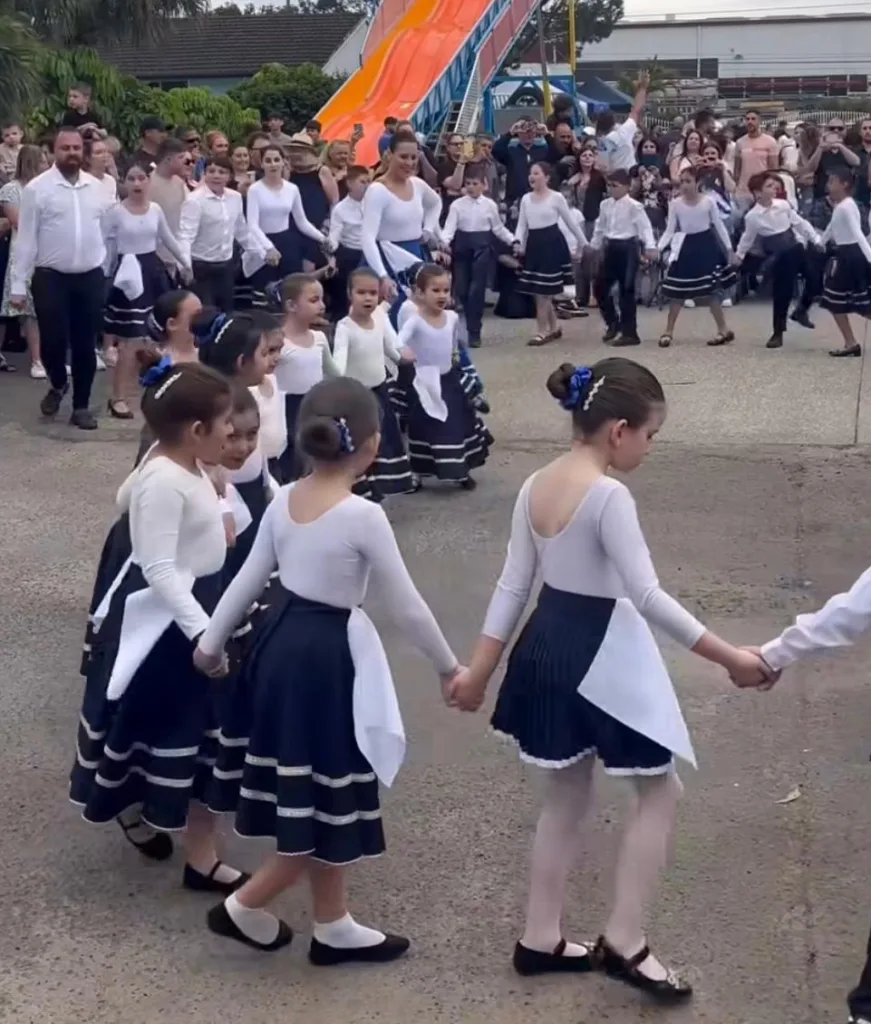
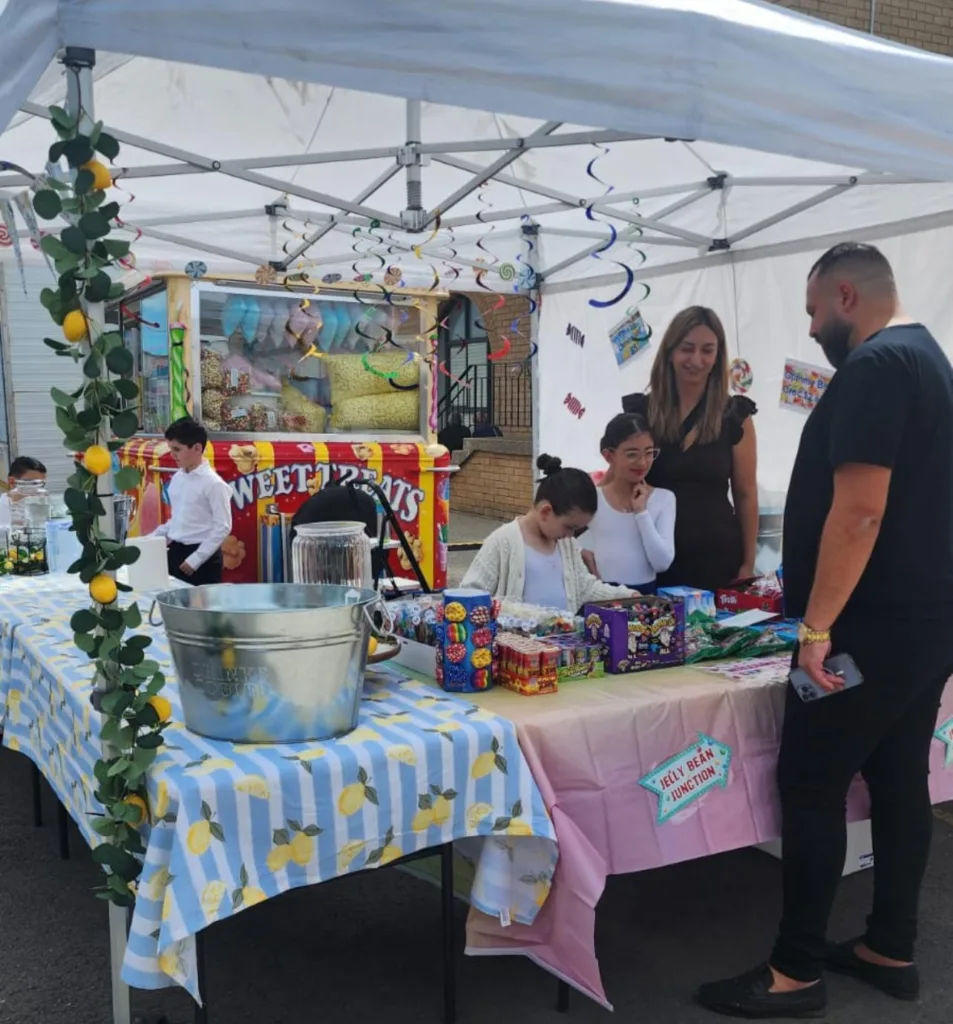
Following the Sunday service, the church grounds were transformed into a Paniyiri, featuring live music and traditional performances, a variety of market stalls, and entertainment for children.
Following the Sunday service, the church grounds were transformed into a Paniyiri.
This marks the first time the St Demetrios Committee has coordinated a festival, inspired by the success of other community events held throughout the year, including the Palm Sunday Luncheon and Mother’s and Father’s Day brunches.
Con Nicolaou, President of the St Demetrios Committee, said the event was a special way to unite the community.
“We were thrilled to welcome everyone to our parish to celebrate our patron saint, St Demetrios. It was wonderful to see so many turn out, not just from the local area but from across Sydney, to share in the celebration,” Mr Nicolaou said.
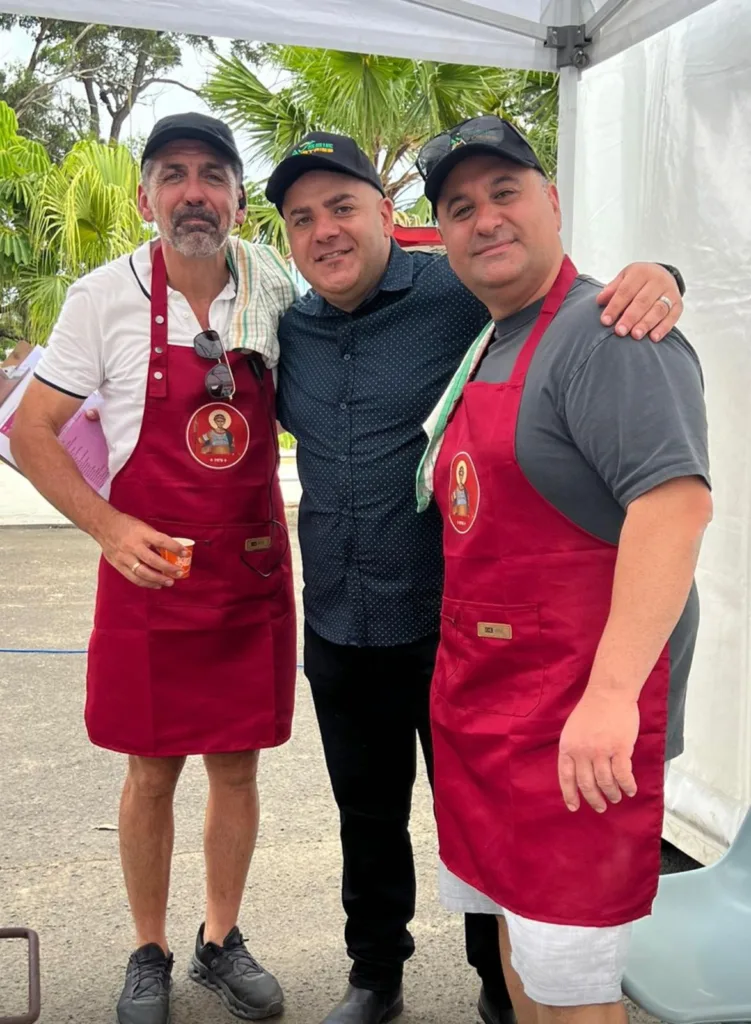
“We are grateful to our sponsors, stallholders, and dedicated volunteers who supported our vision, who all came together to make the day such a great success.”
Parish volunteers served thousands of souvlakia throughout the day, and the Ladies Philoptochos’ loukoumades were a crowd favourite.
Popular entertainer and MC, Soula Raphy Toumbos kept the atmosphere lively, while the main stage featured performances by Christos Evripidou, Nikos Filippatos, Nancy Karvouniari, and the St Demetrios Sunday School, Greek School and Dancing Groups.
The raffle prize draw, offering more than 30 prizes, generated a great amount of interest, which raised funds for improvements to the church facilities.
The St Demetrios Committee has already received positive feedback from attendees and is looking forward to making the Paniyiri an annual tradition.
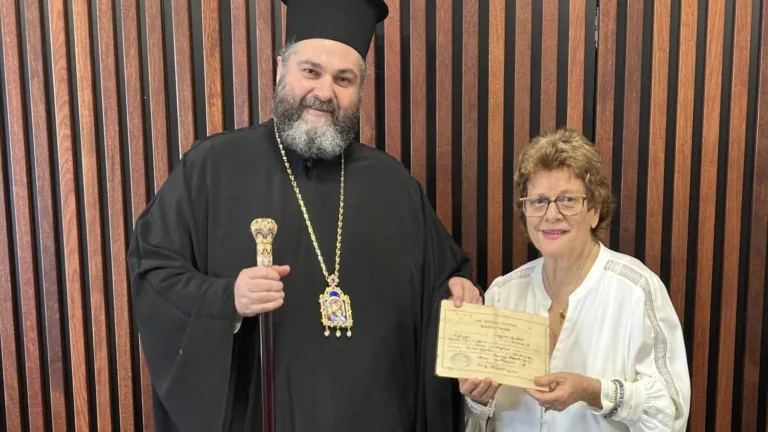
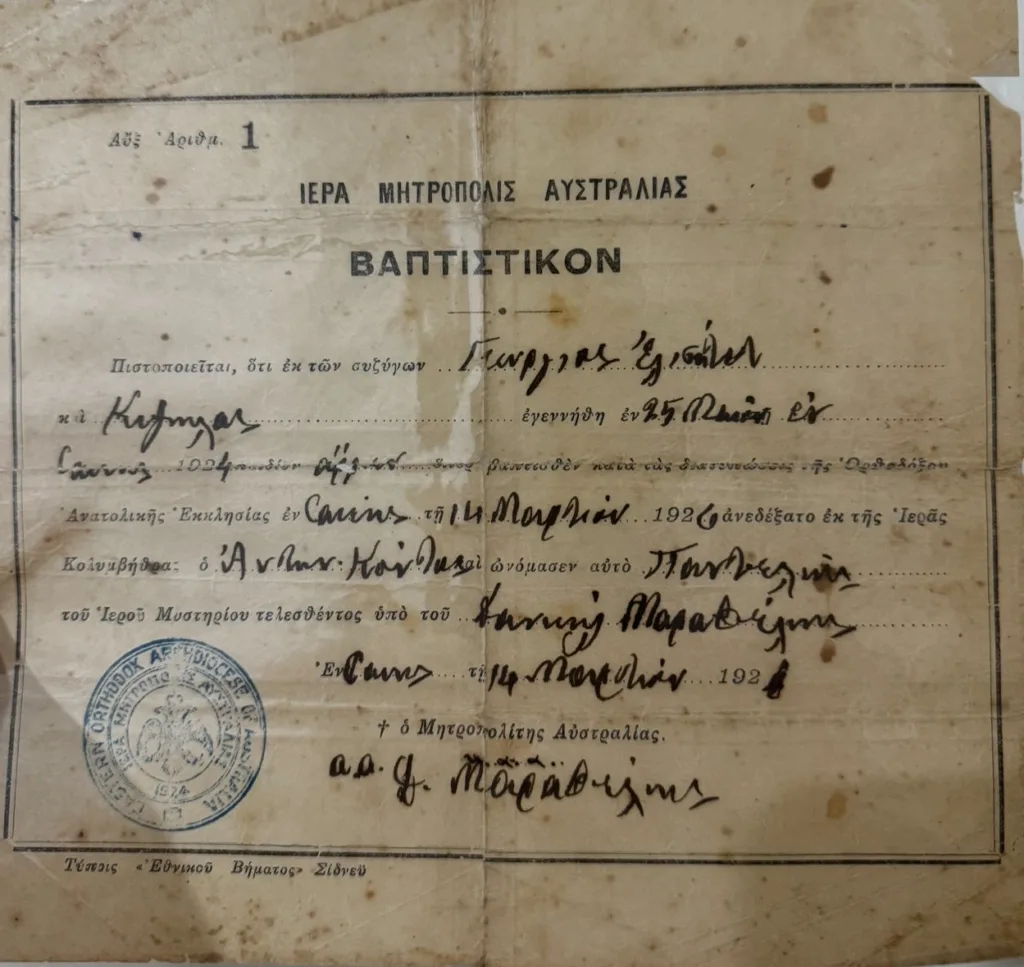
During his pastoral visit to Cairns, His Grace Bishop Bartholomew of Brisbane received the first recorded Baptism Certificate issued in Australia, dating back to 1924.
The certificate – documenting a baptism performed in Cairns by the late Archimandrite Daniel Maravelis – was presented to His Grace by the Kezilas family during a luncheon following the Divine Liturgy at the Church of Saint John the Baptist.
The historic document will be preserved at the forthcoming Museum of the Greek Orthodox Archdiocese of Australia in Sydney.
Bishop Bartholomew expressed heartfelt gratitude to the Kezilas family for their generosity, commending their contribution to safeguarding the Church’s heritage for future generations.
In his address, His Grace also reflected on the parish’s spiritual growth and announced that the consecration of the church will take place in June next year.
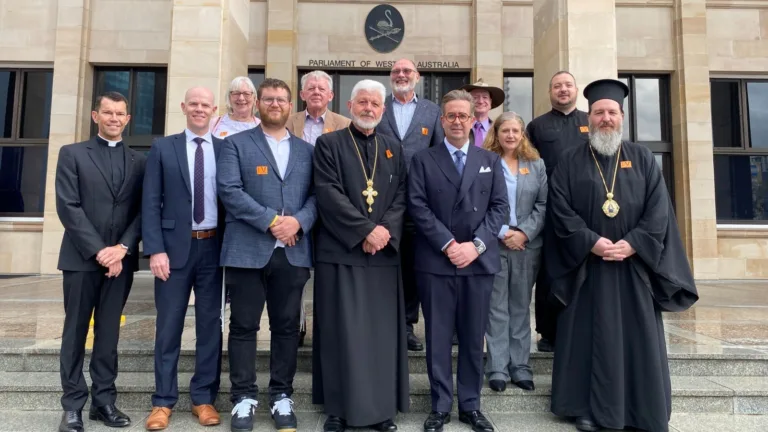
His Grace Bishop Elpidios of Perth represented the Greek Orthodox Archdiocese of Australia at a special interfaith morning tea held in the Aboriginal People’s Gallery of the Western Australian Parliament on Monday, 20 October.
Hosted by Frank Paolino MLA, Member for Mount Lawley, the event brought together religious leaders from across Perth to promote dialogue and cooperation among faith communities.
Bishop Elpidios met with representatives of various denominations and faiths, including Orthodox clergy from other jurisdictions, in a spirit of fellowship and mutual respect.
The gathering highlighted the importance of unity, understanding, and collaboration in strengthening Perth’s diverse and multicultural community.
Mr Paolino expressed his desire to continue engaging with faith leaders by visiting places of worship and supporting their community initiatives.
Following an overwhelmingly successful 30th anniversary run, the Greek Film Festival of Sydney, proudly presented by Benchmark Greek Law, has announced a special Encore Weekend, bringing back the festival’s most celebrated feature films for a final round of screenings.
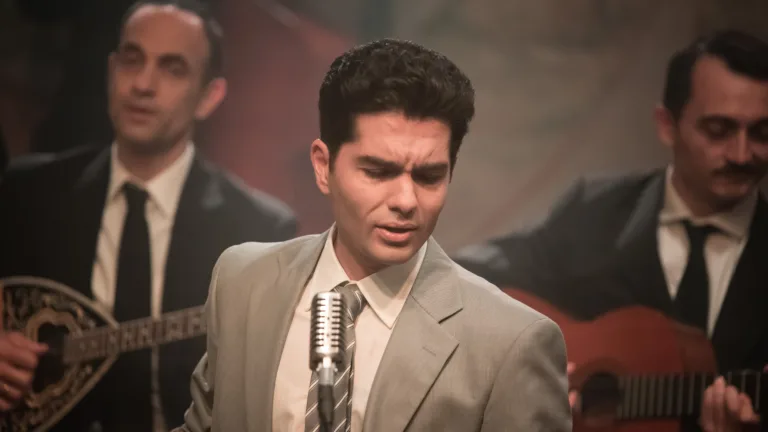
The closing night celebration saw a full house for the screening of Renos Haralambidis’ latest film, Athens Midnight Radio, with the acclaimed Greek director, writer, and actor present to greet the audience, rounding off his successful Sydney retrospective.
“The outpouring of support and the enthusiasm of Sydney audiences for Greek cinema this year has been truly spectacular,” Nia Karteris, Chair of the Greek Film Festival, said.
“The overwhelming response to our 30th anniversary festival proves that Greek cinema holds a powerful and vital place in Sydney’s cultural calendar. We are thrilled to offer this encore weekend to allow more people to experience the magic and rich storytelling that connects our community to our Greek culture.”
Encore weekend schedule: October 31 – November 2
Due to popular demand, four of the festival’s key features will return to the big screen across two locations for one final weekend.
SCHEDULE OF SCREENINGS – PALACE NORTON ST
ROZA OF SMYRNA
WHERE: PALACE NORTON STREET,99 Norton Street Leichhardt, NSW 2040
Harry Danalis, President of the Greek Orthodox Community of NSW, celebrated the impact of the festival.
“The festival’s success, culminating in a spectacular closing night and the opportunity to host a talent like Renos Haralambidis, is a testament to the enduring strength and unity of the Greek Orthodox Community of NSW,” Mr Danalis commented. “By bringing these celebrated films back for an encore, we continue our commitment to preserving and promoting our vibrant culture for all generations to enjoy.”
Tickets for the Encore Screenings are on sale now and are expected to sell out quickly. For more information, please visit www.greekfilmfestival.com.au