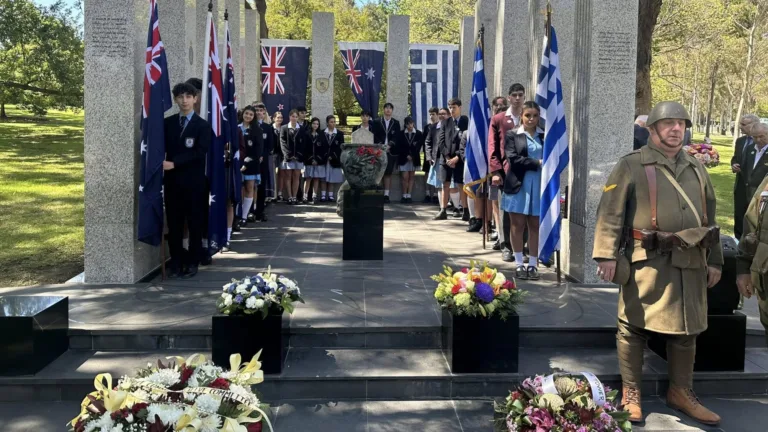
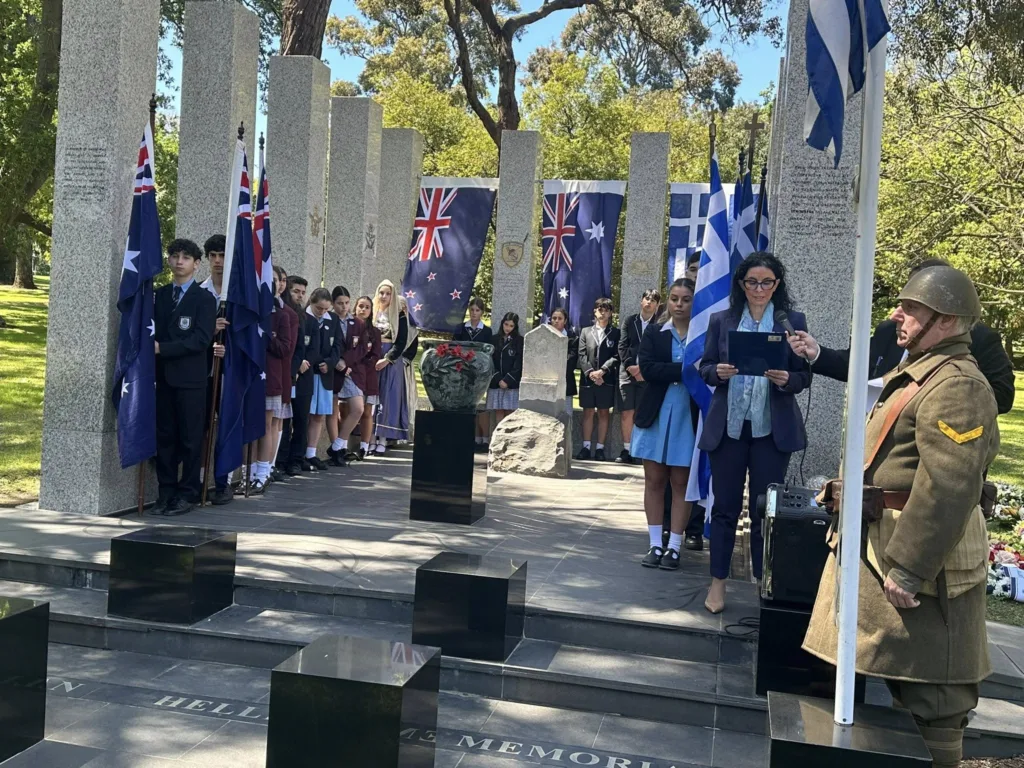
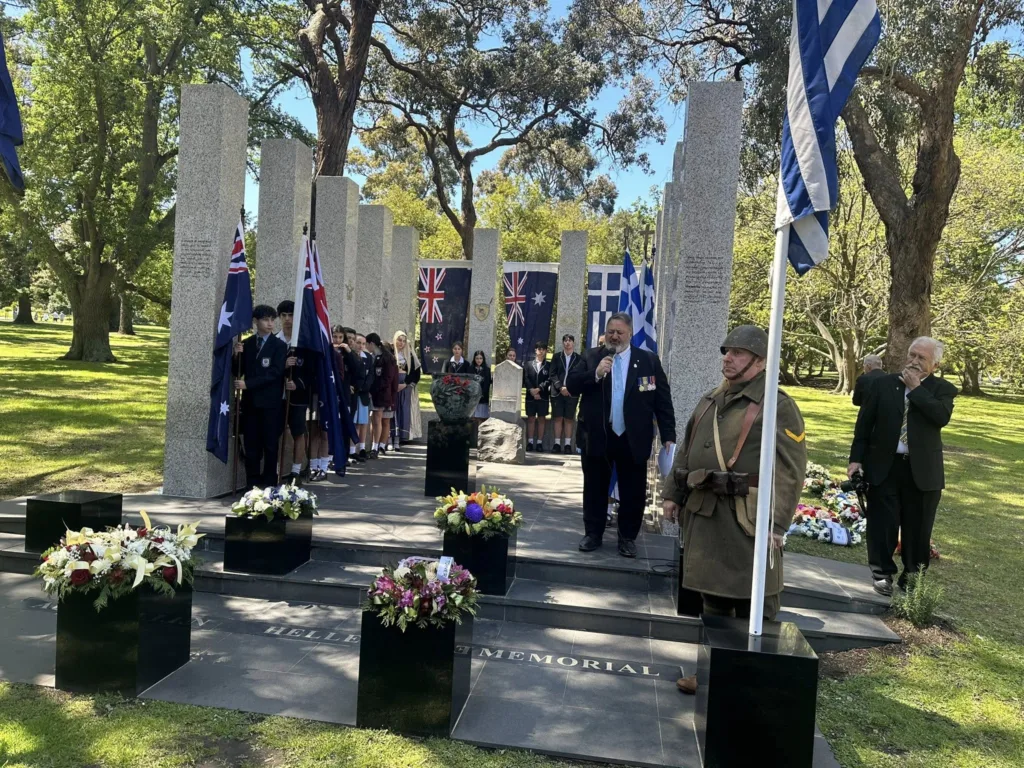
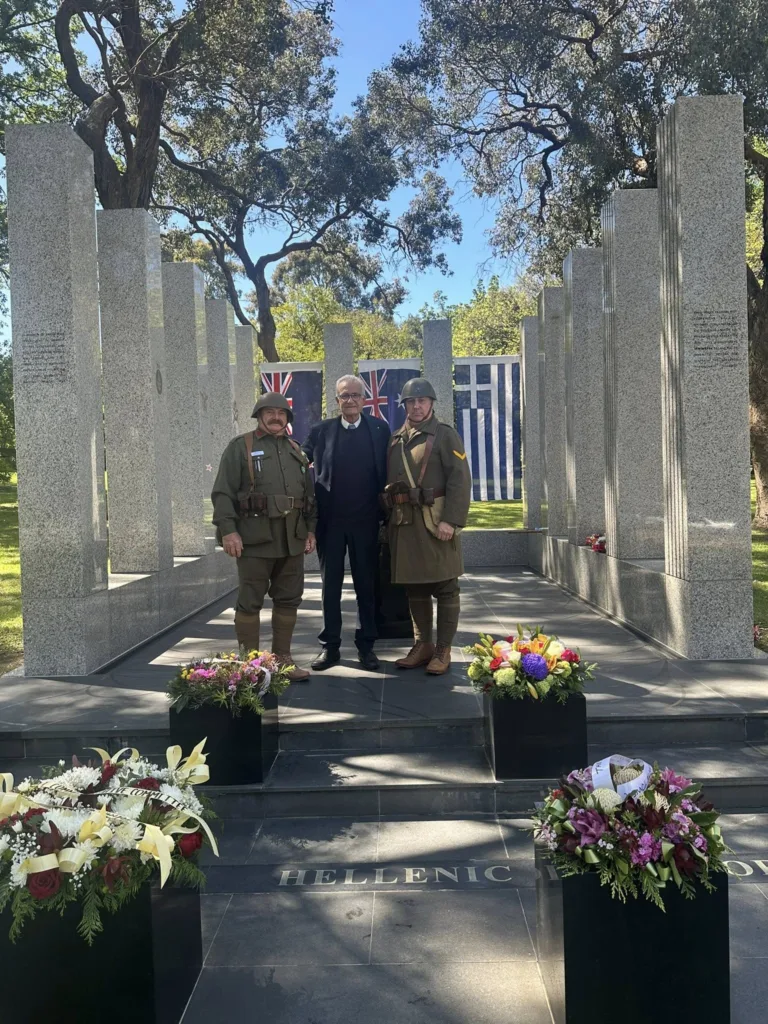
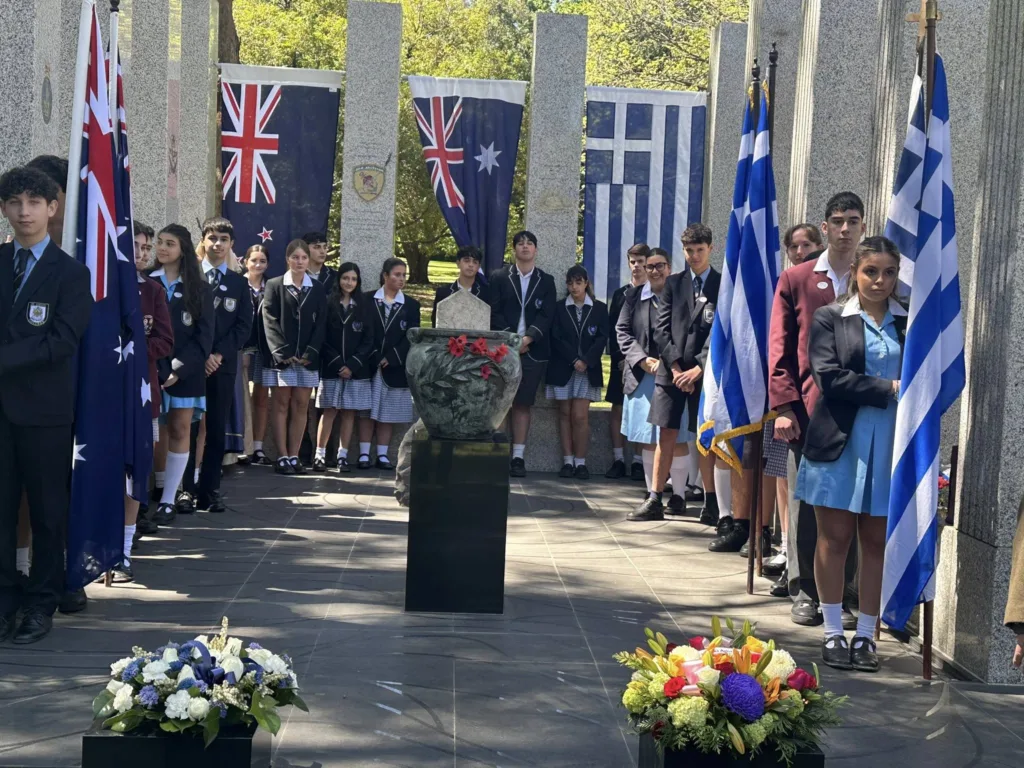
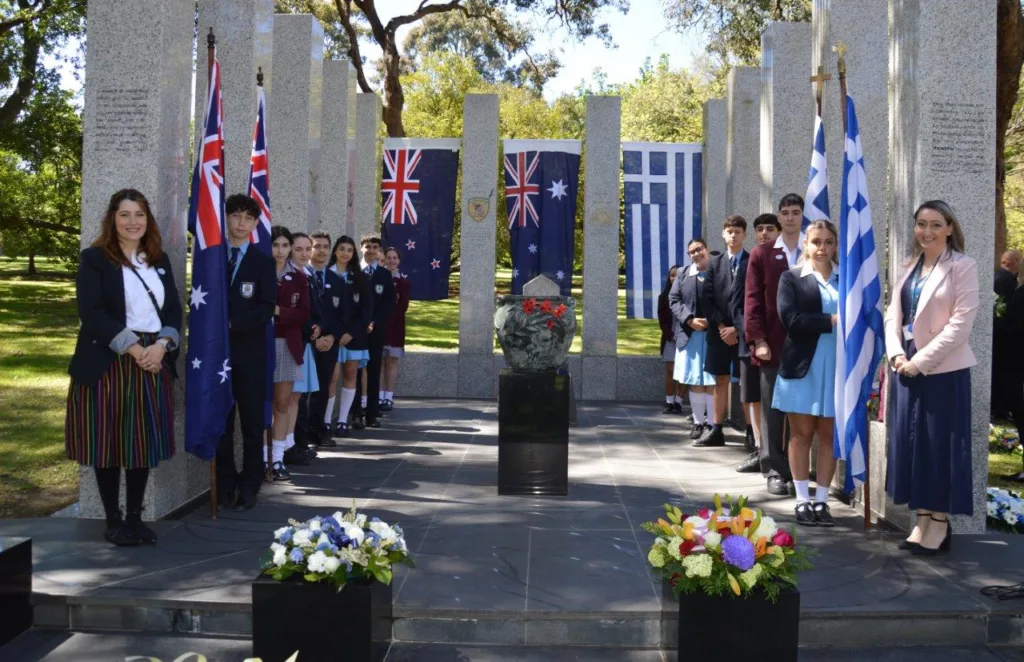
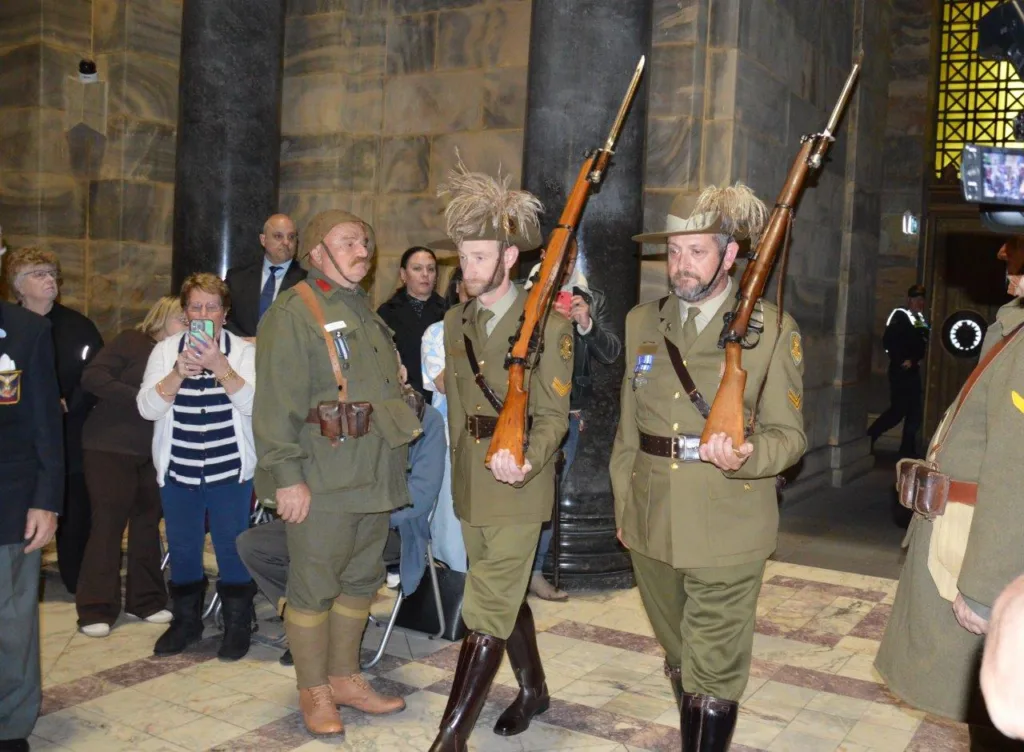
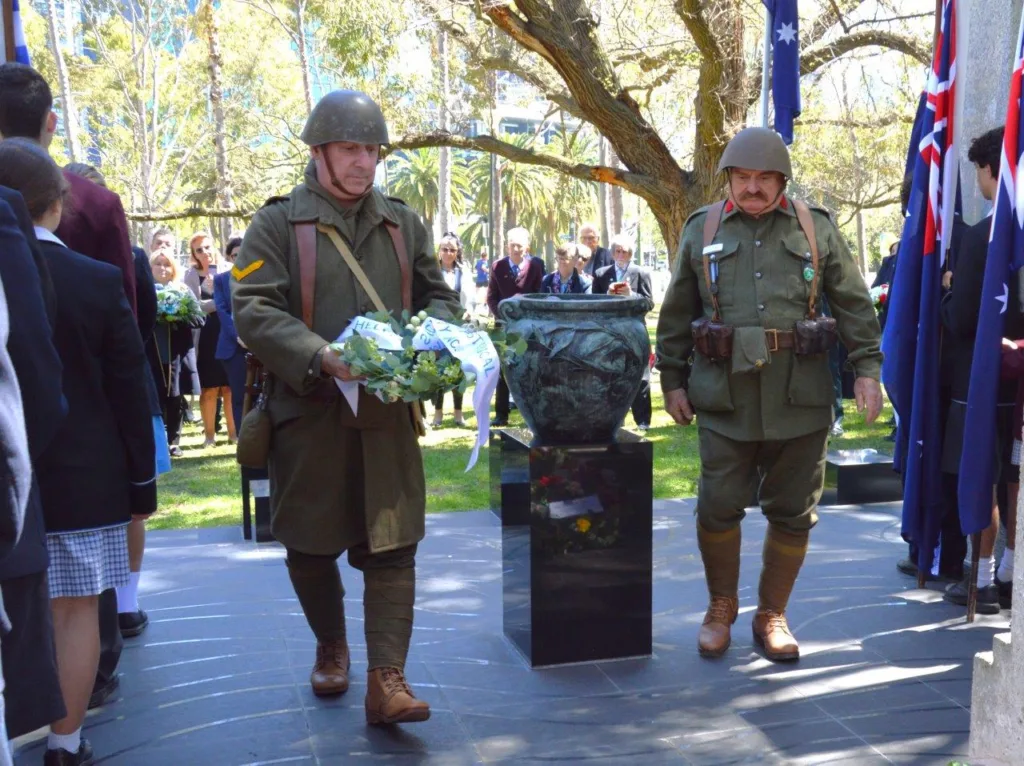
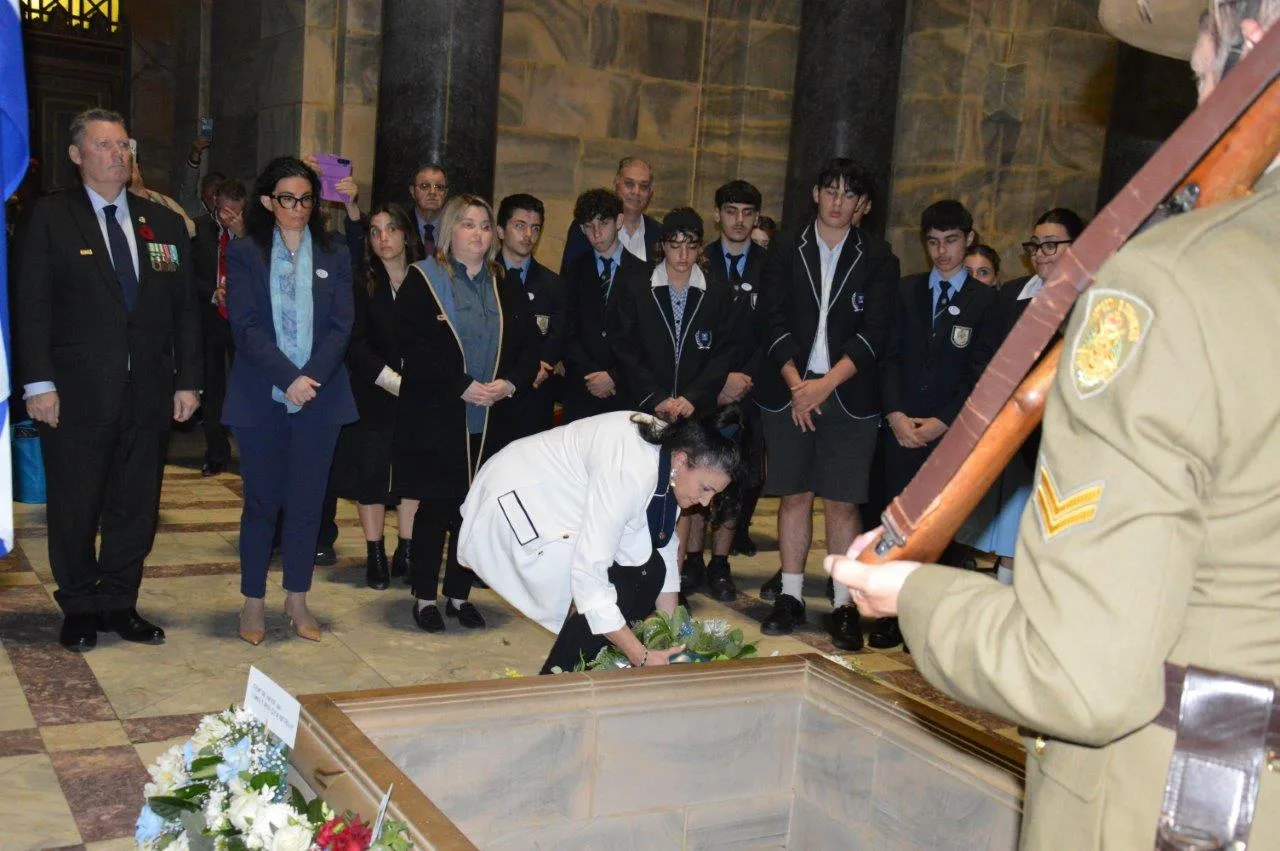
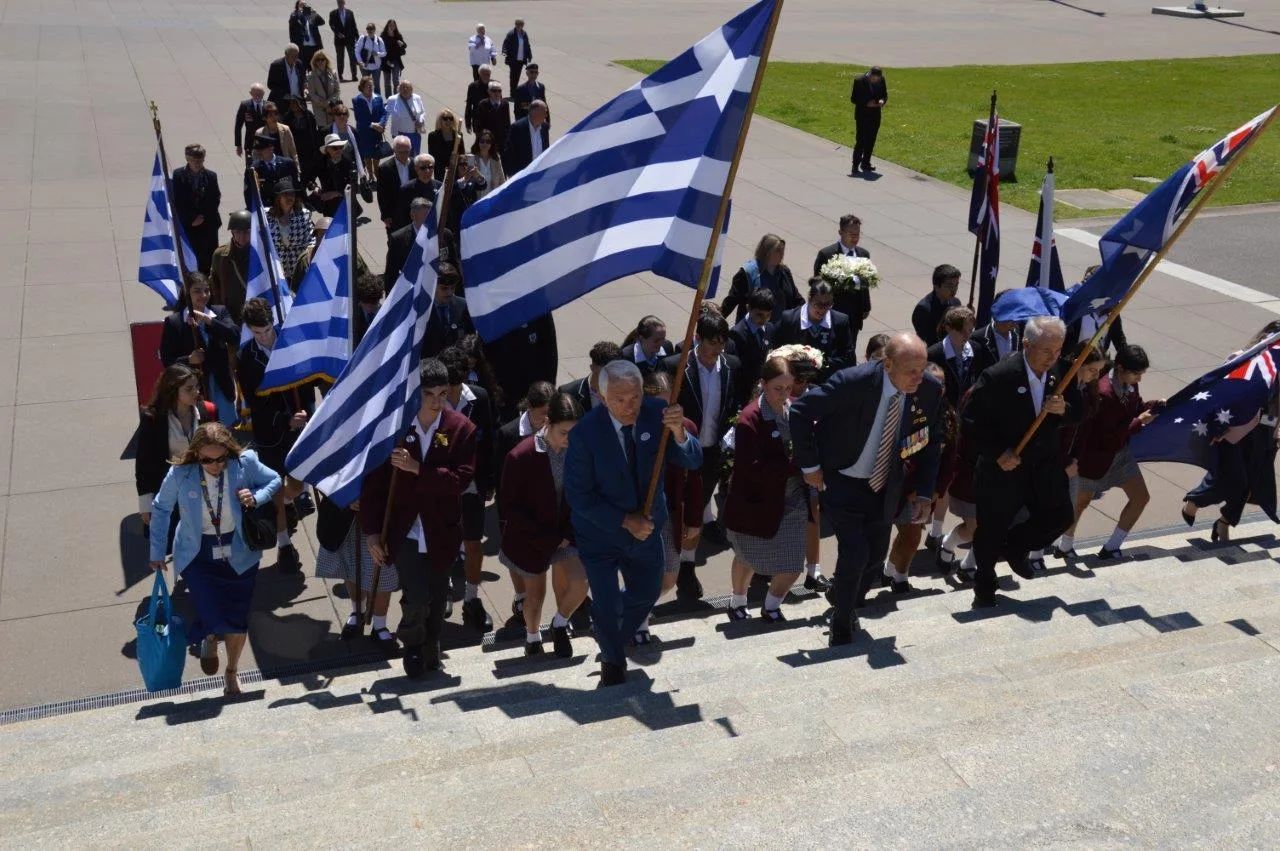
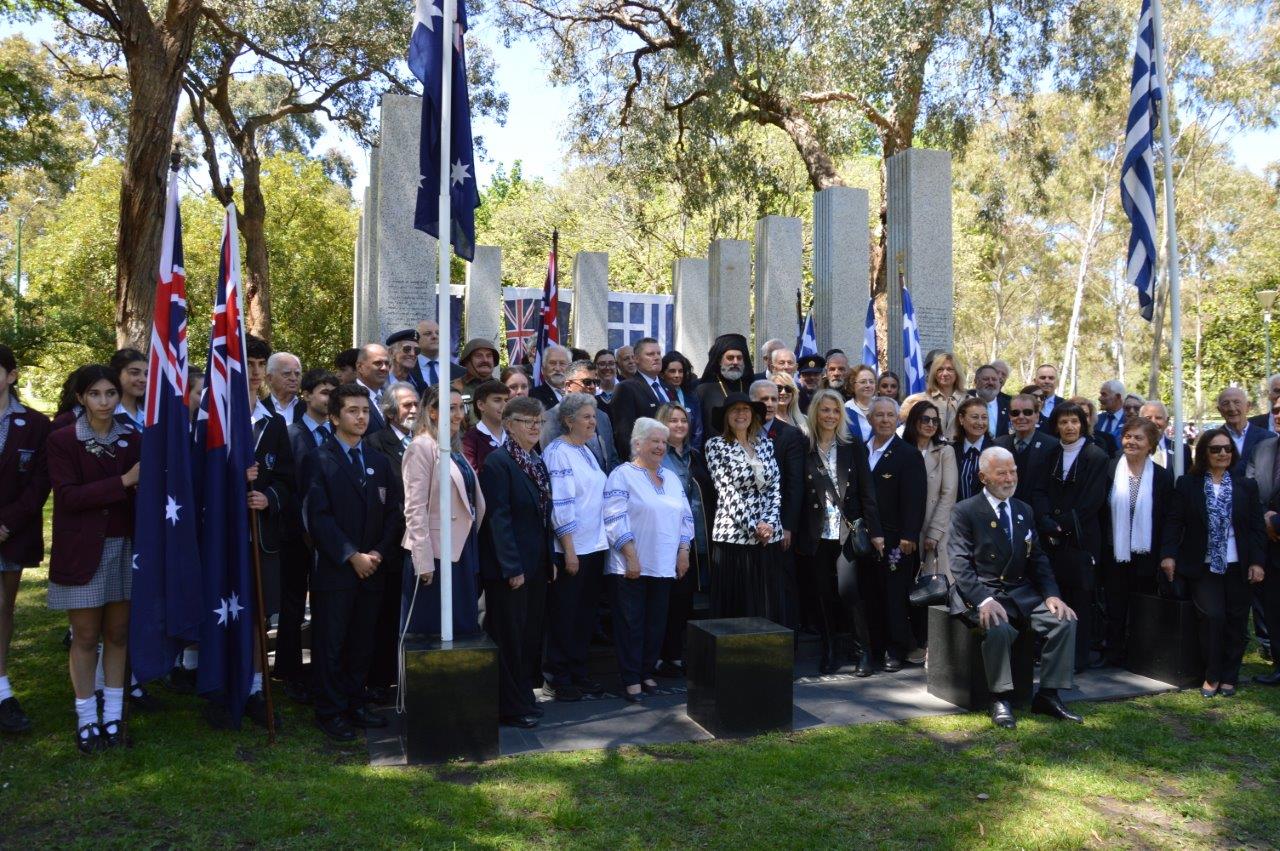
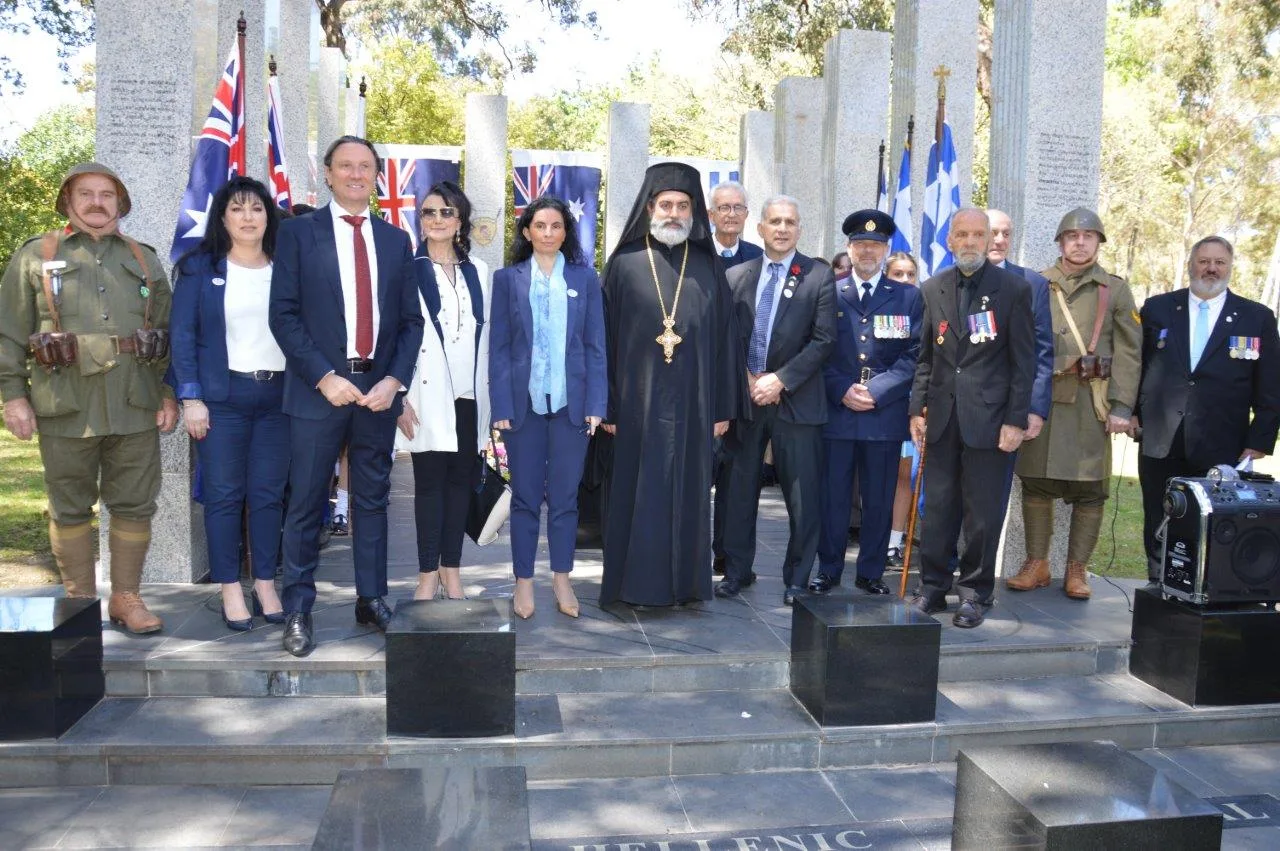
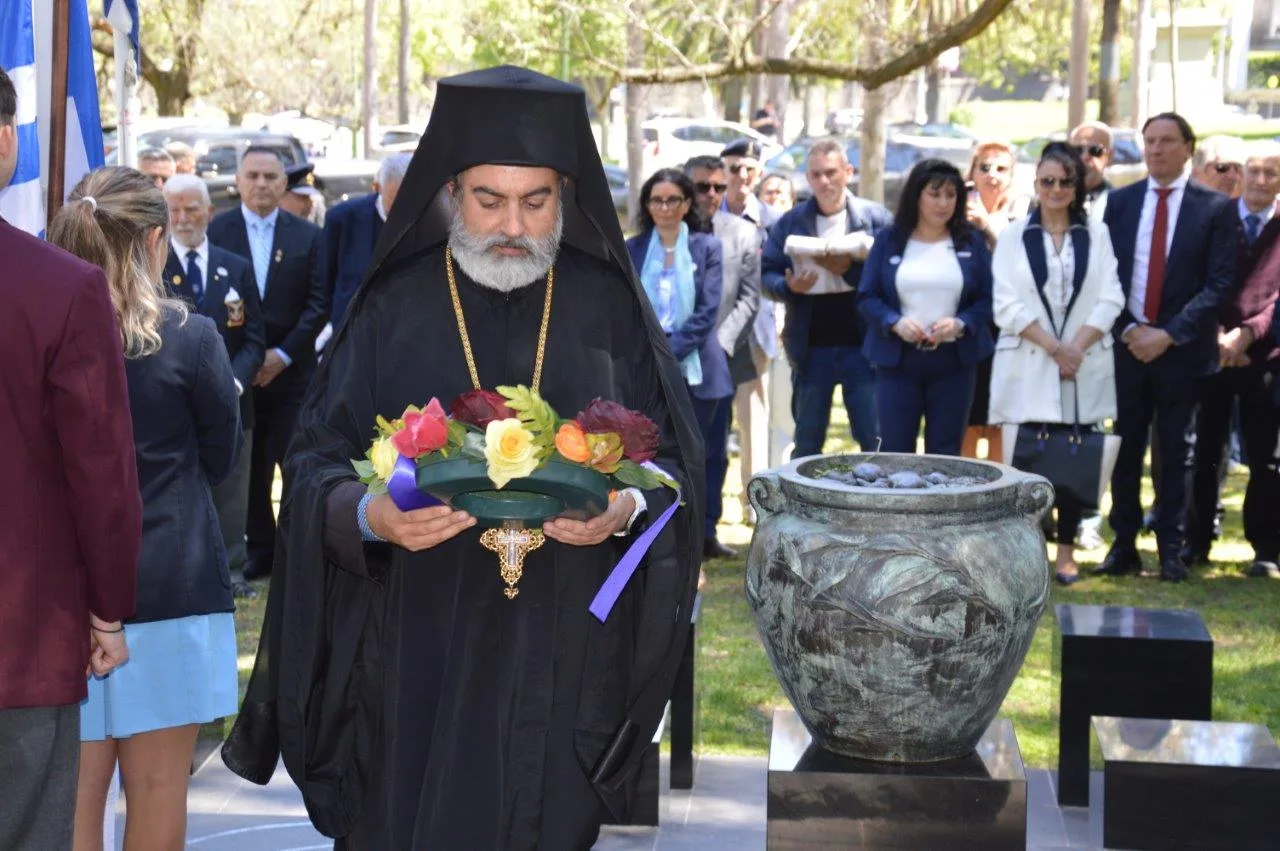
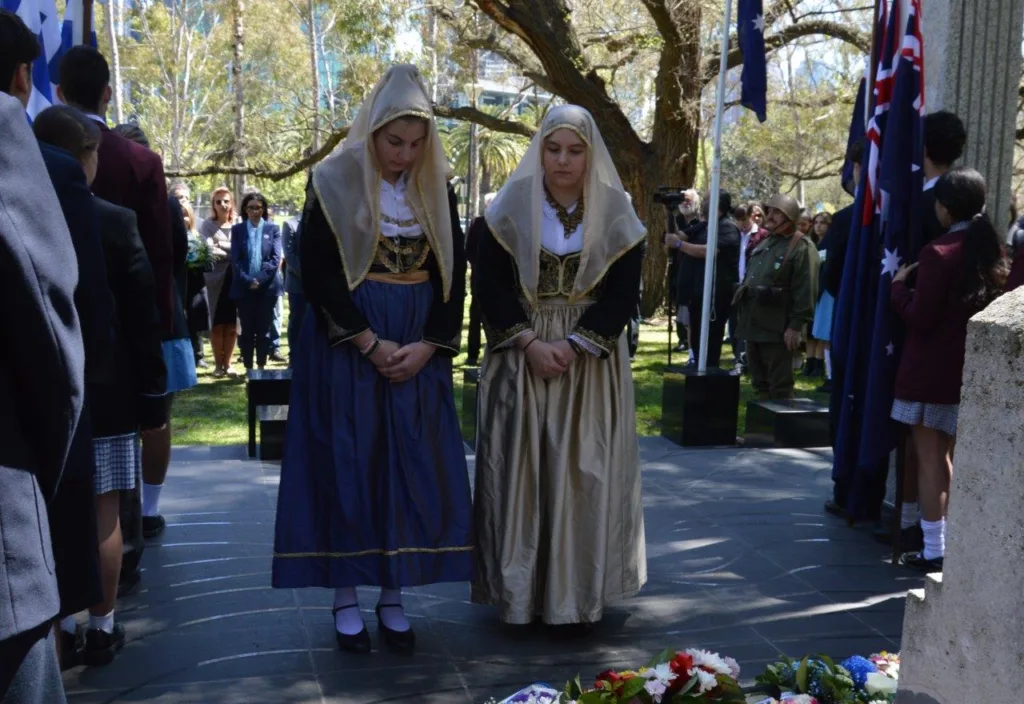
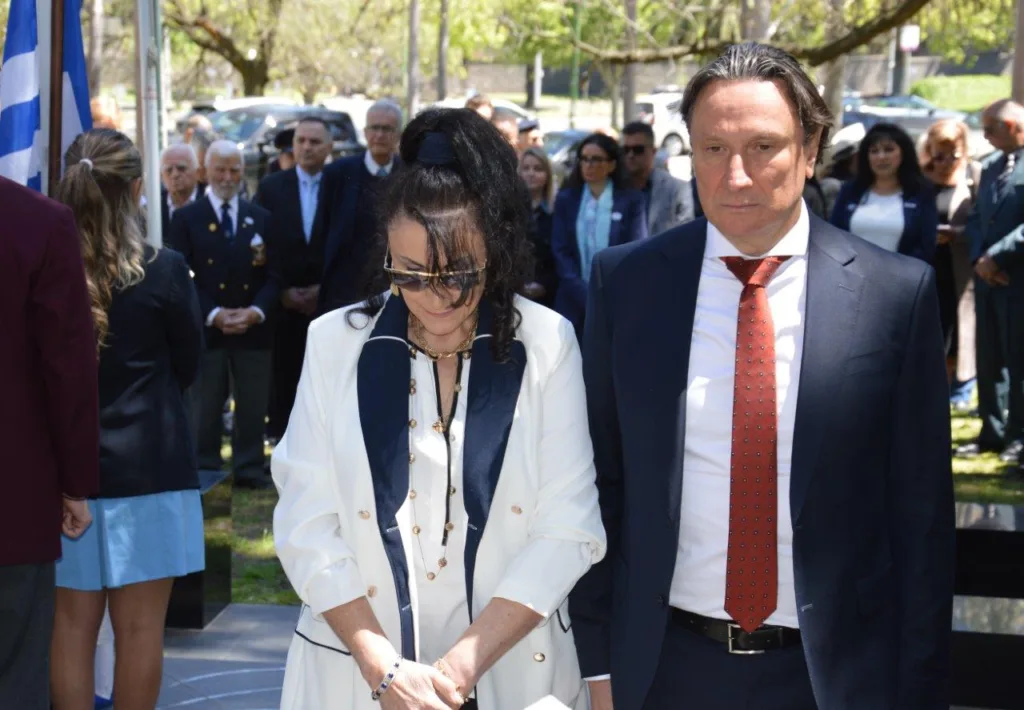
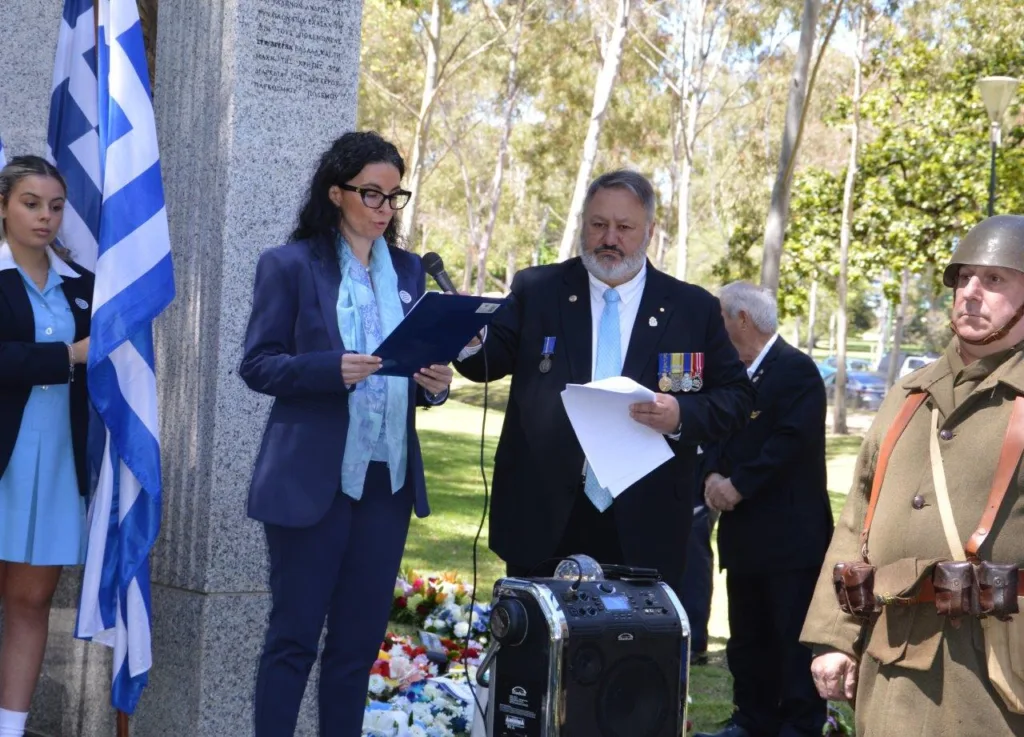
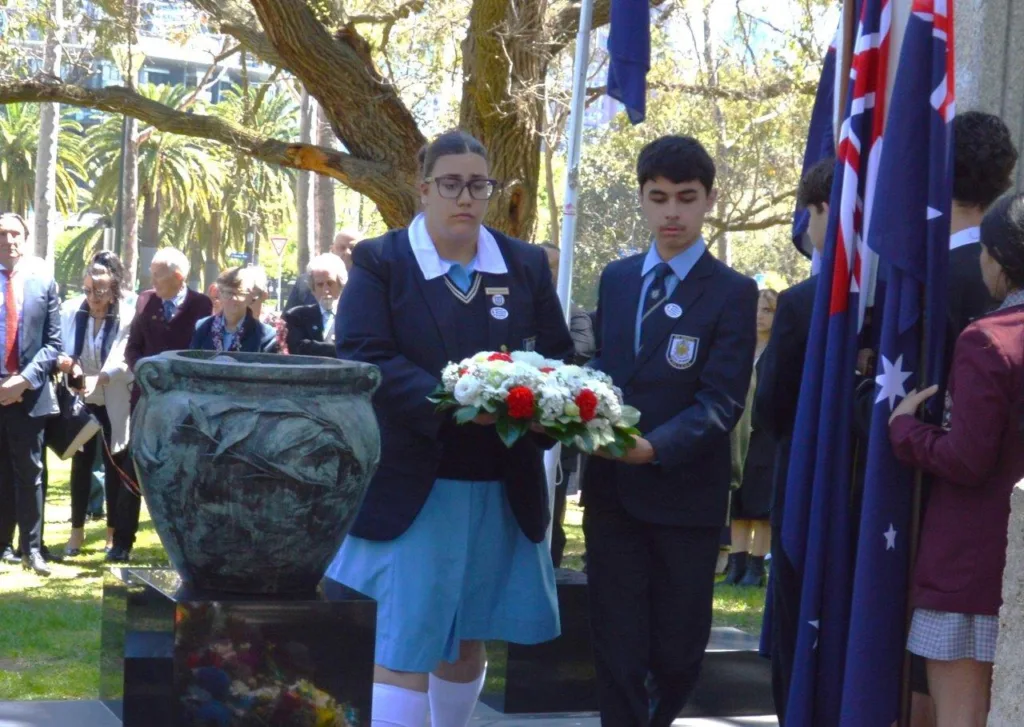
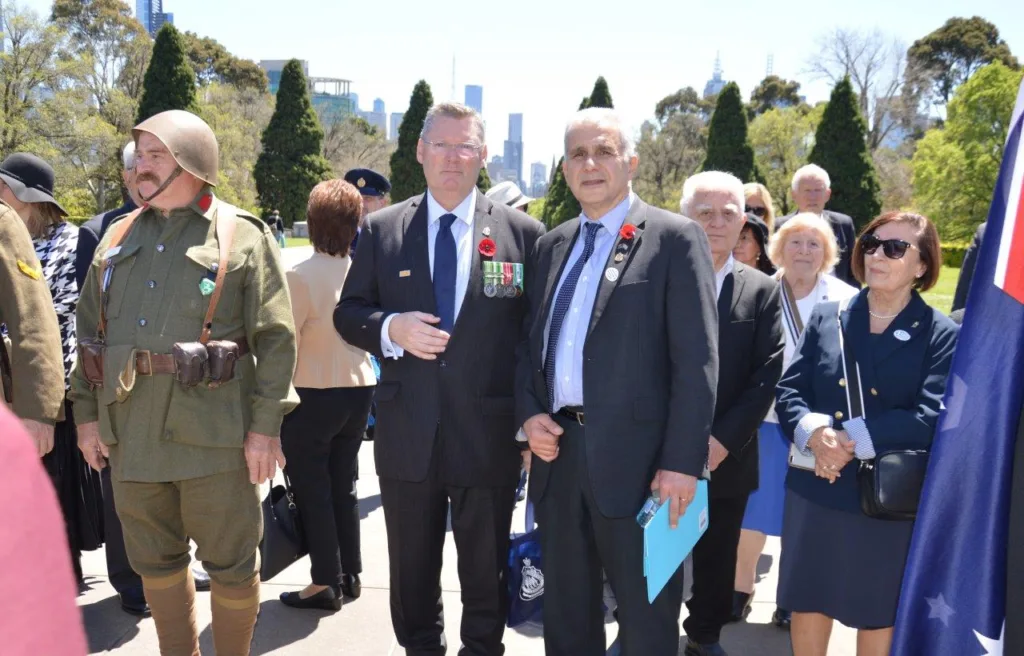
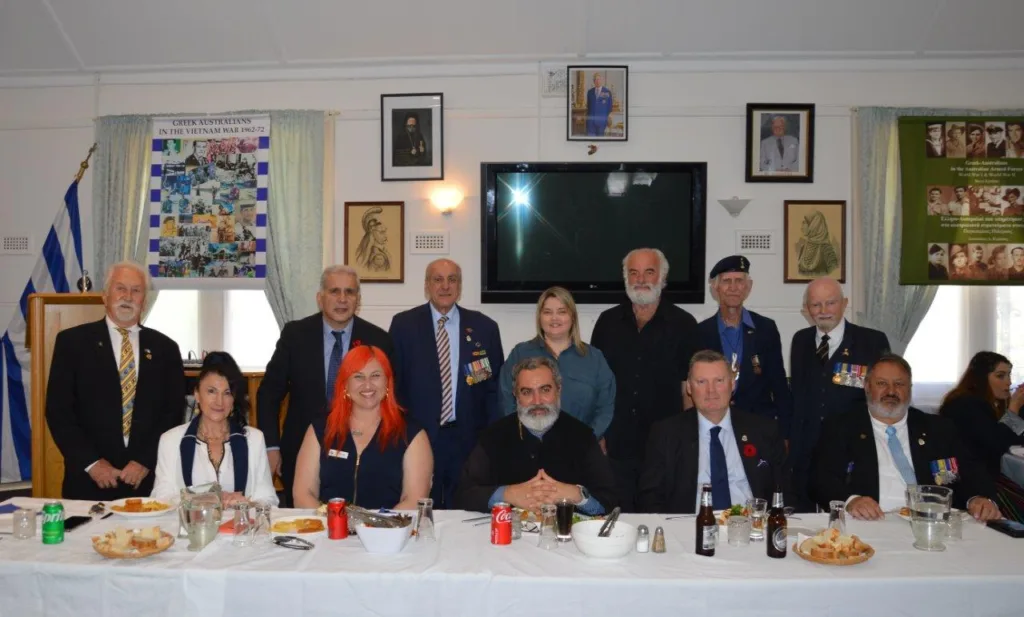
As every year, the Hellenic RSL in Melbourne held its annual wreath-laying ceremony at the Australian Hellenic War Memorial, at the foot of the Shrine of Remembrance, followed by a moving memorial service inside the Shrine; a powerful reminder of courage, sacrifice, and unity.
This year, many members of Greek Australian community groups gathered at the Australian Hellenic War Memorial to honour with respect and pride the National Anniversary of 28th October, a day that pays tribute to those who fought for Greece’s freedom and dignity.
Consul General of Greece in Melbourne Dimitra Georgantzoglou delivered her official address, highlighting the enduring significance of the historic “OXI” and the deep connection between the Greek diaspora and the homeland.
The week prior, students who best depicted Greece’s involvement in World War II through their art projects were recognised with special awards.
Sydney hospitality figure Jon Adgemis is facing further fallout from the collapse of his multimillion-dollar pub empire, with receivers revealing plans to sell five venues and confirming that staff at two of his former sites were short-changed.
In court on Tuesday, October 28, lawyers for administrators KordaMentha said their oversight of Adgemis’ failed hospitality group would need to be extended until June 2026 to manage venue sales, unpaid debts, and incomplete renovations.
The move follows lenders Deutsche Bank and Arkan Capital seizing control of the business on September 30, seeking to recover the $403 million they are owed.
Receivers McGrathNicol are now overseeing Adgemis’ five remaining properties, the Empire Hotel in Annandale, Claridge House in Darlinghurst, South Bondi Hotel, Exchange Hotel in Balmain, and Hotel Diplomat in Potts Point.
In court filings, McGrathNicol partner Jonathan Henry said the receivers were appointed after repeated missed debt payments.
He confirmed that employee entitlements at both the Empire and Diplomat hotels were “not up to date.”
Staff at the Empire are owed $57,200 in unpaid superannuation, while those at the Diplomat are owed at least $5,735.
Renovations remain incomplete across several sites. Claridge House is unlikely to be finished until February 2026, while the Exchange Hotel is not expected to be completed until April 2026.
The South Bondi Hotel, formerly Noah’s Backpackers, requires at least six weeks of safety works before it can be sold.
Receivers plan to offload all five venues, with Bondi expected to hit the market unfinished.
KordaMentha’s lawyers noted McGrathNicol’s assessment that creditors could achieve higher returns if work continues on the Claridge and Exchange hotels before their sale.
Justice Ian Jackman granted the administrators an extension, with creditors scheduled to meet again after July 1 next year.
Adgemis, once a rising name in Sydney’s hospitality scene, built an extensive portfolio of pubs and hotels through aggressive expansion before financial pressures and mounting debt triggered his business’s collapse.
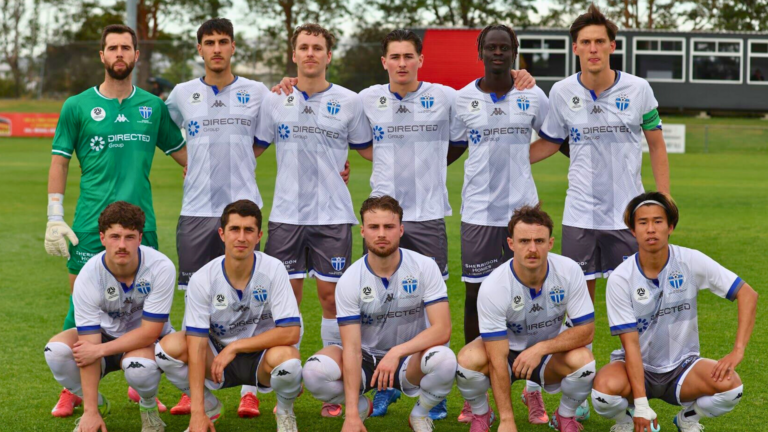
The eight teams competing in the inaugural OFC Pro League have been confirmed, ahead of the league’s kick off in January 2026.
Representing seven nations from across the region, the eight clubs will make history in the first-ever professional football league in Oceania, promising to take football in the Pacific to new heights, both on and off the pitch.
Fiji’s Bula FC, Papua New Guinea’s PNG Hekari FC, Tahiti United of Tahiti, Vanuatu United FC from Vanuatu and Solomon Kings FC from the Solomon Islands, complete the contingent.
Running from January through to the end of May, the OFC Pro League will be played across a series of circuit rounds, with each team playing a minimum of 17 matches, leading to a semi-final and final, to determine the inaugural champion.
As well as lifting the trophy, the winning team will also qualify for the FIFA Intercontinental Cup™.
In addition, the OFC Pro League will determine which club from Oceania will represent the region at the quadrennial FIFA Club World Cup™.
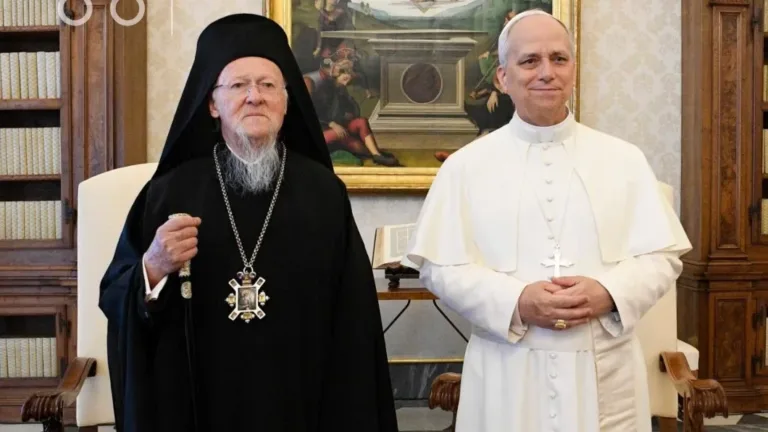
Pope Leo XIV will travel to Asia Minor at the end of November with His All-Holiness Ecumenical Patriarch Bartholomew to commemorate the 1,700th anniversary of the First Ecumenical Council in Nicaea.
The visit, announced by the Vatican, will be held under the theme “One Lord, one faith, one baptism.”
The Pontiff will begin his journey on November 27, departing from Rome for Ankara to meet Turkish President Recep Tayyip Erdogan and foreign diplomats.
The following day, he and the Ecumenical Patriarch will attend an Ecumenical Prayer Gathering at the archaeological site of the Basilica of Saint Neophytos in Nicaea, before continuing to Constantinople that evening.
On November 29, Pope Leo will visit the Blue Mosque and the Phanar, where he will join a Doxology and hold a private meeting with Patriarch Bartholomew.
The two will sign a joint declaration before the Pope celebrates Mass at the Volkswagen Arena later that day.
The visit will conclude on November 30 with the Throne Feast of Saint Andrew the Apostle at the Ecumenical Patriarchate, followed by a Divine Liturgy and an Ecumenical Blessing.
After a luncheon with Patriarch Bartholomew, Pope Leo will depart for Lebanon to continue his pastoral visit until December 2.
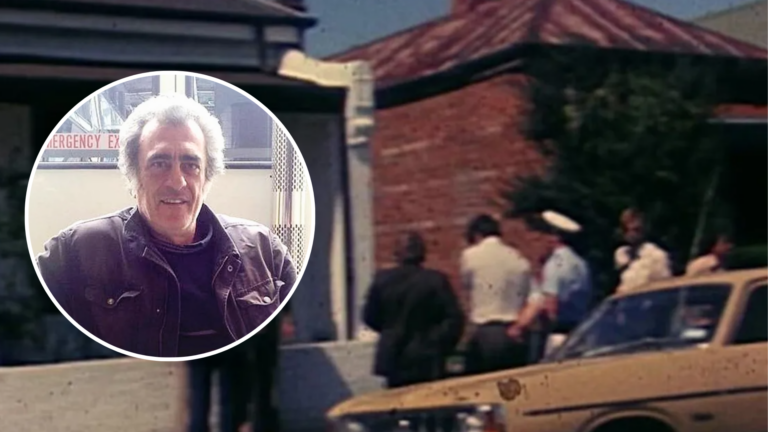
Nearly five decades after two women were found stabbed to death in their Collingwood home, the man accused of their murders is now facing a committal hearing in Melbourne.
Perry Kouroumblis, 66, is appearing in Melbourne Magistrates Court today, charged over the 1977 deaths of Suzanne Armstrong, 28, and Susan Bartlett, 27.
The hearing marks the first step in determining whether the case will proceed to trial in a higher court.
Kouroumblis, a dual Greek Australian national, was arrested in Italy in September 2024 on an INTERPOL red notice and extradited to Australia in December.
He had been living in Greece since 2016, where authorities were unable to arrest him due to a 20-year statute of limitation on initiating murder charges.
Armstrong and Bartlett were found with more than two dozen stab wounds in their Easey Street home, while Armstrong’s 16-month-old son Gregory was discovered unharmed in his cot.
Kouroumblis has been charged with two counts of murder between January 10 and 13, 1977, and one count of having “carnal knowledge” of Armstrong without her consent. He has not yet entered pleas to the charges.
Represented by senior barrister Dermot Dann KC, Kouroumblis appeared via video link from prison earlier in the week, as his legal team sought disclosure of evidence from Victoria Police and the AFP, including material provided to INTERPOL and details of how a forensic sample was obtained.
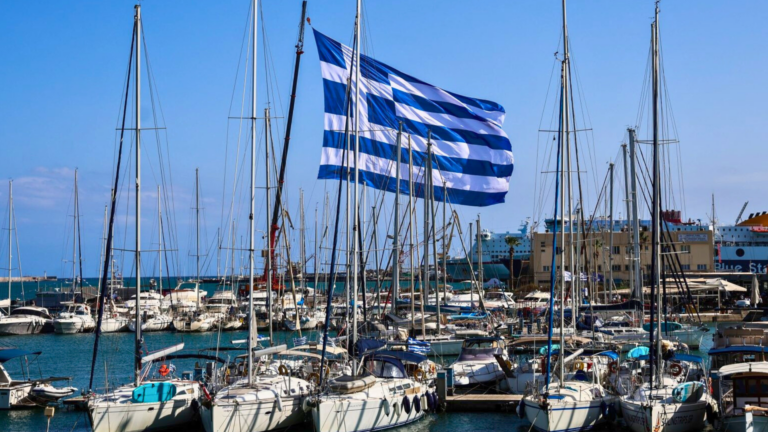
The largest Greek flag was once again hoisted in the port of Irakleio, Crete, on Tuesday to mark Greece’s annual OXI Day celebrations commemorating the nation’s entry into World War II.
The massive flag, measuring 32 by 45 metres and covering 1,440 square metres, is raised each year on October 28 by crane, an initiative of the local Kalathakis family. Visible from several parts of the city, the flag has become a proud local tradition.
Speaking on behalf of the family, Iasmi Kalathaki said, “This is a way to honour those who lost their lives for the country and to remind everyone that we must not forget their sacrifice and values.”
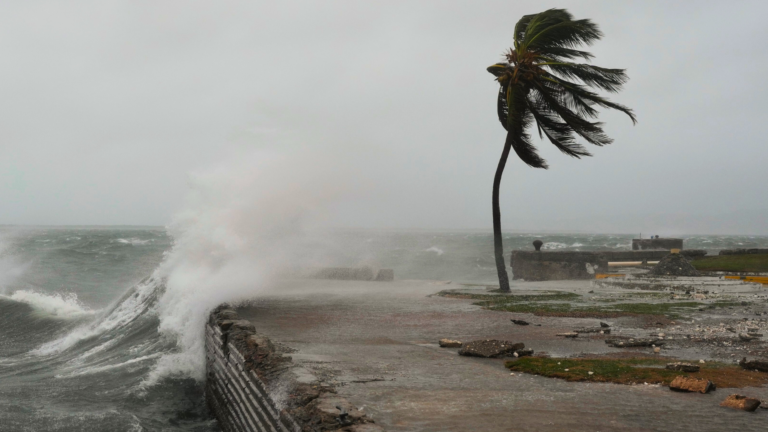
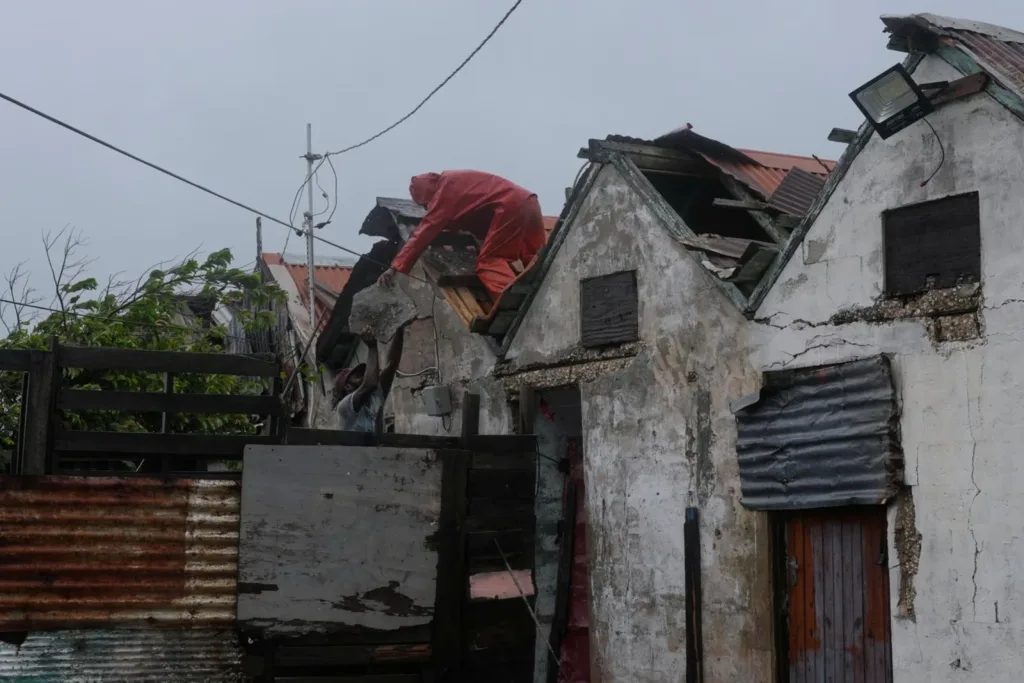
Hurricane Melissa has battered Jamaica after making landfall near New Hope early Wednesday morning AEDT as a Category 5 storm, the most powerful hurricane ever recorded to strike the island in 174 years of recordkeeping.
The US National Hurricane Centre (NHC) downgraded Melissa to Category 4 a few hours later but warned it remained “extremely dangerous,” with sustained winds reaching 300km/h, torrential rain, and a life-threatening storm surge.
The hurricane is expected to continue tracking across Jamaica before moving toward eastern Cuba later today.
Photo: Matias Delacroix / AP.
At least seven people have died, three in Jamaica as residents prepared for the storm, three in Haiti, and one in the Dominican Republic.
Around 240,000 Jamaicans are without power, and emergency teams have struggled to reach stranded families as roads are blocked by fallen trees and debris.
The NHC described Melissa as even more powerful than Hurricane Katrina, which devastated New Orleans two decades ago.
A UN agency has labelled it the “storm of the century,” marking the first time Jamaica has ever faced a Category 5 hurricane.
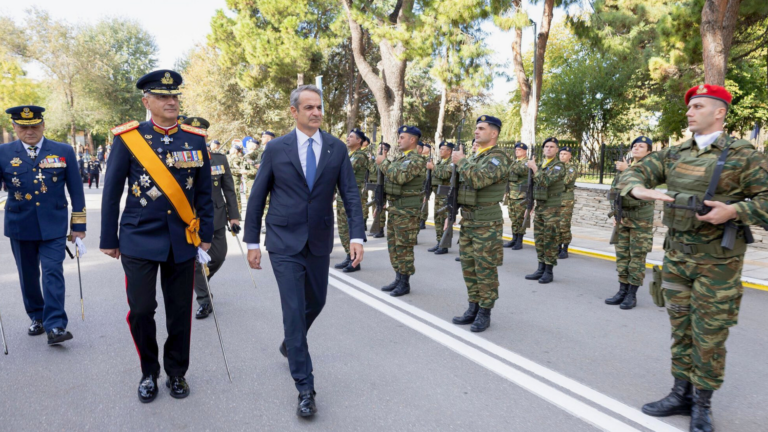
Greece commemorated OXI Day on Tuesday, October 28, with the annual military parade in Thessaloniki, marking the nation’s entry into World War II and its historic defiance against fascist Italy in 1940.
The event was attended by President Constantine Tassoulas, Prime Minister Kyriakos Mitsotakis, and senior government and military officials.
The parade featured all three branches of the armed forces, showcasing Greece’s latest military technology, including newly acquired drones, anti-drone systems, and mobile drone-construction units, some Greek-made and already deployed in EU operations in the Red Sea.
Thousands of spectators gathered along the city’s seafront, where the Air Force’s “Zeus” demonstration team concluded the event with a precision aerial display led by pilot Georgios Sotiriou, who exchanged words of appreciation with the president during the flyover.
In his address, President Tassoulas said the anniversary of Greece’s historic “No” to the Axis powers “is the greatest and ultimate lesson of the ’40s generation,” praising their courage and selflessness as enduring examples for modern Greeks.
Prime Minister Mitsotakis echoed the call for unity, saying, “We live in turbulent and difficult times, but the military parade we just observed today makes us feel secure that the Armed Forces are always here to defend this liberty for which our ancestors fought.”
He added that Greece’s military is undergoing “perhaps the greatest transformation in its history” to meet today’s challenges.
Similar parades and celebrations took place across the country, including in Athens, Patras, and Heraklion.
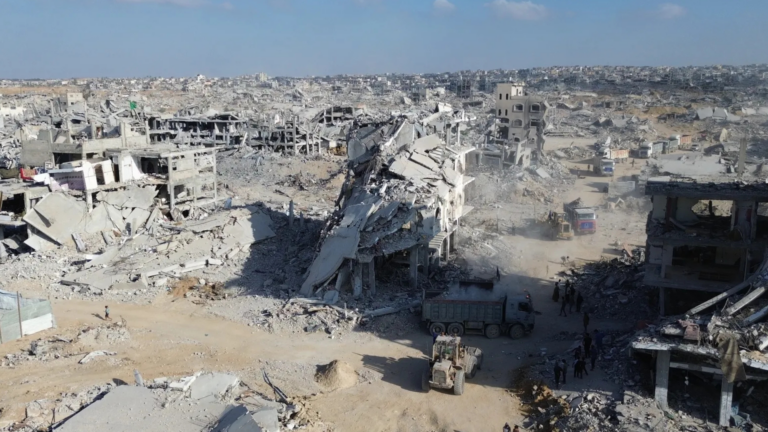
Israel ordered fresh air strikes on Gaza on Tuesday, October 28, after accusing Hamas of breaching a US-brokered ceasefire and attacking its troops, with Gaza’s civil defence agency reporting multiple casualties.
At least seven people were killed, two in Gaza City when a house was hit and five in a strike on a civilian vehicle in the south, the Hamas-run agency said. Another strike reportedly hit near Al-Shifa Hospital.
Prime Minister Benjamin Netanyahu’s office said he had ordered “powerful strikes” on Gaza following what officials called a major violation of the ceasefire.
Defence Minister Israel Katz said Hamas would “pay a heavy price” for attacking Israeli soldiers, calling it “a crossing of a bright red line”.
The escalation came amid a dispute over the return of hostages’ remains under the truce.
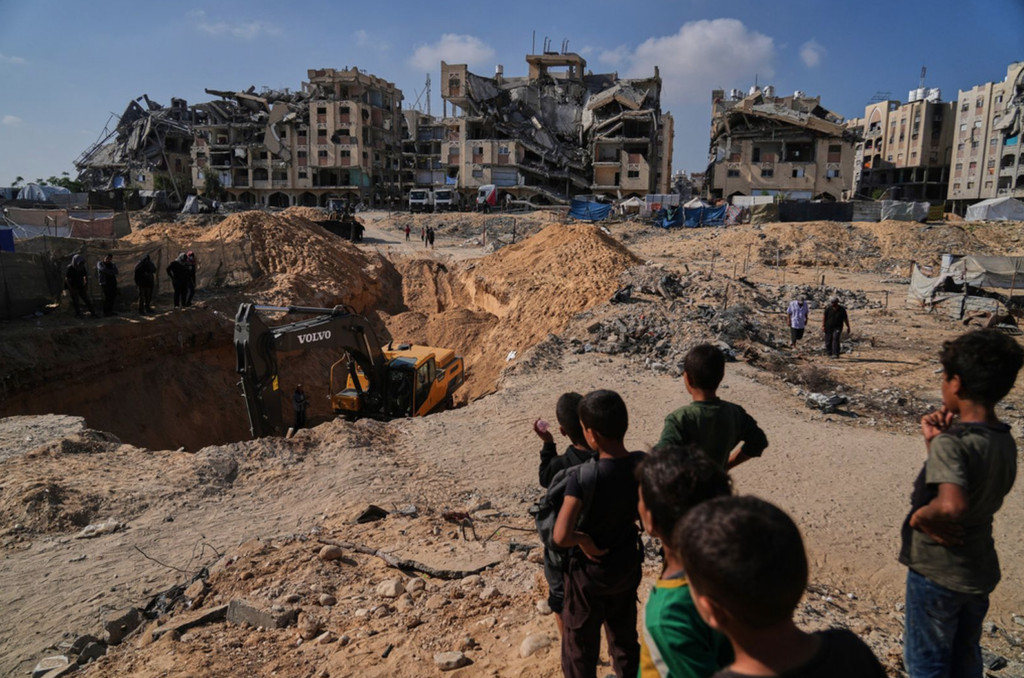
Palestinians watch as Egyptian machinery and workers search for the bodies of hostages in Hamad City, Khan Younis, in the southern Gaza Strip, Tuesday, Oct 28, 2025. Photo: AP Photo / Abdel Kareem Hana.
On Monday, Hamas handed over partial remains of a captive already recovered two years ago, a “clear violation of the agreement,” Netanyahu’s office said, identifying the remains as belonging to Ofir Tzarfati, abducted from the Nova music festival on October 7, 2023.
Hamas later said it would delay the next handover, claiming Israeli “escalation will hinder the search, excavation, and recovery of the bodies.”
The Hostages and Missing Families Forum urged Israel to respond “decisively,” accusing Hamas of “deceiving the United States and mediators.”
Hamas spokesperson Hazem Qassem rejected Israel’s claims, saying bombardments had destroyed key locations but insisted the group was “determined to hand over the bodies of the Israeli captives as soon as possible.”
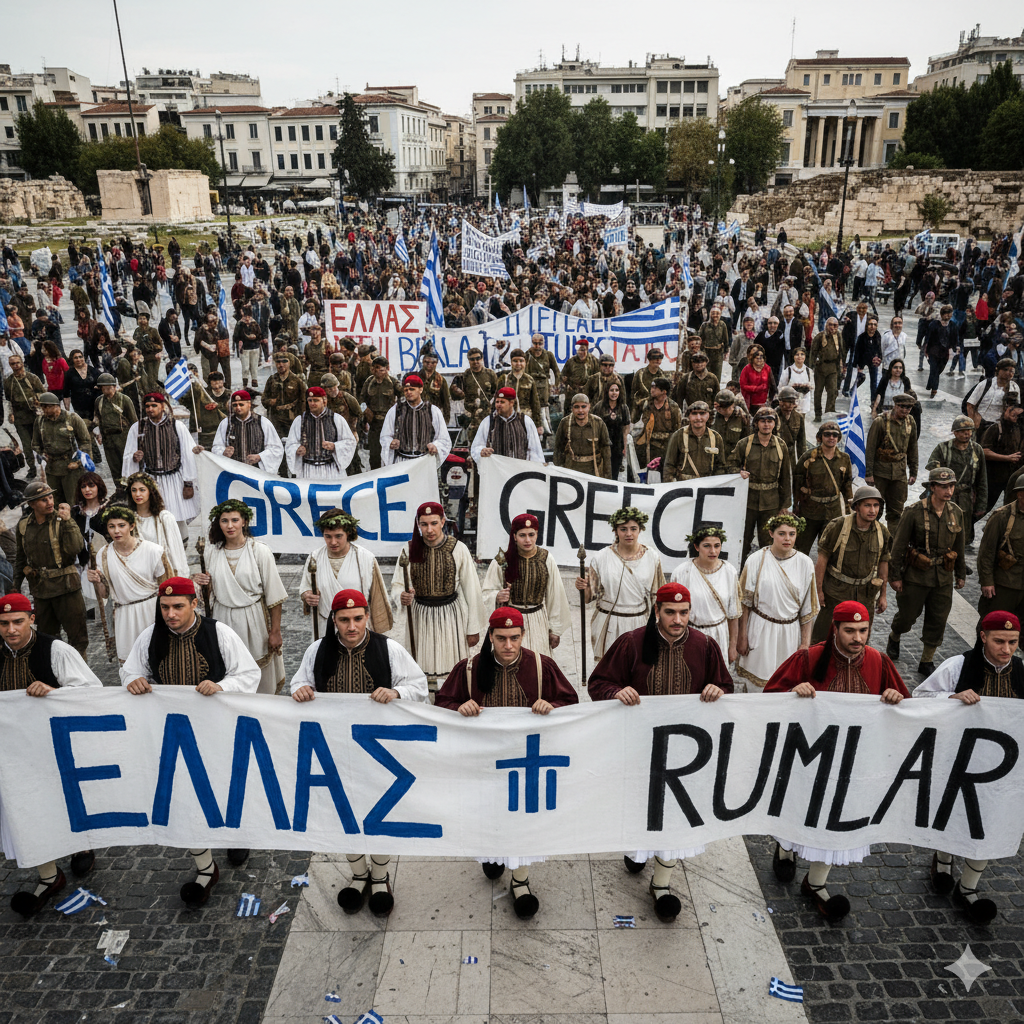
On 28 October 1940, Greek leader Ioannis Metaxas refused Mussolini’s ultimatum to occupy Greece, an act of defiance now commemorated as Ohi Day (No Day). It was a moment defined by one powerful word — “No” — reminding us how language and names can shape national identity.
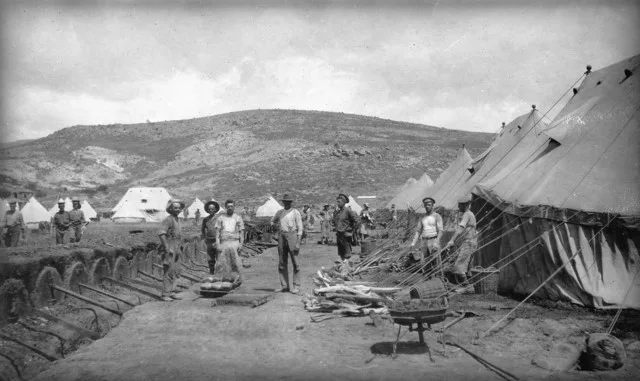
Around that same time, my maternal grandfather, Nicholaos Apistolas, from the island of Imvros (renamed Gökçeada), was conscripted into the Turkish army. His island, a naval base for the Allies during World War I, had aided the ANZACs at Gallipoli. By World War II, it was ceded to Turkey under the 1923 Treaty of Lausanne, and its Greek inhabitants, like my grandfather, were forcibly classified as Turkish nationals.
In Constantinople, my paternal grandfather Theodore Sinanidis was adjusting to another imposed renaming, the 1930 law that made “Istanbul” the city’s official postal name. By 1942, it wasn’t just a matter of semantics, he lost a large part of his fortune through the punitive “wealth tax” targeting citizens marked as Rumlar (Romans) on their Turkish IDs.
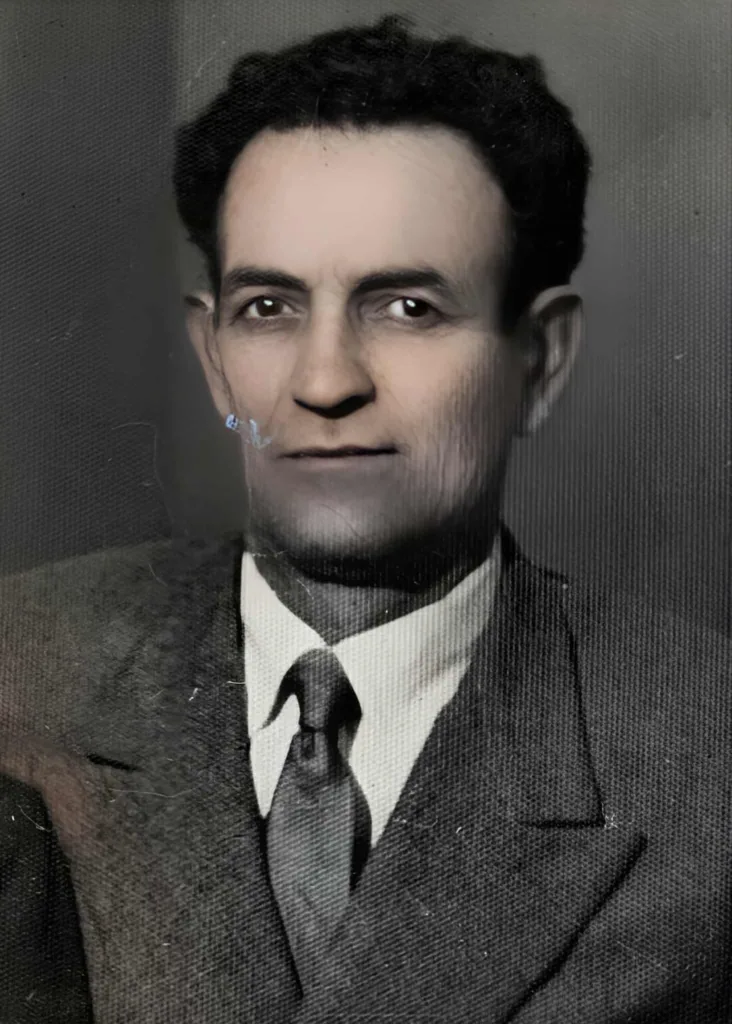
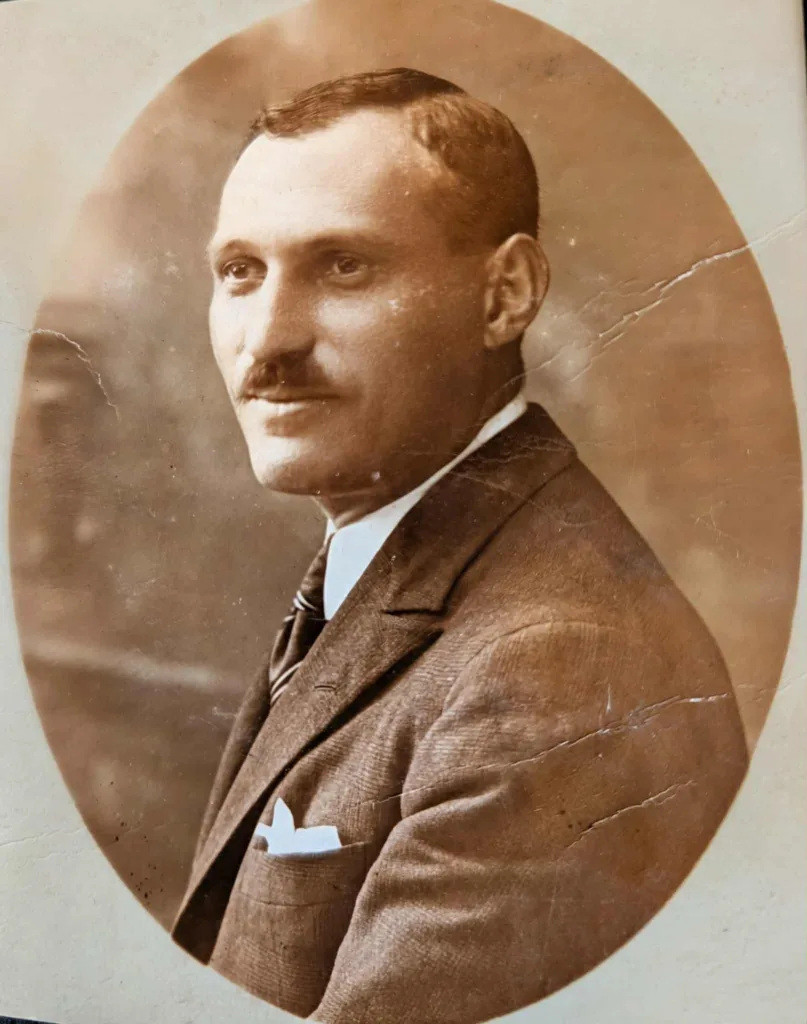
Nicholaos Apistolas, an Imvrian and Romios.Theodore Sinanidis, born in Constantinople but died in Istanbul.Imvros during World War I.
My family were all Rumlar (Romioi) the Turkish name for Romans, used to obscure their Hellenic roots. Though they spoke Greek and practiced Orthodoxy, they were politically redefined as remnants of the Byzantine Empire, cut off from modern Greece. This reclassification dictated not only their citizenship but also their sense of self.
It is from this imposed label that my connection to Romiosyni, that thread of cultural endurance, was born. It continues to remind us: “We are still here.”
Yet, where we were was a kind of cultural no man’s land. Post–World War II, Turkish policies deepened the distance, while rejection also came from Greece itself. My mother recalls being called Tourkospori (Turkish seed) and hanoumaki (Turkish lady) while studying in Athens. The alienation came from all sides.
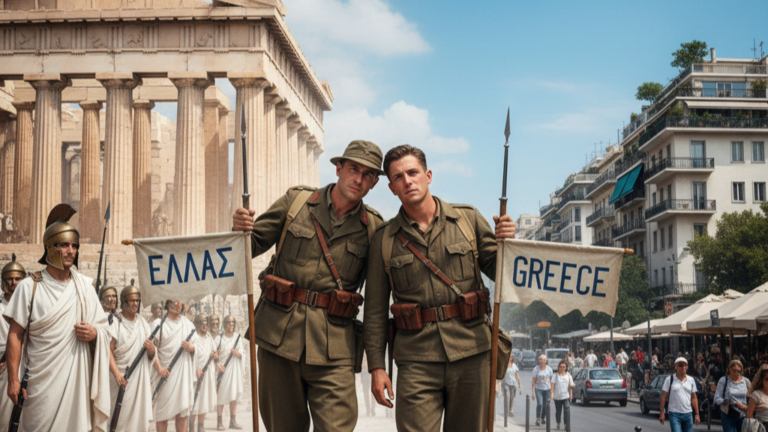
This struggle over names, imposed, reclaimed, and reinterpreted, lies at the heart of modern Greek identity. Of course, to outsiders, we are simply Greek.
As a word, ‘Greek’ was popularised by the Romans after encountering a small tribe called Graikoi. The irony endures: the nation that defied Italy on Ohi Day still carries the name bestowed by its Roman conquerors.
Professor Vrasidas Karalis, Modern Greek and Byzantine Studies Lecturer at the University of Sydney, notes that both words, Greek and Hellenic, carry emotional weight in different contexts.
“For Westerners, Greek is the name they came to know us as a nation since the Greek revolution. It resonates with a revolutionary past and the struggle for freedom,” he says.
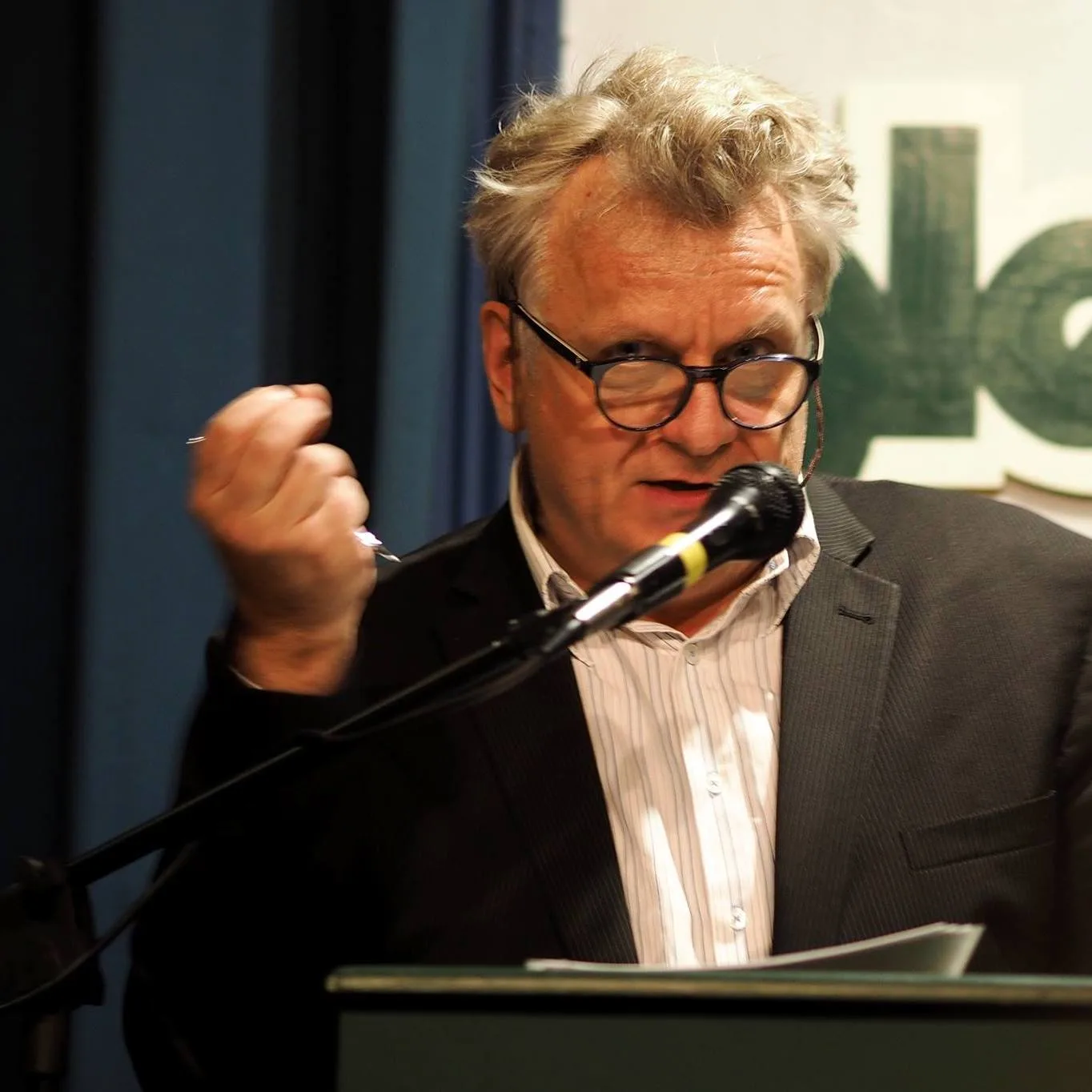
Vrasidas Karalis.
Karalis adds it was a name cemented globally during World War II, following the spirit of the famous (if debated) expression: attributed to Churchill himself: “Heroes fight like Greeks and not Greeks as heroes.”
For Hellenes, Ellinas expresses continuity. Karalis points to Greece as a nation with many names: Graikoi, Yunan, Romioi, but a single essence. “We must not forget Athanasios Diakos, when killed by the Turks, sang: ‘Εγώ Γραικός γεννήθηκα, Γραικός και θα πεθάνω.’ (I was born Greek, and Greek I will die).”
He points out that languages and identities rarely align neatly: “We don’t say Deutschland in English; we say Germany. We once said Pekingand now say Beijing. The Finnish call their country Suomi. It’s all shaped by history and habit.”
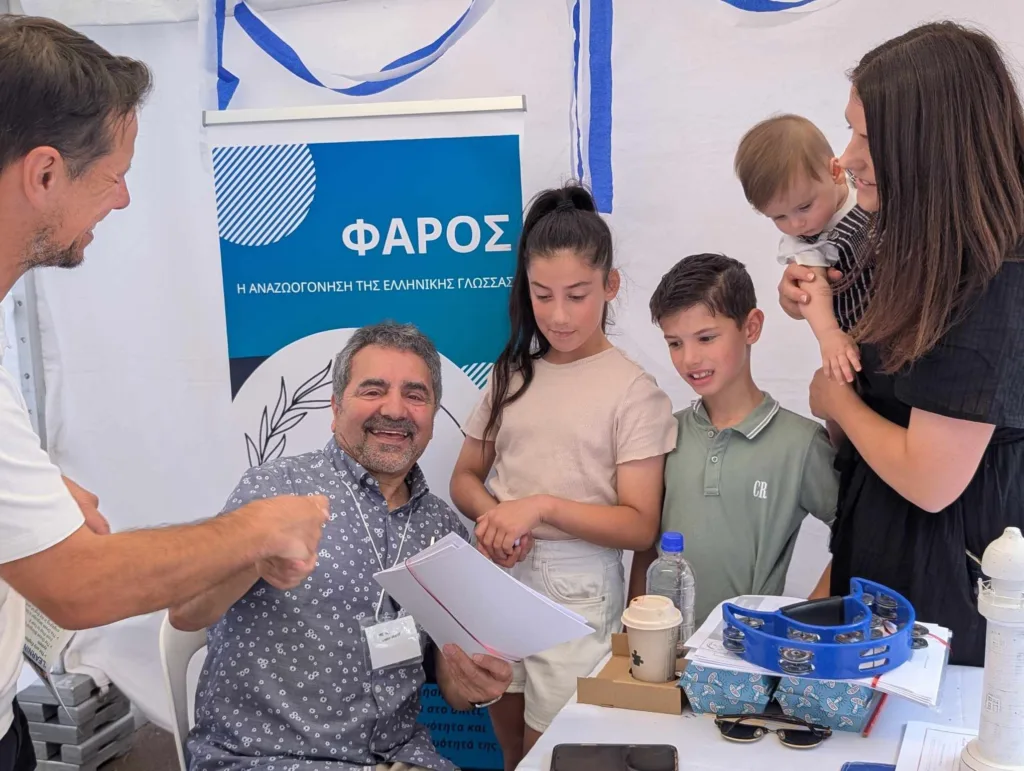
Professor Jo Lo Bianco is President of the Pharos Alliance.
Similarly, Turkey’s insistence on being called Türkiyesince 2021 was more than branding — it was linguistic sovereignty. “When Erdogan pushed for the change, the simplest reply would have been: Turkey is the English equivalent of Türkiye,” says Lo Bianco. “So why can’t we have Greece and Hellas?”
People who push to call our homeland Hellas instead of Greecepoint to this as an act of decolonisation, an accuracy when it comes to our identity. Lo Bianco says, “What a nation calls itself versus what others call it is steeped in power and struggle.”
Councillor Helen Politis, founder of the Greek Australian Forum on Facebook, deliberately chose ‘Greek’: “I wanted to connect second, third and fourth-generation Greek Australians, and invite non-Greeks to engage in civic life.”
Father Armandos Manafis, administrator of the Hellenic Australian Forum, took another path: “Hellasmeans ‘land of light’, from Hel (light) and las (land). It speaks to enlightenment and resilience.”
The Hellenic Museum was aptly named thus to reach closer to the ideals of philosophy, democracy, and beauty that our ancestors cherished beyond Greece’s borders. “I think the notion of Greekness really depends on what period you are looking at,” Hellenic Museum CEO Sarah Craig told the Greek Herald in a previous interview. “The geographic borders have continually shifted over time so that is why we are the Hellenic Museum rather than the Greek museum.”
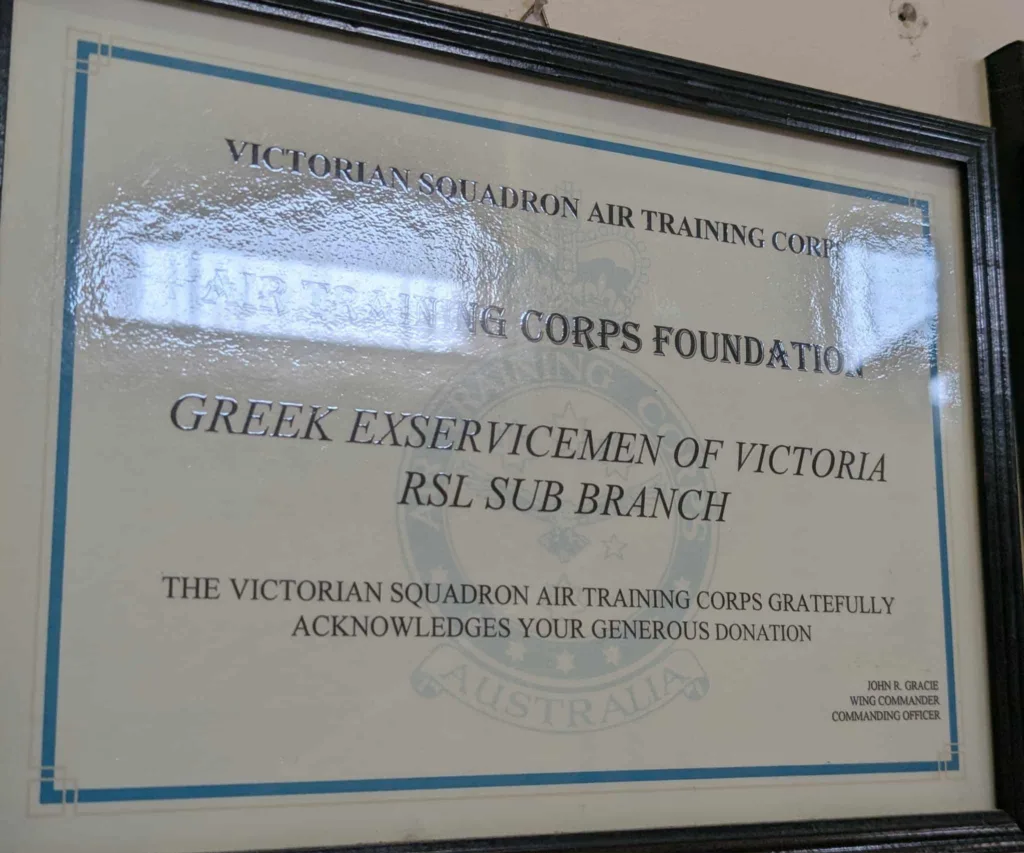
The Hellenic RSL chose its name to align with Greece’s armed forces — theHellenic Army, Navy, and Air Force. Secretary Terry Kanellos notes, “Even NATO uses ‘Hellenic.’ It reflects history and pride.”
Hellenic RSL President Manny Karvelas adds, “It’s inclusive of all Greeks from Greece, Cyprus, and the diaspora. Hellenic represents shared lineage beyond borders.”
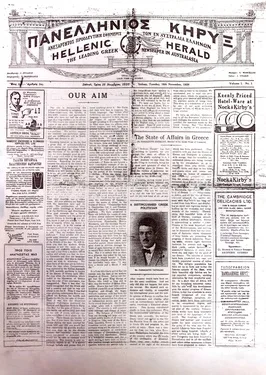
The Greek Herald was known as the hellenic Herald until 1985.The Hellenic RSL, once went by the name ‘Greek’.
During WWII, Greeks fought for Hellas, and I asked my grandfather what that meant for him, forced to wear a Turkish uniform at the time. Was he ashamed? He replied “No” because neither uniforms nor ID cards could define him.
He said he was Romios, guided by the flame of Romiosyni, burning with the same quiet defiance that answered “’Οχι’” in 1940. “Greek. Hellenes. Yunan. Romioi. Whatever name history gives us, we are still here.”