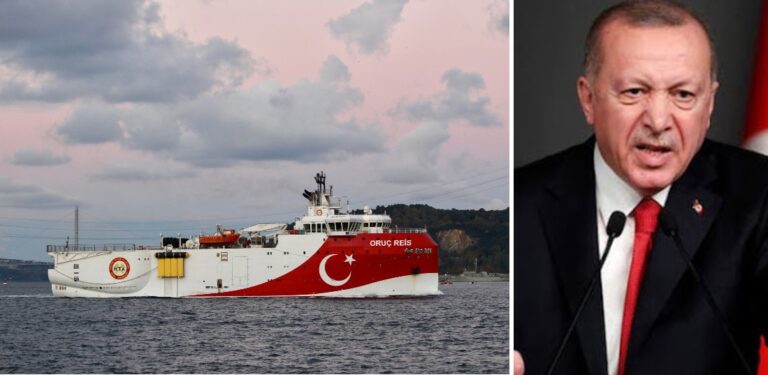
Turkey has issued a new Navtex, TURNHOS N/W: 1262/20, for the Oruc Reis seismic exploration vessel to carry out activities south of the island of Kastellorizo until October 20.
Tensions flared last month after Ankara sent its Oruc Reis seismic survey ship into disputed waters, escorted by gunboats, to map out sea territory for possible oil and gas drilling.
The Oruc Reis had initially returned to the Turkish port of Antalya in mid-September, but Turkey’s Foreign Ministry said at the time that the vessel’s work would continue after a short break.
It seems the time has come to do just that despite Greece and Turkey agreeing to resume talks over their contested maritime claims in the eastern Mediterranean after a four year hiatus.
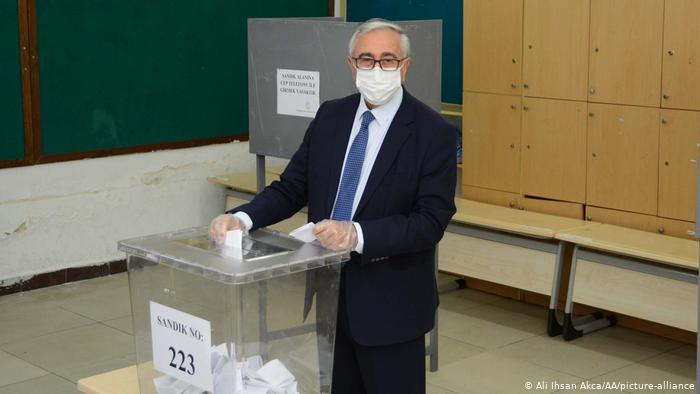
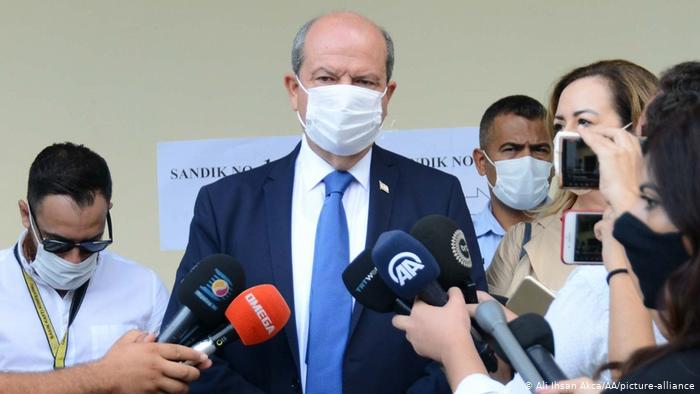
The first round of the Turkish Cypriot presidential election has produced a close result between one candidate favouring renewed peace talks on Cyprus and another wanting closer ties with Turkey.
Unofficial results gave 29.8% of the vote to the incumbent president Mustafa Akıncı, who is running for a second term.
He came narrowly behind the prime minister Ersin Tatar, who won 32.4%.
The candidates will face each other in a second round election next week, leaving Turkish Cypriot voters to decide whether they want another attempt to reunite the island or believe separation is a better course.
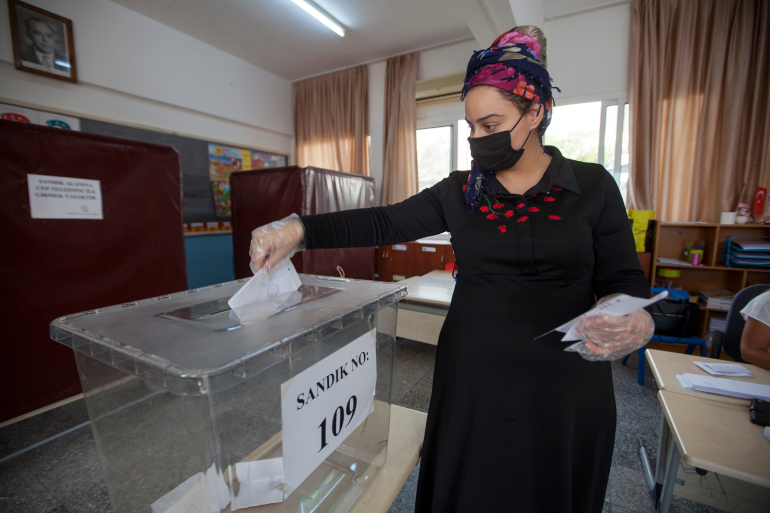
A Turkish-Cypriot woman casts her ballot at a voting station in the northern part of Nicosia, the capital of the self-proclaimed Turkish Republic of Northern Cyprus (TRNC), during the presidential election on October 11, 2020. Photo by Birol BEBEK / AFP.
Cyprus has been divided between its Greek and Turkish communities since 1974, when Turkey invaded in response to a coup that aimed to unite the island with Greece.
The northern portion declared independence as the Turkish Republic of Northern Cyprus in 1983, but it is diplomatically recognised only by Turkey.
Successive peace talks between the island’s two communities have been unsuccessful.
Akıncı, a left winger who wants to resume peace talks with Cyprus’s internationally-recognised Greek government, has said he hopes a deal can finally be agreed to reunite the island.
But Tatar, a nationalist, supports closer ties with mainland Turkey and advocates a two-state solution.
Turkish Cypriot Prime Minister Ersin Tatar has Ankara’s backing.
He controversially appeared alongside President Recep Tayyip Erdoğan last week to announce the reopening of the abandoned town of Varosha, which was largely inhabited by Greek Cypriots until it was occupied by Turkish forces in 1974.
Eleven candidates in all contested Sunday’s first round election, including the former Turkish Cypriot peace negotiator Kudret Özersay, who came fourth with 5.7% of the vote.
The Republican Turkish Party candidate Tufan Erhürman was third with 21.7%.
The second round of the election will be held next Sunday, October 18.
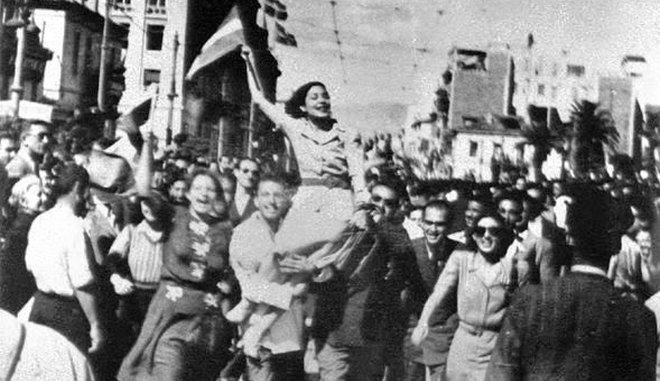
It was a sunny Thursday morning when church bells rang joyfully, inviting Athenians to take to the streets to celebrate the end of the German occupation after three and a half horrendous years. It was October 12, 1944.
Soon the rest of the suffering country would be free too. By November 3, the last German, Italian and Bulgarian soldiers had left the mainland. Only Crete had to suffer under the German boot for a few more months.
The countdown to the withdrawal of the Germans and their Bulgarian allies from Greece had taken place a few months earlier, on June 6, when the American army landed in Normandy and began to move towards Germany, with the Soviet army advancing from the east side. It was obvious then that the days of Nazi Germany were numbered.
Crowds of people celebrate in Syntagma Square.
In the period before liberation, the political consultations on the post-occupation situation in Greece had intensified. For their part, the Germans were looking behind the scenes for their safe departure from our country.
From April 26, 1944, the Greek government in exile was led by George Papandreou but the British were the ones who moved the threads. With the Lebanon Conference (May 17-20, 1944) and Caserta Agreement (September 26, 1944), the guerrilla groups of ELAS and EDES were placed under the orders of the Papandreou government, which was also enriched with EAM executives.
The Germans began to withdraw gradually from Athens on the night of October 11 heading north. At 8 am on October 12, the few Germans who had remained in Athens gathered at the monument of the Unknown Soldier. There, in a hasty ceremony, the head of the occupying forces, General Helmut Felmi, accompanied by the occupying mayor of Athens, Angelos Georgatos, laid a wreath.
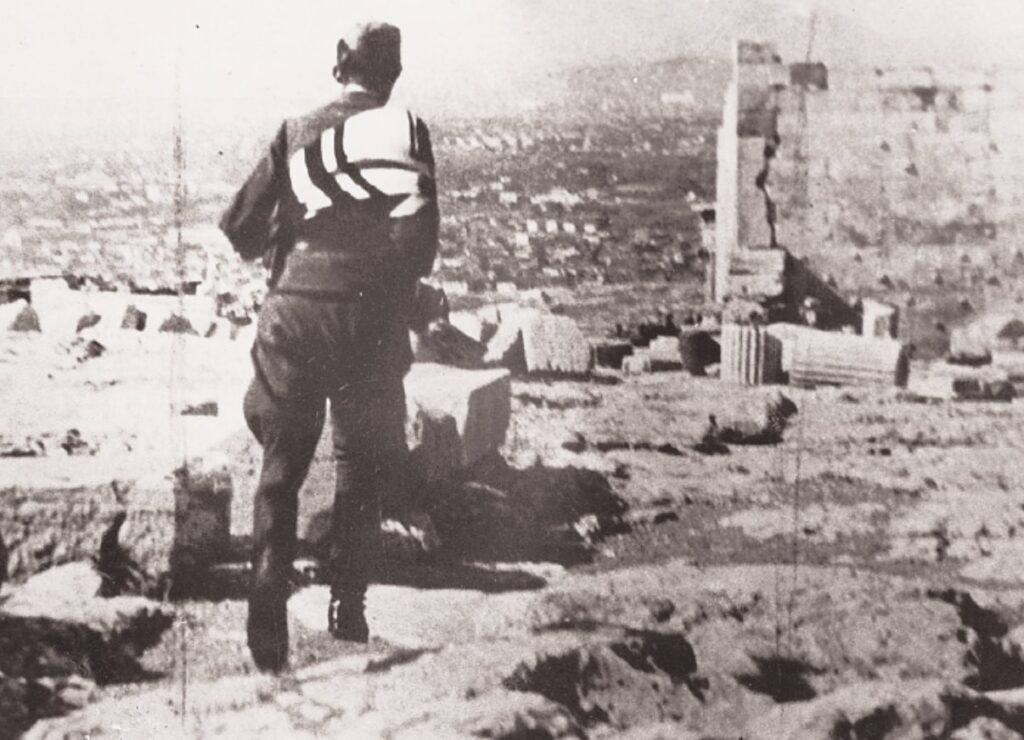
The last German soldier leaves the Acropolis, carrying his flag.
All that remained was the removal of the Nazi flag from the Holy Rock of the Acropolis. A German soldier unofficially lowered the swastika at 9.15 am and took it with him as he left with his head bowed. This marked the end of the 1,625-day German occupation and the beginning of a crazy festival on the streets of Athens.
Thousands of people with blue and white on their hands were kissing each other, shouting “Christ has Risen,” children were climbing on the roofs of trams, while the National Anthem was resounding from one end of the street to the other. After three and a half years of slavery, the Athenians breathed for the first time the intoxicating air of freedom.
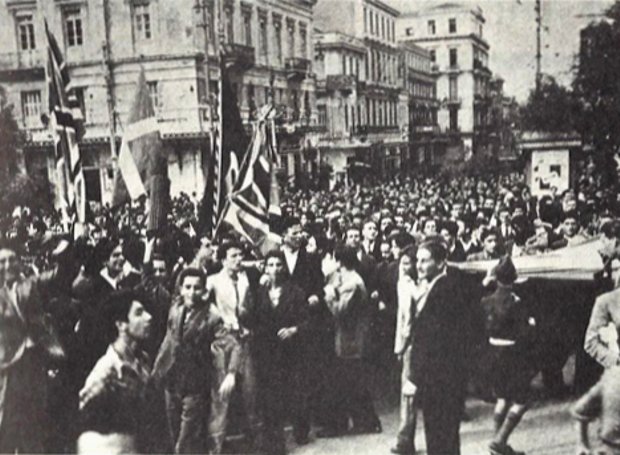
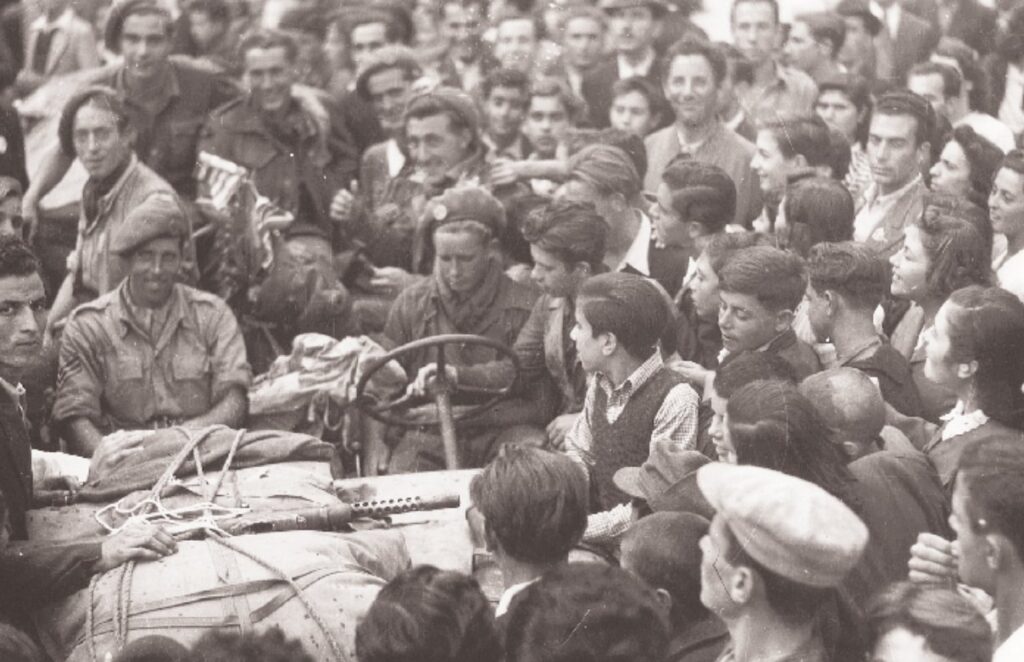
In the six days that passed until the arrival of the government in Athens, the power was exercised by a three-member committee, consisting of Themistoklis Tsatsos, Filippos Manouilidis and Giannis Zevgos, assisted by the commander of the Athens Police, Angelos Evert. Two days later, forces of the 3rd Corps of the British Army under Lieutenant General Ronald Scobby began arriving in the capital, which were enthusiastically received by the Athenians.
The first English soldiers arrive in Athens and are greeted with enthusiasm.
On October 18, George Papandreou and his government arrived in Athens. On the same day, the Prime Minister, in a moving ceremony, raised the Greek flag on the Acropolis and then spoke to the gathered crowd in Syntagma Square from the balcony of the Ministry of Finance.
In a masterfully structured speech, he announced the intentions of his government, stressing, among other things, the need to satisfy national demands, restore popular sovereignty, resolve the state issue after a free referendum and punish the accomplices of the occupiers.
The crowd, that often interrupted him with slogans in favor of EAM and the Greek Communist Party (KKE), welcomed his announcements with cries in favour of a people’s republic. Papandreou, who had been forced to steer constantly between the Left and the Right, replied with the characteristic phrase that remained in history: “We also believe in a people’s republic.”
However, the joy and festivities for the liberation lasted only 53 days. On December 3, the sound of gunfire echoed again in the streets of the capital, starting at Syntagma Square. The December events (Dekemvriana) were the precursor of the bloody Civil War (1946-1949).
The Morrison Government’s Economic Recovery Plan for Australia will create thousands of jobs, rebuild our economy and secure Australia’s future.
Dr Fiona Martin MP, Member for Reid, said that the 2020 Budget will benefit residents in her electorate of Reid, from business owners to employees to families.
“This Budget has been designed to keep Australians in jobs, keep businesses running and deliver the essential services we need,” Dr Martin said.
“It builds on the Morrison Government’s unprecedented investment in the health and economic response to the pandemic to make sure we emerge from the COVID-19 recession stronger than before.”
Dr Martin said that under this plan, taxpayers in Reid will soon get a tax cut backdated to 1 July this year.
“This means more money in the pockets of local households to assist with the cost of living, but also to help generate economic activity and create jobs,” Dr Martin said.
This Budget is investing a record amount in skills and training by committing $1.2 billion to create 100,000 new apprenticeships and traineeships, with a 50 per cent wage subsidy for businesses who employ them.
In addition to this, the Government have introduced the JobMaker Hiring Credit for employers who hire those on JobSeeker aged 16-35, which the Treasury estimates will support around 450,000 jobs for young people, including 2020 school leavers and graduates.
“We’re supporting Australians to get back to work and businesses to rebuild, grow, and create jobs,” Dr Martin said.
“Reid has more than 26,000 businesses and they are the lifeblood of our local economy and essential in providing jobs for Australians.”
Further, tax and investment incentives for local businesses will create more economic activity and jobs across the Reid community.
Tax relief for businesses includes allowing 99 per cent of businesses to deduct the full cost of depreciable assets in the year they are installed, and allowing companies with a turnover of up to $5 billion to offset losses against previous profits on which tax has been paid to generate a refund.
These measures builds on a $1.3 billion investment in Australia’s sovereign manufacturing capability to ensure we have an internationally competitive and resilient manufacturing sector, and in the process create more high value jobs.
“Reid has a really strong manufacturing base, especially in suburbs like Lidcombe and Silverwater,” Dr Martin said.
“Our Modern Manufacturing plan will prioritise sectors like food and beverage manufacturing, recycling and clean energy, and the making of medical products.”
The Morrison Government is also delivering record infrastructure investment, expanding our record 10 year infrastructure pipeline to $110 billion, and supporting a further 40,000 jobs nationally. The Budget also includes a $2 billion investment in road safety upgrades to save lives and an additional $1 billion to support local councils to immediately upgrade local roads, footpaths and street lighting to create jobs now.
By bringing the Budget back to balance for the first time in 11 years and maintaining our AAA credit rating, Australia entered the crisis from a position of economic strength, giving Australia the fiscal firepower to respond when we needed it most.
Since the onset of the pandemic, the Government has provided $257 billion in direct economic support to cushion the blow and strengthen economic recovery.
The 2020-21 Budget commits a further $98 billion including: $25 billion in direct COVID-19 response measures and $74 billion in new measures to create jobs.
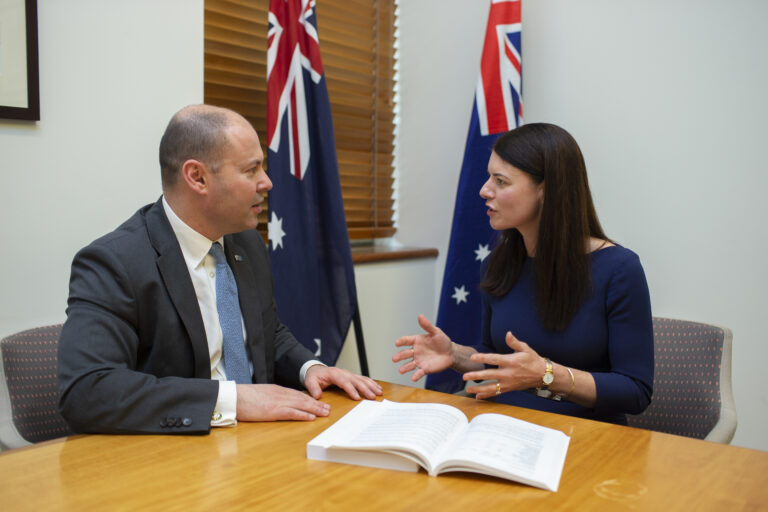
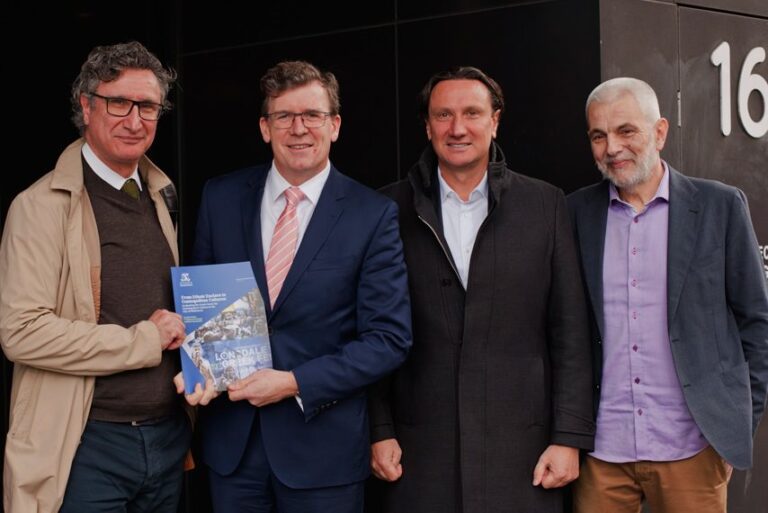
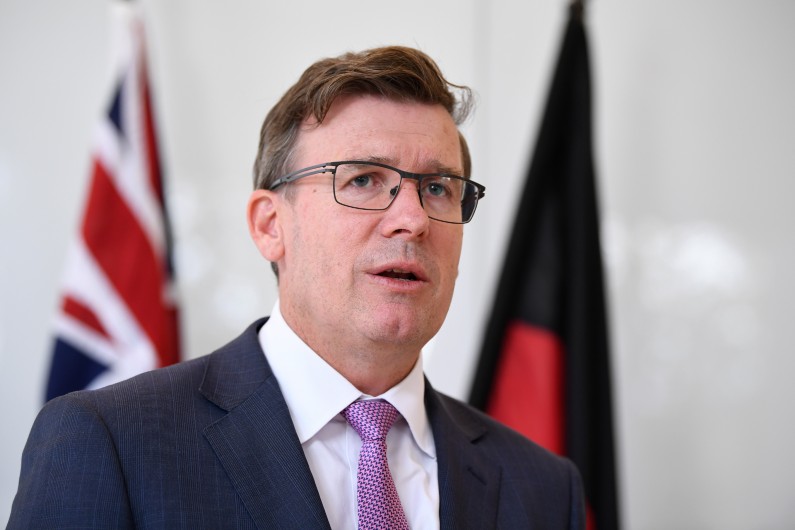
Greek Orthodox Community of Melbourne President Bill Papastergiadis met with acting Minister for Immigration Alan Tudge to participate in a briefing, informing multicultural community leaders of the impact of the 2020 Budget.
Papastergiadis raised a number of questions to the Minister, including how the government would aid families in Australia who intend to connect with family members abroad.
Tudge says the international quarantine restrictions are proving a major obstacle for people looking to come home, as well as visit distant family overseas.
“He said 58,000 Australians had left Australia since the border was closed. He agreed that isolation has limited immigration and that state government’s played a key role in setting those boundaries,” Tudge was quoted as saying in a press release by the Greek Orthodox Community of Melbourne.
“The government hopes to open borders with other countries in the near future and also hopes that a vaccine will be available by mid-2021.”
The Community President additionally asked the Minister about his proposal for skilled migrants and “whether our communities could work with the Government to develop better ties with some countries, including Greece.”
Papastergiadis mentioned the lobby of the Greek Community of Melbourne to organise a skills exhibition in Thessaloniki a few years ago.
Tudge says social cohesion among multicultural communities remains important for the Federal Government program.
“Foreign intervention was a particular problem and was at levels we had never seen since World War II,” Tudge adds.
“The federal government will try to ensure that communities are not divided as a result of foreign factors. It invests in services to compensate for this.”
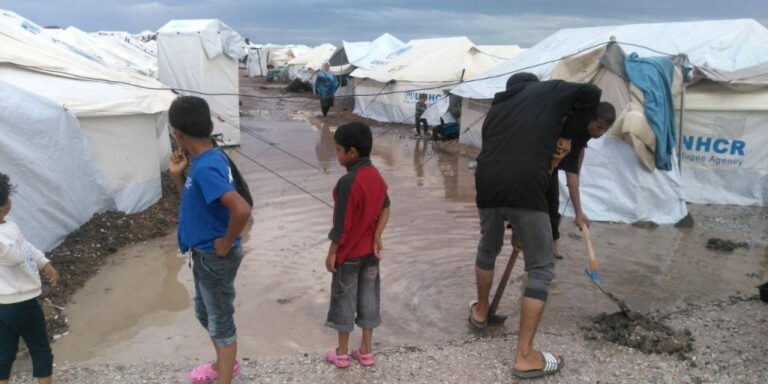
A month after fire razed the sprawling Moria reception center on the Aegean island of Lesvos, the United Nations refugee agency, UNHCR, has called for “urgent action” after heavy rain flooded tents at a new facility set up to replace the camp.
“Urgent action and improvements are needed to avoid further deterioration of living conditions for some 7,800 refugees and asylum-seekers currently sheltered in the emergency site in Kara Tepe,” the UNHCR said in a statement on Friday.
It said some “interim solutions” were found in the wake of the flooding caused by Thursday’s rainfall but warned that, “colder weather and the onset of winter will only bring more hardship for the people there.”
Migration Minister Notis Mitarakis said that the majority of the facility had not been affected by the flooding and that those migrants whose tents were flooded were temporarily moved to “common areas.”
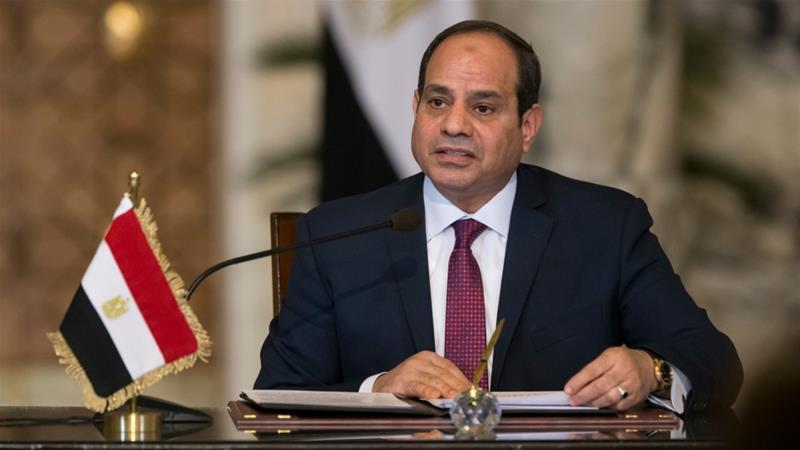
Egypt’s president Saturday ratified a maritime deal setting its Mediterranean Sea boundary with Greece and demarcating an exclusive economic zone for oil and gas drilling rights, the state-run news agency reported, in a move that has angered Turkey.
The bilateral agreement is widely seen as a response to a rival deal between Turkey and Libya’s Tripoli-based government that spiked tensions in the East Mediterranean region, along with Turkey’s disputed oil and gas exploration in the seawaters.
The MENA news agency said that the deal, signed by President Abdel-Fattah el-Sissi, was published by the official gazette on Saturday.
Photo: [Alexander Zemlianichenko/Reuters]
The ratification came over two months after the Egyptian and Greek foreign ministers signed the deal in Cairo.
The Egypt-Greece deal establishes “partial demarcation of the sea boundaries between the two countries, and that the remaining demarcation would be achieved through consultations.”
Egyptian Parliament Speaker Ali Abdel-Al had in August called the deal with Greece “very significant.”
The Ankara-Tripoli maritime deal was dismissed by the governments of Egypt, Cyprus and Greece as infringing on their economic rights in the gas-rich Mediterranean Sea.
Turkish President Recep Tayyip Erdogan called the Egypt-Greece agreement “worthless,” vowing to keep his disputed pact with the Tripoli government in place.
No matter who you ask, everyone will tell you that “my Yiayia makes the best Gemista!” so we thought to teach you how to make your own Gemista just as good as Yiayia’s!
Gemista is traditionally a vegetarian dish with roasted vegetables stuffed with a rice filling.
Today, gemista is often filled with rice and ground meat stuffing and is served with roast potatoes, making it a staple meal in most Greek households.
Ingredients
For the vegetables:
6 tomatoes
4 capcicums
4 eggplants
For the stuffing:
1 onion
1 clove of garlic
1 ½ cups rice
½ bunch mint
½ bunch parsley
500g ground mince beef
400g water
Salt & paper
Grated tomato and eggplant (from inside of vegetables)
1 tablespoon granulated sugar
Method
For the vegetables:
Begging by removing the top part of the tomatoes and eggplants. Set aside to use later as the “lid”. Scoop out the flesh from the tomatoes and eggplant and set aside for the filling mixture.
Cut the tops of the capsicum and set aside to use as a lids. Scoop the inside seed out and throw away.
Place the vegetable onto a baking pan
For the stuffing:
Preheat oven to 180celsius
Heat 2 tablespoons of olive oil in a frying pan
Finely chop the onion and garlic and add to the pan along with the granulated sugar
Add the ground beef and the eggplant and tomato flesh to the pan. Let the mince brown
Add the rice and water. Season with salt and pepper and lower the heat to let simmer.
Once the filling is ready, remove from the heat and let rest for 5 minutes
Greece is neither in the position to develop nor to attract talented professionals, according to the findings of the Hellenic Authority for Quality in Higher Education’s (ADIP) annual report for 2019.
The report paints the current picture of higher education in Greece, highlighting its distortions and disadvantages.
In particular, it states that an estimated 450,000 Greek professionals went abroad during the recent economic crisis, seeking greener pastures and leaving behind high unemployment rates, wage cuts and reduced social benefits.
Their relocation cost the Greek economy more than 15 billion euros.
The study notes that the aim to transform Greece’s brain drain of the last decade can be transformed into a brain gain is being hampered by a policy deficit.
Citing the Global Talent Competitiveness Index (GTCI) for 2020 – the global benchmark for issues related to talent competitiveness and the future of work – it said Greece is ranked 81st internationally in attracting talented people, 30th in terms of retaining them and 60th in talent development out of a total of 132 countries.
Also, according to Eurofound’s European Working Conditions Survey, Greece appears to significantly lag the European average in terms of creating high-quality jobs with good financial gains and prospects.
In fact, Greece ranks among the worst-performing countries in the Organization for Economic Cooperation and Development in the employment of higher education graduates aged 25-64 (74%).
As statistics around mental health illness in Australia continues to rise at an exponential rate, there are constant calls for increased awareness of the issue.
A couple of weeks ago The Greek Herald spoke with Helen Eleni Andrianakis, a senior mental health drug and alcohol clinician and psychiatric nurse practitioner, on the importance of family responsibility in managing mental health illness in the community.
Today we continue this dialogue, moving on to a greater discussion about some of the common effects of mental health illness, specifically looking at insomnia.
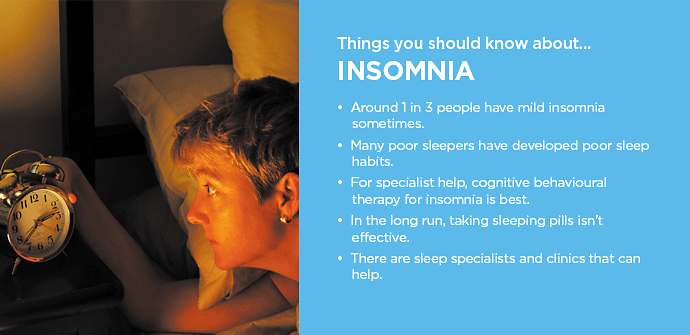
All humans experience irregular sleeping patterns during different stages of their lives, and this doesn’t mean people should be immediately concerned. In fact, the Sleep Health Foundation says that approximately one third of Australians experience insomnia at some point in their lives, and only 5% will need professional treatment.
However, insomnia should be treated no differently than other mental health illnesses. Left unmonitored, it has proven to be “extremely dangerous” to our bodies.
Photo: Sleep Foundation Australia
“It’s extremely important to monitor and it’s not necessarily something you need to be embarrassed about, because we all have some complications or problems in our life,” Helen says to The Greek Herald.
“You know what works for you and you know what doesn’t work for you.”
Helen stresses that maintaining balance is key to having a strong mental health. Without a good lifestyle balance, people can be at risk of further mental health deterioration. With no sleep and an unorganised schedule, insomnia can be catalyst for illnesses such as depression and anxiety.
“You’re not able to balance, you’re not able to make proper decisions, you’re not able to have a normal direction in your life, you’re not able to work and you’re not able to study,” Helen says.
“A lot of people need to keep up a healthy diet and healthy balance, east properly, if you are a smoker then you get yourself on a withdrawal smoker regime.
“Everything is about a healthy lifestyle.”
Helen explains that insomnia can be the result of multiple underlying mental health issues, including:
Trauma
Poor lifestyle
Lack of stability
Anxiety
Depression
Medication
As a mental health illness, trauma can have a severe impact on our social lifestyle. Often brought upon by a life-changing event, insomnia as a result of trauma can be one of the hardest mental battles to defeat, especially when the traumatic event has taken place during the night.
“One of my clients, they’ve been taken off their parents for various reasons and have been dumped from foster care to foster care a total of seven times,” Helen says.
“One of the little girls says she can’t sleep at night because that’s when a lot of the trauma happens. So she was awake all night, and when it’s time to go to school she was sleeping.”
“Tell me if those poor children aren’t traumatised.”
Sleeping medication may be a viable temporary solution for insomnia, yet for some it can lead to very dangerous habits in the future. Helen warns that medication is being used as a justification for external side effects, such as over-indulging in food and smoking.
“Some clients eat healthy, don’t smoke and don’t drink, while other clients over-eat then blame it on the medication, then refuse to take the medication,” Helen says.
“They’ll order 24/7 fast food online. Now with COVID, we’re finding it’s even getting worse.
“We’re having clients in residential units sleep during the day, then awake all hours at night, and all they do is eat.”
Helen stresses that insomnia can lead to real social issues and should not be treated as simply a common side effect of a greater issue. If it continues to lead to a poor lifestyle, it should be brought up with a health professional.
“Be aware of the warning signs and communicate with your clinician or your medical professional,” Helen says.
“It’s best for them to talk to their doctor and write out a diary on the number of hours they sleep, what they do with the daily complications they are facing in their lifestyle, then their doctor will tell them what is happening.
“That’s how we identify it.”
Hypnotherapists and wellbeing clinics are other ways that people can properly manage their insomnia. A strong recommendation by Helen included visits to sleeping clinics, which monitor patients for up to 24 hours to properly diagnose their condition and what could be a potential cause.