Home Blog Page 140

First Lady resigns from charity fund as secret video triggers Cyprus political turmoil

0

A secretly recorded video has plunged Cyprus into political turmoil, allegedly showing senior officials discussing campaign financing methods and sanctions evasion just one day after the country assumed the EU presidency.

The footage features former energy minister Giorgos Lakkotrypis, presidential office director Charalampos Charalambous and Cyfield executive Giorgos Chrysochos discussing funding President Nikos Christodoulides’ campaign through cash or donations to a social support fund managed by First Lady Philippa Karsera.

The government dismissed the video as a “malicious montage” and “hybrid activity,” challenging anyone with evidence of bribery to present it to authorities.

Amid mounting pressure, Karsera announced she would step down from the management committee of the Independent Social Support Agency, citing an “unrelenting attack” against her and her family on social media and confirming she had sought legal advice.

Opposition parties have demanded explanations, with AKEL criticising the delay in her resignation and questioning why senior officials remain in office.

A 2025 audit found the fund lacked transparency over private donations, while coalition partners are reportedly considering withdrawing support ahead of parliamentary elections in May.

Iran warns of retaliation as protest death toll rises

0

Iran has warned it will retaliate if attacked by the United States as activists report hundreds of protesters have been killed in a widening government crackdown.

The Human Rights Activist News Agency (HRANA) says it has verified the deaths of 495 protesters and 48 security personnel, with more than 10,600 people detained nationwide.

A source in Tehran told the BBC: “Things here are very, very bad… It’s like a war zone, the streets are full of blood.”

BBC-verified footage shows rows of body bags near Tehran, while hospital staff told the BBC they have been overwhelmed with dead and injured protesters.

One health worker said: “Around 38 people died… direct shots to the heads of the young people, to their hearts as well.”

The protests, sparked by soaring inflation, have evolved into calls for an end to clerical rule.

Iran’s attorney general said protesters would be considered an “enemy of God,” while Supreme Leader Ayatollah Ali Khamenei dismissed demonstrators as a “bunch of vandals.”

US President Donald Trump said the US “stands ready to help” as Iran “is looking at FREEDOM,” with US officials confirming he has been briefed on military options.

Iran’s parliament speaker warned that any US attack would make American and Israeli targets in the region “legitimate.”

Iran has imposed a severe internet shutdown, and international media cannot report freely from inside the country.

Source: BBC.

Fatality confirmed as bushfires continue to burn across Victoria

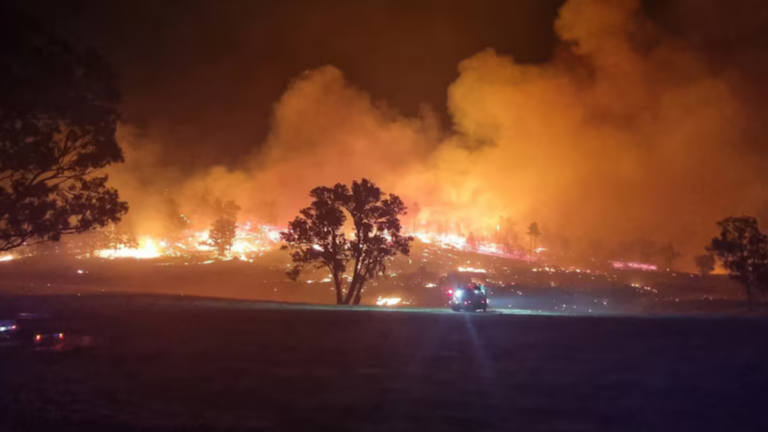
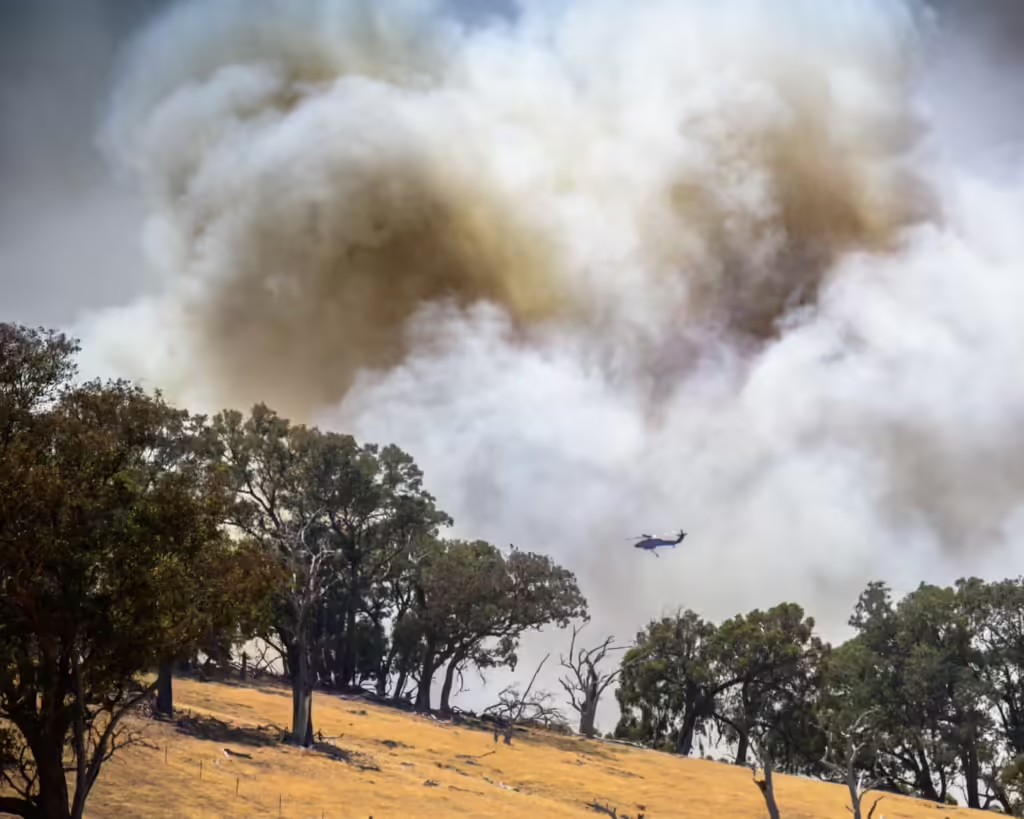
The Victorian bushfire emergency has taken a fatal turn, with one person confirmed dead as more than 20 fires continue to burn across the state, two of them at emergency warning level.

Victoria Police said the body was found on Sunday night in an area affected by the Longwood fire near Gobur in central Victoria, about 100 metres from a vehicle.

The person has not yet been formally identified and a report will be prepared for the coroner.

Premier Jacinta Allan said her thoughts were with the person’s family and loved ones.

“This loss will be felt far beyond Gobur, and it marks the first known fire-related fatality during what has already been an incredibly challenging period for our state,” she said.

Photo: Michael Currie / AAP.

Total fire bans are in place for Victoria’s north-east and north-central districts, with poor air quality forecast from Monday.

The fire near Walwa on the NSW border remains at emergency warning level, while residents in Irrewillipe in the state’s south-west have been told to take shelter as a fire in the Otways burns towards Bungador.

By Sunday evening, about 390,000 hectares had been burnt. Chief Fire Officer Chris Hardman said the death “really takes the wind out of [his crew’s] sails”.

“We always have the primacy of life at the forefront and the centre of our thinking — It’s what drives and motivates us,” he said.

Photo: James Ross / AAP.

While lower winds on Sunday aided firefighting efforts, Hardman said the Otways fire front remained “really concerning” and warned conditions could worsen later this month.

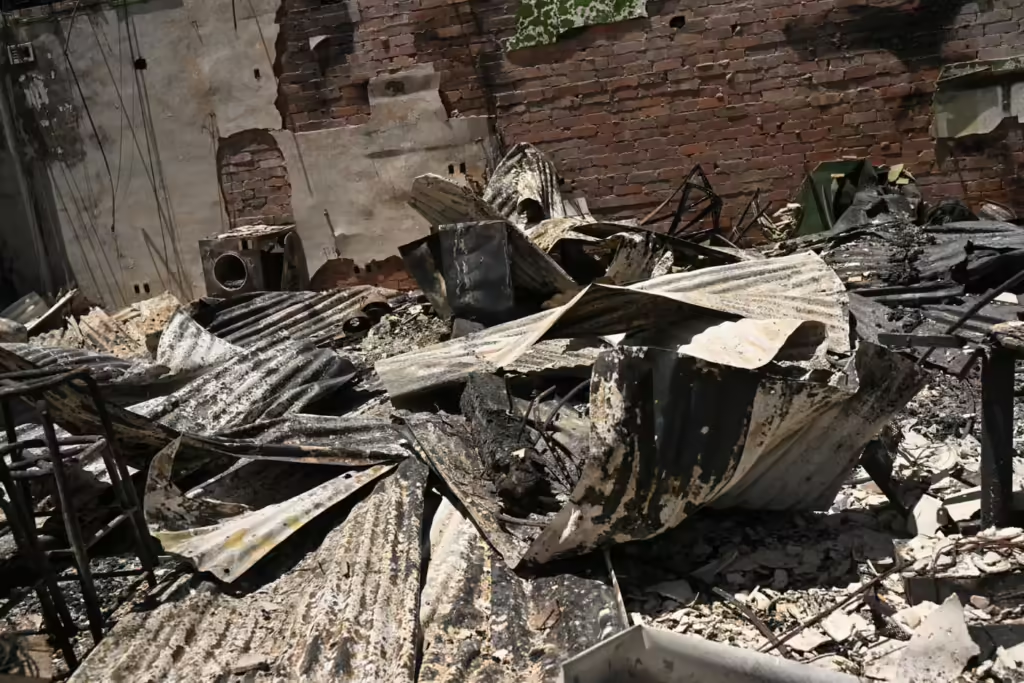
At least 300 structures have been impacted, with damage assessments continuing.

Prime Minister Anthony Albanese and Premier Allan on Sunday announced a $19.5 million support package for affected communities, including funding for fodder distribution, emergency accommodation and mental health support.

Source: ABC.

Epiphany Blessing of the Waters and Greek Festival at Carss Park cancelled

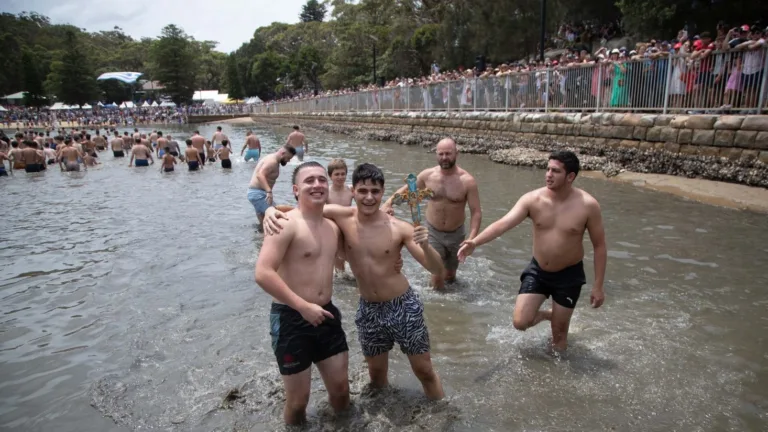
The Blessing of the Waters and Epiphany Greek Festival scheduled to take place today at Carss Bush Park has been cancelled due to hazardous weather conditions.

The Greek Orthodox Archdiocese of Australia announced the decision after strong wind gusts exceeding 55 km/h were forecast for the area, citing public safety as the primary concern.

“The safety of our visitors is our priority,” the Organising Committee said in a statement.

The statement thanked the community for its understanding and continued support.

What happens to a lease in Greece when a landlord dies?

0

By Anastasia Miliou, Attorney at the Supreme Courts

When a landlord passes away, their rights and obligations do not disappear. Instead, they are transferred to their heirs. Once the heirs accept the inheritance, they automatically step into the role of landlord – there is no need for additional paperwork or registration for this to take effect.

The case in question

In this case, the heirs of a deceased landlord took legal action against a tenant who had rented an apartment from the late owner. The apartment was used as the tenant’s main residence.

Although the tenant was informed of the landlord’s death and told who the new landlords were, she stopped paying rent. Over a period of 12 months, she failed to pay any rent at all.

The heirs went to court asking for two things:

  • payment of all outstanding rent, divided according to each heir’s share of the inheritance, plus interest; and
  • the return of the apartment to them.

The tenant’s argument

The tenant argued that she did not refuse to pay the rent deliberately. Instead, she claimed she was unsure who she should be paying after the landlord’s death and said this uncertainty justified her non-payment.

However, the court found this argument unconvincing.

The tenant admitted she personally knew the deceased landlord’s wife, who was one of the heirs. In addition, another tenant in the same building had no difficulty continuing to pay rent after the landlord’s death – they simply contacted the deceased landlord’s lawyer to confirm how payment should be made.

Why the court ruled against the tenant

The tenant had received a formal written notice giving her 15 days to settle her unpaid rent. Despite this, she made no effort to clarify payment details or to pay what she owed.

The court ruled that a reasonable person would have taken steps to resolve the situation, especially since the tenant had clear ways to obtain information. Because she failed to do so, the court found that the non-payment was her own fault.

The court also noted that if the tenant truly felt unsure about who to pay, the law allowed her to deposit the rent with a public authority until the matter was clarified. She did not use this option.

The outcome

The court ruled in favour of the heirs. The tenant was ordered to:

  • pay all outstanding rent with interest; and
  • hand back possession of the apartment to the heirs.

Key takeaway

If a landlord dies, tenants cannot simply stop paying rent. The heirs become the new landlords, and tenants must continue meeting their obligations. If there is genuine uncertainty, tenants are expected to take reasonable steps to resolve it – not ignore their responsibilities.

*Anastasia C. Miliou is an Attorney at Law at the Supreme Courts with experience in international law and a large clientele in both Greece and abroad. Her telephone number is 6945028153. If you would like questions answered as part of her articles in English online, you can e-mail her at natmil@otenet.gr or visit www.legalaction.gr

Australian and US Greeks drive international demand for The Ellinikon

0

Residential developments at The Ellinikon continue to attract strong international interest, with buyers coming from more than 110 countries. According to the latest update from Lamda Development, the buyer mix currently stands at 55% Greek purchasers and 45% international investors, of whom 22% are members of the Greek diaspora, according to protothema.gr

A significant share of overseas demand is driven by Greeks living abroad, particularly in the United States and Australia. Lamda Development notes that its international roadshows, along with targeted promotional campaigns, have played a key role in boosting the project’s visibility across global residential and investment markets.

As part of these efforts, Lamda recently presented The Ellinikon and its latest investment opportunities at Property Congress 2025, Australia’s flagship real estate event, held in Perth. The presentation highlighted Athens’ growing profile as an international destination for modern and sustainable urban living.

The update also shows that total proceeds from property sales at The Ellinikon have reached €1.5 billion since the launch of the project through November 30, 2025. During this period, 84% of the 671 residential units in the Little Athens neighborhood have already been sold or reserved, underscoring sustained demand for the landmark redevelopment.

Source: protothema.gr

Greek school opens in Tanzania, reviving language and culture

0

The newly established Greek school of the Greek community in Dar es Salaam, Tanzania, began operating this year, marking a significant step in efforts to preserve Greek language and cultural identity in the country. The school is staffed by educator Nikos Kommatás, who brings decades of teaching experience in Greece and Africa and whose mission extends beyond language instruction, according to protothema.gr

The initiative follows years of attempts to strengthen Greek education among Tanzanian Greeks. As the Greek Ministry of Education has not seconded teachers to Tanzania since 1980, the local community decided to establish the school independently, inviting Kommatás to lead the effort from the ground up.

According to Dimitris Mantheakis, vice president of the Greek Community of Tanzania and chairman of the school’s board, the aim is to maintain strong ties with Greece and ensure that Greek identity and tradition endure across generations. The teacher’s salary is fully covered by the community.

The school currently serves 32 students aged 4 to 87, including members of the Greek diaspora and individuals connected to Greece through family or professional ties. Students are divided into nine groups based on age and learning needs. Lessons combine language, history, literature and music, often using interactive digital material created by the teacher.

Classes are held weekly, with additional online lessons for children in Arusha. Plans are also underway to mark national celebrations such as March 25 with community events featuring the Greek flag and national anthem.

The Greek community in Tanzania numbers around 150–160 people, with Dar es Salaam hosting the largest concentration. Community leadership continues to support education, healthcare and cultural activities, viewing the school as a bridge between East Africa and Greece and a key pillar in sustaining Hellenic heritage abroad.

Source: protothema.gr

Shoulder season travel to Europe gains ground among Australians

The annual stream of European summer holiday photos now seems to stretch well beyond the traditional peak – and there’s a clear reason why, according to theaustralian.com.au. Increasingly, Australians are choosing to travel to Europe during the shoulder seasons of April–May and September–October, drawn by lower costs, milder weather and thinner crowds.

Flight booking data from Webjet shows June remained the most popular month for Europe-bound Australians in 2024, accounting for 16.7 per cent of bookings. July and September followed at 12.6 per cent each, with August close behind at 12 per cent and May at 11.3 per cent. Early figures for 2025 suggest demand for May and September travel is holding steady, reinforcing the strength of shoulder season travel.

Australian Travel Industry Association chief executive Dean Long said the decline of traditional early-bird airfare deals has pushed travellers to seek value outside peak periods.

“I’m not sure shoulder seasons will ever overtake the peak period but they are growing in popularity as people are trying to find good value at a good price,” he said.

Flight Centre Travel Group managing director Graham Turner said travellers were increasingly keen to avoid Europe’s crowded summer months, when locals are also on holiday.

“So that’s when everything is crowded, everything is packed… It’s just a more pleasant experience.”

The trend has also led to earlier planning. In 2025, 25 per cent of Australians booked European trips more than six months ahead, while 35 per cent booked three to six months in advance — both higher than in 2024.

While Europe’s shoulder seasons are booming, destinations such as Bali and Japan continue to attract Australians year-round. Travel to the US, however, remains subdued, with Mr Turner citing political uncertainty as a key deterrent.

Source: TheAustralian.com.au

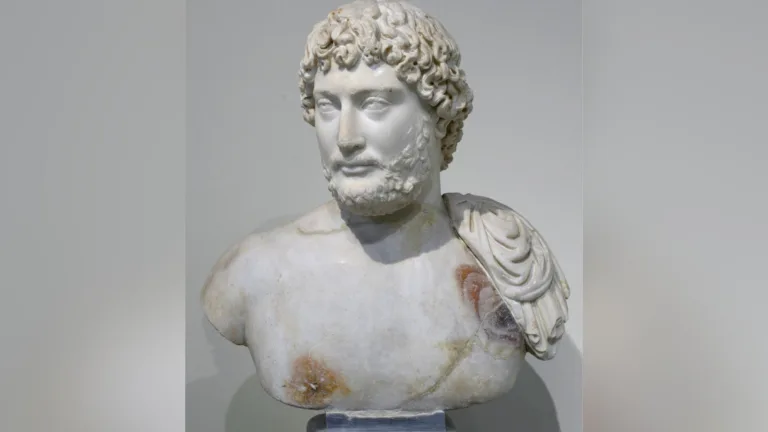
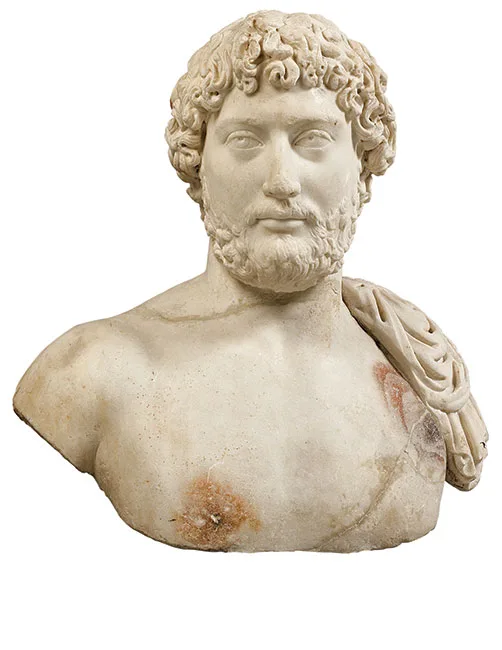
Echoes from the past: Bust of the Roman Emperor Hadrian

0

In ancient Greece, the beard was an important symbol for men. It acted as a badge of virility; a sign of manliness. In the epics of Homer, the beard was treated with such reverence that heroes would touch the beard of men they were addressing.

By the Classical era, the beard also had connotations with wisdom and became particularly associated with the philosophers. Socrates, Plato and Aristotles were all bearded. So prevalent was the connection that there was an ancient saying; “a long beard does not make a philosopher.”

In contrast, for much of Roman history, clean-shaven was the preference. Until the Roman emperor Hadrian (76-138 CE; reigned 117-138 CE) that is. Hadrian was the first Emperor to consistently wear a full-beard.

Some contemporary sources said this was to express his admiration for Greek philosophy and cultural traditions. Others, less-kindly, said the beard was a means of hiding his blemished facial skin. Either way, under Hadrian, the beard in Rome became popular too and the “Atticising” trend became a symbol of intellectual sophistication.

No other Roman emperor was so influenced by Greek culture, and in return no other Roman shaped Athens so much. In his thirties, Hadrian spent time in the city and was granted Athenian citizenship. When he was Emperor, he returned to the city several times, extolling Athens as the spiritual centre of Greek culture and as the cultural capital of the entire Empire.

His influence on Athens is still visible. The Arch of Hadrian (Hadrian’s Gate) still stands, while he oversaw the completion of the Temple of Olympian Zeus (Olympieion) which had begun more than seven centuries earlier. Water fountains and aqueducts were constructed under his reign and the Theatre of Dionysos modified. Hadrian’s Library, of which the western wall still stands, was constructed just to the north of the Agora under the shade of the Acropolis.

So, of course, it is not surprising that statues of the bearded Emperor citizen are common in Athens as are representations of his (clean-shaven) young Greek lover Antinous. Perhaps most famous is the idealised portrait bust of the emperor carved from Pentelic marble and now in the National Museum of Athens, showing the emperor with his Greek beard. It was found near the Olympieion.

Just as impressive is the broken colossal statue of the emperor, now in Piraeus Museum and found near Roman baths in the port city in 1963. It too is made from Pentelic marble and the bearded head survives to just over 1.48 metres, but the statue is estimated to have stood at more than three metres high. Another colossal portrait with an oak wreath was also likely found in the Olympieion.

Perhaps there are more bearded portraits waiting to be found in Athens.
See more here: https://www.namuseum.gr/en/collection/romaiki-periodos/

Greek tax authority releases step-by-step guide for expatriates

0

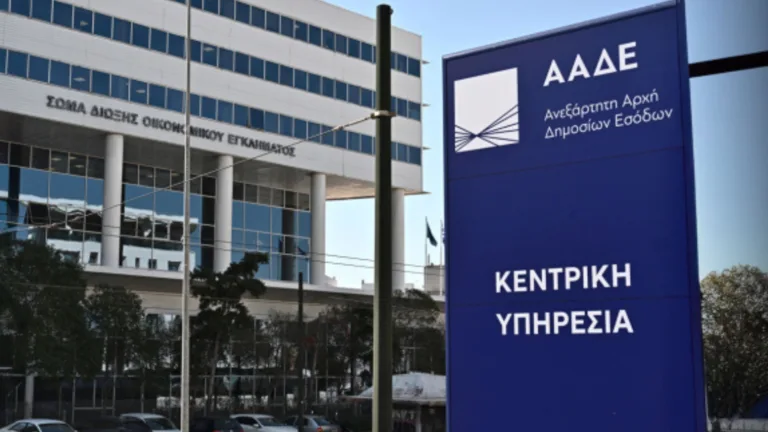
The Independent Authority for Public Revenue (AADE) has released a new practical guide aimed at addressing some of the most common tax-related issues faced by Greeks living permanently abroad who continue to have obligations in Greece, according to en.protothema.gr.

The guide sets out, step by step, how expatriates can obtain a tax identification number (AFM), access TAXISnet and myAADE, submit income tax declarations, and understand what applies to property ownership, vehicles and tax residency. It also outlines special tax regimes for pensioners, employees returning to Greece and investors

According to the guide, the starting point for any interaction with the Greek tax system is registration with the tax authorities. The issuance of an AFM, activation of digital access codes and entry to myAADE can now be completed remotely, including identification via video call, eliminating the need for a visit to a local tax office. Alternatively, taxpayers may appoint a tax representative in Greece through a power of attorney and a signed acceptance declaration.

A central section focuses on tax residency. Individuals who live permanently abroad may apply electronically to transfer their tax residency outside Greece by submitting form D210. Once approved, they are no longer taxed in Greece on their worldwide income. However, income originating in Greece—such as rent, pensions, interest, dividends, royalties or occasional employment—must still be declared, even by foreign tax residents. Simply owning property without income or a non-operational vehicle does not automatically trigger a filing obligation.

The guide also highlights double taxation treaties, stressing the importance of providing a tax residency certificate from the country of residence to avoid being taxed twice. It further explains preferential tax regimes for returning pensioners, incoming employees and investors, all of which require timely applications.

Finally, AADE emphasizes the importance of digital services, noting that most procedures can now be completed online, helping expatriates avoid long-standing bureaucratic complications.

See the detailed guide here

Source: en.protothema.gr