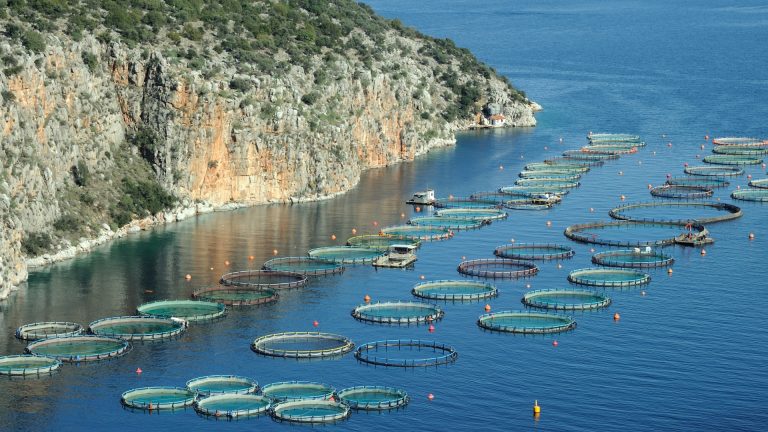
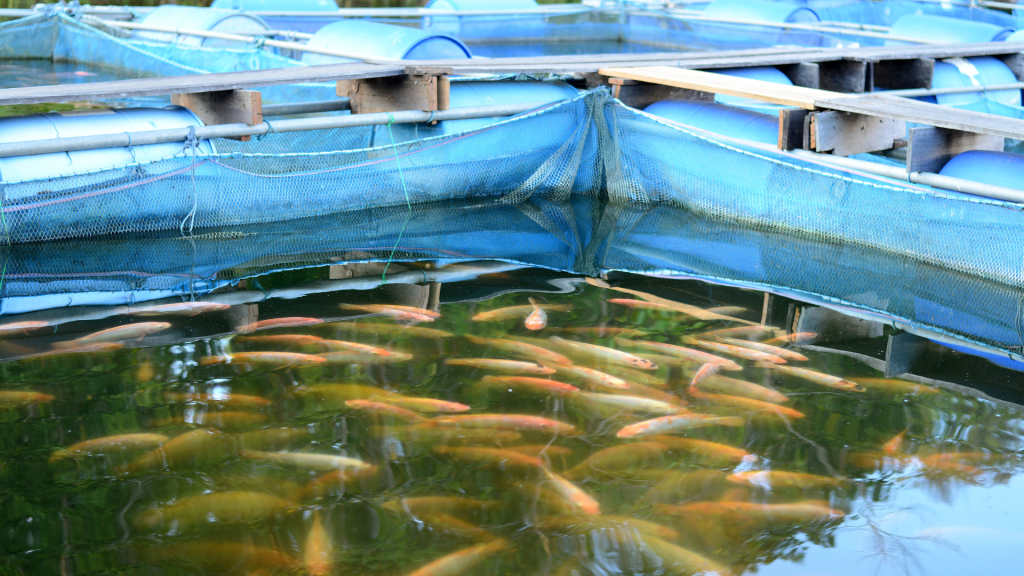
Residents on the Greek island of Poros are rallying against the multimillion-euro plan to expand fish-farms on the small island by 28 times.
Poros, the popular island in the Aegean Sea, is within an hour ferry ride from Athens and attracts eco-tourists from around the world annually because of its pine forests and gorgeous coastlines.
The company behind the fish-farm plan is Valencia-based Avramar, Europe’s leading producer of farmed fish which also owns 70 percent of Greece’s fish production.
The plan is set to expand the island’s four existing fish farms by 28 times, covering over 25 percent of land and sea on Poros. It is predicted the annual fish production within five years will go from 1,000 metric tonnes to over 8,000.
Locals are opposed to the fish farm on Poros claiming it will have a devastating impact on the environment and the local tourist economy.
Fish farming risk destroying underwater ecosystems.
Poros local, Katerina Sakelliou, who owns Odyssey Centre, said locals were told back in 2020 as part of the government initiative, fish farms would improve the economy on the island and provide more work. However, there are only about 15 people employed by the four existing fish farms on Poros island out of 3,000 residents.
“Time has shown that the current farms employ very few local people, and have brought only contamination and damage to the environment,” Katerina said.
According to Euronews, the fish-farms also run the risk of destroying underwater ecosystems with waste food and faeces impacting wild fish, and further endangering European monk seals and Posidonia (seagrass) meadows.
Early this year, fish-farming was approved for the area of Xiromero, even though locals protested against the farms. It is unknown when the decision for Poros will be concluded, however, the fish farm proposal is part of the Greek government’s wider plan to expand aquaculture in the country.
Everyone knows about the beautiful yet touristy Mykonos and Santorini with the spectacular sunsets, blue and white domed churches and buildings, or the ancient ruins in Athens like the Acropolis, but why not switch it up this year and discover something new in Greece?
If this sounds like something you would be into, then here are five places you need to visit and why.
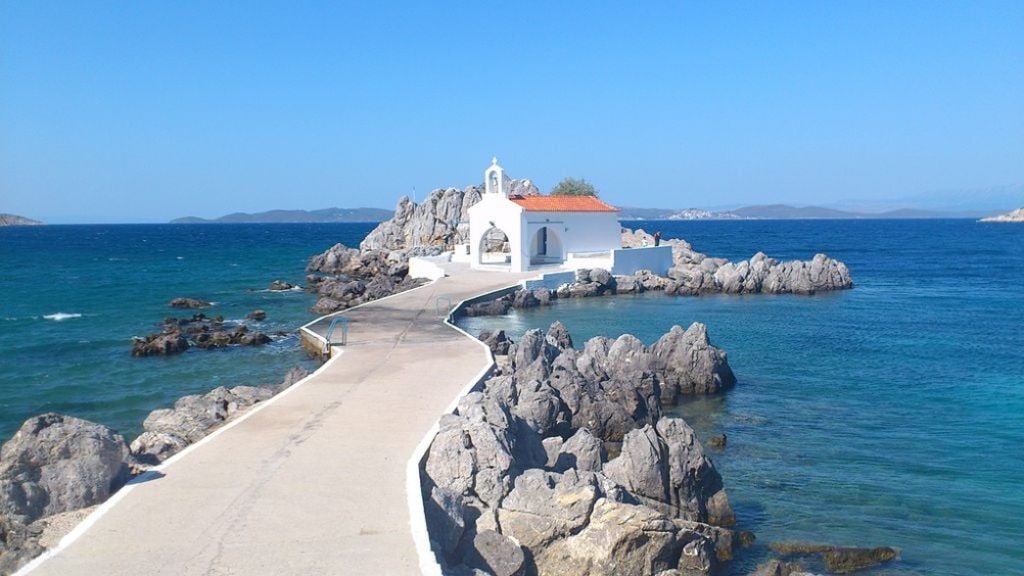
Lemnos
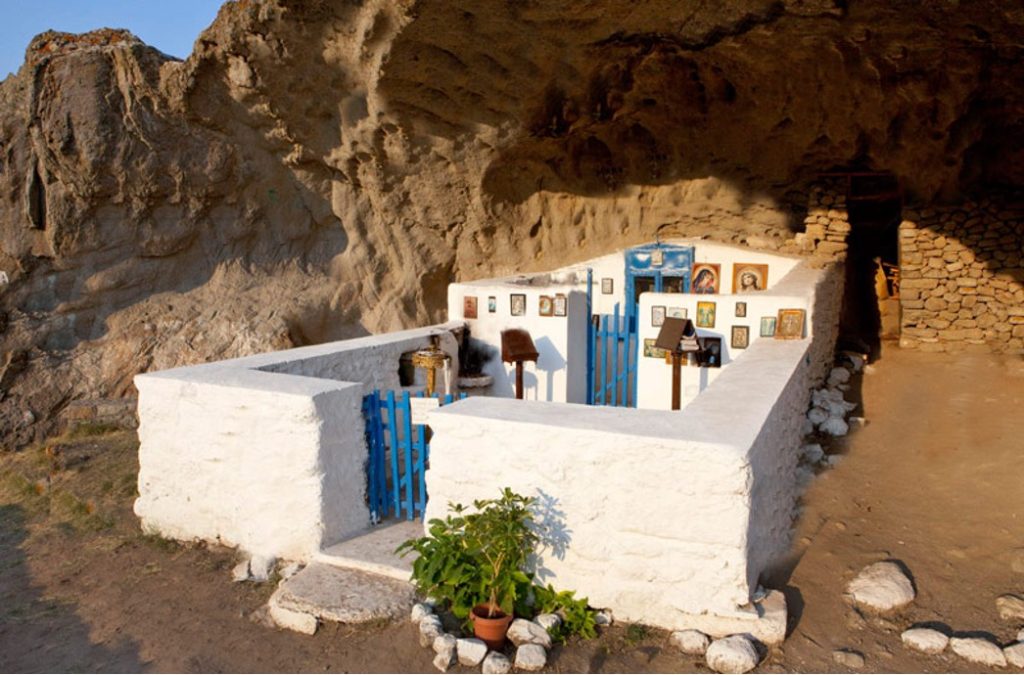
Panagia Kakaviotissa.
Located just a 9-hour ferry trip from Athens’ Lavrio port, or a 45-minute flight via Eleftherios Venizelos International Airport, Lemnos is a great destination if you’re after authentic Greece, without all the tourists.
It is the eighth largest island in the country with a rich history, an amazing night life, beautiful, picturesque churches and scenery, delicious authentic food and boasts five of 515 Blue Flagged beaches in Greece.
The island is home to the only sand dunes in all of Europe (which make you feel like you’re in the Sahara Desert), it has the only church in the world that’s without a roof and situated in the middle of a mountain (Panagia Kakaviotissa), and it has a special bond with Australia as you can visit the ANZAC War Memorial and follow the government sponsored ANZAC trail.
Not only is Lemnos more affordable than many other islands in Greece, but it is a gastronomy delight for foodies worldwide. Whilst there, make sure you try the island’s speciality dish of ‘kokkora me flomari’ and sweets called ‘Venizelika.’ Eat ice-cream whilst taking a stroll down the Romeiko Yiallo or walk up and down the picturesque agora and take a break and have a gyros at the Palio Limani.
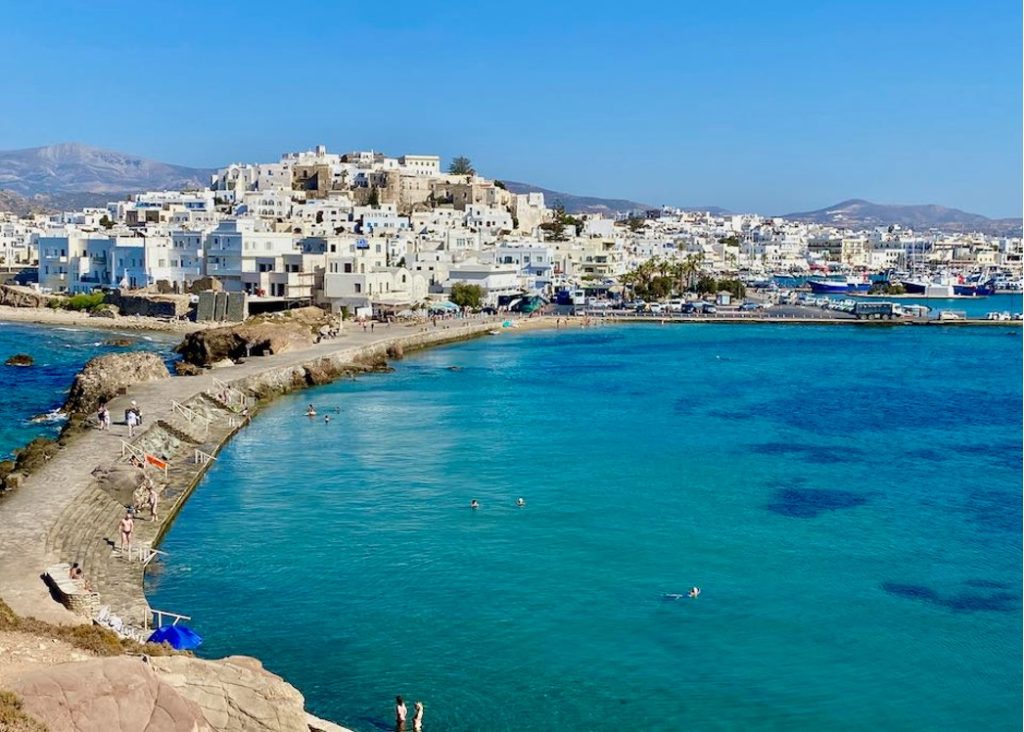
Naxos
Naxos.
Naxos is the largest island of the Cyclades in the South Aegean Sea. It is well known for its long sandy beaches, ideal for windsurfing and kitesurfing due to the wind conditions on the island.
It is also well known for its famous cheeses like arseniko and anthotiro and has the impressive ‘Portara’ which is the last remaining door of the temple of Apollo. Naxos has many fertile valleys, mountainous villages and rich history.
Although close to Santorini and Mykonos, Naxos is far less expensive, and food and accommodation is more affordable. Naxos has beautiful shallow beaches which makes it a great place for families with young children.
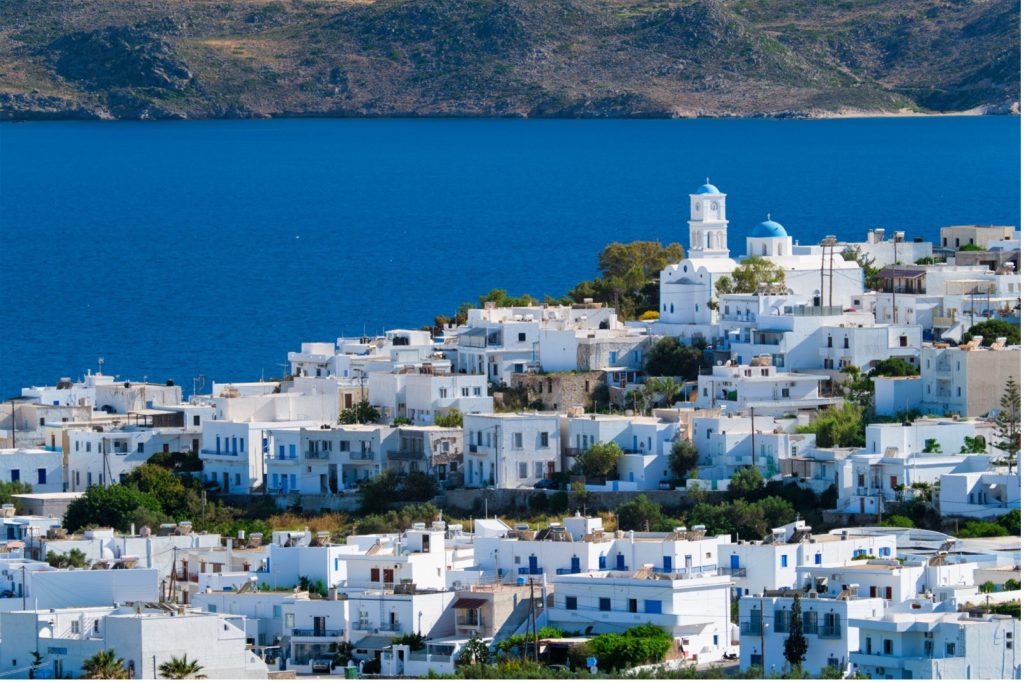
Milos
Milos.
Milos is another place you must visit in Greece, which is located in the Southern Aegean Sea, just north of Crete. The volcanic Greek island is best known for its beautiful landscapes and coastline which is home to more than 40 amazing beaches.
When visiting Milos, travellers can go snorkelling, kayaking and cruising to visit neighbouring islands and visit places such as ‘Kleftiko’ and the Sykia Cave. People can also visit the Konstantakis Winery and do some wine tasting and so much more. If you’re looking for an island to see, that’s nice and blue, Milos might just be the island for you.
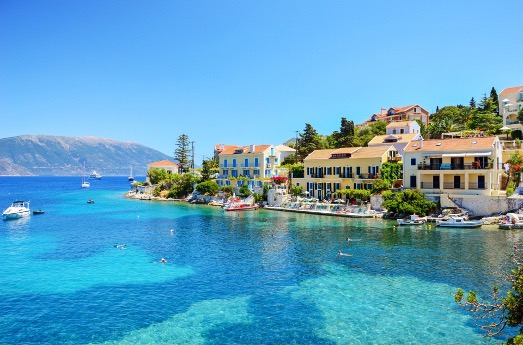
Kefalonia
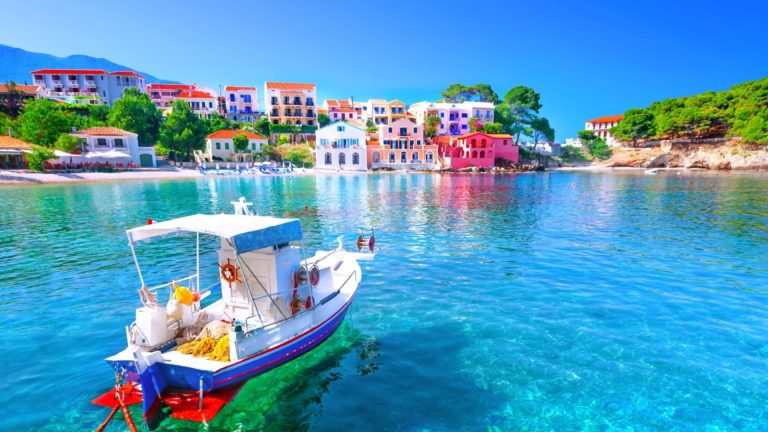
Kefalonia.
Kefalonia is the largest island of the Ionian Sea. It is known for its beautiful limestone cliffs and bright turquoise blue beaches. Myrtos Beach is a favourite.
Green loggerhead turtles can also be found in the capital of Argostoli early in the morning when the fisherman come back from their early catch.
At trip to a vineyard is a must on this island, as is a trip to Mellisani Cave, Friskardo and Asos. Kefalonia has something for everyone and is worth the visit.
Chios
Chios is the fifth largest island in Greece. Nestled in the Aegean Sea, you will find this beautiful island has a rich history featuring medieval villages and traditional architecture.
Also known as the ‘Mastic Island,’ Chios is most known for its ‘mastiha’ production, which comes from the hardened sap-like resin, harvested from the island’s Mastic trees. Many things are made from the mastic including chewing gum, drinks, alcohol, medicine, beauty products and it is also used in cooking. As you drive around the island you can witness orchards of these trees as far as the eye can see.
Chios also has beautiful traditional villages, each one unique to the next, and is a great family-friendly island to visit.
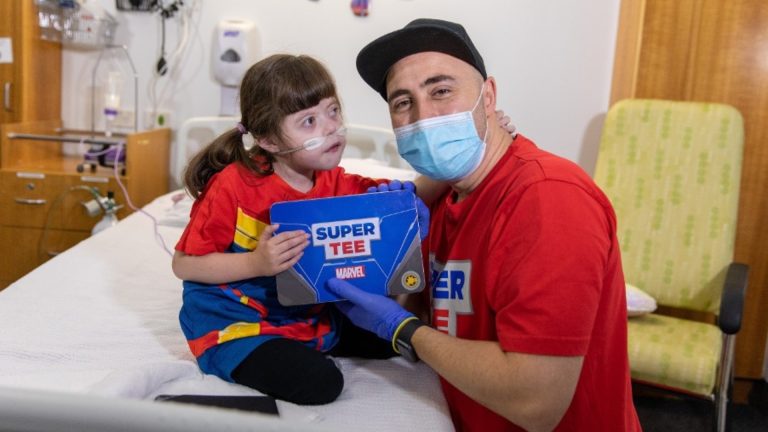
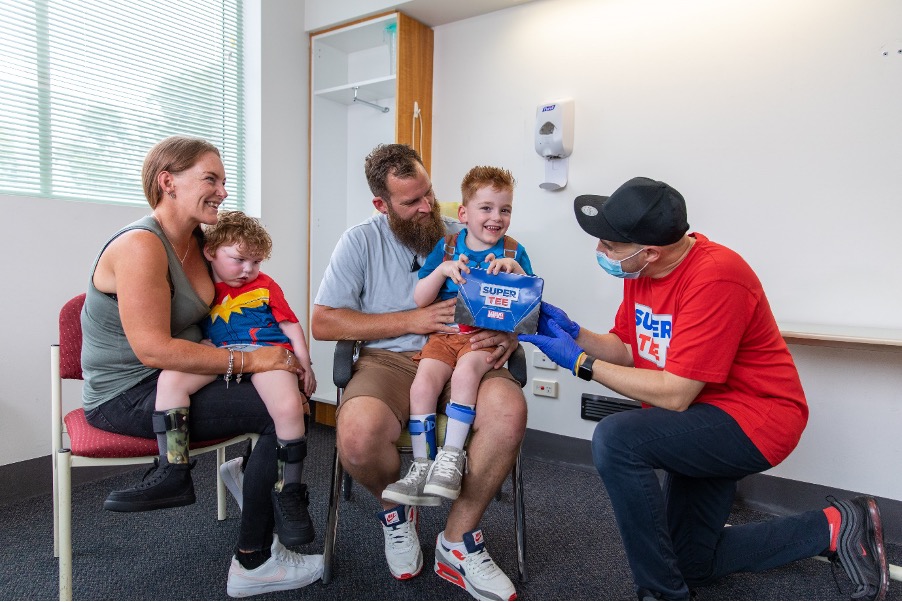
The Greek Australian founder of children’s charity Supertee, Jason Sotiris, is heading to Europe as he looks to introduce his specially designed medical garment to sick kids around the world.
Fortunately, Angela beat the odds and survived and Jason used the knowledge from his time supporting her in hospital to design a medical garment with easy access for drips and lines, disguised as a superhero costume.
Supertees bring smiles to people’s faces.
“I felt helpless not being able to do the simple task of putting clean clothes on Angela with IV drips, chest monitor cables and central lines making it impossible,” Jason said.
“So I designed something that was more user-friendly but also something to give sick kids a bit of extra strength through the power of imagination.”
While more than 13,000 Supertees have made their way into hospitals around Australia, it is Jason’s dream to make them available to children who need them in other parts of the world too.
Jason Sotiris (right) is the founder of Supertees.
“I’m hoping to meet with other national children’s charities willing to partner with me to help distribute and deliver Supertees to children’s hospitals,” Jason said.
“It would also be great to speak with potential corporate sponsors interested in supporting children facing serious health issues. It’s the kindness and generosity of others that has made it possible to introduce Supertee across Australia.
“To secure sponsorship to provide Supertees, free of charge, to sick kids around the world would be a dream come true.”
“If you deconstruct Greece, you will in the end see an olive tree, a grapevine, and a boat remain. That is, with as much, you reconstruct her,” said Odysseas Elytis, highlighting in his few but meaningful words how intertwined the olive tree is with Greece.
Olive cultivation is an integral part of Greek traditions. In Greece, the harvest takes place from November to March, while in Australia it occurs from May to September, depending on the ripening of the olives.
Student picking loves at Bentleigh Secondary College in Bentleigh, where olive trees are planted.
This harvest is a captivating and highly labour-intensive process with a long-standing history. Starting from the tree and ending at the olive press, the olives are transformed into the final product ready for consumption. Olive oil holds a significant place in every Greek household and is a staple on every Greek table.
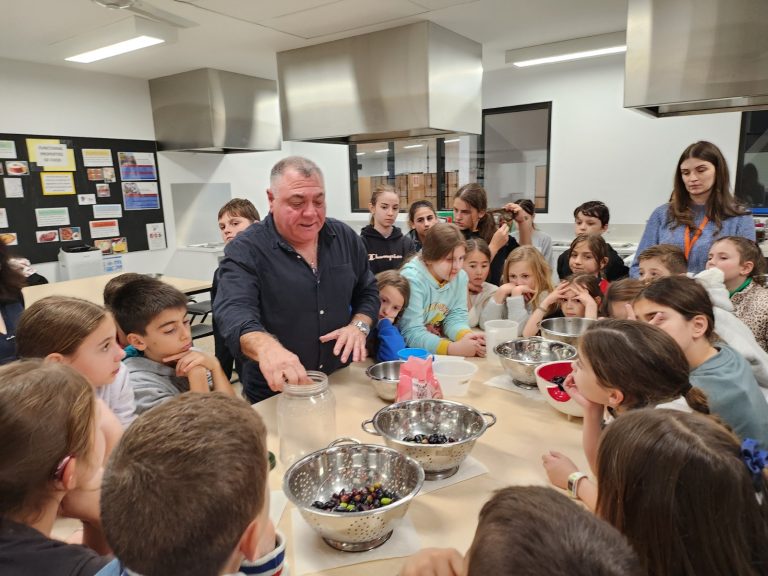
In an effort to allow students to experience this unique process and forge a deeper connection with Greek traditions and way of life, the Greek Community of Melbourne’s Language and Culture Schools organised an “olive picking” activity.
This event took place in the courtyard of Bentleigh Secondary College in Bentleigh, where olive trees had been planted.
The school yard echoed with children’s voices, smiles and above all, enthusiasm for this exciting task. Throughout the olive picking activity, the students asked a series of questions.
The collection of the olives from students.
At first, their movements were hesitant, but as the hours passed and with appropriate guidance, each child was able to make a significant contribution towards achieving the goal, which, on that day, was the collection of the olives.
Bentleigh Secondary College students making delicious olive bread in the classroom.
However, the gains went far beyond that. Through collaboration, the students gained a profound understanding of the work required to produce such an essential product like olive oil.
The olives that the children picked were prepared to be consumed by all the students. Additionally, the children had the opportunity to make their own delicious olive bread.
Students work together learning about olive oil production and making homemade olive bread.
As a reward for their efforts, apart from the knowledge and rich experience they acquired, each student received a generous slice of homemade bread adorned with oil and olives.
Overall, the activity was a resounding success, fostering teamwork, cultural appreciation, and a genuine understanding of the value and effort behind olive oil production.
Olympiacos Piraeus has been crowned Greek basketball league champion for the second consecutive year, completing the season’s domestic double after winning the Greek Cup title in February.
Olympiacos ended the final series with 3-1 over the arch-rival Panathinaikos Athens.
The champions had a 35-63 lead with 2:46 left in the third quarter in Game 4 of their best-of-five final series on Thursday night when the game was suspended, and never continued, due to fan violence.
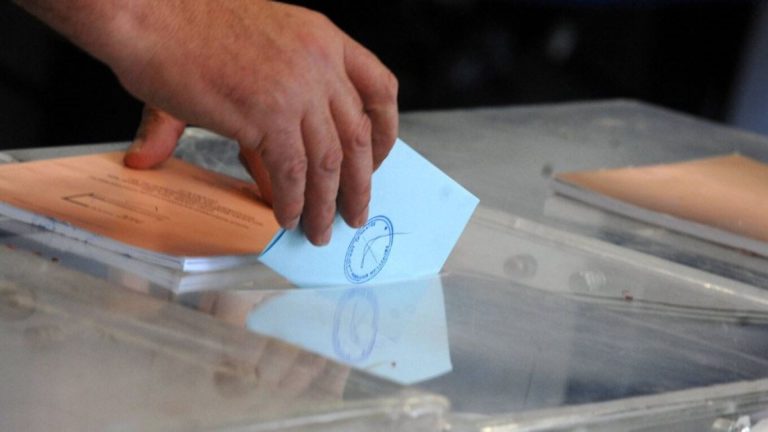
On Saturday, June 24, one day before the official date of the second national elections in Greece, Greeks of the diaspora who are registered in the special electoral rolls and have the right to vote from where they live, will go to the polls.
A total of 25,610 Greek nationals have registered to vote from abroad in the second ballot of Greece’s parliamentary election on June 25, the Interior Ministry said on Thursday. According to Protothema, there were more than 5,500 new registrations.
In Australia and New Zealand, Greek citizens, having successfully completed their registration through the platform of the Ministry of the Interior apodimoi.gov.gr, are invited to vote for the parliamentary elections on Saturday, June 24 from 7am to 7pm.
Greeks of diaspora will be able to vote again. Photo: osce
The electoral process for residents of New South Wales, Queensland, the Australian Capital Territory and New Zealand will be held at the premises of the Consulate General of Greece in Sydney (Level 2, 219-223 Castlereagh Street, Sydney NSW 2000).
The electoral process for residents of Victoria, South Australia, Western Australia and North Territory will be held at the premises of the Consulate General of Greece in Melbourne (37-39 Albert Road, Melbourne Victoria, 3004).
Voters should have with them a Greek Police Identity Card or a Greek Passport.
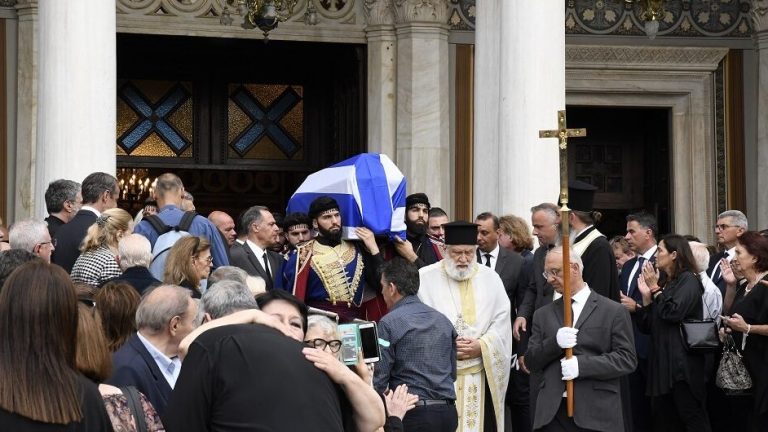
Hundreds of people attended Yannis Markopoulos’ funeral on Thursday at the Metropolitan Cathedral of Athens, ekathimerini.com has reported.
Greece’s President Katerina Sakellaropoulou, New Democracy leader Kyriakos Mitsotakis, the General Secretary of the Greek Communist Party Dimitris Koutsoumbas, PASOK leader Nikos Androuloukis, as well as dozens of representatives of the arts and politics world were present at the funeral.
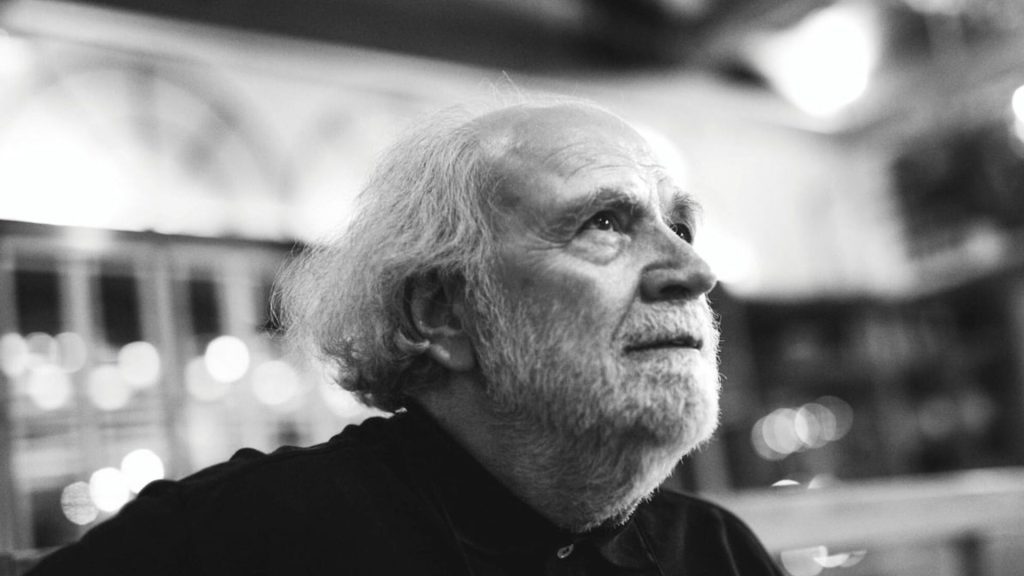
Yannis Markopoulos.
The eulogy was delivered by Androulakis at the request of the family, whilst Mitsotakis also delivered a speech and said Markopoulos was a “true citizen of the world who was part of our history for many years.”
Markopoulos was one of Greece’s most legendary composers. He died on June 10, 2023 after a long battle with cancer. He is survived by his wife Vasiliki and daughter.
All those arrested, who are said to be from Egypt, will face charges of forming a criminal organisation and illegal migrant trafficking.
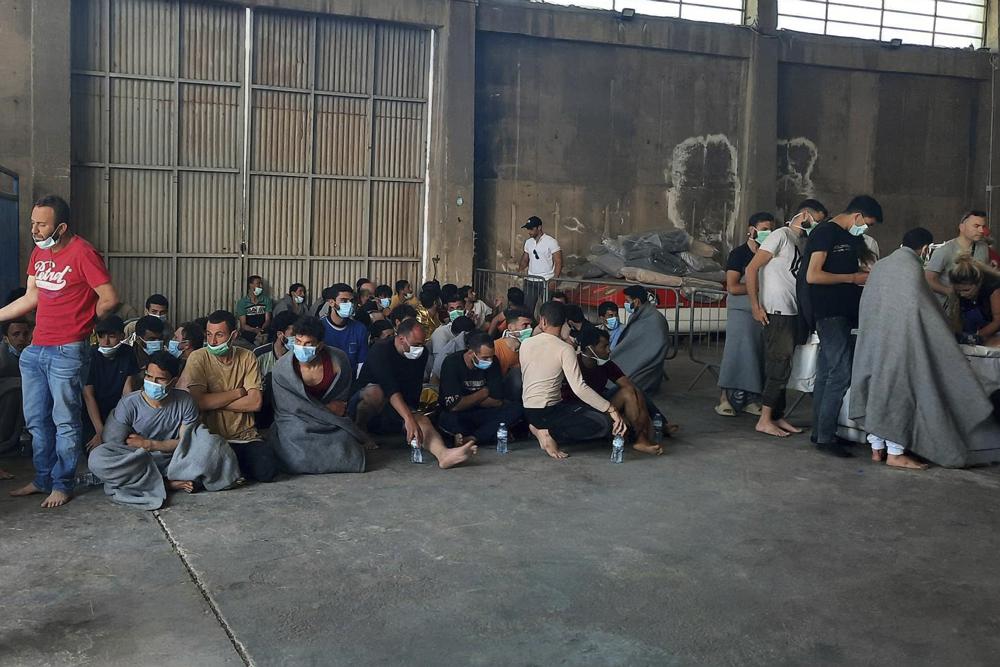
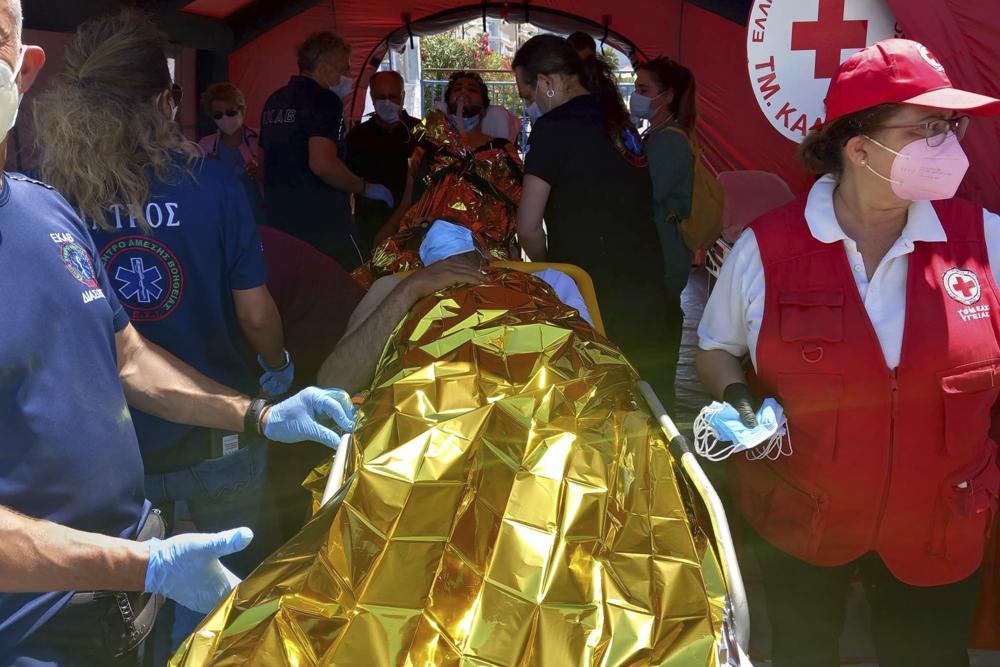
Survivors of a shipwreck sit at a warehouse at the port in Kalamata town. Photo: www.argolikeseidhseis.gr via AP.
News of the arrests comes as hopes of survivors dwindled and fears grew that hundreds more, including children, may have drowned inside the crowded vessel’s hold.
According to AP News, the trawler may have carried as many as 750 passengers, including women and children who were likely trapped in the hold as the vessel overturned and went down early on Wednesday. That could make the sinking one of the deadliest ever in the central Mediterranean Sea.
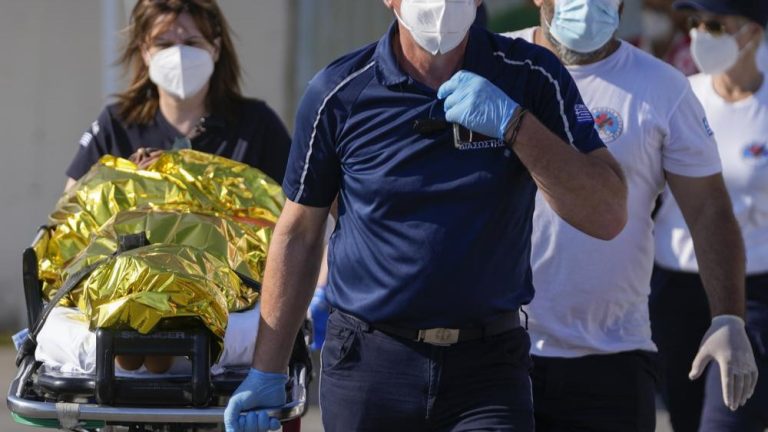
A huge search-and-rescue operation initially recovered 78 bodies and picked up 104 survivors — all men and boys. But no more have been found.
Survivors receive first aid after a rescue operation at the port in Kalamata town. Photo: www.argolikeseidhseis.gr via AP.
Greek authorities have been criticised for not acting fast enough to rescue the migrants. Greek officials argued the migrants repeatedly refused assistance and insisted on continuing to Italy. Legal experts said that was no excuse.
Relatives of the migrants gathered in the southern Greek port city of Kalamata to look for their loved ones on Thursday. According to state broadcaster ERT, people have come from Cyprus, the Netherlands and Germany.
The Greek Red Cross has launched a system to trace missing migrants and staff from the organisation’s Central Tracing Agency (CTA) and the Restoring Family Links (RFL) program have arrived in Kalamata.
People looking for their relatives can reach the CTA and RFL at on +30 210-5230-043 and +30 210-5140-440 and at tracingstaff@redcross.gr.
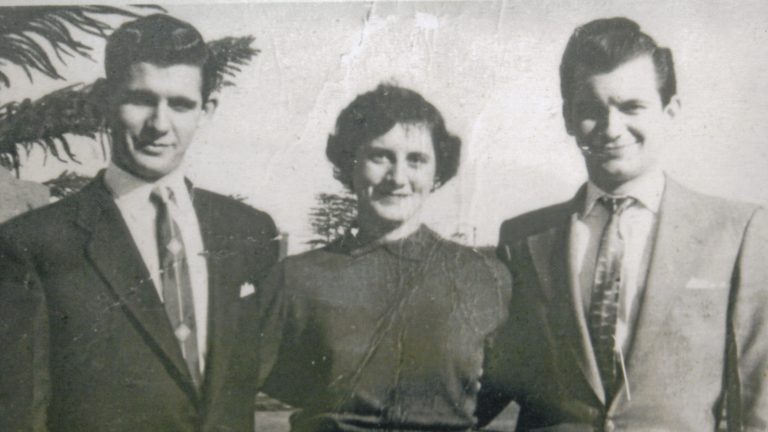
Everyone would know Peter Poulos as the son of Con Poulos, a Greek migrant who joined forces with his brother Denis in 1956 to form the Poulos Bros group – Australia’s leading wholesale fresh and frozen seafood supplier.
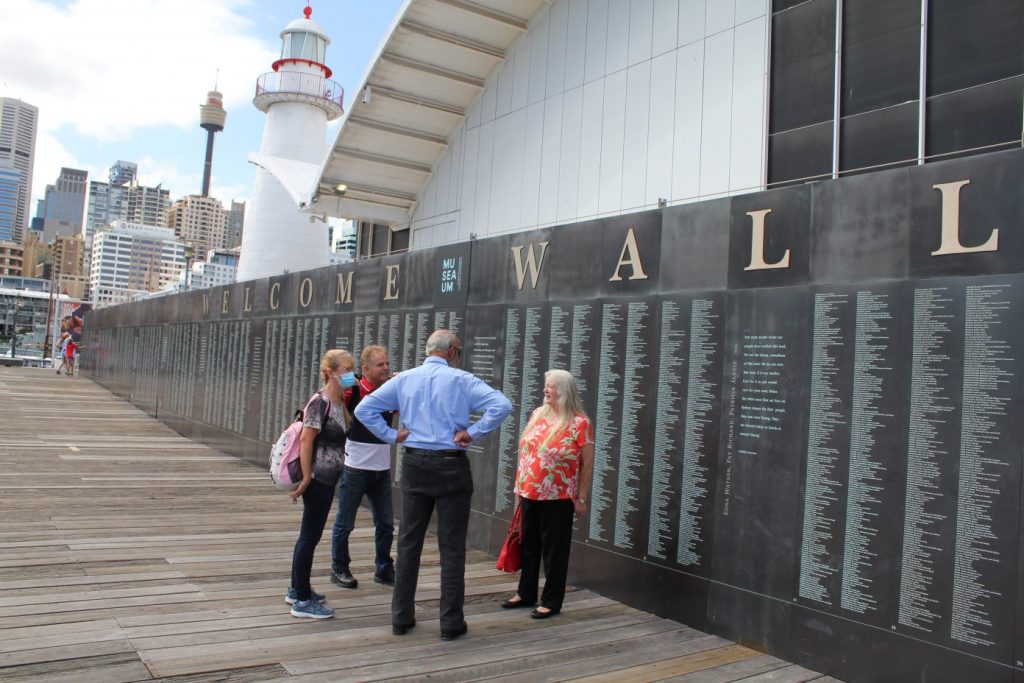
Located at the Australian National Maritime Museum in Sydney, the Monument is hard to miss.
It is a bronze-panelled wall that faces Sydney’s Darling Harbour and Pyrmont Bay, and features over 32,000 names from 138 countries including 1,938 from Greece – amongst these, the first ten Greek migrants to Australia.
The National Monument to Migration at the Australian National Maritime Museum. Photo: The Greek Herald / Andriana Simos.
Mr Poulos has always encouraged others to think about inscribing their own parents or grandparents’ name on the Monument.
“It is our absolute duty to remember our brave Kytherian migrant relatives who left their families and homes for the great unknown of a new life in Australia,” Mr Poulos said.
“It was then a ‘one-way’ ticket for them and without their tears and sacrifice we would not be here today.”
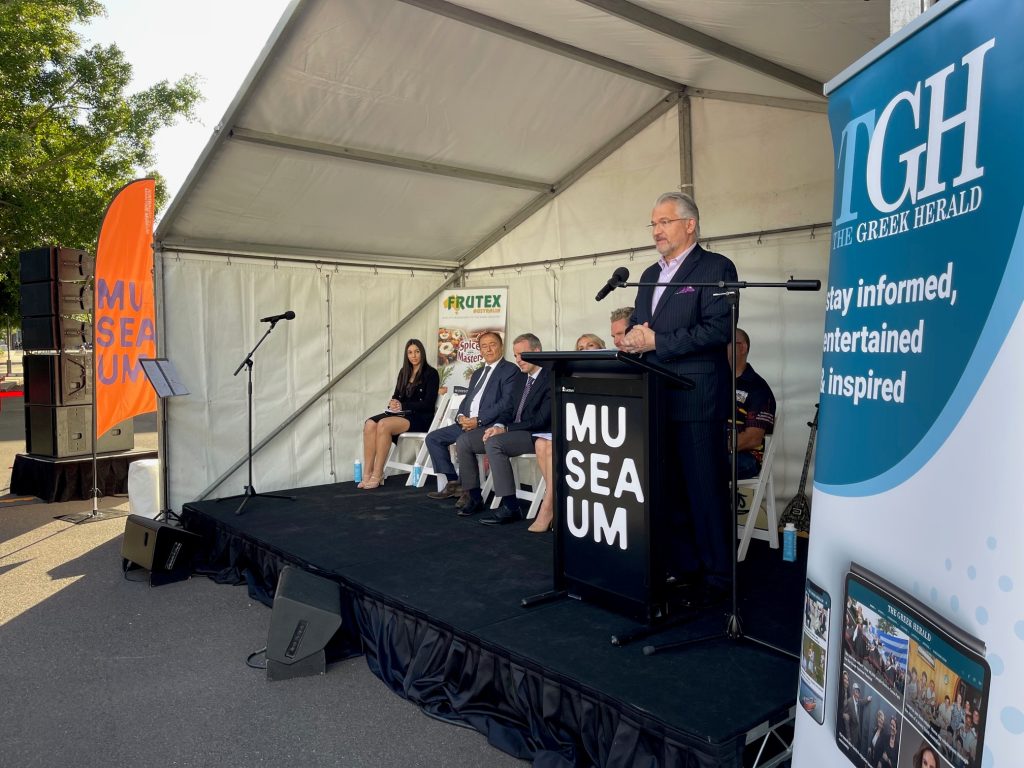
Peter Poulos speaking at an unveiling ceremony in May. Photo: The Greek Herald.
Mr Poulos’ father Con arrived in Sydney, Australia in 1952 to work in cafes. His brother Denis had migrated earlier in 1951 and was working on banana plantations and cane fields in Gympie, Queensland. He later joined Con in Sydney and they started a business partnership in 1956 in a fish and chips shop in Rydalmere.
“The business partnership Con and Denis forged as the Poulos Brothers, changed their lives forever and that of our entire family across three generations,” Mr Poulos said.
“Their legacy lives on today and the Poulos Bros business is a little bigger now than a suburban fish and chips shop and employs over 120 people from more than 16 different countries as the Poulos Bros group recognises all migrants need a chance to succeed.”
To honour your own loved one on the National Monument to Migration, the Museum requires a tax-deductible gift of $500.
The Museum then requests a brief story about each person being honoured on the Monument for publication on its website. The Museum is amassing a selection of stories from these migrants; stories that, in turn, build the history of modern Australia.
Honour our immigrants on Australia’s National Monument to Migration at the Australian National Maritime Museum. Register by June 20 to be part of the next unveiling ceremony in November. To register please visitthis website or call (02) 9298 3777.
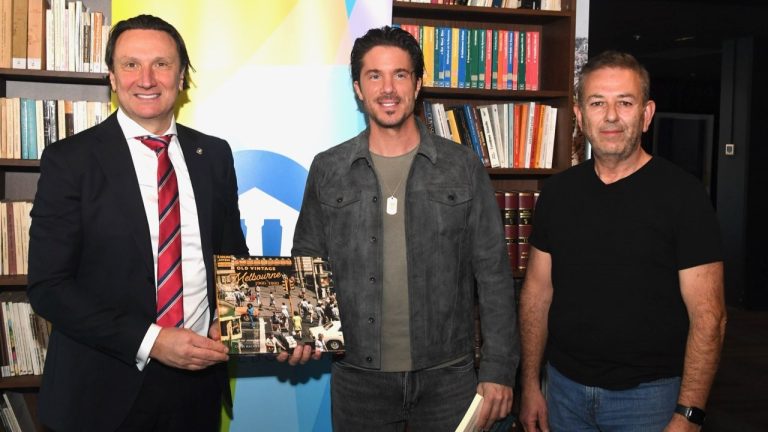
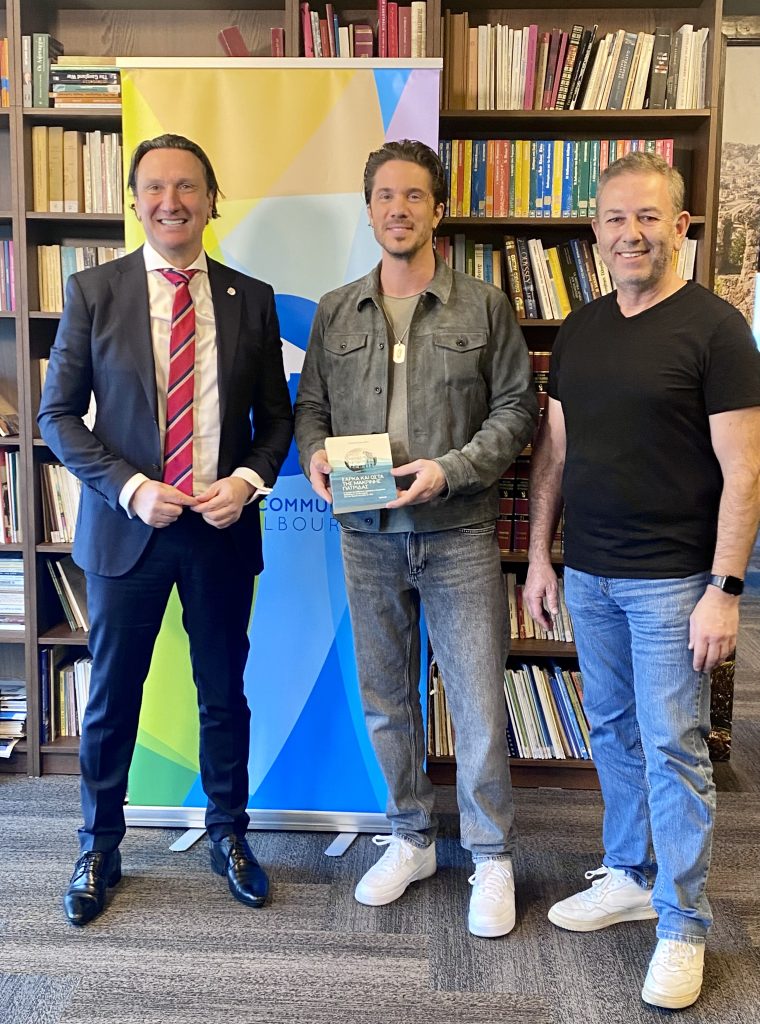
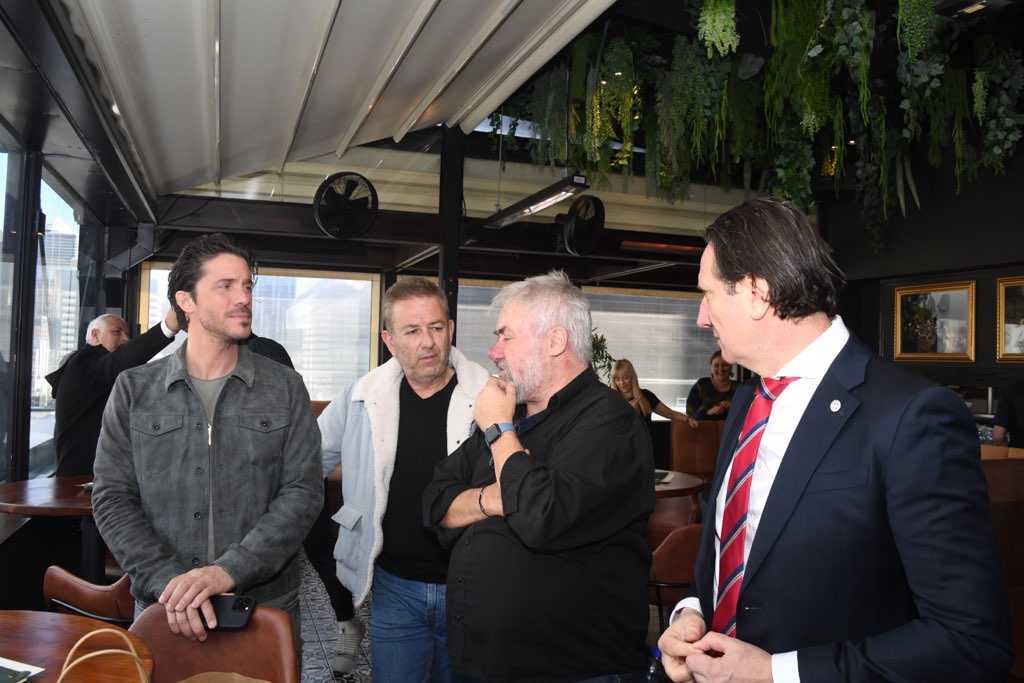
Nikos Oikonomopoulos, a popular modern Greek laiko singer, visited the Greek Community of Melbourne’s (GCM) Greek Centre this week.
Upon his arrival, he received a warm welcome from the President of the GCM, Bill Papastergiadis OAM, and GCM Board Member, Christos Sikavitsas. Also present to greet him were Jorge Menidis, the Director of the Greek Centre, Antonia Tsamis, the Public Relations Manager of GCM and the GCM staff.
Nikos Oikonomopoulos visits the Greek Centre.
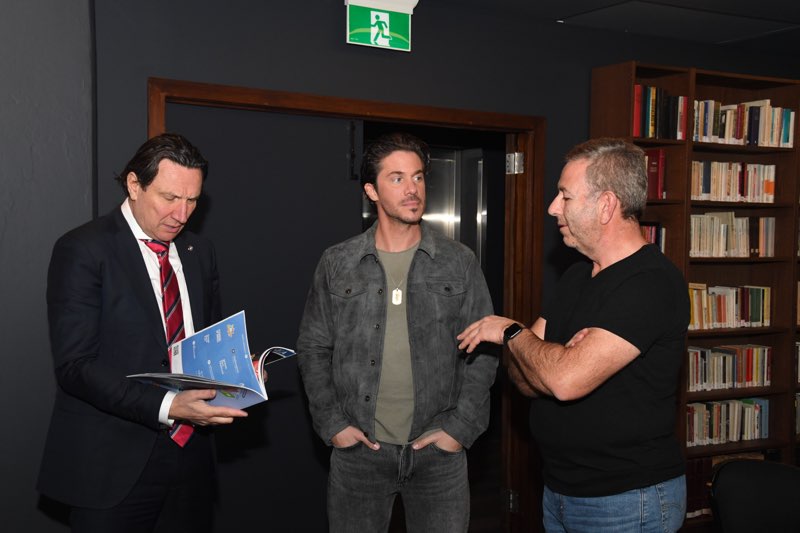
During his tour of the Greek Centre, Oikonomopoulos immersed himself in the rich history and cultural significance of the GCM. Through his visit, the singer exemplified the enduring power of music to bridge cultures and create lasting connections.
The delegation showed the singer the replica of the Parthenon Marbles that had been installed on the Greek Centre balcony facade.
Nikos Oikonomopoulos tours the Greek Centre.Nikos Oikonomopoulos visits the Greek Centre.
They explained that the Frieze is a replica carved from marble as close to the original works as has been endorsed by the Greek Ministry of Culture and it took over 18 months to be hand carved.
“His genuine interest in the Greek Community of Melbourne’s activities and his congratulations to their efforts showcased his appreciation for preserving and promoting Greek heritage. We are grateful for his visit and the positive impact he has left on our community,” Christos Sikavitsas said.