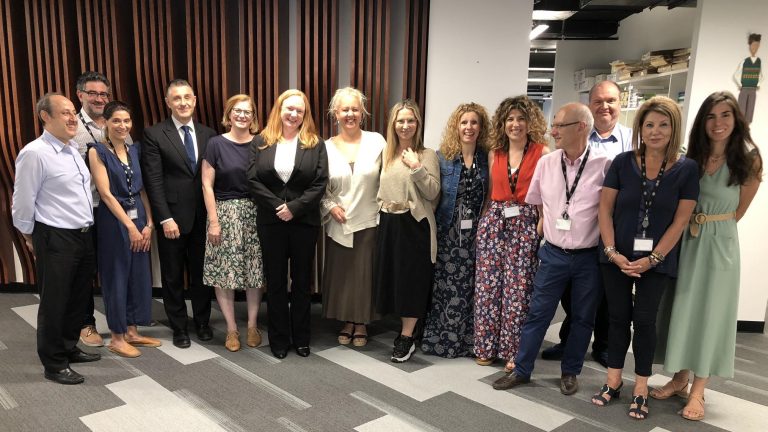
“I am happy to take up my duties as Ambassador of Australia to Greece, Bulgaria and Romania! It is a high honour and I look forward to starting this new diplomatic journey,” she said in a post on Twitter.
#firstdayatwork Thrilled to take over as 🇦🇺 Australia’s new Ambassador-Designate for 🇬🇷🇧🇬🇷🇴! Looking forward to strengthening bilateral relations & people-to-people links and hoping to engage with you on #twitter on all things Australia & the exciting projects I will work on. pic.twitter.com/Mh1i8r18Nh
The new Ambassador is taking over the diplomatic reigns from outgoing Ambassador Arthur Spyrou.
Ms Duncan’s arrival in Greece comes just a few weeks after she met with the Publisher of The Greek Herald Dimitra Skalkos and Digital Editor Andriana Simos last month.
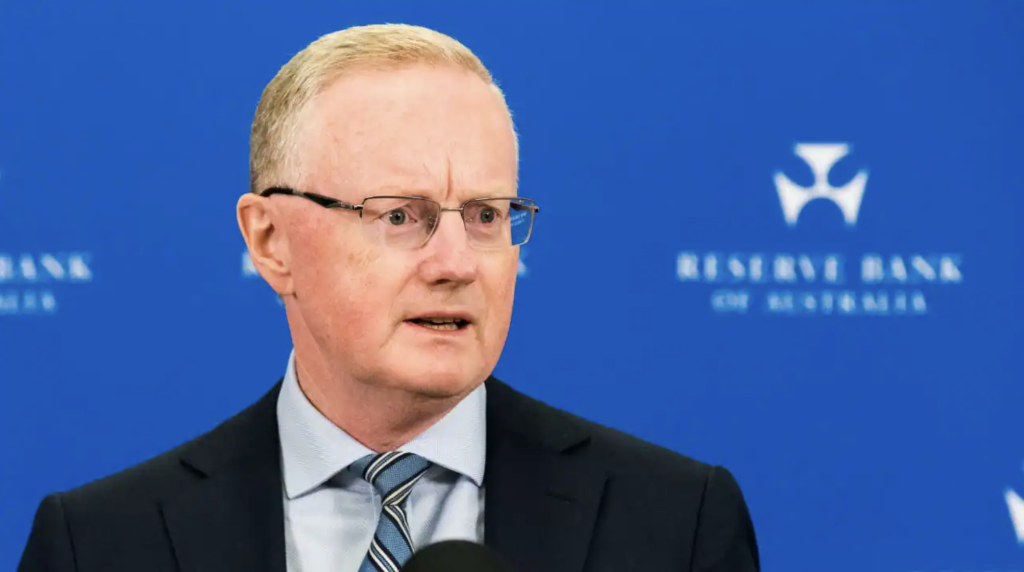
This recommendation comes ahead of the RBA’s formal decision, which is due to be made this month.
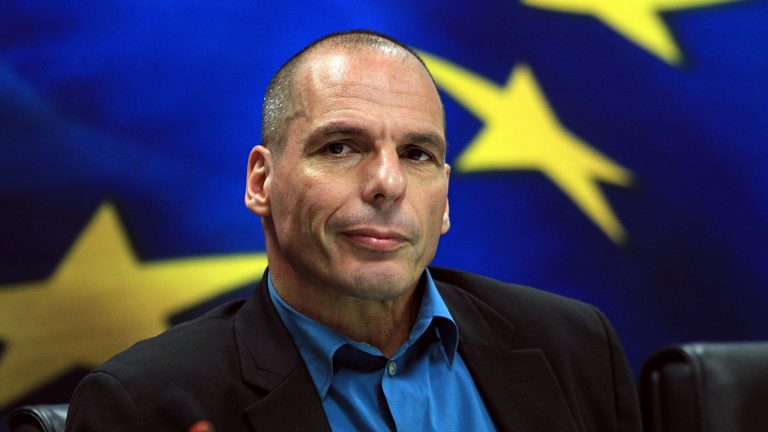
Ioannis “Yanis” Varoufakis served as the Greek Minister of Finance under Prime Minister Alexis Tsipras from January to July 2015, where he led negotiations with Greece’s creditors during the government-debt crisis.
Current RBA governor Philip Lowe. Photo: SBS
Philip Lowe is the current Governor of the RBA with his seven-year term expiring in mid-September 2023.
Federal Treasurer Jim Chalmers will consider renewing Mr Lowe’s contract, or a new RBA government will be appointed.
A new draft law aimed at updating voting conditions for Greeks abroad is set to enter public consultation on Monday.
Speaking in Parliament on Saturday, Greece’s Prime Minister Kyriakos Mitsotakis said the proposed legislation seeks to remove restrictions and grant voting rights to all registered Greek expatriates from their country of residence.
Οι πολίτες μας έδωσαν ισχυρή εντολή να προχωρήσουμε στον δρόμο των μεγάλων αλλαγών που έχει ανάγκη η χώρα. Σας υπόσχομαι πως θα είμαι Πρωθυπουργός όλων των Ελλήνων. Γιατί τα προβλήματα δεν έχουν χρώμα. Και οι πολίτες πρέπει να αισθάνονται το κράτος δίπλα τους σε κάθε δυσκολία. pic.twitter.com/wAyAXRNLTz
The proposed law comes after Greeks living abroad were able to vote from their place of residence for the first time during the general elections of May and June 2023.
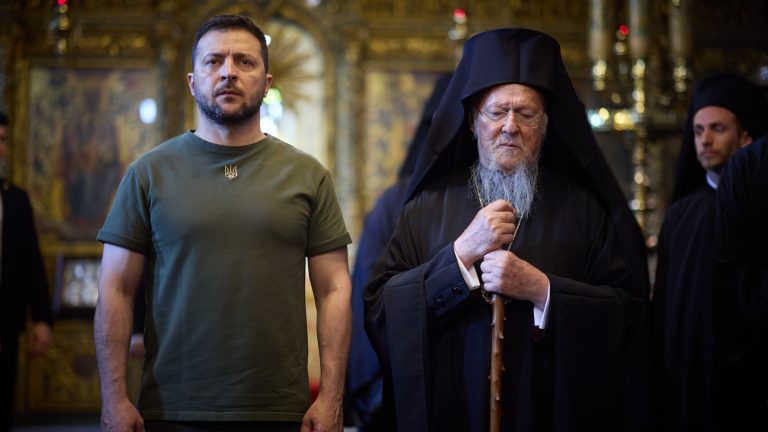
Ukrainian President Volodymyr Zelenskyy met with Ecumenical Patriarch Bartholomew, the spiritual leader of the Orthodox Christian world, in Istanbul on Saturday, as part of his official visit to Turkey.
Zelenskyy participated in a memorial prayer for the victims of the war in Ukraine at the Cathedral of St George in the district of Phanar.
A memorial prayer for the victims of the war in Ukraine in the Cathedral of St. George in Phanar, Istanbul.
I thank Ecumenical Patriarch Bartholomew for the spiritual support of Ukraine and Ukrainians, for prayers for peace for our entire land, for all our people. pic.twitter.com/u3hF0iH58U
— Володимир Зеленський (@ZelenskyyUa) July 8, 2023
“I thank Ecumenical Patriarch Bartholomew for the spiritual support of Ukraine and Ukrainians, for prayers for peace for our entire land, for all our people,” Zelenskyy said in a statement on Twitter.
Earlier, the Ukrainian leader met with Turkish counterpart Recep Tayyip Erdogan with whom he discussed the latest developments in the war, the Black Sea grain deal and ensuring peace and stability in the Black Sea region. Erdogan said Ukraine “deserves NATO membership.”
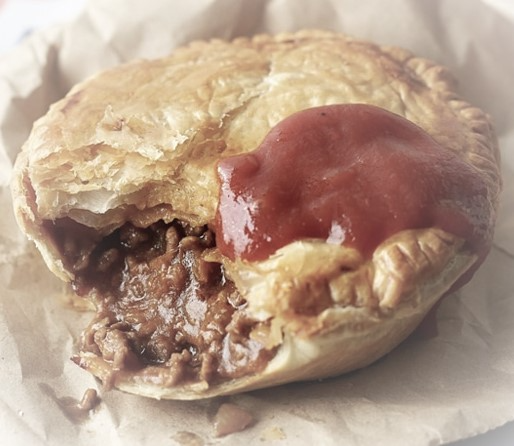
Australian pies are still a big deal to me, even after living in Greece for over 20 years. More so than fish ‘n’ chips in fact. I crave pies, I fantasise about them. They are the stuff of my childhood, of my connection to independence. Yes, independence! Leaving my mother’s cooking apron strings and experiencing Aussie tastes; a new world opening up to me.
I’m talking about meat pies, of course. I know Australia’s gone fusion and trendy and there are all sorts of pies out there, but me, I’m a diehard meat pie girl.
Pie vs fish ‘n’ chips? Pies win for me!
When I was a preschooler in the 1970s in Australia, my mum would take me to a local home-made cake and pie shop for a ‘different’ sweet treat like a lamington or jelly slice. I though, would always choose a meat pie.
Then came bliss at the school canteens with their availability of pies. Those jokes of rats and buttons in these mass produced rather than home-made pies did not ruffle me one bit. I can say these malicious rumours suited me, as unlike my sandwiches, no one wanted to share my pies!
Since living in Greece and being a Greek, I have gone native with Greece’s ‘fast food’ – souvlaki, which I adore. Who doesn’t?! But I’ve always felt the nagging and clawing sensation that: “It’s high time for a pie.” This has gone on for years.
I’ve searched far and wide for a pie here, mainly in Athens, Greece, that is at least similar to the Aussie meat pie that I grew up with. I may have just found it – well, the closest thing to it – in my perhaps time and reality-altered Greek residency.
To be fair, there are a few English pub style restaurants here that offer pies on their menus, and stores selling British foods – but I’m talking about take-away pies. Pies that don’t cost a fortune and that you can eat on the walk or run wherever and however you want. Pie freedom that comes with being able to sit on a bench somewhere or take it home (when no other family member threatens to want some) and make all sorts of sounds and facial expressions when getting stuck into it. Plus, you can add sauce in the measure and style you want – if you want, or ‘ketchup’ as it’s called here in Greece.
I never miss a chance to extol the virtues of the Australian pie to anyone who’ll listen here in Greece. Greeks respond, “aah, you’re talking about pita,” while American expats smile with their usually dazzling white teeth, making comments like, “yeah, I do love an apple or pumpkin pie.” Then there’s those from the UK, who talk to me about pork pies and Christmas mince pies. Oh, it’s exhausting! They just don’t understand like we Aussies do.
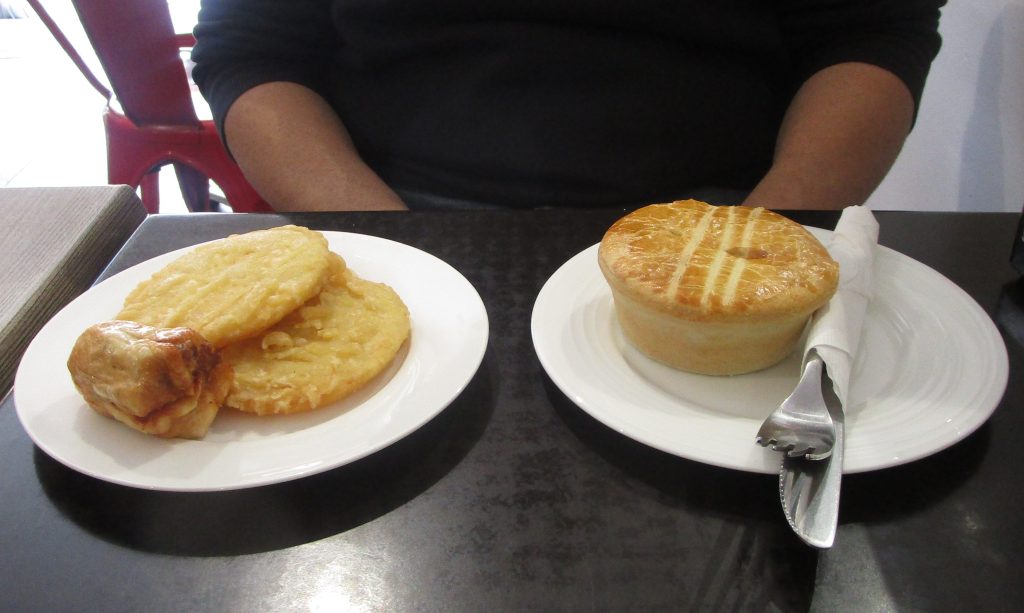
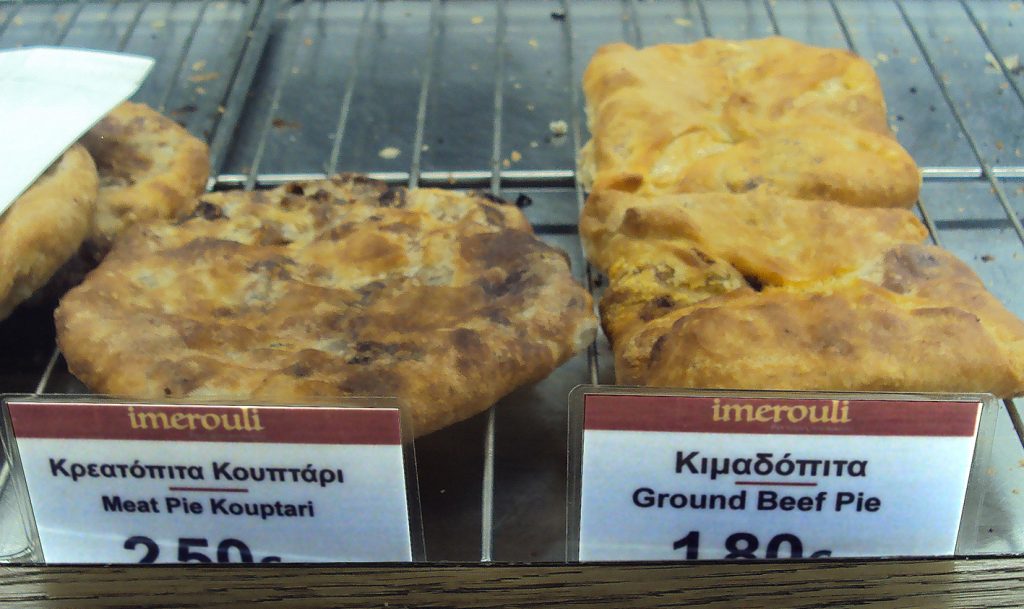
So even though I have tried various ‘kreatopites’ (meat pites) or kimadopites (mincemeat pites) here in Greece, they just don’t do it like an Aussie pie. Delicious they are, but not the same – especially the crust.
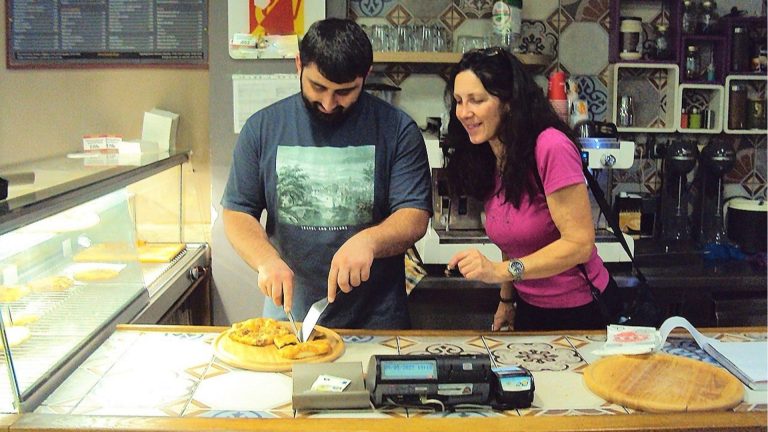
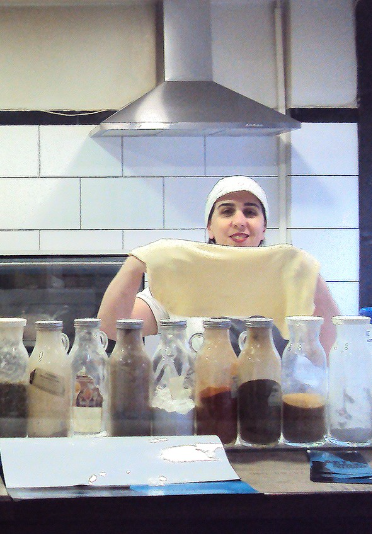
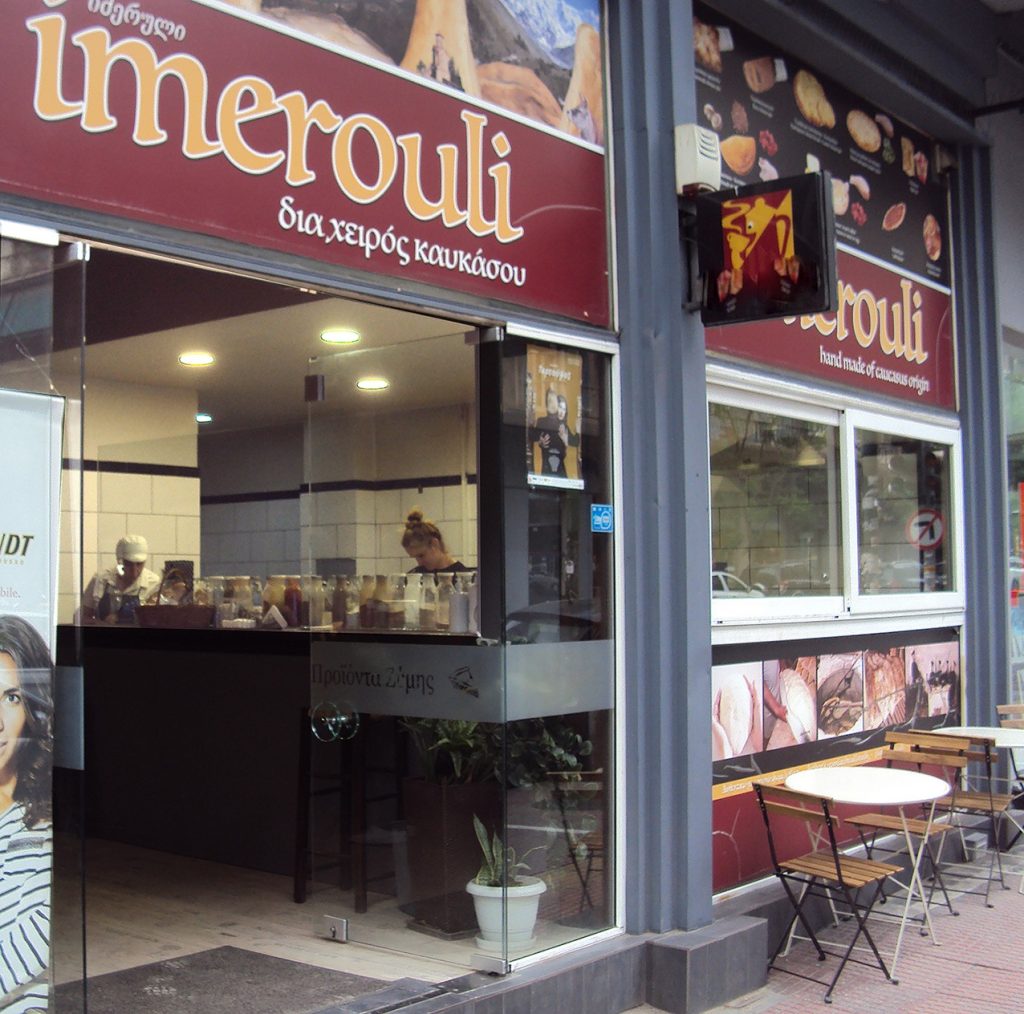
So, as I was out one day recently close to central Athens, earning a crust actually, I felt hunger pangs coming on and stopped at an unusually named shop “Imerouli” noticing they had pites on display but with a thicker crust. My pie mania overtook me in full force! I began my obsessive spiel about Aussie pies, followed by the employees amused looks, before choosing their minced meat pie or ‘kimadopita,’ at a very good price I might add.
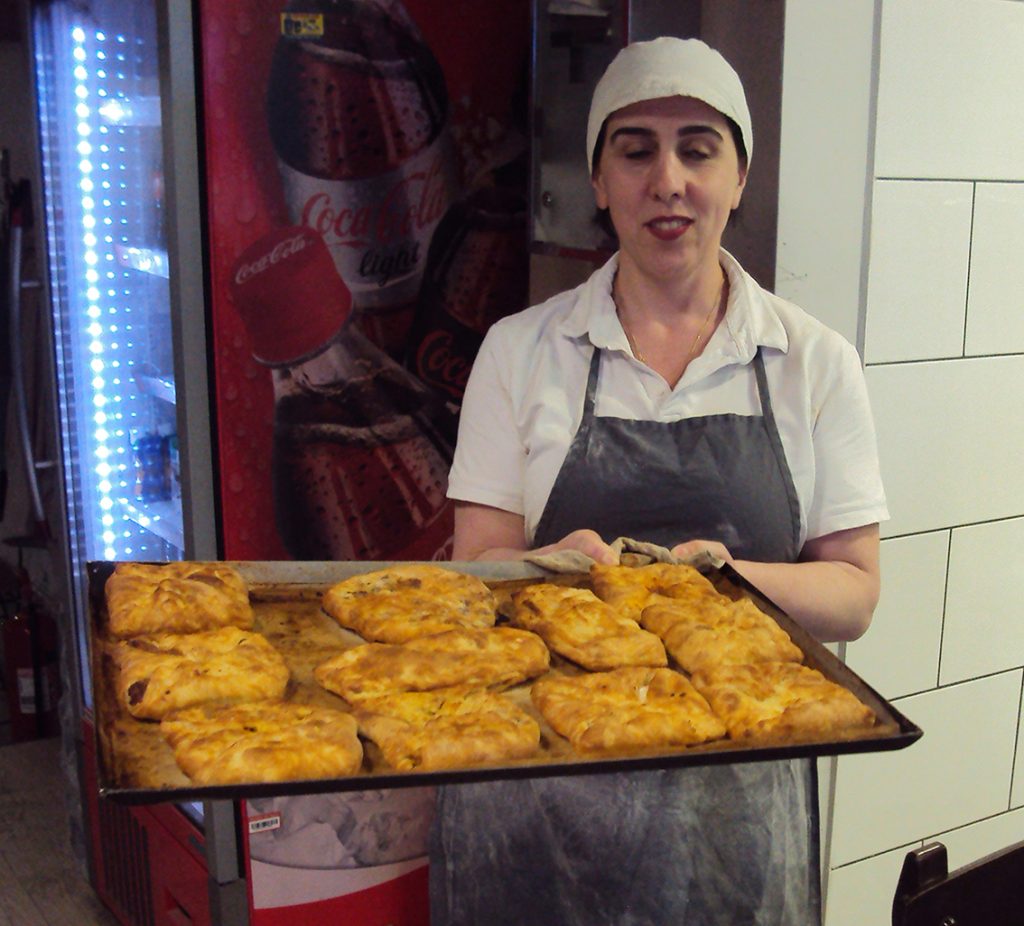
I bit into this pie and was transported back to my Aussie pie heaven, well, the closest to that in Greece. The crust was thick, the meat tasty and moist, the smell, texture and taste, well delectable; Aussie pie-like.
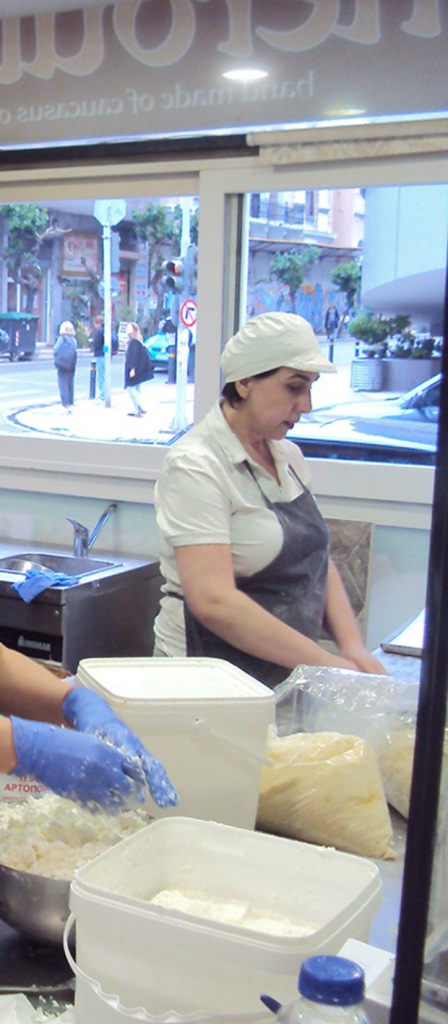
The store is owned by a Georgian family, migrants from after the fall of the USSR, who came to Greece in 2006, going through all the trials of migrant life, similar to those of our Greek parents in Australia. The team bake on the premises daily, in front of the customers very eyes, using fresh ingredients in their many pie variations based on recipes back home in Georgia with some adapted to Greek tastes.
Discussing this amazing find with friends and others, and implying it as my secret ‘find,’ I was and wasn’t surprised that some knew of it! And they were Greeks, whose passion there was the shop’s Georgian tyropita, the Imerouli Khatchapouri.
One friend in particular works at the Athens Archaeological Museum, a ten-minute walk away, and she told me all her colleagues love this ‘Imerouli’ take-away pita/pie shop, open since 2011. Its name, by the way, comes from the owner Hadoula’s home village in Georgia’s Caucasus region.
So I feel my pie seeking mission in Athens, Greece has been at last successfully accomplished, although… maybe not. It has been extremely sated though, to say the least. Thank you incredible Imerouli pie makers!
Imerouli is at 73 Tritis Septemvriou Street, Athens, Greece. Open every day from 7am (Sundays at 9am) until 8pm. They also deliver. Type online search Imerouli, for more details.
Have you ever wondered how you can enjoy the flavor and health benefits of the Mediterranean diet if you don’t live in the Mediterranean region and can’t get many Mediterranean products where you live? Scientists have not forgotten you. They have come up with an answer in the form of a “Planeterranean Diet” that adopts key concepts from the famous Med diet.
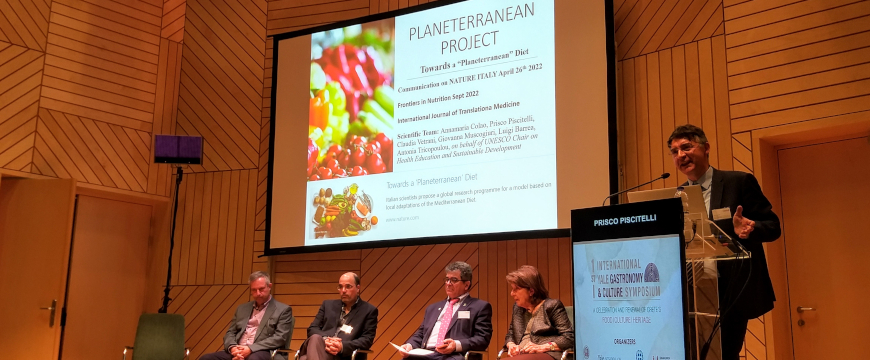
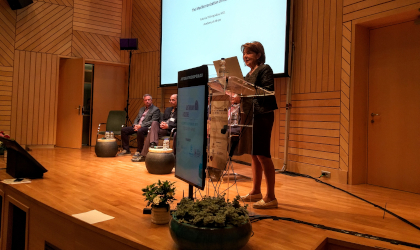
The “Planeterranean Diet” is defined as “the Mediterranization of local food systems: adaptation to a ‘locally produced, locally consumed’ diet” in the program of the 1st International Yale Gastronomy & Culture Symposium that took place in Heraklion, Crete May 3-4, 2023. One of the symposium’s most intriguing panels addressed the adaptation of a Mediterranean nutrition paradigm beyond its native region, and the way this can extend the Med diet’s benefits for human health and the environment to people around the world.
The 1st International Yale Gastronomy & Culture Symposium that took place in Heraklion, Crete May 3-4, 2023.
You have probably heard of the Mediterranean diet, since US News & World Report designated it “the Best Diet Overall” for six years in a row. This diet’s nutritional benefits are well known, and it offers even more. Referring to an article in The Lancet in her symposium presentation, Dr. Antonia Trichopoulou of the Hellenic Health Foundation explained, “in epidemiology, it is rare to have such consistent evidence of the beneficial effects” as what scientists have discovered regarding the Mediterranean diet. It is “a diet that maximizes longevity, improves health-related quality of life, and is ecologically sustainable and environmentally friendly.” A largely plant-based diet, its most common foods can be produced with limited water and substantial CO2 absorption.
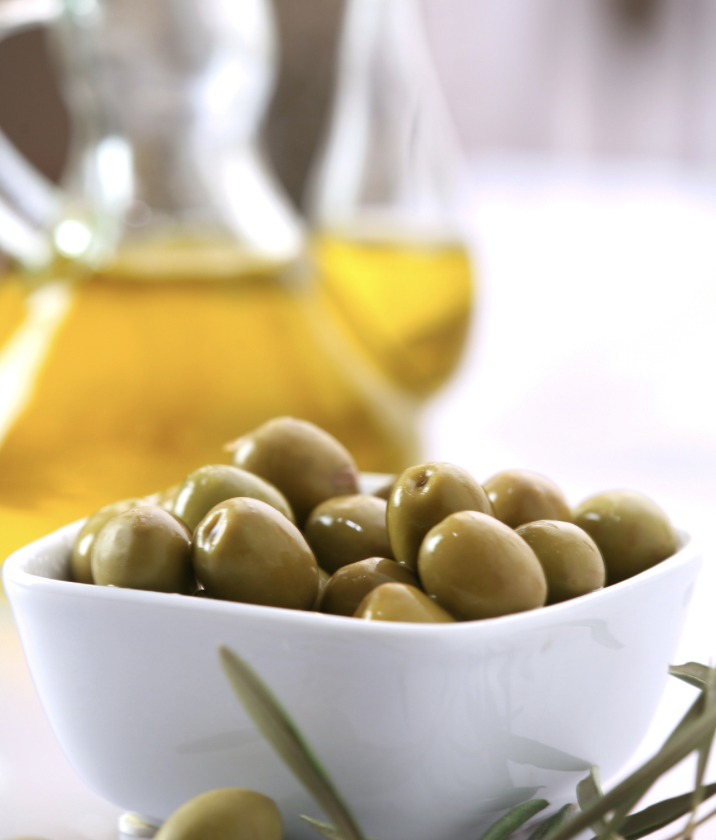
As Trichopoulou pointed out, “since 2010, the Mediterranean diet has been included in the UNESCO list of the intangible cultural heritage because it is a way of life, a lifestyle” that includes “many skills.” Part of the region’s tradition, it is closely connected with culture, “from farm to table.” It developed over thousands of years “in the Mediterranean basin where we have the olive tree, because without the olive tree, without olive oil, we cannot discuss the Mediterranean diet.”
Given its numerous benefits, Trichopoulou reports, “many populations around the world try to mimic the Mediterranean diet,” or at least adopt some of its practices. In various regions, people are beginning to “find their own ingredients, their own legumes, their own vegetables” that grow in their areas and fit their needs, climatic and economic conditions, and gastronomic traditions. She is glad to see this “movement on a global scale,” because she believes “what God and nature offered us we should disseminate all over the world as a message in terms of public health; we can offer the benefits to any citizen.”
Dr. Prisco Piscitelli, epidemiologist at UNESCO Chair for Health Education and Sustainable Development, Federico II University, in Naples, Italy, has been working with Trichopoulou and others on the Planeterranean Project. In it, “scientists propose a global research program for a model based on local adaptations of the Mediterranean diet.”
As one of their 2022 articles explains, the goal is to extend “worldwide the health benefits of Mediterranean Diet based on nutritional properties of locally available foods … to prompt each country to rediscover its own heritage and develop healthier dietary patterns based on traditional and local foods.” Starting with the Mediterranean diet, which is associated with “reduced prevalence of cardiovascular, metabolic or neurodegenerative diseases and cancer,” the researchers also aim to “help preserve biodiversity and natural resources, as well as cultures or traditions” in each location.
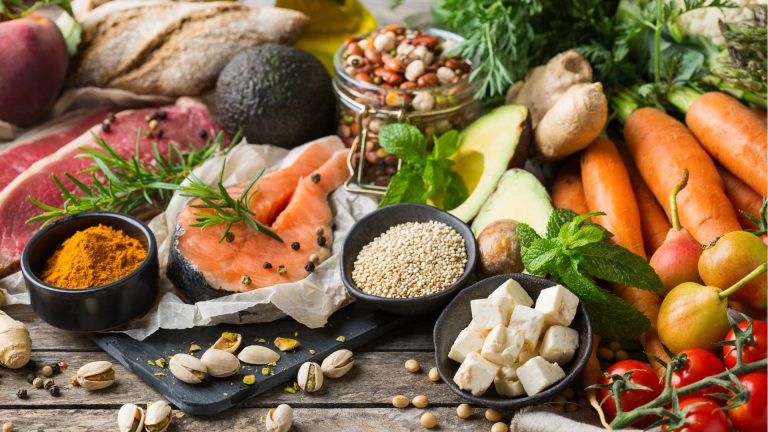
The Planeterranean Project team is working on “nutritional pyramids for different areas that have similar benefits to the Mediterranean diet, adapted to local cuisines,” yet with a notable resemblance to the Mediterranean diet pyramidTrichopoulou helped develop decades ago. The aim is to identify appropriate “vegetables, fruits, cereals, and unsaturated fats available in different parts of the world.” For example, wholegrain quinoa in Latin America and barley in Asia are low-glycemic index, high fiber options. Polyphenols and other phytochemicals are found in pepperberry in Oceania, soy and sesame in Asia, and pecans in North America.
Other scientists on the same symposium panel discussed comparable efforts to extend the benefits of the Med diet, or something comparable to it, to people on various continents. Dr. Jean-Claude Moubarac of the Department of Nutrition at the University of Montreal introduced a movement of resistance to the global spread of unhealthy ultra-processed foods, which includes an effort to protect and support traditional food cultures. For example, projects in Brazil, Uruguay, Chile, and Peru promote cooking and eating together according to certain recommendations. Relying on traditional recipes, a diversity of foods, less meat, more fresh food, and fewer highly processed foods, these recommendations resemble the practices of the Mediterranean diet.
Dr. Guansheng Ma of the School of Public Health at Peking University presented a Chinese Food Guide Pagoda that looks a lot like the Mediterranean diet pyramid, except that it has “oil” at the tip, rather than an abundance of olive oil closer to the pyramid’s base. Ma explained that the Jiangnan diet pattern recommended in China is similar to the Med diet in various ways: it is a balanced diet with whole grains, fish and shrimp, “abundant fresh fruits and vegetables in season, minimally processed foods.”
Advertised as “a celebration and renewal of Crete’s food / culture / heritage,” the Yale Gastronomy & Culture Symposium and its Planeterranean Diet session sometimes seemed to pull listeners in two different directions. On the one hand (as in the talk by Dr. Michalis Katharakis of the Regional Council of Research and Innovation in Crete), it valorized the specifically Cretan version of the Mediterranean diet and its particular value. On the other hand (during most of the session), it explored various versions of Mediterranean-style diets adapted to fit the local food offerings and cultures around the world to improve health globally. The vast nutritional benefits of the Cretan version of the Med diet, with olive oil at its center, were mentioned–even assumed–but the reference to other cultures’ foods, including oils that lack many of the health benefits of extra virgin olive oil, did not settle the question of the role olive oil should play in healthy diets.
During a discussion after the panel’s presentations, symposium organizing committee member Aris Kefalogiannis, an innovator and entrepreneur in fine foods, pointed out that a Gaea company-funded study had determined that 70% or more of the carbon footprint of foods tends to come from fertilizer, not transportation, even from Greece to the USA. So 1 kg of olive oil has a 4.18 kg carbon footprint when transported that far, but locally produced tomatoes have 35 kg and locally produced beef 70 kg. As Kefalogiannis concluded, even when it must be shipped a long distance, “olive oil is still a very environmentally friendly product.”
In comments to Greek Liquid Gold after the symposium, Kefalogiannis admitted, “in order to create the Planeterranean diet, or more precisely to Mediterrranize local food systems internationally, we have to heavily rely on locally produced food products. For two reasons: firstly to make it easy and affordable for local people to adopt the Mediterranized local diet, and secondly for reasons pertaining to environmental sustainability.”
However, Kefalogiannis would not go as far as some members of the panel to an approach that could “dilute the goal of Mediterranization of local cuisines and the numerous health, wellbeing and sustainability benefits that should be expected by the Mediterranization process.” He believes “Mediterranization is impossible without some essential ingredients that constitute the cornerstone and very essence of the Mediterranean diet,” identifying extra virgin olive oil as “the most indispensable” component.
Why? According to Kefalogiannis, “extra virgin olive oil, besides being the world’s most healthy fat, with numerous health benefits and recognized health claims, makes raw and cooked veggies and pulses tasty and creates an overall balanced diet. In addition, thanks to its extremely low carbon footprint, from field to fork, or even negative carbon footprint if we include in our estimation of the carbon footprint the negative CO2 sink that the olive groves present, it transports very well and can play the protagonist’s role, complementing local produce, that is necessary for the Mediterranization of local cuisines.”
As Trichopoulou asserted in her presentation, “without the olive tree, without olive oil, we cannot discuss the Mediterranean diet.” What about the Mediterranized diet? That could be a topic for a future session.
*Originally published on Greek Liquid Gold: Authentic Extra Virgin Olive Oil (greekliquidgold.com). See that site for recipes with olive oil, photos from Greece, agrotourism and food tourism suggestions, and olive oil news and information.
A recent residency at DRAWinternational in Caylus, France, brought together artists from different corners of the world, creating an unforgettable experience of artistic collaboration.
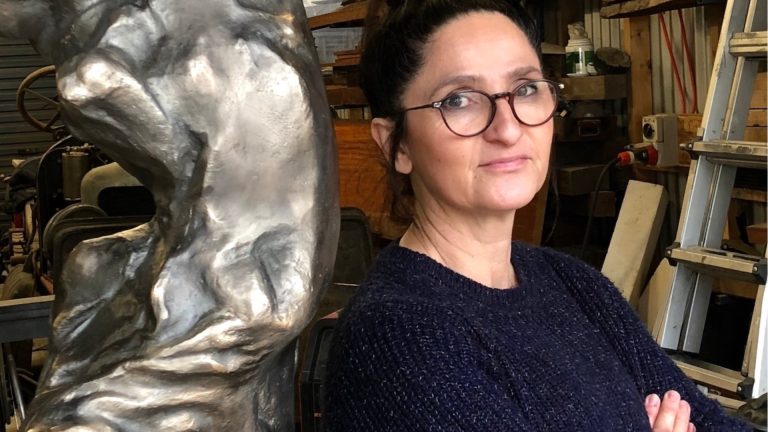
Emmy Mavroidis, a talented Greek Australian artist exploring gesture and the body, had the honour of participating in the enriching residency earlier this year, which delved into the significance of drawing as an expressive medium.
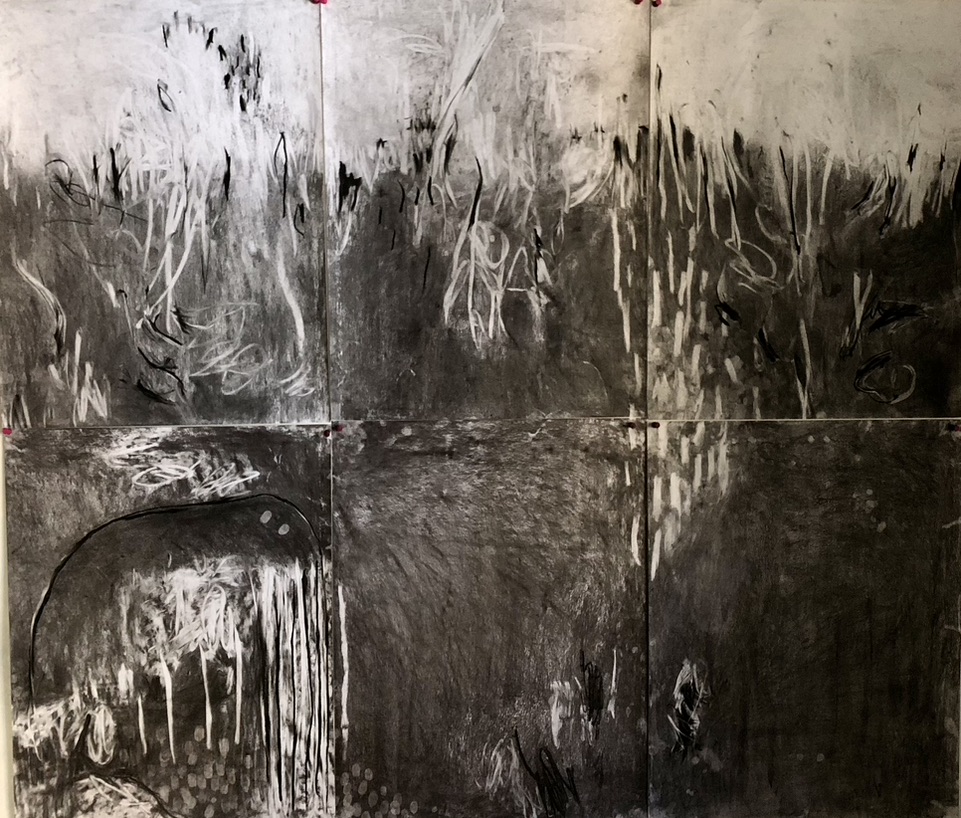
‘Response to proto drawing and cave’- The Pech Merle Cave, France by Emmy Mavroidis, 2023, Charcoal on Canson paper.
Under the guidance of John and Grete McNorton, the residency provided a platform for artists to exchange ideas and experiences. Collaborating with artists from different cultural backgrounds who shared a passion for drawing was a truly unique opportunity.
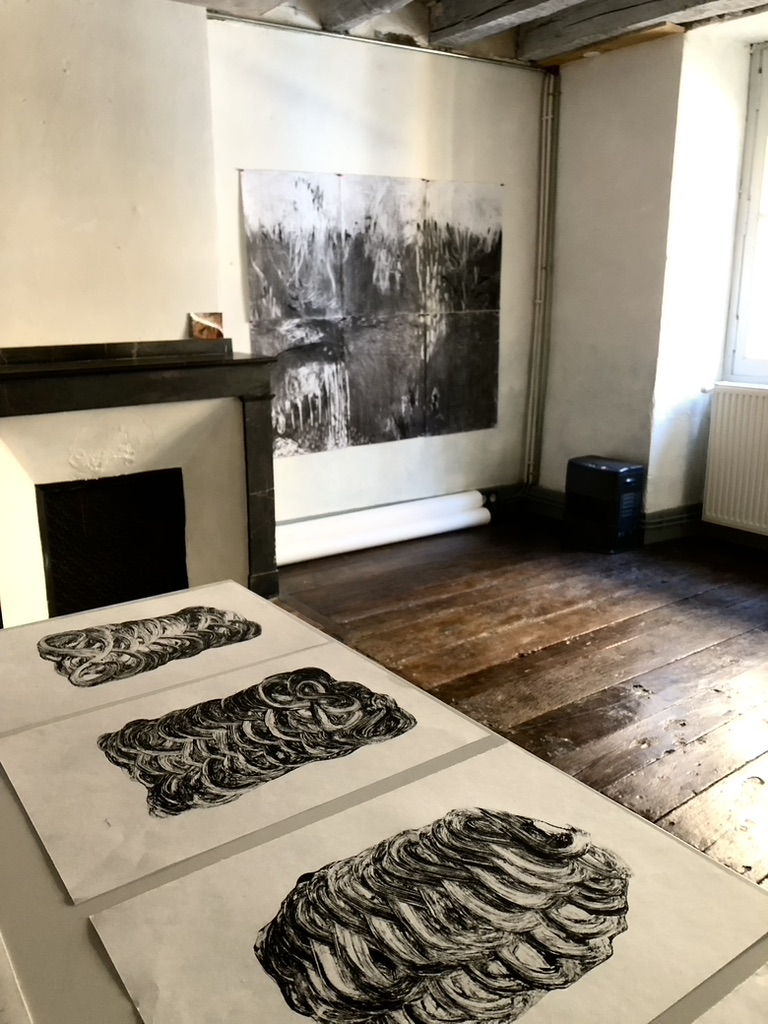
DRAWinternational studio in Caylus, France.
The culmination of their work was showcased at the DRAW international exhibition, where they also had the privilege of engaging with a group of Fine Art students from England, delivering talks about their individual drawing practices and creative processes.
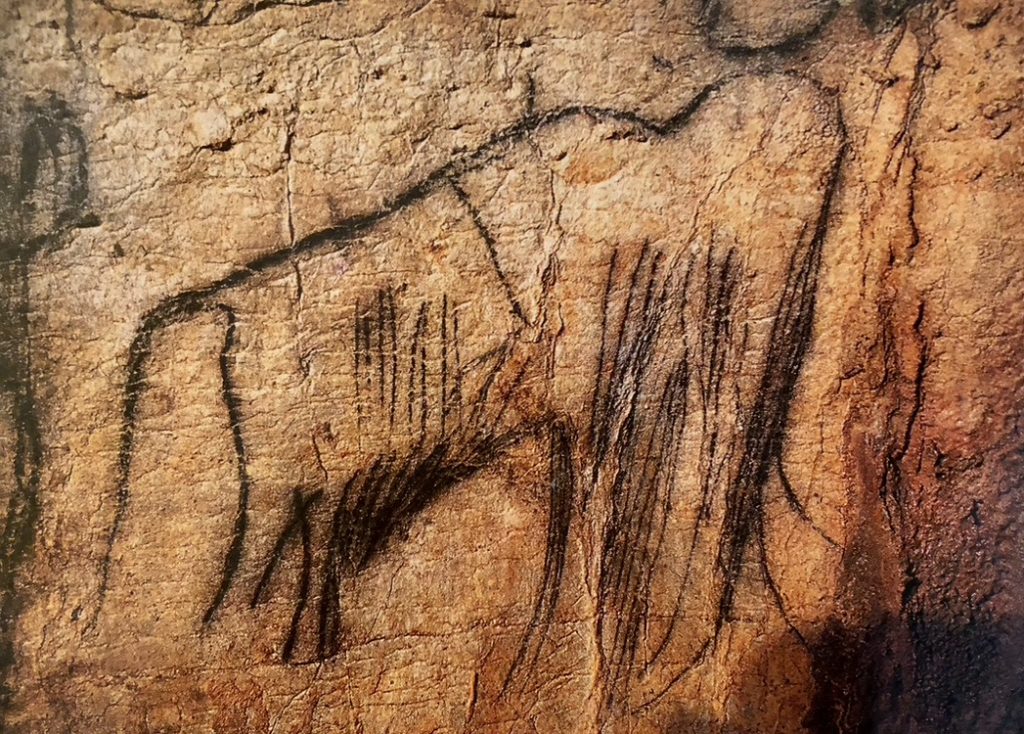
One of Emmy’s most profound inspirations during the residency came from a private tour of The Pech Merle cave, renowned for its ancient charcoal drawings of mammoths, bison, and Spotted Horses, which date back over 29,000 years. Witnessing these raw and evocative drawings sparked contemplation on the primal nature of drawing and its intrinsic connection to human expression and mark-making.
Charcoal drawing of Mammoth, The Pech Merle Cave, France.
Emmy, a Melbourne-based artist and researcher, has dedicated her career to exploring the interplay between drawing, gesture, and the body. Currently pursuing a Master of Fine Art by Research at The University of Melbourne’s Faculty of Fine Arts and Music, Emmy brings a profound understanding of the somatic aspects of artistic expression.
With her background in painting and a Master’s degree in Contemporary Art, she founded Nyora Studio Gallery—a thriving arts centre in Melbourne. Through Nyora Gallery’s Resident Artists Program, Emmy teaches and mentors other artists while organising exhibitions and workshops focused on drawing and sculpture.
Initiated by the Greek Australian Cultural League (GACL), the GAAD celebrates Greek Australian artists by showcasing their work and contributions to the Australian arts community and serves as an invaluable resource for curators, collectors, researchers, and art enthusiasts interested in exploring Greek Australian art. It represents artists from various backgrounds, both past and present, whose work has been inspired by Greek culture. The GAAD not only showcases the creative endeavours of Greek Australian artists but also recognises their influence and enriching impact on the Australian arts scene. By preserving cultural identity and historical significance, the GAAD ensures that the artistic contributions of Greek-Australian artists are duly acknowledged and appreciated.
For artists wishing to register in the GAAD, please visit www.gacl.com.au and click GAAD. For general enquiries contact: infogaclm@gmail.com, GACL President Cathy Alexopoulos on 0428 968 715, or GAAD Co-ordinator Vasy Petros on 0412 242 557.
*Written by Vasy Petros. This is a Greek Australian Cultural League Initiative supported by The Greek Herald.
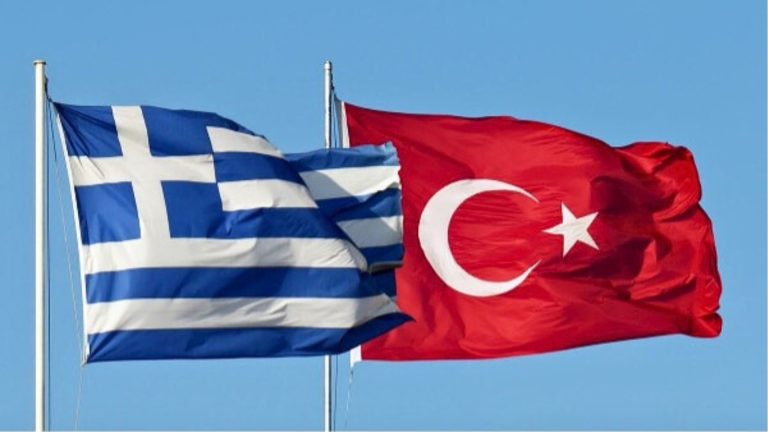
In my previous article, we referred to specific historical moments that showed that Greco-Turkish relations were maintained two-way, ambivalent, controversial and their successive governments made decisions and solutions that sometimes brought the two peoples together and sometimes brought them into rivals.
The question that affects every Greek is how we can form healthy bilateral relations with Turkey, to limit and control tensions and prevent a clear cause of armed collision.
What is certain is that we are compelled to live with the Turks, we are destined to live and create good neighbourly relations with them for the good of the generations to come, to leave them a quiet neighbourhood, without daily challenges. But how feasible is this with a difficult and unpredictable neighbour?
In the previous article we gave also offered examples of friendship and hostility, examples of both sincere and brotherly support by the Turks but also savage persecutions against the Greeks; we gave incidents of amity and solidarity towards the Greeks but also snapshots of military aggression on the part of successive Turkish governments. These examples were given in order to prove historically the controversial, the unreliability but also the unpredictability of Turkish policy without going into more recent examples, a policy that sometimes goes to one side and sometimes to the other, which sometimes comes as an ally and friend and sometimes as an aggressor and an age-old enemy of Hellenism.
Finally, let us close with the twenty-plus year rule of our neighbour country by Erdogan. Erdogan’s political and personal profile as leader, during his first ten-year term in office is completely different to what Turkey and the world has experienced during his second ten-year term. The policy of tolerance, of cultivating interactive political, social relations with Greece and the Europeans which characterised Erdogan’s first decade of government unfortunately was turned into an authoritarian and totalitarian regime, enacting policies which sometimes beat and sometimes embraced, sometimes isolated and sometimes included neighbouring countries and traditional friends.
Worst and most tragic of all, however, is that Erdogan’s stance and policy has fundamentally divided Turkey politically, socially, and economically. It is a social, economic and political dichotomy. On the one hand the Turkey of the coasts of Asia Minor and the big urban centers with the rich bourgeoisie, the small businessmen, the shopkeepers, the educated, the social elite, and on the other hand the hinterland, the vast Anatolia, a Turkey of misery and poverty with the hordes of hungry, afflicted proletarians, the vassals of the ruling class. And we are not talking about a Turkey of 13 million when the Lausanne Agreement was signed. We are talking about a Turkey of 90 million, where 15 million live as pashas, and 65 million are trying to seek hope in the next elections.
Turkey’s social and economic division was most strongly illustrated in recent elections. The coast was won by Erdogan’s opposition. The hinterland of the Anatolia was won by Erdogan. Even the Kurds, who did not put forward their own independent representative party in the elections this time, overwhelmingly voted for Erdogan. Between two evils, less evil is preferable, as our grandparents proclaimed. The fact that Erdogan has better communication mechanisms, that he “speaks to the heart of the people,” etc. remind me of Trump’s case with US Republicans. Erdogan was voted for by the religiously oriented people, the mullahs, the Turkish proletariat of the Anatolia, ordinary people, those who see only what is seen and cannot understand what is being woven beyond the obvious.
We read that a report analysing the mistakes of the Turkish opposition in the recent elections was prepared by Istanbul Mayor and Republican People’s Party (CHP) official Ekrem Imamoglu, according to the Cumhuriyet newspaper, citing the categories of voters who supported Turkish President Tayyip Erdogan.The largest pool of votes for the Turkish president was women wearing headscarves, of whom 70.1% voted for Erdogan. At the same time, he was supported by 62.3% of people with lower educational level, 62% of religious people, 61.3% of housewives, and finally 57.7% of nationalists. On the other hand, the main opposition candidate Kemal Kilicdaroglu received 52% of students, 57.8% of university graduates and 58.3% of Kemalists. His approval rating among devout Muslims and nationalists, however, was low, with just 33.6 percent and 35 percent respectively choosing him in the second round of the presidential election.
Erdogan now has absolute political dominance. He is a great politician. Can we trust him? Is he reliable? We will continue to have convergences and divergences, we will continue to live with the bazaars, the Buddha and Kuda. My view is yes. As Hellenism, unfortunately, we no longer have any more Hellenism to mourn in Turkey. The existence of Hellenism there is marginal. The Ecumenical Patriarchate operates institutionally, which, either under pressure from the Americans or under pressure from the Interparliamentary Assembly on Orthodoxy, will remain in Istanbul with all Its holy symbolisms, as will the monuments of Christianity there. Neither Imvros nor Tenedos has Hellenism anymore for the Turks to blackmail Greece and the Greeks. The hostages were contained. They took care to wipe them out and exile them.
Greece has only two options in the face of this order of things. To arm itself and strengthen its alliances. With these two strategies, it will be able to stand up to every revisionist challenge, every imaginary threat, every bargain. Erdogan, like all of us, is here to go. Turkey and Greece are here to stay. Both countries need statesmen not showmen to be ruled. Both countries deserve to live in peace and amity. We need to see the forest, not the tree. Unfortunately, the real, sincere voice of man is the voice of fear. Whoever is afraid, is not afraid, the old Cretans used to say in their wisdom, and they were absolutely right.
*Professor Anastasios M. Tamis taught at Universities in Australia and abroad, was the creator and founding director of the Dardalis Archives of the Hellenic Diaspora and is currently the President of the Australian Institute of Macedonian Studies (AIMS).
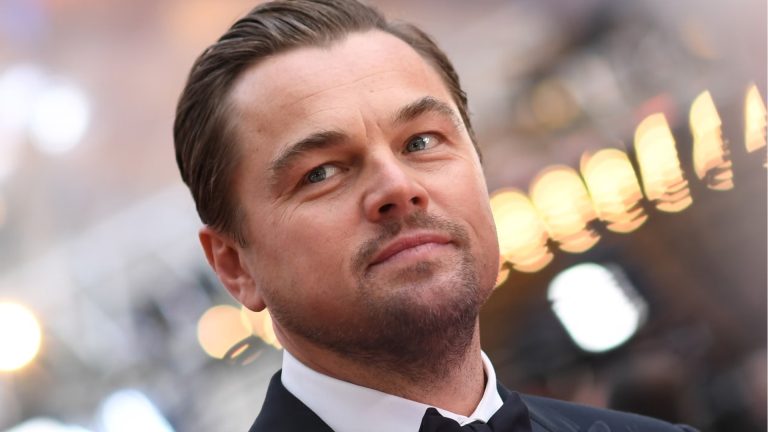
Hollywood actor and environmentalist Leonardo DiCaprio took to his Instagram account recently to express his admiration for Greece’s progressive approach to environmental conservation.
DiCaprio commended Greece for its pioneering efforts in incorporating Key Biodiversity Areas (KBAs) into their legislative framework and policy-making process.
In the Instagram post, DiCaprio said Greece was “leading the way” in drafting laws in the environment sector.
“Greece recently became the 1st European country to recognise Key Biodiversity Areas (KBAs) in its laws and policies. KBAs are the most important places in the world for the persistence of biodiversity and play a critical role in the planet’s overall health,” the actor wrote.
“Congratulations are in order for the Greek government in leading the way by highlighting Key Biodiversity Areas as a key tool for expanding a network of protected areas and preserving biodiversity on Earth.”
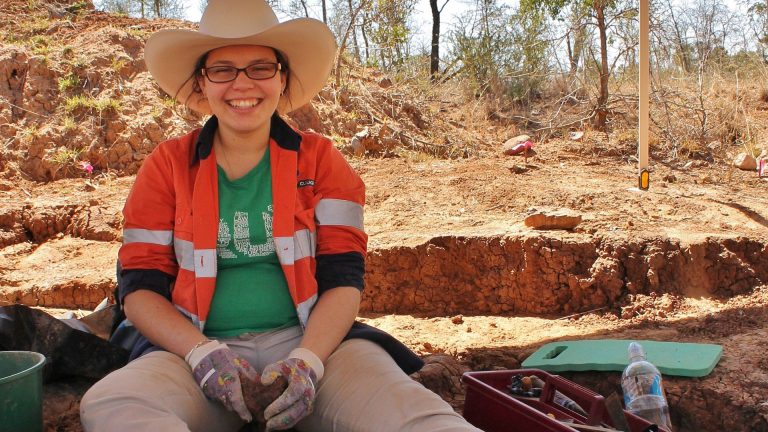
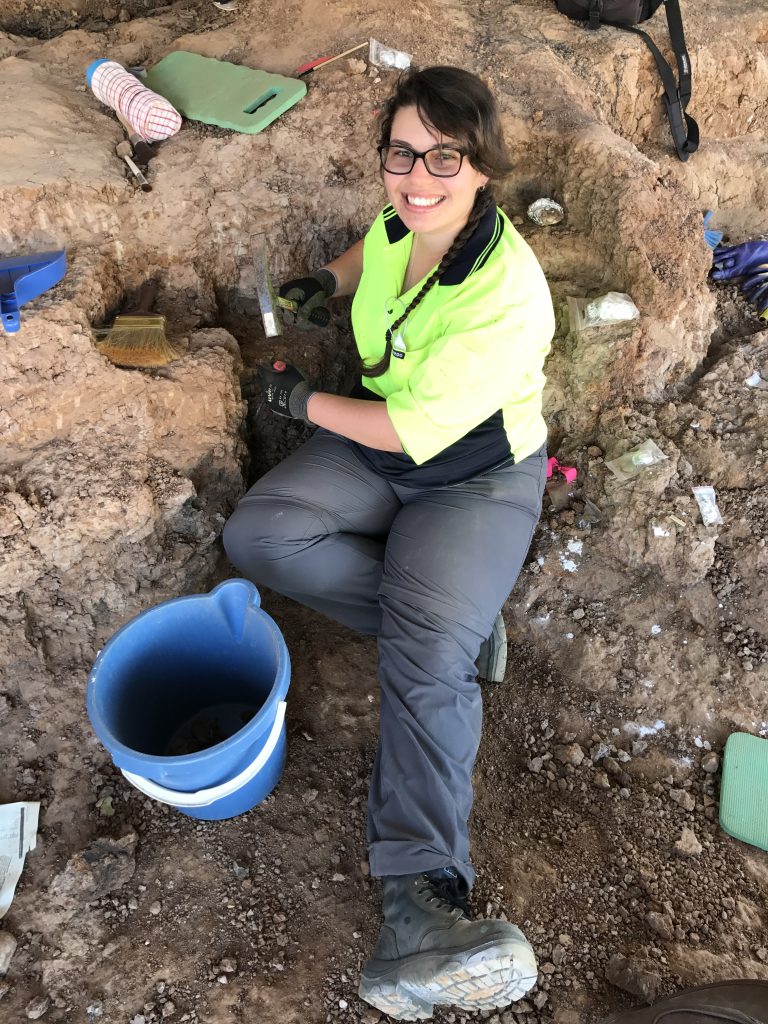
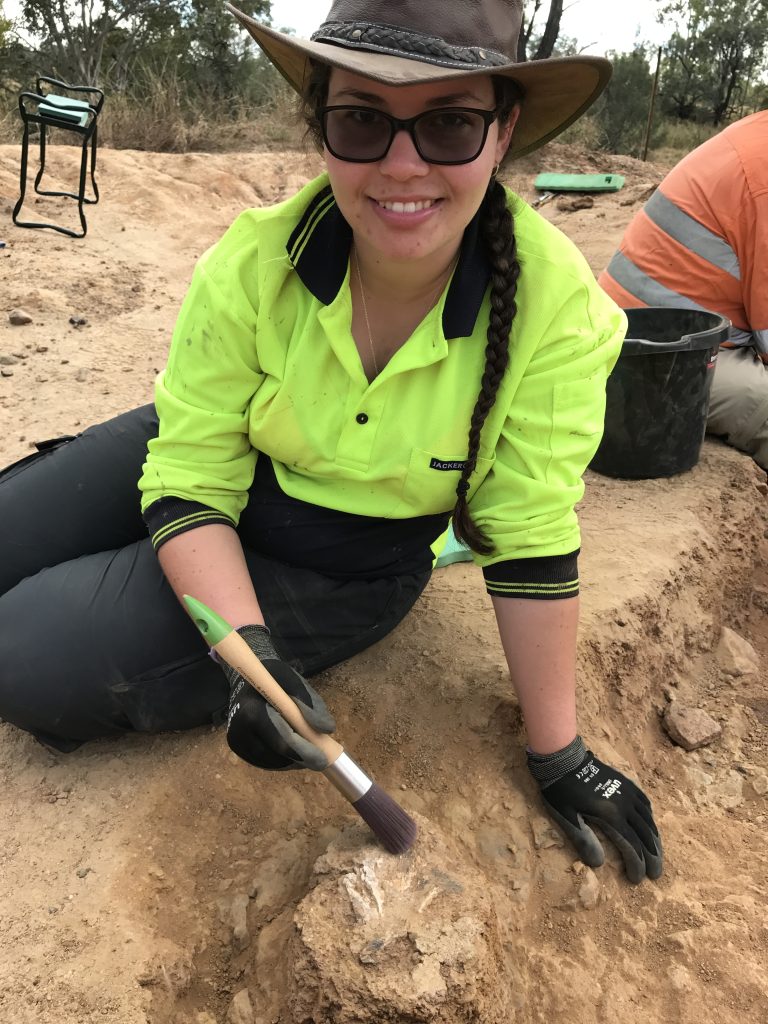
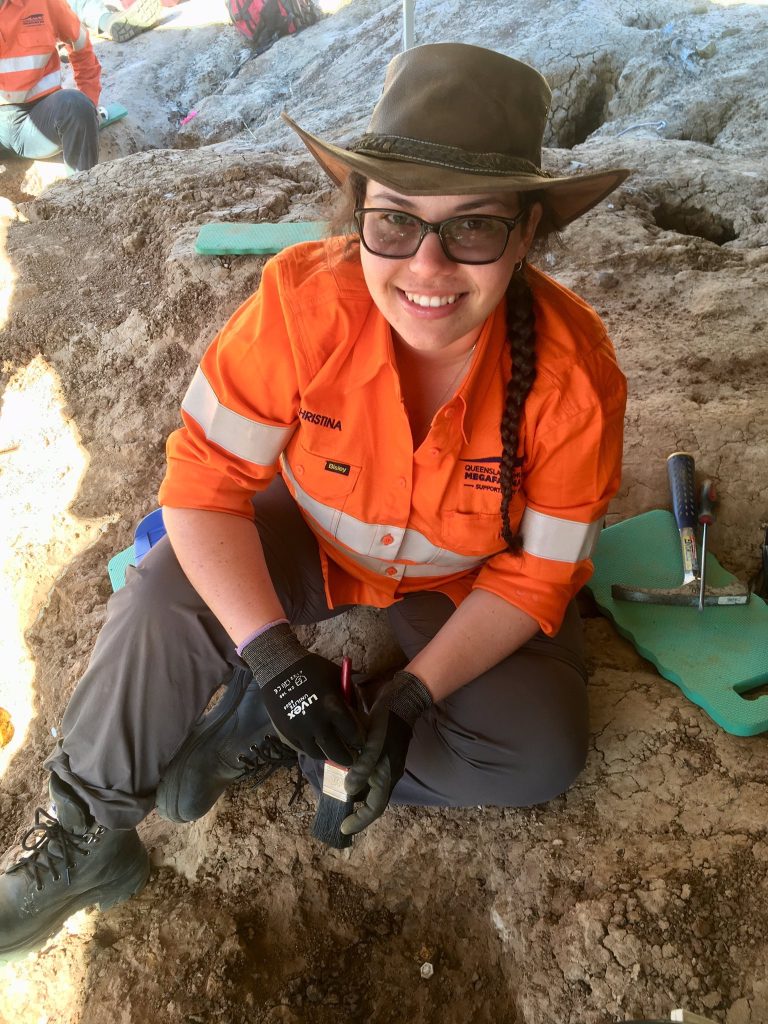
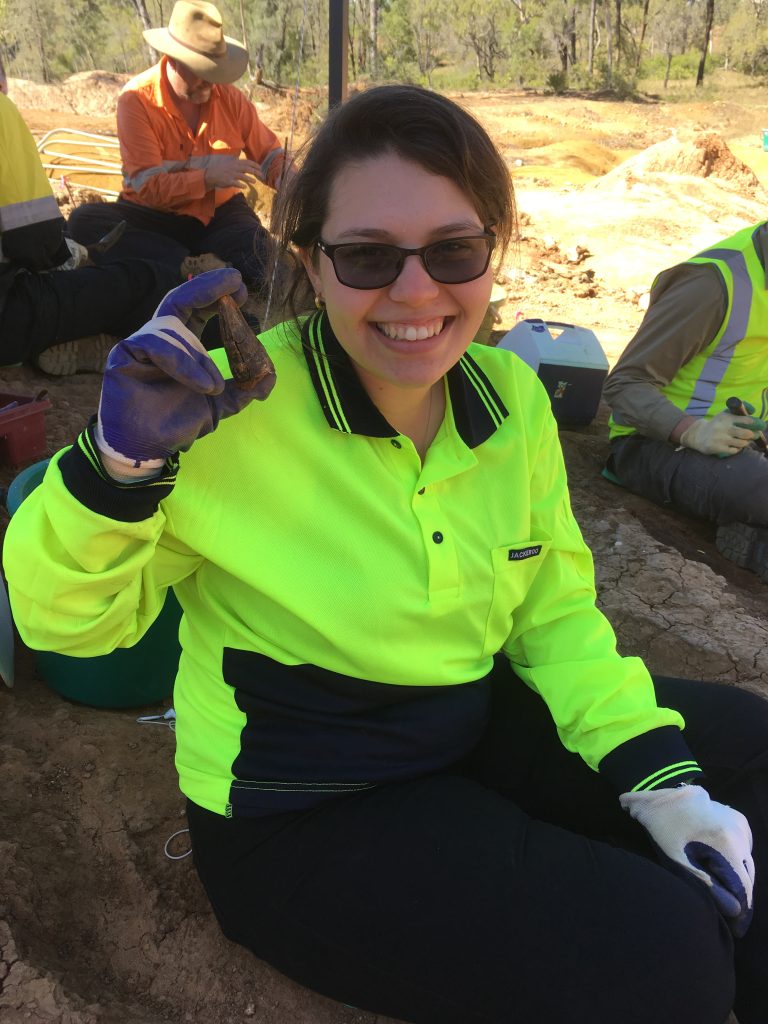
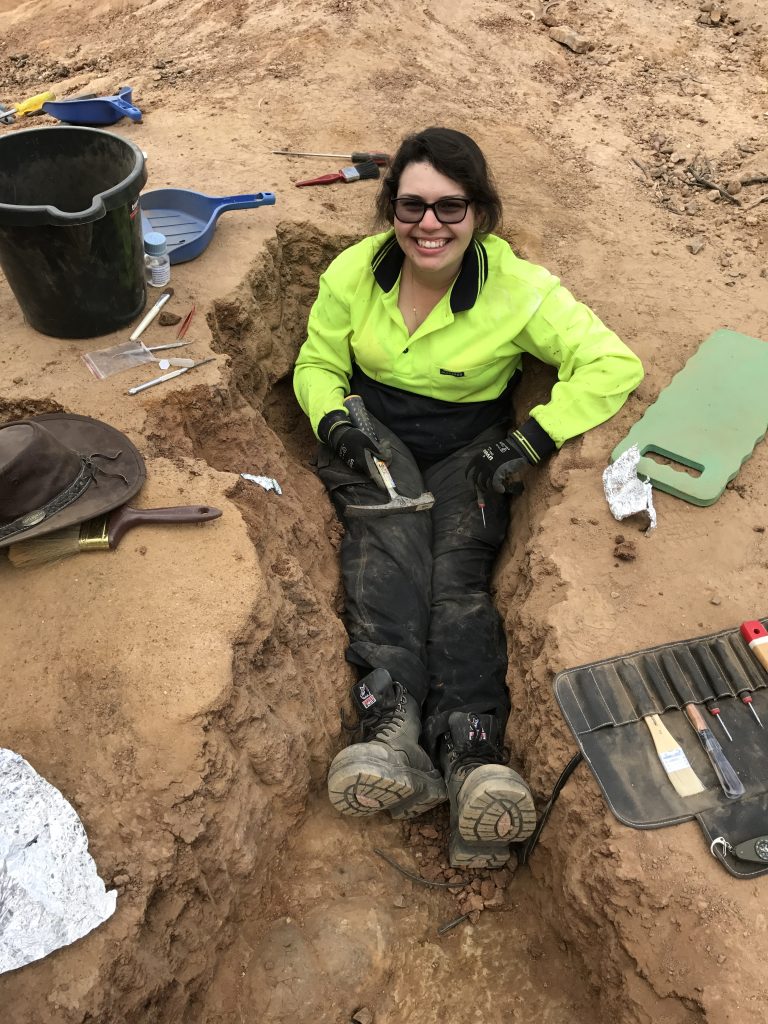
Linking current scientific findings with ancient Indigenous stories in Queensland, Australia, is just a normal day on the job for Christina Chiotakis.
To mark NAIDOC Week 2023, The Greek Herald speak exclusively with Christina about her career as a palaeontologist and how she uses science daily to verify Indigenous stories passed down through the generations.
‘I wanted to be a dinosaur hunter’:
With a Greek dad and an Indigenous-Australian mum, Christina’s heritage has contributed to her love for ancient fossils and led to her working as a palaeontologist at the Queensland Museum in Brisbane.
Christina tells The Greek Herald how she instantly fell in love with fossils after receiving a stegosaurus dinosaur toy at the age of two. Later, when she turned eight, Christina wrote in her notebook: ‘I want to be a dinosaur hunter.’
“I was always drawn to this path and mum would buy us [Christina and her sisters] things that would help with what we wanted to do,” Christina explains.
“My mum would say, ‘if you want to do this, you can, but you’re the one who has to put in the effort to do it’.”
On school holidays, Christina would take the long six-hour drive with her grandparents to visit Roma in western Queensland where her mum was from. Roma was an area where many Aboriginal peoples of the Mandandanji Nation lived.
Her mum would also often share Indigenous stories, which then filtered into Christina’s everyday life.
She recalls a time when she was on a university field trip with her class where she noticed yellow butterflies and told her class, ‘It’s going to rain.’ Her classmates responded with disbelief and curiosity as to why Christina would make such a bold statement. Later that night, it rained.
On her field trip, Christina wouldn’t know it yet but the stories passed onto her from her mum would play a significant role in her path as a palaeontologist.
Christina instantly fell in love with fossils after receiving a stegosaurus dinosaur toy at the age of two.
But so would her Greek heritage.
Growing up, Christina felt more connected with her Greek side because she spent a lot of time with her Greek grandma.
“At home there were certain words that were recognisable to me as a kid because I was learning dinosaur names. So I knew that they were Greek and Latin,” Christina explains.
“But if I didn’t quite know the meaning of the name I would ask, ‘what does this word mean’ and realise that’s how they got the names for a particular dinosaur.”
Dedicating her life’s work to dinosaurs:
A book Christina’s mum gifted to her in high school called Amazing facts about Australian Dinosaurs written by Doctor Scott Hocknull and Doctor Alex Cook, would cement her pursuit to become a palaeontologist and land her a position at the Queensland Museum where she still works 13 years later.
“I had never been to the museum before, but Scott was giving a talk and I was like I have to go. I must talk to him,” Christina says, while explaining that Dr Hocknull is a vertebrate palaeontologist at the Queensland Museum.
“I went to this talk with my book, and I intended to have Scott sign it. It’s been 13 years and I still haven’t got the book signed but I have worked with him this whole time!”
During Christina’s school years, she volunteered at the Museum every week while studying a degree in geoscience, environmental science, and ecological science.
Throughout the journey, Christina received pushback, especially as a teenager, with people saying palaeontology is for boys because dinosaurs are ‘for boys.’
But she persevered and was advised that if she wanted to be a palaeontologist, she had to be willing to sit for hours every day looking at microfossils, which are anywhere from a couple of millilitres to a centimetre big.
“I did a bit of everything to gain experience. I worked sorting sediments and material and bones, which is what I started out with because that’s one of the tedious jobs,” Christina explains.
Christina Chiotakis
The now 29-year-old explains the purpose of her work at the Queensland Museum and the ability to confirm Indigenous stories of the past, as well as learn more about the state’s history.
The three sciences Christina studied at university help to put the whole picture together about the rocks, the environment of the bones, and the animal. Her work tracks changes in the environment from the past and how it can potentially contribute to the future, while giving credit to Indigenous stories that have been told for generations.
“On sites, where possible, we work closely with the Indigenous community,” Christina says.
“On the one at South Walker Creek, we work with the Barada Barna people. They’re the ones who first found the fossils and brought them to our attention.”
In 2008, the Barada Barna people – the traditional owners of the area at South Walker Creek located near the town of Nebo, west of Mackay in Queensland – made a discovery. They found unusual bones while conducting a cultural heritage survey of the local mine.
“We have them come in and give their interpretation of the fossils and tell their side of the story. I find it super fascinating to go back to Indigenous stories and make that link to the mega faunas,” Christina says.
Christina Chiotakis
“Dinosaurs are very old, but megafauna is something we now know has human overlap in Australia. There’s cave art of Thylacine in the Northern Territory. We know them as Tasmanian tigers, but they used to live on the mainland and with that kind of evidence, and the fossils to back it up, it’s true these things were there and interacted with people.”
Nowadays, Christina is drawn to learn more about her heritage because of her love for Indigenous narratives and the explanations they have for the world around them.
The ability to say “this story, from this area, sounds like this animal,” and then connect the fossils to the story to piece together history, fascinates and motivates Christina.
“It justifies a lot of the things that Indigenous people have been saying for quite some time about how things are and how things work; science is now starting to back that up,” she concludes.