Man stands weak in the face of death. While each of us admits the evolution of beings, our ontology, that death is the continuation of our birth and development, we cannot come to terms with the unknown that follows the course of our loved ones after their exit from earthly things, and most importantly the horrible deprivation we feel with the loss of our loved ones who abandon what we have learned to live with them for decades, as family, friends and fellow citizens.
Of course, all religions, even the skeptics and the philosophies and world theories that appeared, differently present and analyse the metaphysical problem, that is, the posthumous course of our man, his/her descent into the depths of the earth or into the heavens or in the interim according to the Catholic Church, but nothing can heal, even the time that “heals everything” cannot be erased. To cancel and throw into oblivion our earthly course, small or large, self-loving or participatory.
Our Church testifies that man mourns and laments when he refers to death, when he feels it, when he senses it, because at first we do not dare to believe that we have lost our loved one, that he/she will no longer be by our side and that we will go on for the rest of our lives without our loved ones whom we have lost. But these apply to those who remain and not to the dead. As our great wise grandfather Socrates proclaimed to those who condemned him to death, when he said to them: “I am going to die obeying the laws of the Fatherland, you stay to live, but which of the two of us is the happy one, no one knows!”.
I would like to add that it is wise to argue that even when someone comes and lives for a few years in this life, he/she must be considered lucky and happy, because he/she managed to live, because he got to know the world, the nature from which he emerged, the sea, he met people with whom he lived, he crossed paths with thousands of strangers who happened to be born at the same time.
However, the happiness and success of a man who abandons earthly things is what she/he created, what she/he offered, what she/he fought and hurt for. Happiness is the creation of the family, the smile and cry of the children, the caress of the grandchildren, the smile of satisfaction of the neighbor who felt the love of our man while he/she was alive. Happiness and feat is to leave in full development and contribution, to leave with the satisfaction that in turn you created, gave birth to your own people, who in turn bore their own offspring.
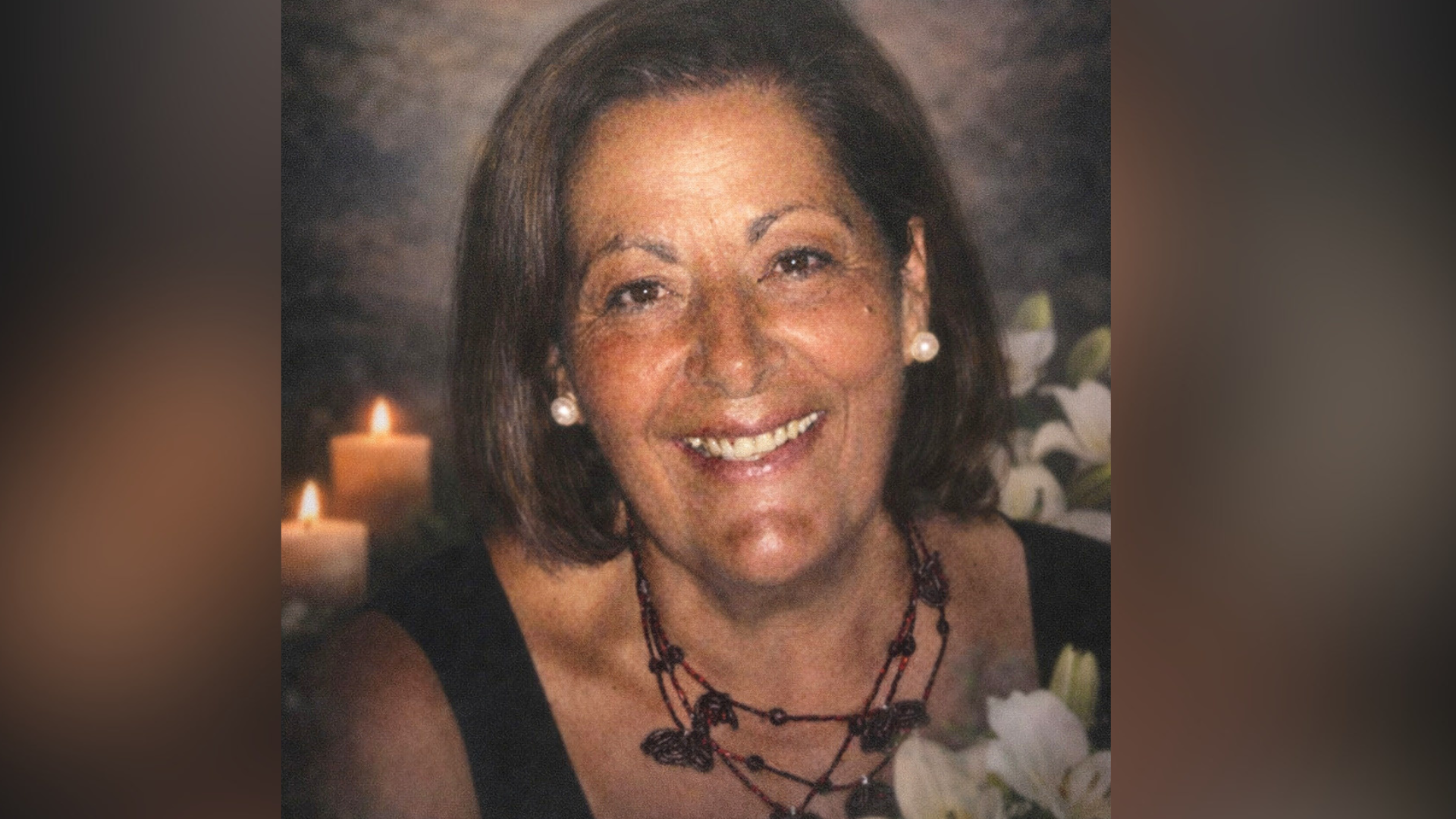
The late Zoe Zapris belongs to the category of thrice-happy women who lived and stood fruitfully and creatively towards life, family, the Diaspora and the Homeland.
She arrived in Australia in 1953, with her mother Eva and her five siblings at the age of just five. Her father, Kypros Iakovou, had preceded the settlement in Australia, as almost 300,000 of our Greek and Cypriot expatriate brothers did in those first years of mass migration. She was lucky enough to be born in the oldest Greek Neolithic settlement of our Cyprus, Choirokoitia and to live as a child in Melbourne with the love of her parents and siblings.
She was even luckier to marry the then-young Macedonian from Drymos, Thessaloniki, Ioannis Zapris, a low-key, gentle, decisive and good-natured person. Together they overcame the first days of survival, set up his household, and gave birth to four well-educated and high-spirited boys and nine grandchildren.
In the family environment, Zoe and Yiannis established themselves in business, set up one of the best printing houses in Australia, Ellikon Fine Printers with annual awards at a pan-Australian level, expanded their facilities and supported dozens of their families of workers and partners with businesses. Later, they created the now-famous Sirpaz winery in the Wandin East Hills, with excellent restaurant and banquet facilities overlooking the Victorian mountain ranges. The Sirpaz Company today emerges as one of the most popular in Australia and Asia.
Zoe, as a mother and matriarch, was the close and unbreakable link with the boys and their daughters-in-law, she ran to help, to cook, to receive her friends and relatives in her home or on the family farm. Her role and contribution to Homogeneia is extremely important and philanthropic. Integrated into Australian society, with an intercultural spirit, it was associated with solidarity and charity organisations to assist and offer in the establishment and operation of nursing homes, and to contribute financially to fundraisers of Orthodox churches.
Deeply pious, she celebrated with local traditions, especially Saint Fanourios, the Patron Saint of Choirokoitia. Zoe joined the mothers at Ivanhoe Grammar School and as a leader, she organised events to financially support the school her children attended. When Zoe was later invited by the leadership of EKEME and the late Zisis Dardalis, she took over as the founding chairwoman of the Society of Friends of EKEME, which initially met in the Boarding Room of the Ellikon Fine Printers. And it was this company that was the main sponsor of EKEME’s publications during the period of this academic institution’s activity.
Moreover, only recently, on February 9, 2006, it was again the Ellikon Fine Printers and the Zapris family, who undertook as the main sponsor free of charge all publications that were released during the celebrations of the UNESCO International Day of the Greek Language.
Zoe, by today’s standards, did not leave full of days. At the age of 78, she left us the memory of living with a smile towards everyone, the caress of affection for the people she loved, the high spirit of hospitality that characterised her, her receptivity, her faith that Greekness could not be understood without Orthodoxy and Orthodoxy without Greekness.
She loved without expecting a return. Her love was selfless and tolerant, even in the difficulties of her life that she was called upon to face. But she certainly abandoned life and this human nature in the family recognition, as a wife, mother and grandmother. Her cheerful smile and generosity, marital and maternal devotion are certainly an example for all of us to follow.
Zoe lived to offer, she lived to create and she created to leave behind the traces of a life that cannot be forgotten, cannot be deleted. And whilst they are with us and accompany us, Zoe will remain among us alive, a bright point of reference.
