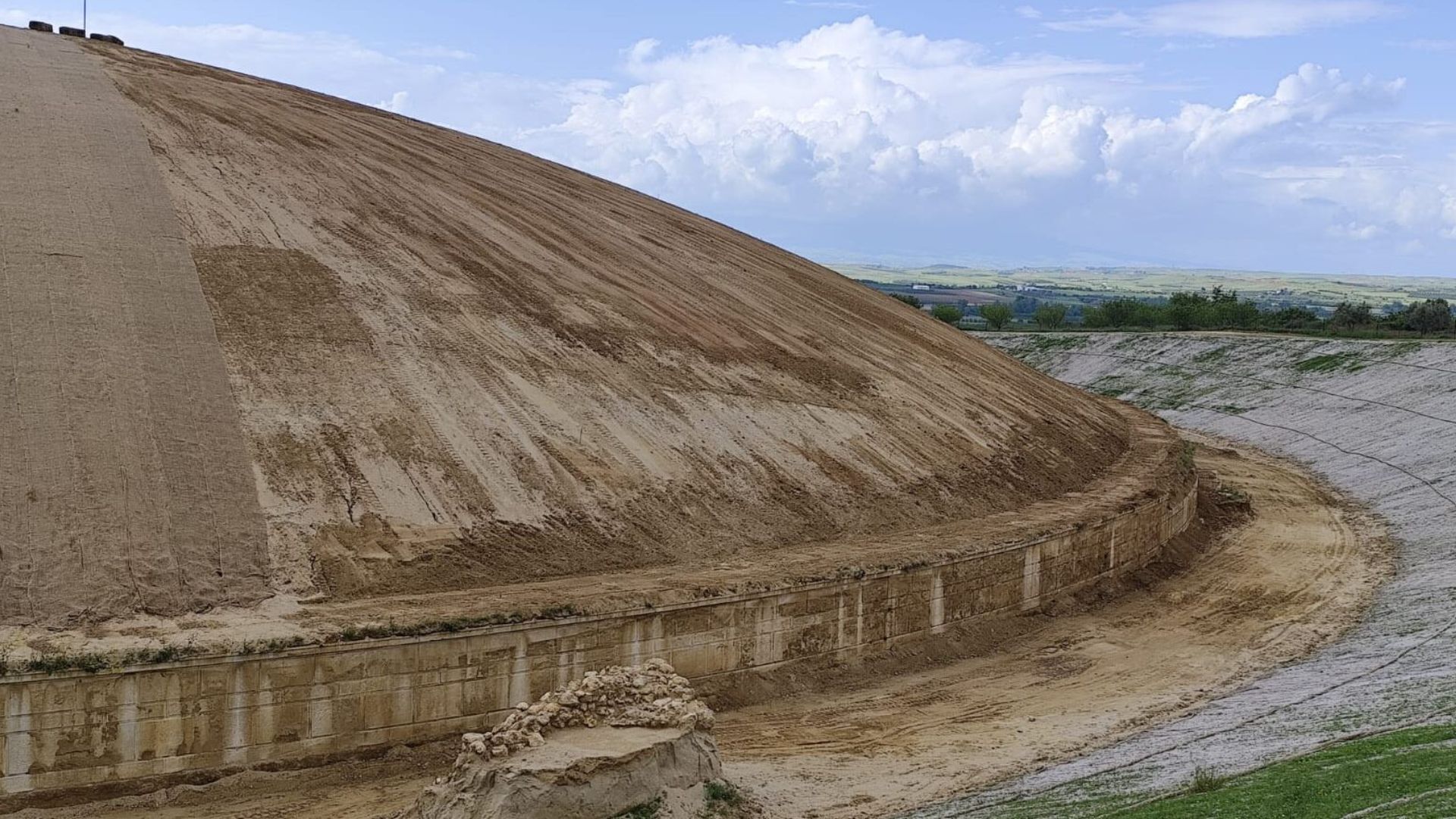
Archaeologists in Greece have revealed new details from the massive Kasta Tomb in Amphipolis, a burial site believed to date back to the era of Alexander the Great, according to zmescience.com
Recent restoration work uncovered the monument’s full enclosure for the first time, highlighting the enormous scale of the ancient Macedonian structure. Located near Thessaloniki in northern Greece, the tomb is surrounded by a marble enclosure measuring around 1,630 feet in circumference and covering more than 20 acres.
Images released by Greece’s Ministry of Culture show marble-lined corridors, intricate carvings and sculptural features believed to have belonged to a prominent member of the Macedonian elite.
Researchers believe the tomb may have been built for someone closely connected to Alexander the Great, including a member of his family or one of his trusted companions. Amphipolis was strongly linked to key figures from the Macedonian kingdom, including generals associated with Alexander.
Officials also announced plans to continue restoration work, including reinstalling the monument’s marble entrance doors and repairing sphinx sculptures that once guarded the tomb.
The site, first discovered in 2014, remains one of Greece’s most significant archaeological finds and continues to attract global attention because of its possible connection to Alexander the Great.
Source: zmescience.com
