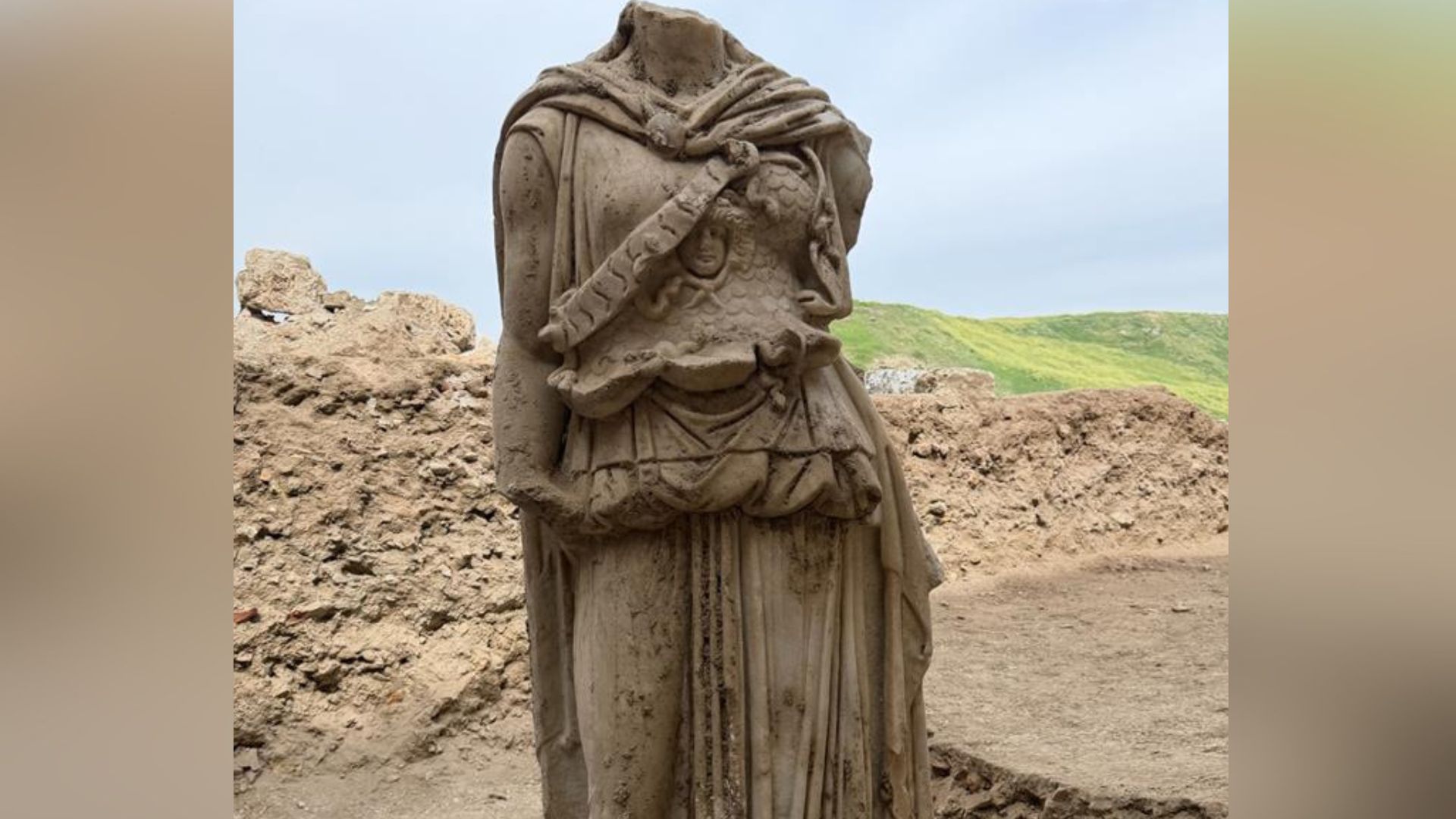
A marble statue of Athena has been uncovered during excavations in the ancient city of Laodicea on the Lycus near Denizli, according to the Turkish Ministry of Culture and Tourism.
The sculpture, almost two meters tall and missing its head, was found face down among rubble near the stage structure of the city’s Western Theatre, according to jpost.com. Carved from white marble, it depicts Athena wearing a sleeveless peplos and a cloak, with the aegis across her chest featuring the head of Medusa.
Experts date the statue to the era of Augustus (27 BCE–14 CE), based on its artistic style. While the rear side appears unfinished-likely due to its original placement between columns-the detailed craftsmanship of the garments suggests a highly skilled sculptor.
The theatre has yielded several sculptures in recent years, many linked to scenes from Homeric epics, highlighting its cultural importance in antiquity.
“This structure, which served as the backdrop for Homeric epics, reveals that it was also a center of cultural expression in antiquity,” said Mehmet Nuri Ersoy. “While the artifact, reflecting the classical style of the Augustan Period, stands out for its high artistic quality.”
Laodicea was founded in the 3rd century BCE by Antiochus II Theos and later developed under Antiochus III the Great. Excavations, led by Pamukkale University, continue to reveal its historical significance.
Source: jpost.com
