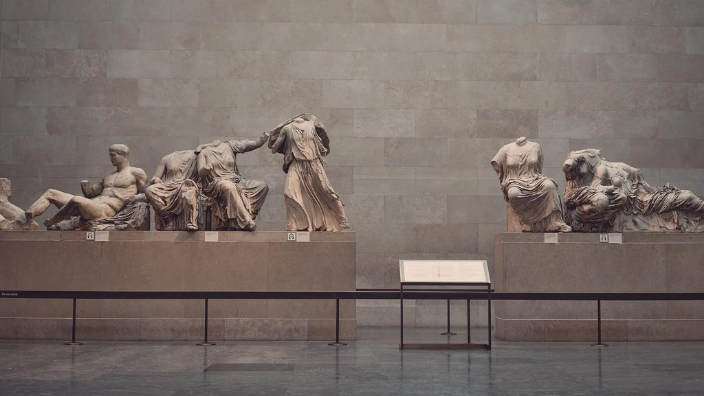
Greece and the UK agree to hold formal talks on possible return of the Parthenon Marbles

·

According to a recent report by UNESCO, Greece and the United Kingdom have agreed to hold formal talks on the return of the Parthenon Marbles to Greece.

The potential reunification of the Parthenon marbles was announced by the Intergovernmental Committee for Promoting the Return of Cultural Property to its Countries of Origin or its Restitution in case of Illicit Appropriation, or ICPRCP, which opened its 23rd session in Paris this week.

READ MORE: George Vardas says Greece must ‘seize the day’ after UNESCO decision on Parthenon Sculptures.

The meeting, which was offered on April 29 by the UK, has been accepted by Greece and will be arranged “in due course.”
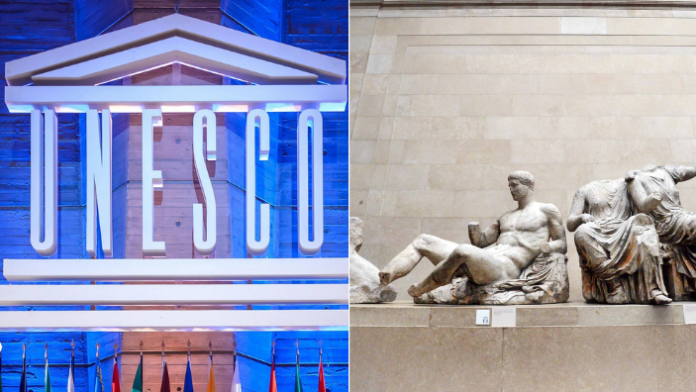
According to a recent report by UNESCO, Greece and the United Kingdom have agreed to hold formal talks on the return of the Parthenon Marbles to Greece.

This news comes as Greece has recently ramped up its efforts to push for the repatriation of the Parthenon Marbles from the British Museum, where they are currently on display.

READ MORE: Australians being urged to join fight for the return of the Parthenon Marbles to Greece.

Greek Prime Minister, Kyriakos Mitsotakis, raised the issue of the sculptures during a meeting with his British counterpart, Boris Johnson, in London last November. 

In response, Johnson reiterated the formal position of the UK government which is that the sculptures are owned by the British Museum, which operates under a board of trustees independent from government oversight.

READ MORE: Boris Johnson rules out return of Parthenon marbles to Greece.

Boris Johnson (left) met with Kyriakos Mitsotakis (right) last year to discuss the Parthenon Marbles. Credit: Press Office of the Greek PM.

Since then, a number of proposals for the return of the Parthenon Marbles to Greece have been made, including one by actor and Philhellene, Stephen Fry.

READ MORE: Stephen Fry presents proposal for the return of the Parthenon Marbles to Greece.

Fry has suggested 3D-printed replicas made of Pentelic marble could be given to the British Museum, while computer-generated artificial reality will be used to show visitors how the genuine pieces were returned to Athens.

There has been no word yet on whether proposals such as this will be discussed at the formal meeting.

READ MORE: British Museum faces legal action after refusing a 3D scan of Parthenon Marbles.

Source: ArtNet.

Share:

KEEP UP TO DATE WITH TGH

By subscribing you accept our Terms of Service and Privacy Policy.

Latest News

What to read this summer: Greek Australian writers recommend their favourite books

The Greek Herald asked some of the Greek Australian community’s favourite writers for their recommendations on what to read this summer.

Chris Lucas declares Sydney the hottest hospitality market in Australia

Melbourne restaurateur Chris Lucas has opened Grill Americano in Sydney’s Chifley Square, his latest venue after Chin Chin.

Celebrating the legacy of the Anemones Dance Group

We recently celebrated the remarkable journey of the Greek Women of the Northern Suburbs and our beloved dance group, Anemones.

Call to preserve Greek migrant stories: Community invited to join ‘Our People, Their Stories’

Australia’s Greek community is being invited to play an active role in preserving one of its most valuable assets - its collective memory.

Greek rapper Negros Tou Moria earns spot on best albums list

The Guardian has named Negros Tou Moria’s album Mavri Ellada (Black Greece) among its 10 best global albums of 2025.

You May Also Like

Insight or Perspective: If we lose the language we lose everything!

Eleni Kostakidis, a teacher of Modern Greek and University lecturer is writing about the preservation of the Greek language in Australia.

Melbourne’s Greek community mourn loss of 104-year-old Evangelia Katris

One of the oldest members of Melbourne's Greek community, Evangelia Katris, passed away on Sunday at the age of 104. 

Digital replica of the Antikythera Mechanism uncovers secrets of world’s ‘first computer’

Researchers at University College London believe they have solved the mystery of the Antikythera Mechanism by building a digital replica.