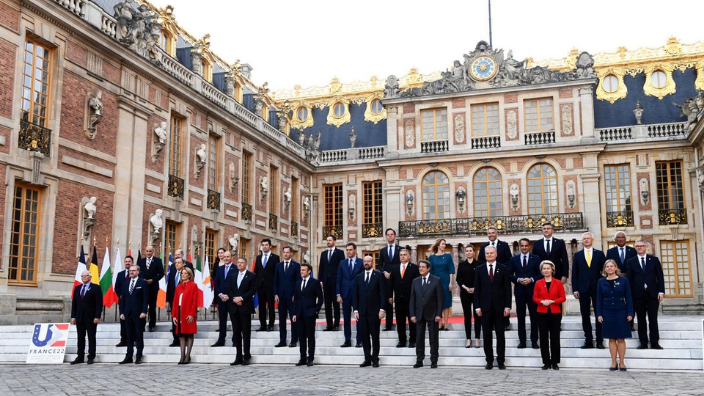
Leaders of the European Union met at an informal summit in Versailles on Thursday in the shadow of the Russian invasion of Ukraine and the surge in energy costs in Europe.
Greek Prime Minister, Kyriakos Mitsotakis, was among those in attendance and expressed his disgust for the Russian attack on a maternity hospital in Mariupol and demanded an immediate ceasefire.
The Prime Minister also called for a common European response to the surge in energy costs, referring to his 6-point proposal for the wholesale price of natural gas.
READ MORE: Greek PM proposes six-point plan to stabilise Europe’s energy market.
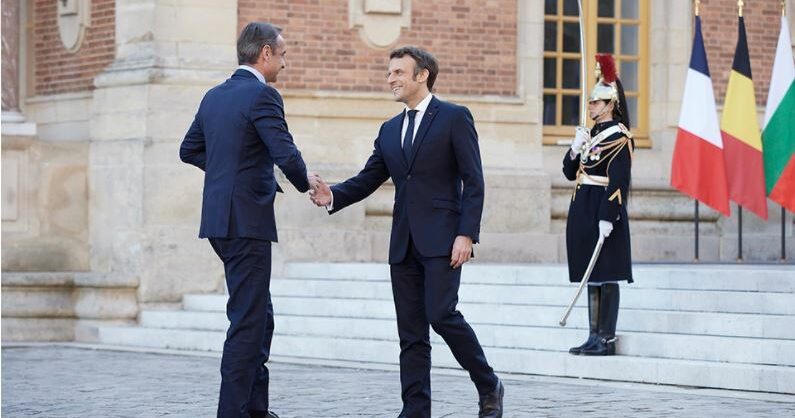
“A European response is needed to protect consumers, businesses and farmers from fluctuations in gas prices and consequently electricity, which are not dictated by the rules of supply and demand but are the result solely of speculation in the natural gas market,” Mitsotakis said at the summit.
His proposed plan includes a price cap on title transfer facility (Europe’s regional gas benchmark), and daily price guardrails to limit volatility on the fluctuation band on TTF.
READ MORE: Why Putin lost the war in Ukraine.
For her part, the European Commission President said on Twitter that the Summit was “a defining moment for the European Union.”
“This is not only an attack on Ukraine. This is an attack on people’s freedom to choose their own destiny. The very principle our Union is based on. We must show the power of our democracies,” von de Leyen said.
Greece, Poland and refugee resettlement:
This EU summit came as Greek Migration and Asylum Minister, Notis Mitarakis, stated on Thursday that Greece will send buses or airplanes to Poland to voluntarily accept and resettle refugees from Ukraine after an appeal by the Polish government.
The Minister stressed that any move will not be compulsory but voluntary.
Mitarakis also revealed that Greece can accept approximately 30,000 Ukrainian refugees and pointed out that if there are more refugees, Greece could apply for emergency EU funding to cover the costs.
So far, over 7,000 Ukrainian refugees have arrived in Greece since the start of the Russian invasion.
READ MORE: ‘Terrified of the war’: Expatriates, refugees reach Greece after escaping Ukraine.
Source: Ekathimerini.

