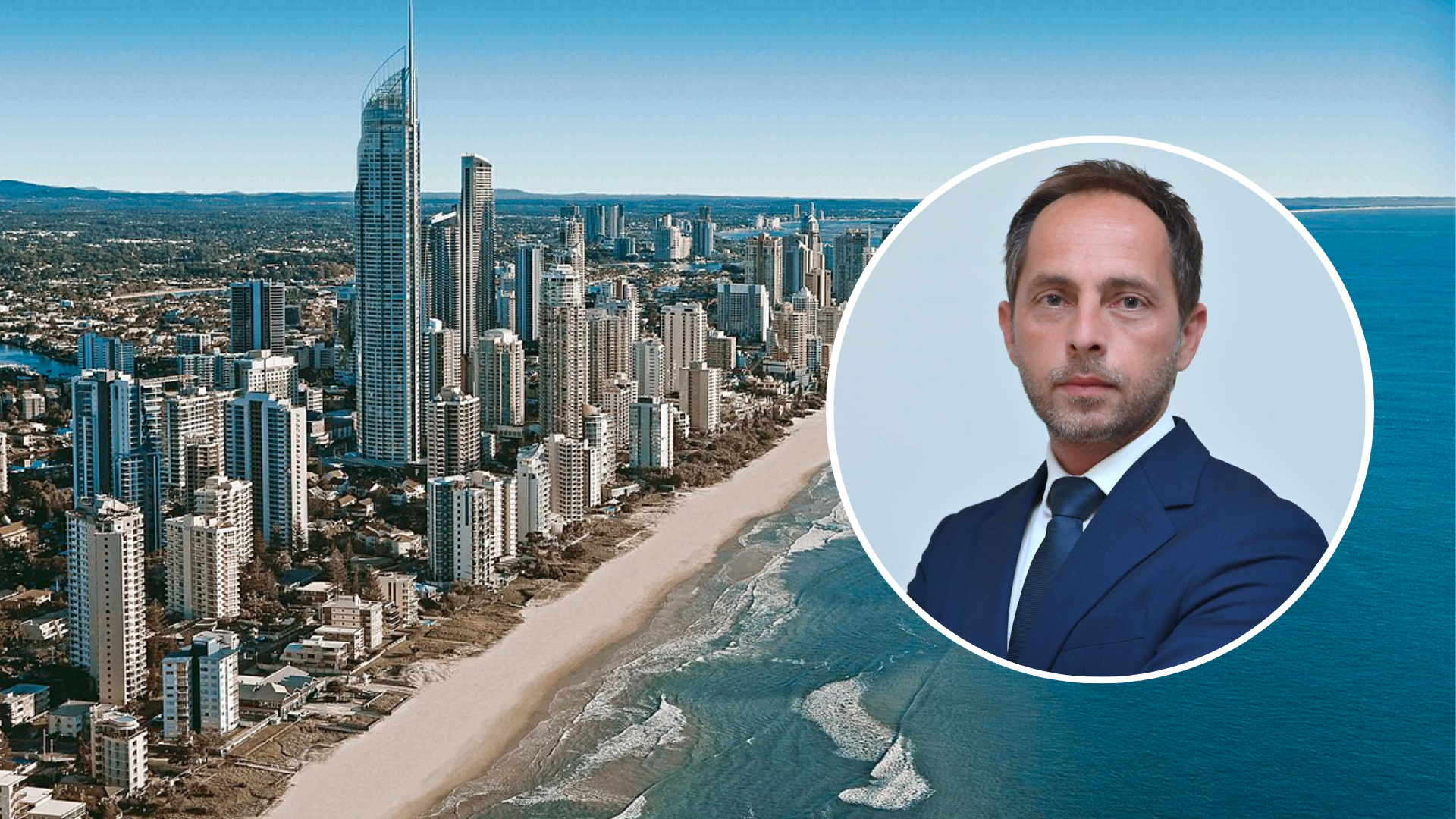
There are places that need no introduction. Ancient Olympia is one of them — a name that carries within it centuries of history, symbolism and ideas. It was here that a powerful concept was born, one that travelled beyond borders and eras: that people can meet not on the battlefield of conflict, but in a shared space of competition and fair contest.
Today, that same idea appears to be opening a new path — this time towards the other side of the world. The historic city of Elis is in the process of becoming a Sister City with Australia’s Gold Coast, one of the country’s most dynamic regions and a location set to come under global focus ahead of the Brisbane Olympic Games in 2032.
As the Mayor of Ancient Olympia, Aristeidis Panagiotopoulos, reveals exclusively to The Greek Herald, the proposal for a Sister City relationship has already been unanimously approved by the municipal council, with the next step now depending on a corresponding decision by the Gold Coast City Council.
Although the process has not yet been finalised, the initiative is already moving towards implementation, with both sides exploring ways to give meaningful substance to the partnership.
A decisive role in building this connection was played, as the Mayor acknowledges, by the Honorary Consul General of Greece in Queensland, George Mastrocostas, who helped foster the necessary climate of trust and bring the two sides closer together.
The prospect of a Sister City partnership takes on even greater significance in light of the Brisbane Olympic and Paralympic Games in 2032, in which the Gold Coast is expected to play a key role. Through such a partnership, joint initiatives could be developed in tourism, culture and education, alongside efforts to promote internationally the message of the Olympic ideal.
In the interview that follows, the Mayor of Ancient Olympia discusses the background to the initiative, the role of the Greek diaspora in Australia, and the opportunities such a collaboration could create for the local community of Olympia.
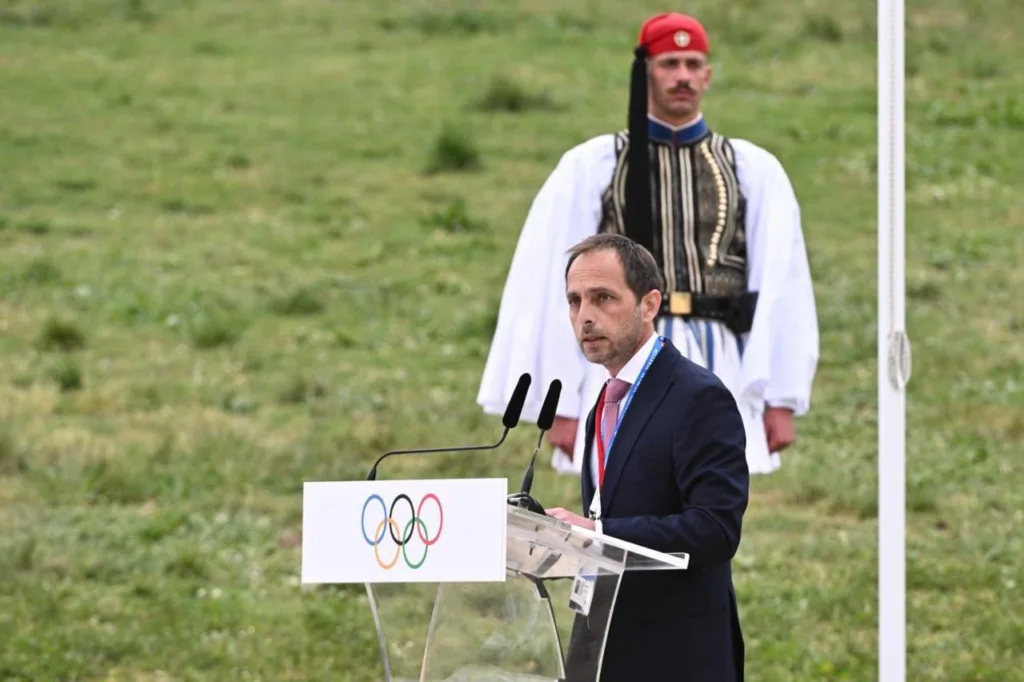
How did the initiative for the potential Sister City partnership of Ancient Olympia with Australia’s Gold Coast come about, and when is a final decision expected?
A clear point of common ground is the Gold Coast’s involvement in hosting events for the Brisbane 2032 Paralympic Games, alongside the universal significance of Ancient Olympia as the birthplace of the Olympic Games. The Municipality of Ancient Olympia, with the aim of promoting Olympic heritage and the values of peace, cooperation and unity among peoples, seeks to cultivate Sister City relationships with cities connected to the Olympic Games.
This initiative demonstrates that the symbolic power of Ancient Olympia transcends borders and distances. For us, it is both a reminder and an opportunity to reflect on our own potential. When people from the other side of the world seek to connect with us — to learn about our land and its history, and to exchange best practices, expertise and successful examples — one begins to appreciate the scale of the opportunities before us.
The Sister City proposal has already been unanimously approved by our Municipal Council, and we are now entering the next phase, planning the steps and initiatives that will bring this vision to life.
It appears that the Honorary Consul General of Greece in Queensland, George Mastrocostas, has played a key role in this initiative. How did he contribute, and how important is the role of the Greek diaspora in such international collaborations?
I will begin with the latter — the Greek diaspora has long been a cornerstone of Greece’s soft power. We owe these people deep appreciation, as they have consistently served as authentic representatives of Hellenic values and as invaluable ambassadors of our national interests worldwide. Most often, they act selflessly, drawing on their own resources and networks, beyond any formal support from the Greek State.
In this particular case, it is clear — and I acknowledge it openly — that the Honorary Consul General of Greece in Queensland, George Mastrocostas, played a decisive role. Through his consistency and personal commitment, he helped bridge the distance between the two sides, convey messages of goodwill and establish the necessary climate of trust for this initiative to move forward on solid foundations.
The Gold Coast will play a role in the Brisbane 2032 Olympic Games. What opportunities does this create for joint initiatives, and how might such cooperation contribute to promoting the Olympic ideal globally?
The fact that the Gold Coast is the sixth largest city in Australia, with a population exceeding 630,000, and one of the fastest-growing urban areas in the country, speaks to both its dynamism and the potential value of this partnership. As a major tourist destination attracting more than 13 million visitors annually and generating economic activity exceeding $8 billion, it offers significant expertise, experience, and administrative capacity — all of which are highly valuable to us.
It also enjoys international recognition for its beaches, theme parks and ability to host major events, while at the same time developing into a significant university and research hub with a strong innovation ecosystem — all elements that are of particular interest.
Taking all of this into account, it becomes clear that this relationship opens the door to a wide range of joint initiatives in the coming years. These may include Olympic education programmes for young people, cultural events linking Ancient Olympia symbolically with Brisbane 2032, as well as exchanges of athletes and students. In doing so, we can reinforce the idea that the Olympic Games are not merely a sporting event, but a global concept rooted in peace, cooperation and shared values.
What practical benefits could such a partnership bring to the local community of Ancient Olympia, particularly in tourism, culture and education?
The value of a Sister City agreement is not measured by the signing of a protocol, but by the impact it has on everyday life. In the case of cooperation with the Gold Coast, the opportunities are tangible and can deliver measurable benefits for the local community.
First and foremost, in tourism. The Gold Coast is one of Australia’s most dynamic destinations, with a strong international presence. Collaboration with such a city can significantly enhance the visibility of Ancient Olympia in a distant yet important market like Australia, particularly given the strength of the Greek diaspora there.
In the lead-up to the 2032 Olympic Games, we have the opportunity to create a compelling narrative linking the birthplace of the Games with their future host. This can translate into new tourist flows, partnerships with tourism bodies and joint promotional initiatives.
In cultural terms, this partnership can give global reach to the message of Ancient Olympia. It is not only a site of immense historical and archaeological importance, but also a universal symbol of values. Through cultural exchanges, events, festivals and travelling exhibitions between Olympia and Australia, we can promote the history, culture and ideals of Olympism to an international audience.
Finally, there is the educational dimension, which is particularly important for us. Collaboration with universities and educational institutions in the Gold Coast region can open pathways for student exchanges, summer schools and joint programmes focused on sport, culture and tourism. Ancient Olympia can further develop as an international centre of learning for the Olympic ideal and the values it represents.
In short, this partnership can serve as a bridge of outward engagement for Ancient Olympia — strengthening its tourism profile, expanding the international reach of its culture and creating new opportunities for knowledge and experience for the younger generation. This is perhaps the most meaningful benefit for any local community.
The Greek diaspora in Australia is highly active and maintains strong ties with Greece. How important can its role be in such initiatives?
The Greek diaspora in Australia is a vibrant and dynamic pillar of Hellenism abroad. It maintains strong ties with Greece and often serves as a bridge of communication and cooperation between the two countries. In initiatives such as the Sister City partnership of Ancient Olympia with the Gold Coast, its role can be particularly significant.
Through its networks and activity, it can help promote Olympia, support cultural and educational initiatives and strengthen cooperation in tourism. For us, the diaspora is a valuable ally in keeping Ancient Olympia connected to the wider world and in conveying the values of Olympism to an international audience.
What message would you like to send to Greeks in Australia who feel a strong connection to Olympia and the history of the Olympic Games?
We stand alongside them. We consider them an integral part of Hellenism and thank them for everything they have done for the motherland, as well as for promoting and defending Greek interests abroad. Personally, I invite them to visit Greece — and of course Ancient Olympia.
To come here, to the birthplace of the Olympic Games, to draw strength from this place and to carry with them images and emotions that will stay with them for the rest of their lives. To feel pride, joy and admiration for the civilisation of our ancestors, but also to see the progress we have made.
The Olympic Games are one of the few global “languages” that can still unite people. They remind us that beyond conflict and rivalry, there is another path — the path of peace, respect and cooperation. I can think of no better ambassadors of this message than the Greeks of Australia and the diaspora, who keep alive the connection between the homeland and the wider world.
