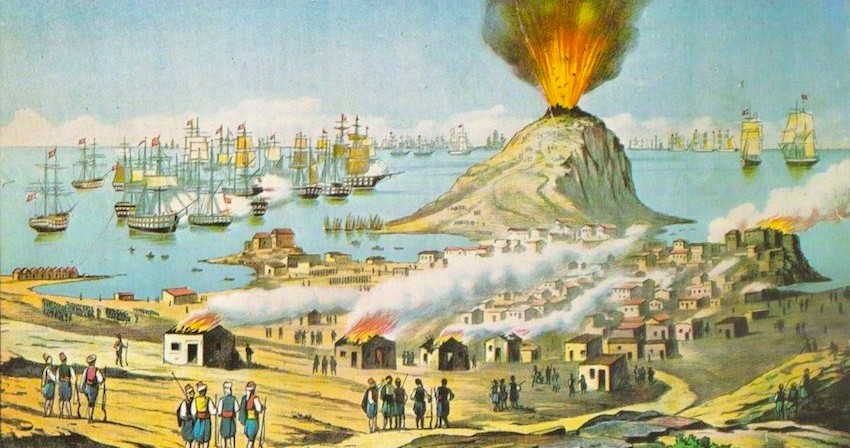
On this day: The destruction of Psara

·

On the morning of June 20, 1824, the Turkish fleet began the destruction of Psarra, signifying one of the biggest blows to the revolutionary effort.

The Turkish fleet comprised of 176 ships (warships and transports), carrying 17,000 Turkish and Albanian troops. The forces defending Psara included 1,300 Psarians, 700 refugee troops, and 1,027 mercenaries from Macedonia and Thessaly. The island’s 100 ships were a sizeable force that posed a thorn in Turkish naval operations.

The beaches were organised with cannon emplacements and trenches. All defences were prepared well, apart from one tragic mistake. In trying to placate the mercenaries, the locals agreed to remove the rudders from their significant fleet, thus rendering their ships useless.
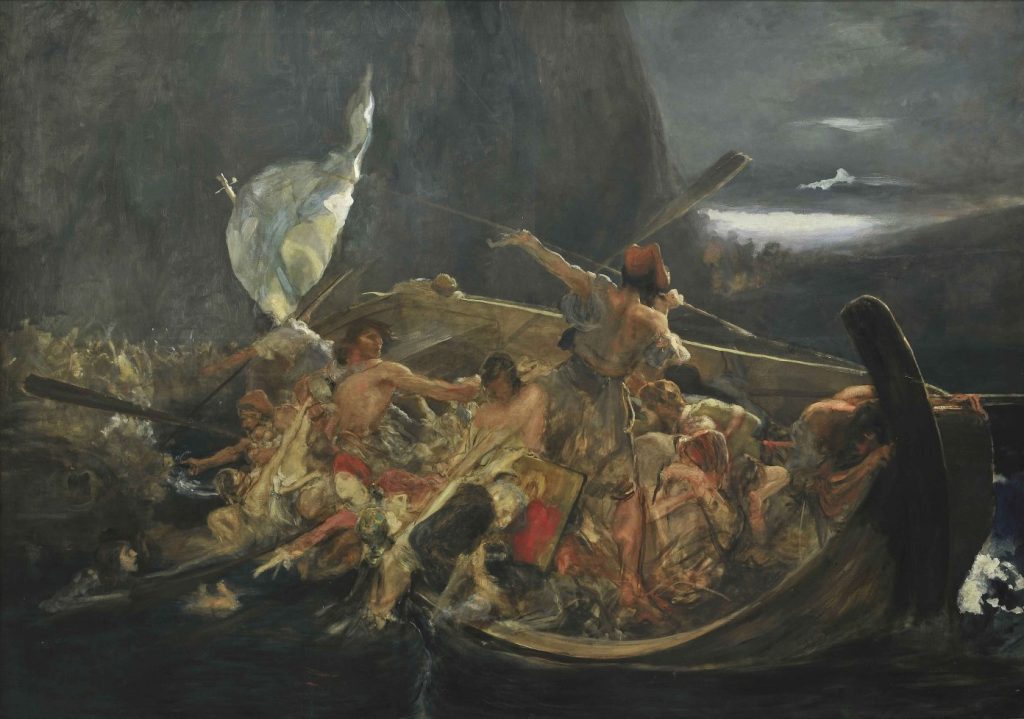
Despite strong naval bombardment, the Turks were unable to land their troops on the Greek island. However, naval scouts found they could disembark at an area called Cavo Markaki.

They then disembarked and proceeded to destroy the islands defenders. Very quickly they began the systematic roundup and slaughter of the inhabitants. Horrific scenes ensued, with streets strewn with the corpses of old men, women and children. 

Read More: On This Day in 1944, 228 innocent Greeks were killed in the Distomo massacre

With the rudders removed from the ships, villagers were left unable to escape.

Read More: On This Day: The Fall of Constantinople

 Of the 30,000 inhabitants, 18,000 were massacred or sold as slaves. Of the 100 or so Psarian ships, only 16 managed to escape along with seven fireships under Konstantinos Kanaris.

The destruction of Psara dealt a serious blow to the revolutionary effort as it destroyed a very vital portion of the Greek navy.

Sourced By: Efthimios Tsiliopoulos/The Greek Herald

Share:

KEEP UP TO DATE WITH TGH

By subscribing you accept our Terms of Service and Privacy Policy.

Latest News

Greece records longest working week in the EU, Eurostat data shows

Workers in Greece recorded the longest average working week in the European Union in 2025, according to new Eurostat figures.

Cannabis use among Greek teens reaches 25-year high

Cannabis use among teenagers in Greece has climbed to its highest level in 25 years, according to new findings released.

Metallica fans shook Athens harder than Iron Maiden, seismologists find

Fans of Metallica generated stronger seismic activity than supporters of Iron Maiden during recent Athens concerts, according to a study.

Investigation underway after historic bell disappears from Pylos fortress

Authorities in southwestern Greece are investigating the disappearance of a commemorative bell from a chapel inside the historic Niokastro fortress in Pylos.

Standoff grows over reopening of Kalavryta’s historic rack railway

A disagreement has emerged between the Greek government and local authorities in Kalavryta over the reopening of the famous Diakofto–Kalavryta rack railway.

You May Also Like

Unknown facts of the Asia Minor Catastrophe

Professor Anastasios M. Tamis shares some unknown facts about the Asia Minor Catastrophe with The Greek Herald readers.

Albanian Orthodox archbishop remains in critical condition after emergency surgery

Archbishop Anastasios of Albania remains in critical condition after emergency surgery on Friday to treat severe internal bleeding.

Insight or Perspective: If we lose the language we lose everything!

Eleni Kostakidis, a teacher of Modern Greek and University lecturer is writing about the preservation of the Greek language in Australia.