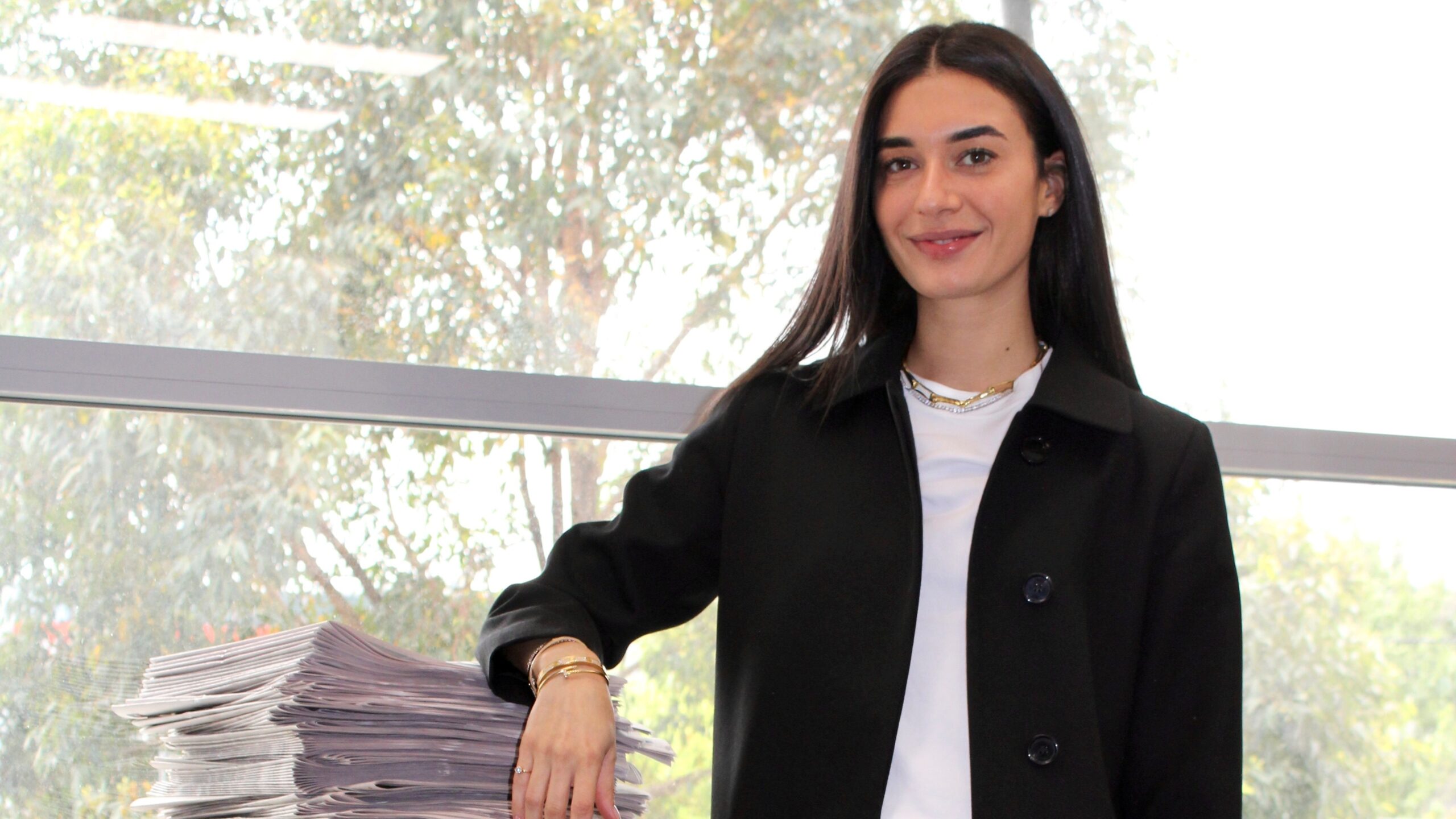
Dimitra Skalkos can’t remember a time before The Greek Herald.
Before she became its Publisher. Before she inherited its pressures, politics and responsibilities. Before she understood what it meant to carry a century-old masthead through one of the most unstable periods modern media has faced.
There was simply the newspaper – always there, always moving, always demanding something.
Phones rang endlessly through the house. Television bulletins played late into the night. Politicians, journalists, bishops and community leaders moved through office corridors while printing presses thundered in the background.
And at the centre of it all stood her father, the late Theodore Skalkos.
“The news cycle never stopped in our house and, looking back now, I realise neither did he. At the time, he was overseeing multiple mastheads, but The Greek Herald was always closest to his heart because it was the first ethnic media publication he had taken on,” she says.
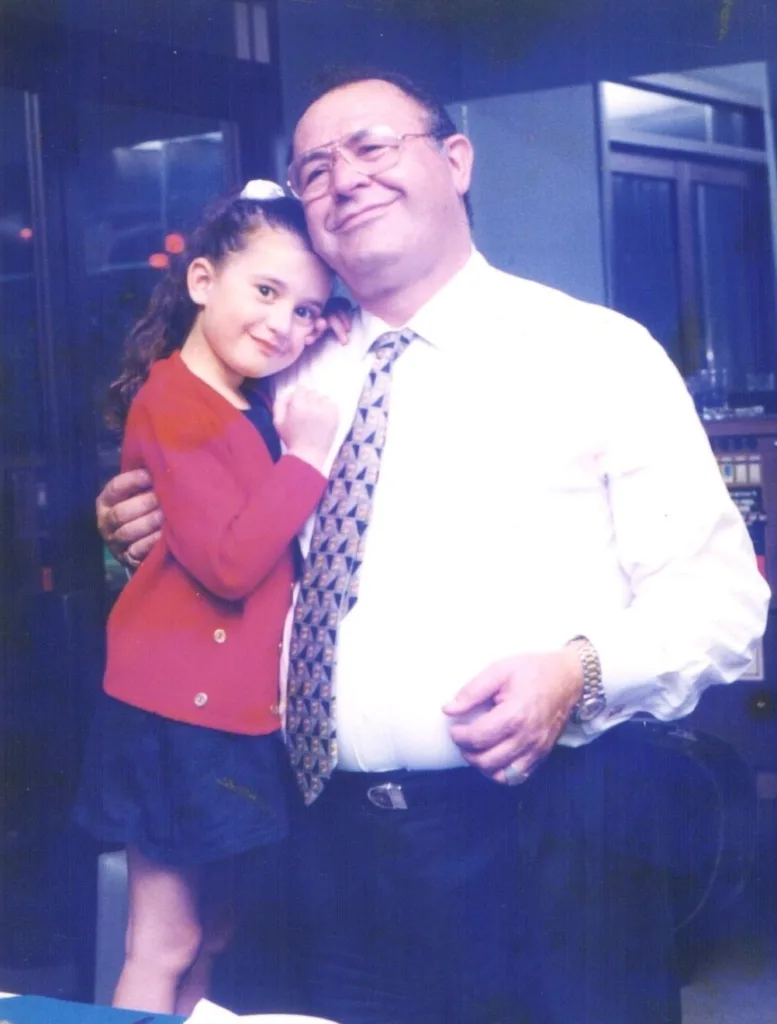
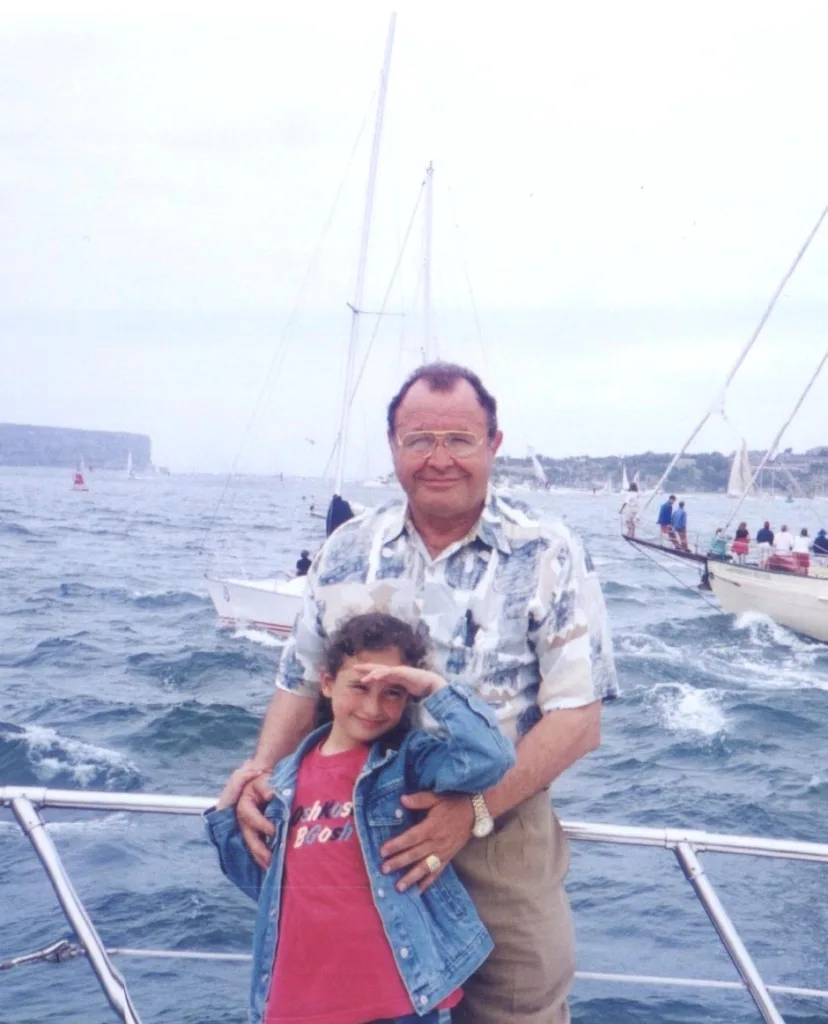
As a child, Dimitra spent school holidays weaving through newsroom offices and printing factories, watching newspapers roll off industrial presses while her father carried the relentless rhythm of the media world around him.
At the time, it all felt normal.
Only years later, sitting in the same role herself, did she fully understand what she had been witnessing: not simply a businessman running a paper, but a man carrying the emotional burden of an institution deeply intertwined with the story of Greek Australia itself.
For Theodore Skalkos, the newspaper was never simply work.
It was identity.
And eventually, it became Dimitra’s responsibility too.
The daughter who became his shadow
After finishing school, Dimitra stepped more formally into the world she had spent her entire life observing.
But Theo was never interested in simply handing titles to his daughter. He believed leadership had to be learned from the ground up.
Dimitra moved through department after department – advertising, administration, circulation, editorial and production – learning every layer of the operation while accompanying her father to meetings and absorbing the realities of journalism and business simultaneously.
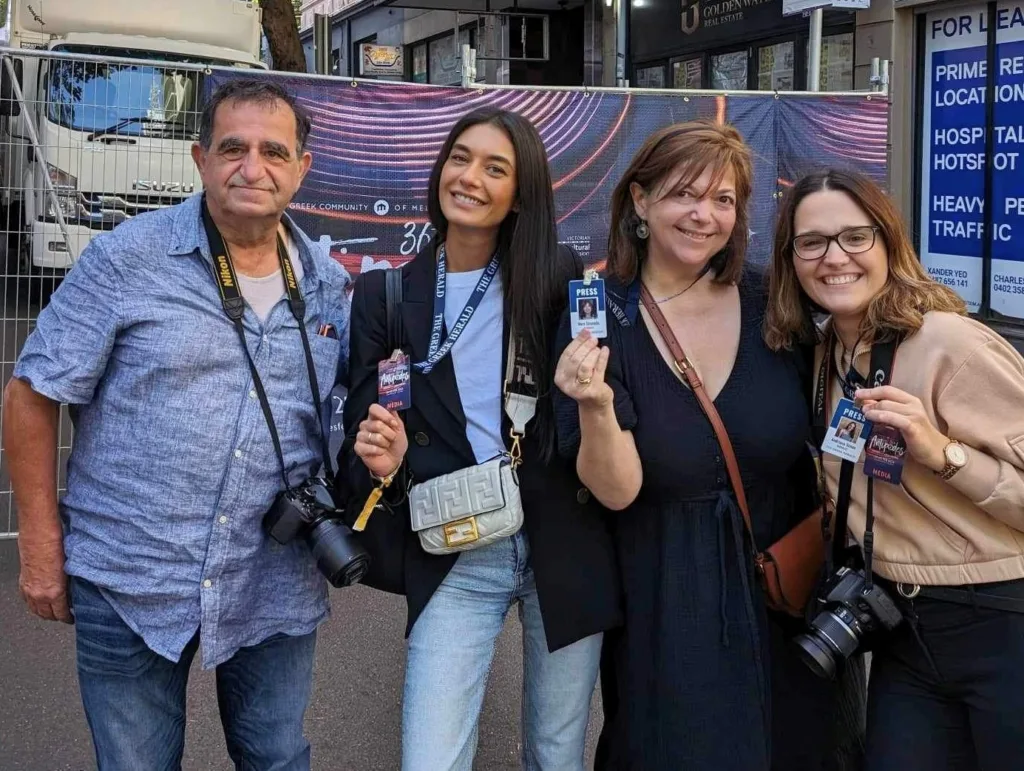
Still, journalism was not necessarily the future she originally imagined for herself.
“I was always a shadow to my father. Originally, I imagined a different career path for myself. But Dad said to me, ‘Why would you go somewhere else when this has already been built?’ And in a Greek family dynamic, you tend to listen to your father,” she says.
She enrolled in Media and Communications, but before long, Theo’s health deteriorated and he underwent triple bypass surgery. Dimitra deferred university to step further into the business while he recovered.
Except Theo never truly stopped working.
“In typical Theodore Skalkos fashion, he discharged himself from hospital against medical advice and checked himself into the Hilton to continue recovering while still running the paper. That was Dad. People often described him as a bull,” Dimitra says.
And even during recovery, the newsroom never left him.
“I distinctly recall him having not one but two mobile phones running at once while in the Intensive Care Unit after recovering from one of many operations. When I would visit, the nurses would confiscate them and advise him he could not have mobiles in the ICU. The next day he would call me demanding I bring them back. This happened for consecutive days. Like he said, ‘the News doesn’t stop,’ and neither did he,” Dimitra explains.
University quietly faded away after that.
“After deferring university, I never actually went back. Years later, Dad would joke that I had graduated from the best university, ‘The University of Skalkos.’ But truthfully, I would not change it,” she says.
The education she received inside the newspaper became something impossible to replicate academically – exposure to leadership, pressure, crisis management, media law, politics and community life all unfolding in real time.
“He was tough, but he was fair. One thing he always said to me was, ‘Dimi, as a leader, you have to be first in and last out’,” she says.
When everything changed
For years, Dimitra worked quietly beside her father.
Then in 2019, everything changed.
Theo passed away, and suddenly the newspaper – and everything attached to it – became hers to carry.
“The responsibility was simply to carry the paper forward in my own way while protecting what he built,” Dimitra says.
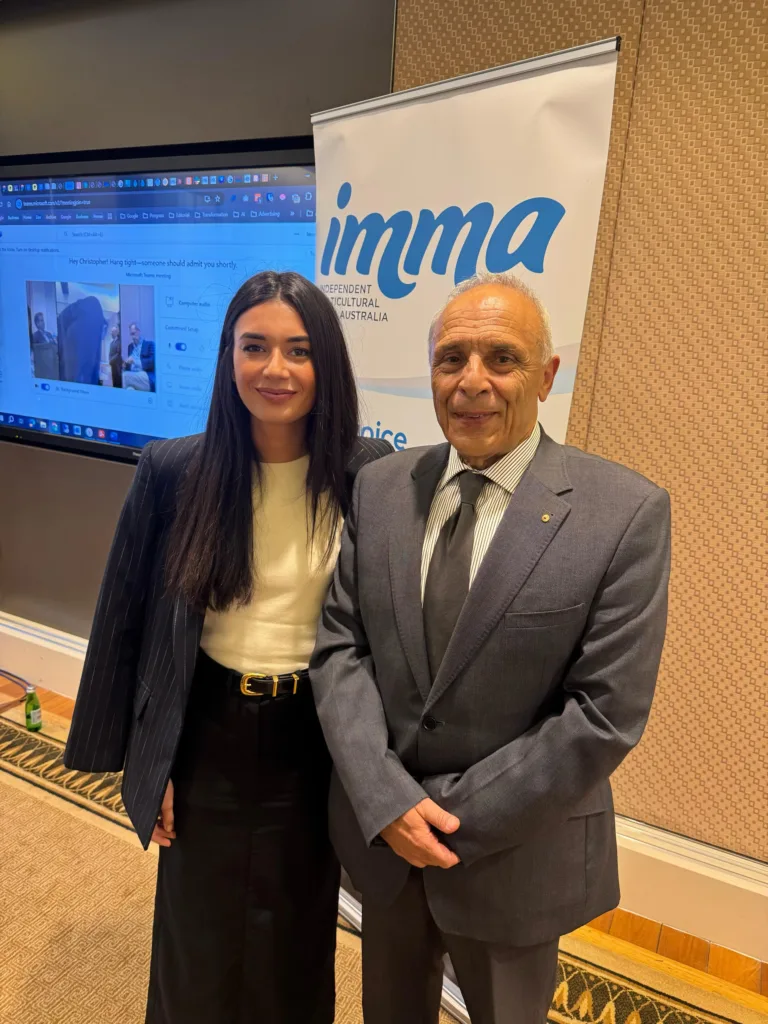

But inheriting The Greek Herald also meant inheriting the complicated emotional landscape surrounding a newspaper that had existed since 1926.
“There were people quietly waiting to see whether I would fail or whether the paper itself would fail. A newspaper that has existed since 1926 inevitably accumulates enemies, rivalries and political tensions over time,” she says.
At only 28 years old, Dimitra stepped publicly into leadership during one of the most unstable periods modern media had ever faced.
And behind the public role came something few people fully see.
“There is also an enormous loneliness attached to carrying an institution,” she says. “People often assume leadership in media is glamorous because they see events, public appearances and networking. The reality is much heavier than that.”
The loneliness of carrying an institution
Calls, messages and requests flow constantly, often blurring any distinction between work and personal life.
“There are constant demands, expectations, complaints, requests and pressures coming from every direction,” she says.
“Rarely do people stop to say thank you when you have done something noteworthy, but criticism, demands and expectations arrive very quickly and very loudly.
“That is simply the nature of media, particularly community media where there is very little buffer between the paper’s team and the public.”

Unlike mainstream media organisations, diaspora journalism becomes intensely personal because reporters and subjects often exist inside the same community networks. Friendships, organisations, business relationships and journalism overlap constantly.
“There have been occasions where public interest reporting has cost us major advertising contracts because an organisation or influential figure connected to a negative story also happened to be commercially connected to the paper,” she says.
“You quickly learn that when public interest and personal relationships collide, relationships are often the casualty. That is probably one of the hardest realities of journalism.”
When journalism becomes personal
The pressure attached to community journalism can quickly become political too.
Dimitra says many readers feel a genuine sense of ownership over The Greek Herald itself, viewing the paper not simply as a publication, but as a voice that should “represent, protect and reflect” the community.
But with that closeness comes tension.
“It is no secret that the paper historically carried rivalries and fractured relationships attached to it, including periods of significant tension with major organisations and institutions,” she says.
“Inheriting some of that history was intimidating. There were certainly periods where I felt ostracised from sections of the community because of perceptions attached to the newspaper before I had even properly stepped into leadership.”
Still, Dimitra says the organisation has worked hard to rebuild relationships while maintaining editorial independence.
“We have worked very hard to repair relationships and bridge divides where possible for the betterment of the wider community while still maintaining editorial independence,” she says.
Criticism, however, remains unavoidable.
“One thing you learn very quickly within community journalism is that you cannot please everybody,” she says.
“When controversial or sensitive stories arise, criticism often comes regardless of what position you take. If reporting is perceived as favourable, people question your independence. If reporting is critical, people question your motives.”
Over time, she says, some personal relationships quietly shifted following certain stories, while reporting itself occasionally triggered legal threats, political pressure and commercial consequences.
“We often receive requests from influential individuals and organisations asking us to remove articles or reconsider how we report moving forward, whether relating to cartel charge reporting, governance disputes or even ICAC-related matters, as though the newspaper itself is somehow responsible simply for reporting on issues that already exist publicly,” Dimitra reveals.
“Maybe one day I will name some of them, but that day is not today.
“There have also been occasions where political relationships noticeably shifted following critical reporting or scrutiny connected to public office matters. Support for independent media can feel very strong until that independence becomes inconvenient.”
She says advertiser relationships have at times become “weaponised” during reporting disputes, resulting in intimidation, pressure campaigns and attempts to suppress coverage.
Then comes the line that perhaps best captures the difficult reality of independent journalism inside close-knit communities.
“The newspaper did not commit the wrongdoing. We reported on it,” she says.
Over time, Dimitra says she learned criticism often arrives alongside the territory of independent reporting — particularly within community media, where personal relationships and public scrutiny frequently collide.
“If I had a dollar for every time someone approached me asking for a favour to publish or remove a story followed by the phrase, ‘I knew your father,’ I would probably be retired by now,” she says.
“Those interactions affected me at first, less so today. Over time, you learn to trust your instincts, trust your editorial team and accept that criticism often comes with the territory of independent journalism.”
But amid the pressures, legal threats and public scrutiny, her focus repeatedly returns to the people around her.
“What I am proud of, though, is my team,” she says.
“I am proud of my journalists, their voices, their perspectives and the work they continue producing despite those pressures.”
Carrying 100 years of memory
Preparing the newspaper’s centenary edition deepened Dimitra’s emotional connection to the institution even further.
“There is something incredibly emotional about carrying forward a masthead that has survived for 100 years, particularly in today’s fragile media landscape where entire publications disappear regularly. You realise very quickly that you are not simply running a newspaper. You are carrying part of the historical record of Hellenic Australia,” she says.
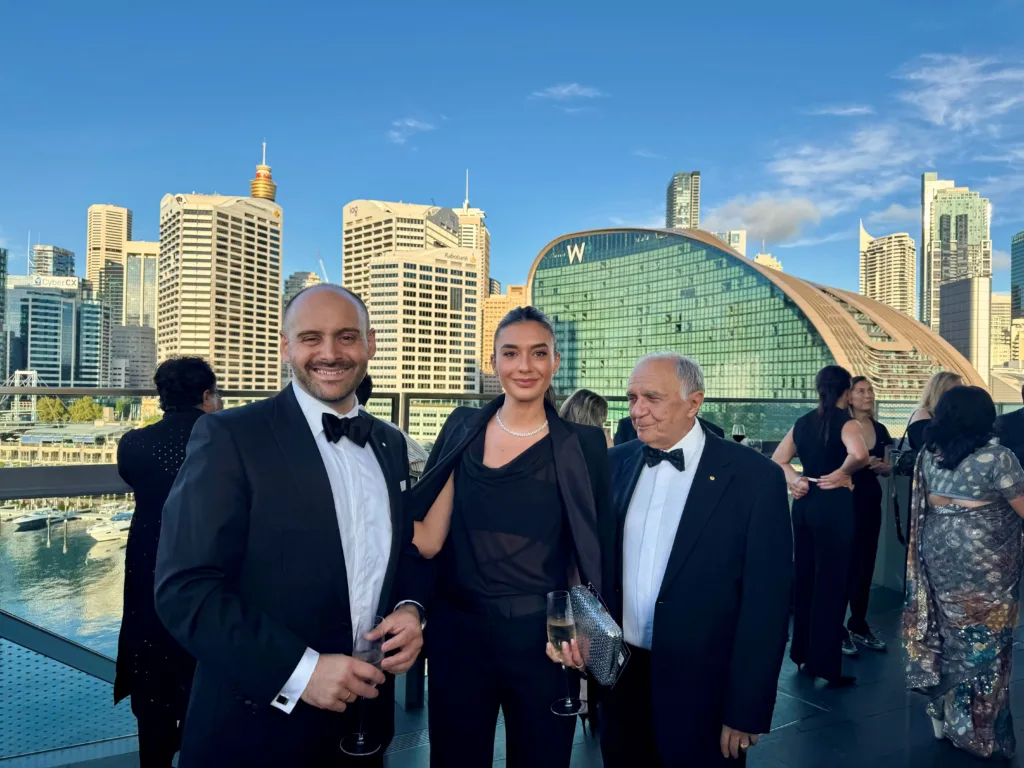
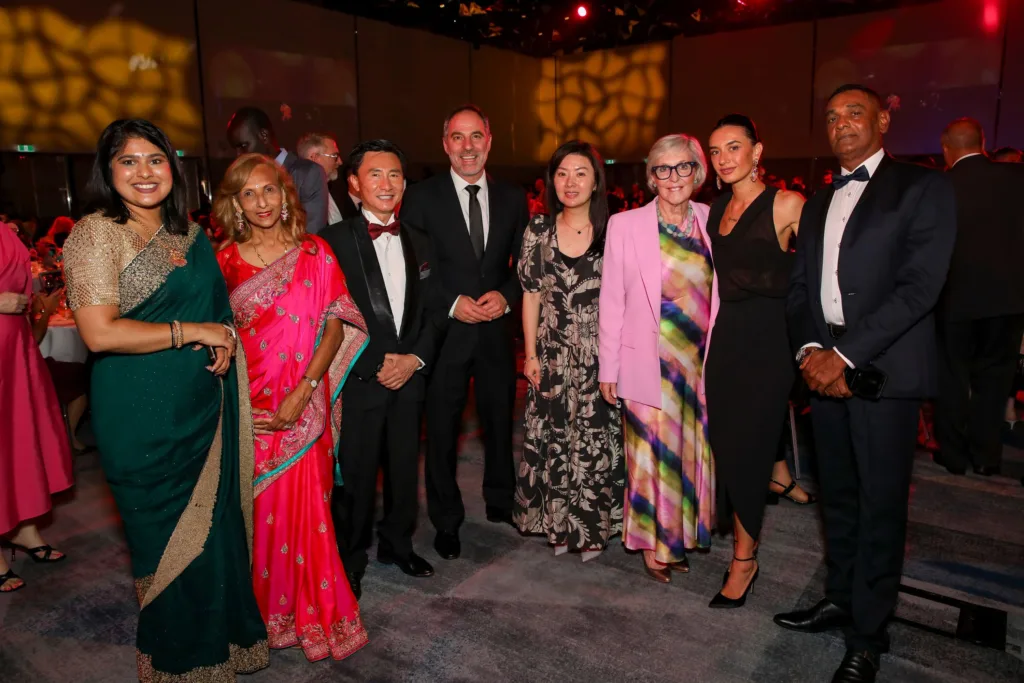
At the same time, she understands survival requires adaptation.
“The Greek Herald still breaks many community-relevant stories itself, including matters that are later picked up by mainstream outlets,” she says.
“People sometimes assume ethnic media operates with the resources of a major national newsroom and expect us to be everywhere, cover everything, investigate everything and respond immediately, but the reality is that smaller community media teams are simultaneously expected to investigate, attend events, break news, advocate, maintain relationships, produce print publications and compete within an increasingly fast digital environment.
“Yes, we have produced award-winning journalism and received incredible recognition over the years, but the operation itself remains small in comparison to the expectations placed upon it.”
A newsroom across generations
What has allowed the publication to survive, Dimitra believes, is its balance between generations.
“What has helped us navigate that transition is having a genuinely cross-generational newsroom. We have journalists and contributors who have been with the paper for decades and carry incredible historical knowledge, alongside younger journalists who understand modern digital audiences and speak to newer generations in their own voice,” she says.
“You need both. One generation understands where we came from. The other understands where we are going. And I think the paper’s ability to survive and evolve comes from respecting both.”
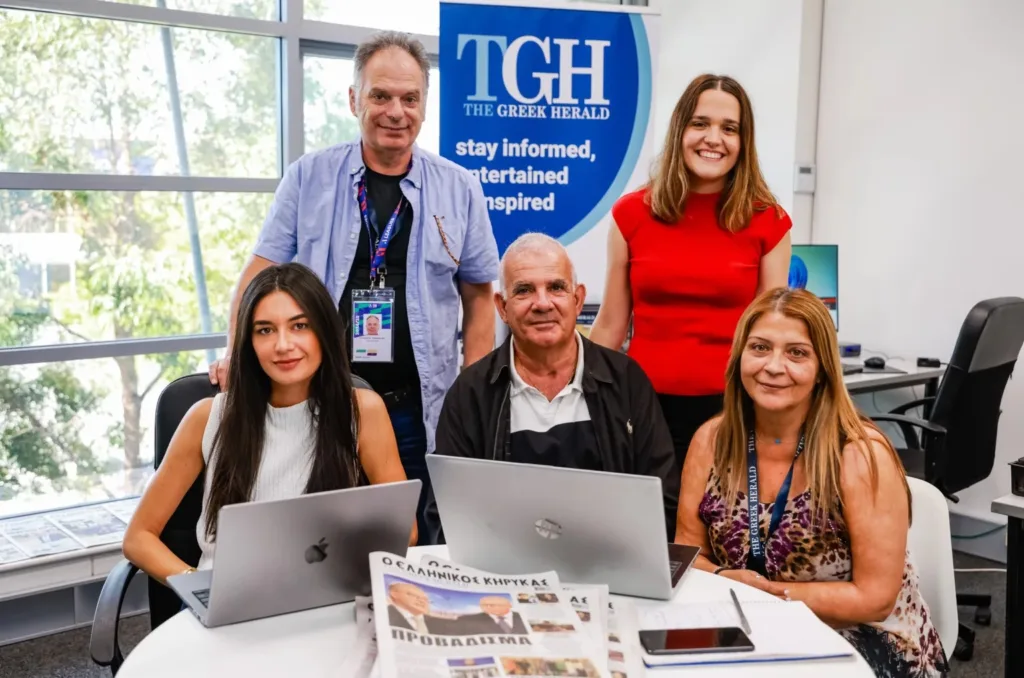
She is equally passionate about recognising the people who carried the newspaper across generations.
“Leadership and direction are indeed important, but no institution survives for a century because of one person alone,” she says.
“But the reality is that The Greek Herald was built through the work, sacrifice, ideas, loyalty and dedication of hundreds upon hundreds of people across generations.”
“That collective effort is one of the things I am most proud of when I look at the paper today. I have enormous respect and appreciation for the team I work alongside today.”
Dimitra also believes female leadership has shaped the paper in important ways.
“Becoming a later female-led organisation has brought different perspectives into the paper. With female leadership across publishing and editorial, we have been able to create initiatives that recognise and celebrate the achievements of Hellenic women within Australia such as ‘The Greek Herald Woman of the Year & Woman to Watch’,” she says.

Trust and the bridge between generations
Then she recounts a story that perfectly captures the continuing role of print in community life.
“I remember one particular conversation with a man who had recently been appointed Chair of a major organisation. We published the story online first and he told me he immediately received messages and calls of congratulations from colleagues, business contacts and professionals within his network,” she says.
“A few days later, when the same story appeared in print, he received an entirely different wave of calls, this time from older generations within the community – relatives, family friends, older community members and people who had seen the story in the physical newspaper.
“He said that was the moment he realised The Greek Herald was still bridging generations in completely different ways across print and digital.
“I thought that was a really powerful observation because it perfectly captured how both platforms still serve very different but equally important roles within community media.”

For Dimitra, trust remains the publication’s greatest responsibility.
“If readers lose trust in your reporting, the publication loses its value,” she says.
“Many of our readers specifically wait to see what The Greek Herald reports on a matter because they know there has been research, investigation and verification behind it.
“Readers often tell us, ‘If it’s in The Greek Herald, someone has checked it.’ That comes with responsibility, but it is also something we are proud of. Community journalism only works if readers trust you.”
That trust, however, also comes with enormous legal and professional pressures – particularly within close-knit communities where journalism, politics, organisations and personal relationships often overlap.
“I’ve noticed people are often very quick to threaten defamation proceedings without fully understanding what actually constitutes defamation as opposed to simply unfavourable reporting or out laying of facts,” she says.
“There are also instances involving significantly larger organisations or well-resourced individuals with the financial capacity to aggressively pursue legal action, sometimes not necessarily to succeed on the merits of a claim, but to place financial pressure on a publication or suppress reporting through the burden of litigation itself.”
For Dimitra, one of the public’s biggest misconceptions is how much investigative work never actually reaches publication.
“The reality is that the public only ever sees a fraction of what journalists actually investigate,” she says.
“There are files upon files of matters, allegations and disputes that may sit unresolved for years because evidence cannot yet be properly substantiated or because people are unwilling to formally go on record.
“Many are willing to speak privately, but far fewer are willing to publicly attach their names to allegations because of fear, repercussions or legal consequences.
“So sometimes stories are not being ignored or concealed. They are simply sitting dormant waiting for the level of evidence, corroboration and on-record material required to responsibly and legally report them.
“That reality makes investigative journalism within communities complex.”
Yet despite the pressures, she still speaks about journalism itself with unmistakable emotion.
“It is very rewarding however, when investigations do see the light of day or reporting later gains wider recognition or, in some cases, are picked up by mainstream media outlets because it validates the importance of independent community journalism and the work being done behind the scenes,” Dimitra adds.
The responsibility that remains
Looking ahead, Dimitra hopes younger generations continue protecting not simply the newspaper itself, but the integrity attached to it.
“I hope future generations protect the integrity and trust attached to institutions like The Greek Herald above all else,” she says.
Because despite the exhaustion, despite the pressure and despite the sacrifices, she still sees journalism as something extraordinary.
“Most people will never experience the level of access, exposure and insight that comes with working inside a newsroom. You witness history unfolding in real time. You meet remarkable people. You see another side of humanity that most people never get access to,” she says.
“It is exhausting, absolutely. There are enormous pressures attached to it. But it is also incredibly rewarding and, at times, genuinely extraordinary.
“Why else would any of us still be doing it?”
Perhaps the answer lies somewhere between father and daughter.
A man in intensive care still reaching for his phones because the newsroom could not stop.
A daughter now sitting late into the night finalising a centenary edition almost a hundred years after the newspaper first began.
The masthead has changed hands across generations.
But the responsibility – and the sacrifice attached to it – remains.
