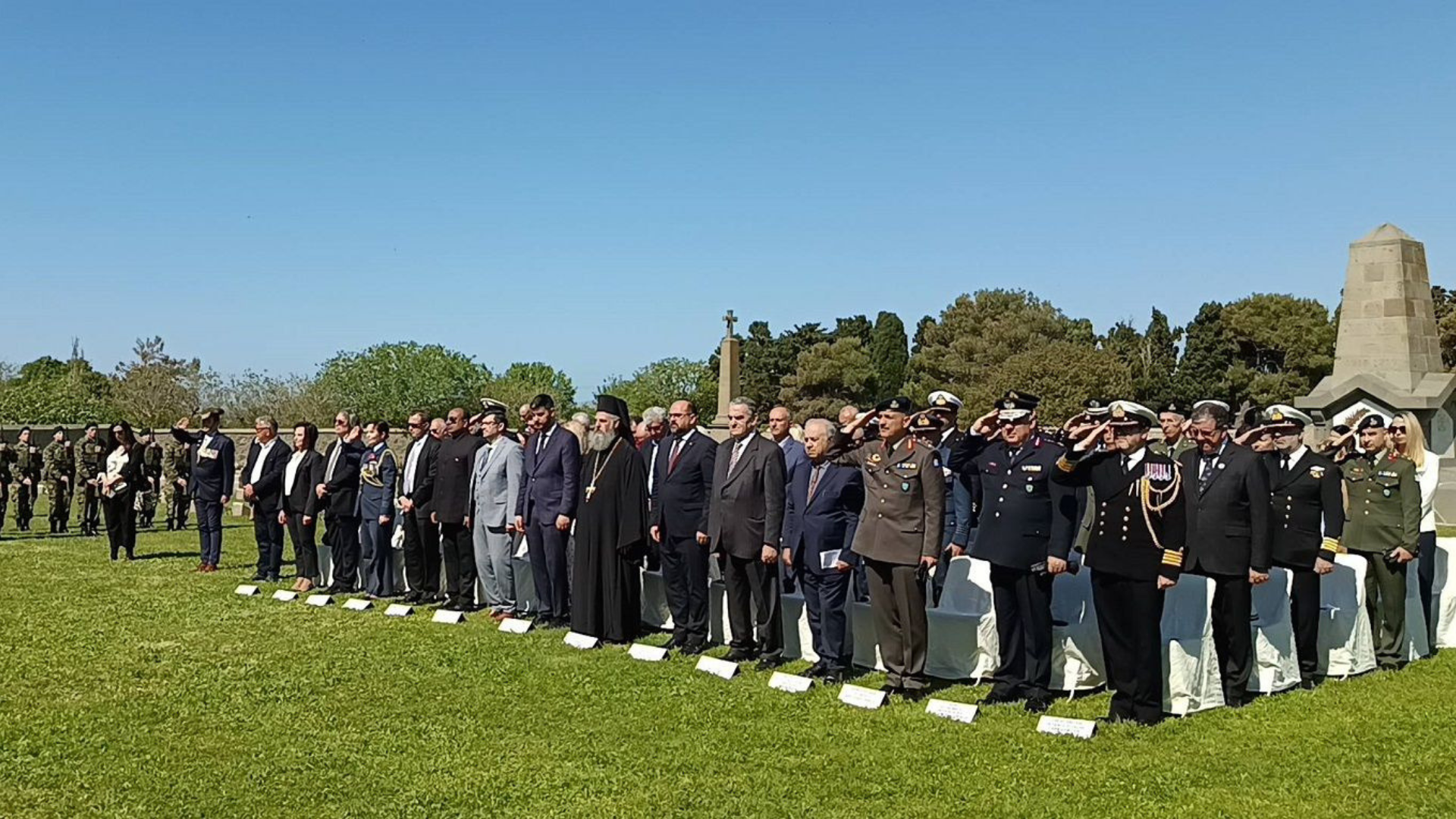
With the presence of representatives of the local government, the armed forces, the educational community and delegations of allied countries, memorial events for the fallen of the Gallipoli Campaign were held in Lemnos on Tuesday, April 28, as part of the celebration of ANZAC Day.
For another year, the special role of the island during the First World War was highlighted, both on a strategic and humanitarian level.
The ceremonies began on Tuesday morning at the Moudros Commonwealth Cemetery, where a memorial service was held, followed by the laying of wreaths and the playing of national anthems.
The atmosphere was charged, with those present paying tribute to the soldiers who participated in the Battle of Gallipoli in 1915, an event that holds a central place in the collective memory of Australia and New Zealand.
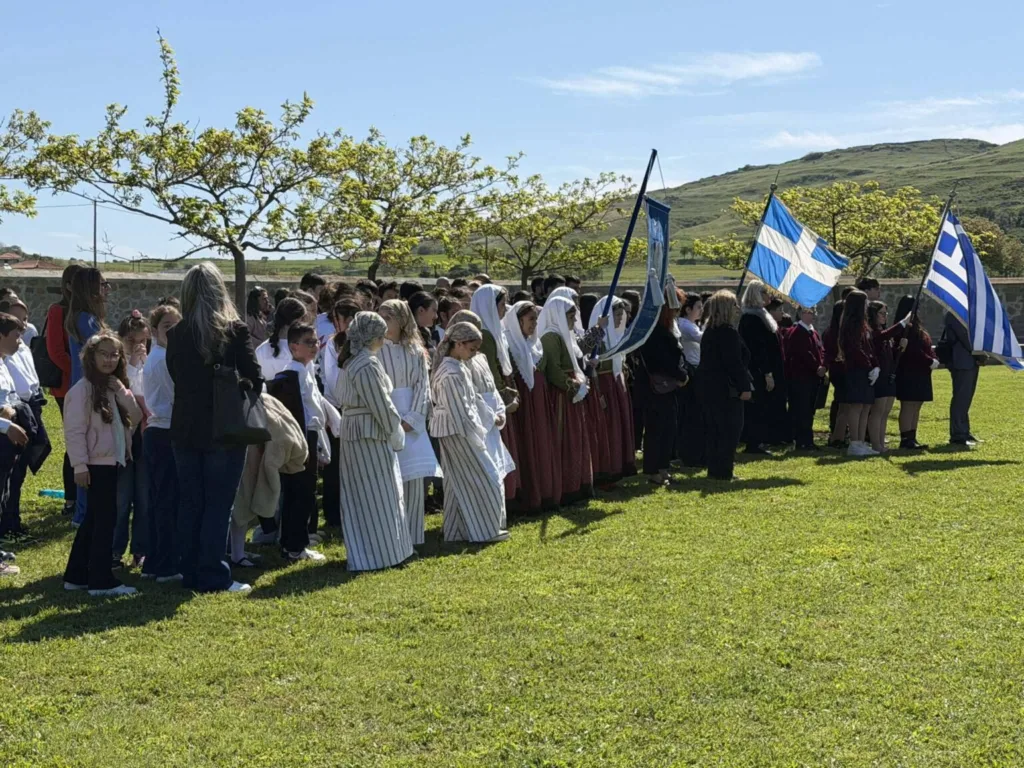
The attention was then transferred to the “Pavlos Kountouriotis” Cultural Centre in Moudros. There, the students of the High School presented the work “Young People Tell the Story of the ANZACs”, attempting to translate the experiences of the young soldiers into the present, through their own eyes.
Their approach connected the local historical imprint with the broader values of peace and collective memory.
The speech of the Vice Admiral emeritus followed. Diogenes Tsipouridis, who analysed the operations of the Gallipoli Campaign, focusing in particular on the role of Moudros as a critical supply and care base. As he underlined, the geographical position of Lemnos was decisive for the development of military operations in the region.
The culmination of the events took place at noon at the Portianos Commonwealth Cemetery, where a new memorial service was held and wreaths were laid.
During the ceremony, Greek-Canadian publisher George Kostandellis referred to the importance of historical memory, emphasising that “those who cannot remember the past are condemned to repeat it.”
As he noted, memory is not a formal obligation, but an essential tool for preventing the mistakes of the past.
This year’s events were part of a broader program of actions of the Regional Unit of Lemnos, which included, among other things, an exhibition dedicated to World War I and the means of war of the time.
The participation of citizens and official missions highlighted Lemnos as a place of historical
memory and a meeting point for people with common historical references.
