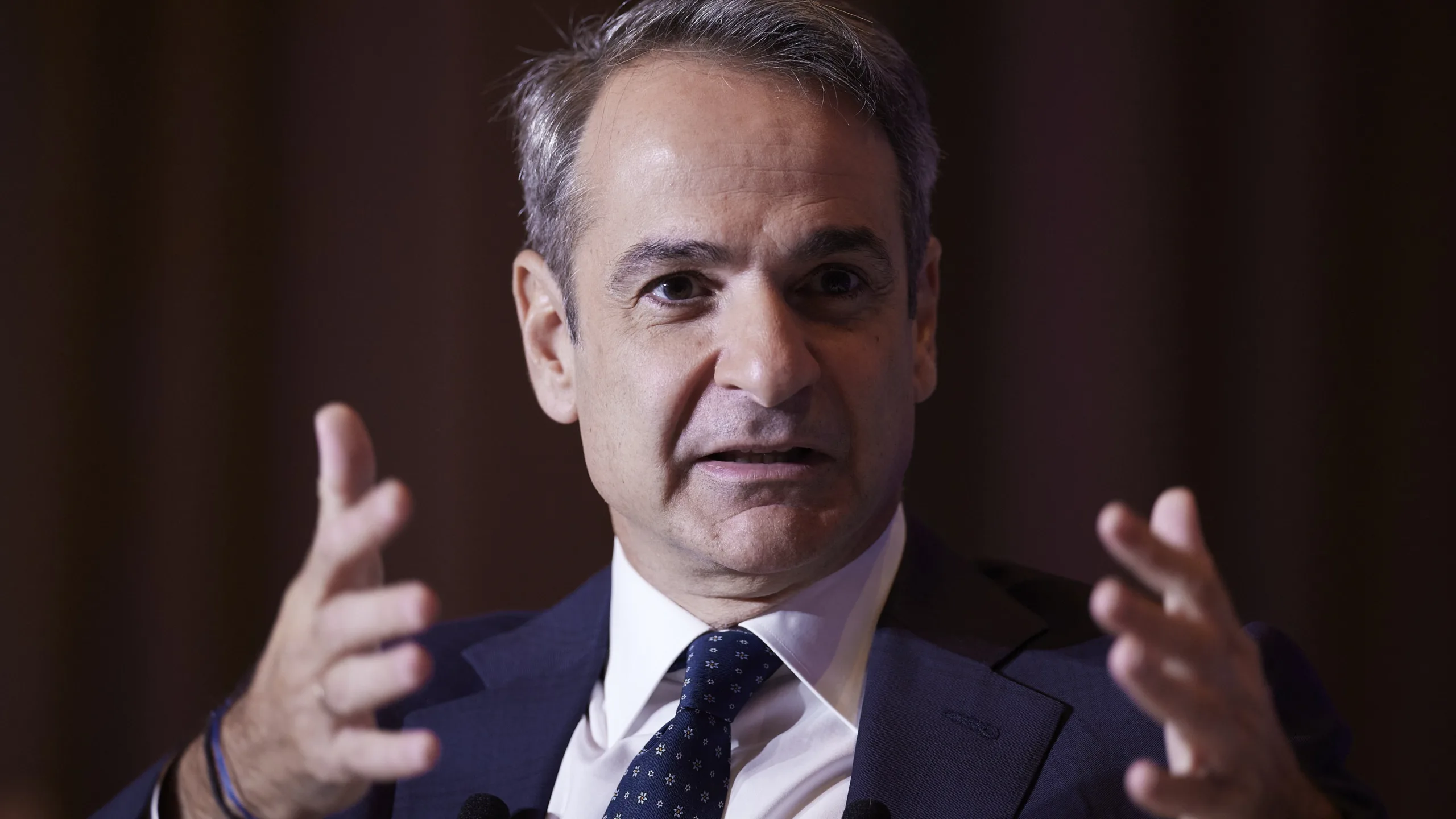
At a moment of heightened global uncertainty and renewed focus on Greece’s international role, Prime Minister Kyriakos Mitsotakis speaks to The Greek Herald in a wide-ranging and deeply consequential interview that places the Greek diaspora – and particularly Greek Australians – at the centre of his government’s vision for the future.
Originally scheduled to coincide with his long-anticipated official visit to Australia next week, the interview instead unfolds against the backdrop of escalating tensions in the Middle East, which forced the Prime Minister to postpone his trip and remain in Athens during a period of geopolitical sensitivity.
Yet, even from afar, his message to the more than half a million Australians of Greek heritage is clear: the relationship between Greece and its diaspora is not symbolic – it is strategic, enduring, and central to the country’s trajectory.
In this interview, Mitsotakis outlines a Greece that is transforming – economically, technologically and institutionally – while repositioning itself as a regional pillar of stability and a gateway between Europe and the wider world.
He speaks candidly about investment opportunities, the reversal of brain drain, and Greece’s emergence as an energy and innovation hub, while directly addressing long-standing diaspora concerns, from consular inefficiencies to the long-awaited progress on a double taxation agreement with Australia.
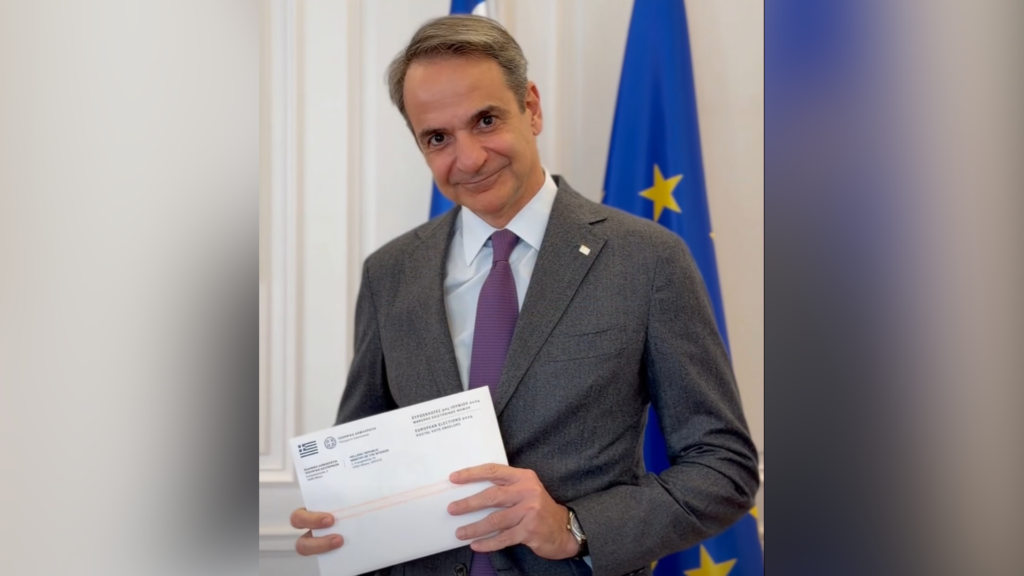
Crucially, the Prime Minister frames recent reforms – including postal voting for Greeks abroad – as a historic shift from rhetoric to action, redefining the role of global Hellenism in shaping Greece’s democratic future. For Greek Australians, he says, the connection to the homeland is no longer limited by distance, but strengthened through participation, mobility and shared opportunity.
He also reflects on the importance of diaspora as a bridge between nations, the growing significance of the Australian market in Greece’s tourism and investment strategy, and the responsibilities facing governments in an increasingly complex digital and geopolitical landscape.
As The Greek Herald approaches its centenary year, Mitsotakis acknowledges the enduring role of diaspora media in preserving identity and strengthening ties across generations – a theme that resonates throughout this interview.
From postponed visits to future partnerships, and from reform to resilience, this conversation offers a rare and comprehensive insight into how Greece sees itself — and its global community — in an era of profound change.
Prime Minister, you had been expected to visit Australia next week, but your trip was postponed due to developments in the Middle East. Can you explain the circumstances behind that decision, and when Greek Australians might expect you to make the visit?
Kyriakos Mitsotakis: I had very much hoped to be travelling to Australia around the time this interview was published, for an official visit — one I was greatly looking forward to. Unfortunately, recent developments in the Middle East require my presence in Greece at this time, and for that reason I have had to postpone my visit.
Greece is located in a region of particular geopolitical sensitivity, and in moments of heightened international tension it is my duty to remain in Athens, working closely with our partners and allies to help safeguard stability and security in our wider neighbourhood.
Let me emphasise, however, that this visit has only been postponed, not cancelled. I remain firmly committed to travelling to Australia in the near future.
Australia is home to one of the most dynamic and successful Greek communities in the world. I very much look forward to the opportunity to meet them in person and further strengthen the partnership between Greece and Australia.
Greece is undergoing significant economic transformation, with major projects such as the Ellinikon redevelopment attracting global attention. What opportunities do you see for Australian investors and Greek Australian business leaders to participate in Greece’s economic growth?
Kyriakos Mitsotakis: Greece’s strategic geographical position and membership in the EU are helping transform our country into an important energy and logistics hub for Central and Eastern Europe. This creates significant investment opportunities in energy, transport, and logistics infrastructure and services, as Greece is positioned as a gateway between two continents.
At the same time, we are prioritising the development of a dynamic digital ecosystem, with a strong focus on artificial intelligence applications in healthcare and public services.
Defence technology is another growing area, supported through our new Centre for Defence Innovation (ELKAK), which aims to identify and support promising investment initiatives.
We also see significant opportunities for Australian investors and Greek Australian business leaders to participate in this transformation. Today, Greece’s economic fundamentals are strong. Over the past five years we have attracted more than €30 billion in foreign direct investment. Tourism continues to break records, with 37 million visitors last year alone, and 2026 is expected to be even stronger.
Energy illustrates this transformation clearly. Six years ago Greece was barely visible on Europe’s energy map. Today it has become a major energy hub in Southeast Europe.
And for the first time in many years, we have reversed the brain drain. Greece is no longer a country people leave – it is a country people return to. They return because they believe in Greece’s future.
And I know – especially speaking to many of you – that returning is never just about a job. It is about trust in a country’s long-term trajectory.
For many years, Greek Australians have raised concerns about the lack of a modern double taxation agreement between Greece and Australia, particularly when it comes to pensions, property income and investment. Can you provide an update on negotiations for a new agreement, and when diaspora communities might finally see progress on an issue that directly affects their financial relationship with Greece?
Kyriakos Mitsotakis: A Double Taxation Agreement would certainly be a major catalyst for strengthening our bilateral economic ties. At a time of increasing trade and geopolitical fragmentation, it is more important than ever to reinforce and broaden our economic relationship.
It is therefore very encouraging that negotiations have resumed, and I believe there is a shared political will on both sides to conclude a mutually beneficial outcome. I will be in the very pleasant position to sign the agreement during my visit to Australia (now postponed).
An agreement of this kind will send a strong signal about our intention to further upgrade our relationship with Australia and deepen economic cooperation.
This lies at the heart of what we are trying to achieve together: stronger economic ties, greater mobility, more investment and a relationship that reflects the depth of the human bonds between our two countries, above all, the Greek Australian community.
Your government recently introduced reforms allowing Greeks abroad to vote by post in national elections. Why was this reform so important to your government?
Kyriakos Mitsotakis: I believe this is a historical achievement for Hellenism and I look forward to a dynamic participation, which will demonstrate the practical interest of global Hellenism, and especially of Hellenism in Australia, in the internal political developments in Greece.
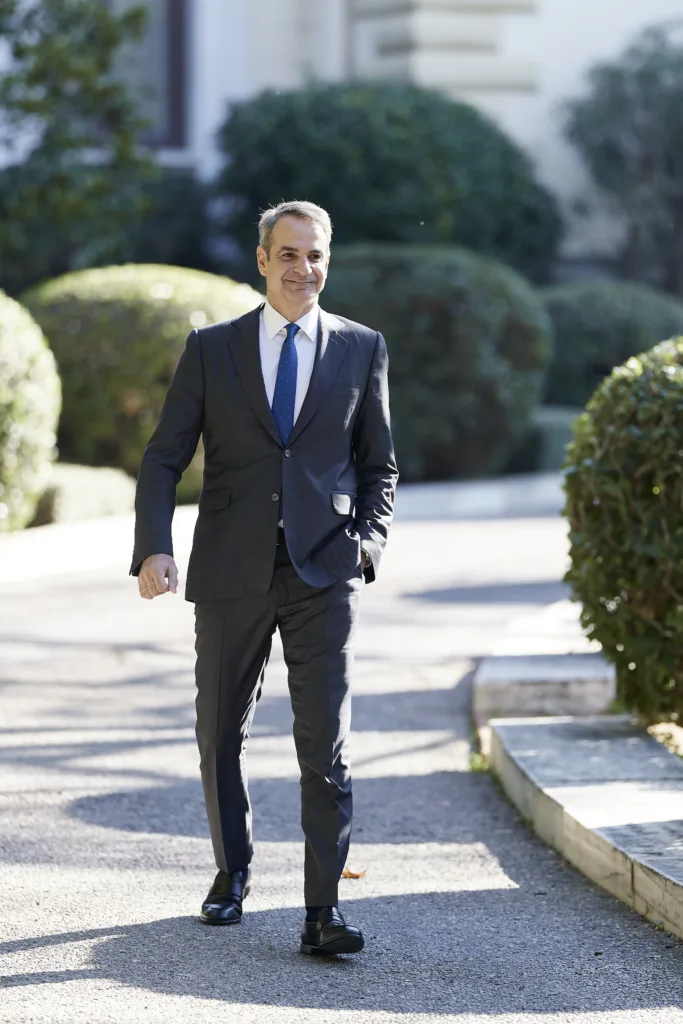
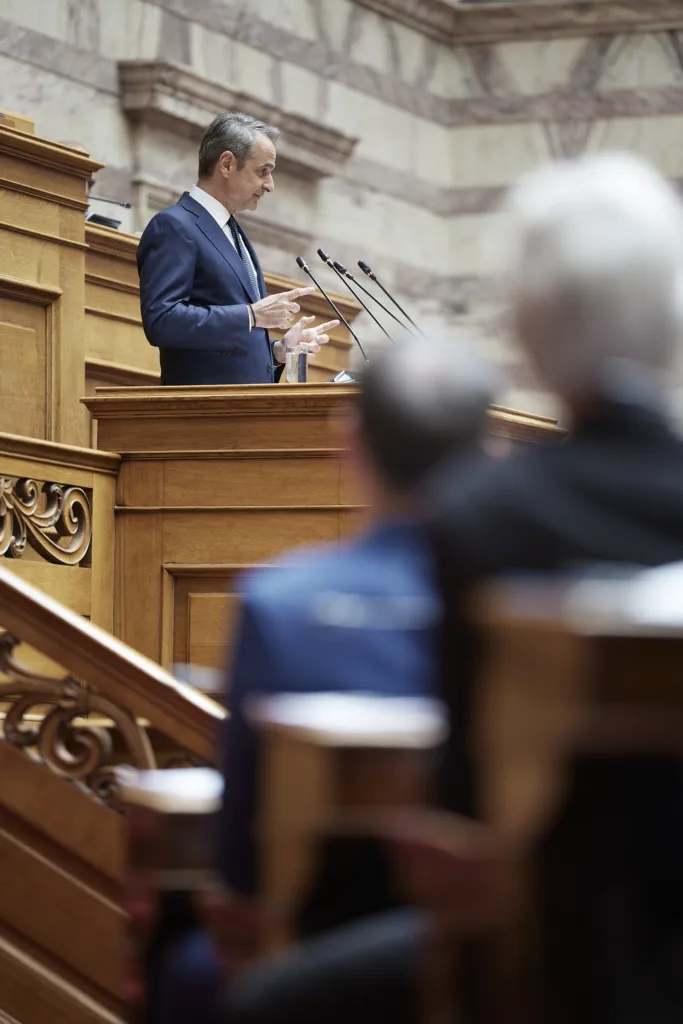
While many welcomed the postal voting reform as a historic step, some argue the system still limits diaspora representation and delays the creation of a dedicated overseas electoral district until at least 18 months after the next election. Do you see this reform as a first step toward fuller political representation for Greeks abroad? How do you envision the long-term political role of the diaspora in shaping Greece’s future?
Kyriakos Mitsotakis: From the very first day we came to office, my government has been committed to ensuring that Greeks living abroad can fully exercise their voting rights. For too many years, the Greek state honoured the diaspora in words, but not always in practice. This reform changes that.
This is not simply another technical change to the electoral system. It is a reform that expands the reach of our democracy and gives all Greeks equal rights, regardless of where they live. The voice of a Greek citizen in Melbourne, London, Frankfurt or Toronto should carry the same weight as the voice of a citizen in Athens or Thessaloniki.
In 2023, we removed the restrictions that had made participation too difficult for many Greeks abroad. In 2024, we introduced postal voting in the European elections, and that system proved successful, with almost 40,000 Greeks abroad choosing that option. We now have a tested and credible system, which will be applied in the next national elections as well.
In times like these, the participation of our diaspora in public life becomes an especially powerful link, strengthening our bonds with Hellenism across the world and making our country stronger in an uncertain international environment. This reform is important because it moves us from promises to action. It brings the diaspora closer to the motherland and ensures that Greeks abroad can play a fuller role in shaping the future of Greece.
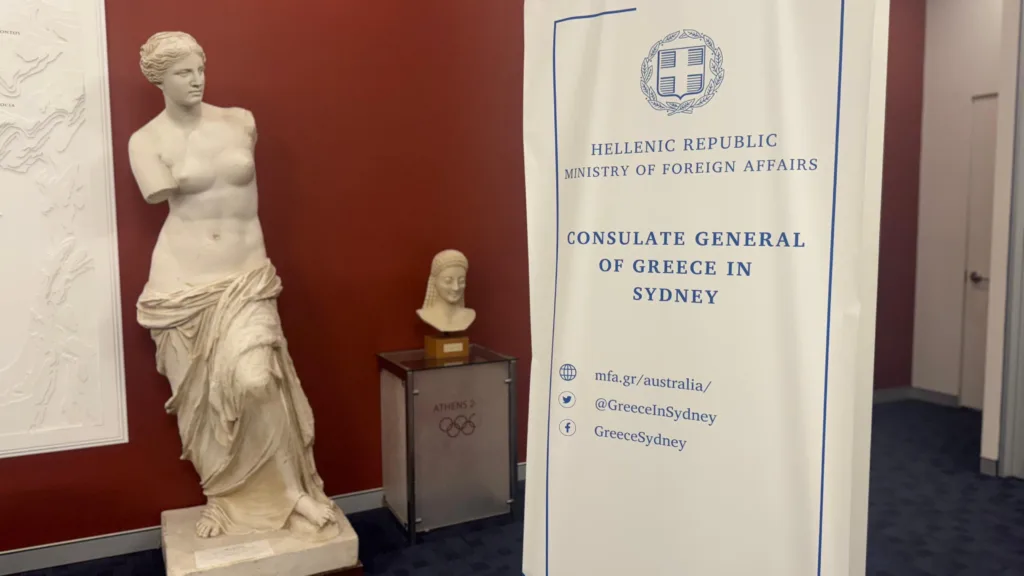
Many Greeks in Australia have long faced delays when dealing with consulates – from passports and citizenship documentation to property and inheritance paperwork. Sydney has recently received additional staff and services appear to be improving, but communities in Melbourne, Adelaide and elsewhere still report difficulties. What steps will your government take to ensure consular services meet diaspora demand, and would Greece consider expanding the role of honorary consulates to handle more administrative services?
Kyriakos Mitsotakis: I understand the frustration many Greek Australians have felt when waiting for passports, citizenship documents or other services. You have expectations from us and you are absolutely right to do so.
The economic crisis left our diplomatic and consular authorities seriously understaffed. But that chapter is closing. We have made a systematic effort to bring Greek communities abroad closer to the motherland. We have increased the budget of the Ministry of Foreign Affairs, are recruiting new administrative staff and have improved the conditions for serving abroad, allowing our missions in Australia to be better staffed despite the high cost of living. Waiting times have been reduced, but of course there is a lot yet to be done.
Consular services in Australia are an absolute priority and I am confident that by the time we meet, the results of our effort – and our firm determination to enhance the delivery of consular services in Australia – will already be clearly evident.
We are also simplifying procedures for acquiring Greek citizenship and accessing civil registry records, while improving communication with Greeks abroad on important administrative matters in Greece. At the same time, we are working to make gov.gr even more user-friendly for Greeks abroad.
The real transformation, however, will come through the gradual digitisation of consular services. We have introduced digital tools for appointment scheduling and remote interviews and are expanding the electronic submission of passport applications and other documents through the e-Consulate platform, which has already begun operating in Perth and will gradually be extended to our other consular authorities in Australia.
It is worth noting that requests at our consulates in Australia have almost doubled over the past year. This shows that Greek Australians want to remain closely connected with the homeland, and our responsibility is to ensure that our services become more efficient, accessible and responsive to that demand.
The opening of a new office of the Greek National Tourism Organisation in Melbourne has been welcomed by the travel industry and diaspora communities. How important is the Australian market to Greece’s tourism strategy, and do you see this move strengthening not just tourism flows but also broader economic ties between Greece and Australia?
Kyriakos Mitsotakis: Tourism from Australia is extremely important for Greece. Australians are always welcome in our country. According to the available data, in the first nine months of 2025 tourism revenues from Australia reached €262.5 million. Compared to the entire 12 months of 2024, when revenues amounted to €192 million, this represents an increase of approximately 37%.
This is a very encouraging trend, and I firmly believe that tourism between our two countries has significant potential and can grow even further in the coming years.
But it is not only Australian tourists who love Greece. Tens of thousands of members of the Greek diaspora travel to Greece every year. Many of them invest in the tourism sector, making use of their property and family assets in Greece, and sometimes going even further by developing new tourism ventures.
Beyond this, we are also seeing larger-scale Australian tourism investments taking place in Greece. These developments are very welcome, and I strongly support them.
Australia, a continent-sized country of remarkable natural beauty and diversity, has a highly developed tourism economy. The cooperation and exchanges between our two countries in the tourism sector are mutually beneficial, and they create many opportunities for further growth in the future.
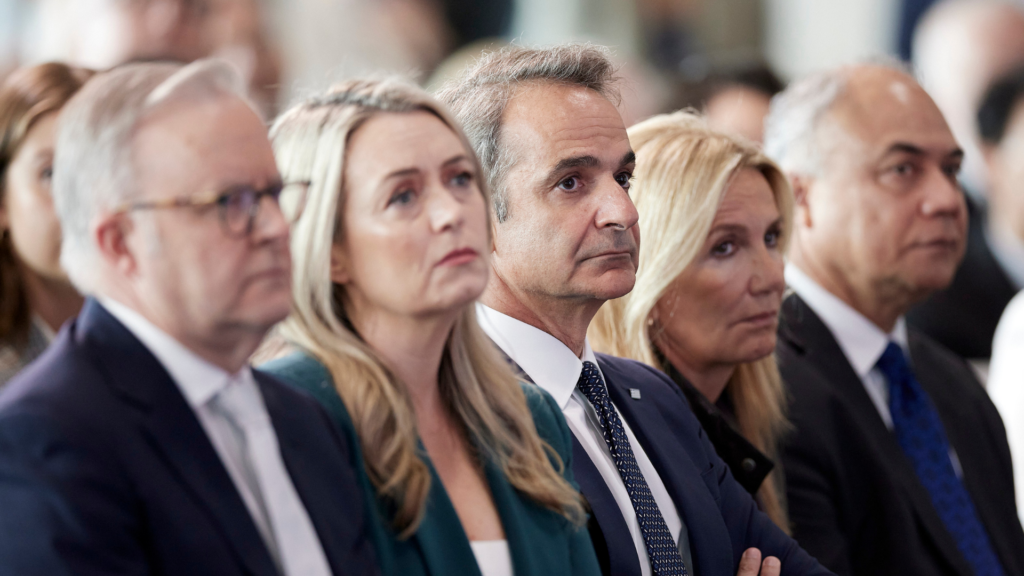
Australia has introduced landmark legislation to restrict social media access for children under 16, a policy you recently discussed with Prime Minister Anthony Albanese at the United Nations. Do you see Greece moving toward similar restrictions, and how can governments balance protecting young people online without infringing on freedom of expression?
Kyriakos Mitsotakis: Australia has taken an important and pioneering step in addressing a challenge that concerns societies across the world. I discussed this issue with Prime Minister Anthony Albanese at the United Nations, where we both acknowledged that the rapid expansion of social media has created risks to minors mental health that governments can no longer ignore.
Social media platforms are not neutral bulletin boards. Their algorithms are designed to keep users online for as long as possible. Infinite scroll, social validation loops: these are behavioral design features that even adults struggle to regulate. Expecting a 13-year-old brain to do so is unrealistic. Excessive exposure to social media can affect mental health, attention and development
Now, we are examining the way in which we will apply social media restrictions for younger users – those under 15 – combined with effective age verification mechanisms and stronger obligations for the platforms themselves.
Small countries cannot control global platforms. But they can set standards within their jurisdiction. We want parents and platforms to cooperate in this endeavour. We must make sure that children are protected from harmful content, addictive design features and online bullying.
We already accept age thresholds in many areas of life. We regulate alcohol, gambling, and tobacco because minors are more vulnerable to harm. The digital environment should not be the only domain where children are exposed to industrial-scale behavioral influence without guardrails.
This requires cooperation between governments, technology companies, educators and parents.
With heightened tensions in the Middle East and growing uncertainty across the Eastern Mediterranean, Greece finds itself in a strategically sensitive position as a NATO and EU member. How is your government navigating this volatile geopolitical environment while safeguarding Greece’s security and regional partnerships?
Kyriakos Mitsotakis: Greece approaches this increasingly complex geopolitical environment with calm determination, strategic clarity, and a strong sense of responsibility as both a European Union and NATO member.
Our foreign policy is firmly anchored in international law, respect for sovereignty, and the peaceful resolution of disputes. At a time of heightened tensions in the Middle East, Greece acts as a pillar of stability and security and a reliable partner in the region.
We are strengthening our strategic partnerships with countries across the Eastern Mediterranean and the broader Middle East, while deepening our cooperation within NATO and the European Union. At the same time, we continue to invest in our national defence capabilities to ensure that Greece remains secure and prepared in an unpredictable environment.
Over the next decade, we will invest more than 28 billion euros in defence. This is a significant – but necessary – investment. One that also strengthens Greece’s defence industry and opens opportunities for cooperation between Greek and Australian companies.
All of this would not have been possible without political stability. At a time when many European governments struggle with fragility, my government has a clear mandate and the confidence to reform.
We have also become a security provider and have deployed naval assets and aircrafts to support Cyprus in this difficult moment, showing, along with other European partners, what European solidarity means in action. But as I said during my visit to Cyprus, Greece would have supported our Cypriot brothers, even if no one else was around.
Our objective is clear: to safeguard Greece’s sovereignty and security while promoting stability, and cooperation across our neighbourhood. In a volatile region, Greece will continue to act as a bridge — a country that contributes to stability, supports diplomatic solutions, and works constructively with its partners.
With more than half a million Australians of Greek heritage maintaining strong ties to Greece, what message would you like to send them about the role the diaspora plays in Greece’s future?
Kyriakos Mitsotakis: Australia is home to one of the most vibrant Greek communities anywhere in the world. The more than half a million Australians of Greek heritage have preserved their language, culture and traditions with great pride, while also making an extraordinary contribution to Australian society.
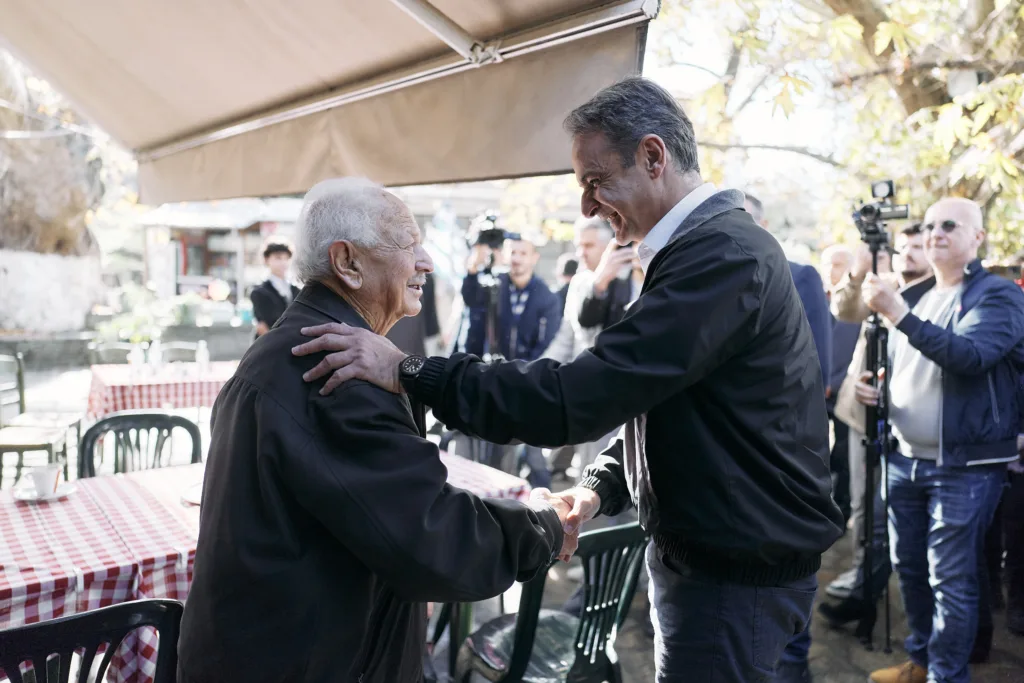
They have also helped rebuild Greece after the war through remittances and investment.
My message is clear: Greek Australians are not only part of our history and our present – they are partners in Greece’s future. Greece today is a country that has regained confidence and stability and is creating new opportunities for investment, innovation and cooperation. And Greek Australians serve as a powerful bridge between our two countries.
We have also worked to strengthen the institutional connection between Greece and Greeks abroad. For the first time, Greeks of the diaspora have been given greater opportunities to participate in Greece’s democratic process and to remain closely connected to developments in the homeland. We want the voice of Greeks everywhere to be heard.
Our goal is simple: to ensure that the relationship between Greece and the diaspora remains strong, dynamic and meaningful for younger generations of Greek Australians.
In this context, diaspora media also play an important role in maintaining this connection. As The Greek Herald approaches its centenary, I would like to congratulate its editors, journalists and readers for documenting the journey of Greek migrants and their families in Australia and for continuing to strengthen the ties between Greece and the Greek Australian community.
