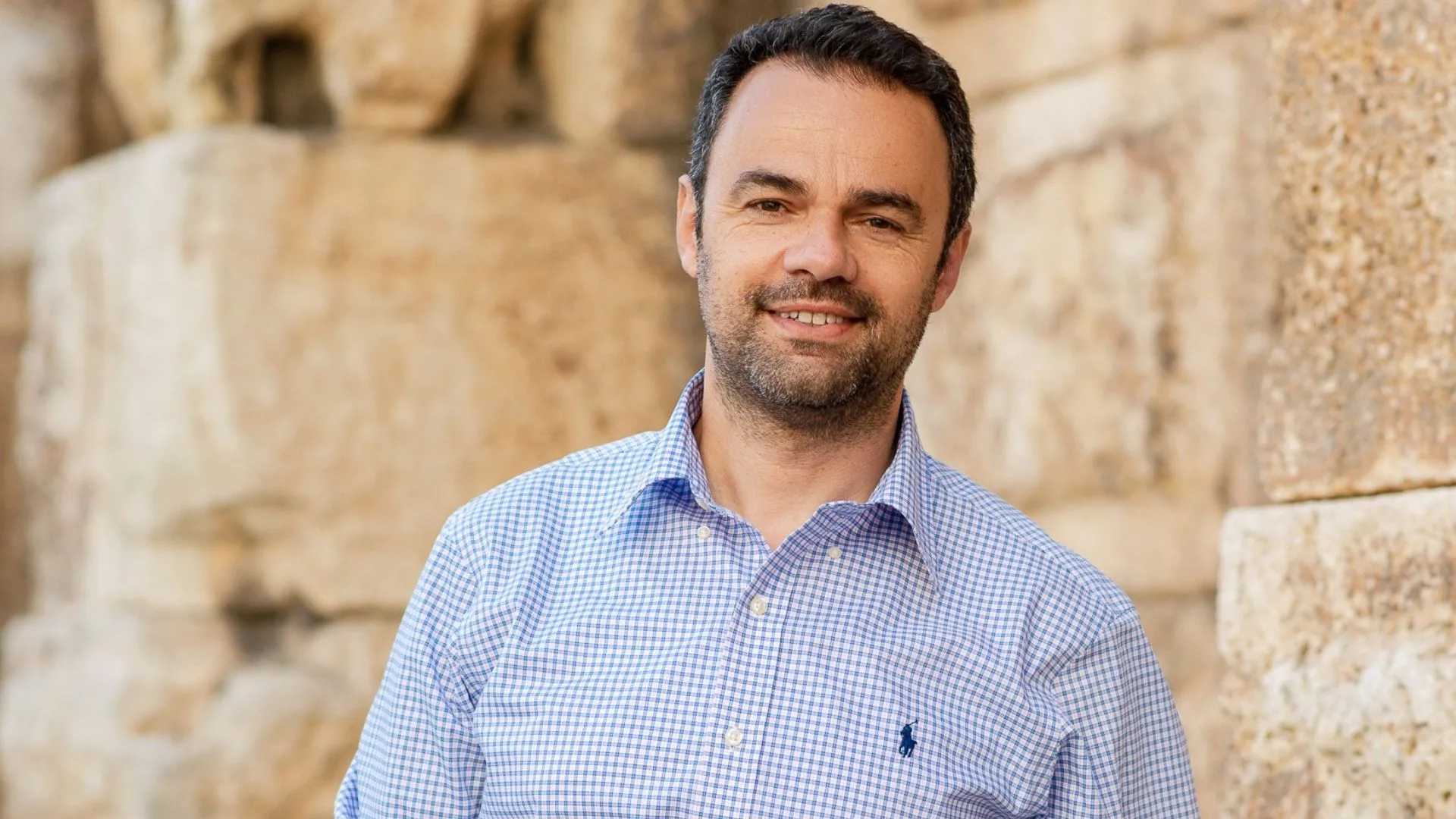
Greek Australian author Arthur Antonopoulos returns with Dark Salonica, a novel that positions Thessaloniki not simply as a backdrop, but as a living presence shaped by memory, myth and buried histories.
Following Dark Athens, Antonopoulos’ latest work shifts north, into a city he describes as carrying a distinctly haunting energy. “Moving the story from Athens to Thessaloniki felt like a natural evolution rather than a change of scenery,” he explains. “Dark Athens explored deception and truth through the hidden symbols of the capital, while Thessaloniki is a city of ghosts – Byzantine, Ottoman, Jewish and modern – all layered beneath the surface.”
That layered identity became central to the novel. Antonopoulos says what fascinated him most was how fragmented yet complete the city feels. “Myth and history blur here,” he says. “The towers, tunnels and the sea reflect the characters’ own conflicts. In Dark Salonica, Thessaloniki isn’t just a setting – it’s a living presence that challenges both readers and characters to confront what lies beneath.”
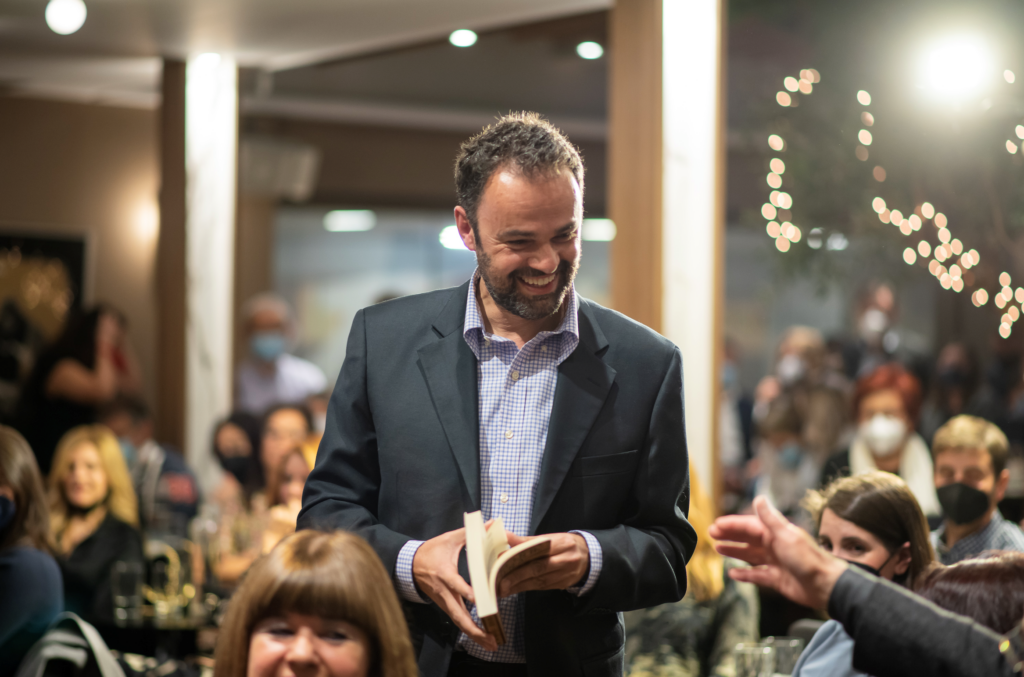
While the novel blends crime, historical mystery and existential reflection, Antonopoulos says – remains the driving force of his storytelling. “The historical mystery still drives the story – that’s where my heart is,” he says, describing the long hours spent researching connections between the ancient and modern worlds. At the same time, the existential dimension deepened organically. “Writing these books means disappearing into the characters’ emotions and voices,” he explains. “Many scenes were written exactly where they take place, and that gave me a kind of raw authenticity.”
Readers will encounter the return of Ariadne and Aliatis, characters who have matured since Dark Athens, but who are also more exposed. “They’ve both grown, but the weight of secrets still defines them,” Antonopoulos says, noting that Aliatis’ true intentions remain deliberately ambiguous. Drawn into a conspiracy rooted in the Byzantine world, the pair must navigate a space where truth and deception are inseparable. “Their journey this time is about what knowledge costs,” he says. “Sometimes truth destroys more than it reveals.”
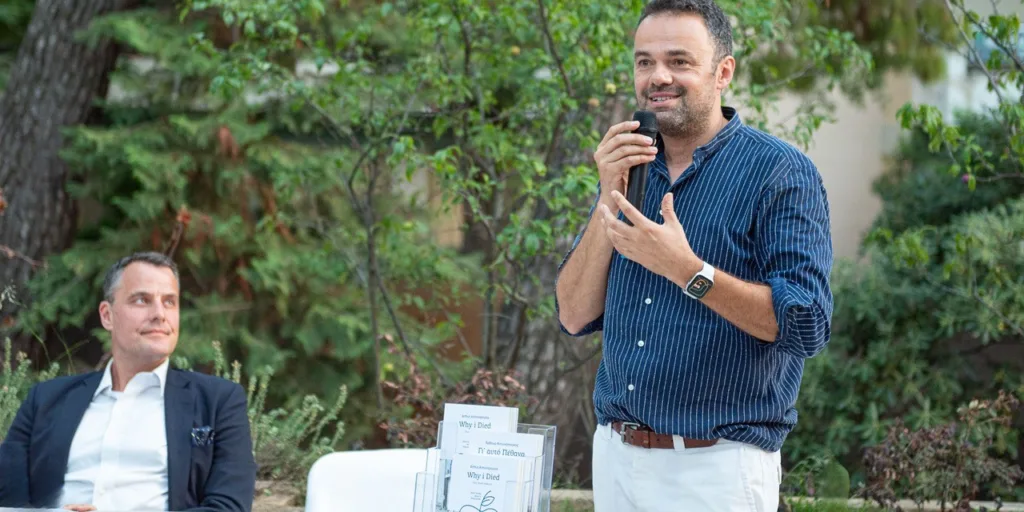
Thessaloniki’s hidden histories play a powerful role throughout the novel. Antonopoulos speaks of countless hours spent wandering its museums, courtyards and sea walls. “From underground catacombs to arcane churches and the aftermath of a disastrous fire, the city never stops revealing new layers,” he says. One detail that particularly struck him was learning that Thessaloniki expanded seawards by more than a hundred metres in the early 20th century. “It captures the spirit of buried lives and forgotten truths,” he adds – an idea that runs quietly but persistently through the book.
At the heart of Dark Salonica is the hunt for an ancient relic – the Club of Hercules – which Antonopoulos describes as deeply symbolic. “The relic represents truth and how it’s manipulated, buried or reshaped over time,” he says. As part of what he calls the “Dark” trilogy, the novel also challenges historical narratives that downplay Hellenic innovation. “I wanted to explore how philosophy, science and spirituality born in the Hellenic world evolved into Byzantium and beyond,” he explains. “The Club becomes a metaphor for that continuity – fragile, but enduring.”
For readers paying close attention, Antonopoulos confirms there is a clear thread connecting Dark Athens and Dark Salonica. “The books are building toward Dark Crete, the final part of the trilogy,” he says. “Dark Athens focused on symbolism; Dark Salonica on architecture and how physical structures hold memory. The past keeps echoing through the present. We are its continuation.”
Much has changed for the author in the four years since Dark Athens was released. Antonopoulos has completed a Master’s in Clinical Psychology, now teaches in the Psychology Department at Hellenic American University in Athens, and is shaping the direction of his PhD research. The pandemic years limited travel, but this December he will return to Australia. “I’m excited to reconnect with the Greek community and with my family and friends,” he says. “Melbourne has changed, but the sense of belonging hasn’t – especially when I walk past the streets around Lonsdale and the Queen Victoria Hospital.”
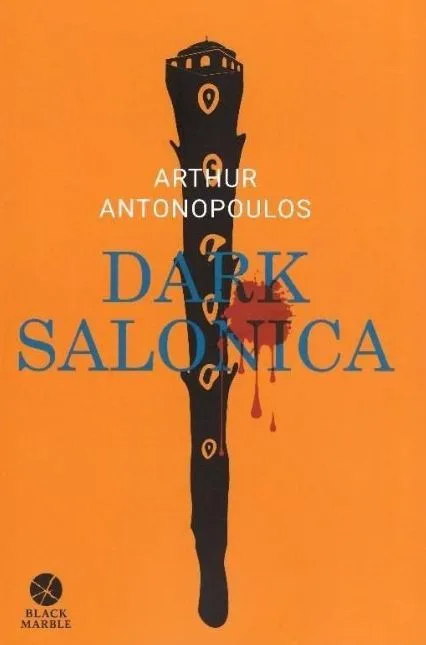
Looking ahead, Dark Crete is planned for release in 2027 and will span the entire island. Antonopoulos describes it as the culmination of everything explored so far. “It will reveal the characters’ true motives and challenge readers to think about identity, deception, and how personal history shapes belief,” he says – and how that belief, in turn, can be manipulated.
With Dark Salonica, Arthur Antonopoulos continues to merge literature, history and psychology, offering readers not just a story, but an invitation to look again at what lies beneath the surface – of cities, of narratives, and of themselves.
