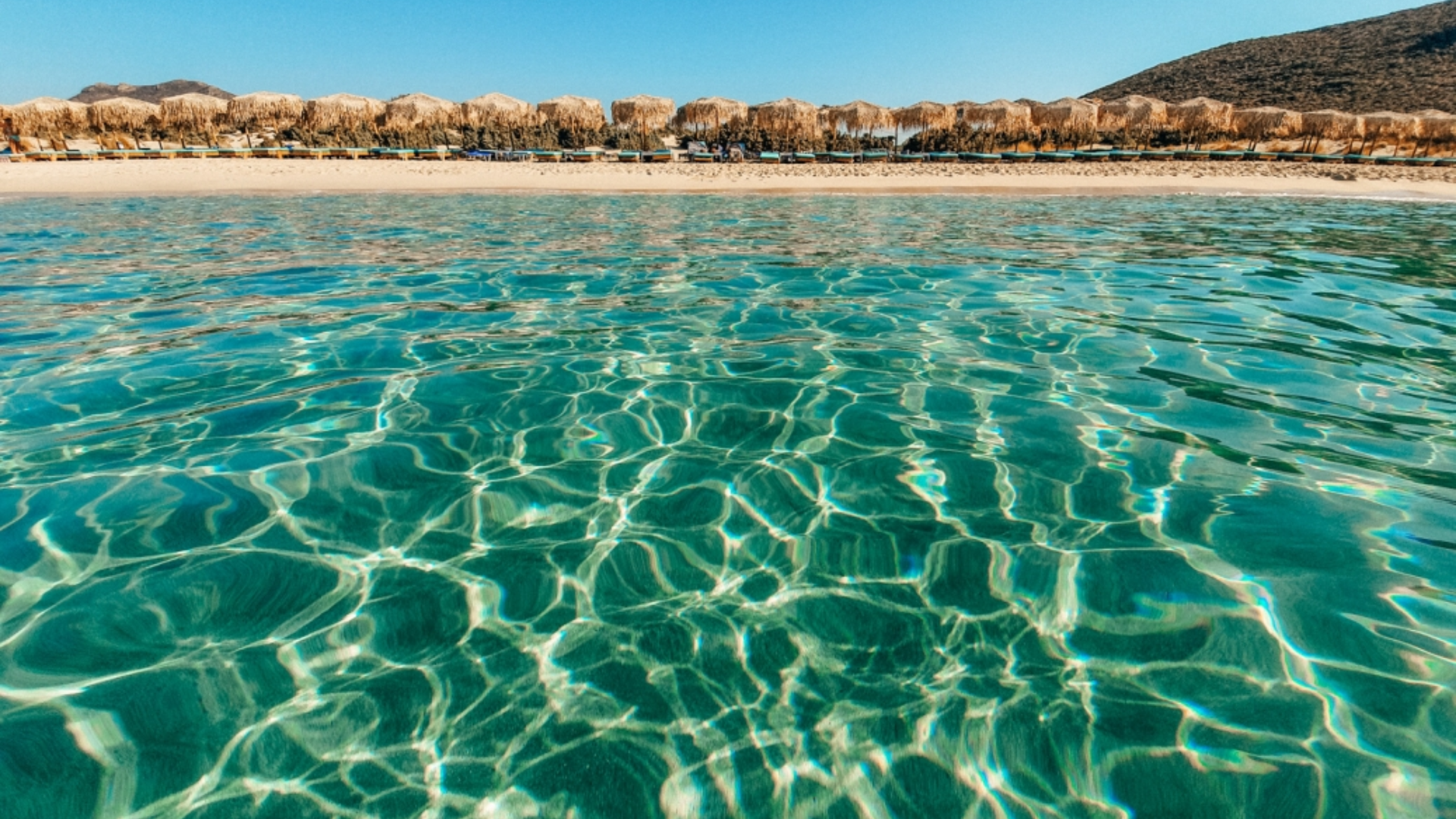
Cyprus and Greece have been ranked among Europe’s best-performing countries for bathing water quality, according to the latest annual assessment by the European Environment Agency (EEA).
Cyprus topped the European Union rankings with a perfect score, as every monitored bathing site on the island achieved the highest “excellent” classification. Greece followed closely in second place, with 97.1% of more than 1,700 monitored coastal and inland swimming sites receiving an excellent rating.
A further 2.4% of Greek sites were rated good and 0.1% sufficient, while none fell into the “poor” category, highlighting the consistently high quality of the country’s bathing waters.
Across the EU, 85% of more than 22,000 monitored bathing sites were rated excellent, while 96% met minimum water quality standards. Other strong performers included Bulgaria and Austria, while Hungary, Poland, Estonia and Albania recorded lower results.
The EEA noted that coastal waters generally perform better than rivers and lakes, with 88% of coastal bathing sites rated excellent compared with 78% of inland waters. River bathing sites remain the most challenging, with fewer than half achieving excellent status.
Environmental experts credited decades of EU water legislation and investment in wastewater treatment and monitoring systems for the improvement in water quality across Europe.
“Europe’s bathing water results once again demonstrate the value of EU environmental legislation and decades of investment in wastewater treatment and water management,” said Jessika Roswall, Commissioner for Environment, Water Resilience and a Competitive Circular Economy.
“Thanks to these efforts, Europeans can enjoy some of the world’s highest bathing water standards. At the same time, protecting our waters requires continued action on wider challenges such as pollution, biodiversity loss and the impacts of climate change, which are at the heart of our work to strengthen Europe’s water resilience.”
The report is based on levels of sewage contamination reported by participating countries and does not assess pollutants such as chemicals, pesticides, pharmaceuticals or microplastics.
Source: Ekathimerini
