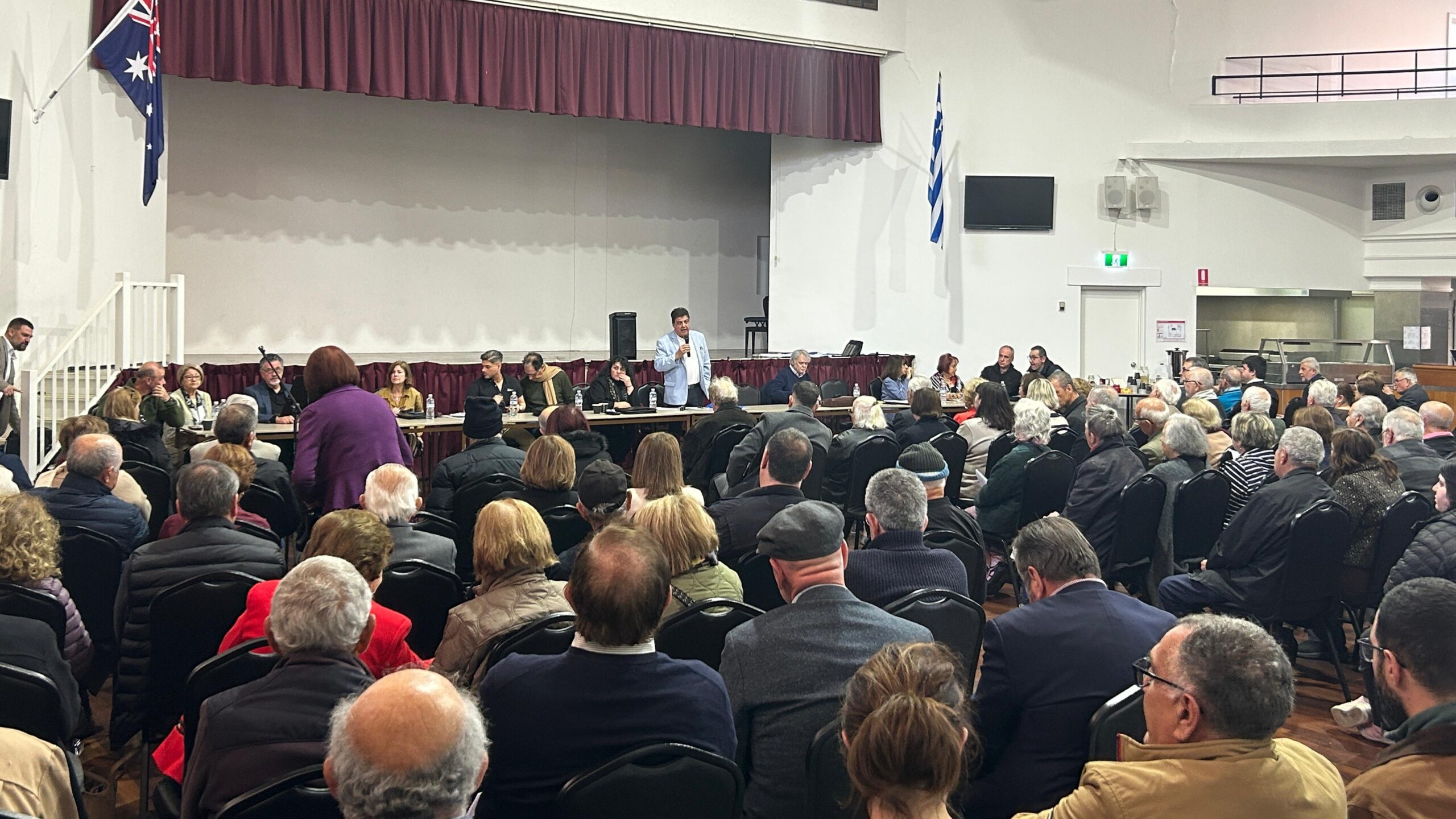
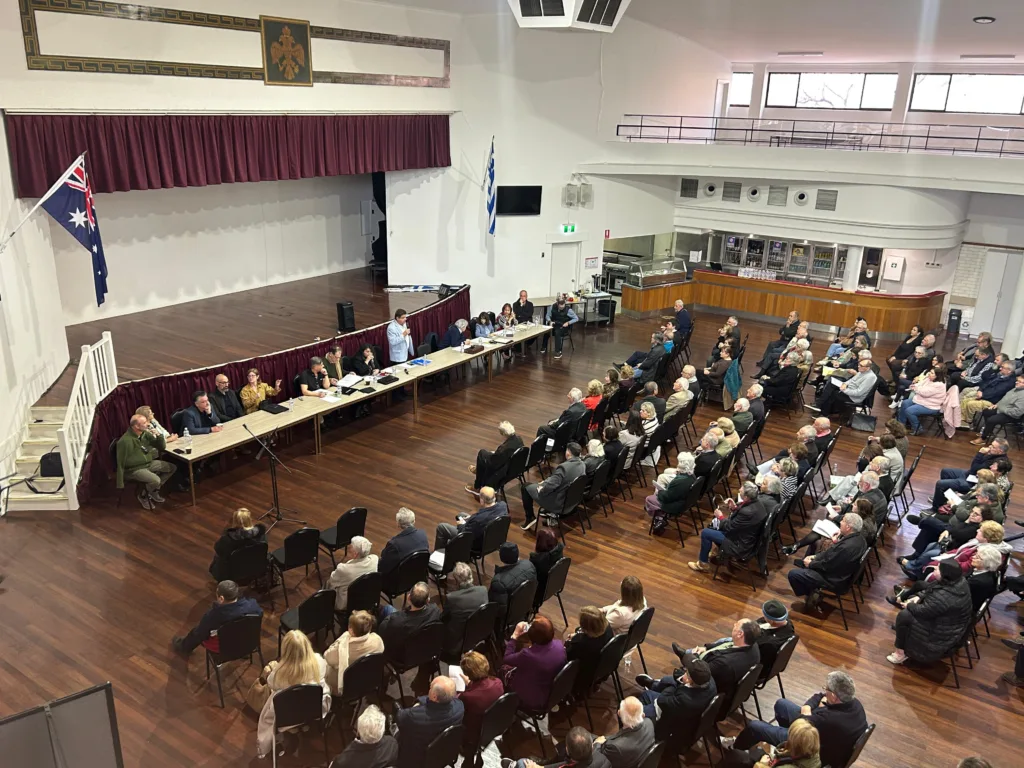
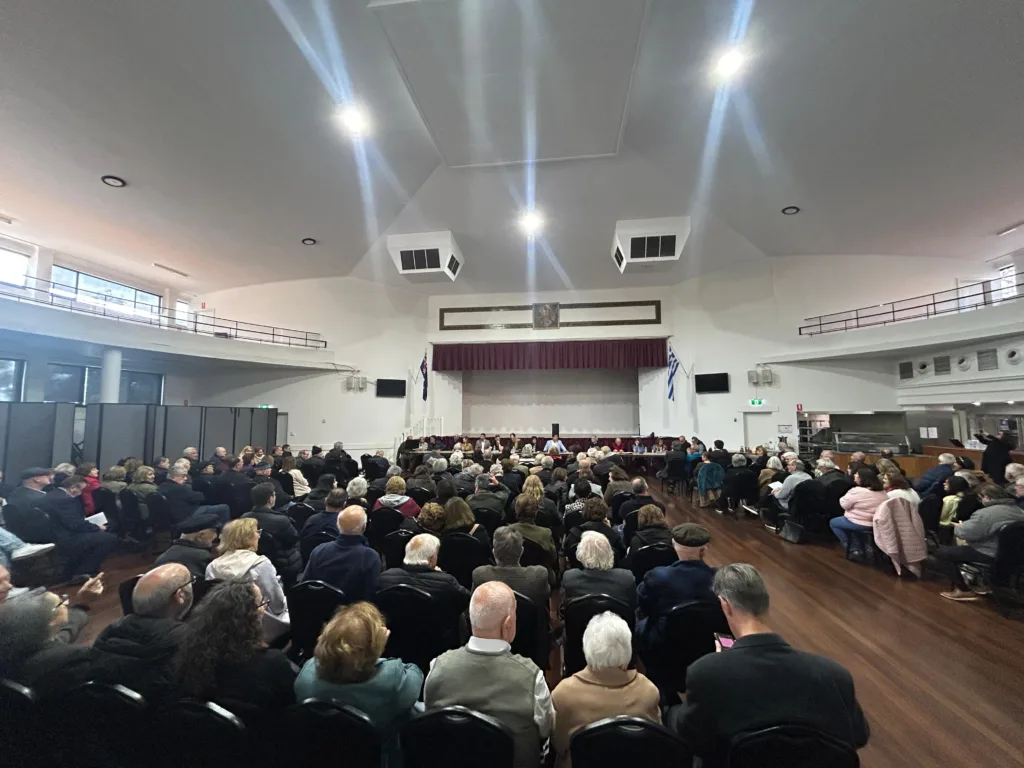
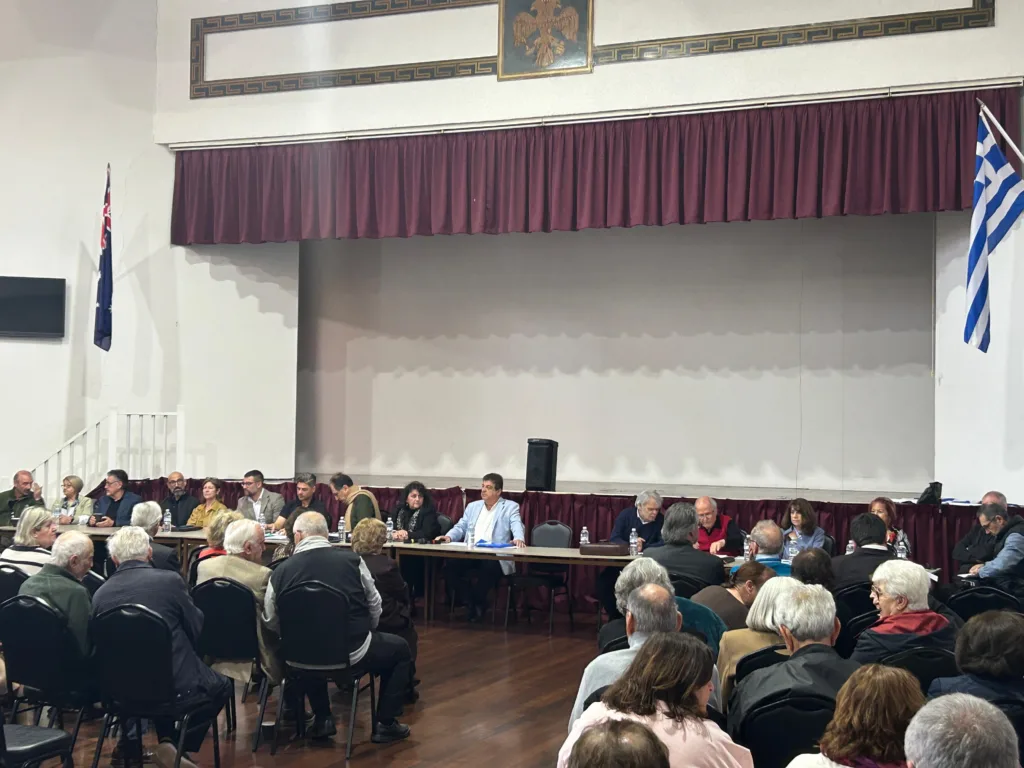
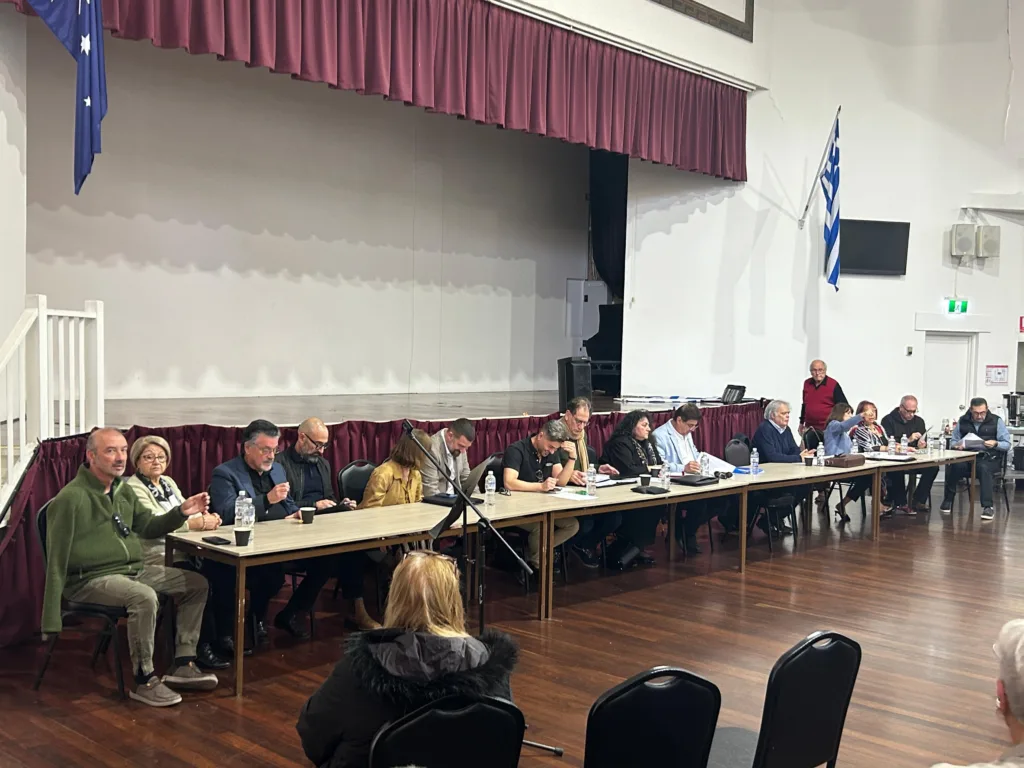
On 31 May 2026, the Greek Orthodox Community of South Australia (GOCSA) held an “Information Afternoon” at Olympic Hall to discuss matters that may significantly impact the future direction of the Community, including a draft Memorandum of Understanding (MOU) between GOCSA and the Greek Orthodox Archdiocese of Australia (GOAA).
According to GOCSA, discussions have recently taken place between the two sides “to explore whether common ground may be found following a 66-year separation,” with the proposed MOU presented as a draft document only and subject to further consultation and discussion.
The forum came amid growing concern within sections of the South Australian Greek community regarding the ongoing operation of churches, shortages of clergy, and uncertainty surrounding the future ecclesiastical structure of GOCSA.
The Greek Herald was denied permission to attend the forum as media, despite informing GOCSA President Peter Ppiros of the significant public interest surrounding the proposed MOU and its possible implications for the future of GOCSA and the wider Greek community. The Greek Herald was only permitted to take photographs at the beginning of the meeting before being asked to leave, despite local members of its team also having unsuccessfully attempted to obtain GOCSA membership over the past two years, with those applications still unresolved.
The meeting itself was robust and, at times, highly emotional, with passionate exchanges between members both supporting and opposing the proposed MOU.
Concerns raised over drafting and constitutional implications
Following the forum, several attendees told The Greek Herald that inconsistencies between the English and Greek versions of the draft document had created confusion about the interpretation of certain provisions. Members also raised concerns about typographical errors and drafting issues, questioning how some parts of the proposed agreement would operate in practice.
A major focus of discussion centred on the legal and constitutional implications of incorporating the MOU into GOCSA’s constitutional framework as an annexure.
Some members argued that, despite assurances that GOCSA would retain its sovereignty and independence, parts of the draft appeared to grant the Archdiocese influence extending beyond purely spiritual matters. Questions were also raised about whether the MOU could later be amended without GOCSA’s consent and how any conflict between the MOU and the existing Constitution would be resolved.
Others questioned the lack of detail surrounding clergy arrangements, including how many priests would ultimately be provided, who would bear the financial responsibility for clergy, and which churches would continue operating under any future arrangement.
Clergy shortages and church operations under scrutiny
The issue of clergy shortages has become one of the most pressing challenges facing GOCSA. The Community is currently operating with only two priests servicing four churches, contributing to reduced services and temporary church closures.
St Nicholas Church at Thebarton has not held regular services throughout May, while Saints Constantine and Helen Church at Goodwood has only been scheduled to open for services connected to its upcoming feast day.
Concerns regarding clergy shortages intensified earlier this year following the dismissal of Father John Konidaris from the Cathedral of Archangels Michael and Gabriel, a development previously reported by The Greek Herald which created an immediate shortage of available clergy across the Community’s parishes.
How the current MOU differs from the failed 2024 deed
Mr Ppiros told members that the proposed MOU is fundamentally different from the Deed that was voted on during the failed reunification vote of October 2024.
That vote, held during the presidency of former GOCSA President Peter Gardiakos, saw members consider a detailed proposed deed negotiated between GOCSA and the Archdiocese following extensive discussions involving legal representatives and church authorities.
Although the proposal received majority support from members, it failed to reach the required 75 per cent threshold needed for constitutional adoption.
The 2024 deed sought to restore canonical and spiritual unity between GOCSA and the Archdiocese while preserving GOCSA’s administrative autonomy, governance independence and ownership of community assets.
The deed also incorporated commitments outlined by His Eminence Archbishop Makarios of Australia in a formal 2023 letter, including assurances that no GOCSA churches would close, priests would be appointed in consultation with GOCSA, no annual Archdiocesan levy would be imposed, no transfer of church properties would be sought, and GOCSA’s financial and administrative independence would remain protected.
Mr Ppiros argued that, unlike the 2024 deed, the current MOU would not alter the substantive provisions of GOCSA’s Constitution itself. Instead, he described it as a cooperative framework aimed at facilitating relations between GOCSA and the Archdiocese while preserving the Community’s constitutional independence.
Debate over withdrawal protections
Supporters of the MOU acknowledged that the agreement would ultimately become part of the constitutional framework as an annexure to the Constitution, but stressed that the document would include a withdrawal mechanism.
As Mr Ppiros explained, “if something goes wrong, or [the Archdiocese] tries to interfere with the other things that we do, we can simply walk out of the agreement, and [the Archdiocese] can do the same.”
However, some members remained unconvinced, raising questions about how enforceable such protections would be in practice and whether the annexed MOU could ultimately override sections of the Constitution in the event of inconsistency.
Status of the MOU and next steps
The renewed discussions also follow public comments made earlier by Nicholas Pappas AM, who acted on behalf of the Archdiocese during negotiations surrounding the 2024 deed.
Mr Pappas previously told The Greek Herald that claims circulating within sections of the community suggesting the current draft MOU had already been agreed to by himself and Archbishop Makarios were “a complete misrepresentation of the facts.”
He further stated that he had “not discussed it with His Eminence at all” and described the current draft MOU as “an entirely unsatisfactory document in my view.”
“It is definitely not the basis for a workable compromise,” Mr Pappas said.
Mr Ppiros told The Greek Herald that the current version of the MOU presented to members had been shown to His Grace Bishop Silouan of Adelaide and His Eminence Archbishop Makarios of Australia, and that amendments had been made by the Archbishop.
However, Mr Ppiros confirmed that the MOU has not yet been formally approved by either the Archbishop or Bishop Silouan, with further discussions still required regarding “other issues” and pending broader feedback from GOCSA members.
The matter has continued to attract strong interest across Orthodox community circles in Australia, with many viewing the discussions as a potentially historic moment after more than six decades of separation between GOCSA and the Archdiocese.
GOCSA separated from the Greek Orthodox Archdiocese of Australia in 1959-60 and has since operated independently through its association with the Autocephalic Church.
While opinions within the community remain deeply divided, many members continue to express hope that respectful dialogue may eventually lead to a constructive resolution to one of the longest-running divisions in Australian Greek Orthodox history.
Mr Ppiros said the Committee will now consider the feedback and concerns raised by members during the forum before determining the next steps in accordance with GOCSA’s Constitution.
