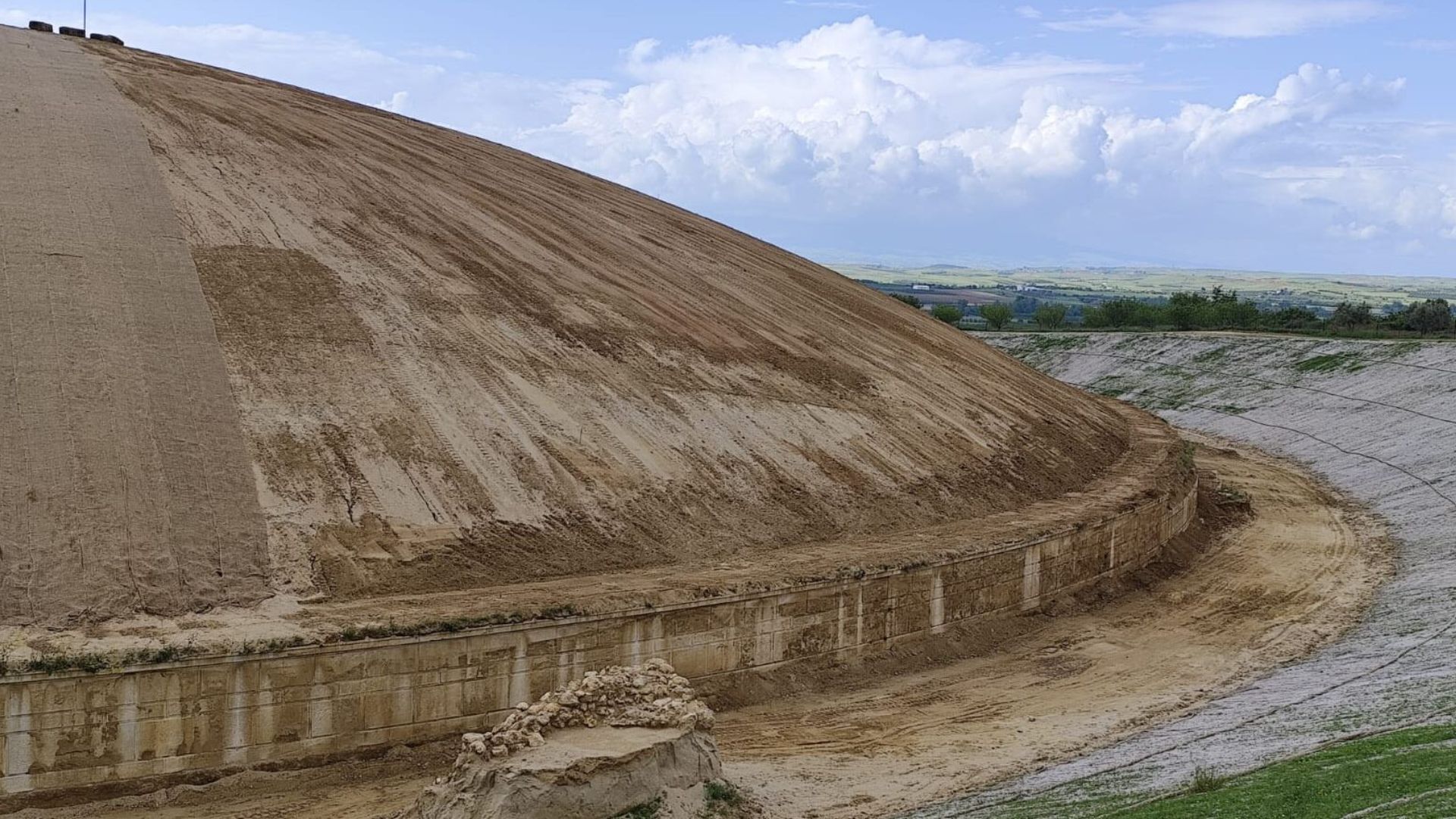
The monumental Kasta burial mound near ancient Amphipolis in northern Greece is expected to open to visitors in early 2028, according to the Culture Ministry.
Restoration and conservation work continues at the site, along with the construction of visitor facilities and a small museum. Following a recent inspection, Culture Minister Lina Mendoni said, “We are aiming to deliver the monument, safe and in its entirety, at the beginning of 2028.”
According to ekathimerini.com, the tomb attracted international attention when it was excavated in 2014 because of its enormous size and elaborate decoration. However, archaeologists discovered that it had been heavily looted in antiquity and contained no valuable burial offerings. Experts dated the monument to the late 4th century BC. Inside, researchers found the remains of five individuals, including an elderly woman, two men, a newborn baby and a cremated adult.
The lead excavator suggested the tomb may originally have been intended for Hephaestion, the close friend and general of Alexander the Great, who died in 324 BC.
Kasta is considered the largest burial mound in Macedonia, even larger than the royal tumulus at Vergina linked to Philip II, Alexander’s father. The site was surrounded by a massive stone wall measuring nearly 500 meters in length, much of which has been restored.
Work is also continuing on the tomb’s sphinxes and marble entrance doors. The project’s cost is expected to exceed €15 million, largely funded by the European Union.
When the site opens, visits will be limited to eight people at a time for guided tours lasting around 15 to 20 minutes.
Source: ekathimerini.com
