Ancient Troy coin discovered in Berlin reveals early Greek connections to northern Europe

·

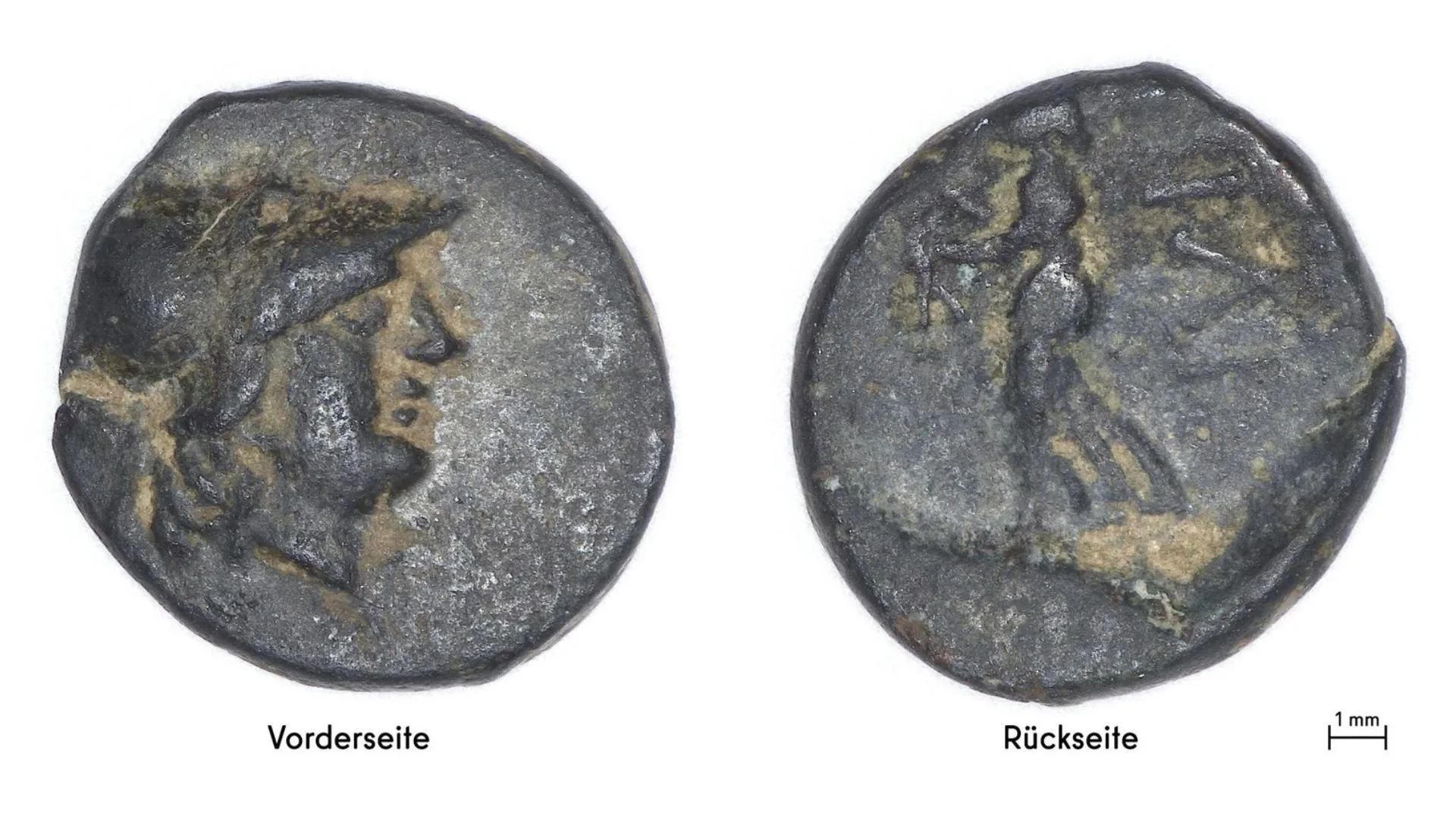
A simple walk across farmland in Berlin led to an extraordinary discovery linking the city to the ancient Greek world, according to arkeonews.com. In the Spandau district, a 13-year-old student found a small bronze coin later identified as a rare artifact from Troy, dating back around 2,300 years.

The coin, just 12 millimeters wide and weighing about seven grams, was minted between 281 and 261 BC during the Hellenistic period in Ilion. Its design reflects strong Greek influence: one side shows the goddess Athena wearing a Corinthian helmet, while the other depicts Athena Ilias holding a spear and spindle, highlighting its cultural and artistic significance.

Initially, archaeologists questioned whether the object had been recently lost. However, further investigation of the site confirmed its authenticity. Excavations revealed evidence of long-term human activity, including a burial ground with cremated remains, pottery fragments, and objects from the Bronze Age, Iron Age, Roman period, and even Slavic times. This layered context suggests the coin was part of an ancient cultural landscape rather than a modern intrusion.

The find is especially important as it represents the first confirmed Greek antiquity discovered in Berlin, where only Roman artifacts had previously been recorded.

Although its exact journey remains unclear, experts believe it may have traveled along ancient trade routes connecting the Mediterranean with Northern Europe, possibly linked to the amber trade. Given its modest value, the coin may have served a symbolic or ritual purpose, perhaps as a grave offering.

Now displayed at PETRI Berlin, the coin offers a rare glimpse into ancient connections across distant regions.

Source: arkeonews.com

Share:

KEEP UP TO DATE WITH TGH

By subscribing you accept our Terms of Service and Privacy Policy.

Latest News

Why Australians of Cypriot descent are reclaiming their place in the ANZAC tradition

From Greece and Crete to North Africa and Rome, Cypriots fought alongside Australians and their descendants will march again this ANZAC Day.

Thebarton Hellenic Festival 2026 to unite culture, community and ANZAC tribute

The Thebarton Hellenic Festival 2026 will bring Adelaide together for a celebration of Greek culture, opening with an ANZAC Day tribute.

Cyprus Community of NSW affirms support ahead of Armenian genocide commemorations

The Cyprus Community of NSW has reaffirmed its solidarity with Armenians, supporting recognition and remembrance.

Battle of Crete Council honours ANZAC nurses at Melbourne commemorative service

The Battle of Crete & Greece Commemorative Council of Victoria was represented by Natasha Spanos, at an ANZAC Commemorative Service.

GCM seminar to explore shifting Turkish narrative on Gallipoli commemoration

The Greek Community of Melbourne will host an online seminar this Thursday, April 23, as part of its 2026 Seminar series.

You May Also Like

Antipodes festival a huge success as over 100,000 people descended onto Lonsdale Street

Over the weekend, 100,000 people descended onto Lonsdale Street for Australia’s largest Greek Street party and celebration of all things Greek, the 2020 Antipodes Festival.

Dr Adrianos Golemis becomes first Greek selected for ESA astronaut training

Dr Adrianos Golemis has made history as the first Greek to take part in an astronaut training programme at the European Space Agency (ESA).

2023 Young Chef of the Year Nick Deligiannis leads new Mediterranean fare

“Growing up, I always looked at chefs as my idols,” Nick Deligiannis tells The Greek Herald. He was enamoured by culinary connoisseurs.