By Michael Peters Kyriacou, Honorary President, Cyprus Community of NSW
The tragedy of the Armenian Genocide remains one of the defining moral reckonings of the modern world. In the early twentieth century, an ancient people were subjected to systematic persecution, displacement, and destruction. What followed was not only the loss of life on an unimaginable scale, but the scattering of a civilisation across continents. Yet from this devastation, the Armenian people carried forward something that could not be extinguished: their faith, their culture, and their identity.
In the aftermath, many Armenian survivors sought refuge wherever safety could be found. Among those places was Cyprus, which became a sanctuary at a time when refuge itself was scarce. The island received Armenian families who arrived not with possessions, but with memory and resilience.
Over time, these communities took root, particularly in Nicosia, Larnaca, and Limassol. There, they built churches, established schools, and restored a sense of belonging. In doing so, they did more than rebuild their lives—they preserved a culture others had sought to erase.
The Armenian presence in Cyprus has never been peripheral. It has been woven into the broader fabric of Cypriot society, contributing to its cultural and intellectual life, while maintaining a distinct identity with quiet strength. It stands as a reminder that integration does not require assimilation, and that belonging does not require forgetting.
The connection between Armenians and Greeks—particularly Greek Cypriots—is neither incidental nor superficial. It is grounded in a shared civilisational experience shaped by history, geography and faith. Both peoples emerge from ancient traditions that have endured empire, upheaval and displacement. Both are shaped by Christianity, expressed through the Greek Orthodox Church and the Armenian Apostolic Church. These traditions have informed not only religious life, but the enduring emphasis on family, education, community cohesion and cultural continuity.
This shared inheritance has fostered a natural understanding between the two peoples—one shaped not only by similarity, but by parallel historical experience. Cyprus itself, particularly in the aftermath of the Turkish invasion of Cyprus, carries its own narrative of displacement, loss and unresolved justice. While the contexts differ, the emotional resonance is unmistakable. It is here that empathy deepens into solidarity.
The Cyprus Community itself has not been untouched by tragedy. Many of its members, their families, and generations of their offspring have endured profound loss—carrying the pain, the scars, and the enduring memories of events that no human being should be asked to bear. This shared experience of suffering is not abstract; it is deeply personal and intergenerational. It is through this painful connection that the bond between the Cypriot and Armenian peoples has only been strengthened, deepened by mutual understanding, empathy, and a shared commitment to remembrance, dignity, and justice.
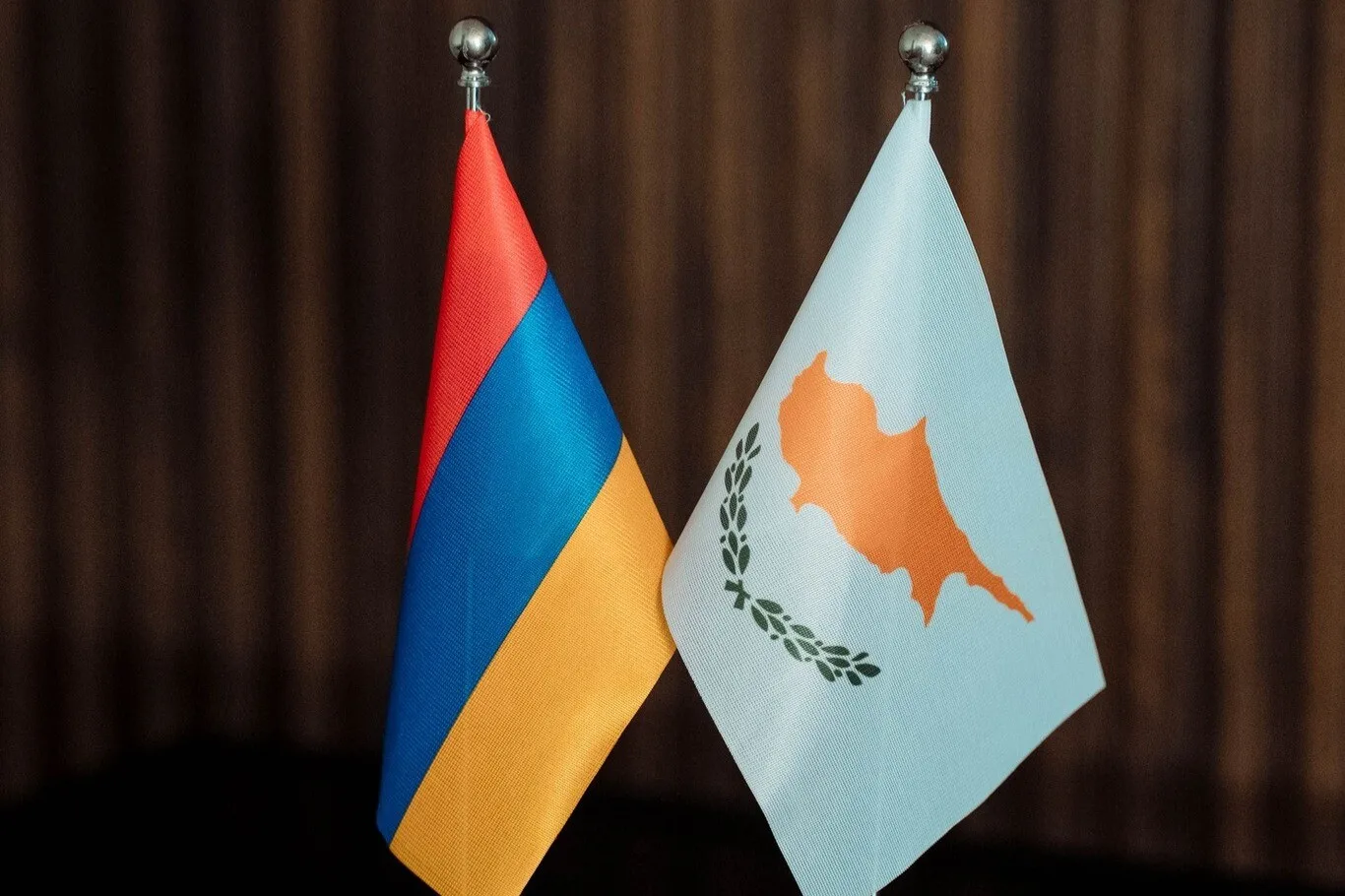
For decades, the Cyprus Community of NSW has maintained a close and enduring bond with the Armenian people. This relationship is grounded in shared history and cultural affinity, but also in a deeper understanding of resilience, identity and continuity. It is a bond strengthened through generations—through faith, community and a shared commitment to preserving heritage in the face of adversity.
In this spirit, the Cyprus Community of NSW affirms its support for the Armenian people in their rightful pursuit of justice and recognition of the Armenian Genocide. This position is not shaped by political convenience or semantic debate. It is grounded in principle. Recognition must extend beyond politics and beyond language; it must be anchored in truth, respect and an unwavering commitment to historical reality.
Recognition of the Armenian Genocide is not simply a matter of history—it is a question of justice and the integrity of international norms. To acknowledge what occurred is to affirm that crimes against humanity cannot be obscured by time or diminished by denial. It is to uphold the principle that the suffering of any people demands recognition, not silence.
In Sydney, this solemn remembrance will be marked by a formal commemoration hosted by the Armenian community, honouring the 111th anniversary of the Armenian Genocide. The event, convened by the Armenian Genocide Commemorative Committee, will be held at the Chatswood Concourse, bringing together community leaders, dignitaries and members of the public in a collective act of reflection.
The commemoration will take place on Friday, 24 April 2026, with guests arriving at 6:30pm for a 7:00pm commencement, concluding at approximately 9:00pm. Attendance is limited, with invited guests requested to confirm in advance.
Such occasions are not merely ceremonial. They affirm that memory endures, that recognition matters, and that the principles of truth and justice must be upheld across generations. Through gatherings such as this, the Armenian community honours its past with dignity while inviting others to stand alongside them in acknowledgement and respect.
The Armenian people, in their endurance, stand as a testament to the resilience of civilisation itself. Their story is not only one of tragedy, but of survival with dignity. It reminds us that recognition is not about reopening wounds, but ensuring that they are neither ignored nor repeated.
For the Cyprus community, recognition is inseparable from our own historical consciousness. We understand that the past cannot be set aside—it must be acknowledged with honesty, not to entrench grievance, but to guide us toward a more just future. The Armenian experience forms part of a broader human narrative that calls for accountability, remembrance and respect.
To stand with the Armenian people is not an act of politics, but of principle. It reflects a commitment to the values that underpin civilised society: truth, dignity, faith and the rule of law. It affirms that the suffering of one people is never isolated, but part of a shared human responsibility.
In this spirit, the bond between Armenians and the Cyprus community endures—rooted in history, sustained by shared values, and expressed through a collective commitment to recognition and justice. Through remembrance, we honour those who were lost. Through recognition, we uphold the standards of humanity. And through solidarity, we affirm that such tragedies must never again unfold in silence.
