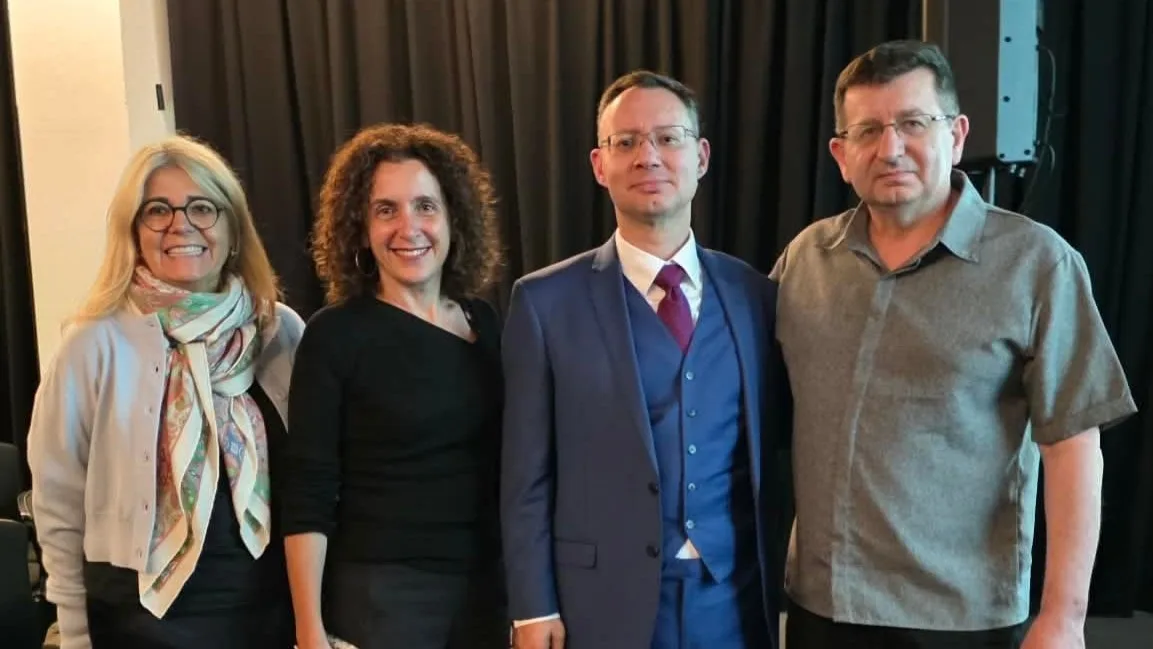
On Thursday evening, 5 March 2026, the auditorium of the Greek Orthodox Community of Melbourne and Victoria was filled to capacity as attendees gathered for the first instalment in the Community’s History and Culture Lecture Series for 2026.
The evening’s speaker, author, lawyer and cultural commentator Dean Kalimniou, delivered a lecture devoted to the life and political legacy of the Greek statesman and soldier Nikolaos Plastiras.
Kalimniou’s presentation, sub-titled “To what extent can the military act as the conscience or safeguard of a democratic system?” invited the audience to consider one of the most enduring dilemmas of modern political life: whether the armed forces can ever legitimately act as a moral corrective within a democratic state.
Through the complex and often contradictory life of Plastiras, Kalimniou explored the tension between martial virtue and democratic ethics, examining how one individual could simultaneously embody courage, conscience and political ambiguity.
Drawing upon historical sources and contemporary scholarship, the lecture traced Plastiras’ transformation from the legendary “Black Rider” of the Balkan Wars into a revolutionary leader after the Asia Minor Catastrophe and later a statesman who sought reconciliation in the aftermath of civil conflict.
As Kalimniou explained, Plastiras’ career reveals the profound moral challenges faced by leaders in moments of national catastrophe, when the demands of justice, vengeance and mercy compete for primacy.
The lecture argued that Plastiras’ life illustrates the enduring Greek struggle to balance ethical authority with the pragmatic realities of political power, a theme explored throughout the presentation.
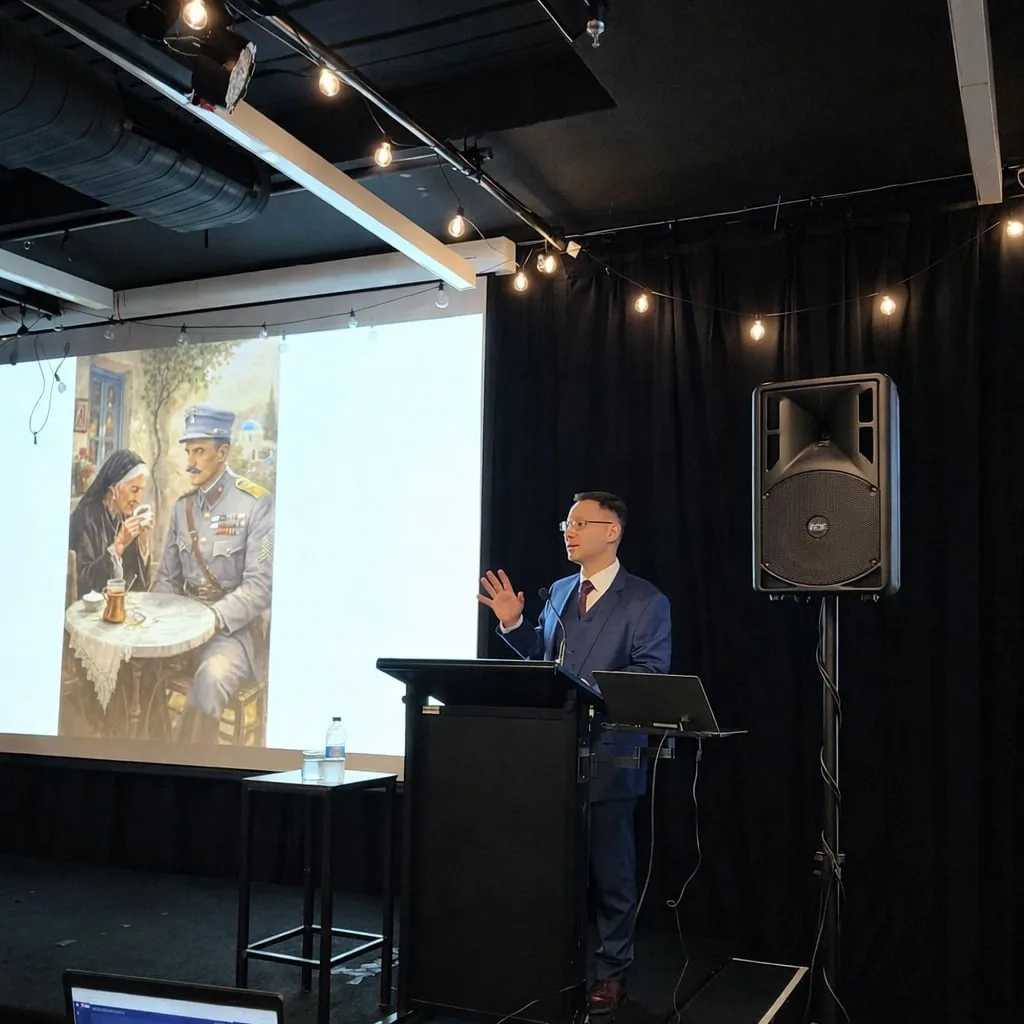
Delivered with Kalimniou’s characteristic eloquence, the lecture blended historical analysis with moments of humour, philosophical reflection and pointed references to contemporary political figures and situations.
His engaging style, together with his ability to frame historical events within broader moral and political questions, held the audience’s attention throughout the evening and transformed what might have been a purely historical talk into a meditation on leadership and public virtue.
The discussion that followed proved equally stimulating. Members of the audience joined Kalimniou in examining the philosophical dimensions of political authority, drawing upon the political thought of Plato and the psychoanalytic interpretation of courage proposed by Jacques Lacan. Together they explored the qualities required of leaders in democratic societies and reflected upon how courage, integrity and restraint might function in contemporary political life.
By the end of the evening it was clear that the lecture had achieved far more than recounting the biography of a historical figure. Instead, Kalimniou had used the life of Plastiras as a lens through which to examine the moral responsibilities of leadership itself.
The enthusiastic participation of the audience and the lively exchange of ideas that followed confirmed the continuing vitality of the Greek Orthodox Community’s History and Culture series, demonstrating once again its role as an important forum for intellectual engagement within Melbourne’s Greek community.
