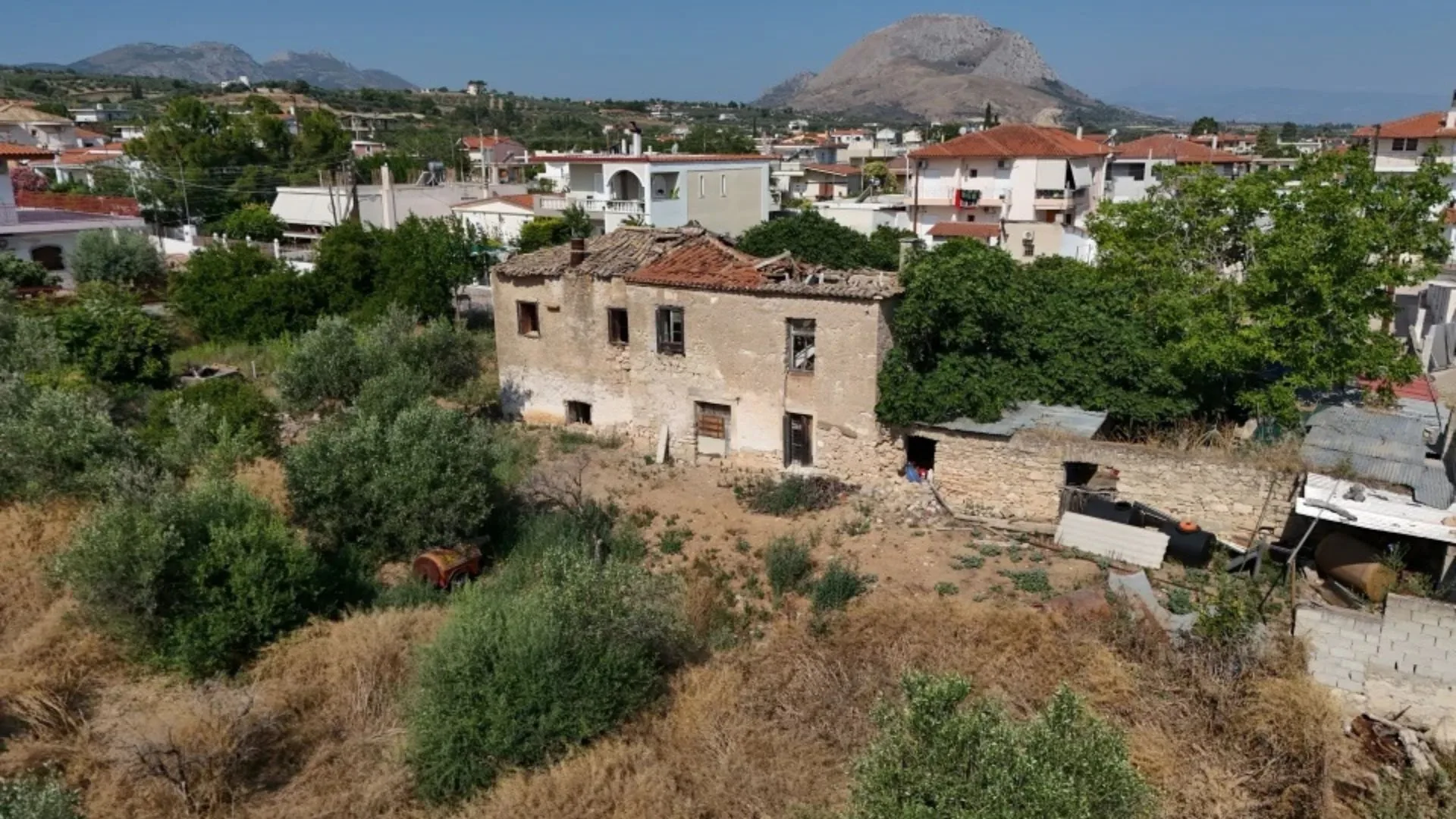
Researchers have identified the long-forgotten site of Washingtonia, a brief but ambitious 19th-century refugee settlement in Greece established by American doctor and humanitarian Samuel Gridley Howe, according to ekathimerini.com. The discovery, reported by Archaeology Magazine, revives a largely overlooked story connecting the Greek struggle for independence with early American philanthropy.
Washingtonia was founded in the late 1820s, following the Greek War of Independence, as a planned community for displaced Greek families. Created through the collaboration of Howe, Greece’s first governor Ioannis Kapodistrias, and prominent philhellenes, the settlement aimed to be self-sufficient. It was built on 2,000 acres near the abandoned village of Ano Examilia on the Isthmus of Corinth. Howe supervised the reconstruction of houses, cultivation of farmland, establishment of schools, and even the opening of a pharmacy-an uncommon institution in Greece at the time. Within its first year, the colony is believed to have supported more than 225 residents.
Despite early optimism, the settlement did not endure. Agricultural setbacks, disease among livestock, attacks by bandits, and ongoing political unrest led to its decline. Howe departed Greece in 1830, and by the mid-1830s Washingtonia had effectively disappeared, fading from historical memory.
Interest in the lost colony was renewed in 2016, when a team led by archaeologists David Pettegrew and Kostis Kourelis, along with geospatial expert Albert Sarvis, launched a new investigation. Their key breakthrough came from an unpublished 1830 draft map created by French geographer Pierre Peytier, an acquaintance of Howe. By digitally aligning the historic map with modern geography, the researchers traced the settlement to Botizia ridge, where they uncovered structural remains and artifacts overlooking both the Saronic and Corinthian gulfs.
The discovery will be detailed in an upcoming issue of the Journal of Greek Archaeology. It is also explored in a series of digital projects, including an interactive story map and a student-produced documentary. The full report is available through Archaeology Magazine, published by the Archaeological Institute of America.
Source: ekathimerini.com
