By Ilias Karagiannis
The years of the Greek Revolution of 1821 are revived through a permanent collection of rare artifacts housed in a wing of the War Museum in Athens, Greece. A visit is enough for the visitor to feel like they are taking a journey through time.
On this national anniversary, The Greek Herald wanted to transport its readers, even mentally, to the honoured era, where our ancestors sacrificed themselves so that we may have our freedom today. And what better way than with a virtual tour by Captain Eftychios Bolierakis, the historian who spoke to us about the permanent exhibition on the 1821 Greek Revolution at the Athens War Museum.
“Initially, we wish to thank The Greek Herald for supporting the outreach of the War Museum and its efforts to strengthen the bonds of diaspora Greeks with the Motherland and its national history,” Mr Bolierakis says.
Any visitor of the War Museum who wanders through the space where the treasures of the Greek Revolution are housed, will feel like they are becoming a part of history. We are fortunate to have Mr Bolierakis as our historical guide.
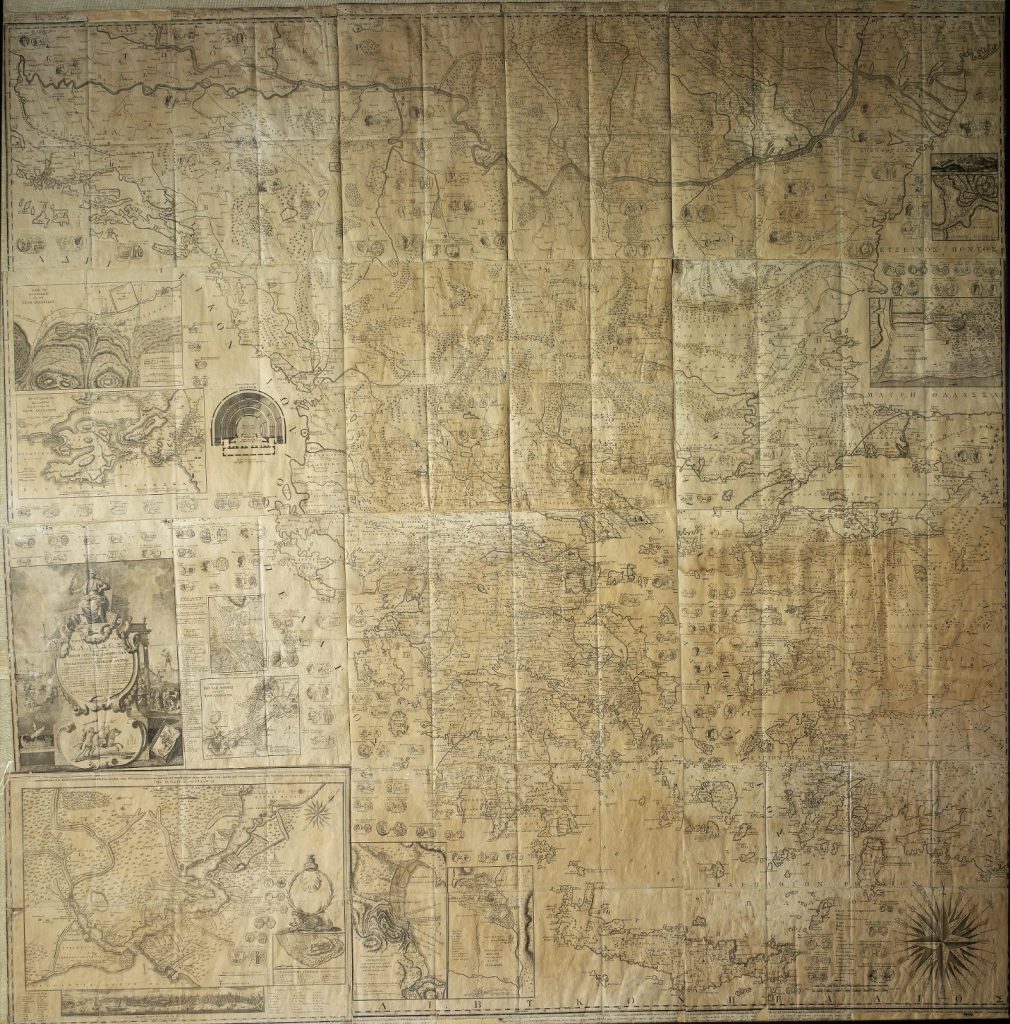
“The French Revolution influenced Greek intellectuals who attempted to awaken the Greeks of the Ottoman Empire and envisioned the creation of a Greek state. One of the foremost among them was Rigas Feraios, who, among his other works, also issued the Charta, a work printed on twelve sheets – a publishing feat for his time – aimed at recalling to the memory of the “ragiades” (slaves) about their ancestral history and glory,” the historian says.
“The work presented the extent and radiance of Ancient and Modern Greek civilisation, aiming to recall historical events, wars, and victories “against the barbarians.” The Charta includes the entire Balkan Peninsula and Asia Minor, i.e., the regions which Rigas had envisioned as theatres of the Revolution. In the Museum, one of the few copies of the work is exhibited.”
The Filiki Eteria (Friendly Society) and weapons as exhibits
The significant role of the Filiki Eteria in organising the struggle for the liberation from Ottoman rule is also highlighted in the permanent exhibition of the Athens War Museum.
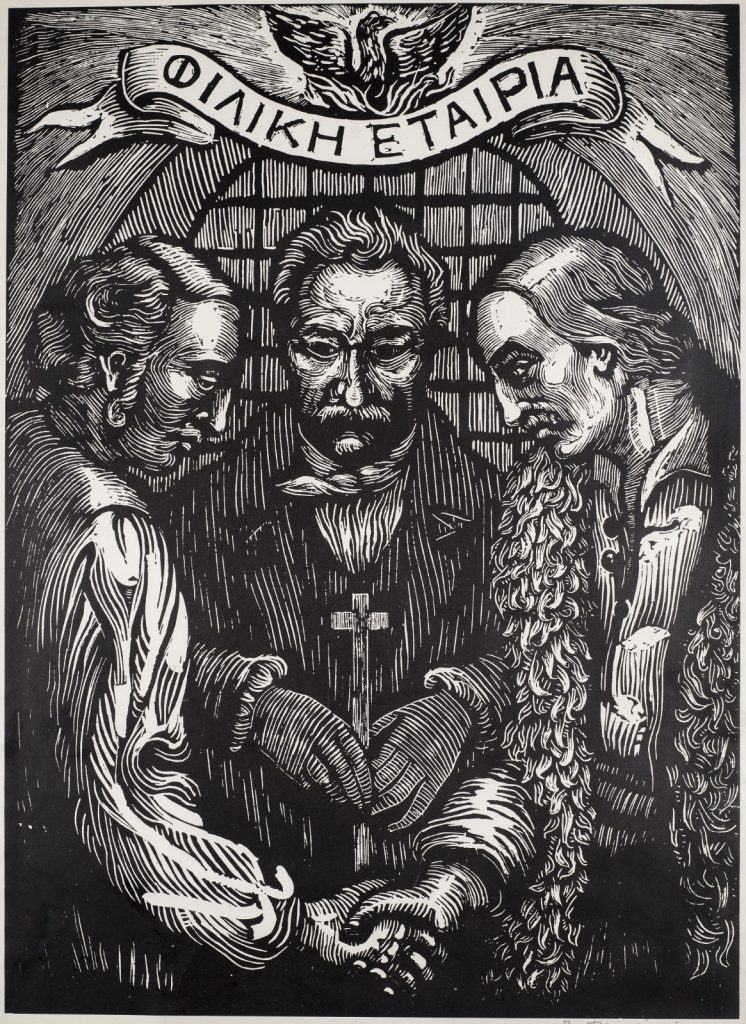
“At the beginning of the 19th century, societies were created with the aim of the Greeks’ Revolution, with the leading one being the Filiki Eteria, which was founded on September 14, 1814, in Odessa by Nikolaos Skoufas, Athanasios Tsakalov, and Emmanuel Xanthos. In the War Museum, among other works related to the society, there is a woodcut by Vassos Faliros depicting the oath of the Filiki Eteria,” Mr Bolierakis says.
“The Filiki Eteria initiated many Greeks and succeeded in organising the Revolution. The army formed relied on groups of armatoloi and klephts, who used muskets, pistols, swords, and jatagans as weapons. Muskets, their primary firearms, were long-barrelled muzzle-loading rifles, usually adorned with silver or brass plates depicting the Cross, the single-headed or double-headed eagle, and the cypress tree.
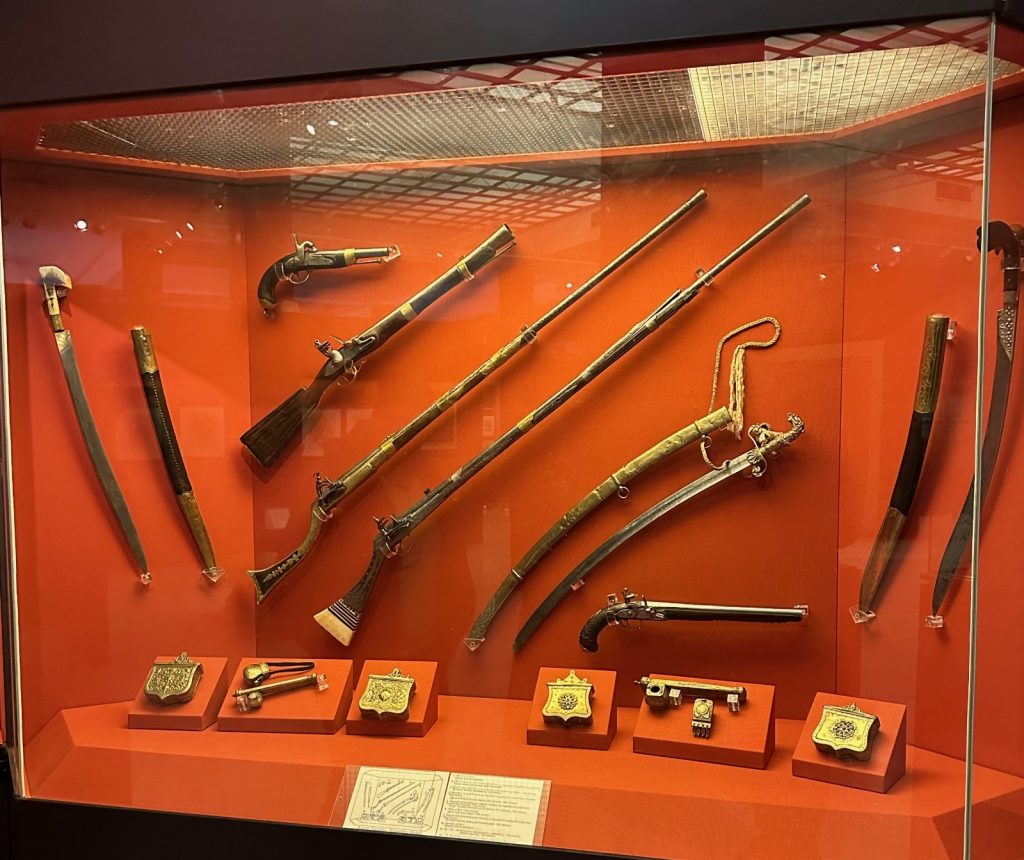
“Pistols (long-barrelled), mainly manufactured in the Balkan region, were mainly used by the military elite and nobles. It should be noted that the pistols from Greek workshops, especially those from Souli, were valuable and rare.
“The more affluent of owners had pistols from European workshops, which were of better quality. Ottoman pistols were usually large in size and their stocks were decorated with silver inlays with semi-precious stones, coloured glasses, and coral. Swords were the main weapon of the fighters and had as their main feature the elongated curved blade, while jatagans were large knives with a slightly curved blade.
“In the exhibition space of the War Museum, many weapons from the revolutionary period are presented, many of which belong to the international collection of rare weapons by Petros Saroglou.”
Clothing information, paintings, and Kolokotronis
Our tour with Mr Bolierakis continues with information about the clothing of the 1821 Greek Revolution.
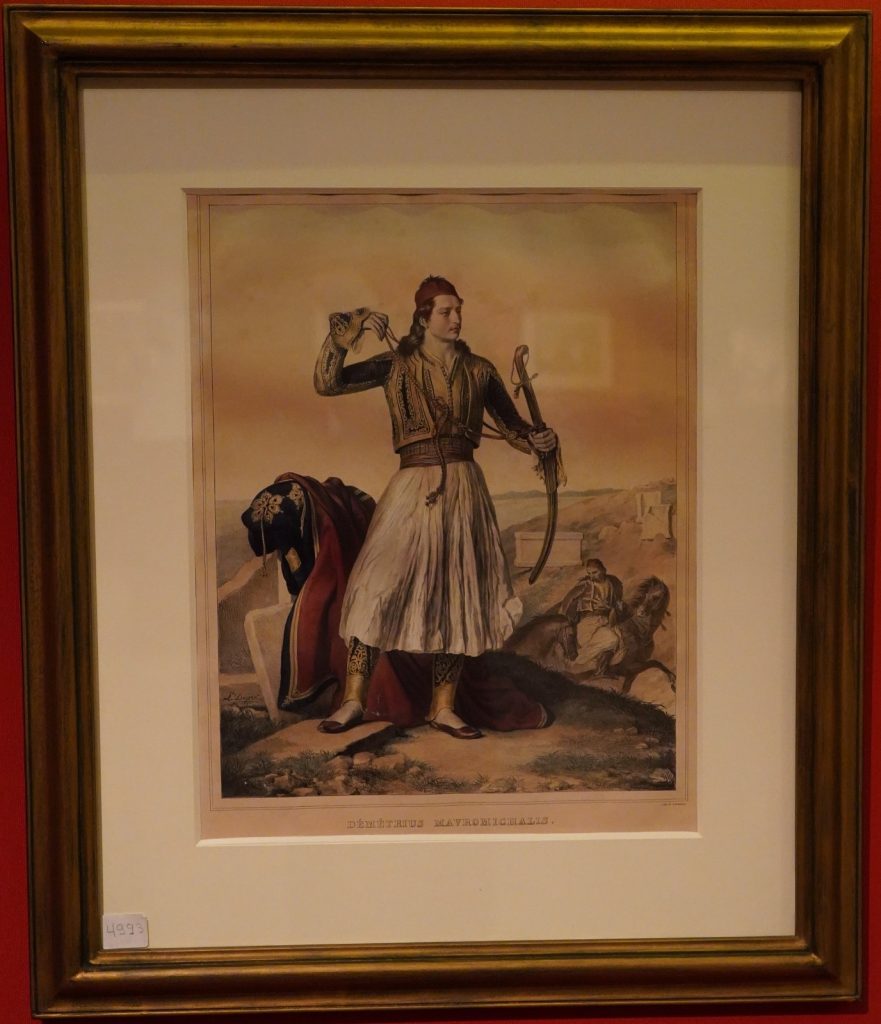
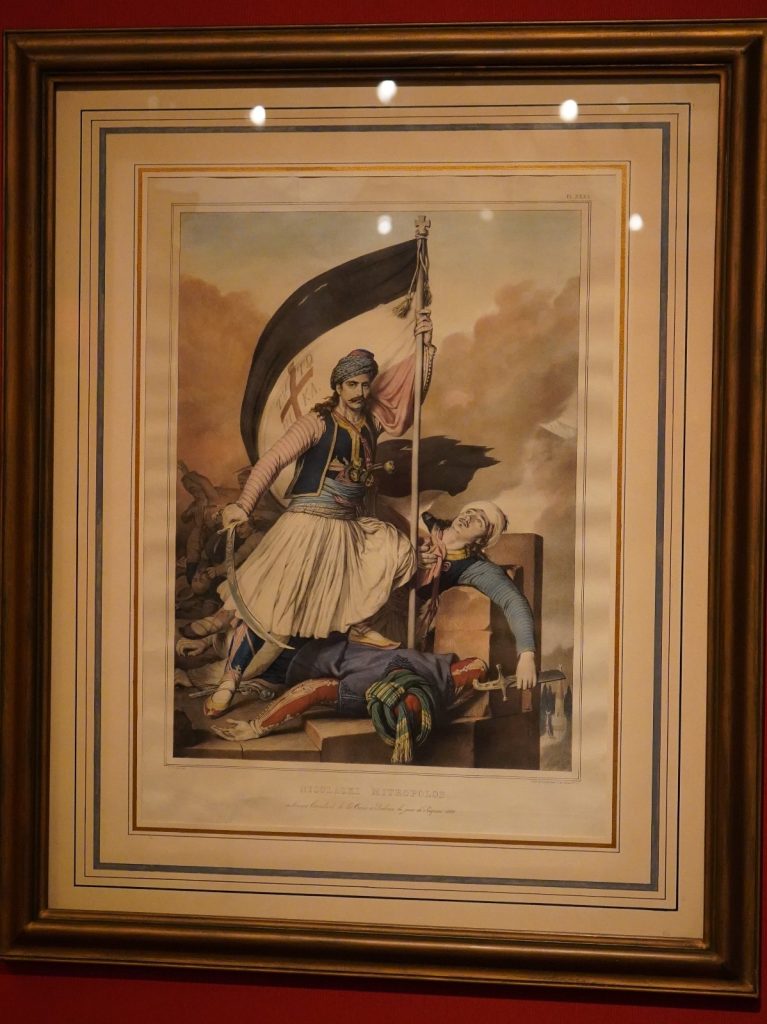
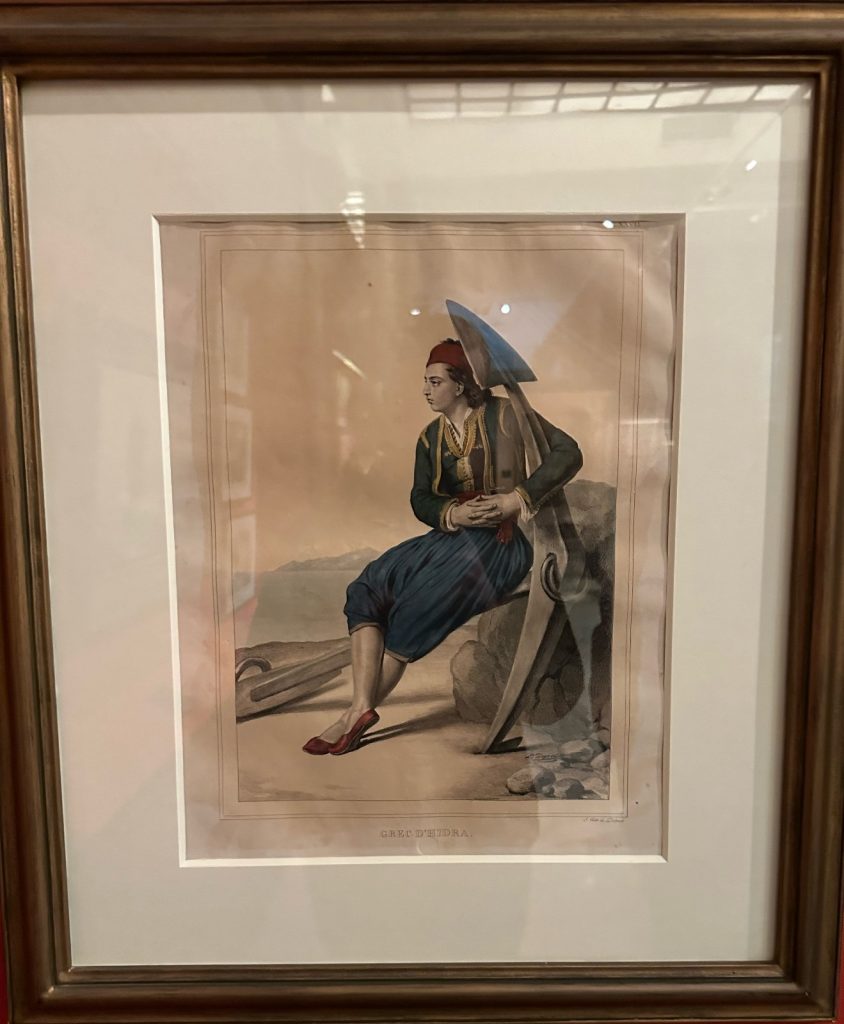
“We mainly draw clothing information for the fighters from the artworks of the era. One of these was the French painter and engraver Louis Dupré, who visited the Greek area, and several lithographs of his are exhibited in the Museum,” he explains.
Three of these are: a) ‘Nikolakis Mitropoulos,’ in which the fighter is depicted raising the flag with the cross in Salona on Easter day of 1821, b) ‘Greek from Hydra,’ in which a Hydriot is depicted in traditional attire leaning on an anchor, with a contemplative gaze overlooking the sea, and c) ‘Dimitrios Mavromichalis,’ in which a teenager, the youngest son of Petrobey Mavromichalis, later a lieutenant general and defender of Otto, is depicted proudly holding his sword, while the broken marbles next to him remind of Greece’s glorious past.
“Of course, moments from the Struggle, echoing into eternity, could not be absent,” Mr Bolierakis says.
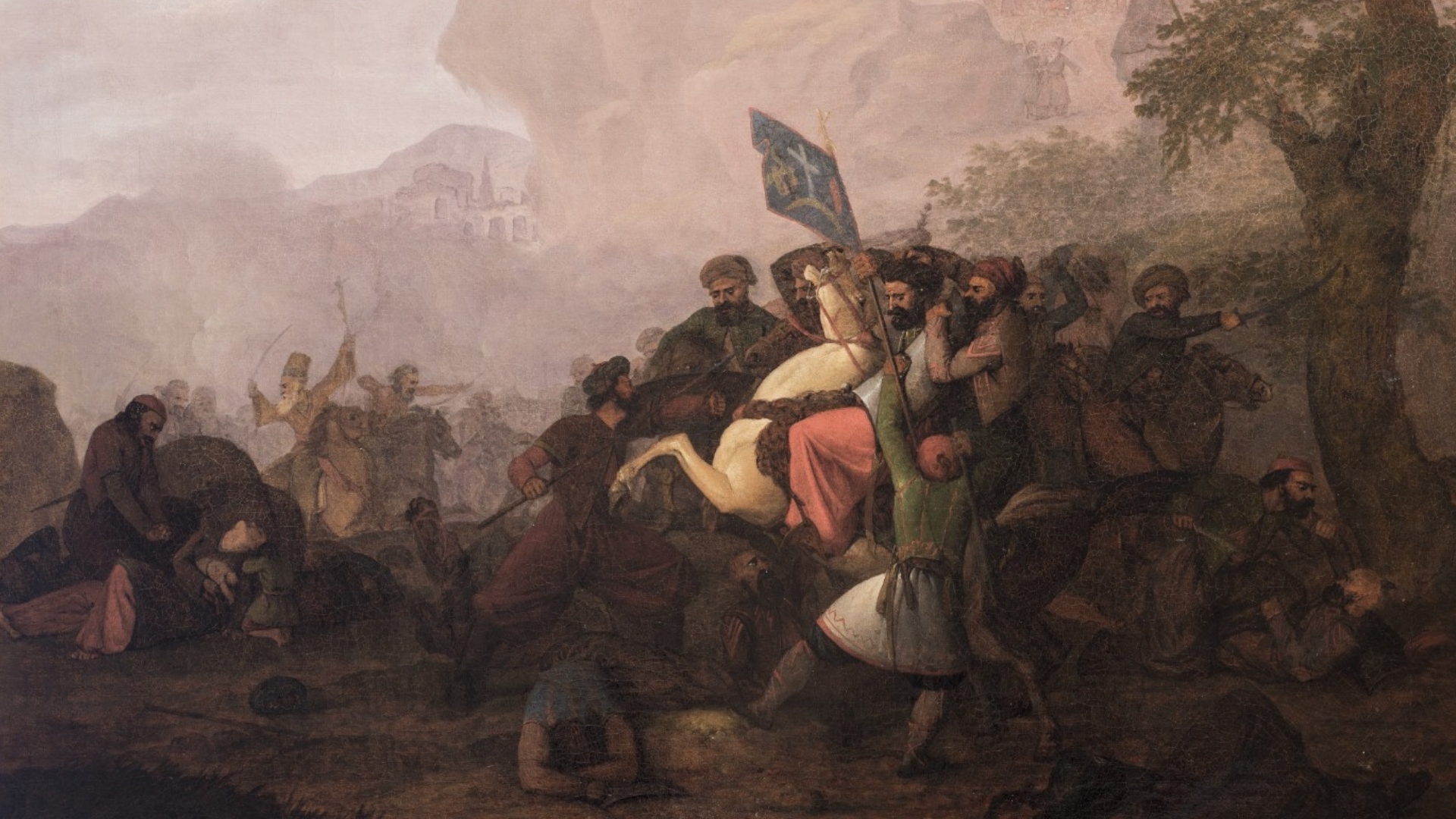
“A significant moment of the Revolution, which mobilised European Philhellenes, was the Exodus of Messolonghi (April 1826). The pinnacle moment was immortalised in the unique surviving work of Stamatis Voulgaris (1774-mid-19th century) ‘The Battle for the Flag,’ with the Greeks defending the symbol.
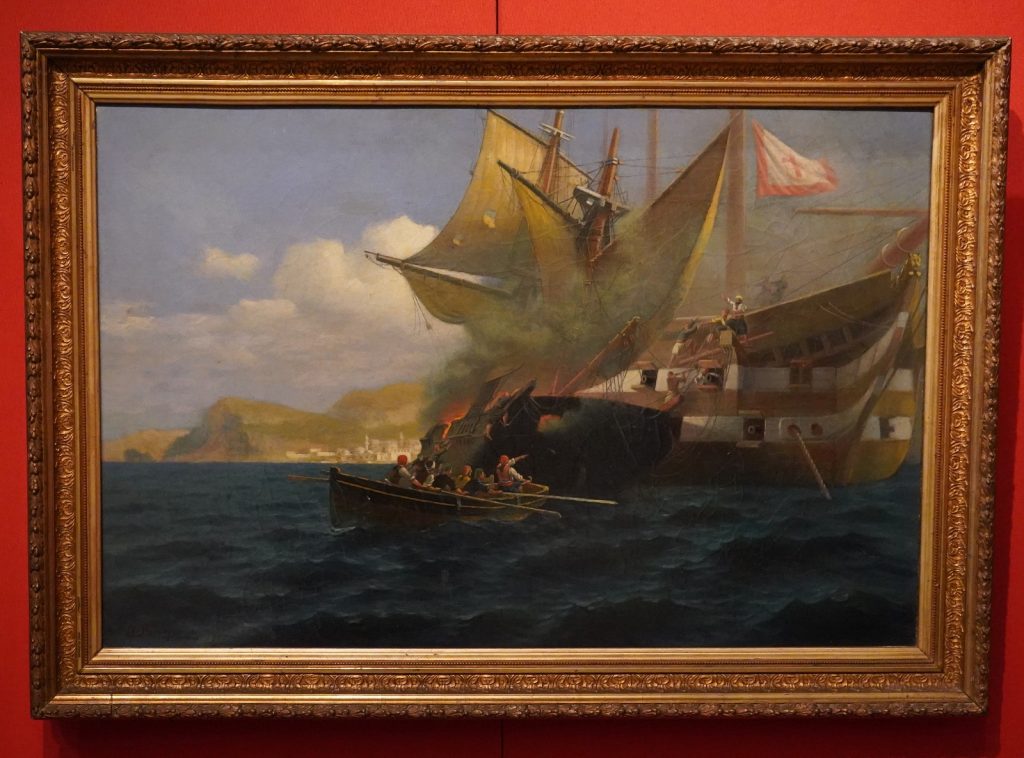
“In the naval struggle, the Greeks mainly used the method of setting fire to enemy ships. In the oil painting “Burning of a Turkish ship” (1905), painter Emile Prosalentis depicts a fire ship that has already been ignited and is attached to the Turkish vessel. Ottoman sailors are struggling to detach the fire ship, while the Greeks are rowing away in a boat, having accomplished their mission.”
The faces of the heroes and heroines are also present in the museum and engage the visitor.
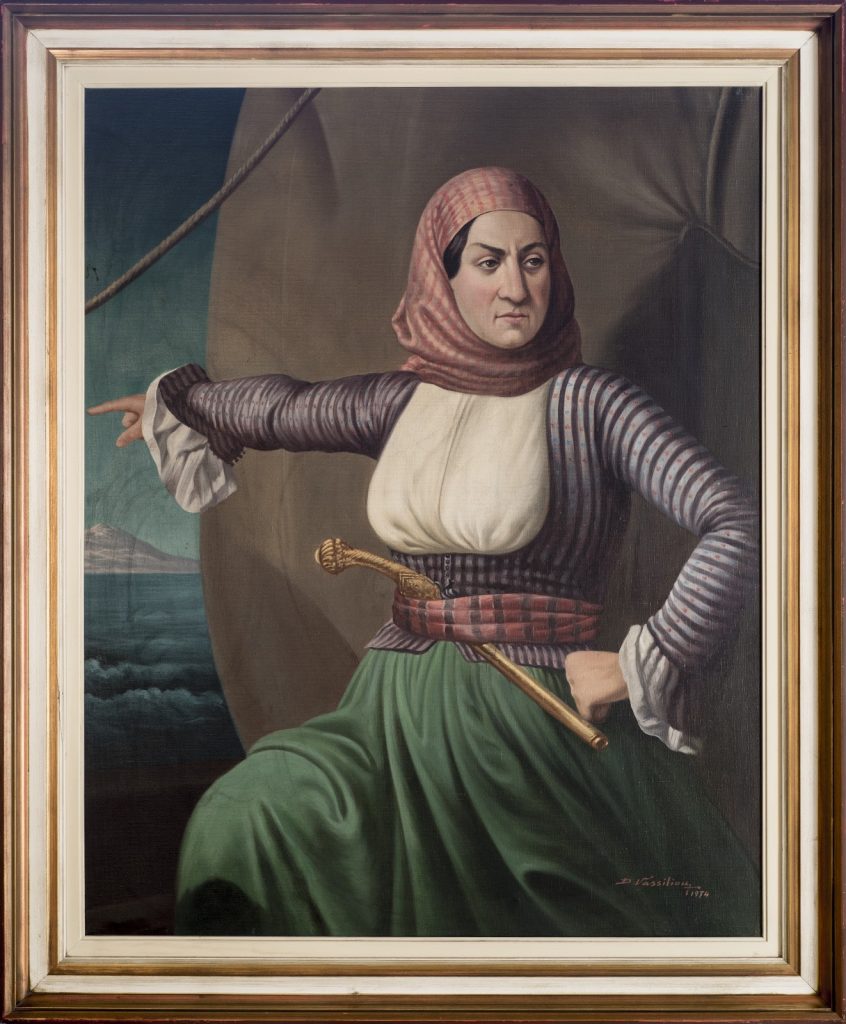
“The War Museum possesses significant works of painting, sculpture, and engravings depicting key figures of the Greek Revolution, one of which is Laskarina Bouboulina. Bouboulina was one of the leading female personalities of the Revolution, significantly contributing through the blockade of Nafplio and the allocation of financial resources for the maintenance of military forces,” he says.
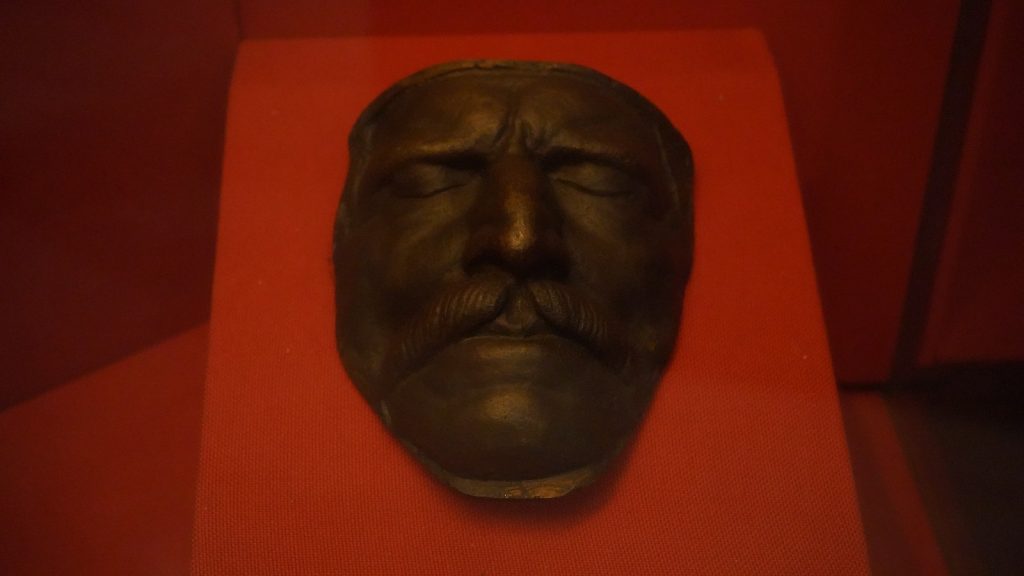
“A paramount figure of the Revolution was Theodoros Kolokotronis, honoured by the War Museum of Athens with a plethora of exhibits, one of which is the bronze replica of his death mask.
Kolokotronis (1770-1843) was a klepht in the Morea region before the Revolution and a Major of the Greek infantry of the British-controlled Ionian islands. In 1818, he was initiated into the Friendly Society, and his military activity played a crucial role in the successful outcome of the Revolution, while after liberation, he engaged in political action in the newly established Greek State.”
The War Museum of Athens is accessible for virtual tours through its website: https://www.warmuseum.gr/

