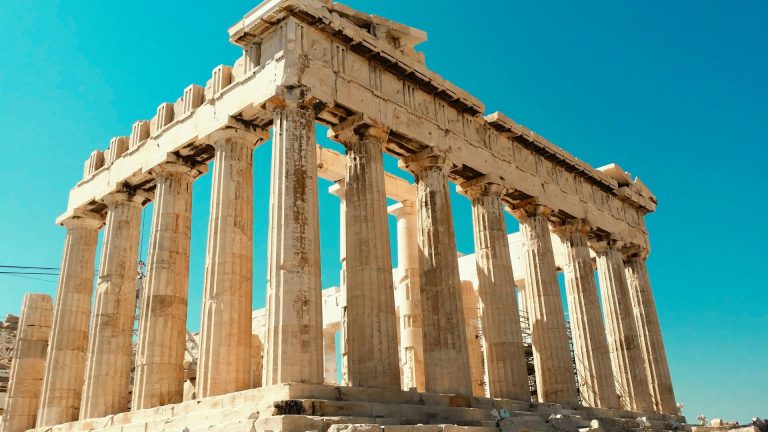
Greece is set to introduce an exclusive opportunity for visitors to enjoy a private, two-hour guided tour of the renowned Acropolis Hill.
According to ekathimerini.com, the private visit will cost 5,000 euros. The decision, which was approved by the Central Archaeological Council (KAS) on Wednesday, targets small groups seeking a unique experience. The first private tours are scheduled to begin on April 1, 2024.
The private tours, accommodating up to four individuals, will be available during sunrise (7-9 a.m.) or sunset (8-10 p.m.) in the summer months on Tuesdays, Fridays, and Saturdays, excluding full moon nights. Participants will receive souvenirs as part of the package.
KAS also announced a revised ticket policy after five years. The changes will apply from April 1, 2025, and involve increased entrance fees for museums and archaeological sites. The Acropolis Hill’s general entrance ticket will rise to 30 euros, with other sites and museums varying from 5 to 20 euros, contingent on visitor numbers and location.
Photo: Matias-Callone-CC2-Flickr.
Free admission will be extended to two Sundays monthly. Additionally, five major Greek museums, now independent entities, will establish their own pricing policies. These museums are the National Archaeological Museum in Athens, the Archaeological Museum of Thessaloniki, the Archaeological Museum of Iraklio, the Byzantine & Christian Museum (Athens), and the Museum of Byzantine Culture (Thessaloniki).
These ticket prices will be applicable throughout the year, as the previous practice of lower winter prices is abolished.
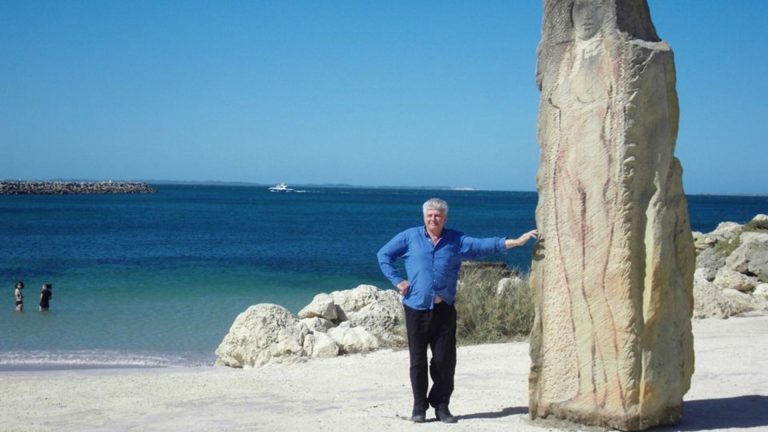
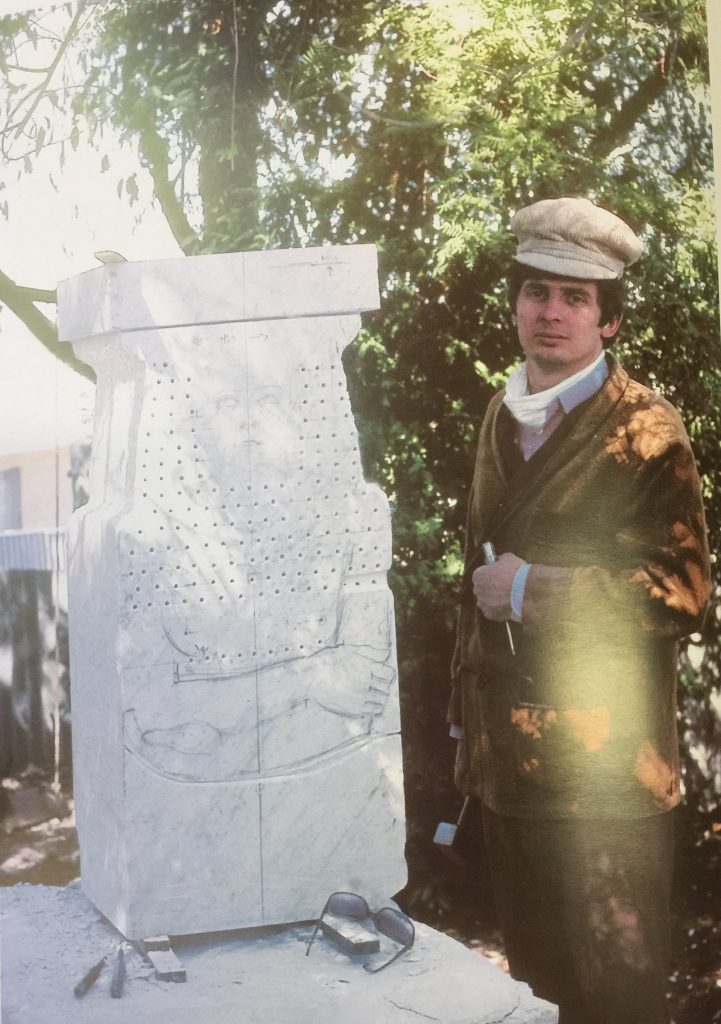
Athanasios (Arthur) Kalamaras, a Greek Australian artist known as one of West Australia’s foremost figurative sculptors, has a rich artistic heritage in both Greek and Australian culture.
Born in Florina, Greece in 1950, he emigrated with his family to Western Australia at the age of one. His father Leonidas, a celebrated Greek artist, and his mother Vasso, poet and writer, instilled in him a profound love for art. Surrounded by sculptors like his uncle Dimitris Kalamaras, he found inspiration in family.
His artistic exploration began with extensive travels across Europe from 1968 to 1972. He later pursued formal studies in sculpture, graduating from W.A.I.T (Curtin University) in Perth in 1974, simultaneously obtaining a diploma from the Pedagogic Academy. His study and travel to museums and archaeological sites across Bulgaria, Poland, Italy, and Greece, introduced him to diverse sculptural styles and techniques.
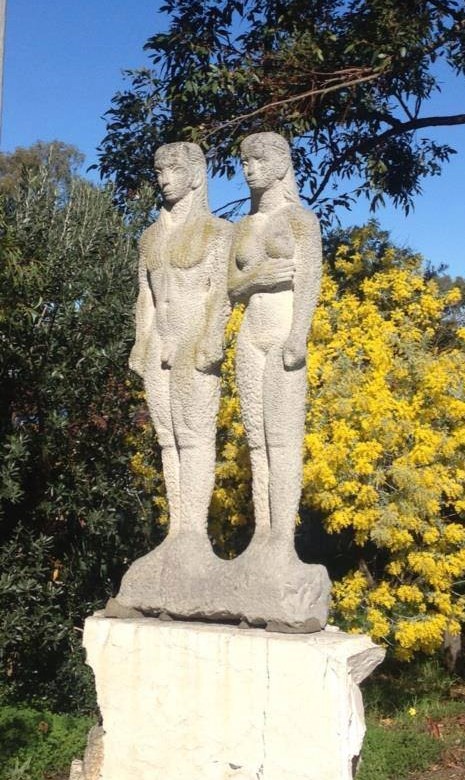
Man and woman, PerthAthanasios Kalamaras
As a sculptor, he delved into modern abstract experimentation inspired by Renaissance and Classical Greek aesthetics. His craftsmanship spans various mediums, mastering the art of stone and marble carving, reviving ancient techniques in his creations. Kalamaras also played an important role in establishing the “J Shed Art Studio” in Fremantle, WA, fostering an artistic precinct of creativity and cultural enrichment.
One of his notable works, the “Minmarra – Gun Gun” memorial, unveiled in 1979, stands as a testament to his reverence for history and culture. This homage to pioneer women of Western Australia, blended Aboriginal symbolism, highlighting the fusion of diverse cultural elements.
His monumental stone sculptures, such as the “Goddess of Athena” and “The Mel of the Wargle,” stand proudly at Bathers Beach, Fremantle. His works are showcased in various Australian states. Canberra hosts two of his bronze sculptures commissioned by the Ministry for Ethnic Affairs.
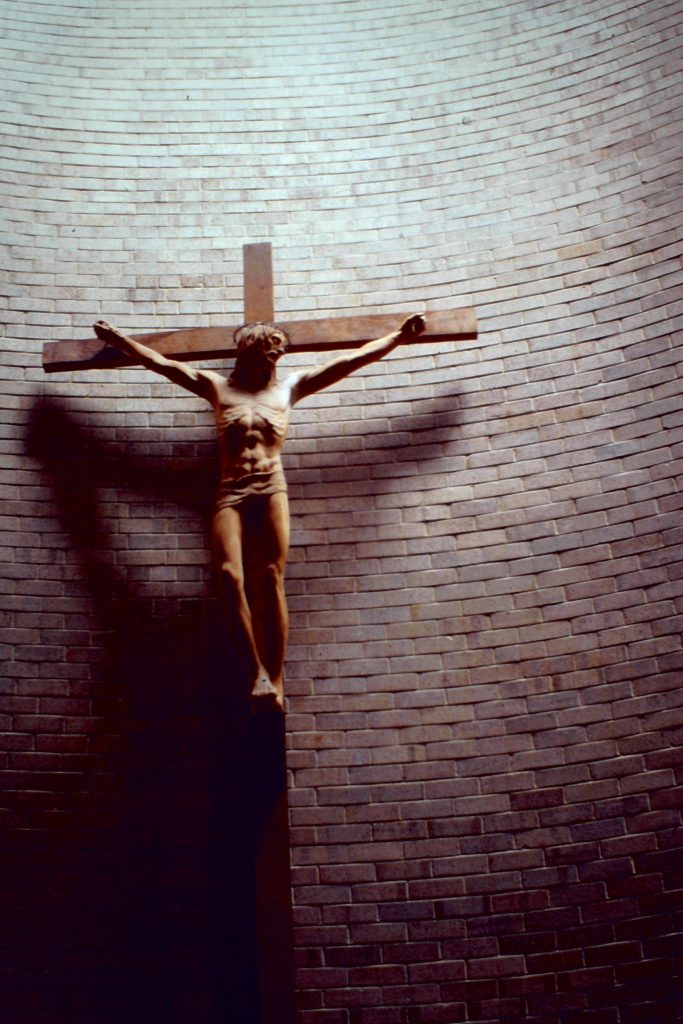
Amongst his commissions is the 1978 life-size wood carving sculpture of Christ on the Cross, towering at 6 meters in height, and the accompanying 14 panels of wood carving reliefs for the New Catholic Church in City Beach, Perth. Another striking piece, the 1979 sandstone relief titled “Yorkas Nyinning,” measuring 2 meters in height and 16 meters in length, situated in the Botanical Gardens Kings Park.
Other works include includes the four stone carving sculptures, “Caryatios,” at the Wittenoom Apartments in Kings Park. His works also extend globally, from New Zealand’s wood carving sculpture to Greece’s Church in Attica.
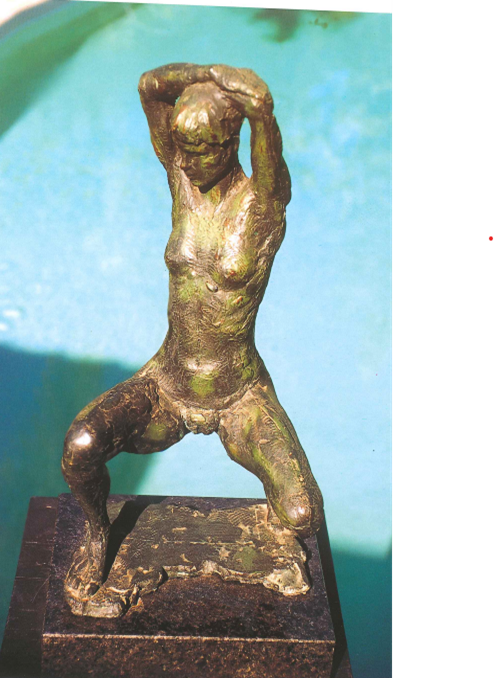
Christ on crossExcercise, Bronze
Kalamaras’ contribution to art, his significant commissions and international representations are featured in an extensive bibliography. References in renowned publications like “Hellenic Sculpture” by Stelios Lydakis and “Greek Artists Abroad” by Niki Loizidi, serve as a testament to his recognition.
Kalamaras’ 2006 exhibition at the Vafopouleio Cultural Centre in Thessaloniki marked a significant homecoming to his birthplace in Greece, where he was welcomed with many accolades and appreciation.
At the exhibition launch, Xeni Milara Vlachaki, President of the Supervisory Committee of Vafopouleio Cultural Centre of Thessaloniki stated, “The Vafopouleio Cultural Centre pays homage to the artist with a retrospective exhibition, the first held in Greece, so that the people of our city will have the opportunity to get to know this artist from the Diaspora.”
“I hope that such initiatives, which promote the creations of Greek living and working abroad, will continue with the same fervour; they contribute to research and the recording of our country’s artistic resources throughout the world, while offering new cultural and aesthetic experiences to the general public,” Vasilios Papageorgopoulos, Mayor of Thessaloniki, added in 2006.
The legacy of Athanasios Kalamaras lives through his sculptures and exhibitions, blending cultural narratives and solidifying his stature as a renowned Greek Australian artist.
Athanasios Kalamaras is amongst many Greek Australian artists who are registered in the GAAD (Greek Australian Artist Directory). An initiative by the Greek Australian Cultural League (GACL), the GAAD celebrates Greek Australian visual and performing artists by showcasing their works and contributions to the Australian arts landscape.
By preserving and promoting the artistic legacy of Greek Australian artists, the directory ensures that their talents are duly acknowledged and cherished, cementing their place in Australia’s artistic narrative.
Interested artists can register their profiles by visiting www.gacl.com.au and clicking on the dedicated GAAD section. For any inquiries related to the GAAD, individuals can either email GACL President Cathy Alexopoulos infogaclm@gmail.com or contact GAAD Co-ordinator Vasy Petros on 0412 242 557.
*Written by Vasy Petros. This is a Greek Australian Cultural League Initiative supported by The Greek Herald.
With my next three articles I would like to justify the title of earthly paradise that I offer to Australia, starting from the difficult years of settlement and survival. I will attempt to give tangible historical and social examples with which contemporary Australia is emerging indeed as a country with the highest performance and achievements in the world in the quality of education, in medical-hospital and research care, sports, arts and culture, theater, cinema and arts, in social maturation, in the level of security it provides and the quality of life.
Australia is a country of immigrants, western, with main European characteristics, multicultural, English-speaking, developed as a British colony, on a continent inhabited for years by other older settlers who also came from Asia and developed here one of the oldest primordial civilisations.
The main characteristic of Australia is that it is a European structured country, cut off from the old continent and transplanted to the far south, having as its neighbour to the north, the largest Islamic country on the planet, Indonesia. Australia, which until the beginning of the Second World War had not exceeded seven million souls, among them 15,000 Greeks, mainly islanders, lived not only with the tyranny of distance, but also with the fear of a conquering aggression from the north, mainly from Japan and China.
The 15,000 Greeks of the pre-war period were manual workers, agrarians, loggers, travelling workers of all kinds in the vast countryside, specialists in deforestation and the distillation of eucalyptus oil, working in groups, with an improvised hierarchy and rotating assignment of duties to those who would take care of the maintenance and cleanliness of the group, in tents and camps. Close to them were the unskilled workers in the vast sugar cane and banana plantations, in the tobacco plantations, as well as those who made a living in the foundries and refineries, in the mines and in the pits where they melted the lime.
The few Greek settlers in the cities were small shop owners, small businessmen, waiters, few bakers and even fewer privileged workers in shoe factories and construction. Working in the cities was the prerogative exclusively of British subjects. Foreign nationals, mainly southern Europeans, were forbidden to work in the few factories, and factories were scarce, because the metropolis, the United Kingdom, did not allow goods to be produced in the colonies, but to be exported to the colonies so the metropolitan workforce to have work. The only exceptions were shoe-manufacturing factories and some sewing factories.
For the Greek settlers of pre-war Australia, the country was not an earthly paradise. Work was hard, state care almost non-existent, welfare benefits did not exist, solidarity and care for the unemployed were the duty of the church, missions, communities and collective bodies. There was no easy enrichment, and the prosperity of goods was limited. People were generally more frugal in their needs and less consuming, caring for necessities, trying to give their children better opportunities for education and prosperity.
Australians, like their colonial ancestors, were less accessible to outsiders. They were not used socially, economically, culturally, to living with others, with ethnically different people. Their ancestors used to oppress the foreigners as colonisers, as slaves. Thus, Australians as descendants in the colonies, did not accept them as equal citizens. Australians of the pre-war period behaved with intense xenophobia, with misoxenia, with feelings of racism, with intense prejudice and suspicion.
In the Commonwealth Parliament, racist speeches were made by MPs against Greeks, Italians and Maltese, with painful epithets that fostered hatred and prejudice. The immigrants were cursed for working all day from Dawn to Sunset, and were decorated by their fellow Australians as “degos” and “stools,” they were kicked out of work; Australians went on strike if some merciful and pitiful Australian decided to give work to a Greek or a Maltese; stoned them in the countryside and bombed immigrant cafes.
In the pre-war period, ignorance and prejudice prevailed. First, were the Chinese, whom they considered a “yellow terror” and a “yellow menace”. Then, the Albanians, who were not even allowed to disembark in Australian ports and were sent back by the boat that they came as “unwanted scams.” Then were the Yugoslavs, Maltese, Greeks and even Italians, whereby their houses and shops were set on fire in Broken Hill, Boulder, Kalgoorlie, and other rural towns of NSW and Queensland. Some were deported, some were exiled, others were excluded. State governments banned banks from giving loans to Southern Europeans, cutting them off from any bank transactions. Premiers even punished Australians who broke restrictions and gave money or loans to Greeks in the decades of 1924-1935. Other states recorded their names and addresses, policing them as enemies of Australia and the Empire. Since 1932, the Cypriots have been officially described as “terrorists” and enemies of the Crown and the Empire.
In the Australian Archives there are thousands of documents of the Security Forces and the Ministry of Justice, where hundreds of Greek leaders and ordinary citizens have “glaring files” with surveillance reports and scenarios of “hostile behavior” either as communists, anarchists, or enemies of the Throne and Australia. And on top of all this is the Act of 1701, a law passed by the British Parliament, which until today, in 2024, prohibits any non-British or citizen who was not born in one of the British possessions from “claiming or obtaining a position in the public service of Australia.”
In this climate of xenophobia, a wonderful Hellenism functioned and matured in Australia; a Hellenism that laid the foundations for the operation of secular communities, a Hellenism that founded the first Orthodox Churches, the first newspapers, published the first books, organised the first theatrical workshops, the first Greek schools, the first choirs. A Hellenism that accepted and gave meaning and purpose to the existence of the Metropolis of Australia and the institution of Consuls and Our diplomats. A Hellenism that laid the strong foundations and essentially bankrupted the xenophobia and prejudice of their Australian fellow citizens, against the 270,000 Greek immigrants who settled Australia in the period 1949-1978 and 2009-2019, in order to offer them today’s Australia, the earthly paradise enjoyed today by the 550,000 Australian citizens of Greek origin (Greeks and Cypriots). This is what we will examine in the next two editions of The Greek Herald.
*Professor Anastasios M. Tamis taught at Universities in Australia and abroad, was the creator and founding director of the Dardalis Archives of the Hellenic Diaspora and is currently the President of the Australian Institute of Macedonian Studies (AIMS).
The finalists have officially been announced for the 2023 Victorian Premier’s Design Awards and among the list are at least five Australians with Greek heritage.
These awards were established by the Victorian Government in 1996, and ever since, they have been utilised to highlight and celebrate local design capability.
Finalists in the Architectural Design category
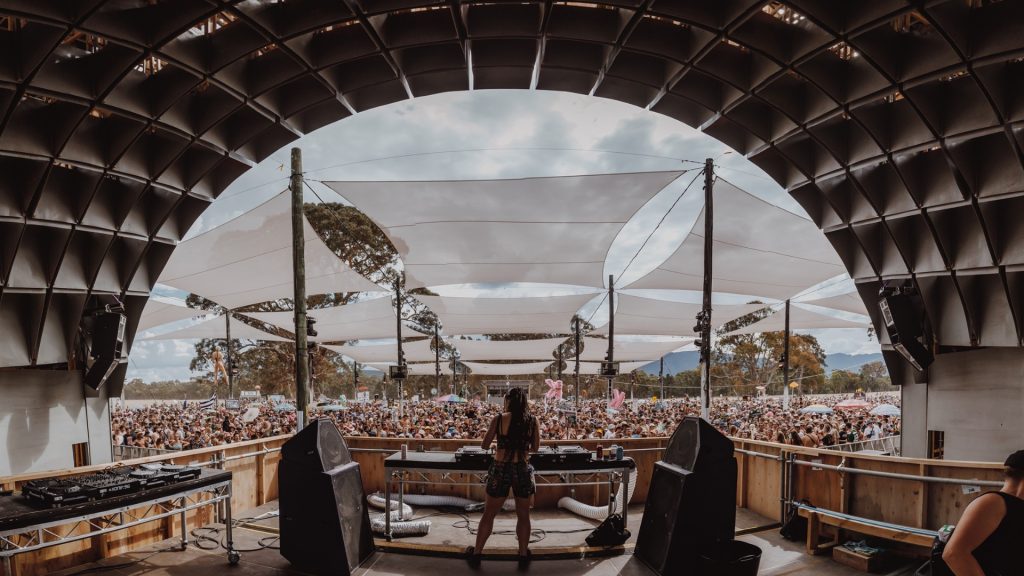
Pitch Music and Arts Festival – Main Stage
The Pitch Music and Arts Festival Stage. Photo: Victorian Premier’s Design Awards.
The Greek Australian, Ambrose Zacharakis, alongside Henry Howson and the Untitled Group were announced finalists for the Architectural Design category.
They designed Pitch Music and Arts Main Stage – a festival located at the foothills of the Grampians National Park, home to the traditional custodians of the Djab Wurrung and Eastern Maar Peoples.
Hosting headline performers, and the backdrop to the Welcome to Country Ceremony, the stage is the centrepiece of the festival.
The stage design is an arch that appears to be subtracted from a rectilinear form, the central opening focuses the audience on both the performer and the landscape beyond, creating a unique experience. The contrast of solid and void, set against the unfettered nature gives the stage a striking presence.
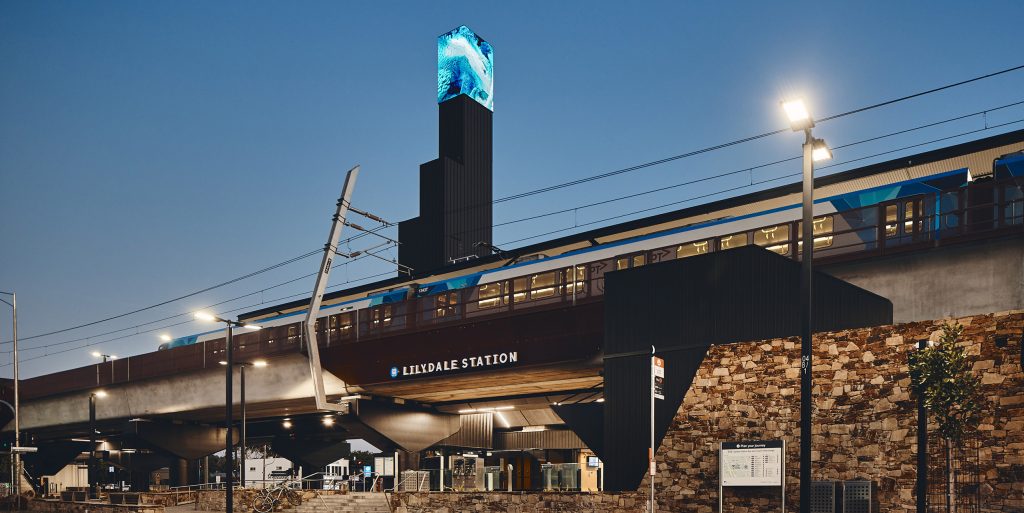
Lilydale and Mooroolbark Stations
Lilydale and Mooroolbark Stations.
Another Greek Australian finalist in the Architectural Design category includes Kyriacou Architects, who were nominated alongside BKK Architects, Jacobs and ASPECT Studios.
They completed two new train stations at the terminus of the Lilydale Railway Line. Part of the Victorian Government’s Level Crossing Removal Project, the new stations at Lilydale and Mooroolbark are siblings – unique, but with a shared material identity.
Both stations reactivate the public realm, reinstating cross-corridor pedestrian, cyclist and motorist connections – severed since the railway’s construction in 1882.
The new stations are supported by a new shared user path, reconnecting Melbourne to the Yarra Valley via the Warburton Rail Trail.
Finalist in the Communications Design category
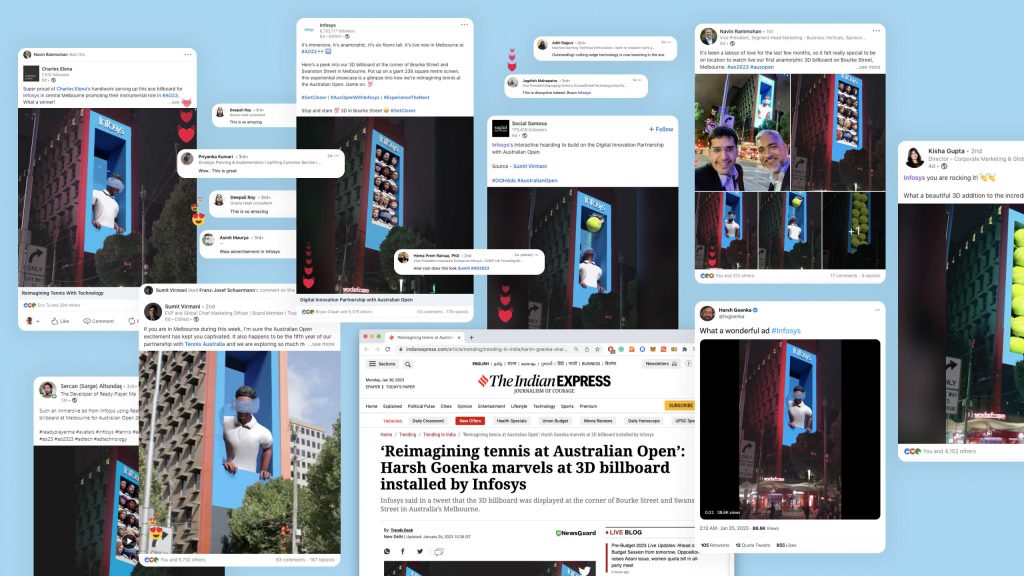
Australian Open – Infosys: Reimagining Tennis with Technology
Australian Open – Infosys: Reimagining Tennis with Technology.
Greek Australian Sandy Tsindos – Account Director (Charles Elena) and Tomas Palazzo – Creative Director (Charles Elena) were also named finalists for the Victorian Premier’s Design Awards.
They created an Infosys ground-breaking immersive 3D billboard for the 2023 Australian Open at the heart of Melbourne CBD.
As the long-standing digital innovation partner for the Australian Open, Infosys had the opportunity to improve its brand awareness during the 2023 tournament in January. The result, a 236sqm immersive, 3D anamorphic billboard in the heart of Melbourne (Bourke Street and Swanston Street). Coincidently, just like tennis, it turned heads.
Finalists in the Student Design category
Ngulu Djeembana (The Gathering of Voices)
Ngulu Djeembana (The Gathering of Voices).
Stasinos Mantzis, a RMIT Studio Design Leader was named a finalist, along with Shao Tian Teo, Taylor Ristevski, Alexander Barr, Dr Christine Phillips (RMIT Design Studio Leader), Professor N’arwee’t Carolyn Briggs AM (Boonwurrung Elder/RMIT Design Studio Leader), and RMIT University for their research on First Nations designs and culture.
Ngulu Djeembana is an exploration into the multifaceted and deep culture of Victoria’s First Nations custodians. The formal qualities of the building and its surroundings embed the specificity of Country through design, celebrating cultures of the Eastern Kulin Nations.
The project envelopes poetic processes through Songlines, engagement and architectural disruptions as a way of looking towards Yirramboi. Their research and processes intertwines public and indigenous knowledge provided by Boonwurrung Elder, N’arwee’t Carolyn Briggs.
Spot
Spot.
Alesia Tsolakis was named a finalist in the student design category for her handheld melanoma detection device monitoring and recording visual symptoms in changing moles.
Melanoma, a type of skin cancer that develops in skin cells called melanocytes, is projected to be the third most common cancer in Australia. Despite its prevalence, individuals can feel uncertain to independently identify symptoms. In response, she designed ‘SPOT,’ a self-contained mole monitoring device. Assisted by a removable wall mount and digital application, the user is able to compare moles easily at any time, even on difficult to reach places on the body.
A 27-year-old Moorabbin man has been charged with murder over the death of a Greek man on a street in Melbourne’s south-east on Tuesday.
The 46-year-old Greek man was found on the side of the road at the corner of Little Avenue and Widdop Crescent, Hampton East, just after midday on Tuesday with upper body injuries.
Emergency services performed CPR, but he died at the scene.
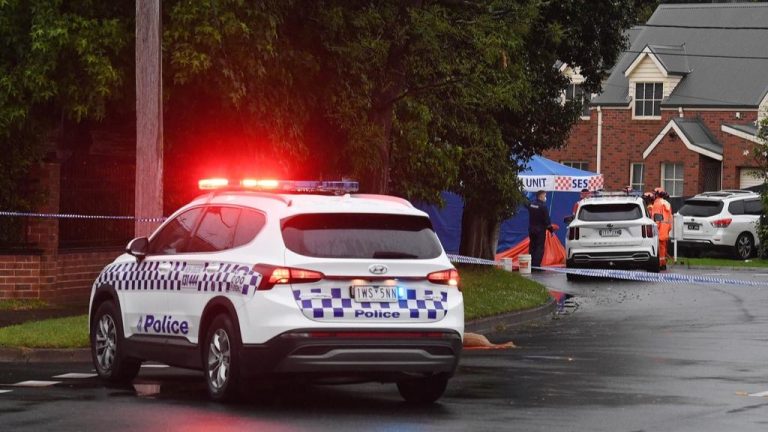
Homicide detectives were quick to establish a crime scene, using police cars and tape to cordon off a section of Widdop Crescent, between the corners of Little Ave and Cooke Ave.
Man charged after Greek man murdered in Melbourne’s south-east.
According to The Herald Sun, detectives charged a 27-year-old man with one count of murder on Thursday afternoon.
A Victoria Police statement said the attack was believed to be random and the two parties did not know each other.
The charged man, who was already in custody on an unrelated matter, will face Melbourne Magistrates’ Court on Friday.
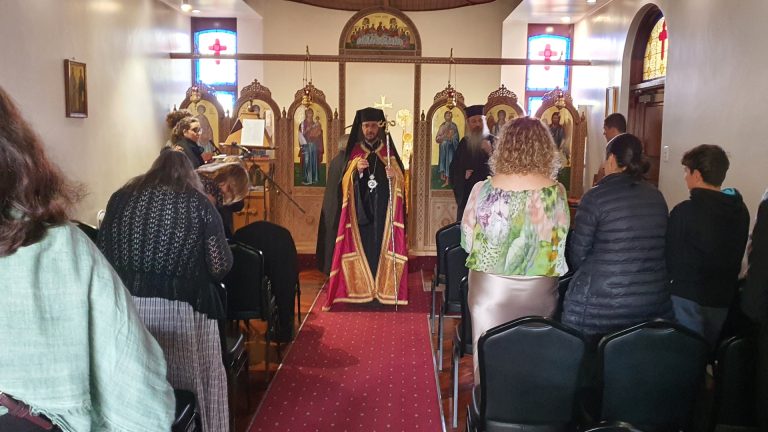
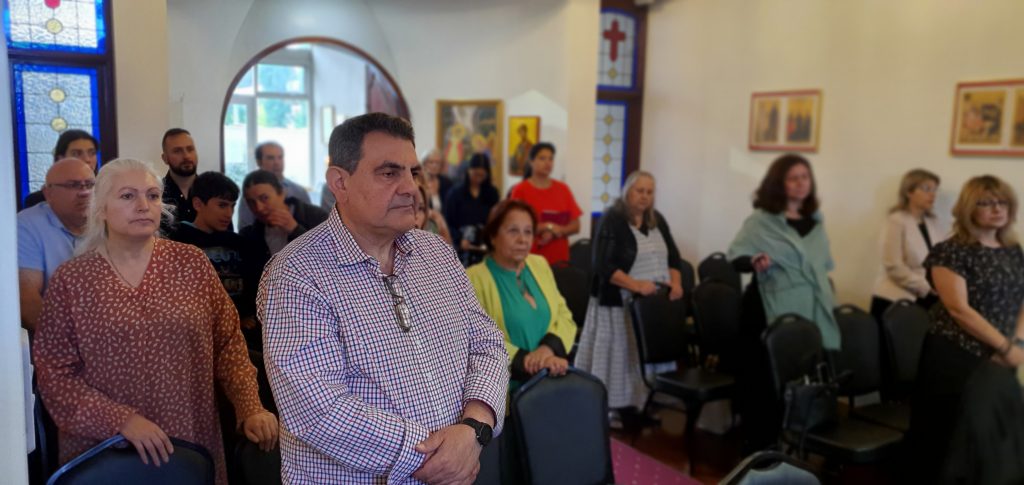
The Greek Orthodox church of Saint Panteleimon in Glenelg, Adelaide, South Australia has re-opened as an English-speaking parish.
The first all-English hierarchical Divine Liturgy was held on the Eve of the Nativity (Sunday, December 24, 2023), presided over by Bishop Silouan of Sinope.
The church aims to cater to the needs of parishioners in the Western suburbs of Adelaide who don’t speak as much Greek, to understand the church service better.
The re-opened church can now allow for 40 people to be seated.
The church, which is located in Glenelg North, was recently relocated to form the parish of the Holy Cross in Glenelg.
The new premises allow for a much larger and more suitable space to cater to the growing numbers of attendees to the parish. The parish is also the only one which caters to the South-Western suburbs in Adelaide.
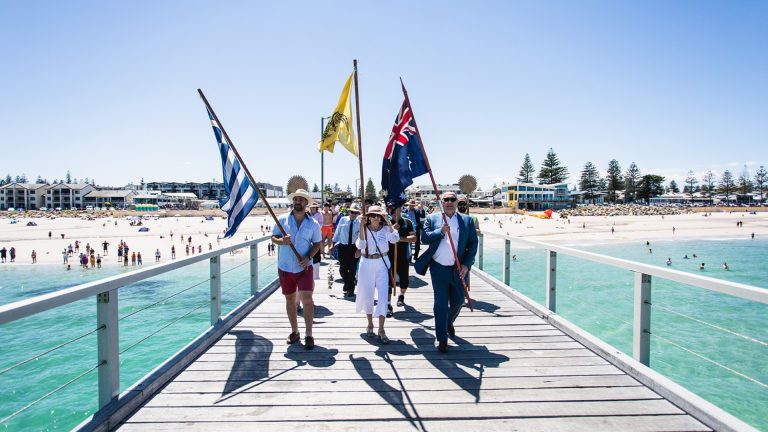
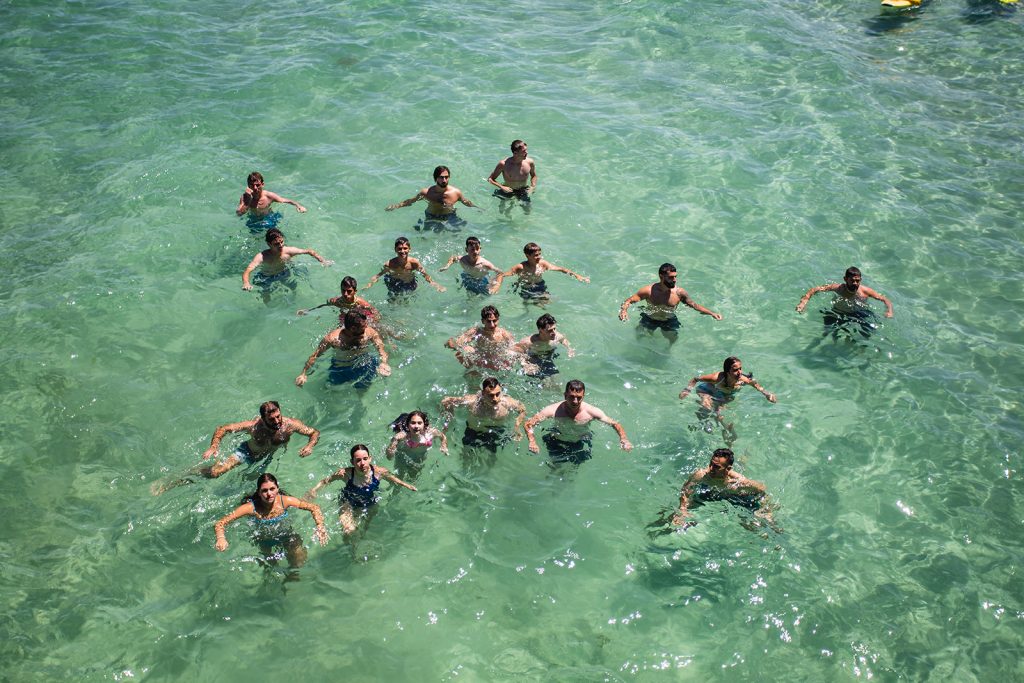
The event will take place at the Henley Beach foreshore in Adelaide and is expected to attract hundreds of visitors.
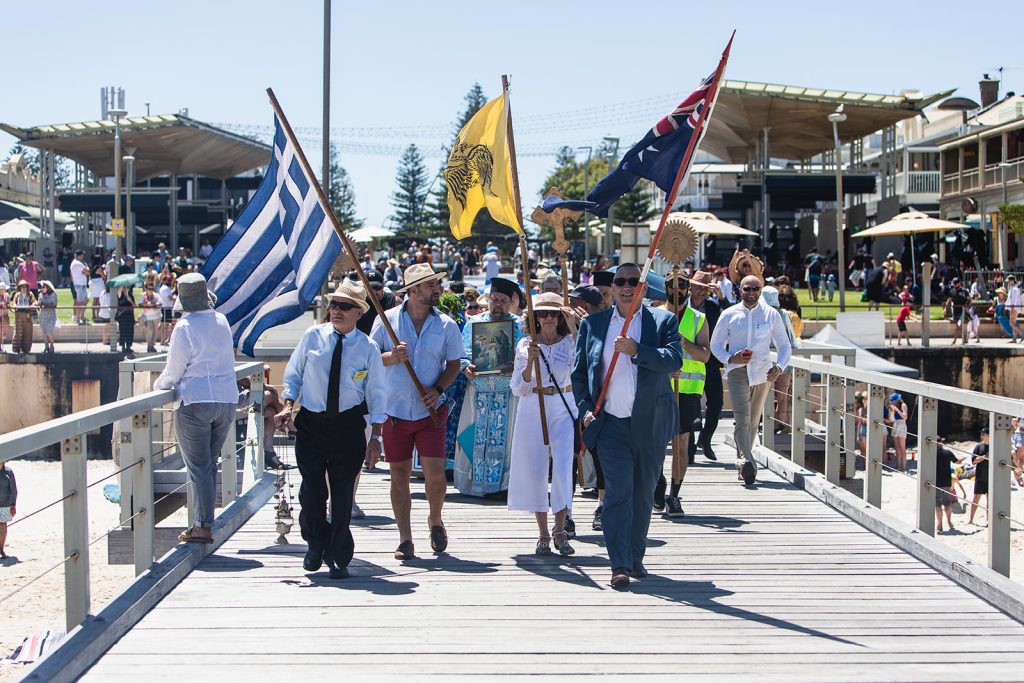
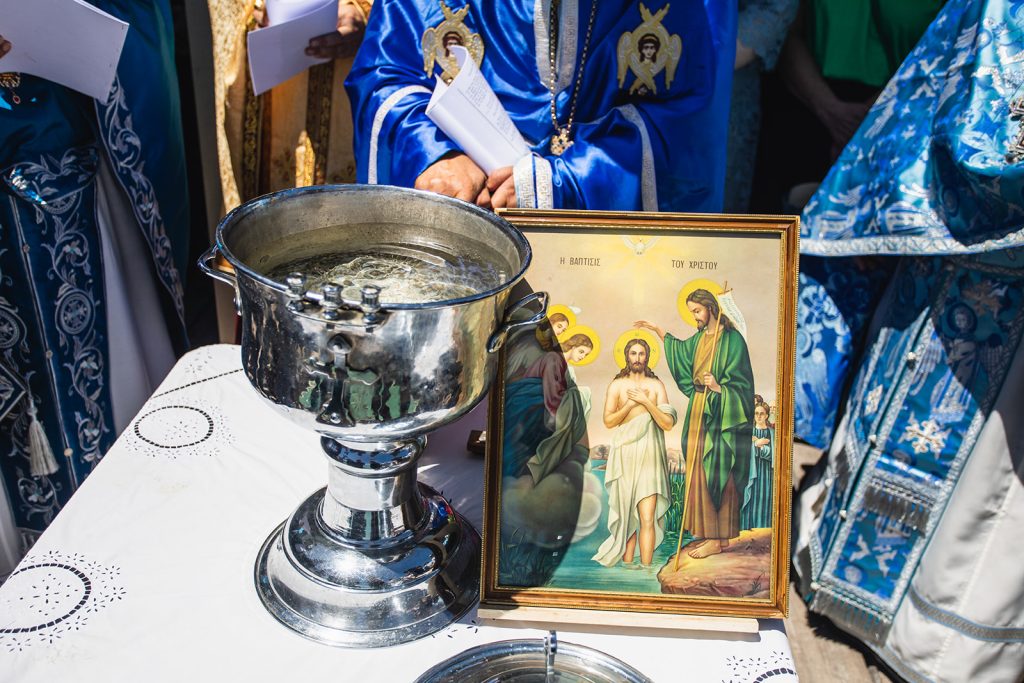
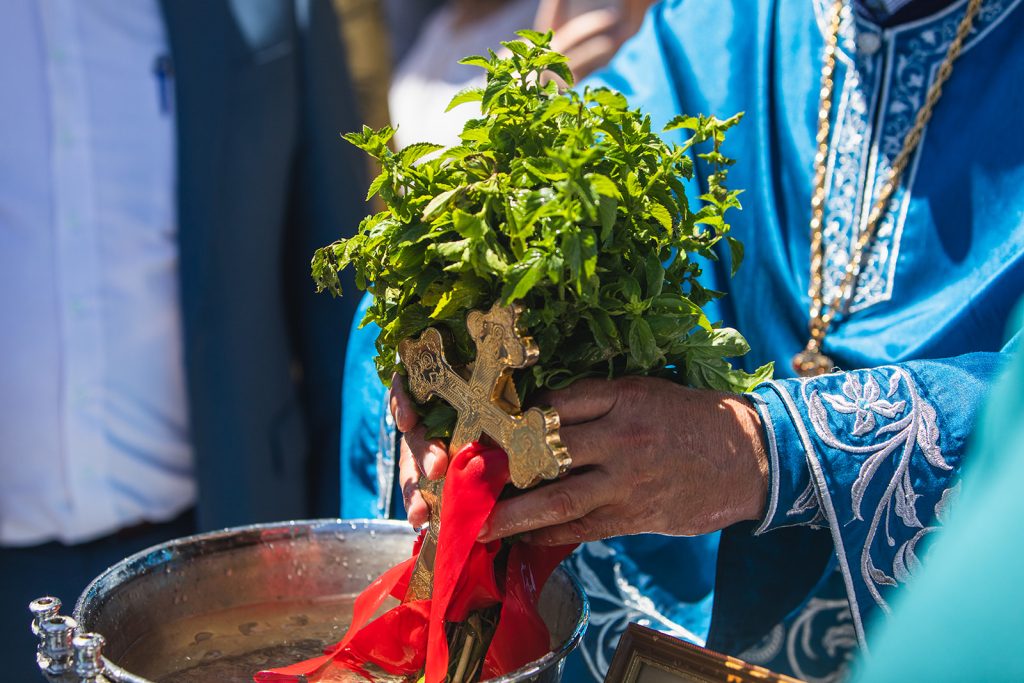
The Blessing of the Water event in Adelaide. Photo: Supplied.
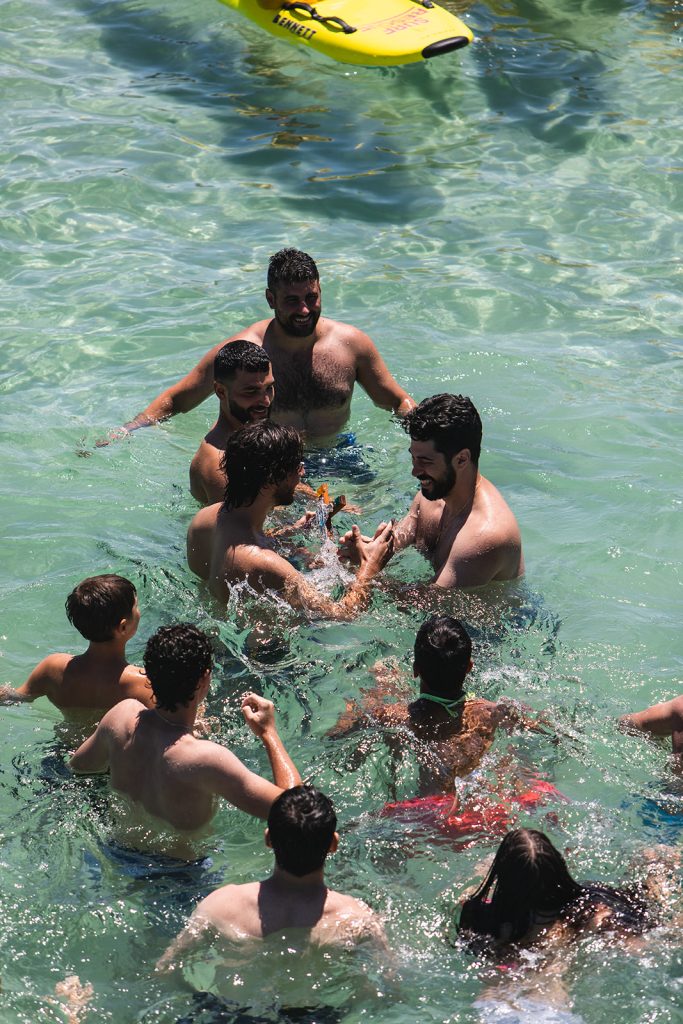
The Clergy with the parishioners and other guests, will commence the procession from the start of the jetty at 12pm. Together, they will walk to the end of the jetty, where the symbolic Blessing of the Waters will take place, and the faithful will dive into the waters to retrieve the cross.
The cross dive in Adelaide. Photo: Supplied.The cross dive in Adelaide. Photo: Supplied.
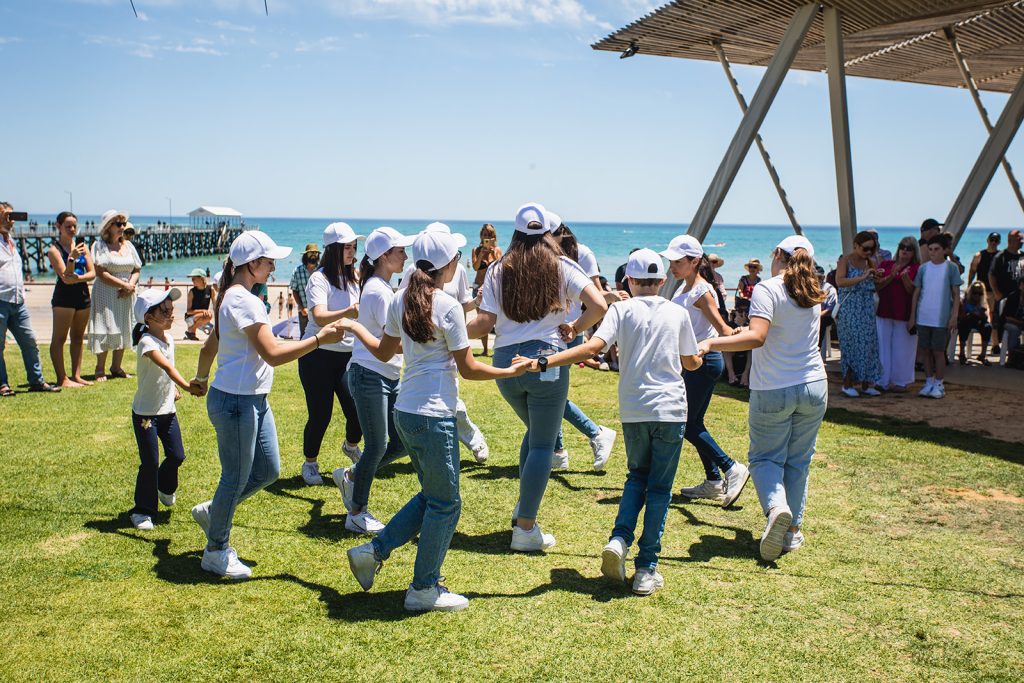
Once the ceremony is over, visitors will be treated to a traditional Greek Festival which will include traditional dance performances, live music by the talented local band ‘Kerasma Live,’ and delicious food and desserts such as loukoumades (Greek honey puffs).
There will be plenty of dancing at this year’s festival. Photo: Supplied.
In the Orthodox Church, the Feast of Epiphany marks the baptism of Christ in the Jordan River by John the Baptist. It is the third and last holiday of the 12 days of Christmas and officially brings the holiday season to a close, sending a message of spiritual rejuvenation and inner cleansing.
In his message to GOCSA, the Premier of South Australia, Peter Malinauskas, stated: “On this special occasion, we celebrate the strength and unity of the spiritual ties that bind the Greek diaspora here in our great state and around the world.”
“The Blessing of the Waters ceremony combines the richness of ancient and contemporary Greek traditions and culture. The joyous celebrations that follow showcase the generous hospitality for which our Greek community has been so well known for generations,” Mr Malinauskas said.
The Epiphany Day events take place on Sunday, 7 January, 2024. Photo: Supplied.
GOCSA President, Peter Gardiakos, said: “The Church’s wish for divine enlightenment always remains relevant and timeless. It reminds us that nothing is taken for granted and that we all need to be united in our moral duty to defend the universal principles and values of humanity, solidarity, democracy, justice and peace.”
“The never-ending Light of Christianity is a light of love and inclusion without judgement. May the blessings of Epiphany inspire us to navigate the currents of life with faith and resilience,” Mr Gardiakos said.
The Greek Community of South Australia looks forward to celebrating another Epiphany Day together at Henley Beach. Photo: Supplied.
GOCSA Cultural Committee Chair, Hellas Lucas, said: “The tradition of the Blessing of the Waters, or as we know it “Theofania” is such a beautiful event that all South Australians can look forward to. It’s a wonderful opportunity for the Greek community to showcase our culture, traditions, food and dance.”
“This year, in anticipation of a much larger event, we have added more marquees with undercover seating, more food, and more entertainment which is headed by a brilliant local band ’Kerasma Live’ who have put together a traditional Greek musical program for everyone to enjoy,” Ms Lucas said.
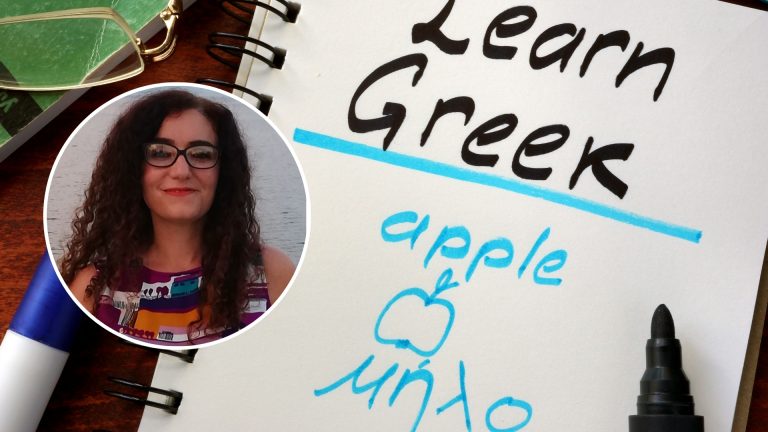
Four years ago, the Greek Community of Melbourne’s (GCM) Language and Culture Schools created the online program “Greek for Late Beginners,” which is aimed at children aged 10-18 who did not have the opportunity to start learning Greek at a younger age.
To find out more about the program and why you should enrol, The Greek Herald spoke with Eleni Dimitriou, Modern Greek Language Teacher and Coordinator of the online program.
Tell me a little bit about the “Greek for Late Beginners” Online Program. When did it launch and what will people do during the program?
The “Greek for Late Beginners” Online Program was created four years ago during the pandemic by The Greek Community of Melbourne’s Language & Culture Schools. The program is designed for children aged 10-18 who did not have the opportunity to start learning Greek at a younger age. It allows students to develop their communication skills in Modern Greek, learn and understand the Greek language and culture, and actively participate in interactive online classrooms.
The program aims to provide fun and interesting lessons while minimising any gaps in the students’ learning experience. The most important thing to underline here is that the program is accessible to children across all of Australia and serves as a way for children to connect with their Greek heritage.
What makes this program different to others that exist?
It’s different in many ways.
It is designed for older children aged 10-18 who may not have had the opportunity to start learning Greek at a younger age.
Online Accessibility Nationwide: As an online program, it is accessible to every child in Australia, transcending geographical constraints and ensuring a nationwide reach.
The program offers distance learning, making it accessible to students who face challenges such as daily obligations, lack of time for commuting, long distances from Greek schools, or the absence of school units in remote areas.
The program emphasises interactive online classes, creating an educational environment that provides engaging and effective lessons.
Expert Educators in Greek and Technology: Our educators excel not just in Greek language proficiency but also utilising technology to enhance the effectiveness of their teaching methods. We have developed lessons that are not only educational but also enjoyable, as evidenced by the remarkable results achieved by children who initially lacked basic reading and writing skills but concluded the course proficient in both.
We adhere to optimal methods to ensure the best results for each student.
Proven Results: The program has yielded tangible results, with students who initially had no knowledge of reading and writing now proficient in constructing dialogues, showcasing the program’s effectiveness in imparting language skills.
Why do you think it’s important for older people to learn the Greek language?
The aim is to help children in Australia learn the language of their grandparents and parents and feel closer not only to their roots, but also to Greek culture and heritage. This program is especially beneficial for those who may not have started learning Greek from Grade 1.
Many children, as they grow, realise the importance of connecting with their heritage, especially for effective communication with family members who speak Greek and for a more meaningful experience when traveling to Greece. This program is tailored to meet the specific needs of these learners, encompassing the desire to speak with family, engage with relatives, and confidently communicate in Greek, whether at home or during travels.
It serves as a comprehensive solution to bridge the linguistic and cultural gaps that may have emerged as these individuals matured, allowing them to fulfill their aspirations of connecting with their Greek identity.
Is there anything else you’d like to say?
The program has been, and continues to be, so successful that it currently has six online classes with over 40 students in total, and a trained team of experienced educators who meet the educational needs of the students.
The program is offered between 9-11 lessons (depending on the term), each lasting two hours. Open classes for up to 10 people and smaller groups (private lessons) up to four people are available.
Notably, we are thrilled to share that the program has experienced a significant increase in the number of students each year. This growth reflects the growing recognition of the program’s effectiveness in fulfilling the language and cultural learning needs of children, further solidifying its role in connecting younger generations with their Greek identity.
The new classes start at the end of January 2024, specifically:
We are excited to announce a special Early Bird Offer only for the course A1.1 Greek for Late Beginners Online Program. Enrol between November and January and receive two lessons free as a part of your enrolment. All you have to do is enter the discount code START24 in the Coupon field.
Enrol in the Greek for Late Beginners Online Program today and enjoy the feeling that comes from taking the right first step, and your early bird discount! The A1.1 level starts on Wednesday 7th of February at 4:30pm.
For more information and to enrol, please visit the website greekcommunity.com.au/glb or contact us at 9662 2722.
A man is set to face court after being caught stealing a large painting by Kelly Batsiokis from a hospital in South Australia.
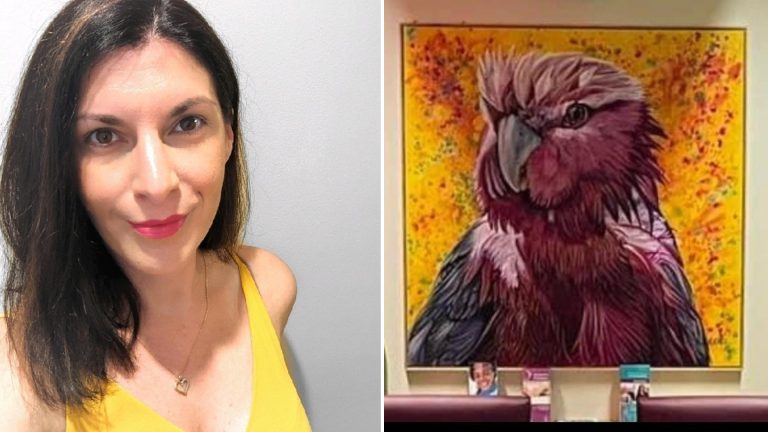
The painting of Wally the Galah was taken from the Lyell McEwin Hospital on December 28, leaving many of the hospital staff devastated.
The Advertiser shared that the man who stole the painting was seen wearing a high viz shirt and drove away in a VZ Commodore, as caught by CCTV footage.
An investigation by police was then conducted, where they searched the home of a 38-year-old man and charged him with reported theft and possession of a prohibited weapon – a baton.
The man is expected to appear in the Elizabeth Magistrates Court at a later date, however the painting is still yet to be found.
Adelaide artist, Kelly Batsiokis. Photo: Abt Associates
The hospital staff have since shared their devastation at the painting going missing.
Ms Batsiokis said she was shocked by the “audacity” of the theft. The painting was said to be bolted to the wall.
“It’s not so easy as just taking it off the wall,” she said. “I have seen some footage – a male basically just walks into the hospital, unattached the painting, and walks out.
“I just don’t understand how somebody has the audacity to brazenly walk in, in broad daylight.”
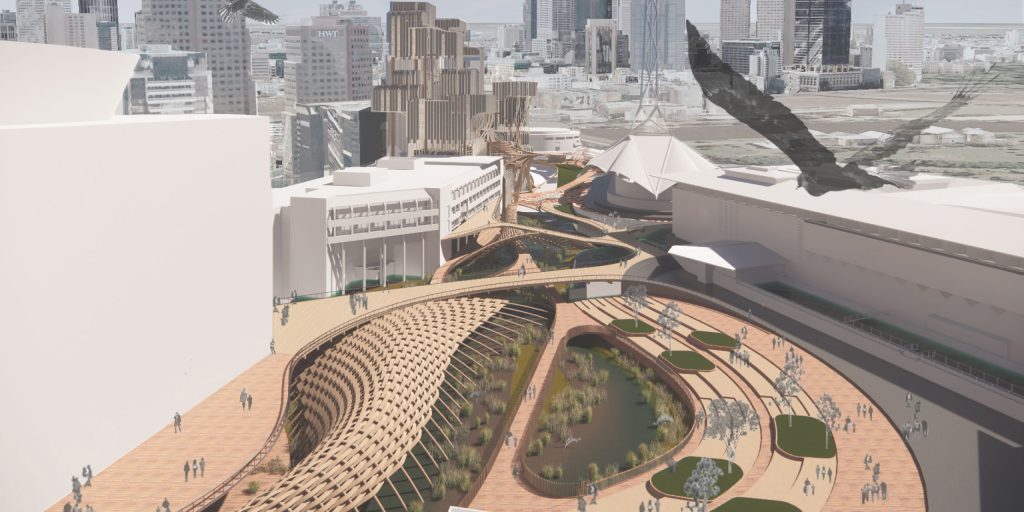
The Malinauskas Government will follow in the footsteps of Labor leaders Gough Whitlam and Don Dunstan – who opened Adelaide Festival Centre in July 1973 – with this significant investment funded through the mid-year budget review.
Adelaide Festival Centre is Australia’s first major arts centre and this extensive upgrade is designed to improve both access to the centre as well as its fire and safety systems.
The SA Minister for Arts, Andrea Michaels, said she was delighted the Malinauskas Government is continuing the legacy of Whitlam and Dunstan with a $35 million investment “to upgrade this treasured asset to our state.”
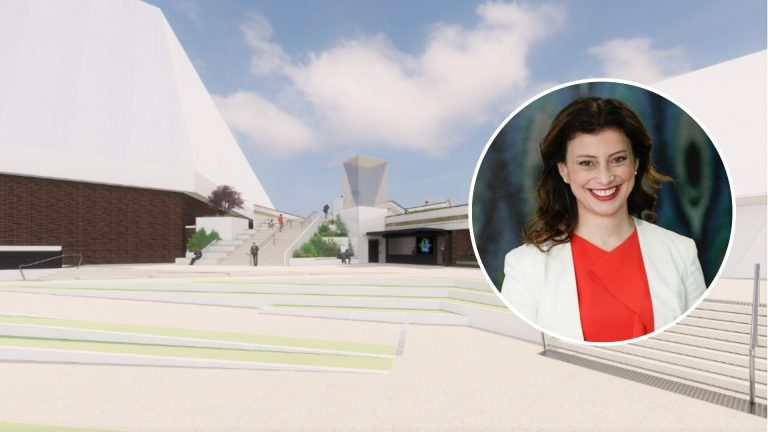
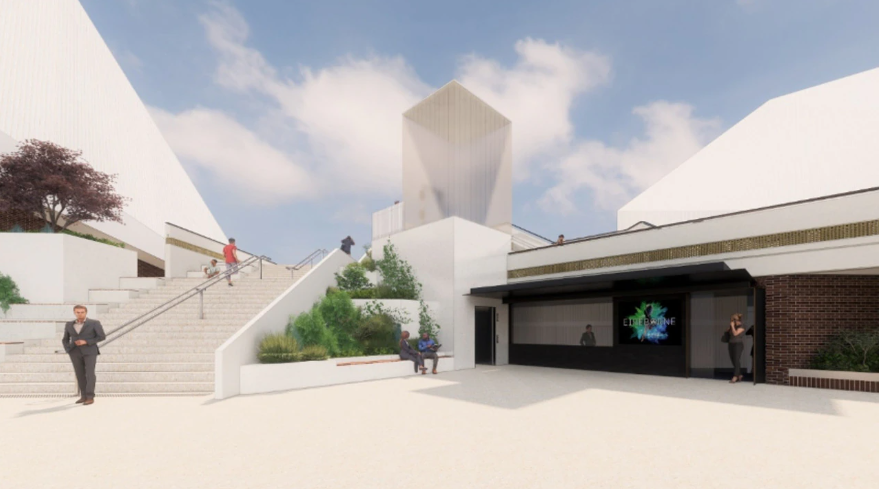
Beginning in 2025, there will be significant upgrades to the Western Plaza, focused around the area between the Festival Theatre and Dunstan Playhouse.
Artist impression of the $35 million upgrade for the Adelaide Festival Centre.
As the main gateway in and out of the site to the north, the new design – which has been reviewed by the State Heritage Architect and received planning approval – allows for access to the Dunstan Playhouse and Space theatre from the Northern Promenade and Walk of Fame.
Lift access will soon be provided from the Northern Promenade directly up to the Plaza level, enabling patrons and visitors an easy way to enter Dunstan Playhouse and Space Theatre.
This will make it easier for families with strollers and mobility aid users with the new lift near the Dunstan Playhouse bridging the five-metre vertical drop between the Plaza and north-face level – a big improvement on the old switch-back ramps.
In addition, an extensive series of works will be carried out on the fire and safety systems, including smoke detection and occupant warning system upgrades, emergency lighting replacement and improvement and sprinkler-system upgrades.