John Tsalapatis is on trial in District Court this week for allegedly killing Bernice Sternberg, 61, by driving dangerously on Main Road in McLaren Vale on March 28, 2021.
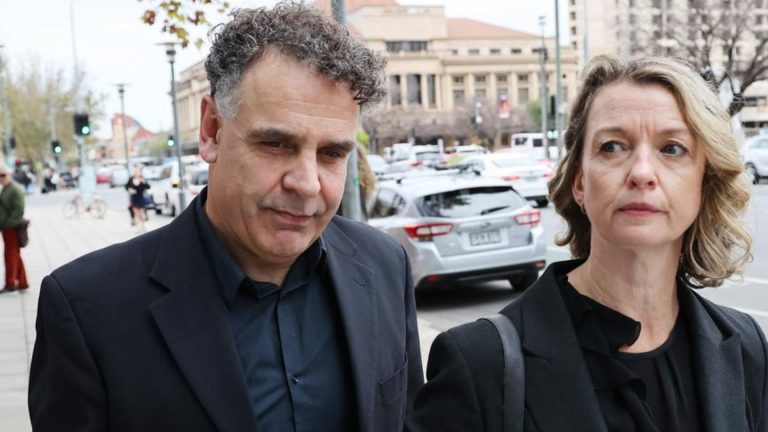
The husband of the McLaren Vale Primary schoolteacher, Mr Sternberg, 66, was driving his wife of 36 years home at 5.30 p.m. when they came to the crossroads of Main Rd and McMurtrie Rd.
According toAdelaide Now, the court heard that Tsalapatis “T-boned” Mrs Sternberg’s Nissan Pulsar, with the point of impact being on the front passenger side, where Mrs Sternberg was sitting.
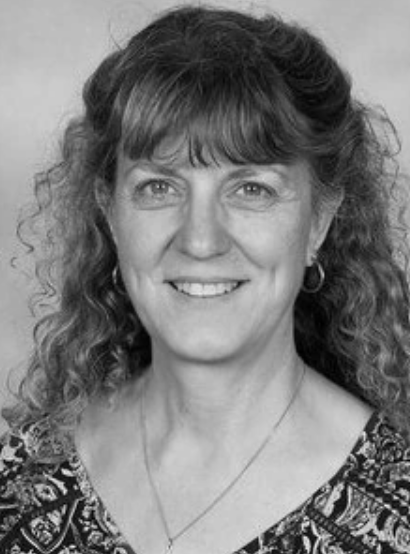
McLaren Vale teacher Bernice Sternberg who was killed in the crash on Main Road in March last year. Picture: McLaren Vale Primary School. Photo: Adelaide Now.
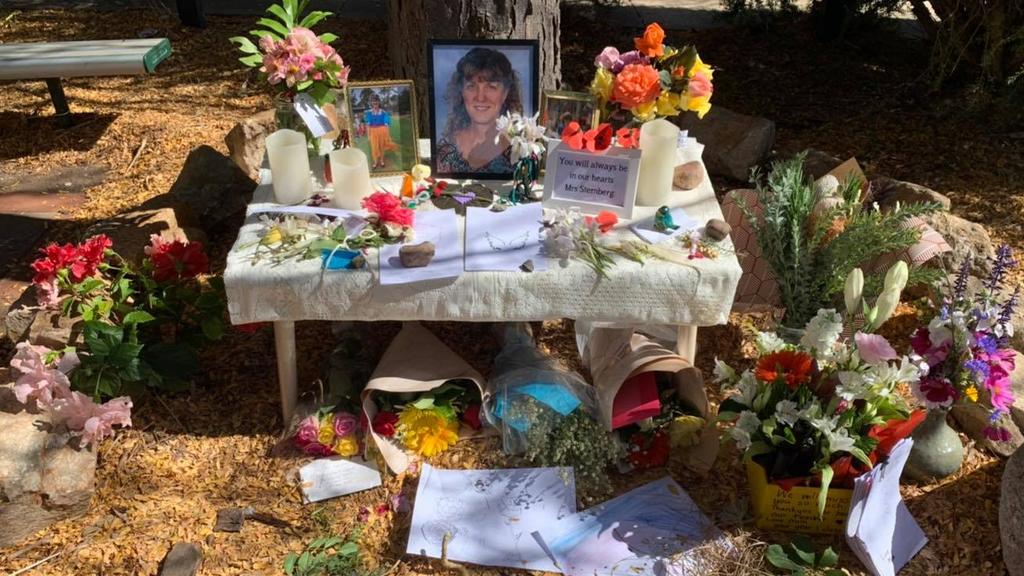
Shrine to Bernice Sternberg at McLaren Vale Primary school. Photo: Adelaide Now.
In his opening statement, prosecutor Jim Pearce KC stated that Tsalapatis was driving a black Subaru west at the crossroads and allegedly failed to yield while traveling at around 80km/h.
“In the few seconds or so before the impact his car slowed … but it barely slowed at all, it didn’t slow in any meaningful matter,” Pearce said.
Mrs Sternberg was cut from the wreckage and sent to Flinders Medical Centre for emergency treatment, but she died five days later from her extensive injuries; her husband suffered only minor injuries.
Tsalapatis, of Whyalla, pleaded not guilty to causing death and harm by dangerous driving. Tsalapatis’ lawyer, Jane Abbey KC, stated that it was undeniable that Tsalapatis required to yield at the crossroads, but whether her client’s driving was criminally hazardous was the point of debate.
Mr Sternberg, said that the incident was an “instant blur” and that he had no time to brake.
“I couldn’t even say to Bernice ‘look out,’ it was just impact,” Mr Sternberg said, while weeping.
“When I woke up [from] the impact my eyes were still shut and I said ‘honey are you OK?”
The trial is set to continue with further details to come.
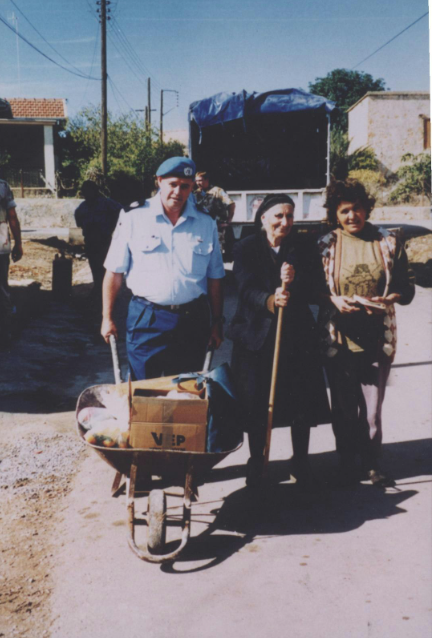
The AFP is today (Monday 4 March, 2024) celebrating its involvement in the 60th anniversary of the United Nations Peacekeeping Force in Cyprus (UNFICYP).
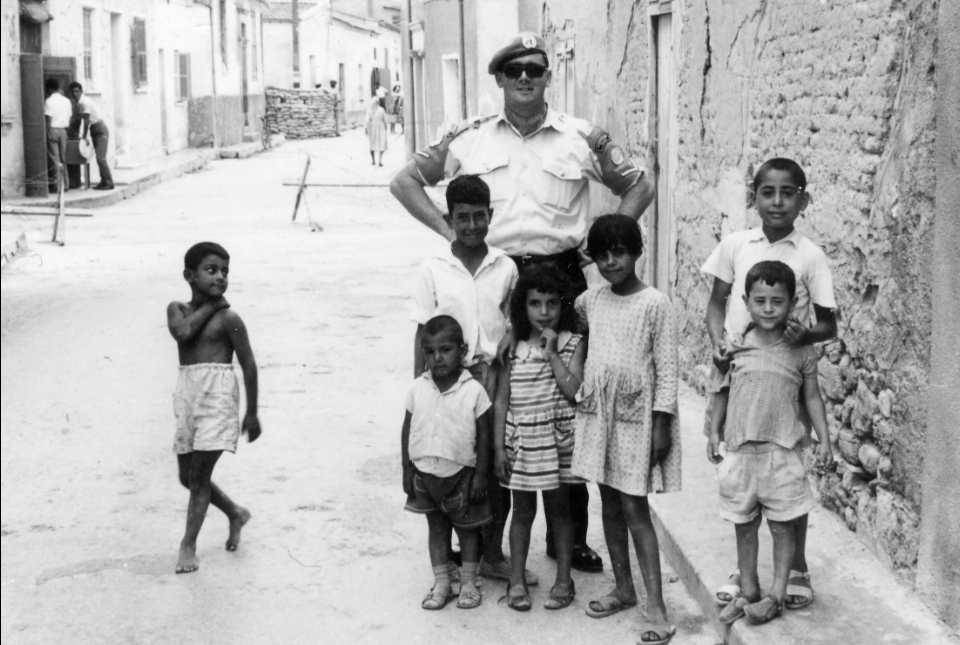
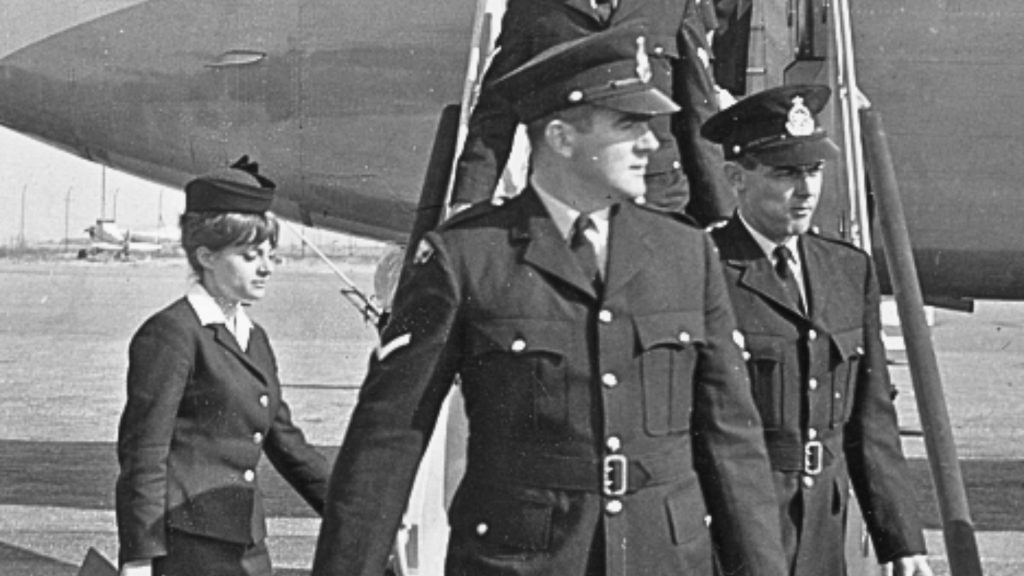
Established in 1964, UNFICYP was the first mission to include Australian police, with the first contingent arriving in May as part of an effort to prevent further fighting between the Greek and Turkish Cypriot communities.
AFP Superintendent Jason Byrnes served in Cyprus as part of the 62nd contingent and remembered his experience when he first arrived as challenging but rewarding.
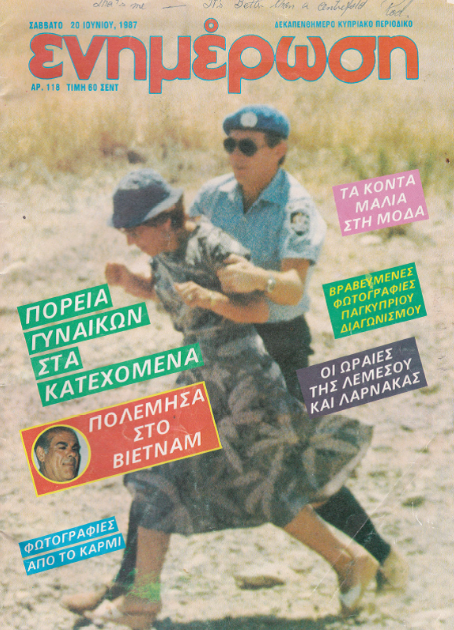
60th anniversary of the United Nations Peacekeeping operations in Cyprus. Photo: AFP.
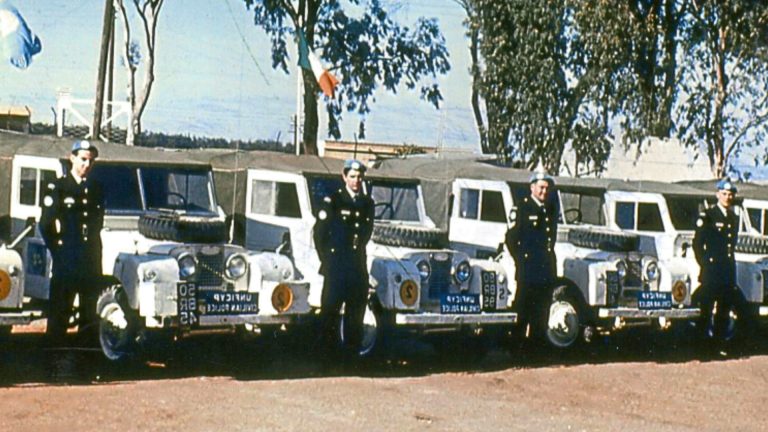
Established in 1964, UNFICYP was the first mission to include Australian police. Photo: AFP.
Peacekeeping operations in Cyprus. Photo: AFP.
“When I arrived in Cyprus, the landscape between the Larnaca Airport and the capital, Nicosia, was almost lunar-like in terms of lack of vegetation and baron dirt and rocks. It was quite impressive to drive along those highways,” Superintendent Byrnes said.
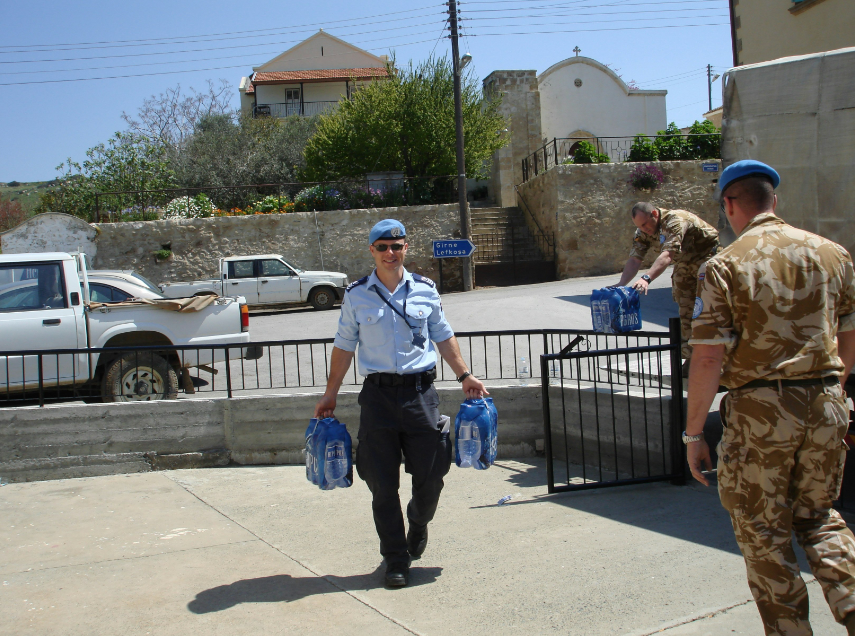
“While I spent most of my time in Nicosia, I also spent a month in Pyla, the last bi-communal village where both Greek and Turkish Cypriots coexisted. It was a very complex and dynamic atmosphere with political and racial undertones.
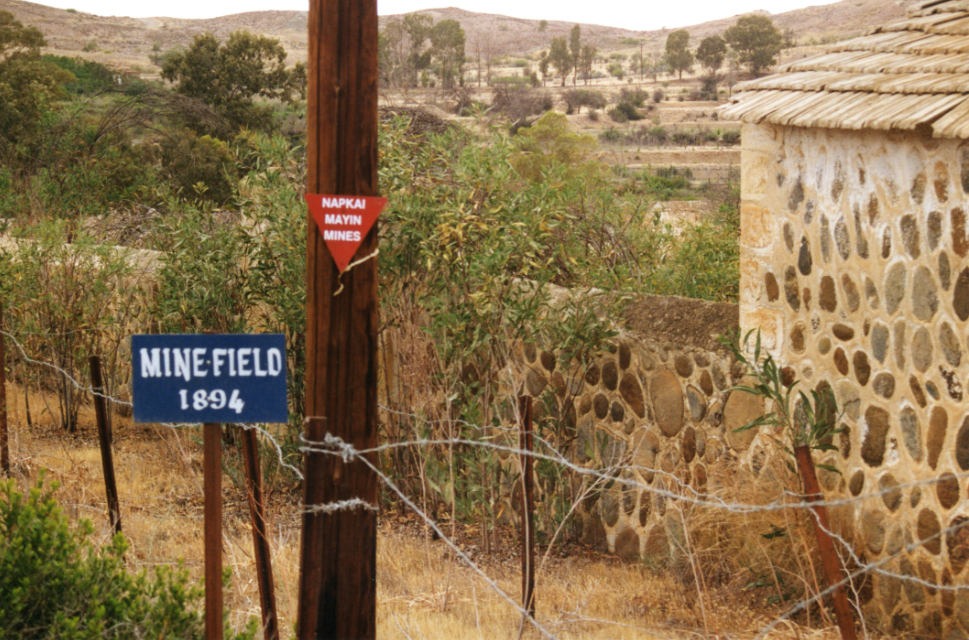
“Pyla was inside the buffer zone surrounded by landmines, with Greek and Turkish Cypriots living in the same village. There was a Greek Cypriot Mayor and a Turkish Cypriot Mayor.
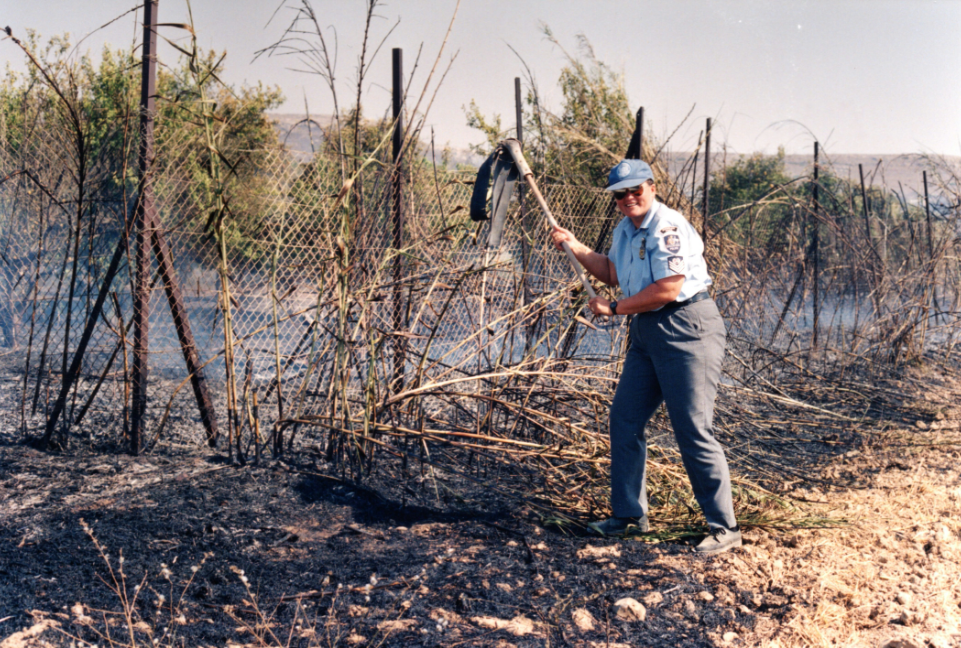
60th anniversary of the United Nations Peacekeeping operations in Cyprus. Photo: AFP.
AFP in Cyprus. Photo: AFP.
“We had to make sure if one of the police forces from either side wanted to enter the village that the other side was aware of it and respected each other’s laws.”
60th anniversary of the United Nations Peacekeeping operations in Cyprus. Photo: AFP.
Cyprus is one of the world’s longest running peacekeeping missions which saw 111 Australian contingents, with more than 1,600 Australian police officers serving in the mission. While the majority of police were from the AFP and its predecessor agencies, ACT Policing and the Commonwealth Police, several hundred state and territory police also served, particularly before 1976.
Located in towns and cities across Cyprus, police worked in collaboration with UNFICYP to monitor ceasefire lines, conduct patrols, and engage in community policing efforts aimed at fostering trust and cooperation between the divided communities.
Thousands of Australian police have gone on to serve in peacekeeping and capacity building missions across world in countries including Timor Leste, Haiti, Mozambique, Afghanistan, Solomon Islands, Cambodia, Sudan, Papua New Guinea.
With expertise in community policing and conflict resolution, Australian police officers have been essential in supporting efforts to foster stability and cooperation across the country.
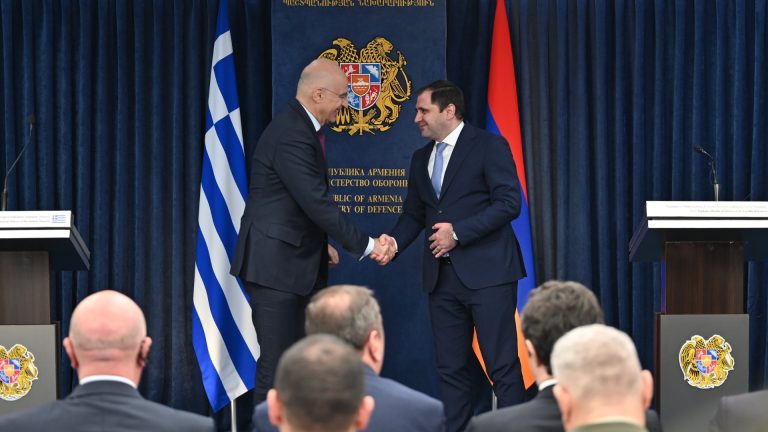
On Monday, March 4, Greece’s national Defence Minister Nikos Dendias met in Yerevan with his Armenian counterpart Suren Papikyan to sign a military cooperation agreement.
During their joint statements, Minister Dendias highlighted the fragility of the current global environment, stating, “We are experiencing a particularly fragile environment. Revisionism and expansionism have reappeared from forces that disregard International Law, international treaties, values, principles, and the Charter of the United Nations”.
“The global community must form a common front against these challenges and show that we are ready to prevent the escalation of conflicts and strive to return to a peaceful environment, in accordance with international law,” Mr Dendias said.
Με τον Υπουργό Εξωτερικών της Αρμενίας @AraratMirzoyan είχαμε την ευκαιρία να συζητήσουμε για την ενίσχυση της διμερούς αμυντικής συνεργασίας, στο πλαίσιο των παραδοσιακών φιλικών σχέσεων 🇬🇷🇦🇲, αλλά και να ανταλλάξουμε απόψεις για την κατάσταση ασφαλείας στην ευρύτερη περιοχή. pic.twitter.com/KngtZeXmLV
Amna.GR reported that after underlining the shared historical and cultural ties between Greece and Armenia, Mr Dendias stressed the importance of unity in addressing common challenges.
“Our history connects us. We share similar tragedies, experiences of persecution and genocide; our peoples have suffered together, and this has created particularly close bonds between Armenians and Greeks, between our two countries, and our two peoples,” he expressed.
Dendias then discussed the strong bilateral relations between the countries.
“It is well known that Armenia is a historic friend of Greece, and there are close sentiments between the Greek and Armenian people,” he said.
“However, my visit also has a much more practical purpose, to deepen cooperation between the two defence ministries and the Armed Forces of the two countries.”
Both Greece and Armenia then proceeded to sign a military technical cooperation agreement along with this year’s defence cooperation program, which included provisions for military training.
“We would be delighted to see Armenian companies participate in this ecosystem,” he affirmed, indicating potential avenues for collaboration beyond bilateral defence cooperation,” Dendias said.
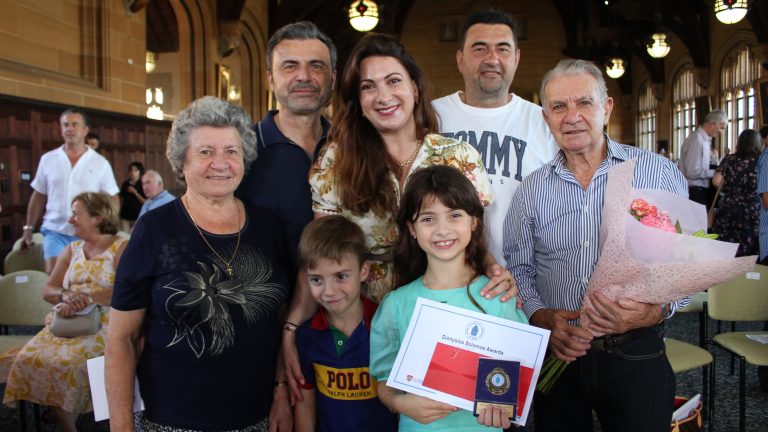
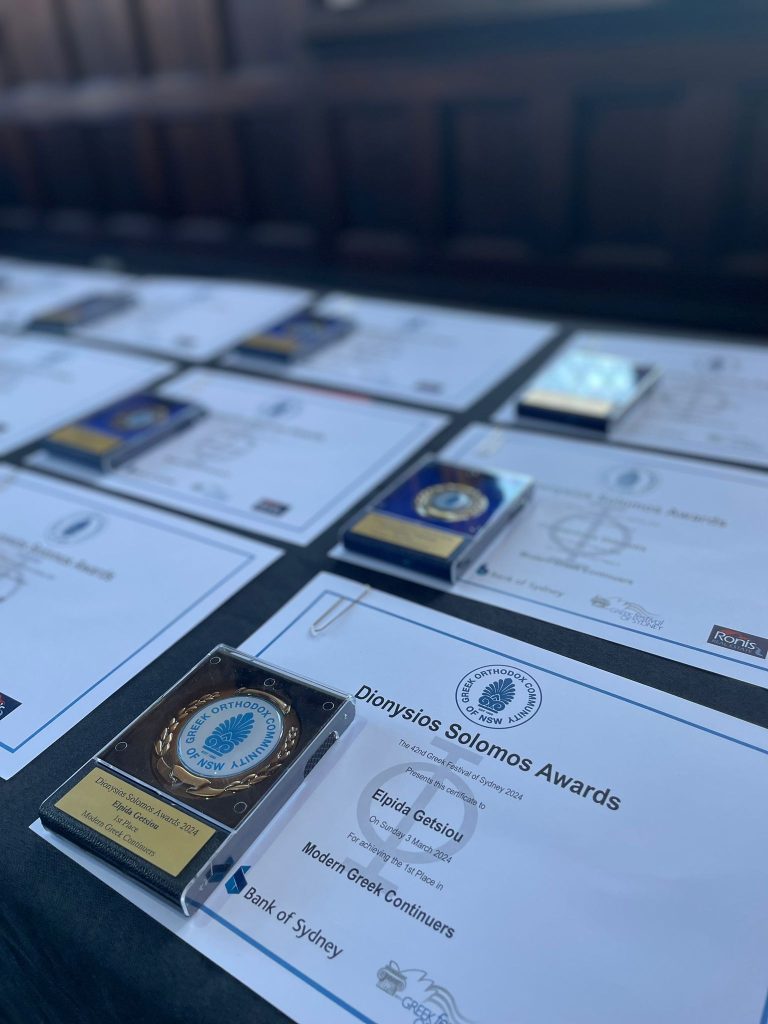
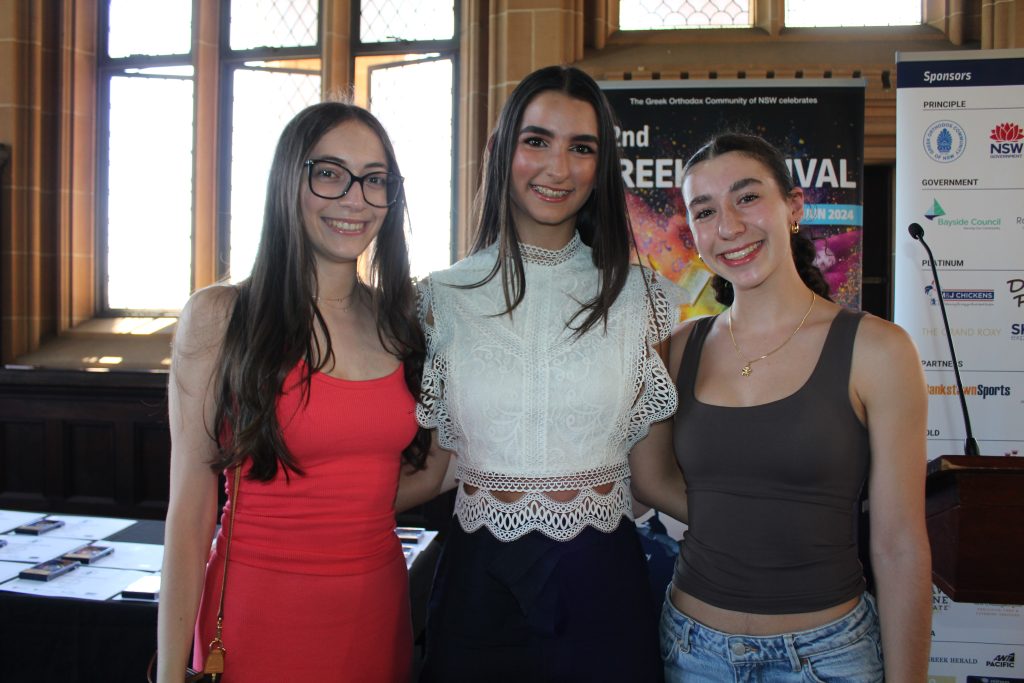
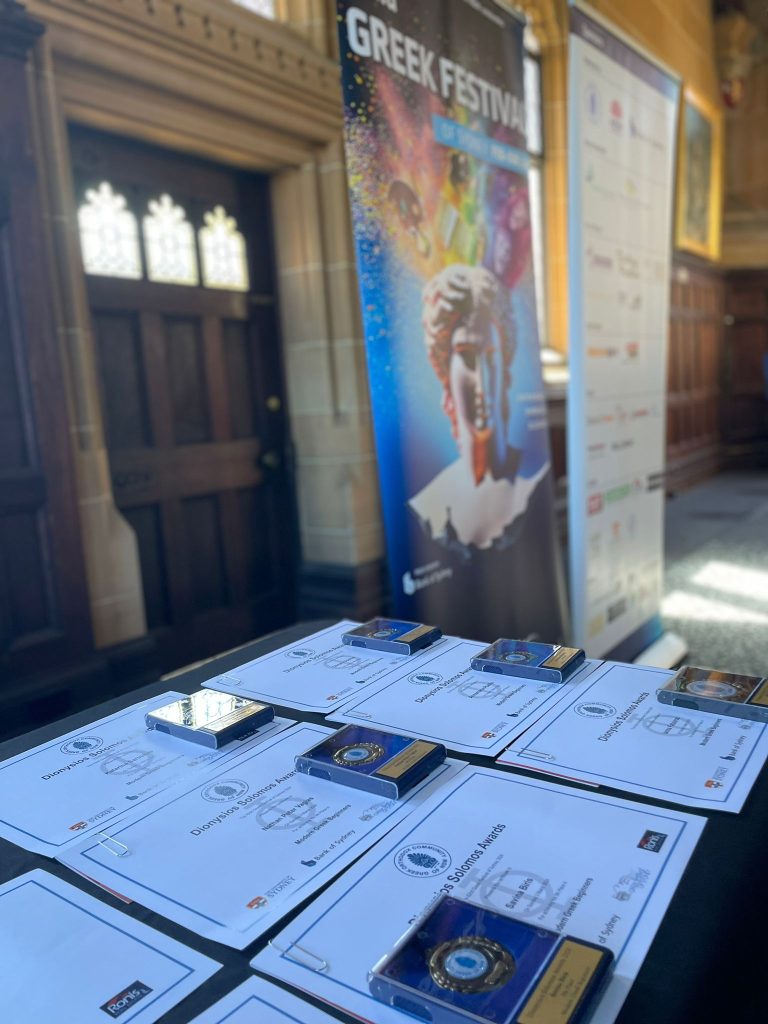
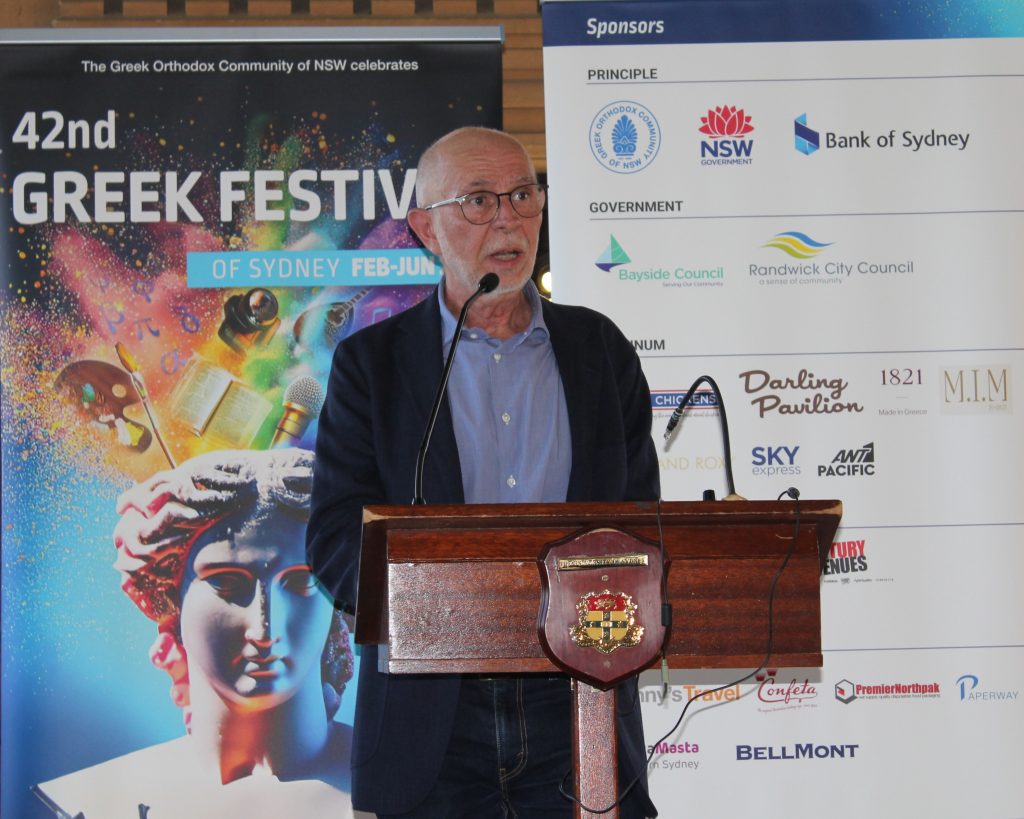
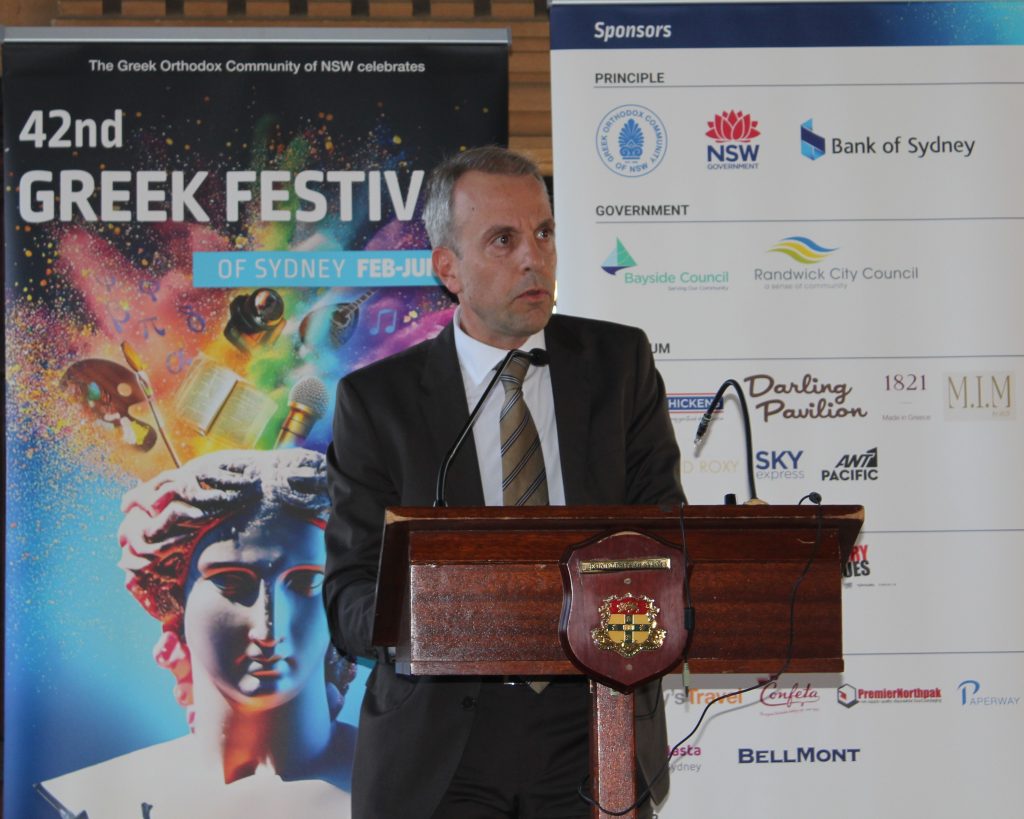
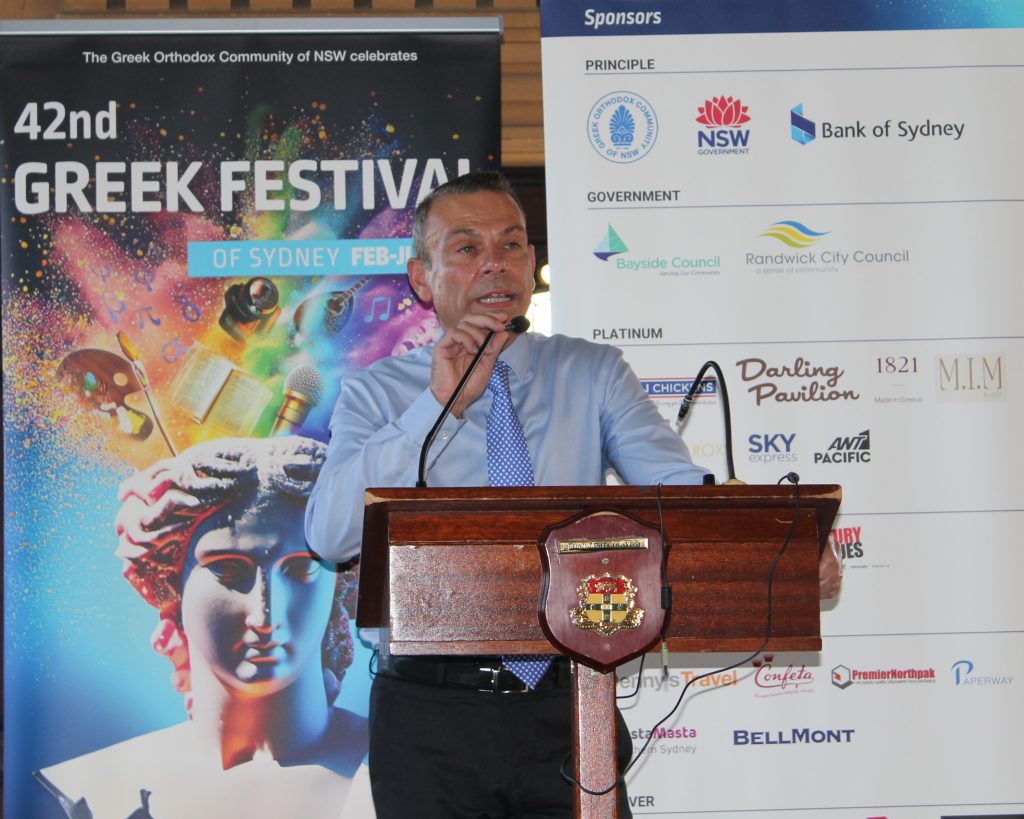
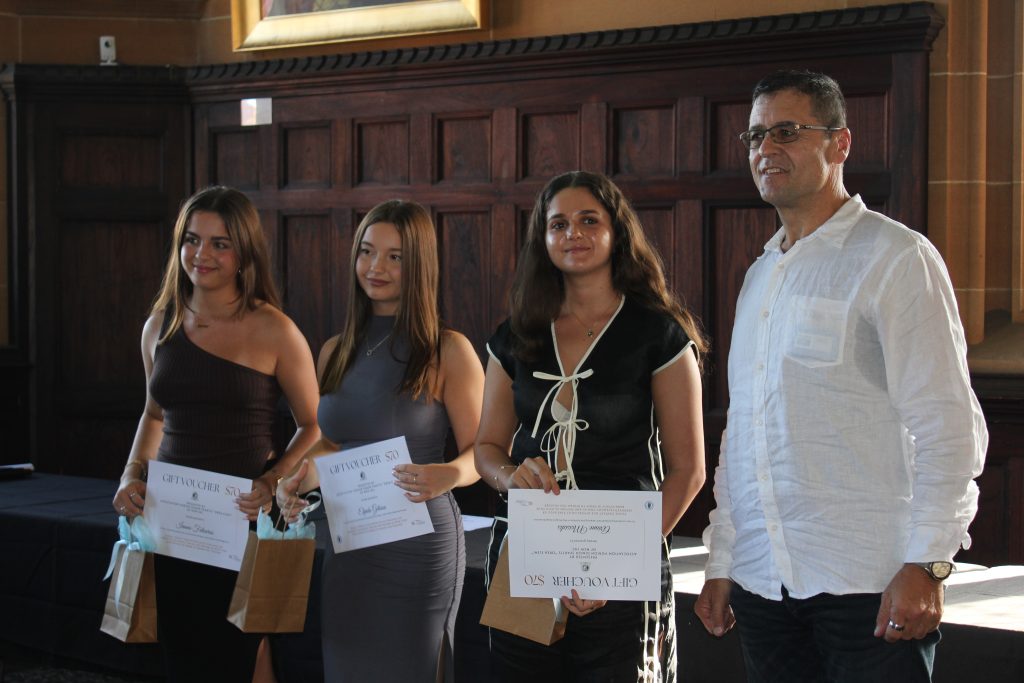
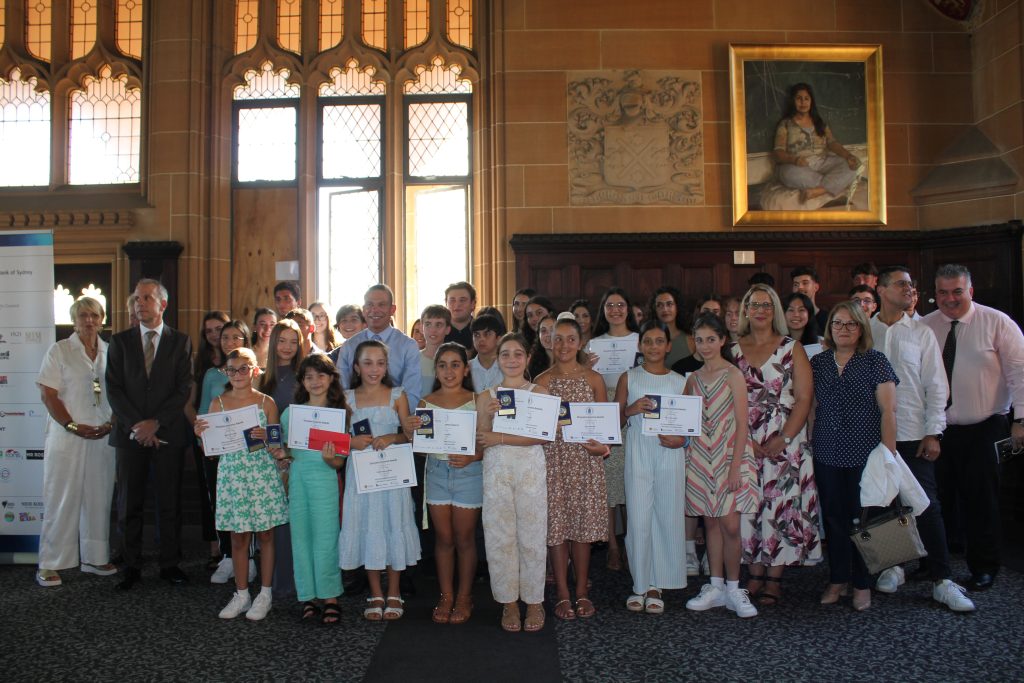
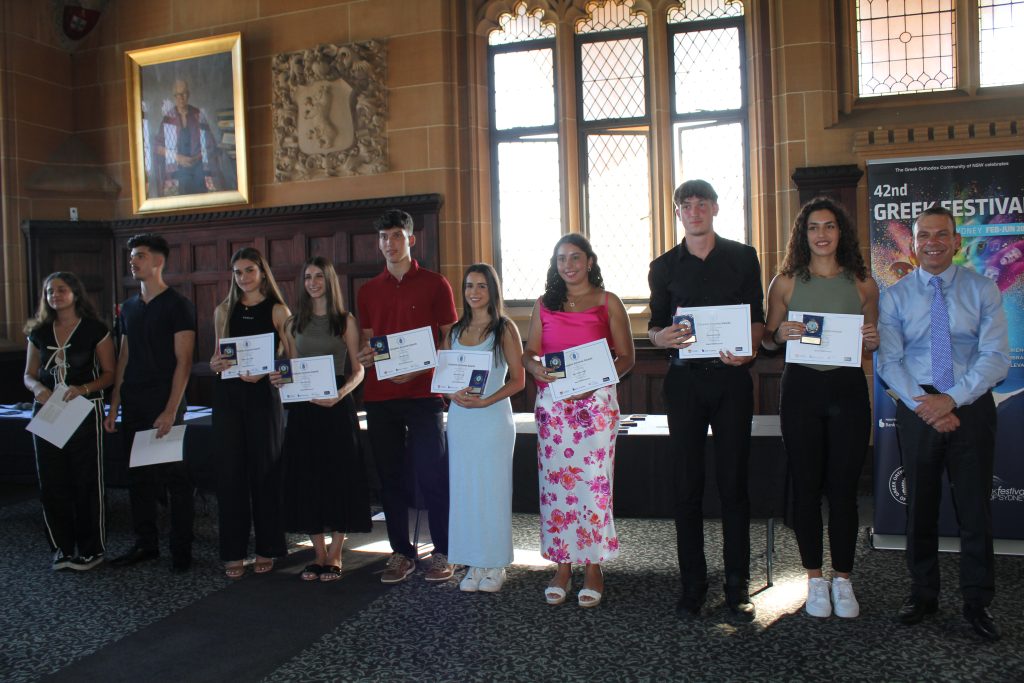
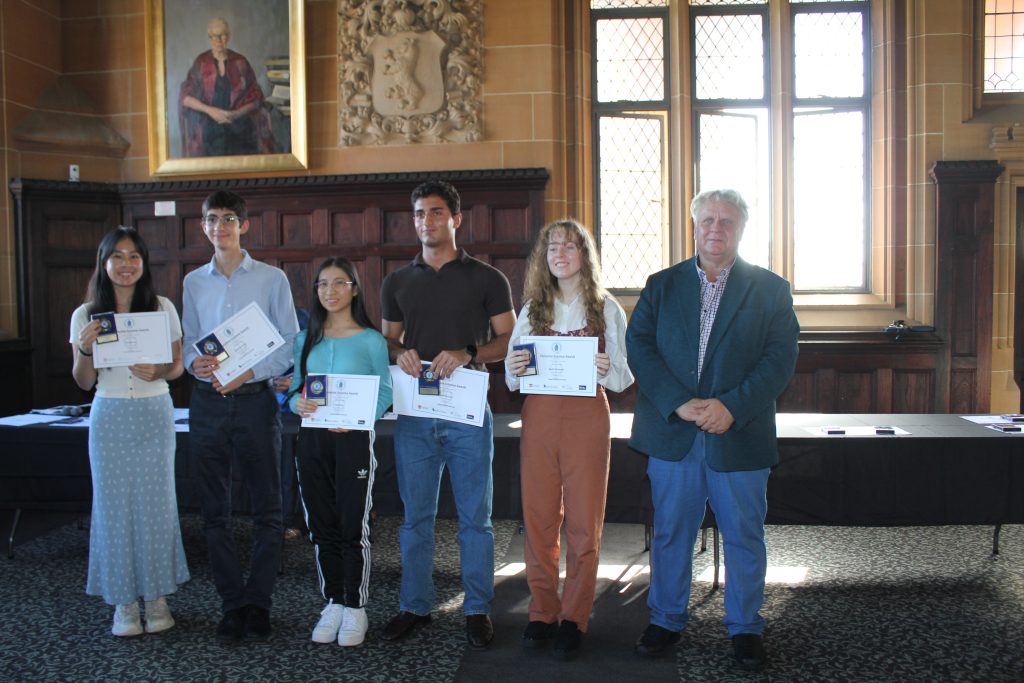
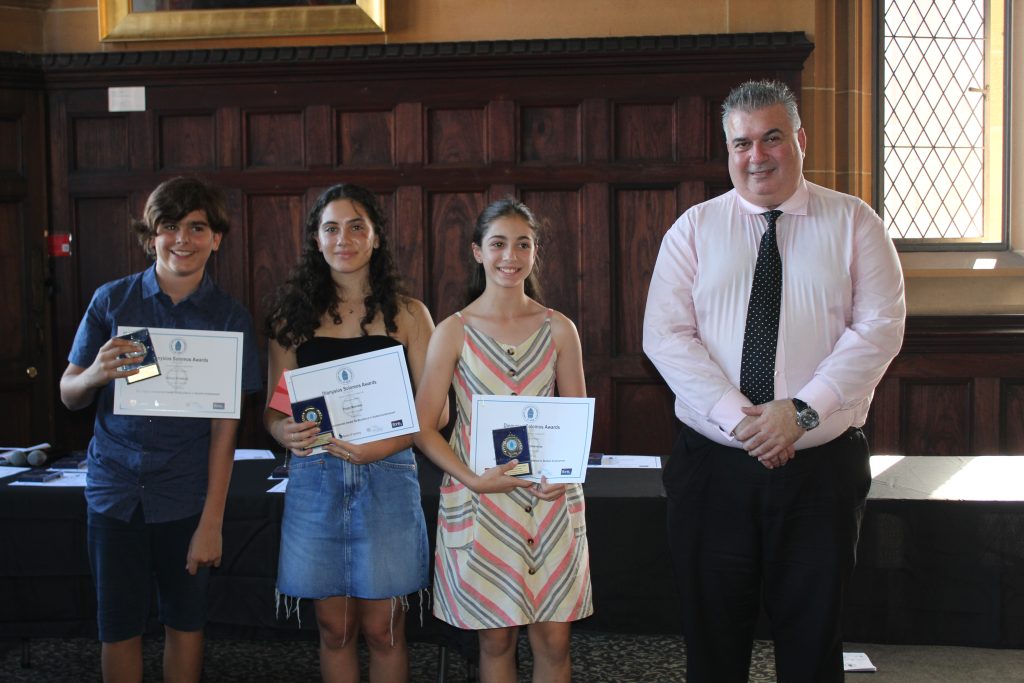
The HSC students were recognised at the Dionysios Solomos Awards, which are organised annually by the Greek Orthodox Community of NSW (GOCNSW) as part of the 42nd Greek Festival of Sydney. The awards are named after one of Greece’s most acclaimed poets, Dionysios Solomos. His incredible body of work includes the ‘Hymn to Freedom,’ which was adopted as the Greek National Anthem after the 1821 Greek Revolution.
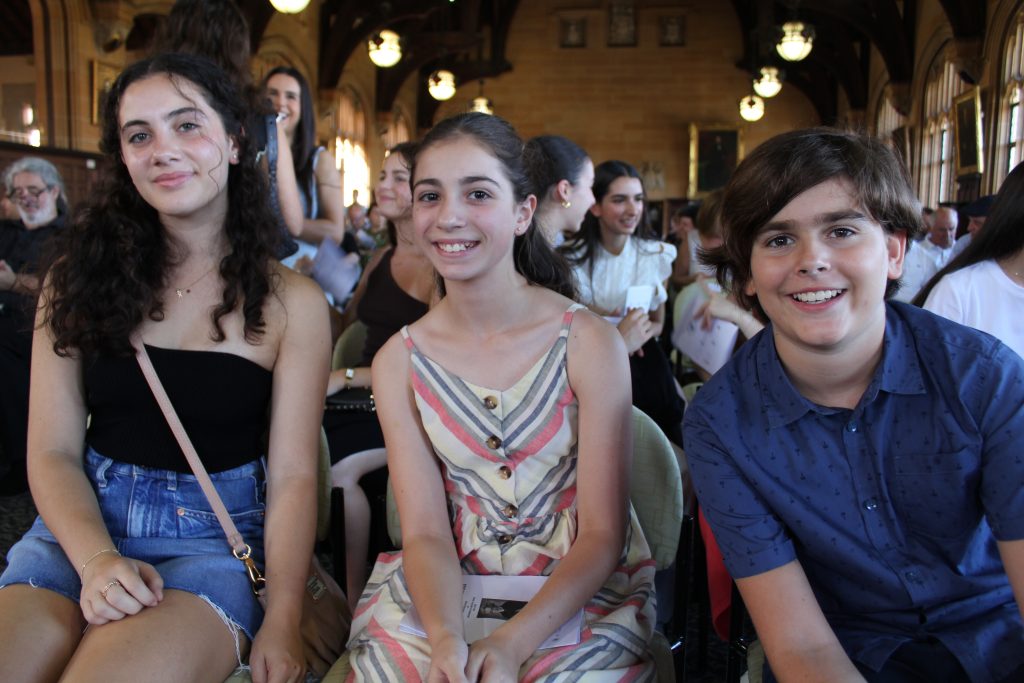
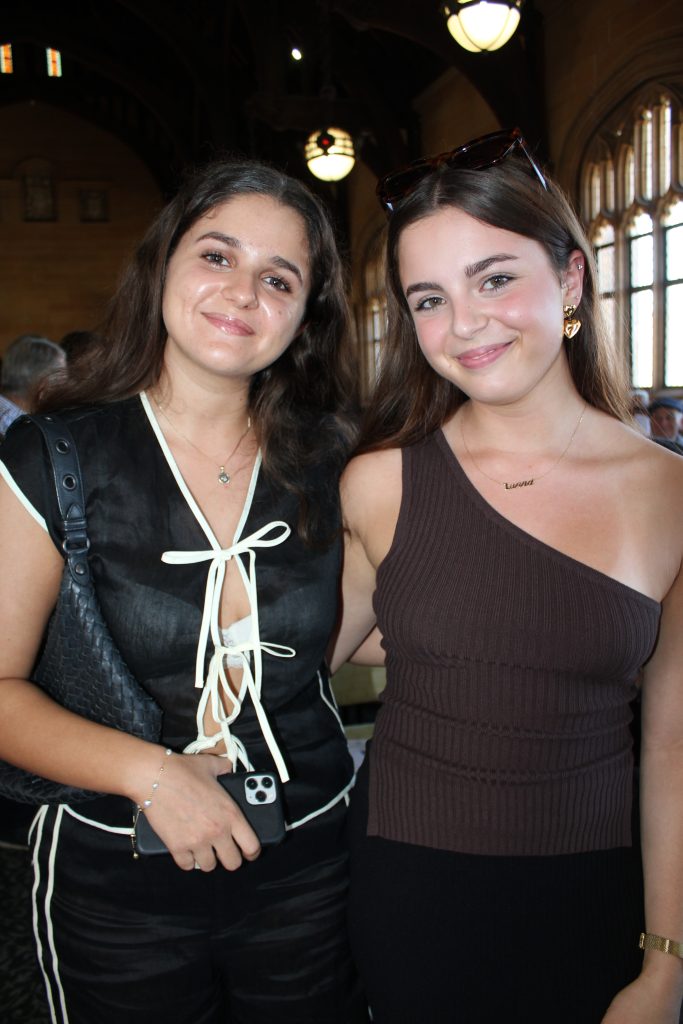
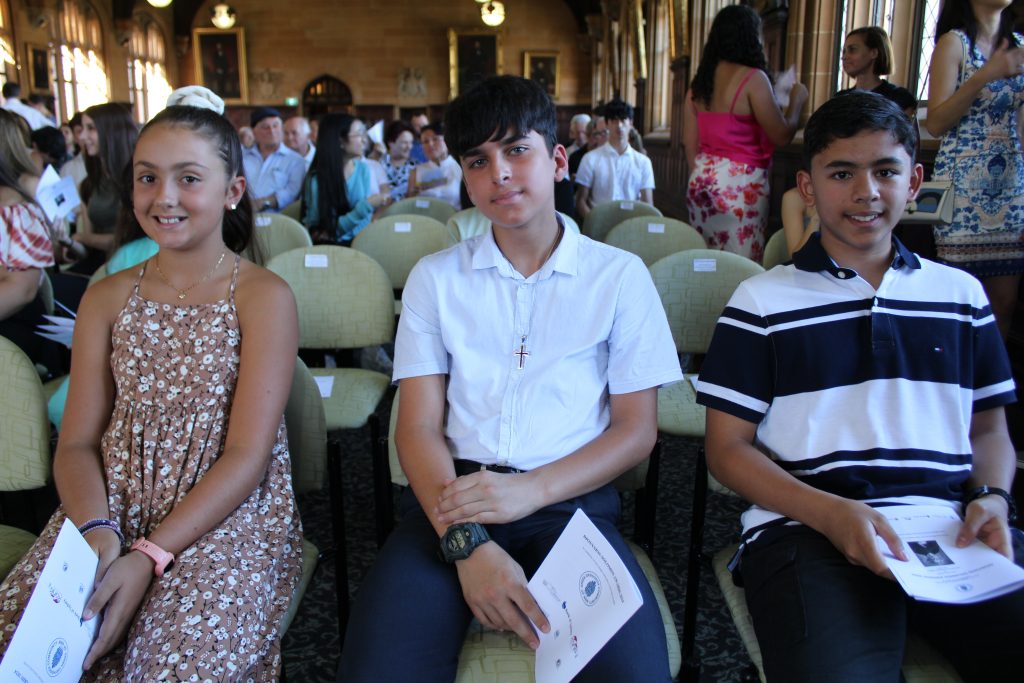
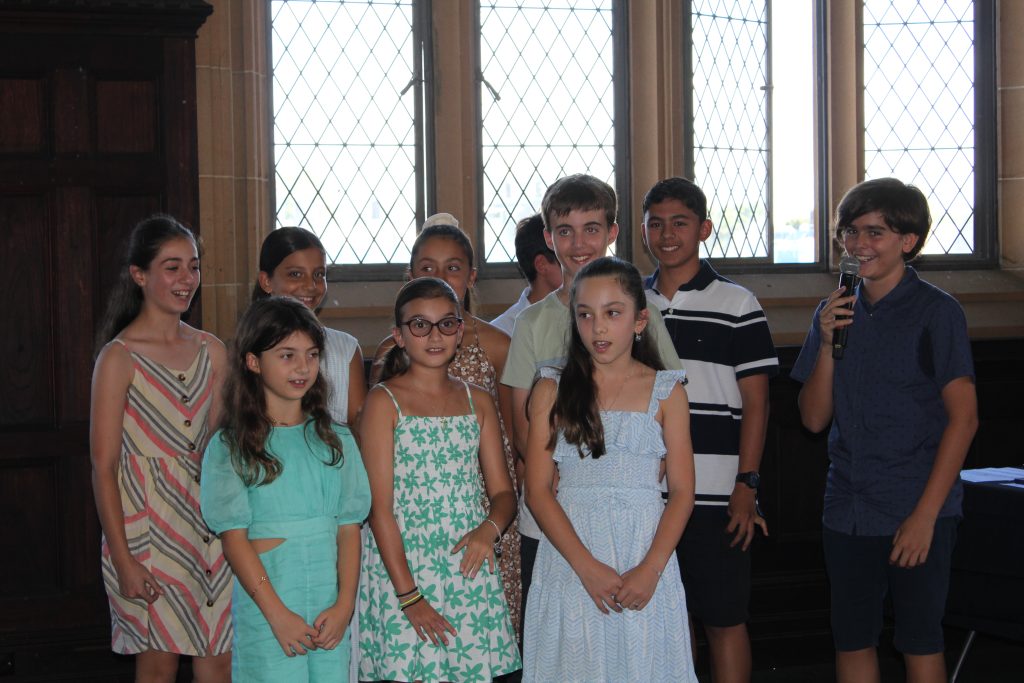
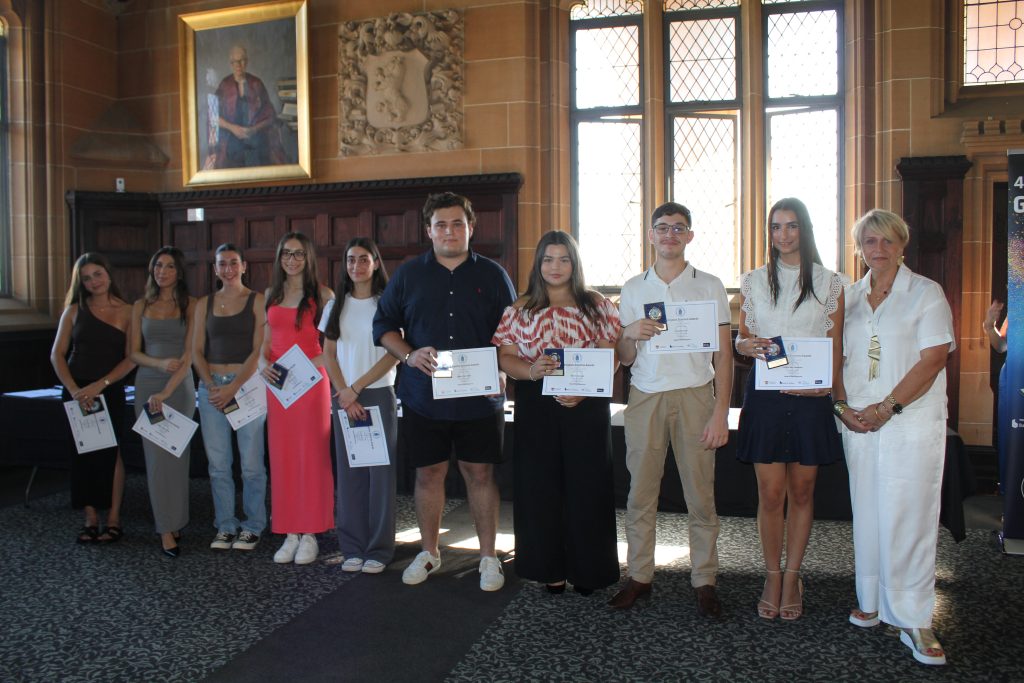
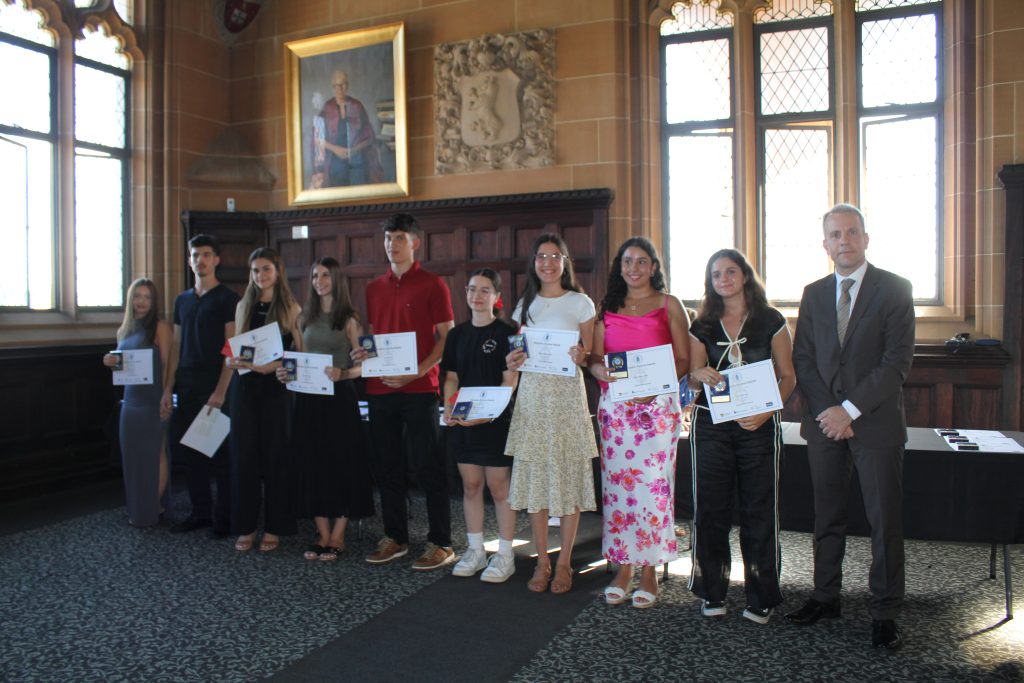
Students at the awards. All photos copyright The Greek Herald / Andriana Simos.
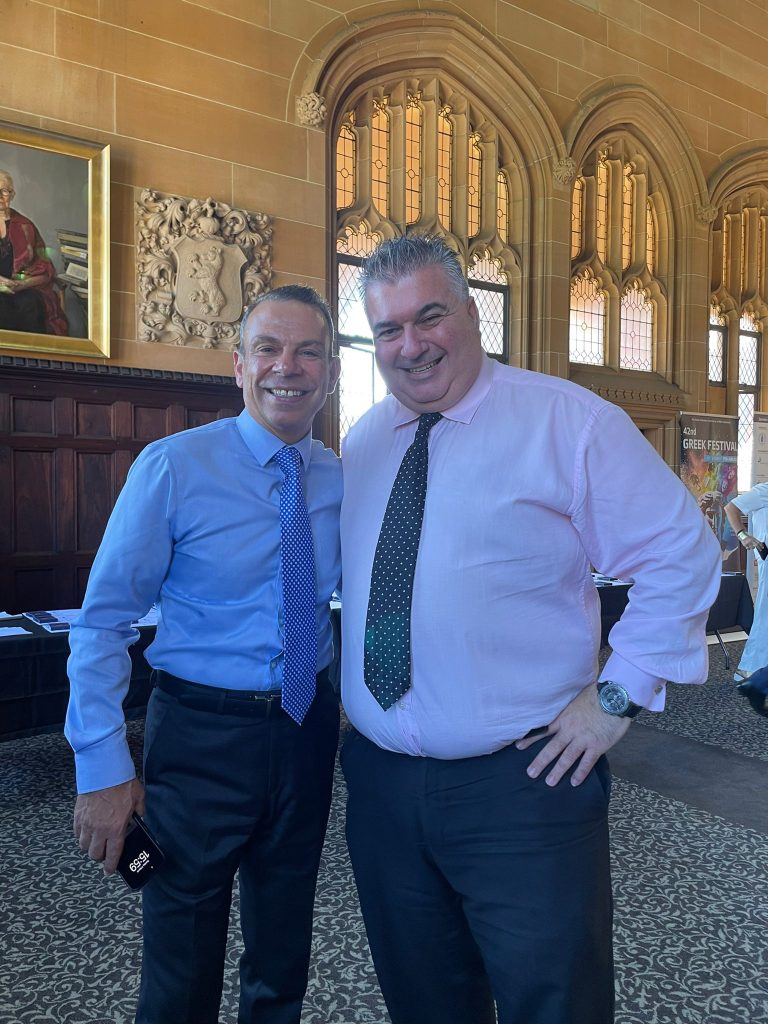
Mark Buttigieg (left) with Peter Ronis.
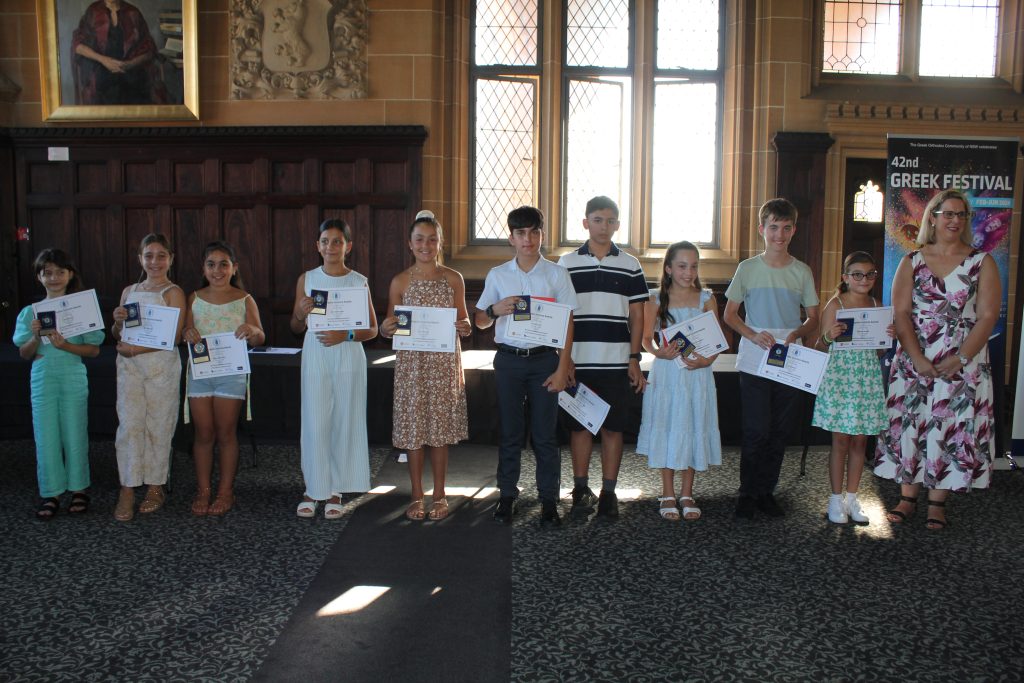
High achieving youth from the Greek Afternoon and Saturday schools of the GOCNSW were also celebrated at the awards presentation.
9-year-old Eleni Halatsis from Summer Hill Public School was one of the GOCNSW students awarded on the day and she told The Greek Herald she loves the Greek language.
“It’s good to know your country’s language and it’s fun!” Eleni exclaimed with a huge smile.
Her namesake yiayia Eleni, standing nearby, jumped in with a big, proud smile of her own and said she was “very happy” her granddaughter spoke Greek.
“When she was a little girl, I spoke to her in Greek all the time. She learnt a lot and I am very proud of her and happy. I hope she comes here to university one day,” yiayia Eleni said.
Amongst the proud families were also a number of official guests including the Consul General of Greece in Sydney, Ioannis Mallikourtis; the Parliamentary Secretary for Industrial Relations, Work Health and Safety, and Multiculturalism, Mark Buttigieg MLC; the Chair of the Greek Festival of Sydney, Nia Karteris; the Sir Nicholas Laurantus Chair in Modern Greek and Byzantine Studies at USYD, Professor Vrasidas Karalis; Associate Professor of Modern Greek at USYD, Dr Anthony Dracopoulos; President of the GOCNSW schools, Artemis Theodoris Papoutsis; Managing Director of Ronis Real Estate Bankstown and Event Sponsor, Peter Ronis; President of the Association Vorion Dimon Spartis “Orea Eleni,” Maria Glekas; and President of the Zakynthian Association of Sydney & NSW, George Vithoulkas; among many others.
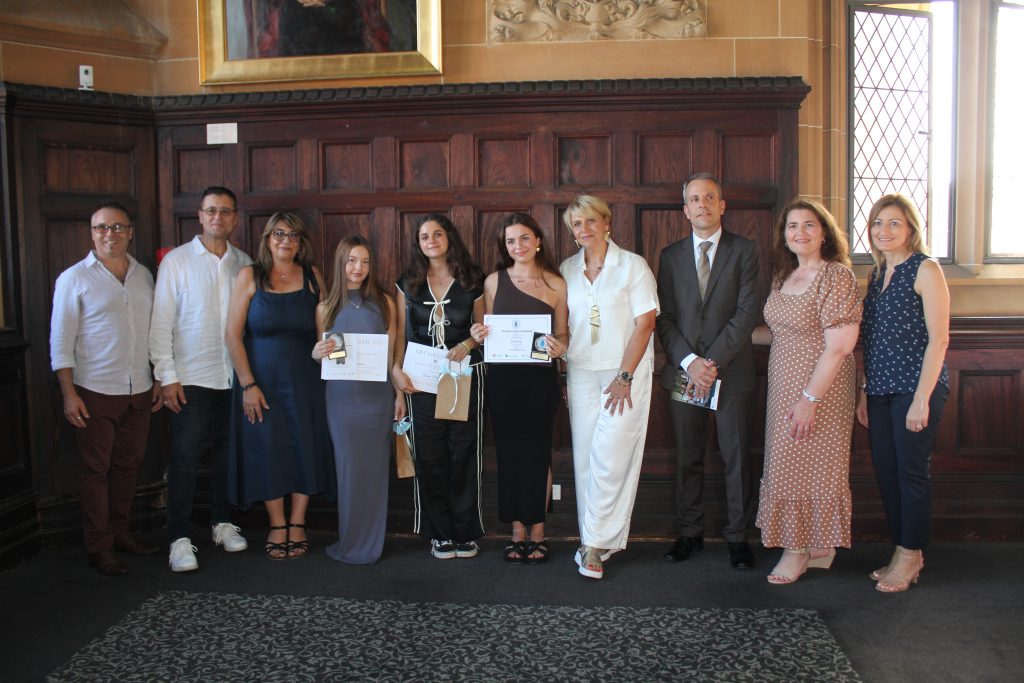
Some of the award winners with official guests.
Master of Ceremonies, Con Apoifis, kicked off the award proceedings with a small welcome, followed by singing of the National Anthems of Greece and Australia by students from the GOCNSW Greek Afternoon and Saturday Schools.
Con Apoifis.Singing of the national anthems.
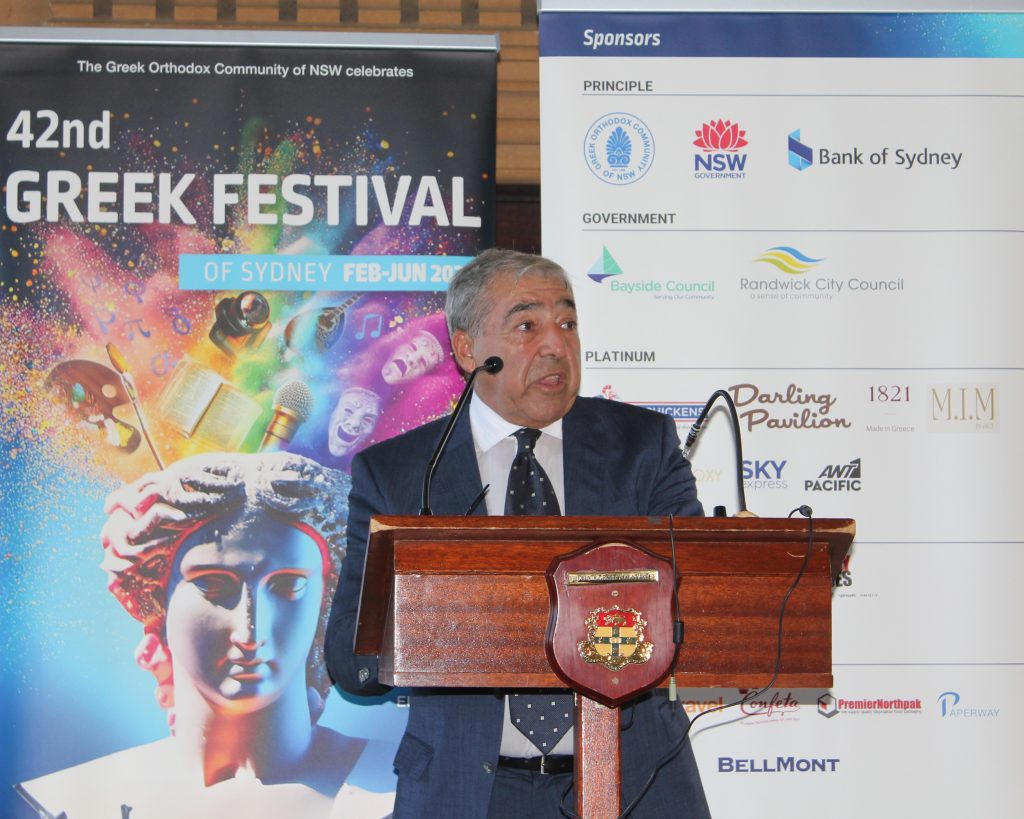
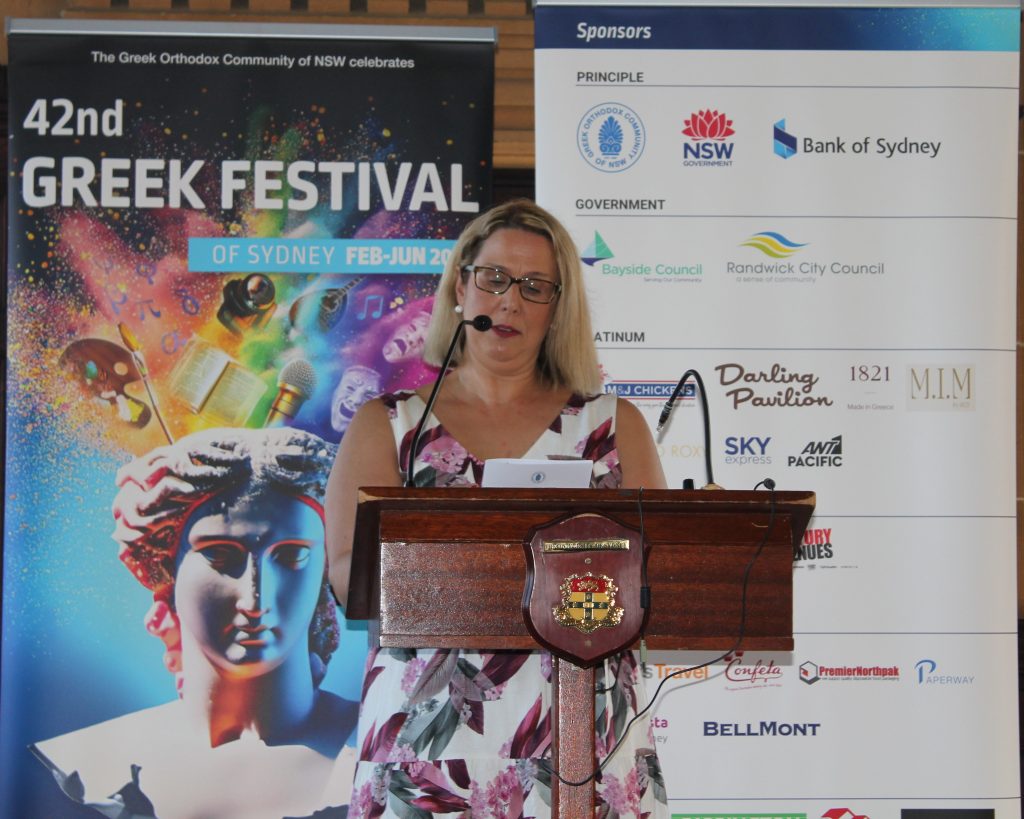
A number of speeches were then given by Ms Papoutsis, Mr Mallikourtis, Mr Buttigieg and Dr Drakopoulos. All three congratulated the students on their successes and stressed the importance of maintaining their Greek language skills.
Artemis Theodoris Papoutsis.Dr Anthony Drakopoulos.
Mr Mallikourtis specifically praised the students’ parents for helping to maintain the Greek language in the next generation.
“The use of Greek is gradually declining, albeit with some resistance. Yet the statistics are relentless. There are several reasons for this,” Mr Mallikourtis explained.
“On the one hand there are some objective difficulties in the institutional framework that do not favour the learning of foreign languages… At the same time, many families do not see the merits in their children learning foreign languages and as a result, enrolments are dropping in many language departments.
“So a lot starts from home and that is why I want to congratulate you parents because you differ from the norm.”
Ioannis Mallikourtis.
Mr Buttigieg, who has Maltese heritage but is married to a Greek, recited a stanza from the Greek national anthem in Greek, using it as an example of why language is so important.
“Whilst we can translate it [the national anthem stanza] and we can relate to it, unless there’s a direct transmission mechanism between the language and what’s happened in the past and your cultural inheritance, that connection is lost,” Mr Buttigieg said.
“So what government has to do, and this is our responsibility, is encourage people like yourselves today, who have had that great attainment of learning your mother tongue at the highest level, we have to encourage that because it maintains that connection with those values that we will use to grow as a country.”
Mark Buttigieg.
After these speeches, students were presented with awards in the following categories: HSC Awards for Modern Greek Beginners, Modern Greek Continuers, Modern Greek Extension, Classical Greek Continuers and Classical Greek Extension, as well as the Minister’s Awards for Excellence in Modern Greek and the GOCNSW Greek Afternoon Schools’ Outstanding Achievement Awards.
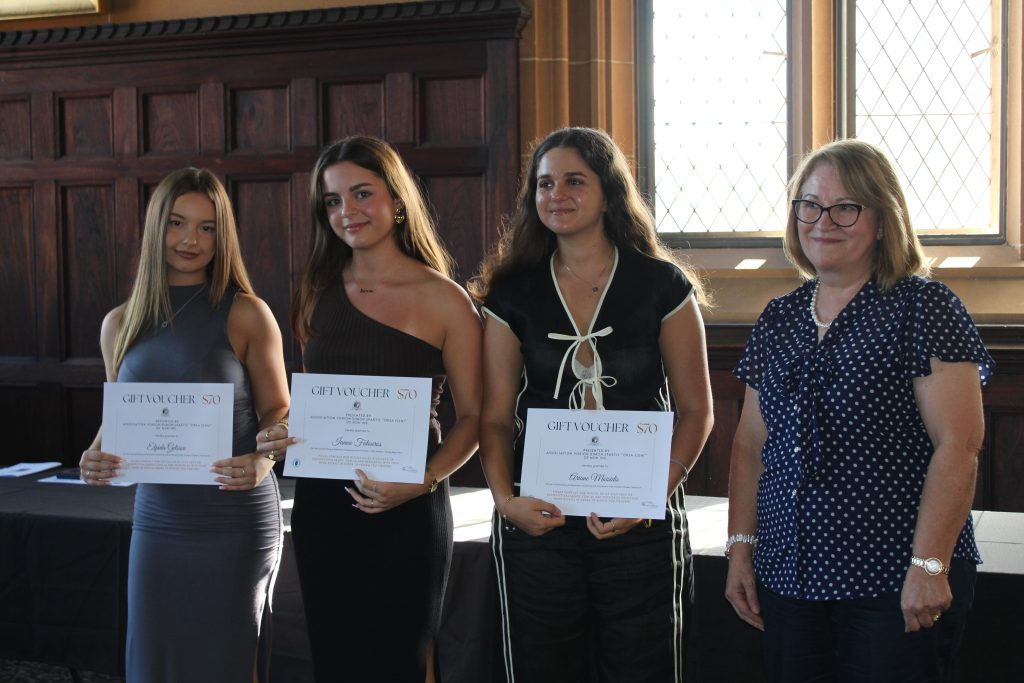
Congratulatory gifts were also presented to the highest achievers from each of the five HSC categories.
All the award winners.
Ariane Moisidis, who placed 1st in Modern Greek Extension and 9th in Modern Greek Continuers, wrapped up the event with a keynote speech acknowledging the decline of the Greek language, but encouraging students to learn it to feel a deeper connection to the homeland.
All Award Winners:
HSC Modern Greek – Beginners: 1. Ianna Fatouros (NSW School of Languages), 3. Annamaria Psaltis (Georges River College Oatley Senior Campus), 4. Christy Voutos (NSW School of Languages), 5. Savina Biris (NSW School of Languages), 6. Nathan Peter Vagias (NSW School of Languages), 7. Katerina Saroukos (NSW School of Languages), 8. Theodore Zoras (NSW School of Languages), 9. Despina Mary Stamoulos (NSW School of Languages).
HSC Modern Greek – Continuers: 1. Elpida Getsiou (NSW School of Languages), 2. Cosntantinos Vidiniotis (St Euphemia College), 3. Isabella Koutoulogenis (St Spyridon College), 4. Victoria Stathos (St Spyridon College), 5. Michaeil Katris (St Euphemia College), 6. Eleni Eleanna Gatsi (Blakehurst High School), 7. Marie Joan Gatsi (Secondary College of Languages Kogarah Campus), 8. Nektaria Angelopoulos (NSW School of Languages), 9. Ariane Moisidis (Secondary College of Languages Ashfield Boys Campus).
HSC Modern Greek – Extension: 1. Ariane Moisidis (Secondary College of Languages Ashfield Boys Campus), 2. Constantinos Vidiniotis (St Euphemia College), 3. Isabella Koutoulogenis (St Spyridon College), 5. Victoria Stathos (St Spyridon College), 6. Michail Katris (St Euphemia College), 7. Demitria Arronis (Secondary College of Languages Ashfield Boys Campus), 8. Eleni Eleanna Gatsi (Blakehurst High School), 9. Christos Antoniou (St Euphemia College), 10. Melina Kontoulis (Secondary College of Languages Kogarah Campus).
HSC Classical Greek – Continuers: 3. Annelise Koh (Pymble Ladies’ College), 5. Nektarios Kollias (St Spyridon College), 6. Vicki Zhang (North Sydney Girls High School), 7. Kasra Roushan (Sydney Grammar School), 8. Sophie Christopher (Pymble Ladies’ College), 10. Christian McIntyre (Sydney Grammar School).
Minister’s Awards for Excellence in Modern Greek (Highly Commended): Atticus Brisebois and Poppy Mavrakis.
Minister’s Awards for Excellence in Modern Greek (Commended): Annabelle Gesouras and George Markatos.
Minister’s Awards for Excellence in Modern Greek (Merit): Dimitrios Alavanos.
GOCNSW High Achievers Awards: Myra Varetimidis (Clemton Park PS), Victoria Vasilopoulos (Clemton Park PS), Eva Theodoropoulos (Clemton Park PS), Elena Fardoulis (Clemton Park PS), Steven Totsis (Clemton Park High School), Lambros Troy Salam (Clemton Park Saturday), Chrysothea Anagnostellis (Clemton Park Saturday), Evan Giokas (Beverly Hills North PS), Angelique Bozantzis (Panania PS) and Eleni Halatsis (Summer Hill PS).
*All photos copyright The Greek Herald / Andriana Simos.
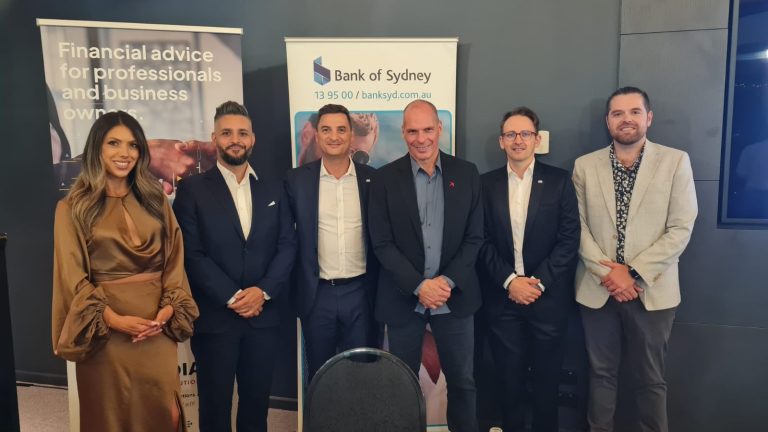
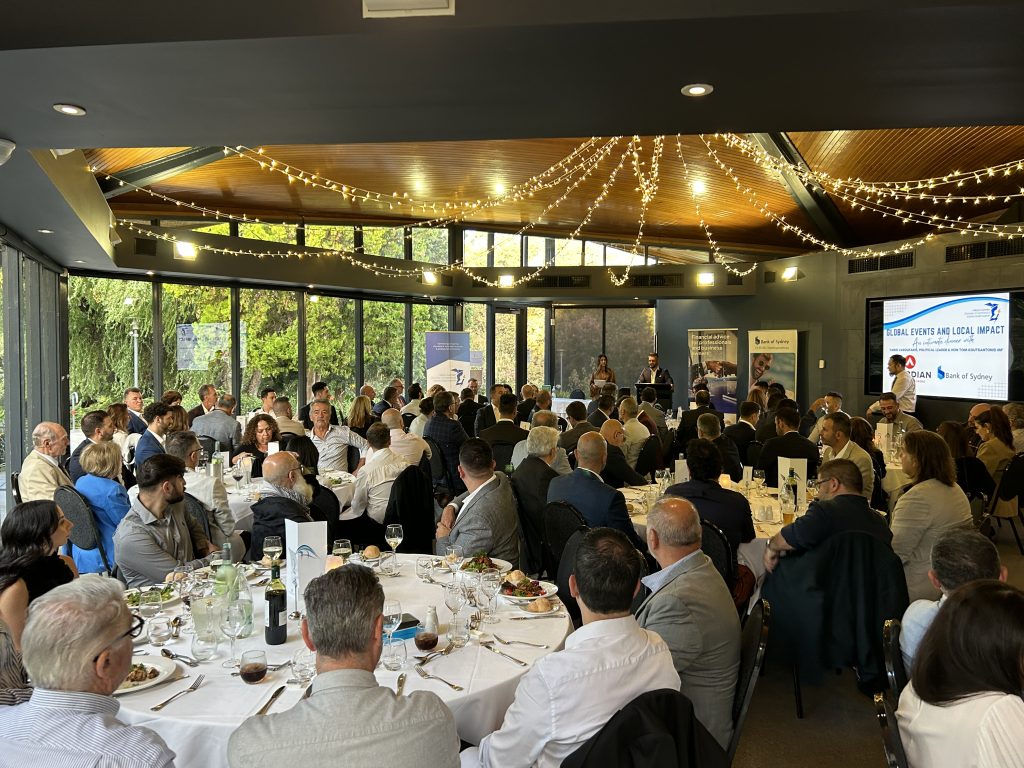
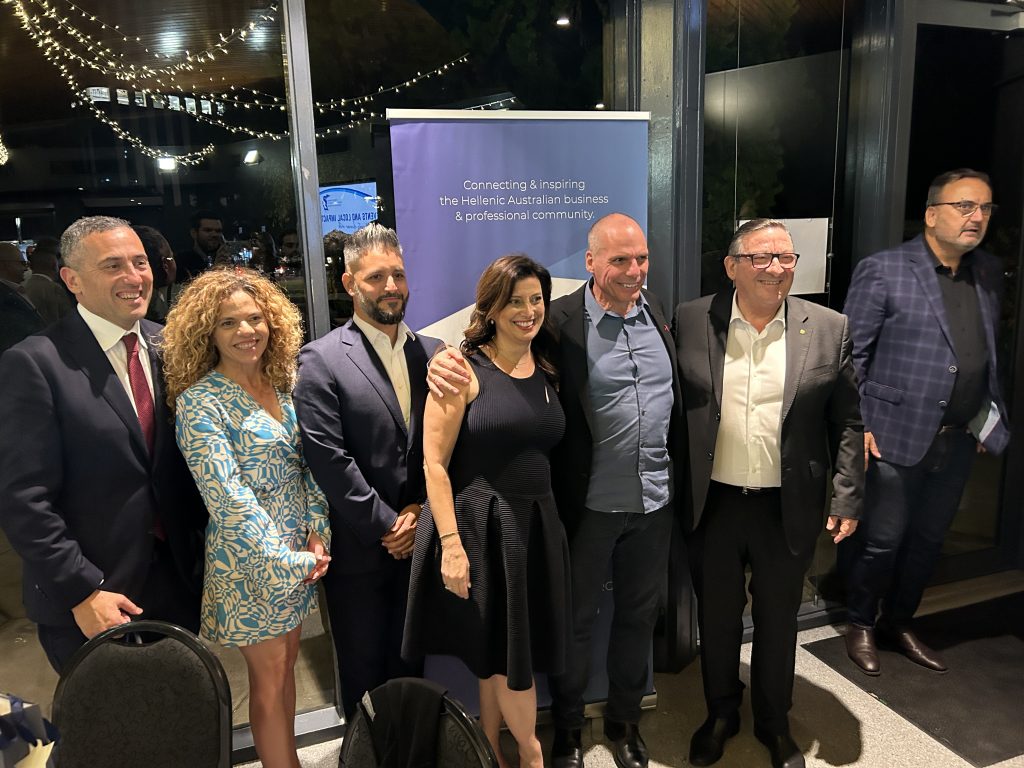
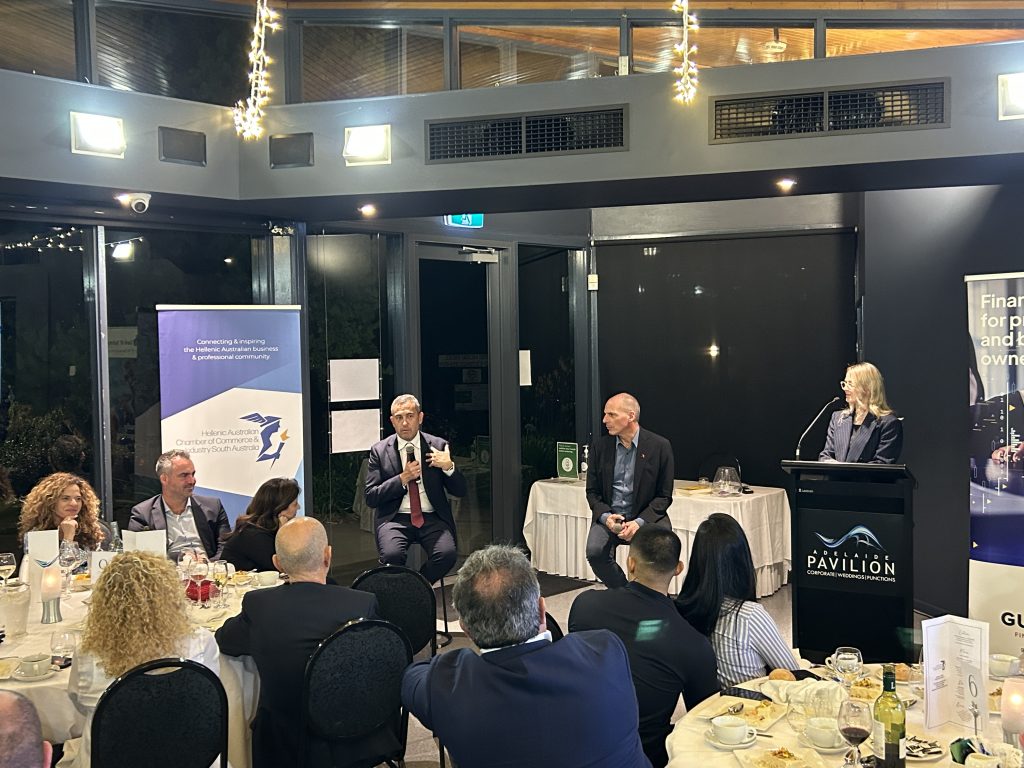
Launching their 2024 calendar, the South Australian Hellenic Australian Chamber of Commerce (HACCI SA) held a sold-out event titled “Global Events and Local Impact” with a keynote address by prominent economist and former Greek Finance Minister Yanis Varoufakis.
The event also featured a dynamic Q&A session with the Hon. Tom Koutsantonis MP, a senior Minister of the South Australian Government, which provided insightful dialogue on global and local challenges facing Australia and the world.
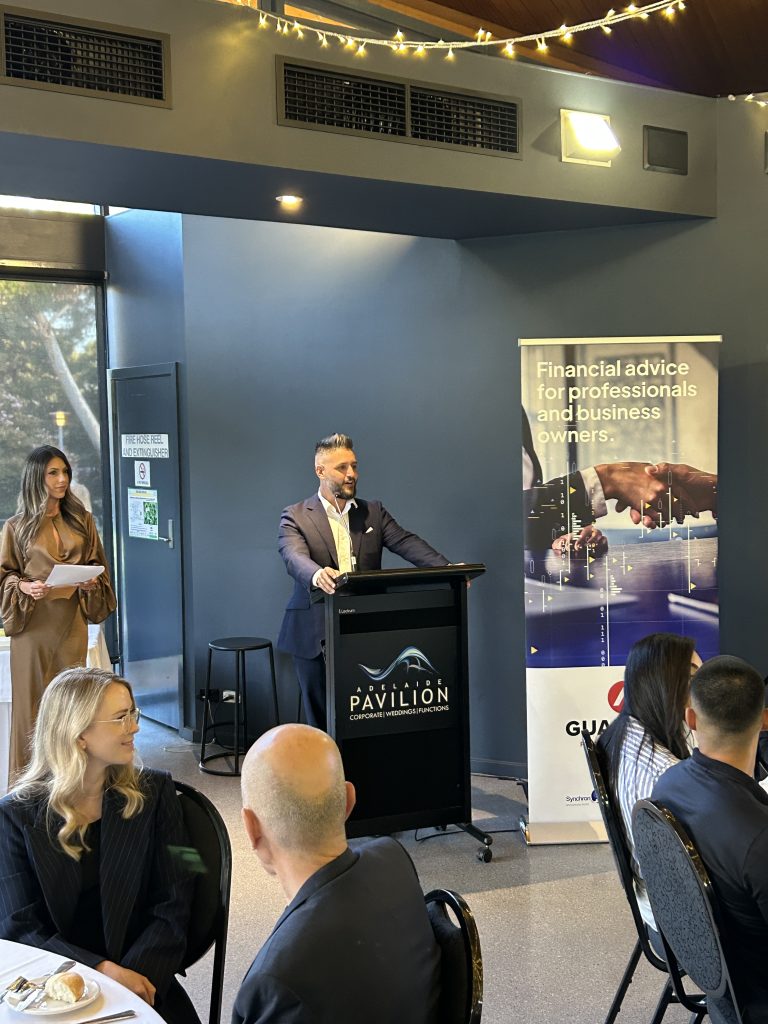
Kosta Koutsonas, the Chair of HACCI SA, articulated the essence of these gatherings in his opening remarks.
Chair of HACCI SA Kosta Koutsonas. All photos copyright The Greek Herald / Peter Tantalos.
“Each meeting we host carries a theme reflective of our collective aspirations – from Unity in Prospect to fostering gender balance in Unley. Today, we emphasise Gratitude; Gratitude for our members’ unwavering support, gratitude towards our sponsors, and our acknowledgment of the public servants,” he said.
Koutsonas emphasised the importance of HACCI in promoting and recognising both Hellenic cultural roots and business ambitions.
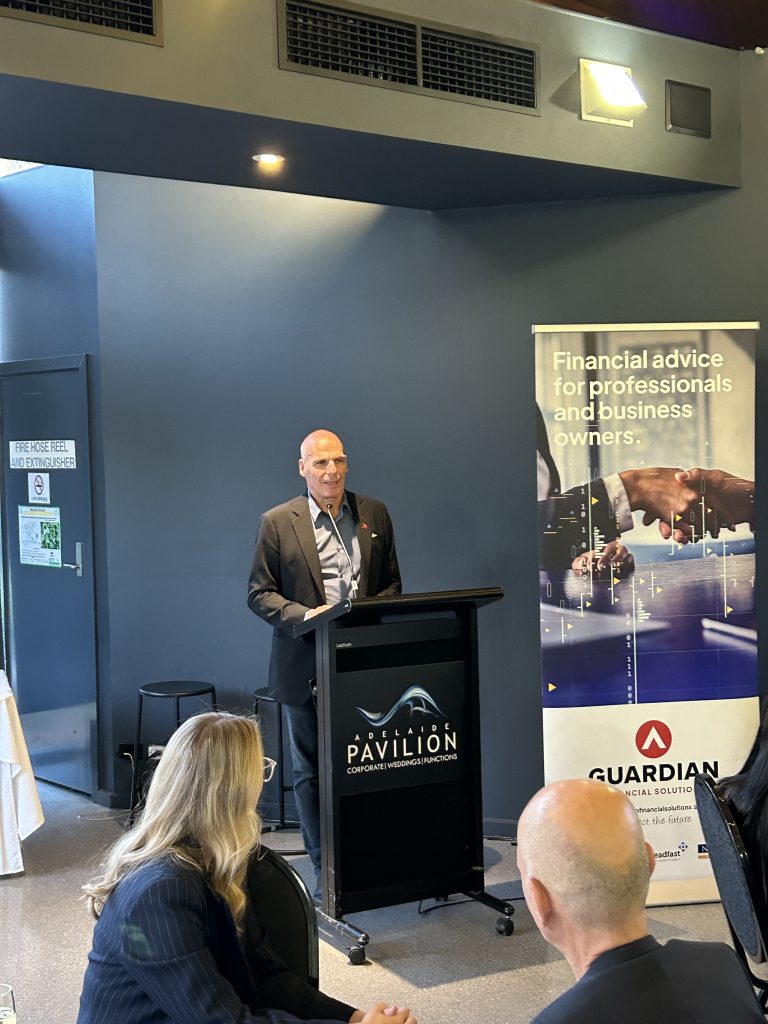
In his speech, Varoufakis navigated through the complex terrain of political and economic discourse, aiming to transcend political divides and engage in constructive dialogue, by emphasising first the commonalities that bound attendees regardless of their political affiliations – their Greek heritage, their shared Australian identity, and an underlying respect for the native land and its significance to the First Nation people.
Yanis Varoufakis.
On Greece, Mr Varoufakis outlined broad perspectives on the domestic economic landscape. First, he outlined the optimistic narrative provided by the Mitsotakis Government:
“If I were a Minister of the Mitsotakis government, I would come here and ask you to join me in celebrating Greece’s great recovery. It is a position that resonates with the Wall Street Journal, with the Financial Times, with international press, everybody is indeed celebrating that Greece is out of the woods… If anything, it is being talked about and talked up as a result of the fact that [Greece] has a higher growth rate than Germany [and that Greece] is no longer under the Europeans Union fiscal rules… in terms of deficit limits,” he said.
Varoufakis also outlined the achievements as touted by the current government including the political stability of the government after securing a decisive electoral victory, Greece’s close alignment with NATO and strategic interests of Washington via their support for Ukraine and Israel.
Sold out event with address.
However, Varoufakis presented an alternative viewpoint from his political perspective of MeRA25, bringing to light a sobering counter-narrative to the Government’s triumphalist claims.
He pointed out Greece’s economic recovery is exaggerated, with GDP and public debt figures indicating long-term challenges. This included the comparison of Greece in 2010 to the GDP figures today, where Varoufakis suggests that Greece’s debt is much higher today and income is lower as compared to 2010 levels.
“80% of population have zero savings, and of the remaining 20% they have savings of no more than 3000 euros. Savings in general are declining because people are finding it hard to make ends meet, increasing their private debt and using savings to live,” he said.
“The median Greek is today, in terms of spending power, 26% below the levels of 2007. If that happened in Australia, this country would be up in arms.”
Varoufakis highlighted other critical challenges facing Greece, emphasising the burden of non-performing loans and the systemic pressure they exert on approximately 1.2 million Greek households and businesses. Additionally, the discourse also touched on the adverse effects of the country’s housing stock being “exported” to foreign investors in exchange for Schengen visas that offer visa holders the right to live in Europe, further complicating the economic landscape.
Special guests with Kosta Koutsonas and Yanis Varoufakis.
Finally, Varoufakis discussed the changing international economic and social landscape in the context of his new book Techno-feudalism – What Killed Capitalism.
Varoufakis claimed that “Big tech – Google, Facebook etc – has built a new form of capital. A kind of capital, being the hypothesis in my book, which has never existed before… and it is a produced means of behavioural modification.”
Expanding on this, Varoufakis explained that this behavioural modification has existed since the time of Homer, through means of written, rhetorical, and advertising language. However, the distinction here, he suggests, is that the algorithm which underpins the technology is trained by the user, who consequently trains the technology to train the user, and so on.
The result, Varoufakis hypothesised, is that the “machine which we train to put desires into our heart, sells us what we now desire by bypassing every market directly… It makes you want a specific electric bicycle, and it also sells it to you.”
After Varoufakis delivered his address, the stage was set for a Q&A session between Varoufakis and Minister Koutsantonis. During this session, they discussed several key topics including the future of green energy production in Australia, the capitalisation of Australia’s wealth of natural resources to accommodate the green energy transition, the interconnection between the Australian economy and Asia, the current status of Australia-China relations, the issues surrounding private and public debt in Australia and its associated risks, as well as the state of economic growth in Greece and its position on the global stage.
Hon. Tom Koutsantonis MP and Yanis Varoufakis on Q&A panel.
“…I would like to invite people to help my party, not to vote for us, but to help us to make one important change in the electoral administration. Because the Greek political system is exploiting Greek Australians. They want your votes, with no representation. They want your vote without representation,” he said.
“Our view is that we should have the Italian system, where South Australia should be a constituency, NSW should be a constituency, so you can elect your own representatives into Greek Parliament, otherwise you have the right to vote but not the right to be represented. That is very important.”
Special guests included the Hon. Tom Koutsantonis MP, South Australian Minister for Infrastructure and Transport and Minister for Energy and Mining; the Hon. Andrea Michaels MP, Minister for Arts, Minister for Small and Family Business and Minister for Consumer and Business Affairs; The Hon. Chief Justice Chris Kourakis, Chief Justice of the Supreme Court of South Australia; The Hon. Connie Bonaros MLC and The Hon. Steve Georganas MP, Federal Member for Adelaide.
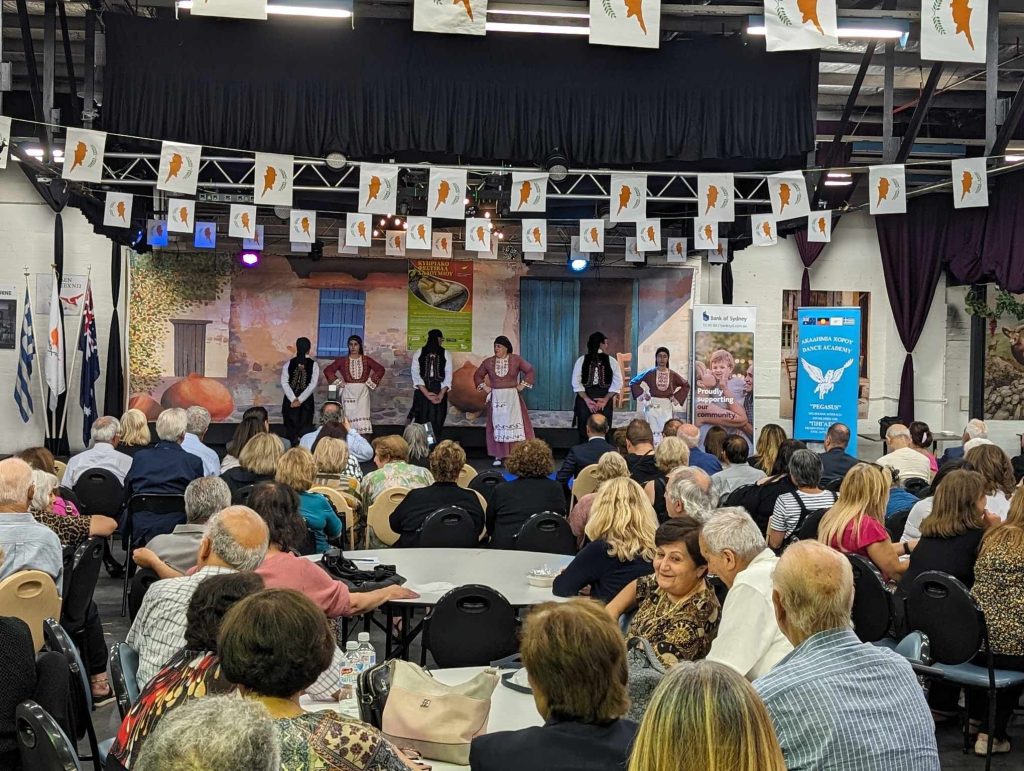
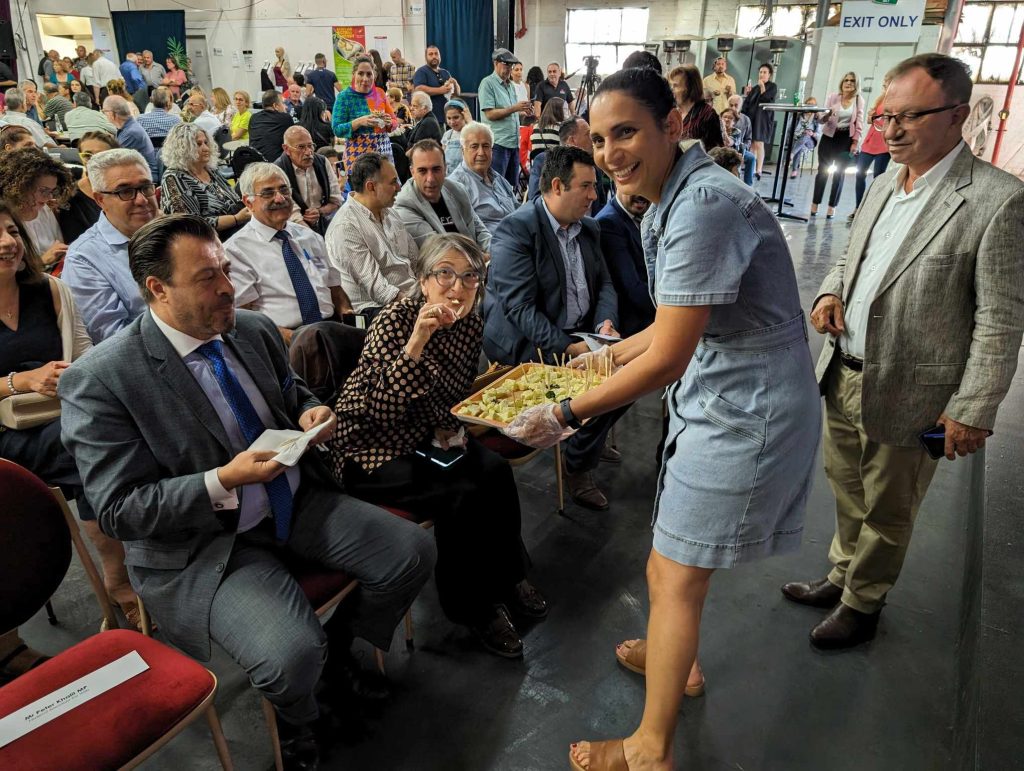
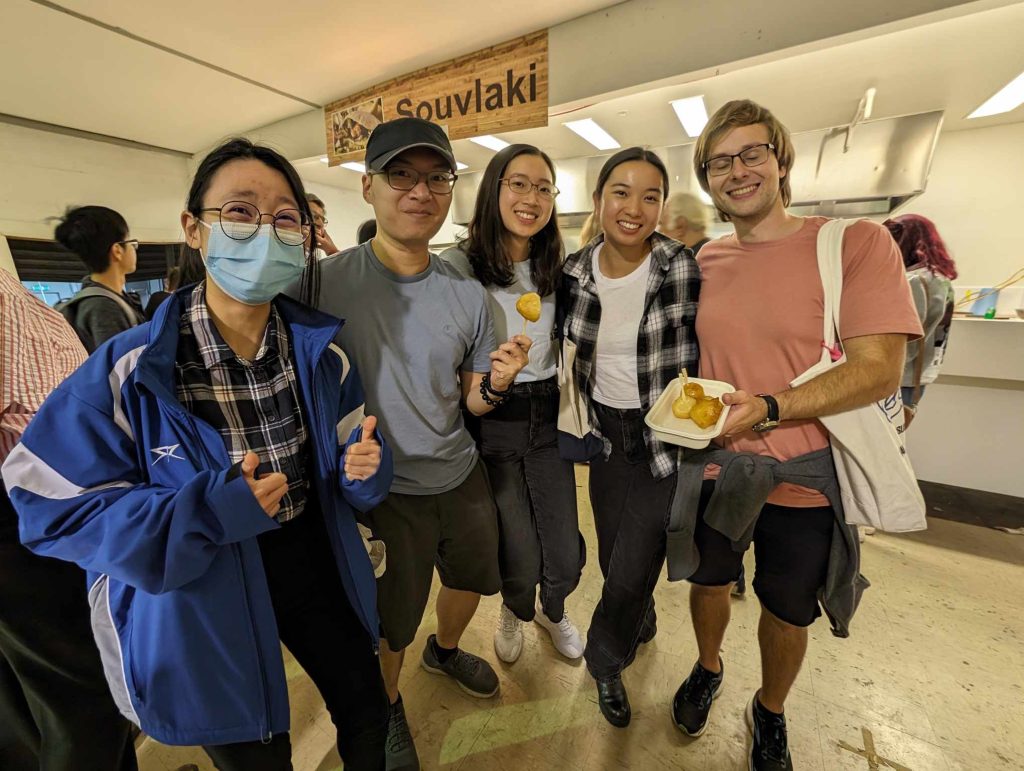
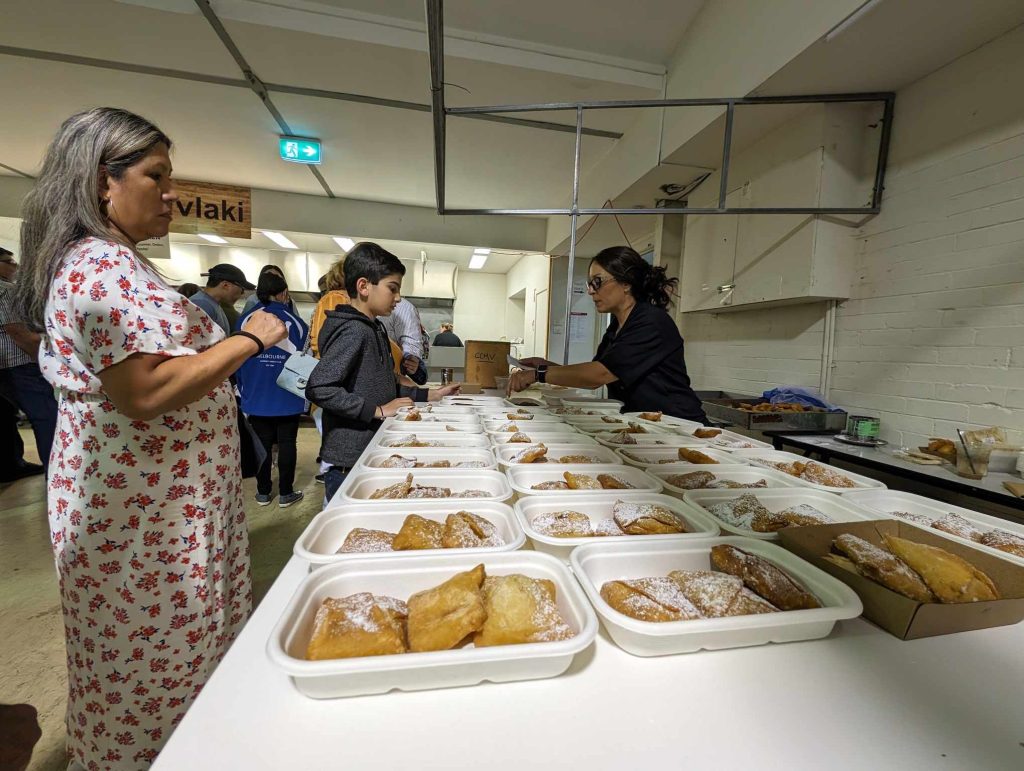
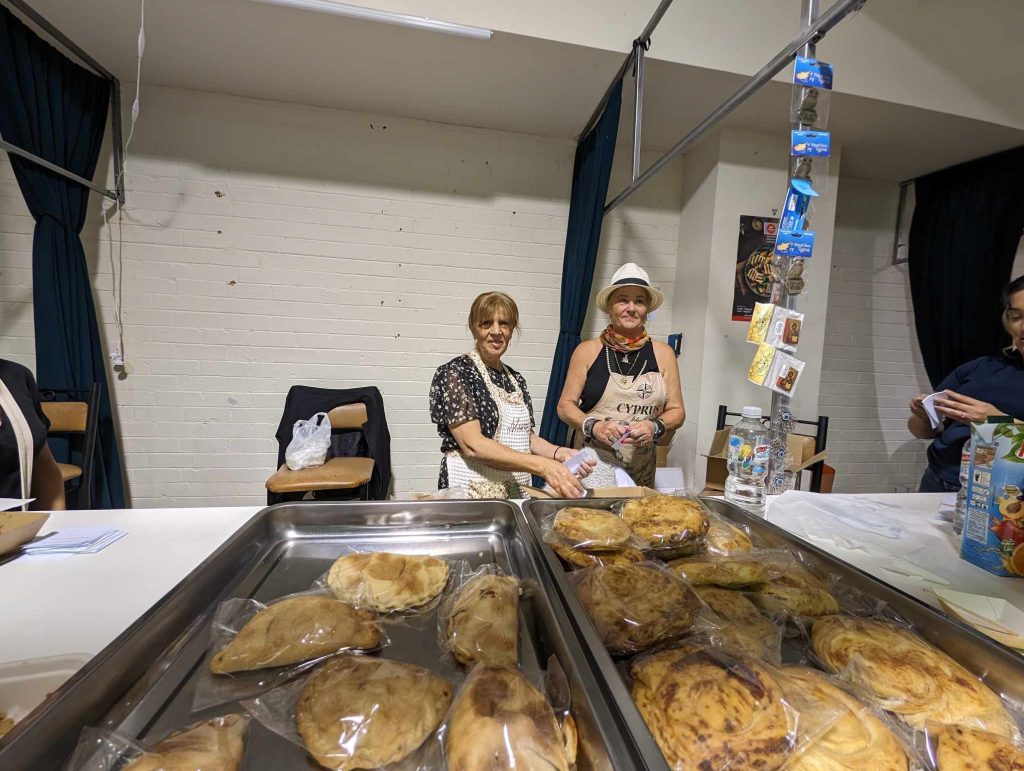
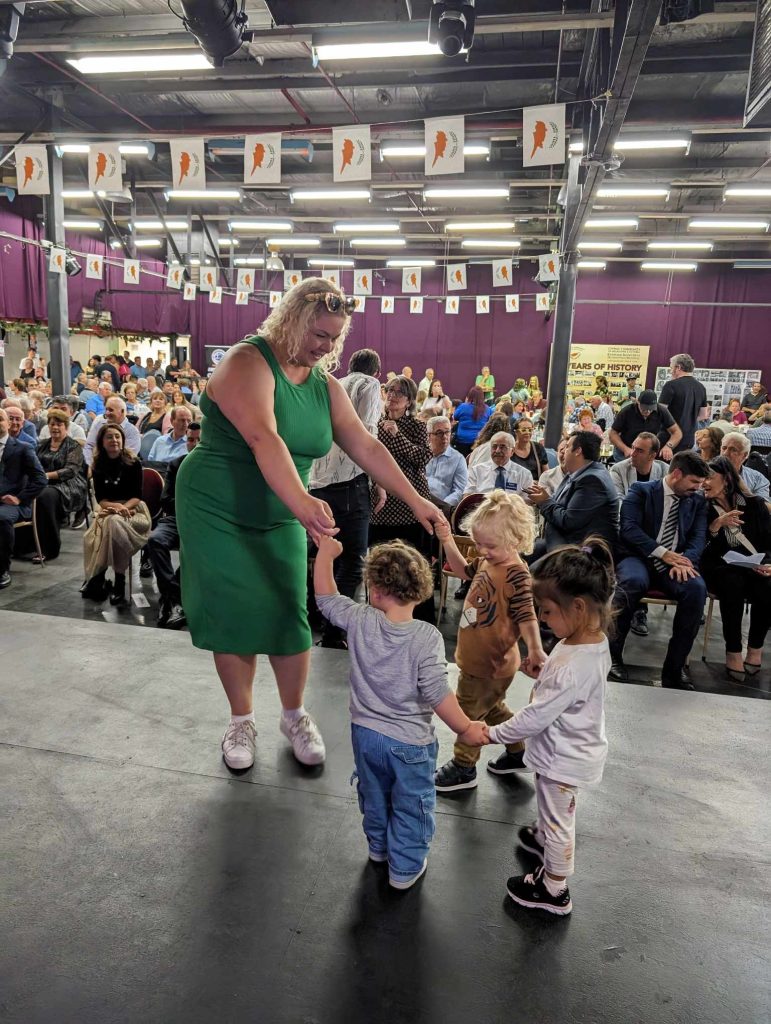
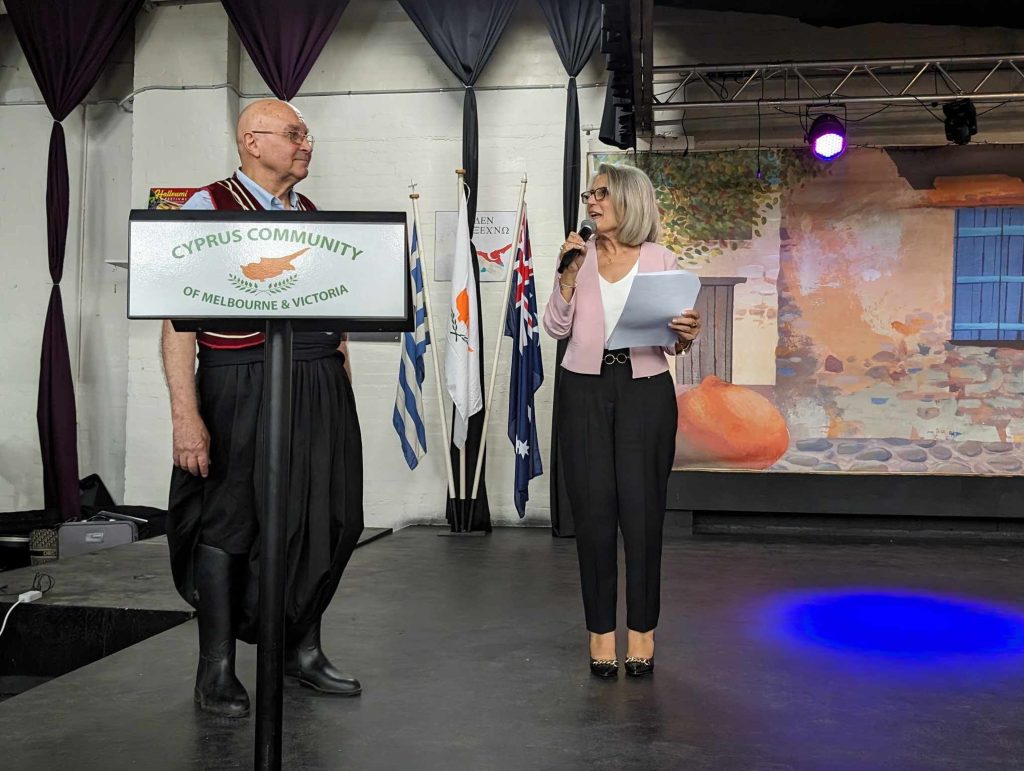
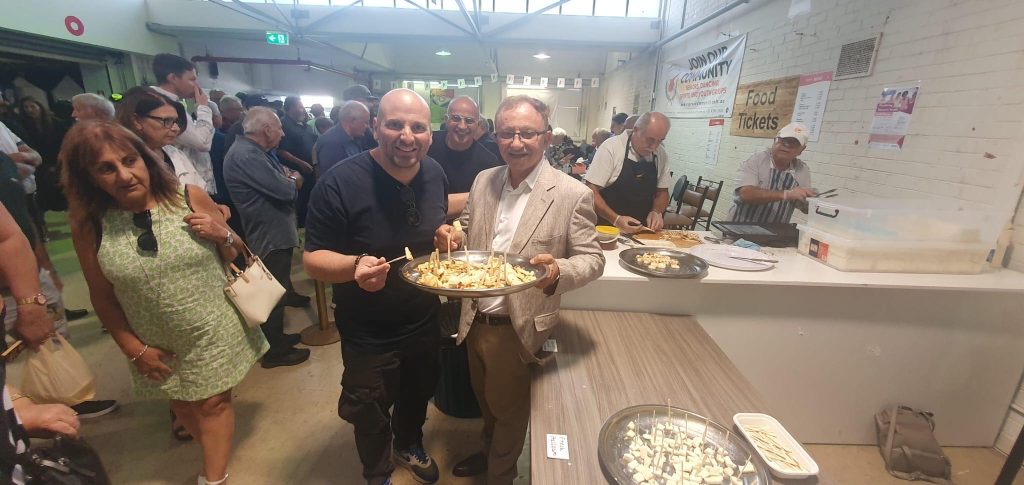
The 4th Halloumi Festival in Brunswick, Victoria on Saturday, March 2 and Sunday, March 3, proved to be the most successful yet. A large crowd enjoyed an impressive program with traditional sketches, songs, dances, and of course, a bounty of Cypriot cuisine – halloumi, sheftalies, loukoumades, and more.
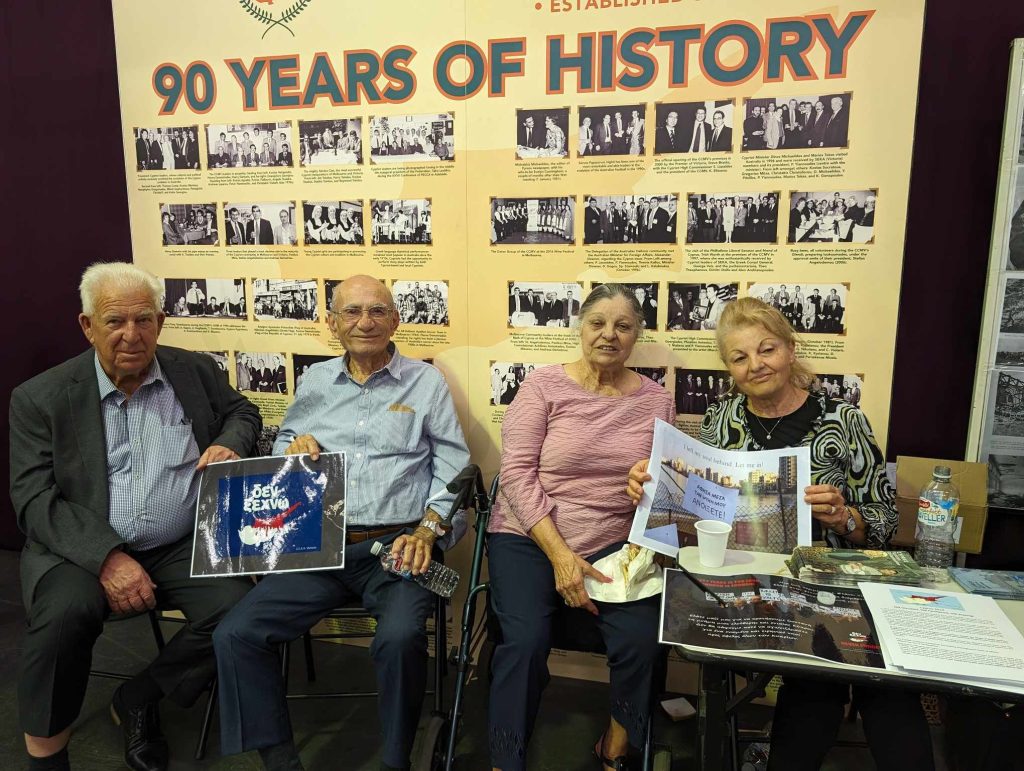
Beneath the festive atmosphere celebrating the beloved salty brined cheese, now a staple of Australian cuisine, there were both hopeful dreams for a new Cypriot Community Centre and undertones of a lingering struggle as the community commemorated the 50th anniversary of the Turkish invasion of Cyprus.
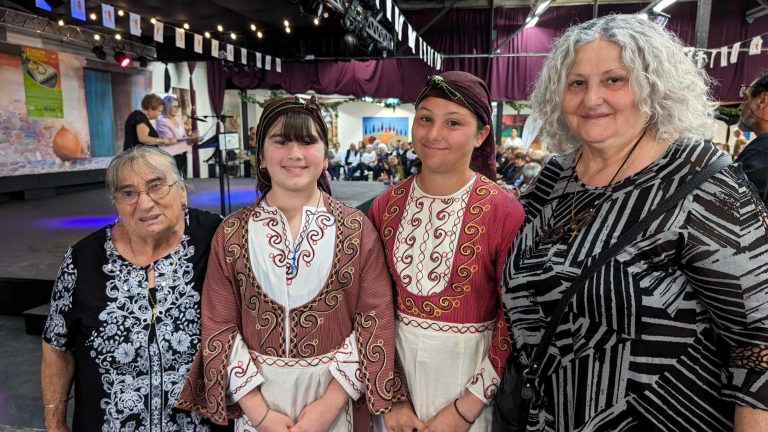
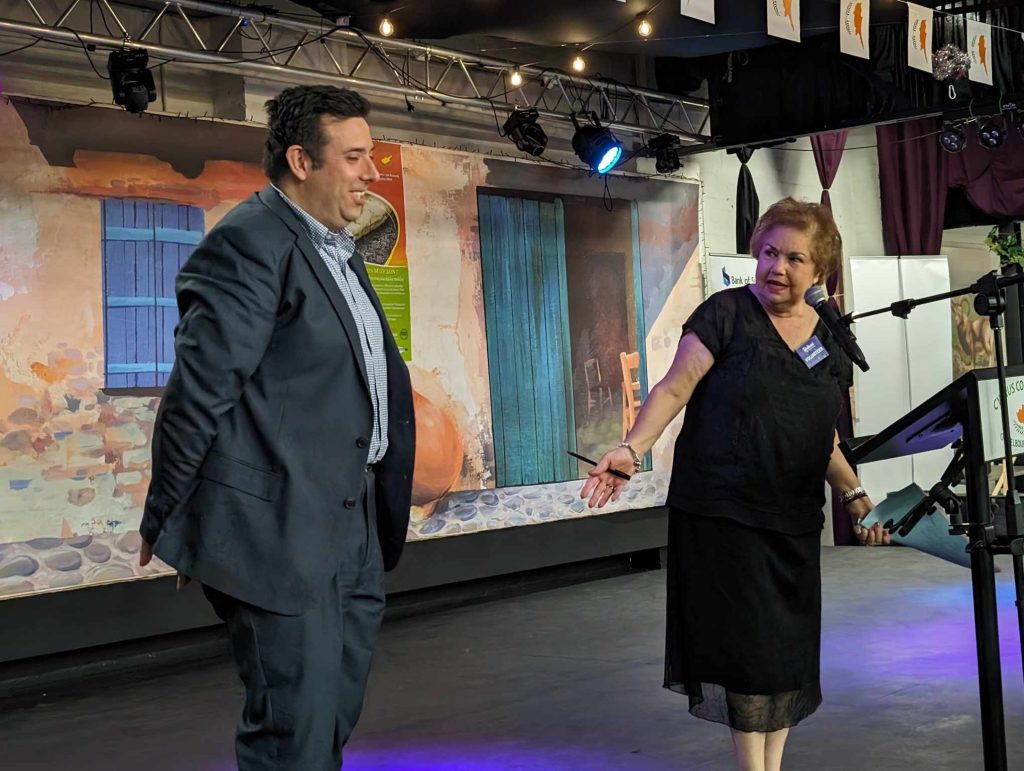
Pegasus dancers performed on stage.Greek Consul General Emmanuel Kakavelakis and Maria Vamvakinou MP enjoy some Halloumi.
Hope: A new community centre
As crowds overflowed the building and spilled the front pavement and backstreet parking, it became evident that the current Brunswick building housing the Cyprus Community of Melbourne and Victoria (CCMV) could no longer accommodate the needs of the 92-year-old organisation.
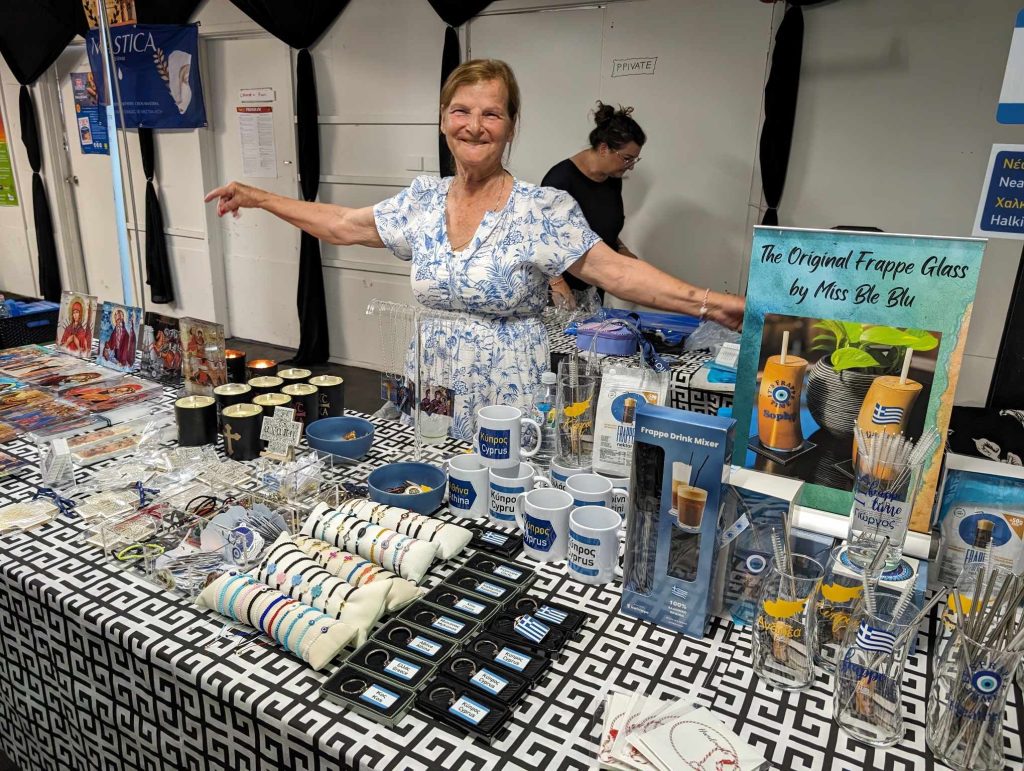
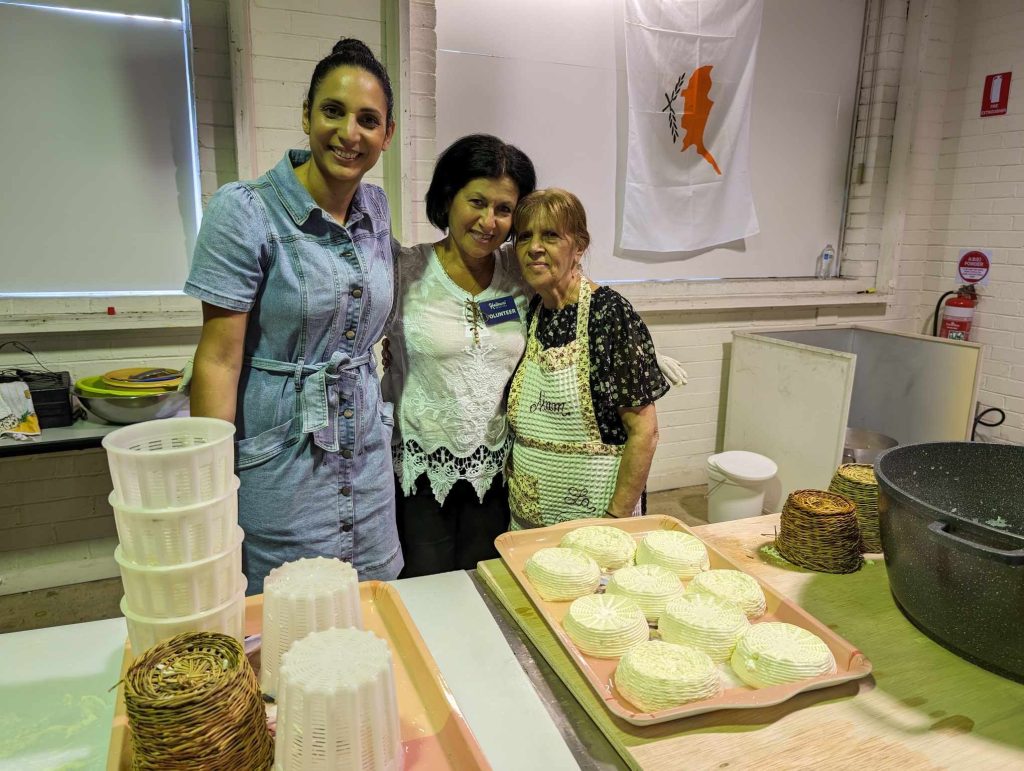
‘We’re not Cypriot, but just came for the food,’ they said.Traditional delicaciesCypriot cuisine and hospitality was on offer everywhere you looked.Souvenirs on sale
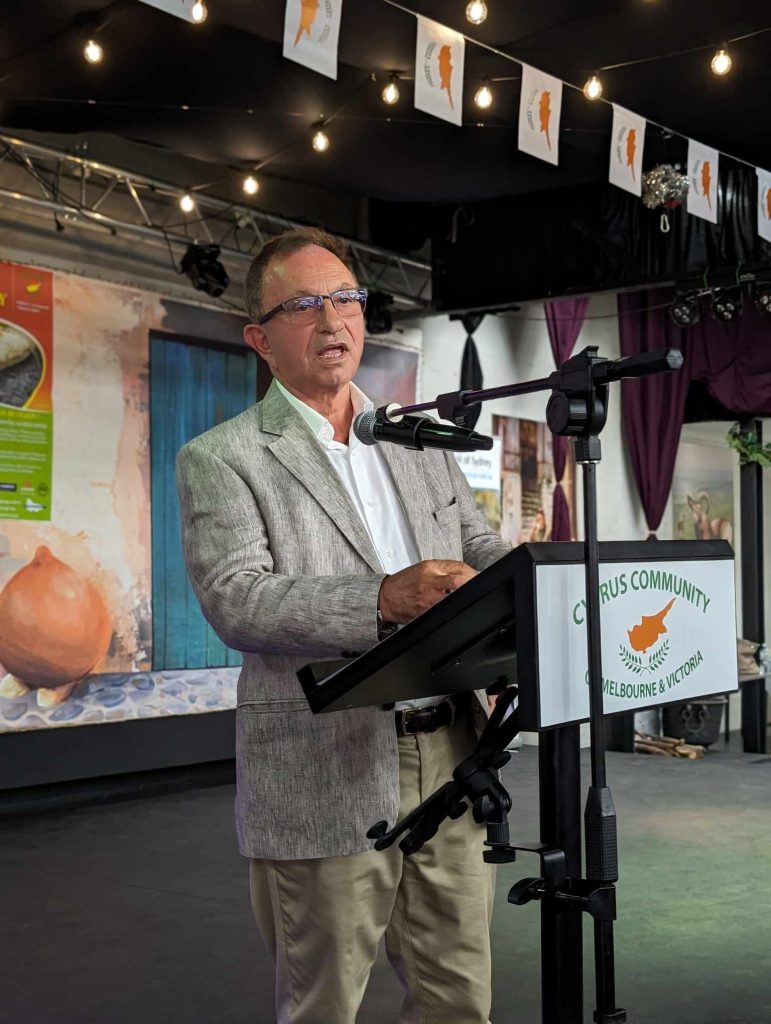
CCMV President Theo Theophanous, speaking to The Greek Herald, described the expansion of the site as a 40-year-old vision – a “legacy project” he hopes to see realised during his term.
“As a former government official, I’ve worked on exciting projects like AAMI Park, but this one holds a special place in my heart because of its connection to Cyprus,” he said.
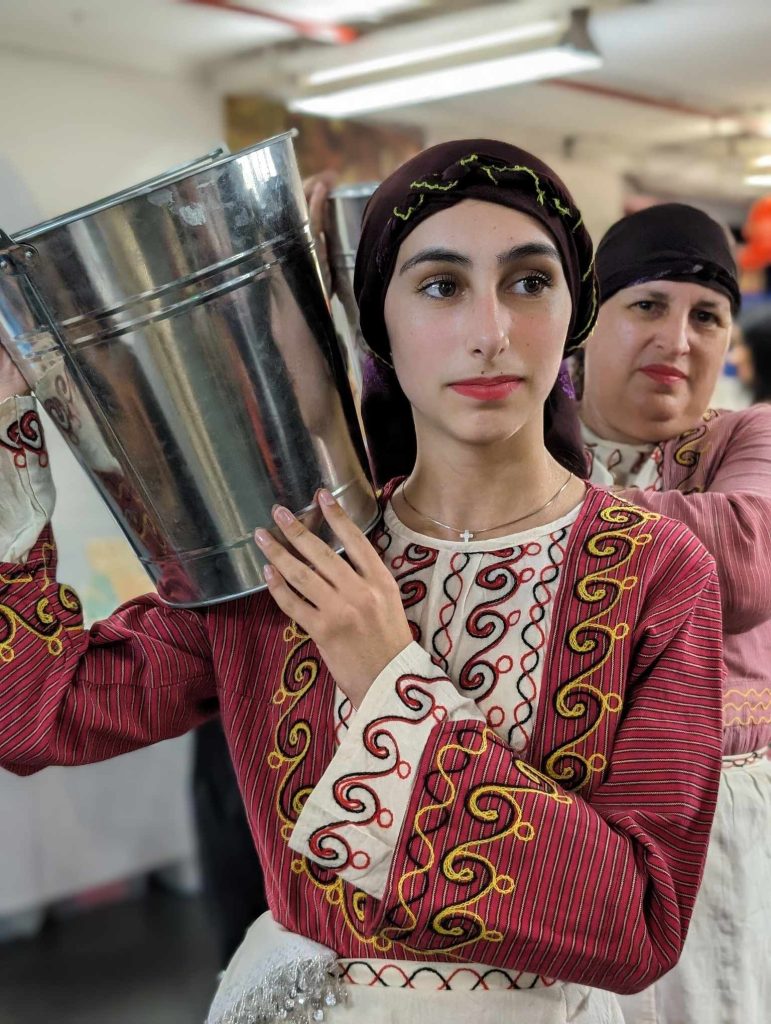
Theo TheophanousPegasus dancers
Lucent Property Development Group, managed by Panos Miltiadou, has partnered with the Community, and a development agreement has been signed.
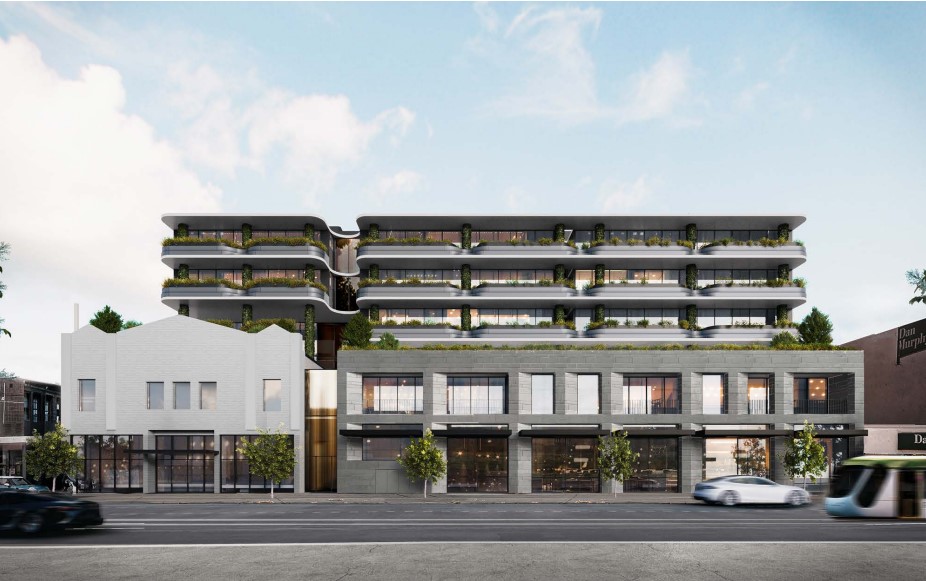
Mr Theophanous outlined the ambitious plan: a six-storey building with an approximately 600-sq-metre function room on the ground floor that can be sectioned for smaller events. A traditional Cypriot kafenio (140 square metres) and three retail shops will provide a steady income stream, addressing the existing $2.5 million debt.
The first floor will house community group halls, potentially a school, and a space for a Cypriot consular office. Two levels of underground parking and a rooftop garden – a common area for the community and residents alike – are also planned.
The remaining floors will include 52 apartments for which expressions of interest are being sought.
CCMV Building Artists Impression. Photo provided.
“Ideally, at least half will be owned by people of Cypriot or Greek origin,” Mr Theophanous said.
“Imagine living in a Greek village – walk down for your coffee, listen to music, dine at a Greek restaurant.”
An ambitious $30-million concept plan was originally unveiled by former president Stelios Angelodimou in 2019, with a $500,000 grant from the Victorian government. However, the global pandemic caused significant delays.
“People underestimate the complexities and costs involved,” Mr Theophanous explained.
“We need engineers, architects, soundproofing, traffic management, environmental reports, legal fees. The community had to cover all these expenses while navigating objections, such as a request to keep the height at four storeys like the hotel next door. We went to the Victorian Civil and Administrative Tribunal and compromised, dropping the initial eight-storey vision to six floors.”
Merri-bek Deputy Mayor Lambros Tapinos, present at the festival to show his support, welcomed the project.
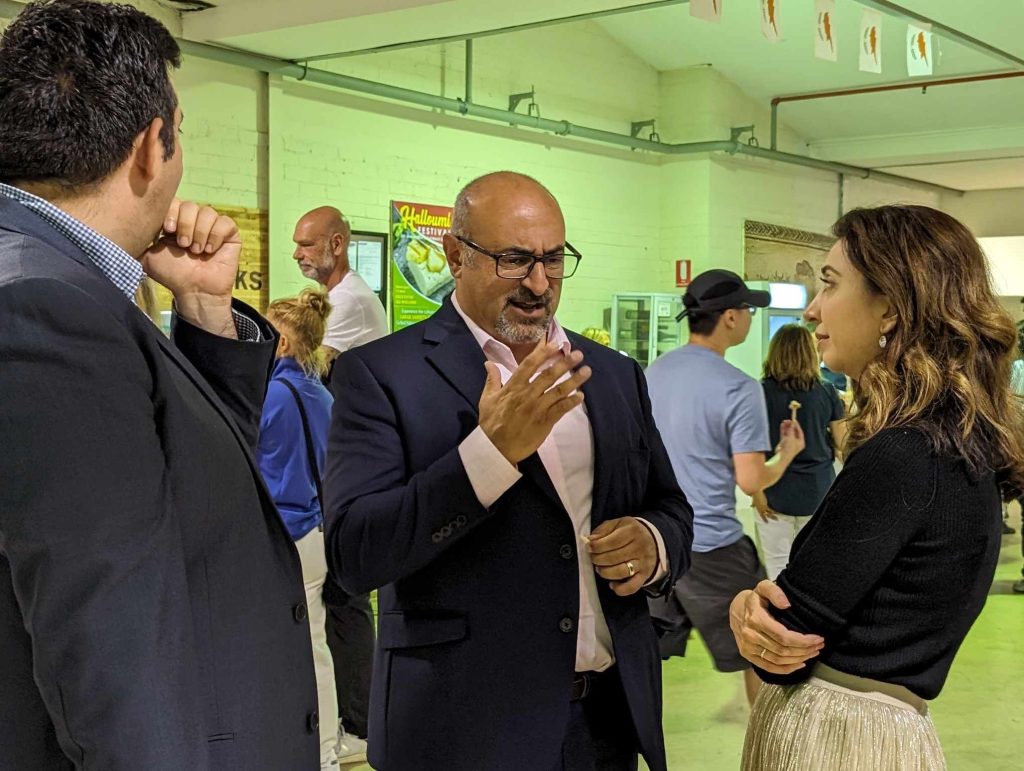
MC Claire Gazi pressures Deputy Mayor Lambros Tapinos to support the new Community centre.Merri-bek Deputy Mayor Lambros Tapinos, Peter Kahlil and Kath Theophanous.
“It will secure the future of the Cypriot Community of Brunswick and enable it to grow and offer more services to the community,” he said, emphasising the need to follow proper procedures.
“Changes to the application need to go through the process and meet the planning scheme.”
With the CCMV board re-elected for another two years last Friday, Mr Theophanous anticipates stability and construction possibly starting by the end of the year.
“This project will help our community thrive, and this festival could become a mini-Antipodes,” he said.
Eleni Tziotzis came from Cyprus when she was 15 and has been part of the community.
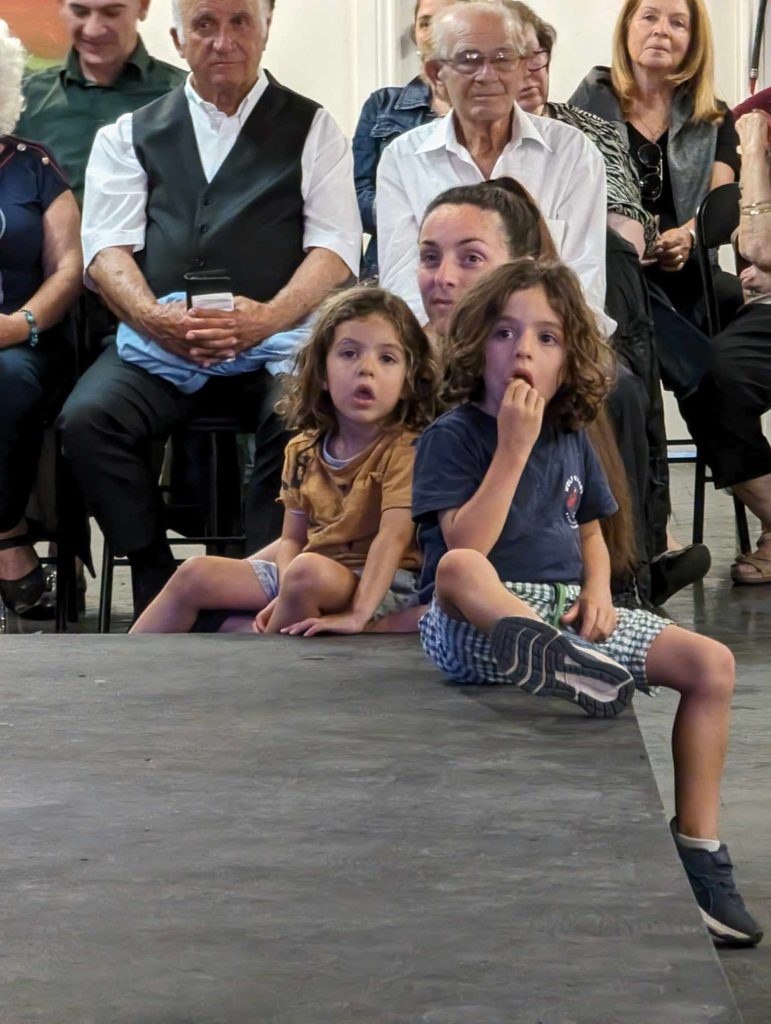
It was an intergenerational festivalYoung and old enjoyed the dancing
Hopelessness: a shared future for a divided island
Electra Melissa, originally from Varosha (the southern quarter of Famagusta currently under Turkish occupation), sat with friends listening to the speeches.
“I have little hope of finding a solution in my lifetime,” she sighed. “Every night, I dream of my home in Varosha. I remember everything – our sea, our sand, our unique culture.”
Poet Andrea Demetriou from Morfou recalled the chaos of the invasion, witnessing wounded soldiers and bloodshed as a little girl.
“We wrapped their injured bodies in dowry linen,” she recalled.
Yiannis Melissas, Nikos Kostantinos, Electra Melissa and Lia Kostantinou remember Varosha.
Electra and Andrea represent the displaced third of the island’s population following the Turkish invasion. They are among the fortunate ones compared to the 1,000 missing people and those still living under restrictions in the occupied areas.
“As refugees, we were given feta in Gastouni, Peloponnese,” Andrea remembered. “As a child, I naively asked my mother why they were so poor they didn’t have halloumi.”
Kat Theophanous MP promised to do all she could as a Cypriot Australian politician to “continue advocating for a peaceful and just resolution.”
“Cypriots, both Greek and Turkish Cypriots, deserve peace, stability and a united homeland, we cannot lose sight of that,” she said.
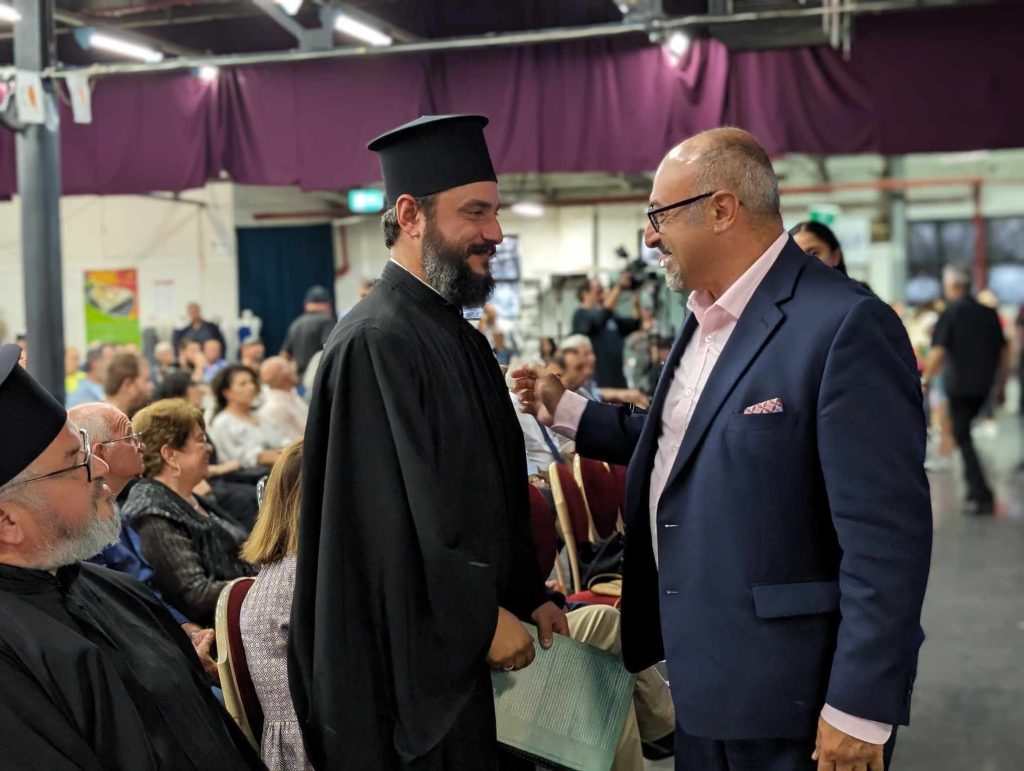
Fr Nicholas Georgiou and Peter Kahlil
High Commissioner of the Republic of Cyprus in Australia, Antonis Sammoutis offered a glimmer of hope with a new round of negotiations on the horizon after a seven-year hiatus. He highlighted halloumi as a symbol of unity, with its protected origin status meaning only Greek and Turkish Cypriots can profit from it.
“It’s a shared heritage,” he said, “halloumi” for Greek Cypriots and “halim” for Turkish Cypriots.
“It can’t be commercially produced by Greece or Turkey, only Cyprus.”
Celebrity chef George Calombaris and Theo Theophanous
Perhaps halloumi, a symbol of shared culture, can be a starting point for a future where Greek and Turkish Cypriots find common ground.
Mr Theophanous expressed a willingness to open the festival to Turkish Cypriots, inviting them to share their halloumi memories.
Cyprus traditions
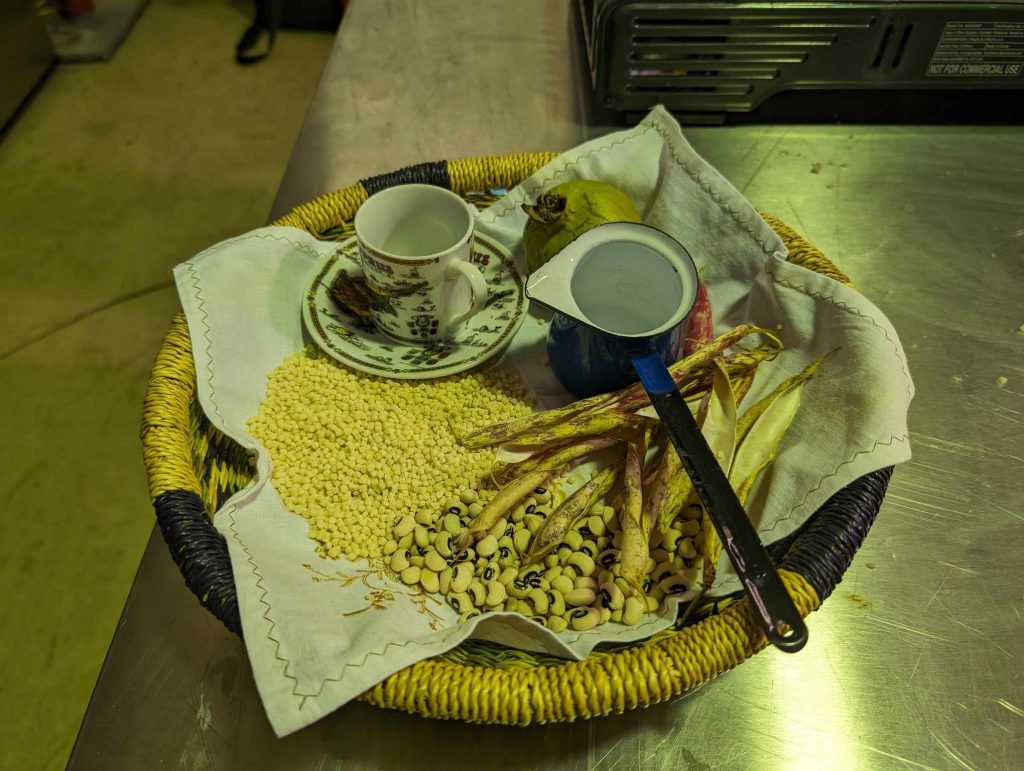
Memories of the past were evoked by Mr Sammoutis, who recalled his grandmother’s goat cheese halloumi and Ms Theophanous who remembered the chewy halloumi in her family’s trahana soup. MC Claire Gazi encouraged the audience to try the traditional Cypriot pairing of halloumi with watermelon (karpouzi).
MCs Claire Gazi and Lambrini Lambrou Christopher with Theo Theophanous
The event concluded with a sense of hope, and the popular Halloumi Festival, drawing a diverse crowd of people, a celebration of Cypriot culture and cuisine, served as a reminder of the enduring spirit of the Cypriot people.
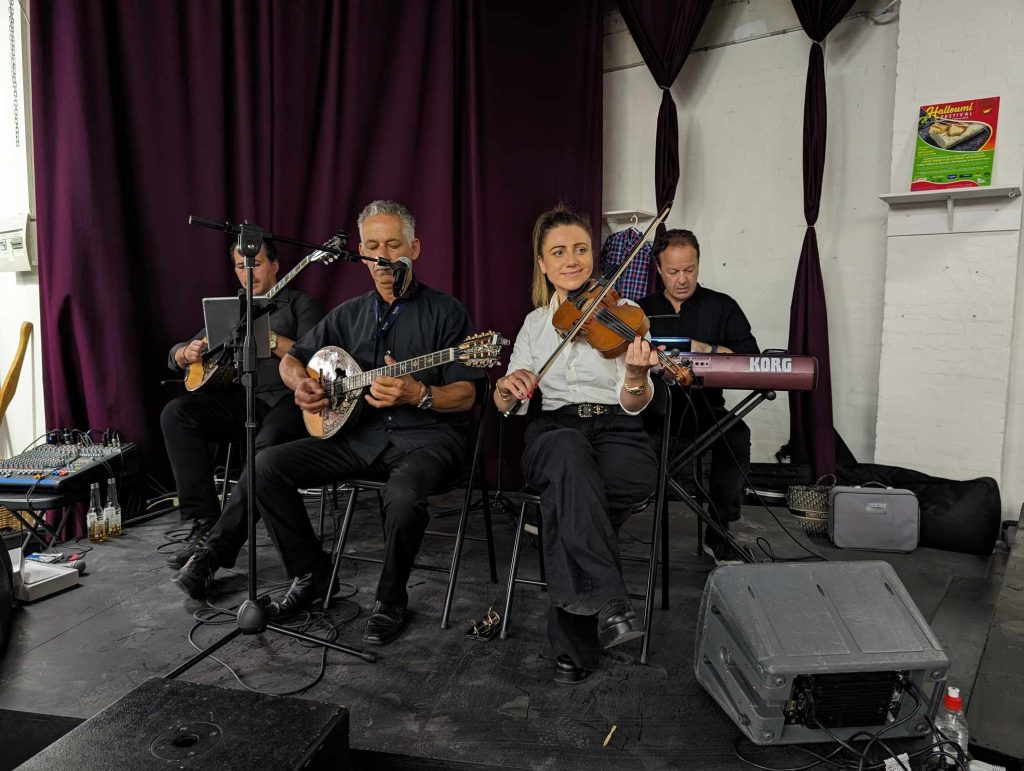
Live music
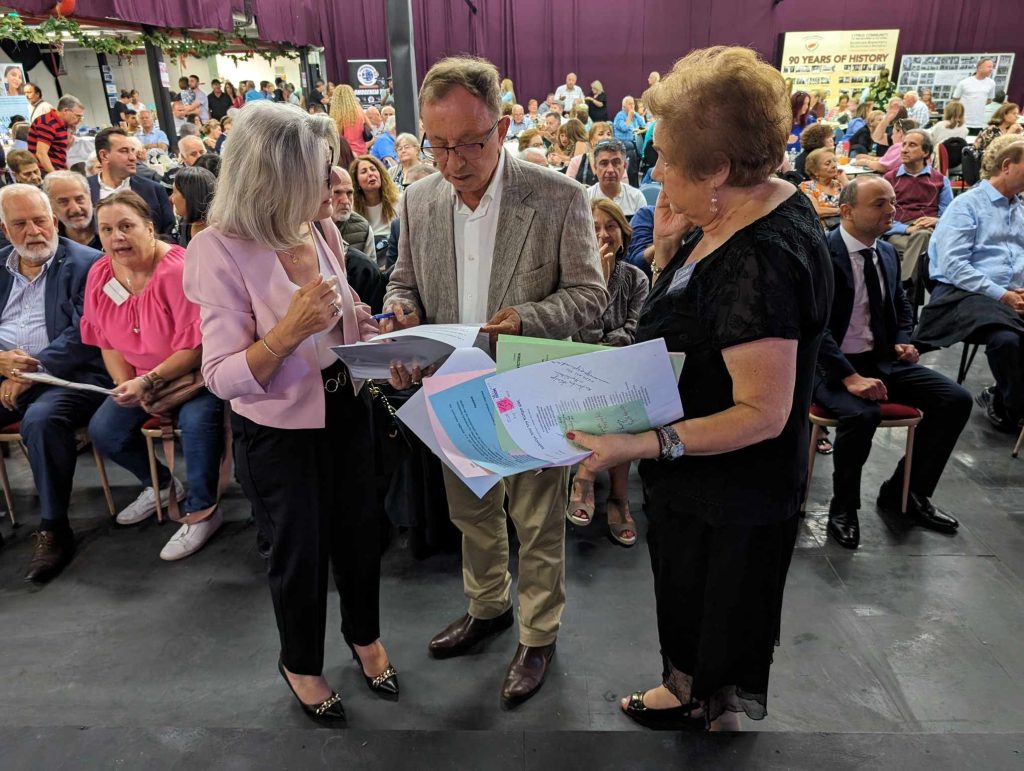
MCs for the festival were Ms Gazi and Lambrini Lambrou Christopher. Distinguished guests included Maria Vamvakinou MP, Anthony Cianflone MP, Peter Kahlil MP, Nazih Elasmar OAM, Telmo Languiller and Greek Community of Melbourne Vice President Anthea Sideropoulos.
*All photos copyright The Greek Herald / Mary Sinanidis (except the photo of the building designs).
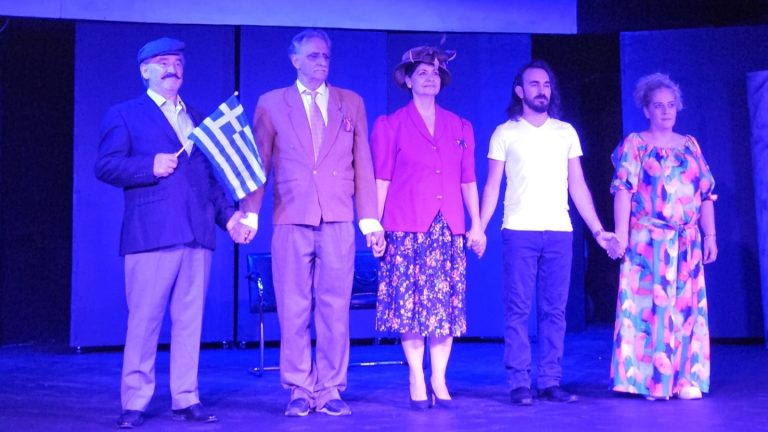
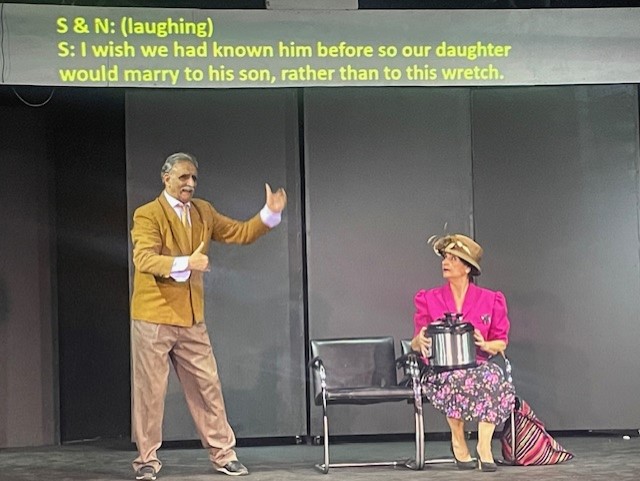
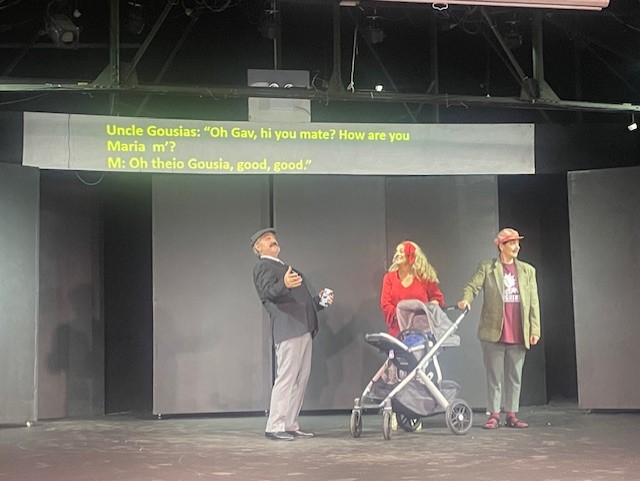
Organised as part of the 42nd Greek Festival of Sydney, the play was written by the esteemed lawyer and author Konstantinos Kalymnios, and featured the talented duo Stamatis Tzelepis and Elena Tsefala.
All photos copyright The Greek Herald / George Tserdanis.
The thought-provoking play delved into the essence of the first generation of immigrants, exploring the gradual fading of their unique way of life over time. The audience were also encouraged to remember their own migration journey through references to motherland Greece and the famous Patris, which transported tens of thousands of Greeks to Australia, mainly during the 1960s.
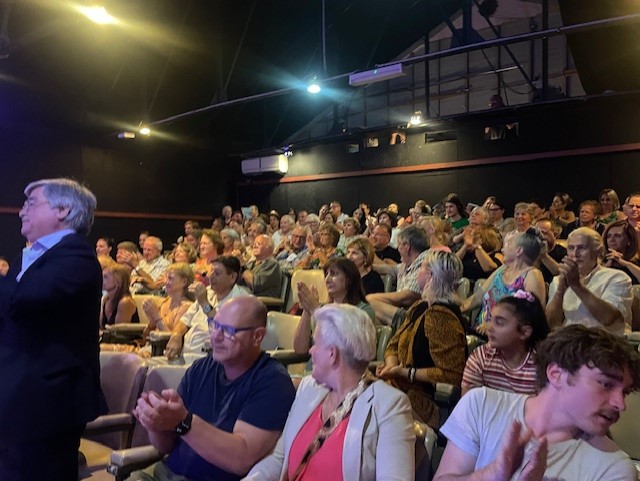
Excellent performances by Tzelepis and Tsefala, who played multiple and varied characters, drew in the audience and led to many moments of light-heartedness and laughter.
A total of four stories (one-act plays) were presented on stage and many spectators wished they could last even longer, so that the theatrical pleasure they offered did not stop.
Upon meeting Mr Kalymnios and learning he was a third generation immigrant born-and-raised in Melbourne, Victoria, I was even more impressed with not only his knowledge of many historical situations and events, but also his writing ability to transfer this knowledge into a theatrical performance with lots of humour and sarcasm.
The Festival took place on Saturday, February 24 and Sunday, February 25, with many local Greek community organisations having stalls on the day to connect with members of the public.
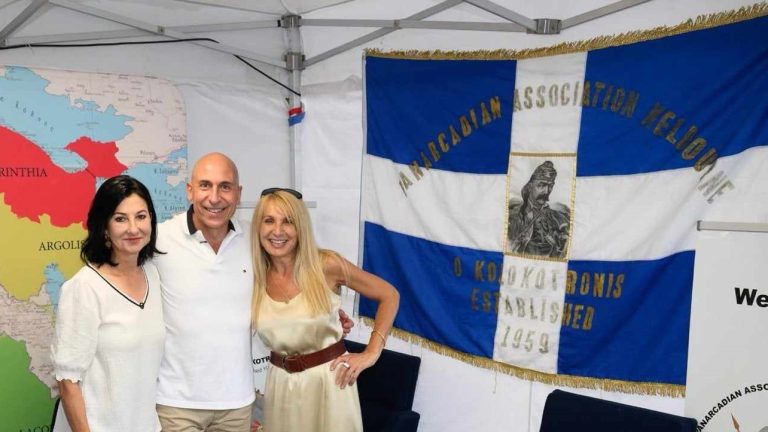
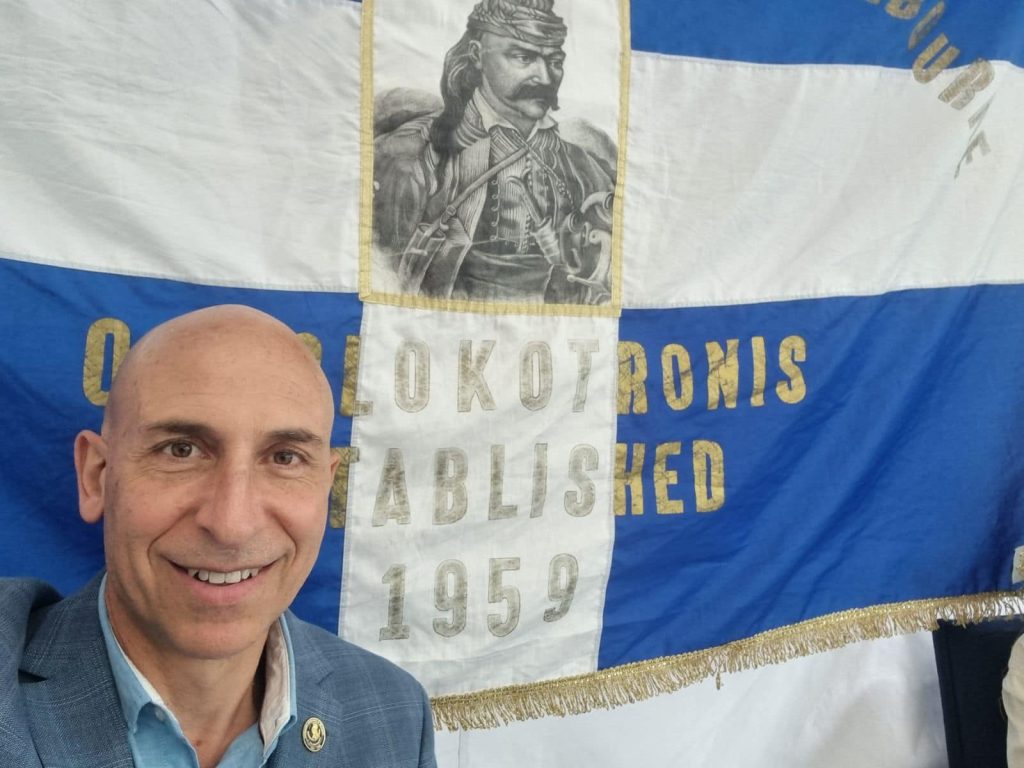
The Panarcadian Association of Melbourne’s stall was decorated with a historic blue and white flag, featuring a sketch in the centre of Greek Revolution fighter Theodoros Kolokotronis.
The Association, which celebrates its 65th anniversary this year, uses the flag at marches, memorials, wreath laying ceremonies, and funerals for past Presidents. It has historical, sentimental and irreplaceable values.
According to the President of the Association, George Kotsirilos, the flag was stolen from their stall at the Antipodes Festival between midnight on Saturday, February 24 and the early hours of Sunday, February 25 morning.
President of the Panarcadian Association of Melbourne – O Kolokotronis with the historic flag. Photo: Facebook.
“We are saddened to see this taken from us. This has touched many of our members, as the flag has been with our club for approximately 50 years. I can assure you Kolokotronis is turning in his grave,” Mr Kotsirilos told The Greek Herald.
Mr Kotsirilos said the theft has been reported to the Greek Community of Melbourne, who were saddened to hear the news.
“A police report has also been provided, and CCTV footage has been viewed as cameras are 20 metres directly opposite our stall and also 5 metres behind our stall,” he said.
The Panarcadian President has asked anyone with information on the stolen flag to come forward.
“We are not looking to press charges, and nothing more will eventuate from this when the flag is returned,” Mr Kotsirilos said.
The flag can be returned and left with the Hellenic Museum at 280 William St, Melbourne, Victoria.
The CommBank Young Matildas have commenced their AFC U-20 Women’s Asian Cup Uzbekistan 2024™ with a resilient 2-1 over Korea Republic in challenging conditions at Do’stlik Stadium, Tashkent.
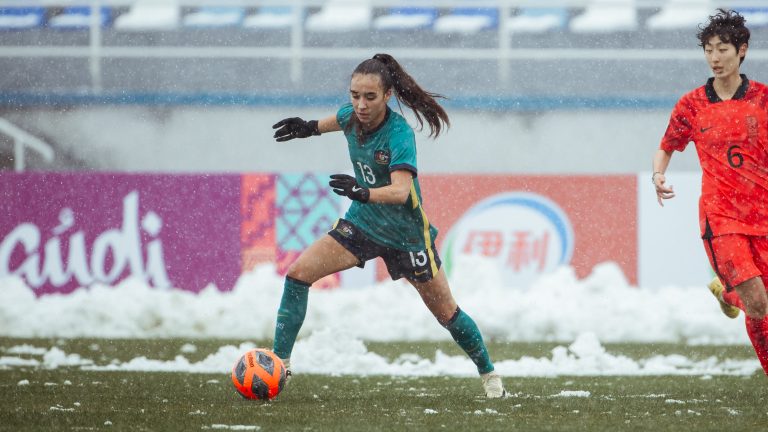
After heading into the break 1-0 down, goals from midfielder Peta Trimis and vice captain Naomi Chinnama saw the Aussies claim a memorable victory in cold and snowy conditions in the Uzbek capital.
Australia’s goals in the second stanza were sparked by half time changes from Leah Blayney including Newcastle Jets’ speedster Lara Gooch.
In the 73rd minute Gooch lifted a perfectly weighted ball over Korea’s midfield, falling neatly into the path of Trimis. The 17-year-old Central Coast Mariners’ midfielder made no mistake, calmly tucking away the equaliser.
Photo: Football Australia.
The winner came as regulation time wound down with another substitute, Kahli Johnson (Western United), forcing a corner as the game approached stoppage time. Korea Republic were unable to clear with Gooch providing a composed pass to Melbourne City’s Chinnama. On the edge of the area, the defender hit the pass first time leathering it into the back of the net.
“It’s such a surreal feeling. I’m just so happy to get the win for the girls and obviously to get my first goal, it was such a good feeling,” Trimis said after the match.
“I’ve never played anything like that. It was such a shock but I think we adapted well in the end and I’m so happy to get the win with the girls.”
The CommBank Matildas will next face tournament hosts Uzbekistan on Wednesday, 6 March (10.00pm AEDT) with all the action live on 10 Play.
South Melbourne FC achieved their fourth consecutive victory in Victoria’s National Premier Leagues season against Manningham City.
South Melbourne sit at the top of the table with 12 points after beating Manningham 5-2 in thrilling fashion. The team found themselves 2-0 down until the 37th minute.
Harrison Sawyer was the main protagonist of the match after scoring a hat trick, while the 20-year-old Emile Peios also made a great appearance.
Ben Everson scored for Manningham in the 7th and 23rd minutes, while the answer from South Melbourne came in the 37th minute with Sawyer reducing the score to 2-1. In the 39th minute, Nahuel Bonada tied the match at 2-2.
Sawyer scored again in the 43rd and 49th minutes, while the final score was made by Jordon Lampard in the 52nd minute.