As Holy Week quickly approaches, Greek Orthodox Christians prepare for their journey of spiritual devotion and reflection for Easter.
This year, Orthodox Easter falls on Sunday, May 5.
One of the most important things Christians do in the lead up to Easter is participate in Lent by fasting. This involves going 40 days without meat.
Pretzels
However, during Holy Week (or Megali Evthomatha in Greek), they go vegan – abstaining from meat, fish, dairy, and oil. This symbolises the control of one’s passions and the surrender of oneself to God.
It is something people do in honour of Jesus Christ, by controlling ourselves and resisting temptations, especially when it comes to food.
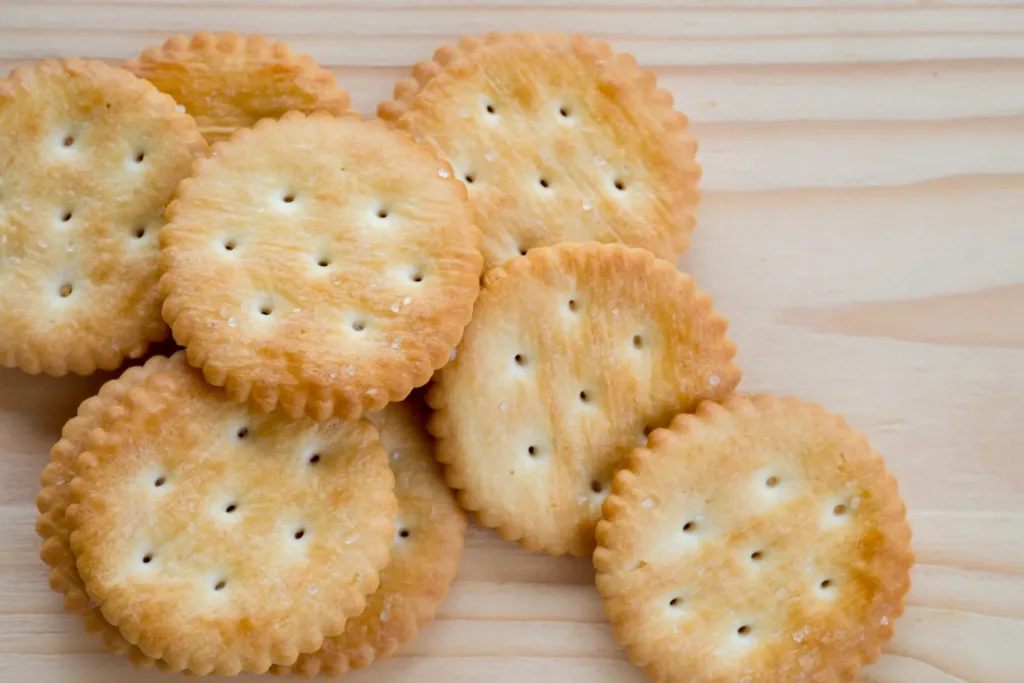
Ritz Crackers
The Greek Herald decided to put together a piece of some of the best snacks and foods you can consume during Holy Week, which you probably didn’t even know were vegan!
Choc mini rice cakes
And no, we’re not just talking plain toast with jam, or tarama sandwiches.
Oreos
Pringles
Homemade chocolate crackles
Arnott’s Nice biscuits
Takis chips
Sour Patch Kids
Lindt Dark Chocolate
elVita Crunchy Breakfast Biscuits
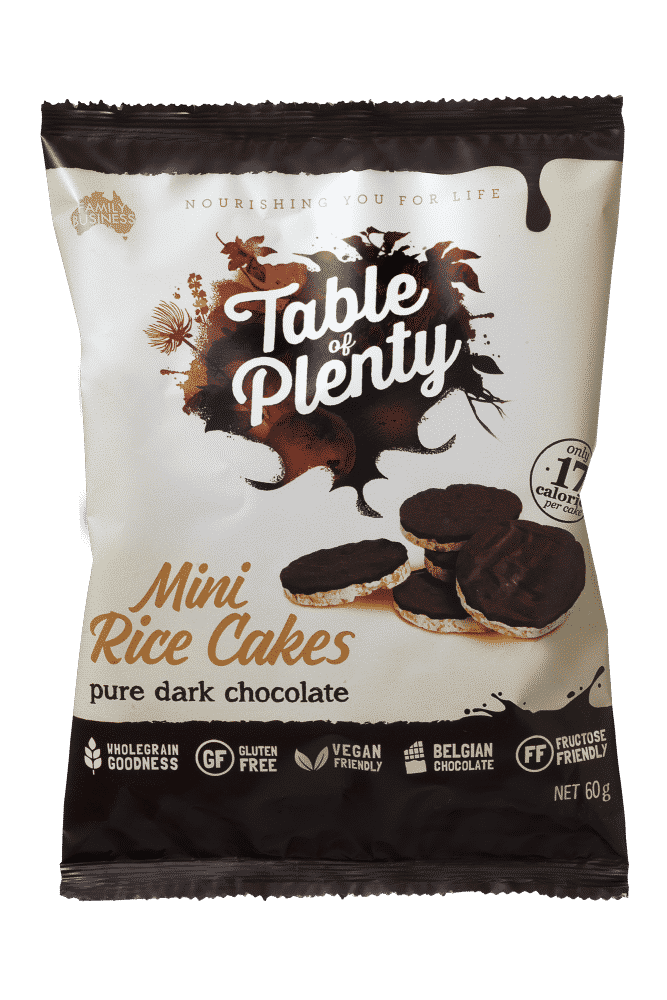
Table of Plenty, mini dark chocolate rice crackers
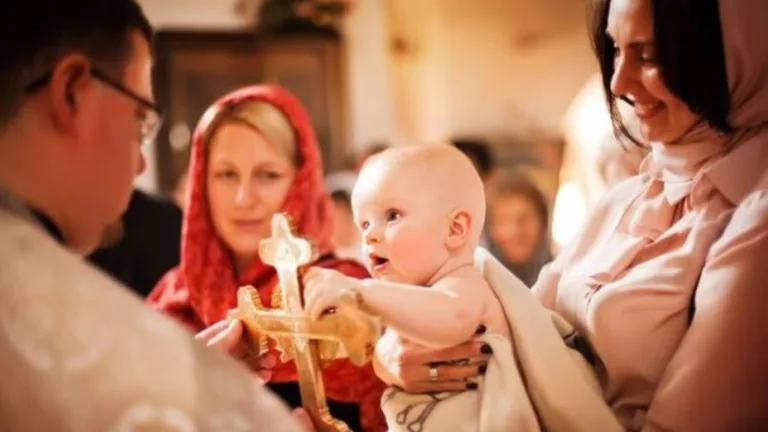
Are you a first time nouna or nouno (godparent) curious about your duties this Orthodox Easter? Don’t worry, The Greek Herald’s got you covered.
In the Orthodox faith, being a godparent comes with the responsibility of ensuring the godchild receives a spiritual upbringing, and ensuring a life-long bond of love, trust, and guidance through religion. The role of a godparent extends beyond a christening and continues right through the godchild’s life.
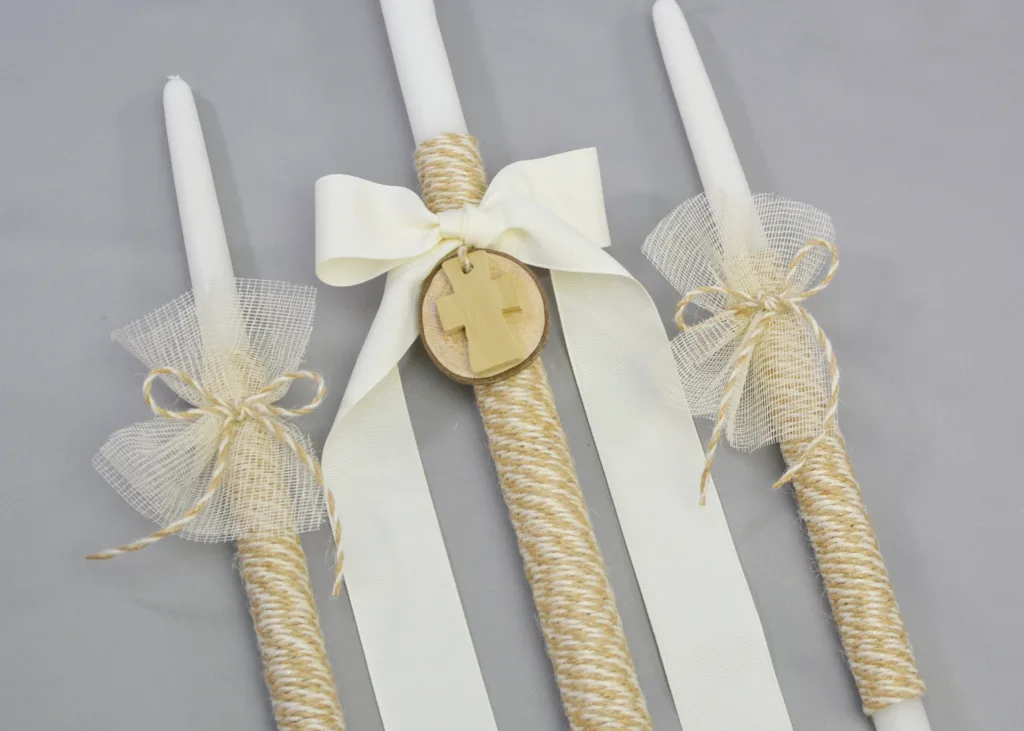
Lambathes: Photo: Anastasias Kouzina
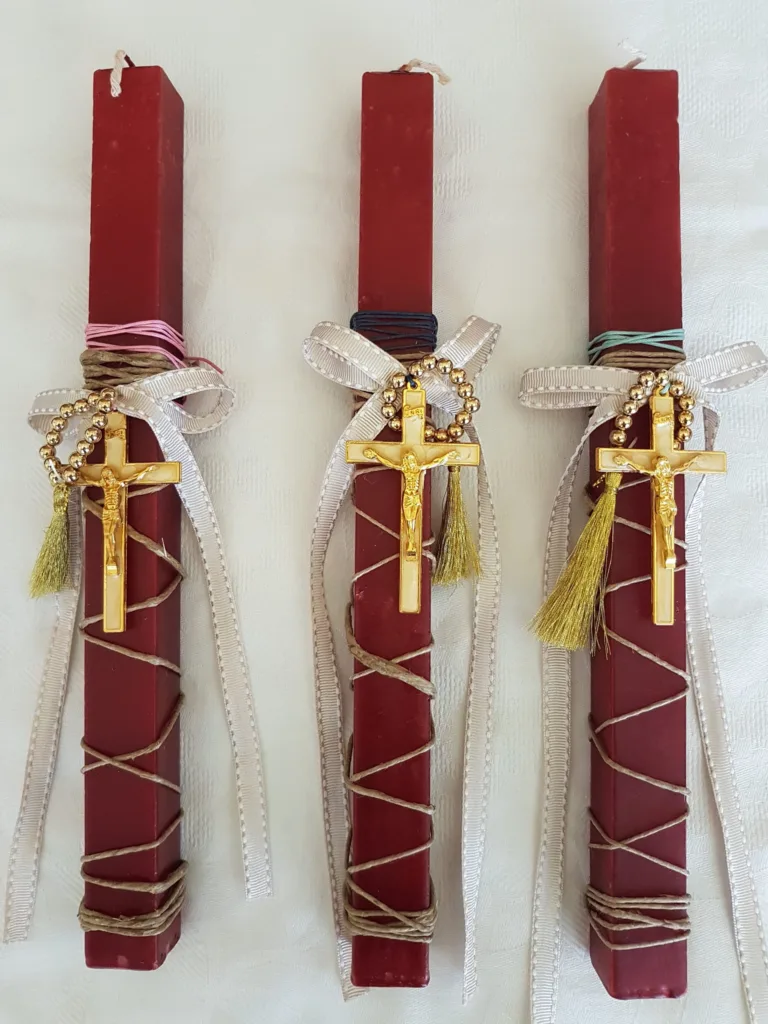
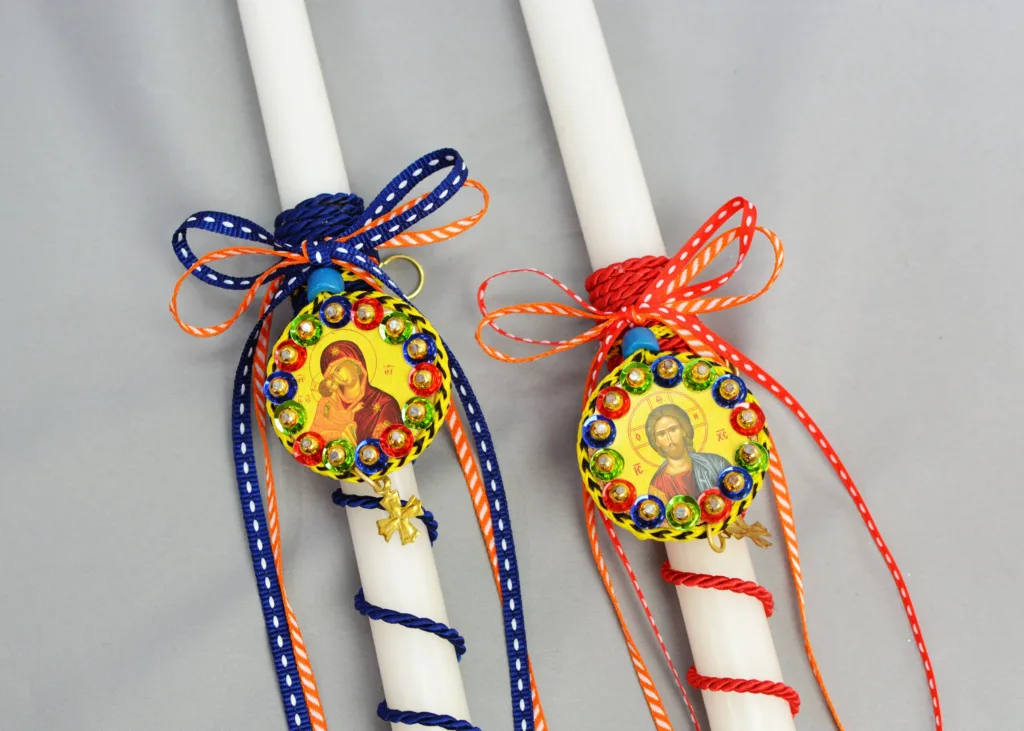
At Easter time, one of the traditions godparents follow include granting their godchild with a ‘lambatha’ – a special decorated candle made for Easter. They are often decorated with ribbons, icons, jewels, and small toys.
Lambathes. Photo: Dahlia Weddings and Baptisms
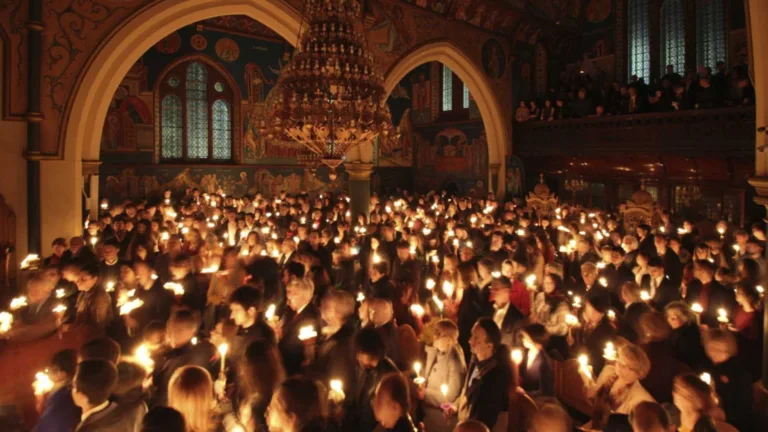
The lambathes hold cultural and religious significance and are handed to godchildren as a gift from their godparents, to allow them to receive the light of God at Easter. This takes place at Anastasi (Midnight Mass) on Holy Saturday, where the holy flame is passed through the church as the clock strikes 12.
Although lambathes are often gifted from godparents at young ages, people of all ages are seen holding them on Holy Saturday. They can be purchased across multiple websites, local Greek businesses and at your local Greek Orthodox Church.
Lambathes. Photo: Dahlia Weddings and Baptisms
After the church service, it is customary that once the flame is brought home with the lambatha, a cross is marked on top of the front door frame of the home, therefore allowing the light of God to bless the home for the year.
Lambathes: Photo: Anastasia Monastery
As well as giving godchildren lambathes, another Easter tradition includes the godparents providing the gift of a new Easter outfit or new shoes to the child. This outfit is gifted to be worn during Holy week for Easter. Most godparents continue bearing gifts up until the child turns 12 years old.
Other gifts that are given to godchildren for Easter include shoes, money, a tsoureki or even a chocolate Easter egg or bunny.
Have you ever wondered why we celebrate Easter on a different day to the Catholics?
Believe it or not, it’s not because we want 50 per cent off chocolate Easter eggs and a free long weekend – although those are both great perks!
It’s actually to do with the different calendars that we follow. Orthodox Christians follow the Julian Calendar and Catholics follow the Gregorian Calendar.
The Julian Calendar was established by the Roman emperor Julius Caesar in 45 BC, and is based on the time it took for the sun to go around the earth.
Passover
After 40 days of Lent, Orthodox Christians celebrate Holy Week, which commences on Palm Sunday.
Upon Jesus’ arrival in Jerusalem, he was greeted as a king, and this moment took place on Palm Sunday. Throughout Holy Week, Orthodox Christians reflect on the sequence of events leading up to Jesus’ arrest, crucifixion and resurrection.
It is revealed in the Bible that all these events took place after Passover and during this time, Jesus and his Disciples also shared a Passover meal together.
During this special meal, Jesus established the Holy Eucharist, transitioning the ritual from a Jewish to a Christian tradition. This significant event occurred shortly before Jesus’ arrest, with Judas present, aware of his betrayal’s upcoming consequences.
It is also noted that Passover falls on a different time each year, giving another reason as to why the date for Easter varies each year.
Spring Equinox
Another important factor to determine when Greek Orthodox Easter falls is the Spring Equinox.
The date of Easter is generally based on when the first full moon takes place, which is after the Equinox and Passover. It varies each year, however, typically occurs during the third week of March.
The date we celebrate can also vary and take place anywhere from early to late spring, depending on how the calculations fall. One year, it could be in early April, and for others, it could fall towards the beginning of May like this year.
When do we celebrate?
Orthodox Easter is now known to fall anytime between April 4 and May 8. For the Catholics, their Easter falls anywhere between March 22 and April 25.
In some instances, the dates have aligned and they were both celebrated on the same day. In most recent years, the last time the dates aligned was in 2014. The next time the dates will align will be in 10 years, in 2034.
This year, Catholics, who follow the Gregorian calendar, celebrated Easter on Sunday, March 31. For Greek Orthodox Christians, the countdown continues to May 5, where we will celebrate Orthodox Easter.
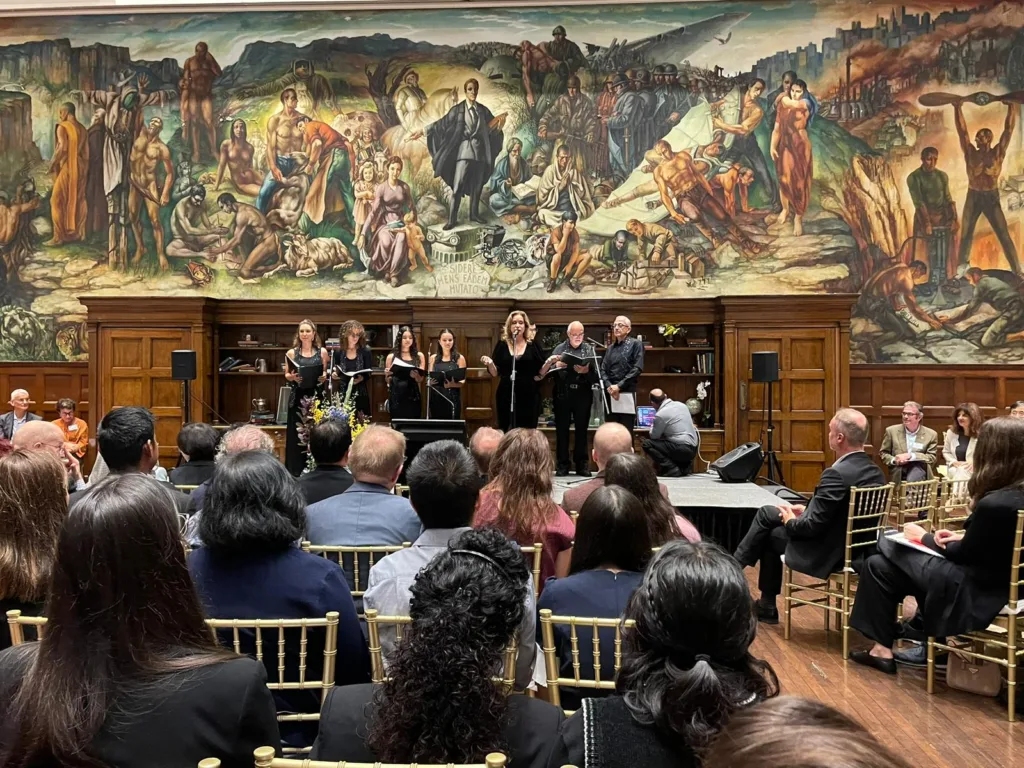
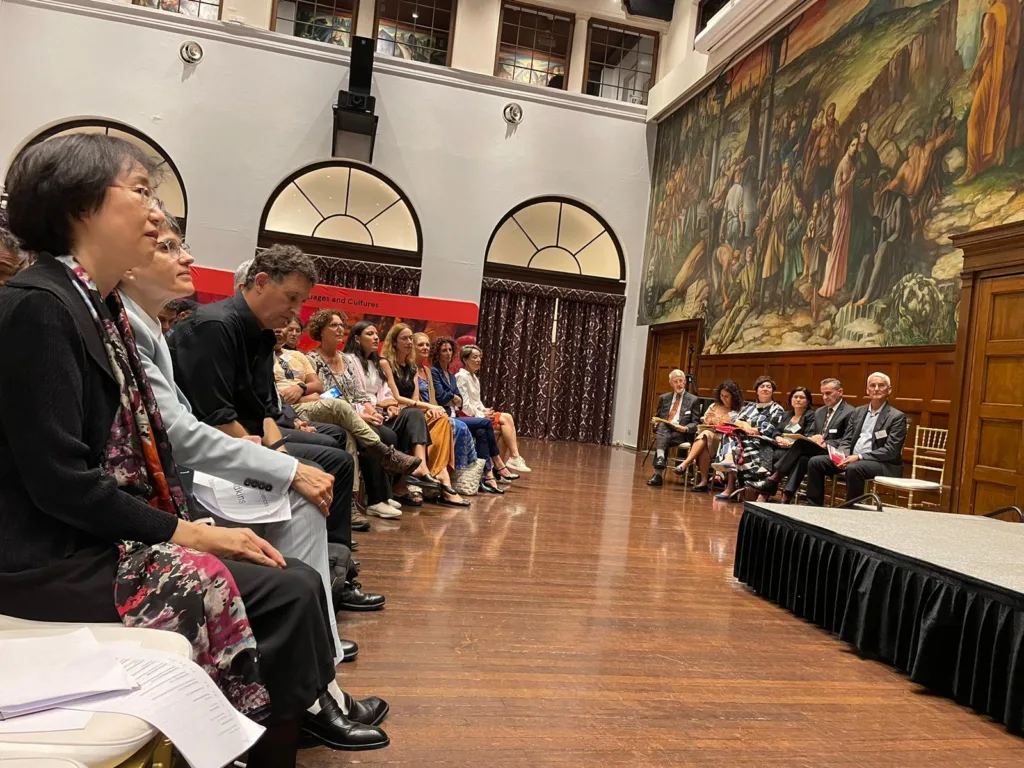
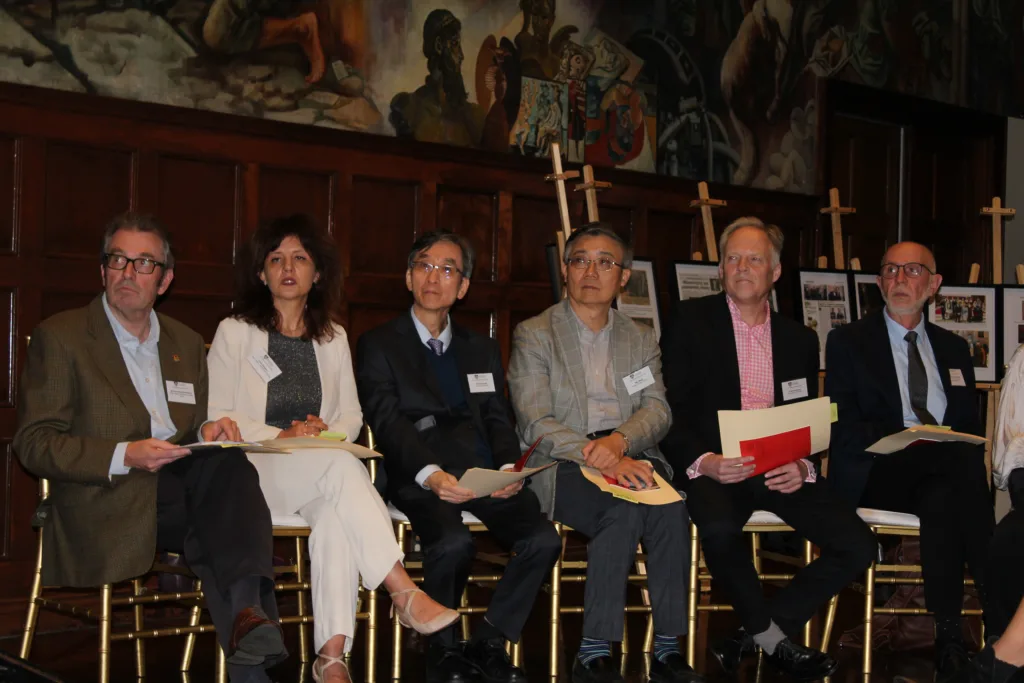
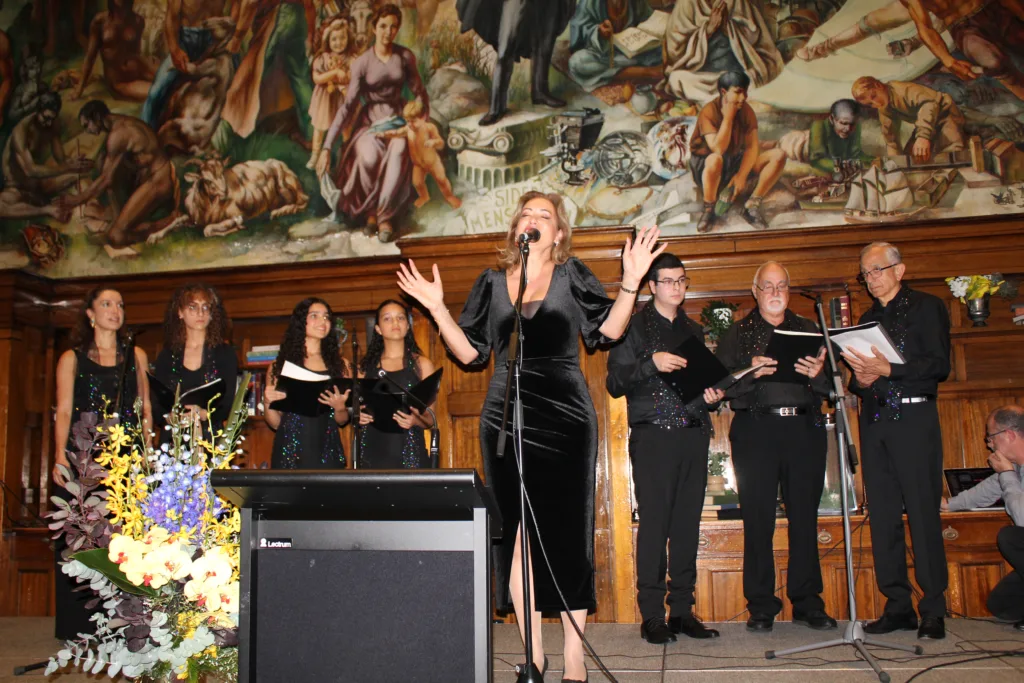
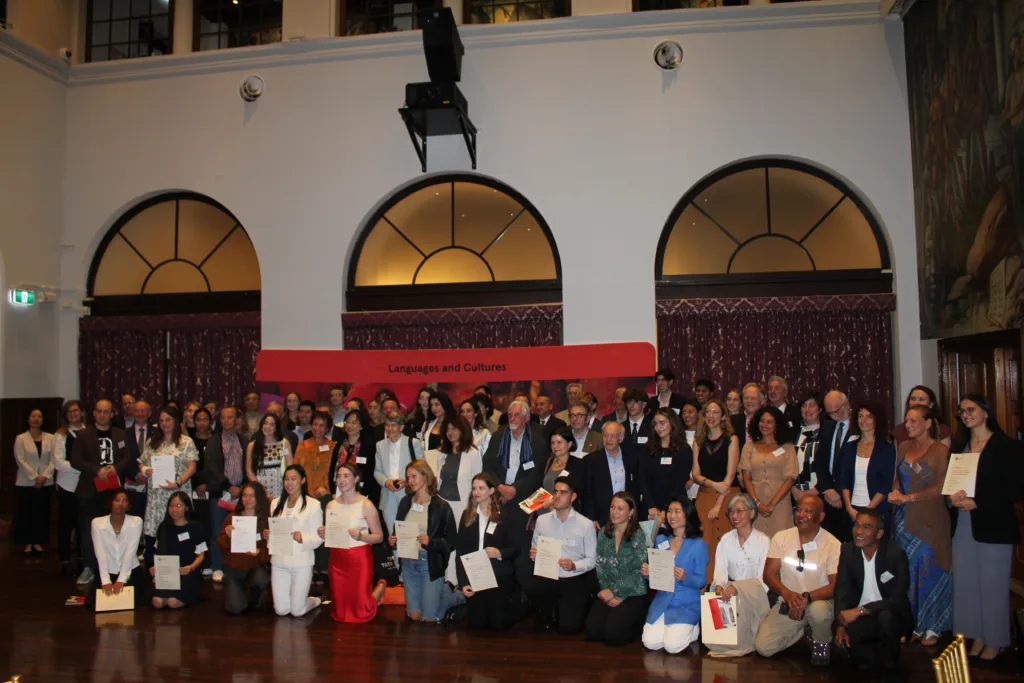
The University of Sydney’s (USYD) School of Languages and Cultures held its annual Awards Ceremony on Thursday, April 18 at the Holme Building.
More than 50 students from across the School, including the Department of Modern Greek and Byzantine Studies, were recognised on the night for their achievements in their selected language courses.
All photos copyright The Greek Herald / Andriana Simos.
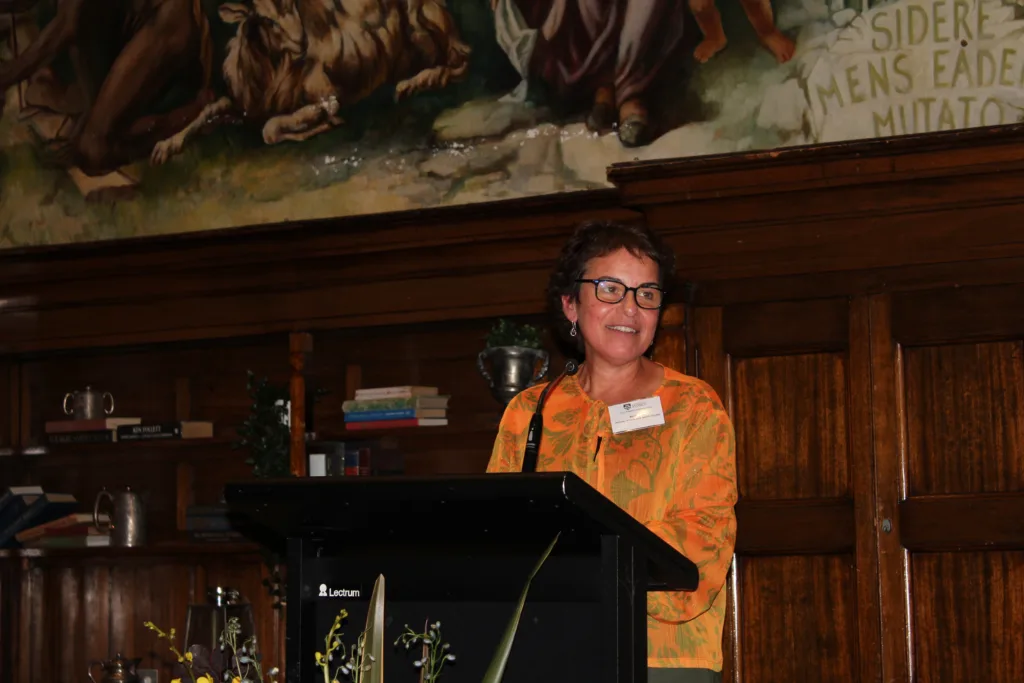
The event kicked off at 6pm sharp with Associate Professor Avril Alba from Hebrew, Biblical and Jewish Studies as Mistress of Ceremonies. Aunty Joan Bell was invited to give a Welcome to Country, and this was followed by the Dean’s Welcome from Professor Lisa Adkins and the Head of School Welcome from Professor Yixu Lu.
Performances by the Andalous Arabic Choir under instruction by Ghada Daher-Elmoh also took place throughout the night.
Associate Professor Avril Alba.Andalous Arabic Choir.
The highlight of the event was the awards presentation for students studying languages such as Arabic, Chinese, French, Italian, Indonesian and Modern Greek.
In Italian Studies, Matthew Platakos was awarded the Beatrice Moran Memorial Prize in Third Year Italian.
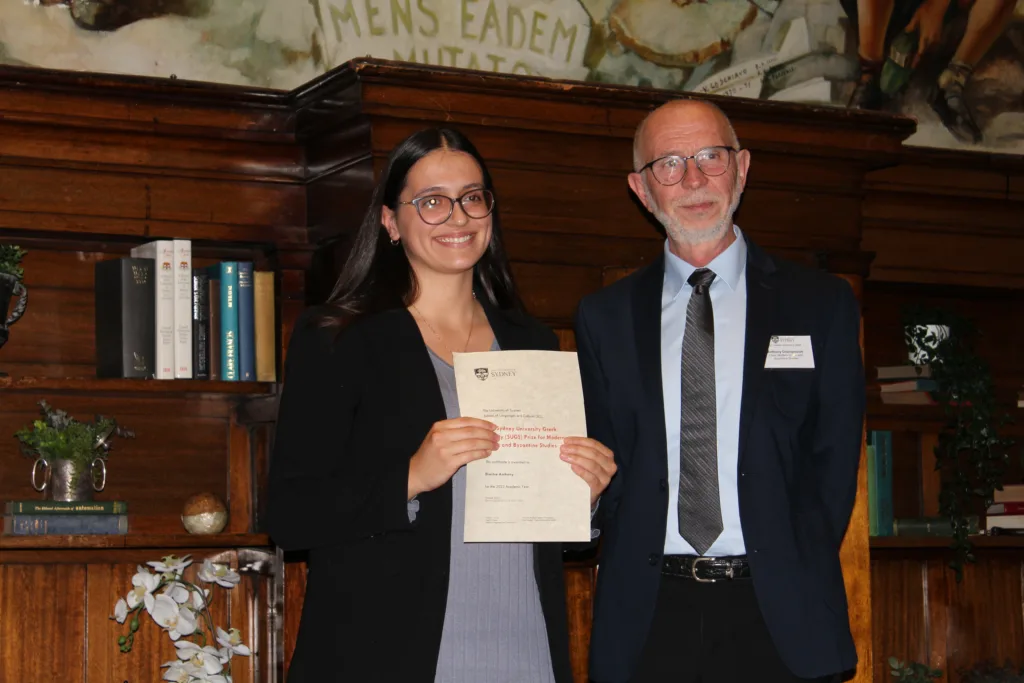
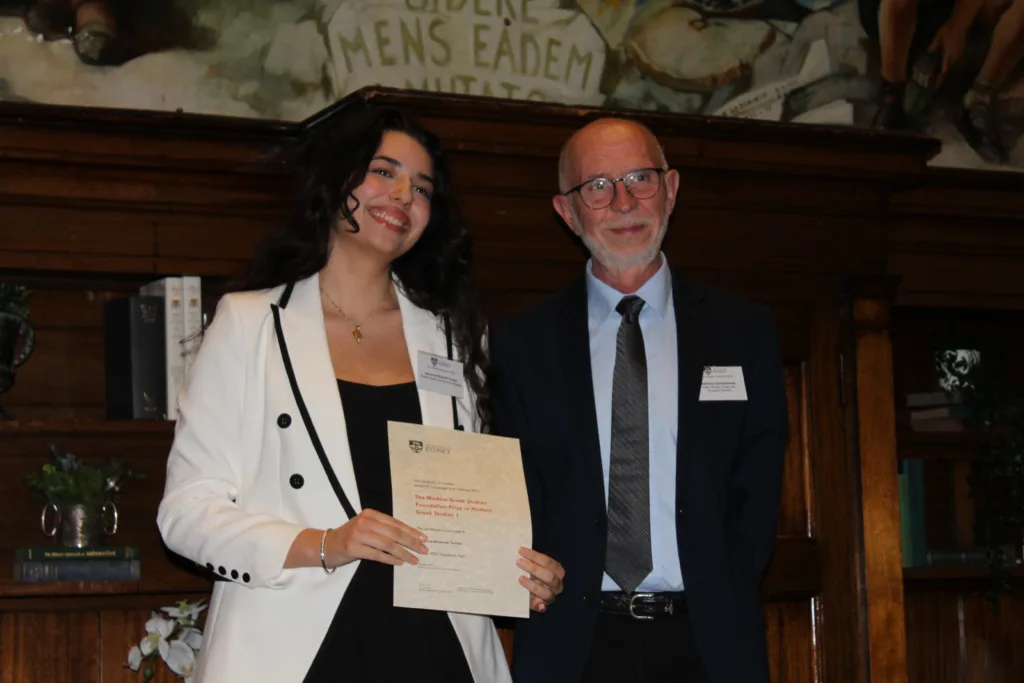
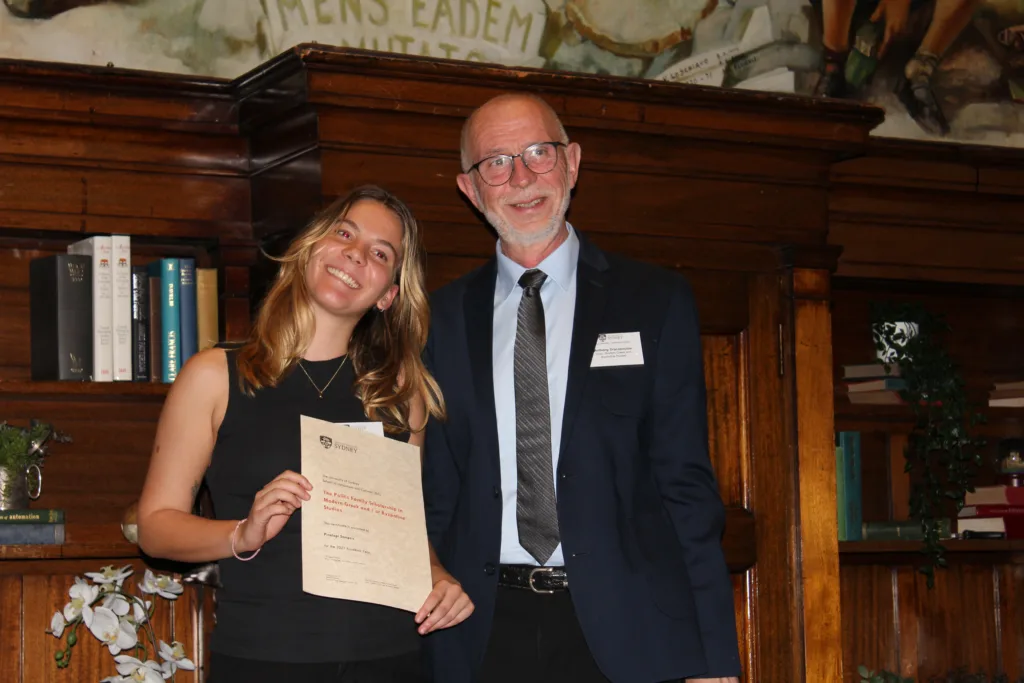
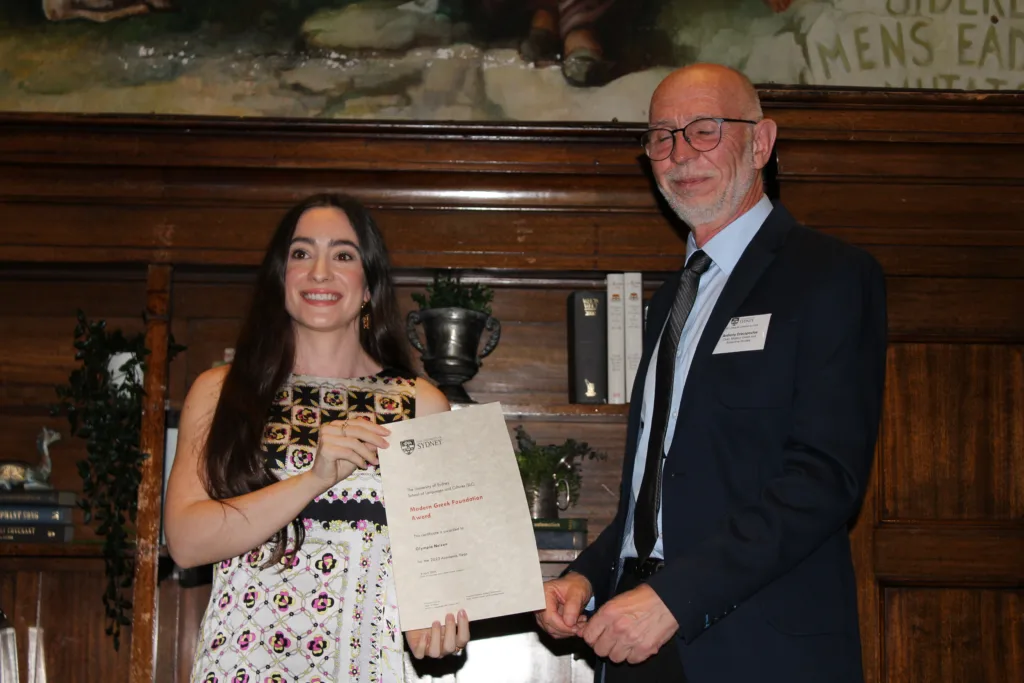
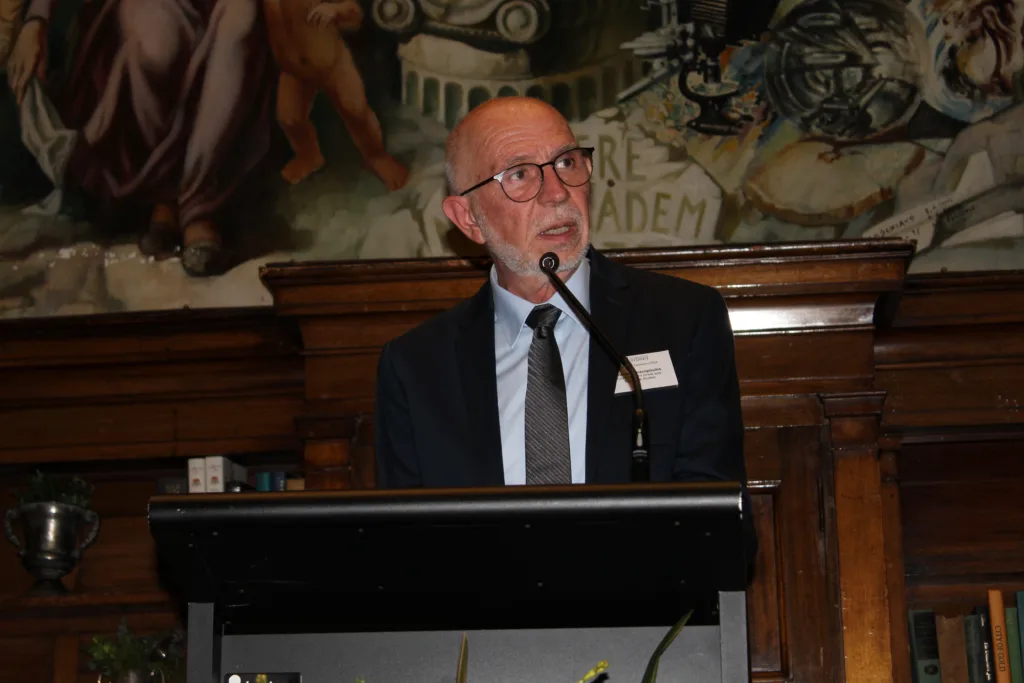
Eight awards for the Department of Modern Greek and Byzantine Studies were also presented by Associate Professor Anthony Dracopoulos. The award recipients were:
Modern Greek Foundation Award: Olympia Nelson.
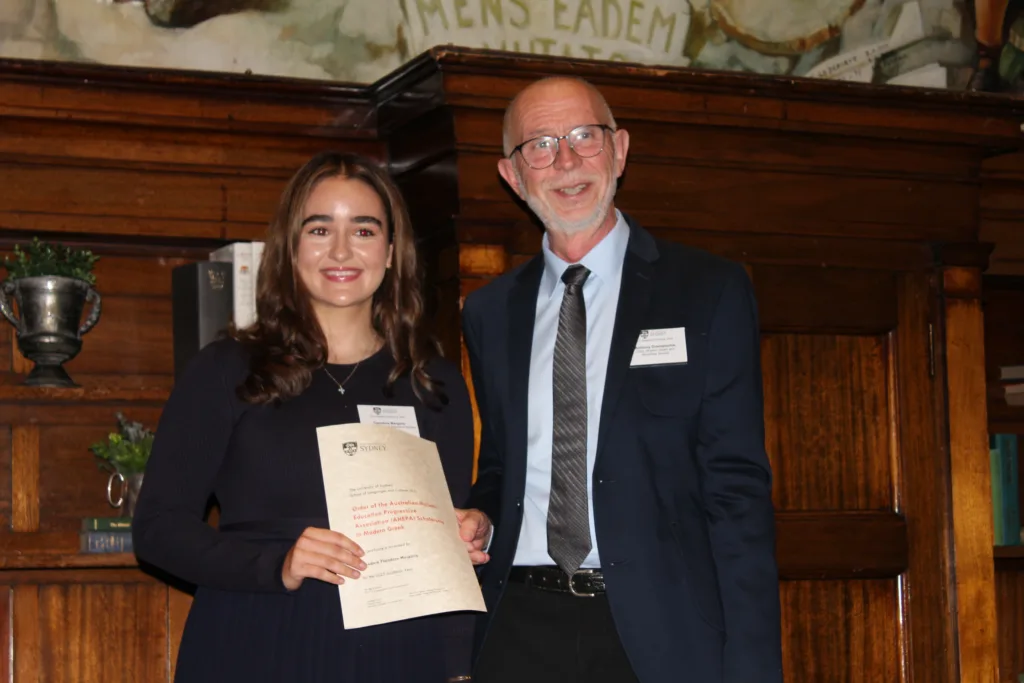
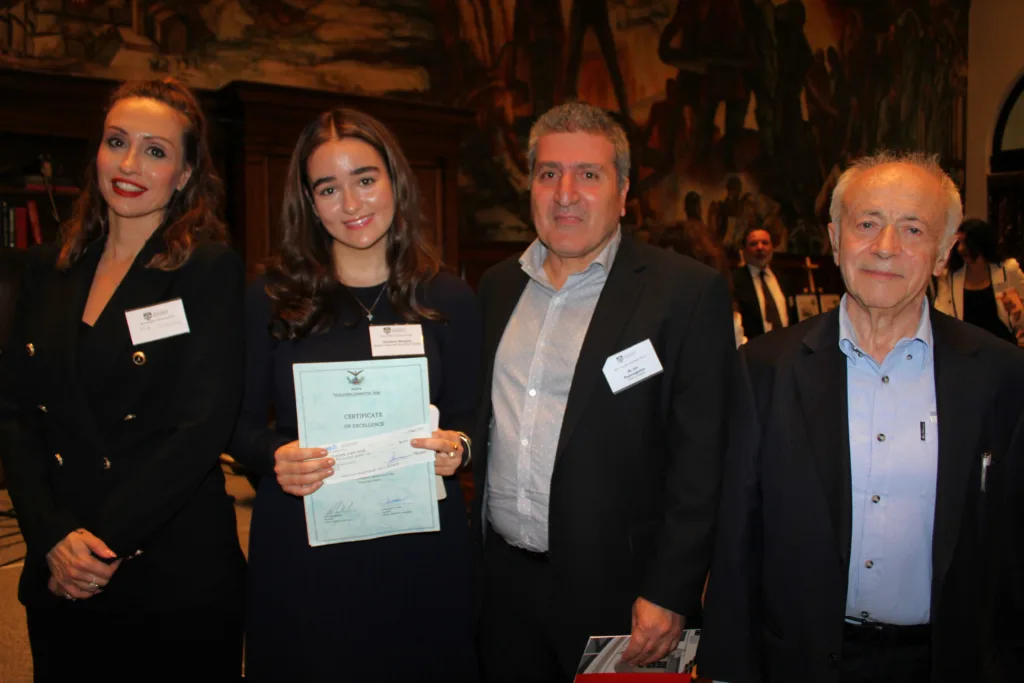
Order of AHEPA Scholarship in Modern Greek: Theodora Margaris.
Robert William Henderson Memorial Prize: Anargyros Kallos.
The Modern Greek Studies Foundation Prize in Modern Greek Studies 1: Savvina-Elisavet Turner.
The Modern Greek Studies Foundation Prize in Modern Greek Studies 2: Stavroula Nterzoti.
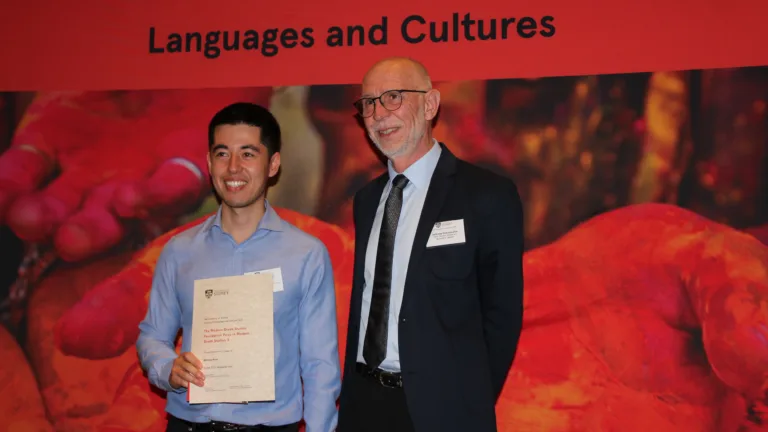
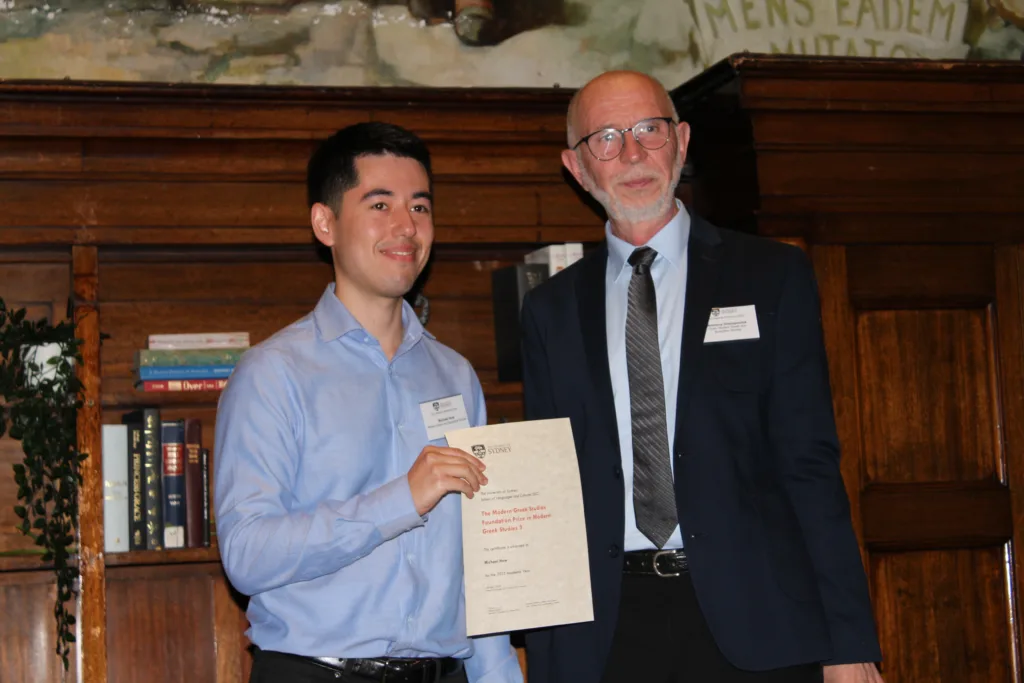
The Modern Greek Studies Foundation Prize in Modern Greek Studies 3: Michael How.
The Politis Family Scholarship in Modern Greek and/or Byzantine Studies: Pinelopi Sempsis.
The Sydney University Greek Society (SUGS) Prize for Modern Greek and Byzantine Studies: Dimitra Anthony.
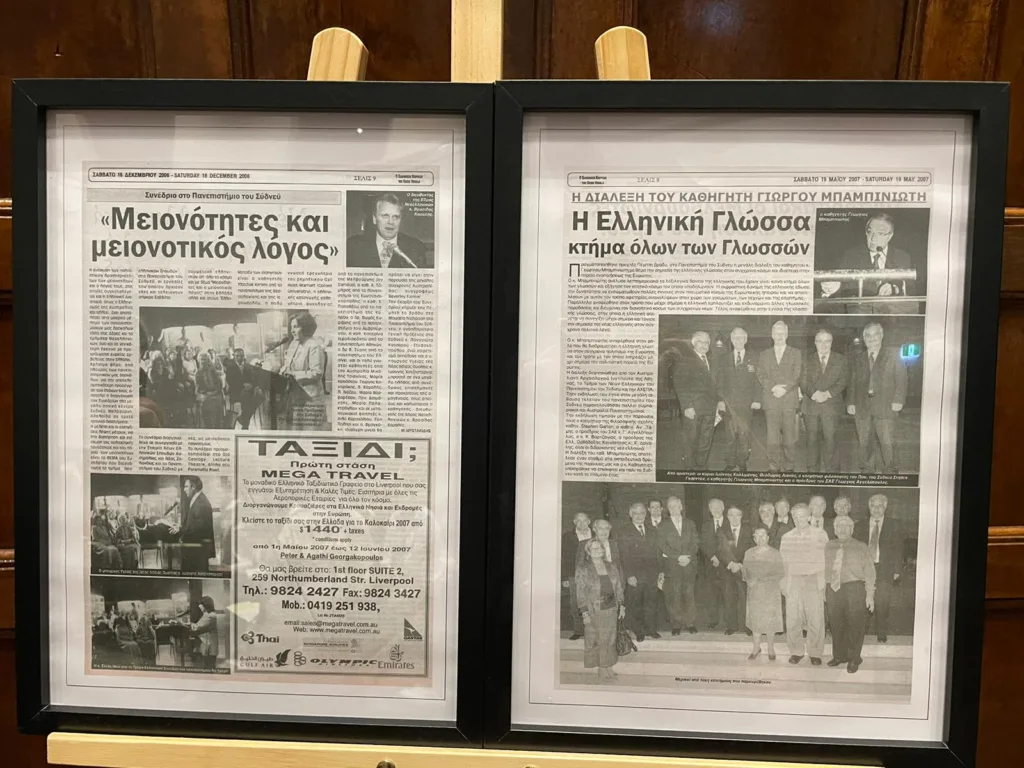
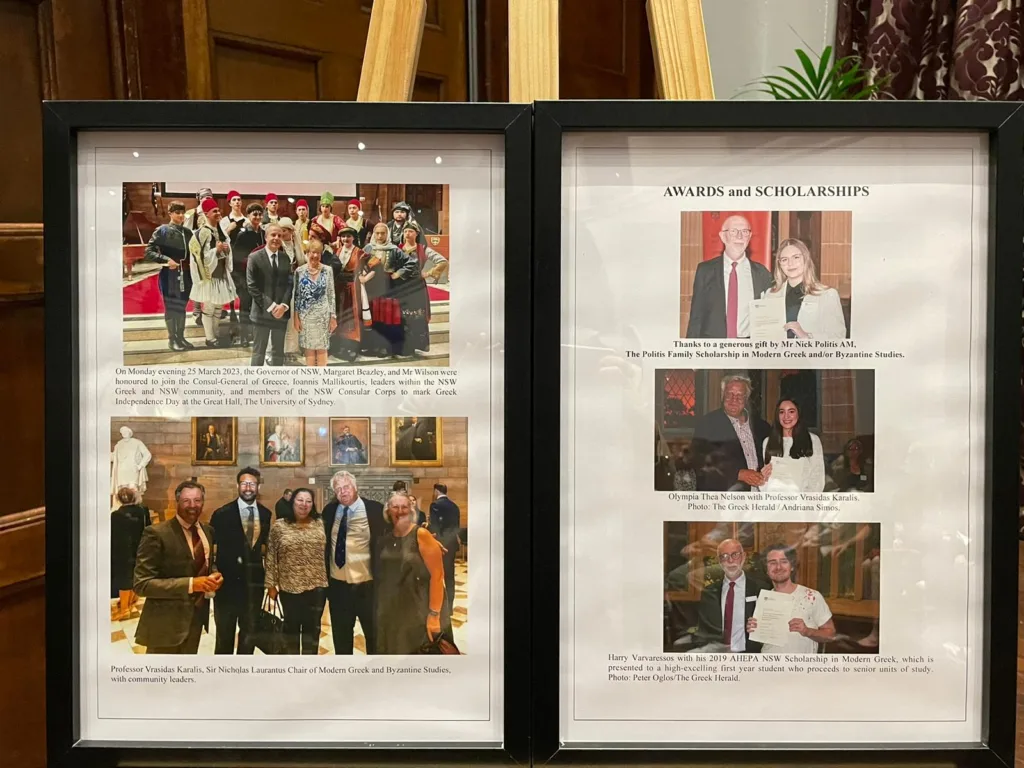
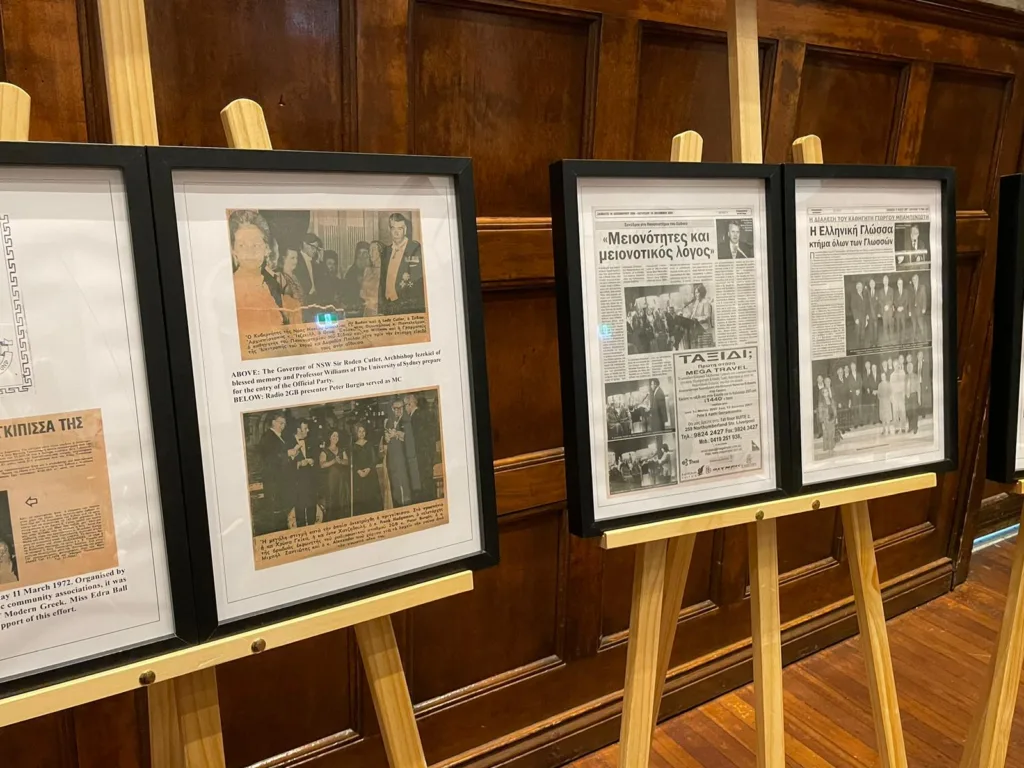
Dr Dracopoulos congratulated all the students for their achievements and spoke about how the Department of Modern Greek celebrates its 50th anniversary this year. He also pointed to a small display of archived photos and news articles from newspapers such as The Greek Herald, which showcased the 50-year history of the Department and was organised by Dr Panayiotis Diamadis.
Associate Professor Anthony Dracopoulos.
After the presentation ceremony, 18-year-old awardee Theodora Margaris spoke to The Greek Herald and said she decided to study the Greek language because it is an “integral part” of her life.
“It [the Greek language] is something I never want to lose. It’s so important. It has taught me so much about myself, about my culture, about the way I interact with people. I really treasure Greek and it’s been a passion. I am so passionate about the language,” Theodora said, whilst encouraging others to study a language.
Theodora Margaris (left) with Associate Professor Anthony Dracopoulos.
Michael How, who studies Medicine at the University of Sydney and has Greek Singaporean heritage, also said he was honoured to be awarded The Modern Greek Studies Foundation Prize in Modern Greek Studies 3.
“The Greek language is an important part of my heritage and culture and I wanted to be able to communicate better with relatives and just generally, people in Greece and the Greek community in Australia,” Michael told The Greek Herald.
“I think studying a different language opens your eyes to a different way of thinking which is really personally rewarding and enriching.”
Michael How.
At the conclusion of all formal proceedings, refreshments were served as students mingled and congratulated each other on their achievements.
*All photos copyright: The Greek Herald / Andriana Simos.
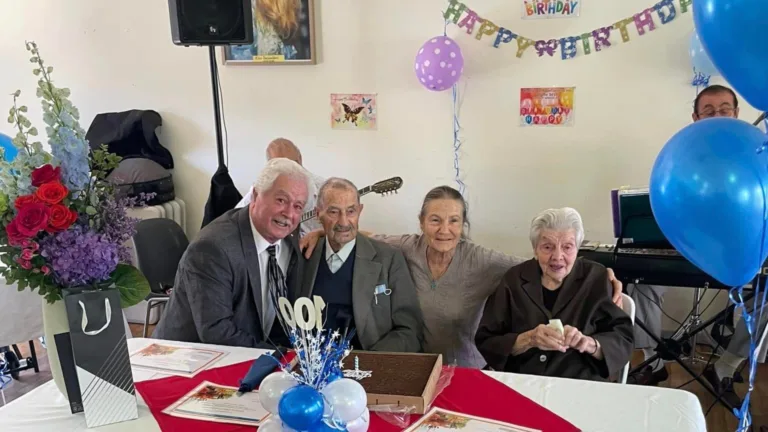
Hristos is a resident at the Ridleyton Greek Home for the Aged, which is owned by the GOCSA.
On the day, Hristos was joined by many of his family members and friends to celebrate his birthday. His wife, Georgia, also celebrated her 98th birthday a few days later.
In a post on Facebook by the GOCSA, the couple were seen sitting behind a table with Happy Birthday banners, surrounded by flowers and blowing out candles.
They were also sent many well wishes by members of the local Greek community.
“Happy Centenary Birthday Hristo and Happy 98th Georgia,” the post read.
A free public lecture, ‘In Their Own Image:A History of the Hellenic Presence in Australia, 1810s to Present‘ by Macquarie University’s Leonard Janiszewski and Effy Alexakis will be presented this month in Melbourne.
It will take place on Wednesday, 24 April, at Wheelers Hill library at 2pm.
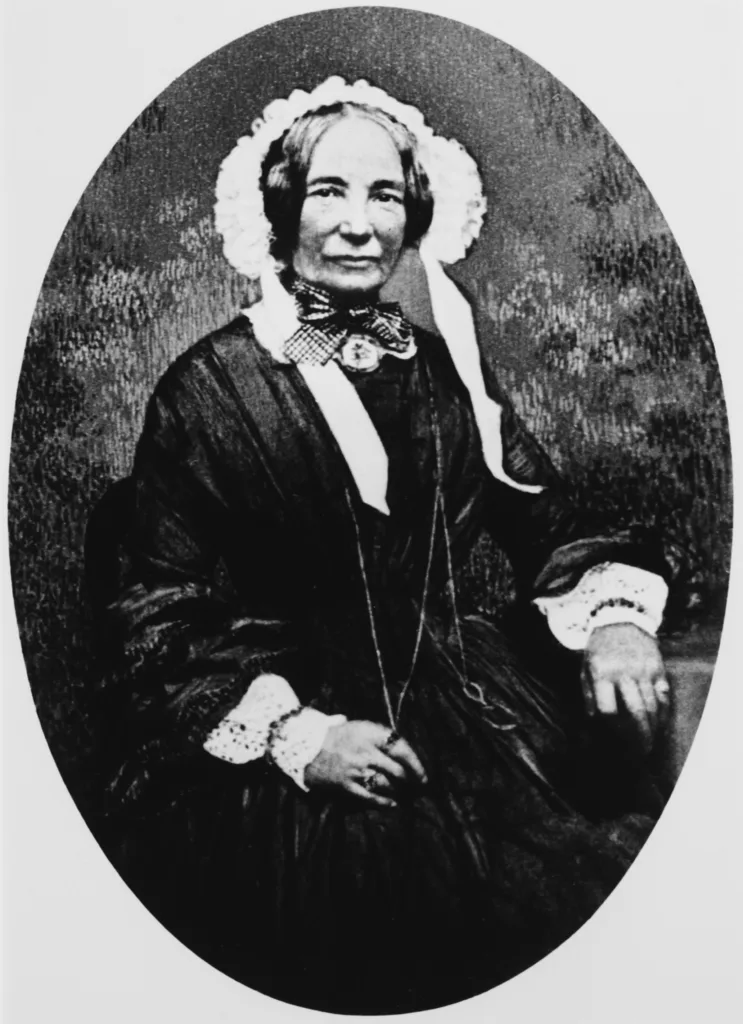
Katherine Crummer (nee Aikaterini Georgia Plessos). Photo: R. and P. Crummer, copied from the original daguerreotype, from the ‘In Their Own Image: Greek-Australians’ National Project Archives, Sydney.
The lecture will chronicle the depth and diversity of Australia’s Greek presence over the last 200 years.
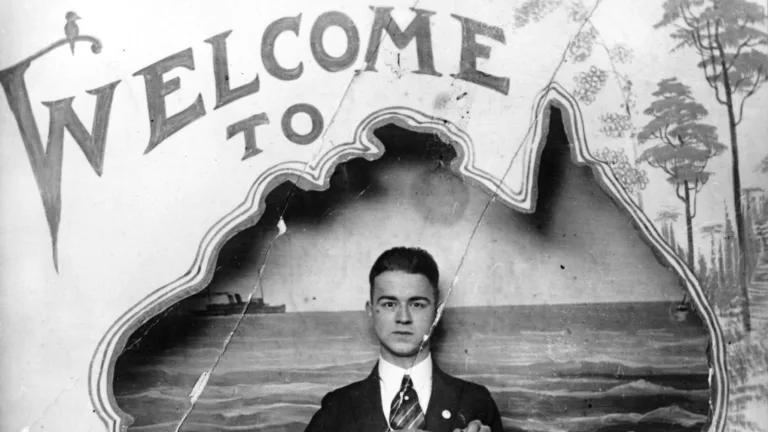
We may never know who the first Greek to set foot on Australian soil was – as in Homer’s Odyssey, memory and myth have become one. However, in the early 1800s, Antipodean shores beckoned, gently at first – tentative ripples carrying the convicted, the adventurous and those desirous of new beginnings.
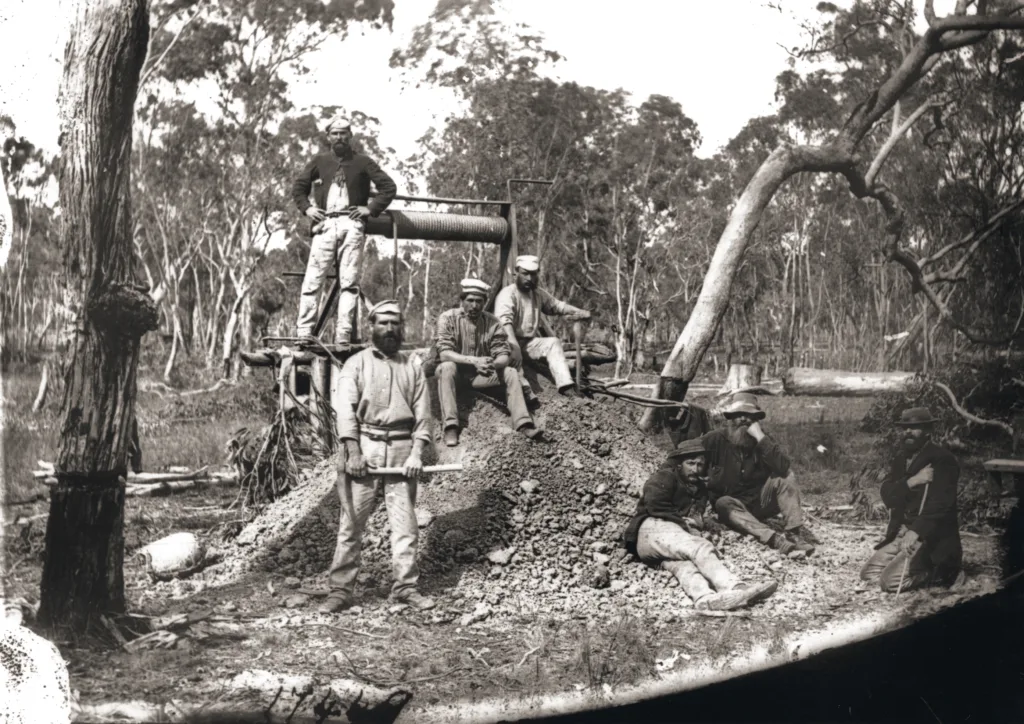
Jeremiah Williams (gerasimos Vasilakis) and fellow miners at a mine-head Hill End – Tambaroora, NSW, early 1870s. Photo: Holtermann Collection, State Library of NSW, from the ‘In Their Own Image: Greek-Australians’ National Project Archives, Sydney.
By the 1850s the gentle ripples of Australia’s early Greek presence surrendered to the first real wave of Greek migration – gold swiftly sweeping away the ‘tyranny of distance’ and the uncertainty of economic opportunities upon arrival. The first collective Greek settlements arose and ‘chain migration’ stimulated. In the 1890s, formal Greek communities were established in Melbourne and Sydney. By 1939, some 15,000 people of Greek heritage resided in the country. Following World War II, a larger, rapid and fiercer human inundation occurred: mass migration.
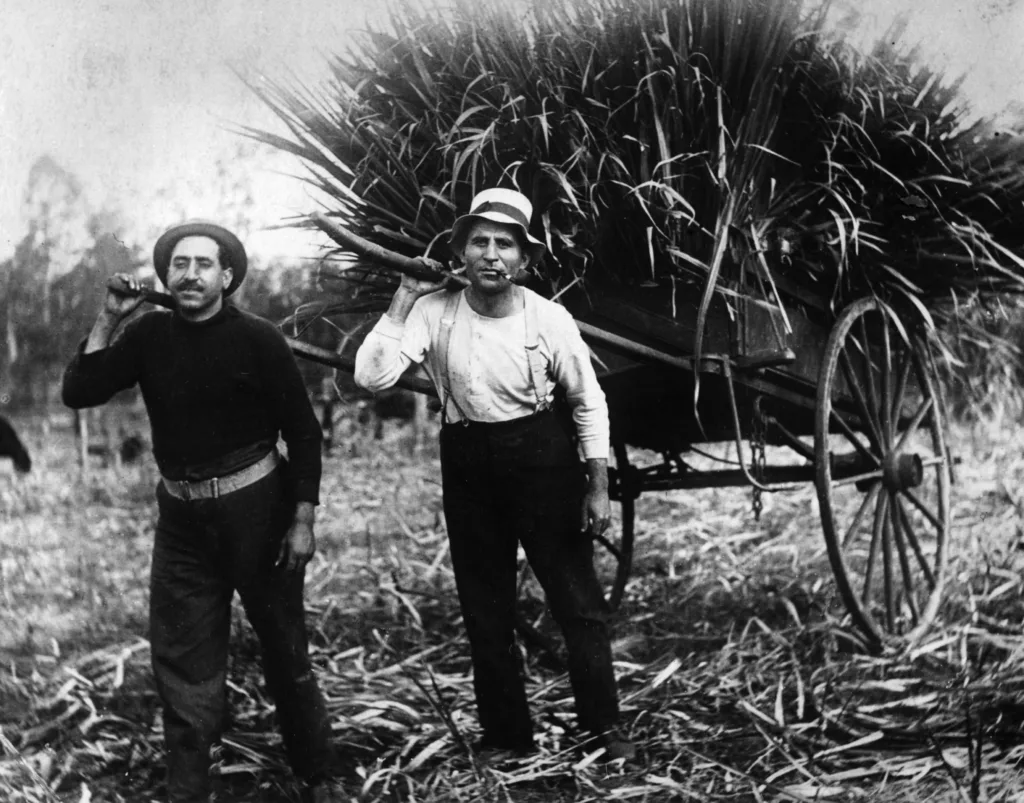
Greek sugarcane cutters
Childers, Qld, c. 1917. Photo: B. Comino, from the ‘In Their Own Image: Greek-Australians’ National Project Archives, Sydney.
Between 1953 and 1956, almost 30,000 Greeks arrived in Australia – well over half were assisted migrants who were initially placed in ‘migrant camps’. ‘Bride ships’ brought over large numbers of single Greek women. Between 1947 and the early 1980s, some 250,000 Greeks arrived in Australia. This included those Greek-Cypriots fleeing the 1974 invasion by Turkey. More recently, since the onset of the Greek economic crisis in 2008, Australia has again become a major destination for Greek migration, particularly to Melbourne.
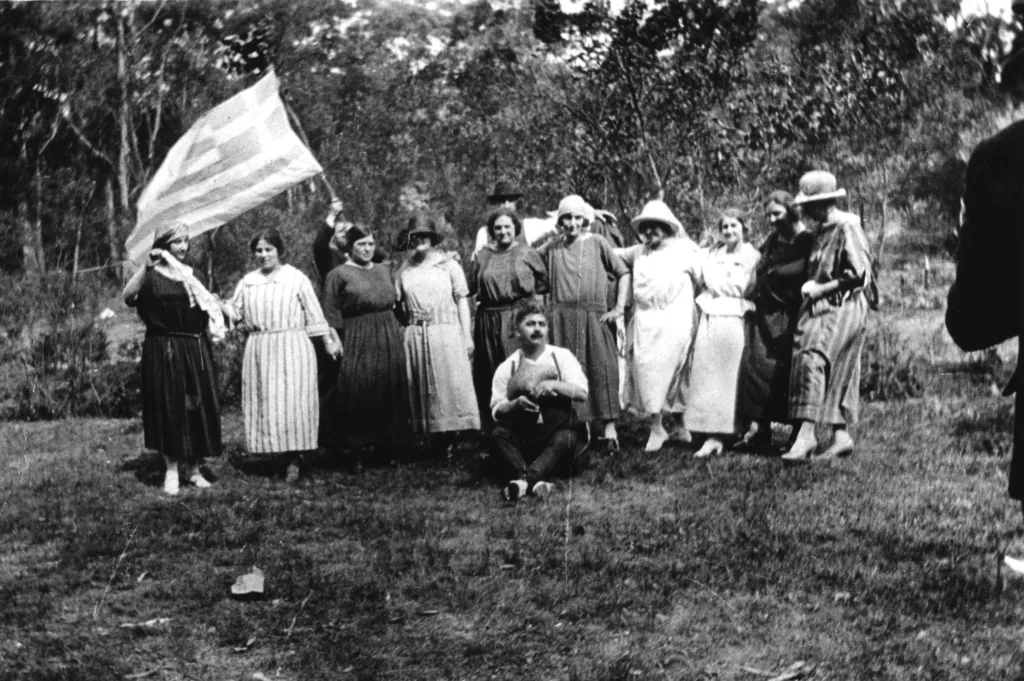
Greek women dancing at a picnic at the Clifton Gardens, Sydney, NSW, 1923. Photo: T. Notaras, from the ‘In Their Own Image: Greek-Australians’ National Project Archives, Sydney.
Australia’s contemporary Greek community, including those of Greek descent, ranges in estimates from 500,000 to 700,000. As Janiszewski’s and Alexakis’ presentation will confidently highlight, it is a community that is as diverse within itself, as the multicultural Australian society in which it exists.
Mary Coustas, actor/comedian in Sydney, NSW. Photo: Effy Alexakis, from the ‘In Their Own Image: Greek-Australians’ National Project Archives, Sydney.
Event Details:
WHAT: ‘In Their Own Image: A History of the Hellenic Presence in Australia, 1810s to Present’ lecture
WHEN: Wednesday, 24 April 2024
WHERE: Wheelers Hill Library, 860 Ferntree Gully Road, Wheelers Hill, Victoria, 3150
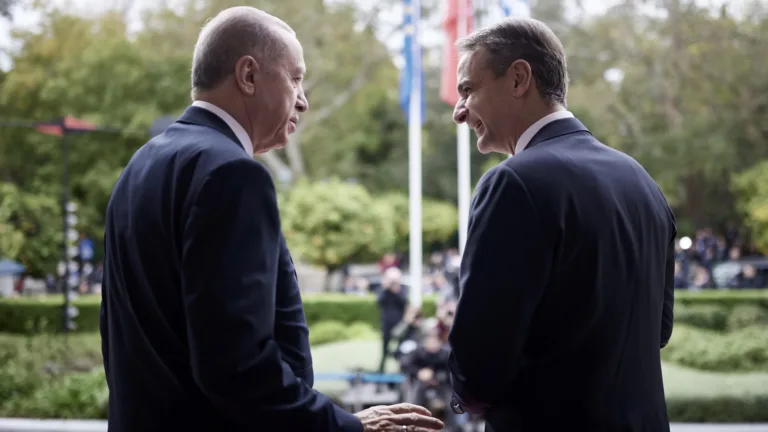
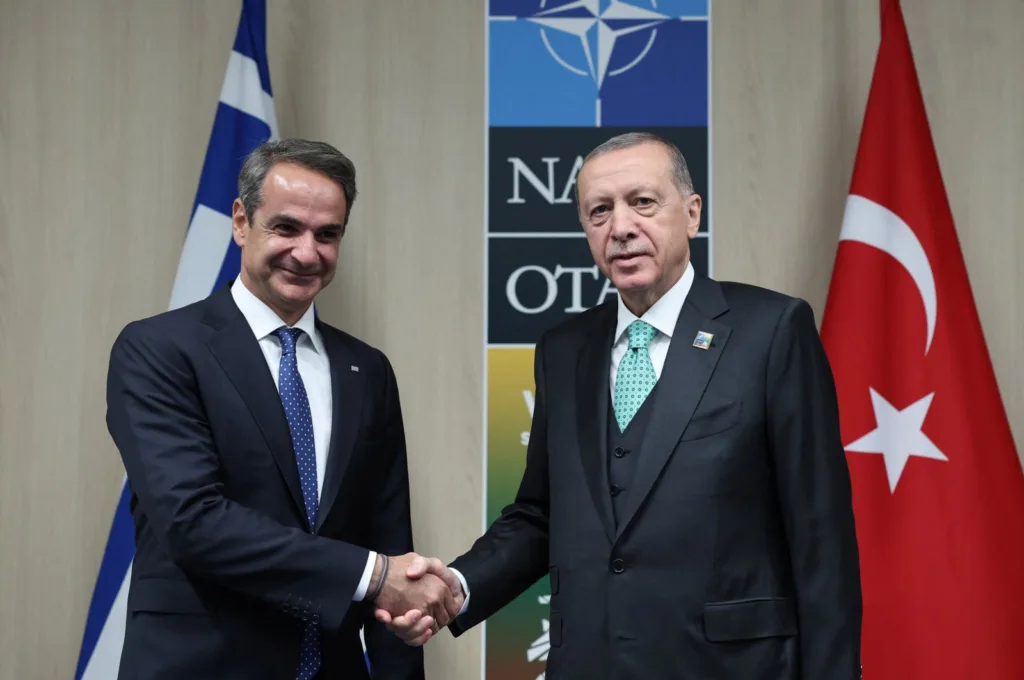
Greek Prime Minister Kyriakos Mitsotakis has revealed that he will meet with his Turkish counterpart, President Recep Tayyip Erdogan on May 13 in Ankara.
The last time the Greek and Turkish leaders met was in December 2023, in Athens.
Ekathimerini revealed that following the end of the European summit in Brussels, and after announcing the date for him to visit Ankara, he claimed Turkey’s reaction to Greece’s declaration on the creation of marine environmental parks in the Aegean Sea was completely unjustified.
Mitsotakis and Erdogan also met at the NATO leaders Summit in July last year. Photo: Daily Sabah.
“Greece exercises its sovereign rights in the Aegean Sea on the basis of international law and the law of the sea and I am impressed by this completely unjustified reaction of Turkey to an initiative, which ultimately has an environmental characteristic,” Mitsotakis said.
He stated that he doesn’t believe the improvement in Greek-Turkish relations means that Turkey’s positions regarding maritime zones have changed.
When asked about the conclusions of the summit on Euro-Turkish relations, Mitsotakis emphasised that they are satisfactory for both Greece and Cyprus and are in line with previous European Council decisions that outline the potential for how we EU-Turkish relations can improve.
Mitsotakis also highlighted the focus on preventing an escalation of the conflict amidst the new crisis in the Middle East
“I think it is extremely important that the text of the conclusions also refers to the situation in Gaza,” Mitsotakis said.
“The crisis is such that it requires an immediate ceasefire.”
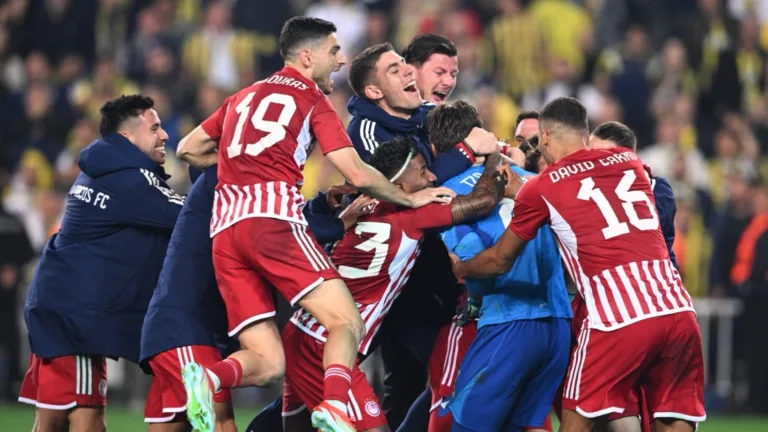
Olympiacos FC outlasted Fenerbahçe in Istanbul to qualify for the first time in the semi-finals of the Europa Conference League tournament, pulling away 3-2 in a penalty shootout (3-3 aggregate score).
The score during regulation time was 1-0 in favour of the Turkish home team.
Olympiacos won the first leg match 3-2 at its Karaiskakis Stadium after first going up 3-0 midway in the second half.
The Greek team’s goalkeeper, Kostas Tzolakis, was the “Man of the Match”, blocking three penalty kicks by Fenerbahce players.
Olympiacos will now face Premier League side Aston Villa in early May, with the first match at Birmingham’s Villa Park on May 2, followed by the second leg at Karaiskakis on May 9.
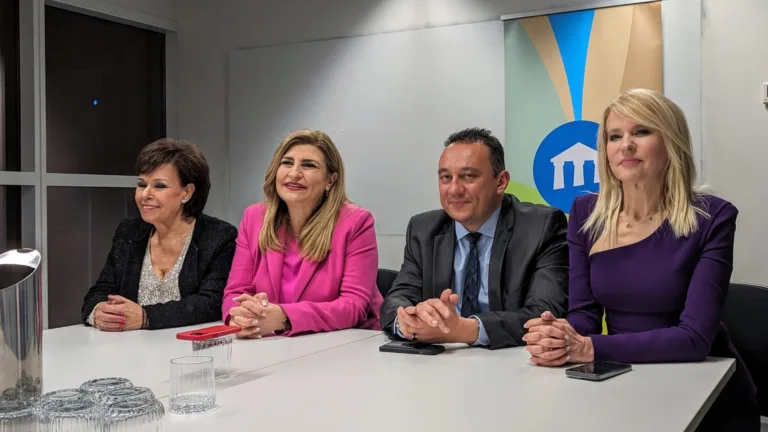
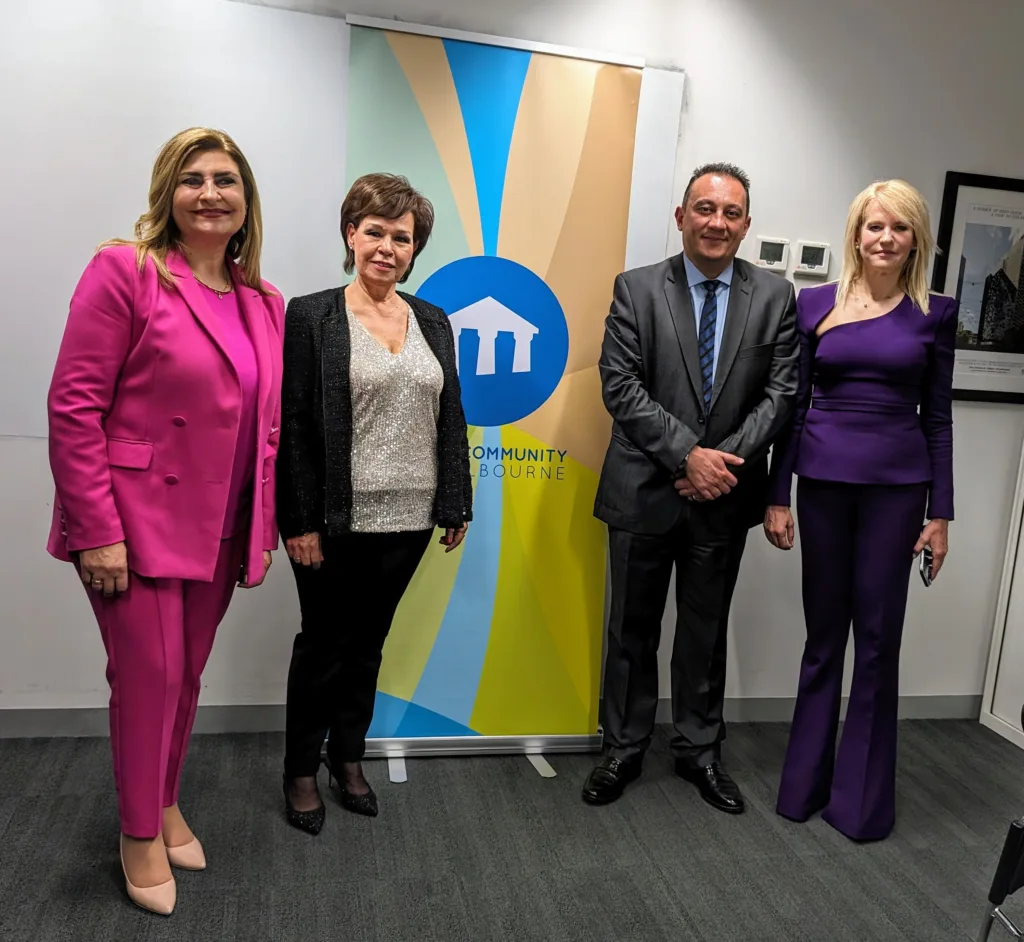
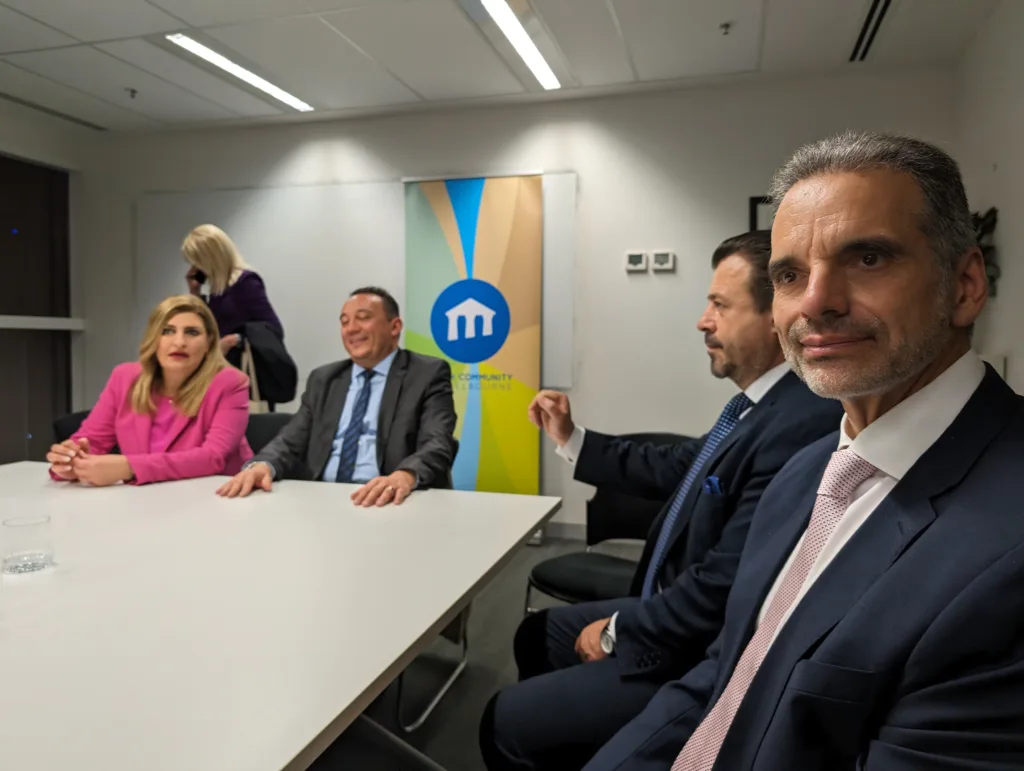
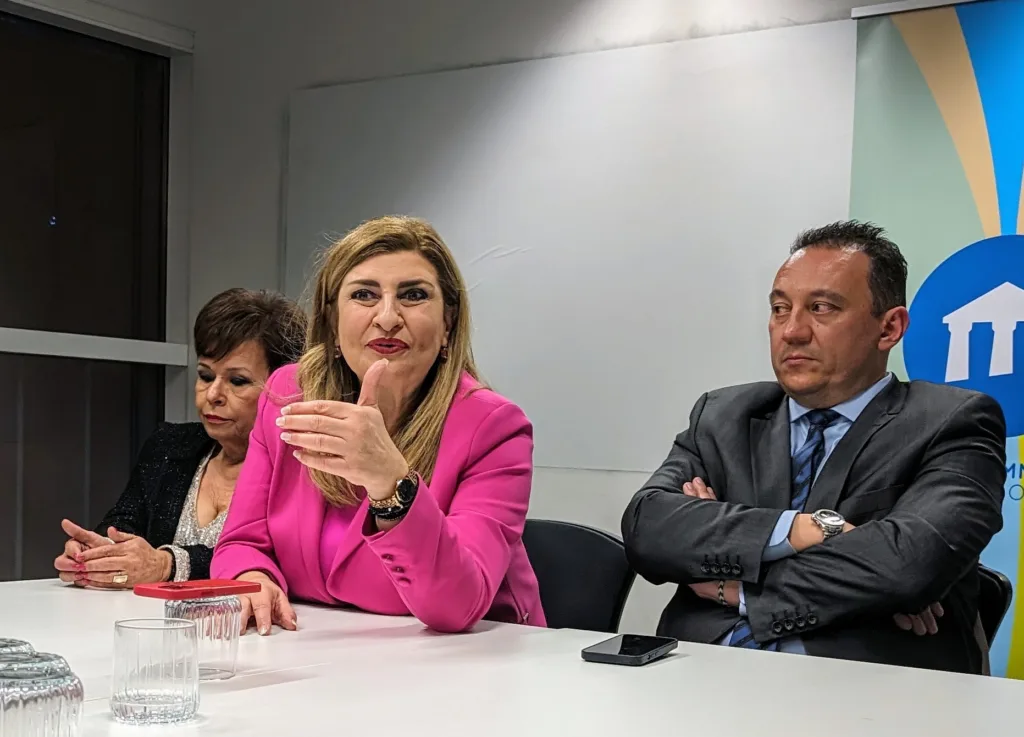
Four representatives of the Special Permanent Committee on Greeks Abroad (consisting of 31 MPs) said they came “to listen” to the Australian diaspora. In their meeting with local journalists at Melbourne’s Greek Centre following a reception held in their honour last week, they had a lot to say.
They shared their views on several issues, doing their best to appease the Greek Australian diaspora, overlooked with much of Greece’s focus being on America’s Greeks. As a result, there is no Double Taxation Agreement between Greece and Australia, no Greek National Tourism Organisation, and no real understanding of the unique needs of Australia’s Greek language learners.
Here are some of the issues, the visiting parliamentarians touched upon:
Postal vote
Out of the estimated 700,000 Greeks in Australia, only around 500 have registered to vote. Former Foreign Minister for Greeks Abroad Constantinos Vlassis said, “You should advertise it so that the true strength of Greece is shown.”
Radical left SYRIZA member Theodora Tzakri said her party had voted against the legislation due to an amendment made, however conservative New Democracy party member Asimina Skondra said, “you could vote against the amendment but still support the legislation.”
Both Ms Tzakri and Evangelia Liakousi, socialist PASOK-KINAL member, pointed to a data breach by Anna-Michelle Asimakopoulou regarding emails that had come from Nikos Theodoropoulos, New Democracy’s secretary for diaspora affairs. The breached data did not include tax or social insurance numbers, but overseas voters may have been alarmed by this.
“What is the motivation for Greeks to vote? We need to look at this even though it is unpleasant,” Ms Liakousi said. “Do we want them to come once a year, once every two years? Do we want them to have homes and property in Greece? Do we want them to vote in Greece? All factions need to be clear on this.”
Ms Skondra said, “We don’t just want the diaspora for their vote or to support us. We believe they are an irrevocable part of Hellenism. You support Greece, you support your people, you support the place where you vote… Your heart beats Greek.”
Double Taxation Agreement
The lack of a Double Taxation Agreement means that Greeks in Australia are taxed twice, with expatriates seeing their investments shrink as two tax offices get a slice of the pie.
Dr Vlassis said “You need two to tango when it comes to a treaty,” but local journalists informed him of the Australian government’s stance that the delay was coming from Greece.
Ms Tzakri spoke of her discussions for a Double Taxation Agreement with the former Australian Ambassador to Greece, Arthur Spyrou.
“It needs to pass swiftly,” she said. “Each state has to create its own rules, but it needs to proceed. We can’t just say Melbourne is the third largest Greek speaking country in the world. This needs to be supported by infrastructure.”
Ms Liakousi pointed to the importance of documenting the number of language speakers. Not just the constantly dwindling number of Year 12 students learning Greek, but all ages, before creating a strategy.
They both praised the language level of Greeks they had met during their visit. Ms Tzakri said there was a “respectable foundation” for language learning thanks to the Greek Australian colleges and schools. She pointed to a system in the United States, where Greek language is popular due to the credit point system – a motivator for students to get into universities – and suggested this for Australia.
Ms Tzakri encouraged the use of the Greek Centre for Language Learning in Thessaloniki as a resource, but did not delve into why this is not being utilised by teachers. She said that those who studied Greek at a university level should be used by the local system as opposed to bringing teachers to Australia from Greece.
Ms Skondra said “language is something we must focus on” before unveiling a plan to encourage foreign universities to open branches in Greece. She pointed to the benefits for Greek students who are going abroad for tertiary studies.
None of the visiting parliamentarians had heard of Pharos, the Modern Greek Teachers Association of Victoria, and efforts being made to preserve the language.
Brain Drain
Ms Tzakri said she was “amazed” by the brain drain in the medical profession, but Dr Vlassis said Greece always had an oversupply of doctors and is still supplied well by the medical profession.
All Parliamentarians pointed to the 1,500-euro per month wage received by doctors as a disincentive. Ms Skondra’s daughter, a medical professional, had been asked to leave Greece to practice in Switzerland for 12,000 euros a month and other perks.
Ms Skondra said two types of migrants left during the brain drain: those who were really struggling, and those who could have stayed with less but wanted a higher standard of living.
In that regard, Ms Liakousi shared the story of her eldest nephew who went to Germany and whom she encouraged to stay where he was.
“For someone to come back we need better conditions,” Ms Tzakri said, pointing to Greece being the second-last country in the EU27 per capita in GDP, sliding in just above Bulgaria.
Dr Vlassis pointed to hope for the future through incentives such as the creation of a pharmaceutical hub in Tripoli as investments of 180 million euros are planned, creating more than 1,000 new direct jobs.
Dr Vlassis said Australia was not desirable to Greek staff paid their local wages due to its high cost of living. The Supreme Court decreed wages cannot be increased.
“There are electronic procedures that did not exist before,” Dr Vlassis said. “The Consul General is operating as a registrar, cutting through bureaucracy.”
Ms Tzakri agreed that digitisation of services is the solution, while Ms Liakousi said “consuls are images of our country to the outside” and urged for more efforts to help.
Greek National Tourism Organisation
Once again, Greek officials have given a promise for a Greek National Tourism Office (GNTO) to open in Australia. Ms Liakousi admitted she had read numerous articles about the opening of the office over the last five years, whereas Ms Skondra stated surprise that there wasn’t one yet bearing in mind the Greek Community’s offering of a space at the Greek Centre free of charge to the Greek government.
Dr Vlassis said he spoke with Tourism Minister Olga Kefalogianni and she had agreed to a person at this office on a three-year contract. This would bring an open issue since 1954 to a halt.
The parliamentarians said the dialogue with Australia’s Greek diaspora is ongoing. Their visit was to start a dialogue and invited diasporans to get in touch with the Special Permanent Committee of Greeks Abroad at any time.