Australian activist Drew Pavlou says he helped draw global attention to the plight of the Iran women’s national football team after Donald Trump shared one of his social media posts about the players’ situation in Australia.
“I was extraordinarily delighted and shocked to see that the president shared my post and he called up Prime Minister Anthony Albanese at 2 am,” Pavlou told Sky News host Sharri Markson.
“He requested that the Australian government protect these players, and look, I’m just absolutely delighted.”
The Iranian team had travelled to Australia for the AFC Women’s Asian Cup but faced uncertainty about returning home after refusing to sing Iran’s national anthem in their opening match, shortly after US and Israeli airstrikes hit Iran.
The silent protest sparked anger in state media, where a presenter said: “traitors during wartime should be dealt with more severely.”
Police officers clear the road as Iran’s women footballers leave their Gold Coast hotel. Photo: Patrick Hamilton / AFP / Getty Images.
As the team exited the tournament following a 2–0 loss to the Philippines women’s national football team, some players began exploring options to remain in Australia, fearing persecution if they returned to Iran.
The Australian government later offered temporary humanitarian visas, with five players, captain Zahra Ghanbari, Fatemeh Pasandideh, Zahra Sarbali, Atefeh Ramezanizadeh and Mona Hamoudi, choosing to stay.
Trump had earlier criticised Australia on social media, warning the players could face danger if sent back to Iran and urging the government to grant asylum.
He later spoke with Albanese by phone, after which he said the prime minister was “doing a very good job… with this rather delicate situation.”
Australian officials confirmed assistance remains available to other members of the team who may seek to remain in the country.
Dean and Heather Kyros’ Medindie home at 11 The Avenue is tipped to smash South Australia’s residential property record, with Booth Real Estate agent Jamie Brown expecting it to exceed the $13.5 million benchmark.
The Kyroses purchased the property in May 2007 for $3.23 million and have since renovated it multiple times, most recently through a four-year transformation by Williams Burton Leopardi.
Heather Kyros said the brief was for the home to feel like a “luxurious hotel,” which they believe has been achieved.
The three-storey property sits on a 2,851sqm allotment, featuring six bedrooms, eight bathrooms, parking for 10 cars including a turntable, 1,214sqm of living space, a swimming pool, spa, and a floodlit tennis court.
Mrs Kyros noted it has hosted many gatherings over the years, particularly for their children’s friends, but the couple, now empty nesters, feel it is time to downsize.
Brown highlighted the home’s prime location in Medindie’s “best pocket,” noting that properties on The Avenue rarely sell and its sale could recalibrate the top end of Adelaide’s market.
“Once one goes, a bit like Bishop’s Court did, it will set the pace and there will be more like it come on over the coming few years,” he said.
The Kyroses’ home is being marketed without a price guide but is expected to command a record-breaking sum.
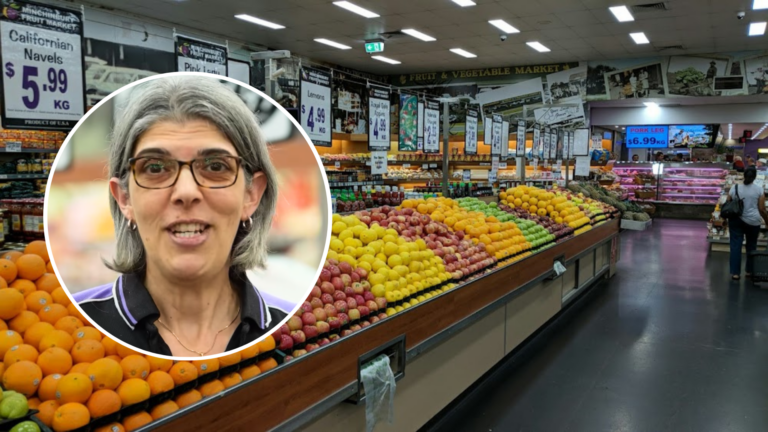
Susanne Hatzis says grocery prices are set to increase as global oil price spikes linked to the war in Iran combine with flooding in Queensland to drive up costs.
Hatzis, whose family runs the Minchinbury Fruit Market, said fruit and vegetable prices would “definitely” rise due to higher transport costs and reduced supply caused by the floods.
“There’ll be no fruit and veggies to come down, and prices will rise because of that,” she said.
She added that while the business tries to limit price increases, rising costs make it difficult.
“We try not to pass on the increases as much as we can (but) as a small business, you can only cover the costs for so long.”
An AUSVEG spokesperson said the conflict in the Middle East had “led to concerns over higher production costs for vegetable growers, particularly given Australia’s heavy reliance on imported key farm inputs like fuel and fertiliser.”
Meanwhile, Adam Stratton said meat prices were also expected to rise, warning customers: “Price rises are inevitable, so it would be wise to buy your meat now.”
Greek Prime Minister Kyriakos Mitsotakis says Greece will explore nuclear energy as part of its long-term energy strategy, speaking at the 2nd Nuclear Energy Summit in Paris.
“Greece is not historically a nuclear country, but it is time for us to explore whether nuclear energy, especially small modular reactors (SMRs), can play a role,” he said, confirming the government will establish an interministerial committee to provide recommendations.
Mitsotakis noted Greece’s strong investment in renewable energy, saying more than half of the country’s electricity now comes from solar and wind, transforming Greece from an electricity importer into an exporter.
Ήρθε η ώρα να διερευνήσουμε αν η πυρηνική ενέργεια, και συγκεκριμένα οι μικροί αρθρωτοί αντιδραστήρες, μπορούν να έχουν έναν ρόλο στο ελληνικό ενεργειακό σύστημα. Θα συγκροτήσουμε μια υπουργική επιτροπή υψηλού επιπέδου που θα υποβάλει συγκεκριμένες προτάσεις στην κυβέρνηση. pic.twitter.com/dLB2kE9ufS
However, he stressed renewables alone cannot meet future demand.
“As President Macron acknowledged, Europe cannot achieve its energy goals without nuclear power… Nuclear power is clearly making a comeback,” he said.
“In times of major global disruptions, all options must be on the table. Nuclear energy can be part of the solution… Greece is ready to write a new chapter. We are friends of nuclear energy.”
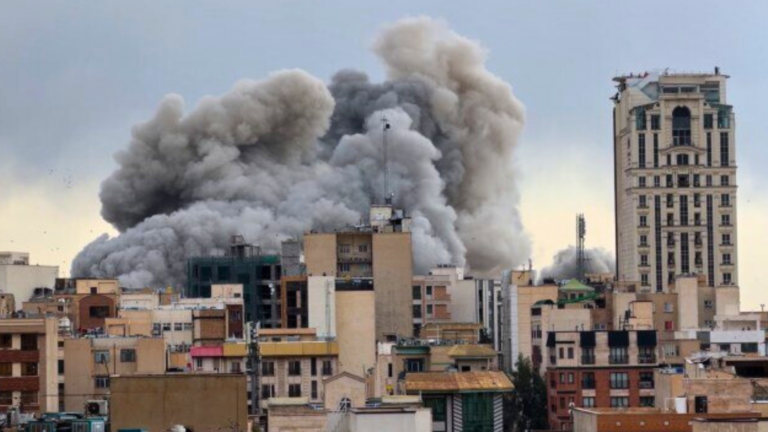
Iran has said it is not seeking a ceasefire as the United States prepares to launch what it describes as the most intense day of strikes since the conflict began.
US Defence Secretary Pete Hegseth said the United States would deploy “the most fighters, the most bombers, the most strikes” inside Iran as part of Operation Epic Fury.
“We will not relent until the enemy is totally and decisively defeated,” he said, adding the US was winning the war with “brutal efficiency.”
Meanwhile, the speaker of Iran’s parliament, Mohammad‑Bagher Ghalibaf, said Tehran was not seeking a ceasefire, declaring the US and Israel must be “punched in the mouth” to “learn a lesson.”
“We believe that the aggressor must be punched in the mouth so that it learns its lesson and never again thinks of attacking our beloved Iran,” he wrote on social media.
Amir Ohana responded on X, saying “the only thing proposed to you was unconditional surrender,” rather than a ceasefire.
Israeli Prime Minister Benjamin Netanyahu also signalled the conflict would continue, saying Israel was “breaking their bones” and that the war aimed at a popular overthrow of Iran’s government.
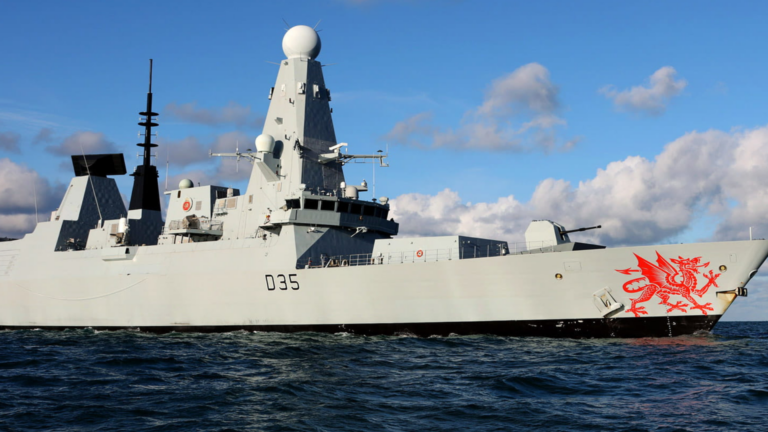
The British Royal Navy warship HMS Dragon has set sail from Portsmouth and is heading toward Cyprus, the navy announced on Tuesday, March 10.
“The decision to send the Royal Navy assets came as Iran’s attacks continue to target British interests in the region and the UK Armed Forces continue to adapt to the changing threats,” it said.
HMS Dragon is equipped with the Sea Viper missile system to support the safeguarding of “UK assets and interests.”
The navy said the system can launch eight missiles in less than ten seconds and direct up to 16 missiles simultaneously, “close them in for the kill” at speeds of up to four times the speed of sound.
The deployment follows a drone attack on the British air base at RAF Akrotiri in Cyprus.
In response, the UK sent air defence systems, radar and F-35 Lightning II aircraft, which are already conducting air defence sorties.
Fleet commander Steve Moorhouse said: “I am proud that our highly-professional personnel have responded in a short time to ensure HMS Dragon and the Wildcats from 815 Naval Air Squadron are fully prepared for their mission.”
The destroyer carries around 200 sailors and is one of six Type 45 warships, described as the fleet’s “first line of defence against aerial threats.”
UK Defence Secretary John Healey praised personnel for preparing the ship quickly, saying: “What is normally six weeks of work was completed in just six days – a remarkable effort delivered around the clock. They are the very best of Britain in action.”
No official arrival time in Cyprus has been announced.
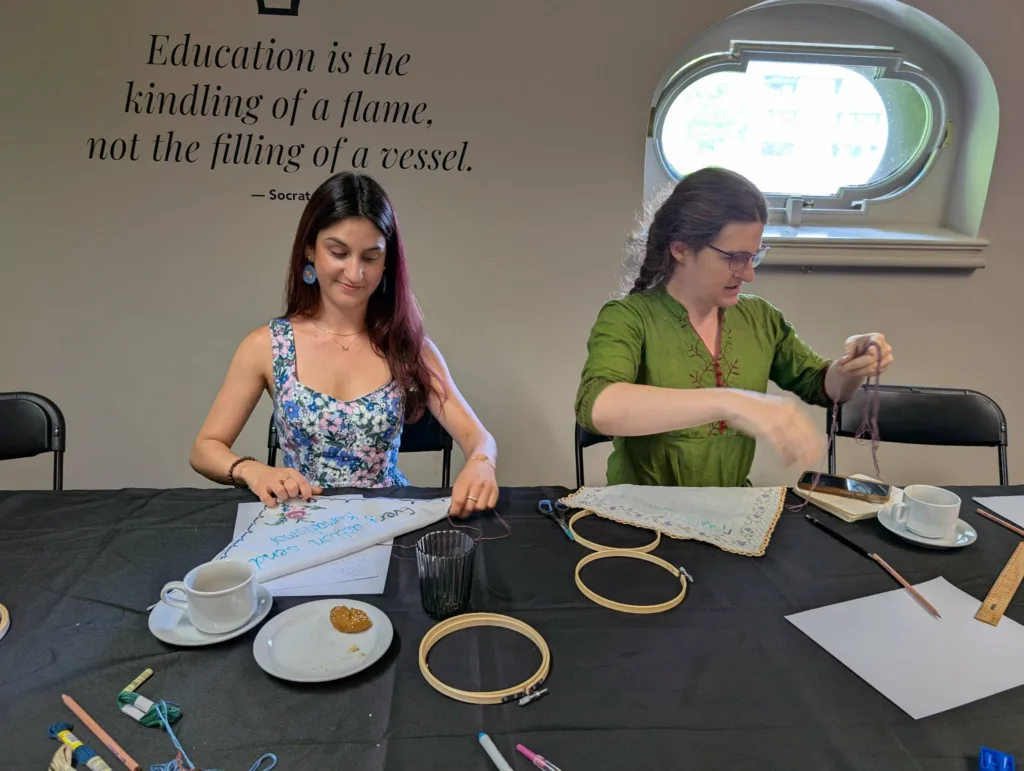
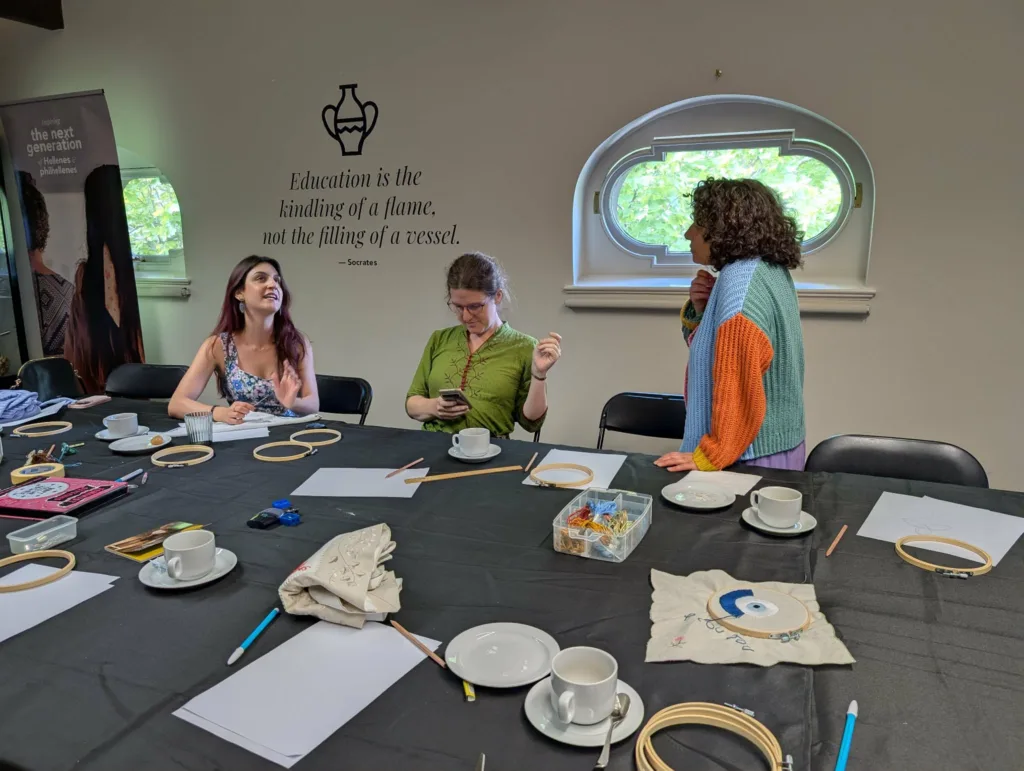
On the top floor of the Hellenic Museum, a musty loft-like space usually reserved for staff, a group of mainly women sit around a table scattered with thread, fabric, coffee cups and small plates of paximadakia biscuits.
Some lean over delicate doilies, concentrating on their stitches. Others pause to talk, laughing as they compare the words slowly appearing in coloured thread across old lace.
This is no ordinary craft circle.
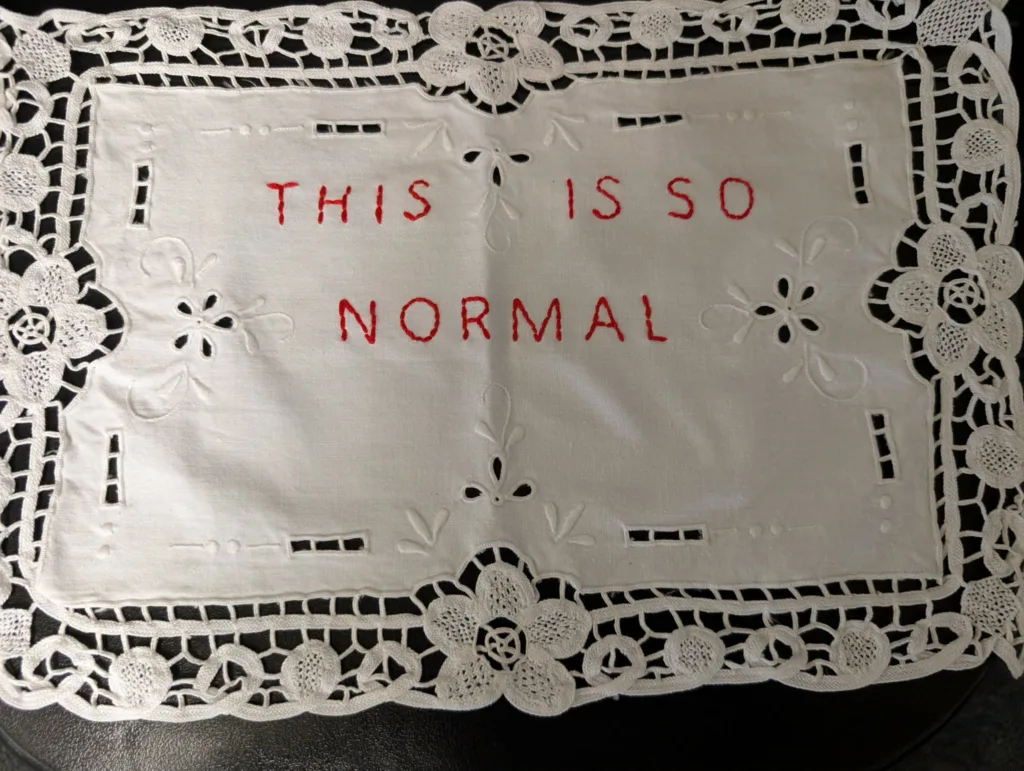
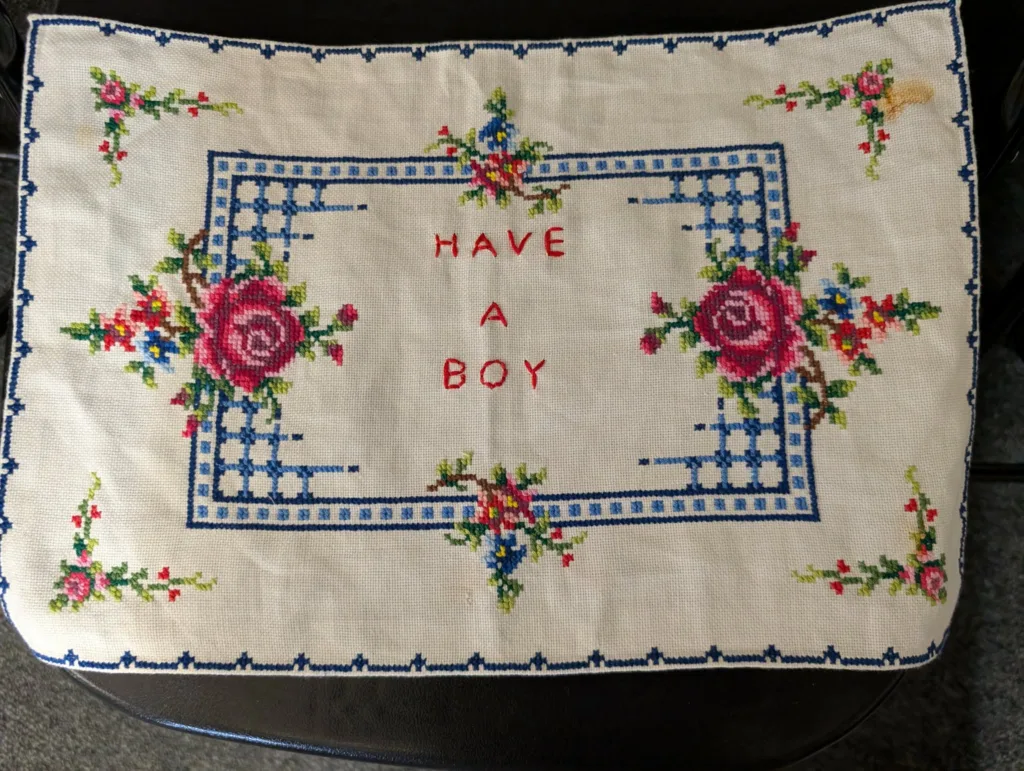
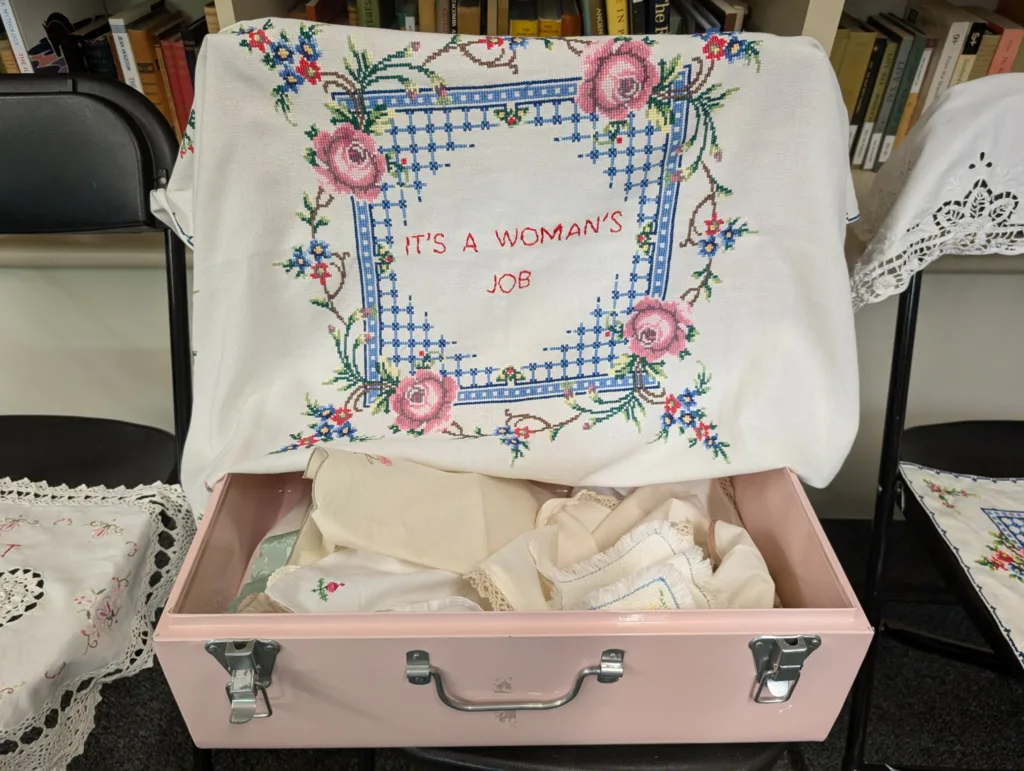
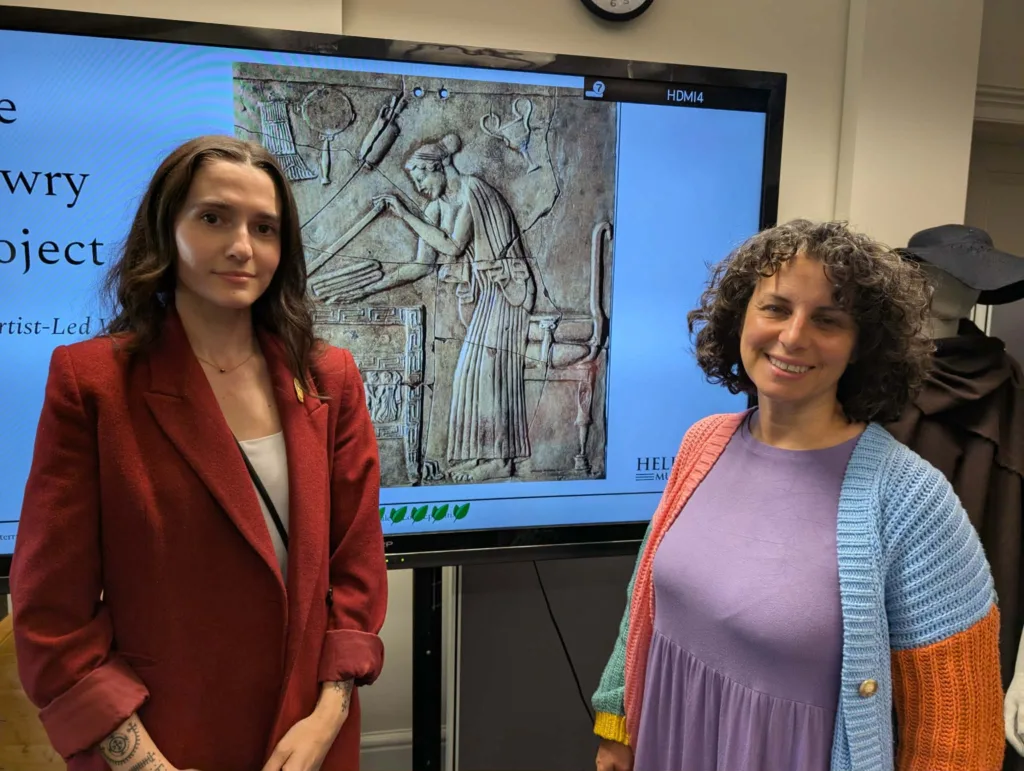
It is a continuum of The Dowry Project, a series of workshops led by Melbourne artist Sonia Zymantas that invites women to take something deeply traditional, the Greek proika, or glory box, and reinterpret it for today.
The Dowry Project. All photos copyright The Greek Herald / Mary Sinanidis.
For generations of Greek women, the glory box symbolised readiness for marriage: a wooden chest filled with embroidered linens, crocheted doilies and handmade sheets prepared over many years.
For Zymantas, those carefully stitched heirlooms always carried a heavier meaning.
“It represented the cultural pressures we grew up with,” she says. “The expectation that women would follow a certain path: get married, have children and look after the home.”
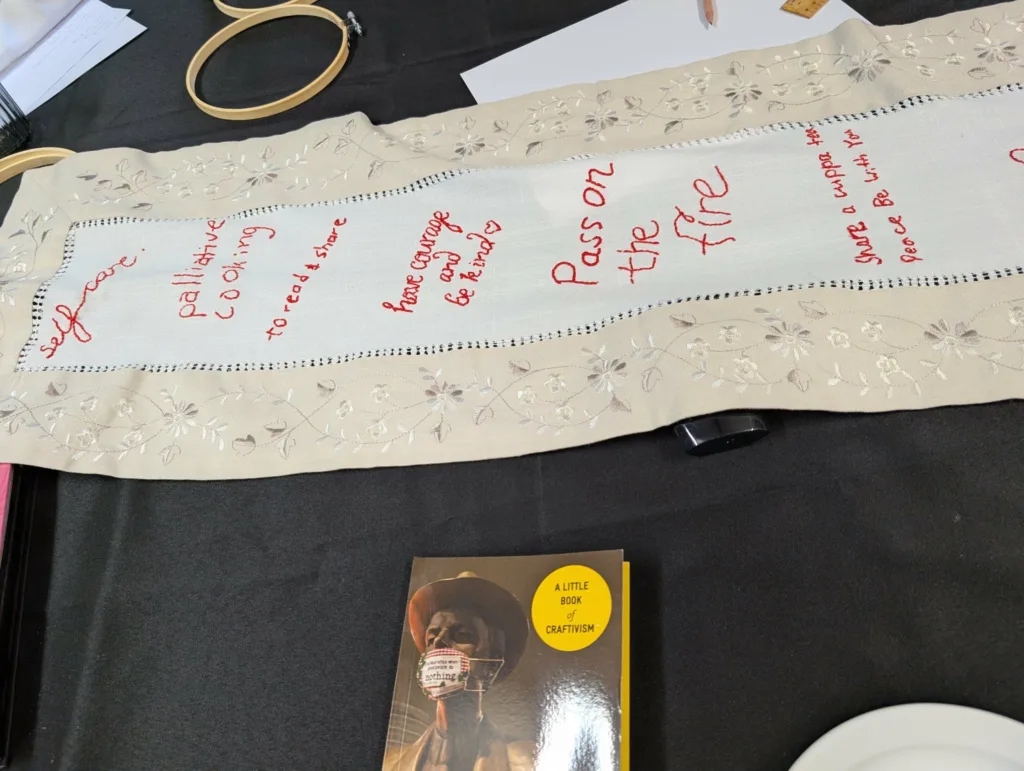
Rather than rejecting that history, Zymantas is asking women to engage with it. Participants bring old textiles, sometimes family pieces, sometimes donated doilies or vintage shop finds, and embroider new words and symbols onto them.
The past remains visible in the fabric. But the message changes.
Rewrite anything, messages to the past.
Reconsidering our traditions
Zymantas grew up in Melbourne in a Greek household where embroidery was simply part of life. Her mother, from Corfu, and relatives would gather to crochet and stitch together.
“There was always embroidery in the house,” she recalls. “It was part of the women’s culture.”
But as a young girl she wanted nothing to do with it.
“I wasn’t aspiring to be a housewife,” she says with a laugh.
In many Greek families, mothers and grandmothers spent years filling the kasella (traditional wooden glory box chest) with textiles for a daughter’s future home.
Zymantas remembers watching women sit together around the table making lace and crochet pieces.
“There was this whole culture of women sitting together making things,” she says. “But I didn’t connect with it at the time.”
With coffee and paximadakia, workshop attendees recreate their grandmothers’ circles.
That changed years later when her mother passed down some of her own dowry pieces. Holding them in her hands, Zymantas began appreciating the delicate stitches and asking different questions.
“What does this actually mean?” she wondered. “And what traditions am I passing on to my daughters?”
Slowly, she picked up a needle again.
Stitching new meaning
The embroidery she returned to looked very different from the delicate floral patterns she remembered.
Self-taught through experimentation and online tutorials, Zymantas began stitching words onto inherited textiles. She adorned them with statements, reflections and sometimes quiet acts of rebellion.
The lace doily became a canvas.
“It’s meditative,” she says. “There’s something calming about the repetition. But it’s also a way to start conversations.”
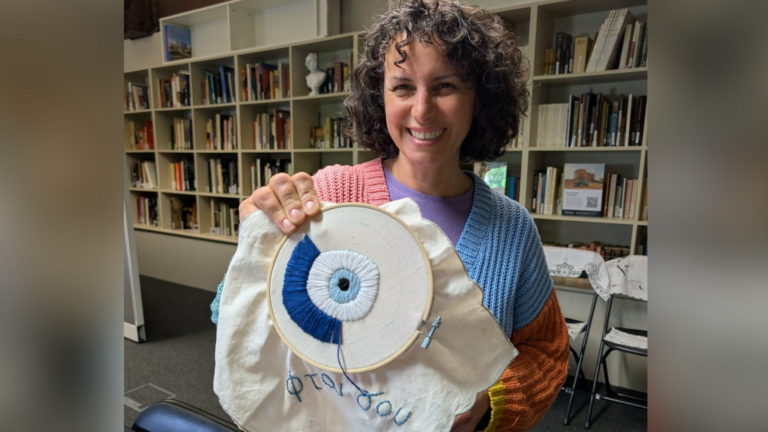
A mati, created by one of Sophia’s students.
At the workshop, those conversations unfold easily.
Artist Celia Beaton says the idea of reclaiming the dowry tradition through art immediately resonated with her.
“Traditionally the dowry was about preparing for marriage, preparing for a future someone else expected of you,” she says.
“Turning it into art changes the meaning completely.”
Nearby, another participant, Tiana, concentrates on a small piece of fabric between sips of coffee beside her embroidery thread.
She says the workshop revealed the deeper history behind something many people recognise but rarely question.
“You hear about dowries as part of Greek culture,” she says. “But today we talked about what that really meant for women.”
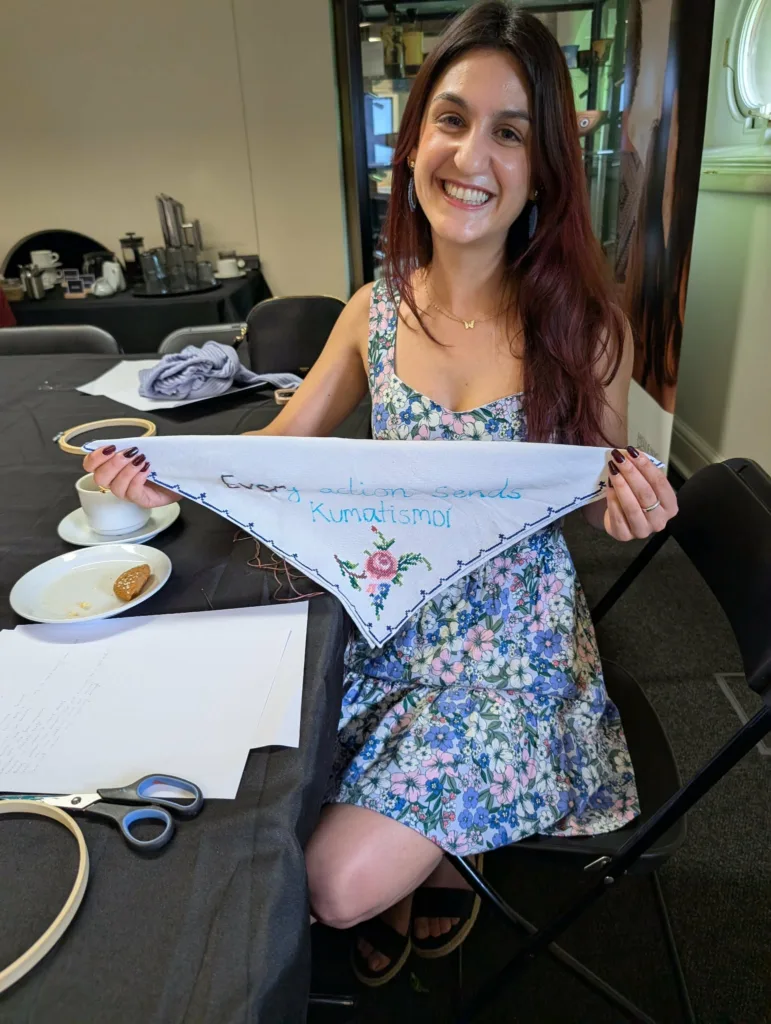
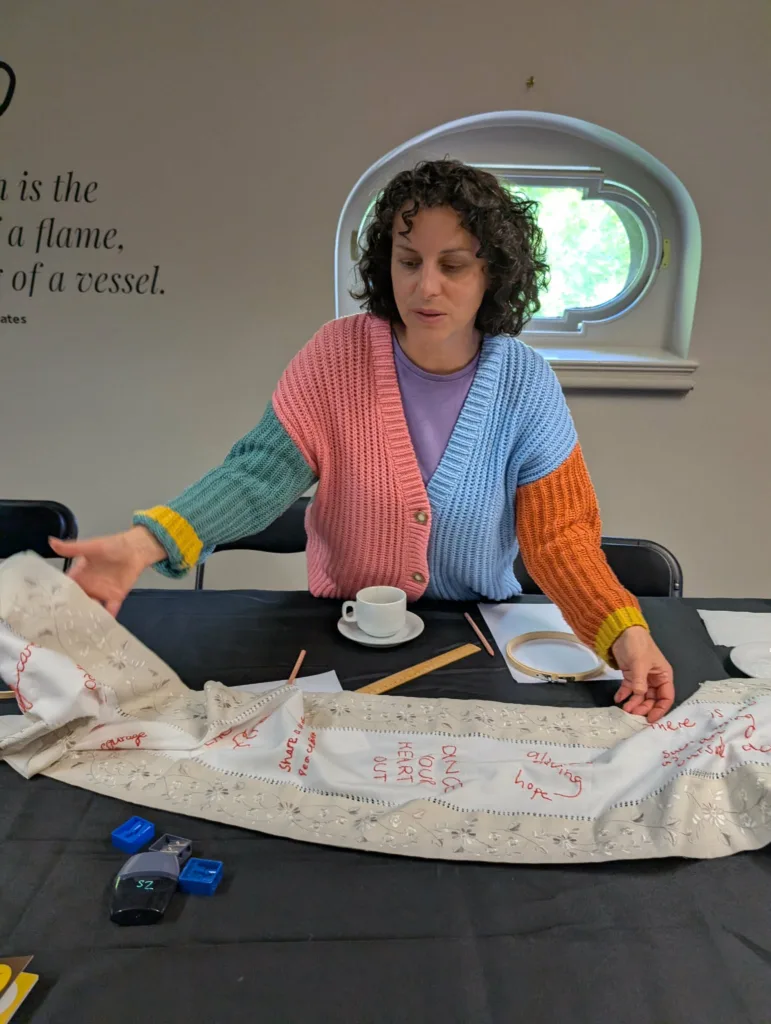
Tiana worked with the word ‘kymatismoi’ (ripples).A long doily reclaimed with slogans.
Threads that cross cultures
The workshop also included historical context from Sara Prica, Assistant Curator at the Hellenic Museum, who helped shape the conversation around textiles and women’s history.
Prica points out that embroidery traditions rarely belong to just one culture.
“My grandmother was very skilled at cross-stitch,” she says. “She made bedspreads and sold them across Europe during the war.”
Although Prica’s family background is Croatian and Serbian, many of the patterns she remembers, grapes, florals, geometric borders, look strikingly similar to those found in Greek embroidery.
“These patterns travelled,” she says. “They moved across communities and borders.”
Sara Prica and Sonia Zymantas.
Gentle activism
Zymantas describes the workshops as a form of “gentle activism”.
Women gather, talk, stitch and reflect on the expectations placed on earlier generations. For some, it is their first time embroidering. For others, it reconnects them with a skill they watched mothers or grandmothers practise years ago.
Either way, the act of stitching becomes something more than craft. It becomes a way of rewriting the story.
“I didn’t want the traditions I pass on to my daughters to be tied only to marriage or domestic roles,” Zymantas says. “I want them to choose their own future.”
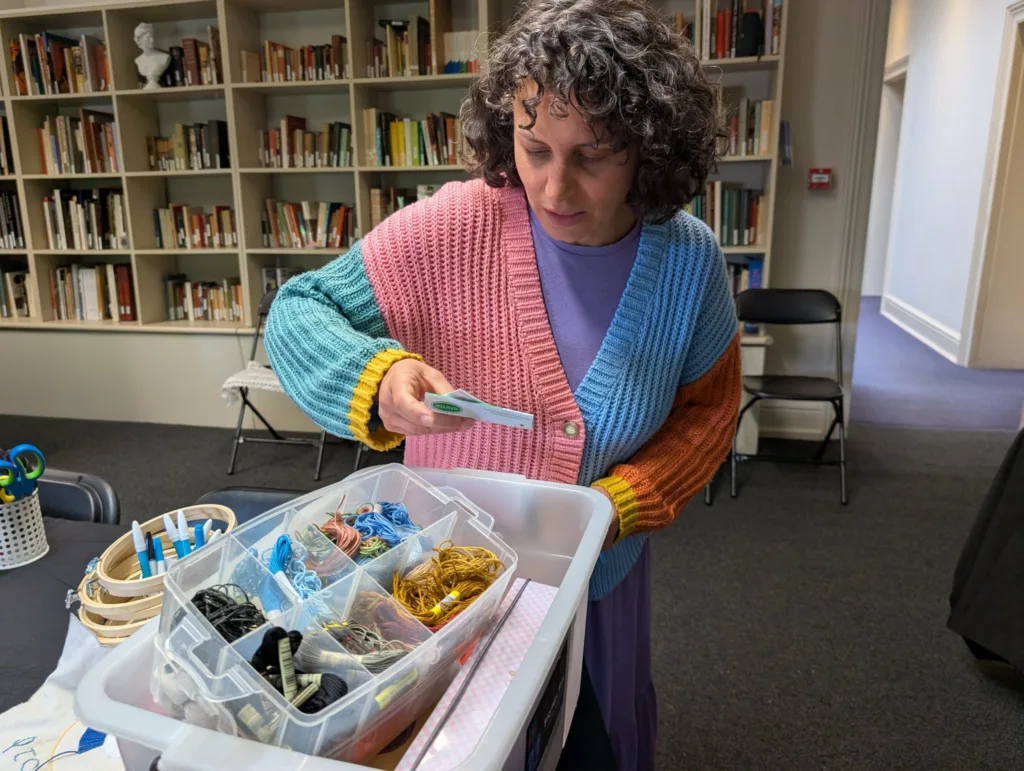
Packing up after the workshop.
As the workshop winds down, the table fills with finished pieces: small squares of fabric carrying words, symbols and quiet statements of independence.
The doilies still look like something a grandmother might have made. But the meaning stitched into them is entirely new.
*All photos copyright The Greek Herald / Mary Sinanidis.
A forthcoming public lecture in Melbourne will shed new light on one of the lesser-known chapters of the Greek Civil War, examining the history of the Democratic Army of Greece through archival material uncovered in Tashkent.
The seminar, titled “The Democratic Army of Greece through the Tashkent Archives,” will be presented by Dr Nick Dallas on Thursday, 12 March at 7pm at the Mezzanine Level of the Greek Centre, 168 Lonsdale Street.
The event forms part of the ongoing seminar programme of the Greek Community of Melbourne, which regularly hosts discussions on Greek history, culture and diaspora issues.
Dr Dallas arrived in Melbourne in 1971 aboard the iconic migrant ship Patris. A graduate of the University of Melbourne, he holds undergraduate degrees in Science, Arts and Commerce, as well as a PhD in Organic Chemistry. He currently works in educational publishing and has been actively involved with the Greek Community of Melbourne for more than a decade.
Since 2012, he has served on the Board of Management of the Greek Community of Melbourne, where he chairs the Education Committee and convenes the community’s seminar programme.
In addition to his professional work, Dr Dallas has pursued extensive historical research. Since December 2024, he has been a PhD candidate at the University of Macedonia’s Department of Balkan, Slavic and Oriental Studies in Thessaloniki, researching Greek political exiles who arrived in Tashkent in 1949 following the Greek Civil War.
His upcoming lecture will present findings from his research into the archives of the Greek Community of Tashkent, offering rare insights into the thousands of Greek fighters who went into exile after the defeat of the Democratic Army of Greece at the Battle of Grammos in August 1949.
Following the collapse of the Democratic Army, around 100,000 people were forced into political exile in the socialist countries of Eastern Europe and the Soviet Union. Of these, approximately 12,000 Democratic Army combatants were settled in Tashkent, then the capital of Soviet Uzbekistan.
According to Dr Dallas’ research, these individuals represented the surviving military core of the Democratic Army, including much of its officer corps and those considered capable of continuing the struggle abroad.
Drawing on thousands of registration cards containing personal and military information about the fighters, Dr Dallas will present, for the first time, detailed data from the early registration processes carried out in Tashkent. The records provide an unusually precise picture of the people who made up the Democratic Army of Greece and their lives in political exile.
The seminar is expected to offer valuable insights into both the history of the Greek Civil War and the broader story of Greek political exile in the twentieth century.
The event is supported by Tina Giannoukos.
Event Details:
Date: Thursday, 12 March 2026
Time: 7pm
Speaker: Dr Nick Dallas
Topic:The Democratic Army of Greece through the Tashkent Archives
Venue: Mezzanine Level, The Greek Centre, 168 Lonsdale Street, Melbourne
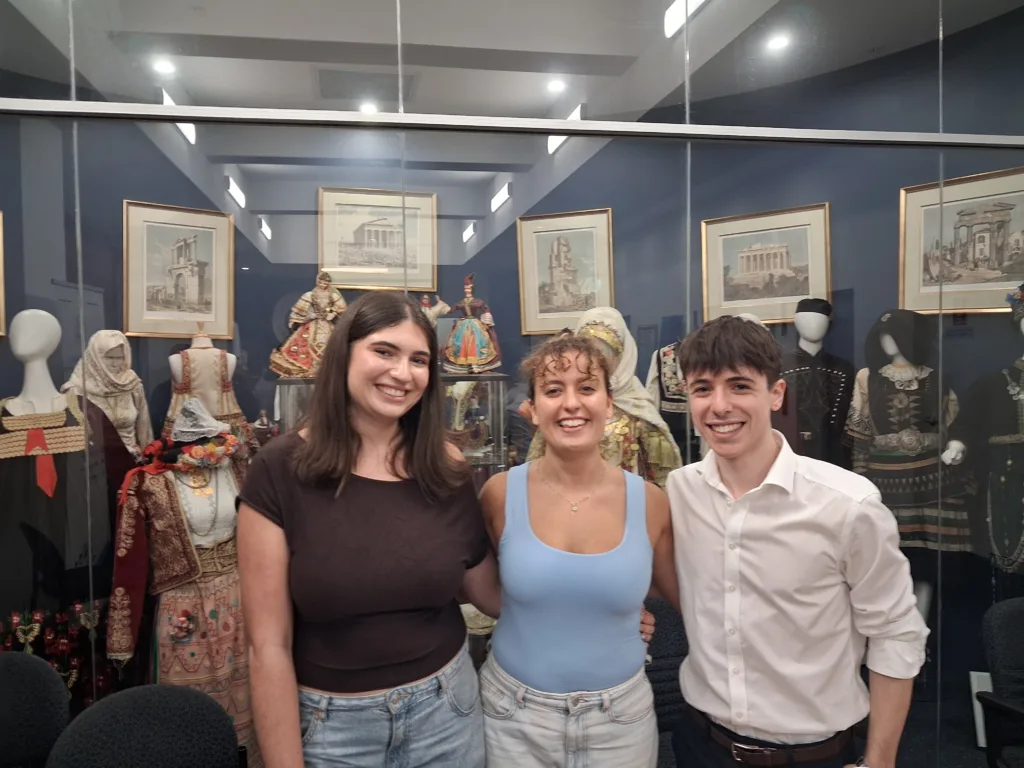
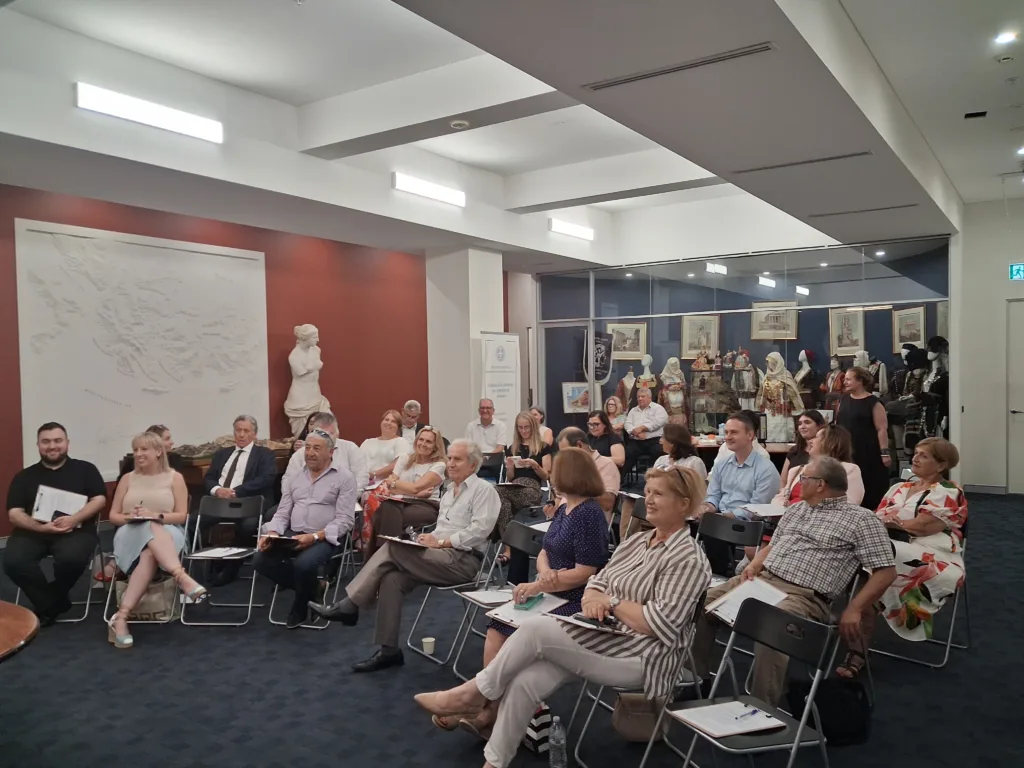
The Consulate General of Greece in Sydney launched an information campaign on consular matters by organising a seminar on Friday, 6 March 2026, at the premises of the Consulate.
The seminar focused on the process of acquiring citizenship, with particular emphasis on the registration of vital events.
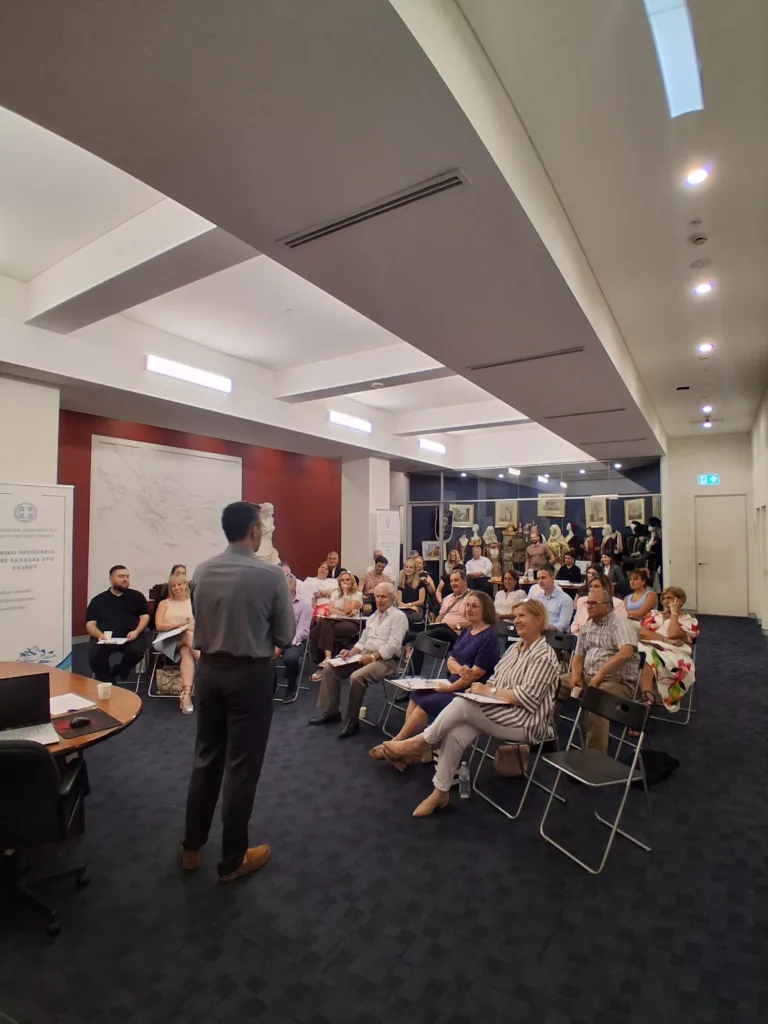
The Consul General of Greece in Sydney, George Skemperis, in cooperation with the staff of the Registry Department of the Consulate, presented to 30 representatives of Greek community and student associations the procedures concerning the registration of vital records, the acquisition of Greek citizenship, and the issuance of Greek passports.
During the seminar, detailed clarification was provided regarding the required documents and the individual stages of the procedure, while participants’ questions were also addressed.
The aim of the initiative is to provide accurate and up-to-date information to the representatives of the organisations and student associations, so that they are able accordingly to inform their members and the wider Greek community.
The Consulate General warmly thanks all those who responded to the invitation and participated in this first informational event.
In the near future, additional thematic informational seminars are planned, including sessions on military service matters, aiming to further strengthen public awareness and continuously improve the provision of consular services to the citizens.
The informational campaign will also reach social media in the immediate future.
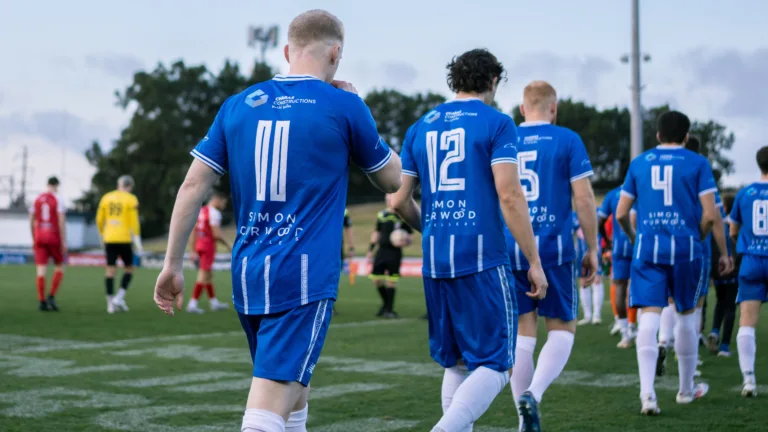
Sydney Olympic FC has announced a change to the date of its upcoming Annual General Meeting (AGM), pushing the meeting back by nearly a month to allow additional time for financial and governance preparations.
In a notice to members and stakeholders, the club confirmed that the AGM – originally scheduled for Tuesday, 24 March 2026 – will now take place on 21 April 2026.
According to the club’s Board, the decision was made to ensure sufficient time for the completion and review of the club’s externally audited financial statements before they are presented to members.
The Board said the additional time will also allow them to finalise all required reports and properly consider other matters that have recently arisen in relation to the AGM.
Further details regarding the meeting – including the venue, meeting time and agenda – will be confirmed and communicated to members in due course.
The club thanked members for their understanding and said it looks forward to their participation when the rescheduled meeting takes place in April.
The postponement comes amid growing scrutiny from sections of the club’s membership over governance, finances and the organisation’s future direction.
In recent weeks, Life Members were urged to mobilise ahead of the originally scheduled AGM as concerns intensified over transparency and decision-making within the club.
Earlier this yearThe Greek Herald first reported that members voted to establish a member-authorised Steering Committee at a meeting on February 2, citing frustration over what they described as repeated failures by the club’s board to convene an Extraordinary General Meeting (EGM).
The committee has since been tasked with seeking information on behalf of members and exploring pathways for governance reform, as the club approaches its rescheduled AGM in April.